We are on our annual fall Europe trip. We spent a fun few days in London – but I will blog about that after we return there next week.
From London, we took a quick British Air flight to Schipol Airport, Amsterdam. On the advice of friends (thanks, Liz & Glen) and guide books, we decided that we wouldn’t stay in Amsterdam. Instead we chose to go to some of the surrounding areas for our home bases.
First, we took a 50 minute train ride from Schipol to the picturesque town of Delft.
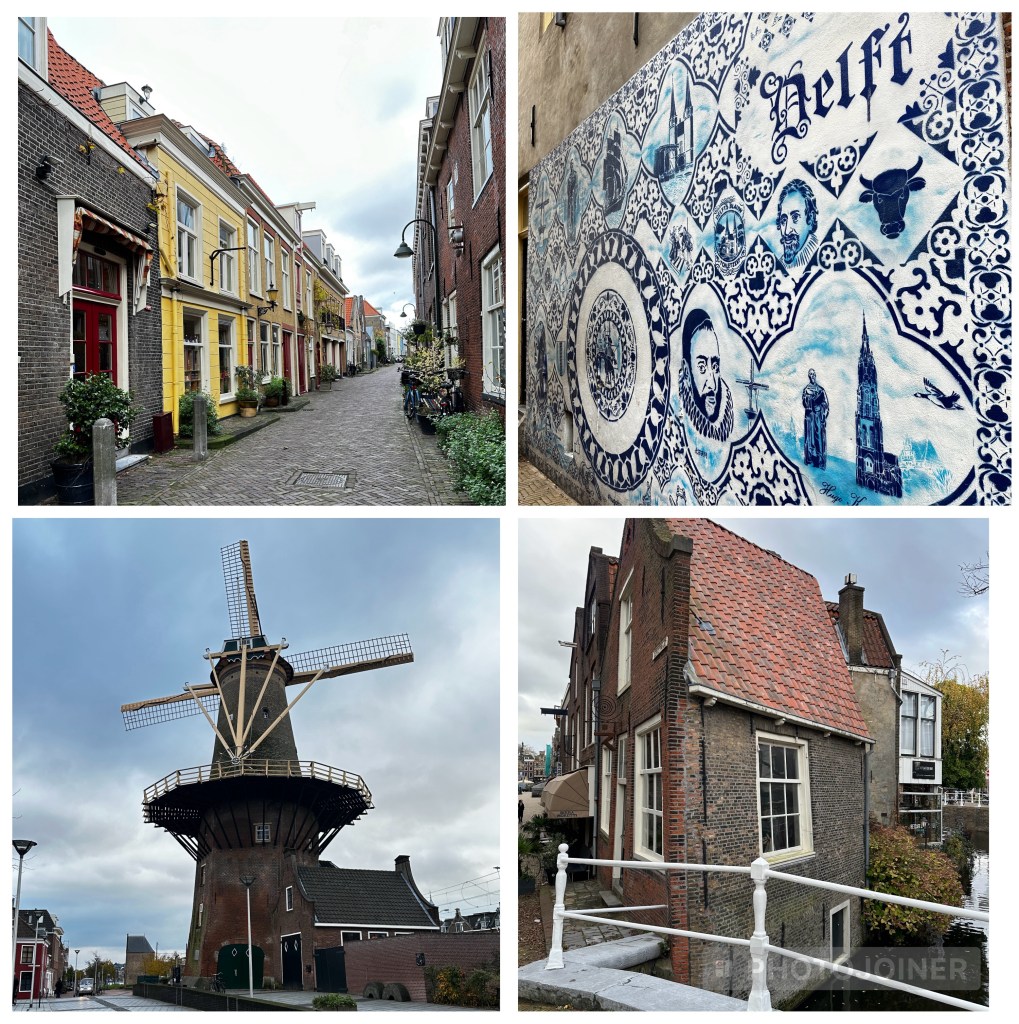
Delft has a population of ~100,000, but the historic core has a ‘small-town’ feel. In November, you walk with the locals and very few tourists. Tranquil canals cross throughout and traditional buildings along the cobbled streets make every corner a photographer’s dream.

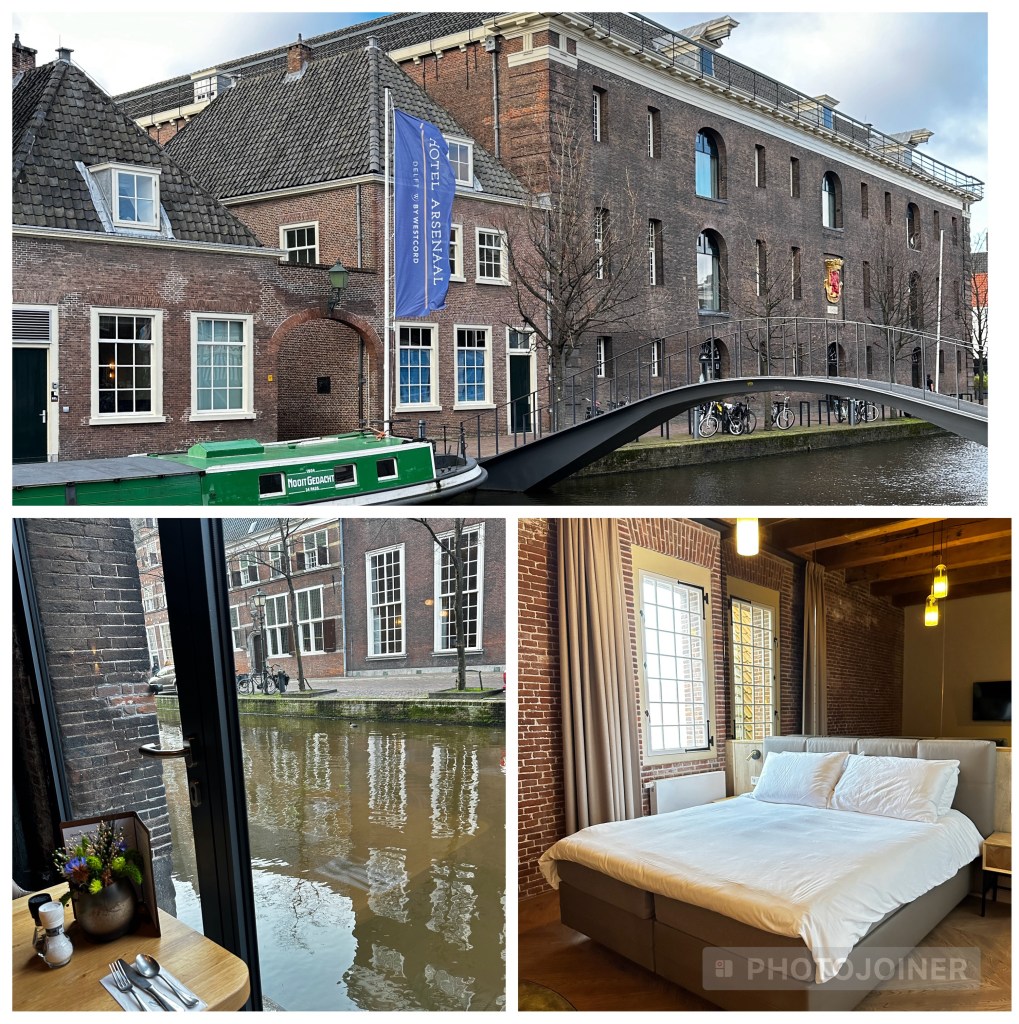
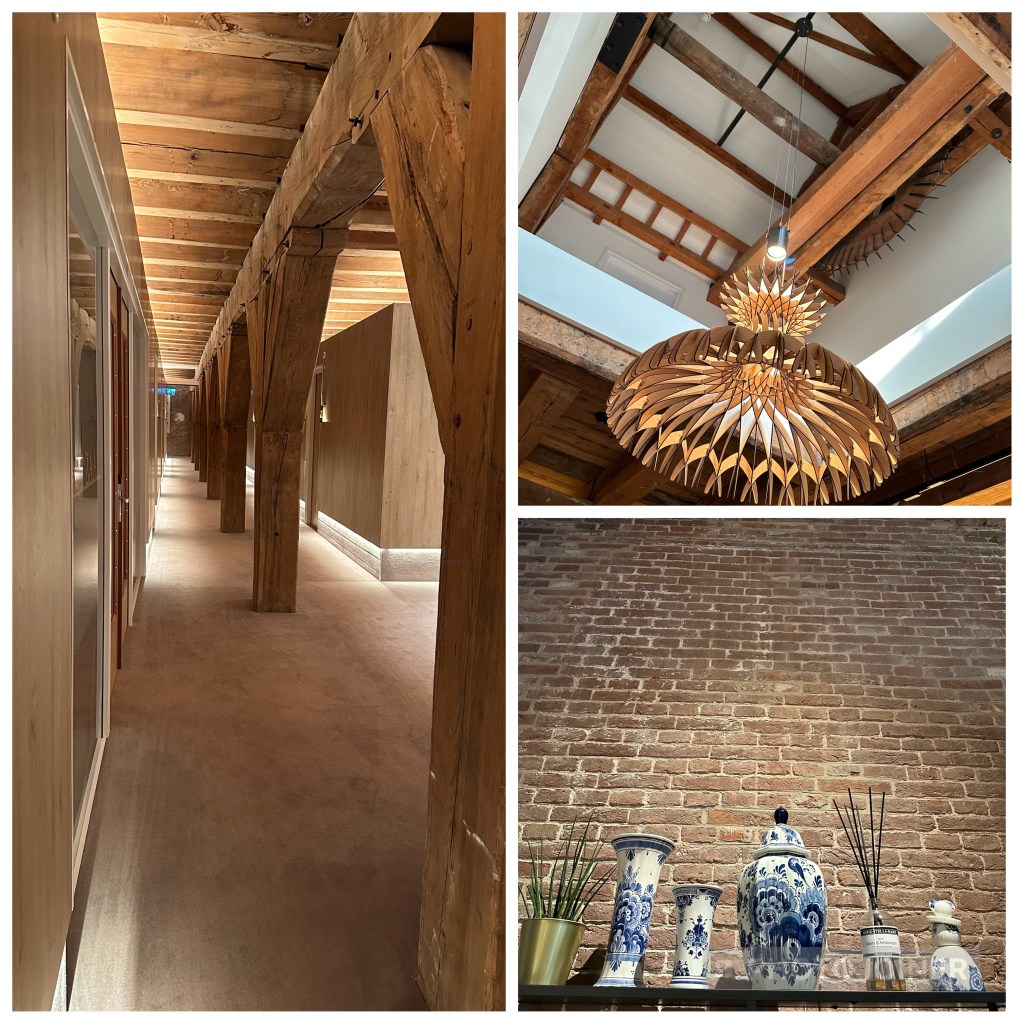
We stayed at the Hotel Arsenaal – a modern hotel in a historic building. Beginning in 1601, it was originally built to house cannon, firearms, ammunition and other weapons (hence, the hotel name). In the 1800’s, the Dutch East India Company purchased the building for use as a warehouse. After WWII, it served as a jail for ‘wrong Dutch’ collaborators (called a ‘scum house’) and eventually became an army museum until 2013. The hotel renovation has preserved the core of the building while creating a great modern space. We highly recommend it!
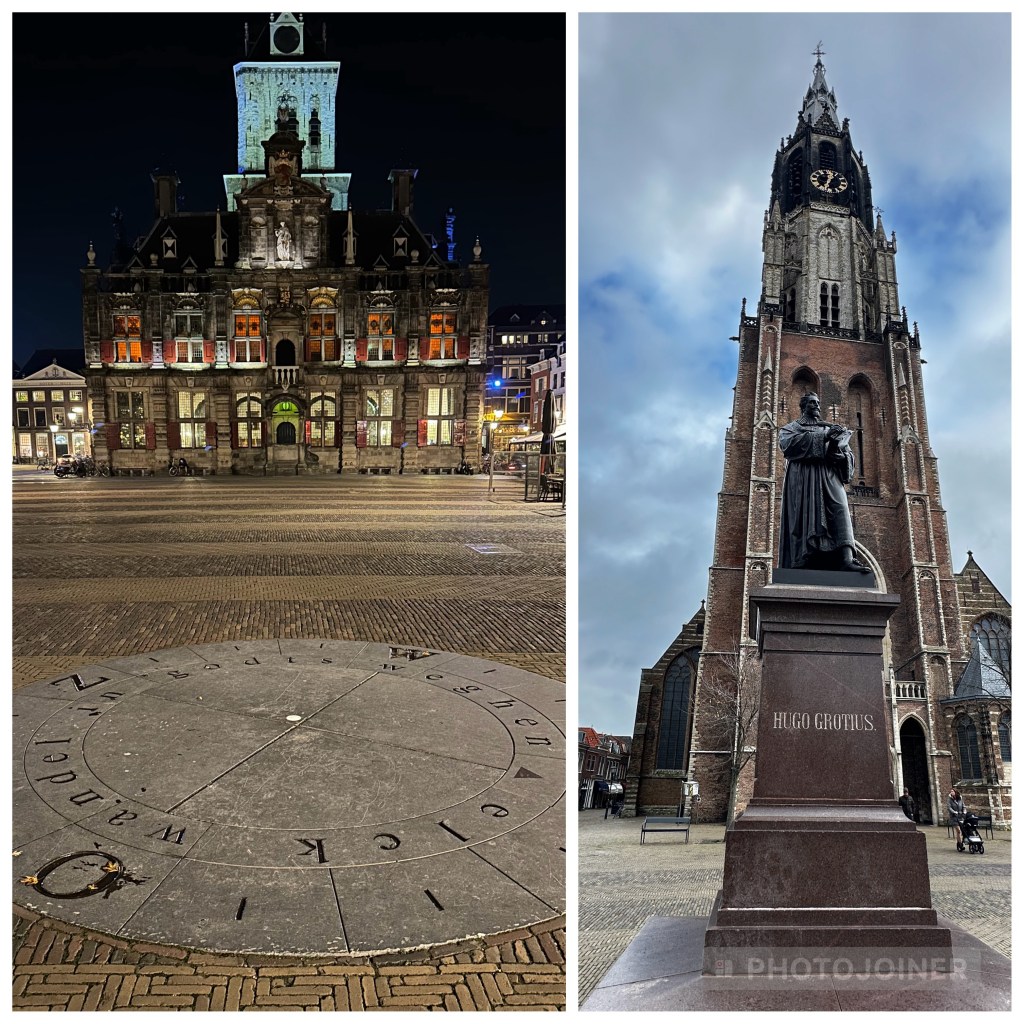
The centre of the historic core is The Markt Square. Dominated by a statue of Hugo Grotius, who established the first international rules of the sea, the square has the impressive Town Hall at one end and the Nieuwe Kirk at the other.
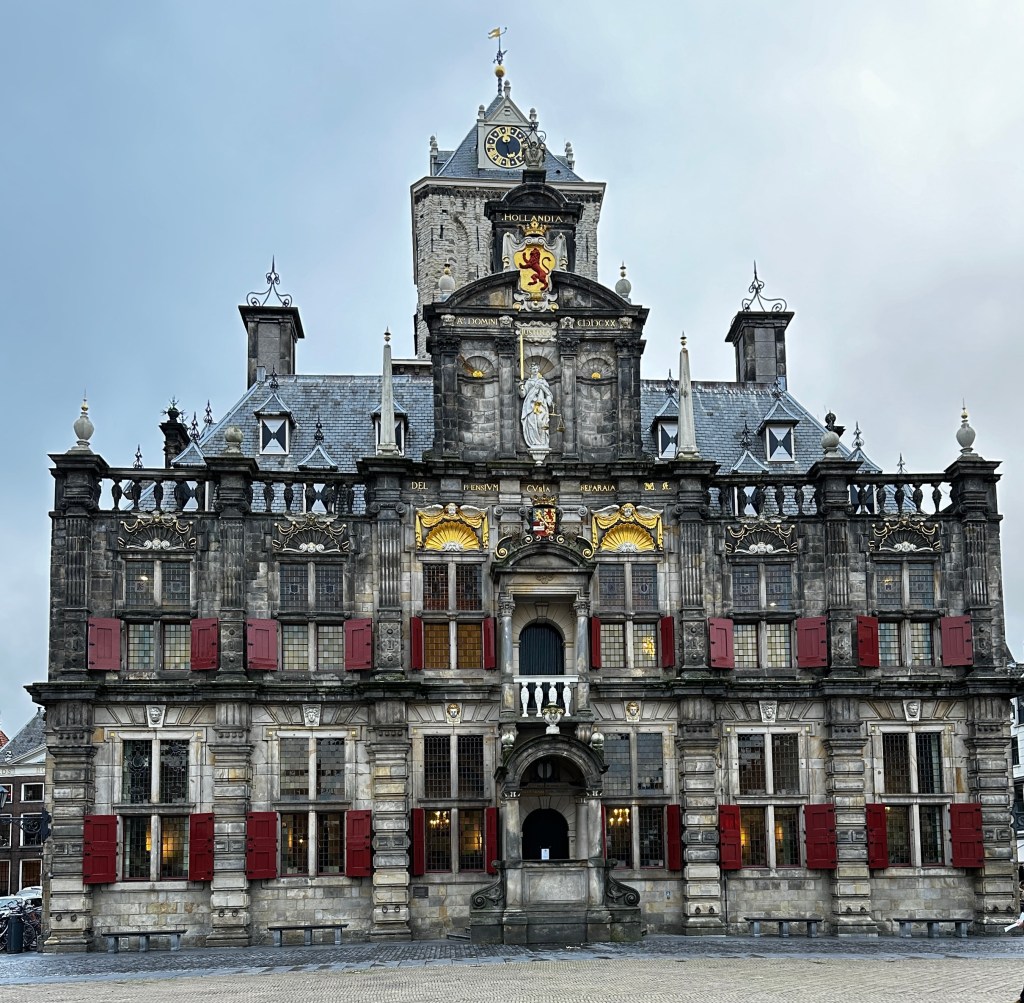
The Town Hall was built in 1620 in the Renaissance style around a sturdy tower that was originally a prison.
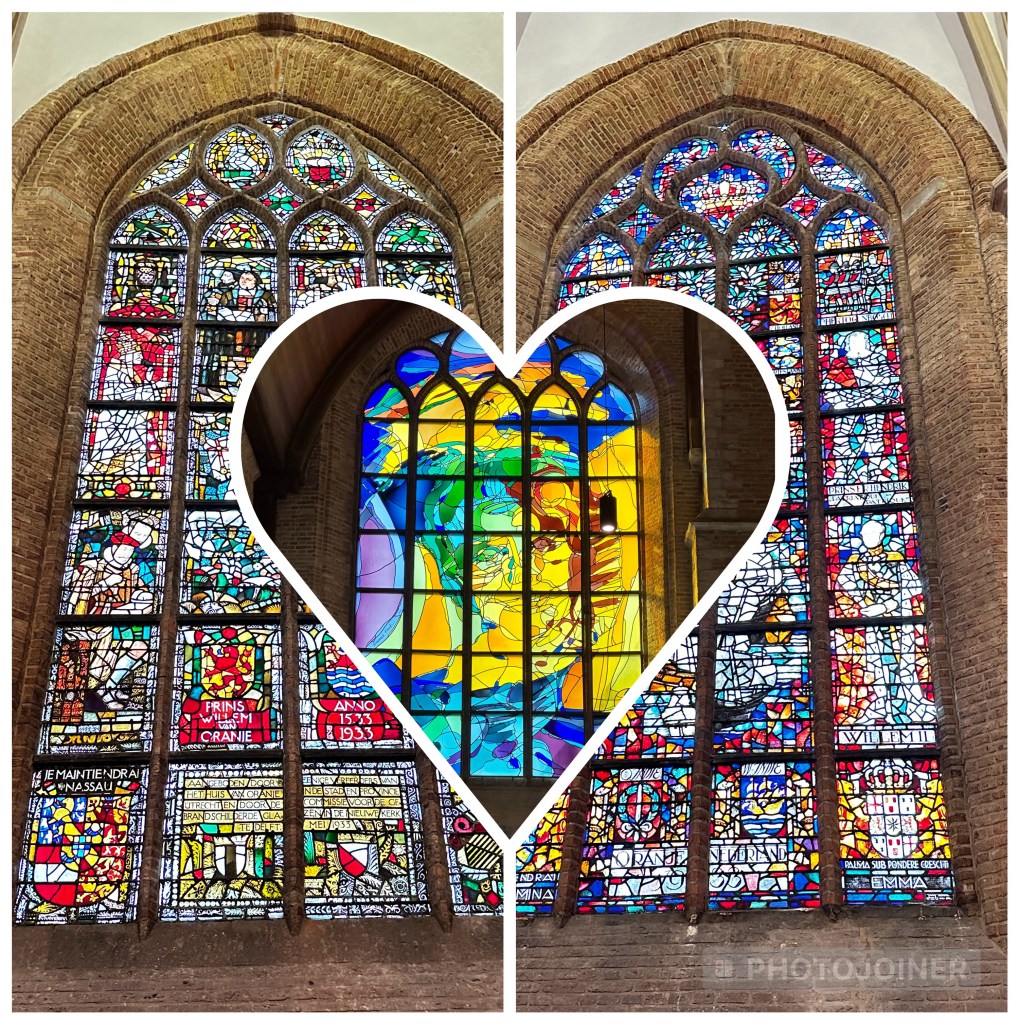
The Nieuwe Kerk (New Church) was built in 1393 (and they call that New). It has been though a number of disasters – a fire in 1536, iconoclast ransacking in the 1560s and a nearby gunpowder depot explosion in1654. William I of Orange was assassinated in Delft in 1584 and entombed in the New Church. Thus, the House of Orange (the Dutch Royal Family) bury all its family members in this church.
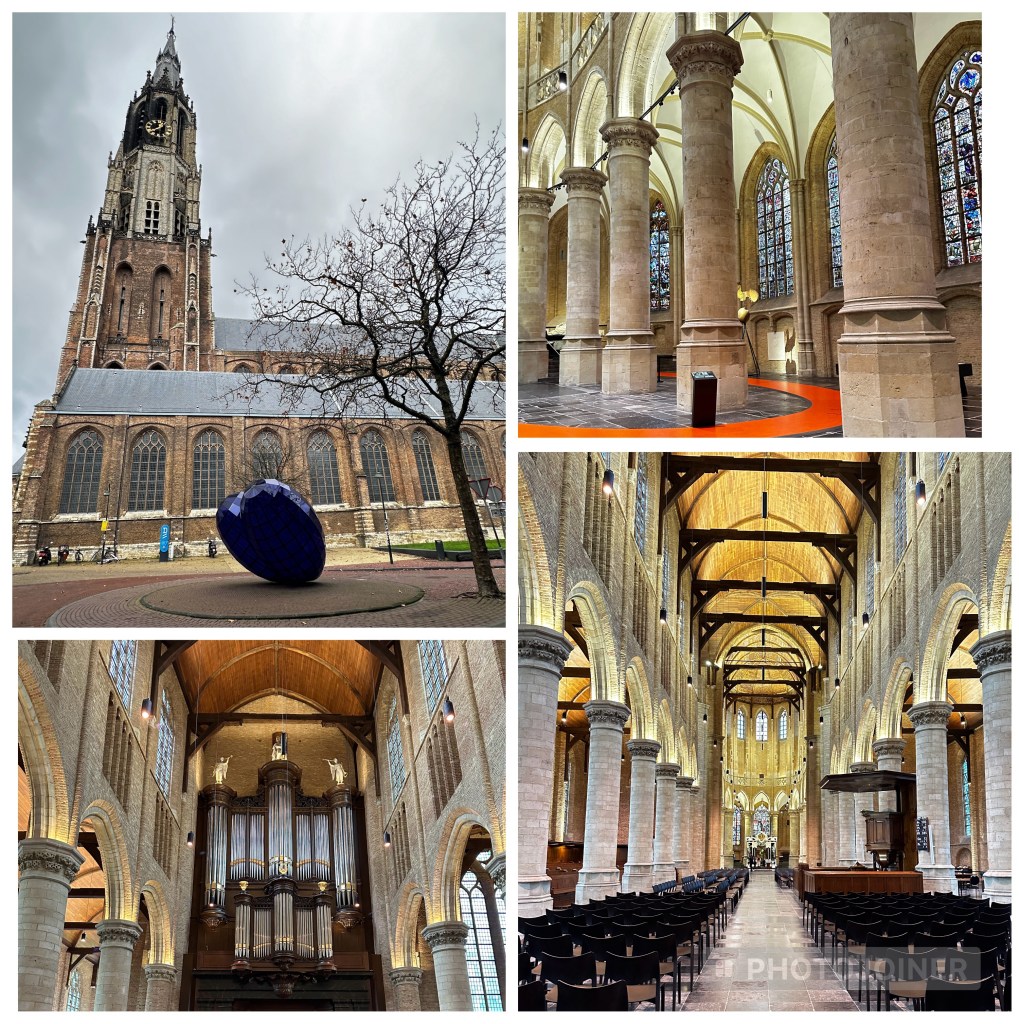
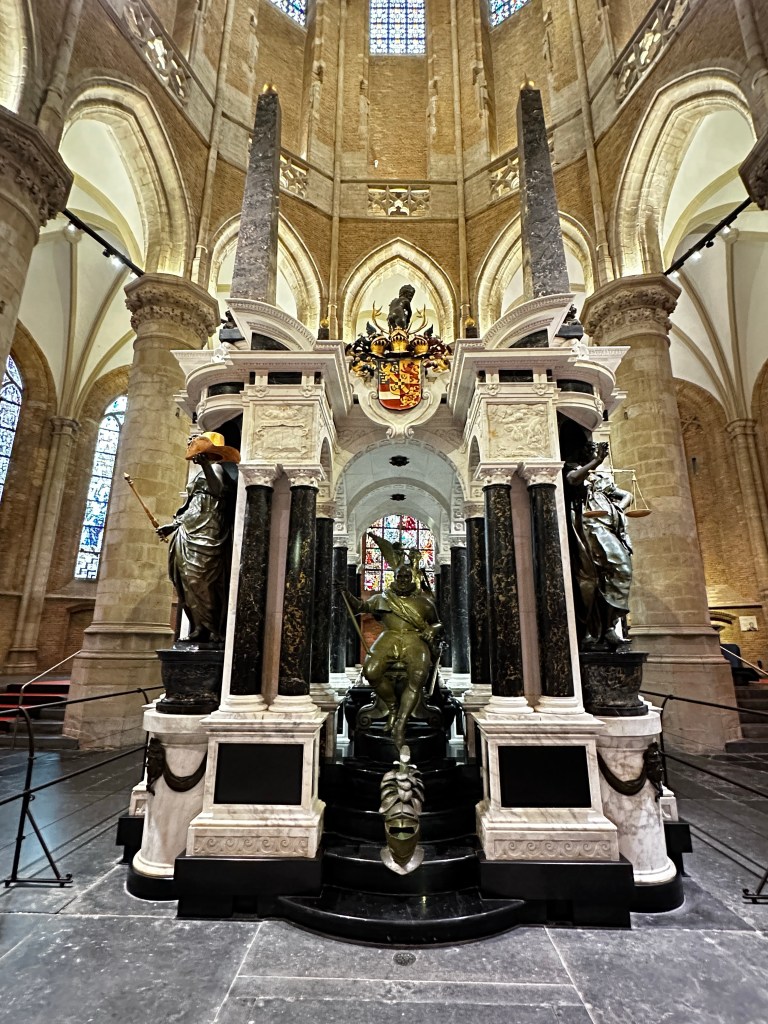
The church is very impressive. As well as the grandeur of the interior, it presents a lot of historic information in an interesting, and often humorous, manner. We thoroughly enjoyed our visit!
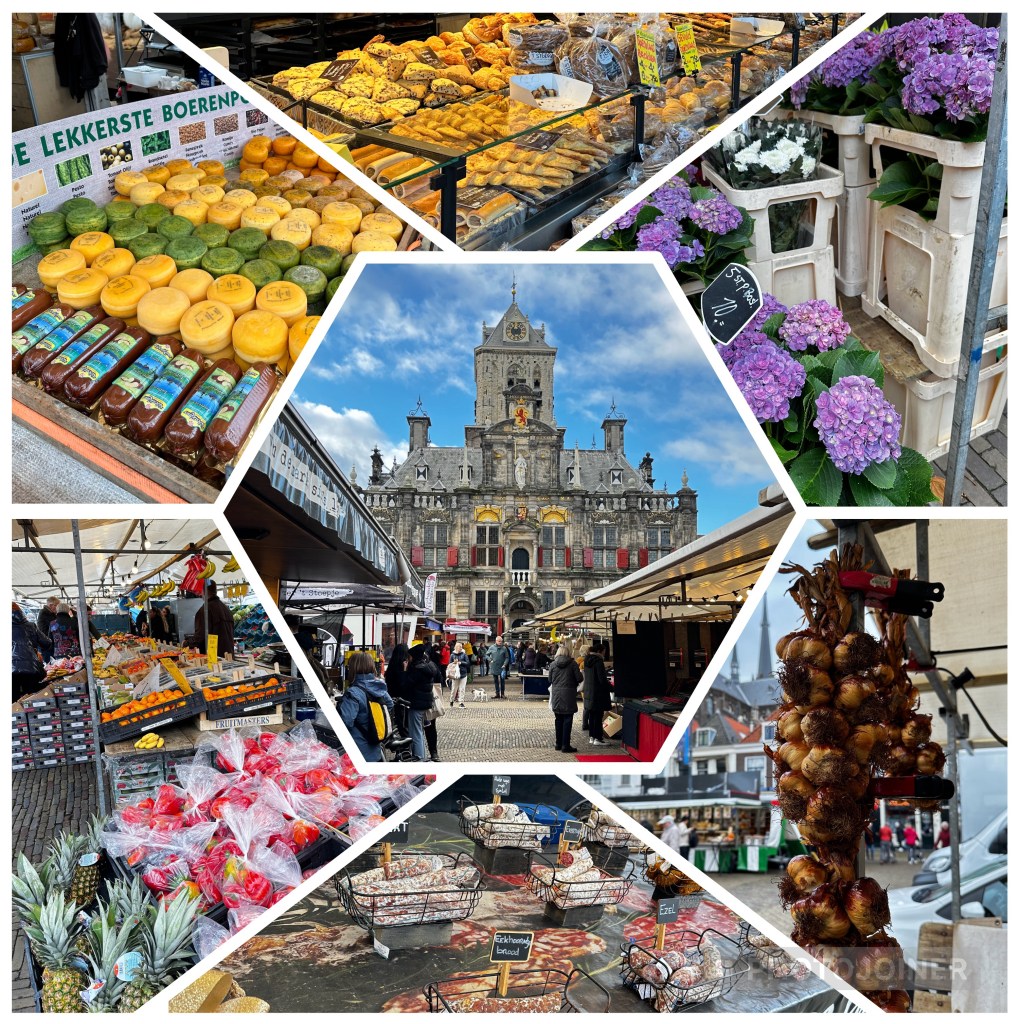
We happened to be in Delft for the Thursday market day in the square. As with many European markets, you could buy most anything that you needed – or wanted!
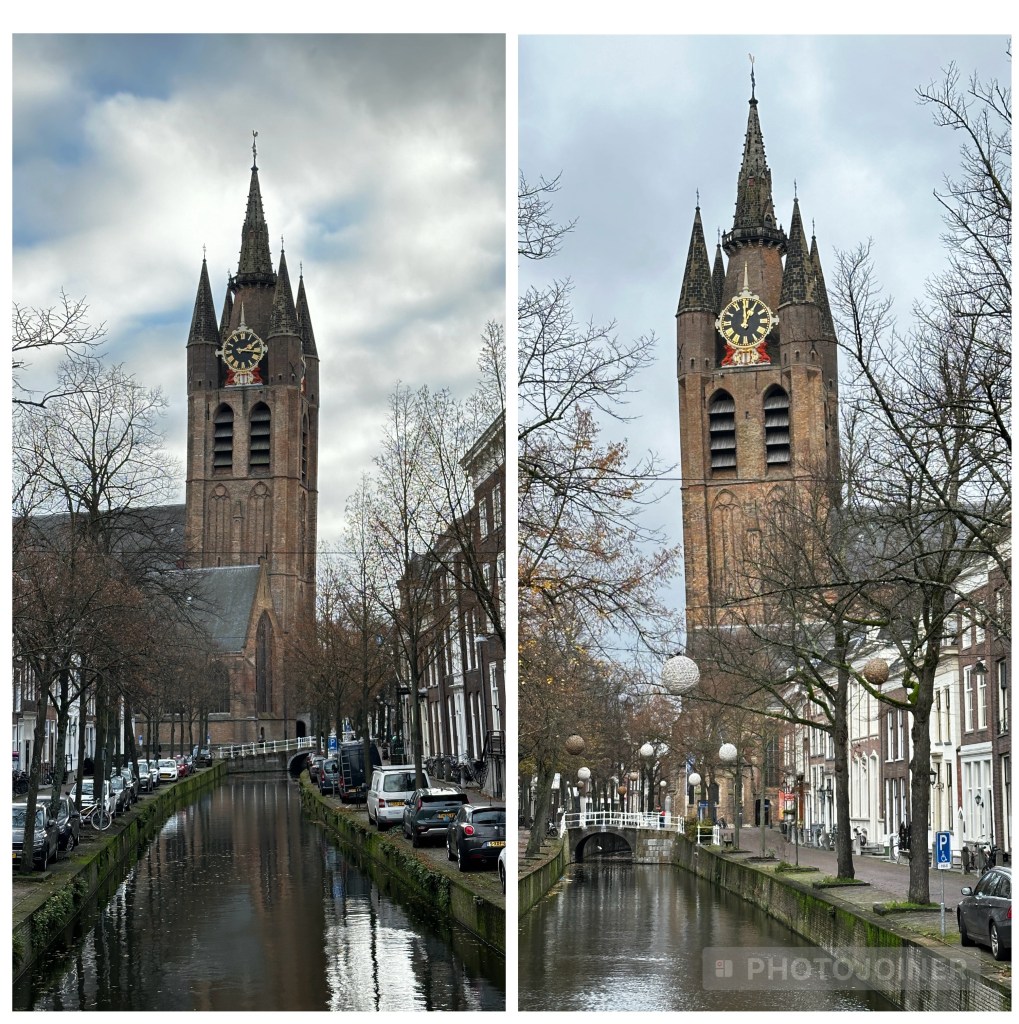
As well as the New Church, there is of course the Old Church (Oude Kerk). Located a few short blocks from the Markt, you first notice that the it is on a lean – the 75 meter tall brick tower leans about 2 meters from the vertical as it it built on marshy land.
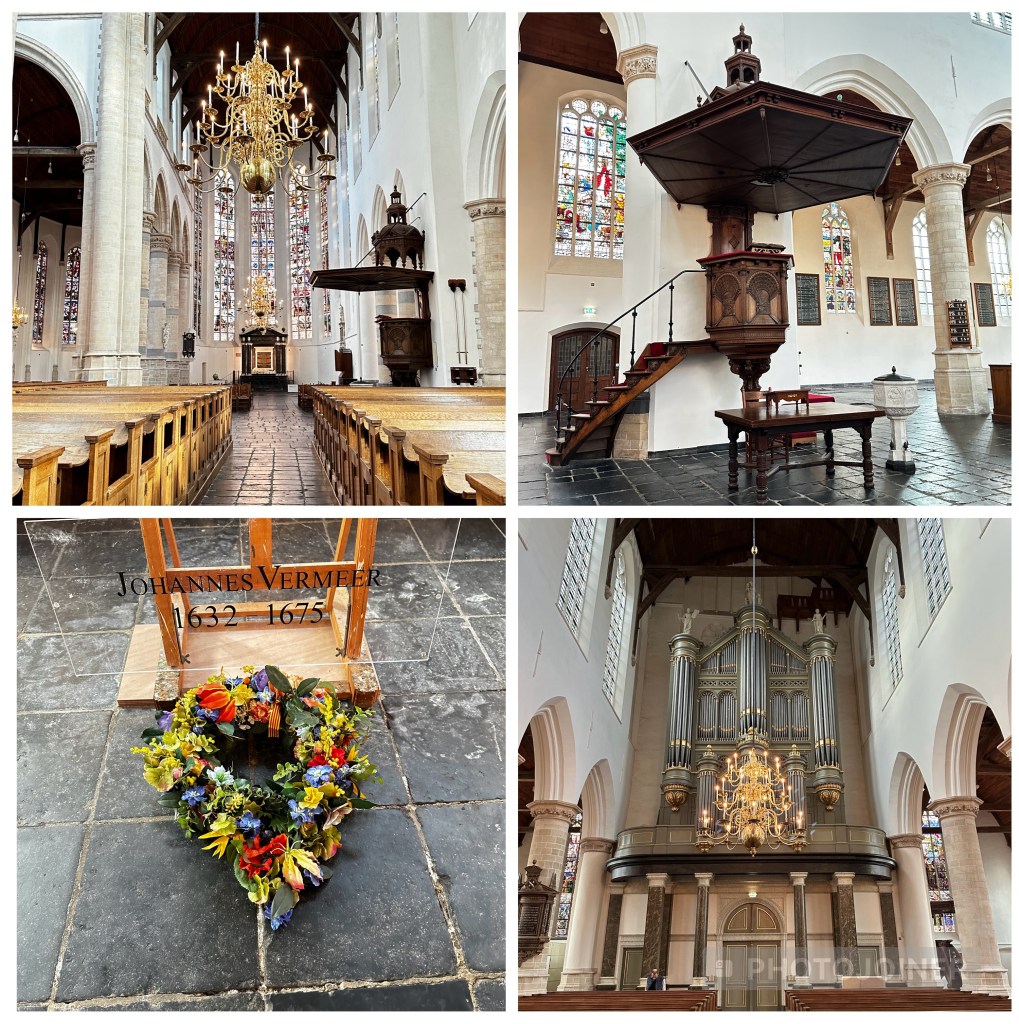
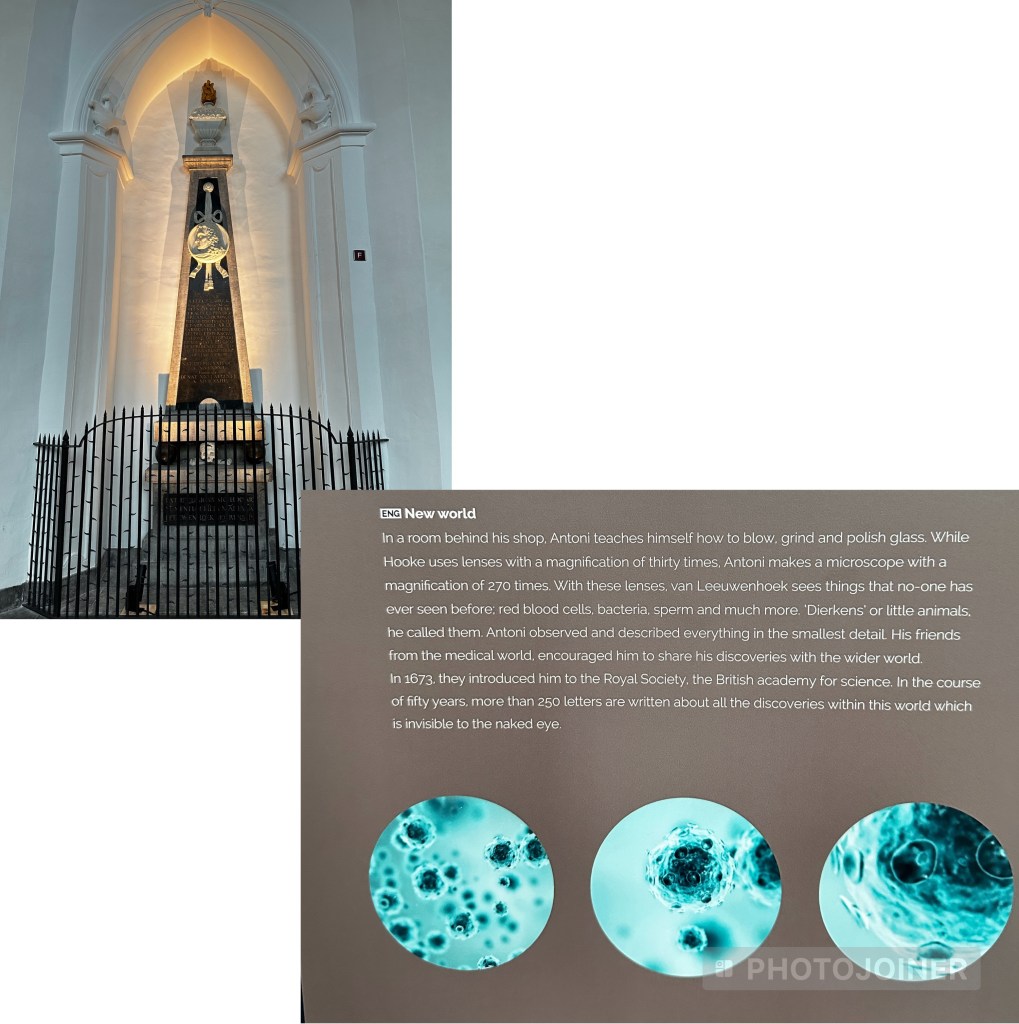
The interior of the Oude Kerk is less impressive than the New Church, but is still worth a visit (especially because your ticket covers both). The tombs may not be for nobility, but are for interesting people. Johannes Vermeer, Delft’s famous artist, and Antoine van Leeuwenhoek, who first saw bacteria and red blood cells with his microscope, are two of the local celebrities entombed here.
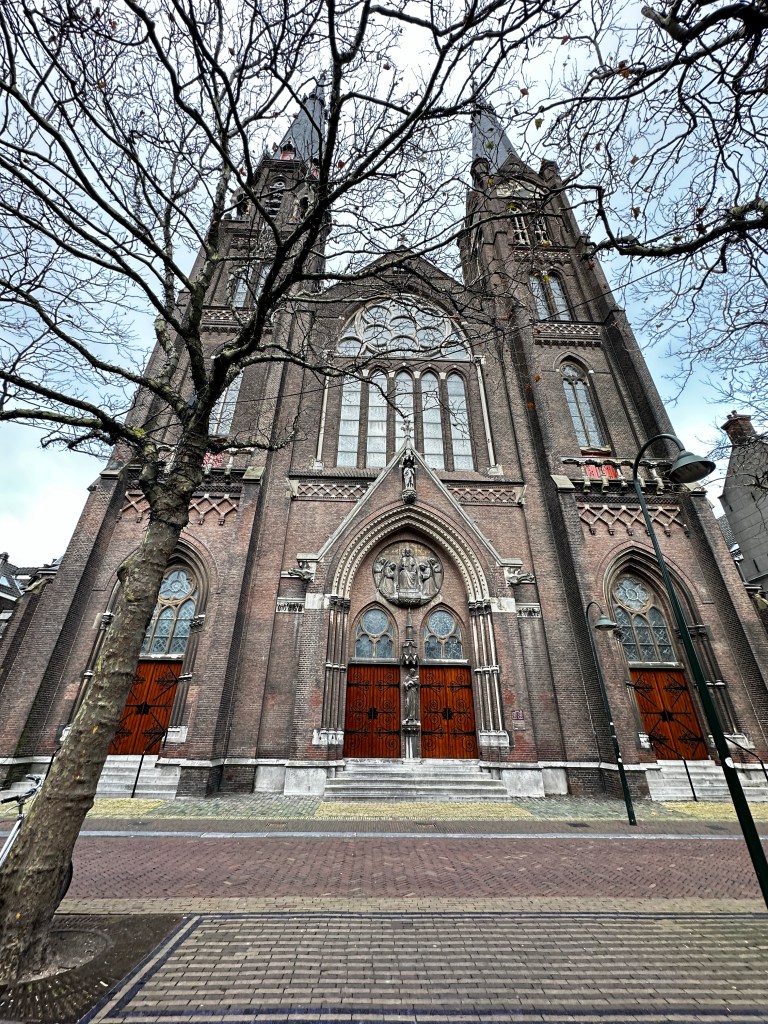
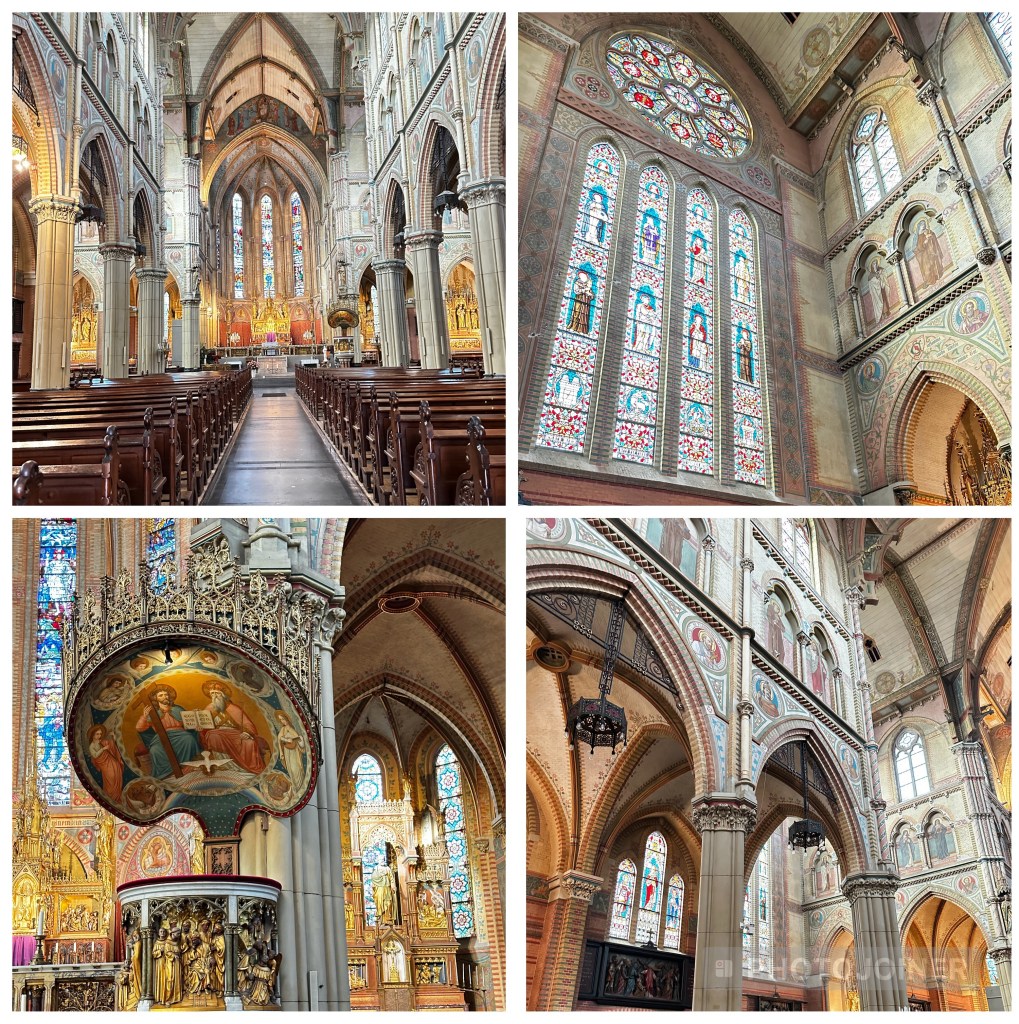
Not garnering the publicity of the New and Old Churches, the Maria van Jessekerk was built in 1875. In contrast to the more austere Protestant churches, this Roman Catholic church is colourfully decorated with murals and statuary.
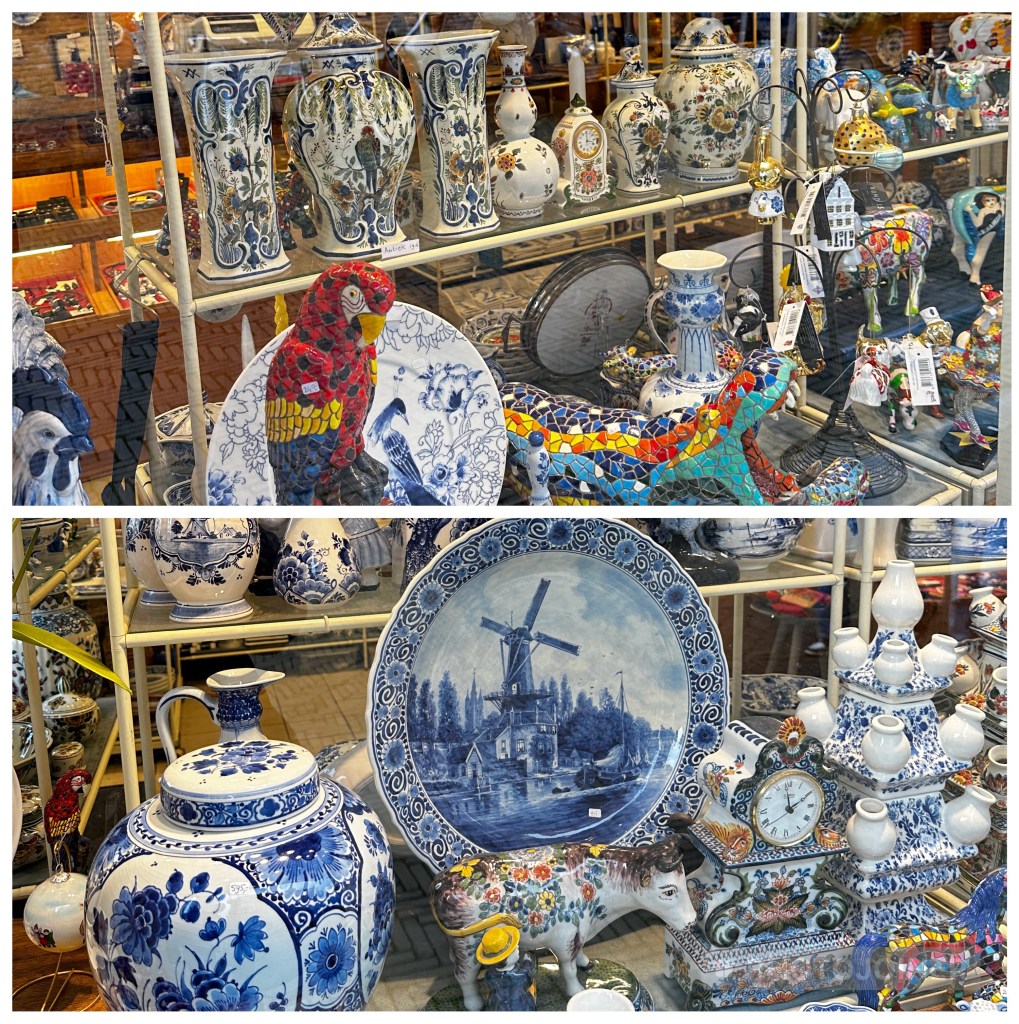
Delftware, the famous blue hand-painted pottery, abounds in Delft. If you have a real interest in its production, you can visit the Royal Dutch Delftware Manufactory. We chose not to, just perusing the pottery in a couple of shops (including one where we could watch some hand-painting in process).
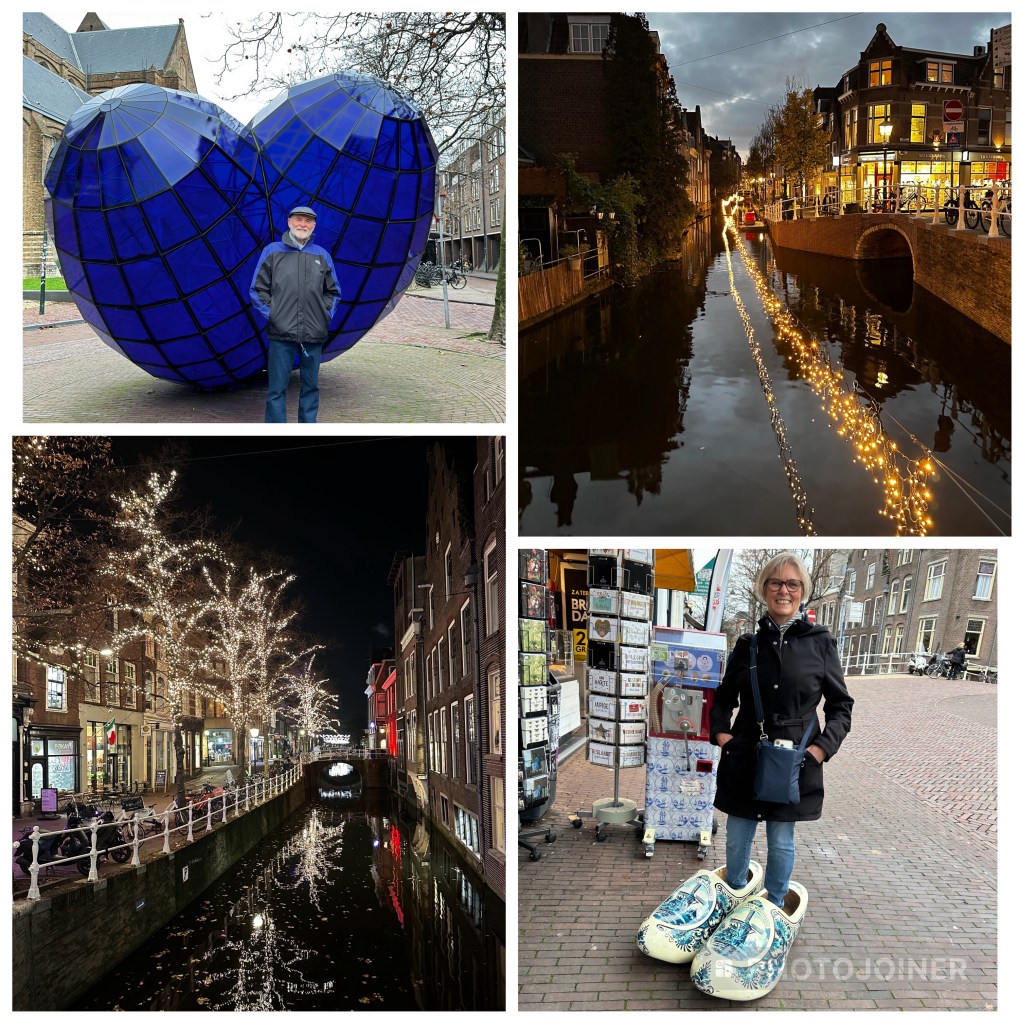
We really enjoyed wandering the streets next to the canals and found Delft to be utterly charming. Here are just a few more of the many photos we took.
For a day trip, we took the Number 1 Tram to The Hague (Den Hague). You can hop on this tram just across from the train station, purchase your 8 euro day ticket from the machine on the tram, and hop on and off as you please. The ride to the centre of The Hague is only about 20 minutes.
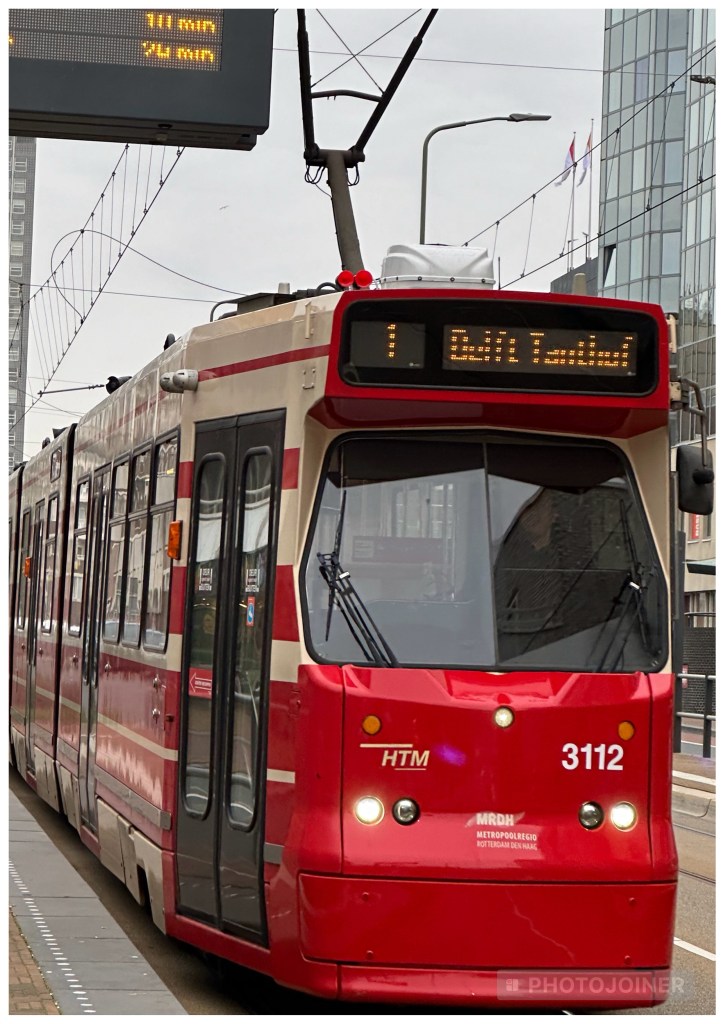
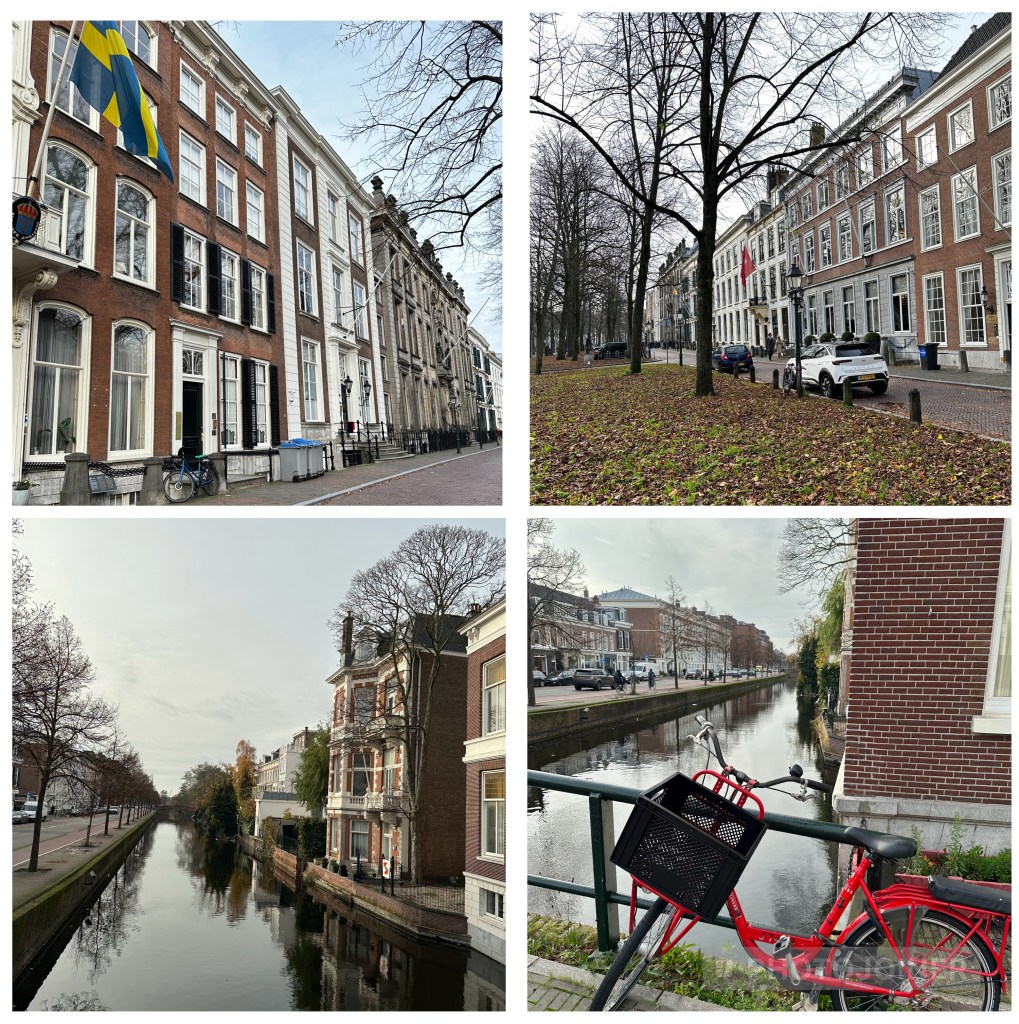
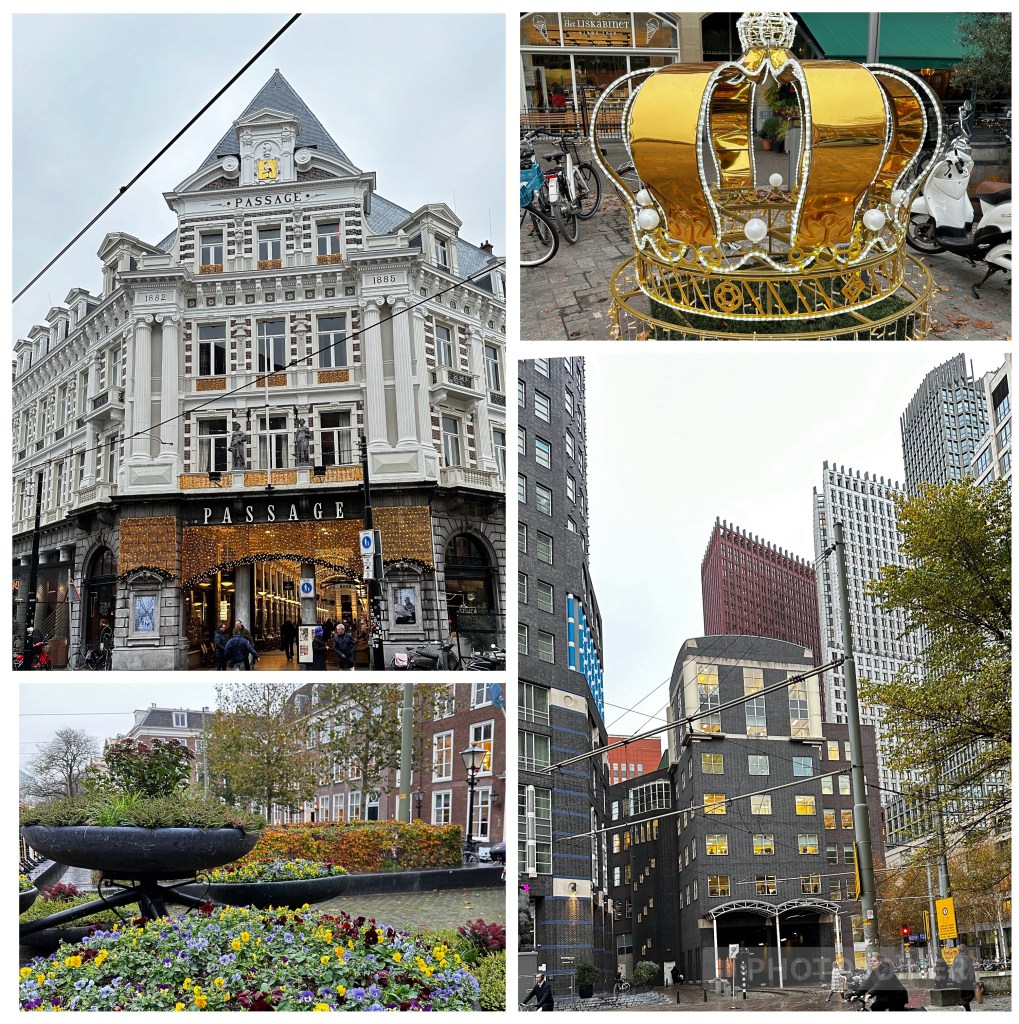
The Hague has ~500,000 residents, but you can easily reach a number of interesting sights on the tram. The seat of the Netherland’s government since 1588, it has many glass skyscrapers with some interesting architecture. We had read that it has lost it’s old world charm, but we found that while it may not be as tranquil as Delft, we enjoyed the areas we visited and felt it was well worth the day trip. There were many grand houses as well as a multitude of embassies lining the boulevards.
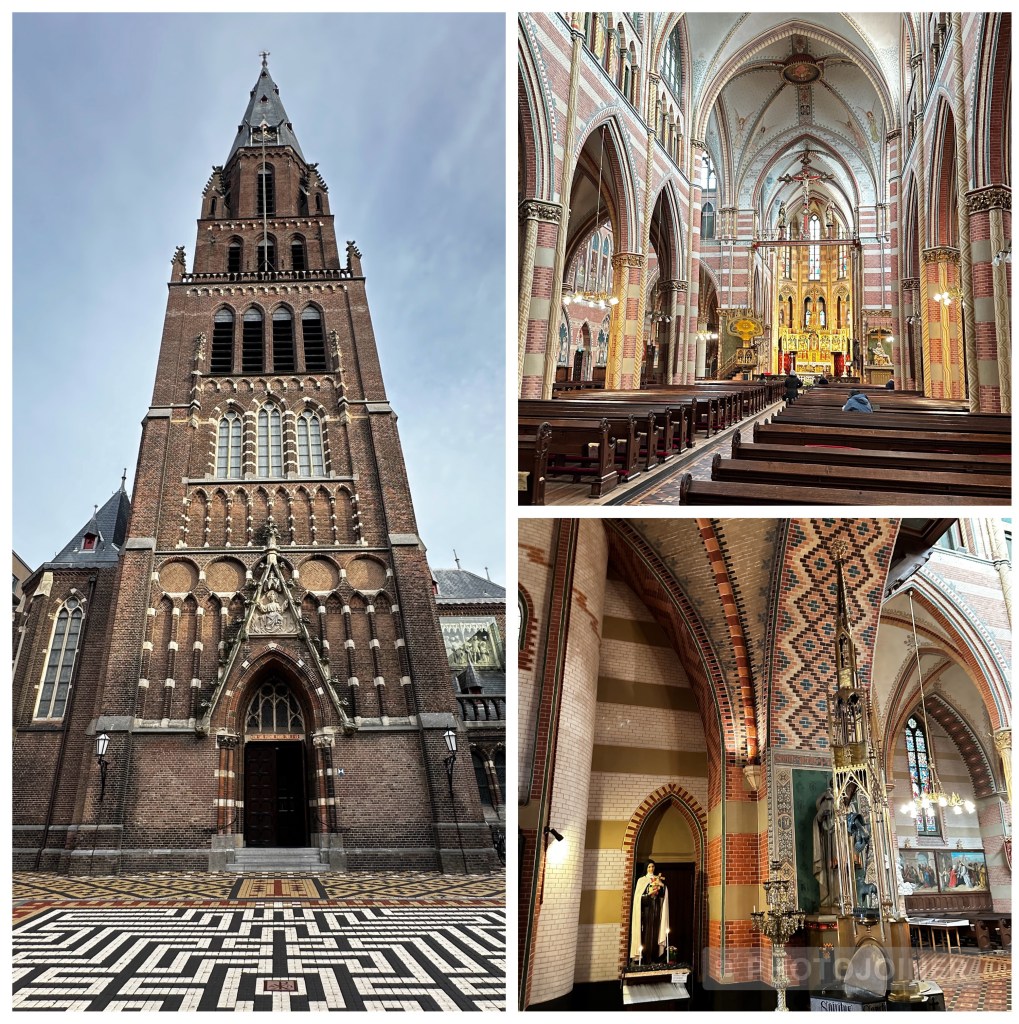
We passed by the Church of Saint James the Greater and stopped in for a look – another beautiful house of worship.
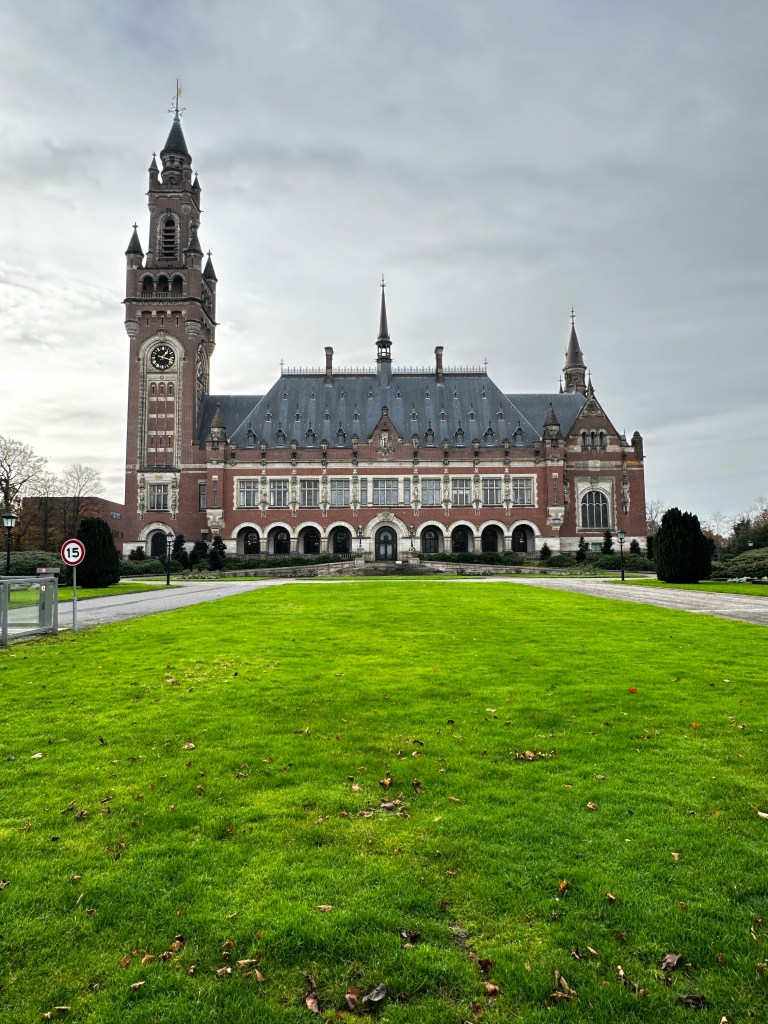
The Peace Palace (Vredespaleis) houses the International Court of Justice and the Permanent Court of Arbitration. While you are only allowed to visit on very limited days, with advance approval, and then usually only the gardens, it was still interesting to see the building from outside the impressive gates. There is a free visitor centre with some small exhibits and information.
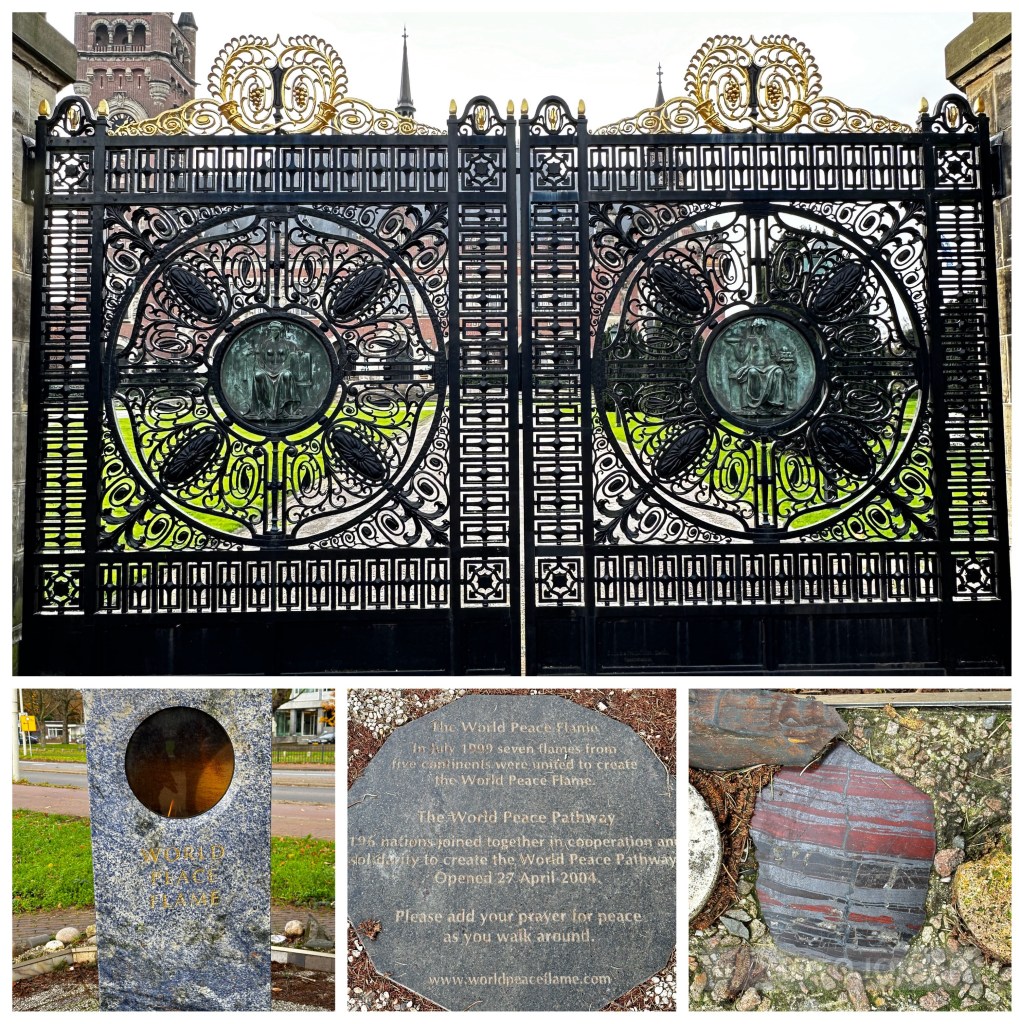
The first ever World Peace Flame monument was inaugurated on 18 April 2002 in The Hague. It stands just outside the Peace Palace gates. In 2004, the World Peace Flame Pathway was built around the monument, with contributions from every independent country of the world. Canada’s stone is the red and black stone pictured below.
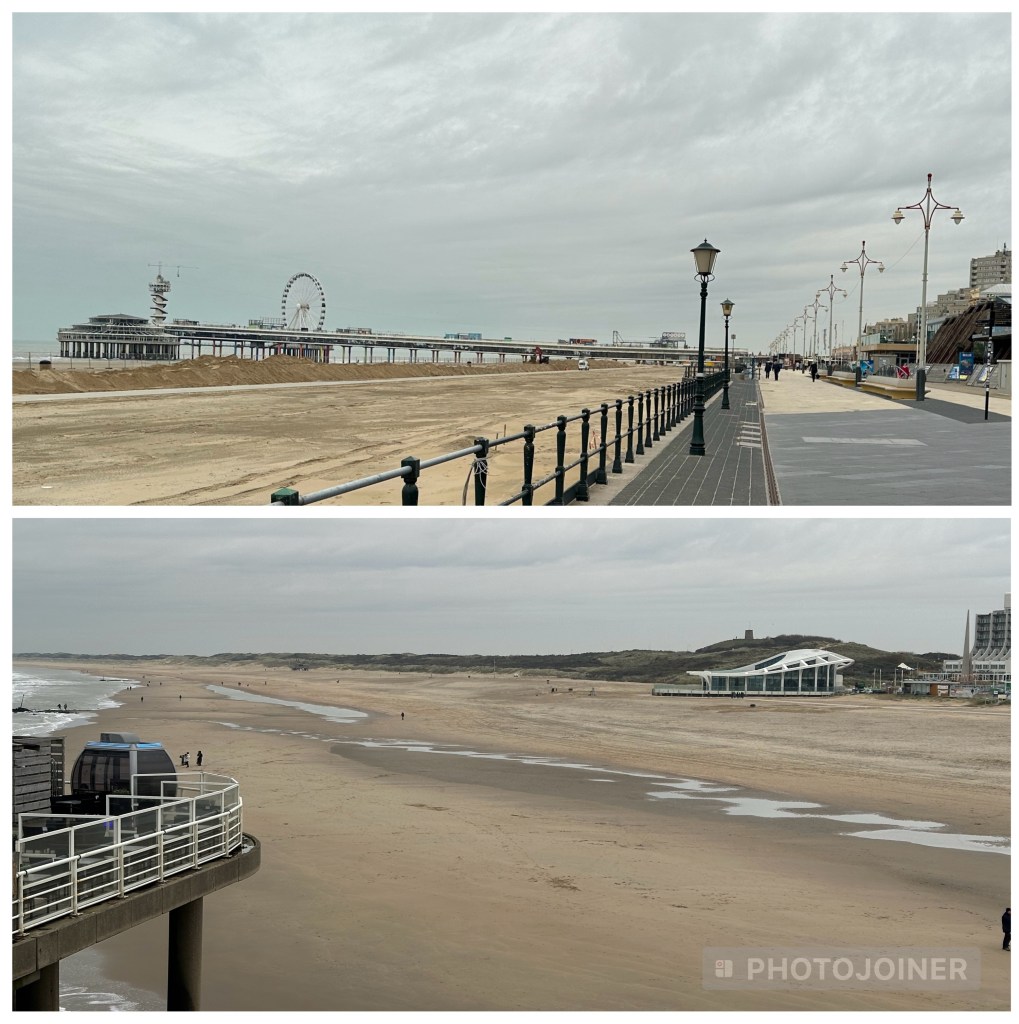
We took the tram to Scheveningen, the beach. In November, we were surprised that we weren’t the only ones there but it was far from busy. We can only imagine what it would be like in the summer!! The sand stretches as far as you can see and the beach is lined by every type of amusement and restaurant.
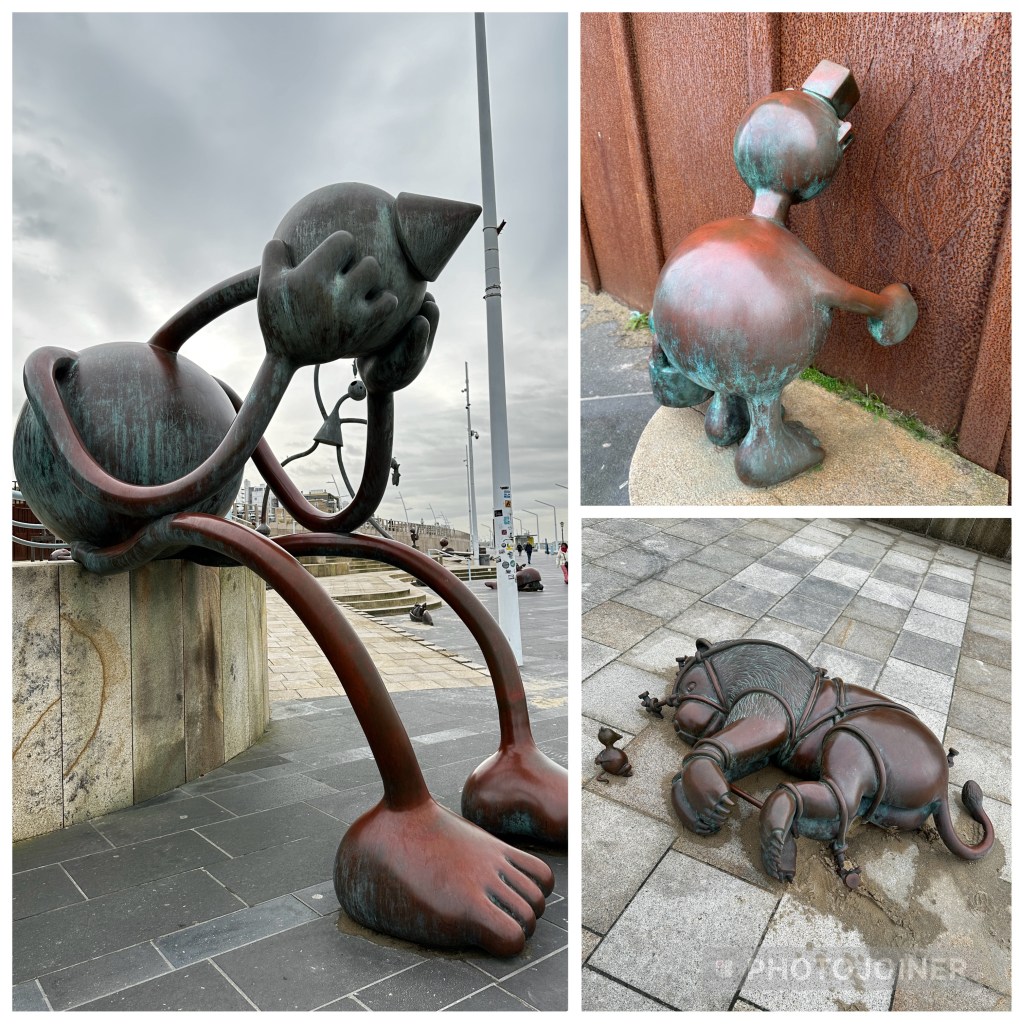
We were entertained by an exhibit of bronze sculptures by the Beelden aan Zee Museum.

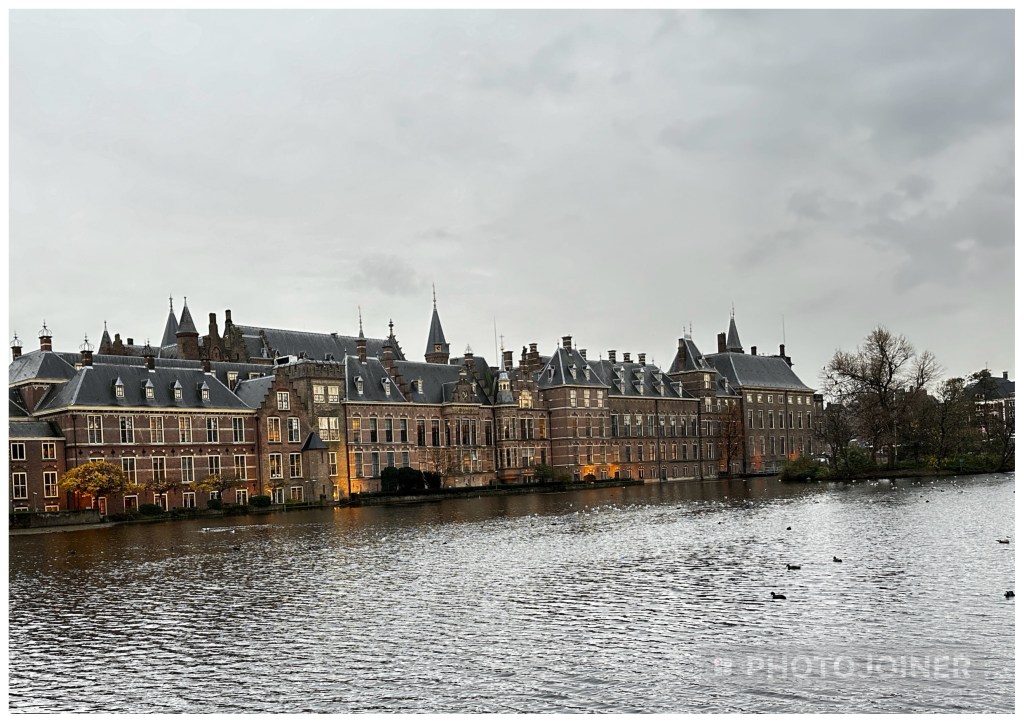
The Binenhof Parliament Complex sits next to the Hofvigver Lake in the centre of The Hague and houses the Prime Minister’s office as well as both house of parliament. There were news crews out and about on the day of our visit as it was election day.
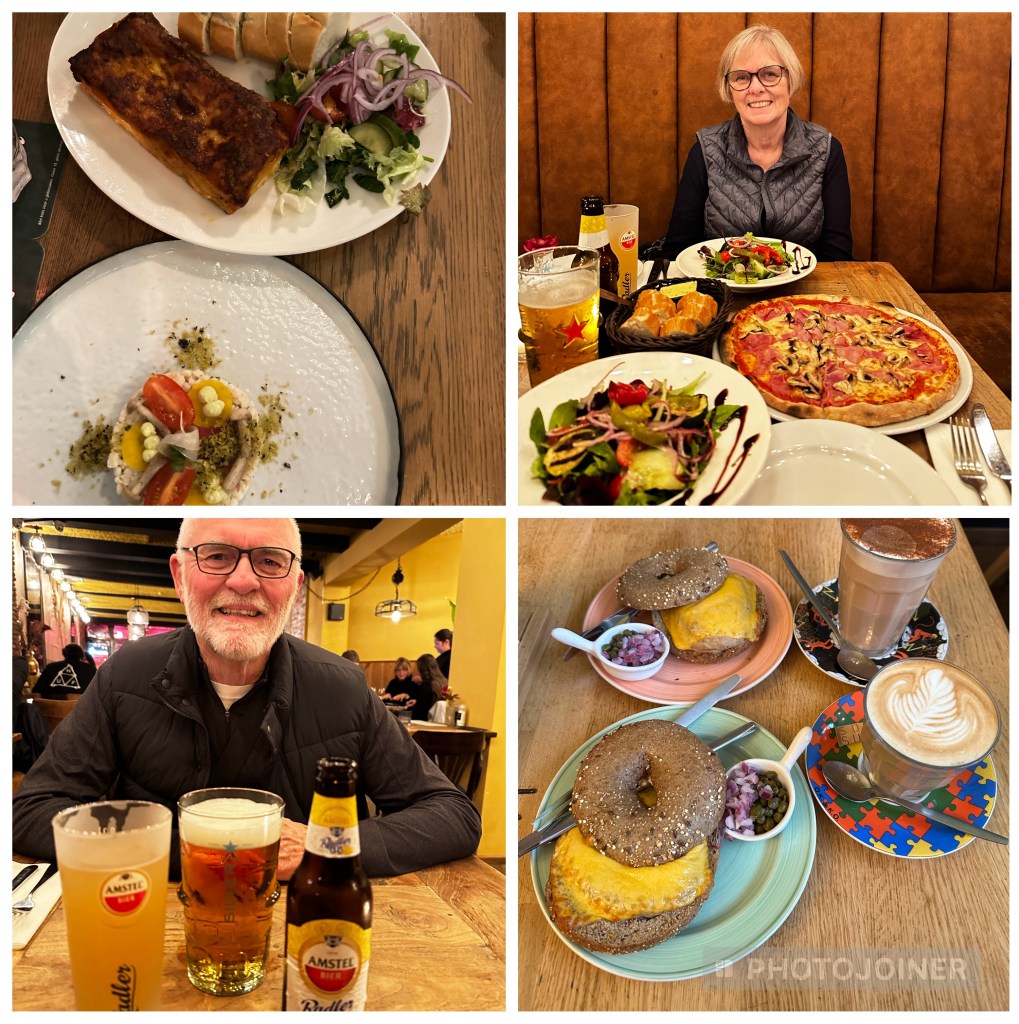
We of course enjoyed some delightful meals in Delft and The Hague including some pictured below.
We found Delft and The Hague a wonderful introduction to the Netherlands. From here, we are off to another home base – more on that later!
Cheers,
Bev and Harvey
 A Long and Winding Journey
Happy you enjoyed Delft. We always enjoyed our visits there. The market is also wonderful.
LikeLiked by 1 person
Bev
Thanks for all the great pictures and the historical context. Your blog brought back our own memories of visiting Delft. One picture in particular of Delft is reflective of a painting we have; the small house sitting right beside the canal behind the Nieuwe Kerk. Love the detail in your blog. Ralph
Sent from Gmail Mobile
LikeLiked by 1 person