The history of European Christmas Markets dates back to the 1200’s, although the open air markets of the Middle Ages with street vendors selling their wares around the holidays are often considered to be the forerunner of the markets as we know them today. In 1296, a 14 day fair in the month of December was first held in Vienna. Open air Christkindlmarkts trace their roots to the late 1300s and Dresden and Nuremberg boast their origins in 1434 and 1628 respectively. There have been some troubled times and times of resurgence and today, the appeal of the markets has spread across Europe and indeed, around the world.
In 2018, we enjoyed visits to a number of markets. If. you are interested, we have blogs about the markets in Bruges and Brussels in Belgium, Valkenburg in the Netherlands and Luxembourg City, as well as a bit of information about Christmas in London.
There are thousands of Christmas markets in Europe, including about 3000 in Germany alone. If you are interested in learning about some of these, just search the internet and you will find a myriad of information. For our fall Europe trip this year, we chose two German cities – based on reviews we had read and the ease of transportation – Cologne (or Köln) and Frankfurt.
From Amsterdam’s Centraal Station, we took a NS International Train to Cologne Hauptbahnhof. The ride was just under 3.5 hours and as there wasn’t a huge price difference, we chose the first class coach. The seats were spacious and comfortable and it was an excellent journey.
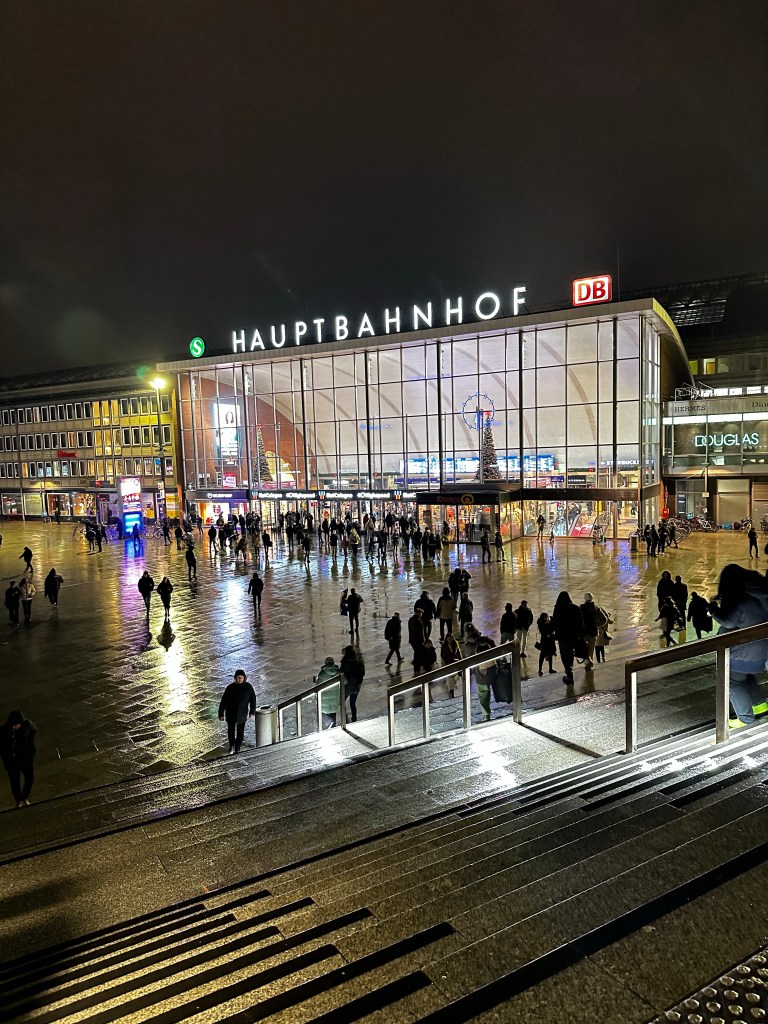
As we just had 3 nights in Cologne, we wanted to stay close to the train station and the heart of the markets. We chose the Hilton Cologne and were pleased with the choice. Our king room offered lots of space and all the amenities one would expect in a major Hilton hotel.
On our first evening in Cologne, we took a short walk to the Früh am Dom Bierhaus where we enjoyed delicious goulash soup and amazing apple strudel.

Cologne is Germany’s fourth-largest city with a metropolitan population of just over 1.1 million people. It has a rich history as a cultural and religious capital along the Rhine River. Close to 95% of the city was destroyed by World War II bombs, and today it is a mix of new and rebuilt quaint architecture.
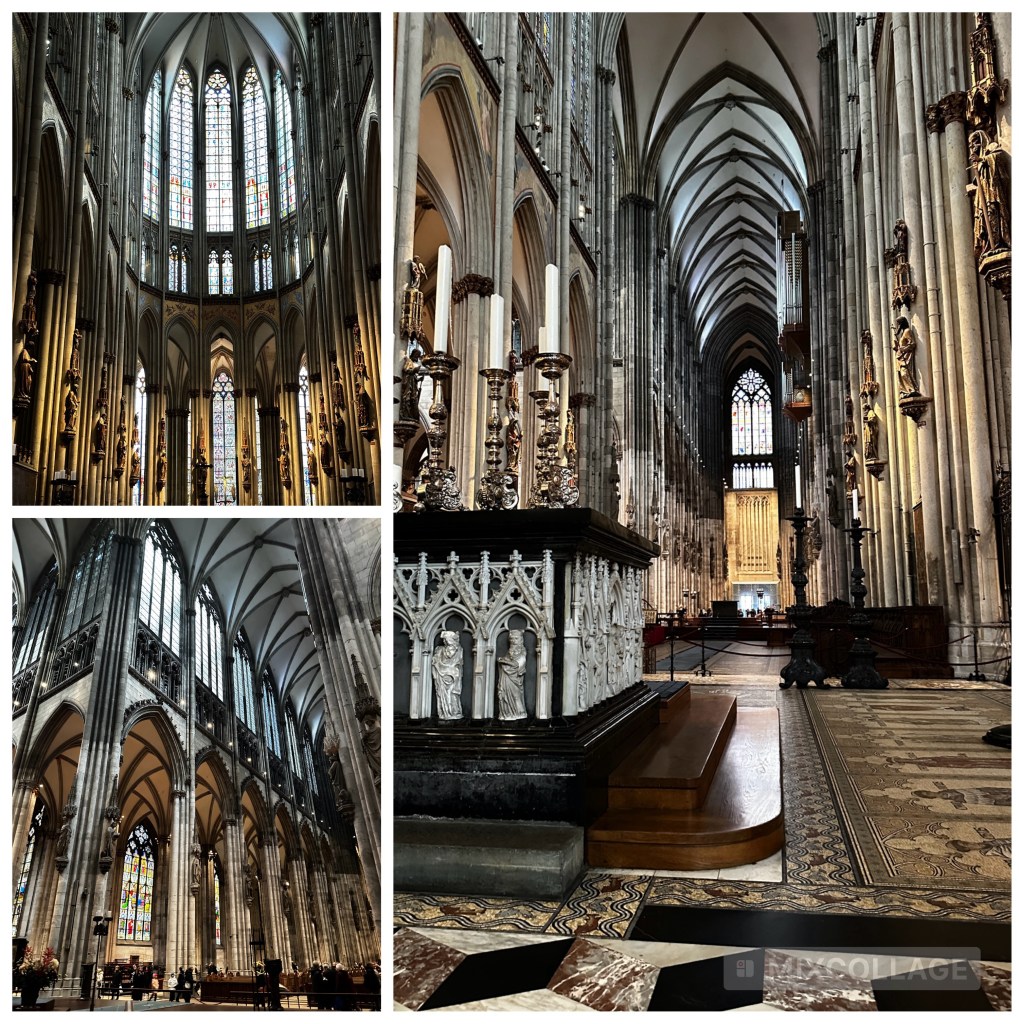
The absolute highlight of the city is the Cologne Cathedral or Dom. It dominates the skyline and can be seen from most anywhere in the central core. The church was begun in 1248 with its inauguration in 1322. However, it was not until the 1800’s that it was completed – 700 workers completed the construction in just 38 years (1842 – 1880). It was hit by 14 bombs in WWII but remained standing.
The cathedral is 157 metres high and is the tallest twin-spired church in the world, the second tallest church in Europe and the third tallest church of any kind in the world. It was named a UNESCO World Heritage Site in 1996 and is visited by an average of 20,000 people a day. Luckily, on a cool day in late November, it was not at all crowded. Admission to the cathedral is free, although there are fees if you wish a guided tour, a visit to the Treasury or a climb of the 509 steps of the south tower.


Inside the cathedral, you are again overwhelmed by the sheer size – the ceiling is 44-metres high and the five aisles stretch over 144 metres. The stained glass is awe-inspiring.

There are at least nine separate Christmas Markets in Cologne. We visited six of them and enjoyed the diversity.
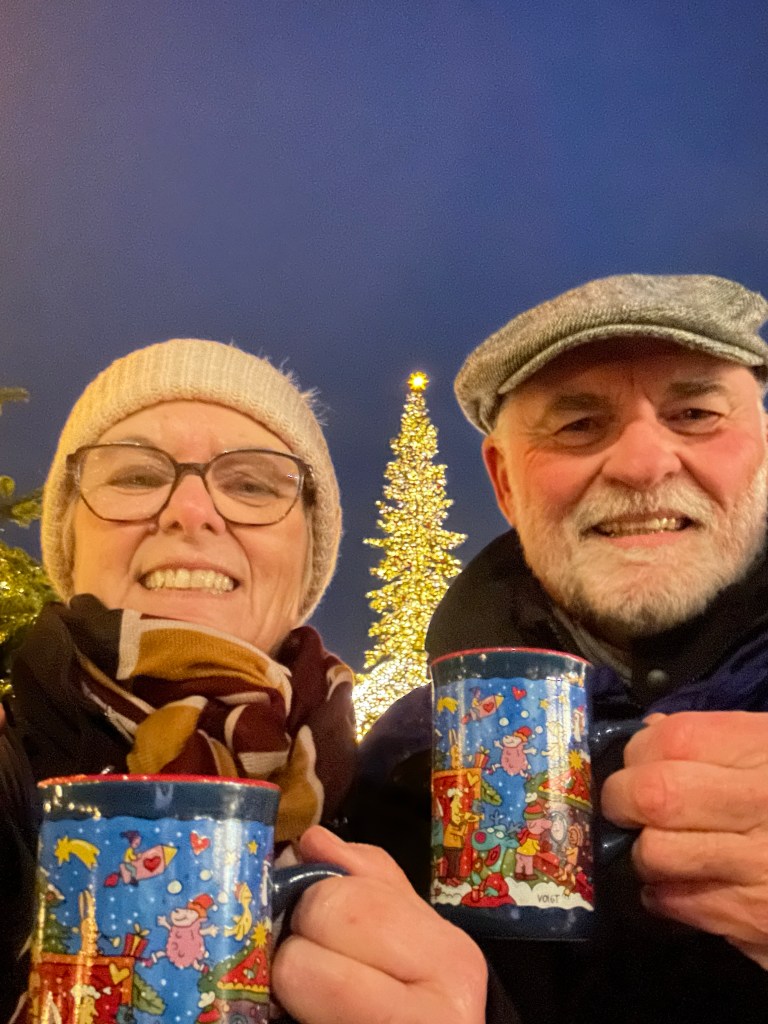
Glühwein is hot wine mulled in spices and it is THE official drink of every Christmas market in Germany. Each market has their own, unique ceramic mug that coordinates with the theme of the market. You pay a €3 deposit on the mug which you receive back when you return your mug. We chose to keep a couple as they are great souvenirs!
The Christmas market at the Cologne Cathedral (Weihnachtsmarkt am Dom) is the most popular of the markets. It is located in the shadow of the Cathedral on Roncalliplatz, giving it a very special ambiance. Approximately 150 stands have red roofs and are each decorated with a star and a garland of fir branches. The many lanes branch out from the central 25-meter-high Christmas tree. A net of lights with 50,000 LEDs stretches from the Christmas tree across the Christmas market.
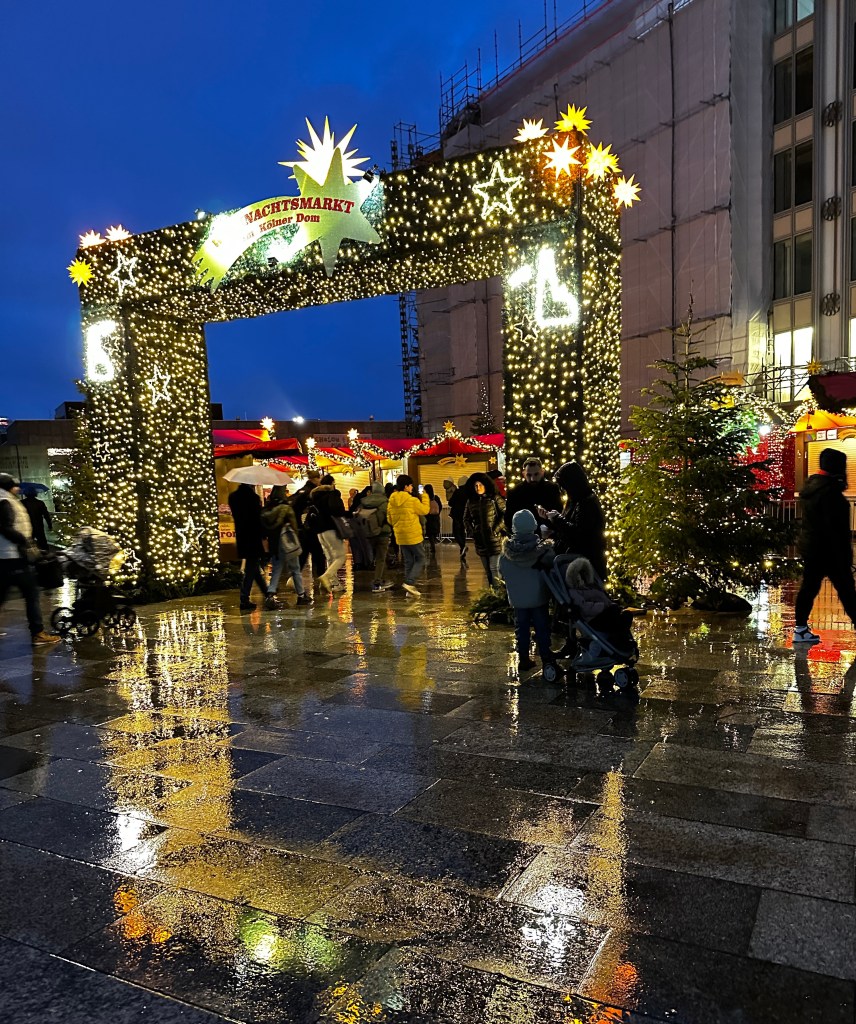

There is a large stage in front of the Christmas tree, where concerts, performances, and hands-on activities take place several times a day. Also, in the photo box near the entrance to the Christmas marke, you can have a photo taken with your loved one under a very large mistletoe.

The organizers expect over 4 million visitors each year to this market. We enjoyed visiting in the morning (although many of the vendors were not yet open) and the afternoon when it was festive but not crowded. We visited this market briefly each evening and were overwhelmed by the throngs of people; however, the lights were magical and once we located the stands we were looking for, the market food was great! We loved their glühwein mugs and stowed them away in our luggage.

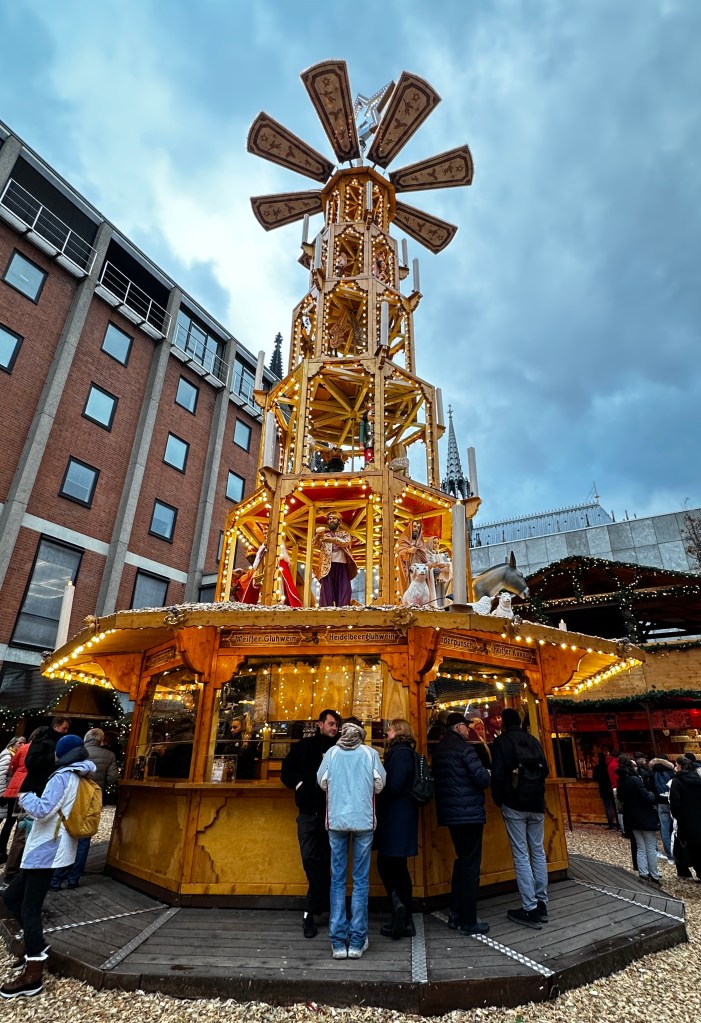
Just southeast of the Cathedral market, on Am Hof street is the small Advent Village with a Christmas pyramid. These pyramids are a traditional staple of German Christmas markets.
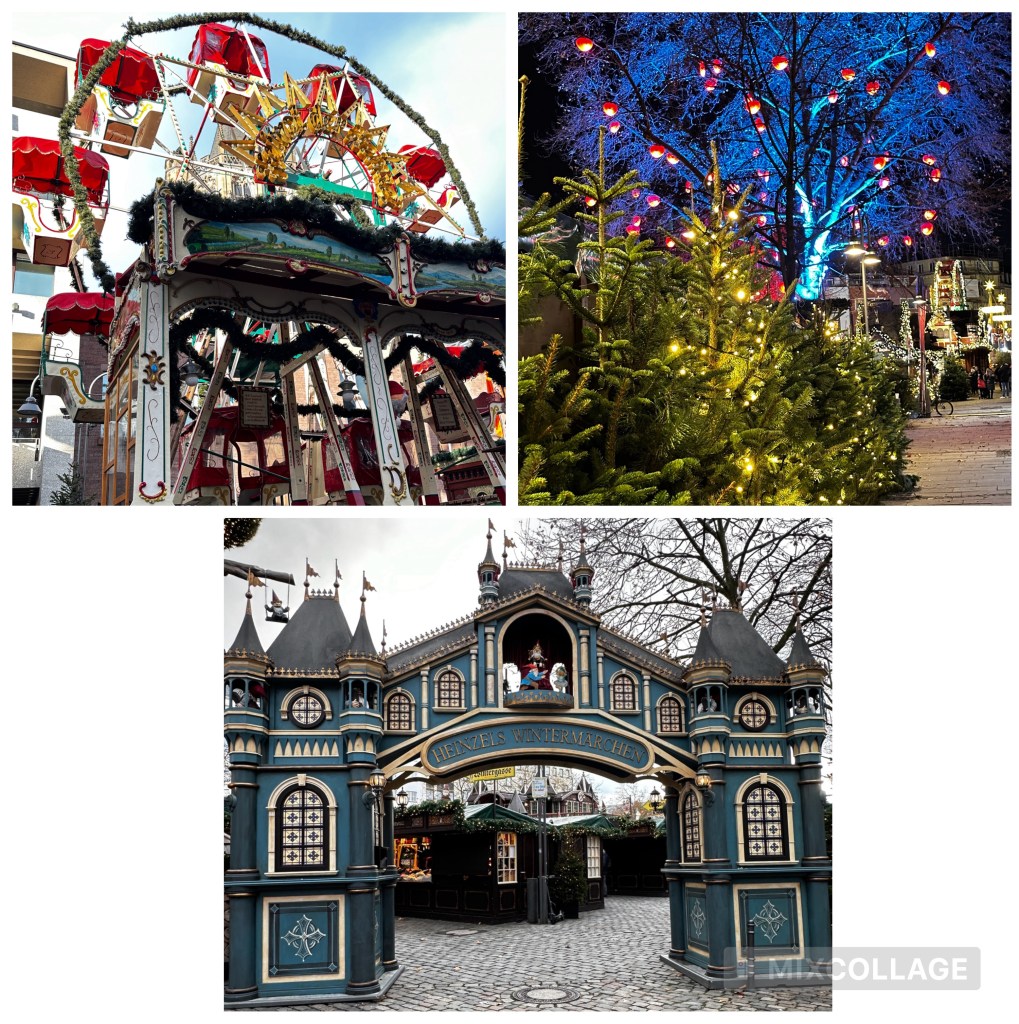
The Market of the Heinzel (Heinzels Wintermärchen) consists of two areas in the old town: the Christmas market at Heumarkt and the Christmas market at Alter Markt. Heinzels Wintermärchen (Heinzels Winter Fairytale) had a woodland/gnome theme. The stalls are wooden and more rustic, with garland lining the tops of the stalls, invoking the feeling of walking through the forest. Heinzel’s Winter Fairy Tale is dedicated to the Heinzelmännchen – little creatures from a Cologne legend that says that the hard-working little journeymen used to live in the old town of Cologne and did the work of the local craftsmen at night.

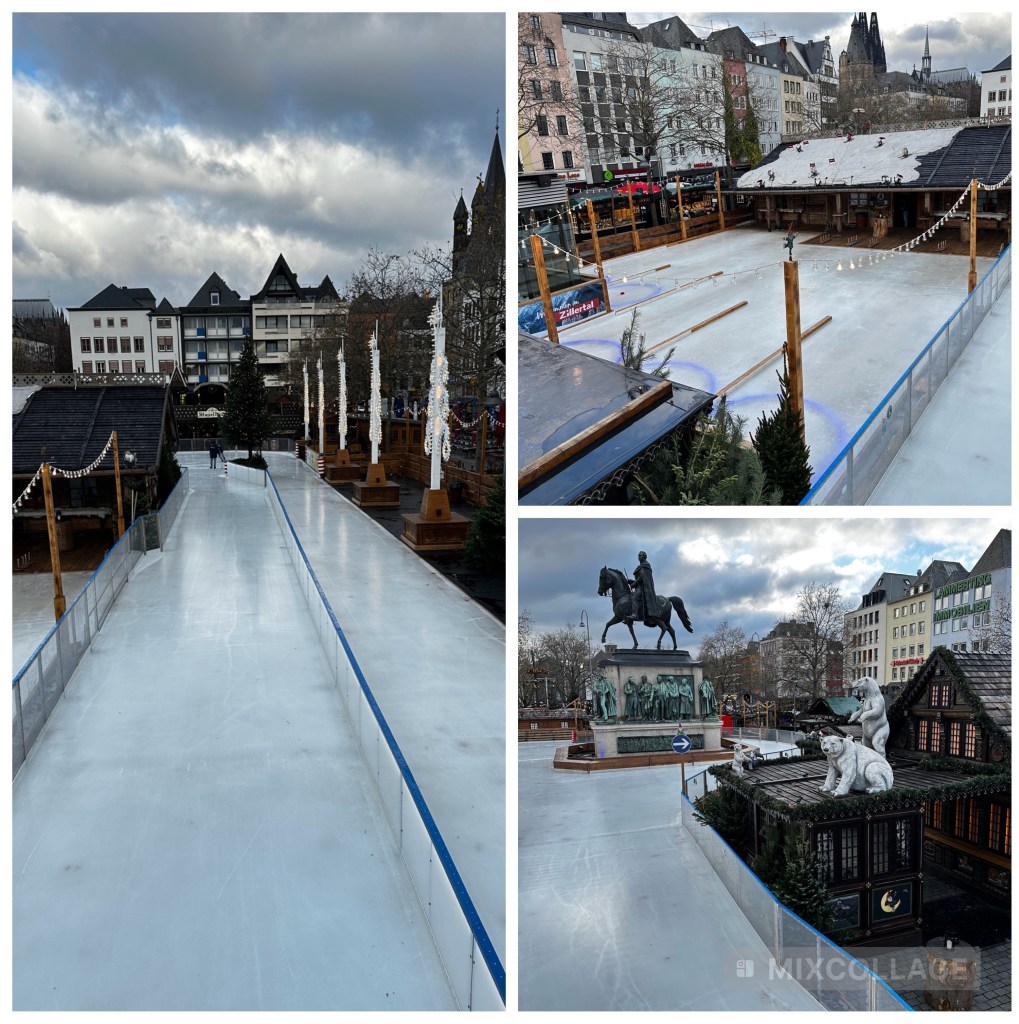
The Christmas market at Heumarkt is highlighted by an ice rink that stretches more than 100 meters around parts of the square and the equestrian monument. There is also an area for ice stock (Eisstockschießen) – a sport somewhat similar to curling.
At the Christmas market at the Alter Markt, there is a Ferris wheel and a Christmas post office, a teddy land, wooden games, and much more.
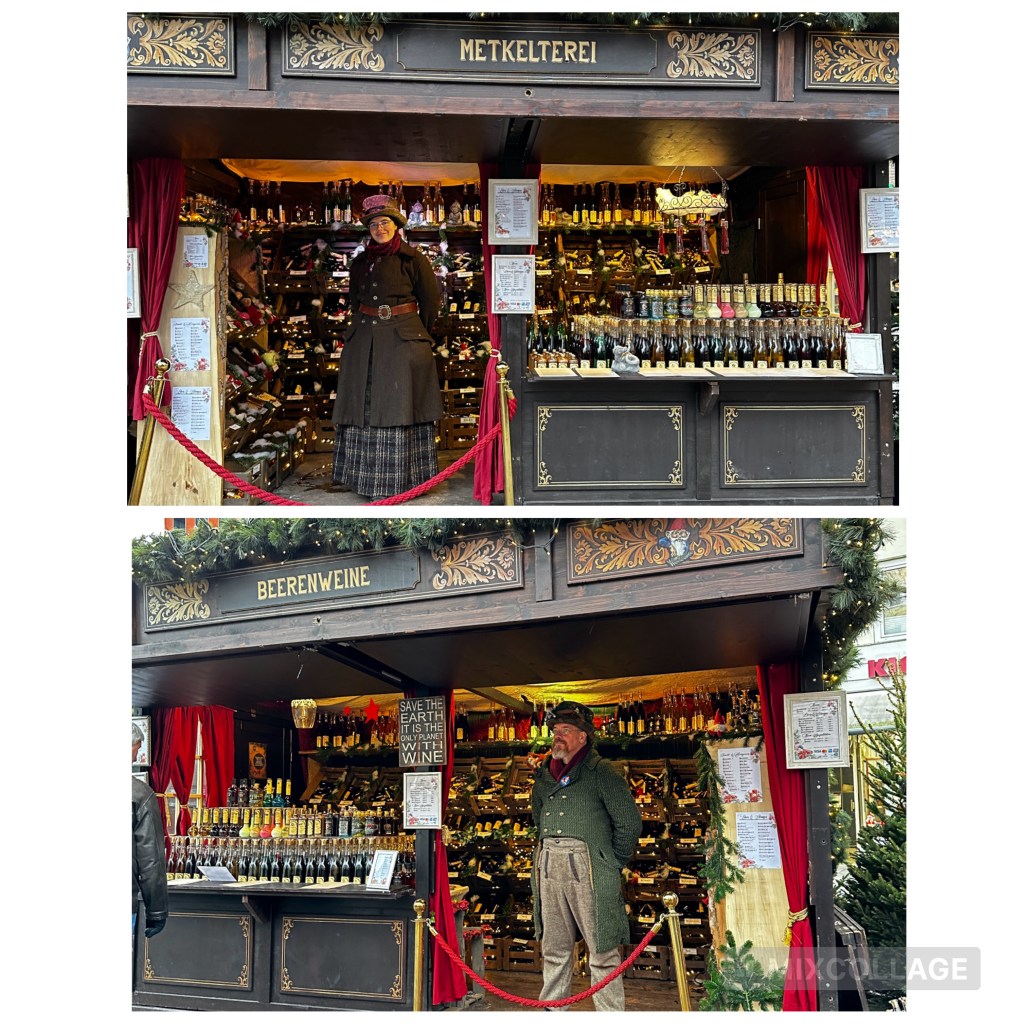
We loved this market – the vendors were dressed in authentic costumes and you could watch many artisans in action – from wood carvers to blacksmiths to confectioners.


From Heinzels Wintermärchen, we strolled along the river to the Harbor Christmas Market in the Rheinauhafe (Hafen Weihnachtsmarkt).
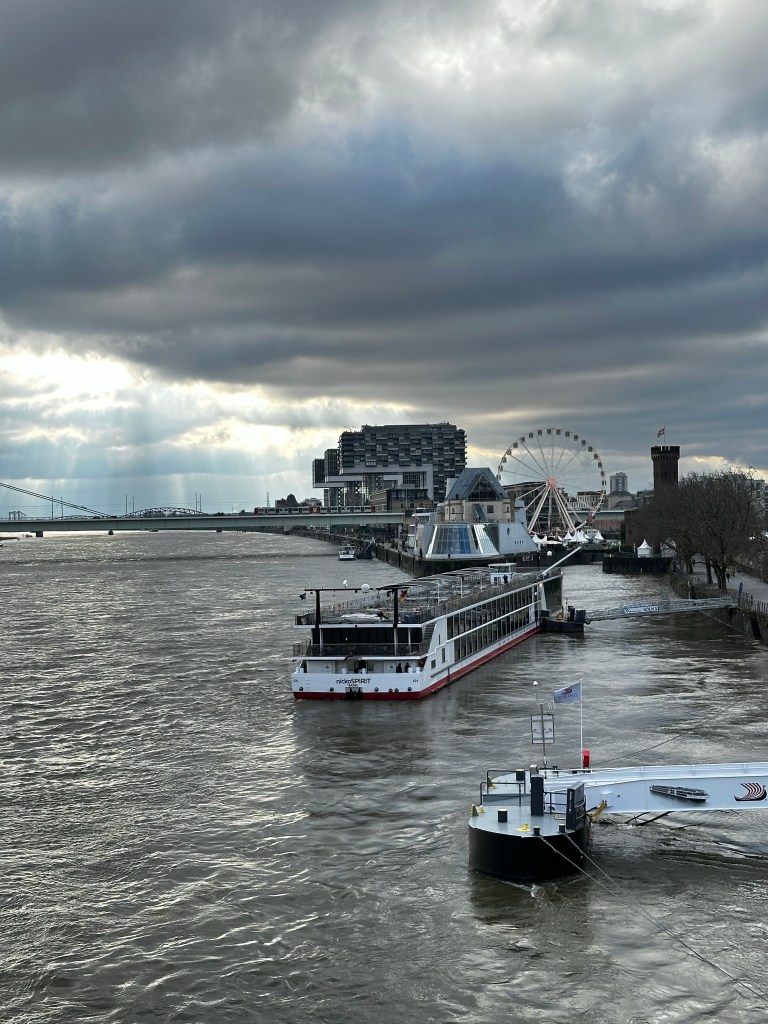
This relatively-new market is on the banks of the Rhine next to the Chocolate Museum. In a picturesque setting overlooking the Rhine, the market imparts a maritime flavour. Snow-white, festively decorated pagoda tents with wooden floors and pointed roofs remind you of the planks and sails of a ship and a 48 m-high ferris wheel sits at the centre.
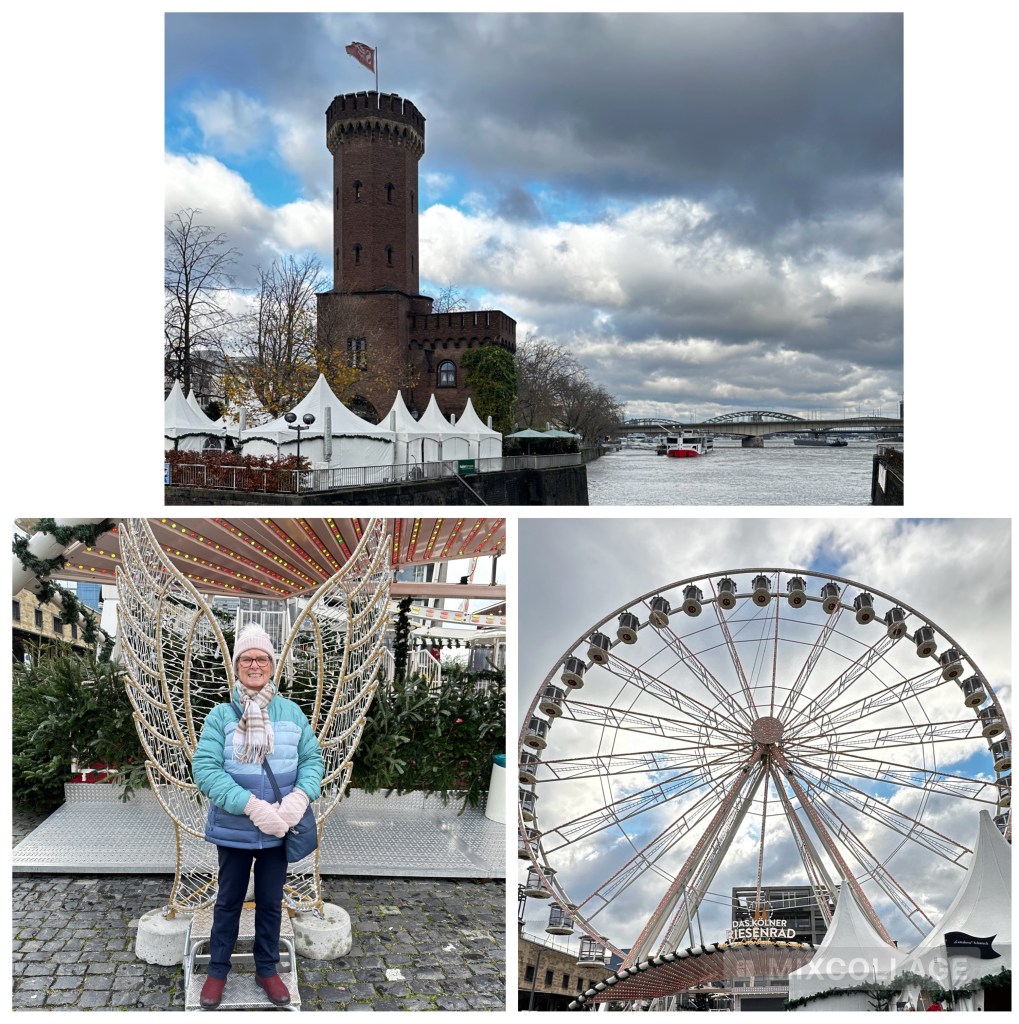
We didn’t visit the Chocolate Museum (well, except for the Lindt store) as it seemed to be the main attraction for groups of school children that afternoon, but we have read that it is quite entertaining.
We wandered through the streets of central Cologne and stopped at the Basilica of St. Severin. This Romanesque church was established in the late 4th century as a memorial chapel and extended several times. The oldest parts of today’s building date back to the 10th century.
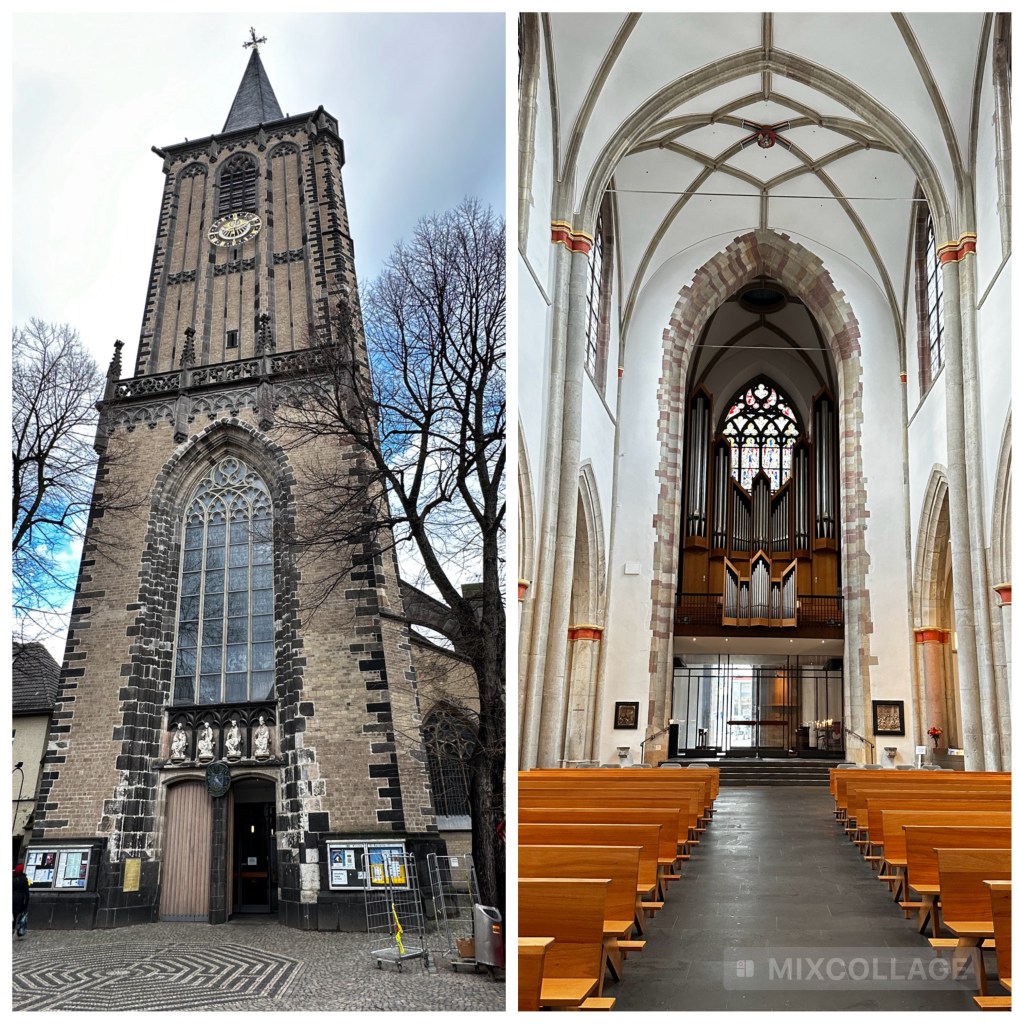
In the shadows of Severins Gate (Severinstorburg), there is a small market on Chlodwigplatz. The 20 stalls are mainly local vendors who offer mulled wine, hot cocktails and all kinds of delicacies as well as handmade gifts. We enjoyed a nice lunch in this tranquil market.

The Christmas Market at the Neumarkt in Cologne (also known as the Market of Angels – Markt der Engel) is a bit outside the immediate city centre. This was one of our favourite markets! Clusters of stars are suspended above and the rustic white stands are decorated with angel figures, oak stars and Christmas wreaths. A starry sky of hundreds of white stars extends over the Christmas market. We thought of our mothers when we noticed two of the carousel horses were named Freida and Berta. We also collected the Glühwein mugs from this market.


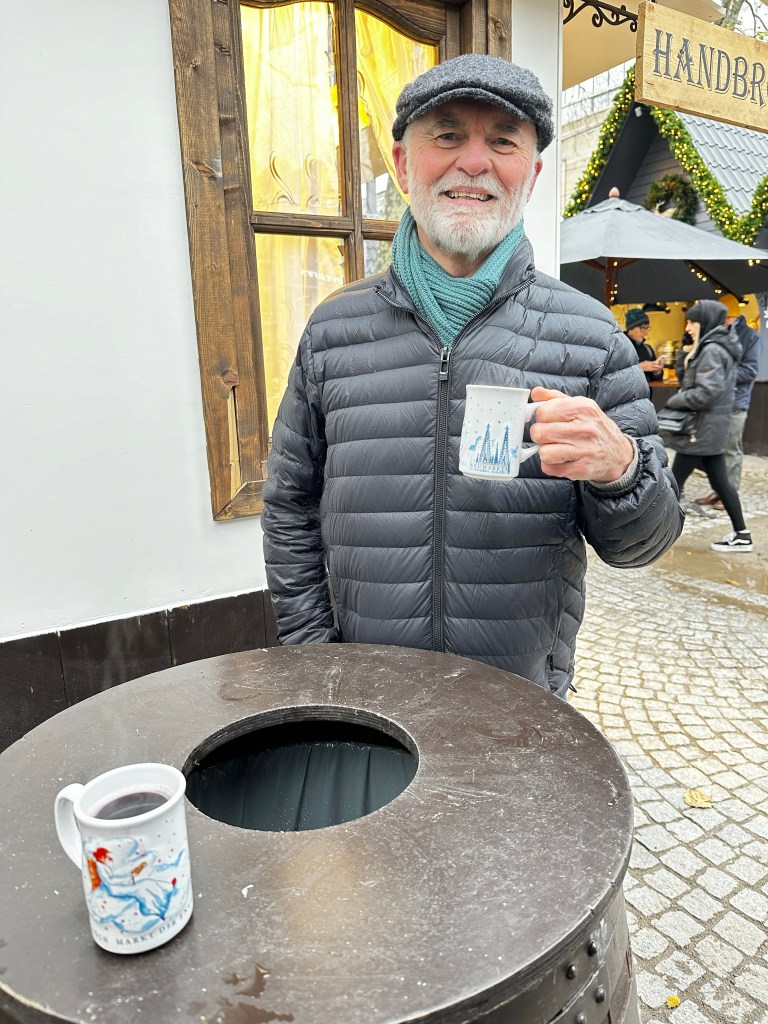
We walked from market to market enjoying the streets of central Cologne.
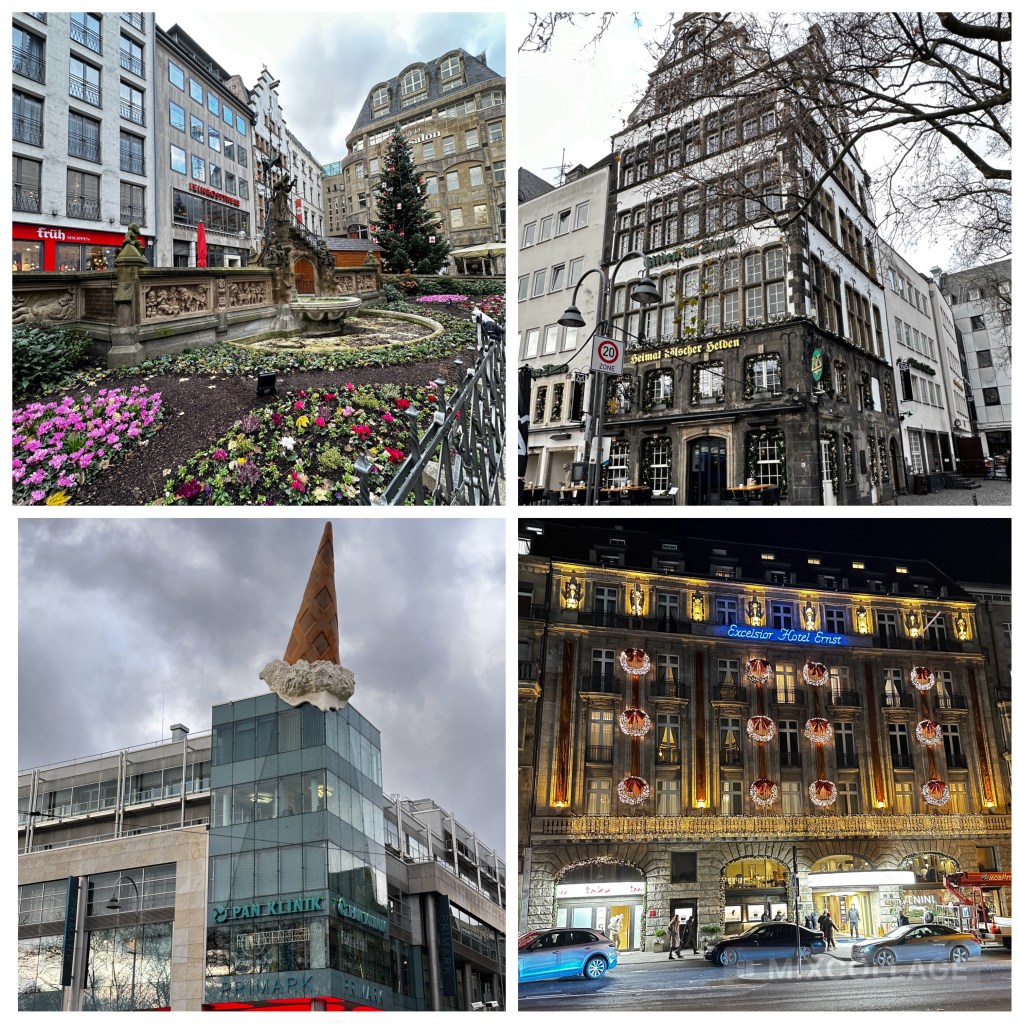
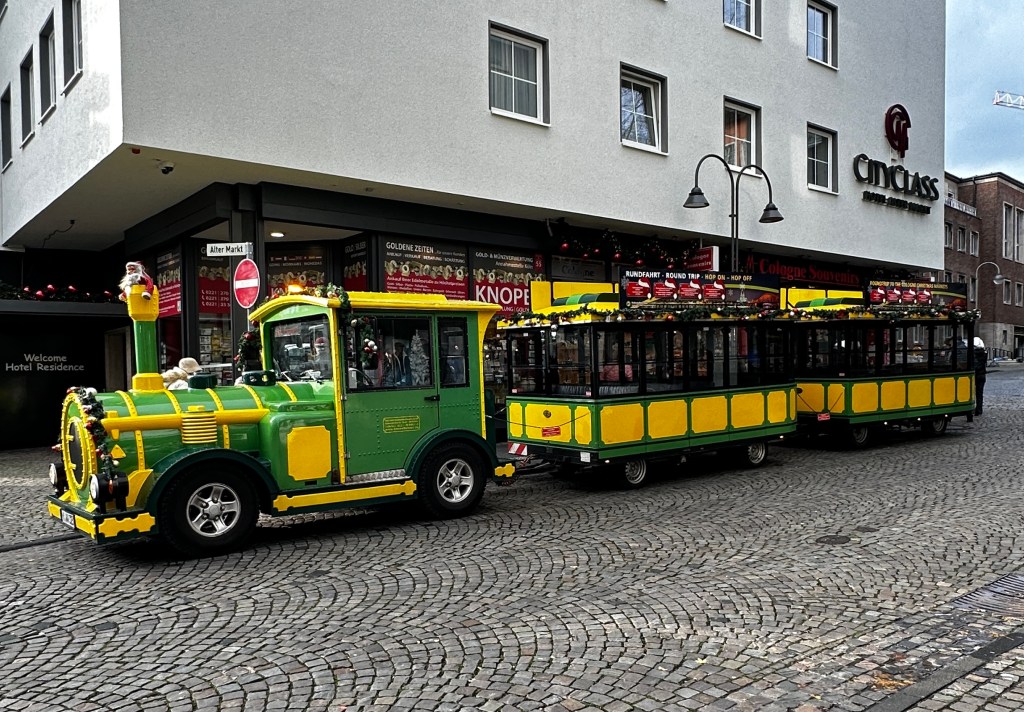
There is also a cute little train that you can travel around on.
As an aside to the Christmas markets, we also visited a totally different venue – Motorworld. Open all year round and free of charge, this complex of around 50,000 sq.m. features a myriad of cars – from classic to high-end modern luxury vehicles. It is also home to the Michael Schumacher Private Collection and features his cars, trophies, race wear, etc. It was quite interesting – and those of you who know Harvey will understand why we spent a couple of hours there! It takes just a single metro ride to get to the complex (HBF to Ikea) – but note, there is not a ticket dispenser at the Ikea stop. We purchased our return tickets on-line when we realized that, but you might want to look at purchasing them before you leave the central station.

We very much enjoyed our short visit to Cologne and the Christmas markets were wonderful! And that Cathedral…… truly spectacular!
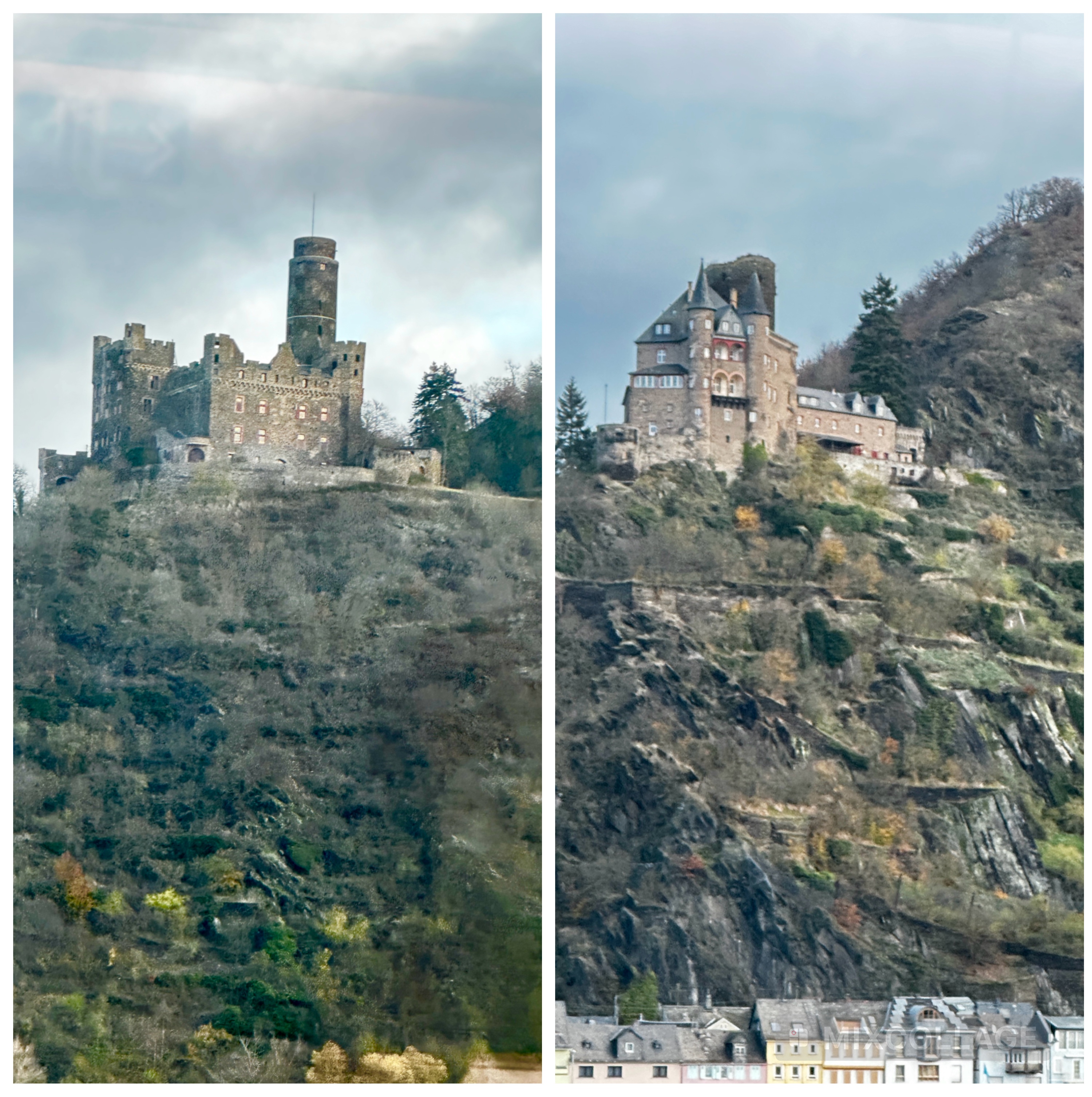
From Cologne, we caught a train to the Frankfurt Airport Train Station. Our originally booked train was rescheduled due to work on the tracks and this turned out to be a serindipitous event. While the journey took two hours rather than the originally scheduled one hour, it travelled along the Rhine River. We passed by castles high above the river, typical little German towns and even the Loreley rock where legends says that a beautiful fräulein enchanted and distracted boatsmen, causing misfortune to their journeys.
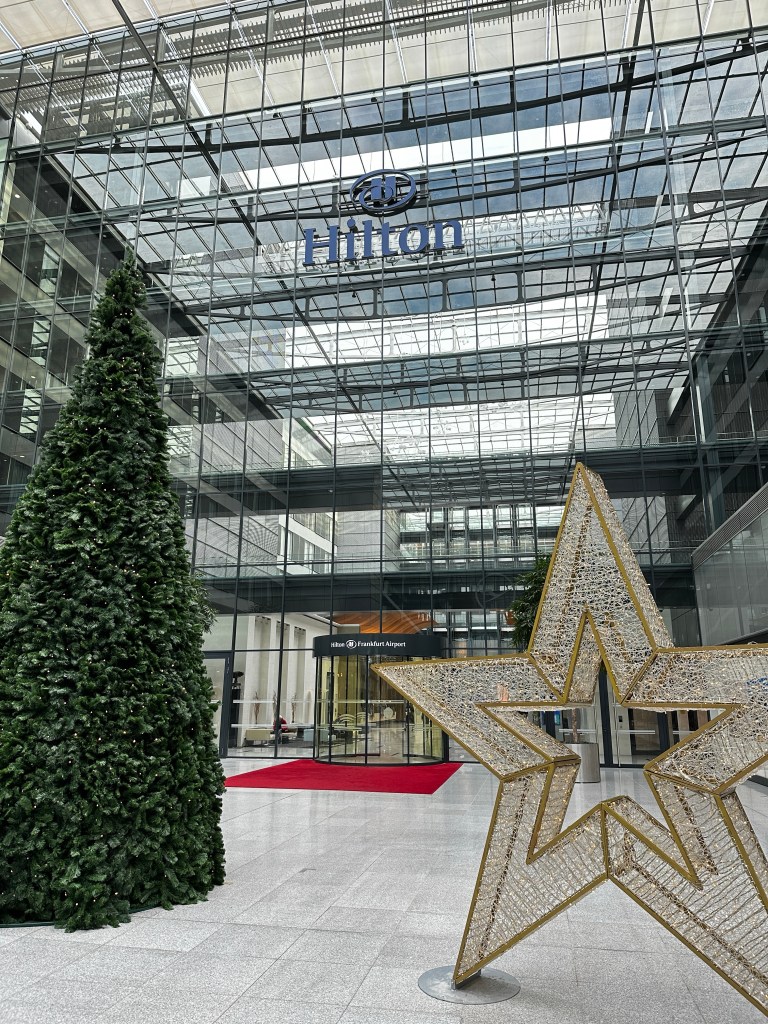
We chose to spend our two nights at the Frankfurt Airport Hilton Hotel. This was convenient as we were flying out of the airport on a morning flight. The airport is just a quick 12-minute ride on the S-Bahn train to the Frankfurt Hauptbahnhof in central Frankfurt so it was easy for us to travel in on both days of our time there.
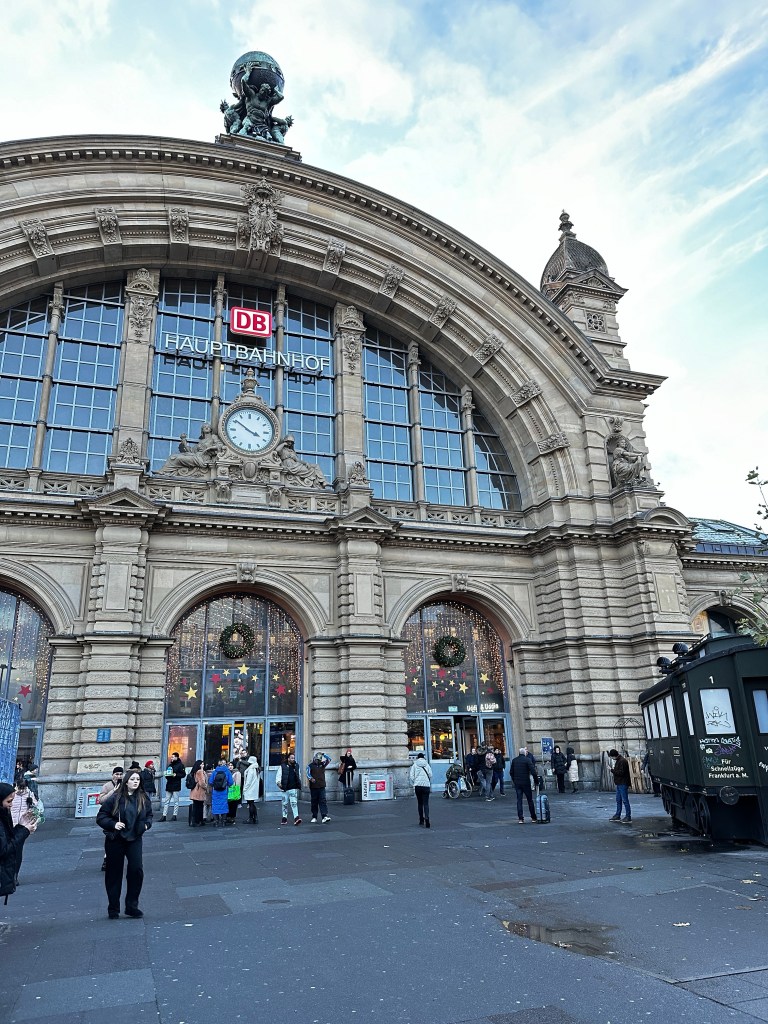
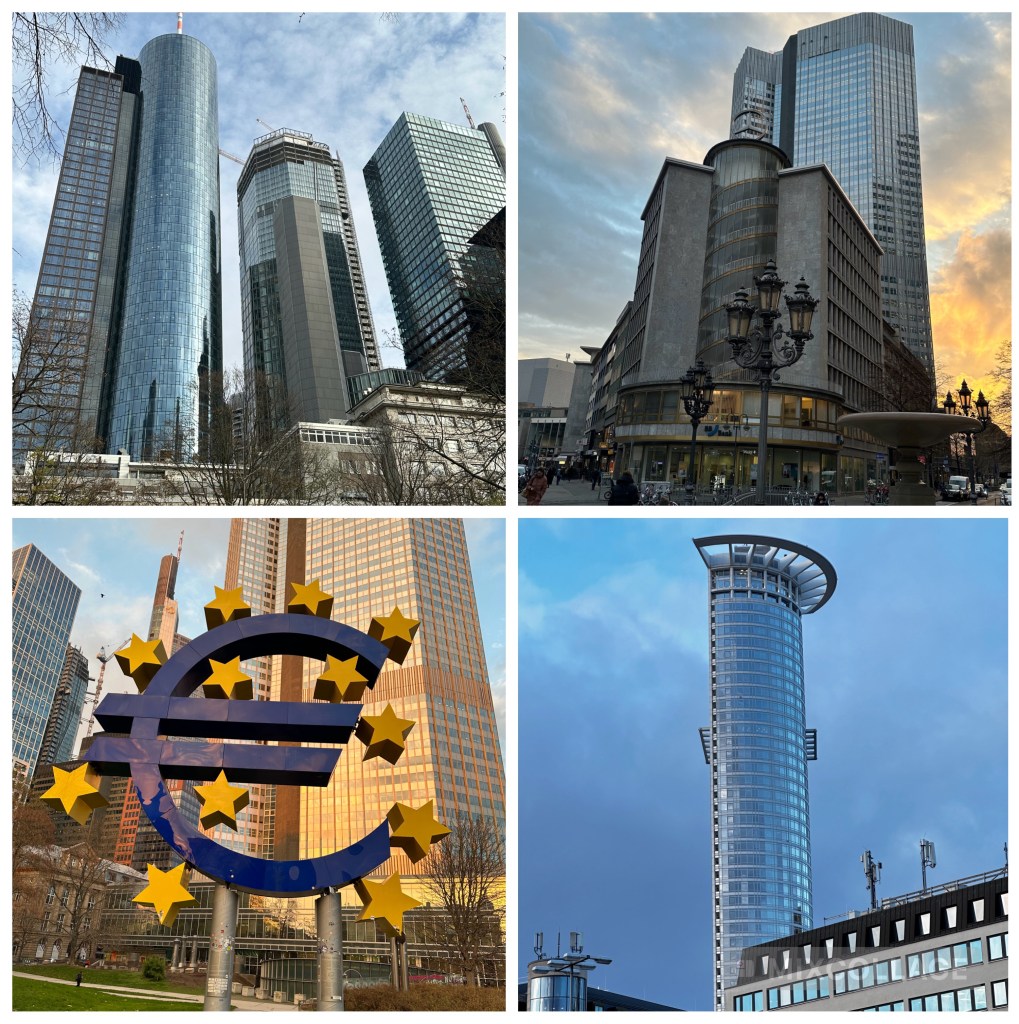
Frankfurt sits on the banks of the Main River (hence, the full name of Frankfurt am Main). Much of the city was destroyed in World War II and therefore, it may lack some old world charm. However, it makes up for this with amazing modern skyscrapers, home offices to most German banks and businesses as well as the European Central Bank.
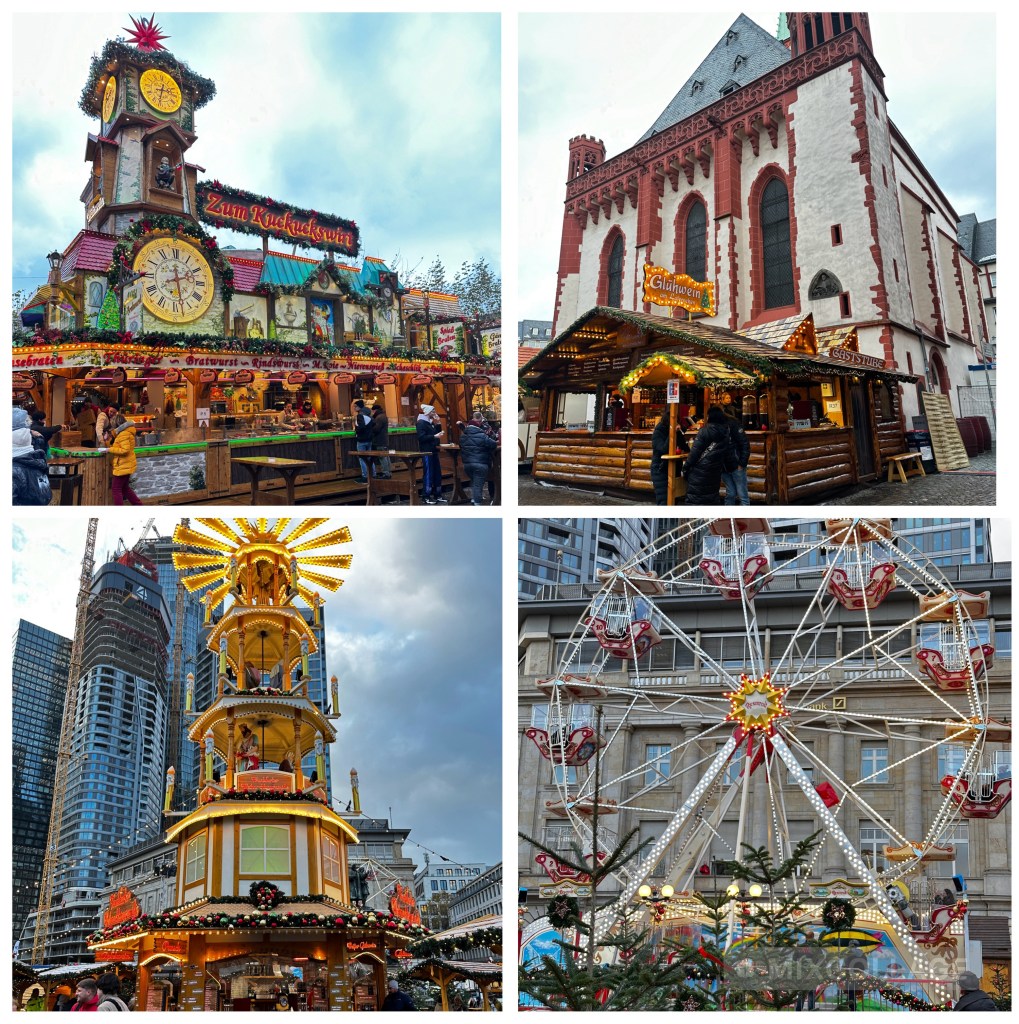
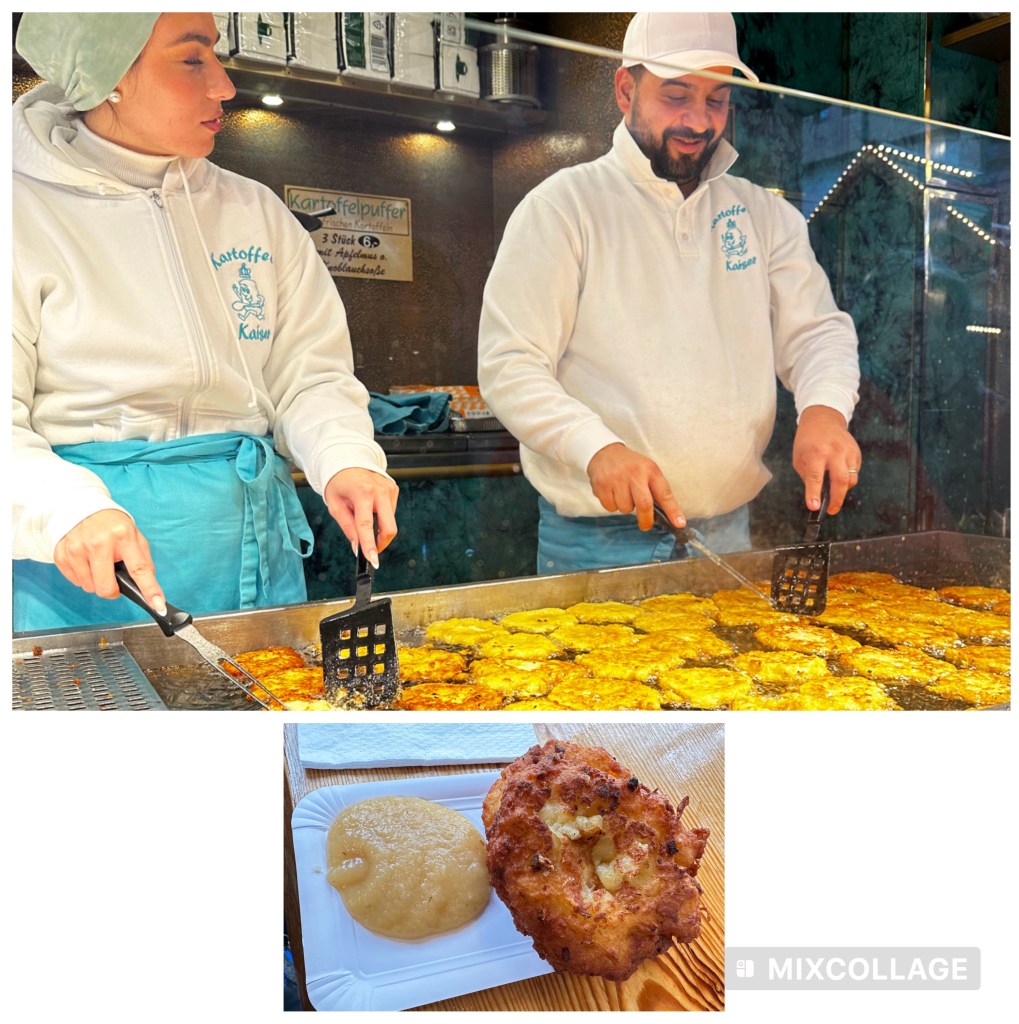
The Christmas Markets are scattered across the central core and we enjoyed wandering from one to another, taking in the festive ambiance as well as some delicious snacks and drinks.

We spent a few hours following the Rick Steves’ Frankfurt Walk where we took in some of the old and new Frankfurt.

The Kleinmarkthalle is a neighbourhood indoor market filled with all sorts of delightful food, flowers and other delights.

Römerberg Square is the heart of Frankfurt’s old town and hosts everything from a Christmas Market to many public demonstrations and protests.
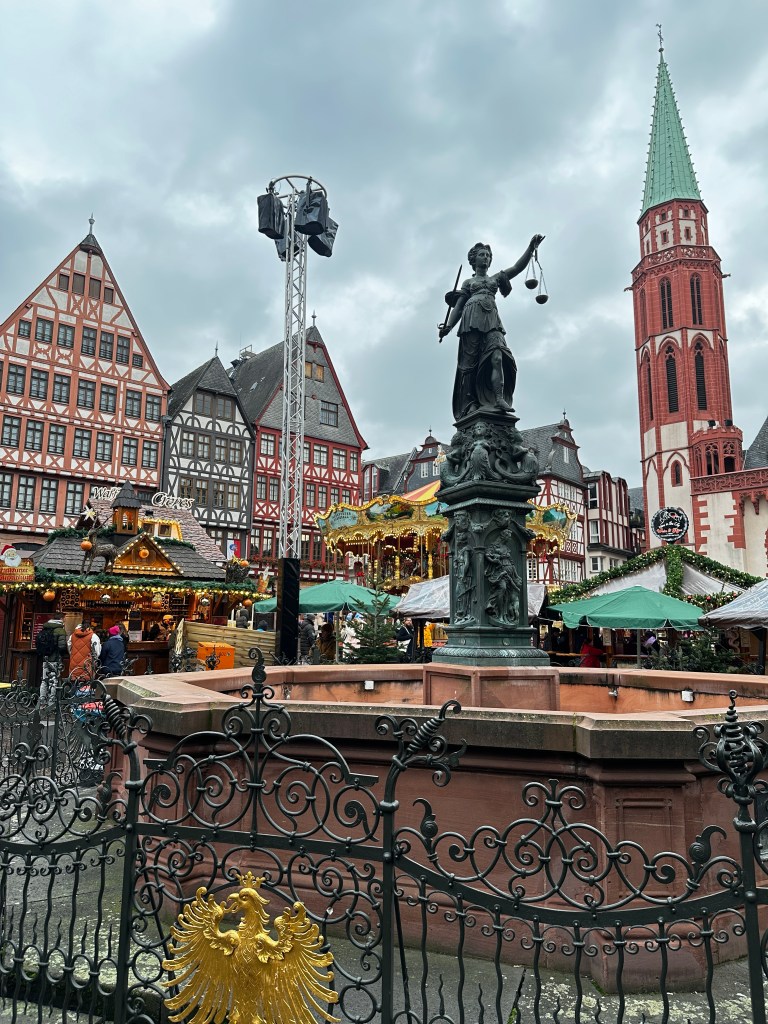
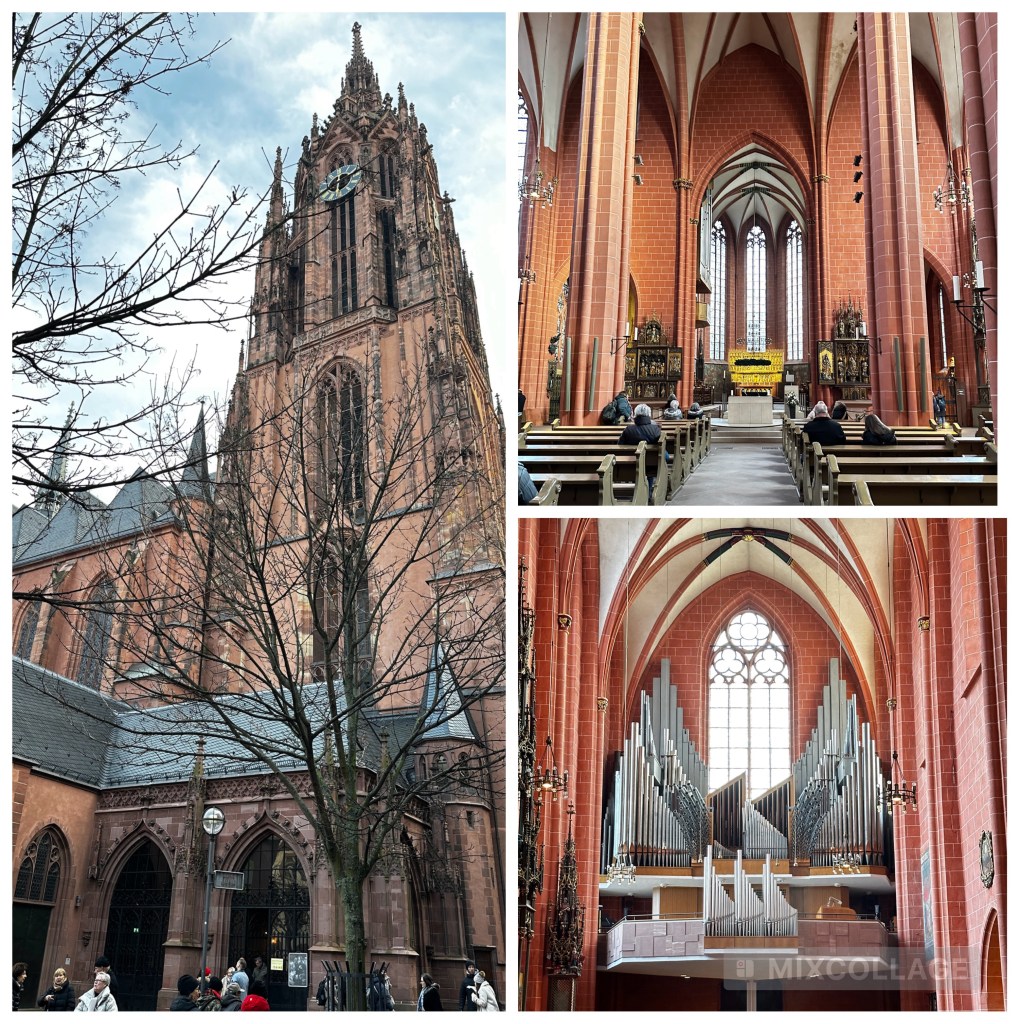
Frankfurt Dom ( officially Imperial Cathedral of Saint Bartholomew) is a Roman Catholic Gothic church located in the heart of the city. Originally built in the 14th and 15th centuries on the foundation of an earlier church, the church was destroyed by fire in 1867 and rebuilt in its present style. Severe damage occurred during World War II and the interior was burned out completely. The building was reconstructed in the 1950s. The height of the spire is 95 meters (312 ft).
We liked our short visit to Frankfurt – both the Christmas markets and the city itself!
From Frankfurt, we flew back to London – I’ll have a few stories from there soon!
Cheers,
Bev & Harvey
 A Long and Winding Journey
We’ve been past Cologne before but not into. Looks wonderful; you sure went to a lot of Christmas markets! We enjoyed the markets also.
LikeLiked by 1 person
Very excellent job again !!
I always enjoy your stories of all the places you go!!
Very well done and a very Merry and Blessed Christmas to you and your family !!
LikeLiked by 1 person
Incredible detail on the cathedral! Looks like you were in the right place for the season! Cheers to you!!!
LikeLike