Leaving Belfast, we took the Dublin Express bus. This was a comfortable ~2.5 hour ride that took us directly to Dublin centre. From there, the DART train whisked us to within 1/2 block of our hotel.
For 5 nights, we stayed at the Ariel House. This guesthouse has 37 rooms and we were quite pleased with it. On check-in, we felt that our room did not match the description of what we had booked – upon discussion, they quickly changed our room to one that we were very happy with. The breakfast was great – although on busy days, we noted that some guests had to wait as the breakfast room is not large enough to accommodate everyone – we were always early enough! The guest lounge is very comfortable with coffee, tea and baking available. I think the front-end staff are a bit overworked and did not always keep the area as tidy as it could be. With a little attention to these details, this property could be outstanding. That being said, these were minor problems and we wouldn’t hesitate to recommend the guesthouse. The Ballsbridge neighbourhood is excellent.

Dublin is a city of ~590,000 (metro area of close to 2 million) and is the capital city of the Republic of Ireland. It is a vibrant modern city with evidence of booming construction. It is a tech capital and the European home for many corporations due to Ireland’s excellent corporate tax rates. We immediately felt the different feel from Belfast – more fast paced and while the people were friendly, nothing like the amazing people we encountered in Belfast.
Mixed in Dublin’s cosmopolitan cityscape are some great parks.
St Stephen’s Green is the central city park. This 27 acre Victorian park was a space for grazing livestock in medieval times; then in 1664, it became a space for the affluent residents surrounding the park. In 1880, the park was opened to the public.

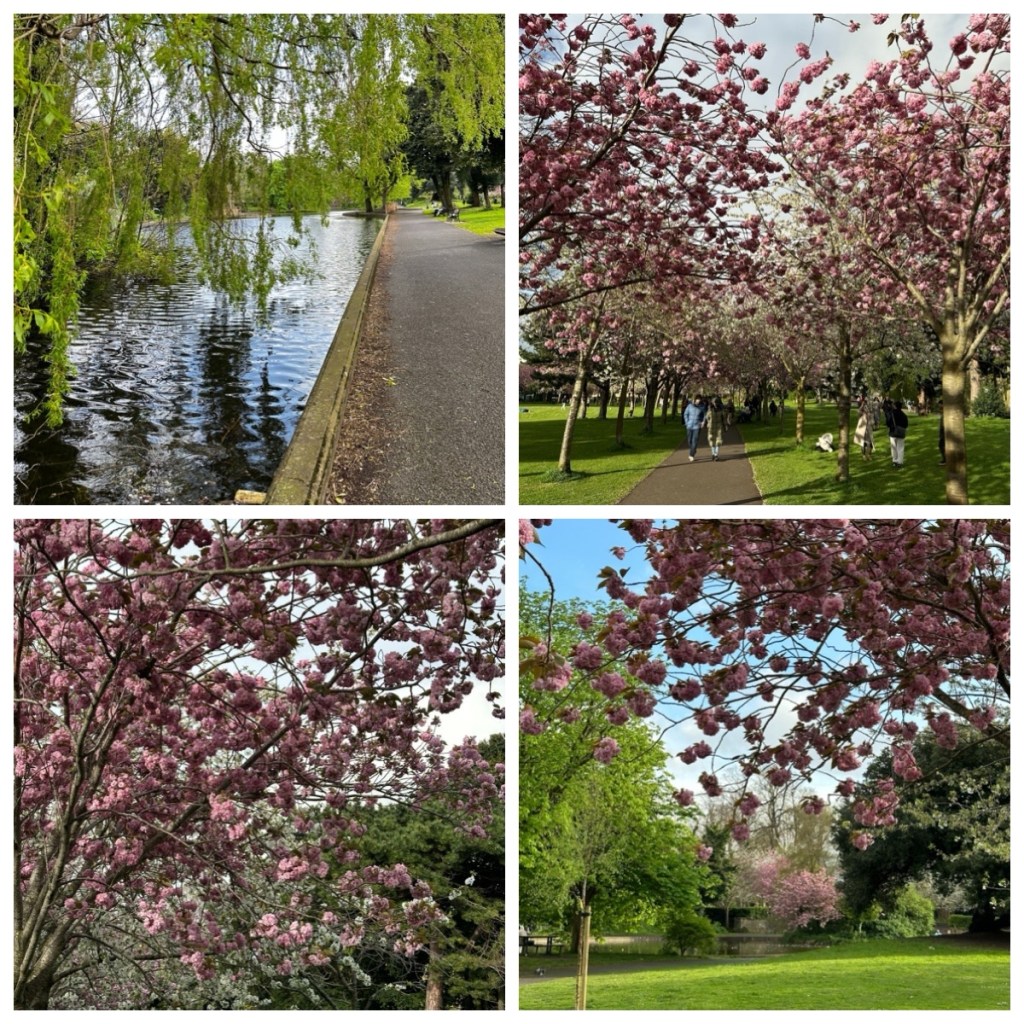
Herbert Park is a 32 acre park in the Ballsbridge area. The park dates back to the early 13th century. For centuries it was part of the vast Fitzwilliam Estate until it was inherited by the 11th Earl of Pembroke in 1816. In 1903, the earl gave the site to Pembroke Urban District Council for development as a public park. The park is named after his father, Sidney Herbert. The cherry blossoms were amazing on our visit.
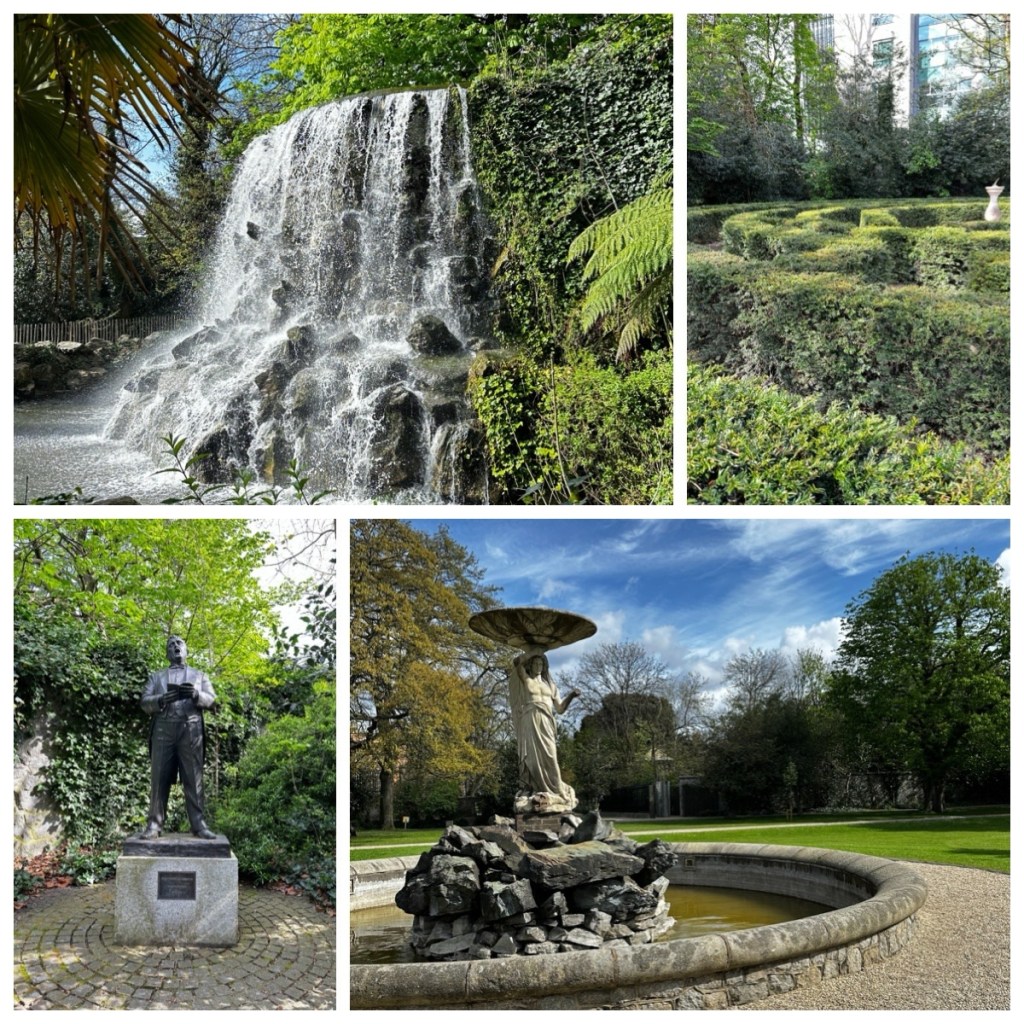
Not far from St. Stephen’s Green are the Iveagh Gardents. From modest beginnings as an earl’s lawn, the gardens went on to host the splendour of the Dublin Exhibition Palace in 1865. The landscape includes a cascading waterfall, yew maze, rosarium, and delightful fountains and statuary. The Iveagh Gardens are popularly known as Dublin’s ‘Secret Garden’.
Merrion Square was planned in 1762 and is ringed by elegant Georgian houses as well as the Natural History Museum, the National Gallery and the Office of the Taoiseach (Prime Minister). The park features interesting monuments as well as lovely flower and shrub beds.


Trinity College, founded in 1592 by Queen Elizabeth I, is Ireland’s most prestigious college. Interestingly, the College originally only allowed Protestant male students; Catholics were allowed in 1793 but women were not admitted until 1903.
The main campus is enjoyable to visit with many Georgian buildings.


The main tourist experience at Trinity is the viewing of the Book of Kells, a 1200 year old illustrated manuscript of the four gospels in the Old Trinity Library. A Book of Kells Experience has been developed, advertised as an immersive digital experience. Booking tickets in advance is definitely recommended. We chose not to take this in, although we would have liked to see the Old Library.
Dublin City Hall is a majestic building that originally housed the Royal Exchange. It became City Hall in 1852 and is often open for viewing. An event was occurring on the day of our visit so we only were able to view the impressive rotunda.

Dublin Castle was the epicentre of English power in Ireland from 1200 until 1922. Very little of the original medieval building remains. We walked through the courtyard to admire the stately buildings.

Behind the castle sit the Castle Gardens. These were lovely. The Chester Beatty Library is located in the gardens – we had hoped to return for a visit to the library, but alas, did not have time to do so.

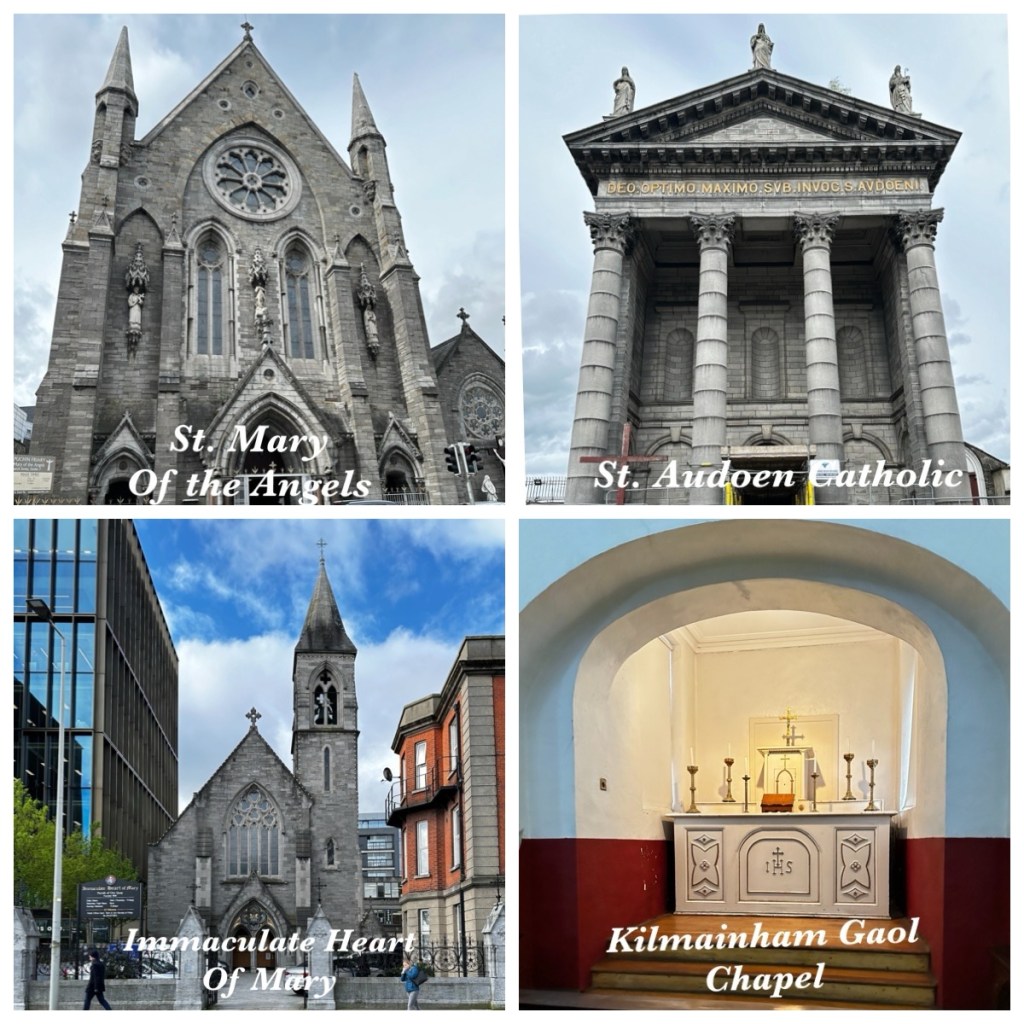
The churches of Dublin did not disappoint. We of course visited a number of them to admire both the exterior and interior where possible.
Christ Church Cathedral is an Anglican Church in central Dublin. A wooden cathedral was founded on the site in the early 11th century and then was rebuilt in stone in the late 12th century with enlargement in the 1200s. The cathedral was extensively renovated and rebuilt in the late 19th century, resulting in the primarily Victorian style that it has today.
We attended Evensong one afternoon and were impressed with the building acoustics and the talented church choir and organist.

Dublin’s second medieval cathedral is Saint Patrick’s Cathedral. It was originally founded in 1191 as a Catholic cathedral, but today is the national cathedral of the Church of Ireland. The core of the current cathedral was built in the 13th century with many renovations and reconstructions over the centuries. The majority of today’s structure was built in the 1860s.

St Kevin’s Church is a gothic-revival Catholic Church, built between 1869 and 1872. The stained glass and interior carvings were very impressive.

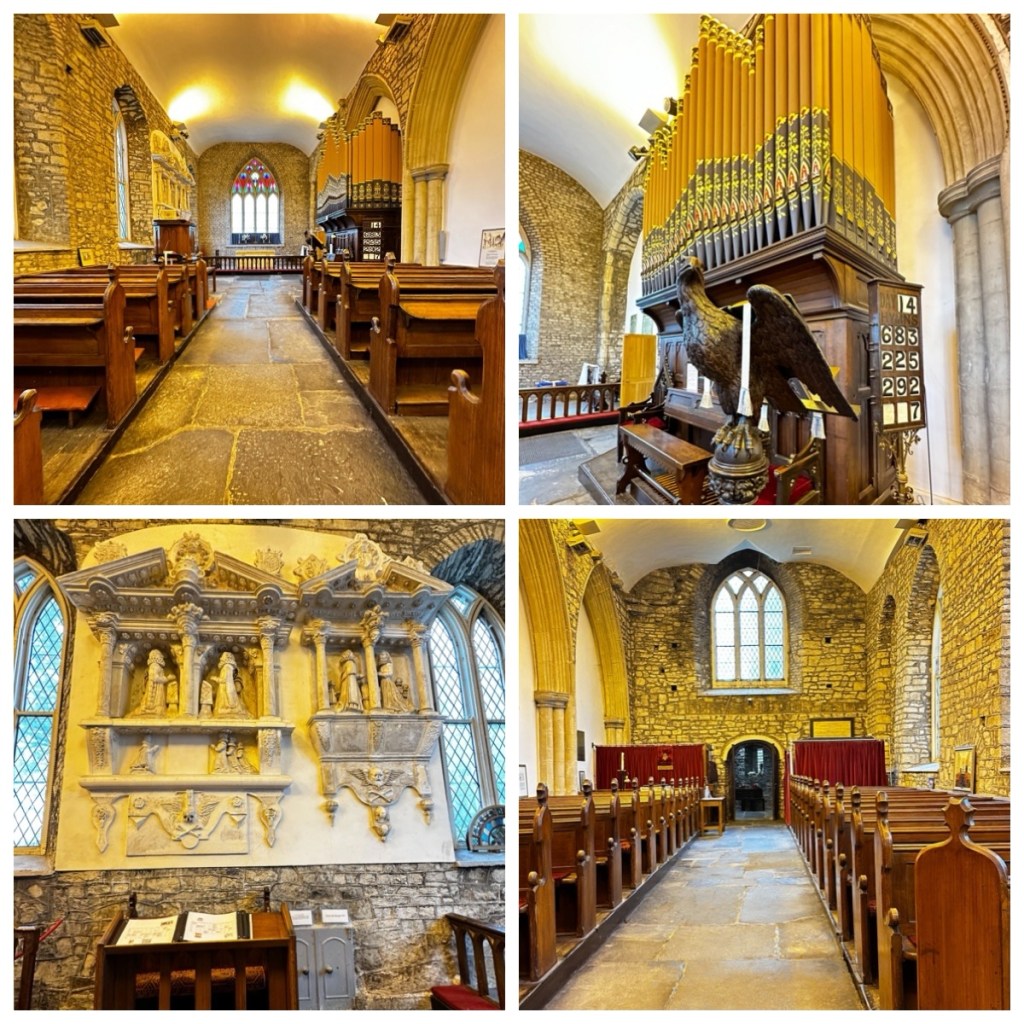
As we wandered through the older area of the central city, we came upon St Audoen’s Church, the only remaining medieval parish church in the capital. The church has an excellent visitor centre and the staff member gave us a detailed tour of the church itself and its history. The church is still in use by the Church of Ireland. You are able to tour the delightful small church, as well as an excellent historical display and the medieval ruins.
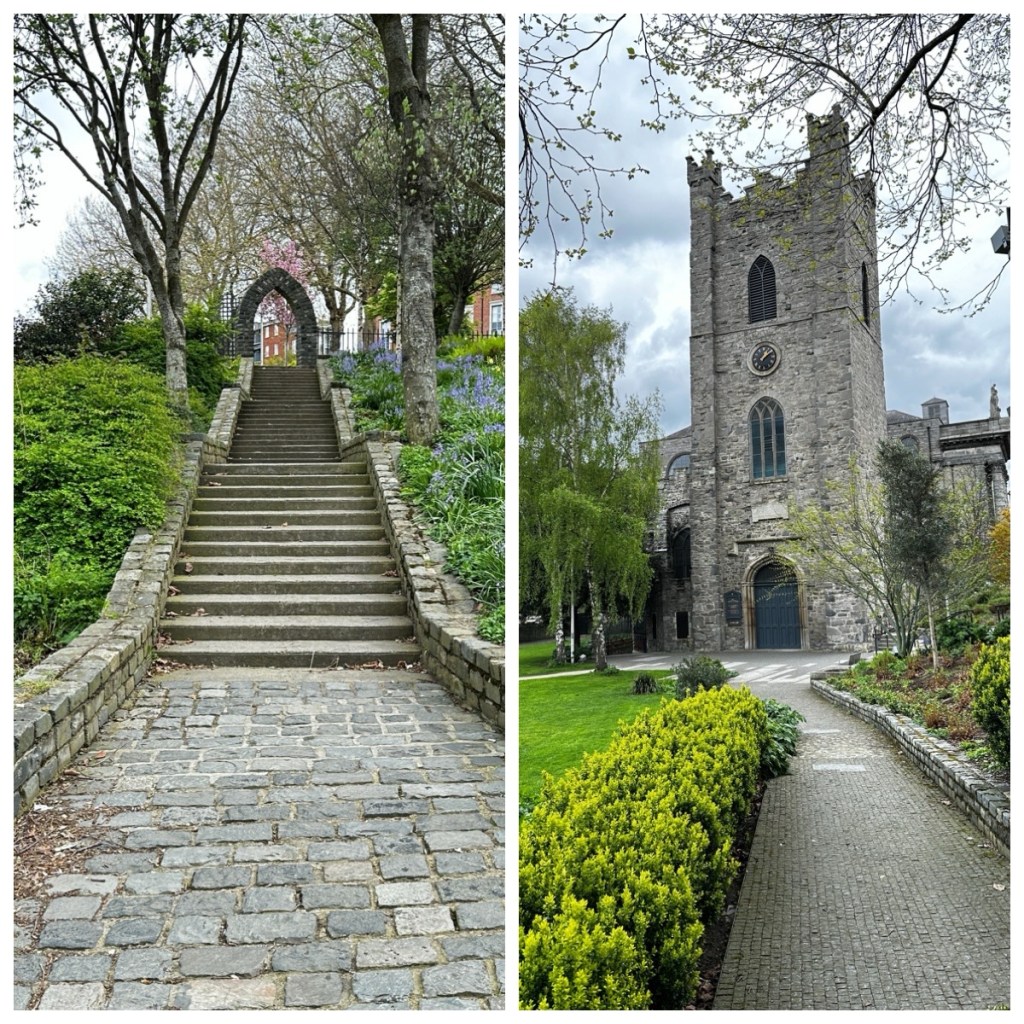

Churches are evident on most every street as you walk through the city. Here are just a few that we photographed.

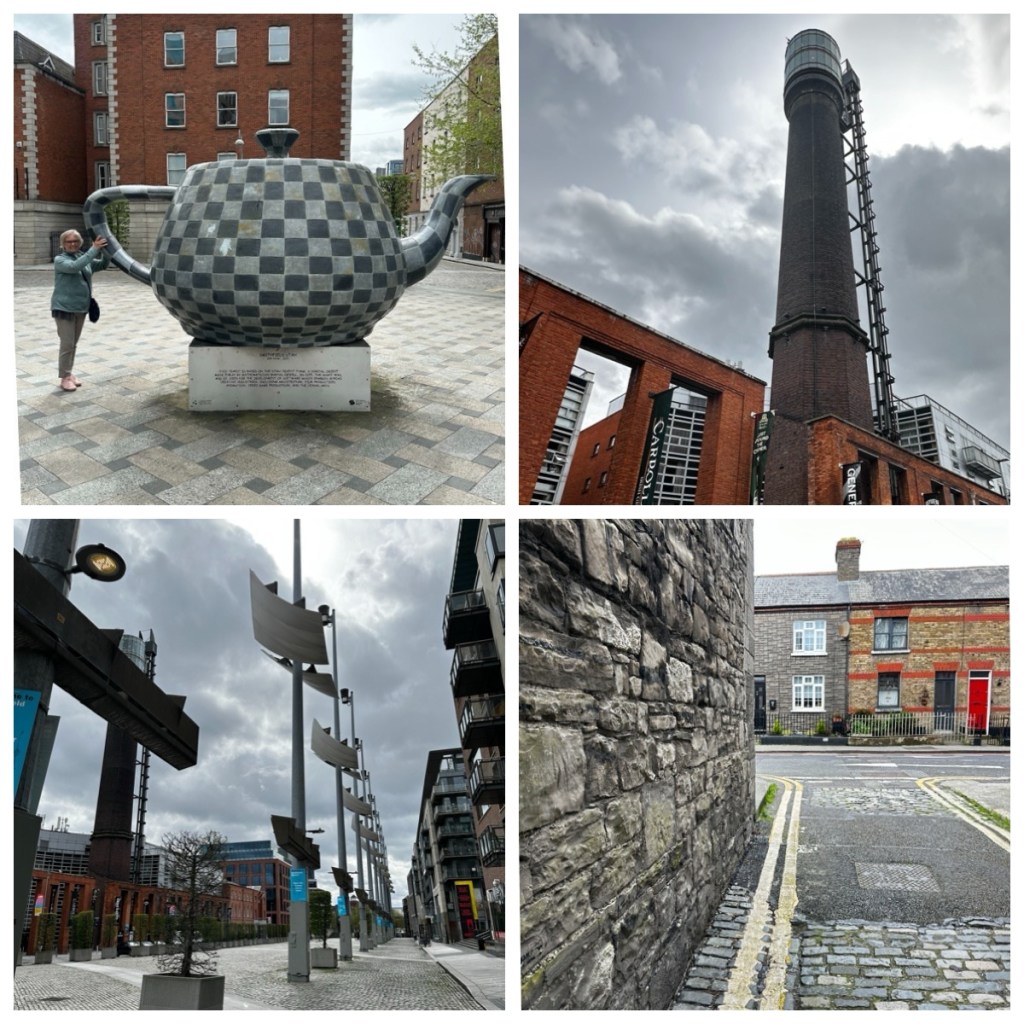
The Smithfield neighborhood is an area that is on its way to gentrification. It made for a nice walk on a Sunday afternoon.
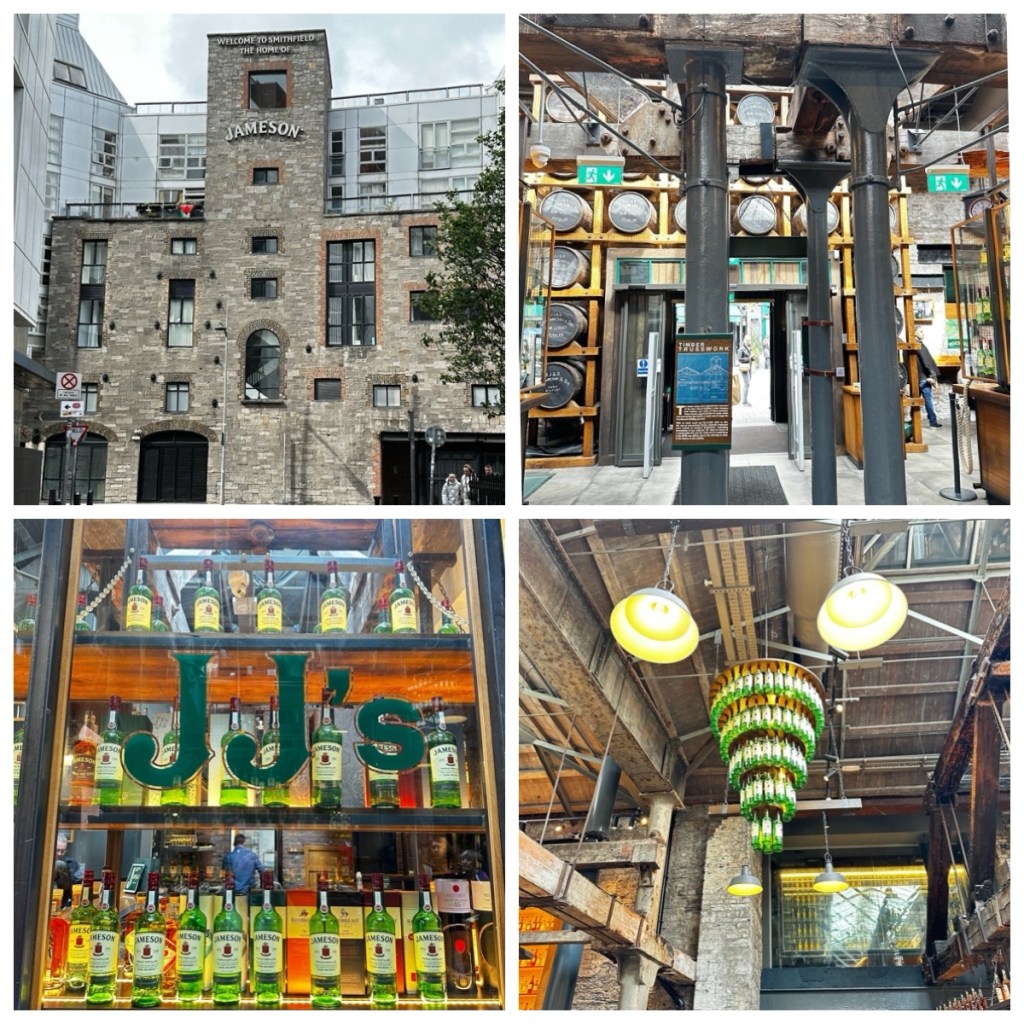
Smithfield is home to the Jameson Distillery. While we didn’t go on a tour (not being whiskey fans and having been on a number of previous distillery tours), we enjoyed wandering through the visitor centre.
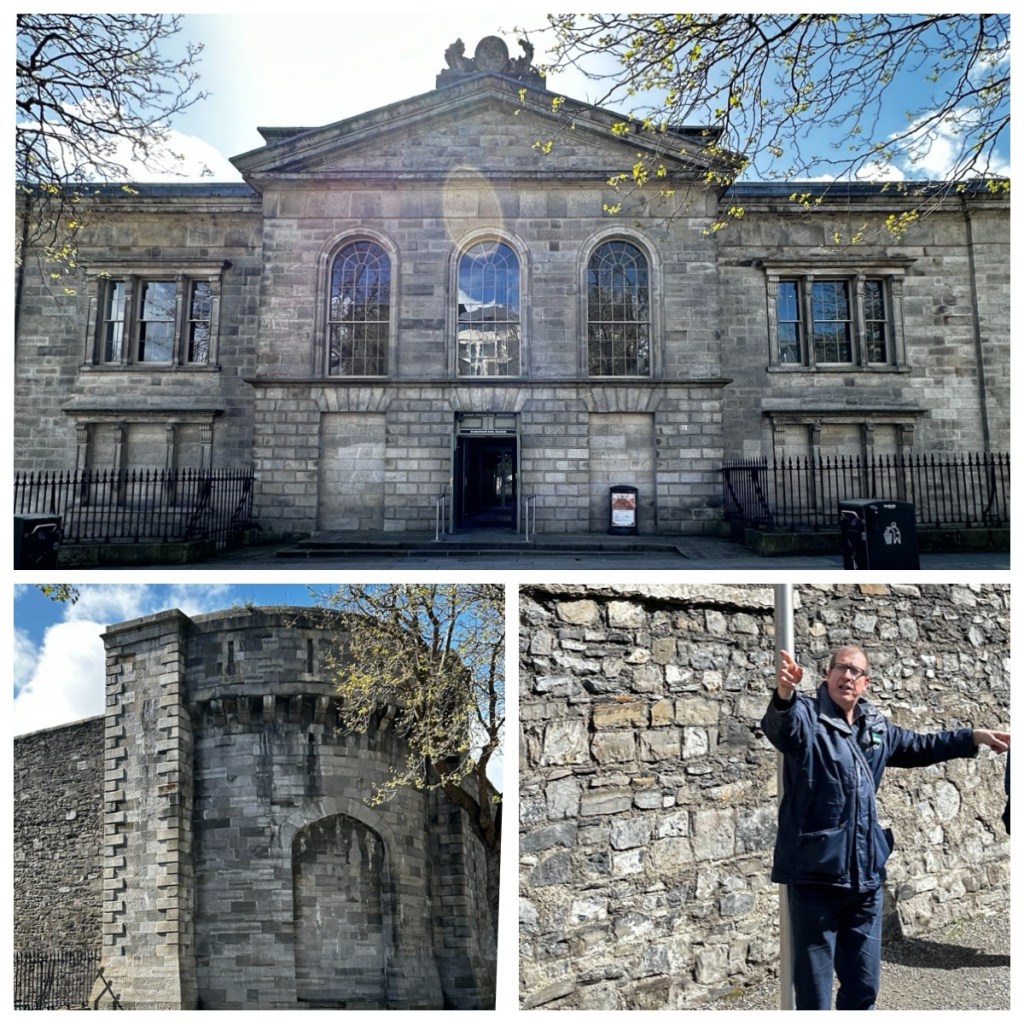
Kilmainham Gaol opened in 1796 as the new County Gaol for Dublin and was considered to be a model for jails at that time. However, many of the suggested reforms soon disappeared as overcrowding occurred. During the years until its closing in 1924, it housed thousands of men, women and children for crimes that ranged from minor offences to being involved in some of the most momentous events in Irish history. Many of the prisoners were awaiting transport to the penal colony of Australia.
Your visit to the Gaol is a guided tour where you learn the stories of the people jailed here, as well as seeing where they spent their time – and for those who were fighting for Irish independence, where many were executed. Our guide, Mick, was excellent – he brought the stories and issues to life in an animated fashion. I think he could do well on any stage!
The museum at the end of the tour expands on the information and is well worth some time.
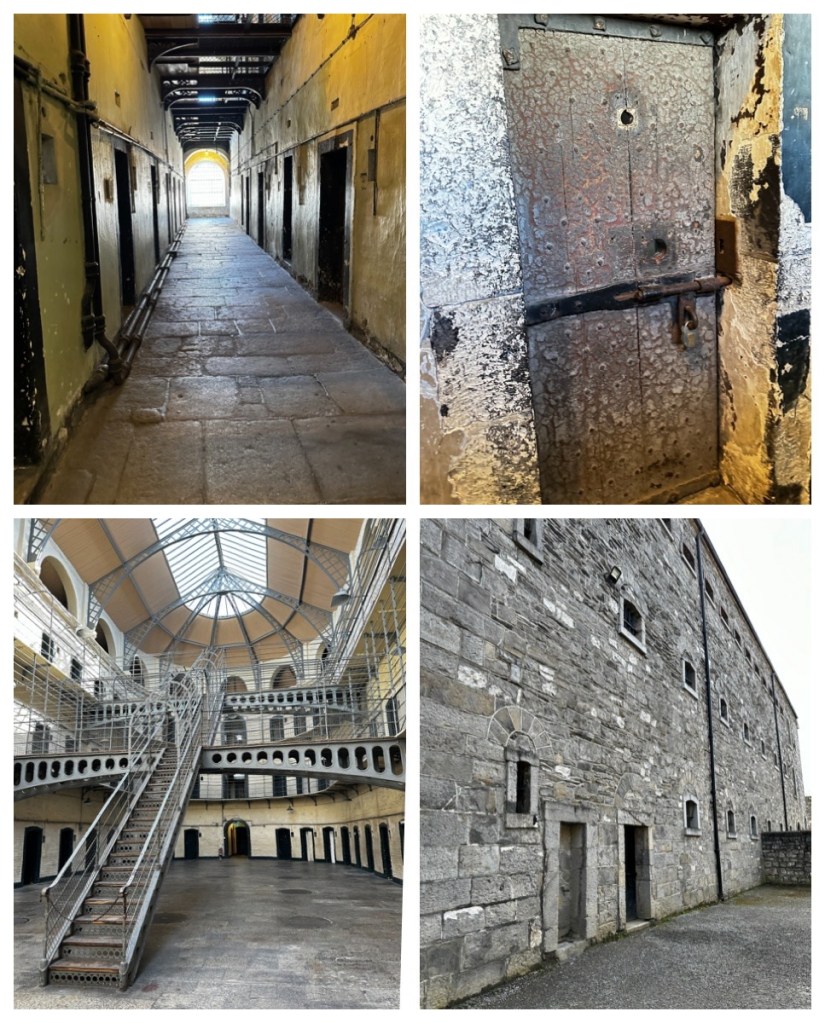
Tickets to Kilmainham Gaol are in demand and sell out quickly. A tip is to go on-line at midnight Dublin time, 28 days before the day you would like to go. Tickets are released at that time and you should be able to purchase them.
The River Liffey and the Grand Canal stretch across Dublin, We found these somewhat reminiscent of Amsterdam.

The Samuel Beckett Bridge is a cable-stayed swingbridge that is capable of opening through an angle of 90 degrees allowing ships to pass through. It evokes the shape of a harp, the national symbol of Ireland. The Convention Centre Dublin, opened in 2010, overlooks the river and the bridge.

The Jeanie Johnston Tall Ship is docked on the river. This ship is a replica of an Irish famine ship of the same name. The original ship, built in Quebec, carried more than 2500 emigrants to North America on 16 voyages from 1848 – 1855 after the Great Famine ravaged Ireland. Unlike many of the ships referred to as ‘coffin ships’ because of the lives lost on the journey, all passengers and crew aboard the Jeanie Johnston survived the journeys.
The river walk is dotted with numerous statues honouring the city’s mariners.

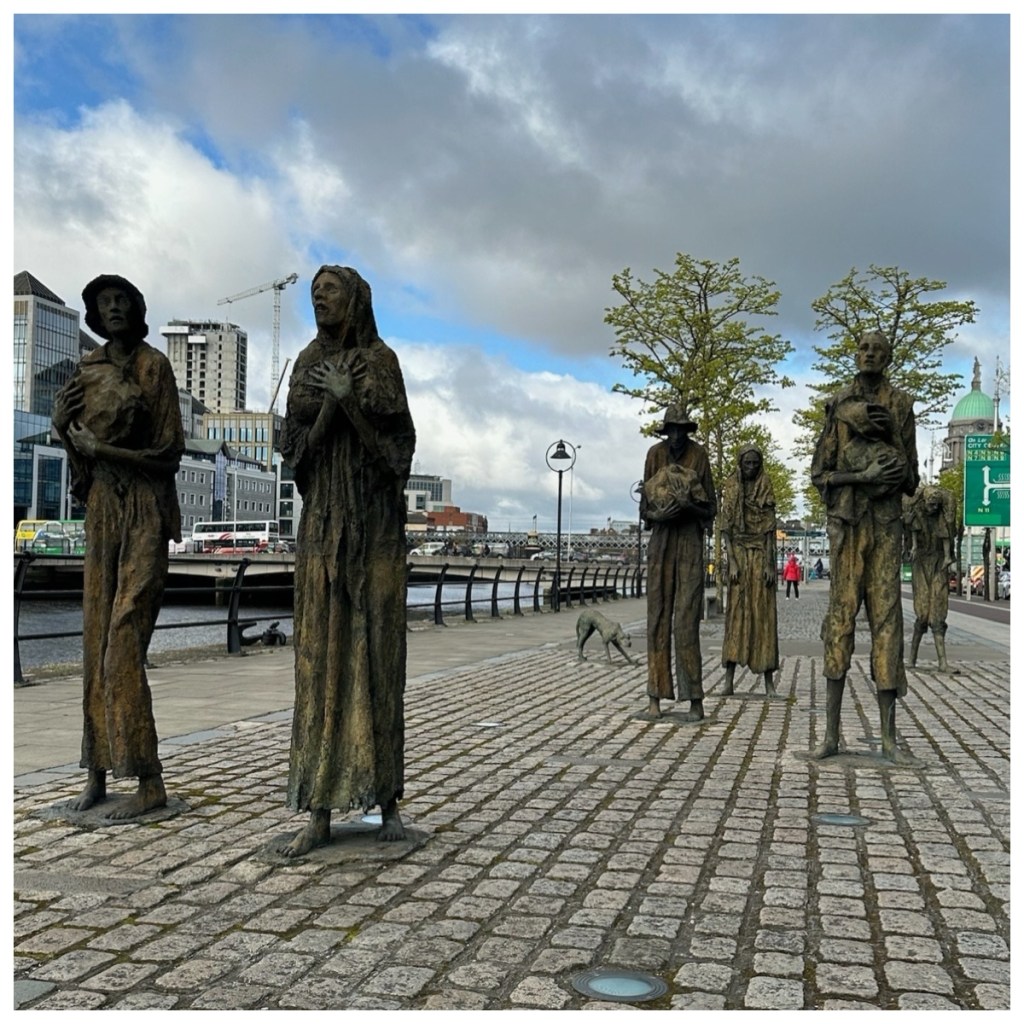
The Famine Memorial consists of bronze sculptures showing people fleeing Ireland during the famine known as the ‘Great Hunger”. Cast in bronze and opened in 1997, the statues offer a sobering look at the plight of the people as they awaited to set sail to North America.
In 2007, companion statues were installed in Toronto’s Ireland Park, marking the location where many of those fleeing the famine arrived.

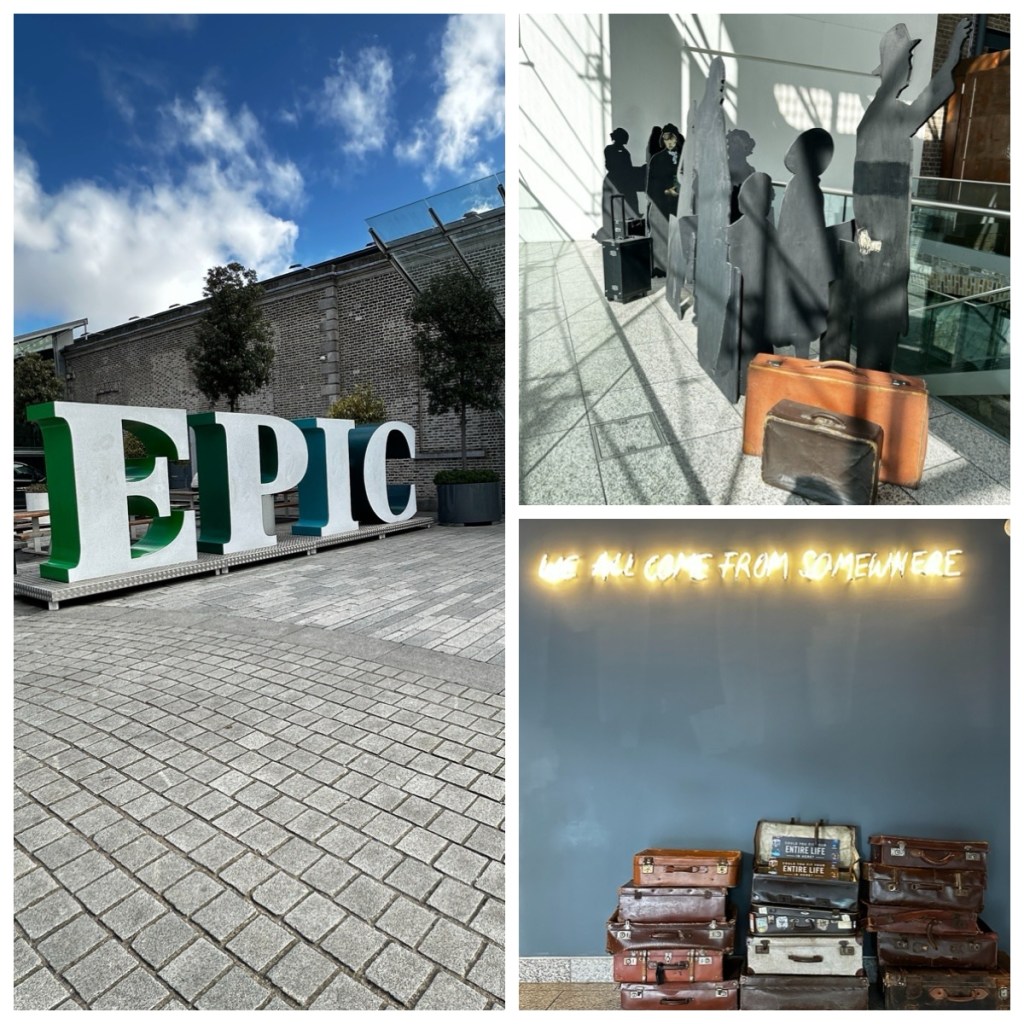
Epic: The Irish Emigration Museum opened in 2016 and was named Europe’s leading tourist attraction in 2019, 2020 and 2021. EPIC stands for ‘Every Person Is Connected’. In 20 interactive galleries, housed in the vaults on a former Docklands warehouse, the museum displays the far reaching influence of Irish history and the impact that the 10 million Irish men and women who left Ireland had on the world.
We were so impressed with the museum and would highly recommend it!


O’Connell Street stretches up from the River Liffey through North Dublin. Along the broad avenue named for Daniel O’Connell, Dublin’s first Catholic mayor, the street’s median presents numerous statues of those involved in Ireland’s fight for independence.

O’Connell Street terminates at the Garden of Remembrance which honours the victims of the 1916 Easter Rising. The rebel leaders were held here before being transferred to Kilmainham Gaol.

Taking a side street back from the Garden of Remembrance, we came across the filming of a period drama. It was interesting to watch a few minutes of the action.
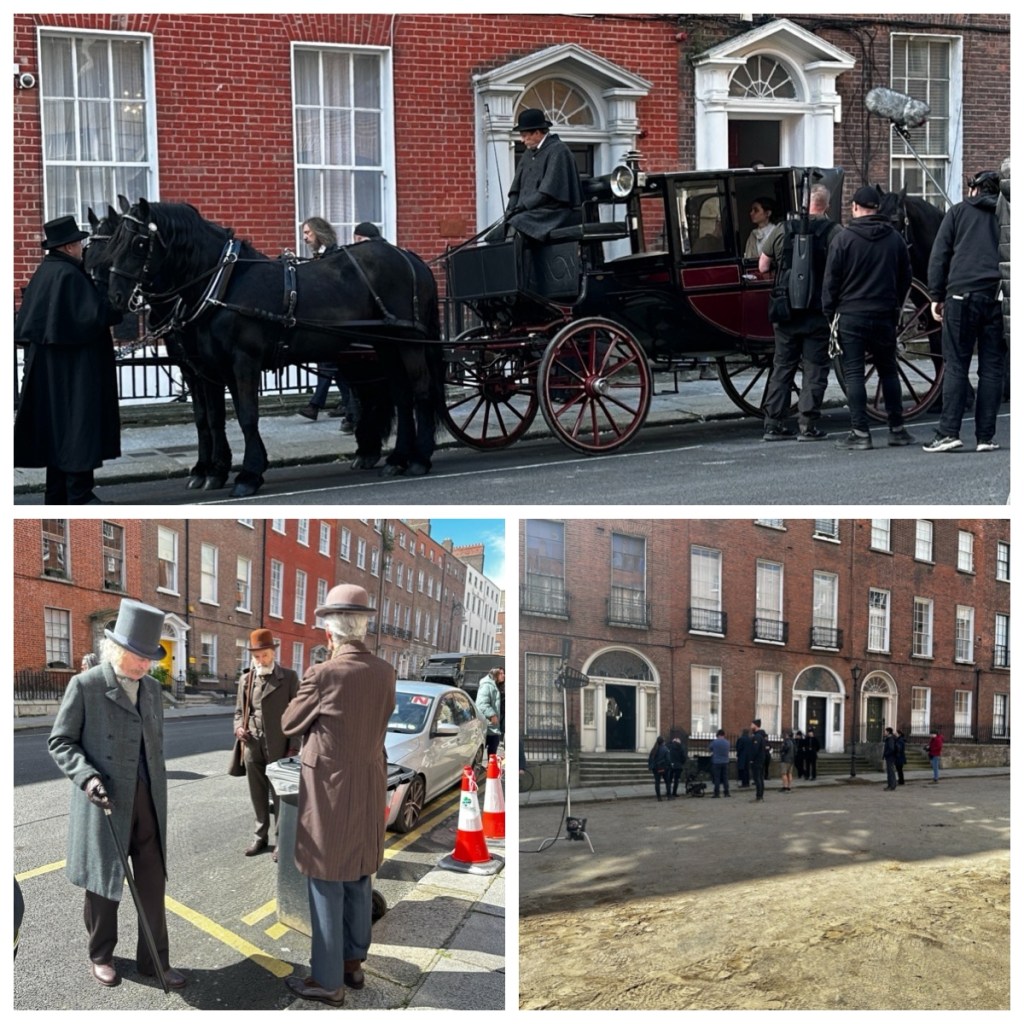
Dublin’s streets are a combination of business, tourism and quirky sights.

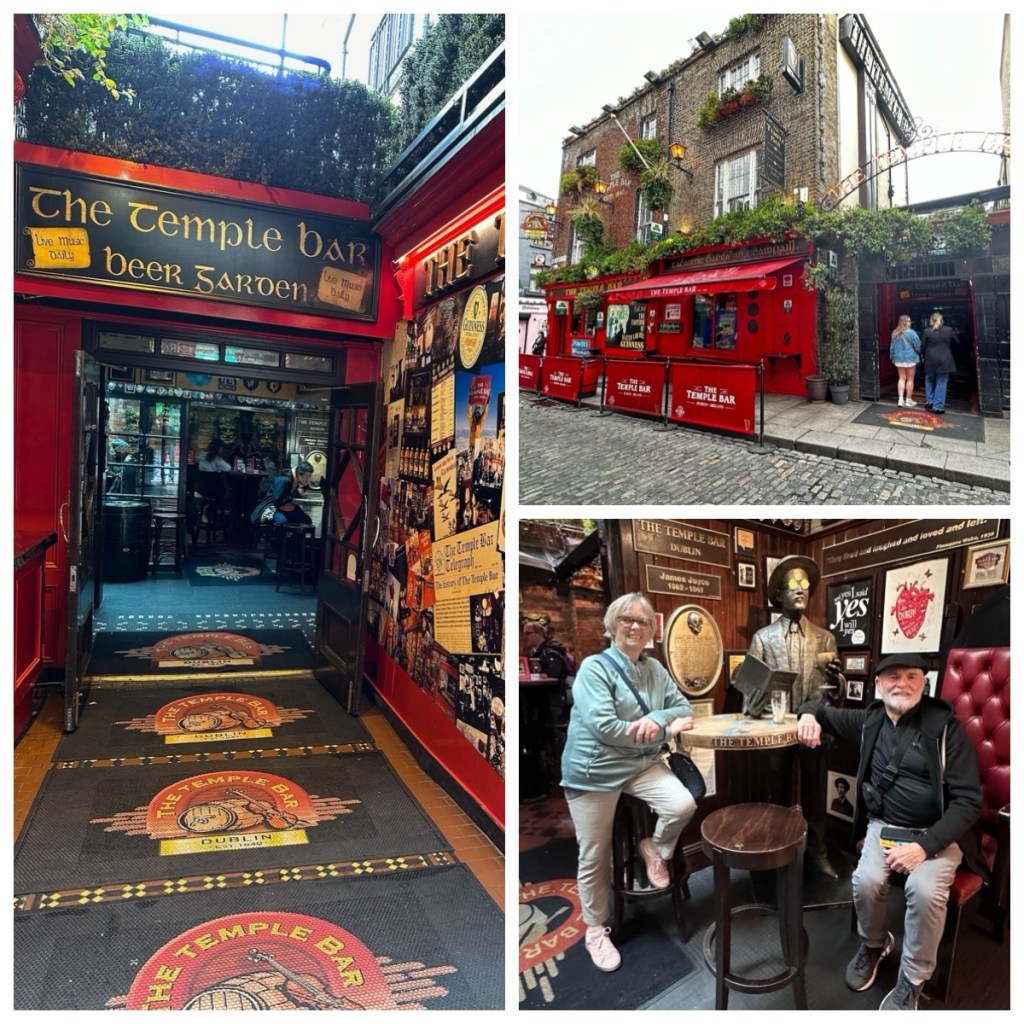
The Temple Bar area is a spectacle of partying people passing from pub to pub, with THE Temple Bar at the centre of it all. We stopped by for the requisite visit, but it really wasn’t our scene at all.
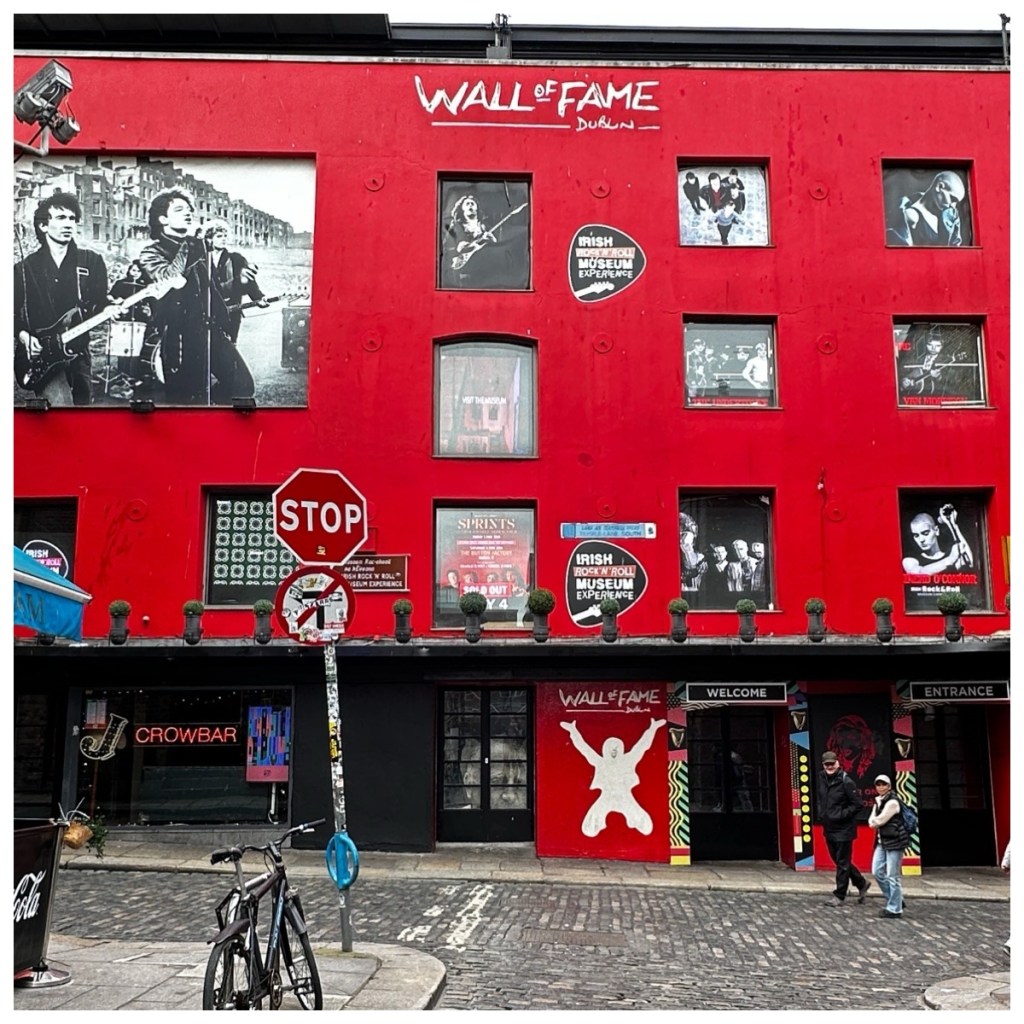
The Irish Music Wall of Fame has video panels featuring the greats in music from Ireland including U2 and Bono, Sinead O’Connor, Bob Geldof, The Cranberries, Thin Lizzie and many others.
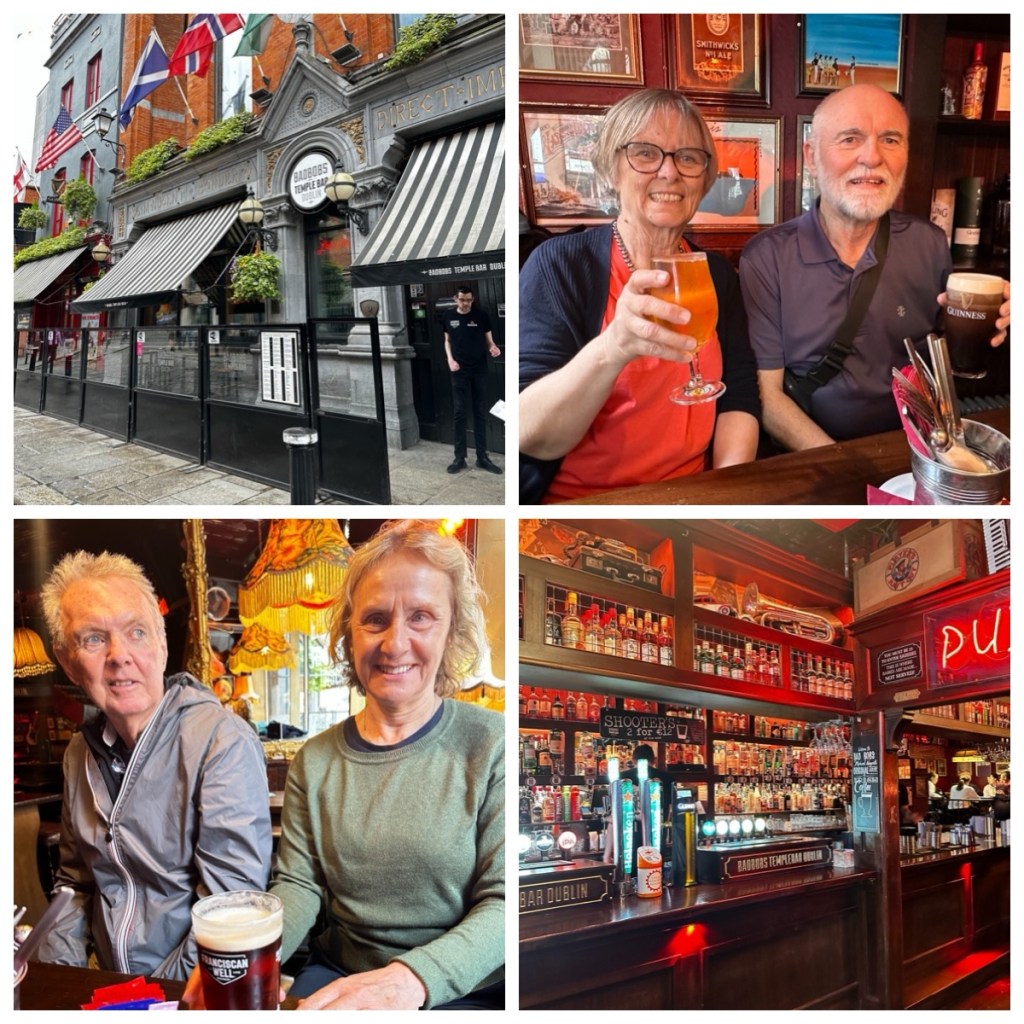
We stopped at the edge of the Temple Bar area for an afternoon break at a quiet pub – Bad Bobs. It was removed from the craziness of the area and being the first customers of the day, we enjoyed a peaceful drink and snacks.
Dublin didn’t disappoint in the food department. We would definitely recommend Al Boschetto, Paulie’s, Khushee and The Bridge 1859, all in the Ballsbridge / Sandymount area. And the breakfasts at the Ariel House were exceptional!


You will note that there are a number of well-known Dublin sights that we didn’t visit. Some like the near-by archaeological site of Brú an Bóinne didn’t fit into our itinerary and some we just chose to miss, such as the Guinness Experience (although Harvey did experience Guinness). There are also many museums that we hear are great but didn’t have the time and/or interest to visit.
After the understated charm of Belfast, Dublin was a fast-paced modern city interspersed with historical landmarks. We enjoyed the city, rank some of its attractions as ‘don’t miss’ (Kilmainham Gaol and EPIC) and feel it is a city that needs to be on any Ireland itinerary.
Cheers,
Bev & Harvey
 A Long and Winding Journey
Pingback: Winding Down the Trip in Dublin and London | A Long and Winding Journey