County Cork is located on Ireland’s south coast, with a population of ~600,000. It is known for its wild coastlines, fertile farmlands and enchanting scenery. The county is unofficially called the ‘Rebel County’, a name with ties to King Henry VII, the Irish War of Independence and the Irish Civil War. The capital city of County Cork is the city of Cork, the second largest city in the Republic of Ireland with a population of ~225,000. Cork sits on the River Lee, with the city centre on an island between two channels of the river.
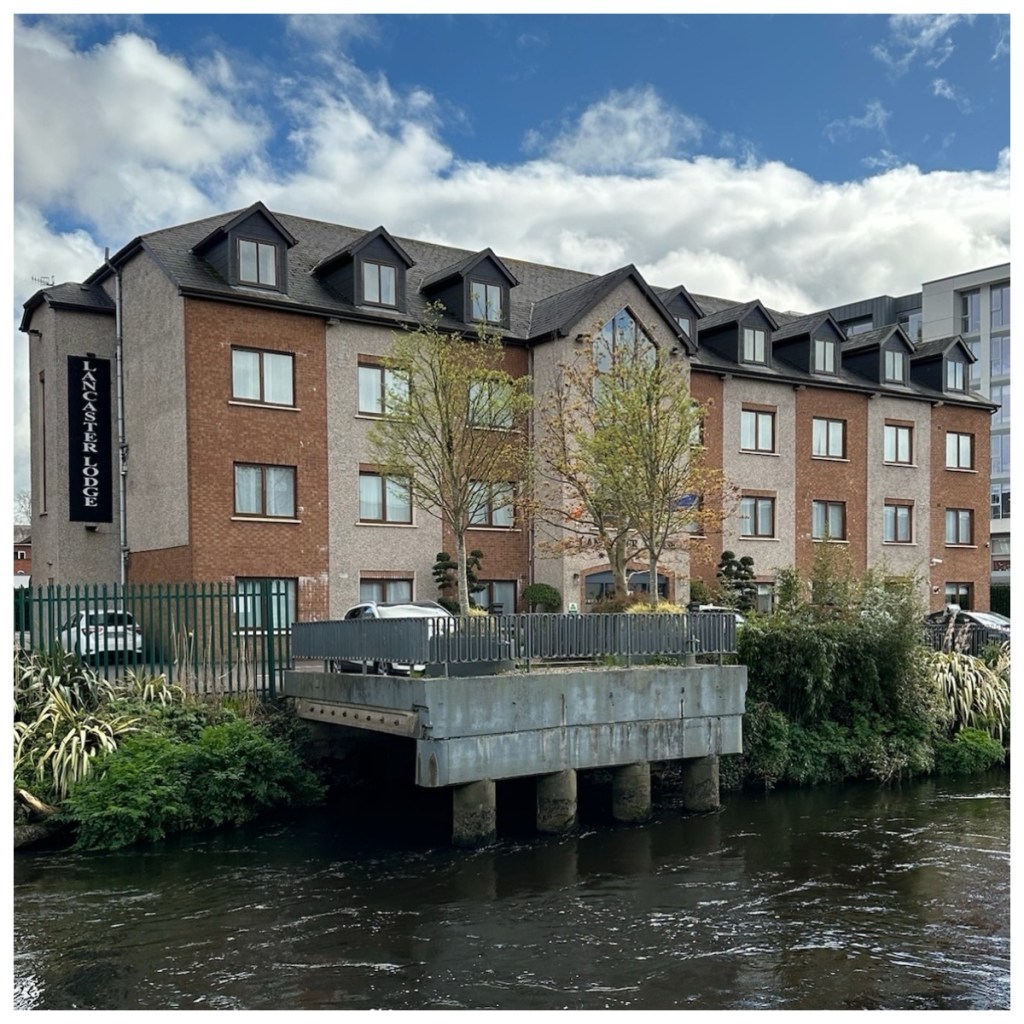
We chose Cork as the next stop on our Ireland vacation. It was an easy 2.75 hour Irish Rail ride from Dublin, with great views of the countryside as we travelled. Once in Cork, we walked through the city centre to our hotel – the Lancaster Lodge. This 48 room hotel is perfectly located, close to attractions but out of the city centre hustle and bustle. We were very pleased with our deluxe double room, the excellent breakfast, friendly & helpful staff and the spacious comfortable lounge to relax in.
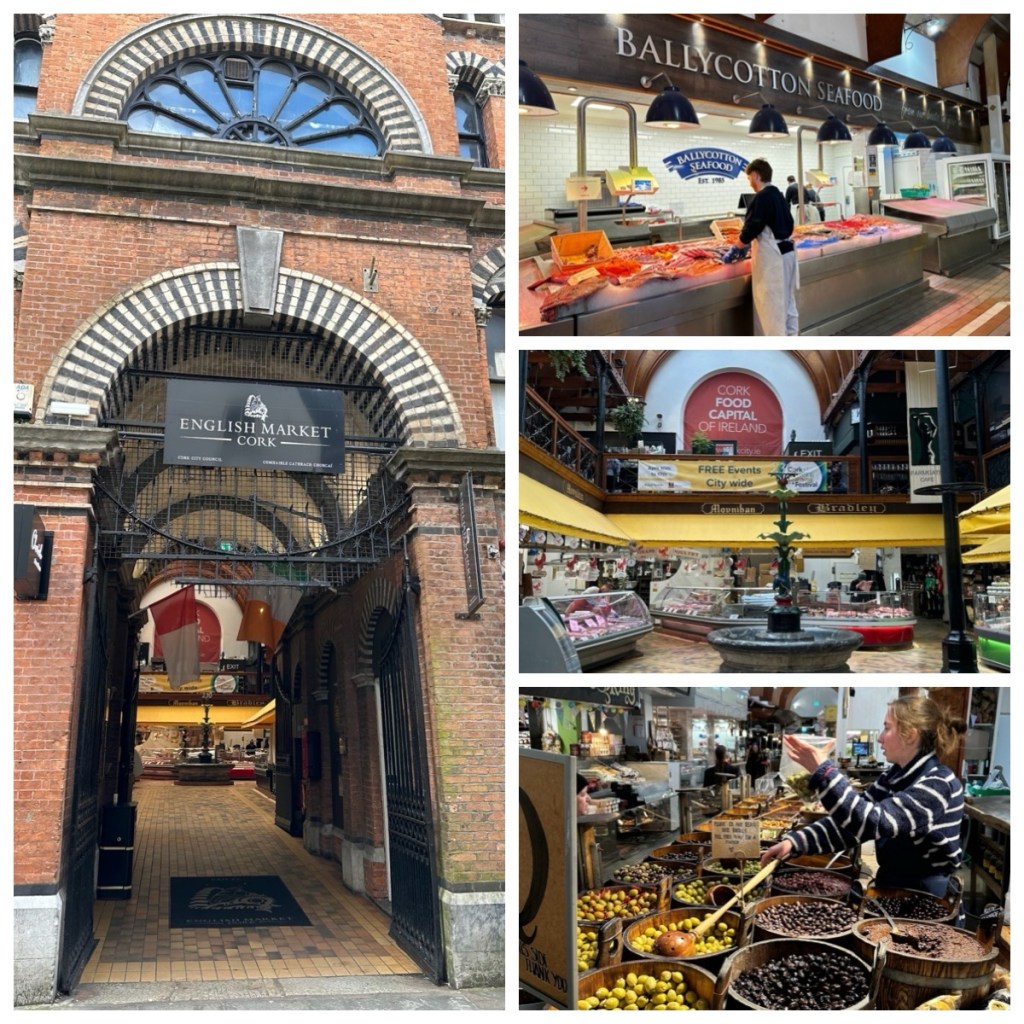
We enjoyed the atmosphere of Cork – it’s an easily walkable city with interesting sites (both historical and quirky), a lovely river walk and great food. The Grand Parade is a wide boulevard lined with restaurants and retail shops. At the entrance to the street beside the south channel of the River Lee, sits the National Monument, erected to commemorate the Irish Patriots who died during the period 1798 – 1867. The street passes by the English Market, Cork’s main library and Bishop Lucey Park (currently closed for a major revitalization).

The English Market has existed since 1788. The ~55 stalls sell locally produced foods, including fresh fish, meats, fruit and vegetables, eggs and artisan cheeses and breads. The market has survived fire, civil war, an attempted name change and a failed bid to replace it with a parking lot in the 1980s.
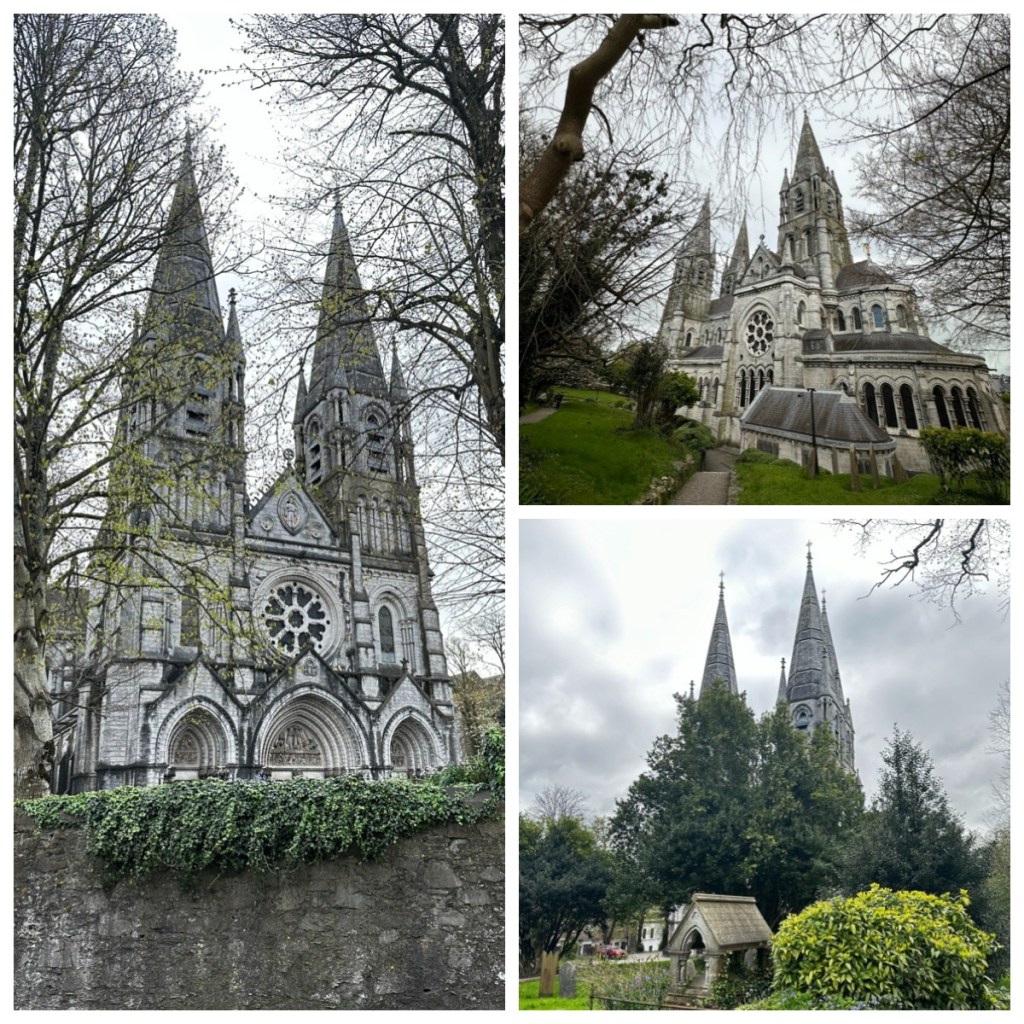
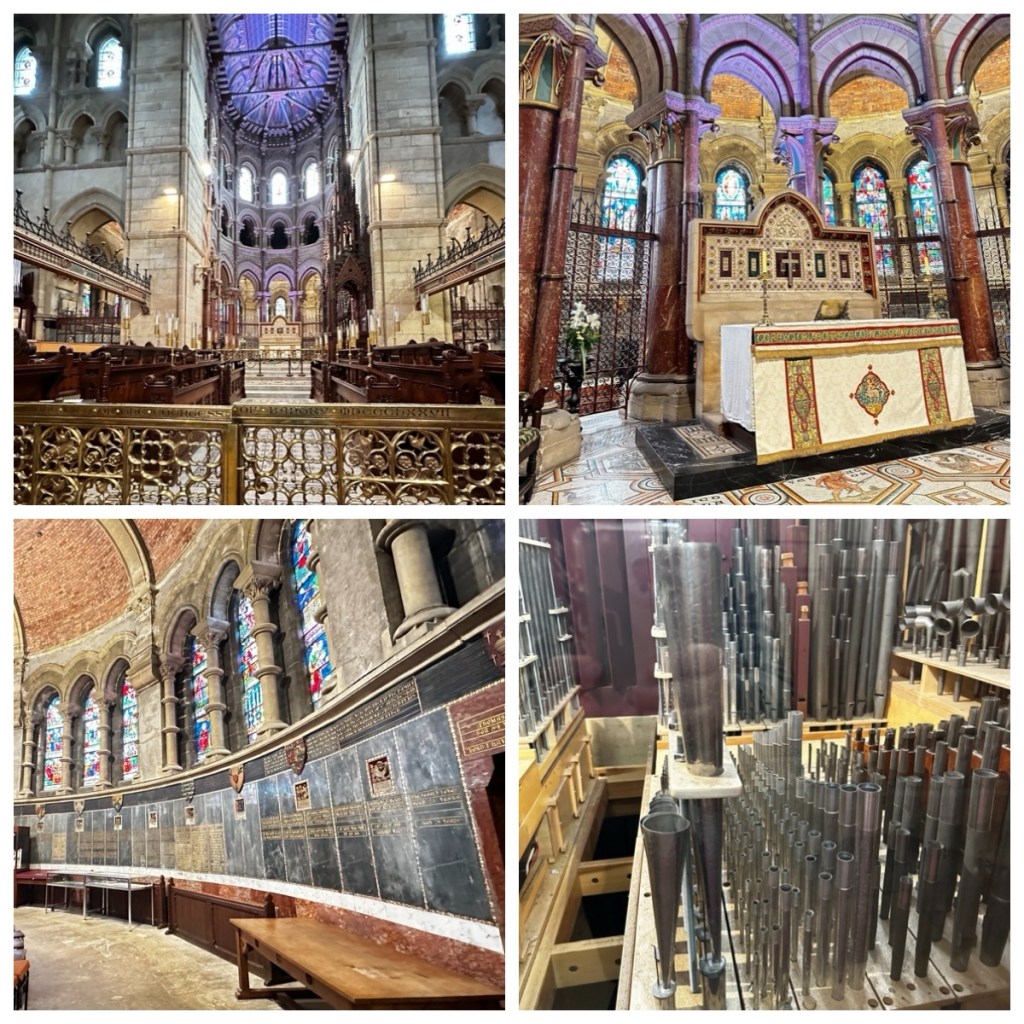
Cork is known for two grand cathedrals. Saint Fin Barre’s Cathedral is located on the south bank of the River Lee and serves the Church of Ireland. Built on the foundations of an earlier cathedral, the current three-spire Gothic-revival church was constructed between 1862 and 1879. It is dedicated to Finbarr of Cork, the patron saint of the city. The cathedral boasts beautiful stained glass, an ornate organ and preserved 12th century carved stone heads. Local legend tells that the angel on the cathedral’s east side will blow his bugle to herald the Apocalypse!
The second grand cathedral is the Cathedral of Saint Mary and Saint Anne, commonly known as St Mary’s Cathedral. The Catholic cathedral of the city, it was constructed from 1799 – 1808 on the site of a formed church built in the 1730s and its distinctive tower was added in the 1860s.


One other church of note is St Anne’s Church. A church has existed on the site since medieval times, with the current one standing on the hill above the city since 1722. It is said that the red sandstone and white limestone of the church’s tower inspired the red and white of Cork’s sporting colours. Visitors can climb the tower to ring the Shandon Bells that have been immortalized through songs and poem – we didn’t try this. Locals call the tower the ‘four-faced liar’ as the clocks on each face of the tower tell different times.

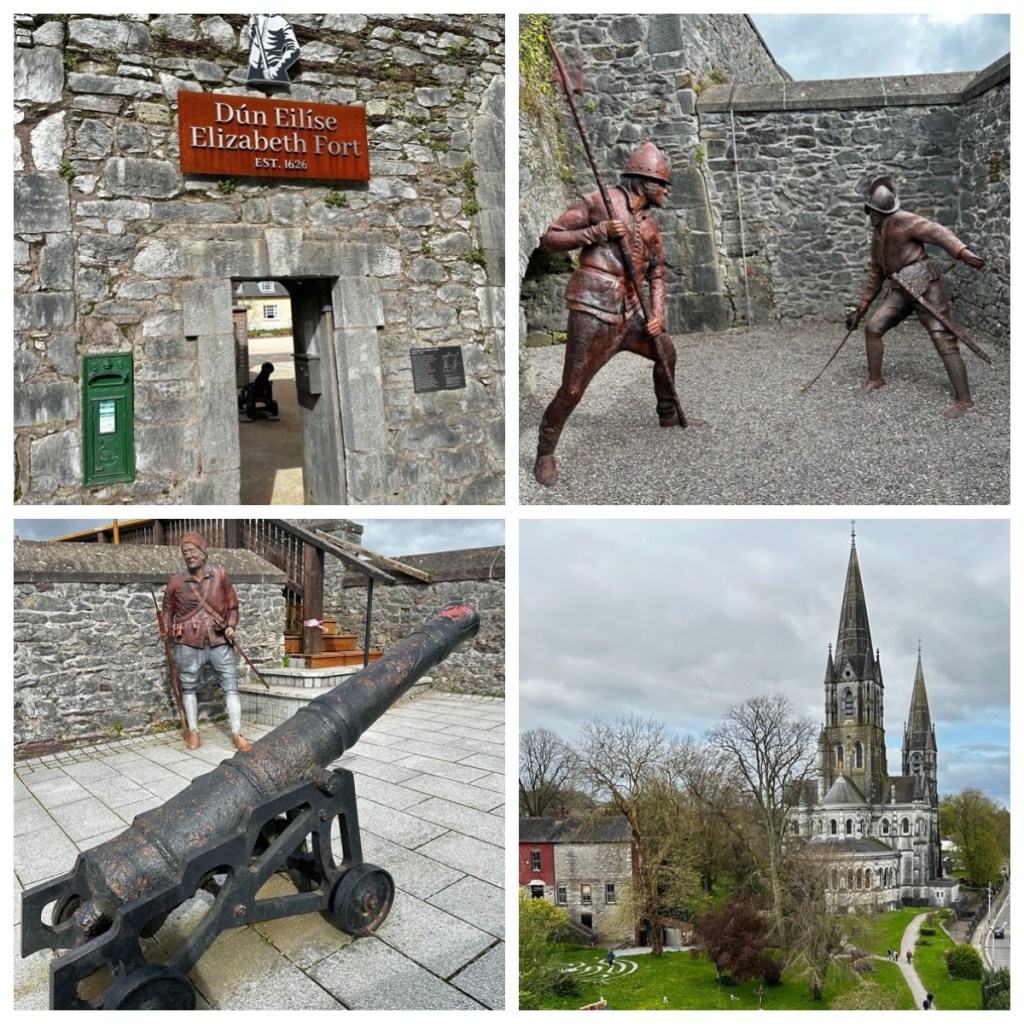
Elizabeth Fort was built in 1601 and then destroyed, only to be rebuilt in 1624. It continued to be in use for centuries, including during the Irish Civil War of the 1920s. The fort is an example of a Star Fort. The outcroppings in this type of construction eliminated protected blind spots, called “dead zones”, and allowed fire along the wall from positions protected from direct fire. Elizabeth Fort is very interesting to visit and a stroll on the ramparts offers great city views.
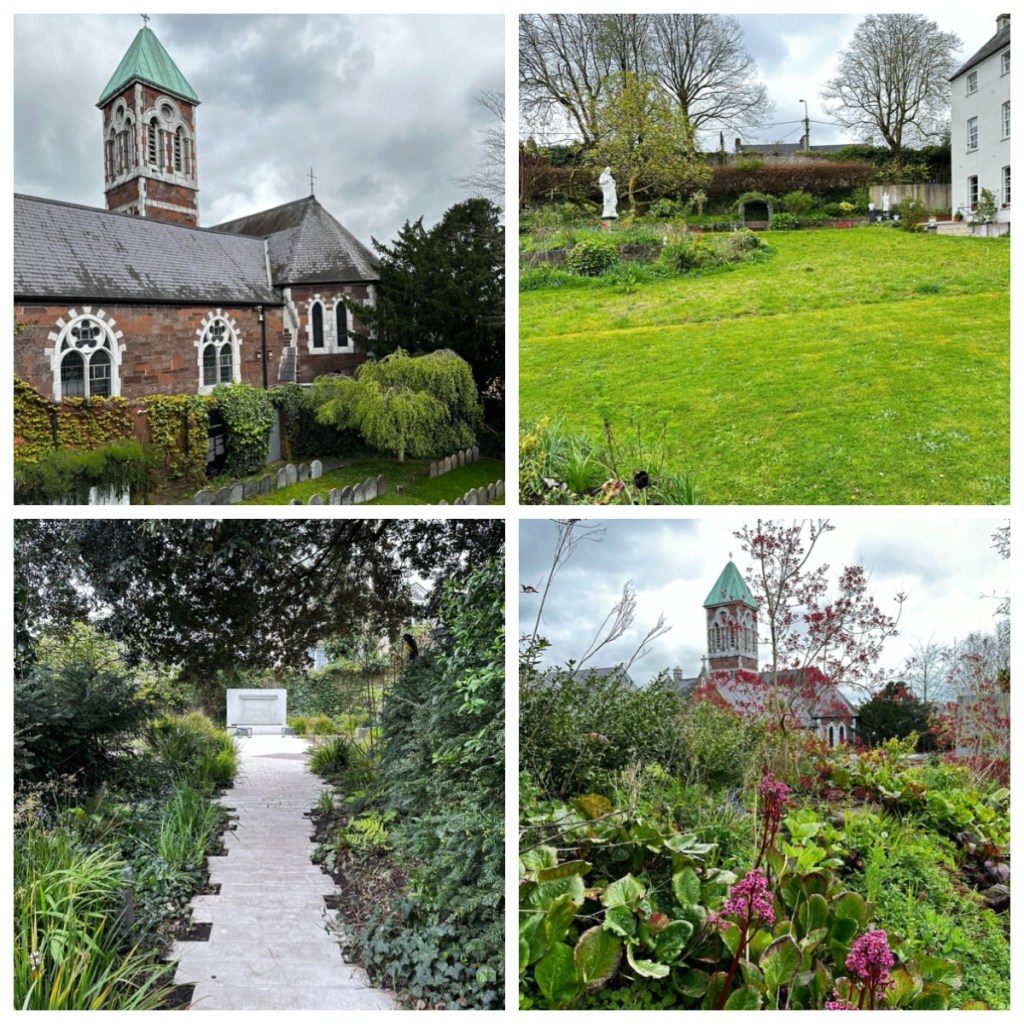
In the 1700s, Nano Nagle established schools in Cork to educate poor Catholic children, brought the Ursuline Sisters to Ireland and founded her own religious order, the Presentation Sisters. The mission of the order was to teach and care for the sick and needy. For five years, the small cottage near Nano’s first school was their first convent. Nano then built a small convent on the same street, where sisters from the order are again living today (albeit in a newer building on the site). You can read more of her story here.
Today you can visit Nano Nagle Place, including a 3.5 acre site, with peaceful walled gardens and a museum that depicts life in the 1700s and Nagle’s work with the needy in the community.
The Cork Riverwalk follows the Lee River and provides a lovely view of the river and the surrounding greenery.

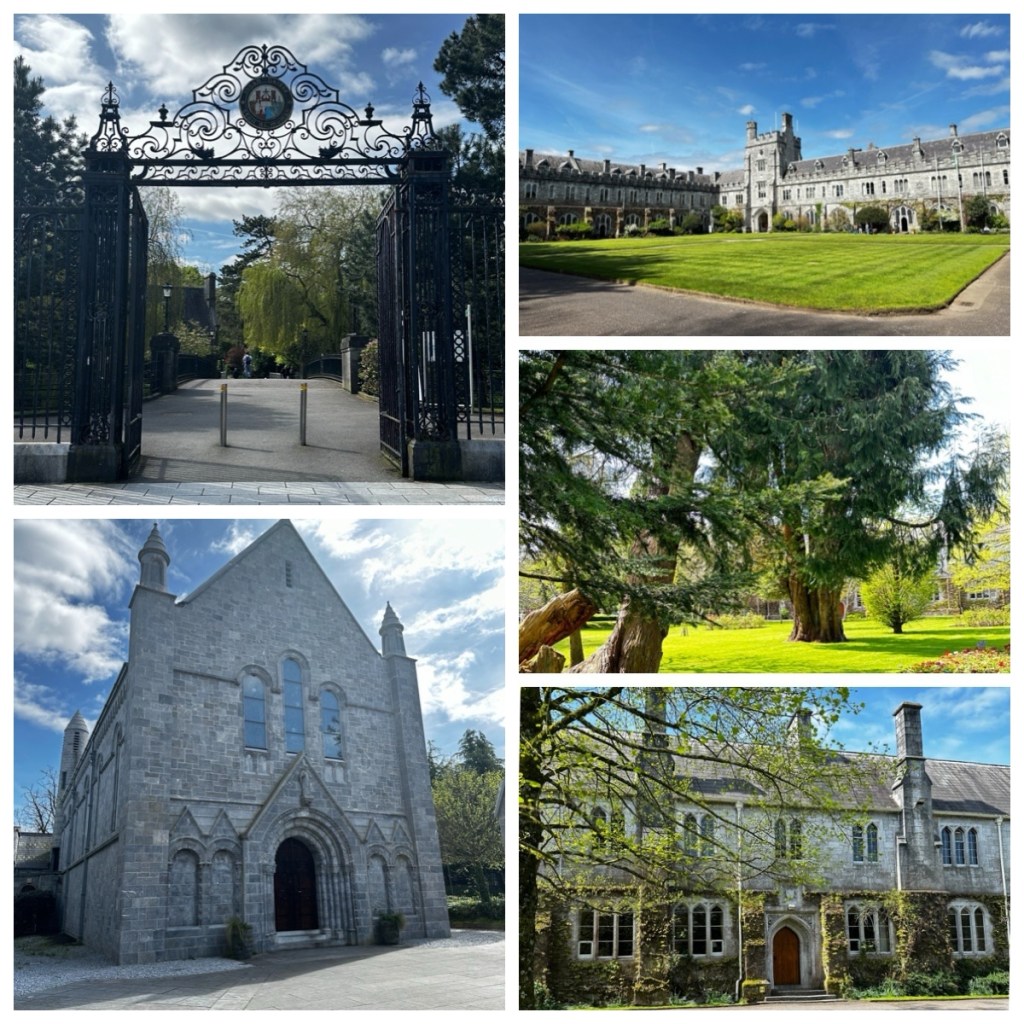
From the Riverwalk, you can stroll through the impressive campus of the University College Cork. The university was founded in 1849 and as of 2022, had ~25,000 students. We enjoyed the stately buildings, the open green areas and the grand trees, many of which were planted when the university was founded.
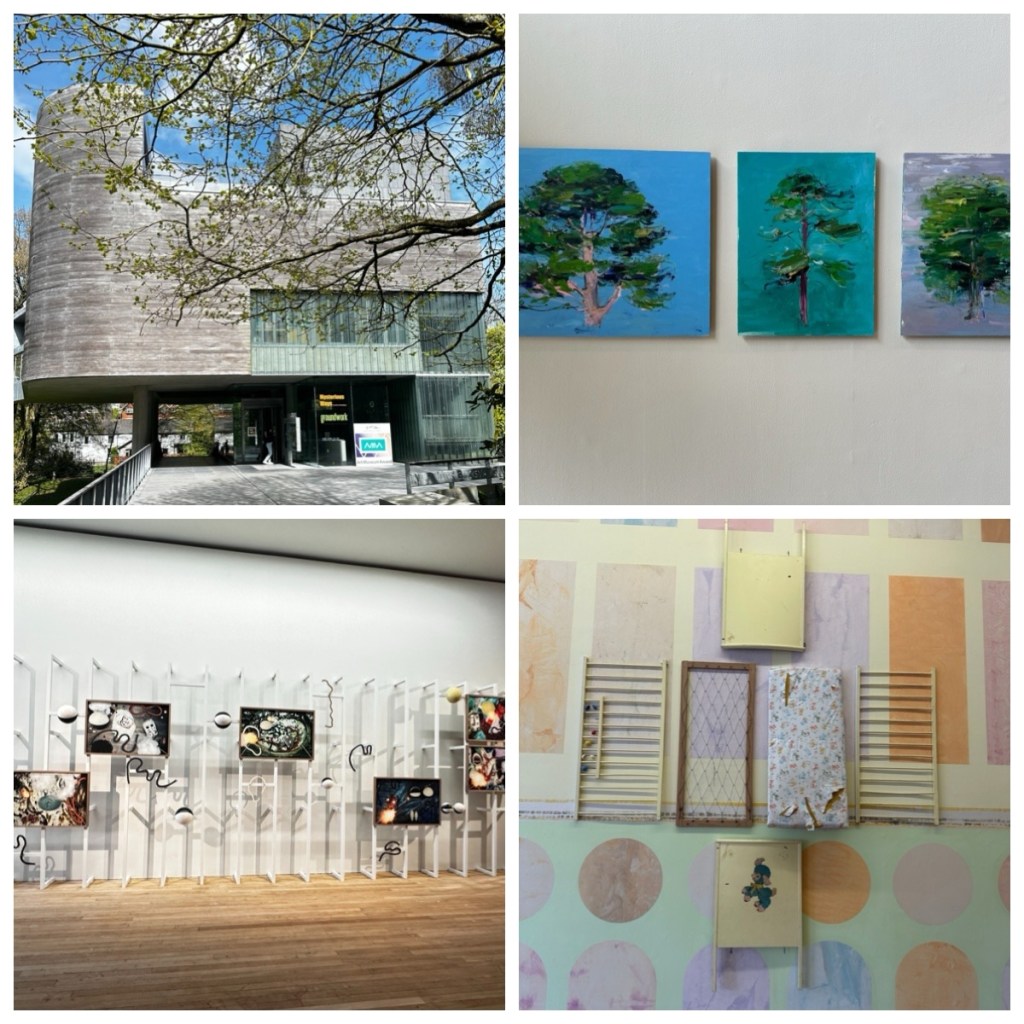
On the UCC campus is the Glucksman, formerly known as the Lewis Glucksman Gallery. Opened in 2004, the architecture of the museum consisting of limestone, steel and timber has been awarded several respected prizes. We enjoyed exploring the building but we must admit that we didn’t really get the point of the contemporary art installations. They were definitely unique!
We visited another art gallery, the Crawford Municipal Art Gallery. The premier collection in this gallery, housed in the old Customs House, is a series of Graeco-Roman casts, modelled from sculptures held in the Vatican. The Crawford is also home to a number of portraits of beloved Irish writers, from Samuel Beckett to WB Yeats and Elizabeth Bowen, as well as some contemporary installations that again left us somewhat confused as to their interpretation.

Exploring the streets of Cork is entertaining. The Ardú Street Art trail was initiated in October 2020 injecting a burst of colour, vibrancy, and life into the city in lockdown. The goal was to unite the community through art, lifting its creative and community spirit at a time when it needed it most. Additional murals were added in 2021. It was fun to follow the map to find the various murals.

While walking to the historic sights and searching for murals, we came across a lot of interesting sights.

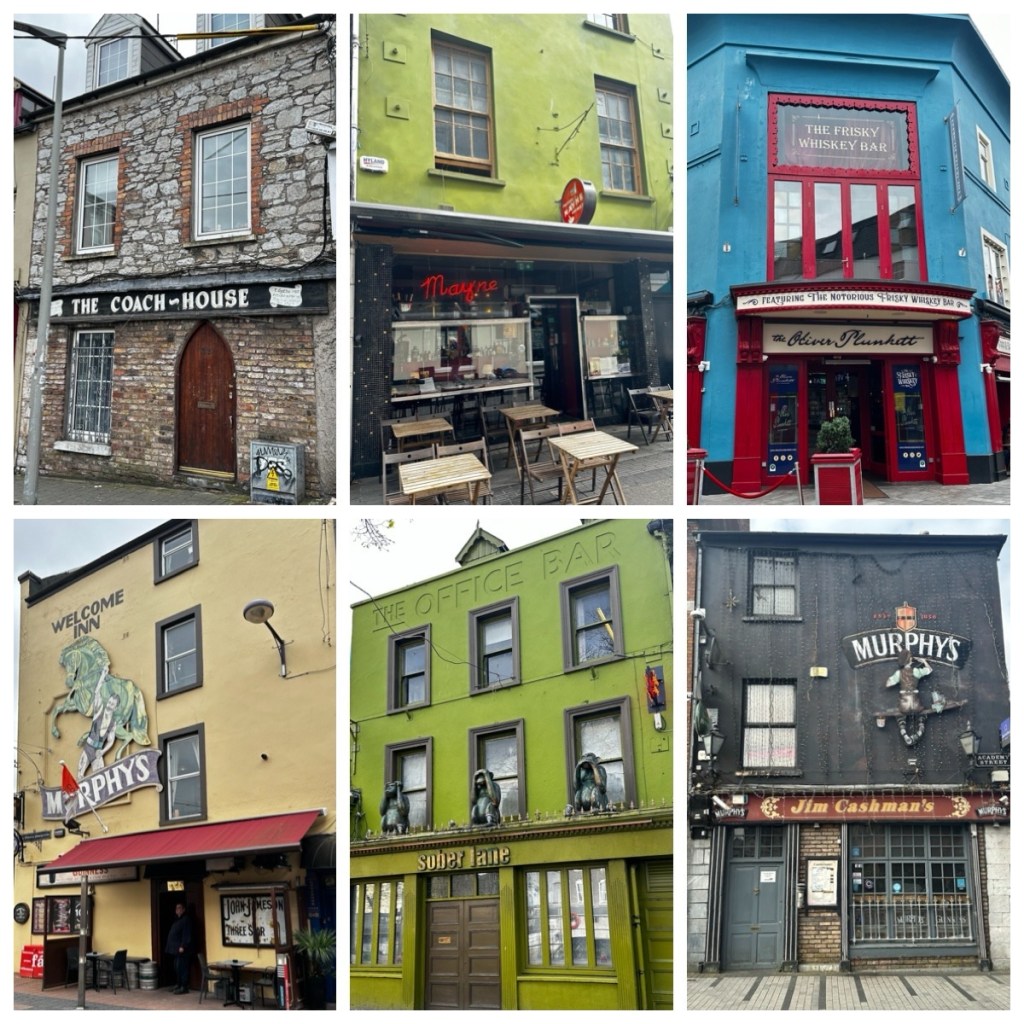
As we have found typical in Ireland, Cork has a pub on most every corner. Here are just a few of them.
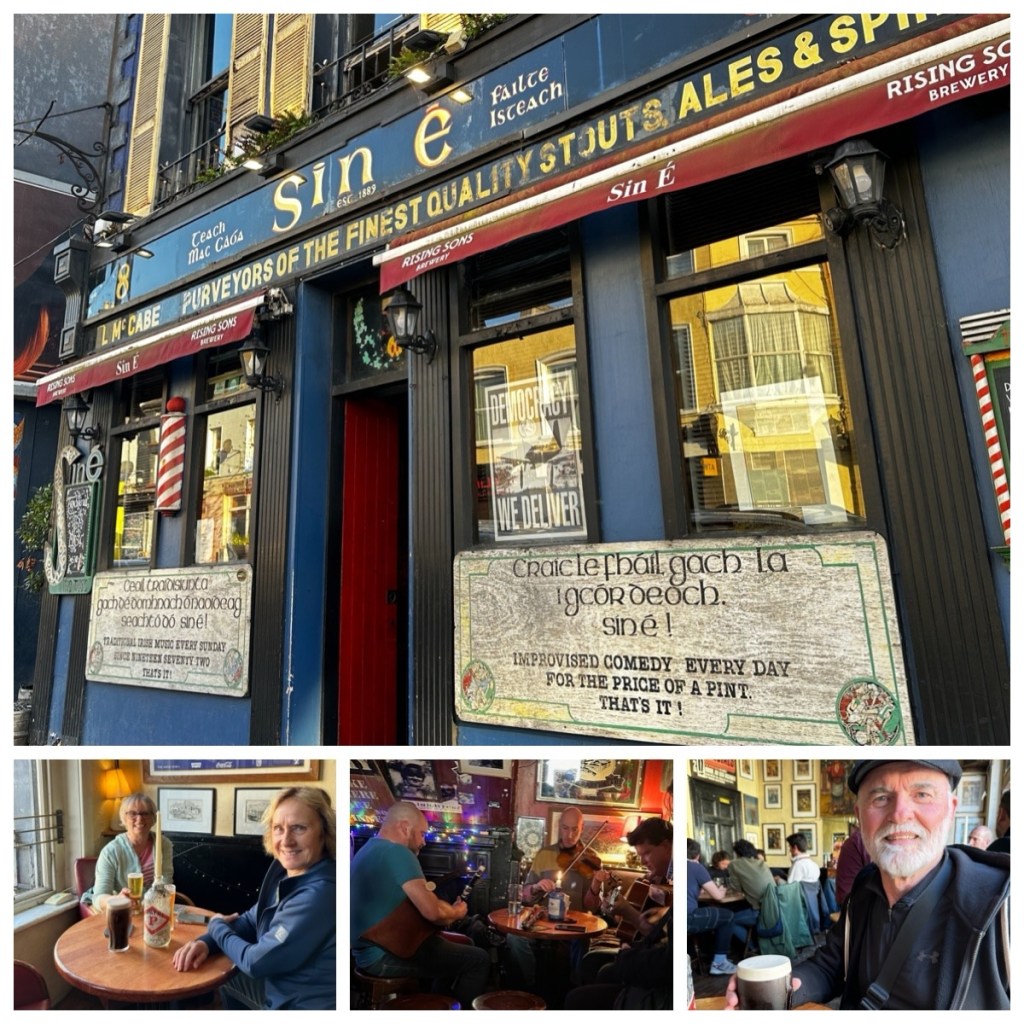
One evening, we visited the Sin é pub to listen to some traditional Irish live music. It was very entertaining and a fun evening!
There are many possible day trips from Cork. Most tourists choose to travel to kiss the Blarney Stone or visit the Jameson Midleton Distillery. There are also various picturesque and historical harbour towns. We would have liked to travel to a few of these but as time was limited, we chose the seaside town of Kinsale.
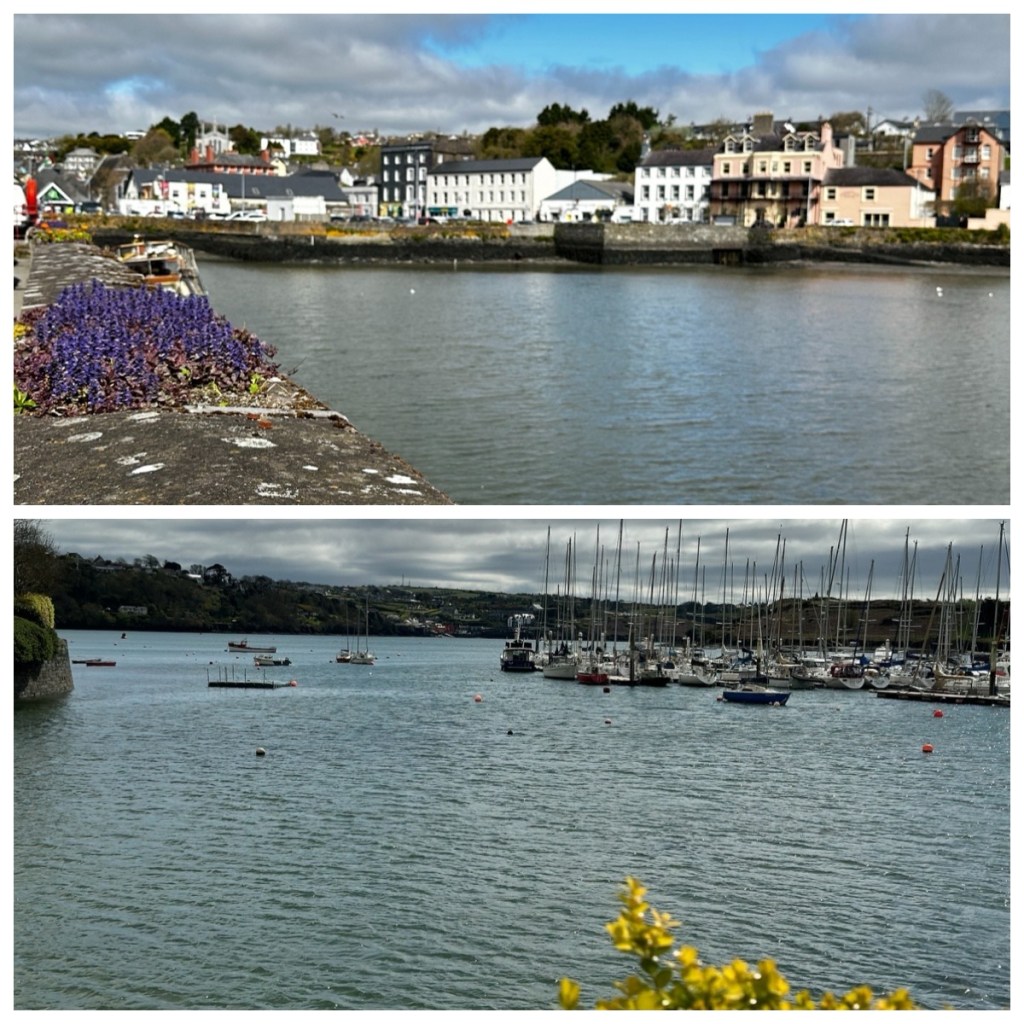
A 30 minute bus ride takes you from central Cork to the Kinsale Harbour. Kinsale has about 5000 permanent residents, but apparently can double that on a busy summer day. In April, the town was quite peaceful and we enjoyed just wandering about.
Kinsale Harbour is located in the estuary of the Bandon River leading to the Atlantic. Today, this naturally sheltered bay houses fishing boats and pleasure craft, but in the past, it was a port of military significance. The famous ‘Battle of Kinsale’ in 1601 saw the area become inhabited with the armies of England, Spain and the Northern Irish Chieftains and the harbour continued to be used as a naval base for many years. In the 17th and 18th centuries, the harbour was home to tall ships preparing for the journey to North America.
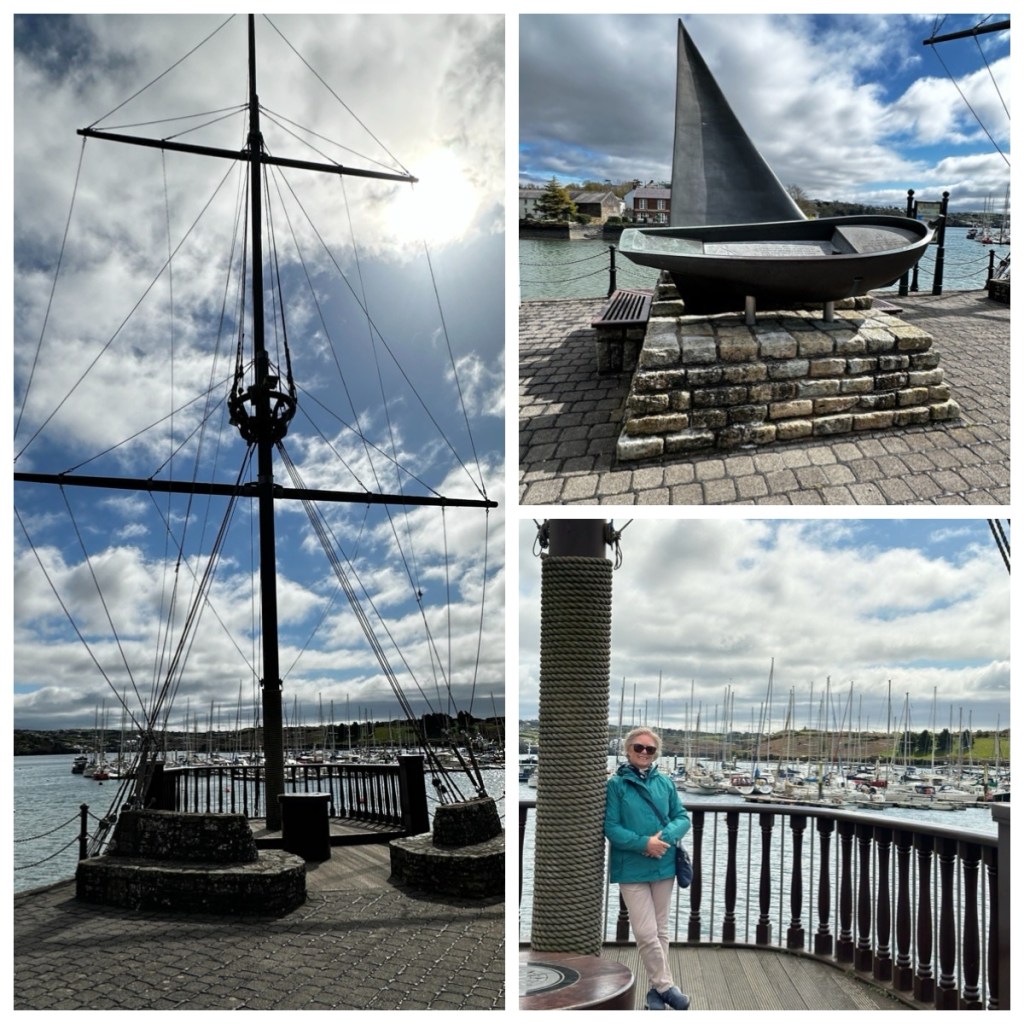
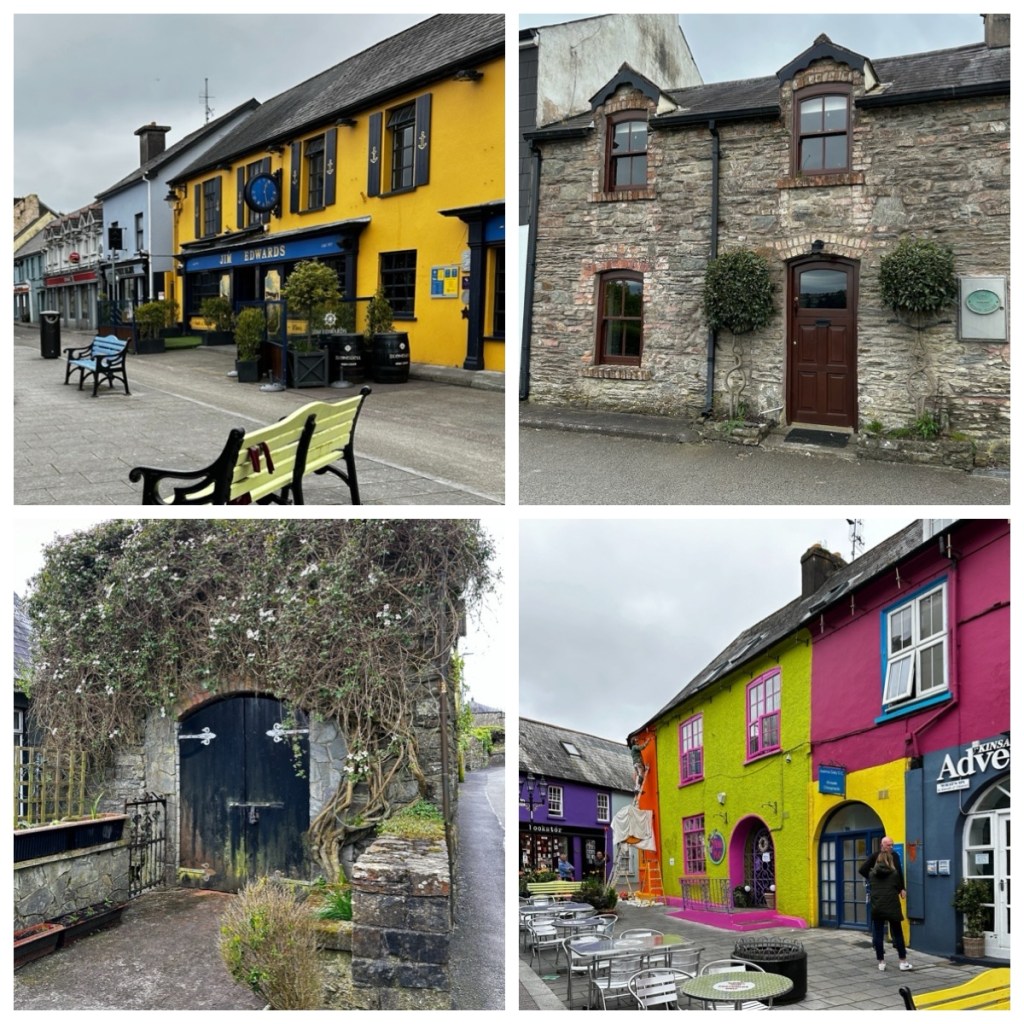
The streets of Kinsale are both colourful and historic, with remnants of the medieval town walls still evident.
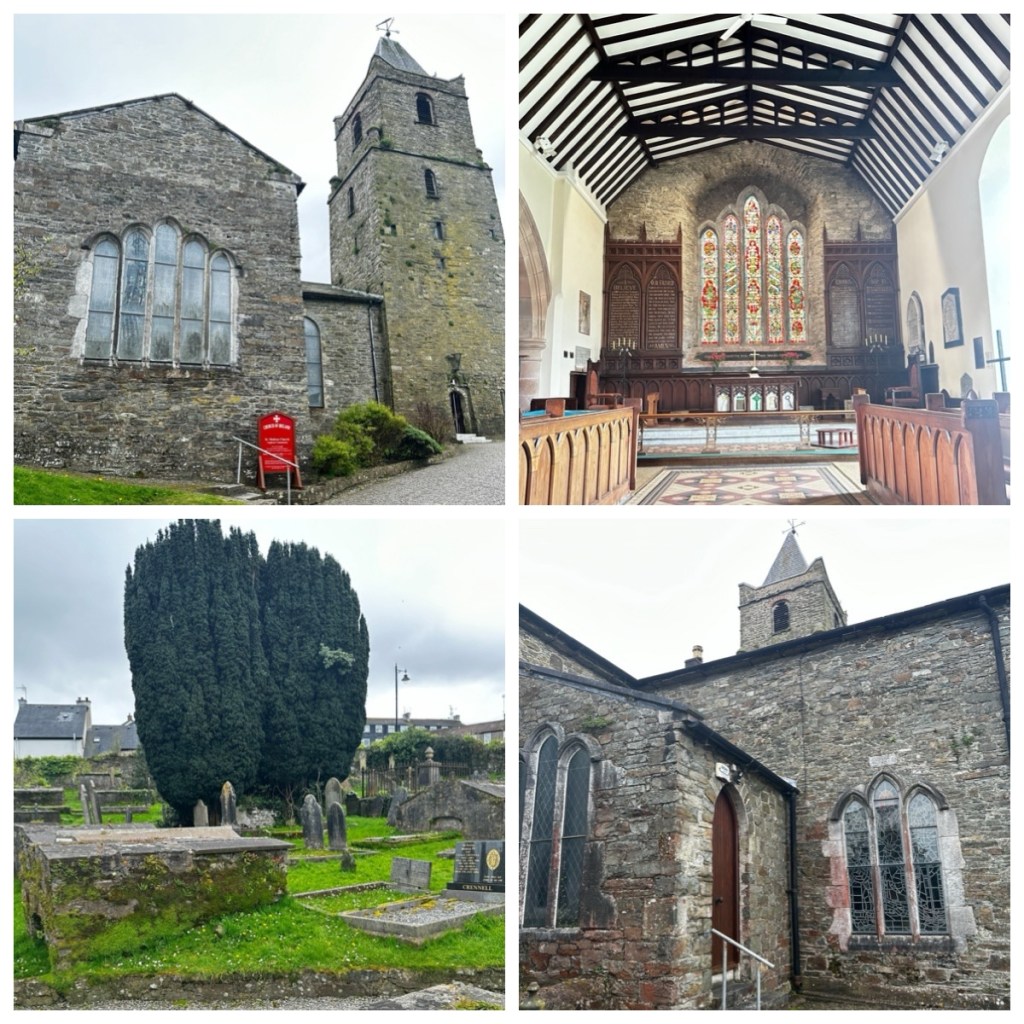
St. Multose Church was originally built in 1190 and although the church has undergone various improvements and additions throughout its 800 year history, the most dominant feature, the impressive belltower, remains from the original Norman church (the fourth stage and its decorations were added in 1750). It is among the Church of Ireland’s oldest churches.
Kinsale has a number of other attractions that we didn’t take in on this visit, including the Siilly Walk, the Charles and James Forts, and Desmond Castle.
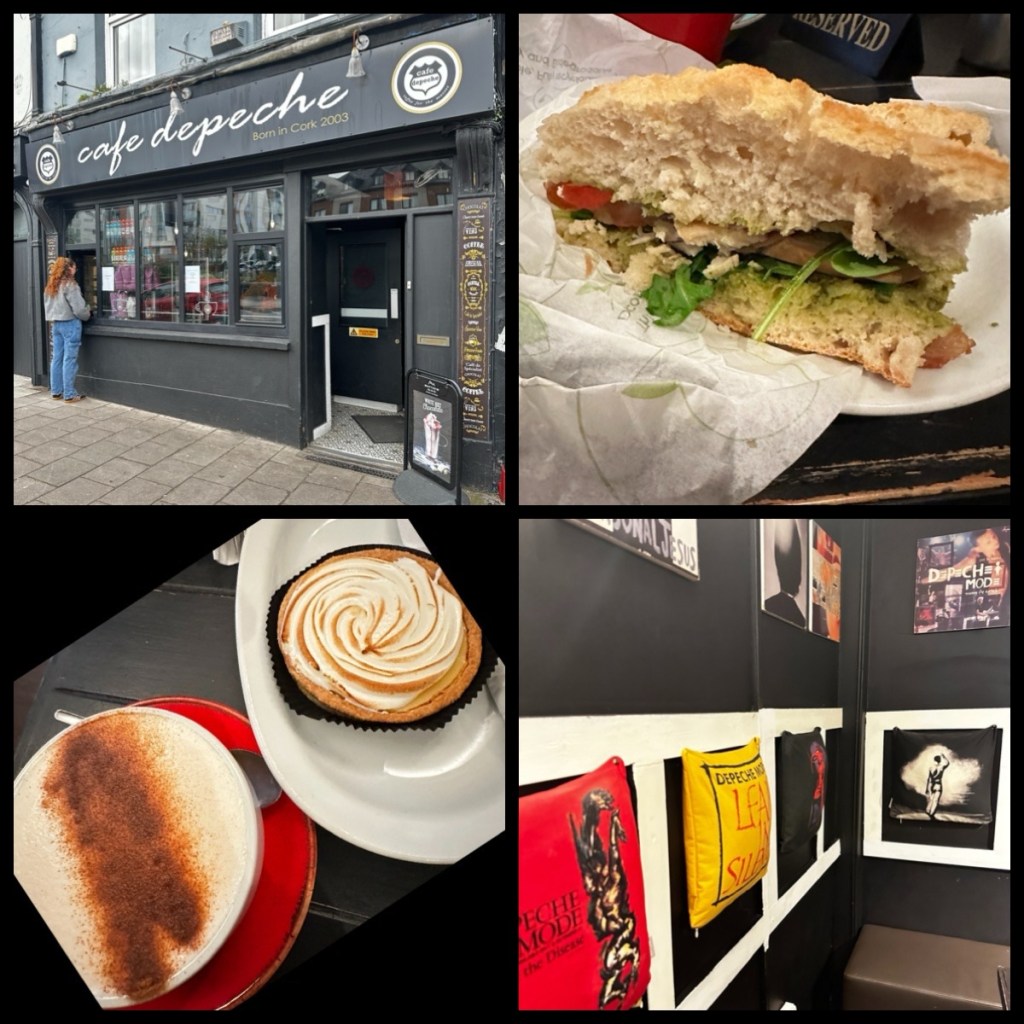
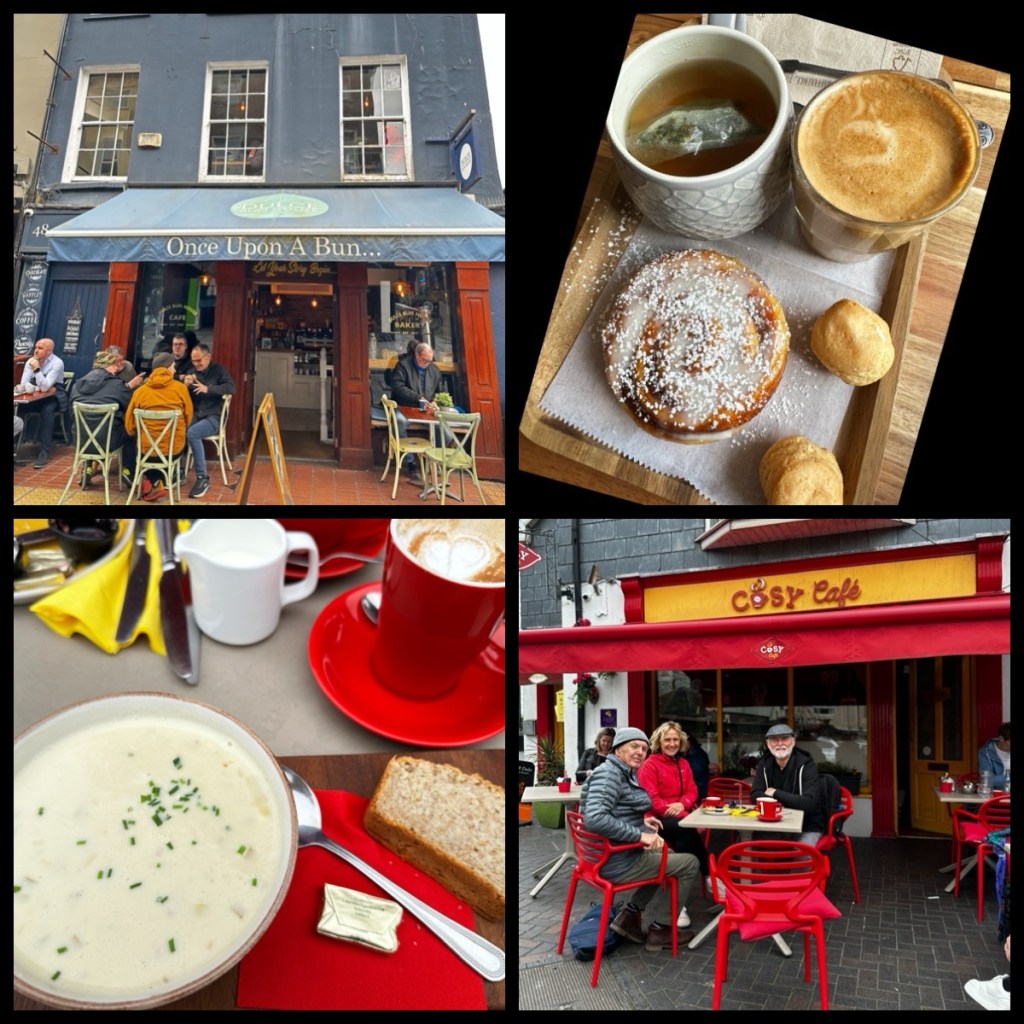
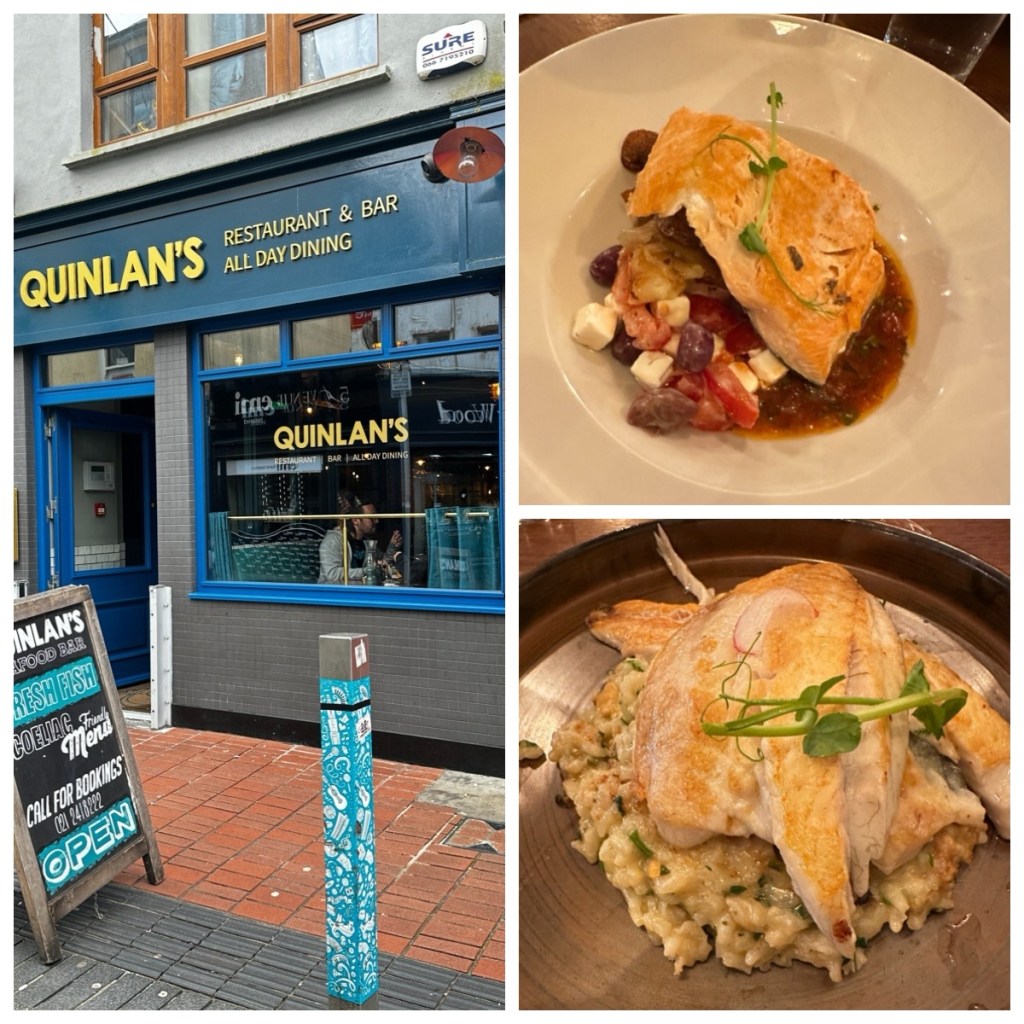
Cork and Kinsale are known as two of Ireland’s gastronomic centres and we certainly were not disappointed with the establishments that we encountered – both for coffee & lunch breaks, as well as some great dinners.


We thoroughly enjoyed our visit to County Cork and would love to return to tour more of the county! But off to our final destination……
Sláinte,
Bev & Harvey

 A Long and Winding Journey