We had a great day in Puglia on a day tour to two UNESCO World Heritage Sites. We booked the UNESCO Tour by Pugliamare through Viator and were very happy with the booking and tour organization.
The comfortable mid-size coach picked us up in Bari; there were 22 participants for the first half of the journey, with only 14 of us continuing to the second half of the day. Our guide for the day, Daniella, provided interesting information as we travelled to the sights.
Our first stop was Matera. Matera is located in the Basilicata region, approximately 65 km from Bari. As well as being chosen as a UNESCO World Heritage Site in 1993, Matera was also named the European Capital of Culture 2019.
The highlight of Matera is the Sassi di Matera or ancient cave dwellings. These have been inhabited by humans since the Paleolithic period, ~ 7000 BC. The UNESCO website states that the sassi of Matera represent “the most outstanding, intact example of a troglodyte settlement in the Mediterranean region, perfectly adapted to its terrain and ecosystem.” The ancient settlement was built into the volcanic tuff rock lining the Gravina valley. Its winding alleyways, maze of caves, gardens, terraces and tunnels make it a unique architectural complex.

The ancient caves are visible in the hills – and could be visited if one had the stamina to climb the hills.

The cave houses are built in tiers, with the roof on the lower dwelling becoming the floor of the next. In some areas, there are up to six tiers.

During our walking tour with Daniella, we stopped in at a small shop for a tasting of some local specialities. This also gave us a close look at the inside of one of the small dwellings.

A number of movies have been filmed in Matera, including The Passion of the Christ and No Time to Die.
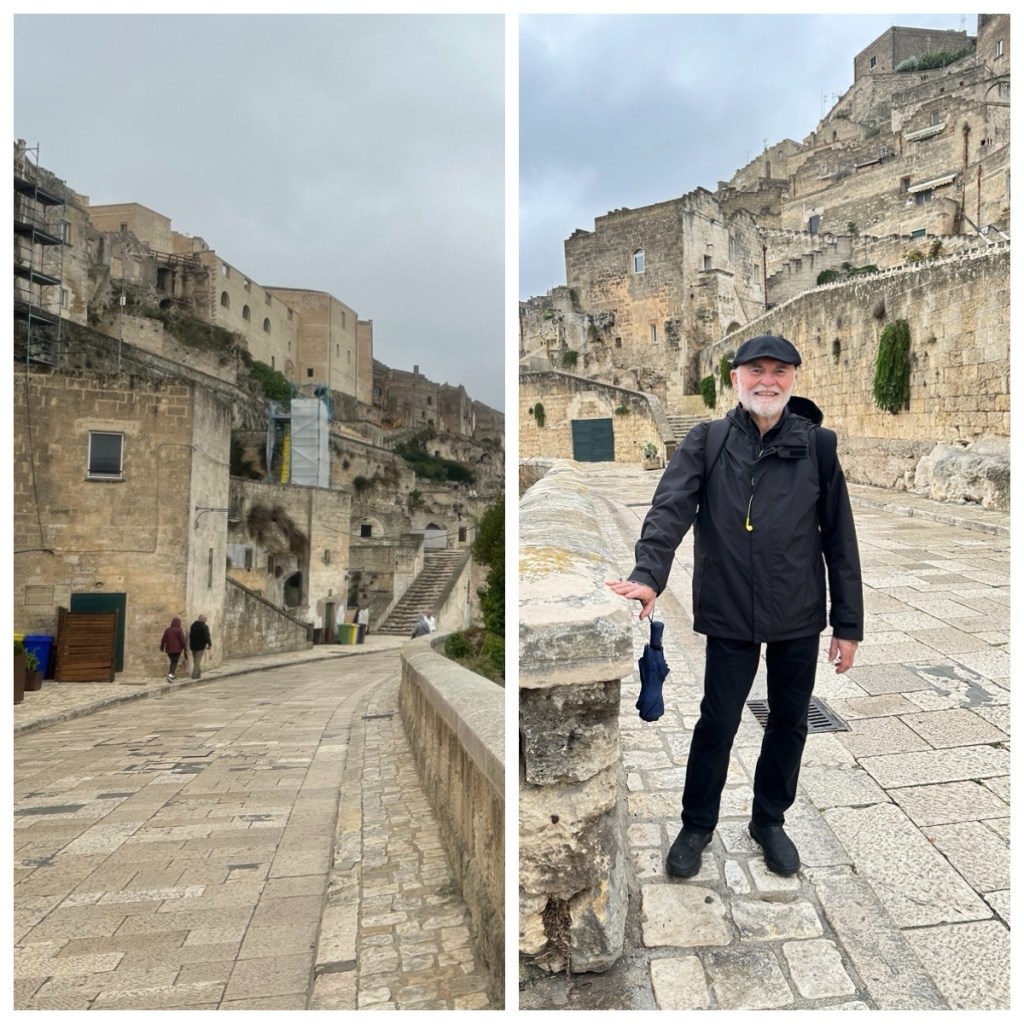
After our guided tour and some free time to explore, we travelled from Matera to the second World Heritage Site, Alberobello.
Alberobello was named a UNESCO World Heritage Site in 1996, due to the unique architectural and historical value of the abundance of trulli houses.
Trulli are drystone dwellings with conical roofs. A typical trullo has thick walls and is either round-shaped or square.

The history behind Alberobello is of course connected with money and cunning Italian aristocrats. In the 14th century, the Count of Conversano and his successors decided not to construct permanent dwellings here for their peasants to avoid taxes. The construction of the trulli allowed for them to be quickly disassembled when the tax collectors were coming. Eventually, the citizens tired of rebuilding their homes and petitioned to the government in Naples for permanent status at the end of the 18th century.
Today, AlberobelIo is one of the best preserved historical urban areas of this type in Europe. The historical value of the town increases because the Alberobello trulli are still serving as houses for the local population.
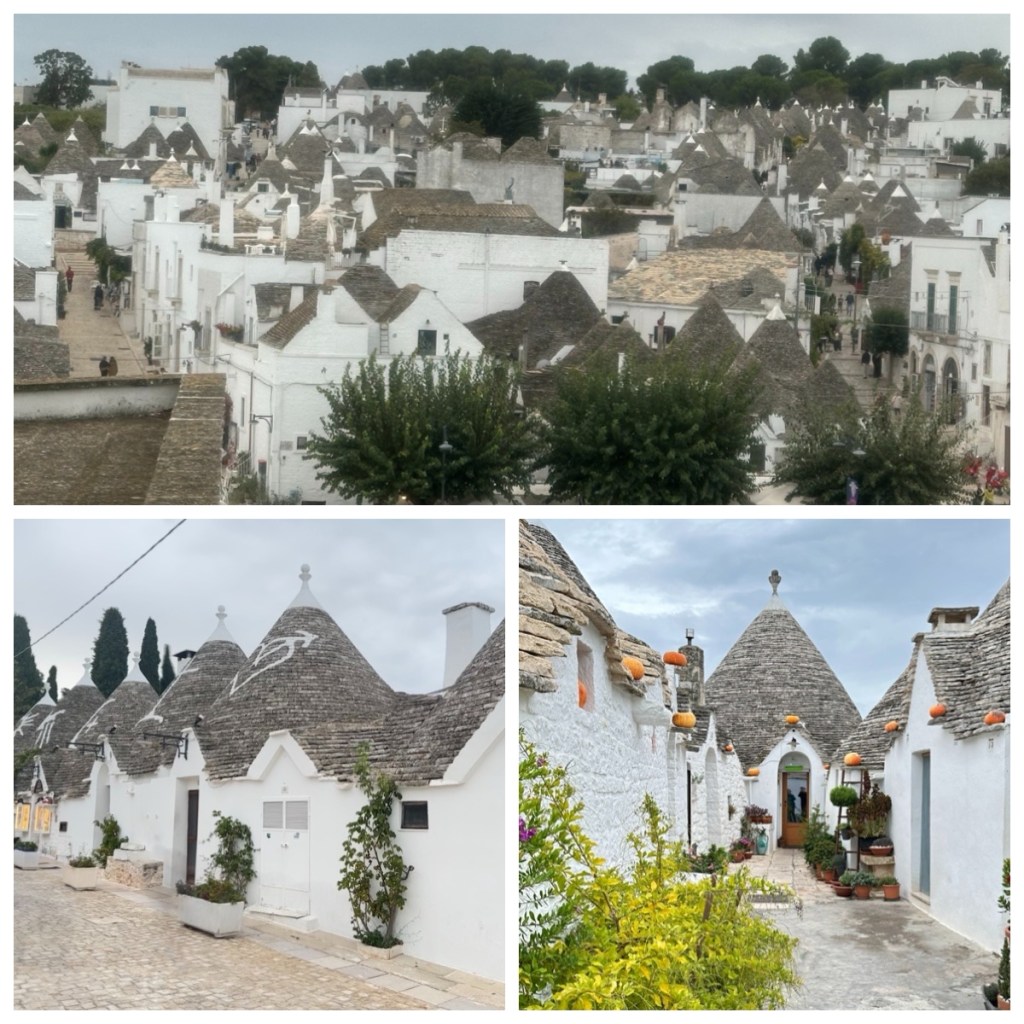
As part of our guided tour, Daniella again led us into a small shop, where we viewed the inside structure and then on the rooftop terrace, the hostess plied us with various Puglian liqueurs.
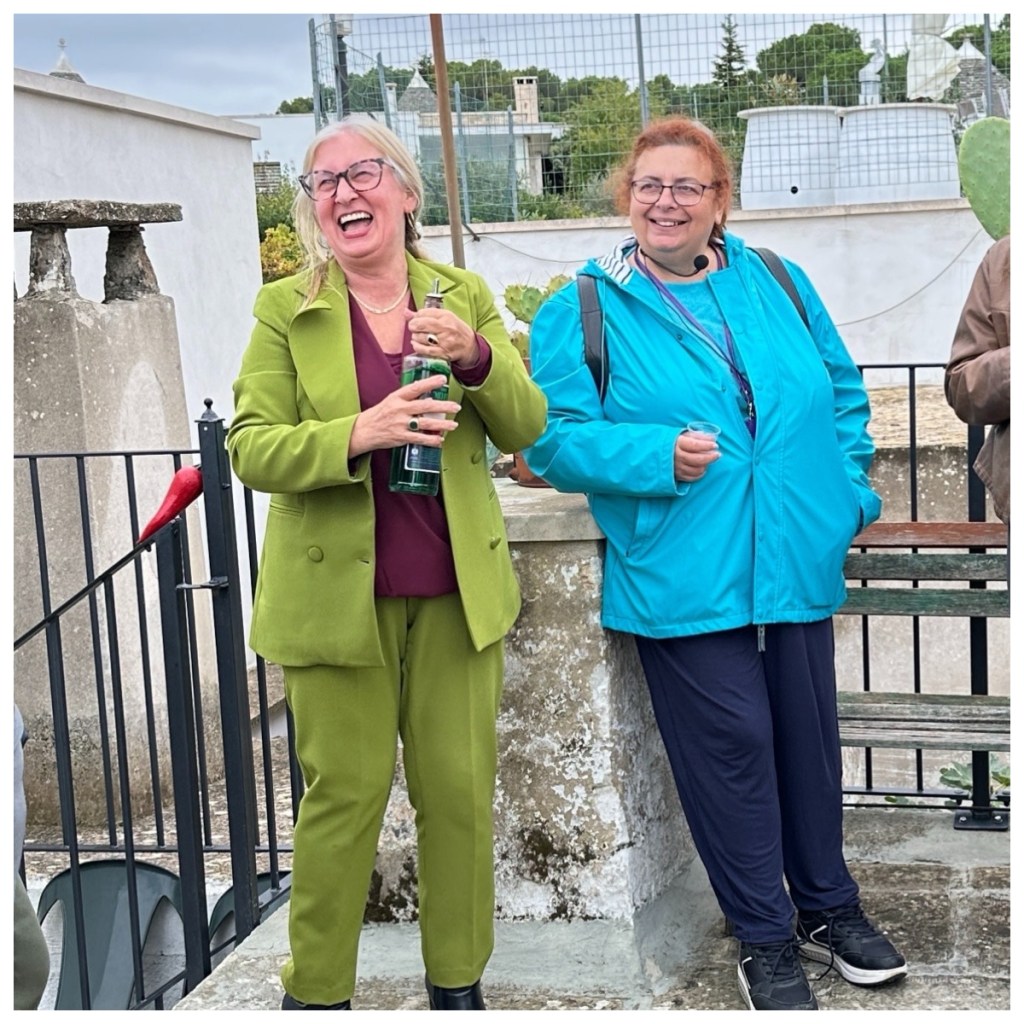
We thoroughly enjoyed our tour to these sights. We were able to relax and enjoy the travel through the countryside and learned so much from Daniella’s interesting and entertaining information.
Stay tuned for one final post from Puglia before we travel across the Adriatic!
Cheers,
Bev & Harvey

 A Long and Winding Journey