On our November Europe trip, we spent 5 days in Zagreb, the capital city of Croatia. This inland city with a population just under 800,000 has historic neighbourhoods, great museums, lovely restaurants and relatively few tourists – especially when compared to the Croatian coastal destinations.
We flew into Zagreb from Sarajevo, a quick 50 minute flight on Croatia Airlines. The Franjo Tuđman Airport new passenger terminal was inaugurated in 2017 and is modern, bright and easy to navigate. We arrived and departed from the airport twice and although being Croatia’s busiest terminal, we found it to be pleasantly quiet on all four occasions.
It was easy to call an Uber at the airport to transport us to our hotel, the Amadria Park Capital. We loved this heritage hotel and would highly recommend it to anyone visiting Zagreb. The location was excellent, the room was sparkling clean and well appointed and the hotel represents the grandeur of early 20th century architecture combined with the upmarket elegance of a modern hotel.

The breakfasts at the Amadria Park Capital were wonderful!

Croatia has an interesting and complicated history. I gave a very abbreviated and simplified summary of the conflicts that preceded its independence in my blog – The Dalmatian Coast – Dubrovnik & Split and as I mentioned there, you could find much more detail in many available resources.
Zagreb began as two walled towns, Gradec and Kaptol. The two towns merged in 1850 and Zagreb officially became a European capital city upon Croatia’s declaration of independence in 1991.
Zagreb is centred around Jelačić Square, an area buzzing with people, trams and pigeons (although not on the level of Sarajevo’s Pigeon Square). In the centre of the square is a statue of a national hero, Josip Jelačić, a 19th century governor who helped unite the Croats and Hapsburgs and championed citizens’ rights. In the Yugoslav era, the statue was removed but was replaced when independence was declared. Originally, Jelačiċ’s statue symbolically confronted the Hapsburgs to the north; today he faces the Serbs to the south.The square is bordered by some lovely cafes where we enjoyed a break and people watching.

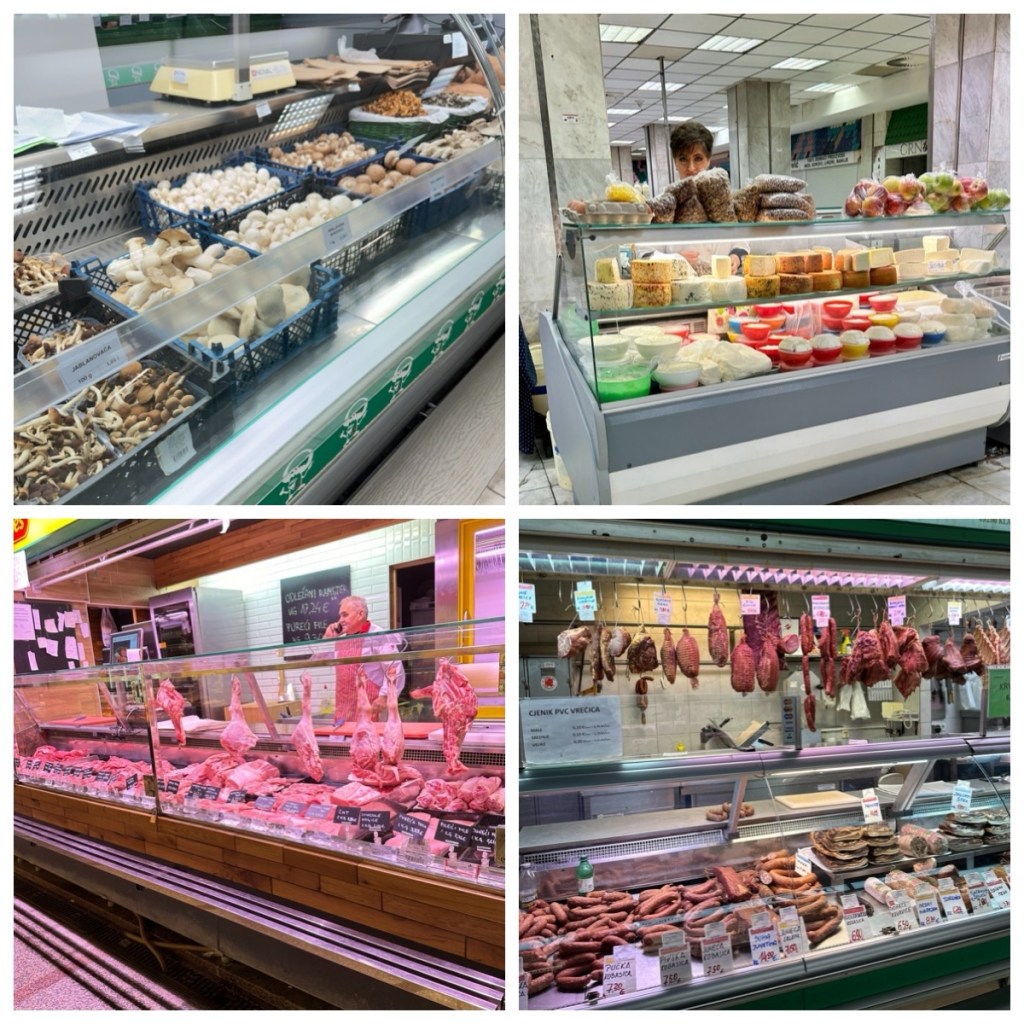
Located just behind Jelačić Square is the city market. The market is comprised of an outdoor area for produce and assorted household goods and clothing, as well as a meat, fish and cheese market located indoors below.

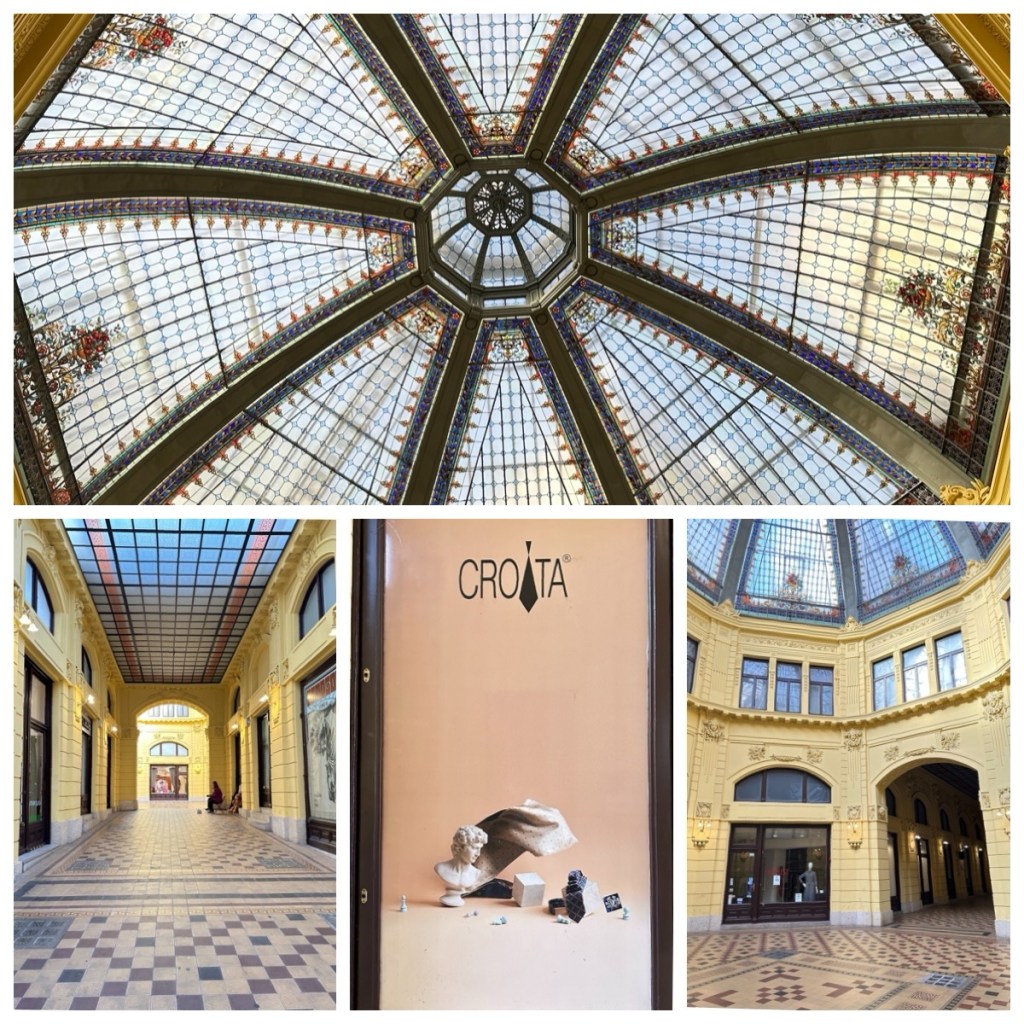
The Octagon Shopping Gallery was an elegant shopping area in the early 1900’s and still is home to a few elegant shops. One of these is Croata – a menswear store, centred around neckties. The store tells that the necktie was created by Croatian soldiers. While fighting the Thirty Year’s War with French comrades, the French adopted the Croat’s distinctive way of tying their scarves and called it à la Croate, eventually evolving into la cravat and the modern necktie. There is even a Necktie Museum in Zagreb!
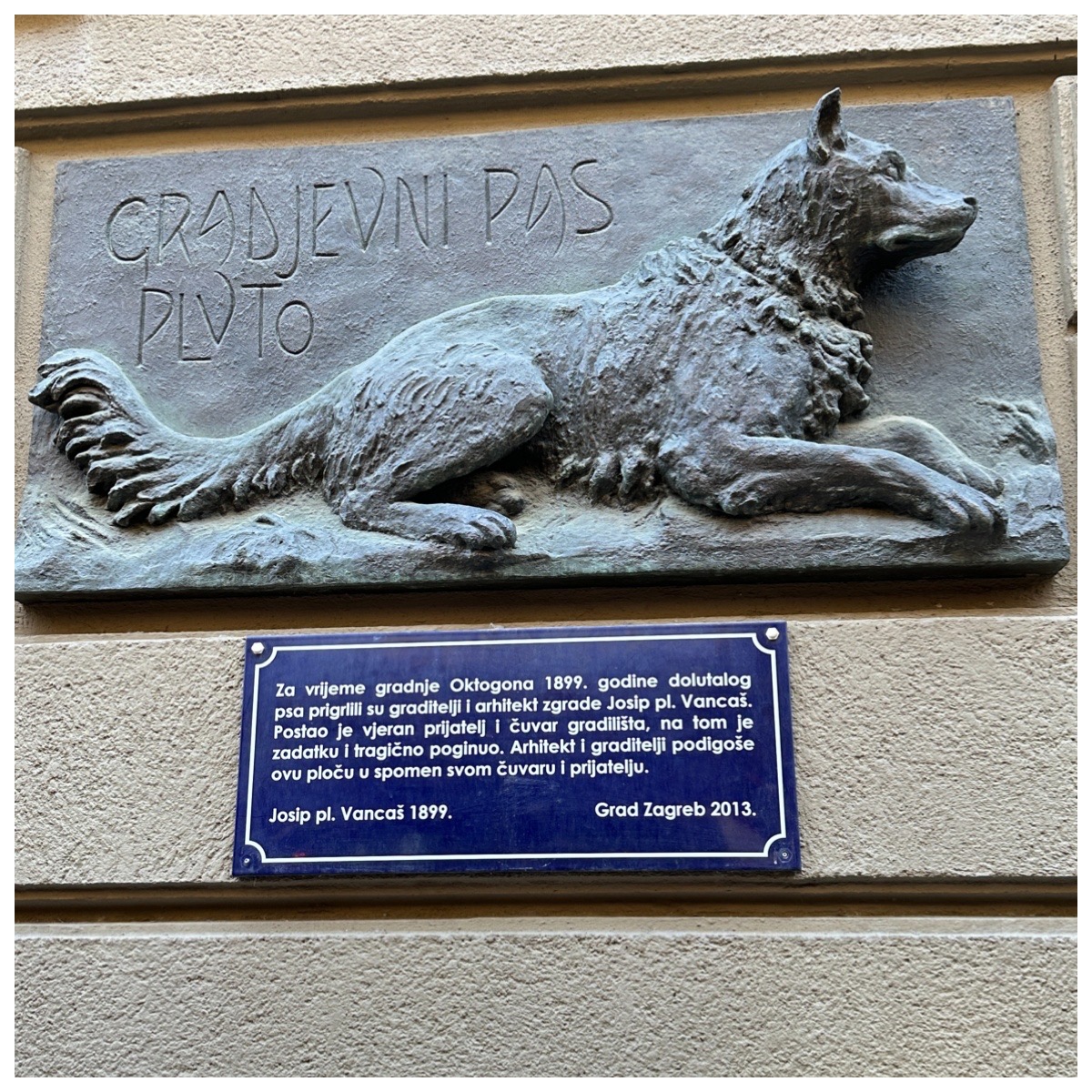
Another fun story is that the Octagon Gallery used to contain the only monument to a dog in Zagreb! A stray dog bonded with the workers building the gallery and was named Pluto. Pluto defended the construction site from smugglers trying to extract clay and minerals from the site but one sad night, the smugglers left him dead. The distraught workers erected a monument in Pluto’s memory in an area that was eventually sealed off but rediscovered in 2012. In 2013, the relief was moved to Bogović Street onto the wall of the building Pluto died protecting.
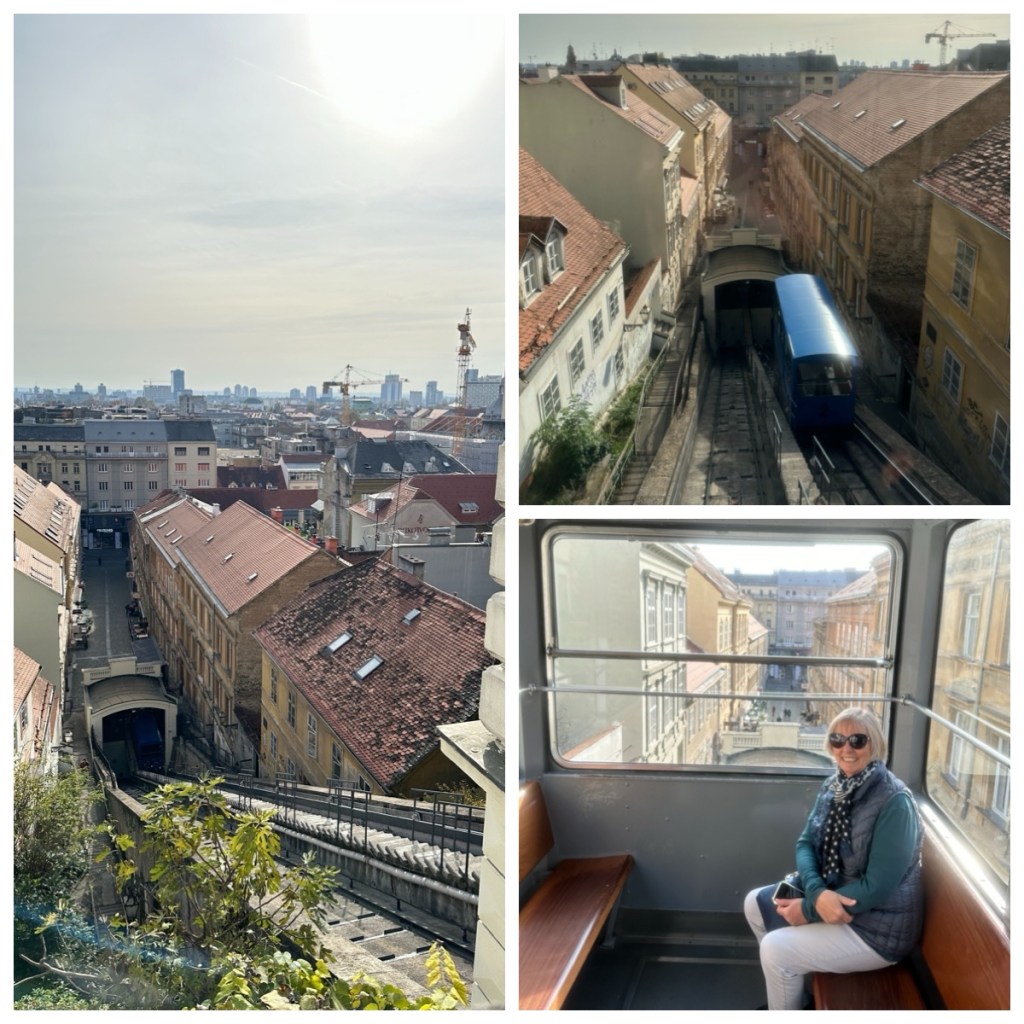
The ZET Uspinjača funicular is often referred to as the world’s shortest funicular. Built in the late 19th century, it takes 55 seconds to bring you from the lower town to the area of Gradec.
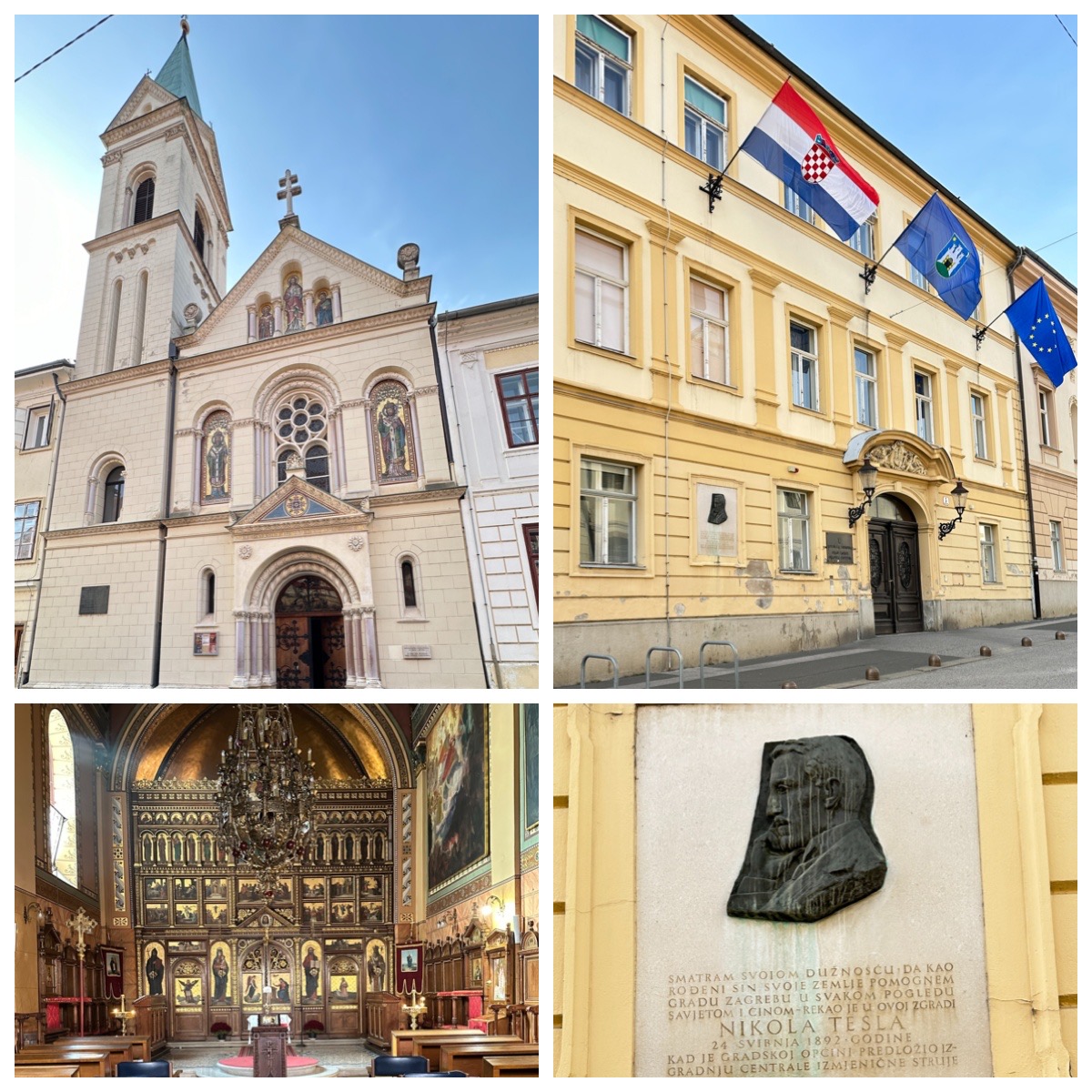
Strolling down the street after exiting the funicular, you come upon a number of Baroque buildings. St Cyril and Metodus is the Greek Catholic co-cathedral built in 1886 in neo-Byzantine style.
Next to it is the City Parliament (i.e., City Hall) with a plaque honouring Nicola Tesla (more on him later). The plaque tells how Tesla came to this building in 1892 to pitch to Zagreb that it should become the first city in the world to build an AC power station. The plaque does not mention that Zagreb refused and Tesla successfully made the same offer to Buffalo, NY.
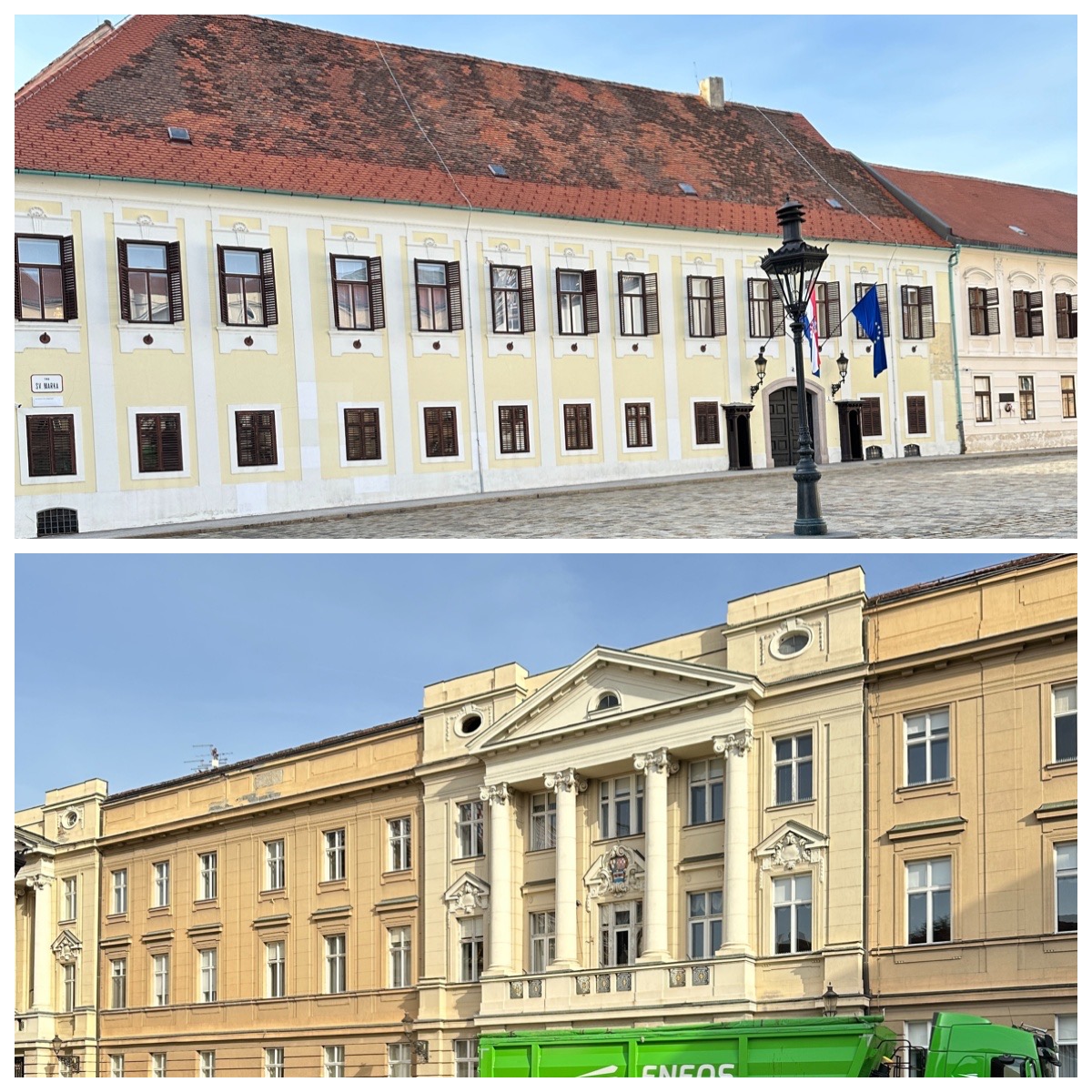
At the end of the street is St. Mark’s Square and of course, St Mark’s Church. The original 13th century church was almost completely renovated in the 18th century to its current form. The portal of the church is considered to be the richest and the most valuable Gothic portal in southern Central Europe due to the fifteen effigies placed in eleven shallow niches. The colourful red and white tile roof depicts two coats of arms: one of the City of Zagreb and the other of the Triune Kingdom of Croatia, Slavonia, and Dalmatia. Unfortunately, it appears that the church is closed (it is unclear if it is open for services following earthquake damage in 2020) and the square surrounding the church is closed due to an attack on a government building in October of 2020.

Flanking St. Marks Church are the Ban’s Palace, the office of the Prime Minister and the Sabor, the parliament building.
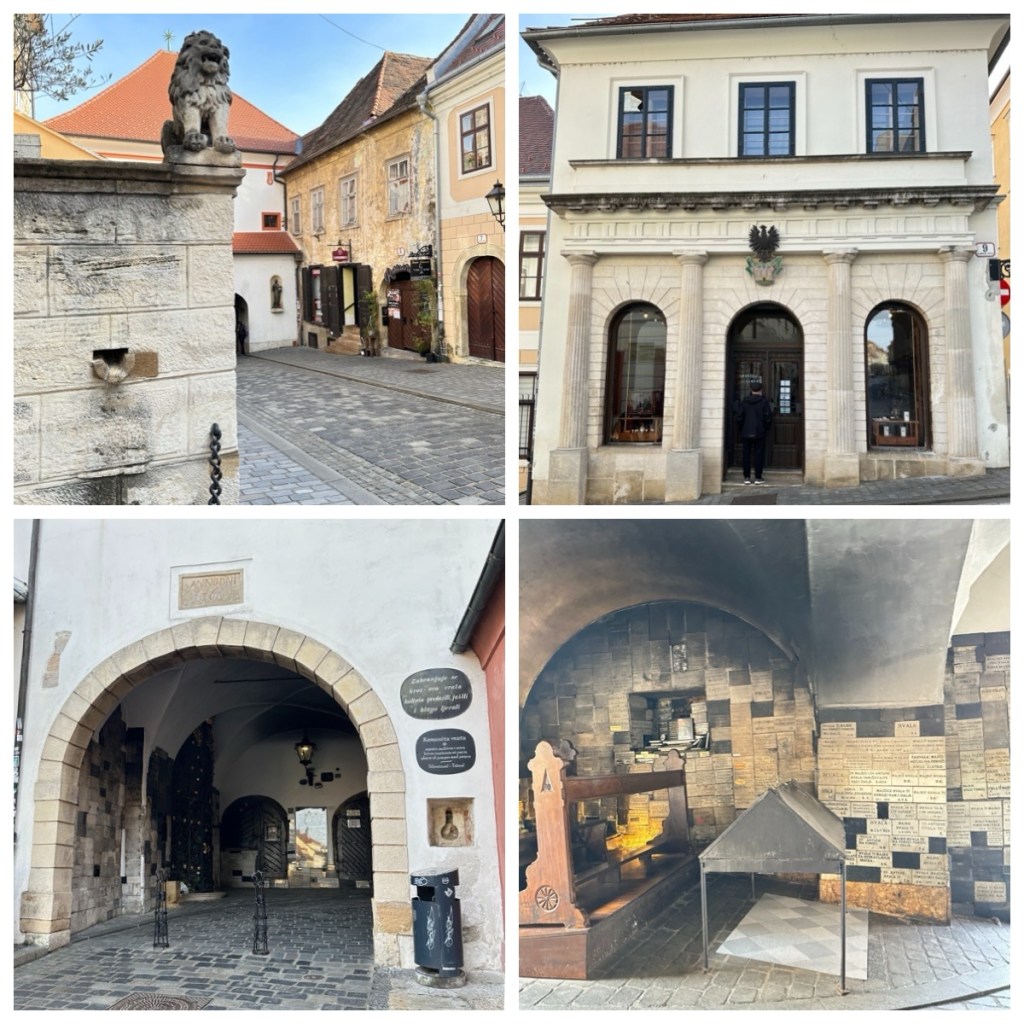
Heading down Kamenita Ulica from the square, you come upon the oldest pharmacy in Zagreb (circa 1355). As it was a Sunday when we passed by, the pharmacy was closed. Just beyond the pharmacy is Gradec’s only surviving town gate. Inside the gate is a small chapel, including a painting of Mary, the patron saint of Zagreb. This painting is said to have miraculously survived a fire in the house above in 1731.
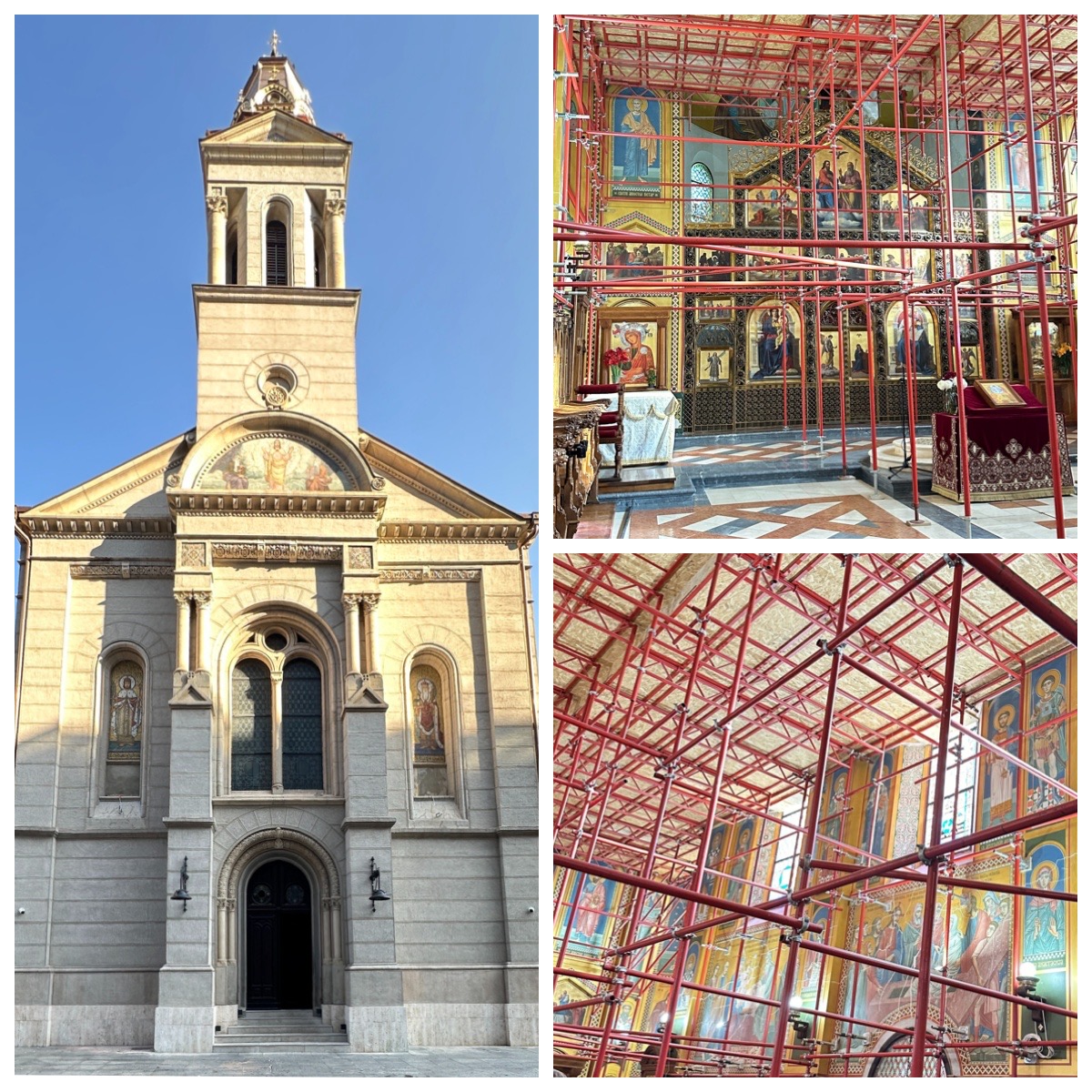
Earthquakes are quite frequent in Croatia, with more than 200 per year with a magnitude of 2-2.5 on the Richter scale. However, on March 22, 2020, Zagreb was hit by the strongest in the last 140 years – measuring 5.5. The magnitude of the earthquake caused significant damage to the majority of buildings within the historic urban complex. The city started to rebuild but on December 29, 2020, an even stronger quake (at a magnitude of 6.4) struck near Petrinja about 30 miles southeast of Zagreb, sending more damaging shockwaves through the city. Today, many historic buildings are still covered with scaffolding and multiple sites remain closed to the public.
A church has dominated Kaptol Square since the 11th century. Following damage during the Tartar attack and a great fire in the 13th century, it was severely damaged by an 1880 earthquake. Restoration was undertaken in the Neo-Gothic style resulting in the cathedral you see today, the Zagreb Cathedral of the Assumption of the Blessed Virgin Mary. At 108 m high, the bell towers make it the tallest building in Croatia.
In the March 2020 earthquake, the stone top of the south tower collapsed on the roof of the cathedral, which also damaged and broke through in several places. The interior of the cathedral was significantly damaged. The top of the north tower of the cathedral was so damaged that it threatened to collapse and thus, was removed in April 2020 with a controlled explosion. Around 4,000 pieces of stone from the towers and other parts have been removed, scanned, and labeled, so each can be restored precisely to the millimetre. The focus of the renovation has now shifted to fortifying the structure’s earthquake resistance, ensuring it can withstand future seismic events. There is no predicted timeline for the reopening of the cathedral, which many of the local population are finding extremely frustrating.

The Serbian Orthodox Church of the Transfiguration was another building that was severely damaged by the 2020 earthquake. The exterior appears to be intact (or restored) but stepping inside, it was obvious there is much work to be done.
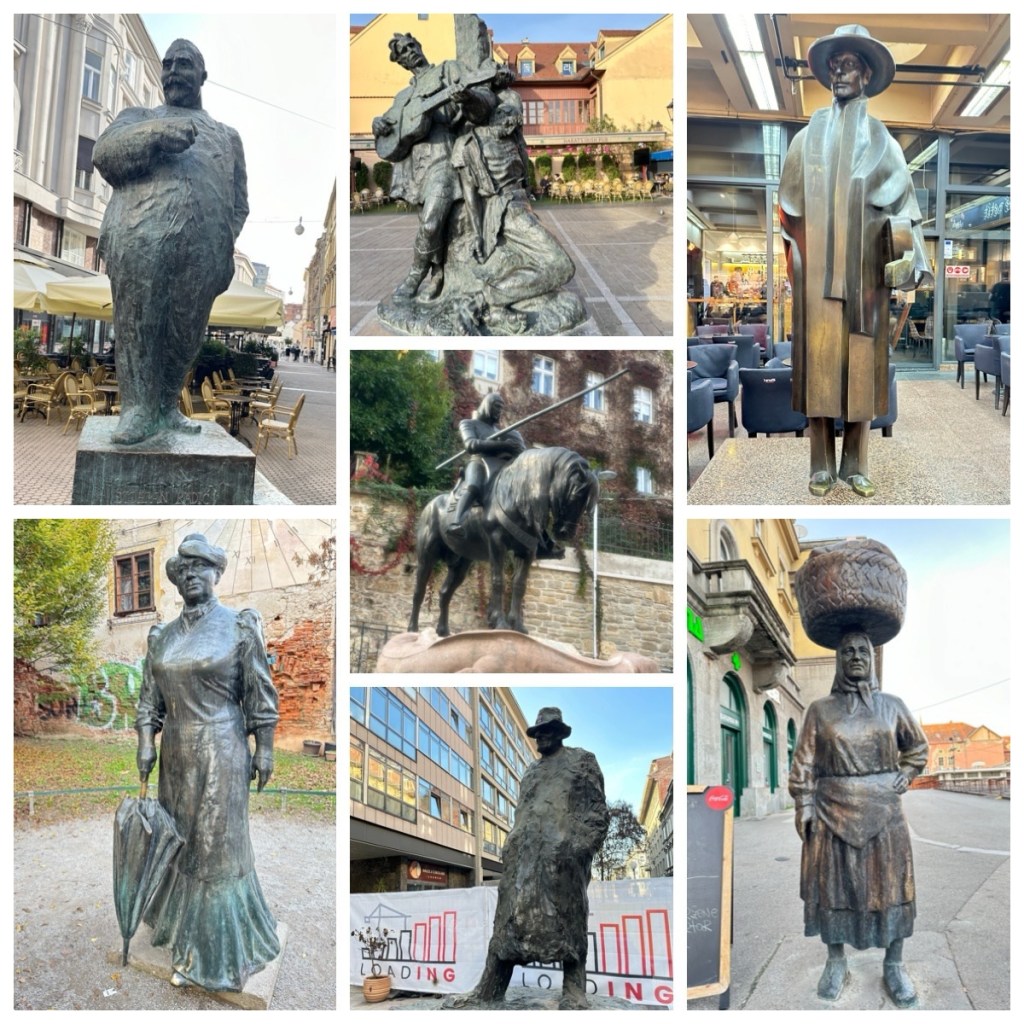
The streets of Zagreb are full of statues. Here are just a few that we encountered as we strolled about.
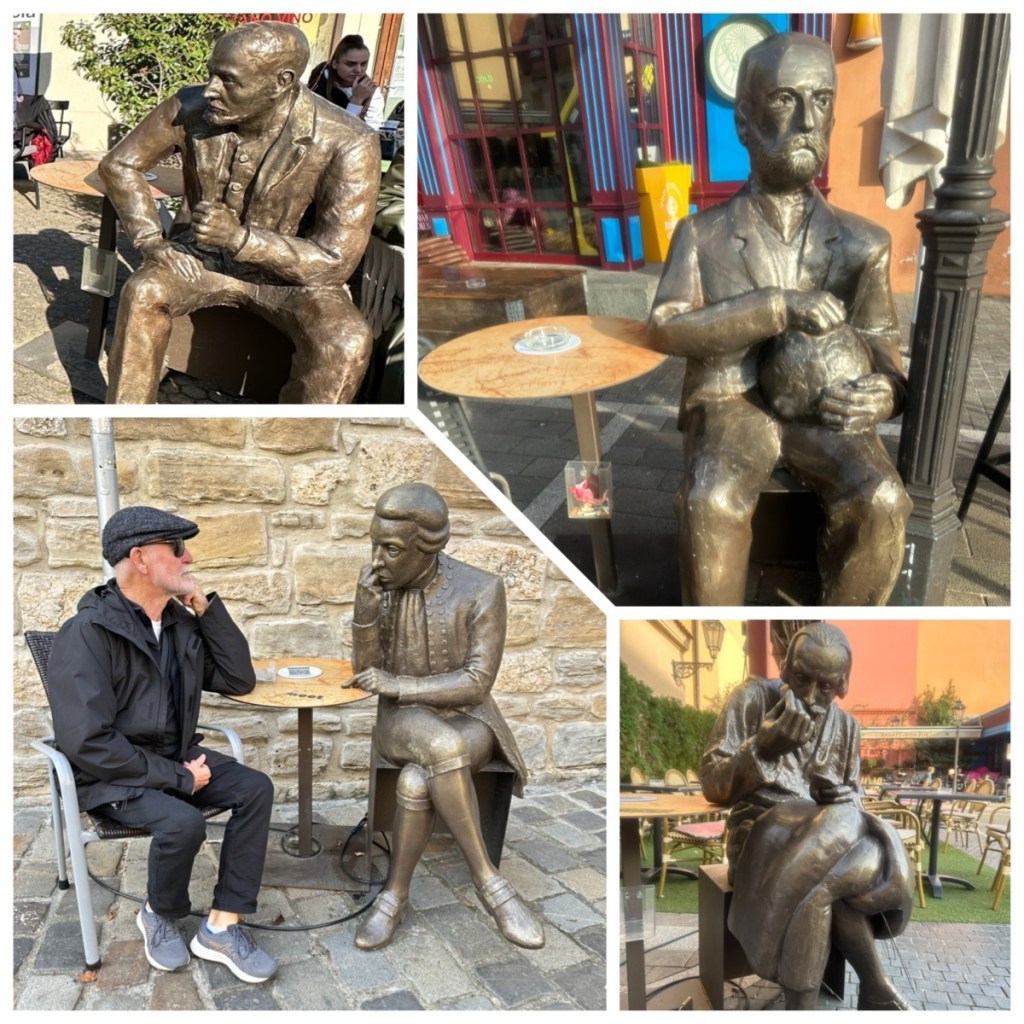
One of Zagreb’s walking tours, Sit and Meet, offers the sites of Zagreb with the unique opportunity of meeting Croatian inventors and geniuses for coffee. We didn’t discover the tour until late in our stay so didn’t try it out. But we did see some of the ‘inventors and geniuses’ in our explorations.
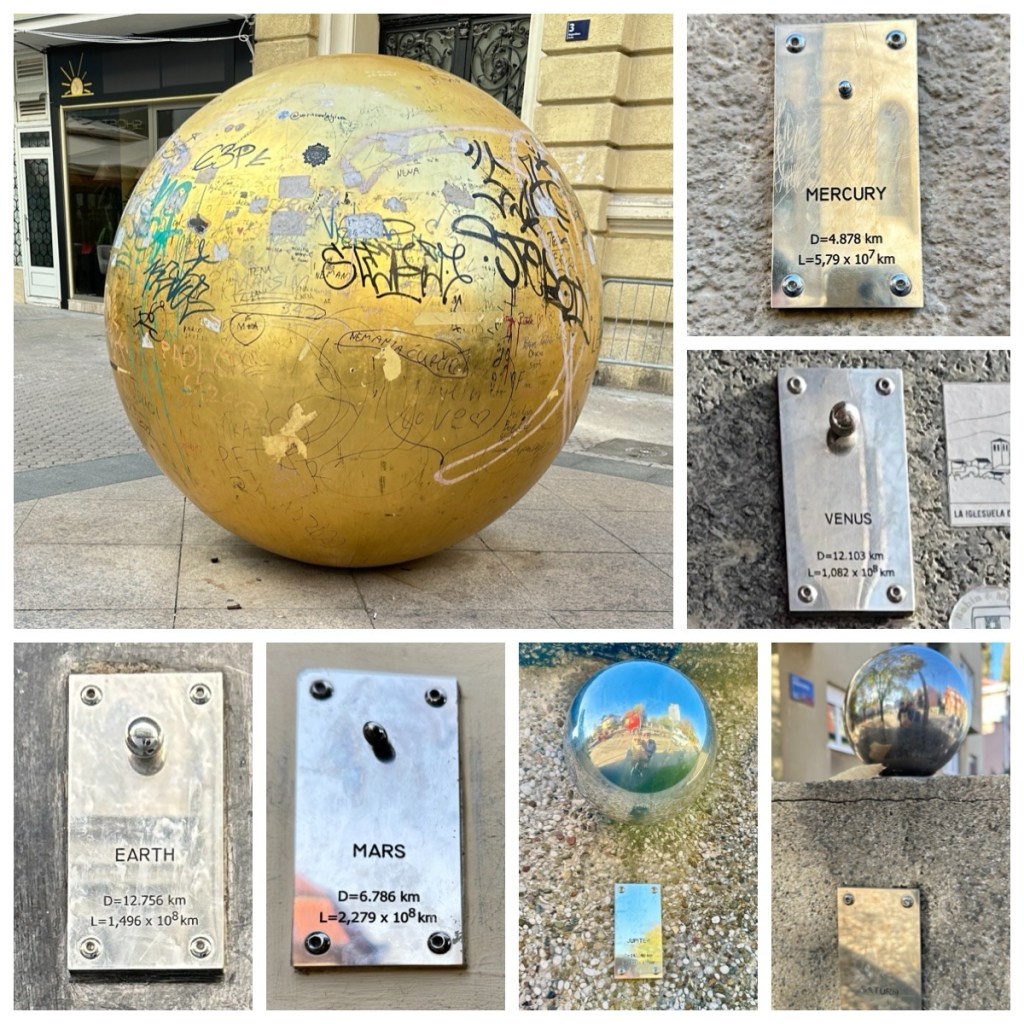
A unique art installation is the Zagreb Solar System. It began with the installation of the Sun by artist Ivan Kožaric in Bogovićeva Street in 1994. In 2004, artist Davor Preis decided to create the entire Solar System. The installation represents nine planets that are arranged around the city in the exact proportions of size and distance as the planets are arranged in the solar system. We made it as far as Saturn – Uranus and Neptune were too far-flung for our interplanetary travel.
Our hotel rate included a one-day Zagreb Pass. This offered us admission to a number of museums as well as transit travel. We took full advantage of this and had a busy ‘museum day’.
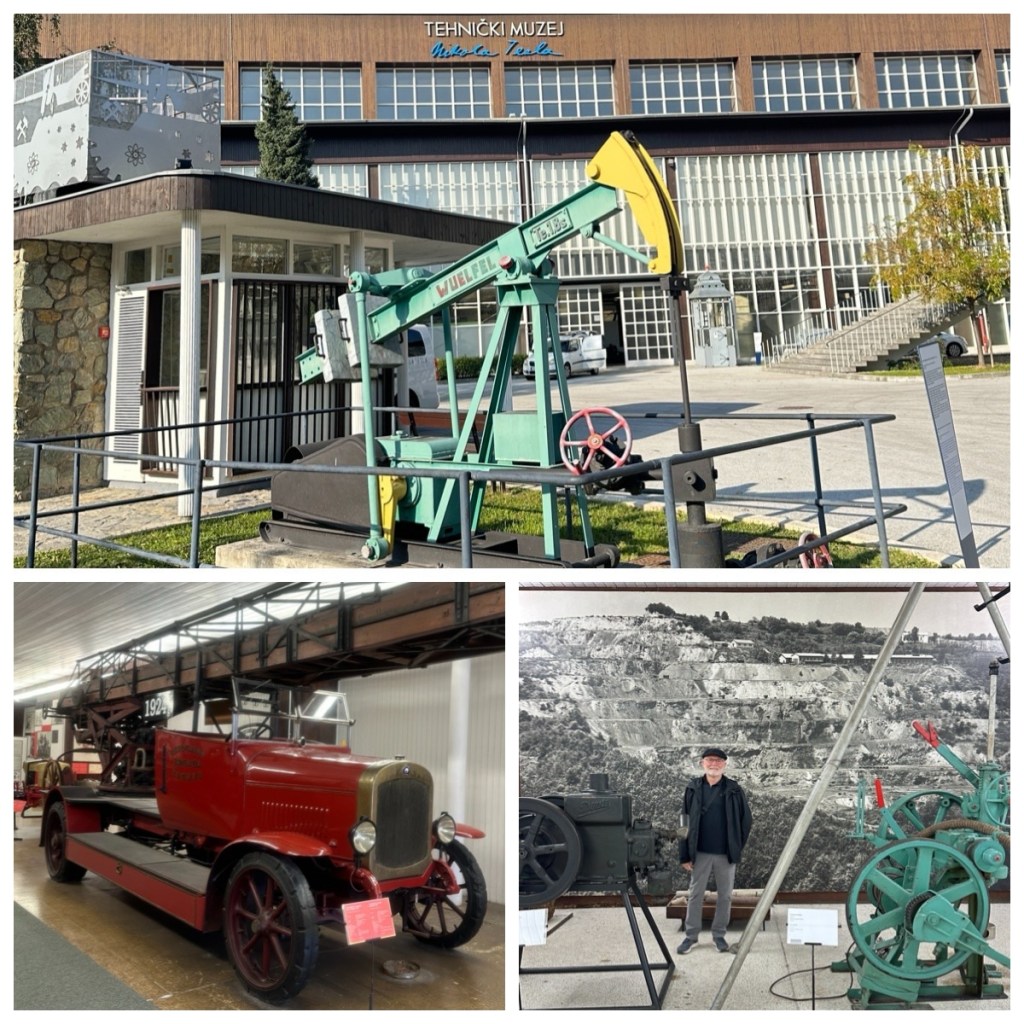
Our first stop was the Nikola Tesla Tehnički Muzej (Technical Museum). Nikola Tesla was born in 1856 in Smiljan, Croatia, which was part of the Austro-Hungarian Empire at the time. He pioneered the generation, transmission and use of alternating current (AC) electricity and the Tesla coil, an induction coil widely used in radio technology, as well as myriads of other inventions and discoveries. The museum collects and showcases scientific and technical appliances used in the country’s history as well as exhibiting multitudes of aircraft, cars, machinery and equipment. It goes without saying that this was Harvey’s favourite stop of the day! To view multiple other photos, contact him. 🙂

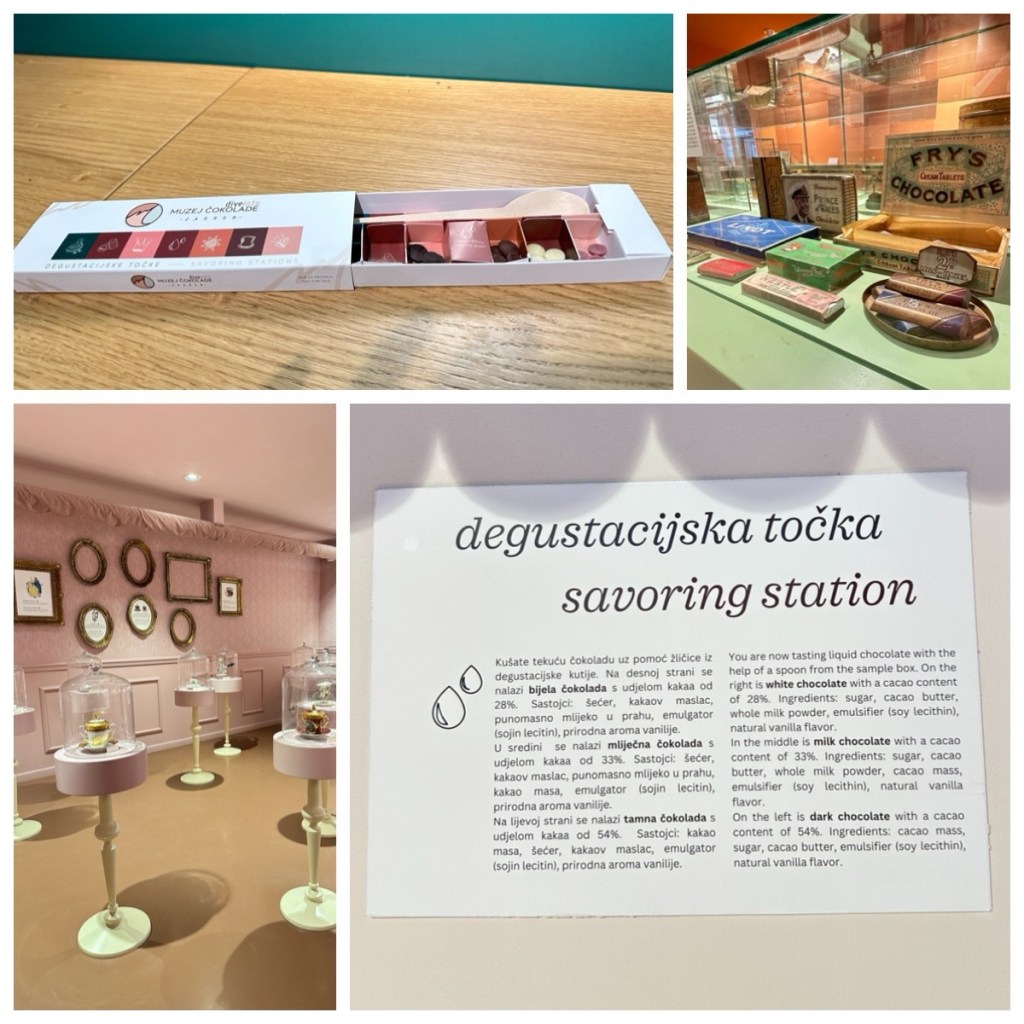
Our next stop, after a fun tram ride, was the Chocolate Museum. Here, we toured the world of chocolate – exploring the history, going back as far as the ancient indigenous tribes of South and Mesoamerica and tasting nine types of chocolate from our sample box (a roasted cocoa bean, drops of chocolate mass (100% pure chocolate), dark, milk, white and ruby chocolate as well as a spoon to try three versions of molten chocolate: dark, milk and white chocolate). It was a fun and tasty time!
The Museum of Broken Relationships opened in 2010. We had visited a traveling exhibition a number of years ago and found it quite amusing. At this, the permanent home of the collection, my feelings were varied. Although there were many amusing presentations, there were also many poignant and sad stories of losses that occurred through death or other tragic events, as well as individuals who were grieving a break-up. I present you with pictures of just a couple of the amusing exhibits.


Our final museum of the day was the Zagreb City Museum. This collection is spread over two floors on an old convent. The exhibits tell the history of the city in a very interesting way, though the use of models, paintings, statuary and artifacts. We really enjoyed our visit.

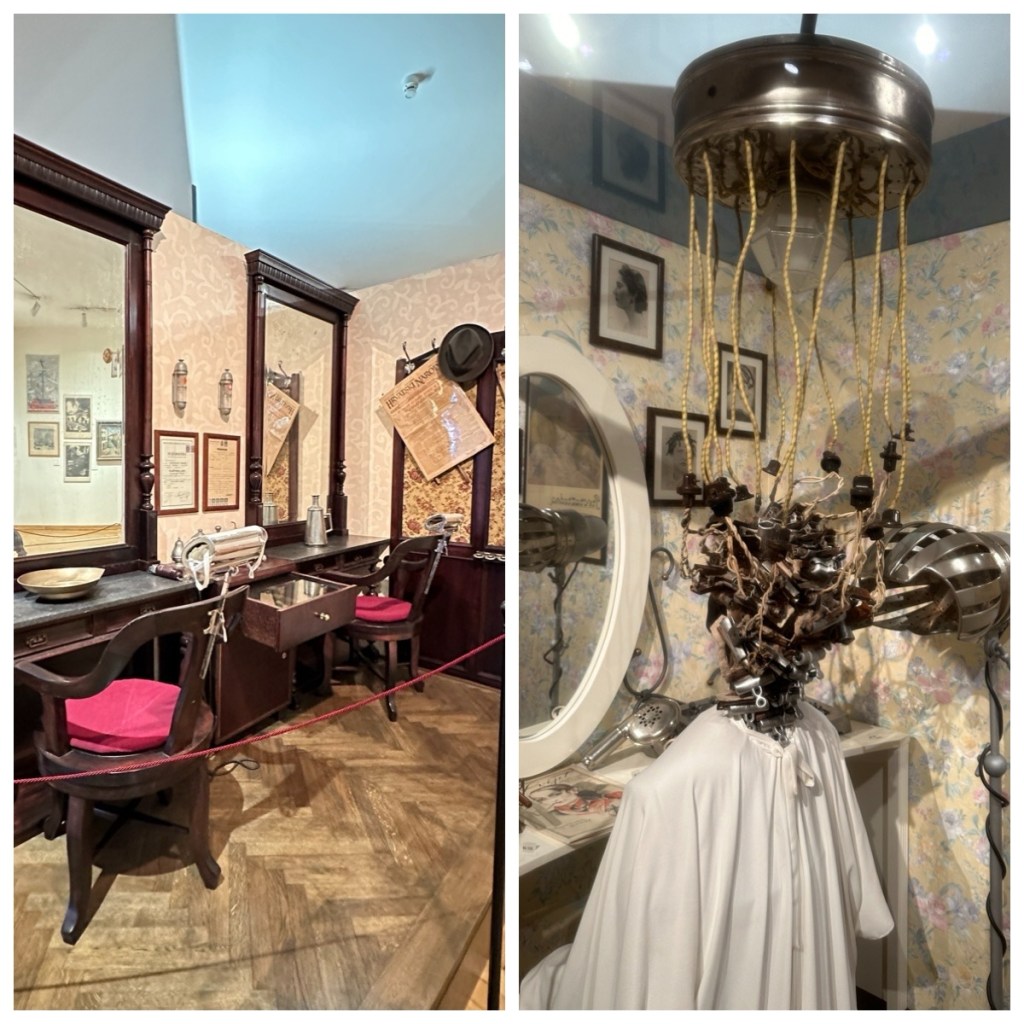
I just had to include these pictures of a barber shop. Can you imagine having your hair styled with this apparatus???
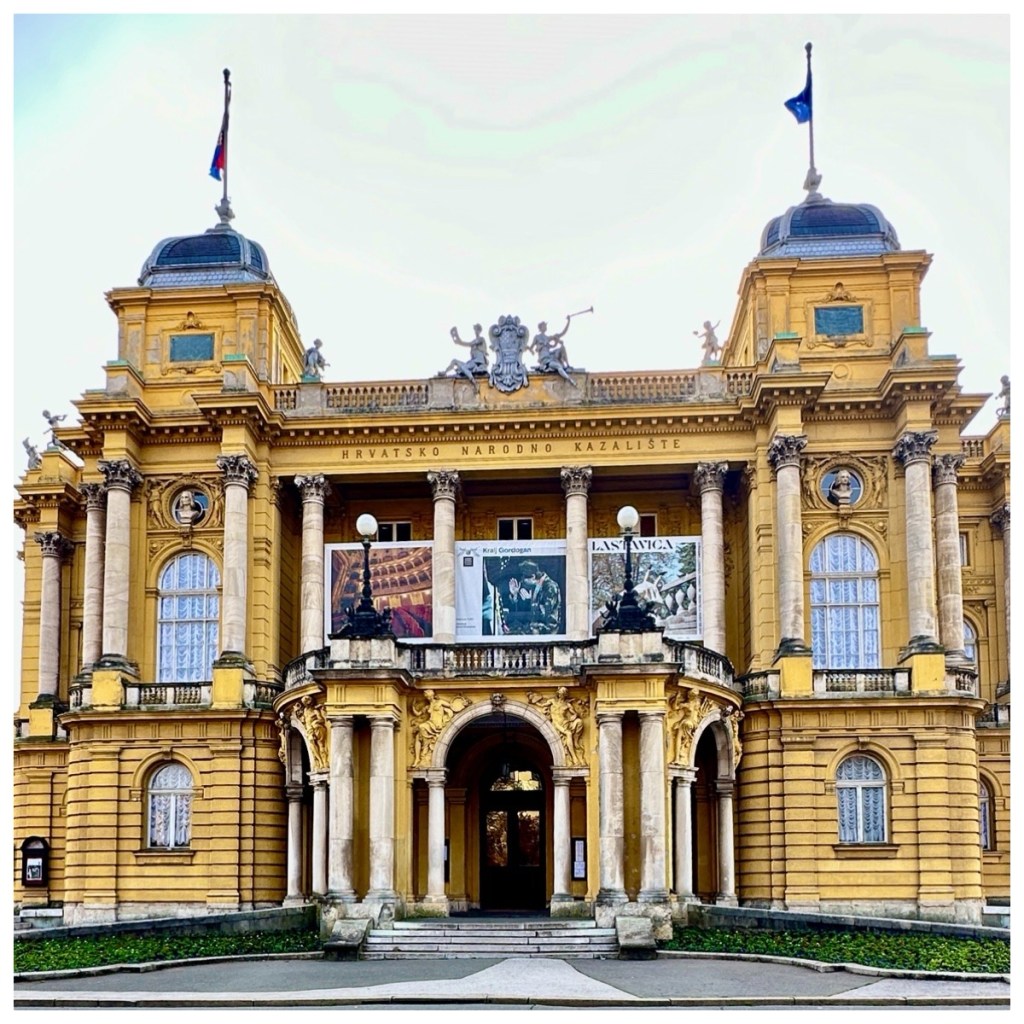
There are many grand historic building in Zagreb. Here are photos of just a few.

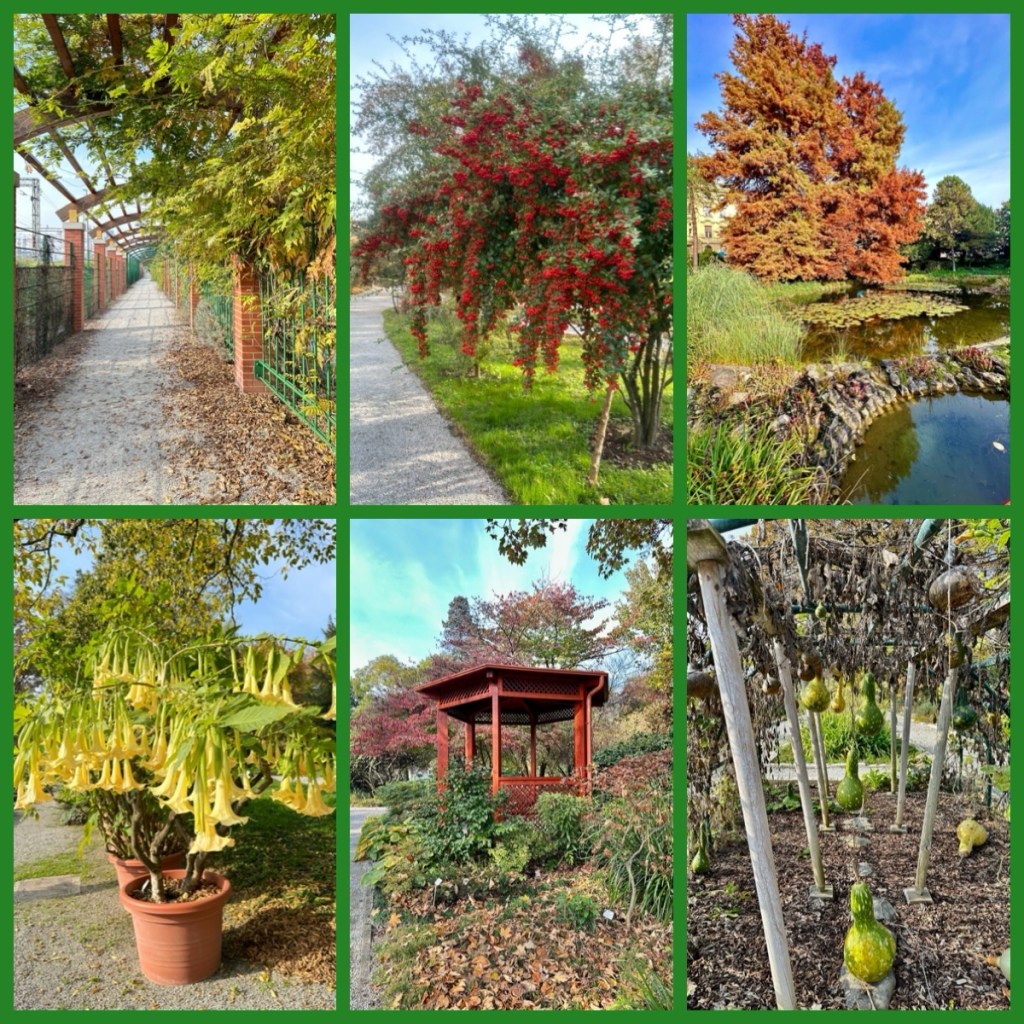
The Green Horseshoe is a lovely park system consisting of seven squares aligned on three straight lines. The area received the silver plaque at the Golden Flower of Europe 2013.

The Botanical Garden sits at the end of the Green Horseshoe. Founded in 1889 by Antun Heinz, and opened to public in 1891, it is part of the Faculty of Science. Covering an area of 5 hectares, the garden is home to over 10,000 plant species from around the world, including 1,800 exotic ones, and has large ponds for aquatic plants. In November, it was not in full bloom but was still very enjoyable and peaceful to visit.

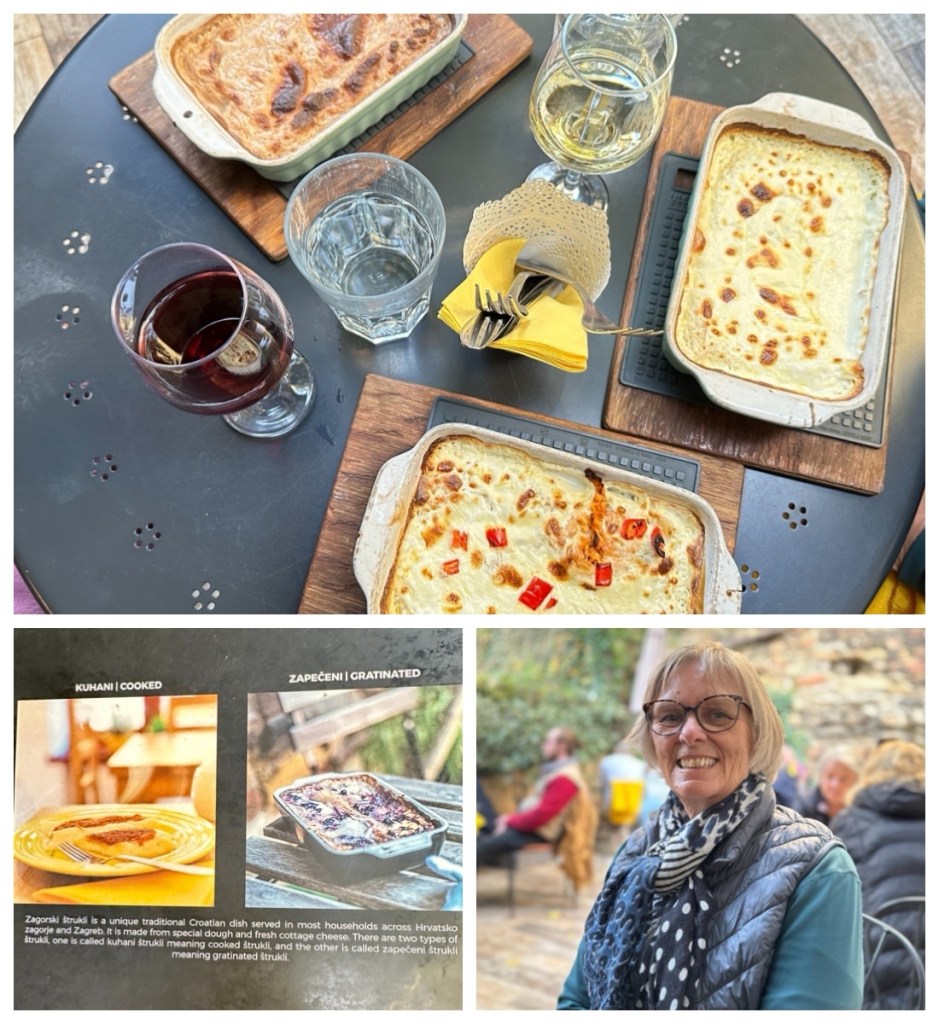
As always, we enjoyed the food in Zagreb. At La Štruk, they serve only Štrukli – a traditional Croatian specialty. Zapečeni strukli is made from special dough and fresh cottage cheese with a variety of fillings, baked in a small casserole and topped with gooey cheese and breadcrumbs. In their lovely outside garden, we ordered three versions of this gratinated delight – salty cheese, roasted pepper and apple/cinnamon. We soon learned that three choices was definitely too much for two people – but we thoroughly enjoyed it!
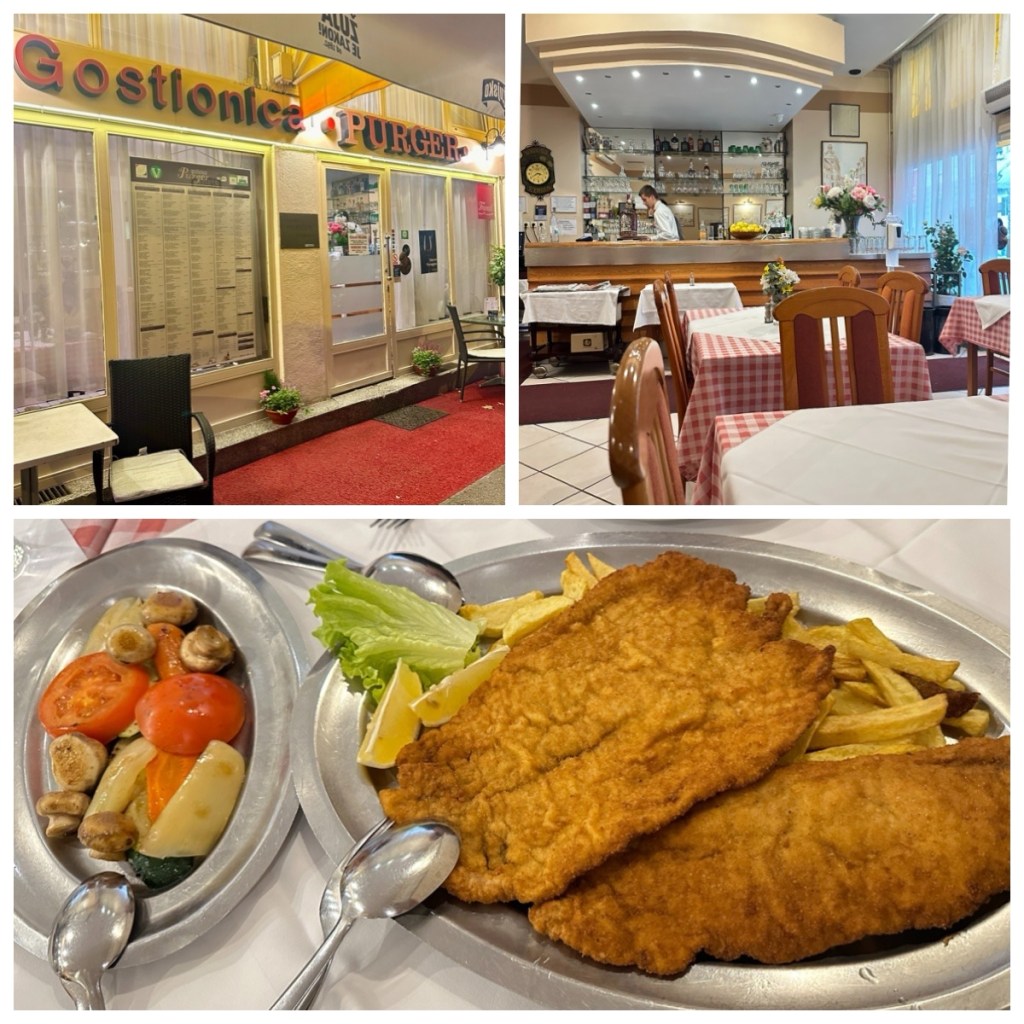
We came across Gostionica-restoran Purger not far from our hotel. This family-owned restaurant serves traditional Croatian food – we tried the wiener schnitzel, veal cordon blue and grilled vegetables. The food was delicious and the service was friendly and efficient. The elderly gentleman, who we believe was the owner, treated us to a traditional Croatian digestif after our meal. We believe it was rakija – a fruit flavoured brandy. Mine was quite fruity and tasty. He poured Harvey a clear version that was quite a bit stronger.
Forty Two is a newly opened restaurant, again not too far from our hotel that we just happened upon. This was a wonderful find – we had an extraordinary meal in a quiet setting with impeccable service. From the opening fresh bread with caramelized butter and fresh salads to the main dishes (duck leg with celery and chestnut cream, julienne vegetables and cranberry wine sauce; seafood risotto of carnaroli rice, cuttlefish ink, scallops, octopus and smoked mussels) and finishing with perfect creme brulée, everything was exceptional. As you can tell, I can’t say enough good things about this establishment!

We found Zagreb to be a gem and would love to return some day! We hope you enjoyed reading about our time there.
Cheers,
Bev & Harvey

 A Long and Winding Journey