If you have been following our Asia trip blogs, you may be wondering what happened to Stop #6? It was very short so I’m blending it into stop #7.
From Singapore, we had a quick one hour flight to Kuala Lumpur – and yes, Air Asia gave us a meal during this hour! Flying into KL, it was interesting to see the fields of palm trees – these are planted for the production of palm oil.

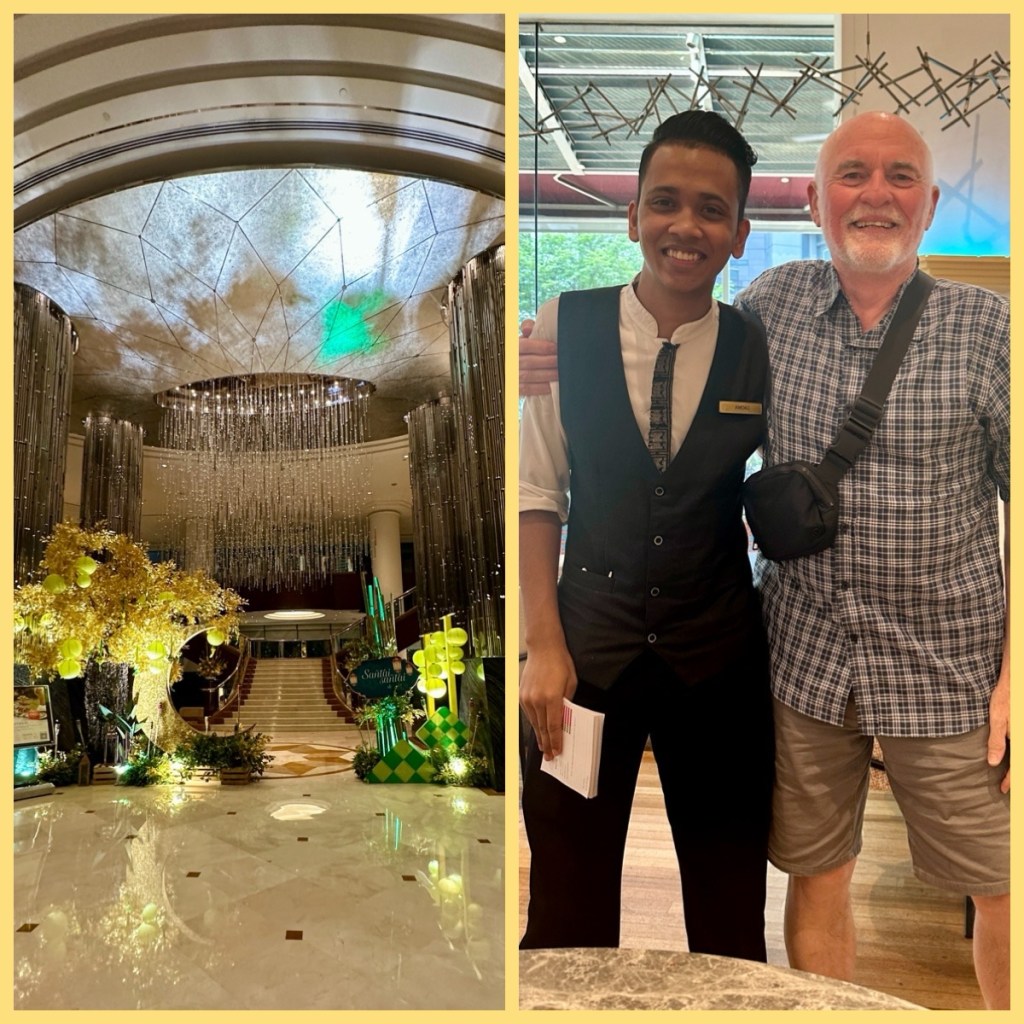
We returned to the Intercontinental Hotel for two nights and it was like coming home – we really loved this hotel! We were even welcomed back by our favourite breakfast staff member, Ahmed aka Andy (we actually weren’t sure what his job was other than to chat with people).
On our first night, we celebrated Larry’s birthday with dinner at SOULed OUT followed by cake at a local bakery.
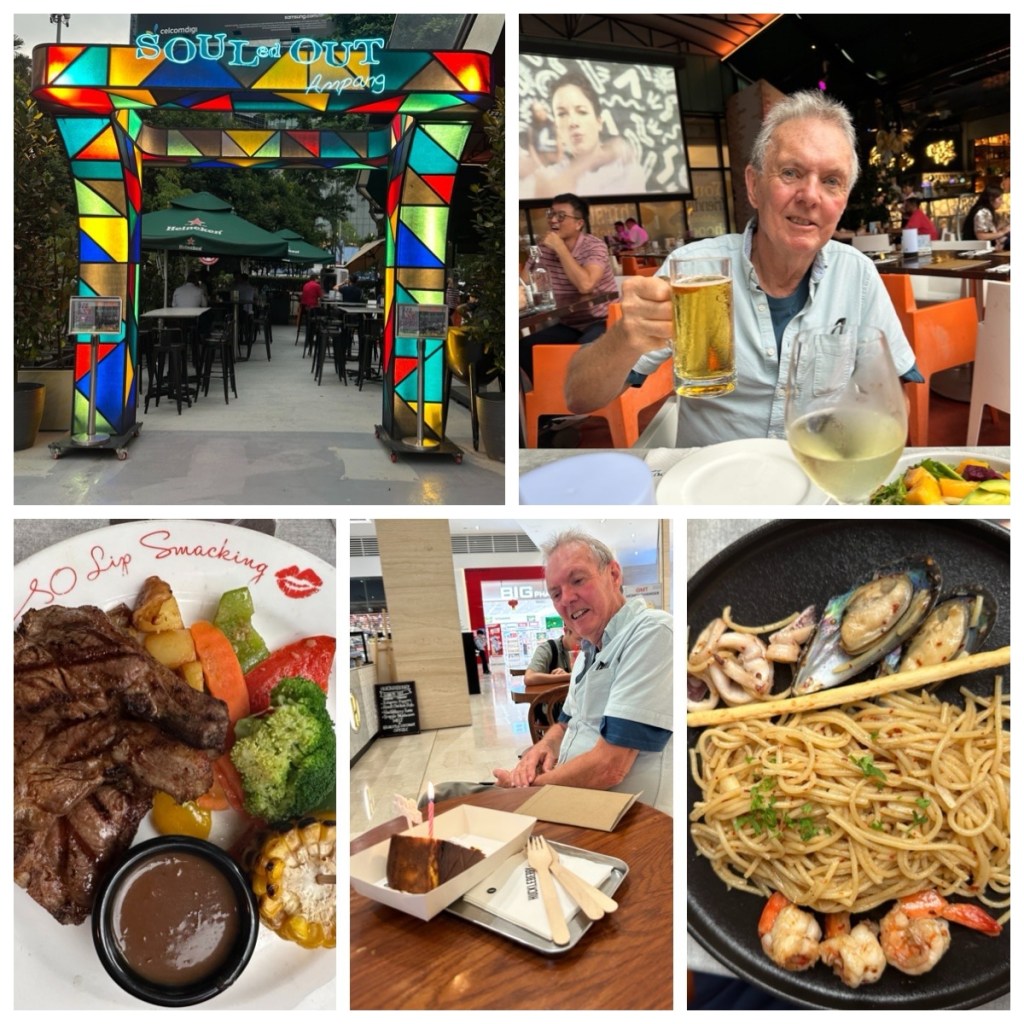
We were starting to get a bit road weary and were looking forward to our final days in Tokyo so although there were a number of places that we would have liked to visit in KL, we decided we would spend our day there relaxing. A walk around the area and a pizza dinner at Bentley’s Pub and we were feeling ready to take on our next step in our adventure.
So off on Malaysia Airlines for an 8 hour flight – again, love those flight attendant’s uniforms.
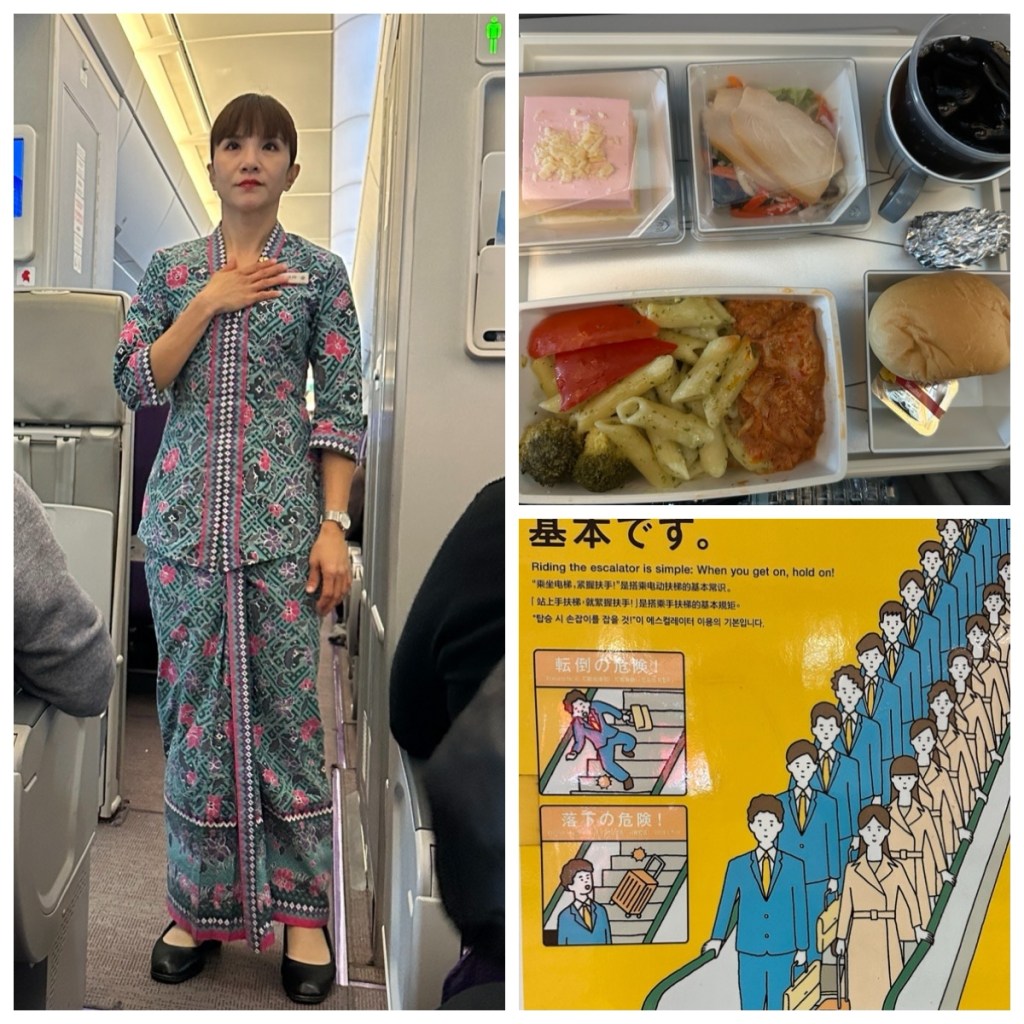
And it was time for Stop #7: Tokyo!
When we planned our itinerary, we were somewhat remiss and did not realize that we were going to be in Tokyo during the peak cherry blossom week. And we didn’t know what a big deal this was until we went to book a hotel for our 6 nights in the city! Rooms were scarce in the main areas of Tokyo and those that were available had doubled or tripled in price. We considered the options and decided that we would stay in Narita and travel into Tokyo by train for our sightseeing. Therefore, our return to Narita airport found us returning to the Narita Tobu Airport Hotel, where we had spent the first two nights of our trip. We didn’t regret this decision – it is a great hotel and we were glad to return to it!

For our first day, we had booked a tour: Tokyo: Private City Highlights Tour with Local Guide from Get Your Guide. Our guide, Posh, contacted us well in advance of the tour to discuss what type of tour we would like to have. We asked for off-the-beaten-track sites as we hoped to miss some of the tourist crowds. Posh is a historian with degrees from the University of Tokyo and Cornell University and his knowledge was excellent. Our ‘six hour’ tour with him extended to closer to eight hours.
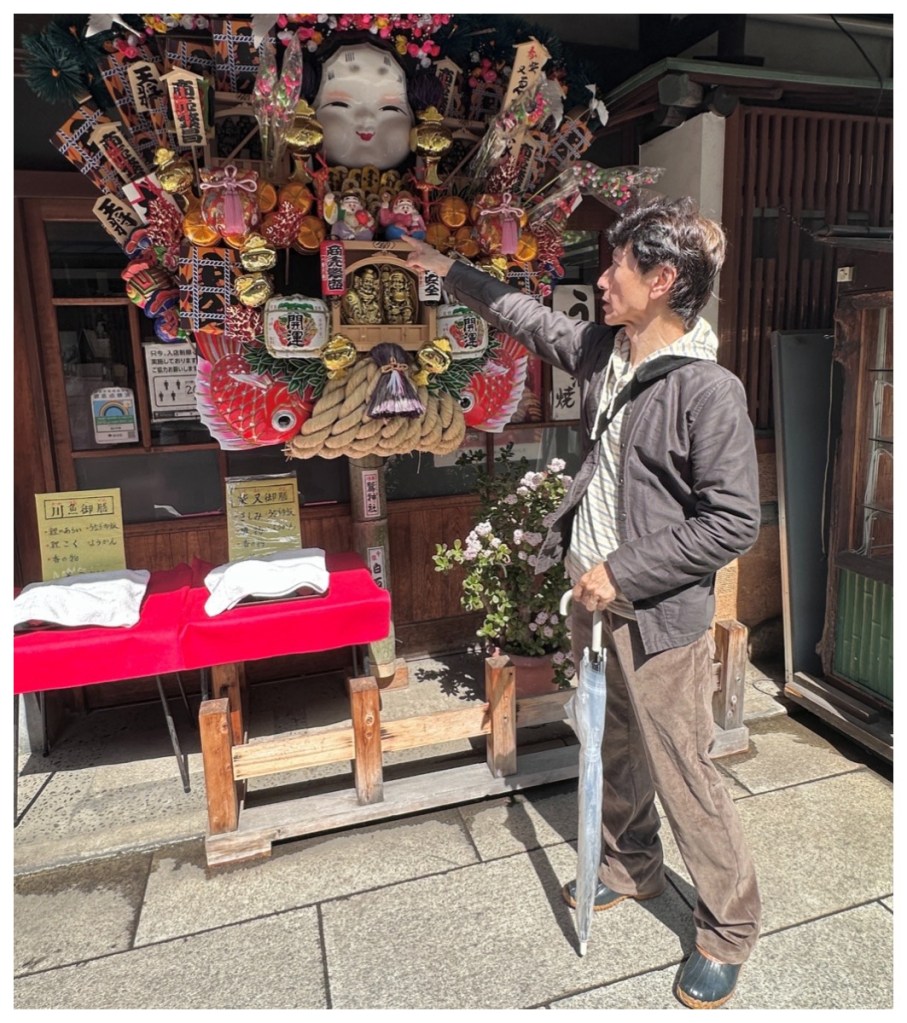
Posh kindly met us at Narita Airport and showed us the ropes with the train system. We purchased Suica cards using our Apple Wallets and were able to just tap our phones at the rail & metro entrances and exits – an easy way to move around the city.
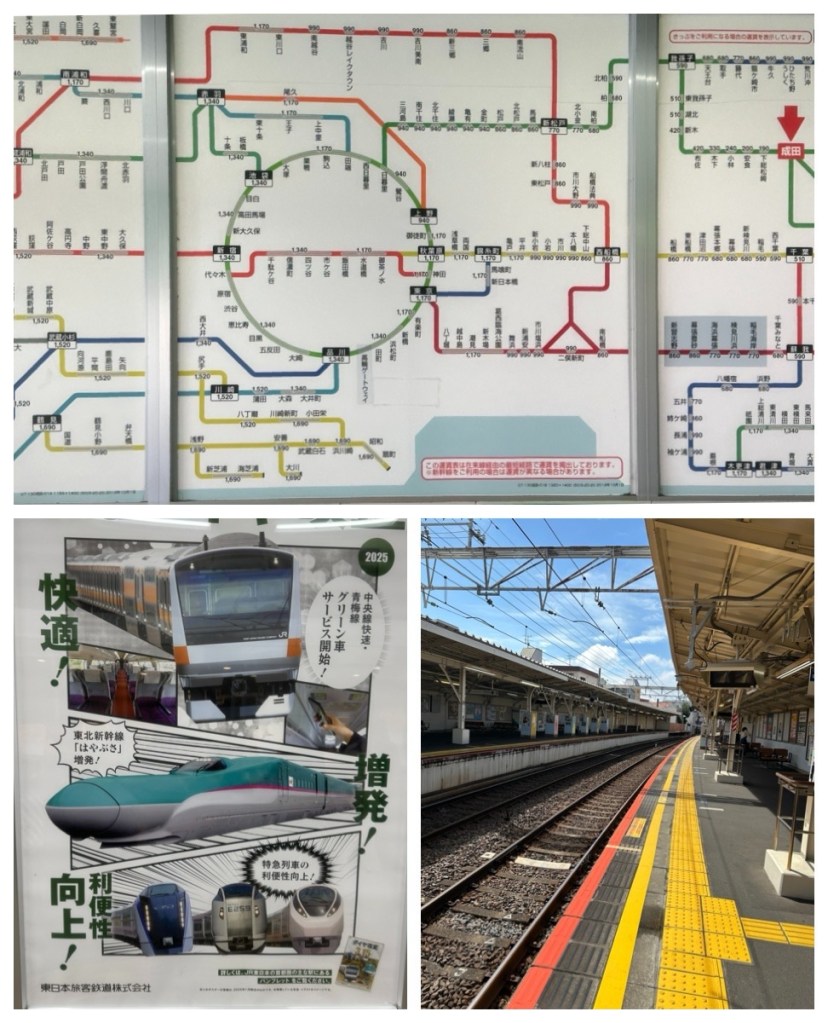
We traveled to the area of Shibamata in eastern Tokyo. The town is full of nostalgic atmosphere and was quite free of crowds. It is also very proud of to be the hometown of Tora-san, the protagonist of a highly popular series of 48 movies. Otoko wa Tsurai yo (“It is tough being a man”) was filmed from 1969 to 1995. In the movies, Tora-san, a hustler who was always unlucky in love, visits each of Japan’s prefectures but always returns to Shibamata. This solidified the area’s reputation as a traditional neighbourhood emblematic of ‘old Tokyo’. Bronze statues of Tora-san and his sister, Sakura, greet you outside Shibamata Station – Tora-san, looking back before leaving his hometown, and Sakura, seeing him off.

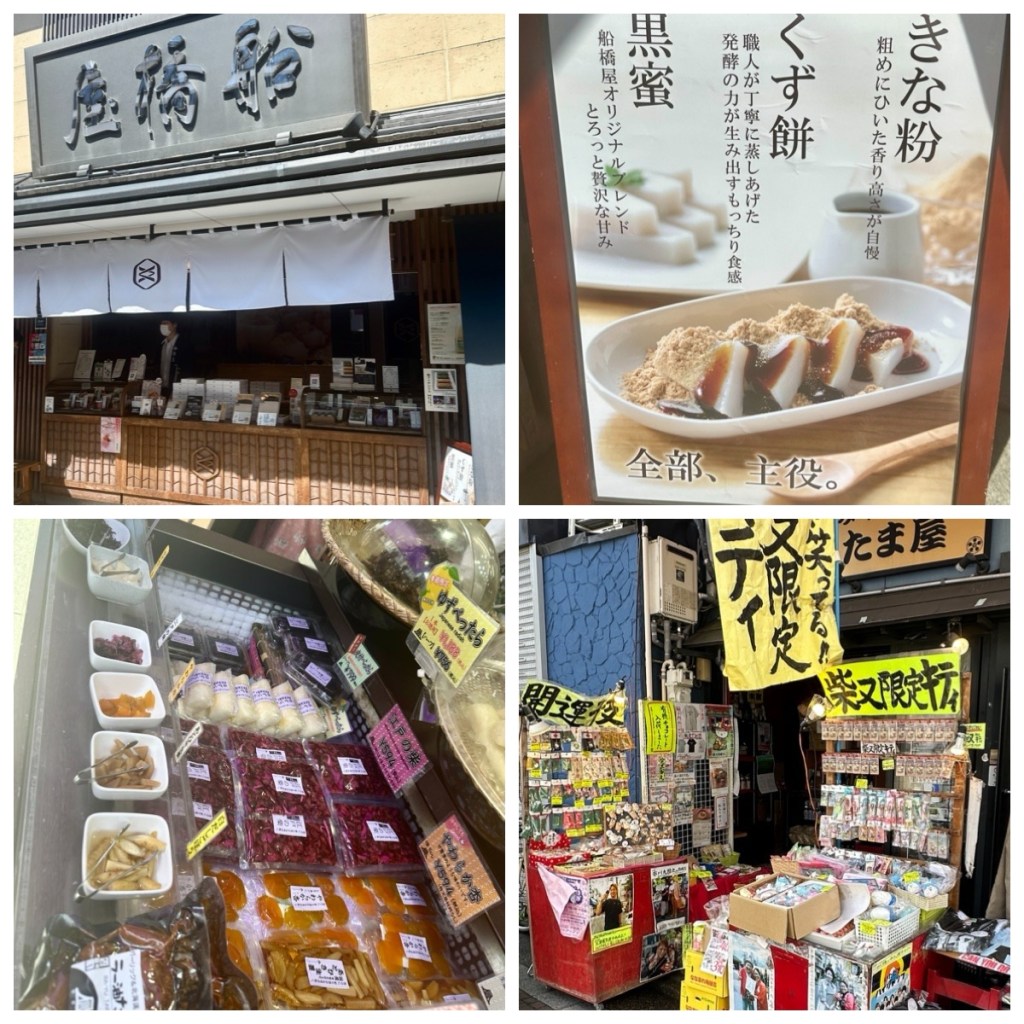
The central street in Shibamata is Taishakuten Sando. This 200 meter long street is lined with restaurants and shops selling local specialties such as mango, skewered rice flour balls, doriyaki pancakes, Japanese crackers and sweet rice dumplings. Posh introduced us to Kuzumochi, a sweet made from kuzuko starch (derived from the kudzu plant) topped with kinako (toasted soybean flour) and kuromitsu (black sugar syrup). It has a jelly-like, slightly chewy texture and I must admit that it was not my favourite treat of the trip.
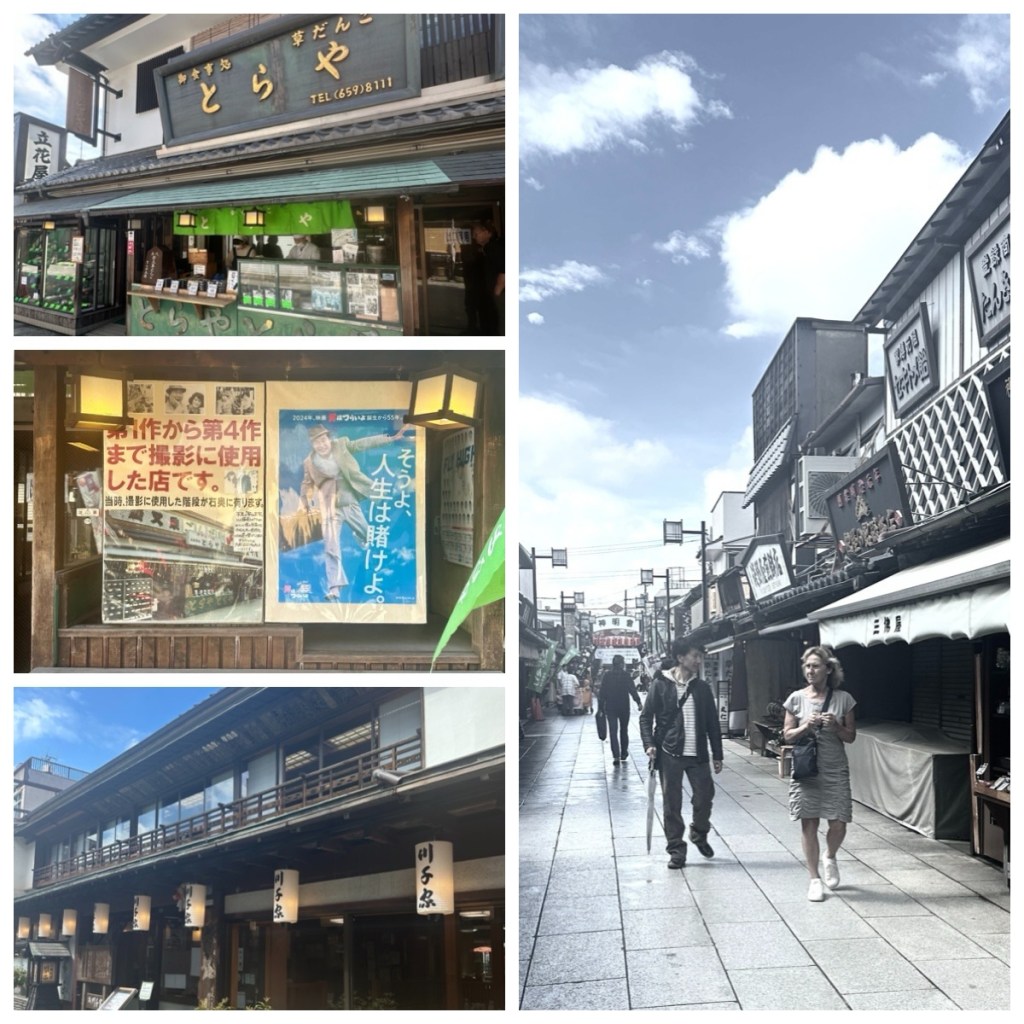
Many of the shops along the street have long histories and still maintain their traditional exterior designs which produces an old-world charm.
Taishakuten Sando leads directly to the carved wooden Nitenmon gate of Shibamata Taishakuten Temple. The gate was constructed over two centuries ago.
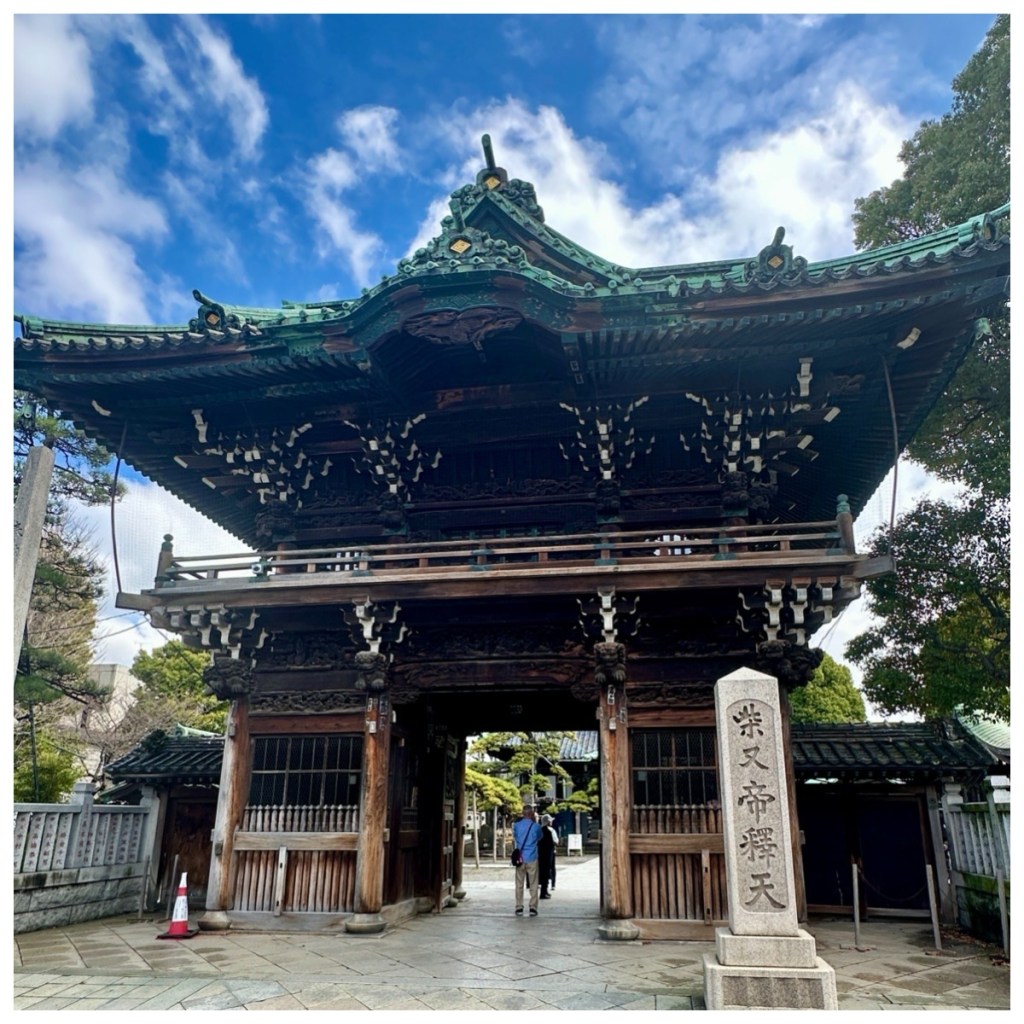
Shibamata Taishakuten, formally known as Kyoei-zan Daikyoji, is a unique Buddhist temple founded in 1629 during the Kan-ei period. The temple has been rebuilt a couple of times with the current structure built in 1929. Posh emphasized that this was a wooden temple – in contrast to many of the more popular temples that are constructed of concrete which he categorized as “garbage”.

Shibamata Taishakuten is famous for its wooden carvings. While most of Taishakuten’s buildings are covered in wooden carvings, the most significant are at the the back of the Taishakudo Hall. Ten panels of intricate carvings cover the outer walls of the hall, all based on scenes of the Lotus Sutra and each telling a different story. Placards below the panels tell the stories in English and Japanese. Posh was able to share many of the stories with us. The carving technique was amazing, with three dimensional, minute detail. Posh also told us how the panels are too delicate to be properly cleaned. Therefore, to preserve their integrity, they are only brushed to remove cobwebs once a year.
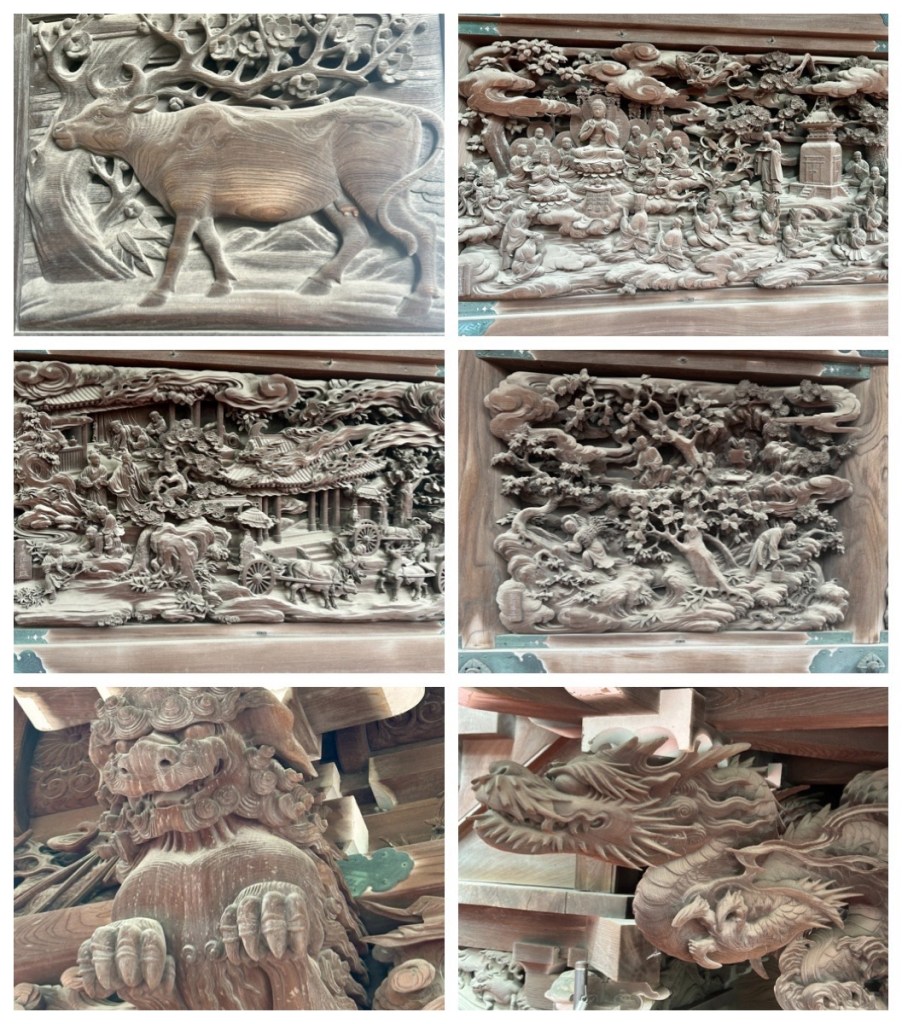
In 1996 the Ministry of the Environment designated this temple as one of the 100 Soundscapes of Japan, intended as a symbol for local people and to promote rediscovery of the sounds of every-day life. As well, in 2009 the temple was named in the 100 Landscapes of Japan.
At the back of the complex is a lovely garden filled with ponds, sculptured trees, pagodas and fountains. A wooden walkway leads you around the ponds and there are sitting areas that allow you to sit and enjoy the serenity of the area.

We really enjoyed our visit to Shibamata and would love to return to explore the area more thoroughly. We have read about interesting museums and great restaurants and tea rooms.
We then hopped on a couple more trains and arrived at Komagome station. Posh led us here to visit the cherry blossoms of Rikugien Garden.
The ritual of Sakura (cherry blossom) Hanami (flower viewing) has been a tradition in Japan for over a thousand years. The belief is that the exceedingly brief and exquisite bloom is viewed as a metaphor for life: radiant and filled with beauty, yet ephemeral and fleeting. Sixteen different stages of blossoming are identified, from bud, to peak bloom, to gentle rain of petals, ending with blizzard of flower petals.
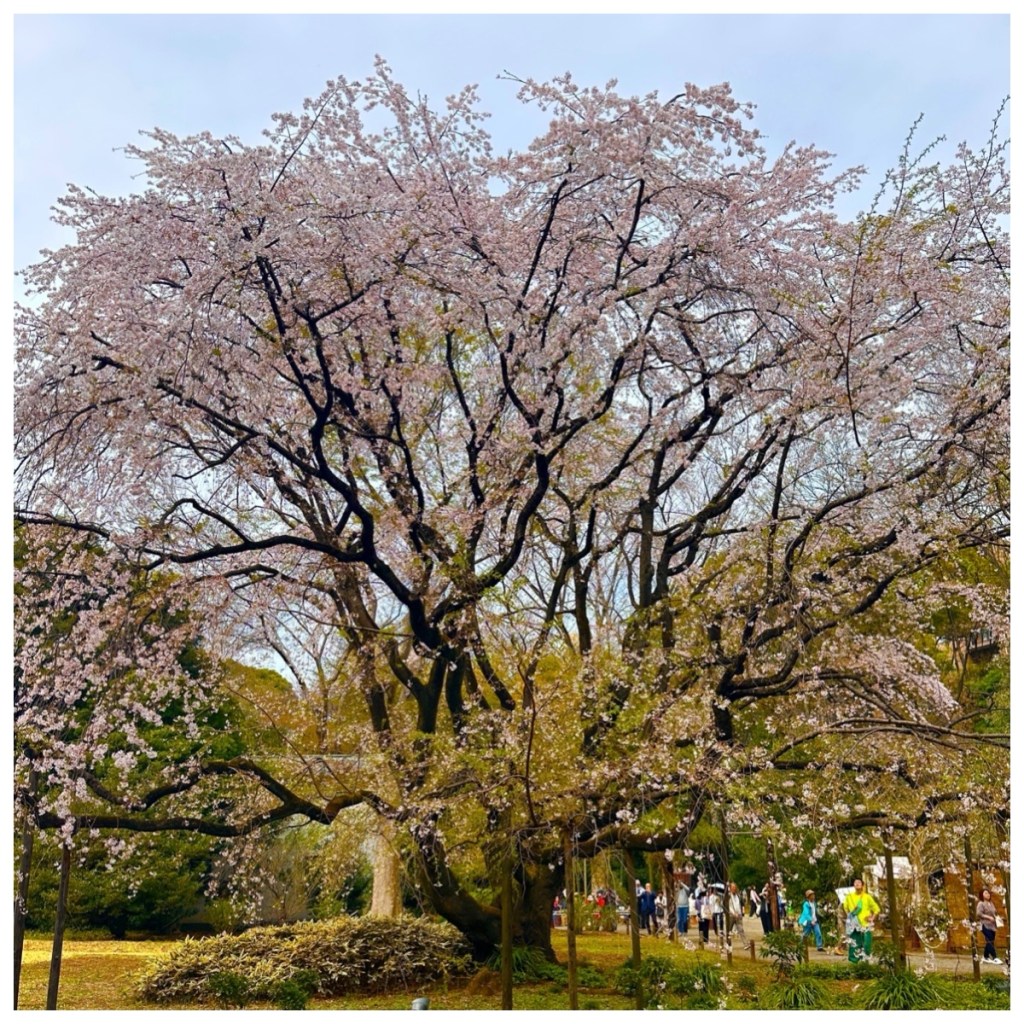
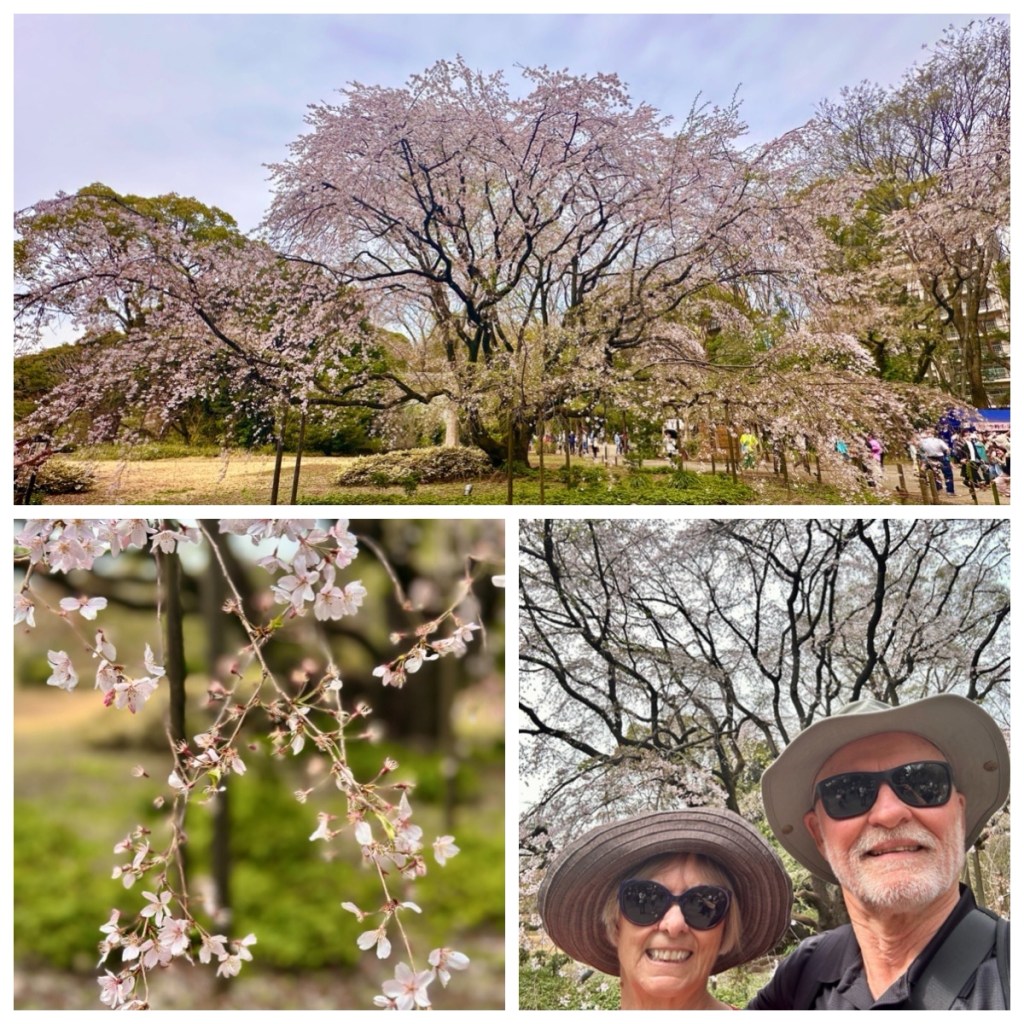
The crowning glory of the Rikugien Garden is the 70 year old weeping cherry tree, measuring about 15 meters tall and 20 meters wide. It is often said to resemble a ‘cherry blossom waterfall’. Posh explained that it is a natural cherry tree, grown from seed. The natural trees exhibit varying characteristics whereas cloned cherry trees, propagated via cuttings or grafting, will have more consistent traits.
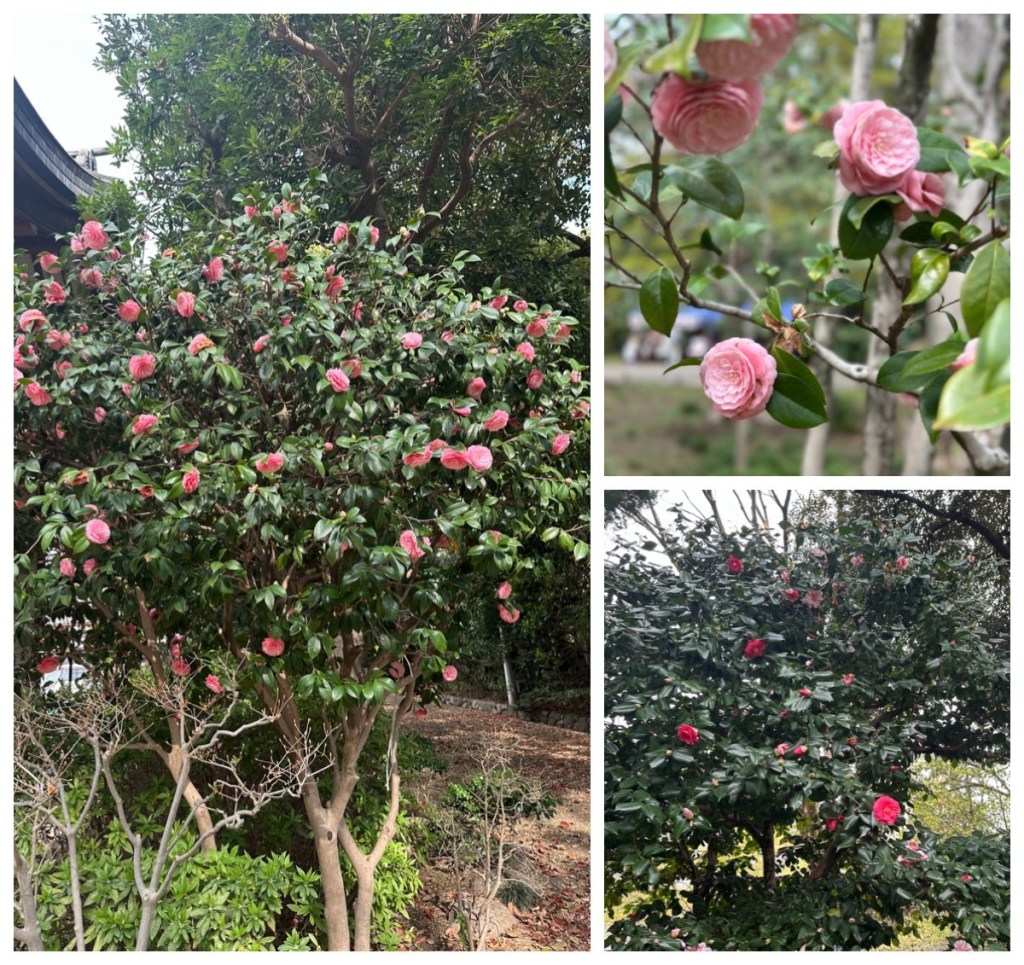
I found the Camellia trees to be equally as impressive as the cherry tree. The colours were so vibrant.
On a future visit, we would like to return to Rikugien to spend some time exploring the remainder of this Japanese Garden.
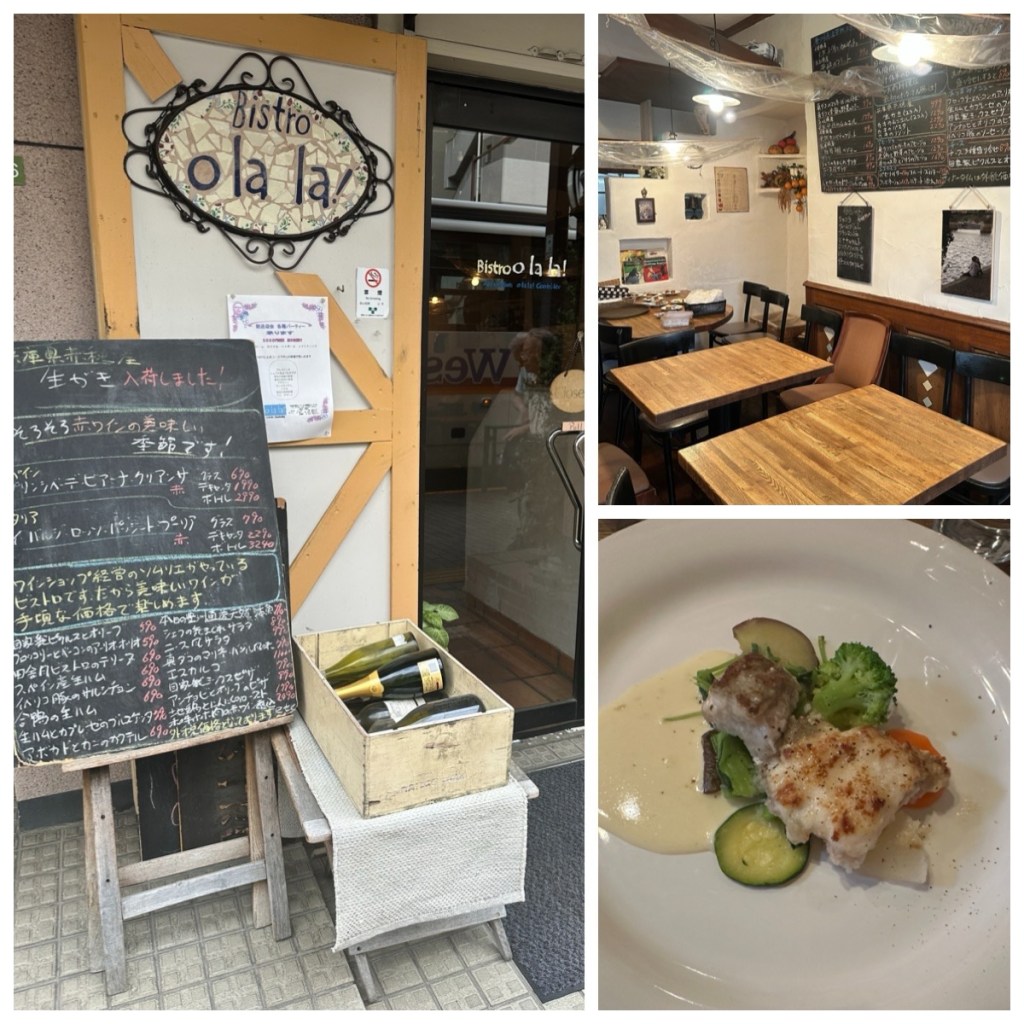
It was now time for lunch and we came upon Bistro Ola La. This was a lovely small French bistro. The menu was entirely in Japanese and so we had Posh choose and order for us. This was successful and the salad followed by a monkfish entree was excellent.
Off on the metro once again to Todaimae Station. Here in the Bunkyo ward, we encountered another of Tokyo’s Shitamachi (Low City) old town districts. The streets were quiet with locals going about their day. The most famous sight in Bunkyo is the Nezu Shrine.
Legends tell that the shrine was founded around 1,900 years ago by the legendary priest Yamato Takeru no Mikoto. Originally located in Sendagi, just north of its current location, the shrine was dedicated to Susanoo-no-Mikoto, the Shinto god of seas and storms. In 1705, Tokugawa Tsunayoshi, the fifth shogun of the Tokugawa dynasty, relocated the shrine to its present site in Nezu to commemorate the adoption of Lenobu as his successor. When Emperor Meiji moved the imperial capital from Kyoto to Tokyo in 1868, he sent envoys to Nezu Shrine to seek divine intercession. This act further cemented the shrine’s significance in Japan’s transition to the modern era.
Nezu Shrine has survived numerous calamities that have befallen Tokyo over the centuries. It emerged unscathed from the Great Kanto Earthquake of 1923 and the firebombings of World War II, preserving its original Edo-period structures.
Nezu Shrine holds immense spiritual and cultural significance in Japanese society. As one of the Tokyo Jissha, or Ten Shrines of Tokyo, it is considered among the most important Shinto sanctuaries in the capital. The shrine is believed to offer divine protection and blessings.
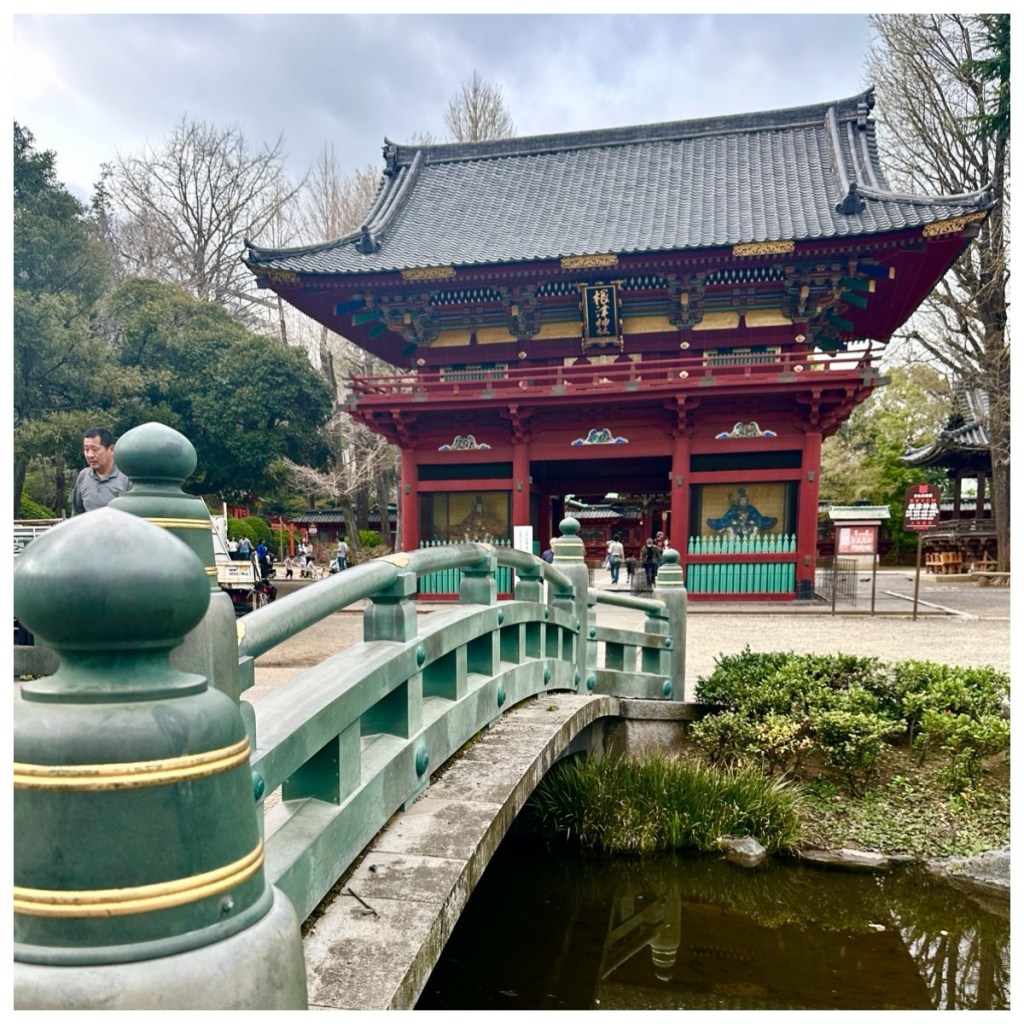
One of the most striking features of Nezu Shrine complex is its collection of vermilion torii gates. The first you encounter is the Romon Gate. This two-story gate, built in 1706, serves at the shrine’s main entrance and features intricate carvings and vibrant colours.
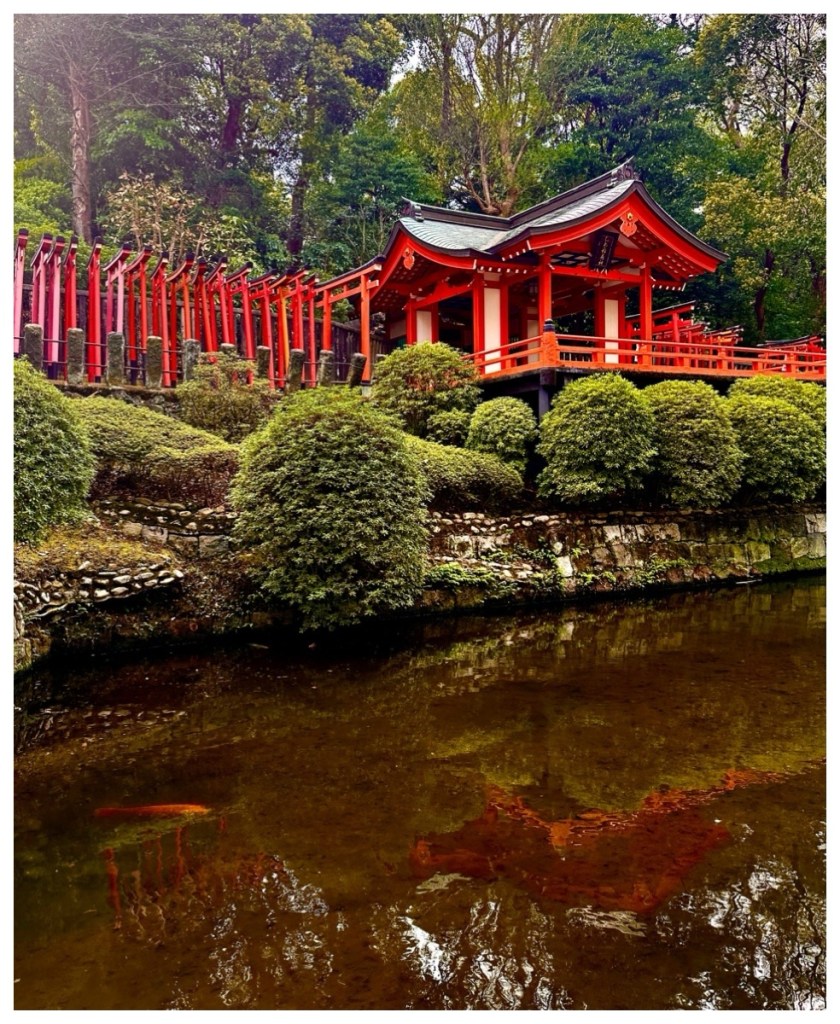
A tunnel of gates winds up the hillside.

This pathway leads to the Otome Inari Shrine, a smaller shrine within the complex dedicated to the god of rice and prosperity.
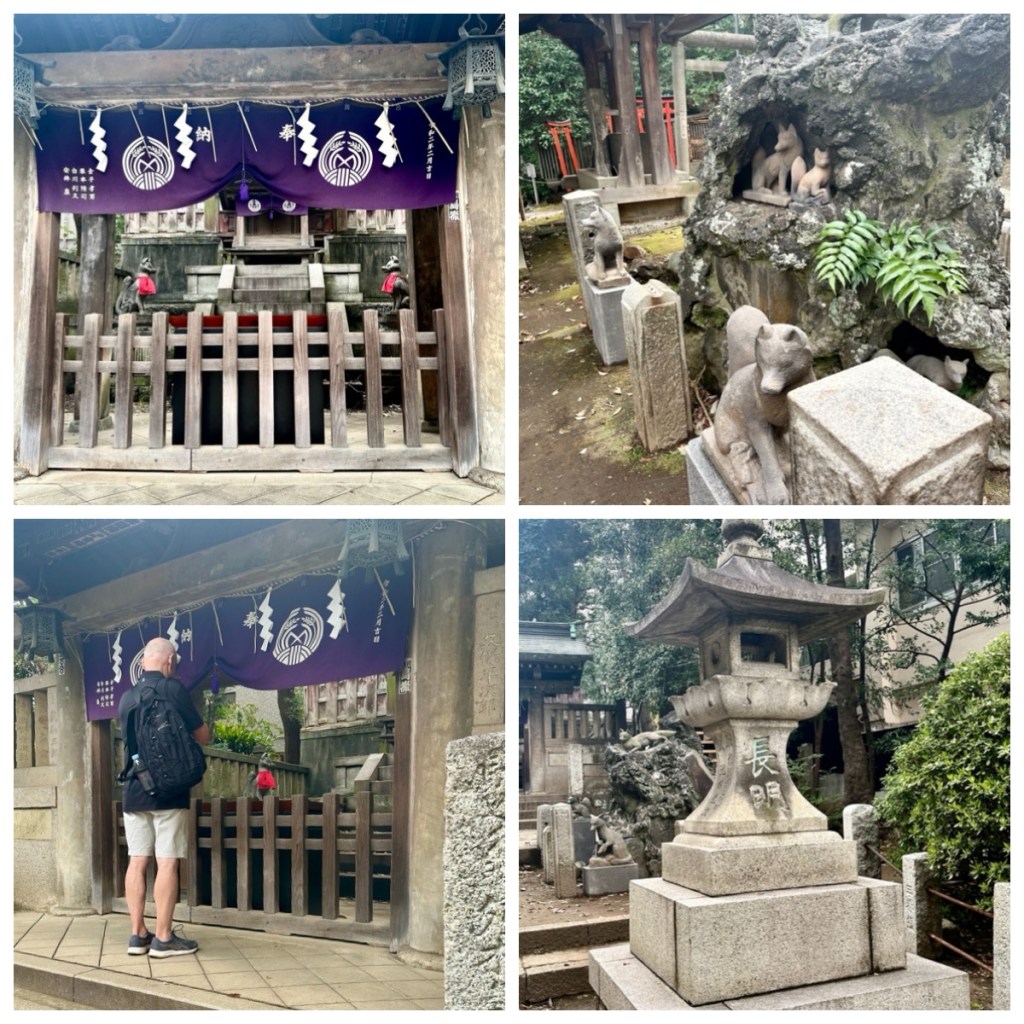
Further up the hill is the Komagome Inari Shrine. Here, Posh told us of the ritual followed to offer prayers and wish for good fortune. You first toss in a coin, bow twice with your hands at face level, clap twice, and bow again before offering your prayers and wishes.
The Honden main shrine is renowned for its exquisite architecture, which exemplifies the Gongen-zukuri style, a hallmark of Edo-period shrine construction. This style is characterized by its ornate details and harmonious integration with the surrounding nature. The Sukibei is a 200 metre long latticed wall surrounding the Honden.
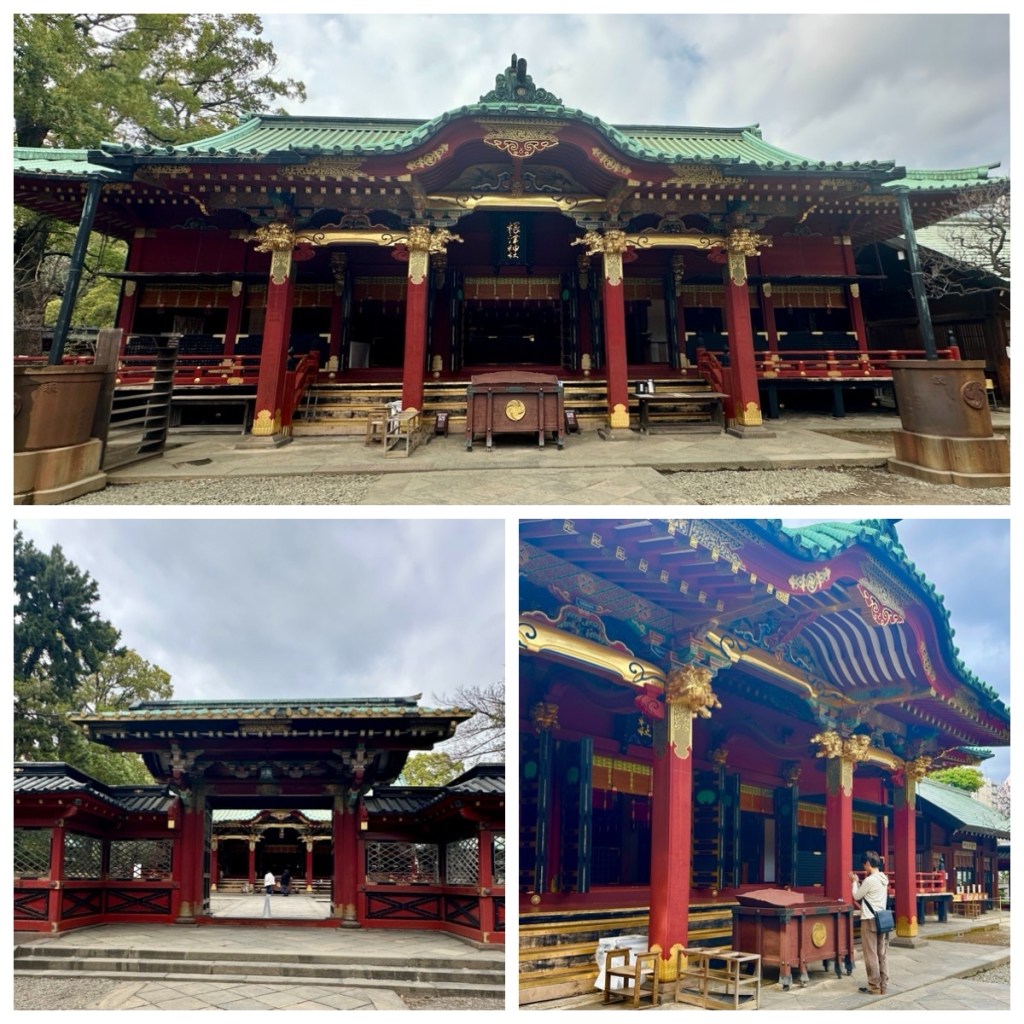
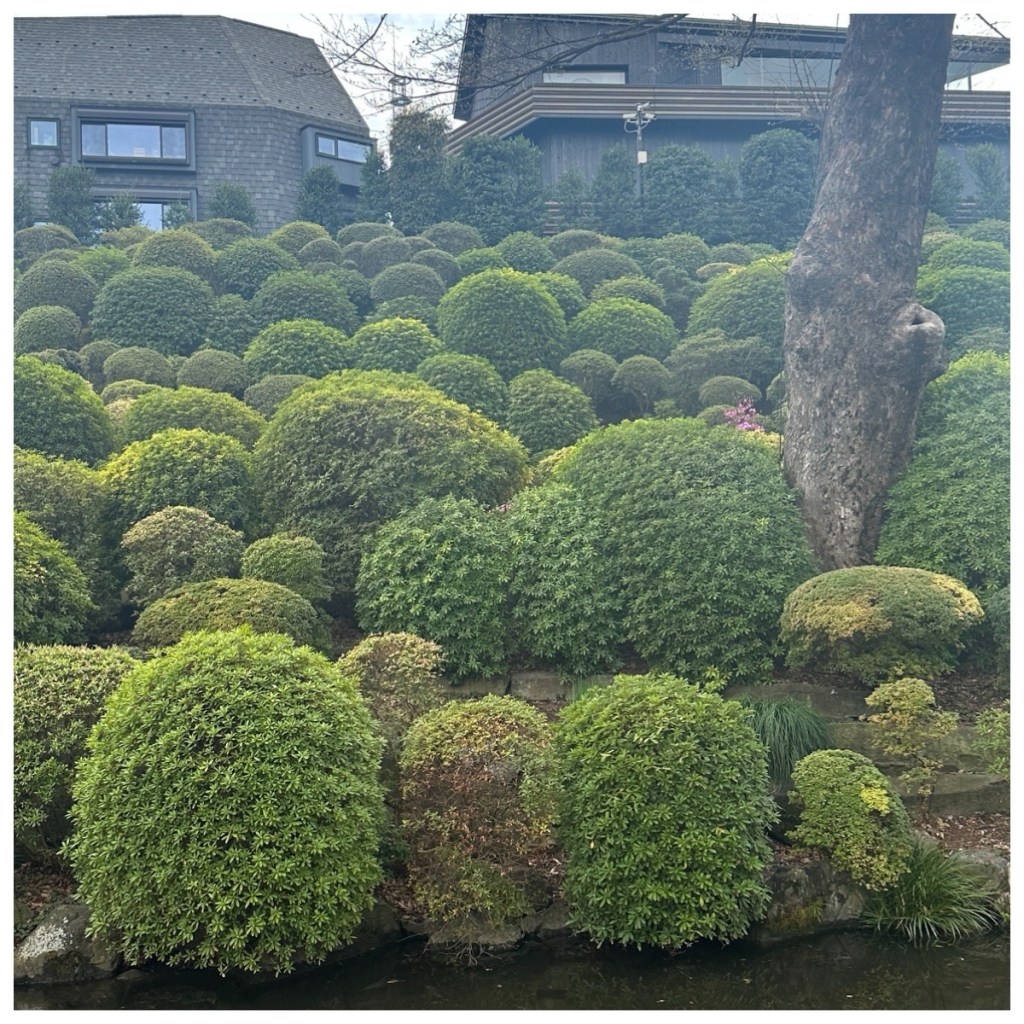
One of the most anticipated events at Nezu Shrine is the Azalea Festival, locally known as Bunkyo Azalea Festival or Tsutsuji Matsuri. It is held annually from early April to early May. The festival showcases over 3,000 azalea plants of more than 100 varieties, covering an area of approximately 6,600 square meters. The hillside garden, known as Tsutsuji-yama or Azalea Mountain, bursts into life with vibrant shades of pink, white, and purple. We were just a week or two early and could only see a few blooms on one of the plants.
Leaving the Nezu complex, it was time for coffee. We happened upon a lovely coffee house, Mystery Coffee.

After our relaxed visit over coffee, Posh walked with us to the Nippori Station. On the way we passed by the Okakura Tenshin Memorial Park. Okakura Tenshin (1862-1913) was a thinker of art and a philosopher in the Meiji Period who co-founded the Japanese Art Institute.
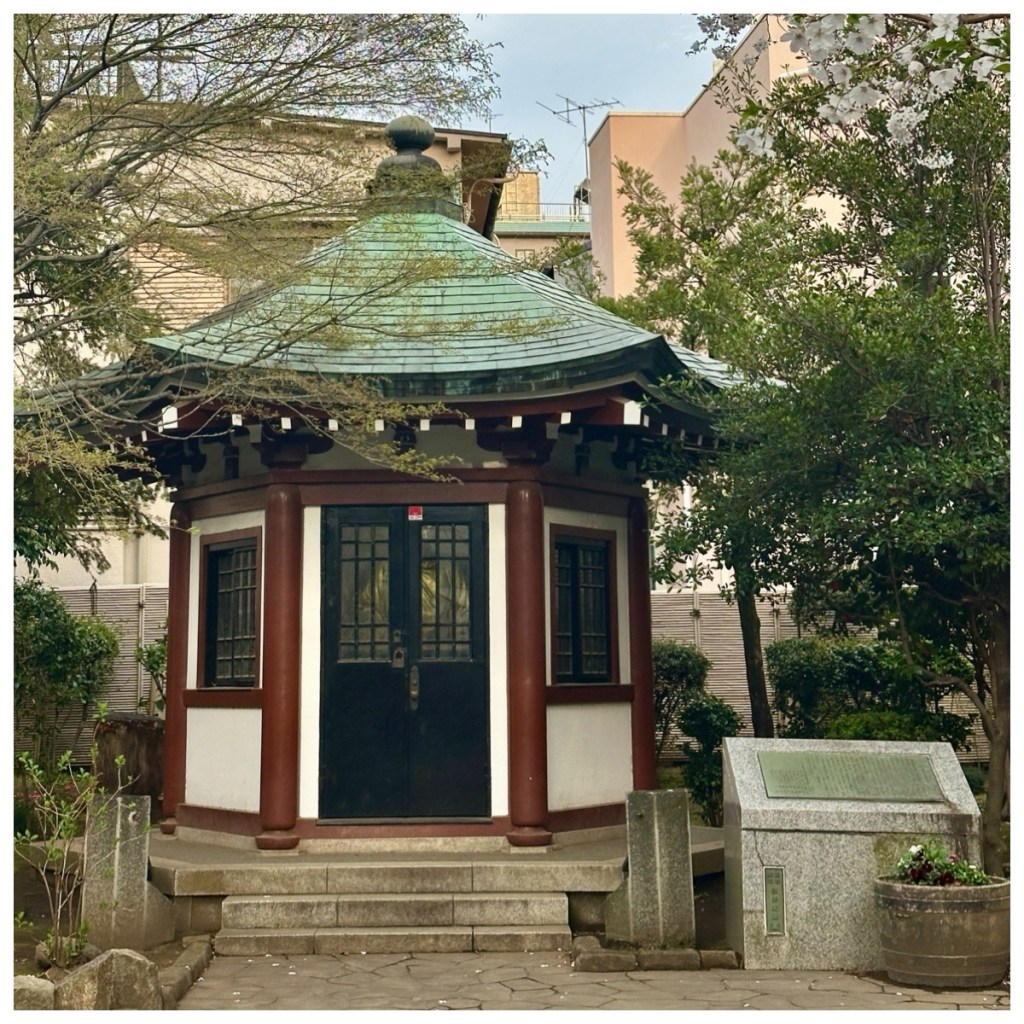
On most any street in Tokyo, you come across small, but significant, temples. Here is one – the Daikokuten Kyoo-ji Temple, a Nichiren Buddhist temple.

It was a lovely walk to end a great day.

At the Nippori Station, it was time to leave Posh. We caught the very comforable Keisei Skyliner train for a quick ride back to the Narita Airport where we could hop on the hotel shuttle bus.
Our day with Posh was an excellent way to see interesting sites, learn lots of history and get acquainted with Tokyo.
More later on our solo excursions in the Japanese capital.
Cheers,
Bev & Harvey
 A Long and Winding Journey
Japan looks lovely! Lots of greenery too.
LikeLike