We hopped on a train at the Botanic Station in Belfast and travelled to the town of Coleraine. Here we had a very short wait for Bus 402 to Portballintrae where the bus stop was right outside the Bayview Hotel. Portballintrae is a small village on a horseshoe-shaped bay at the southern end of Bushmills Bay. It sits along the Antrim Coast of Northern Ireland.
We were very pleased with both the hotel and its location. Although there are very few services in the village, it is a quick bus ride to Portrush or Bushmills if you require anything.

The Bayview serves excellent breakfasts!

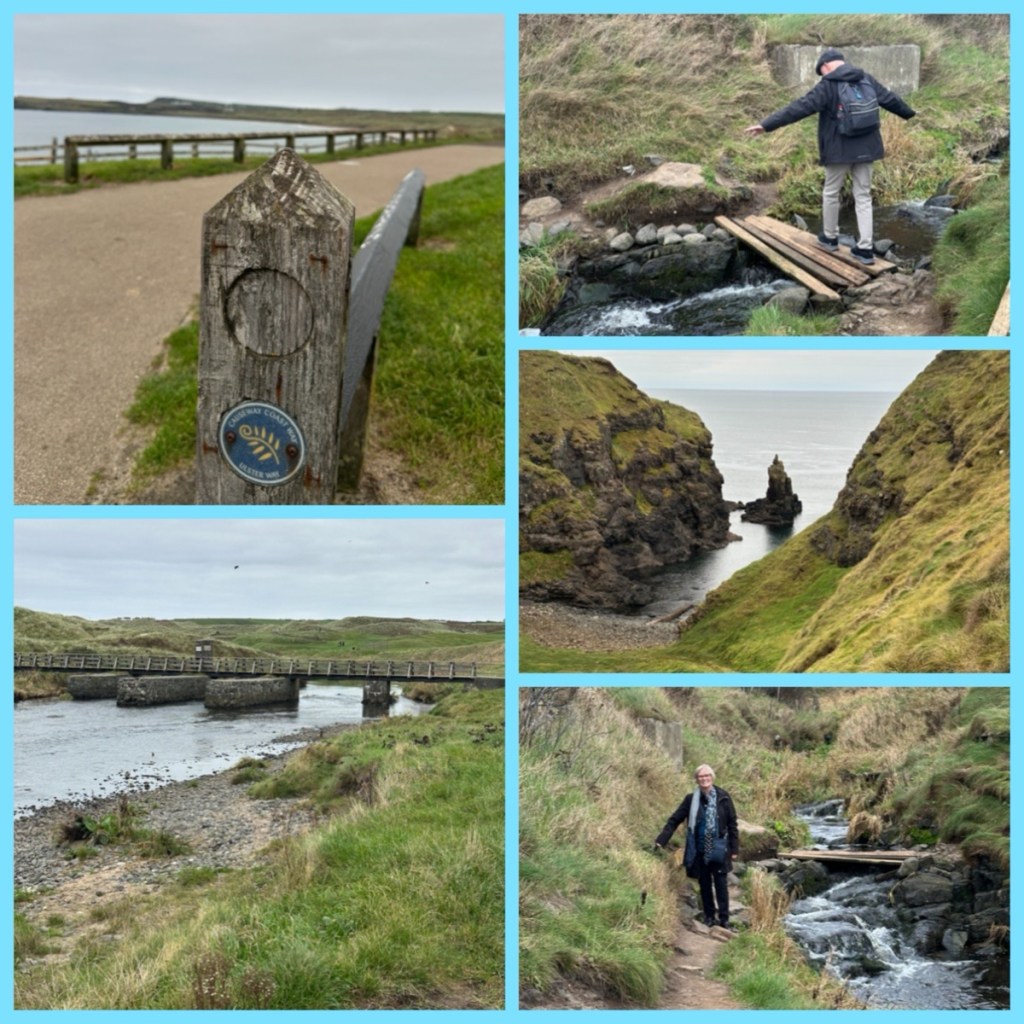
We walked the Causeway Coast Way from Portballintrae to the Giant’s Causeway. The pathways along this route varied from wide hard-packed paths to small trails to sandy or rocky beaches. The inclines were not steep and we thoroughly enjoyed the wonderful views of the craggy cliffs and the sea as well as sand dunes and rolling fields. The walk was about 4.5 km. It was a cloudy day, but relatively warm.
The Giant’s Causeway is the centrepiece of the coast. This stretch of the coastline is famous for its basalt columns that cover the beach. These hexagonal columns stick up a various heights, creating a very interesting topography. It is believed that the columns were formed by volcanic eruptions more that 60 million years ago.
OR
A giant Ulster warrior named Finn McCool built the path of basalt columns to duel his Scottish rival, Benandonner. The myth goes on to say that the path was destroyed by Benandonner when he fled back to Scotland.
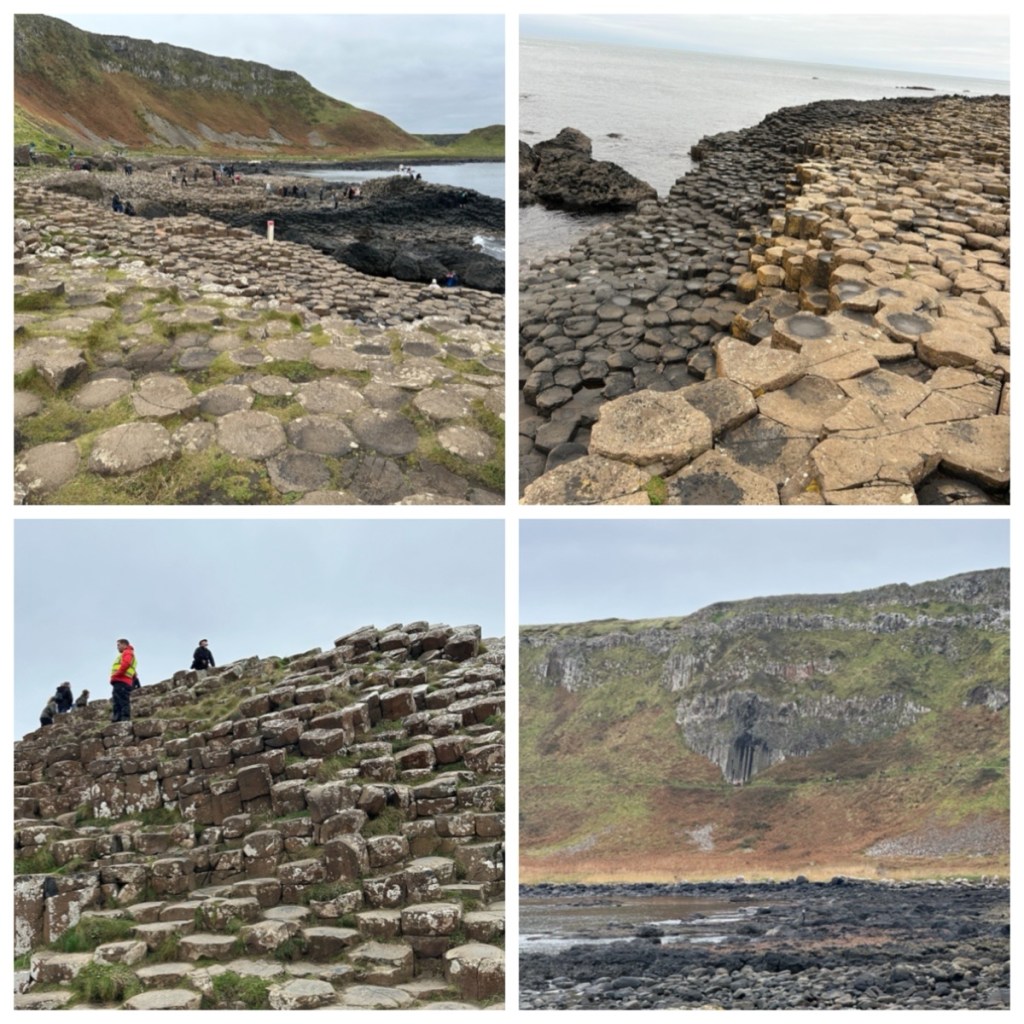
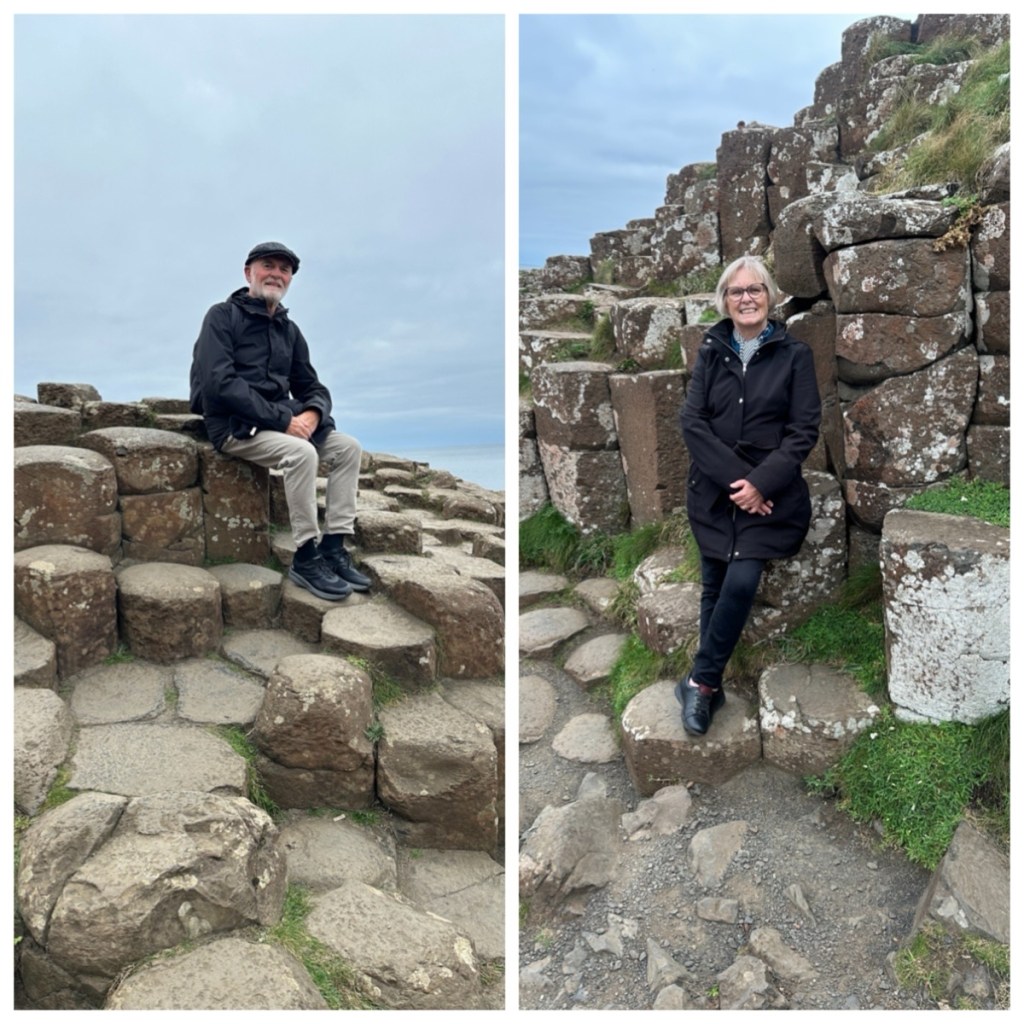
There is a visitor centre at the Giant’s Causeway but having read it’s a bit of a tourist trap, we chose not to go in. We walked down to the columns and then caught the shuttle bus back up ( £1 each).
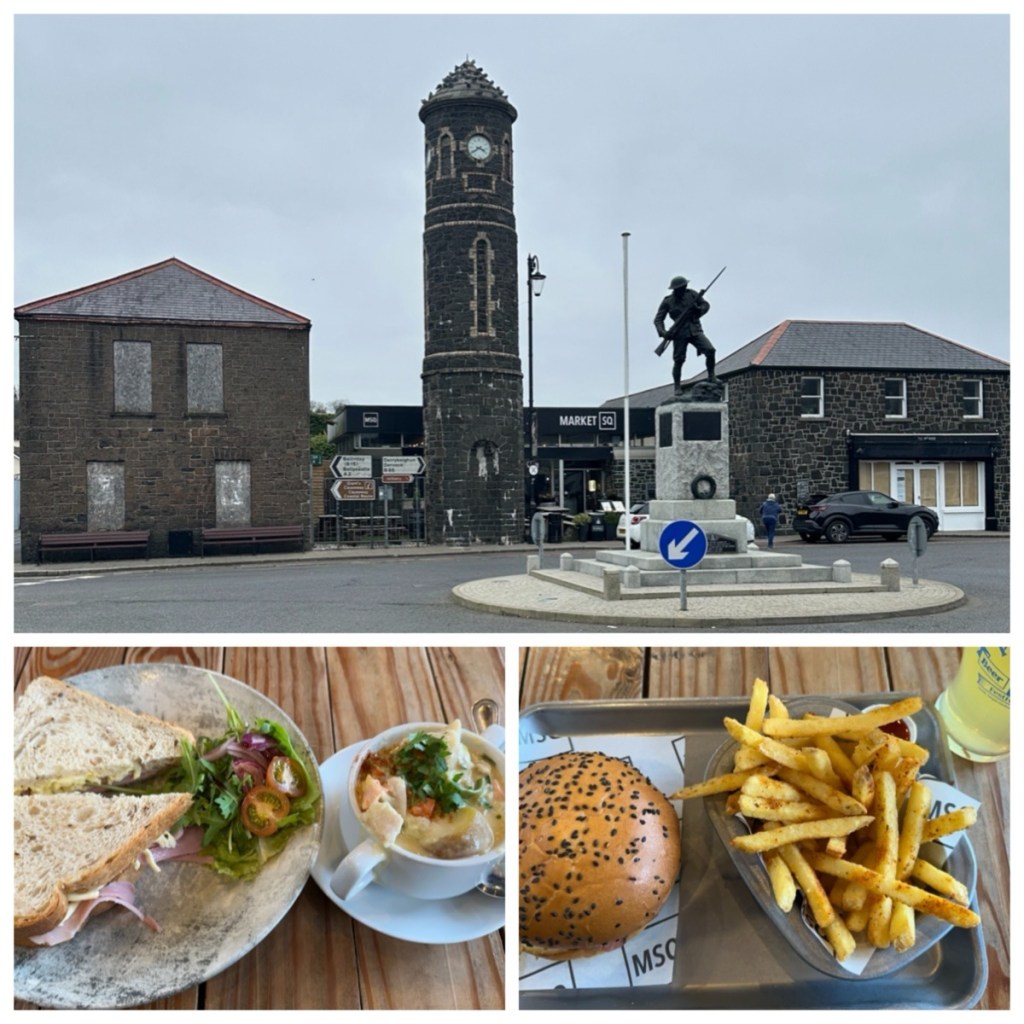
Leaving the causeway, we caught the TransLink Bus 402 for the short (2 mile) journey to the town of Bushmills. Bushmills is of course most famous for the Bushmill Distillery. We didn’t visit the distillery – we have been to a number of distilleries and aren’t great whiskey fans. Instead we enjoyed wandering down the high street, peeking into a few shops. The town is probably buzzing in the summer season but was quite quiet in October. Also, there appear to be a number of permanently closed shops.

We had a great mid-afternoon meal at the Market Square in Bushmills.
We then chose to follow the path next to the Bushmills Heritage Railway line back to the causeway walk to Portballintrae. Advertising indicates that the heritage railway runs in the summer but we noted that it definitely needs some repair as sections of track were missing.

Our walk back completed our day with a total of 18,000 steps (~13.3 km).
Our second day on the coast welcomed us with some blue sky and we headed west on the Causeway Coast Way. The first attraction was Dunluce Castle.
The first castle at Dunluce was built in the 13th century by Richard de Burgh, 2nd Earl of Ulster. However, the earliest standing remains date to around 1500 when the site was established by the MacQuillans. The majority of the ruins left today are from the 16th and 17th centuries, when Dunluce became the seat of Clan MacDonnell who overthrew their rivals, the MacQuillans.
The remains of the castle are explained in a way that brings to mind what the buildings would have looked like in their grand days. We thoroughly enjoyed our visit.


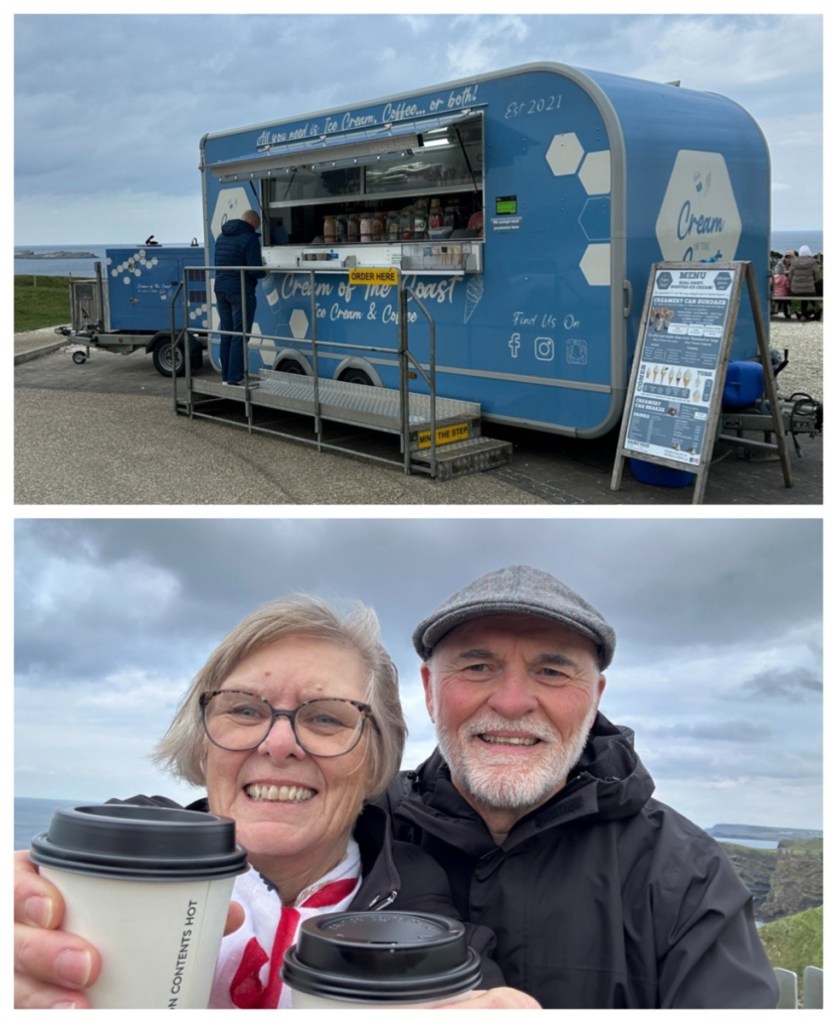
We continued walking along the causeway. Much of this footpath followed the main road – but we were treated to magnificent seaside views! We stopped at a roadside lookout for lattés and were treated to biscuits by a family sitting at a nearby picnic table – another example of the wonderful friendly Northern Irish!
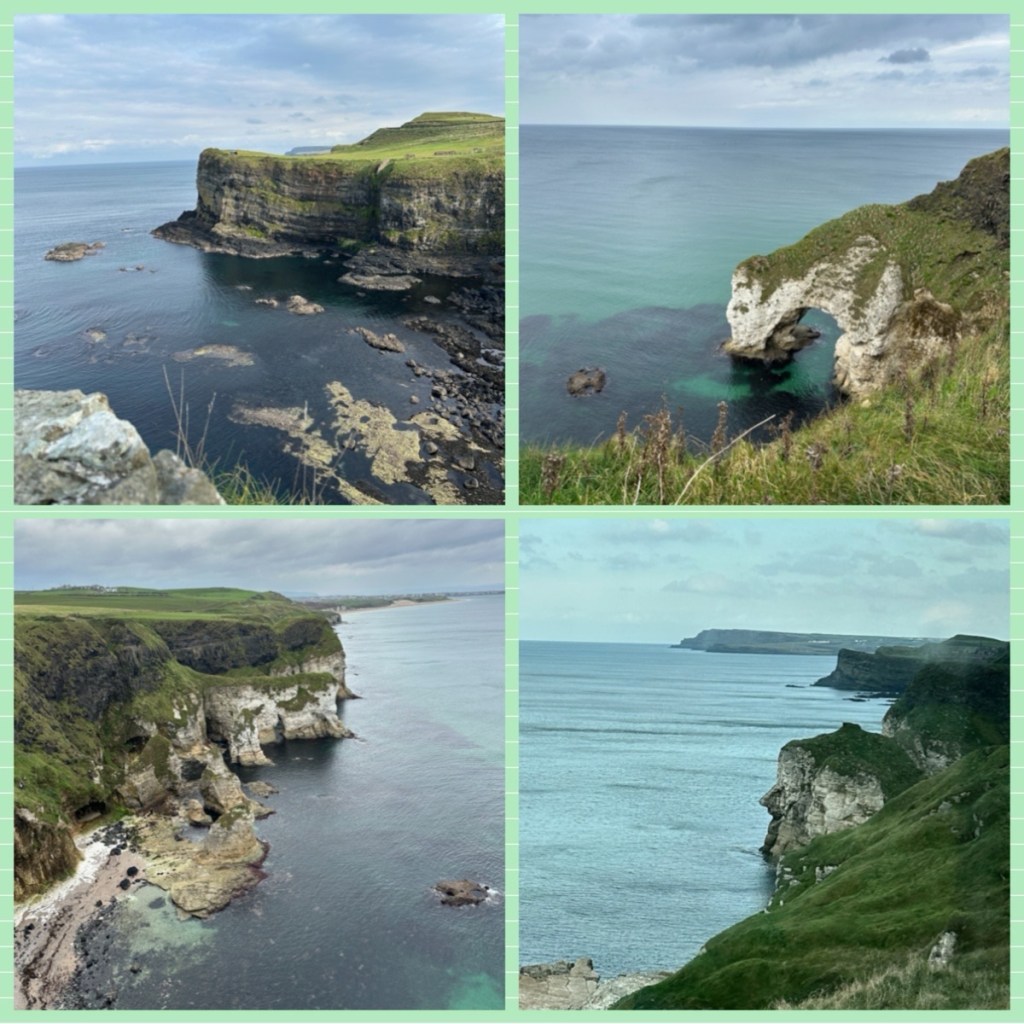
As we approached the town of Portrush, we came to Whiterocks Beach which stretches with the sea to one side and the Royal Portrush Golf Course above the cliff on the other.

Portrush is a seaside resort often called the Brighton of the North. It was relatively quiet on our visit but still quite pleasant to stroll about.

We again opted for a mid-afternoon meal – at the Urban Restaurant – before hopping on the Causeway Rambler bus to our hotel.

Second day step count – 20000 steps (15 km). We found the causeway relatively easy to walk and thoroughly enjoyed it! We would definitely recommend it!
Sláinte,
Bev & Harvey

 A Long and Winding Journey