Londonderry or Derry – either way, it’s great!
We travelled from Portballintrae to Coleraine by bus and then, continued on our journey by train. Here, I must give a shout-out to Northern Ireland’s TransLink system. Translink is the public transport provider, operating coach, bus and train services connecting cities, towns and villages throughout Northern Ireland. We used the system in Belfast, to the north Causeway and about that area and on to Derry. We found the stations and trains to be modern, new and very clean. The system ran precisely to schedule on every trip we took. We purchased iLink 7 day Zone 4 passes and it was so easy to just tap our cards for any journey.
But back to the question – Derry or Londonderry? This naming issue continues. Nationalists favour Derry emphasizing that Ireland should be united and not under the control of London while Unionists prefer to use Londonderry. For the sake of brevity, I will use Derry in this blog.
Ebrington is a former military site located on the Foyle riverfront, connected to Derry City Centre across the Peace Bridge.
The site, originally occupied by Jacobite Forces during the Siege of Derry and a 10 acre ‘Star Fort’, played a significant role in both World Wars and was pivotal during the Battle of the Atlantic. The Ebrington Hotel opened in 2023 on the site of the barracks. We would definitely recommend this hotel. It is an easy 10 minute walk from both the train and bus stations.

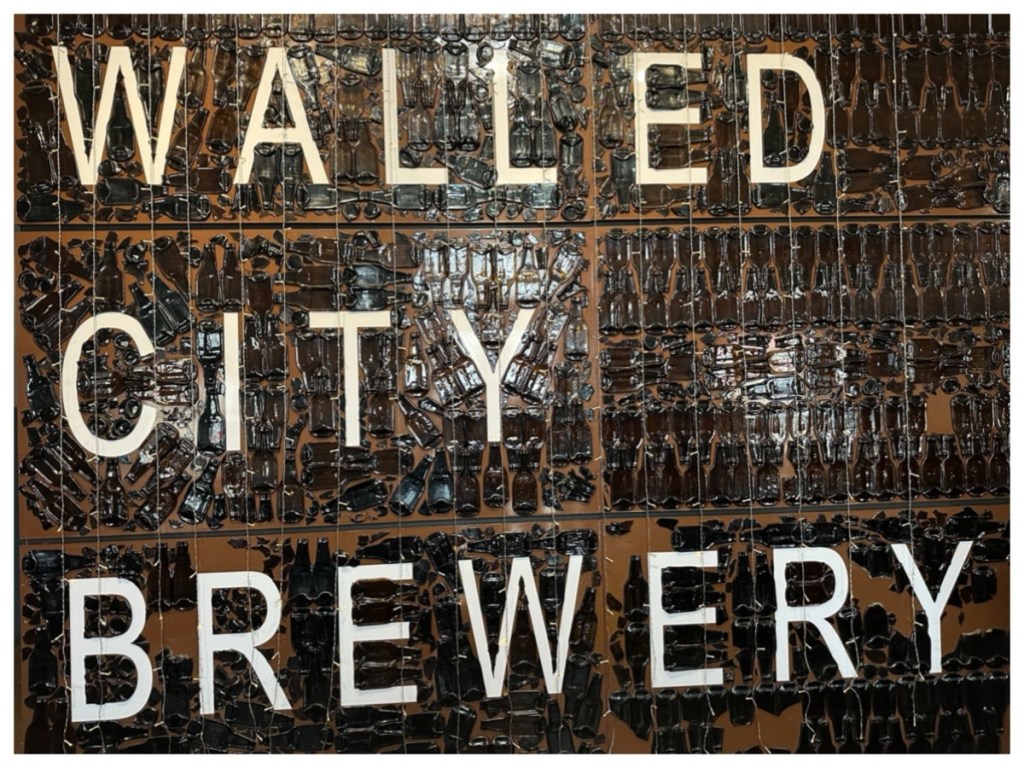
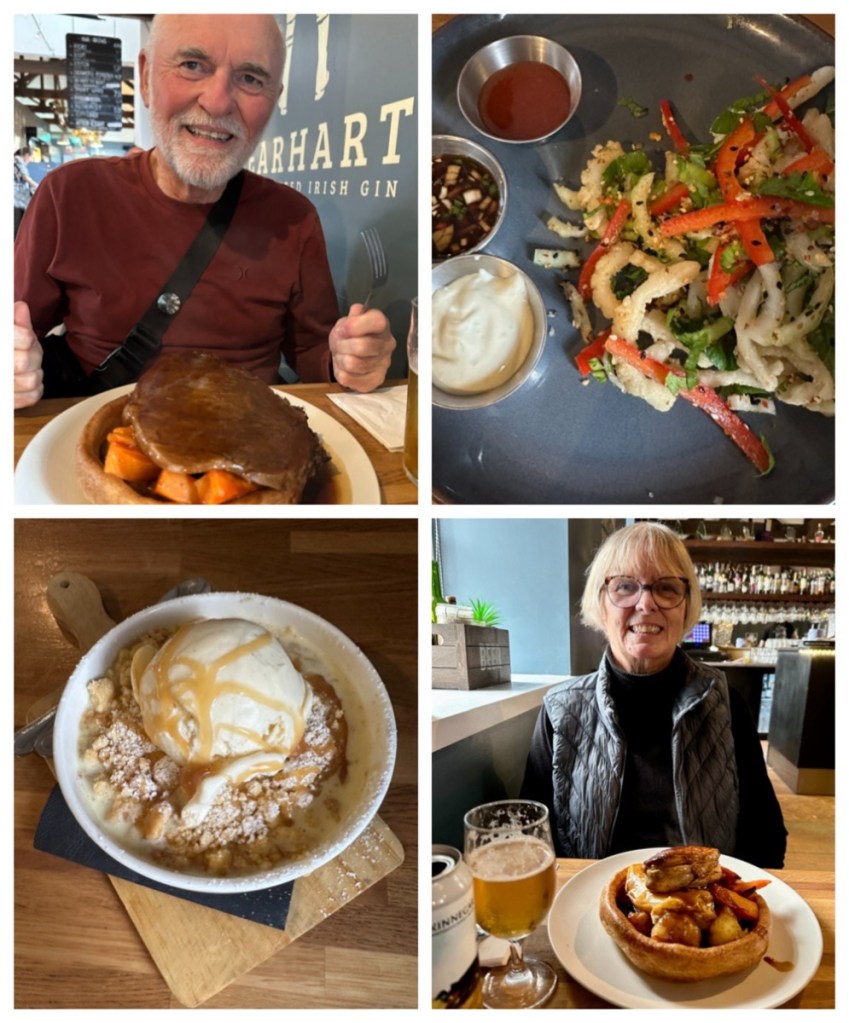
On our first evening, we enjoyed Sunday Roast at the Walled City Brewery located next to the hotel.
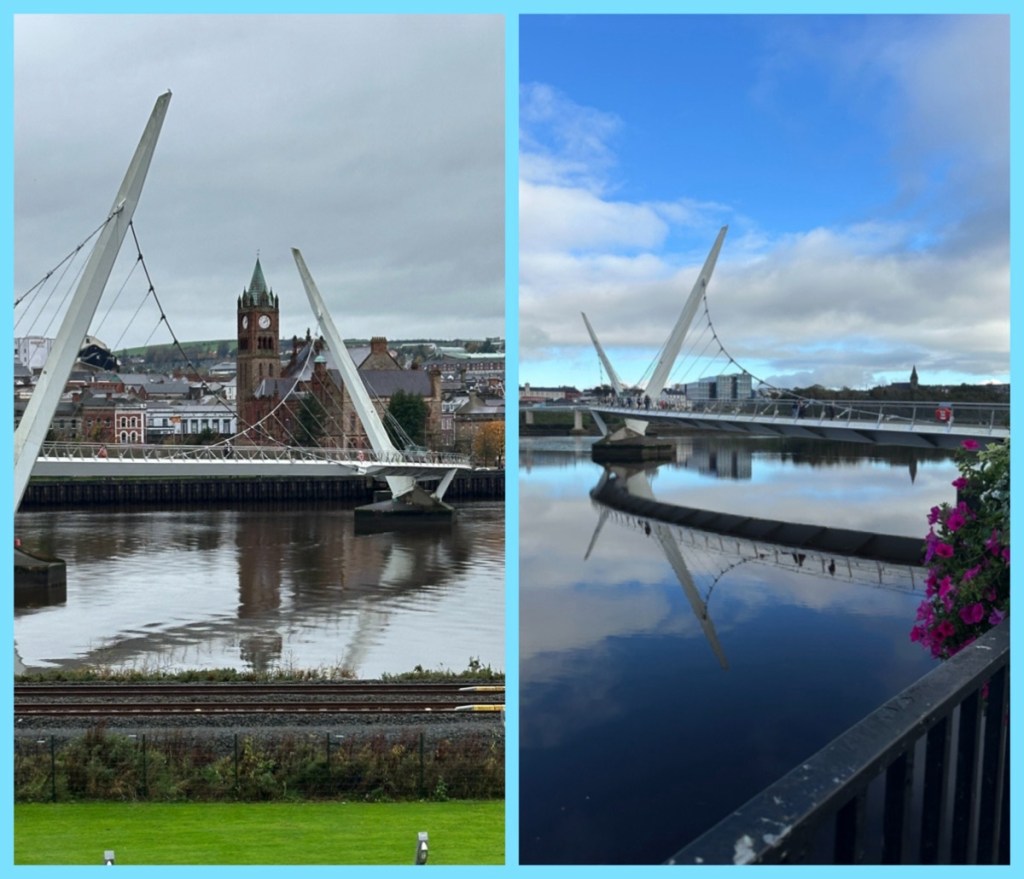
Derry is the second biggest city in Northern Ireland. Its name comes from the Irish word Daire which means oak forest. The old city is on the west bank of the Foyle River and is spanned by two bridges for vehicles and the pedestrian bridge named the Peace Bridge. The Peace Bridge opened in 2011, linking neighbourhoods once divided by the river (Catholic Nationalists on the west bank and Protestant Unionists on the east bank).
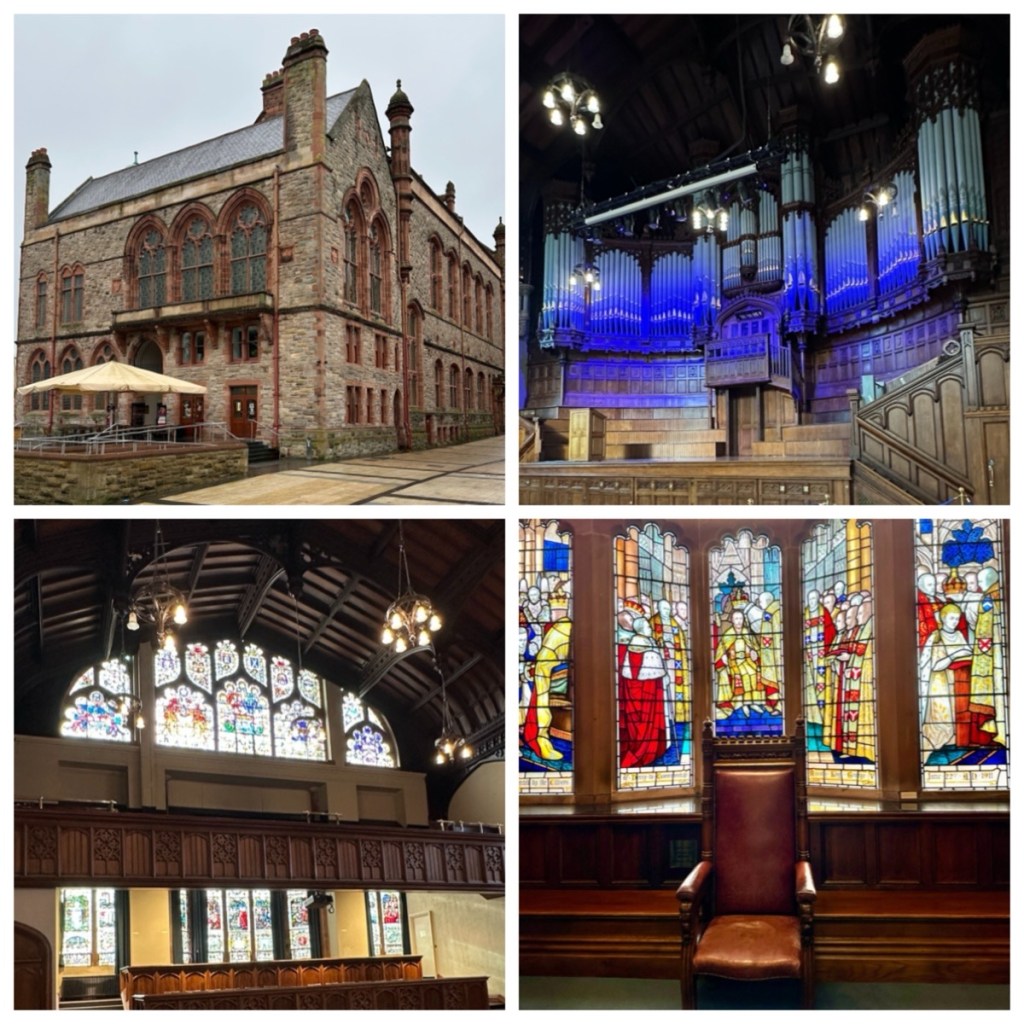
The NeoGothic Guildhall is the ceremonial seat of city government. It features a grand hall with a massive pipe organ and ornate stained glass windows. It also had some great Hallowe’en displays. Interestingly, the celebration of Hallowe’en can be traced back to Ireland and Scotland.

Derry is the only remaining intact walled city in Ireland and claims to be one of the finest examples of walled cities in Europe. The Derry Walls were built during the period 1613-1618 as defences for early seventeenth century settlers from England and Scotland. There are seven gates.
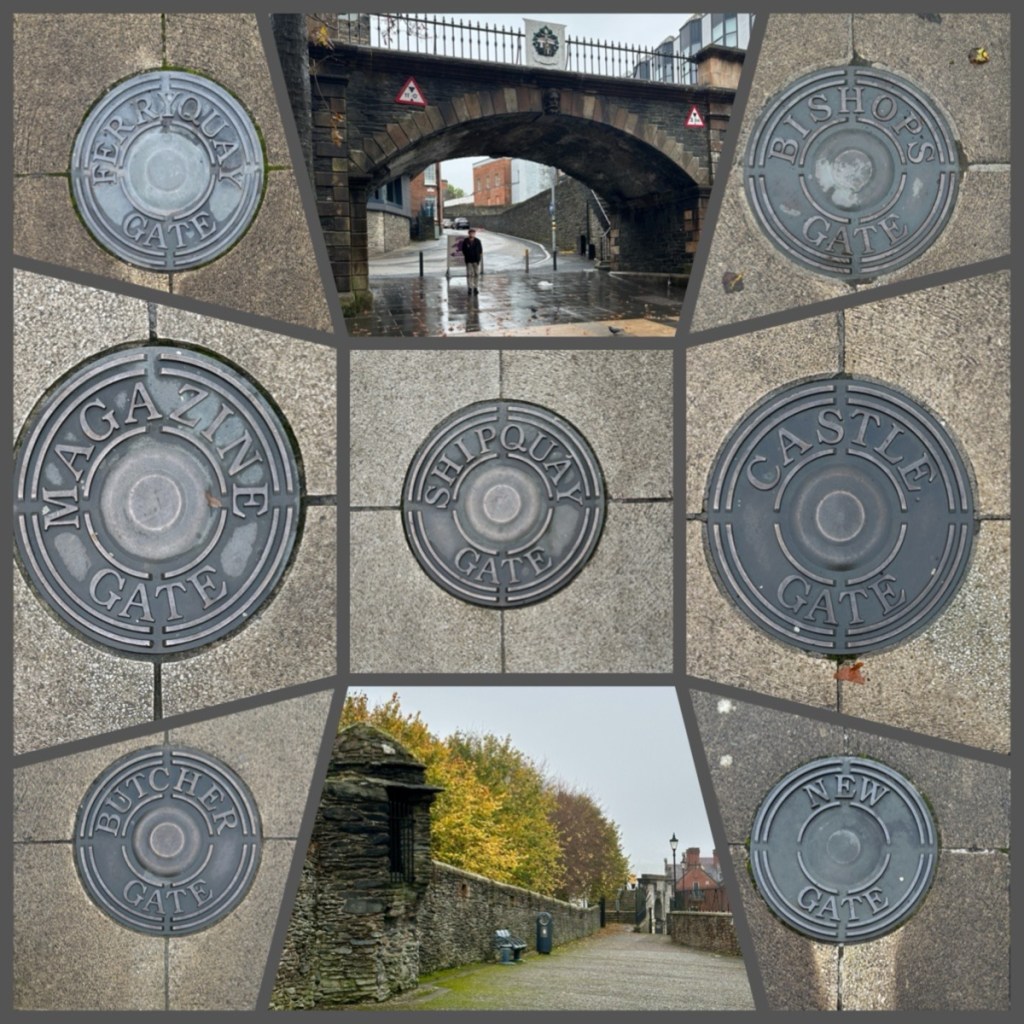
The walls stand up to eight metres high and vary in width between 1 and 35 feet.

The walls form a 1.5 kilometre walkway around the inner city and provide excellent views of both the inner city and the city that stretches outside the walls.

Derry claims Europe’s largest collection of cannon whose origins are known precisely. Many of them thundered in anger over the two seventeenth century sieges. In 2005 the surviving 24 cannon were restored and are displayed throughout the walls.

A number of grand churches are situated next to the walls.

After our walk around the walls, it was time for a coffee break and we happened upon Claudes Café. This was a great find – we enjoyed our drinks and pastries while listening to the music of two local gentlemen.

At its peak in the mid-20th century, the textile industry in Derry supported up to 20,000 workers at more than 40 shirt factories. Tributes to these workers, mostly women, are found around the city.

We enjoyed strolling around the inner city, taking in the sights.
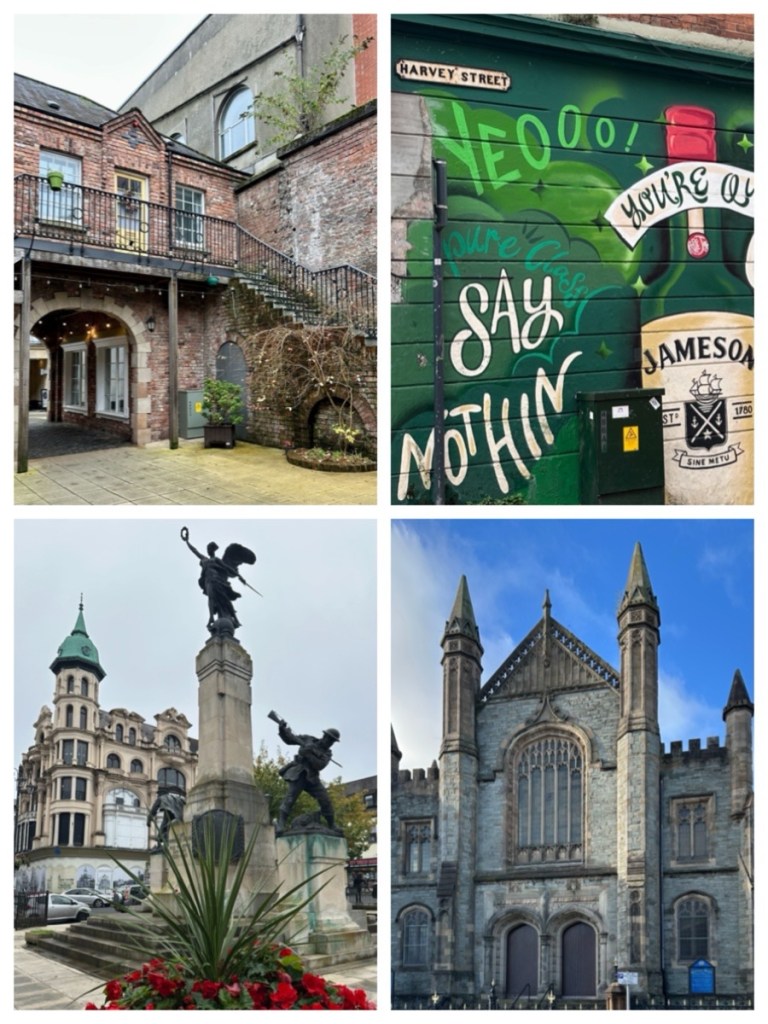
Fans of the ‘Derry Girls’ television series will recognize these young people.

As the world knows, from ~1967 to 1998, Northern Ireland suffered through what came to be known as “The Troubles”. Republicans (Nationalists, primarily Catholics) were represented by the Irish Republic Army (IRA) and battled to have Northern Ireland join the Republic of Ireland. They were met by the Ulster Unionist groups (Loyalists, primarily Protestants) who wanted to remain with the United Kingdom. As one of our tour guides said – “there were great atrocities committed by both sides of the conflict”.
In Derry, the centre of the turmoil was in the Catholic Bogside area. On 5 January 1969, after a night of rioting and sustained police attacks on the Bogside, the words “You Are Now Entering Free Derry” were painted on the gable wall of 33 Lecky Road. This simple graffiti became the defining symbol of the civil rights era and an internationally recognised symbol of resistance to state injustice.
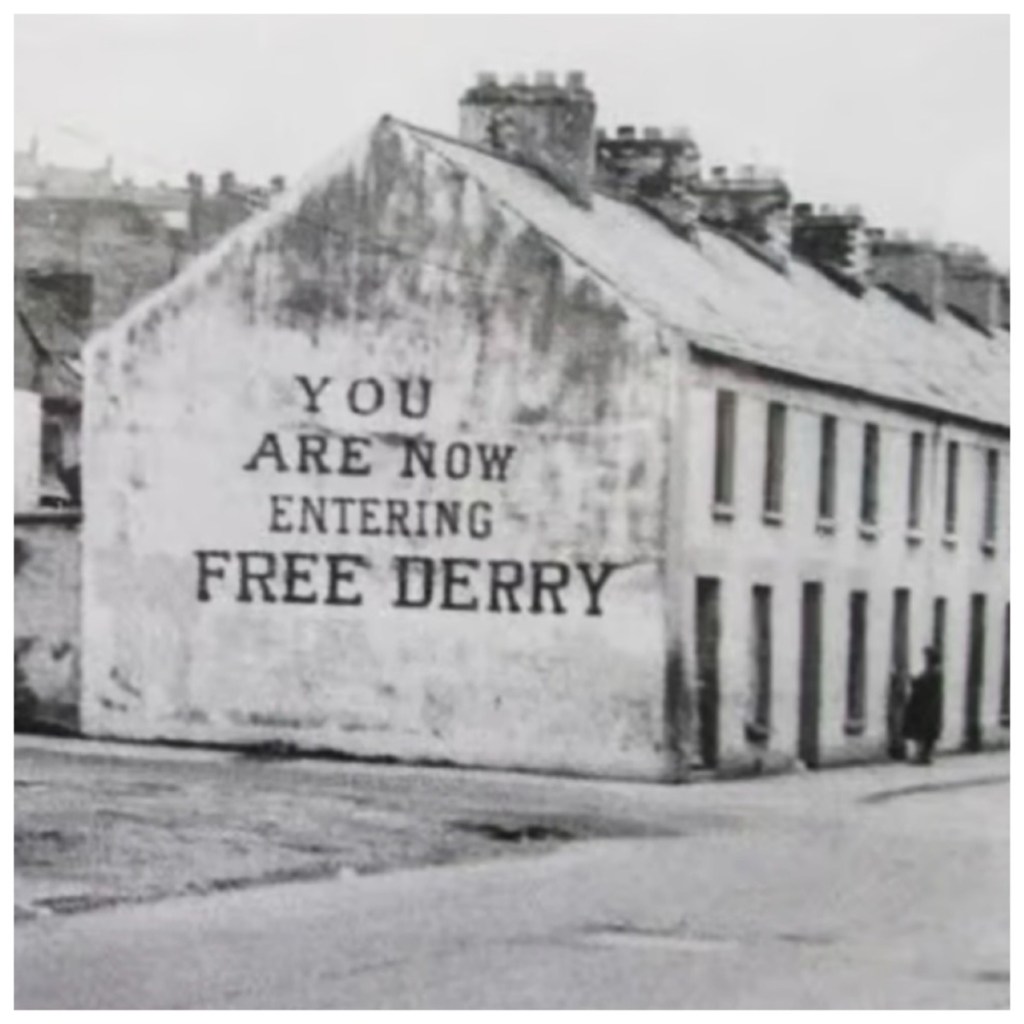
The wall remains today, though the rest of the street was demolished in 1975. The wall is periodically repainted and at present refers to the local support for Palestine.

On January 30, 1972, a protest march in the Bogside area resulted in the deaths of 14 rioting youths. This event became known as ‘Bloody Sunday’ and became a rallying cry for the IRA. Two brothers and a friend witnessed the tragic events in the area and began painting murals in 1994. Today the murals tell the story from the Nationalist point of view. Here are a few of theses graphic illustrations.
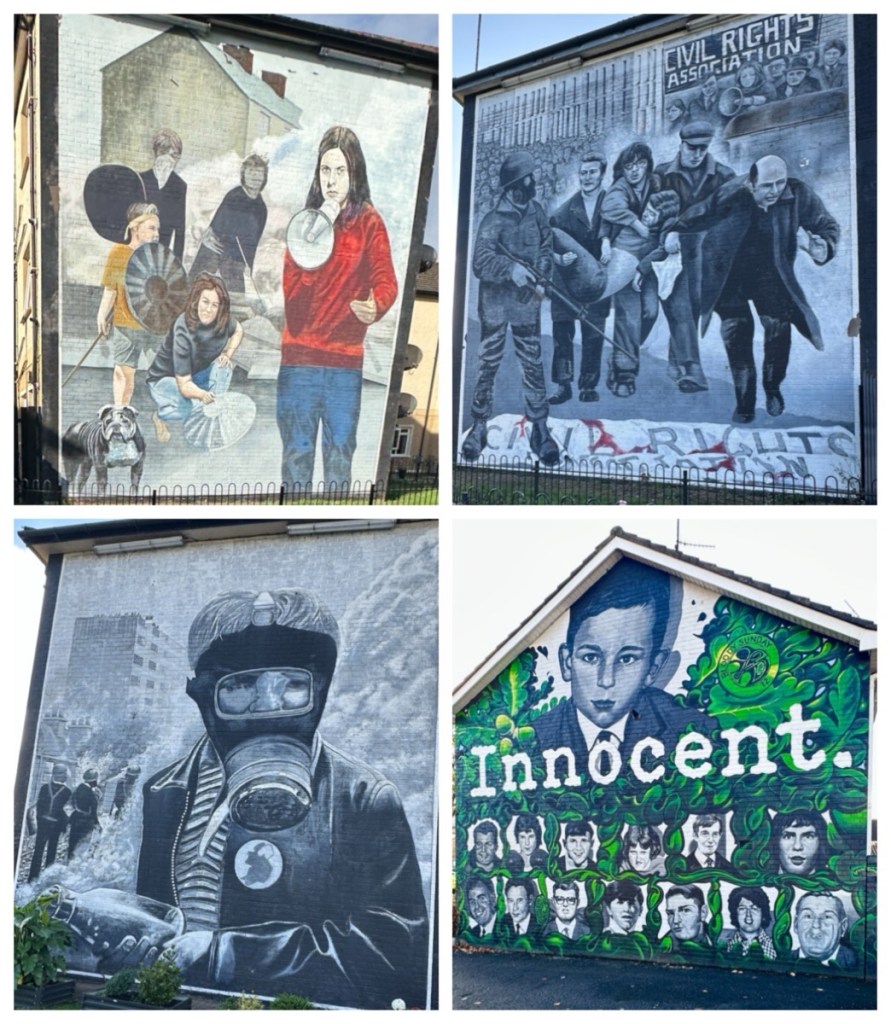
While looking at the mural entitled “The Saturday Matinee”, we were approached by a gentleman. He told us that his name is Billy McVeigh and he is the youth in the mural. We later googled and were able to verify this. Billy was interesting to speak to – he is still very passionate for a united Ireland. However, when he brought out a Tshirt of his design, we carried on before he could try to sell it to us. 😉

The struggle, often violent and bloody, was finally somewhat resolved in 1998 with the Good Friday Accord (Belfast Agreement) although a number of the people we spoke to still believe that there is divide in people’s loyalties. The ‘Peace’ mural was inspired by Derry city schoolchildren and shows the silhouette of a dove in flight toward the warm yellow of the future in the oak leaf on the right.

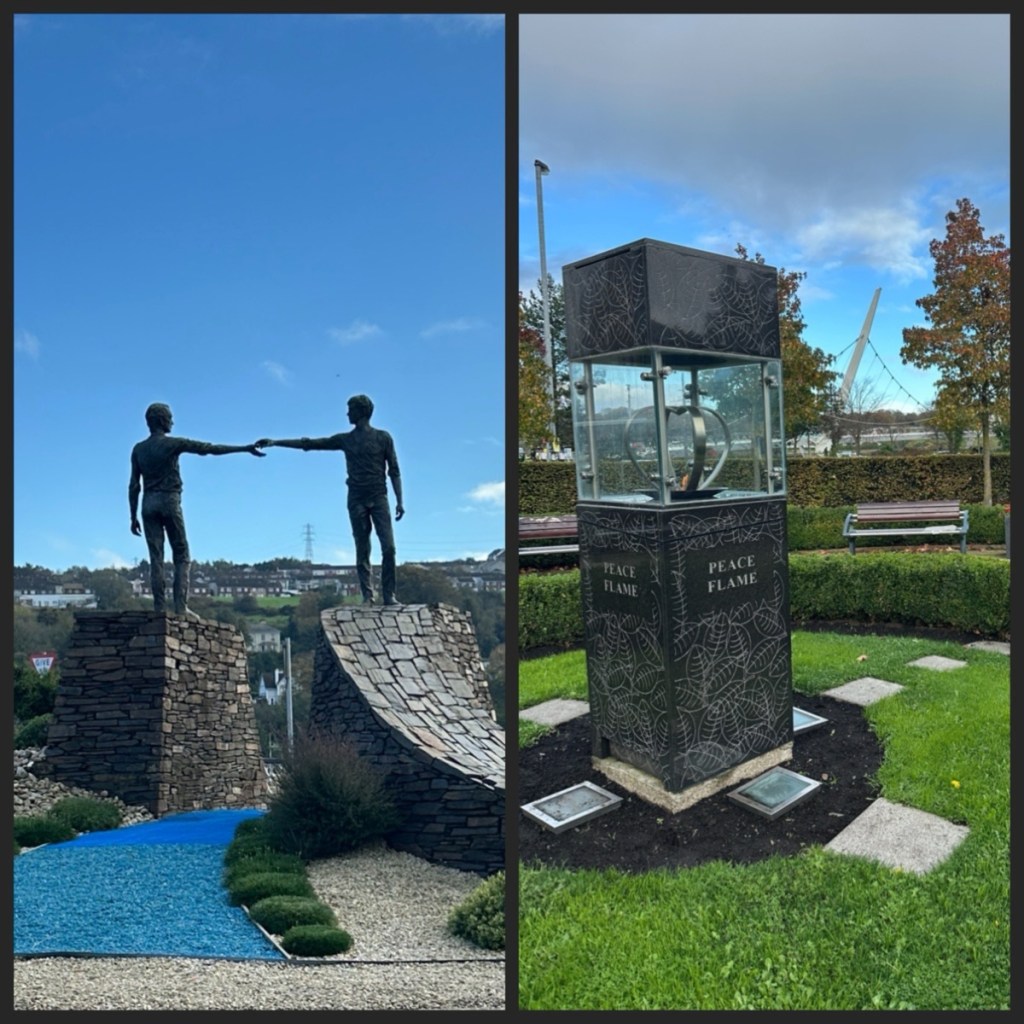
We encountered two other tributes to the hope for peace and reconciliation as we walked about the city: the ‘Hands Across the Divide’ sculpture and the ‘Peace Flame Garden’.
We spent just two nights in Derry but feel that we gained an appreciation for the city. It has had a very tumultuous past over hundreds of years but has survived due to the strength of its people. As we have encountered everywhere in Northern Ireland, they were extremely friendly and welcoming. We would recommend a stop in Derry / Londonderry!
Sláinte,
Bev & Harvey

 A Long and Winding Journey