Leaving Tokyo, we travelled by Air Asia to Bangkok, Thailand. This was perhaps the oldest airplane we have flown on for quite some time – but it was adequate and after a 7.5 hour flight, we arrived early and safely at the Don Mueang International Airport.
We had booked an airport pickup with Go Thai Transport. We would definitely recommend this service and will use it again on our trip. It was easy to book on-line (what I hear from our travel companion Debbie, who kindly booked the service), it was obvious to locate on arrival and the level of safety and security was great.
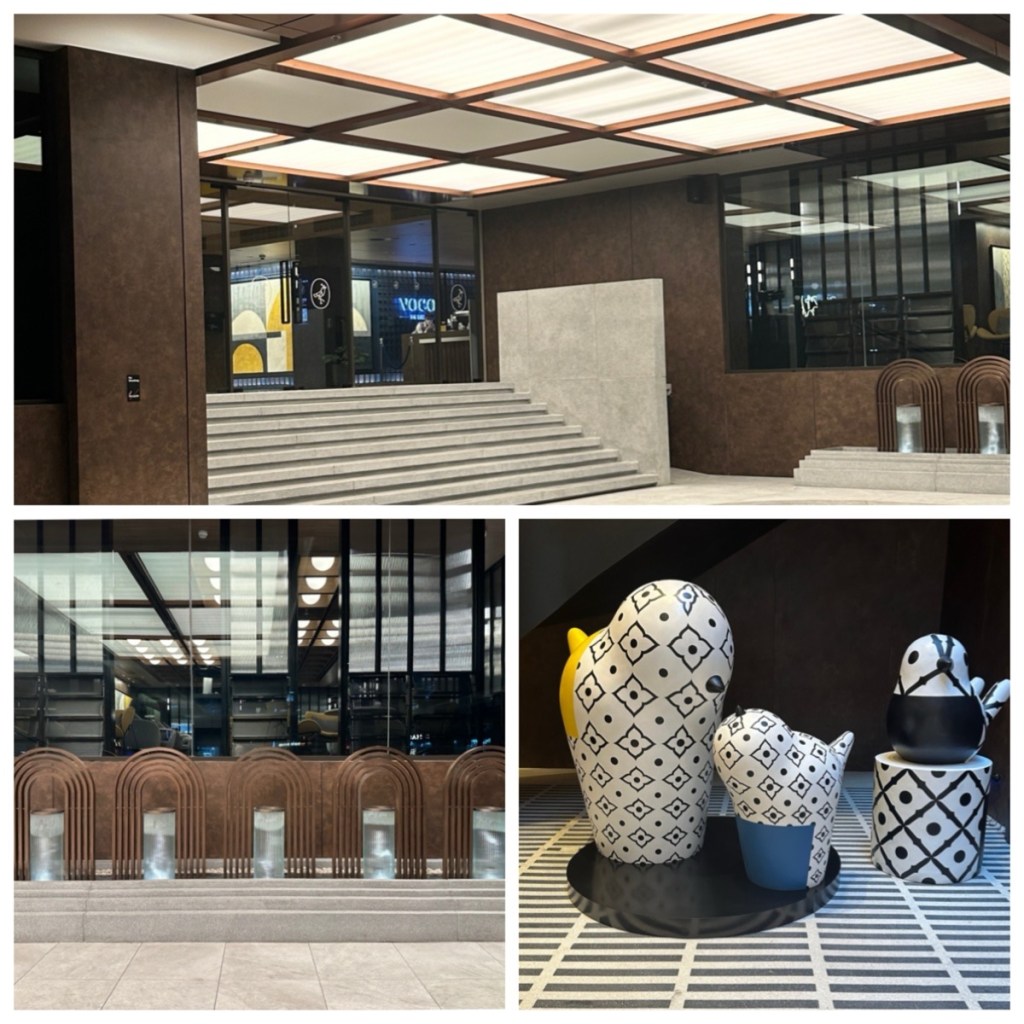
The driver whisked us to our hotel (a journey of ~30 km). We chose the voco Bangkok Surawong Hotel for our five night stay – more on this great hotel later…..
Thailand has a population of ~72 million with ~11.5 million people living within the 1600 square kilometres of metropolitan Bangkok. Bangkok is often cited as one of the busiest and most visited cities in the world.
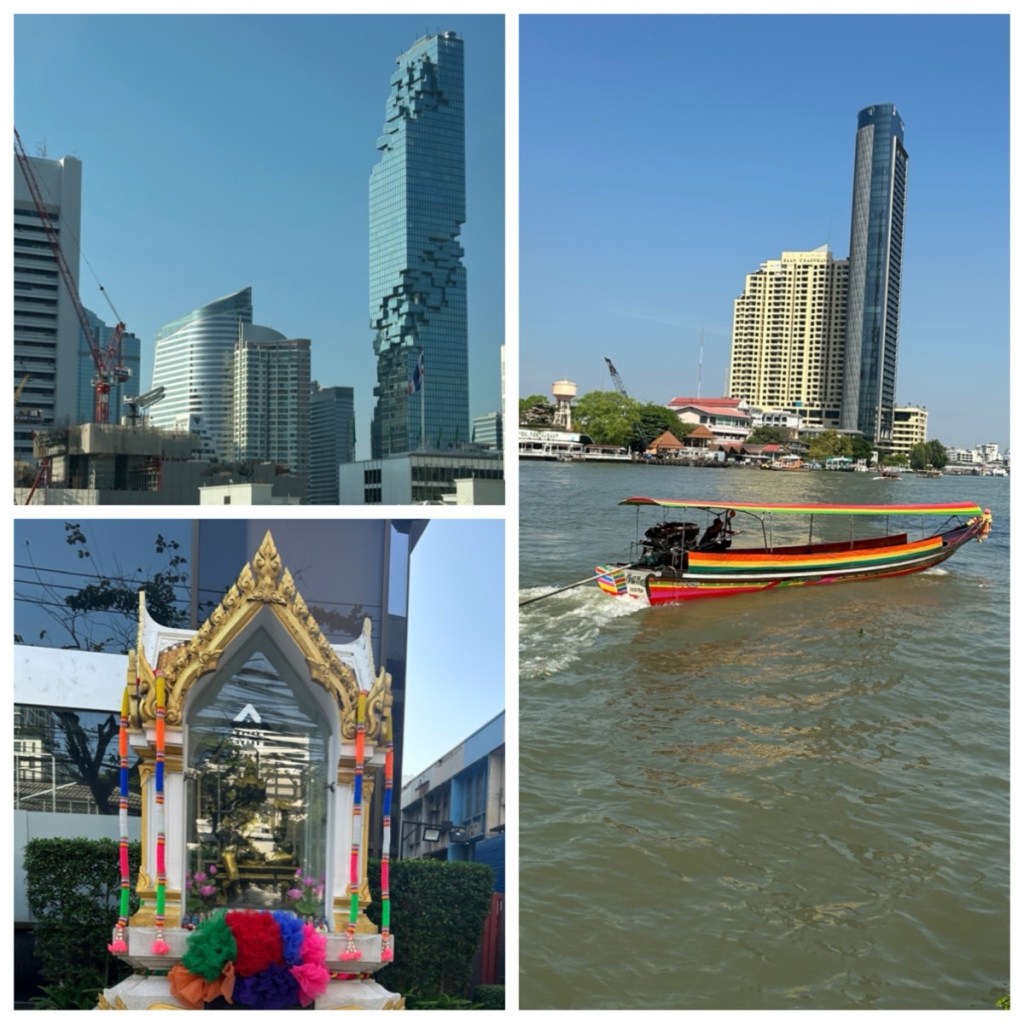
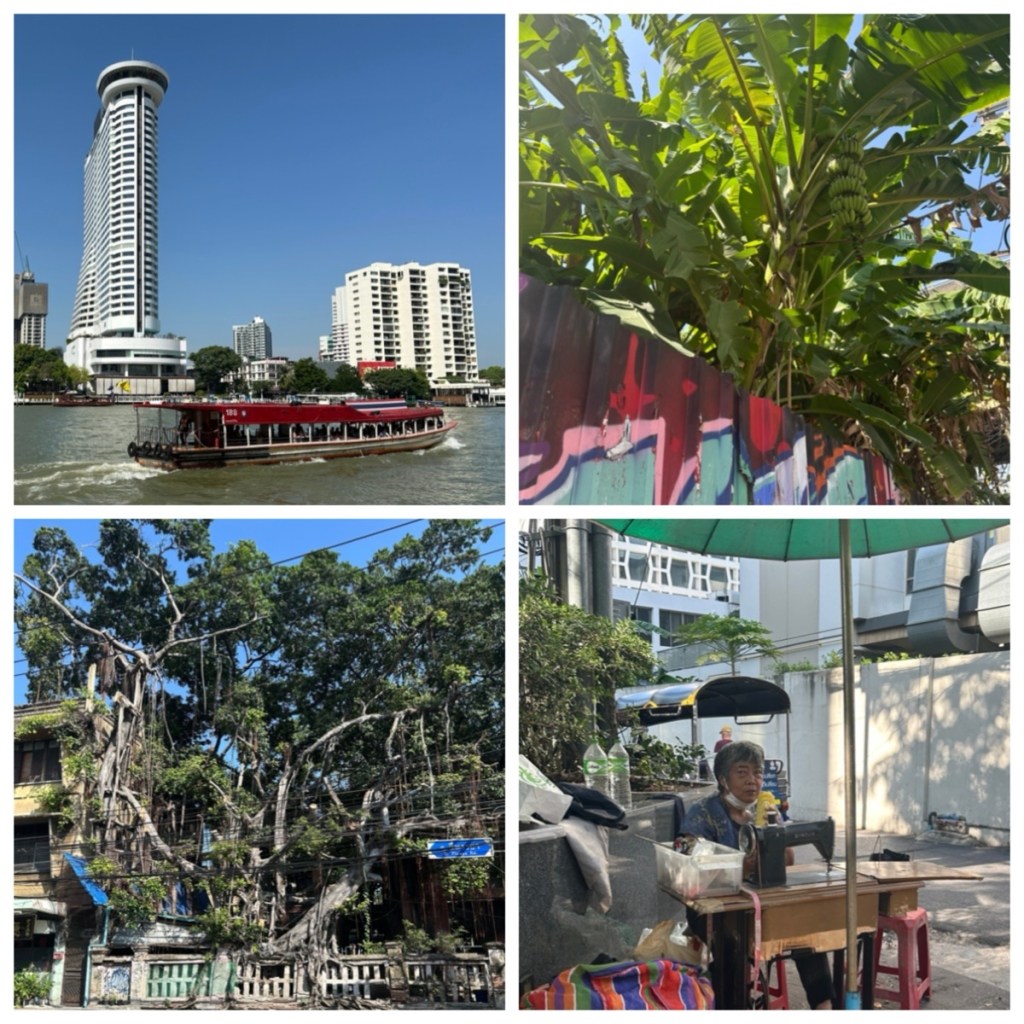
Day 1: We had arrived in the evening so we had not planned specific activities for our first day. We started with the amazing breakfast buffet at the hotel and then headed out for a walk to the river. We were advised that it was a ‘long’ way but we found it to be quite manageable – the morning temperature was high but bearable for a while. Here are some of the sights during our walk.
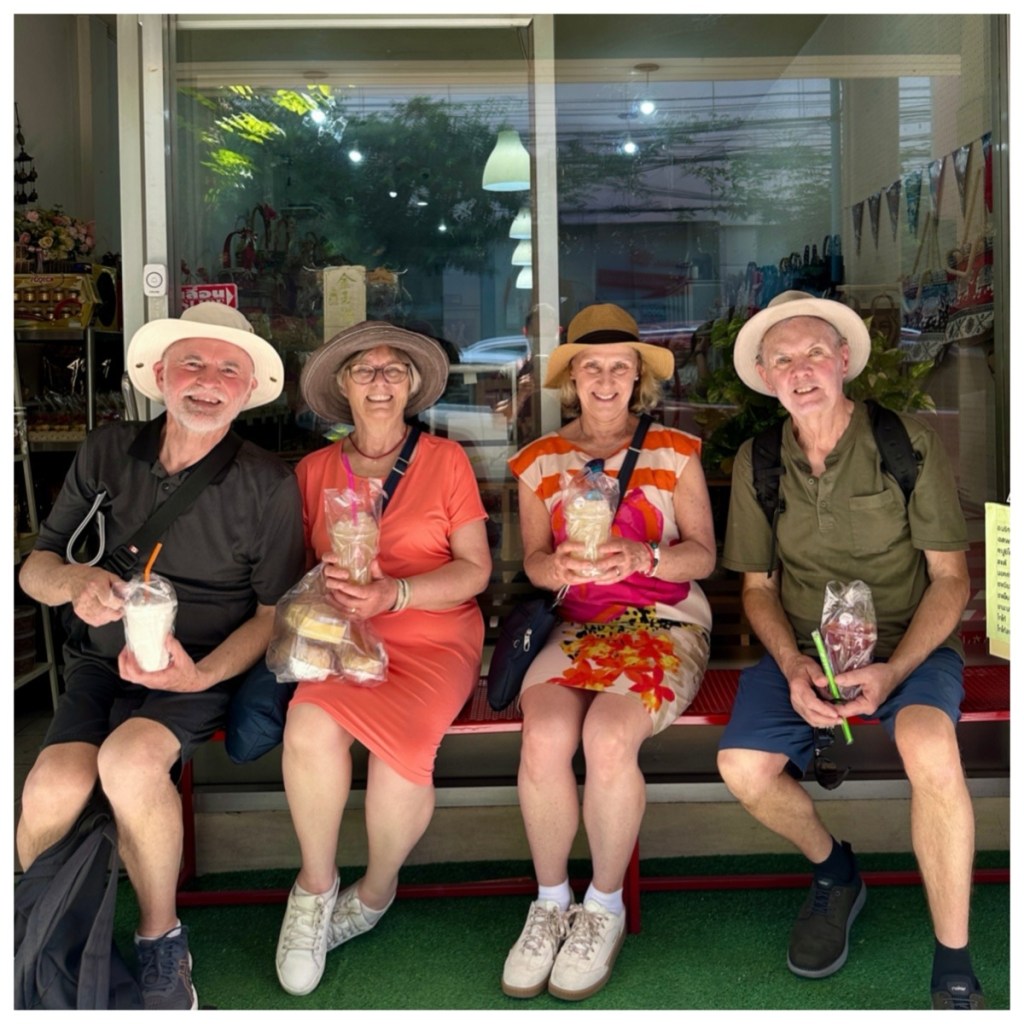
We stopped for a wonderfully cooling drink at a small shop with very friendly employees who managed to communicate with us despite our lack of the Thai language.
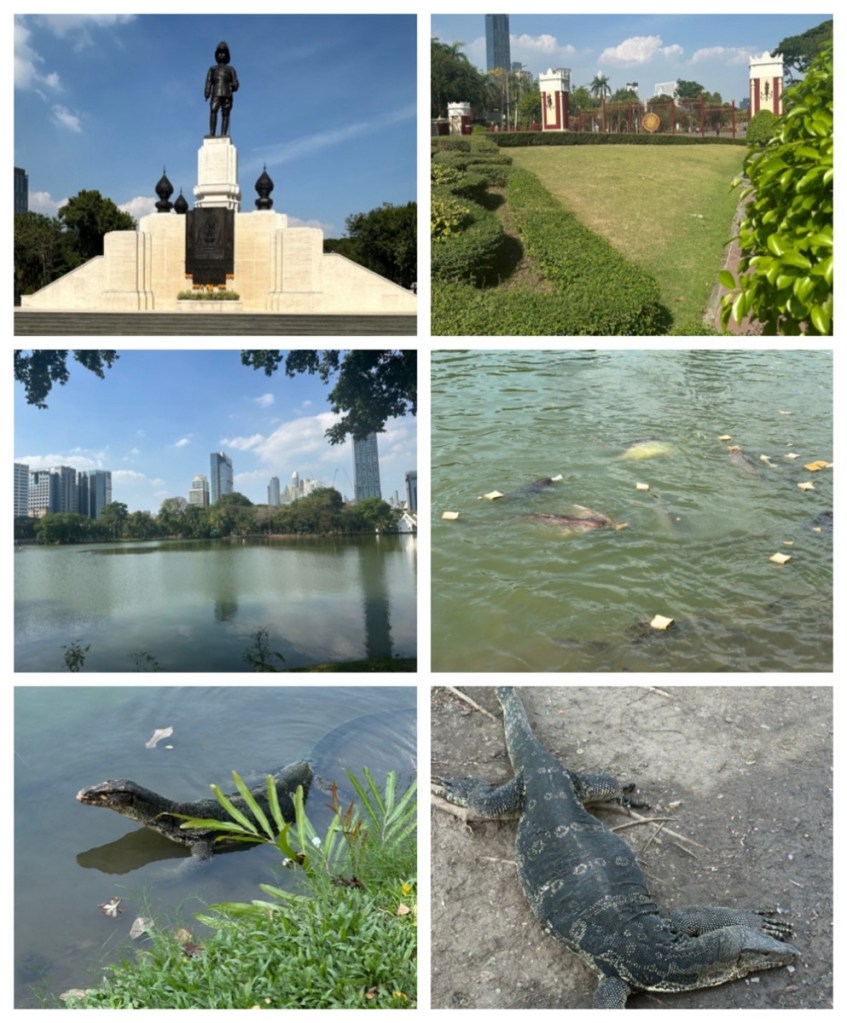
Returning to the hotel, it was time for a bit of rest and reprieve from the heat. Later in the afternoon, we walked the short distance to Lumphini Park. This was the first public park in Bangkok and a statue of King Rama VI commemorates the opening of the park in 1942. The 57.6 hectare area offers much green space, an abundance of trees and flowers, activities for locals and a large artificial lake. In the heat, I forgot to take pictures of the lovely flowers but I did capture the frenzy of large fish being fed and the ‘Bangkok Dragon’ Water Monitors. The water monitor species serve as both a predator and a scavenger and contribute to the environmental health by consuming decomposing animal carcasses.
Day 2: For our 3 days of touring in the Bangkok area, we chose a private tour package with Mr CHOB Thai Tour Guide. We were assigned Mr George as our guide. This was an excellent choice, from the time of booking and progressing through our 3 days!
Mr George and our driver, Kiti, picked us up at the hotel at 8 a.m. and we were off for our first day of adventure.
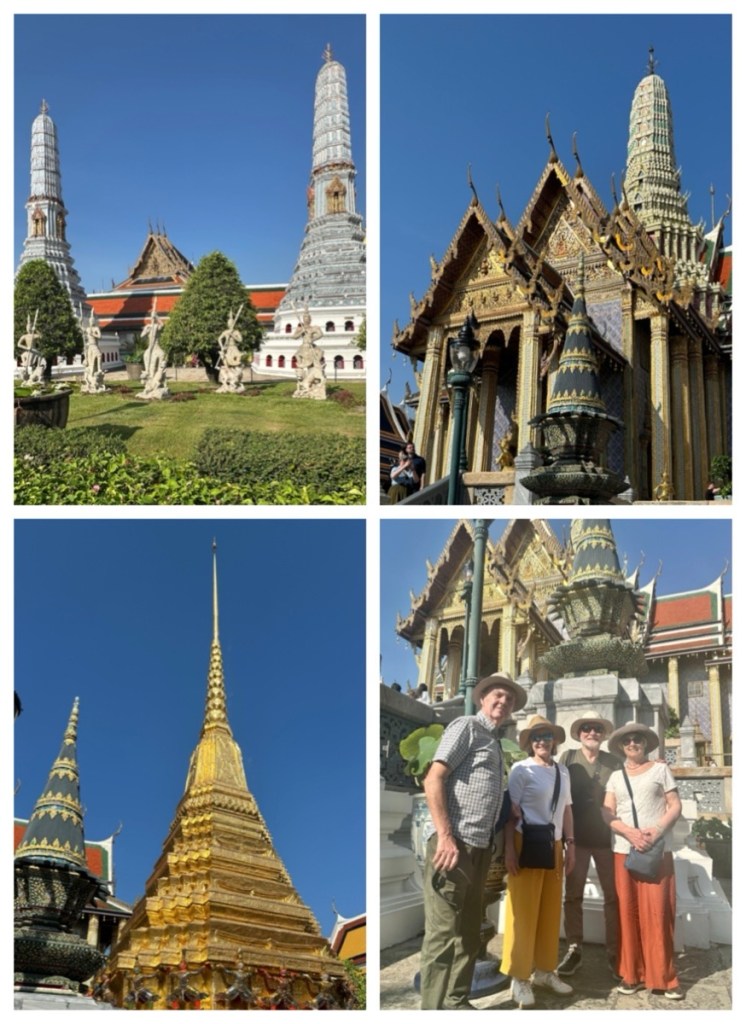
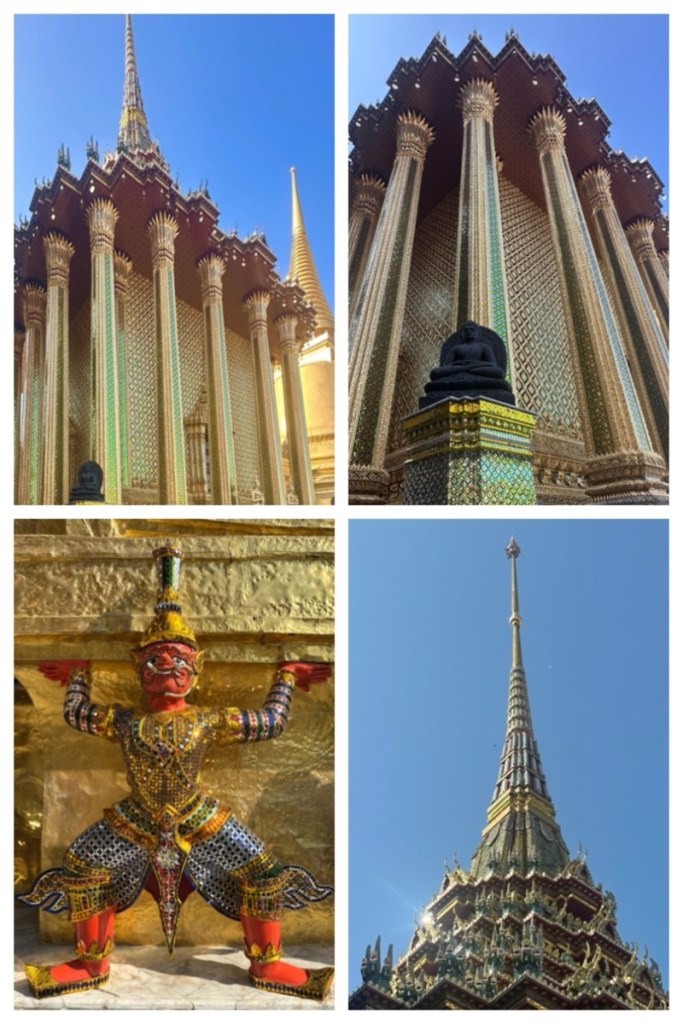
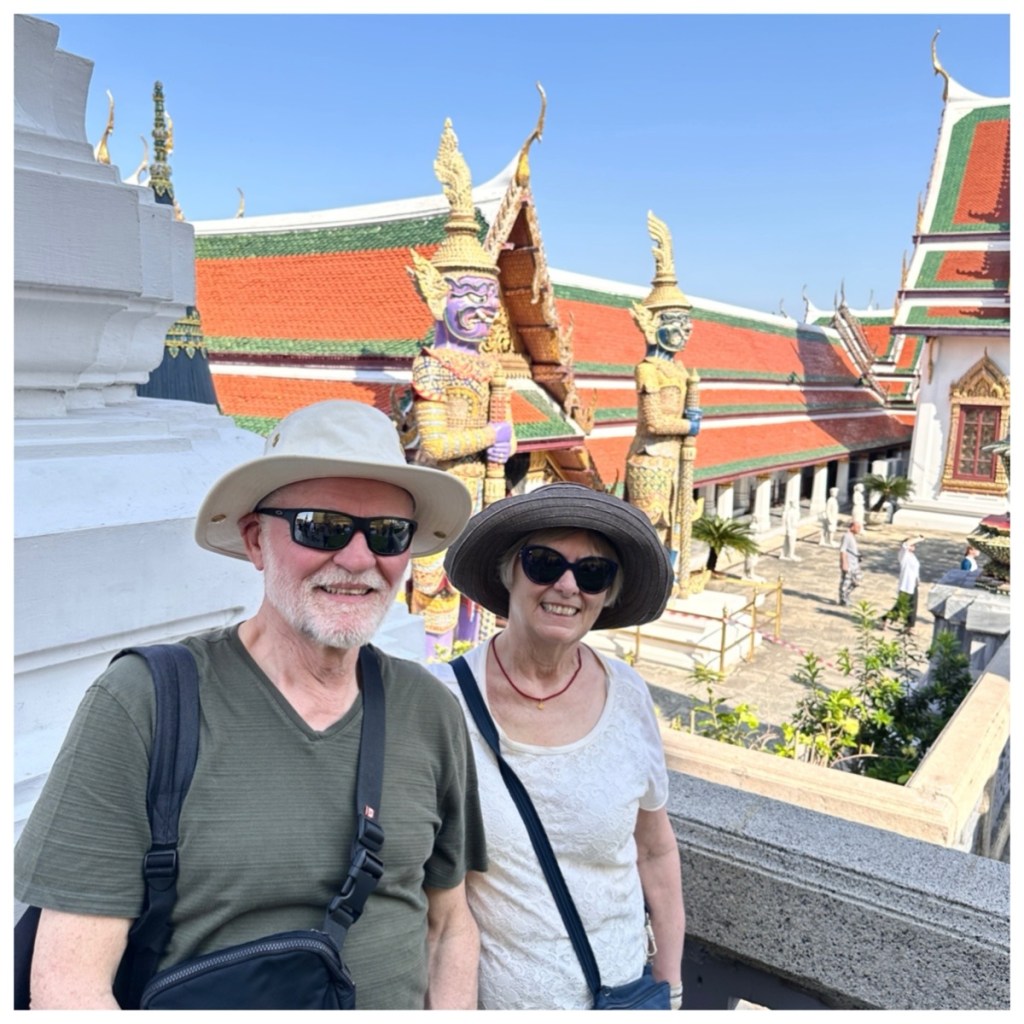
Stop #1: The Royal Grand Palace and Royal Temple Complex. We have visited a number of palaces and temples in our travels but this one has to top them all for the expanse and grandeur of the complex.
The palace complex currently covers an area of 218,000 square meters enclosed by 19,000 meters of crenellated walls and sitting on the left bank of the Chao Phraya River. It was built in 1782 by King Rama I when he moved the capital city of Thailand to Bangkok. Successive monarchs from Rama II – VIII were in residence at the palace and added many new structures. In 1925, King Rama IX moved to an alternate residence and in 1932, when the absolute monarch was abolished, all government offices left the complex. In today’s constitutional monarchy, the complex is still used for ceremonial occasions and is Thailand’s most visited tourist site.
Mr George led us around the complex, providing the history and context for many of the buildings. We would definitely recommend a private guide for a visit to this complex. Without our Mr George, we would have been overwhelmed and would not have come away with the understanding and enjoyment of this magnificent area.
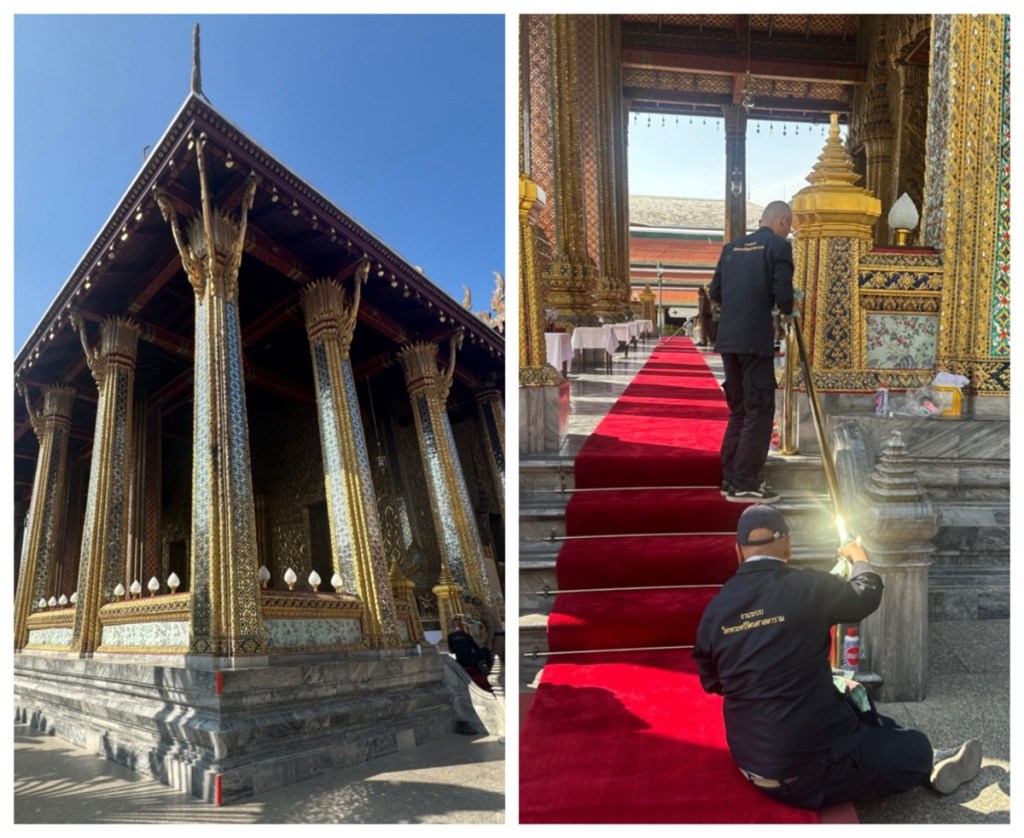
I provide you with many photos and hope that they can convey even a bit of the wonder of the architecture – just imagine the manpower that went into the design, construction and decoration of these buildings.
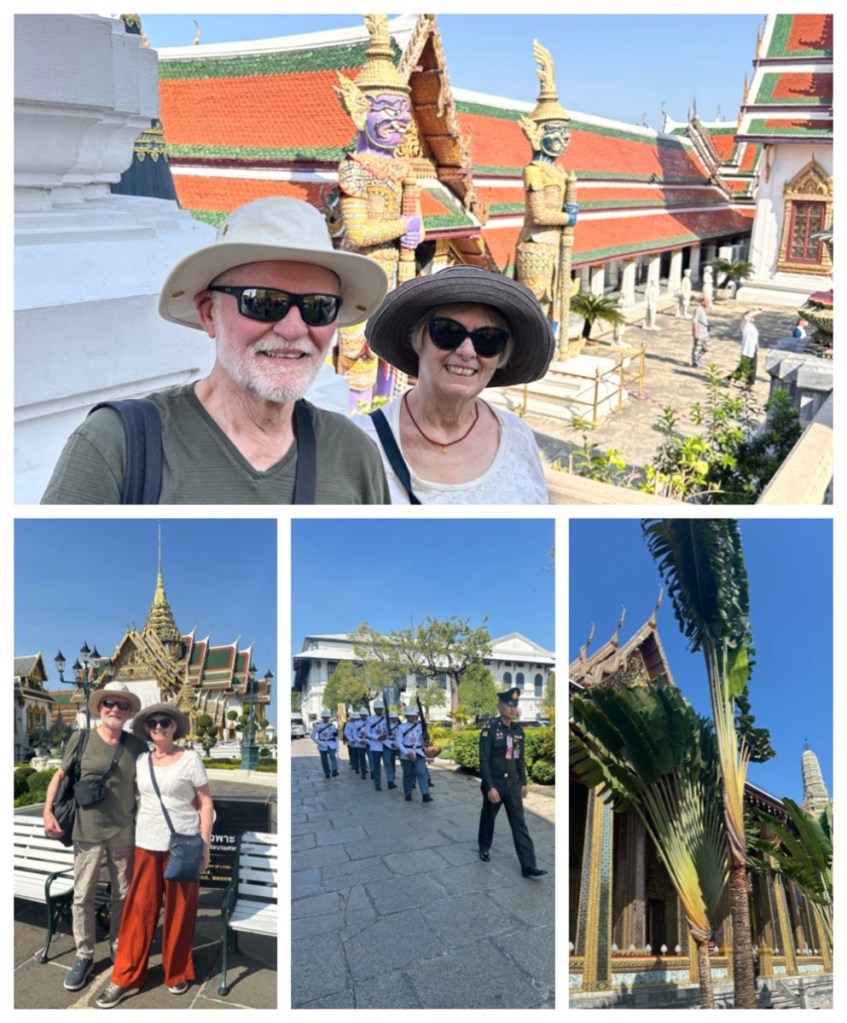
We happened to be at the complex on March 3, Makha Bucha Day. This is a national Buddhist holiday in Thailand that honours an event in early Buddhism of more than 2500 years ago. Also, the Queen Mother, Queen Sirikit, passed away at the aged of 93 on October 24, 2025. Her body lies in state at the Grand Palace for one year before cremation. The King was to visit the Palace on the afternoon of March 3 to preside over a Makha Bucha Day ceremony and to take part in the seasonal robe-changing ceremony for the Buddha image. Consequently, the area was quite busy (or maybe it always is) but Mr George was excellent at manoeuvring us through to quieter spots!
Everything was being polished for the Royal Visit!
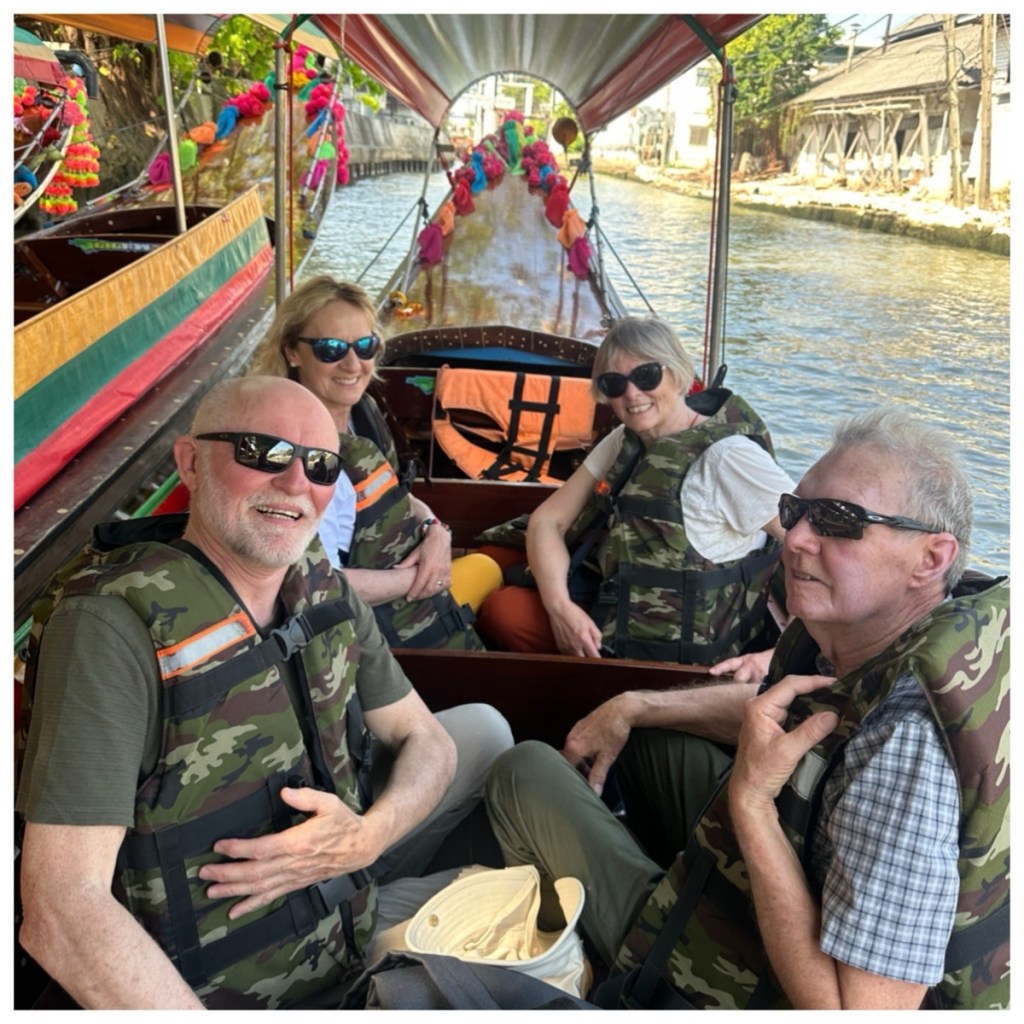
Stop #2: After our time at the Palace and Temple Complex, Mr George led us a few short steps to the banks of the Chao Phaya River. Here, we boarded a private long tail boat for a trip along the bustling river and quiet Klongs (canals). We passed picturesque scenes of Thai River Life, including many temple complexes. Thailand is a primarily Buddhist country with 92-95% of the population practicing Theravada Buddhism. Consequently, Buddhist Temples abound – reportedly over 44,000 temples in the country with at least 400 in Bangkok.
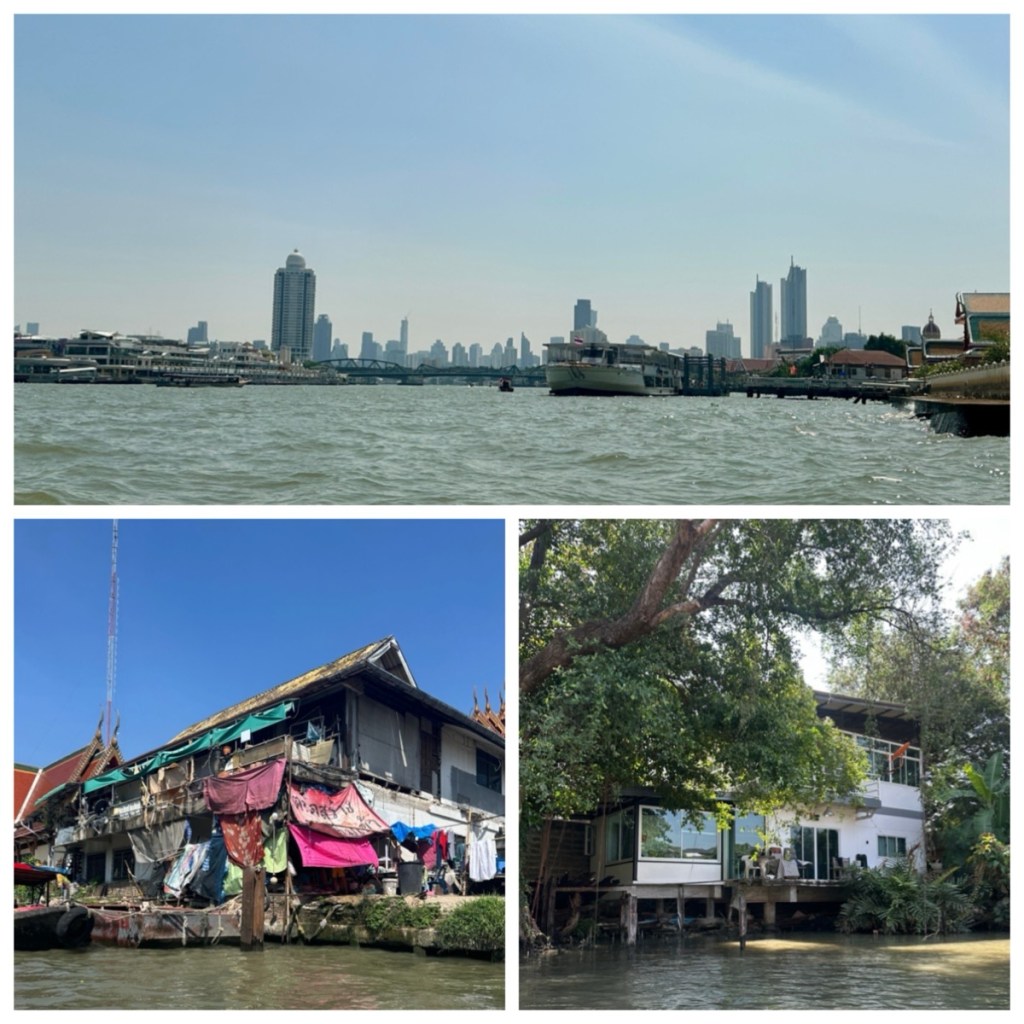
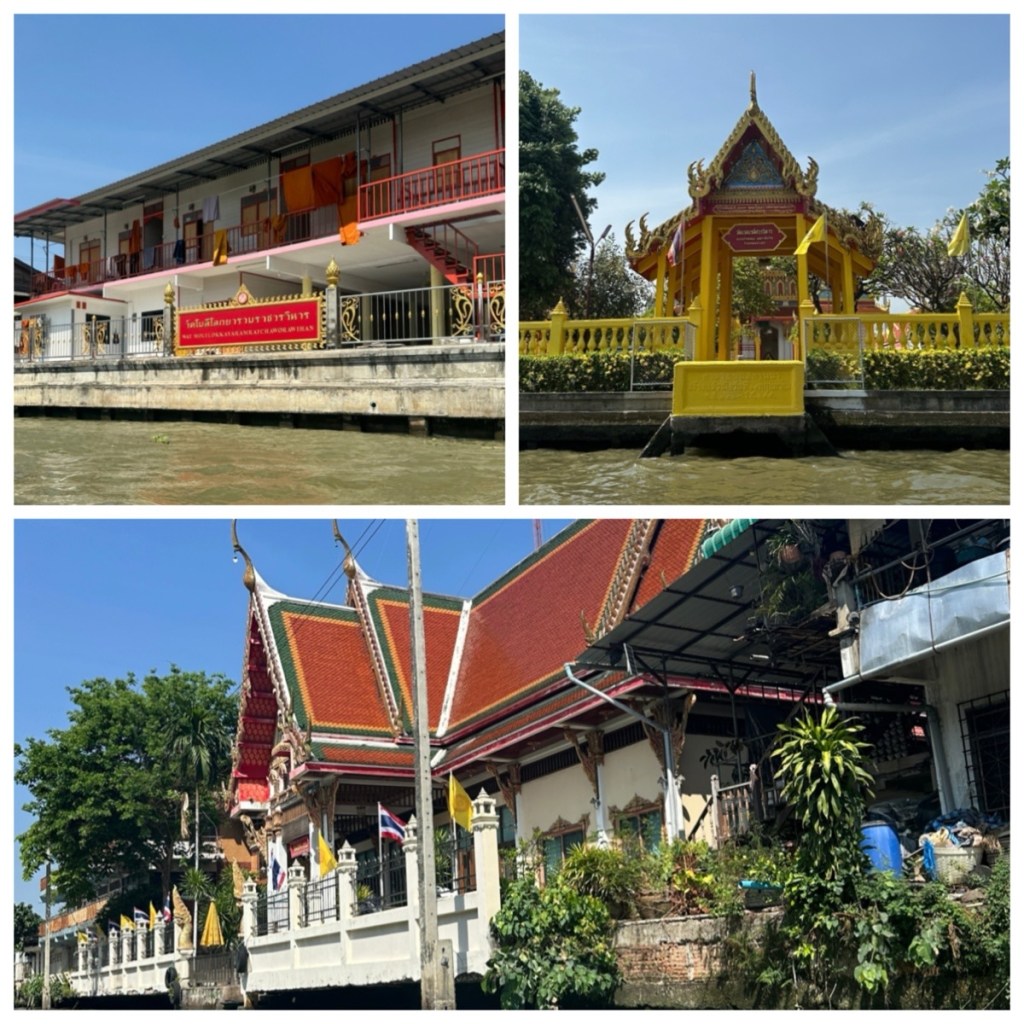
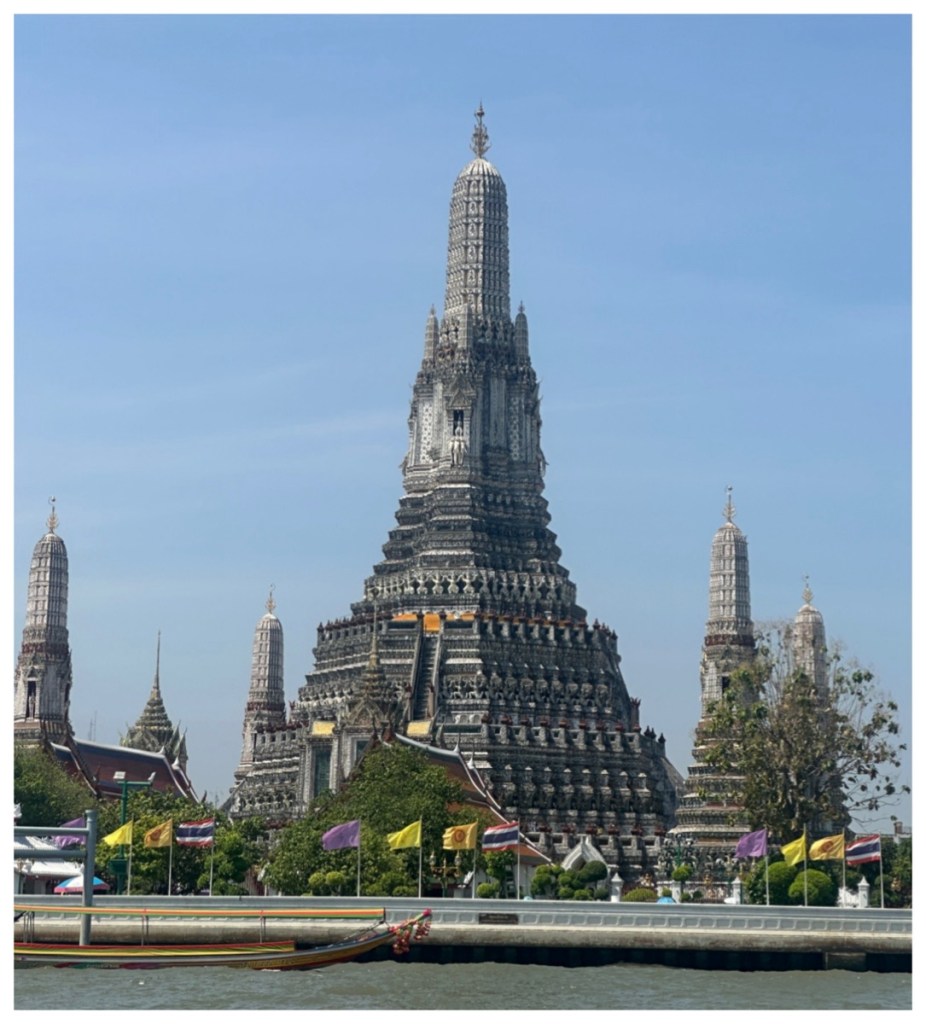
We passed by Wat Arun or the Temple of Dawn. This temple is renowned for its towering 82 metre central spire (prang) decorated with colourful porcelain, glazed ornaments, seashells and ceramics. We did not stop to visit, just admired it as we cruised by.
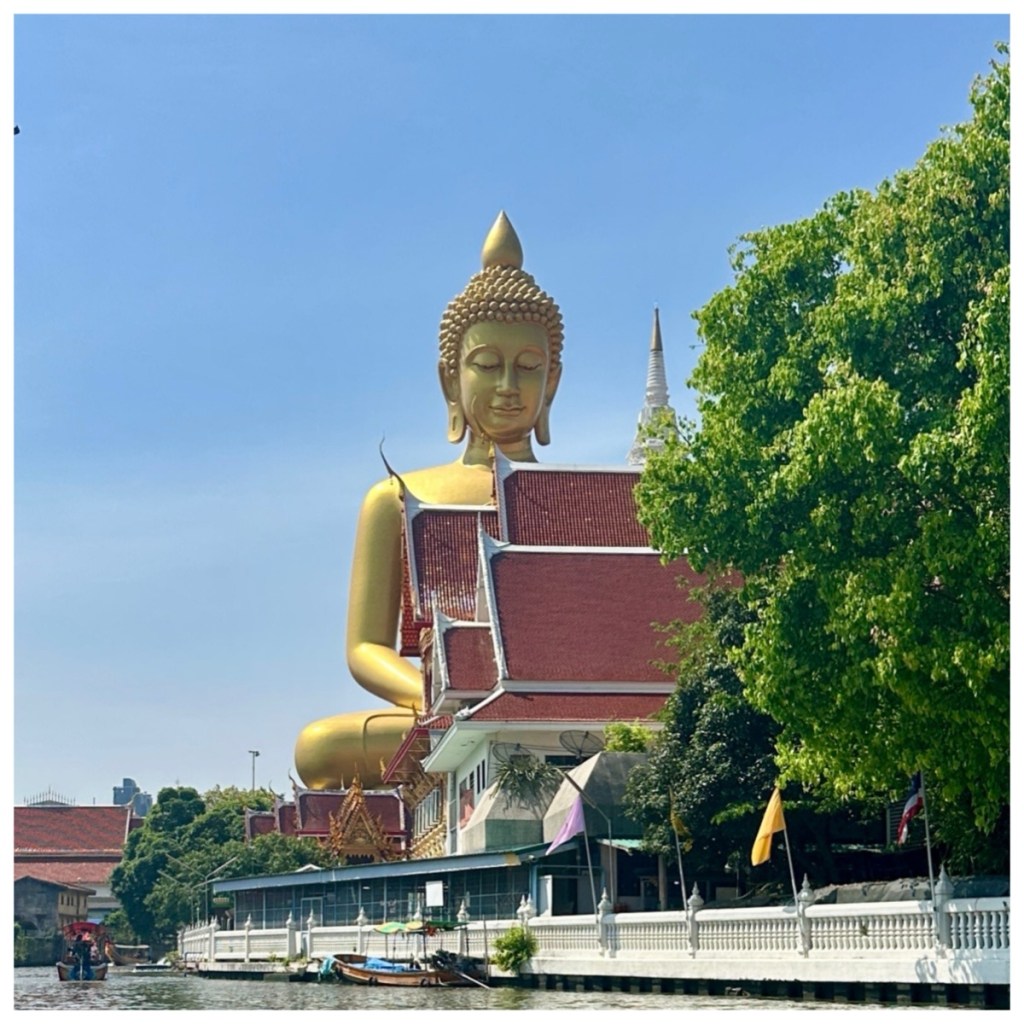
We also passed by Wat Paknam where in 2021, construction was completed of a large bronze Buddha image. The 69 metre tall and 40 metre wide image is the largest Buddha in Bangkok.
The boat ride provided a lovely respite after the heat and bustle of walking around the palace complex.
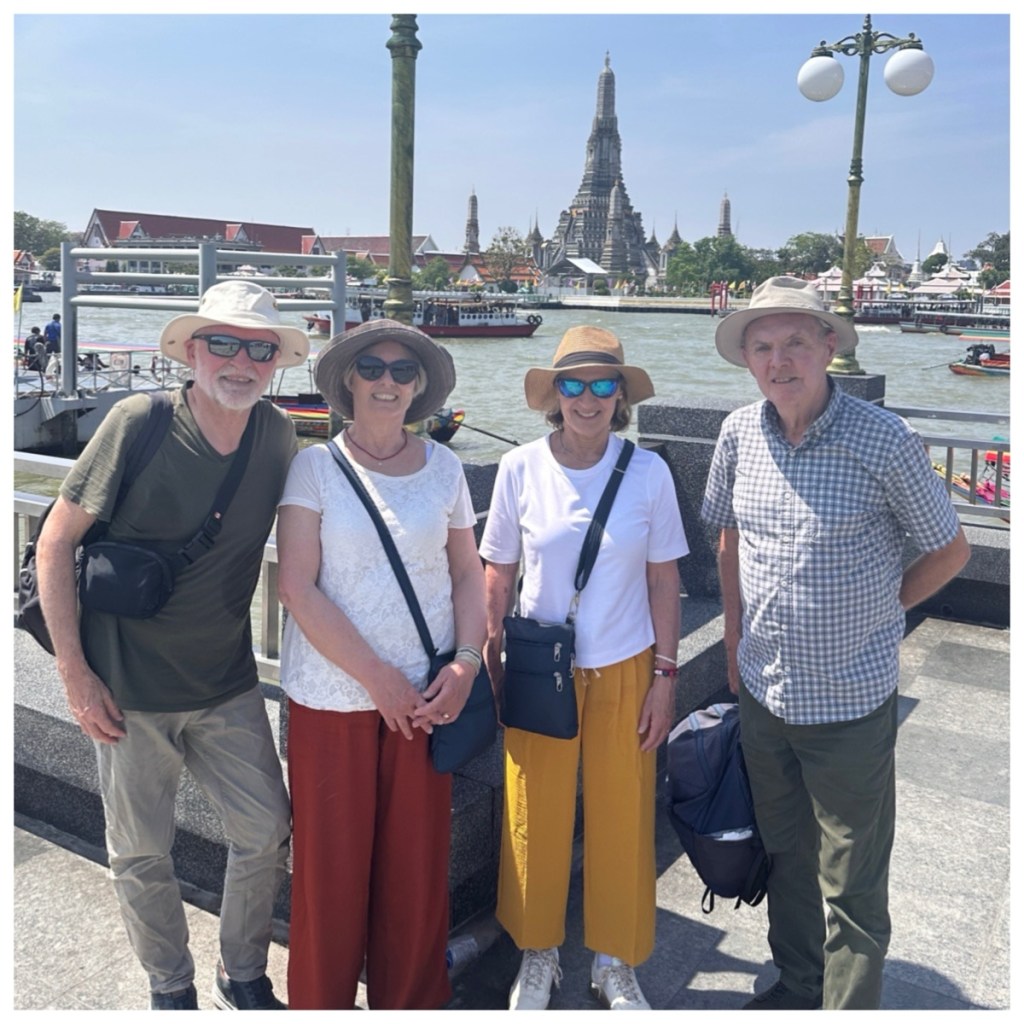
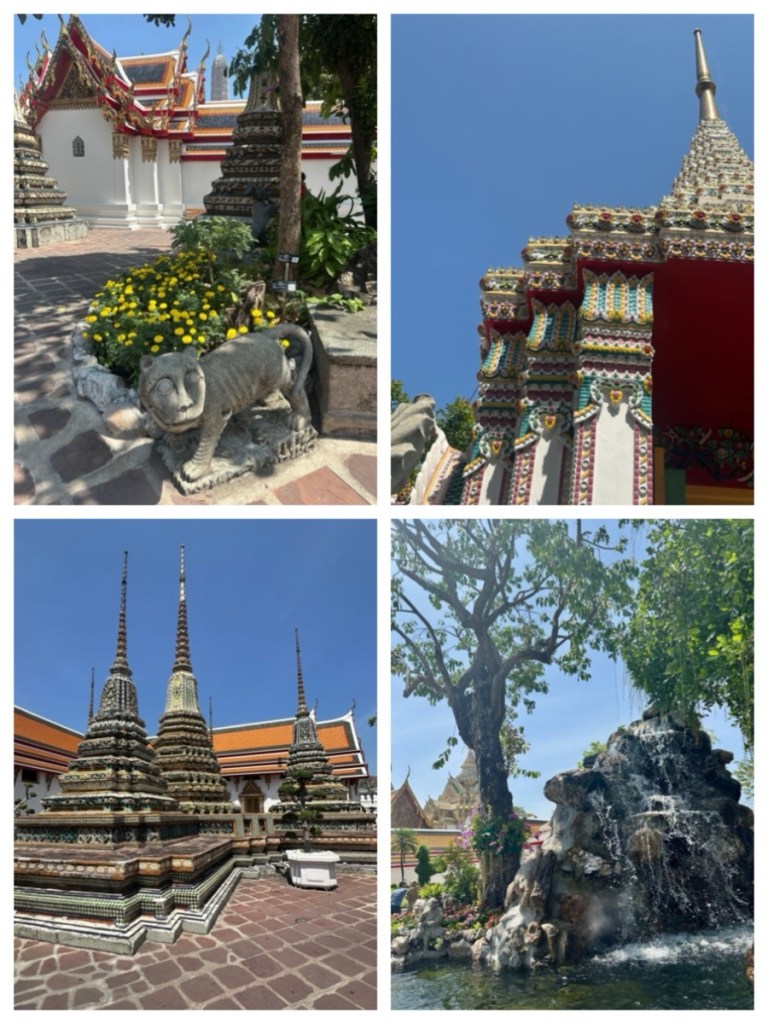
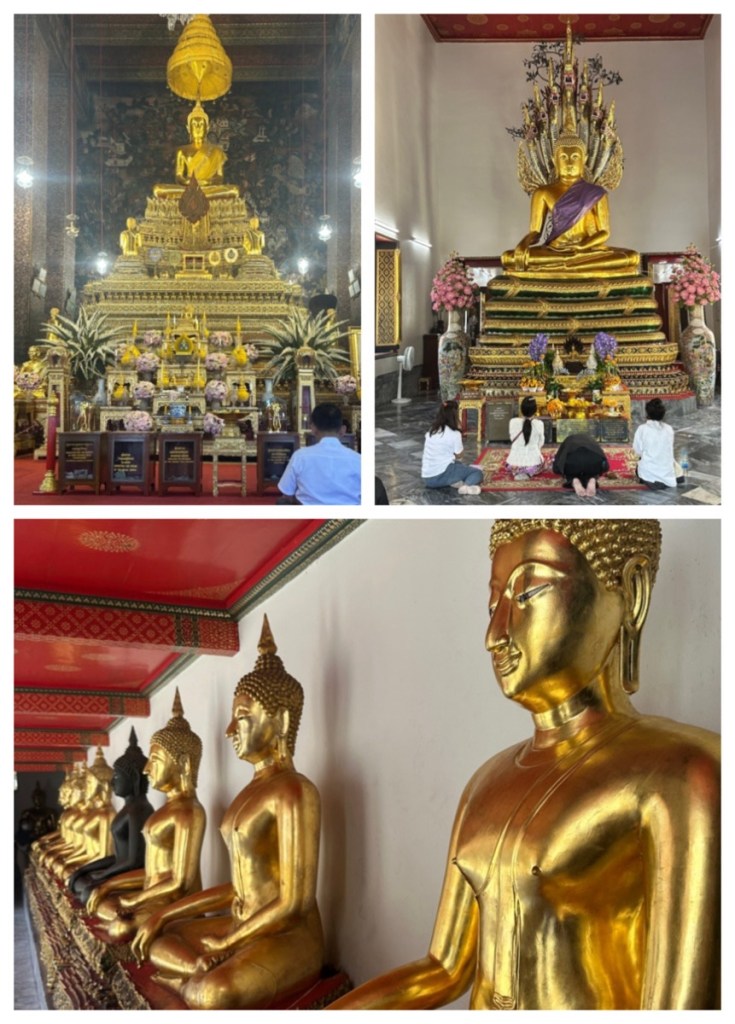
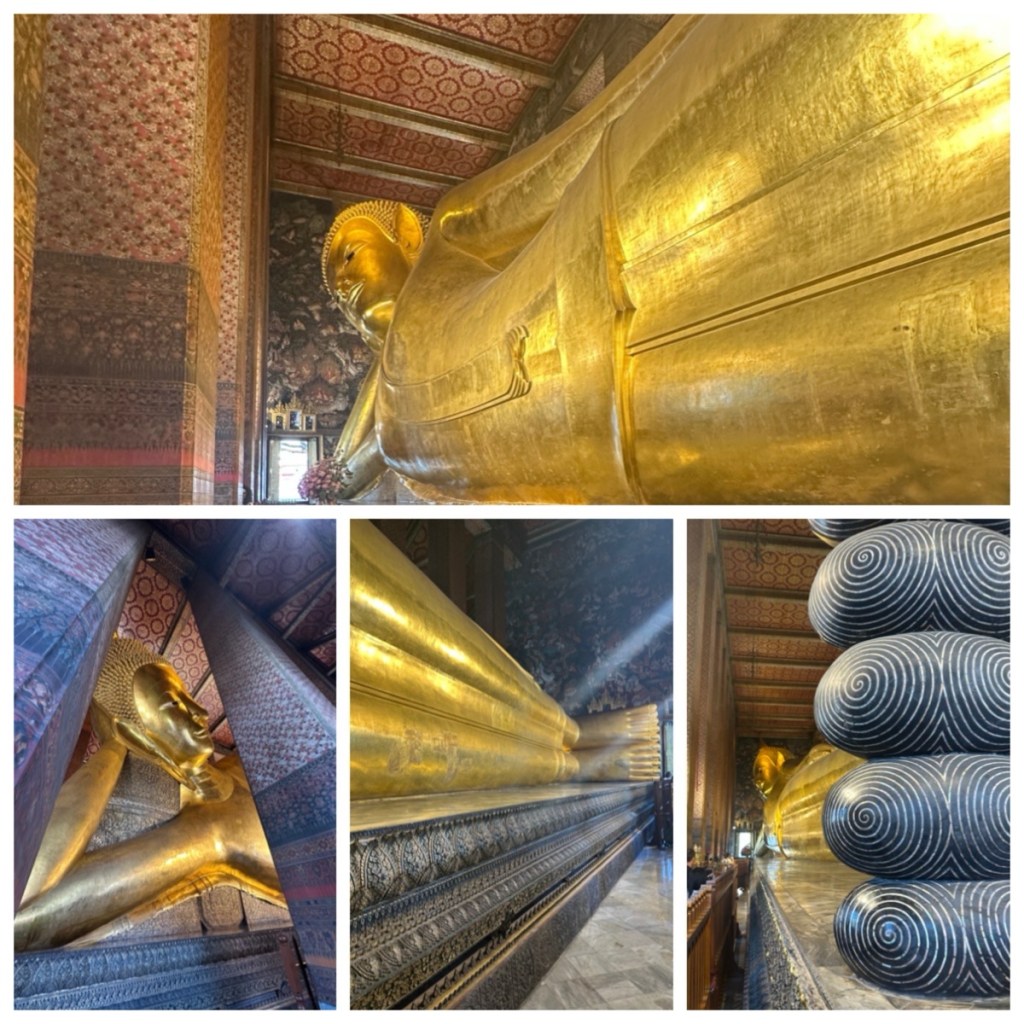
Stop #3: We next stopped in at Wat Pho, one of the largest and oldest temples in Bangkok. This temple houses the largest collection of Buddha figurines in Thailand, more than 1000. The primary item in the collection is the 46-metre long gold-plated Reclining Buddha. The pose of the Reclining Buddha represents the Buddha entering Nirvana, free from all worldly desires. The soles of the statue’s feet are inlaid with exquisite mother-of-pearl, featuring a wheel (dharma) at the center of each foot, symbolizing cause and effect as well as a powerful chakra point where universal energy flows into the body. The temple grounds contain four large and 91 small chedis, two belfries, a central shrine and a number of other halls and pavillions. Wat Pho is widely regarded as the birthplace of traditional Thai medicine and massage, which continue to be taught and practiced onsite.
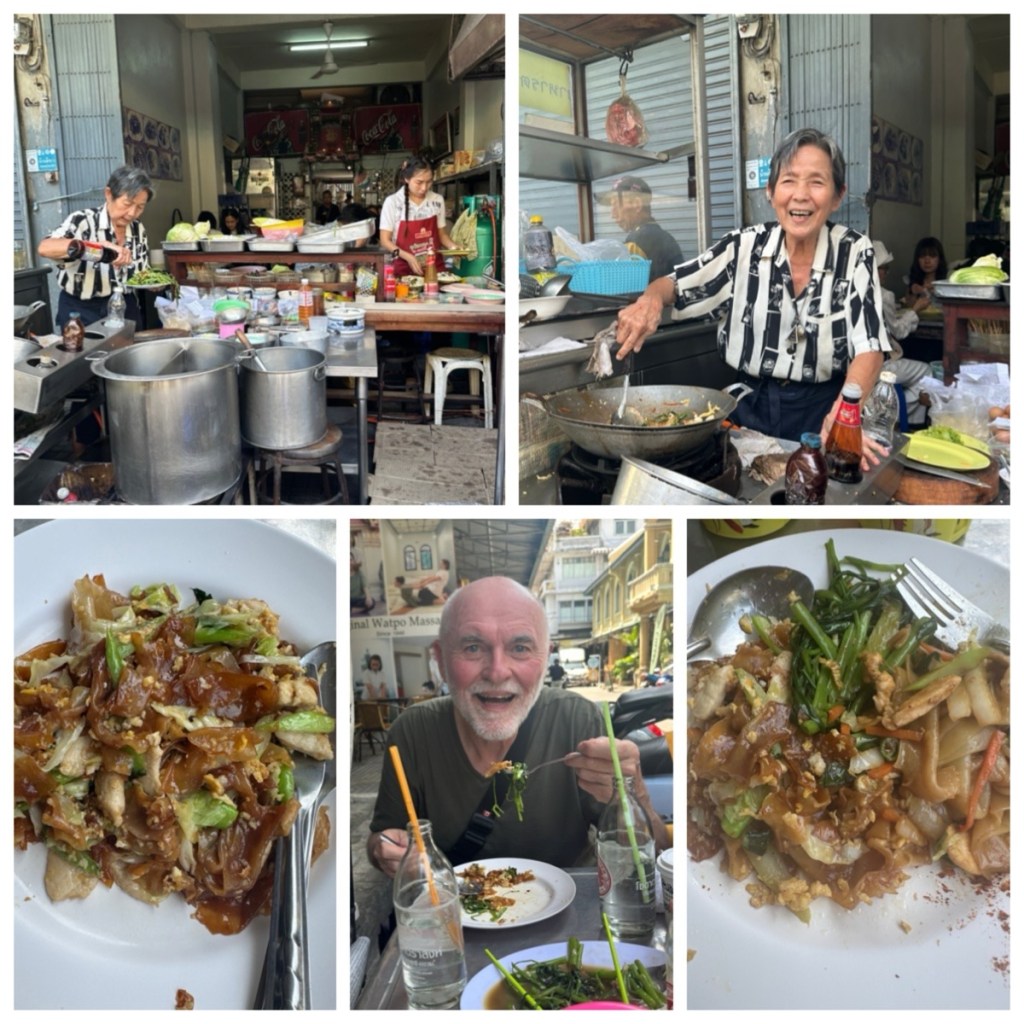
Stop #4: It was time for lunch and Mr George brought us to a local Thai restaurant in the Phra Nakhon District. We trusted George to order us a variety of Thai specialties, which were all delicious. It was also fun to watch it being cooked right next to our table.
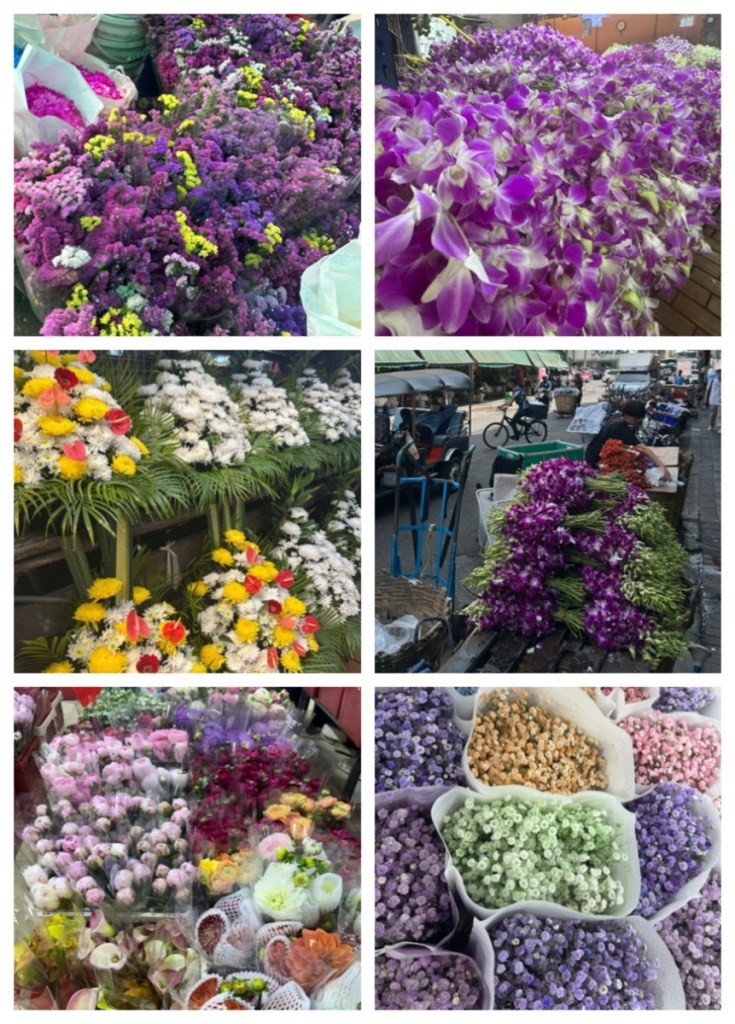
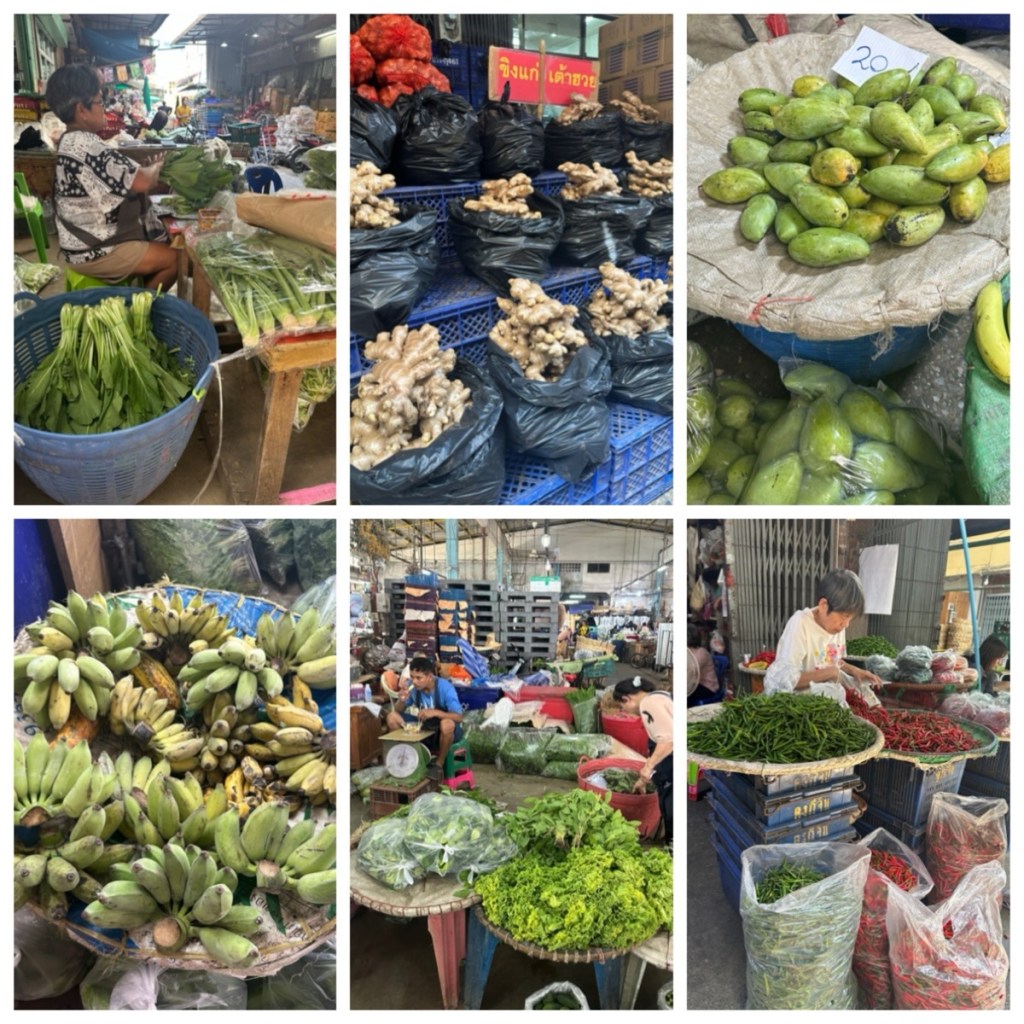
Stop #5: After this unique lunch, off we went to the Pak Klong Talad – the wholesale flower and vegetable market. Many of the neighbourhood markets buy their flowers and vegetables here in the pre-dawn hours for sale during the day. Even in the afternoon, the proliferation of colours and aromas was delightful!
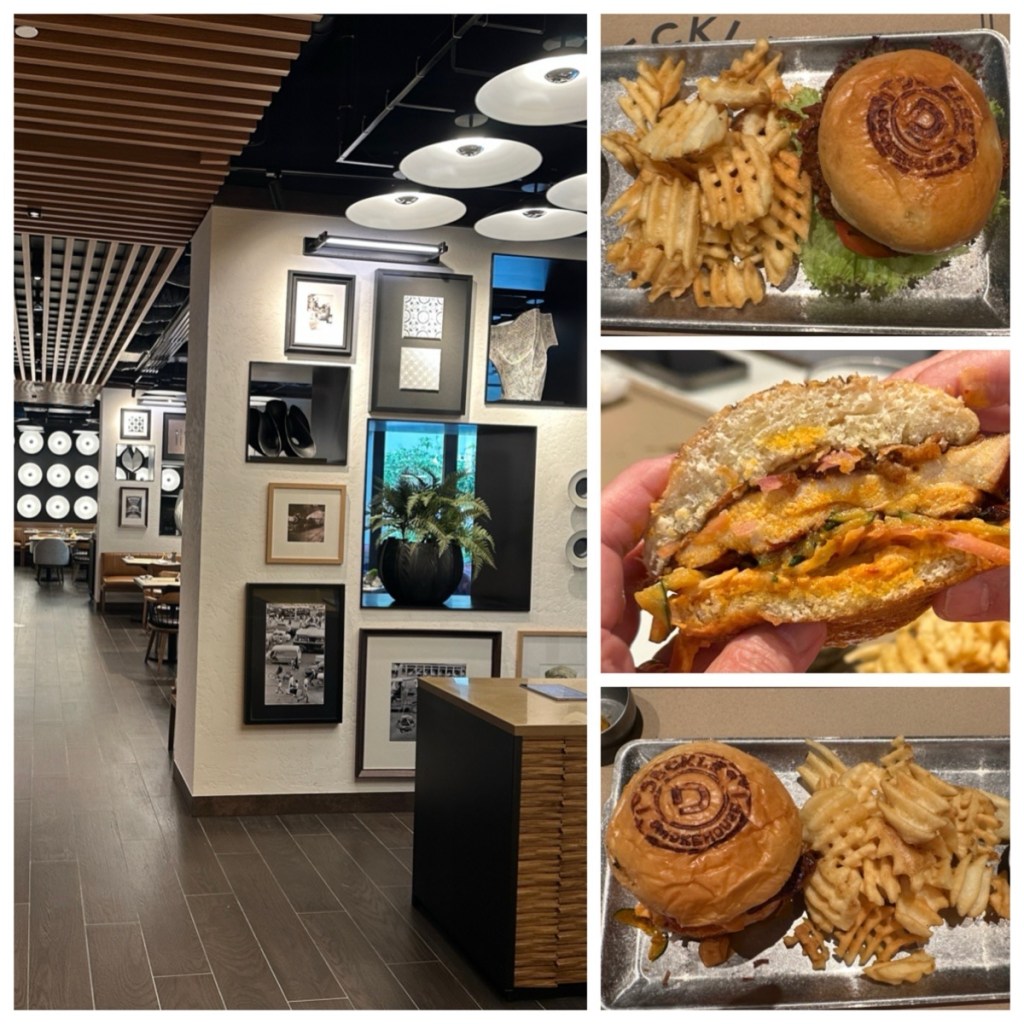
Stop #6: Our driver Kiti masterfully manipulated his way through the busy afternoon traffic to return us to our hotel, where we had a very nice dinner at the Deckles Smokehouse Restaurant in the hotel.
Just two days into our stay in Bangkok and already it has been such an experience. Stay tuned for Days 3 & 4!!
Cheers,
Bev & Harvey
 A Long and Winding Journey