Back on Air Asia with a quick 1.5 hour flight from Bangkok to Luang Prabang, Laos. Laos is a country of ~7.8 million people. The country is bordered by 5 others – China to the south, Vietnam to the east, Cambodia to the south, Thailand to the west and Myanmar to the northwest. Approximately 47,000 people live in Luang Prabang, a city in a mountainous region of northern Laos. Luang Prabang was inscribed as a UNESCO World Heritage Centre in 1995 with the following citation:
“Luang Prabang is an outstanding example of the fusion of traditional architecture and Lao urban structures with those built by the European colonial authorities in the 19th and 20th centuries. Its unique, remarkably well-preserved townscape illustrates a key stage in the blending of these two distinct cultural traditions.”
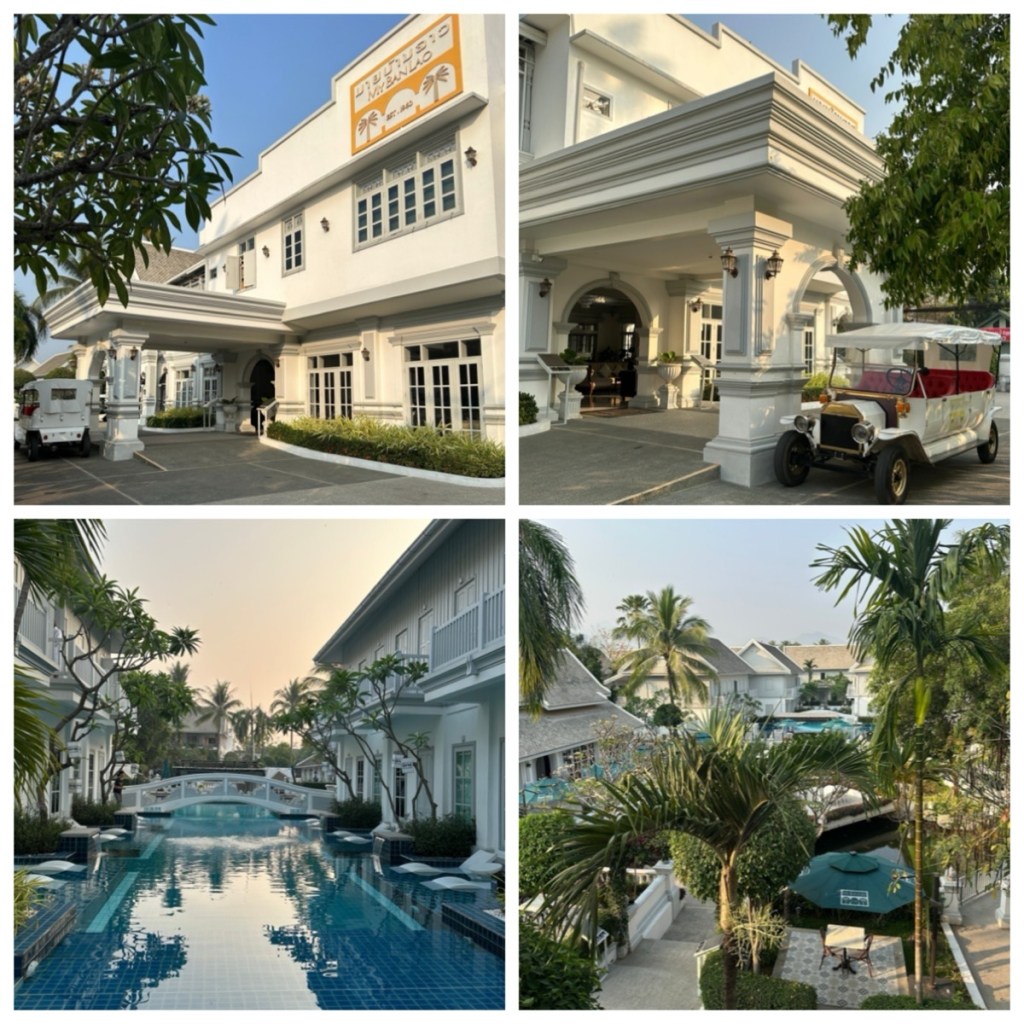
We were met by a driver from the hotel who drove us through the somewhat chaotic busy evening streets to our hotel. We could not be happier with our choice of the MyBanLao Hotel. The hotel opened in March 2023 and lives up to its claim of combining colonial architecture with traditional Laotian design. The history of the property is quite interesting. It was once home to Ouane Rattikone, the General in command of the Royal Lao Armed Forces, the official military of the Royal Lao Government and the Kingdom of Laos. During the 1960s, the building functioned as the offices for USAID, America’s foreign aid mission during the secret war and a cover for CIA headquarters.
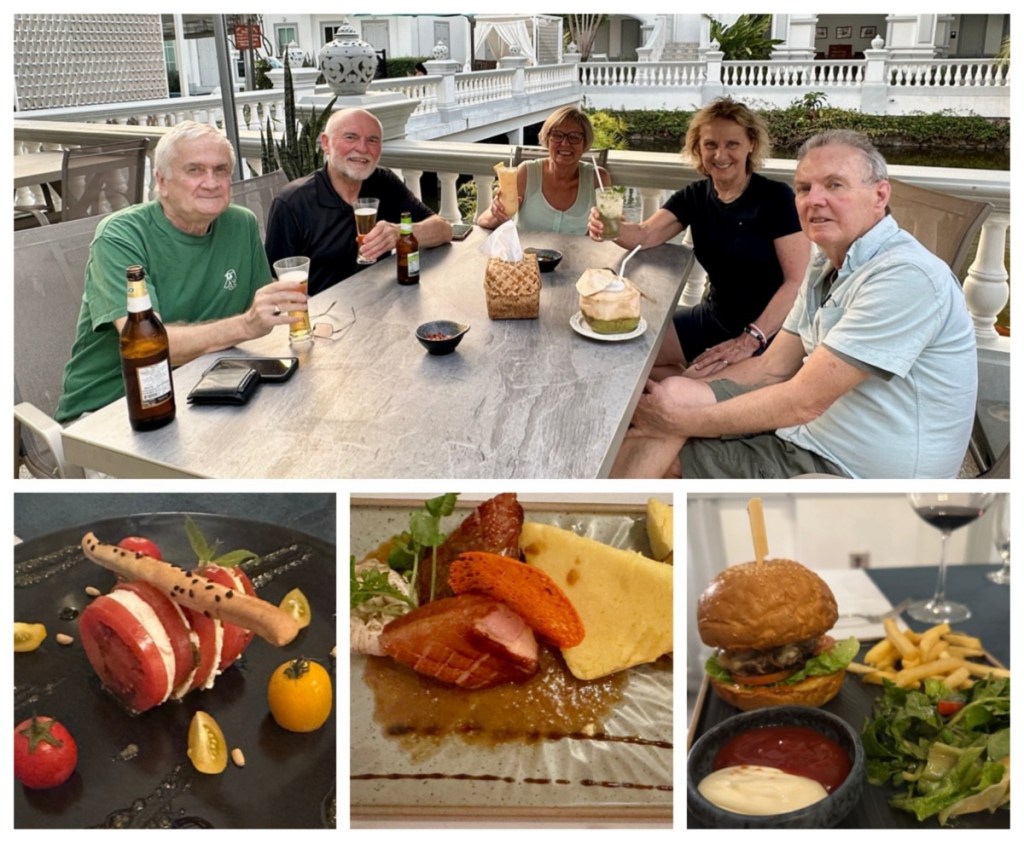
My cousin Ron and three of his friends met us in Luang Prabang. If you are a follower of this blog, you may remember Ron from our adventures in Malaysia and Cambodia last year. We enjoyed drinks next to the pool area and a delicious dinner in the hotel restaurant.
Day 1: After a great hotel breakfast and a relaxing morning, we were off to our first site. We had booked a tour through Get Your Guide to take us up the Mekong River to the Pak Ou Caves. Our guide, Song, picked us up at 12 and we made our way to the boat that took us on our river voyage.
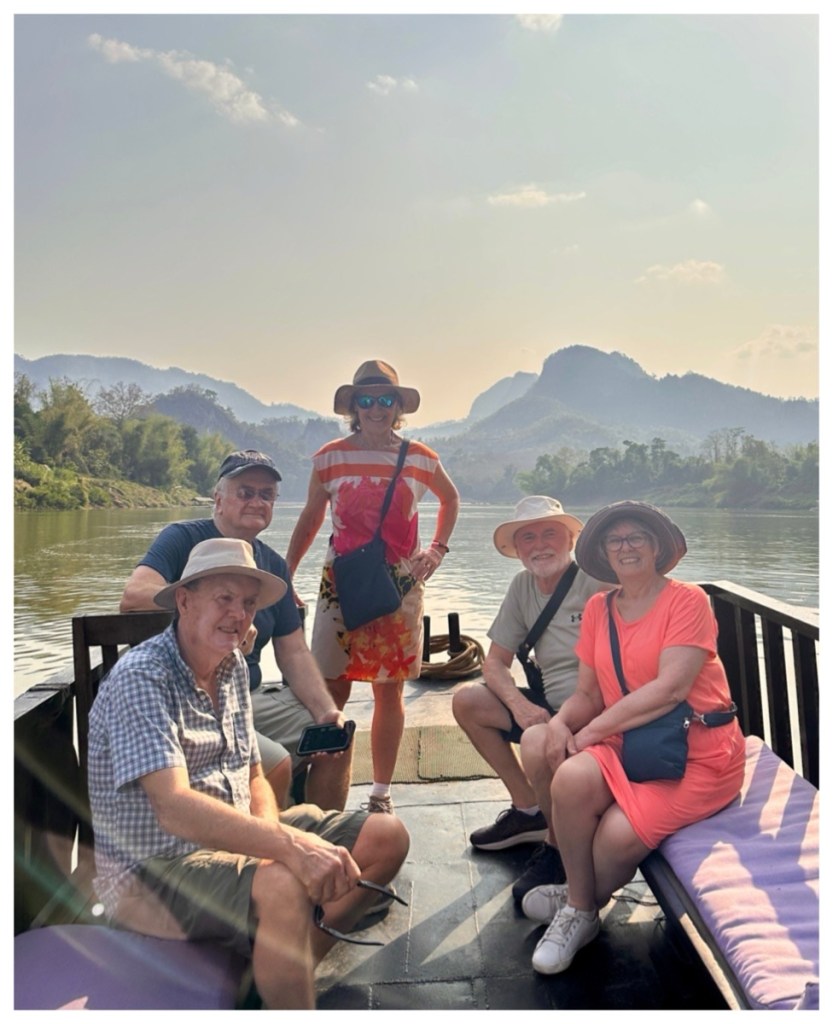
As we cruised up the river, we were able to view the lush riverbanks and see some of the local activities.

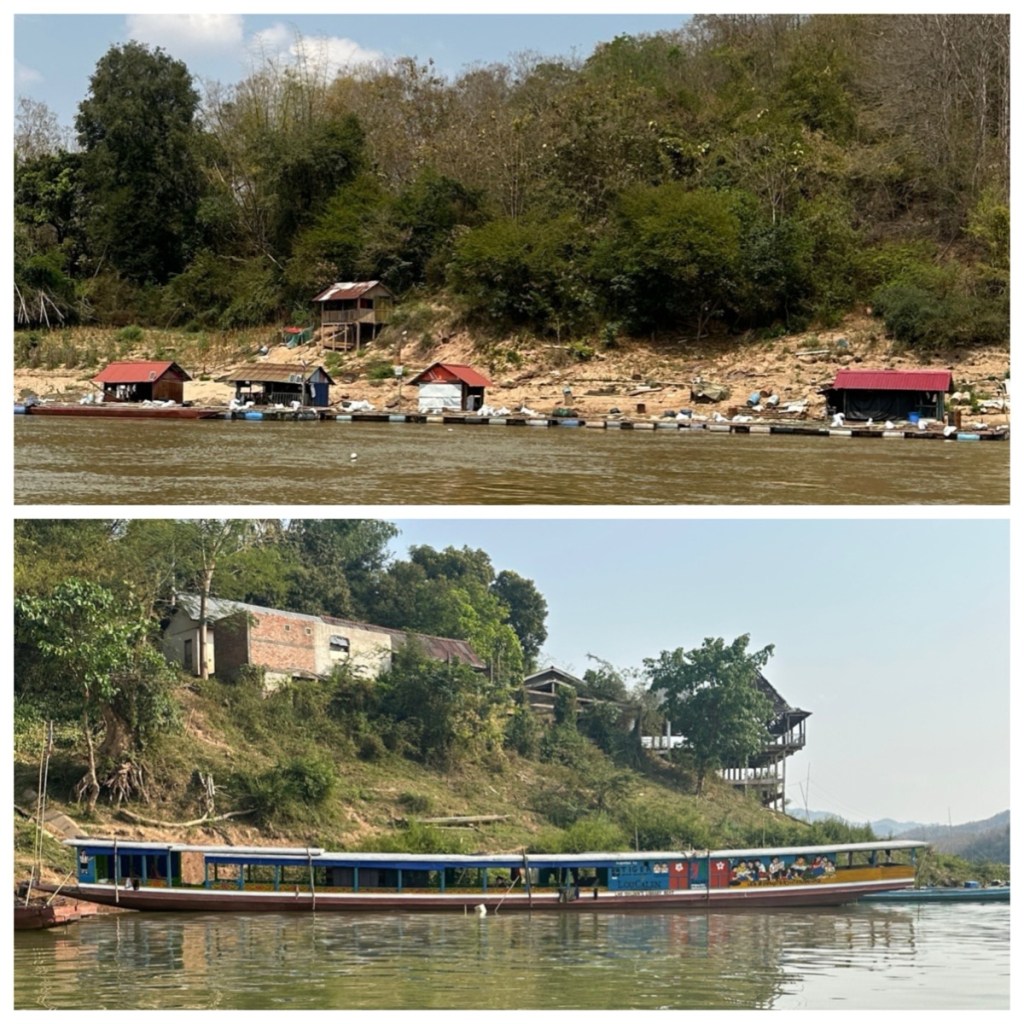
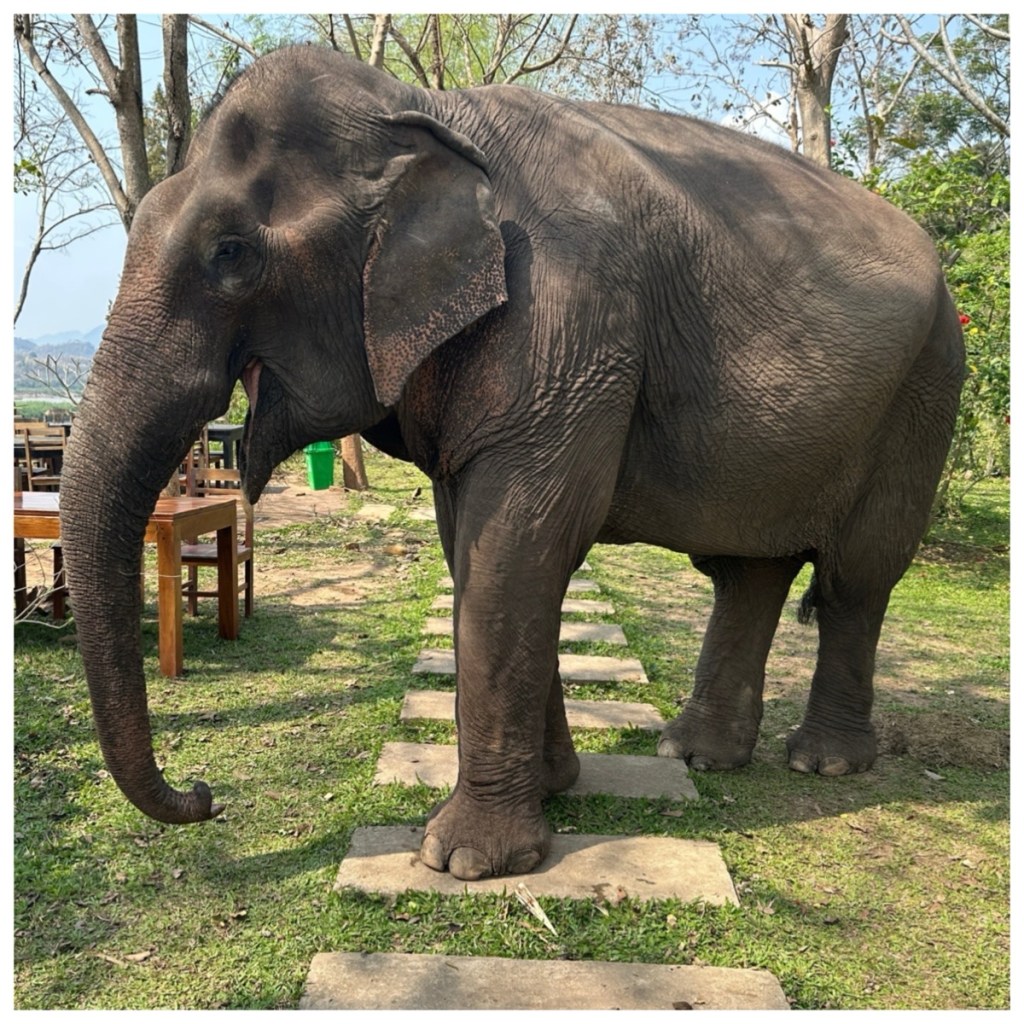
Stop #1: After enjoying the river view, we stopped at the Manifa Elephant Camp. The goal of this camp is to foster a respectful and sustainable relationship between humans and elephants, grounded in traditional Lao practices and local knowledge.
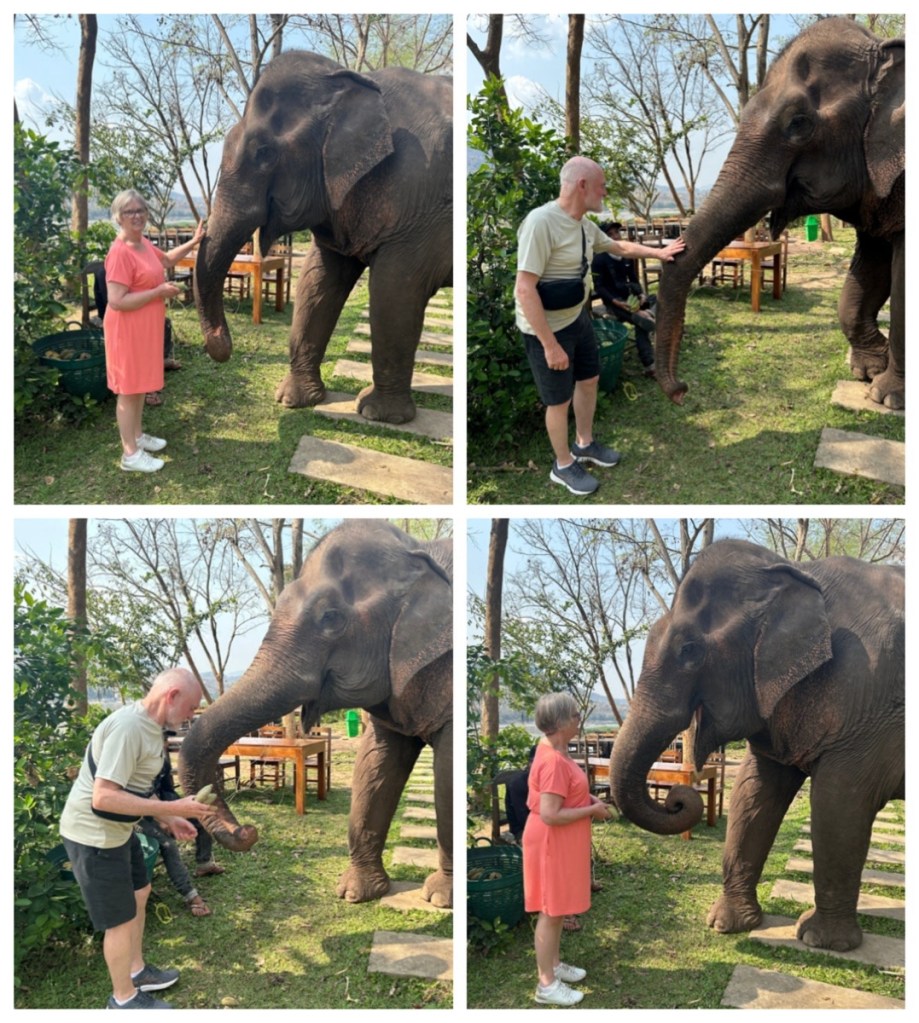
We were able to observe two elephants with their mahouts (elephant care givers) and to feed one a banana snack.
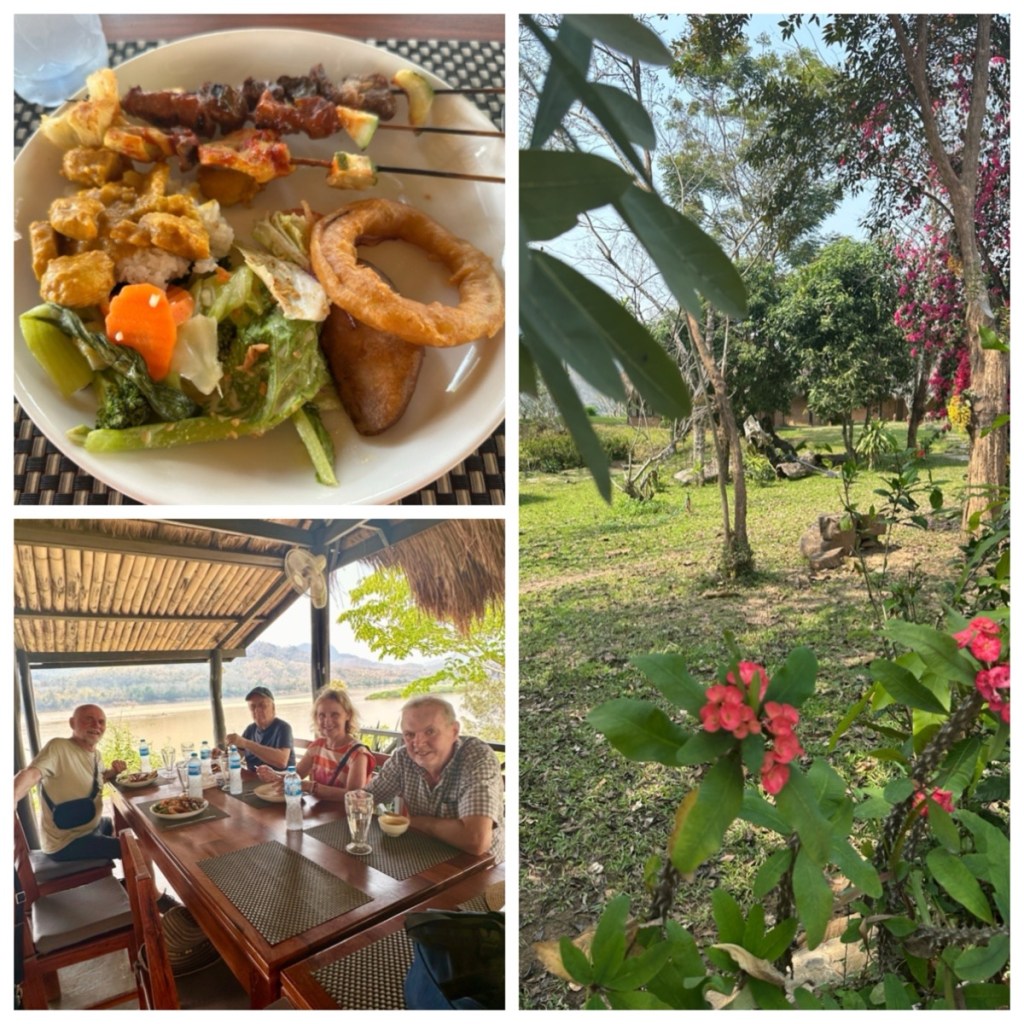
We also enjoyed a delicious buffet lunch at the camp. Ron actually awarded it “One Ron Laos Michelin Star”! 😉😊
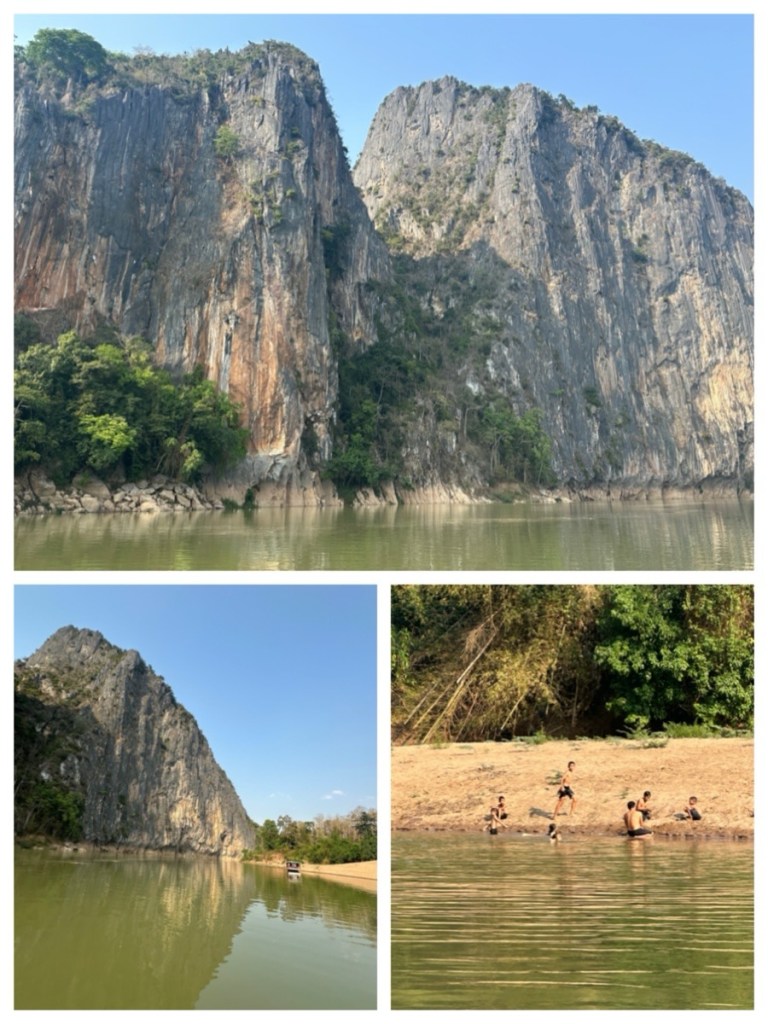
Stop #2: Further upstream, we stopped at the Pak Ou Caves. Pak Ou means ‘mouth of the Ou River’ as the caves are situated at the junction of the Mekong and the Ou River.
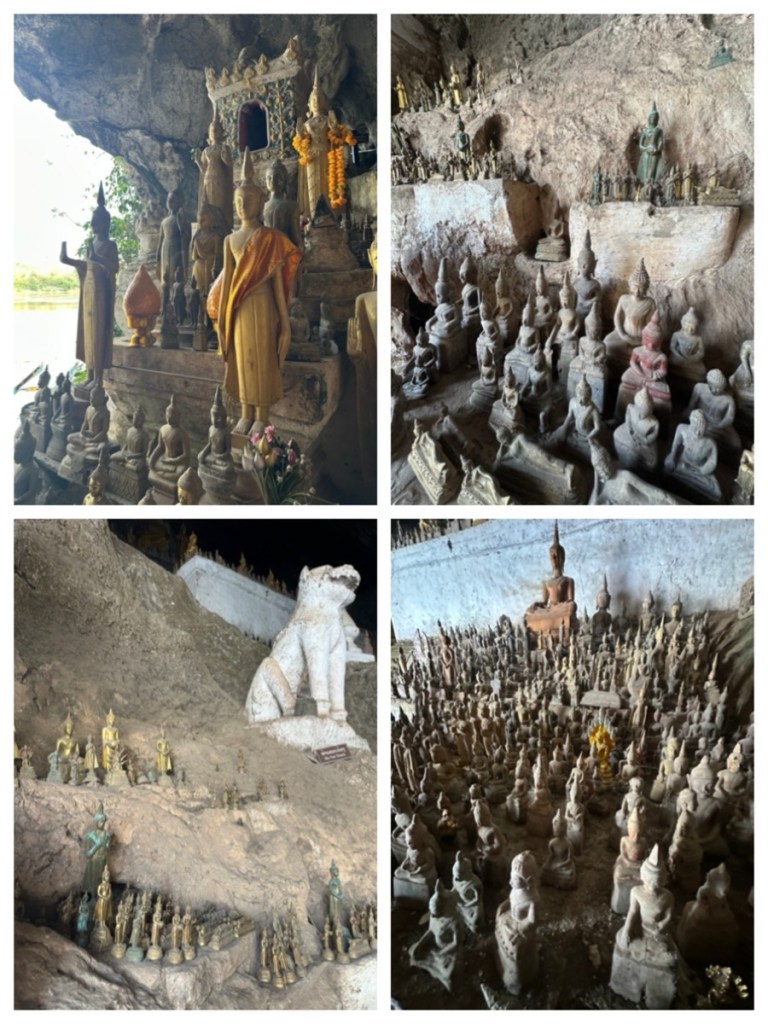
The Tham Ting (lower cave) and the Tham Theung (upper cave) are sometimes called The Caves of a Thousand Buddhas as this pair of grottoes nestled within a limestone cliff host an impressive 4,000 statues of Buddha. The figures are donated by the people of Laos, especially the Mekong fishermen and the locals who each year during the Laotian New Year take a pilgrimage to Pak Ou to offer their prayers and receive blessings for the next year.
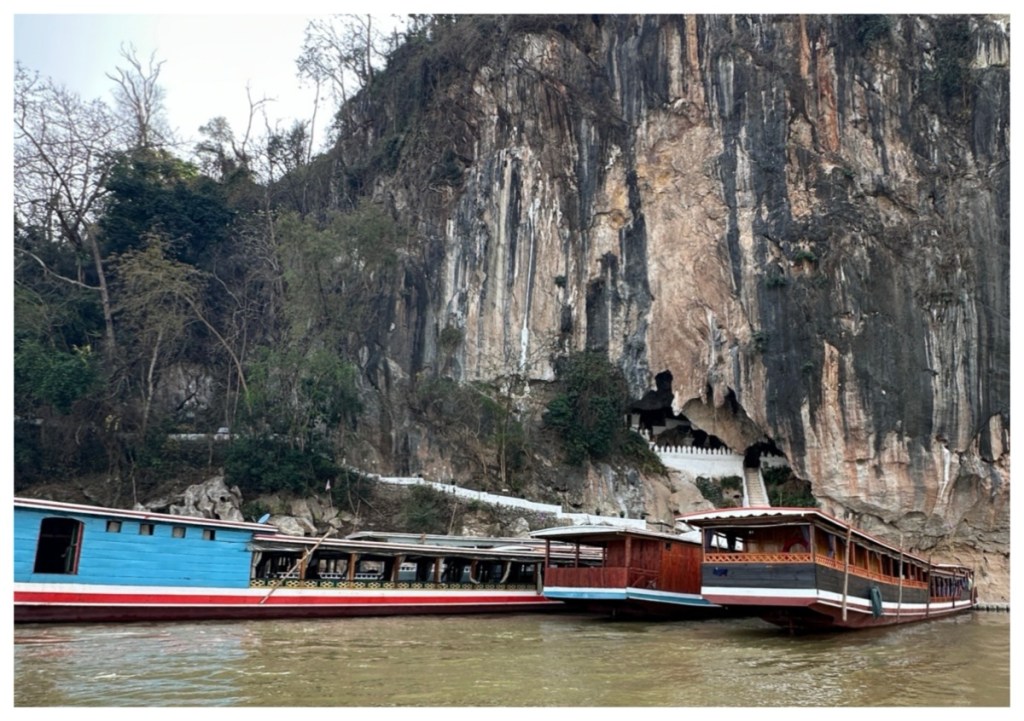
The caves can only be reached by boat. Arriving at the dock, it is just a short ways up to the Tham Ting. This cave has ~2500 icons of Buddha sitting on every nook and cranny within the cave. The light is low in this grotto.
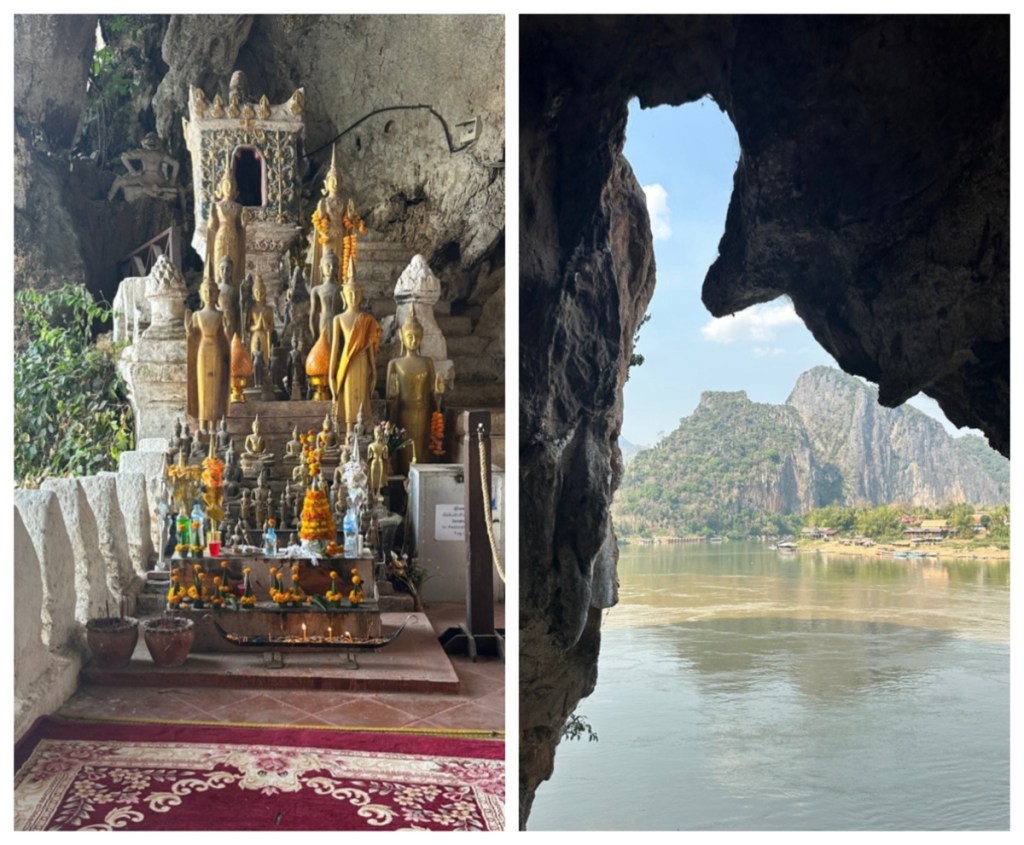
Also at the lower level, there is a shrine as well as excellent views of the opposite shore (including the village where we would have lunch later in the trip).
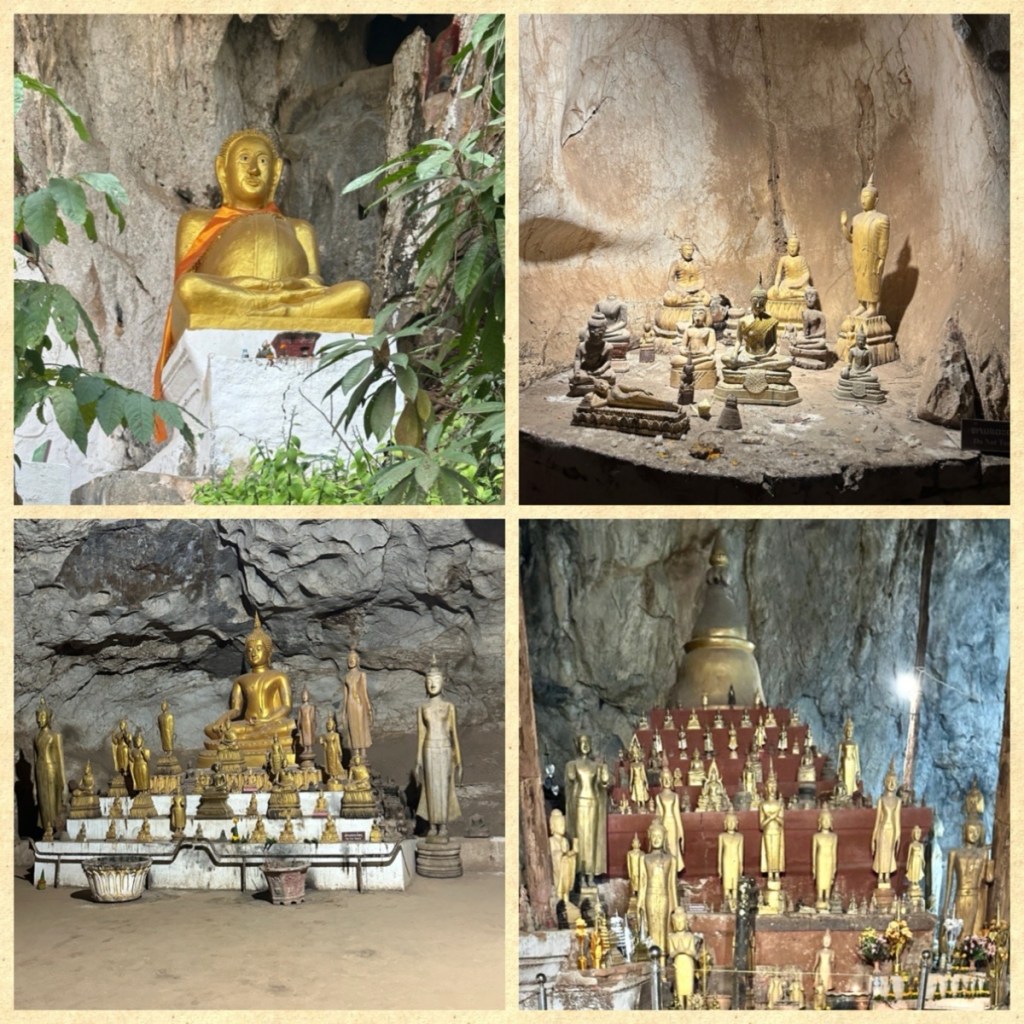
A second staircase of 205 steps leads up to the Tham Theung. The cavern is larger than the lower cave, extending about 54 metres. At the entrance to this cave is a large, gold plated disciple of Buddha. The cave holds about 1500 Buddha icons, ranging from ten centimetres in height to more than one and half metres tall.
We travelled a bit further up the river to where the two rivers merged and the cliffs stretched up above us.
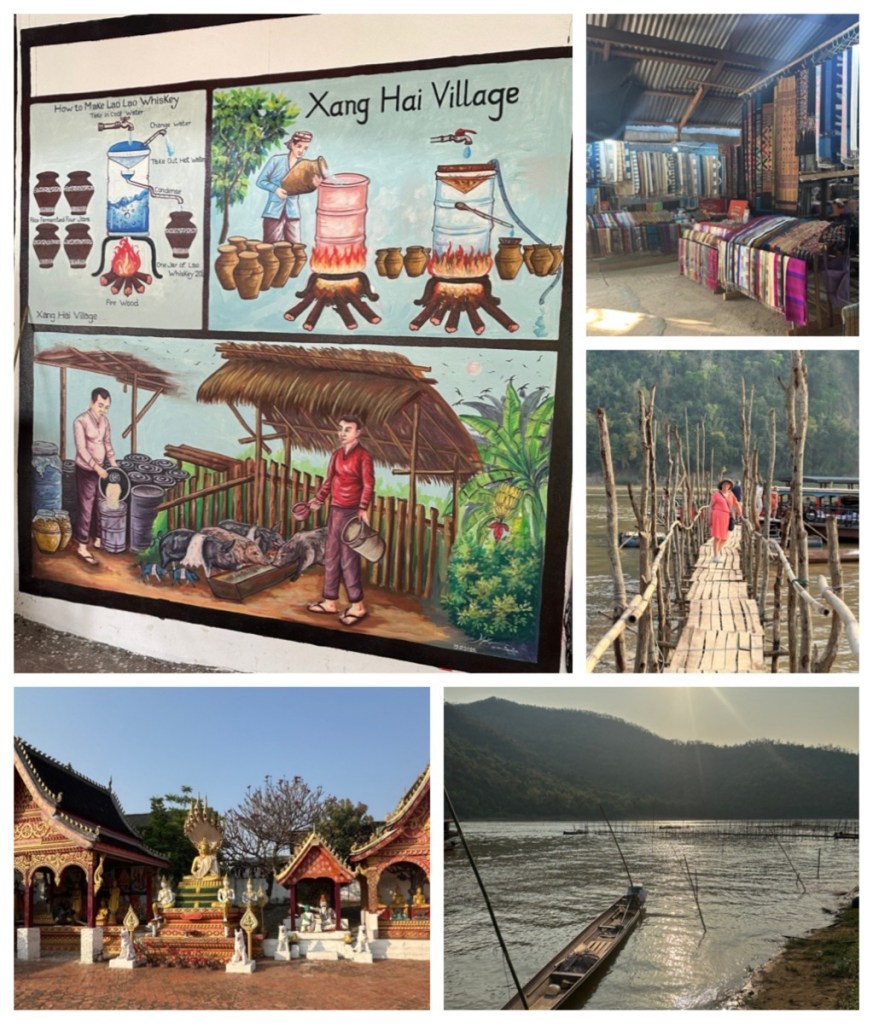
Stop #3: On our return journey downstream, we stopped at Ban Xang Hai. Recent statistics show that there are 127 families in this village with a population of 615 people, among which 297 are women. The village is located in a forested area with both teak and rubber production. The village itself is geared toward tourism with primary industries of liquor production and textile weaving.
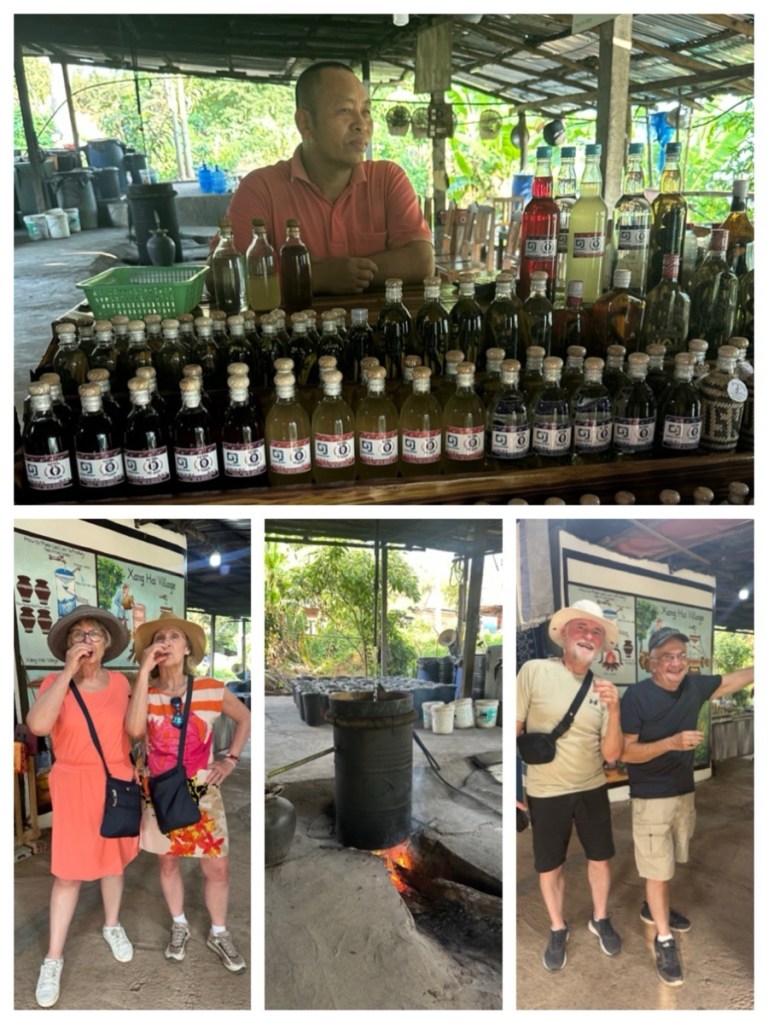
We visited with one of the liquor producers and sampled his rice wine and whiskey. We are not connoisseurs but found the products somewhat harsh. 😵💫
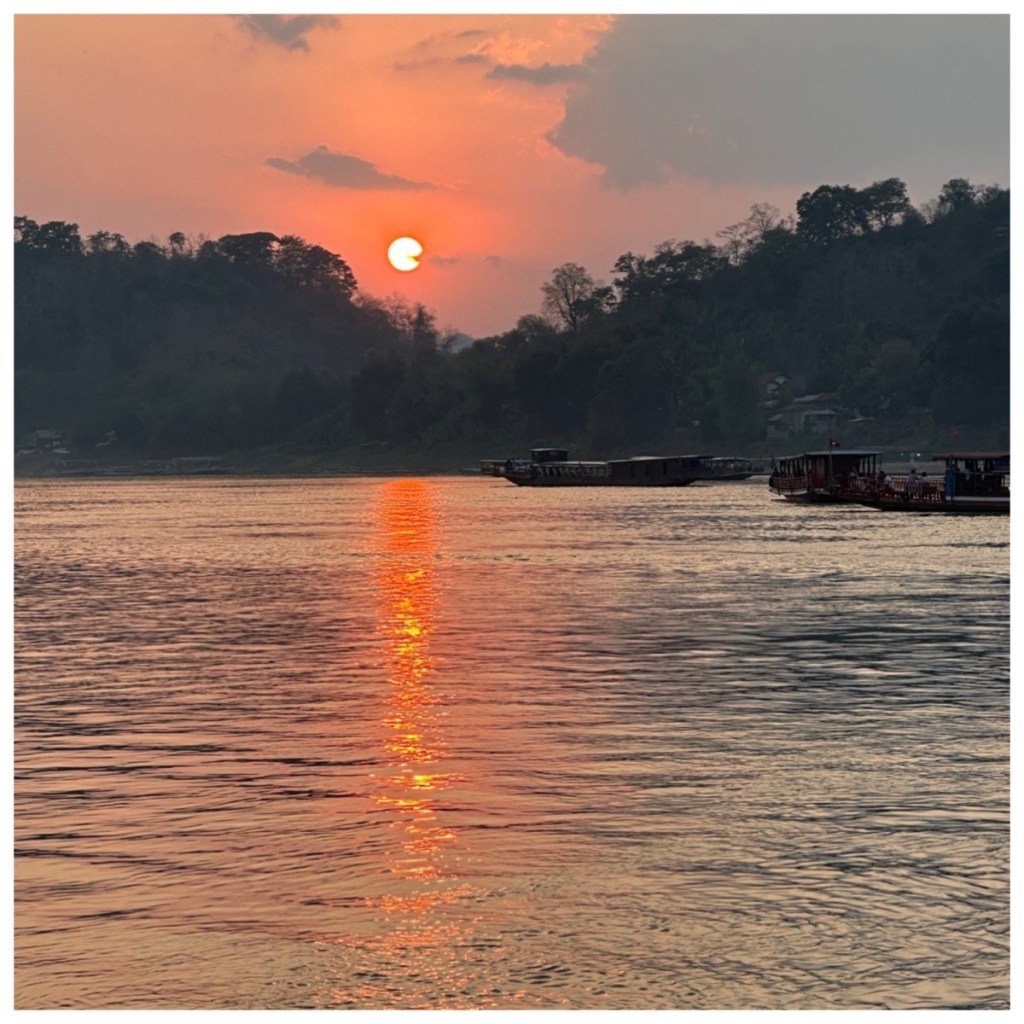
Stop #4: On our journey back into Luang Prabang, we stopped in the river and watched the beautiful sunset!
Day 2: For the next two days, we booked private tours with the Wander Laos Tour company and our guide for these days was Mr Chan.
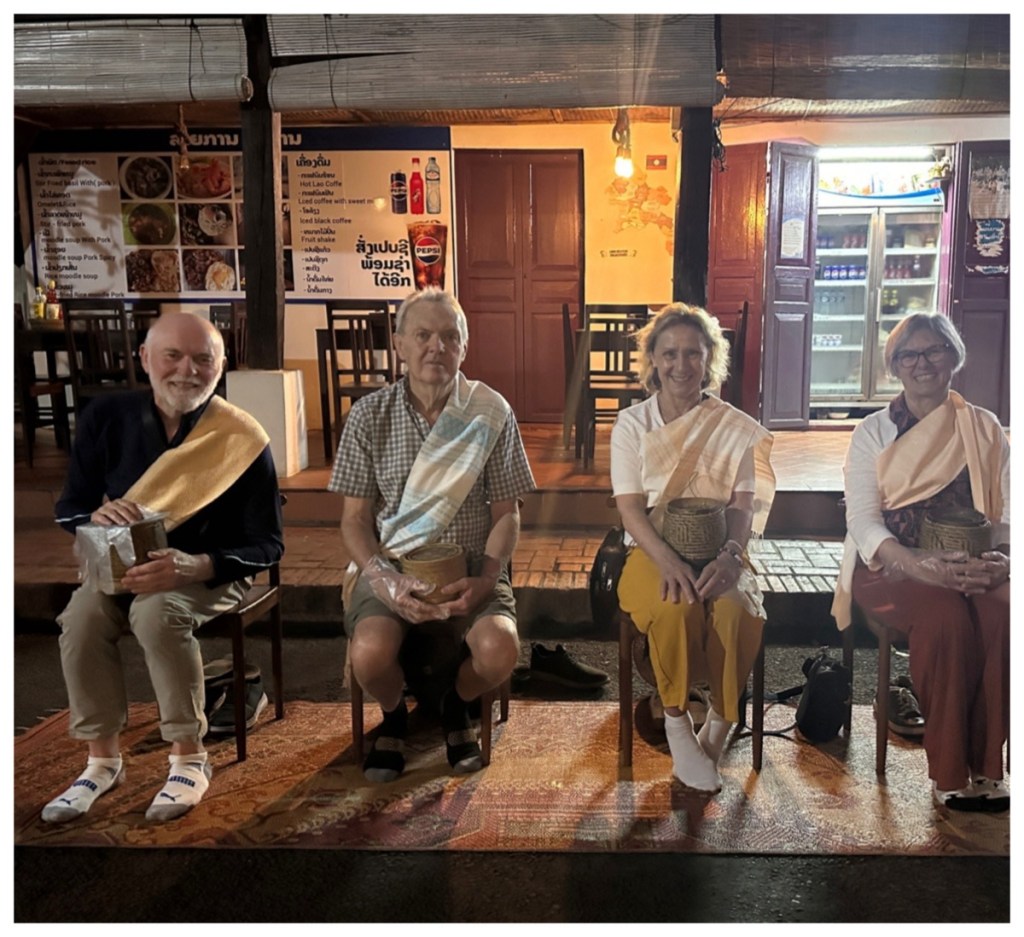
Stop #1: Chan met us in the hotel lobby at 5:30 a.m. and off we went in a TukTuk. Our early start allowed us to participate in the centuries-old ritual of robed Buddhist monks collecting morning alms. We were provided with ceremonial shawls and baskets of sticky rice. As a long line of monks passed by, we dropped a small amount of rice into each one’s basket. The rice and other foodstuffs gathered by the monks in this ceremony provide them with sustenance for the day. We had stressed that we wanted to participate in a respectful manner and Chan made this possible for us.
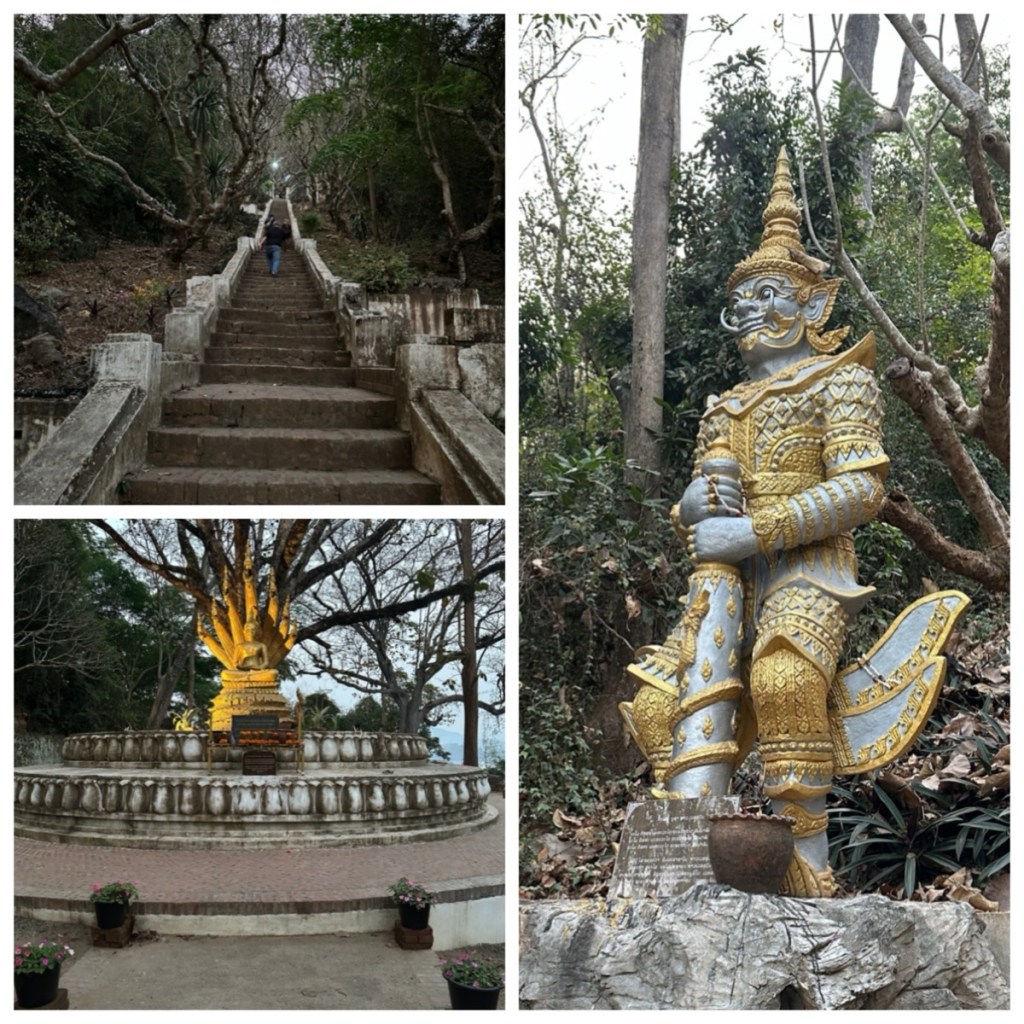
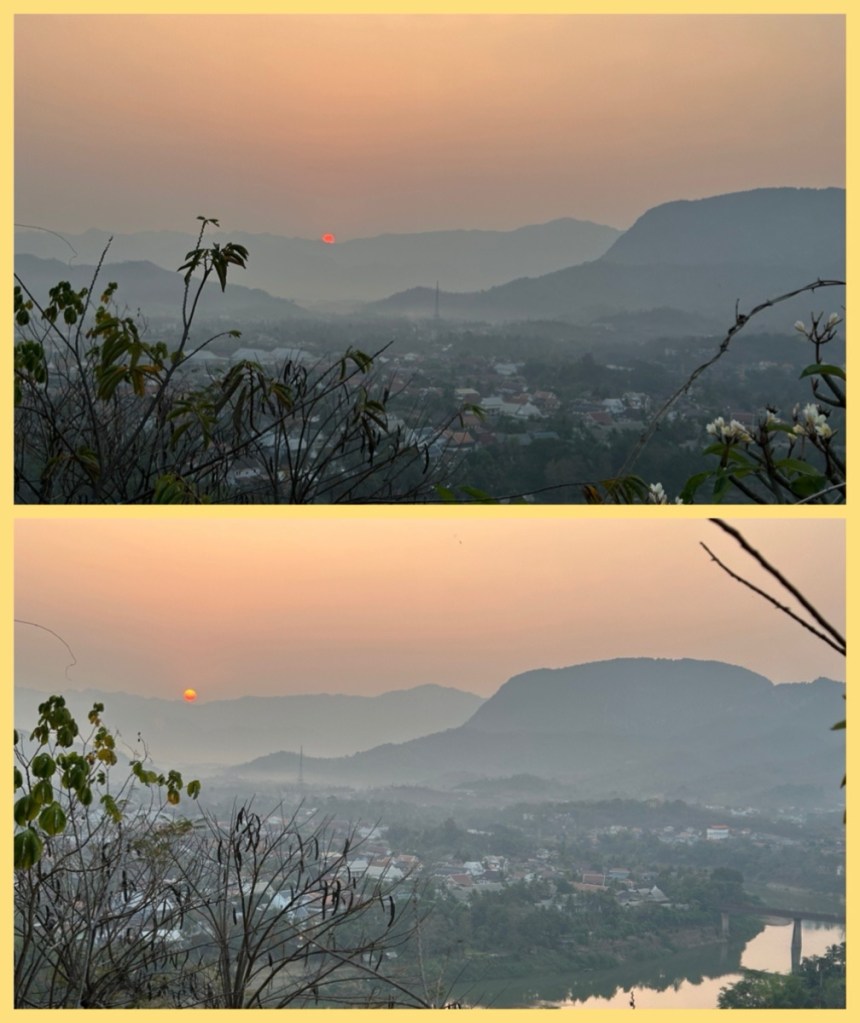
Stop #2: After the Alms giving ceremony, we travelled to Mount Phousi to view the sunrise and the panoramic view of Luang Prabang. I (Bev) only climbed partway up the 308 steep steps but Harvey, Debbie and Larry made the full trek.
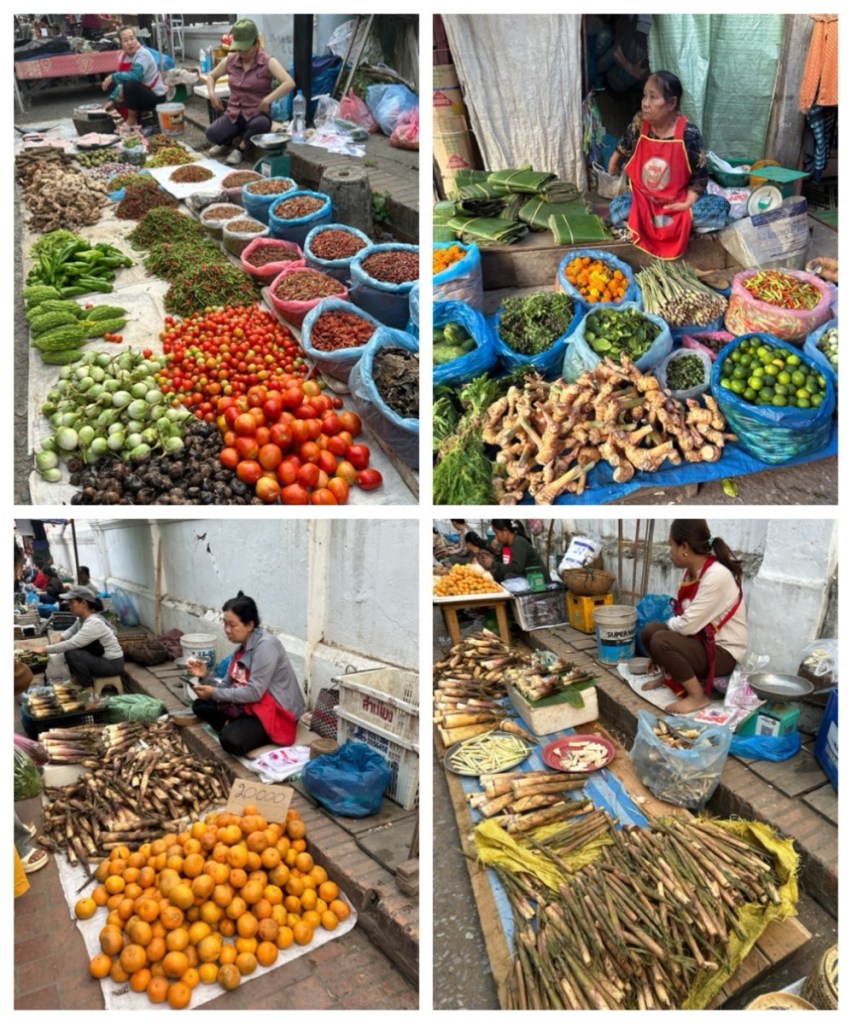
Stop #3: Adjacent to Mount Phousi, we visited the local Morning Market where sellers gather in the pre-dawn hours to arrange an amazing plethora of goods for sale. The sights and smells were almost overwhelming!
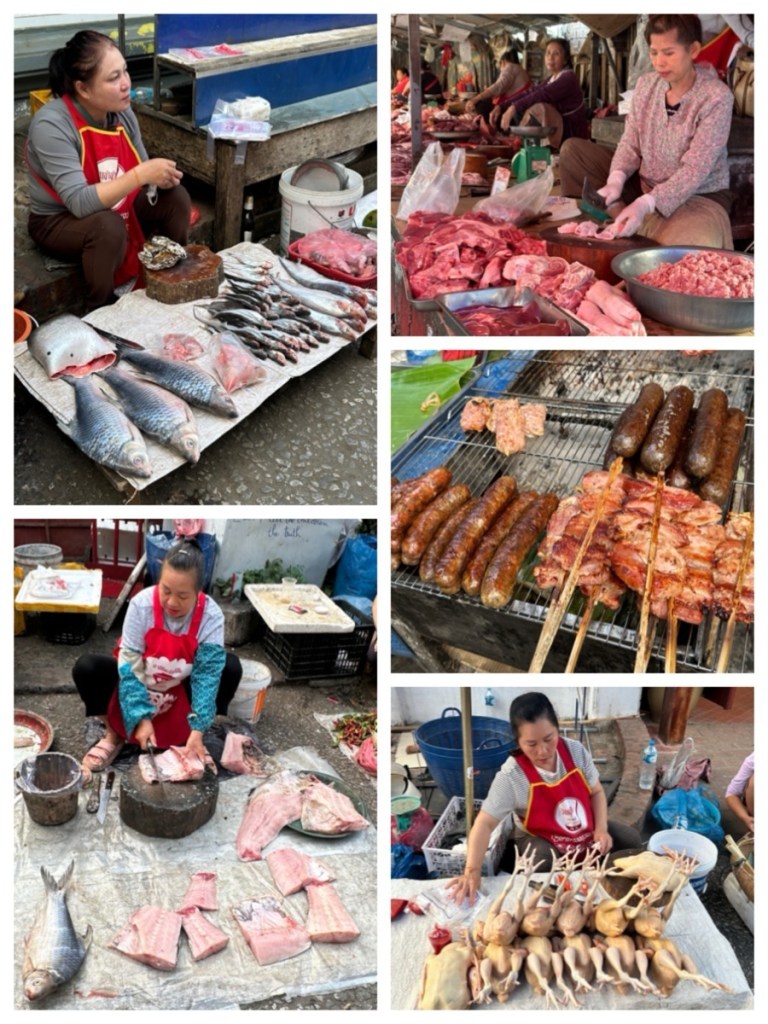
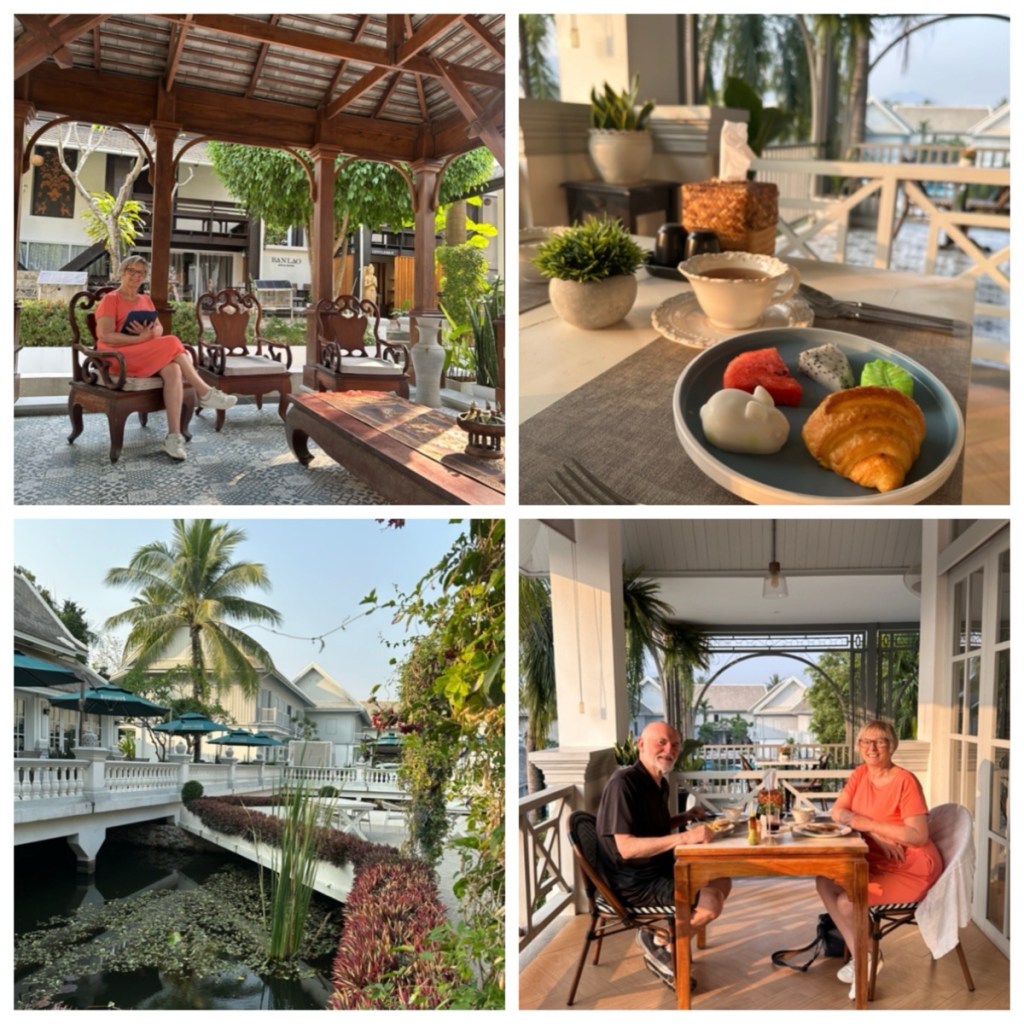
Stop #4: Chan and our TukTuk driver then returned us to the MyBanLao to partake of another lovely breakfast and a bit of a break before we resumed our day.
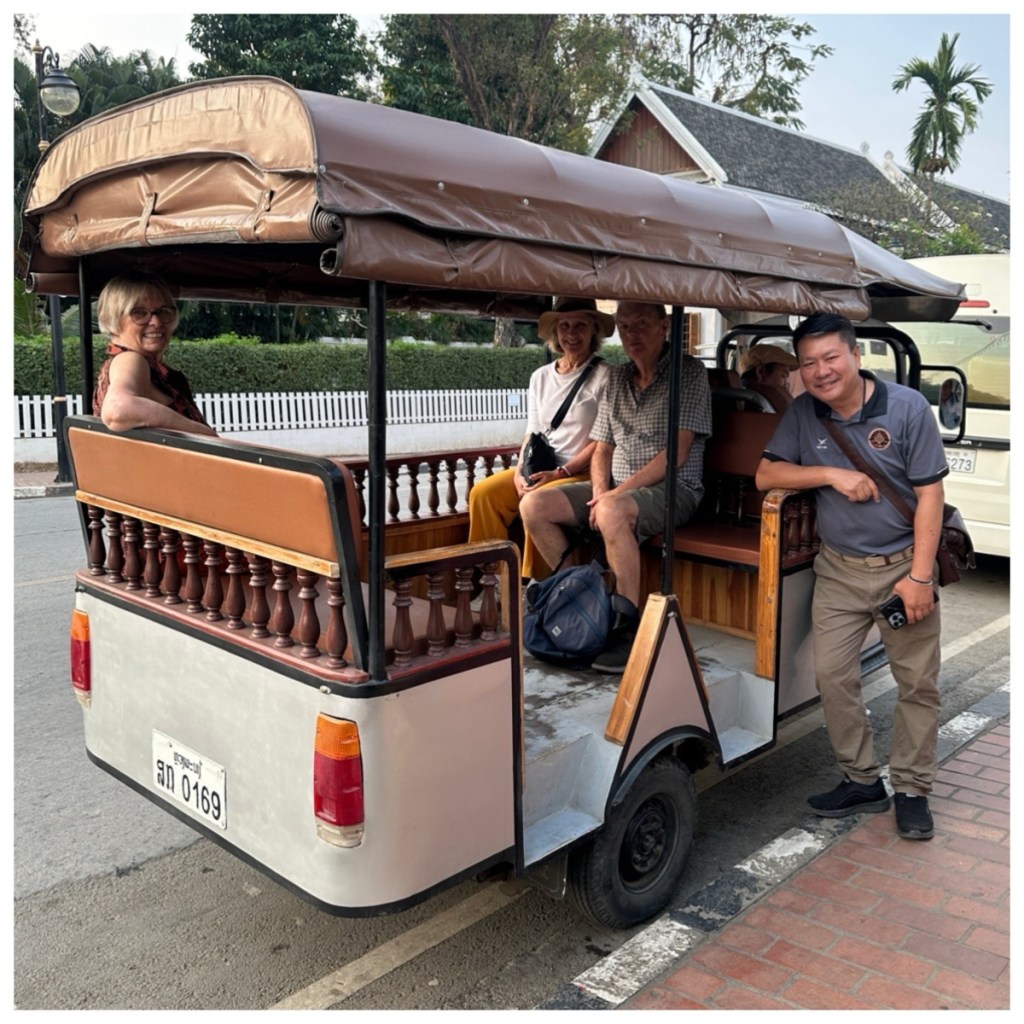
Stop #5: At 9 a.m. our delightful companions returned and we were off to see some of the sites in the city. We began our tour at the tip of the Luang Prabang peninsula and walked first to Wat Xieng Thong.
- The full name is VatXiengThongSayaroharamathibodimahavihanh.
- Chan could actually say that full name!!
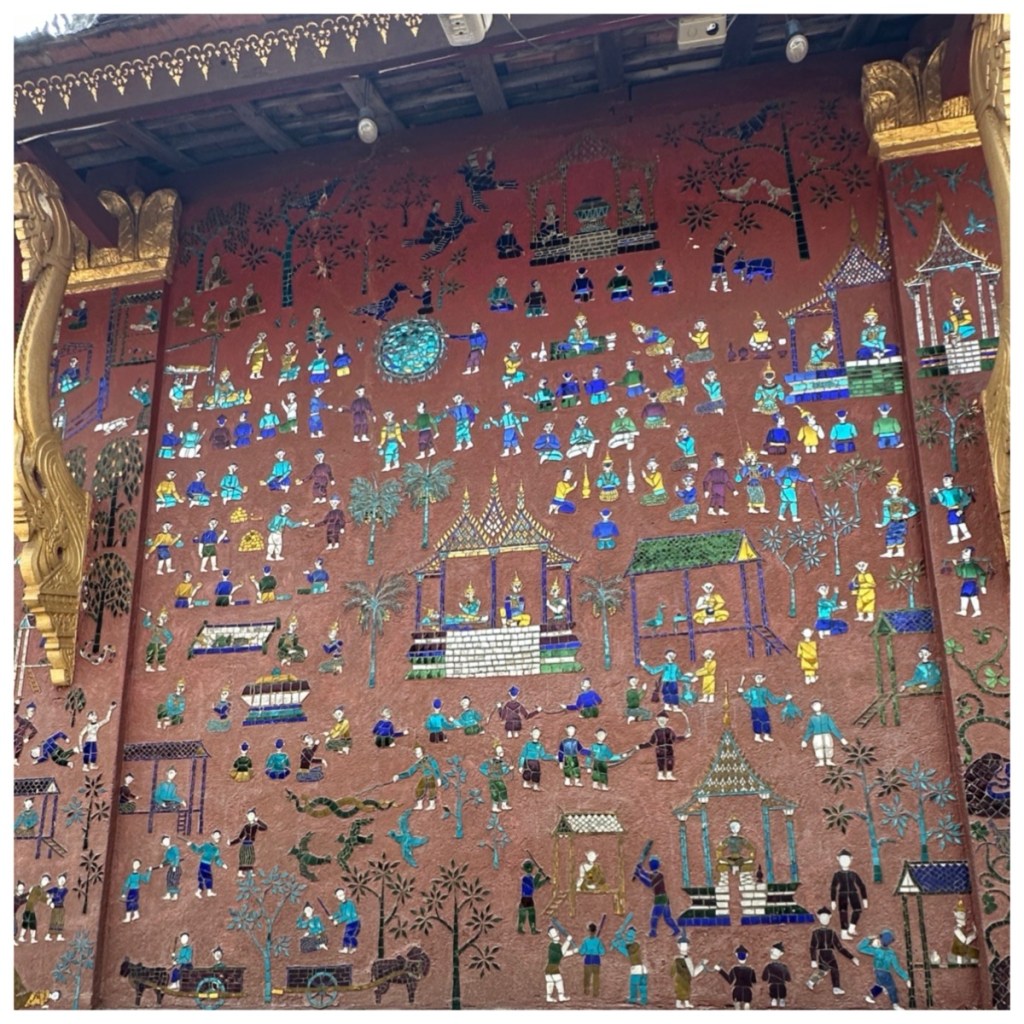
The temple is renowned as Luang Prabang’s most important temple. It was built around 1561 by King Setthathirath and was a royally sponsored temple where coronations were held until the end of monarchy in 1975. It still plays an important role in Luang Prabang’s annual ceremonies.
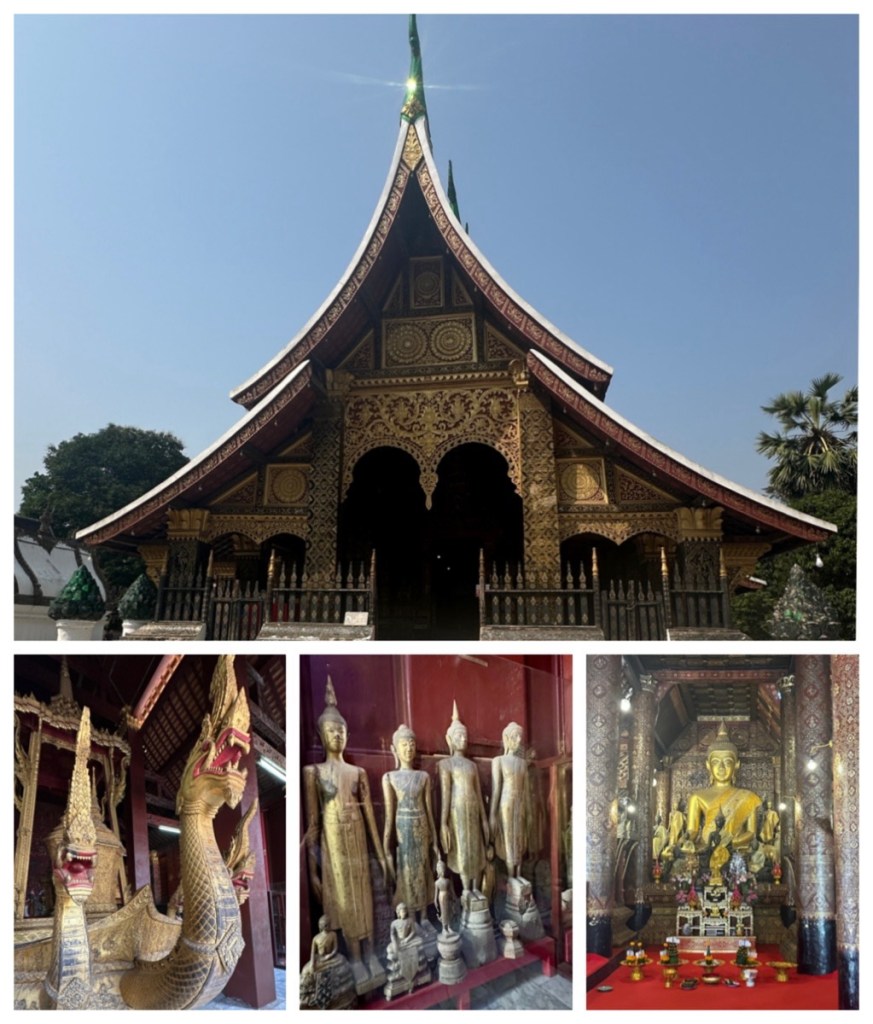
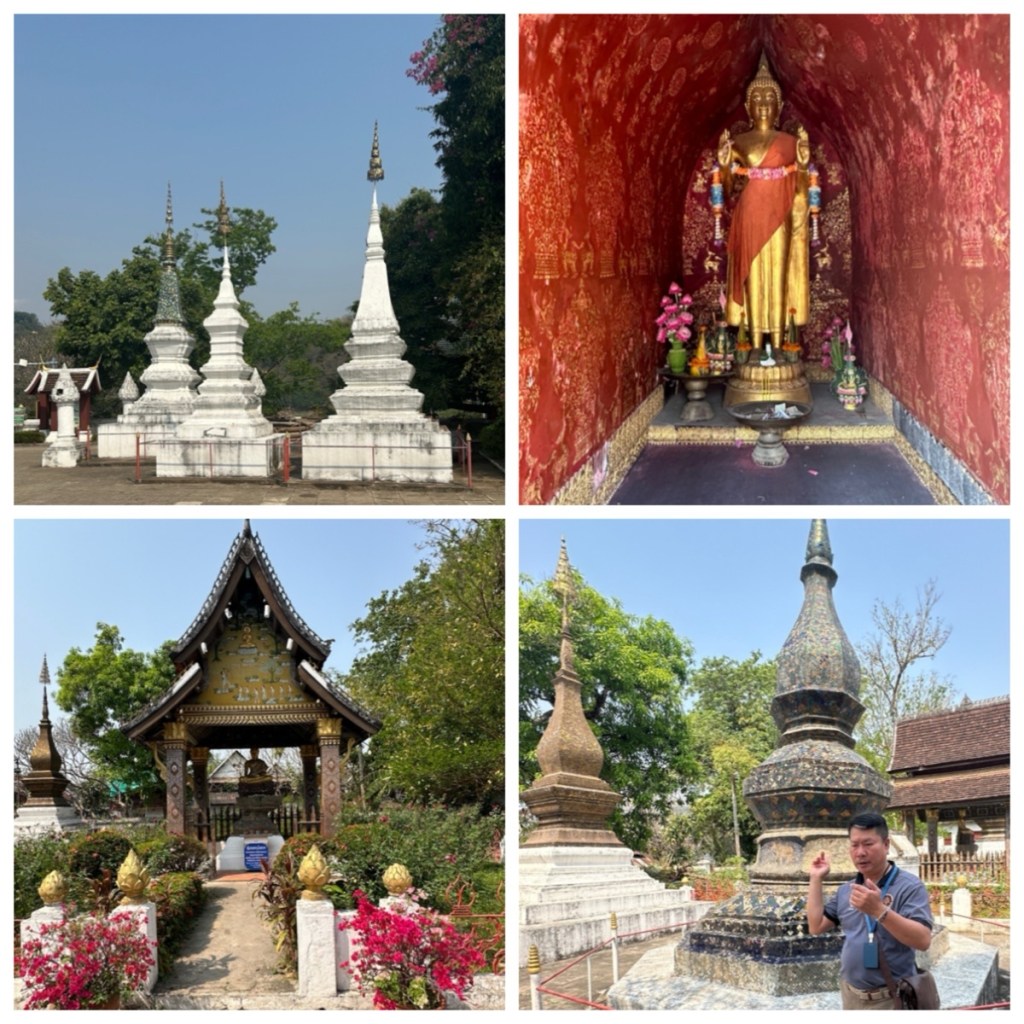
Beautiful glass mosaic work decorates the exterior walls on many of the buildings and Chan was able to tell us many of the stories depicted in the art.
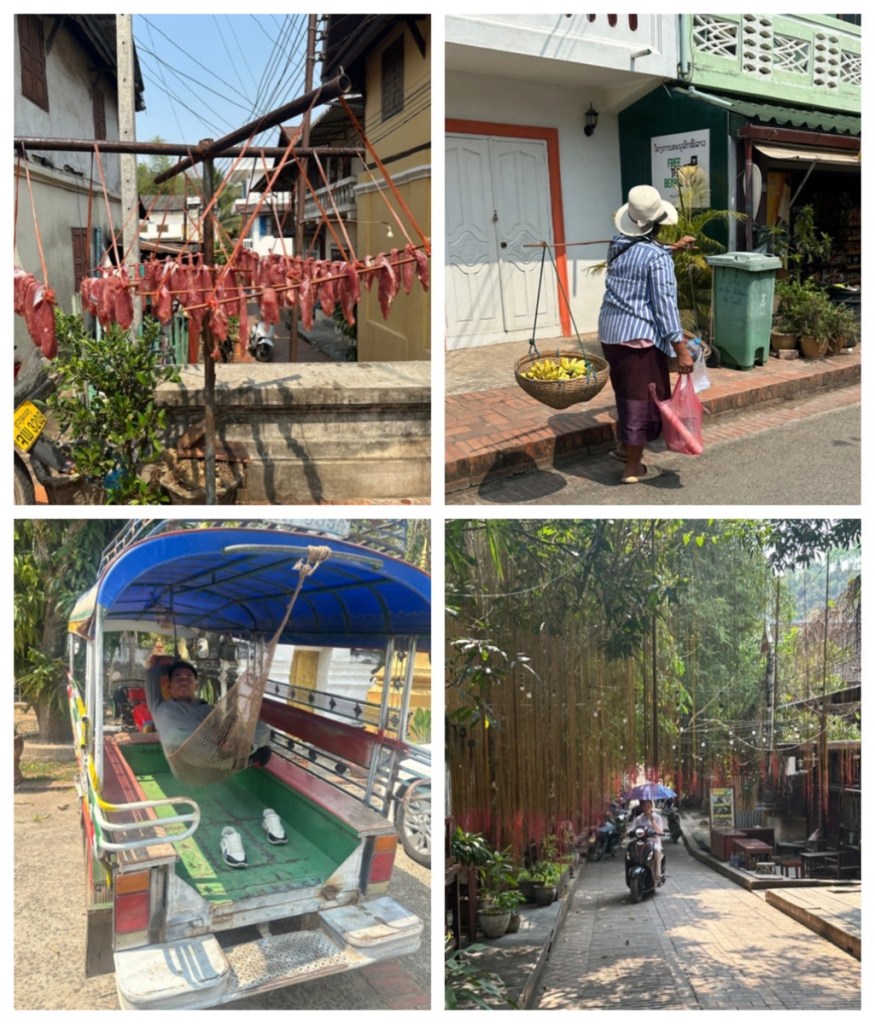
Stop #6: Chan led us through some of the backstreets of Luang Prabang where we could observe locals in their everyday life.
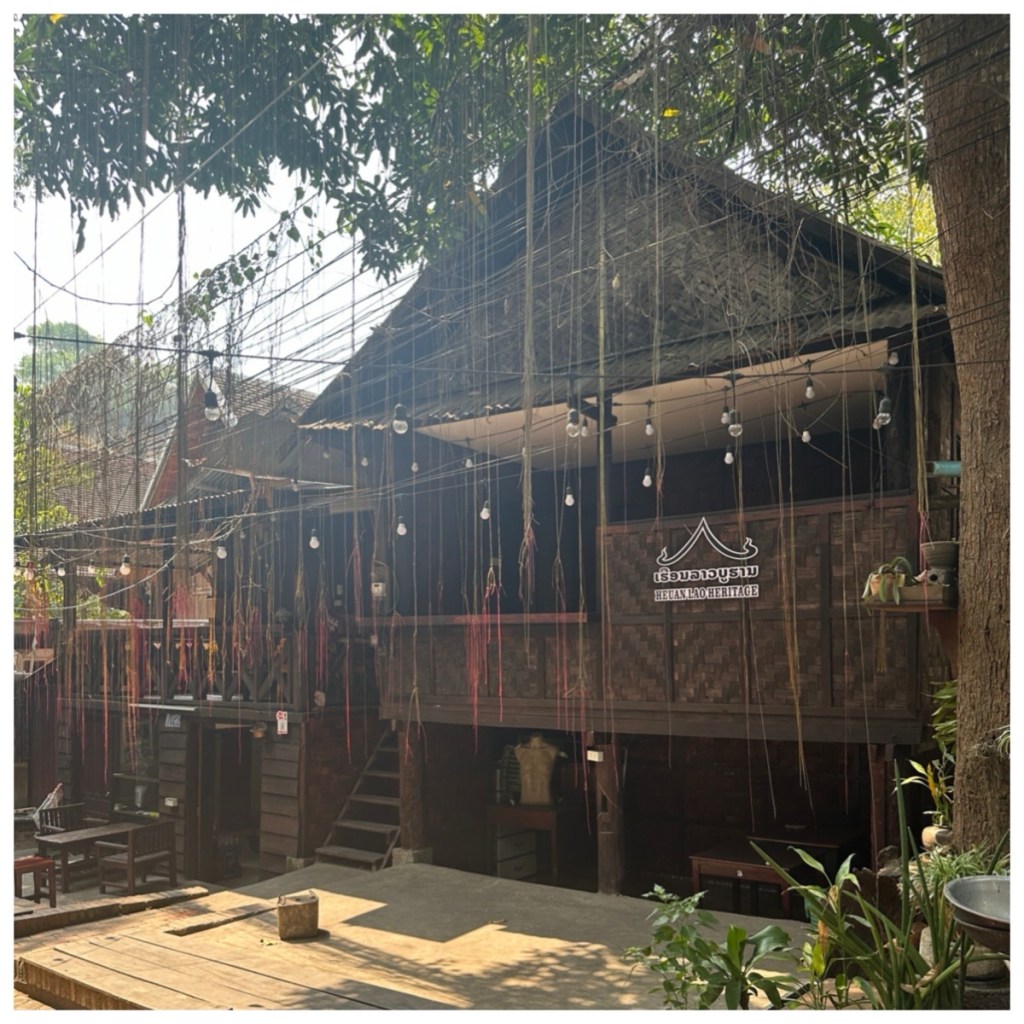
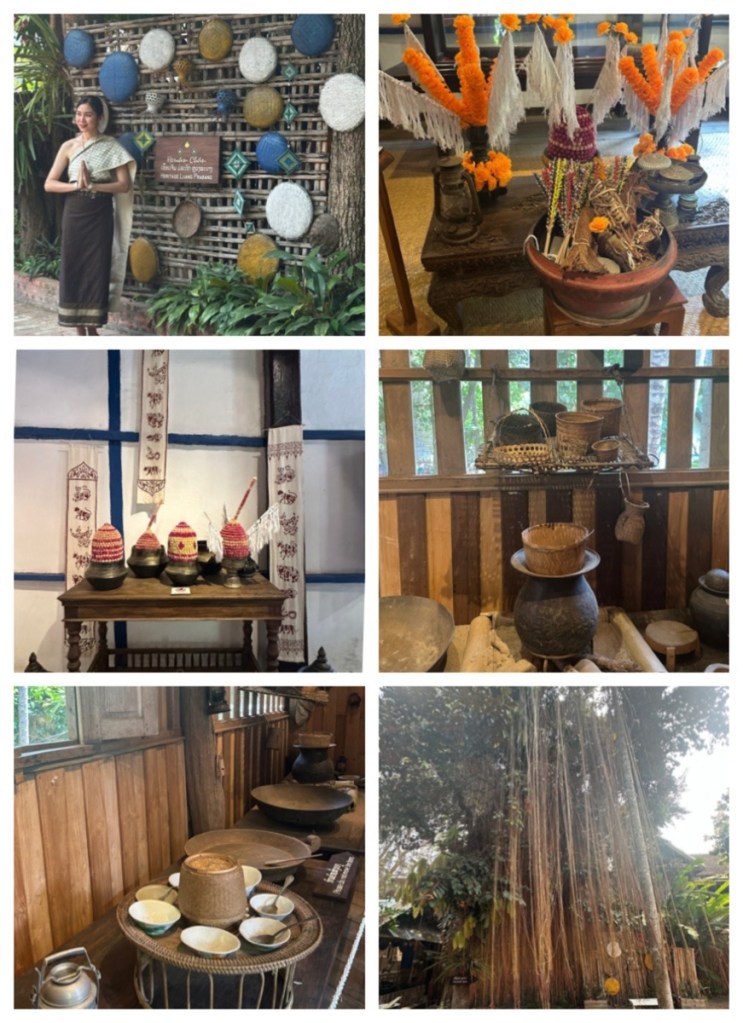
Stop #7: Heuan Chan Heritage House is a traditional wooden house dated back to the 19th century. Mr. Thong Sayasith, the house’s original owner, was an officer in the former royal Lao court located a block away. Although he was not a royal, he enjoyed a high status and his house and garden were larger than most domiciles in Luang Prabang.
Thong Sayasith and his wife had eighteen children. About thirty people consisting of immediate family members, distant relatives and servants occupied the home at any one time. The home consists of an open terrace, covered veranda that served as a reception area, ritual room, bedrooms and a kitchen and work area.
Stop #8: It was midday and very warm so it was time for another break at the hotel where we had an excellent lunch and a cool rest.
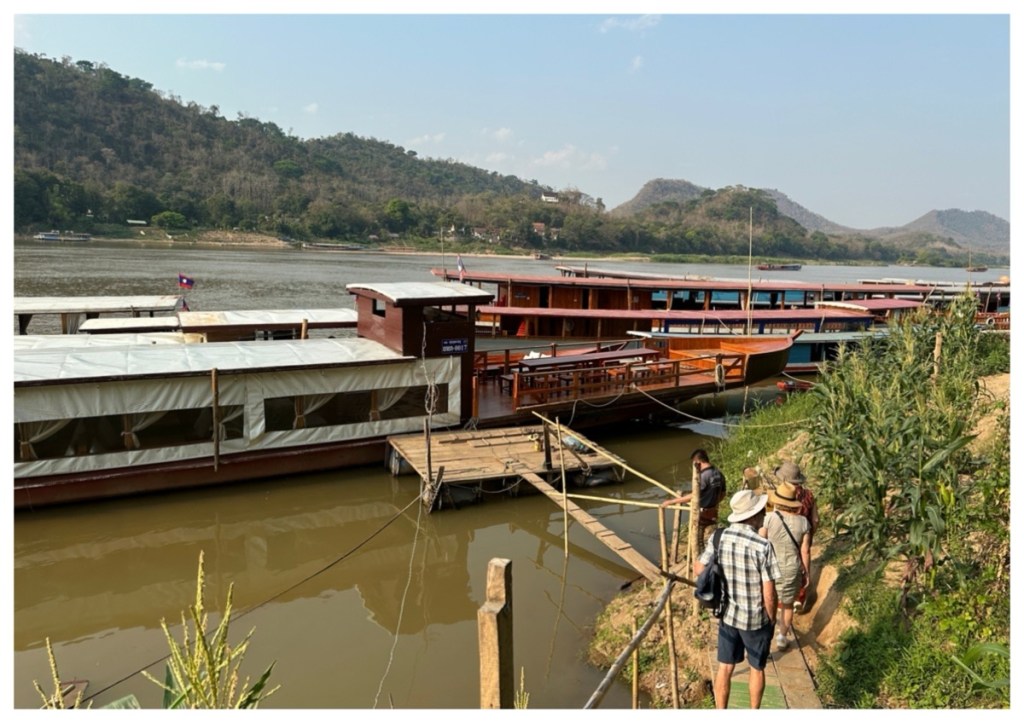
Stop #9: Later in the afternoon, Chan and the TukTuk driver picked us up for a short journey to the Mekong River where we boarded a local boat to cross the river.
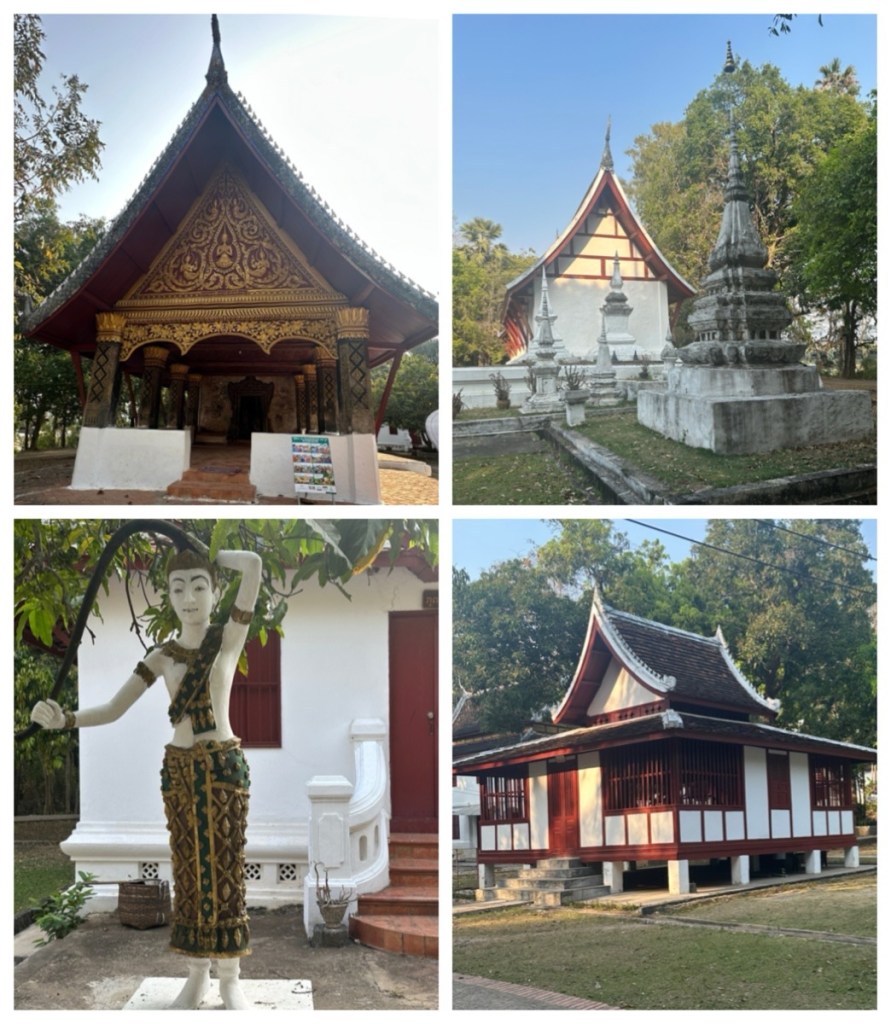
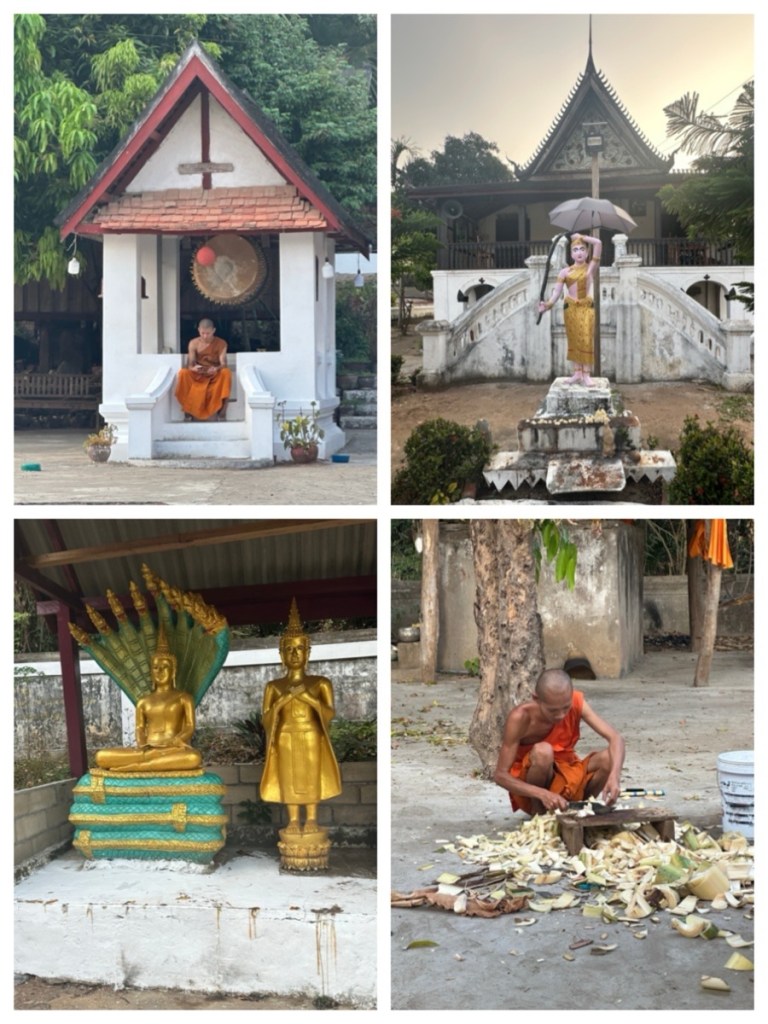
We disembarked in the quiet district of Chomphet and viewed a number of temples in the area.
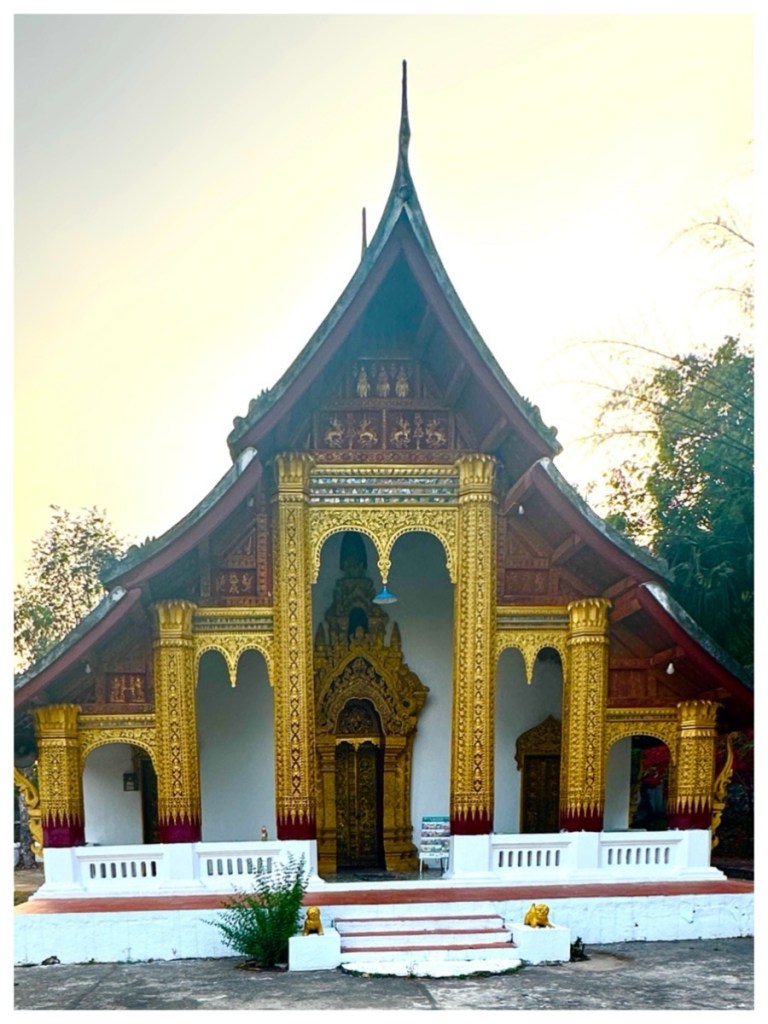
We first visited Wat Long Khoun. This temple was constructed in the 18th century as a place for the Kings to practice meditation before receiving the royal coronation ceremonies.
Chan told us that to qualify as a temple in Laos, five things are required:
- An ordination hall (or the building often referred to as a temple) that is the sacred place where monks are ordained
- A Stupa which is a structure, often bell-shaped, containing sacred relics of Buddha or ashes of revered monks and community members
- A Drum Tower
- Monk’s quarters
- Monk’s dining hall
Some other resources vary a bit with this list but we are going with Chan on this one! Wat Long Khoun consists of an ordination hall, three residential quarters, one open air dining hall, one inscription stone pillar and a drum tower.
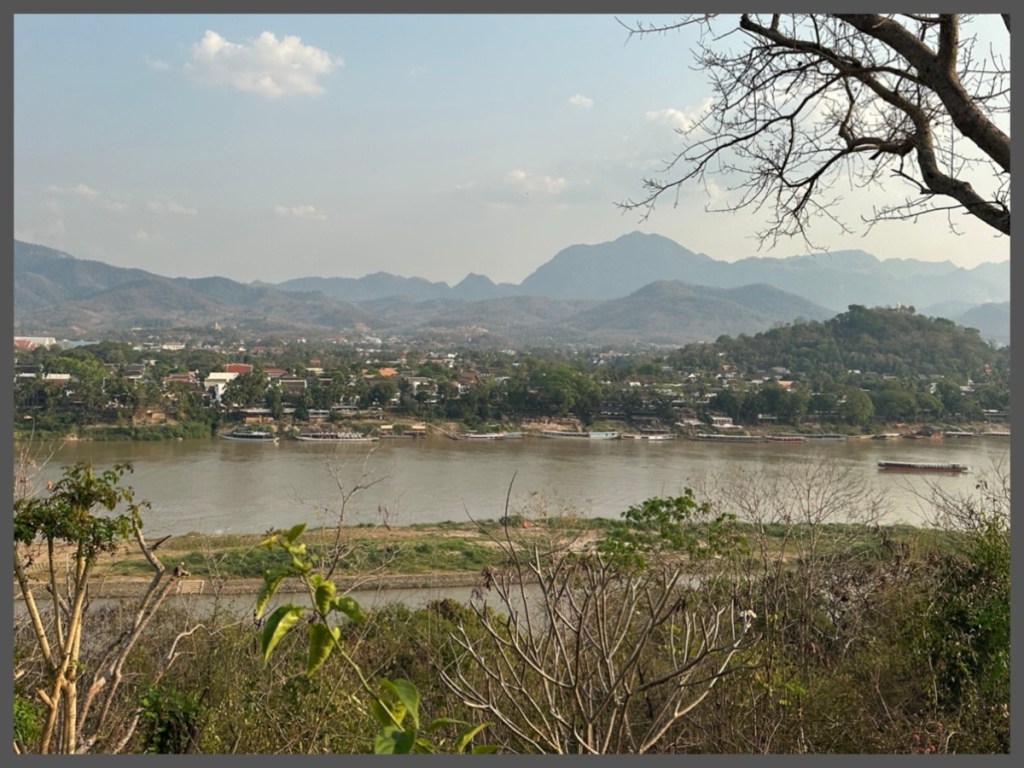
Next, we climbed the 123 steps to Wat Chomphet. Built in 1888 by the Thais, this is not the most well maintained temple but it has the best views around offering a stunning panorama of the surrounding hills, Mekong river and Luang Prabang town. At the top of the staircase are two stupas that house the bones of the wives of one of the former kings of Laos.
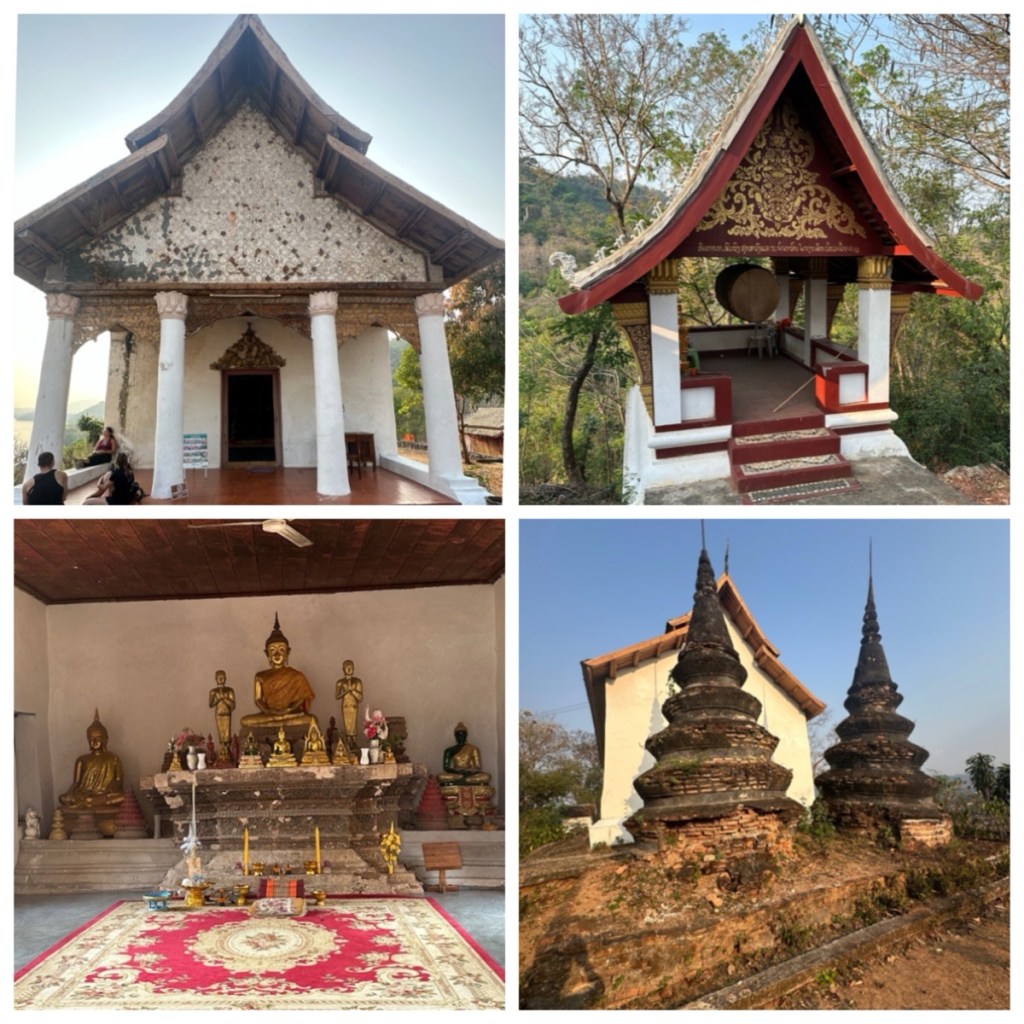
As mentioned, the views of Luang Prabang across the river were excellent.
We walked through the riverside village of Ban Xiang Maen where families were gathered enjoying a Sunday afternoon.
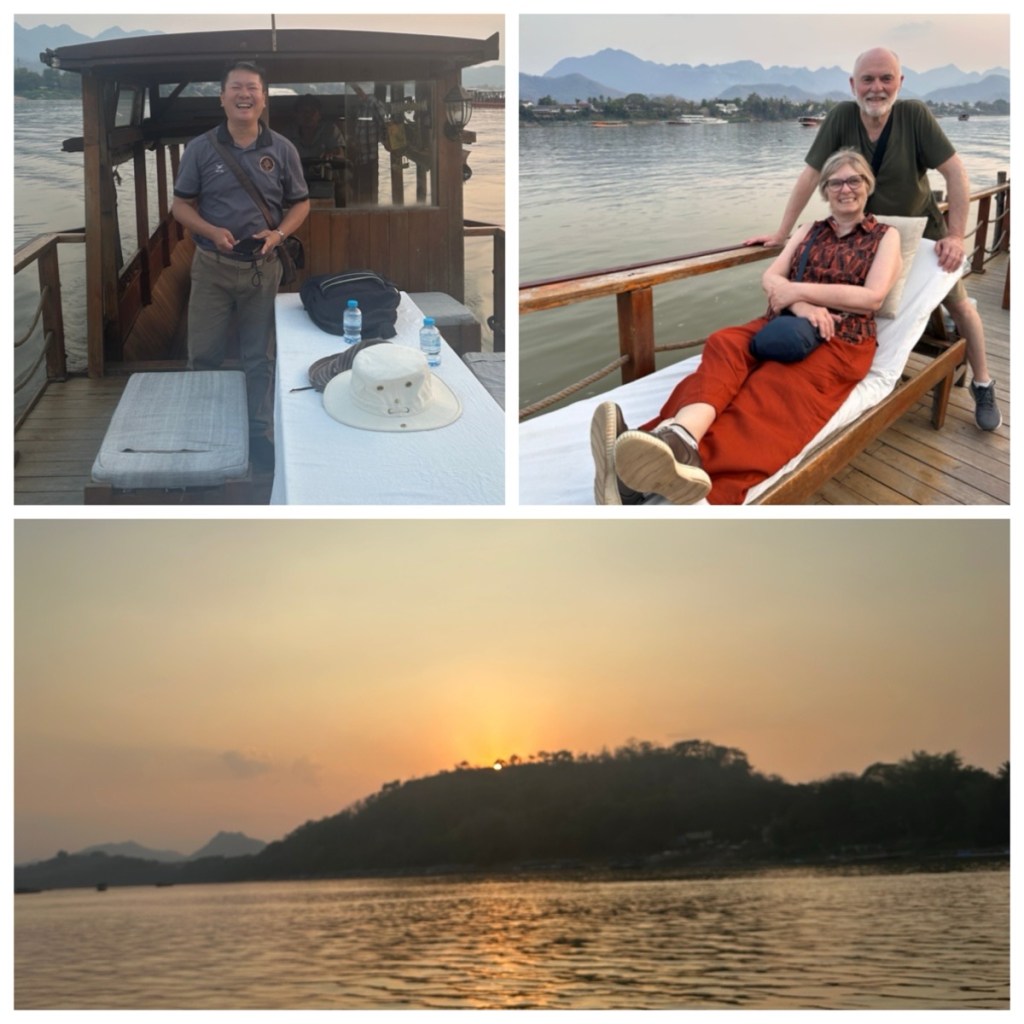
On the boat ride back to Luang Prabang, the driver stopped for a while so that we could once again admire the sunset.
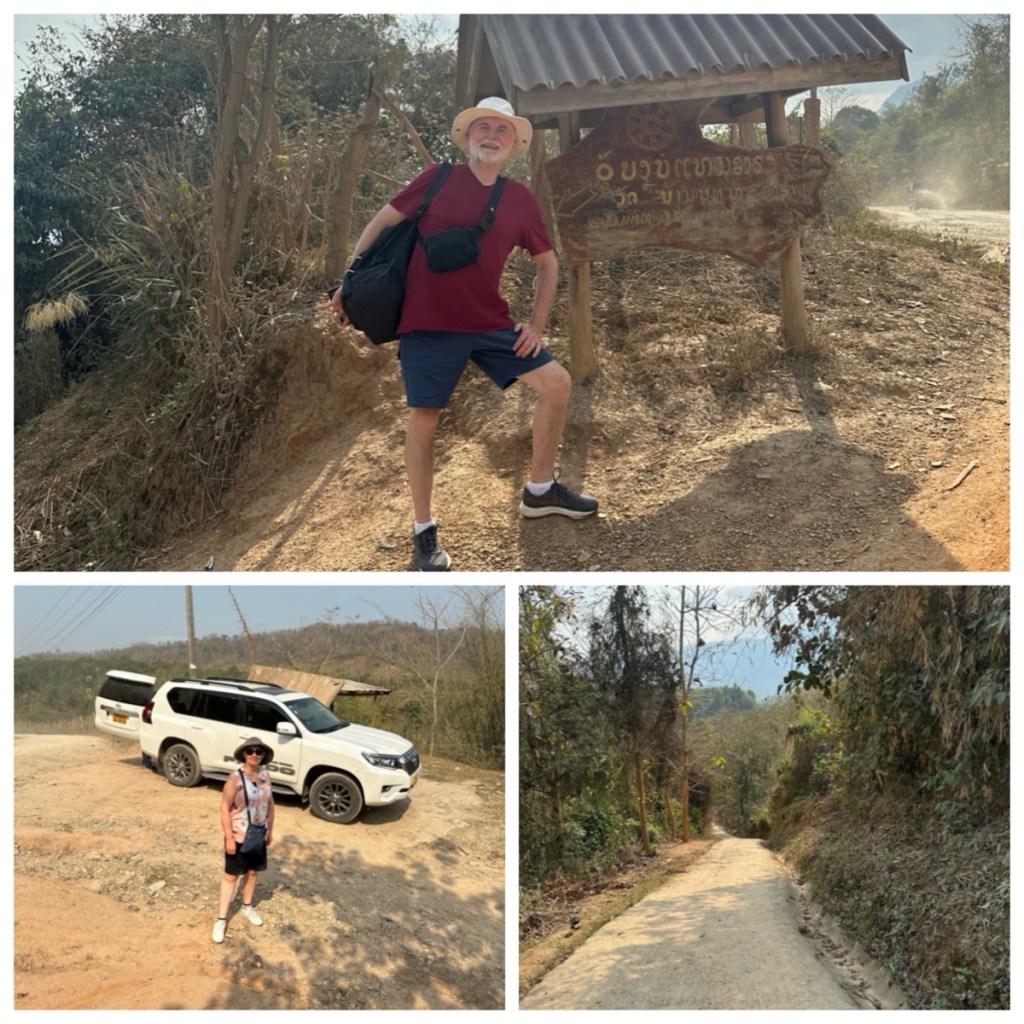
Day 3: Mr. Chan and Pob, the driver, picked us up at 9 a.m. in a four wheel drive Land Cruiser. After stopping at a store to purchase packages of notebooks, pencils and coloured pencils, we headed out towards the hills / mountains in the countryside on a road that quickly went from pot-holed pavement to pot-holed dirt road. On the way, we passed farmland and a couple of villages.
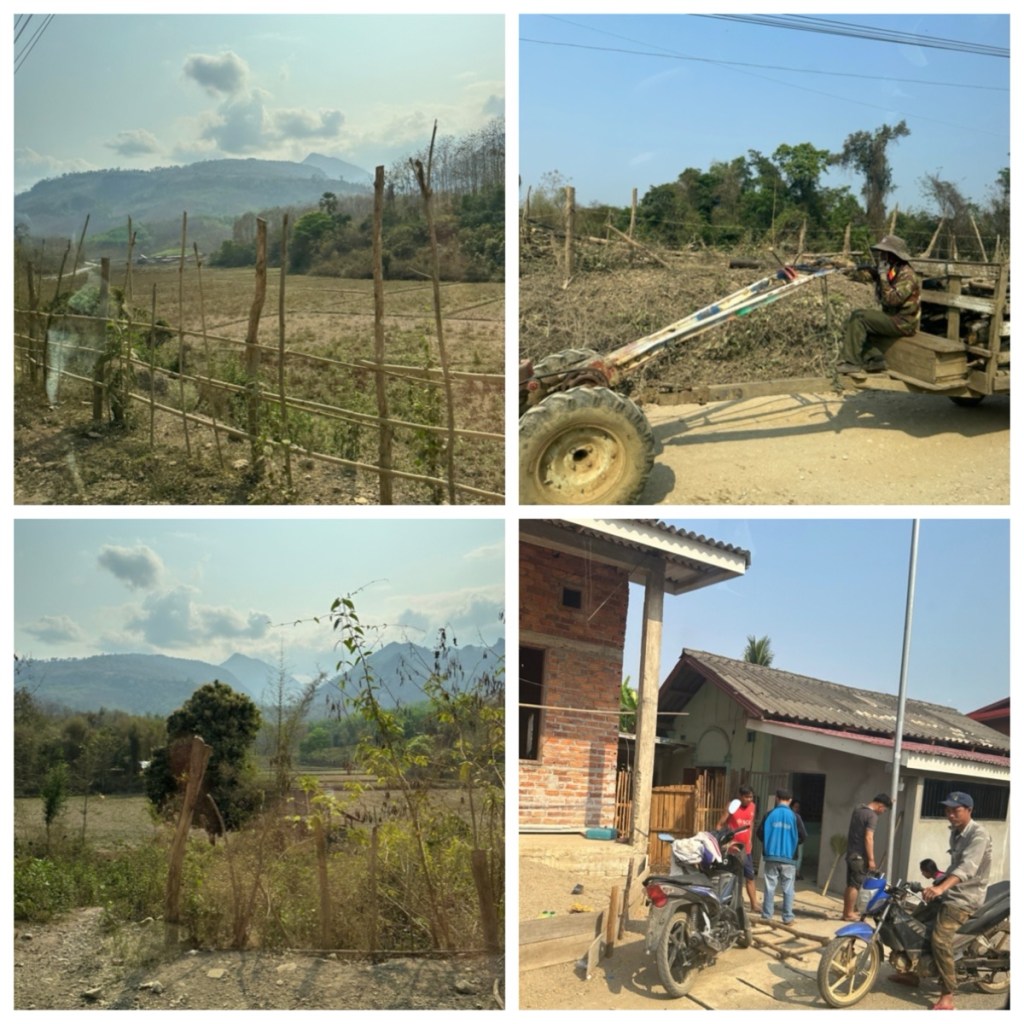
Stop #1: We stopped on the side of the road at the top of a smaller road / path (for foot and motor scooter traffic) where we walked down to the village of Ban Bor Hae.
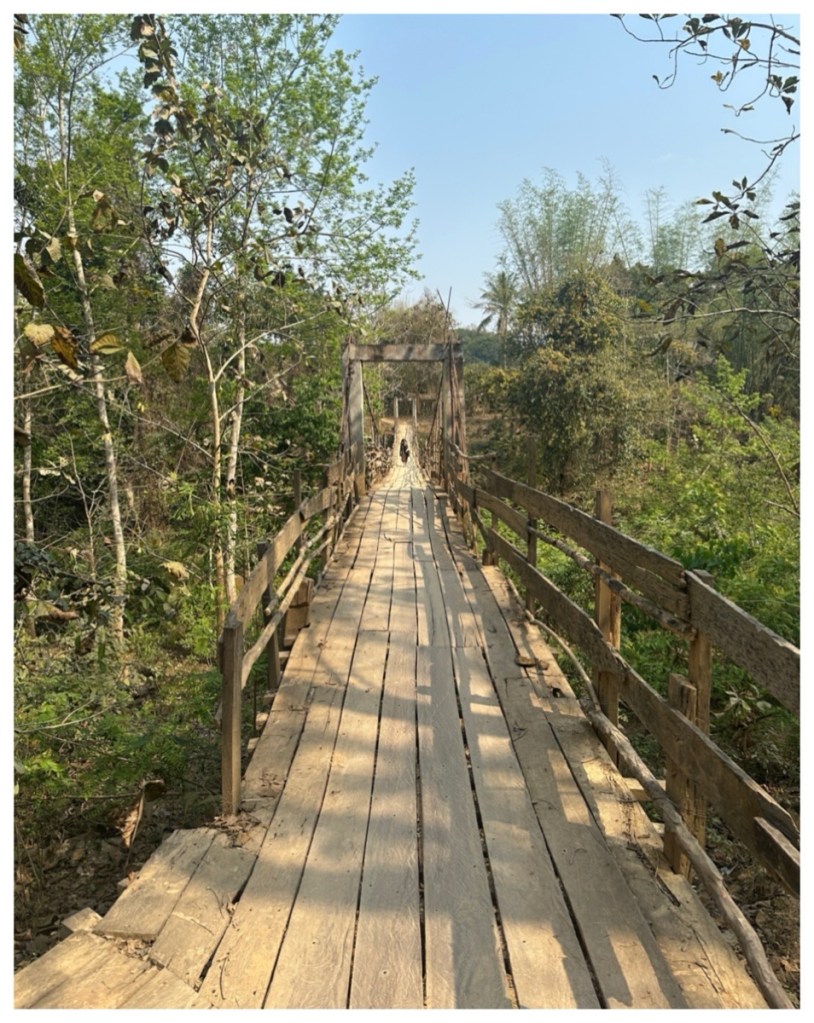
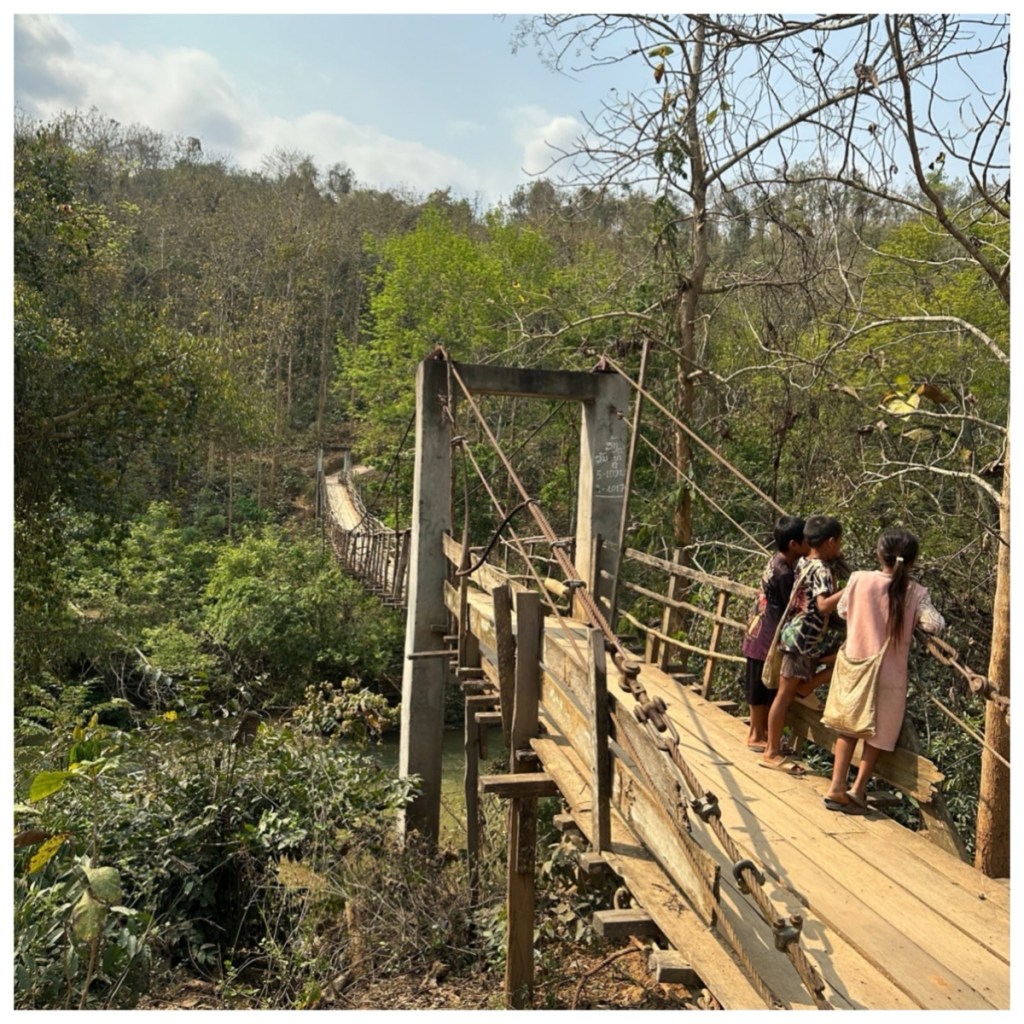
At the bottom of the road we came to the bridge to the village. We were told that the local people had built the bridge; they have requested a proper vehicle bridge from the government but have not had success with this request.
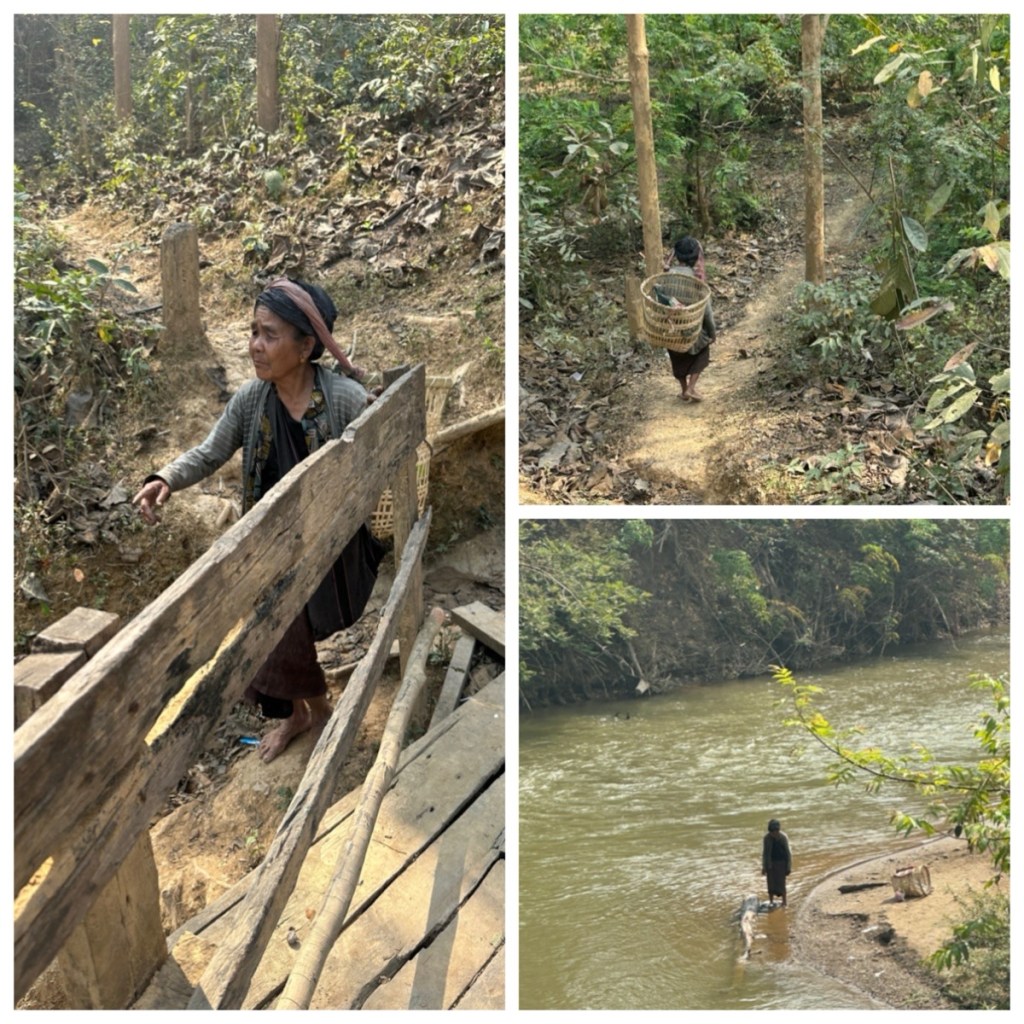
On the bridge, we encountered a local woman carrying water jugs. She was headed to the river to fill her jugs. It looked like a very arduous task and we admired her tenacity.
We then encountered the first of the young children with whom we would share the notebooks and pencils. As with the majority of the children we would encounter, they were very shy at first. Chan was excellent with the children, asking them their names and what grades of school they were in. He made them feel comfortable as he chatted with them in their language. Each child that we gave items too was very happy and polite, bowing to us. I post this picture as it is of the backs of three children but I will not post any other pictures of the children to protect their privacy.
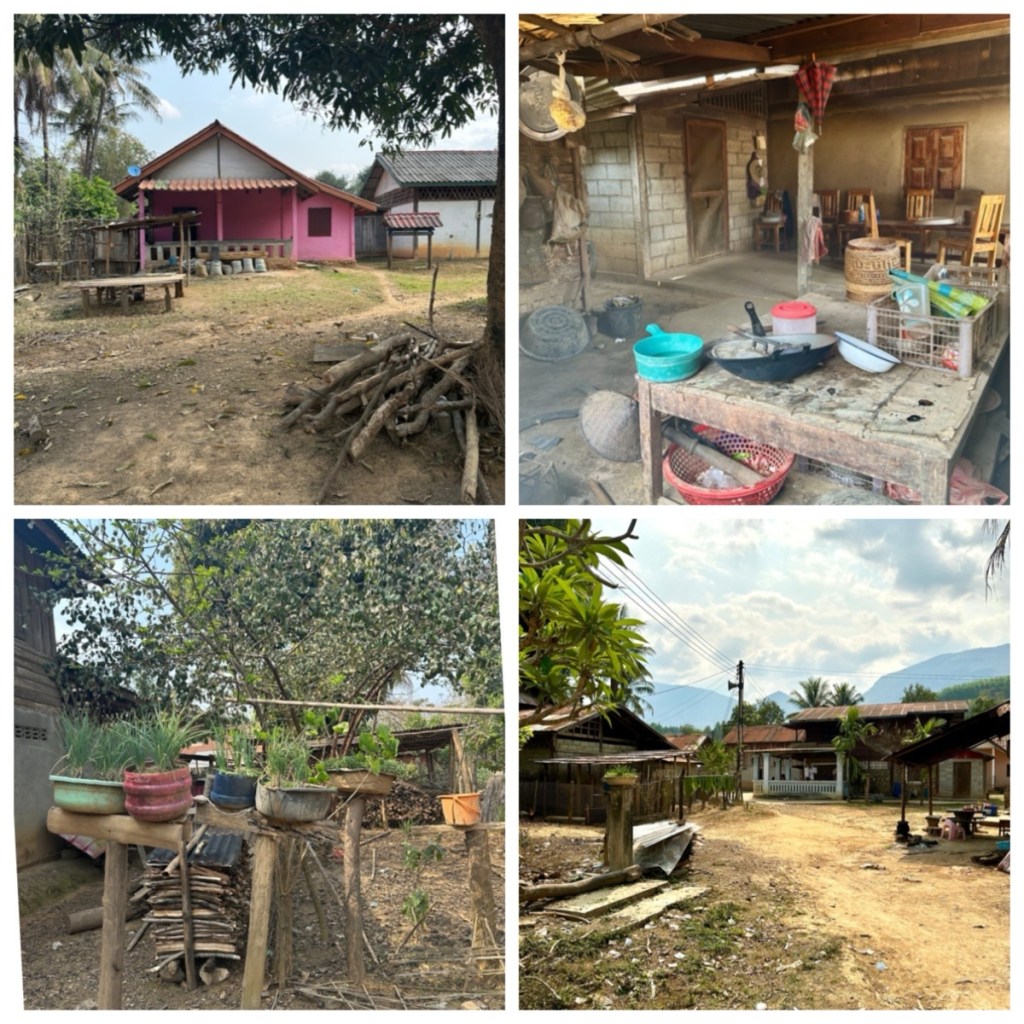
After crossing the bridge (which felt amazingly sturdy), we wandered through the village. There are 43 families living in the village and in the average family, there are about five people. Chan spoke to the people as we walked and they were welcoming and friendly. News of our visit must have made the grapevine as many children shyly watched for our arrival and were so happy and grateful to receive our small gifts.
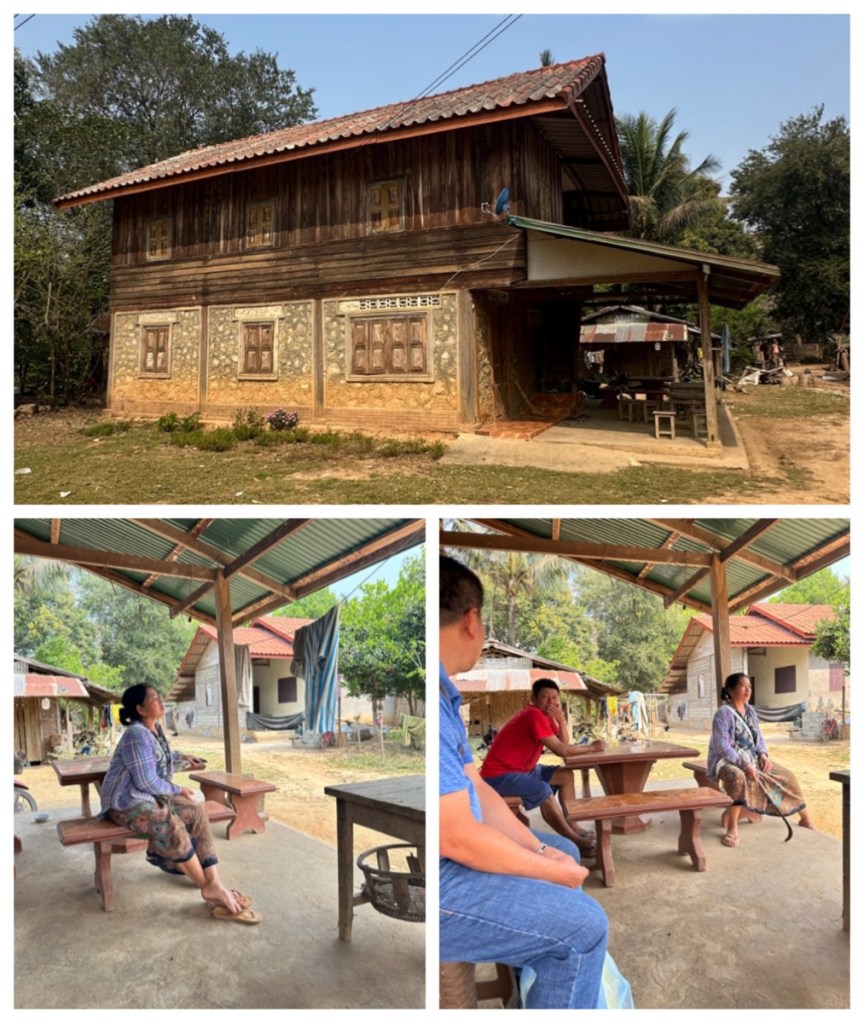
One local resident invited us onto her terrace and through interpreter Chan, she answered our questions about life in the village. Her brother also joined us. He had been the leader of the village for a few years (they have terms of five years in this role) and was very knowledgeable and forthcoming about their lifestyles.
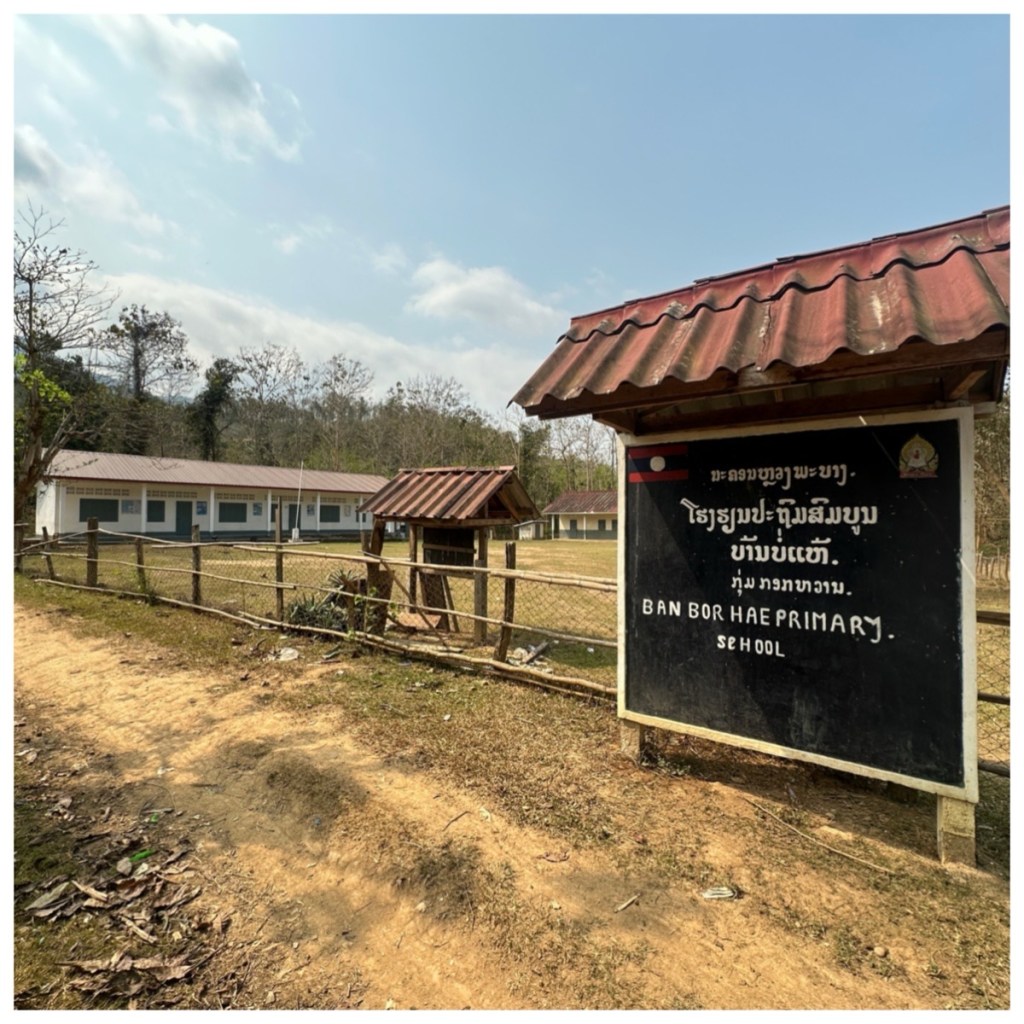
There is a primary school in the village with three teachers from that village and two others. The teachers are trained at a Teacher’s College. After primary school, the children must travel to another village for secondary school.
It was very interesting to see the lifestyles. For the most part, the village is self-sustaining, the people are friendly and seem content and happy with their lives. We asked Chan if they would feel that we were being intrusive and he said no, they welcomed people learning about their life. I believe that his friendly and interested interaction with them facilitated this.
After about an hour, we headed back up the hill to Pob and our vehicle.
Stop #2: Down the road, we turned off to travel uphill on a narrow dirt road with many pot-holes and washout ruts. This is when we really came to appreciate Pob’s incredible driving skills. He said he enjoyed the challenge. He also told us the road would be near-impassable in the rainy season. We noted that all of the vehicles in the village were four wheel drive pick-ups – and of course, motor scooters.
We arrived at the village of Ban Long Lan. Here there are 86 families with an average family size of six people.
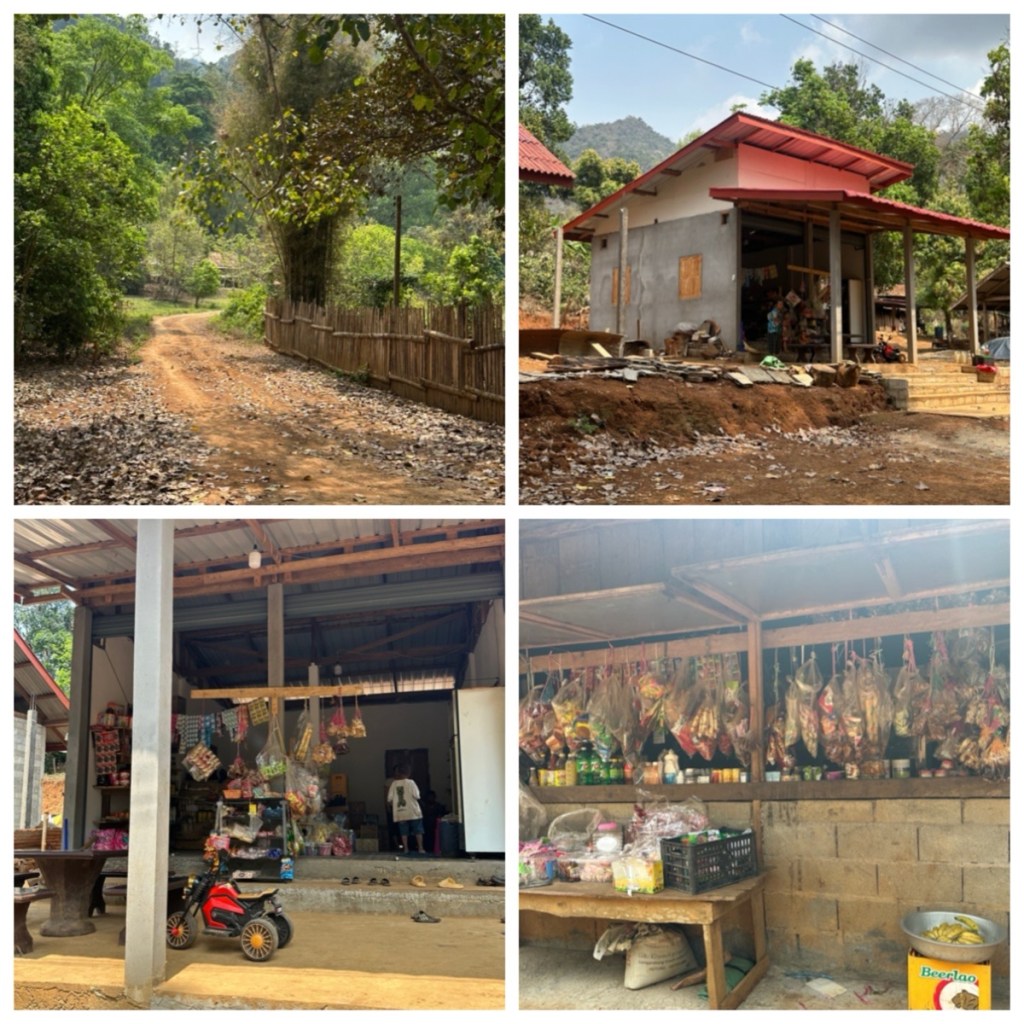
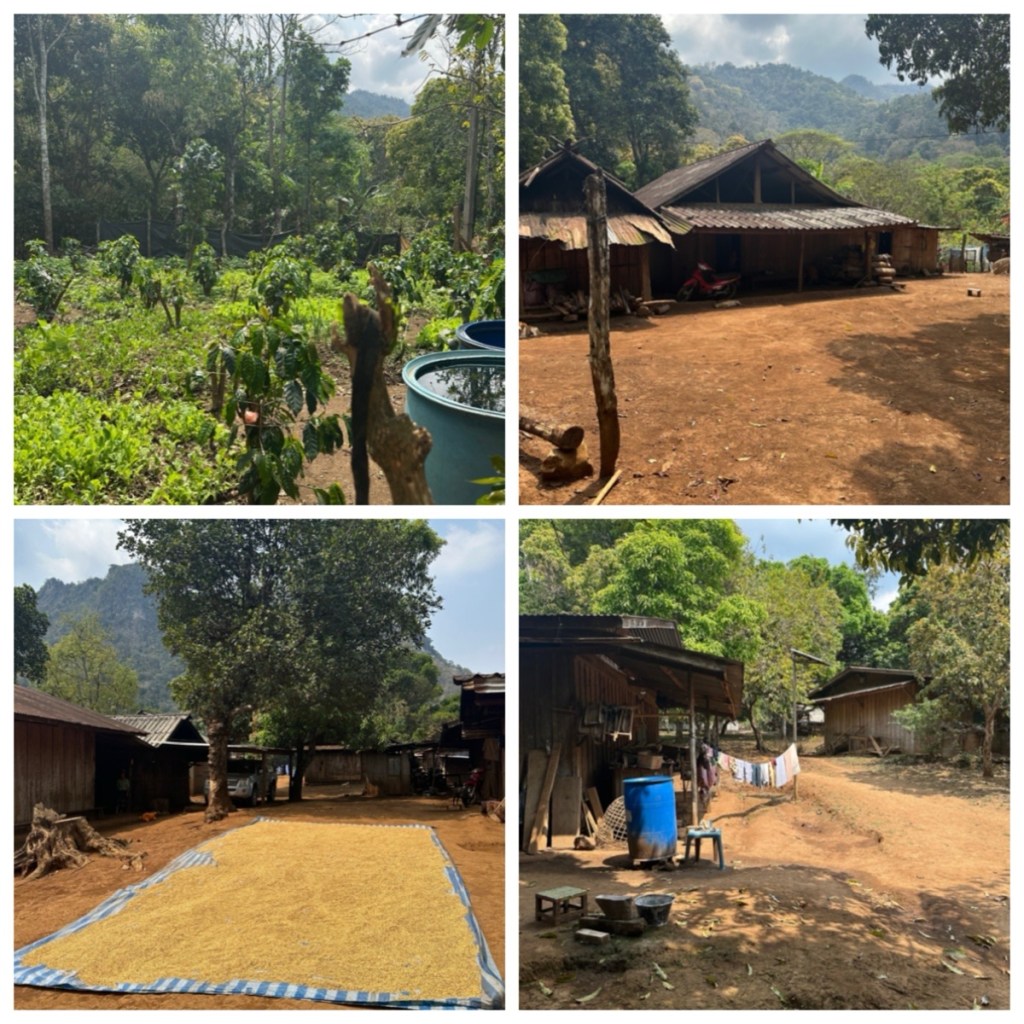
As with the previous village, the people were friendly and welcoming and the children were pleased to receive the school supplies. Even the younger, non-school-age munchkins were so happy to receive a colourful pencil!
We spoke to one secondary school student who told us he walks to a larger village on Sunday afternoon, stays in a dormitory and walks home again on Friday afternoon. He said it takes him about 30 minutes each way. When we said we thought it would be much longer, he laughed and said he knows a shortcut.
As with Ban Bor Hae, we found it so interesting and enjoyable to meet the people of Ban Long Lan and to have a glimpse of life in these remote locations. There were no other tourists / travellers there when we visited, making it such an authentic experience for us!
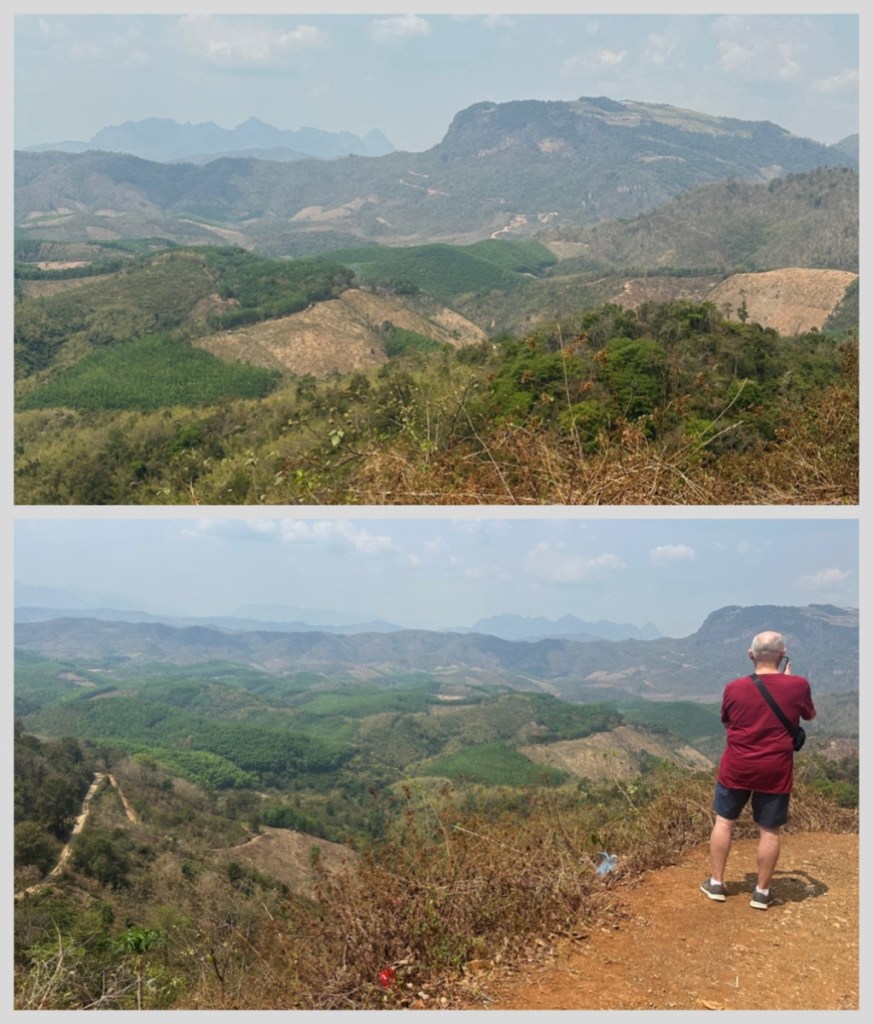
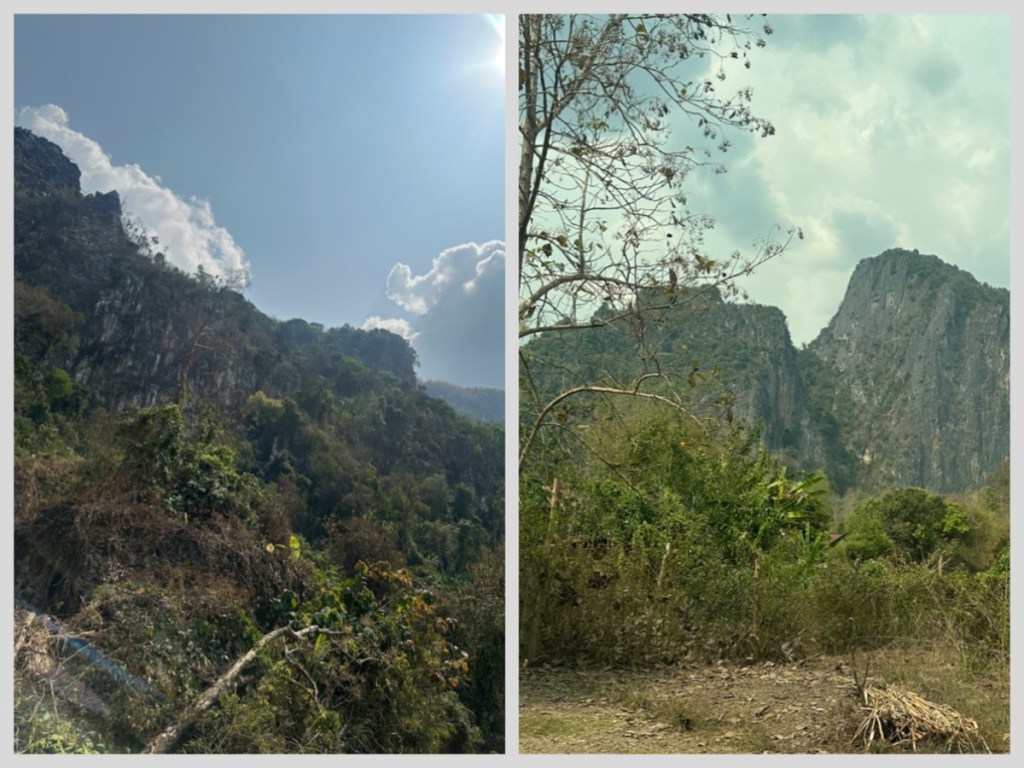
Stop #3: We then headed down the mountain, stopping for a couple of pictures of the extensive forested landscape.
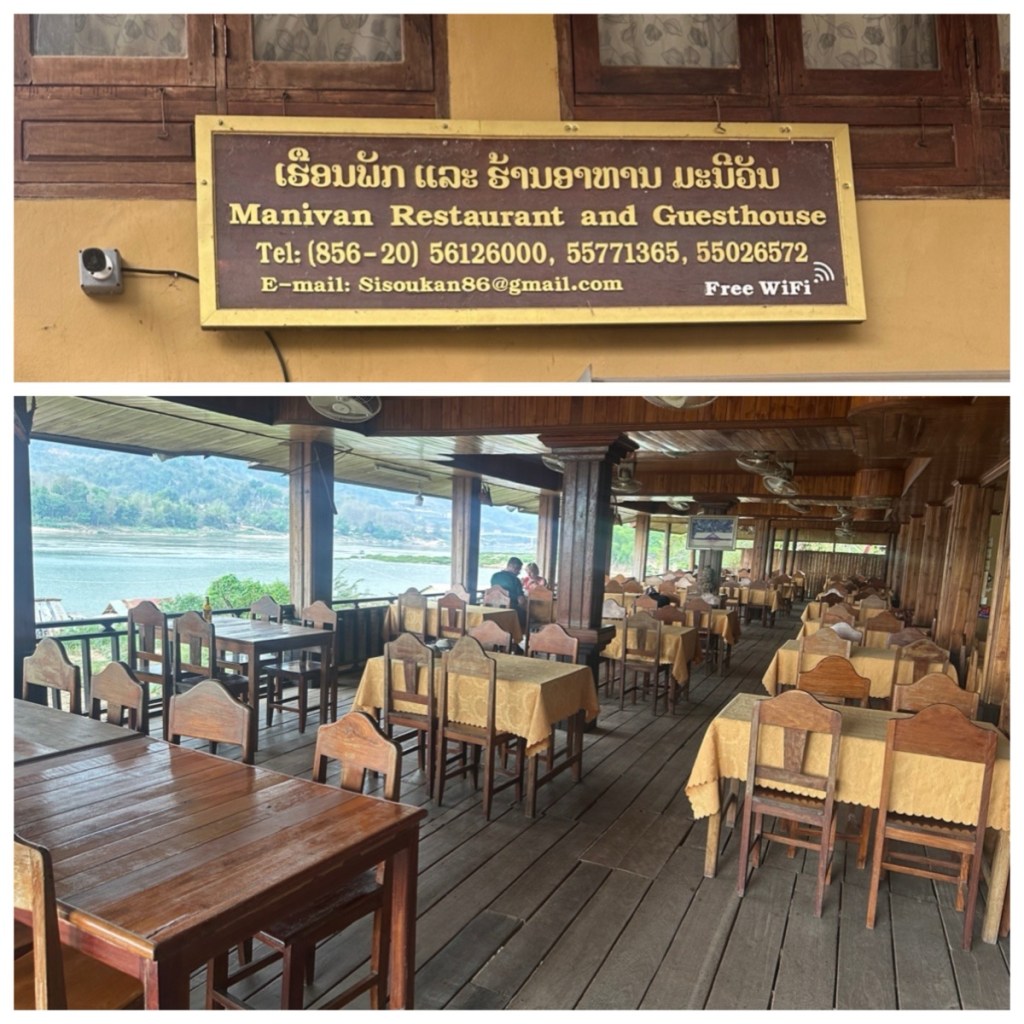
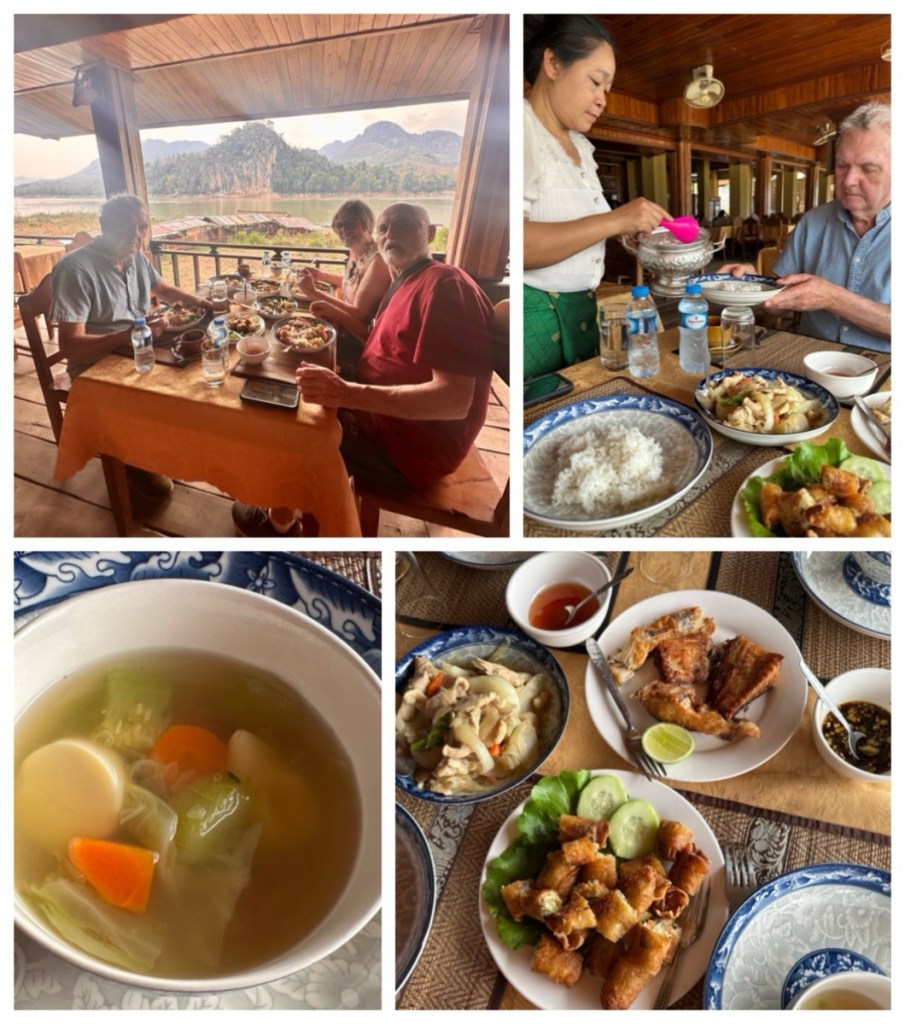
It was time for lunch and we went to the Manivan Restaurant in Pac Ou Village. This village sits directly across the Mekong from the Pac Ou Caves that we visited on Day 1. Chan had arranged for a set menu of Lao food which as usual was delicious.
Stop #4: After lunch, we had a fairly relaxing drive (after the mountain road, this road seemed luxurious) to the Xangkhong Posa Weaving and Paper Handicraft Village.
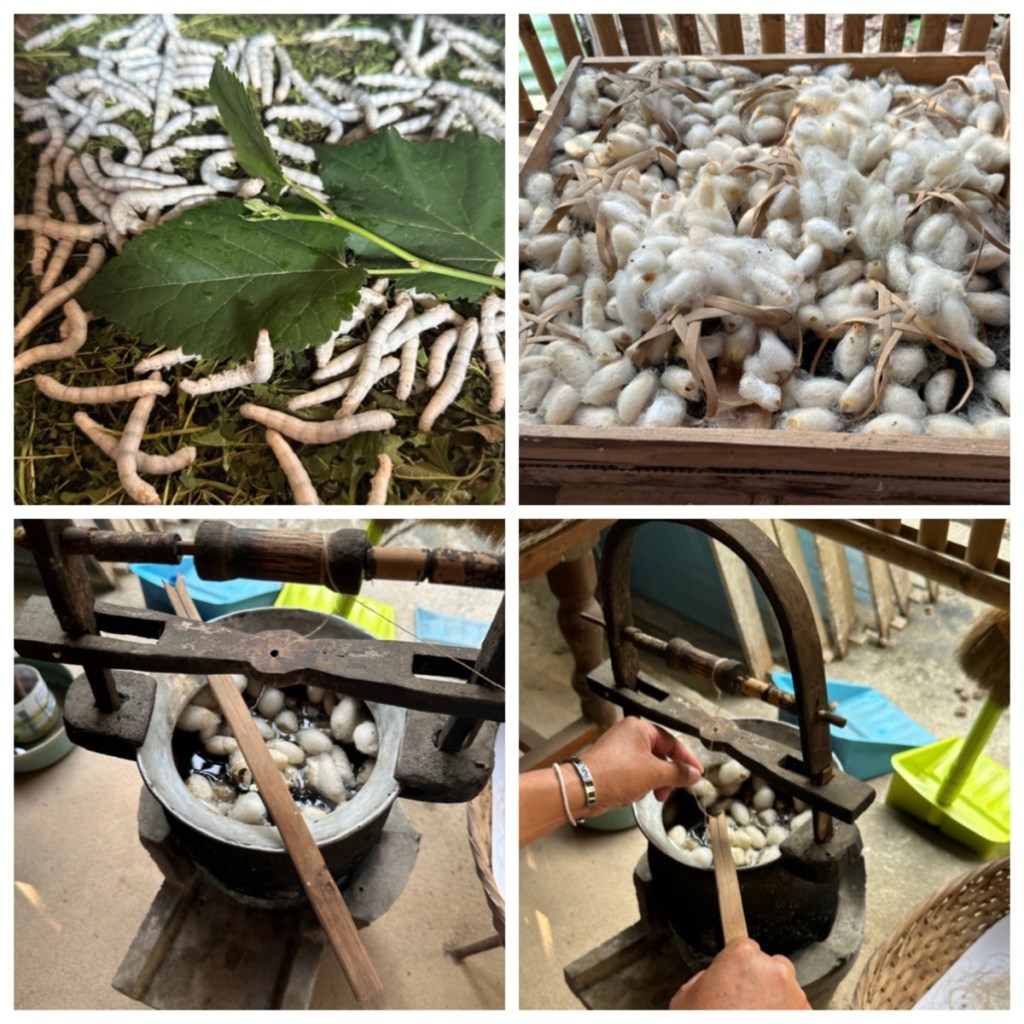
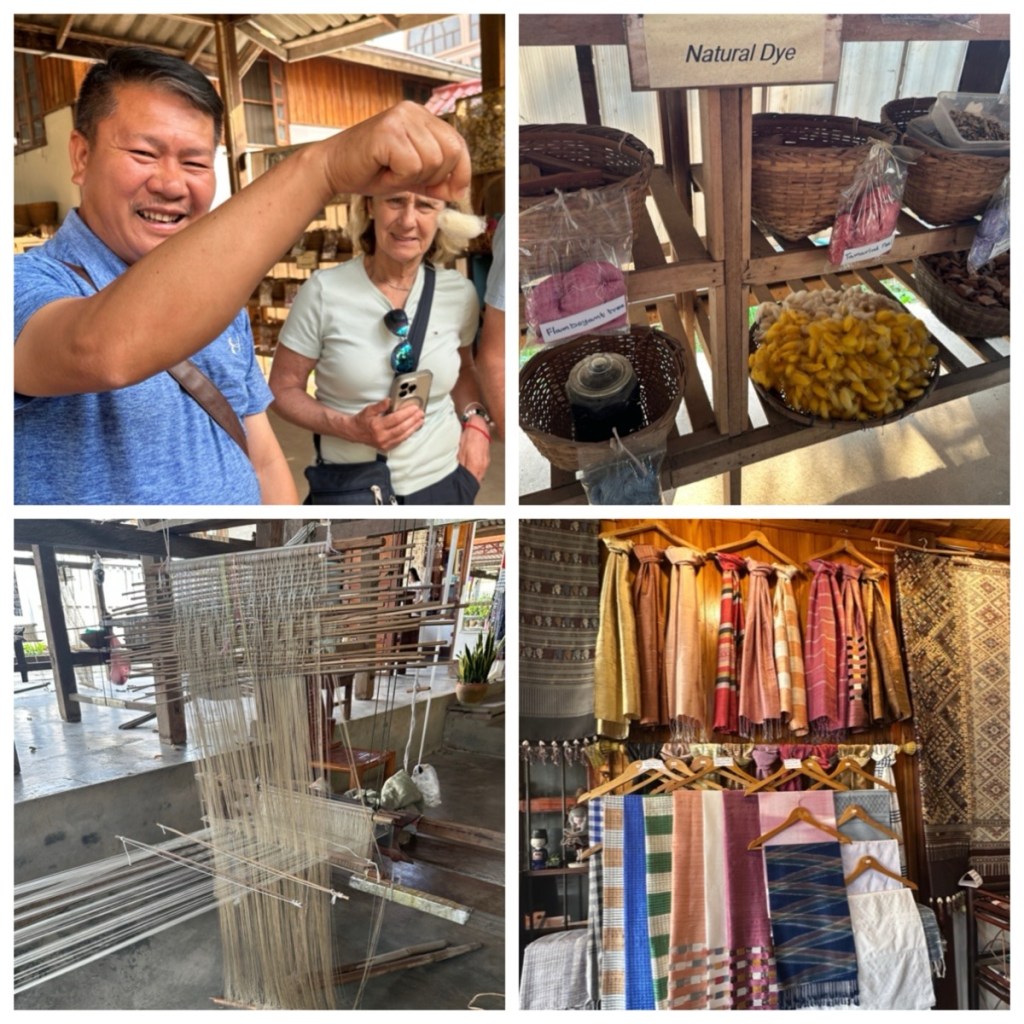
Our first visit was to a silk weaving shop. Here Chan walked us through the display that explained the production of silk from the cultivation of the silk worms to the weaving of the textiles. It was quite fascinating and if like me, you know nothing about this process, I would recommend researching it!
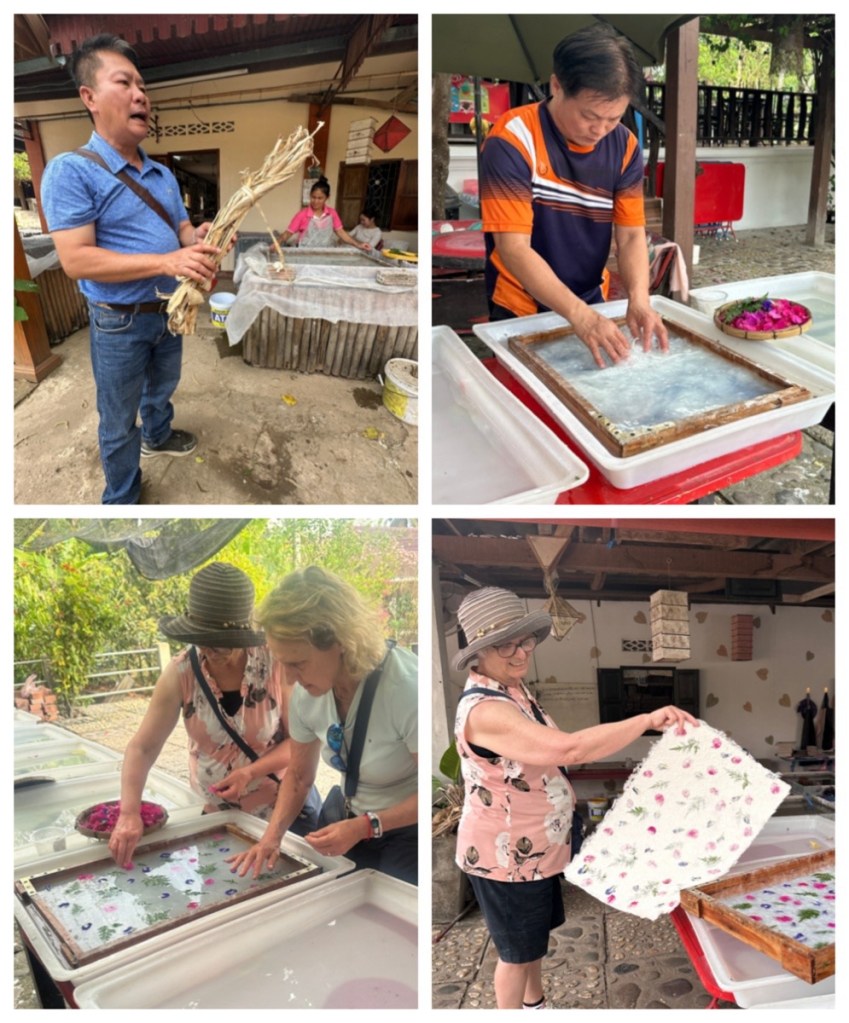
We then visited two stores that demonstrated the art of making paper. Again, a very interesting process and we were even able to help decorate a sheet.
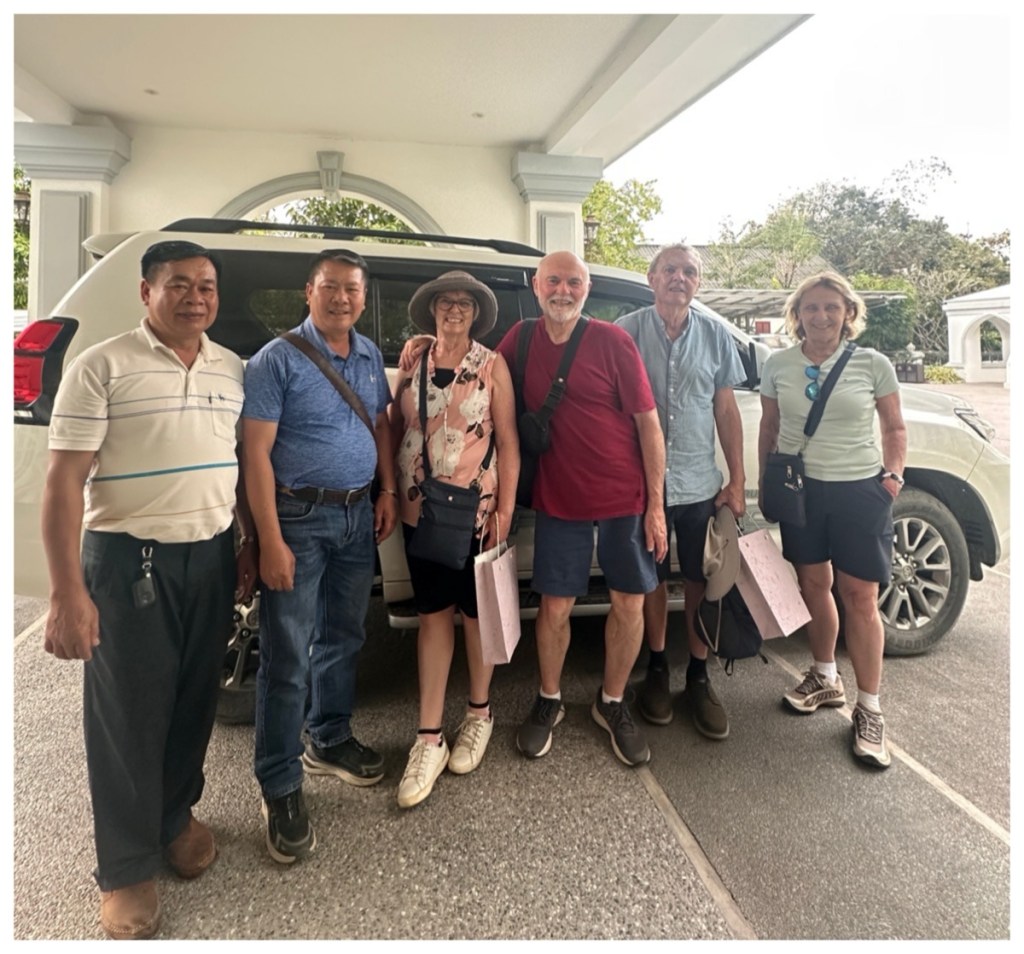
We made a few purchases and were on our way back to the hotel. Here we sadly had to say goodbye to Mr. Chan and Pob. In our two days with Chan, we felt we had made a wonderful new friend. His attention to our interests and tailoring of the tour to those made these two very memorable days.
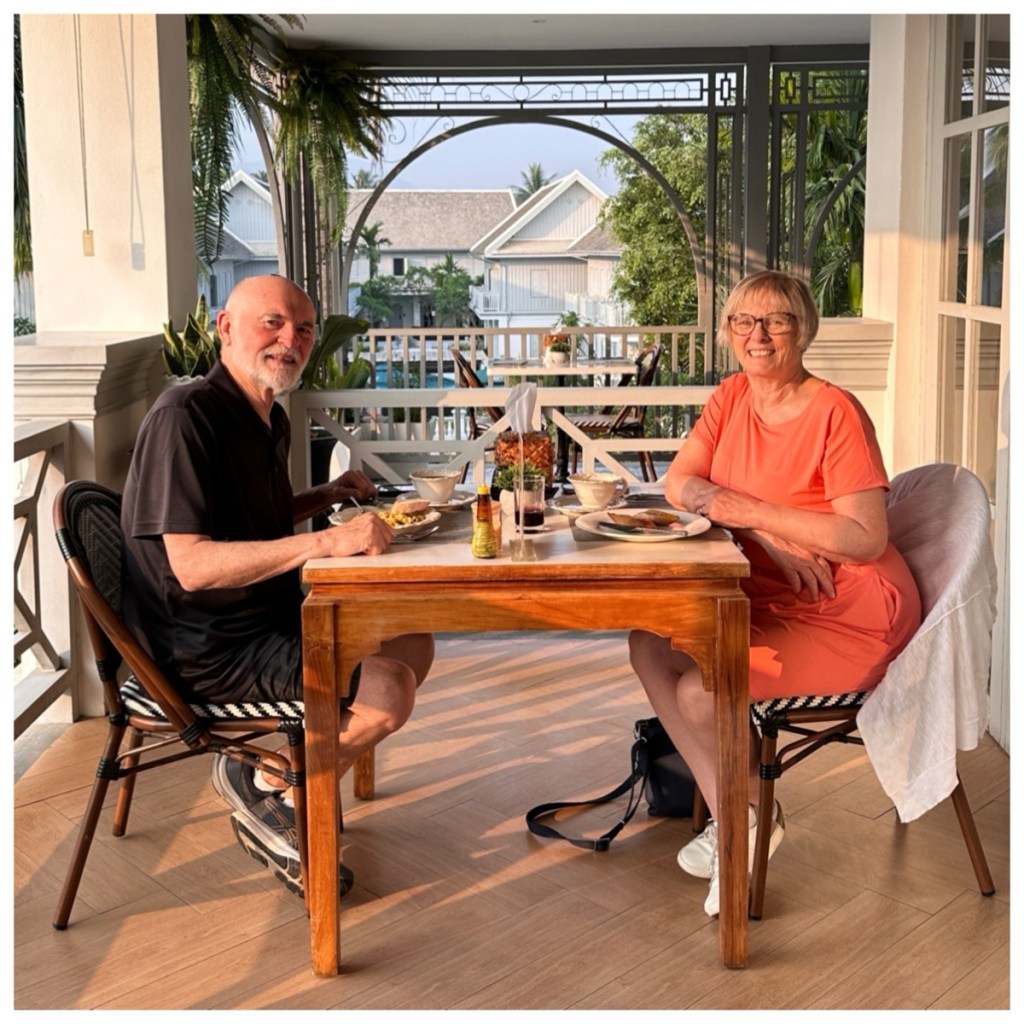
Day 4: We had a later flight so we had a chance to have one more leisurely breakfast and a nice lunch at the MyBanLao Hotel – again, we can’t say enough good things about this property. It was an excellent stay!
The experience of visiting Laos was one we won’t forget. I apologize for the length of this blog – there was just so many wonderful things to write about and show in pictures.
Now on to our next stop – keep an eye out for a blog in a few days. Thanks for reading!
Cheers,
Bev & Harvey
 A Long and Winding Journey
Wow! I’m exhausted just following you on your blog. Can’t imagine doing as much as you all did in such a short time.
LikeLike
Sounds like such a wonderful time, staying with a local family is definitely a really good way to get to know a place.
LikeLike