Leaving Luang Prabang, we travelled on Vietnam Air for a quick flight to Hanoi, Vietnam where we were met by a driver from our hotel. As we drove in to the city, we noted there is a lot of bright neon lighting!
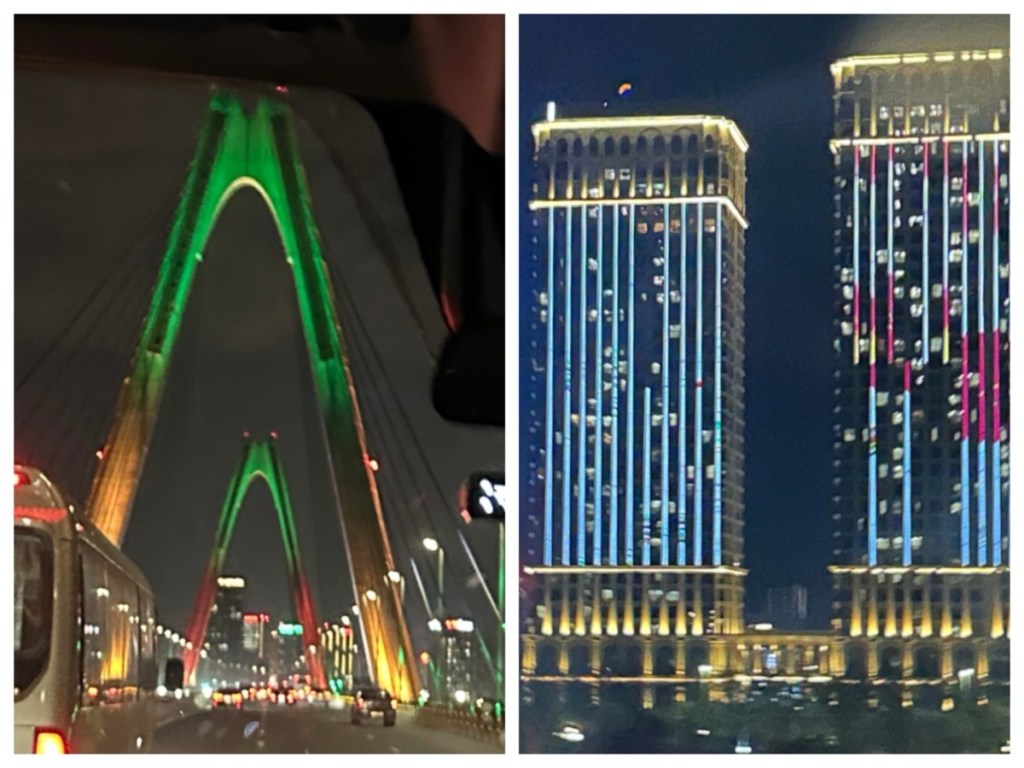
Vietnam is a country of 102 million people. It is bordered by China to the north, and Laos and Cambodia to the west as well as the Gulf of Thailand to the southwest and the South China Sea to the east. Vietnam is one of the two Communist countries in Southeast Asia (the other is Laos).
Historically, China has had the biggest cultural and economic influence on Vietnam with France, Japan and the United States also playing significant parts in its history.
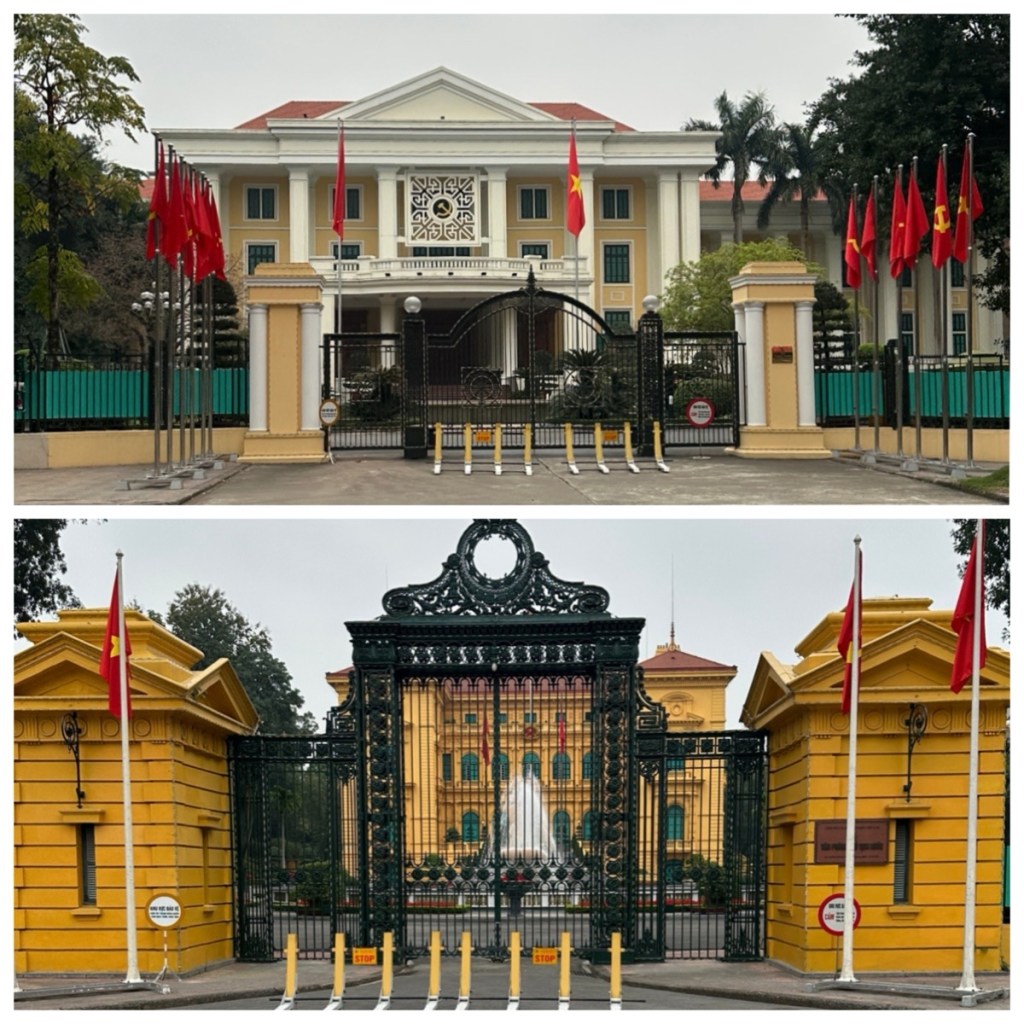
Hanoi is situated in northern Vietnam on the western bank of the Red River. It has about 9 million people and is the capital of Vietnam. This is quite obvious by the number of grand government buildings in the city. We would have had more pictures of the buildings but at one point as Harvey and Larry looked through the fence, a guard approached and told them “Get Away”.
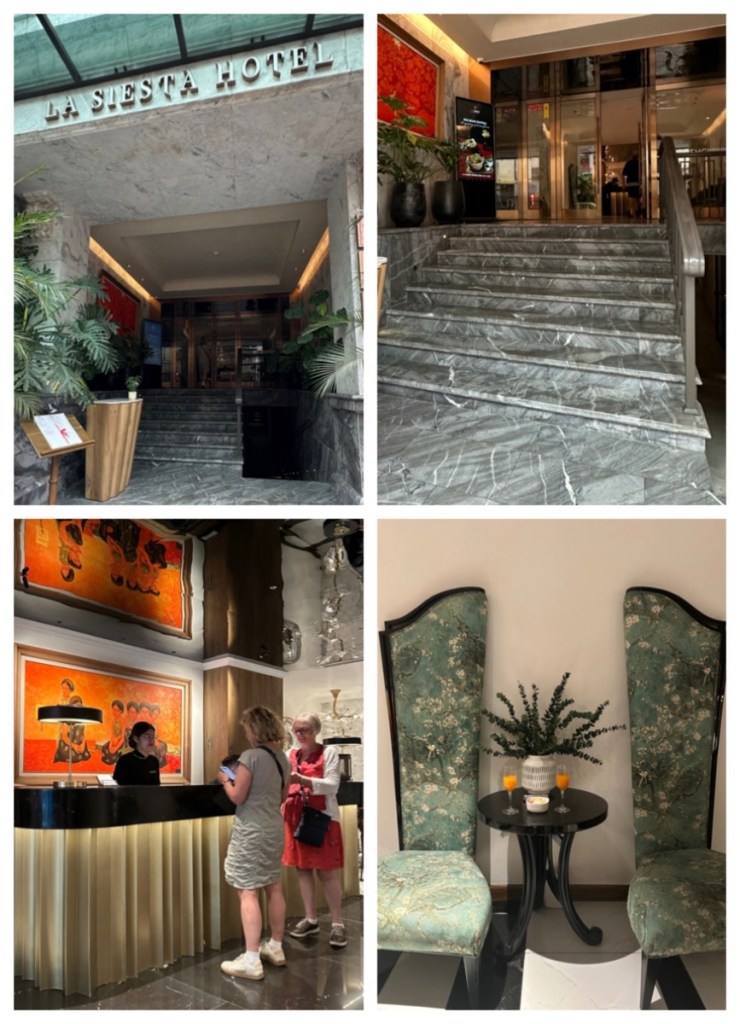
When I was researching hotels in Vietnam, I found it somewhat difficult as many did not respond to my emails when I had questions. I did however get great responses from Ms Phan Toan at the La Siesta Hotel chain. Consequently, we chose the La Siesta Classic Hang Thung for our hotel in Hanoi. Ms Phan was very helpful, arranging our hotel, airport transport, Halong Bay Cruise and day tours in the area.
We were very pleased with this hotel – a well-appointed hotel with very friendly and helpful staff. We felt we made friends with a couple of the young ladies at reception and the breakfast area.
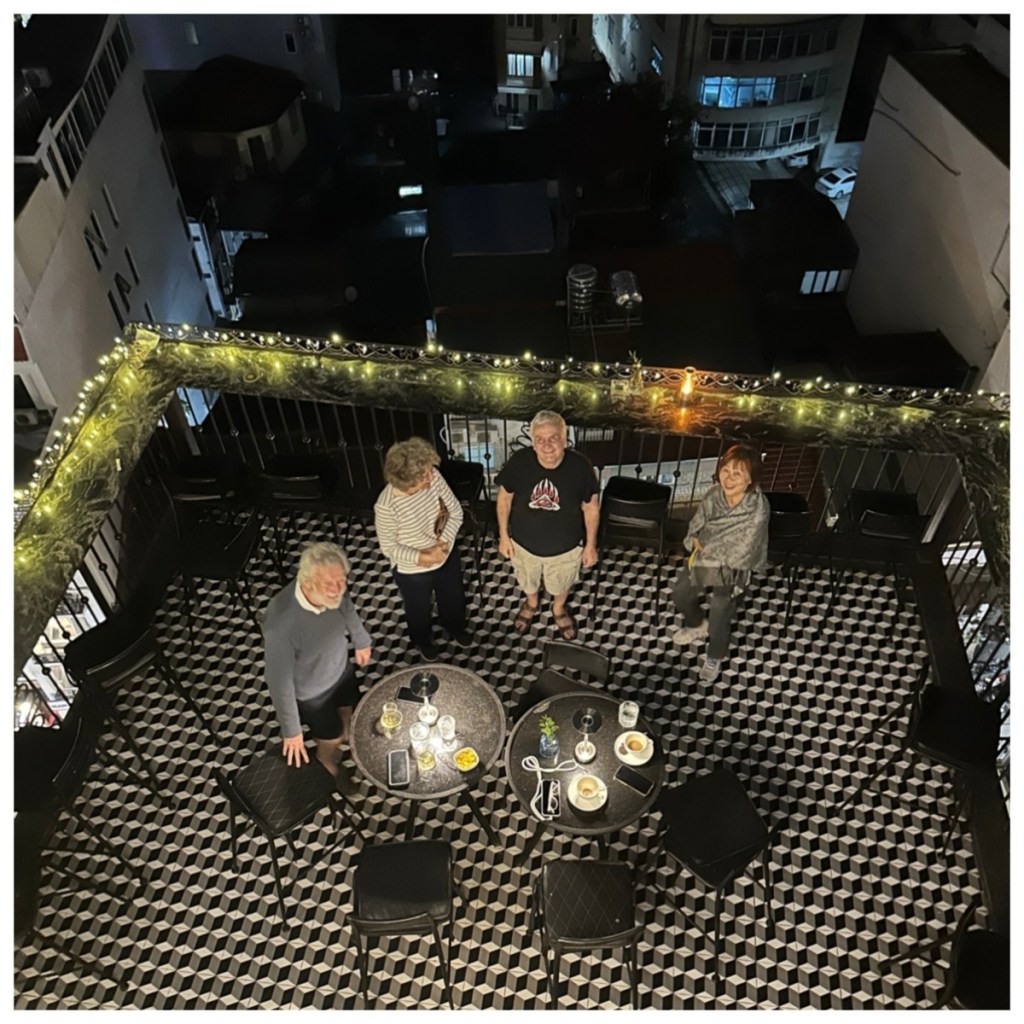
After arriving at our room, we looked down from the balcony at the SkyBar, and there we found Cousin Ron and our new friends, Carol, Elaine and Jonathon, who were joining us for a few more days!
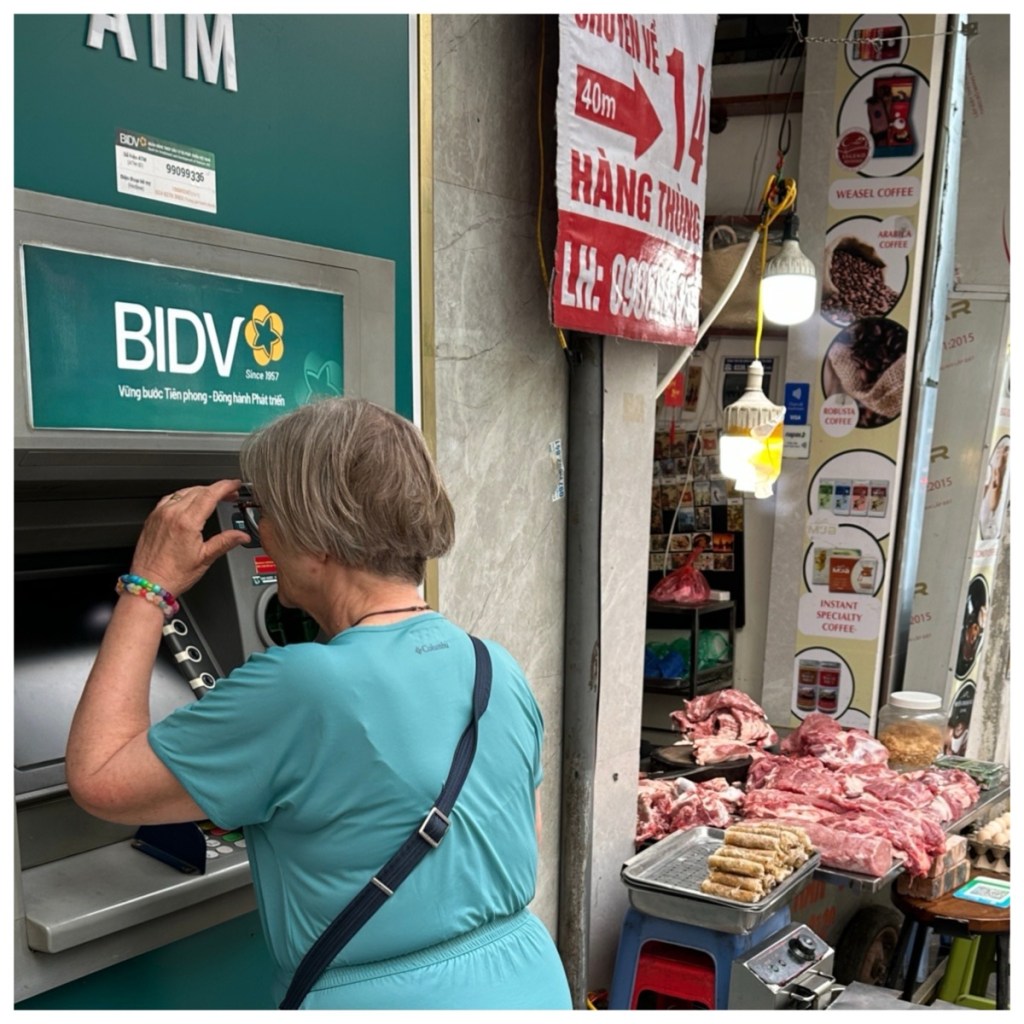
Day 1: Another hotel with an amazing breakfast! This has certainly been the theme on this trip. We then went in search of Vietnamese Dong (the official currency). We tried the ATMs in front of a number of banks to no avail – these machines either wouldn’t even take a card or stated withdrawals were unavailable. We spoke to other travellers having the same issues. Then we tried a stand-alone ATM across the street from the hotel and it was a success! One of our hotel friends said it was a new machine and not yet on Google Maps so didn’t get a lot of traffic. It was located right next to a street stand selling raw meat but it gave us our cash so we were happy.
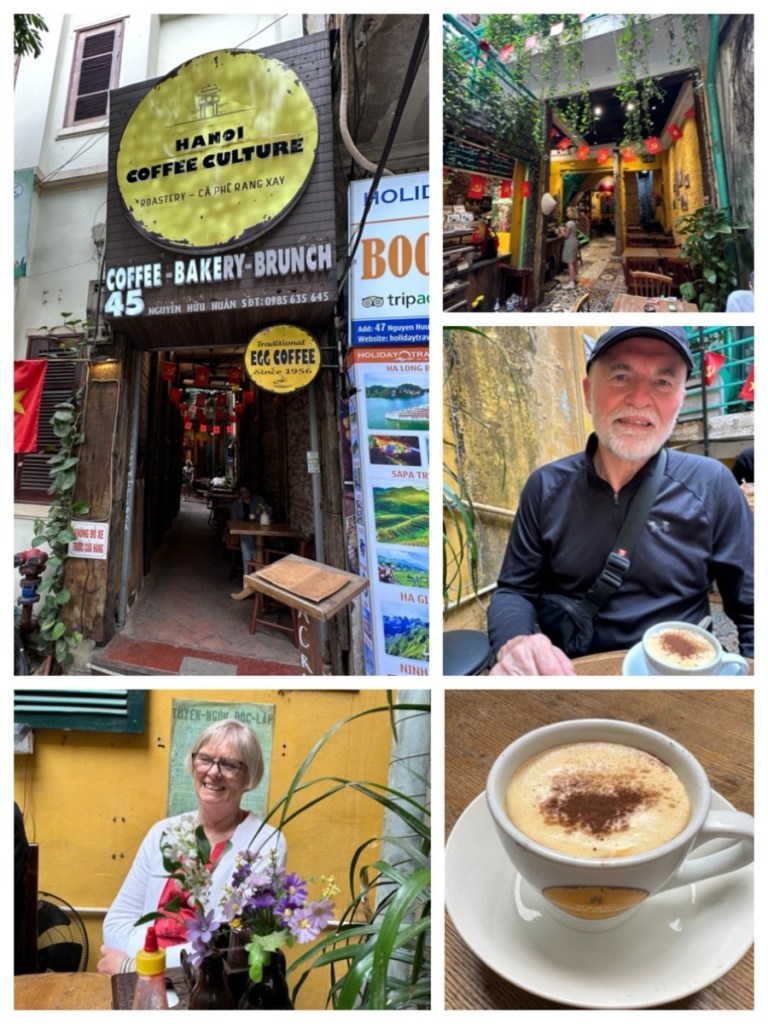
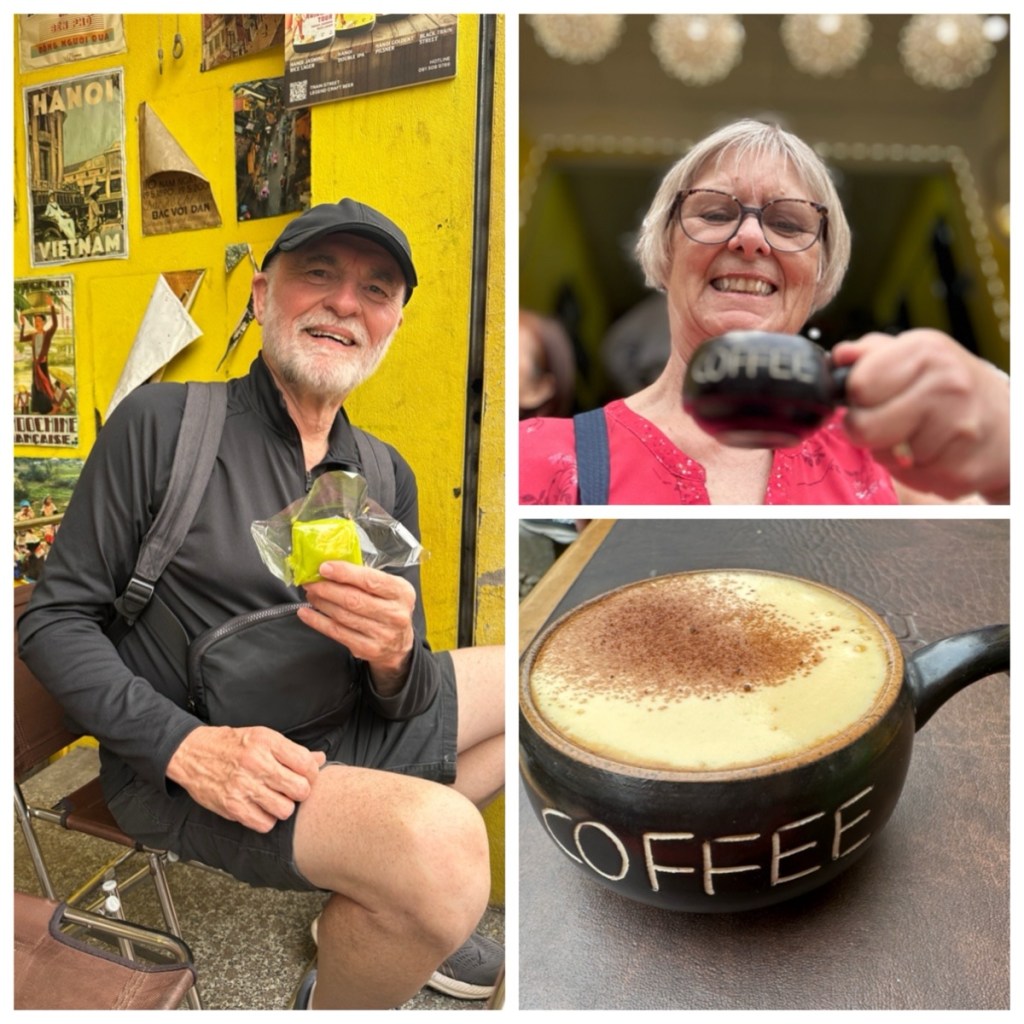
Stop #1: To celebrate this accomplishment, we went for egg coffee! Rather than elaborating on this drink that you find everywhere in Vietnam, I refer you to out travelling companion Debbie’s great blog devoted to the topic – “You never forget your first time (drinking egg coffee in Hanoi, Vietnam)”. Those of you who know me well know that I’m a tea drinker, not coffee – but I must say egg coffee – and others that I’ll mention later – could convert me to coffee. However, I don’t think it would be the healthiest full-time drink! 😉😳
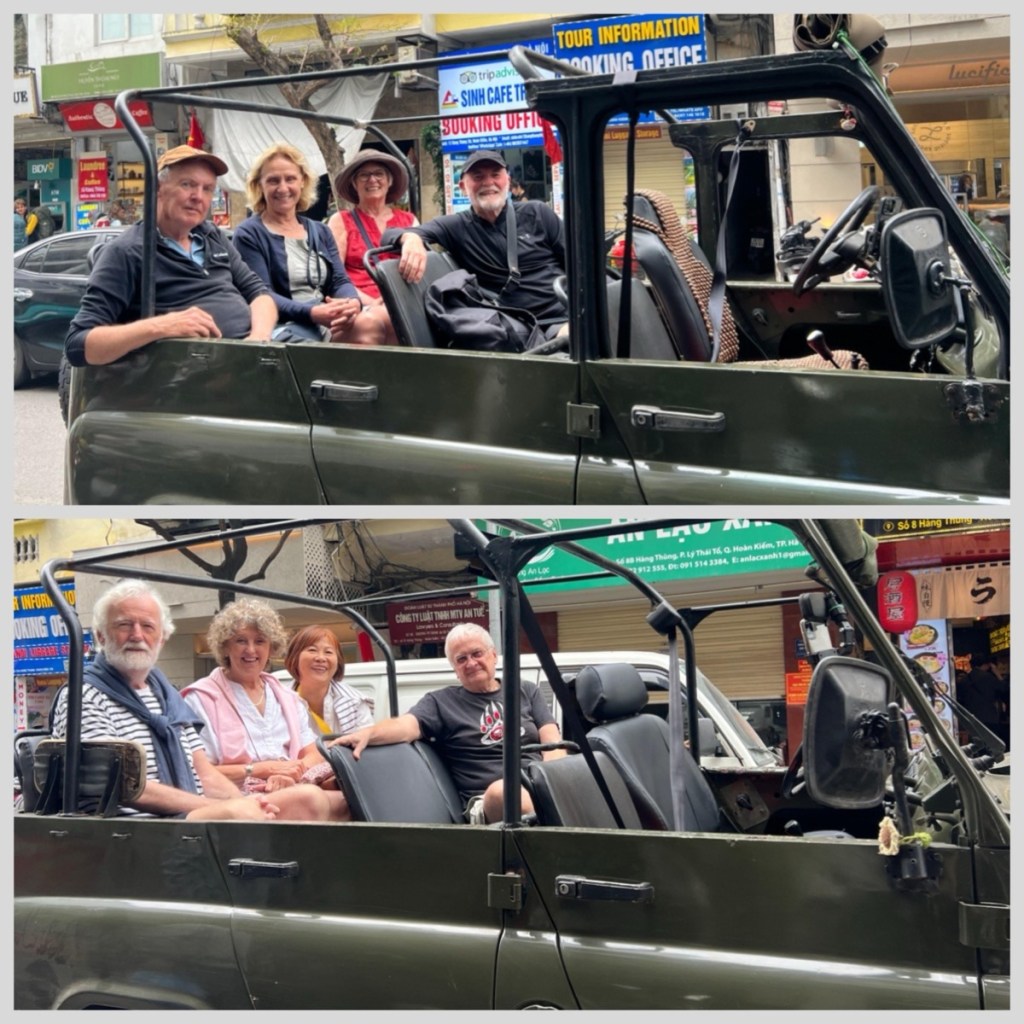
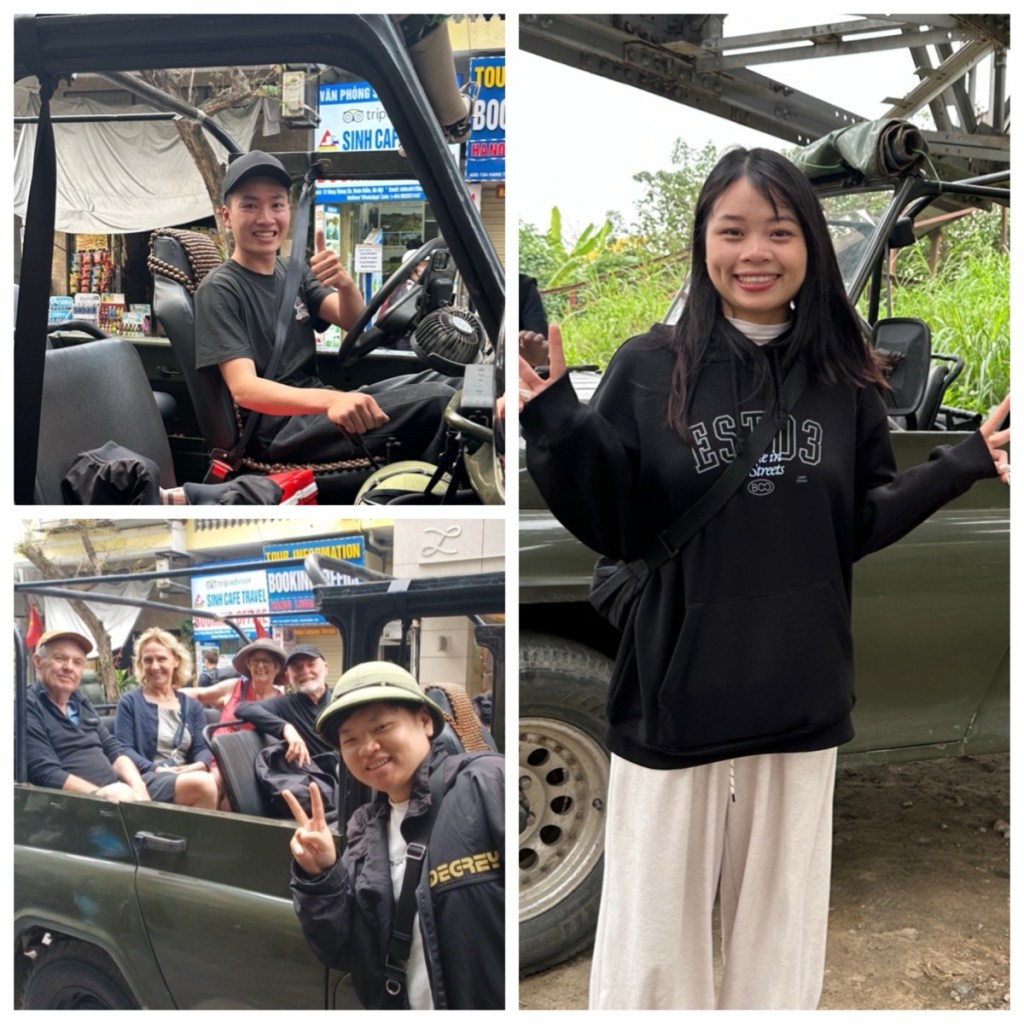
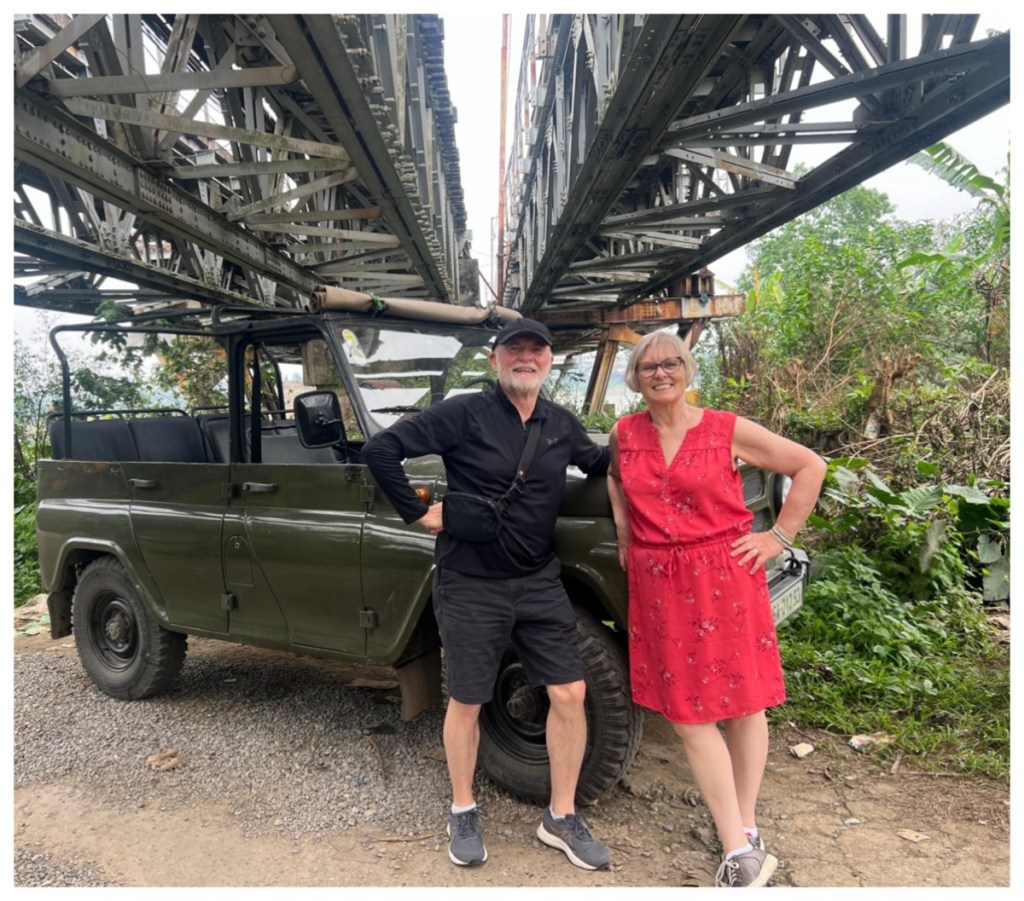
Stop #2: At noon, we were ready for the first of our tours booked by Ms Phan Toan. On our Hanoi Jeep Tour , the eight of us climbed into two WWII Russian Jeeps with some great young people. In our jeep, we were accompanied by guide Summi and driver Minhba. Guide Hoa from the second jeep partnered with Summi at each of the stops to provide great information.
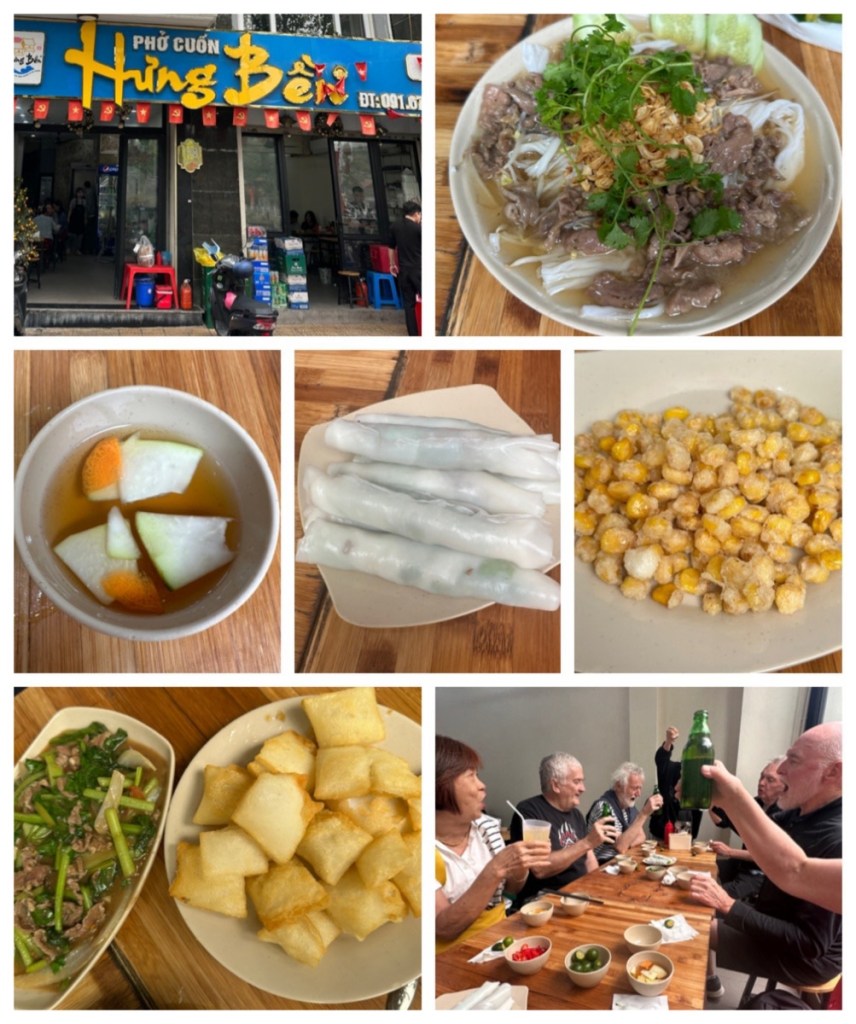
The first order of business on the tour was lunch! Our jeeps took us to Phở Cuốn Hưng Bền where we enjoyed a variety of the restaurant’s renowned phở dishes including stir-fry phở, phở rolls and puffed fried rolls accompanied by Tiger beer.
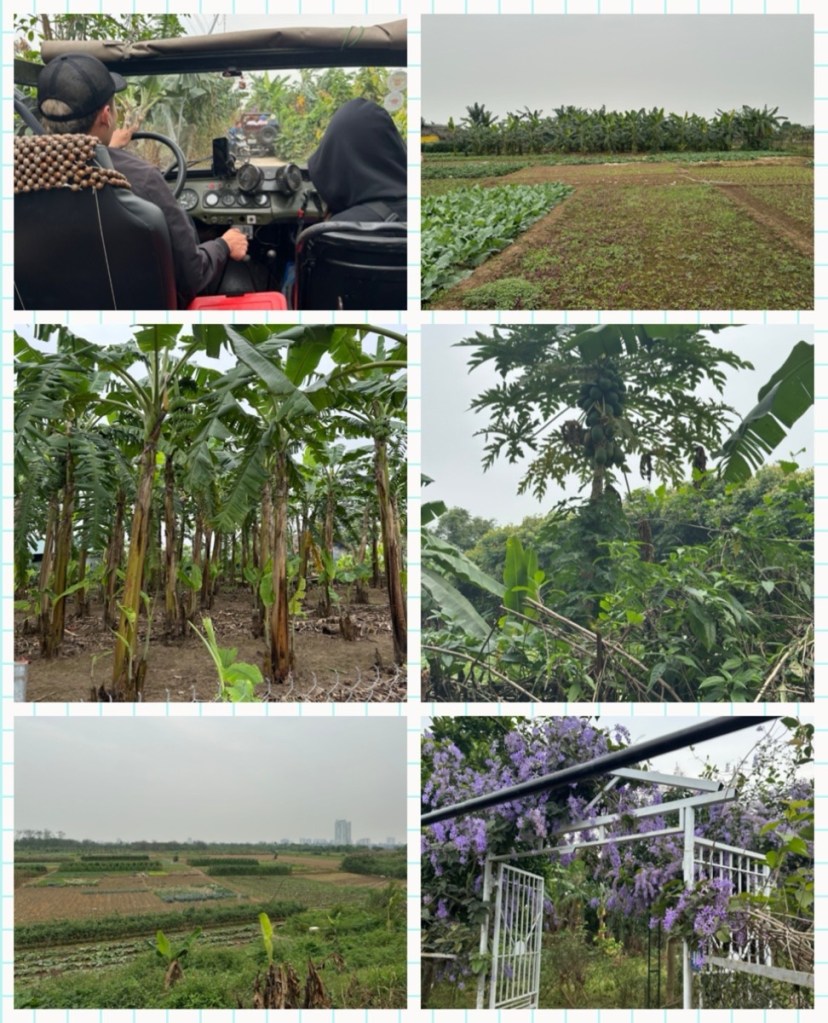
Stop #2: Our tour then headed to Banana Island or Bãi Giữa as the locals call it. This island is located in the middle of the Red River and is primarily a farming area, with vast lush banana plantations and other crops. A small community live in simple, self-made houses and sustain themselves through their agricultural pursuits.
The road around the island is a simple path and allows you to view and enjoy the lush surroundings.
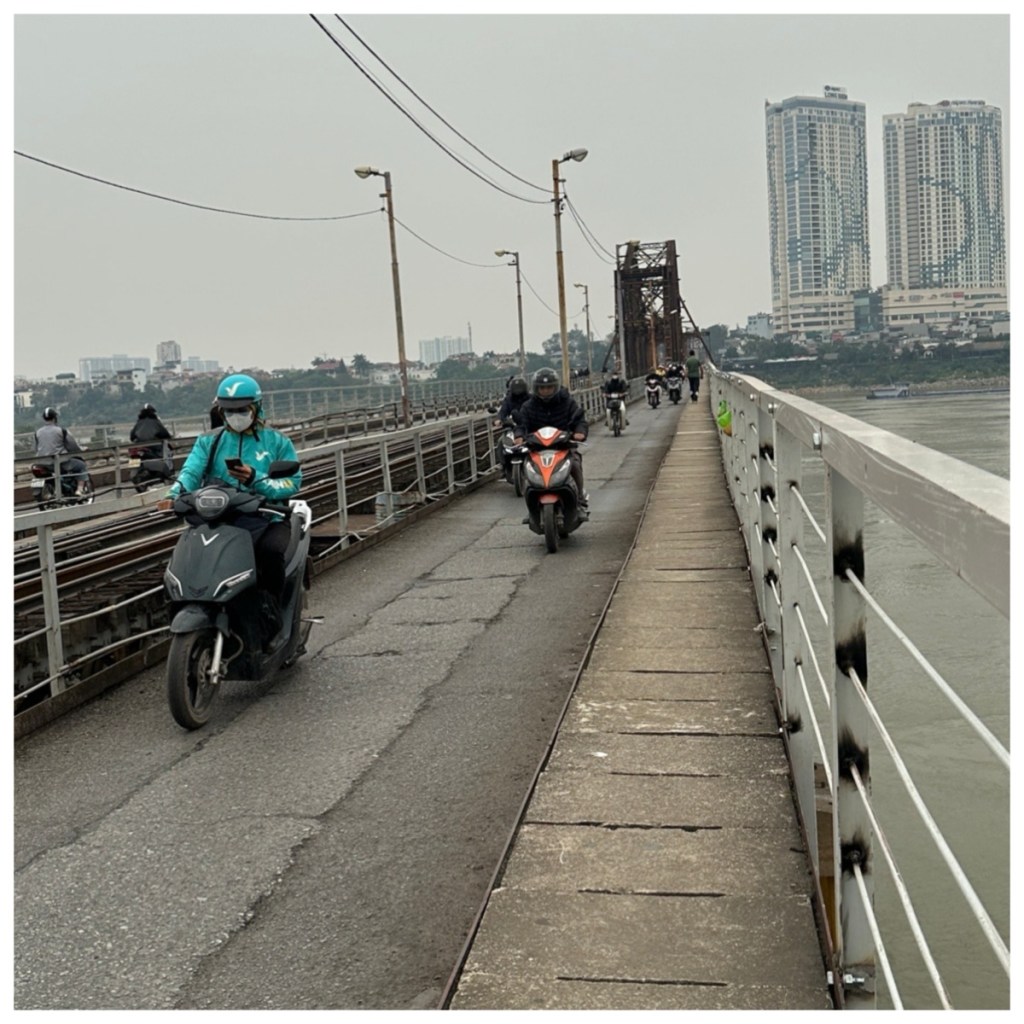
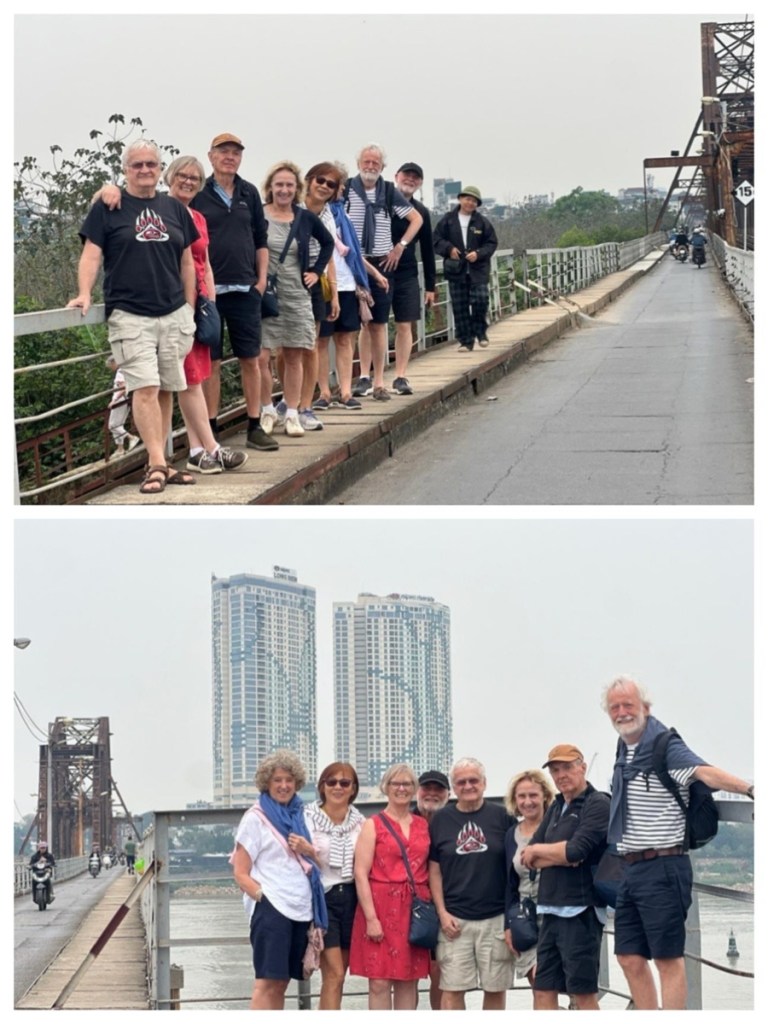
We stopped on the island and ascended a staircase up to Long Bien Bridge. The bridge was designed by a French company and constructed under the guidance of French experts. Construction began in 1899 and completed 45 months later. Over 3,000 Vietnamese workers used up to 30,000 cubic meters of stones and metals to build the 1,682 metre long structure. At the time of completion, it was the second longest bridge in the world (just after the Brooklyn Bridge). It is often referred to as “the horizontal Eiffel Tower in Hanoi”.
The bridge has been a witness to the history of Hanoi, including the two Indochina Wars against the French and Americans. In September 1945, before President Ho Chi Minh read the declaration of independence in Ba Dinh Square, thousands of people living on the outskirts flocked over the bridge to witness the event. The bridge was heavily damaged by the US’s bombardment from 1965 to 1968, and was later repaired in 1973.
Due to the drastic increase in the number of vehicles since the 1990s, this bridge is now used only for trains, motorcycles, bicycles, and pedestrians. The single-track railway bridge runs in the middle while two side paths are used for motorbikes and bicycles (about 2.6-meters wide) and pedestrian way (about 0.4-meters wide). The direction on the Long Bien Bridge is left-hand traffic, instead of right-hand traffic used elsewhere in the city.
Our guides pointed out that the Red River near the bridge is home to Hanoi’s nude swimming club. We spotted a couple of members in the distance swimming in the river and met a group on the road (they had thankfully donned some clothing as they walked away from the swimming).
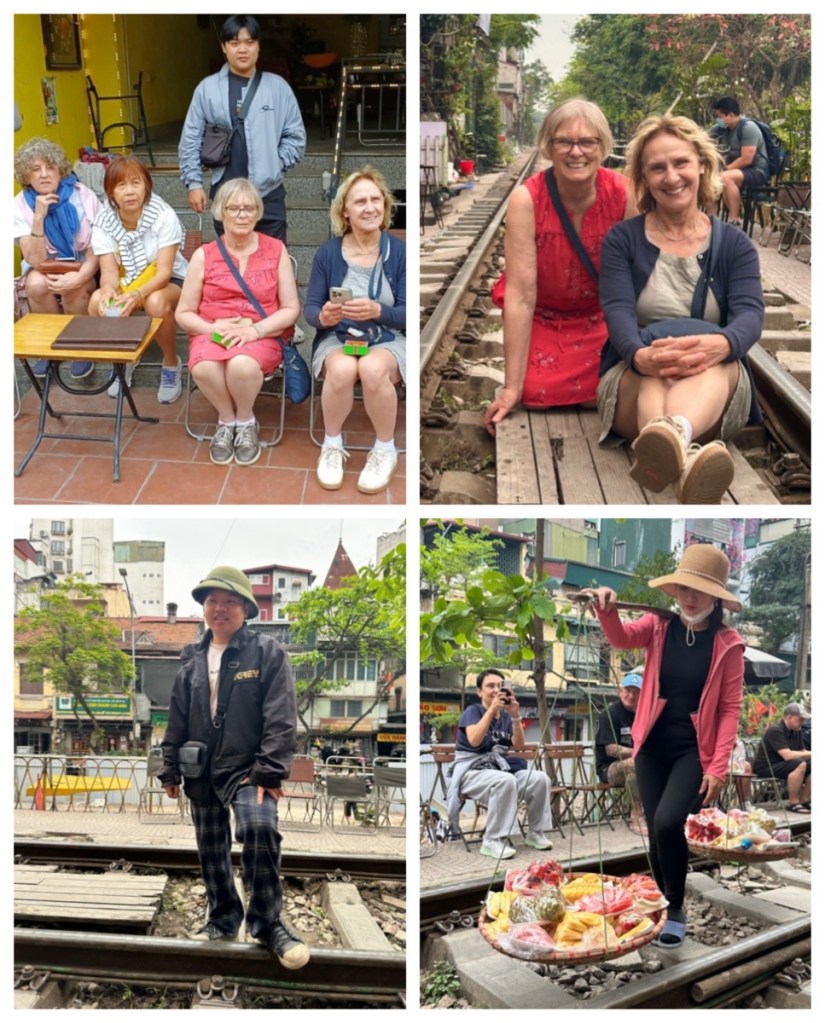
Stop #3: The Hanoi Train Street is situated along a narrow train track near the main Hanoi Railway Station. The track was built by the French in 1902. Several times a day, the train passes very close to the buildings next to the tracks. Watching the train pass by within what seems like mere inches while enjoying a Vietnamese egg coffee has become a tourist experience and our guides situated us right in the middle of the action.
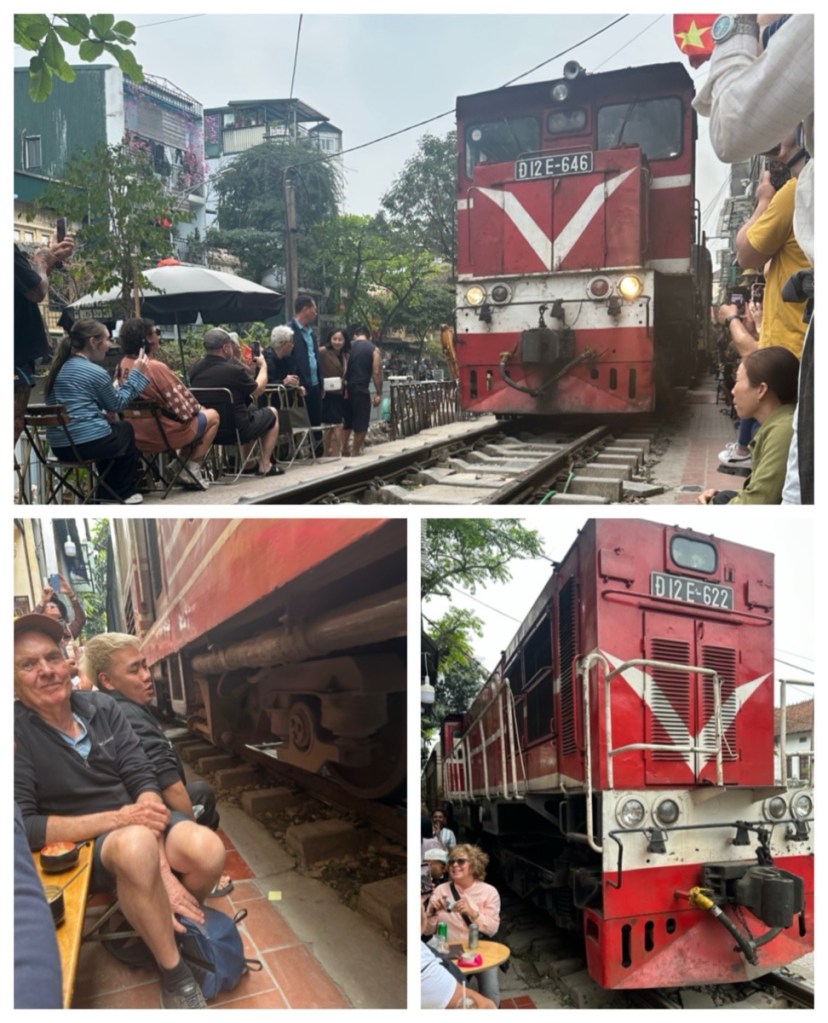
I commented that I was feeling somewhat buzzed, what with the beer for lunch, the egg coffee and what felt like a near-death experience of the train passing by.
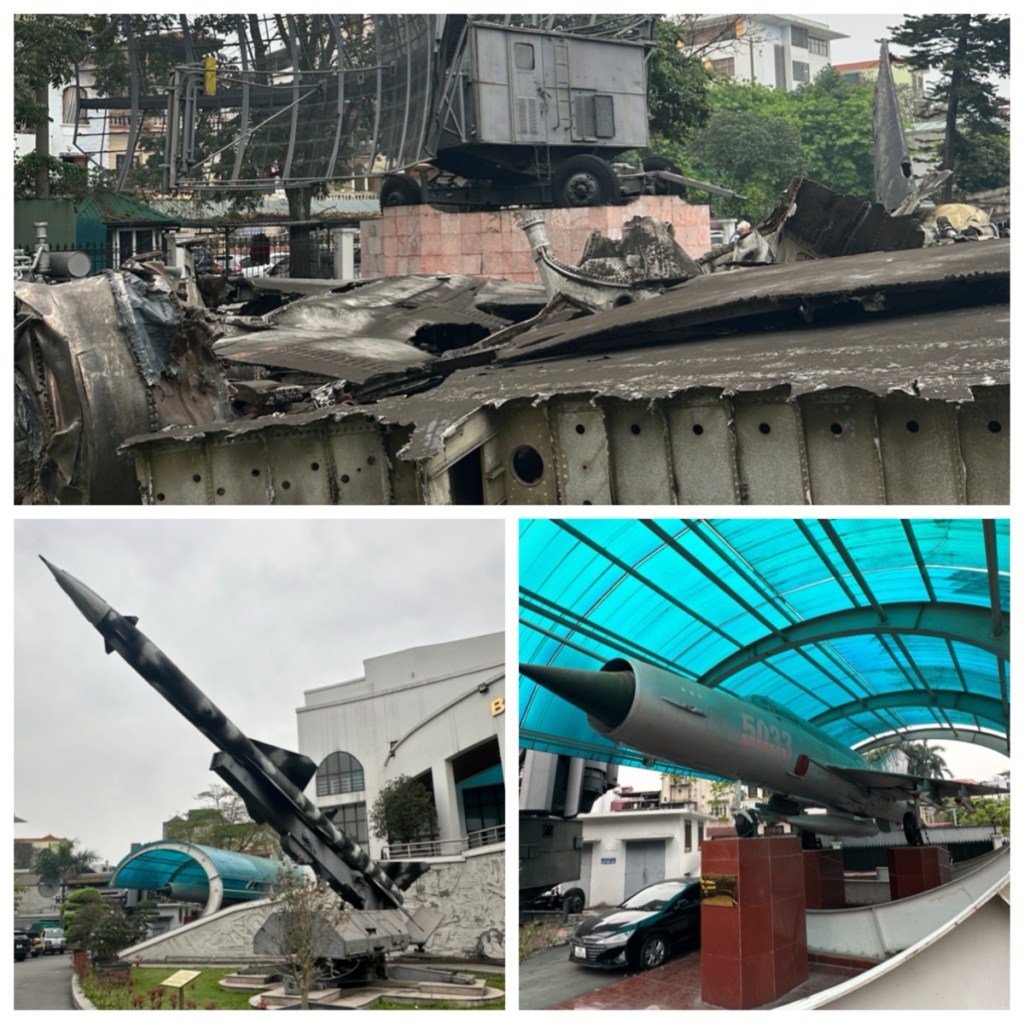
Stop #4: Our final stop of the tour was at the B52 Victory Museum. This museum was established by the Vietnamese government to “commemorate the defense of the Vietnamese people and army against the US Air Force’s air attacks in December 1972”. This battle is often referred to as “Dien Bien Phu in the air” by the Vietnamese or as “Operation Linebacker 2” among Americans. The area features the wreckage of a downed B52 bomber as well as the weapons used to down the bombers. I present just a couple of photos of the area and leave it to you to research more if you are interested and determine your own understanding of these events.
So ended our day with Summi, Hoa and Minhba. They were a fun bunch of young people and we enjoyed the afternoon.
Day 2: For this day, we had booked a Hanoi City Tour. Our guide Sinh and his very capable driver picked us up in the morning and off we went to see the city sights.
Stop #1: Our first stop was at the Tran Quoc pagoda. As we have travelled in Asia, we have noted that the differences between the terms temple and pagoda can be confusing. Our guides Sinh described the use of the terms in Vietnam in this way:
A Temple is for worshiping a real person, like a king, a queen, a national hero or some saints who are asked for help in certain circumstances. A Pagoda is the place where Buddhists go to pray and worship Buddha. It is also the place for monks to live and study as well as to provide Buddhism lessons.
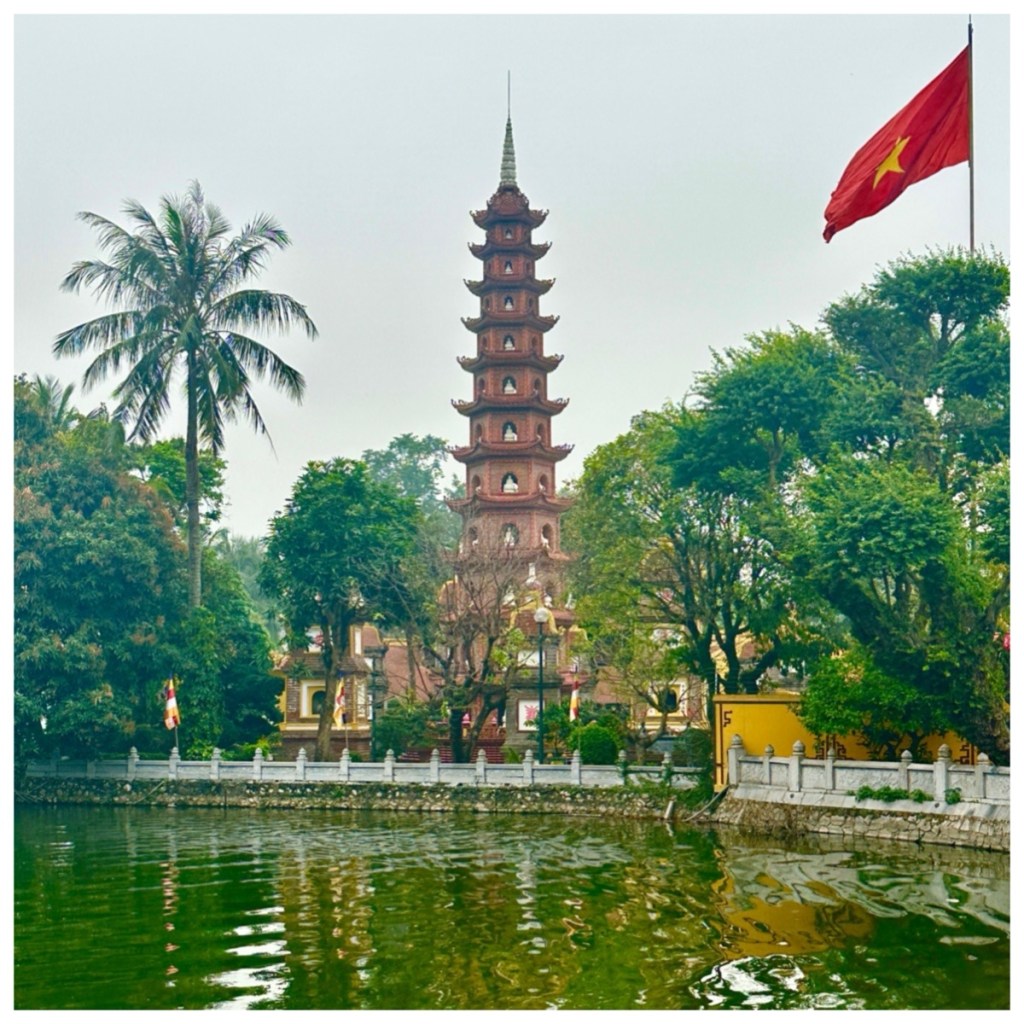
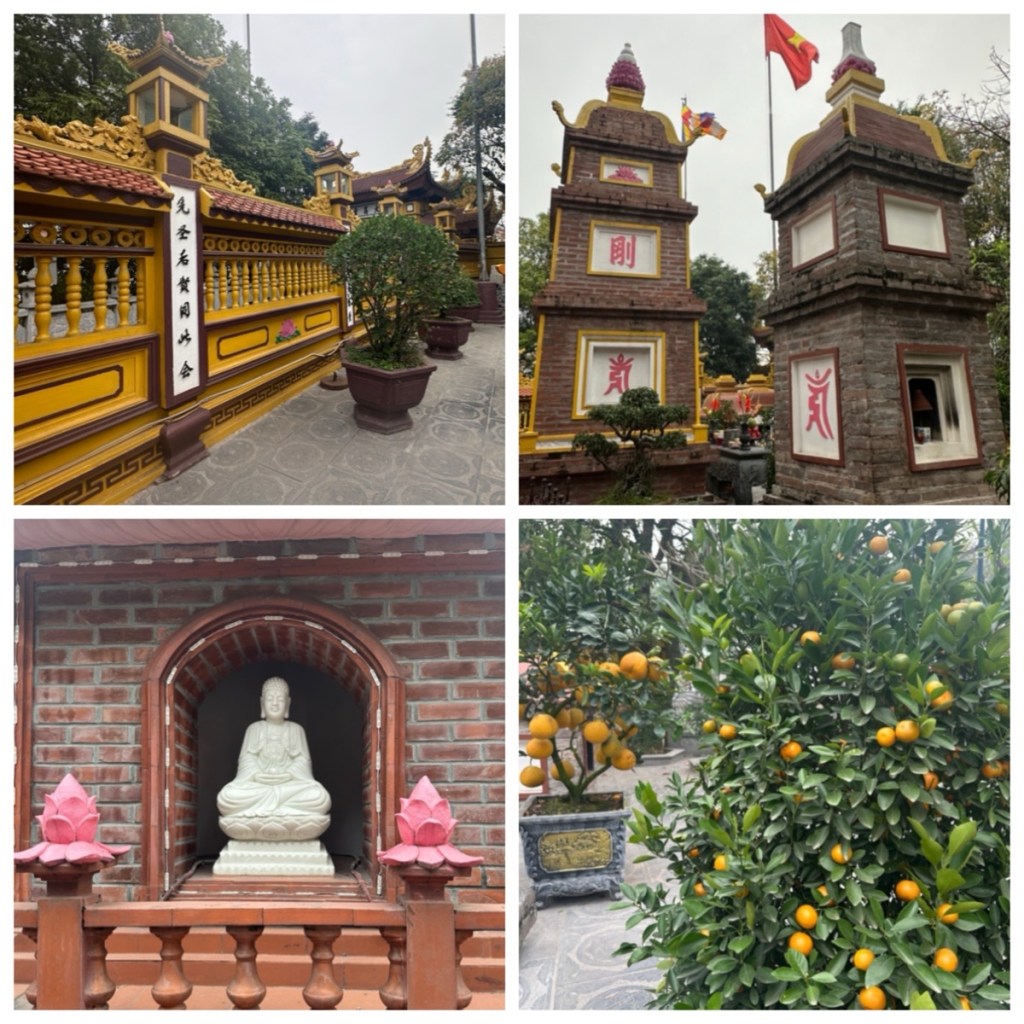
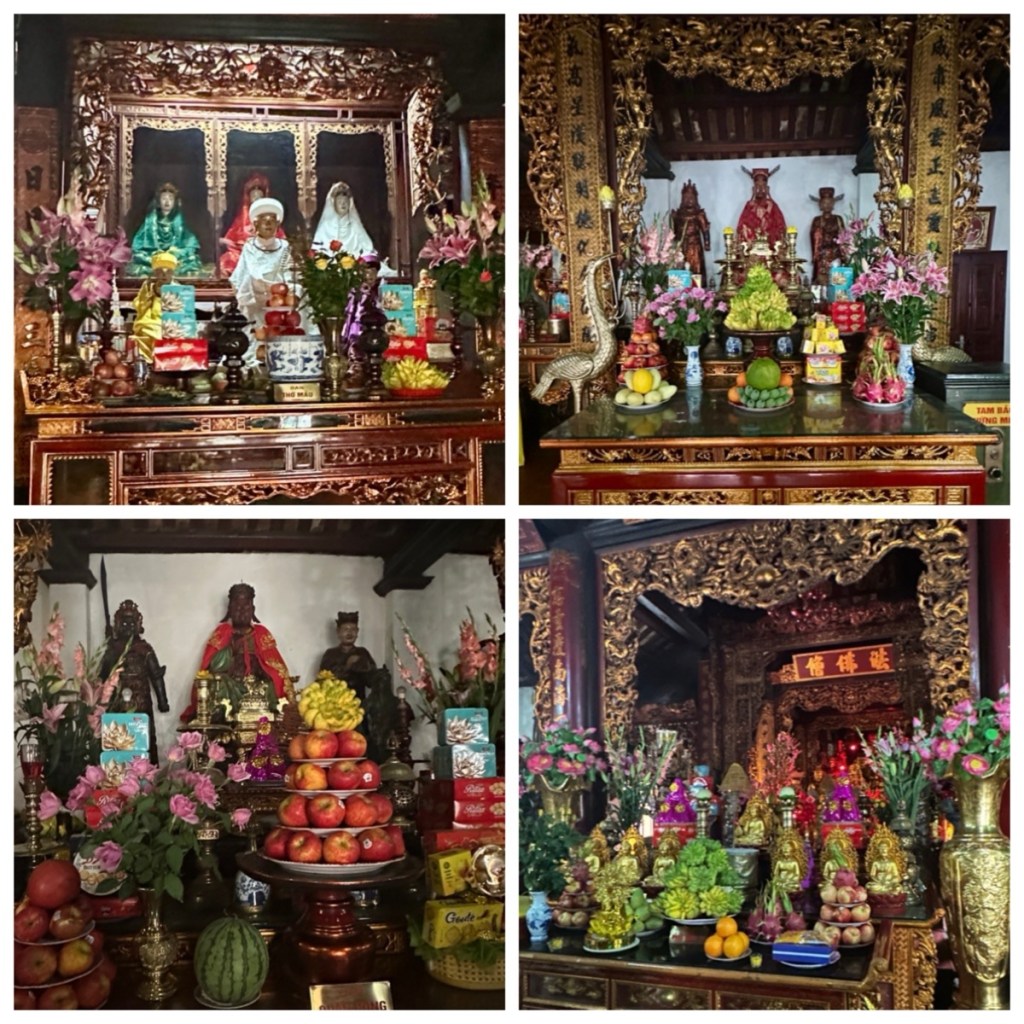
There are approximately 600 pagodas and temples in Hanoi. Tran Quoc pagoda was built in the sixth century and is believed to be the most ancient pagoda in the city. It sits within the West Lake and is a complex of multiple structures including a main sanctuary, several smaller shrines and halls, a large stupa and a number of courtyards.
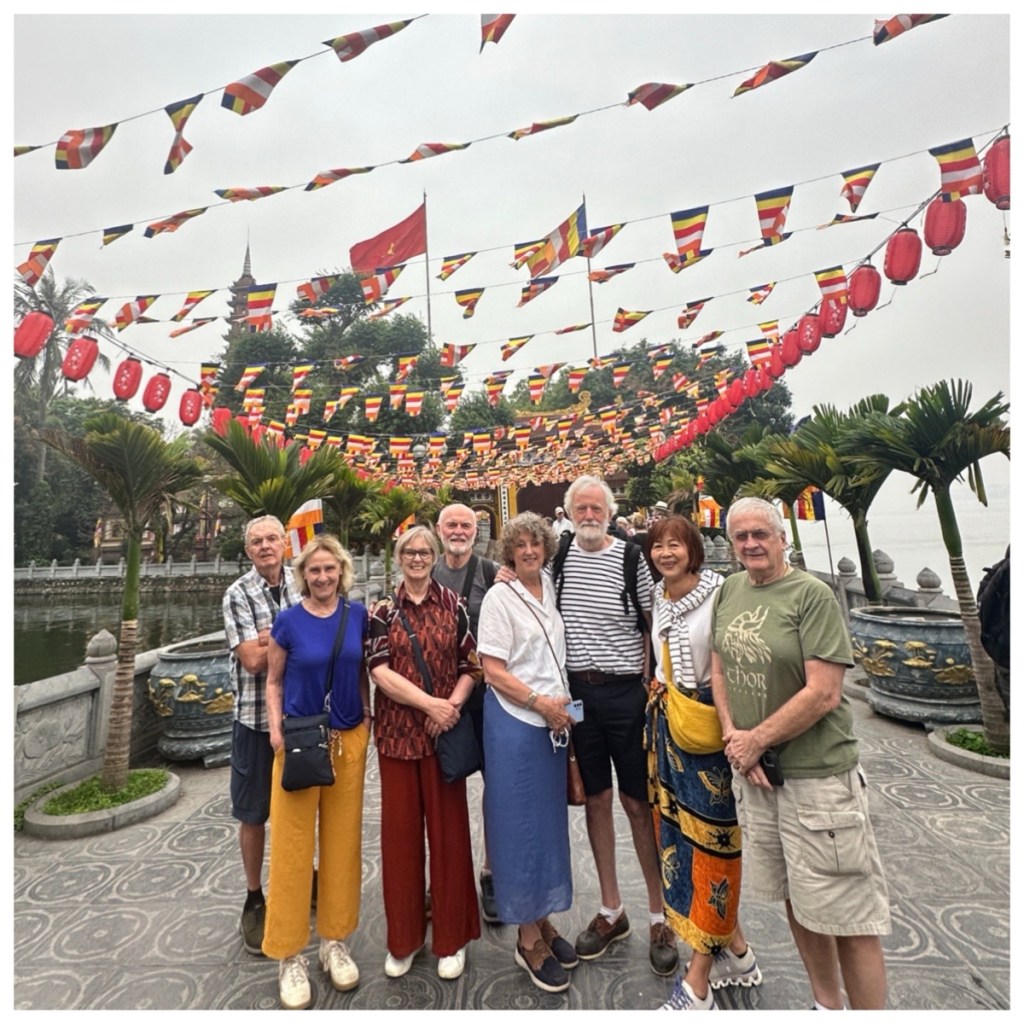
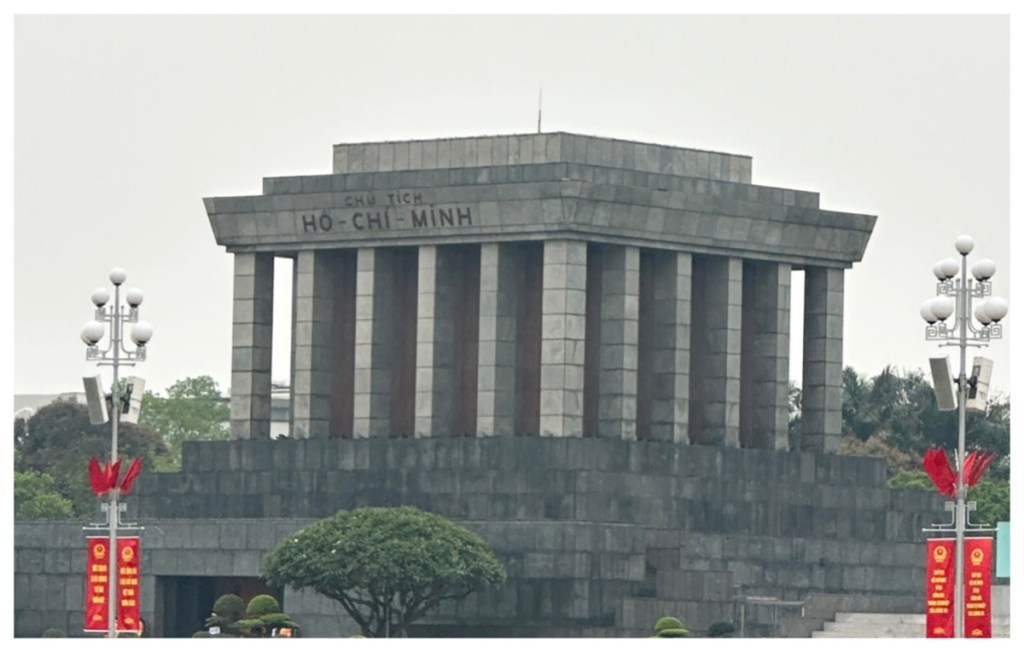
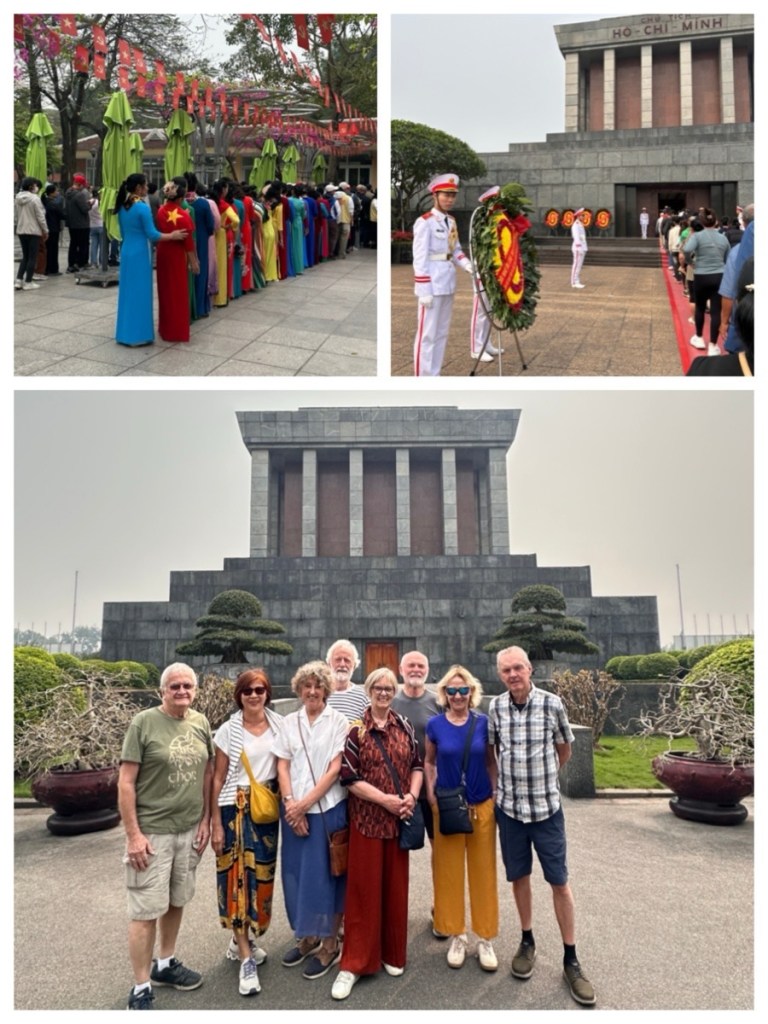
Stop #2: We next travelled to the Ho Chi Minh Mausoleum. This is a very special place for the Vietnamese people. Our guide told of the first time he was to visit when he was 14 years old – he said he was so excited that he didn’t sleep for days ahead of time. This type of excitement was obvious in the many, many school children that we saw while we waited in the long line to visit the mausoleum. The children were enthusiastic and so friendly. They were the highlight of this stop. The actual walk-by of Ho Chi Minh’s body took about 2 minutes and was quite anticlimactic for us foreigners. However, we do recognize the significance of this man to the people of Vietnam and the reverence they pay to him.
Stop #3: Near to the mausoleum is the One Pillar Pagoda. Originally built in 1049, this shrine is supported by a single pillar and is recognized as the temple with the most unique architecture in Vietnam. It is said to resemble a lotus blossom and many were blooming in the pond surrounding the pagoda. The pagoda was badly damaged in 1954 but was restored the following year.

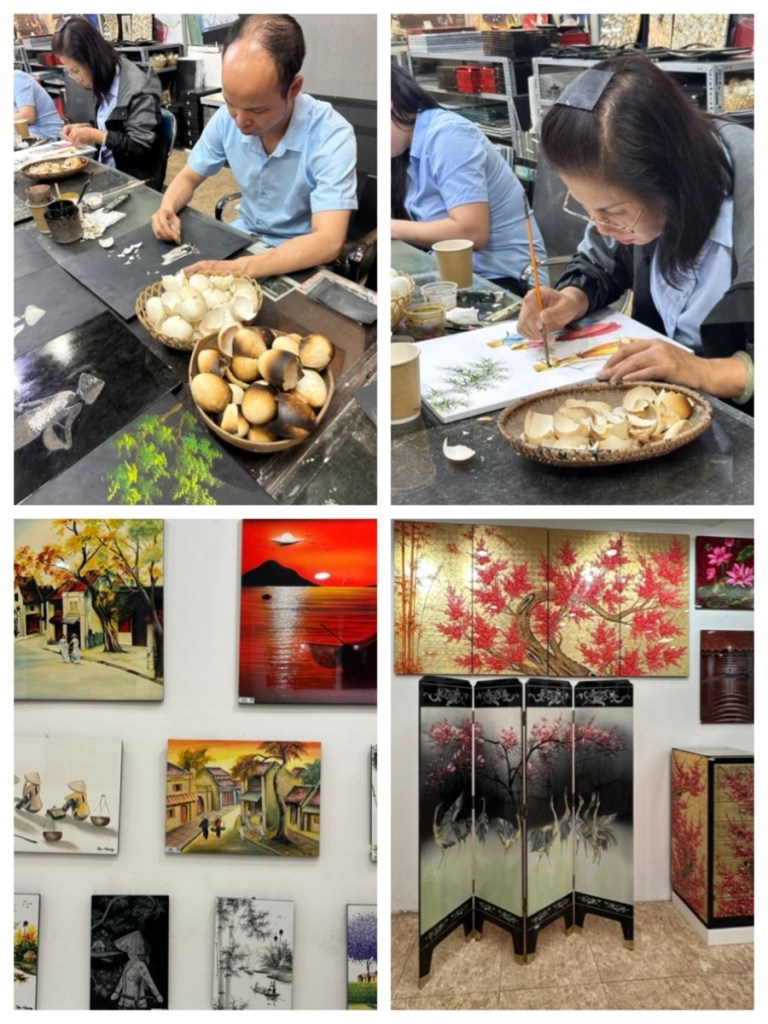
Stop #4: The art of lacquer originated in China and rapidly spread to other Asian countries including Vietnam. Today, Vietnamese lacquer art is considered as one of the country’s finest traditional craft treasures.
We visited Thuhuong Hanoi Lacquerware where we watched the craftspeople at work and had the process explained by a knowledgeable guide. In Vietnam, lacquer trees are planted mostly in the northern provinces. The creation of the artwork is an extremely labour and time intensive process. Every piece goes through 20 stages and can take up to 100 days regardless of the size of the piece.
The artworks in the shop were very beautiful and it was interesting to watch the craftspeople and look at the finished products.
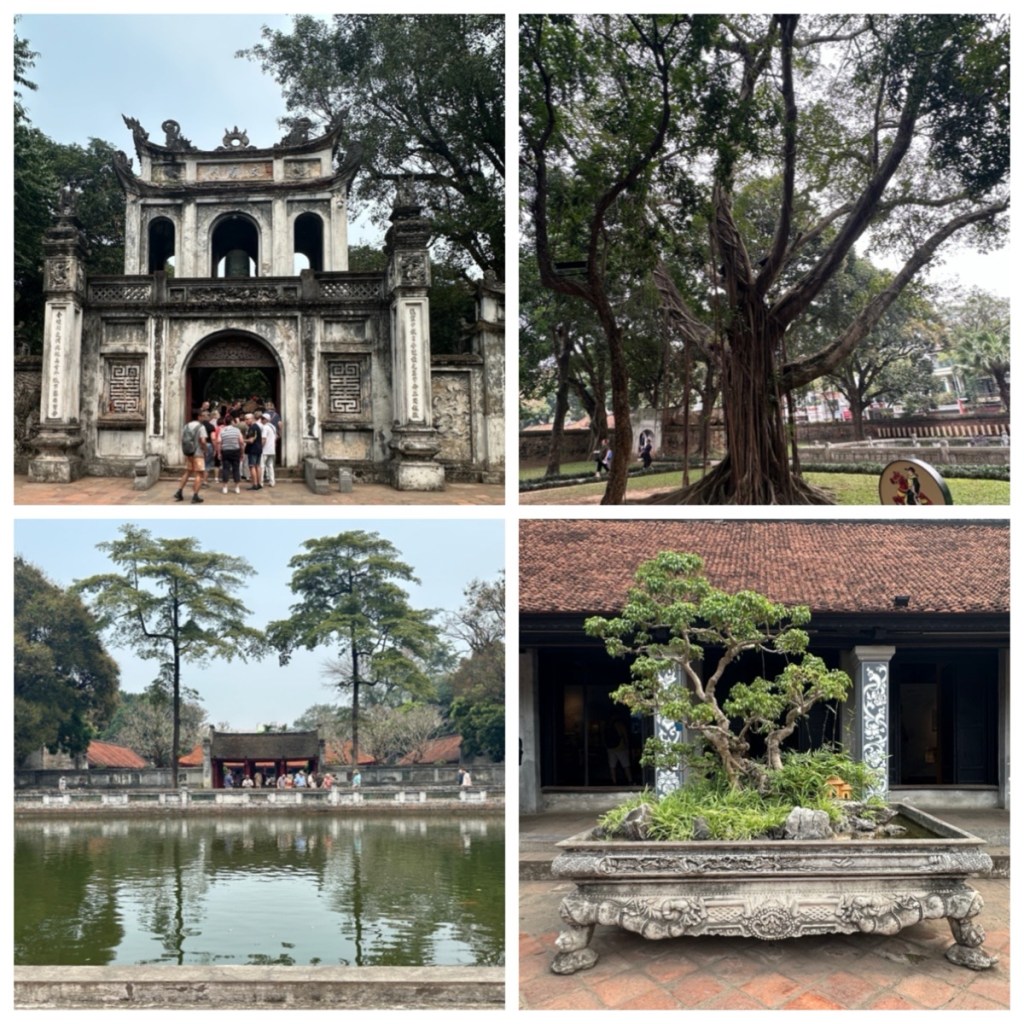
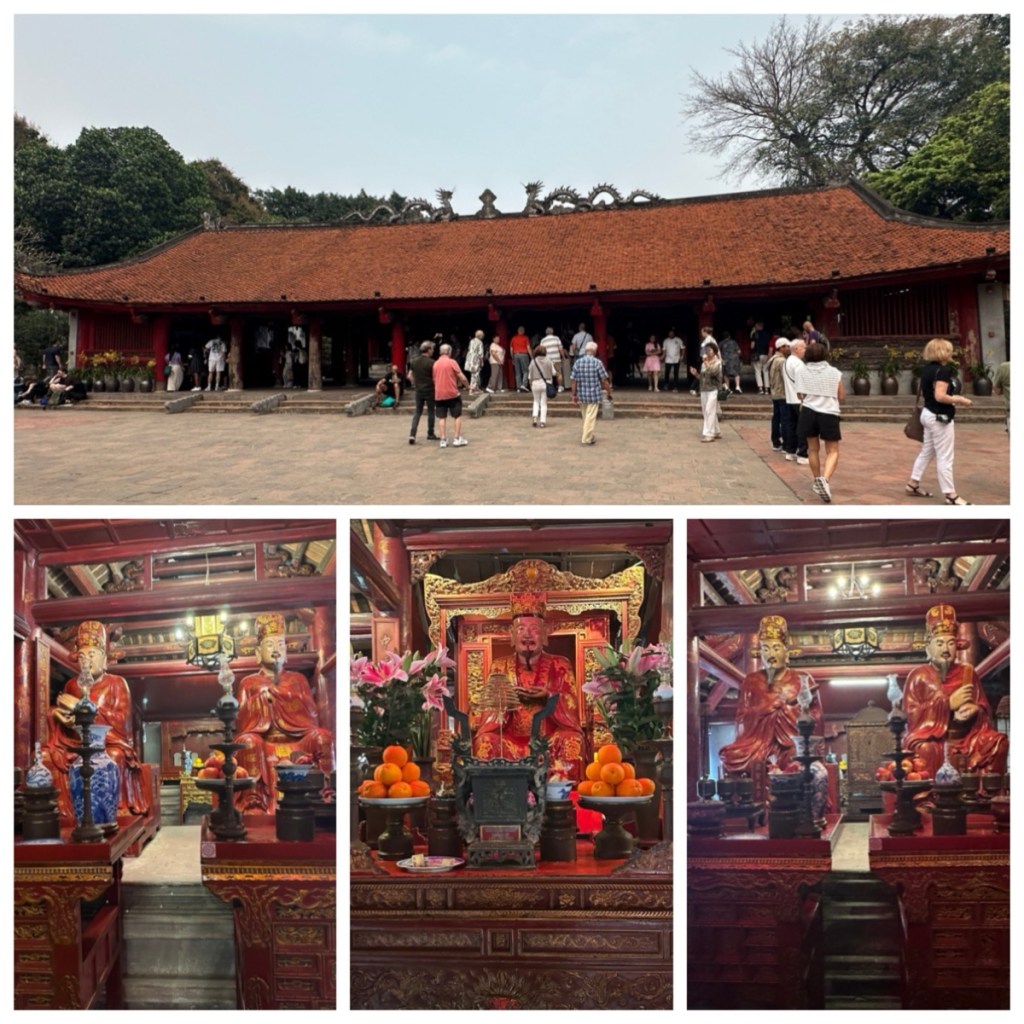
Stop #5: The Temple of Literature was founded in 1070 by Emperor Ly Thanh Tong to worship Chinese philosopher Confucius. It became an exclusive centre of learning for the king’s sons and aristocrats and then evolved into Vietnam’s first university. Our guide told us of the process that required prospective students to sit an extensive entrance exam after which a chosen few would study from three to seven years at the university.
Today, the Temple of Literature retains much of its original architectural layout, with restorations made to repair damages caused by wars, closely resembling its initial design.
One of its most iconic structures, the Khuê Văn Các (Constellation of Literature Pavilion) has been chosen as the symbol of Hanoi.
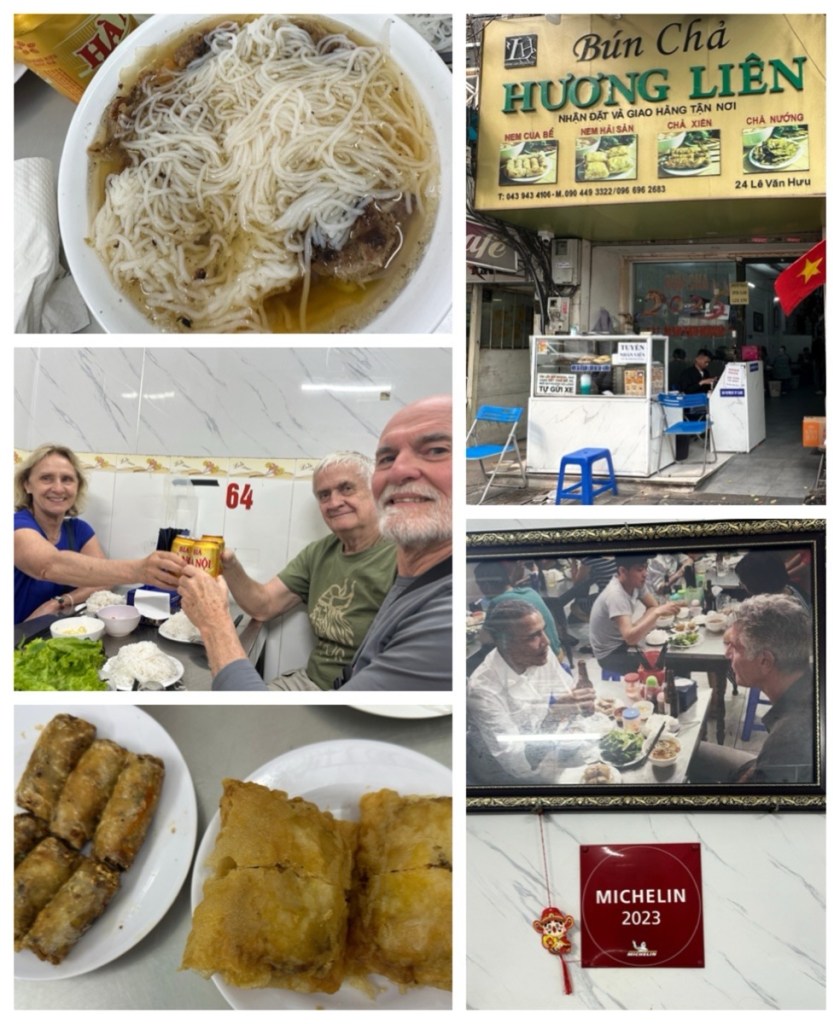
Stop #6: For lunch, Sinh took us to Bún chả Hương Liên. This restaurant serves traditional street food and is mentioned in the Michelin Guide. The restaurant plays up its claim to fame: President Obama and Anthony Bourdain lunched here in 2016 and photos are proudly displayed. Sinh ordered us the ‘Obama Combo’: fried seafood rolls a bowl of the special bún chả and a bia hà nội beer. The bún chả is a tasty blend of smoky pork, meat patties, fragrant herbs and fresh salad leaves.
Stop #7: The Hoa Lo Prison was constructed by the French in the Maison Centrale in 1896 to detain Vietnamese laborers who resisted colonial rule. The Vietnamese saw the prison as a symbol of French oppression and colonial struggles.
During the Vietnam War, the prison earned the nickname “Hanoi Hilton.” This nickname became famous because American pilots held as POWs were detained here. Figures like John McCain, who later became a prominent U.S. politician, experienced the challenges of captivity firsthand.
Inside the museum, visitors view a collection of artifacts and photographs that tell stories of life inside the prison. One must remember that these are presented in a way that is showcasing one side of the stories. However, visiting Hoa Lo is an opportunity to witness Vietnam’s resilience during many times of struggles.
I refrain from posting pictures so as not to participate in the debate on the interpretation of the stories.
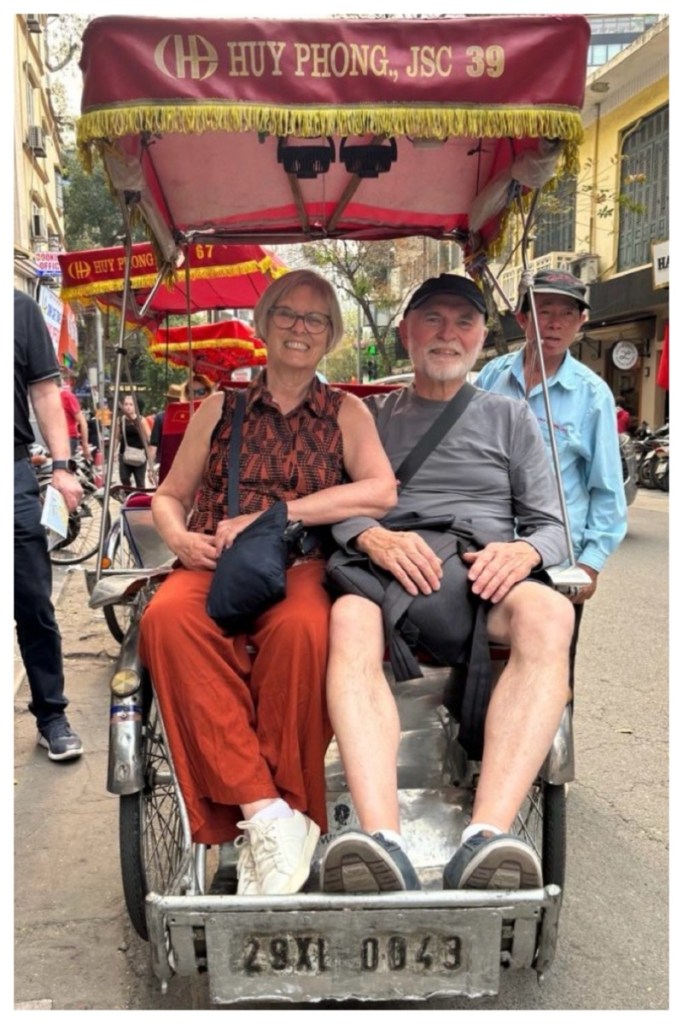
Stop #8: To end the tour day, Sinh sent us away on a Rickshaw tour of the French and Old Quarters. It was a fun way to watch the street life!
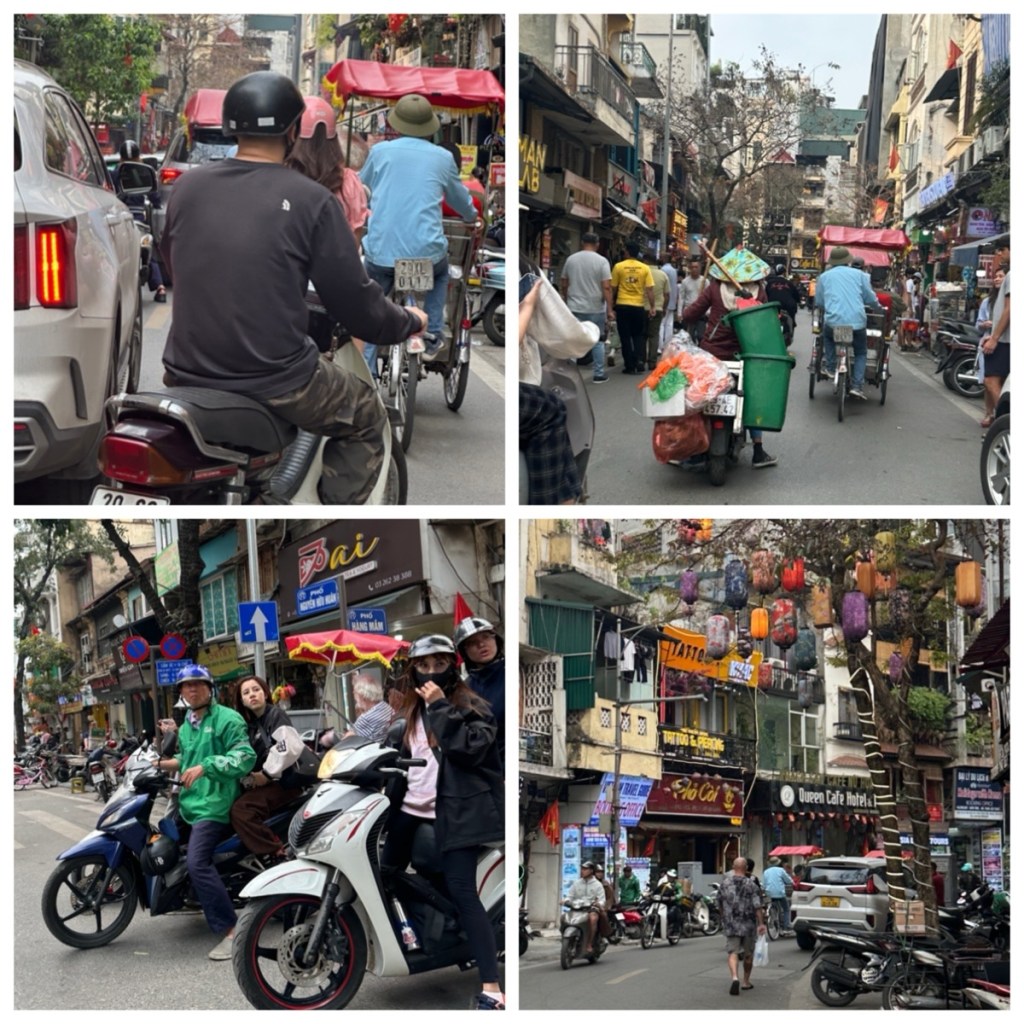
Our first days in Hanoi were interesting and entertaining and we learned to be very careful crossing the street.
More on Hanoi and area to come soon……
Cheers,
Bev & Harvey
 A Long and Winding Journey
Love you blogs. Great pics and information!
LikeLike
Great job!
Membership and Communication
LikeLike