From Hanoi, we had a short flight on Vietnam Airlines to DaNang International Airport. We were met there by a driver from our hotel who worked his way through the traffic of Da Nang and Hội An to our hotel, the CozyAn Boutique Hotel. This is a lovely little hotel, once again with great rooms, breakfast and amazingly friendly and helpful staff.
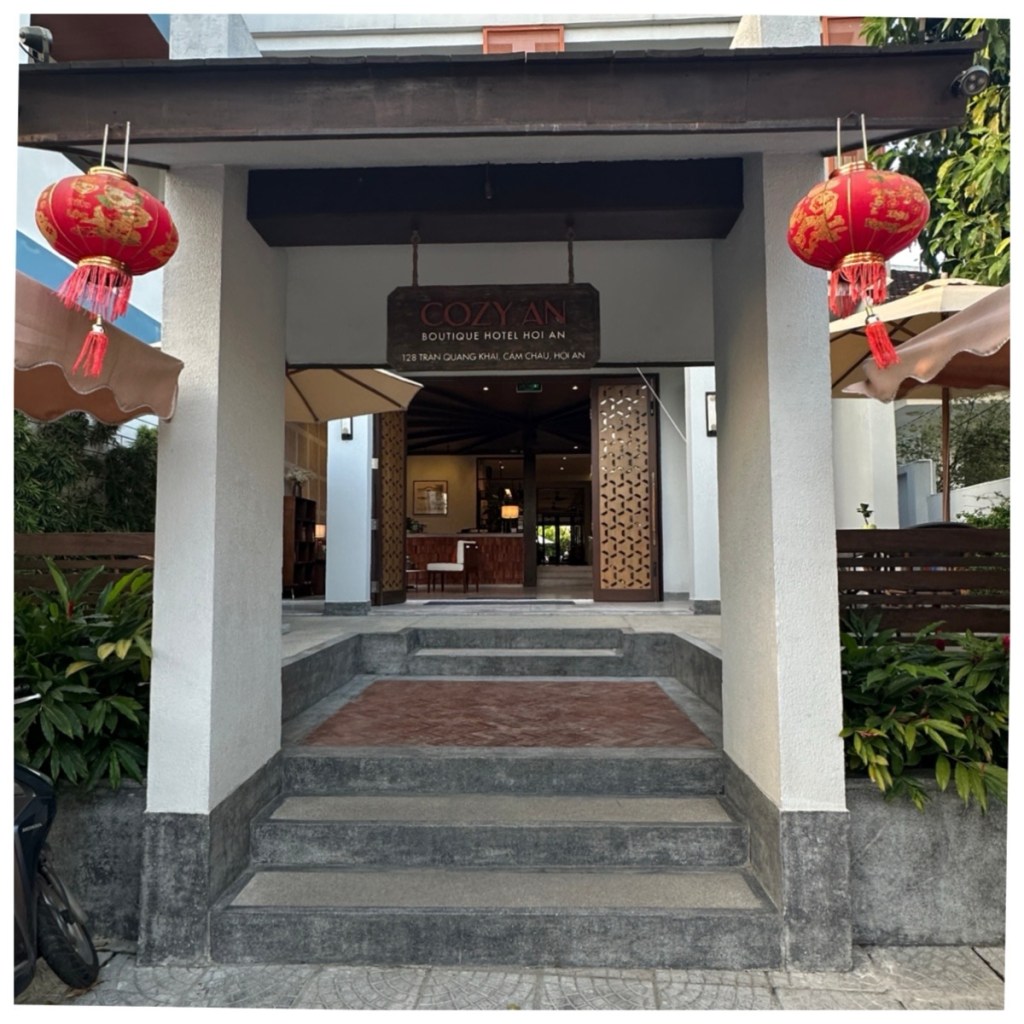
The coastal city of Hội An has a population of ~120,000 and is often cited as one of Vietnam’s most beautiful places. In 1999, it was awarded status as a UNESCO World Cultural Heritage Site and in 2021, was named Asia’s Leading Cultural City Destination at the World Travel Awards.
Hội An has a long history, with archaeological evidence suggesting that trade in the region was happening as early as the second century BC. Thriving as a bustling trading port, the city became a major economic centre during the Cham Dynasties of the 7th to 10th centuries. It became part of the famous Silk Road and ships from Europe were soon arriving at the port. Hội An was a major Southeast Asian trading post during the 17th to 19th centuries. Here, goods were traded, and ideas and cultures were shared. Today, tourism is the town’s major industry.
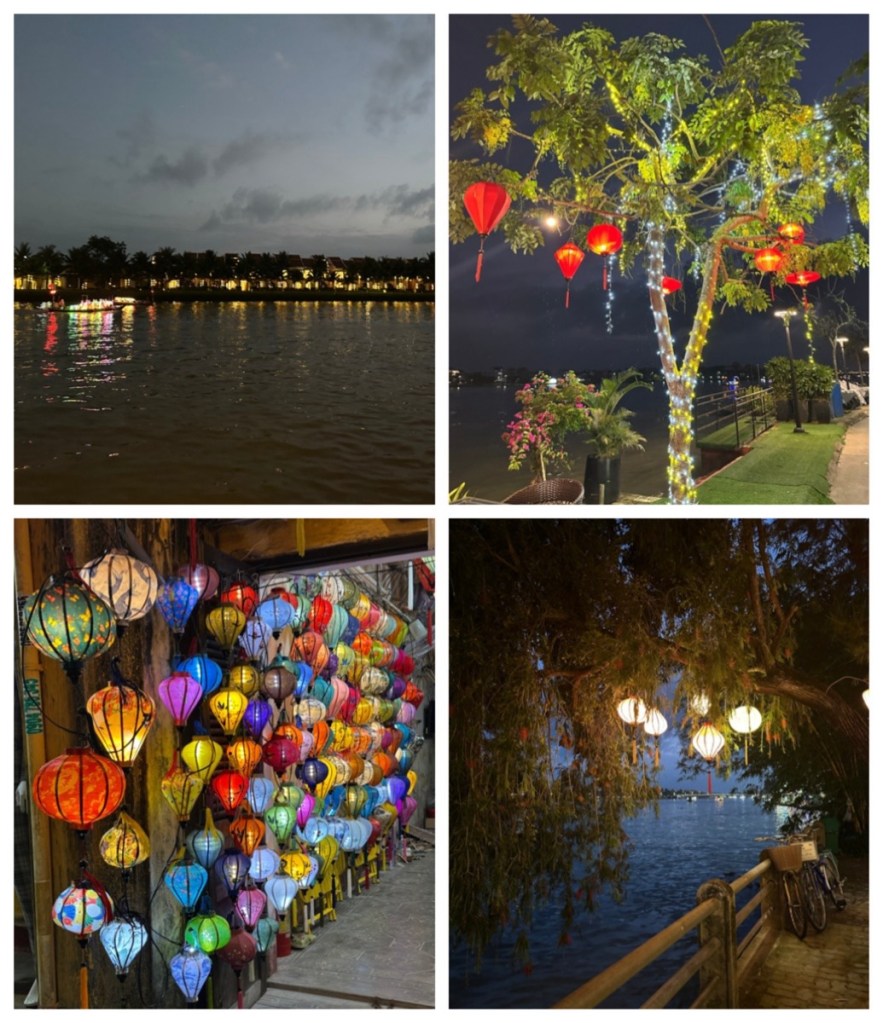
On our arrival evening, we had a light dinner at the hotel and went for a walk along the riverbank.
Day 1:
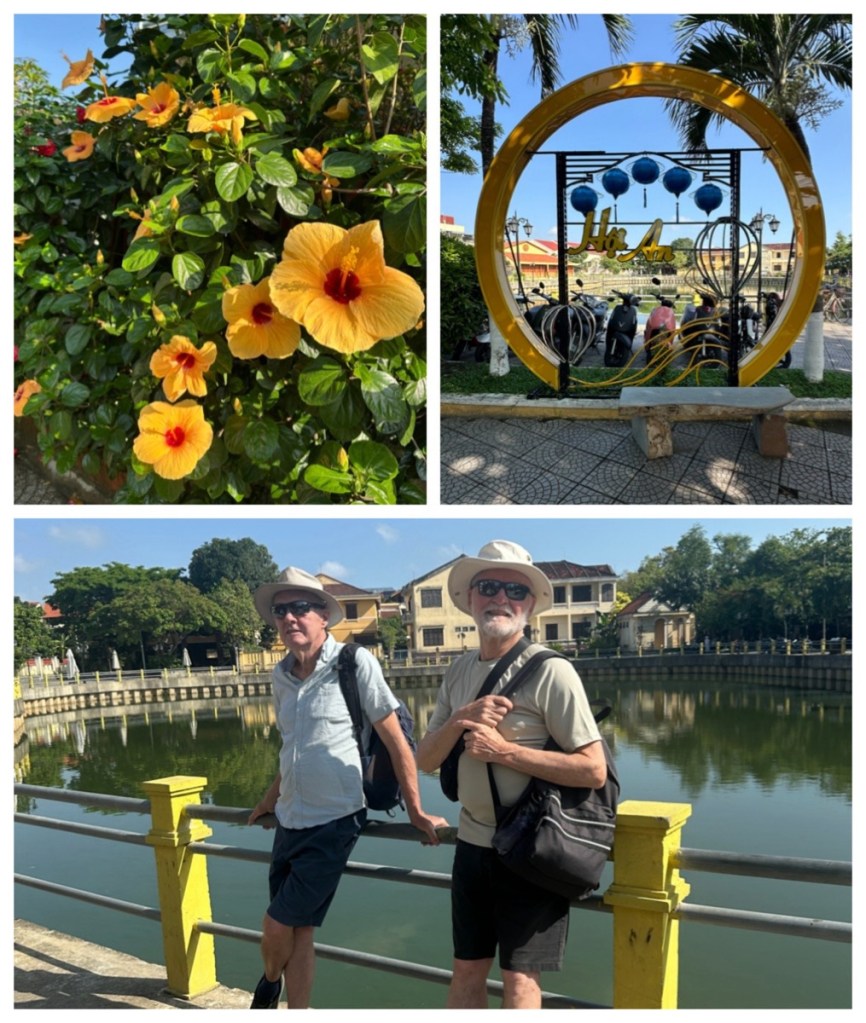
For our first morning, we had booked a walking tour with Hoi An Day Trips. We set off on a sunny morning to meet our guide Tam Le.
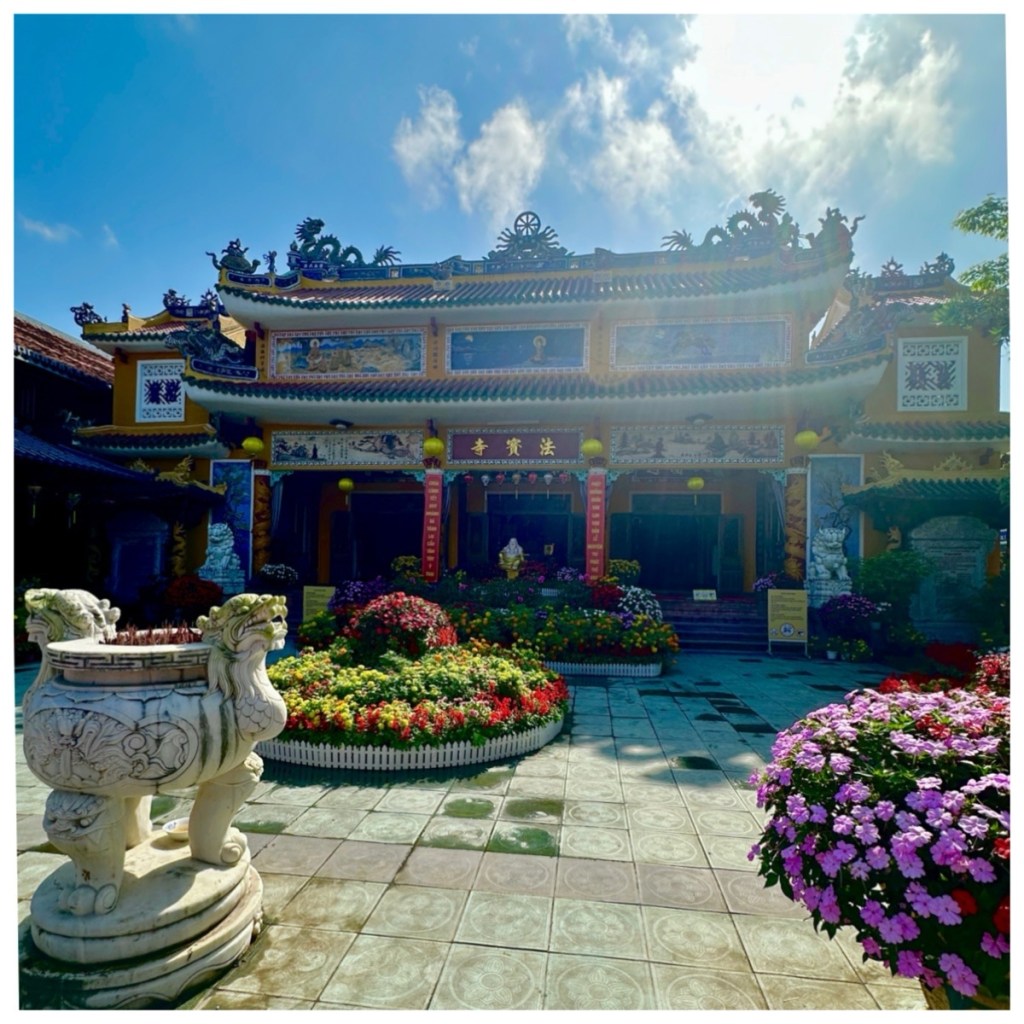
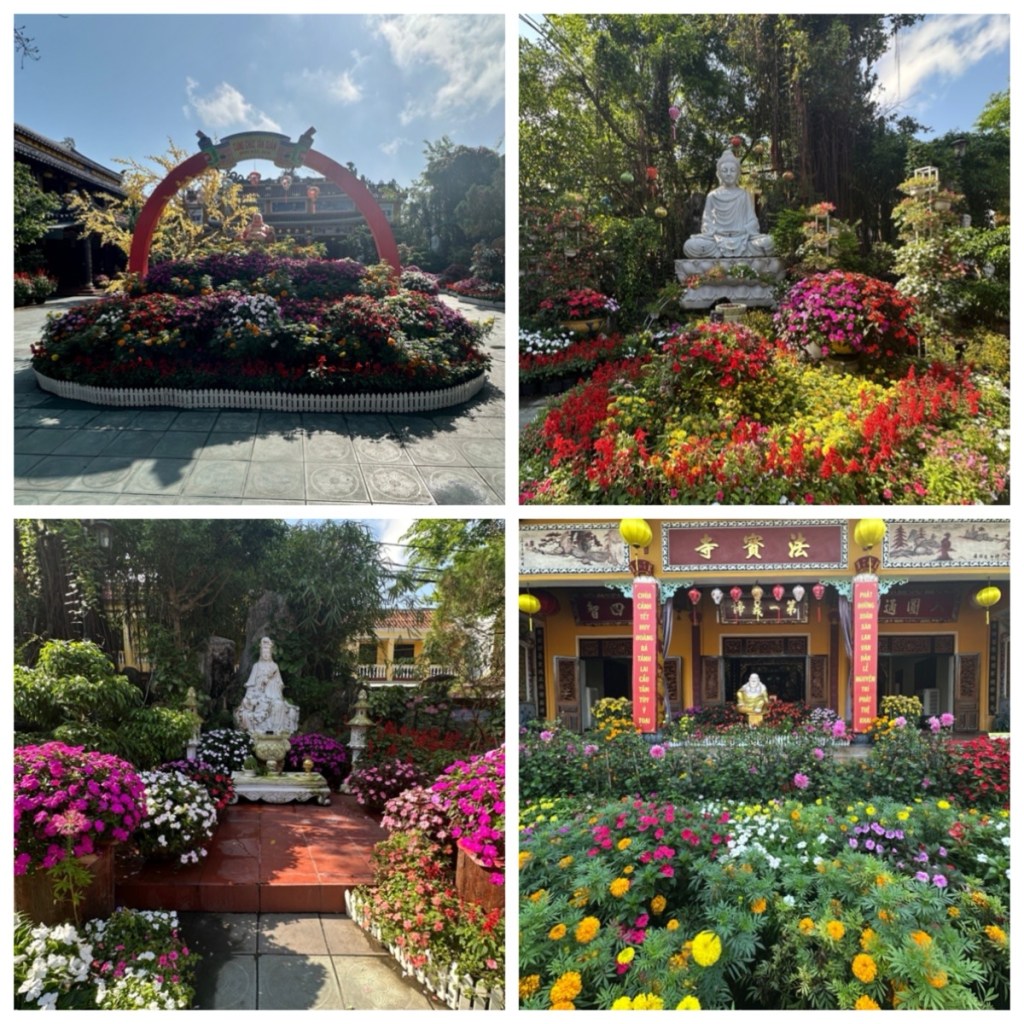
Stop #1: Tam led us to the Phap Bao Pagoda. This is the largest Buddhist temple in Hoi An. The temple was established in the early 20th century to serve the local Buddhist community. Over the years, several renovations have added to its beauty.
You enter the Pagoda site through a beautiful central courtyard with an abundance of potted plants and bonsai trees. The two-story temple is built in traditional Vietnamese style with a facade of colourful ceramics and an elaborate roof with snake-like dragons. At the centre of the entrance is a large golden Buddha statue.
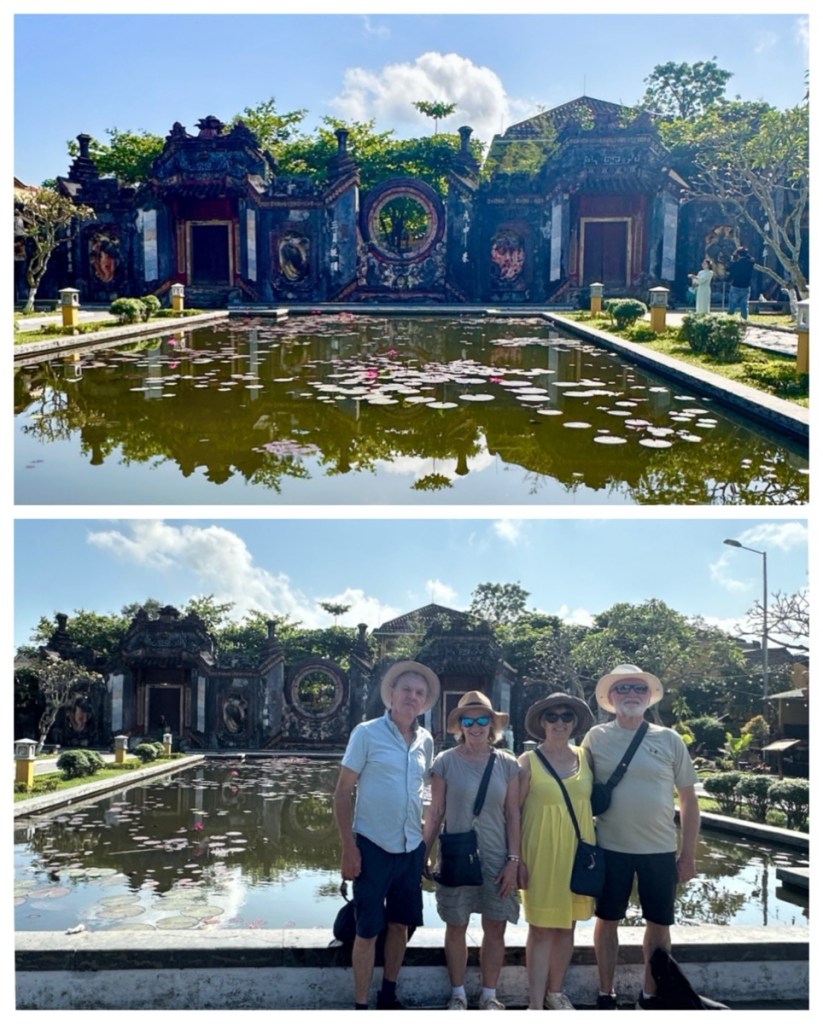
Stop #2: Next we visited the Ba Mu Temple Gate. The Ba Mu Temple used to be a great temple in Hoi An Old Town. However, the temple suffered damage from weather and war and today, only its entrance gate remains. The gate sits in a lush green area and its carved bas-reliefs and vibrant colours are reflected in a pool filled with floating lotus flowers.
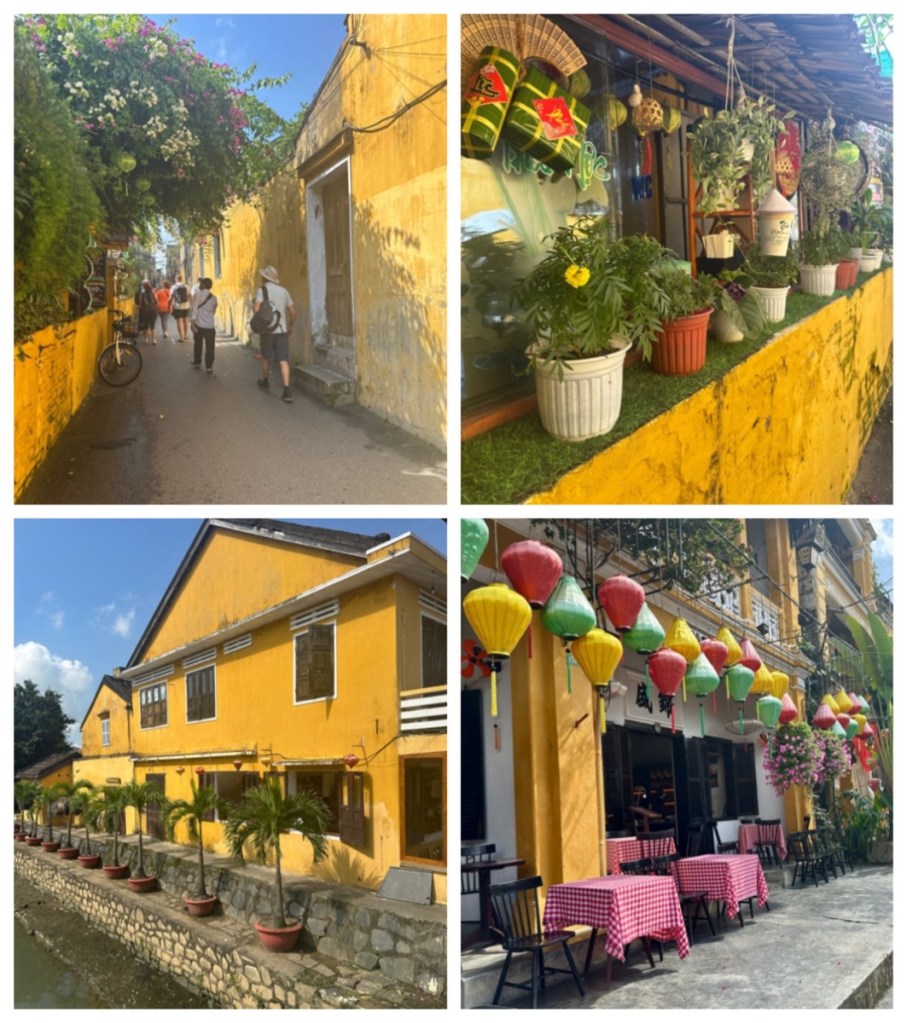
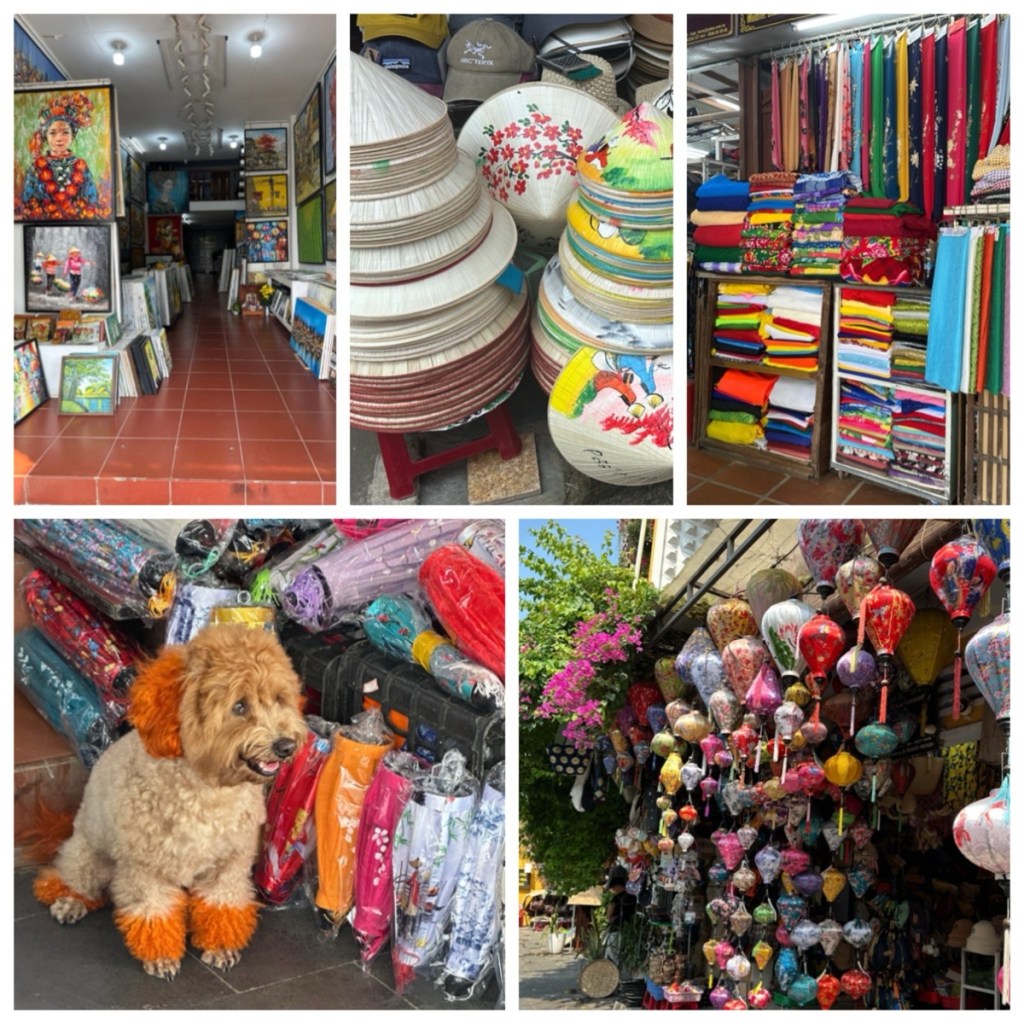
Stop #3: Tam led us along the picturesque streets to reach the Japanese Covered Bridge. The old town’s original cobbled streets are filled with old-world architecture, yellow shop fronts and colourful lanterns. Within the town, 844 of the 1107 buildings are on the UNESCO World Heritage list.
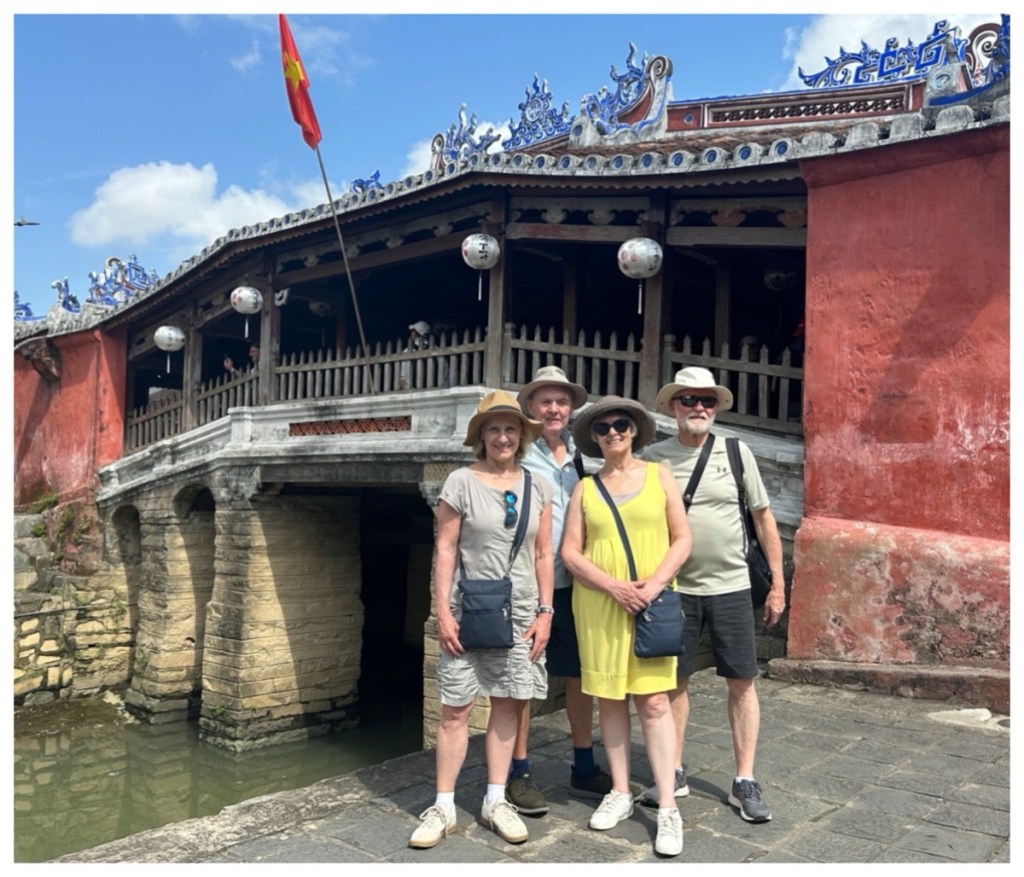
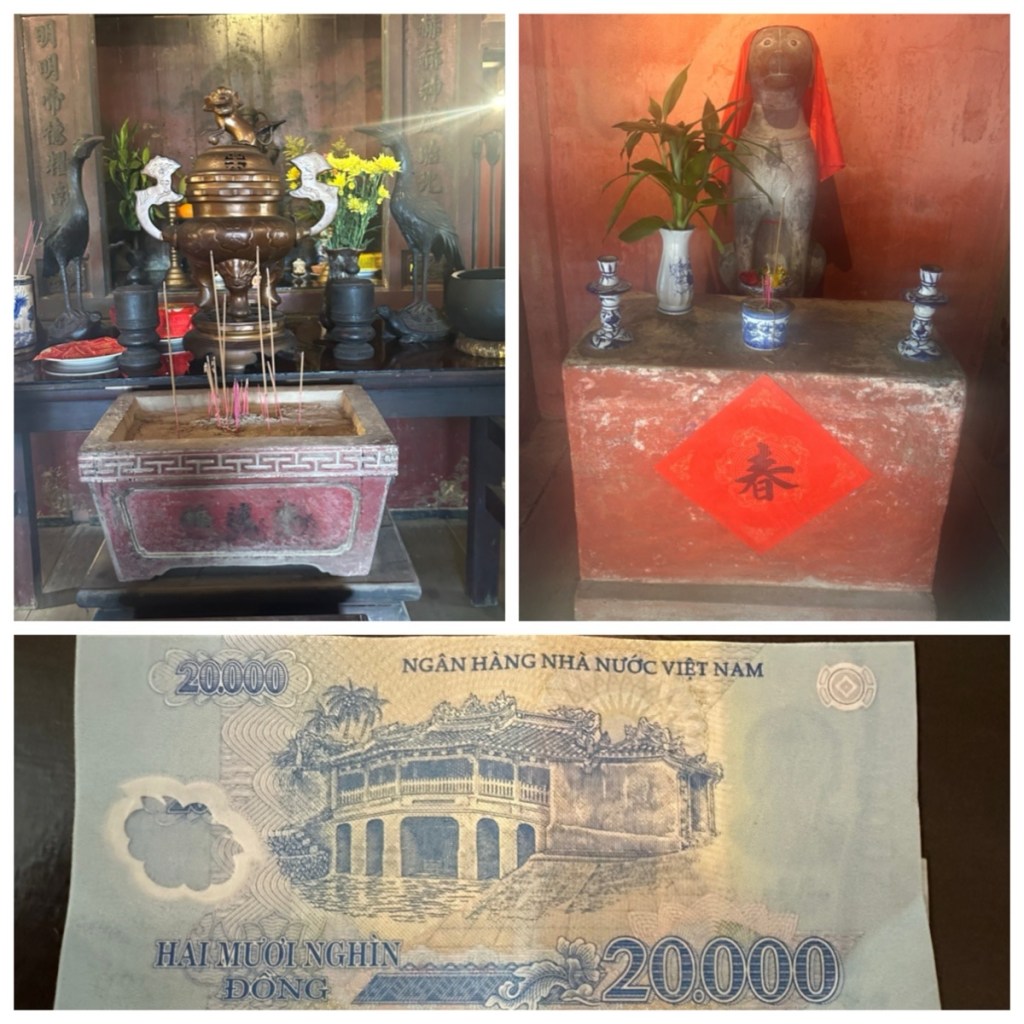
The Japanese Covered Bridge (Chùa Cầu) was built in the early 17th century by the Japanese town residents in order to do business with the Chinese and Vietnamese people on the other site of the stream. The bridge features a unique pantiled (yin-yang) T-shaped roof which symbolized the happiness and misfortune of the people in the area. Many local people worship in the sanctuary of the bridge. The bridge is featured on the 20,000 VND banknote.
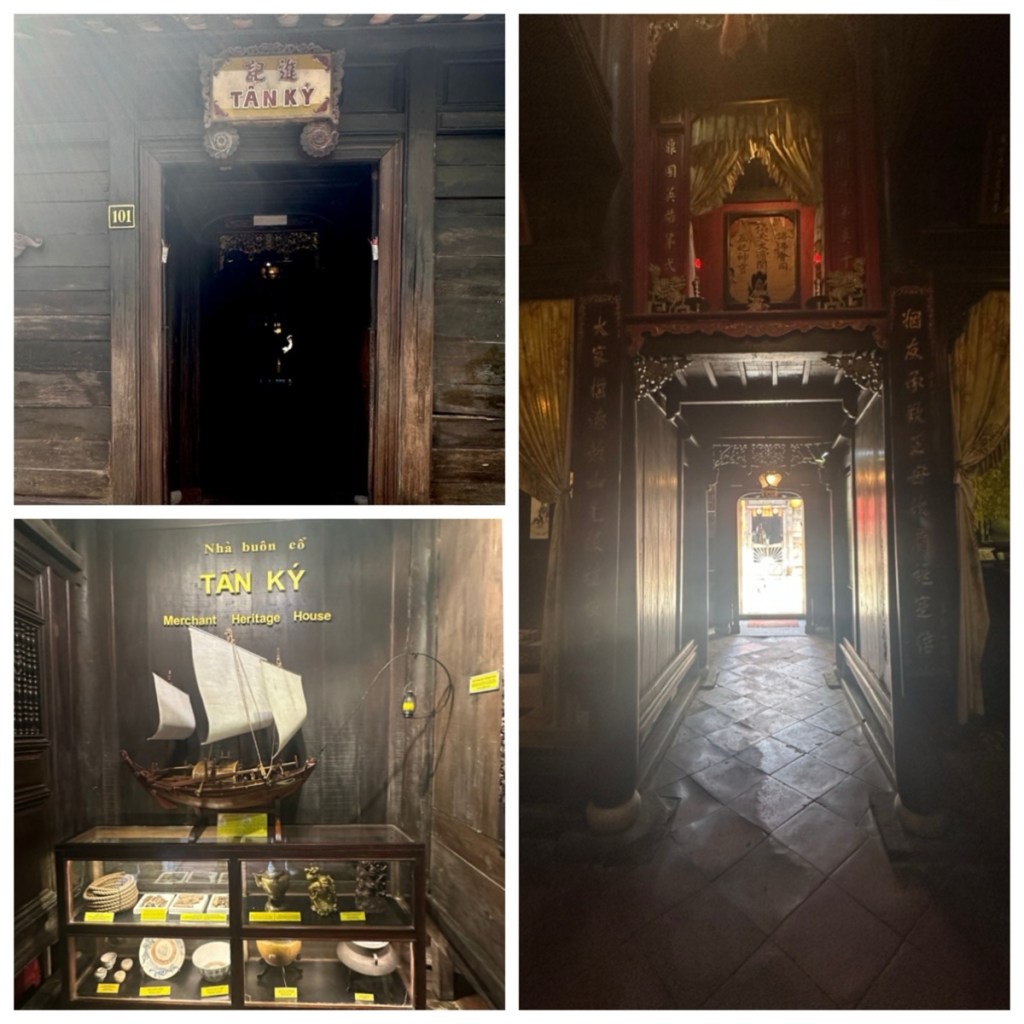
Stop #4: Seven generations of the Le family have lived in the Tan Ky Old House. Built in 1741, the house was originally used to trade agricultural products.
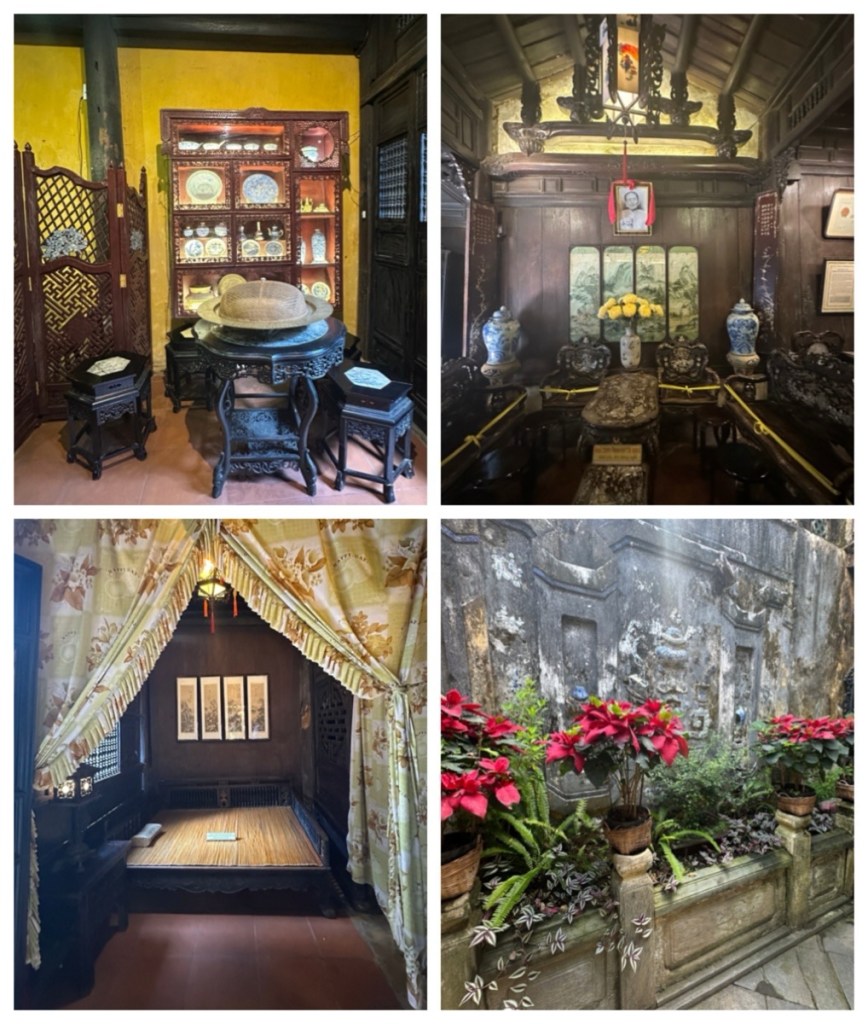
The house is a combination of Chinese, Japanese and Vietnamese architectural styles. Built mainly of wood, rock and stone floor tiles stabilize the wood pillars. There are no windows in the house with the light coming from the atrium space.
There are four rooms in the house, the reception room used for welcoming the Chinese merchants, the living room, the courtyard atrium and the bedroom. Each area is filled with antiques and mementos of past days.
The Tan Ky Old House has suffered from many floods. In 1964 and again in 2025, the flood reached the first floor of the house. However, the house has survived these incidents and is very interesting to visit.
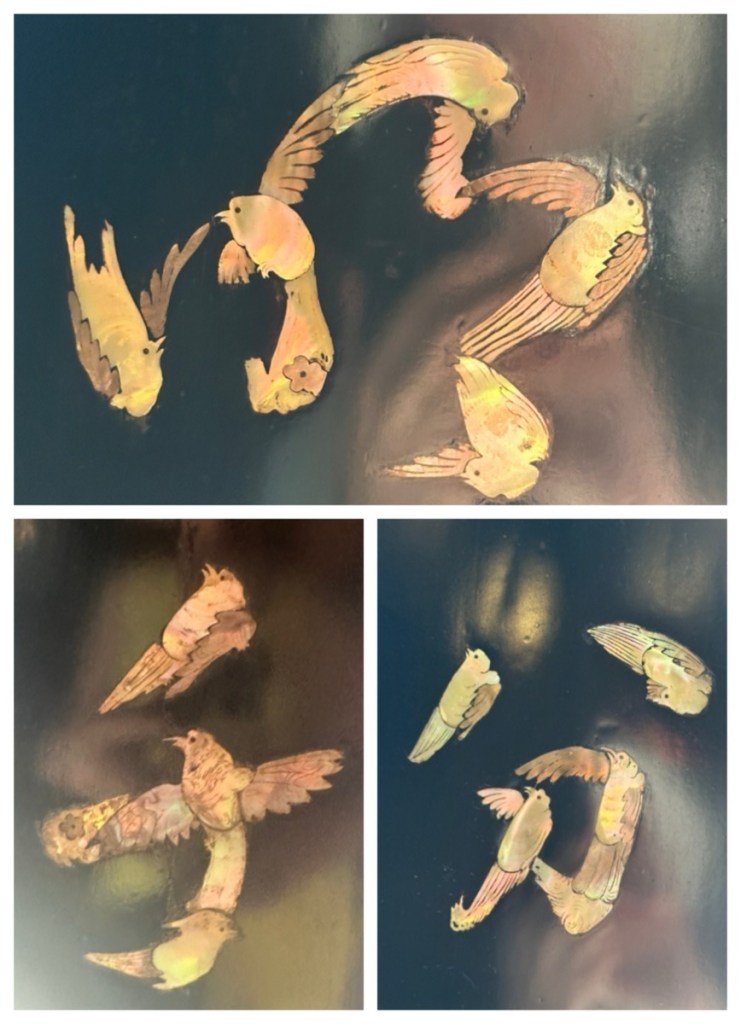
A feature in the house is a horizontal lacquered board “Bách Điểu (One Hundred Birds). Tam told us how it is written in 100 letters, each of them a bird in flight.
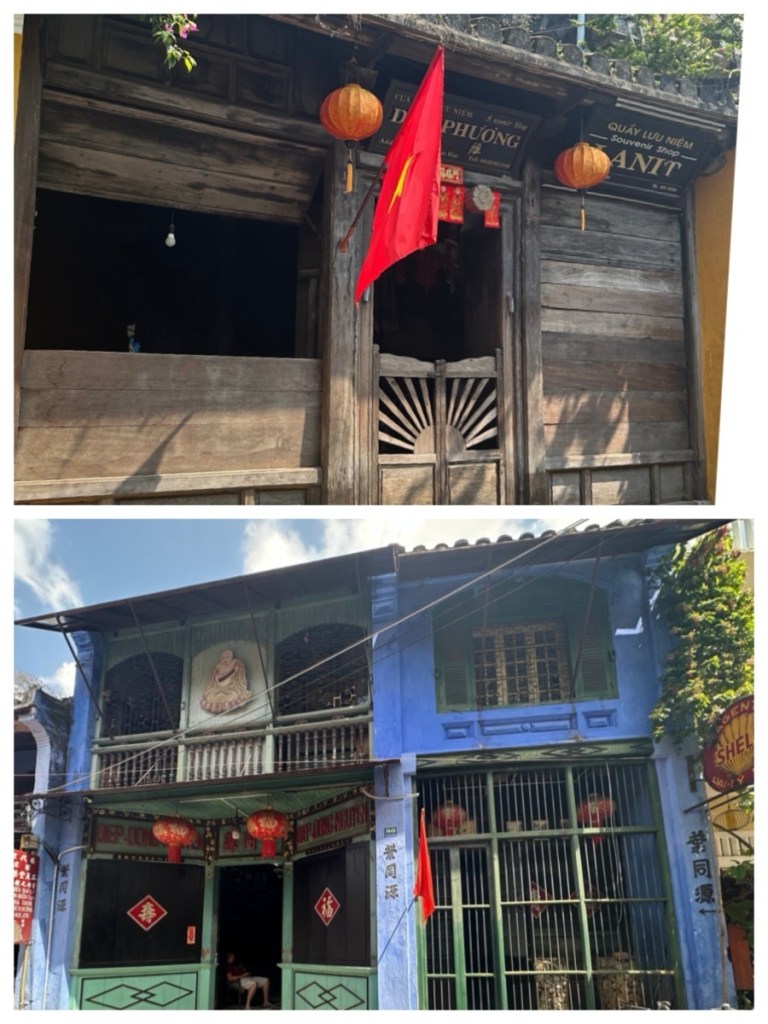
As we walked, Tam pointed out other historic traditional houses.
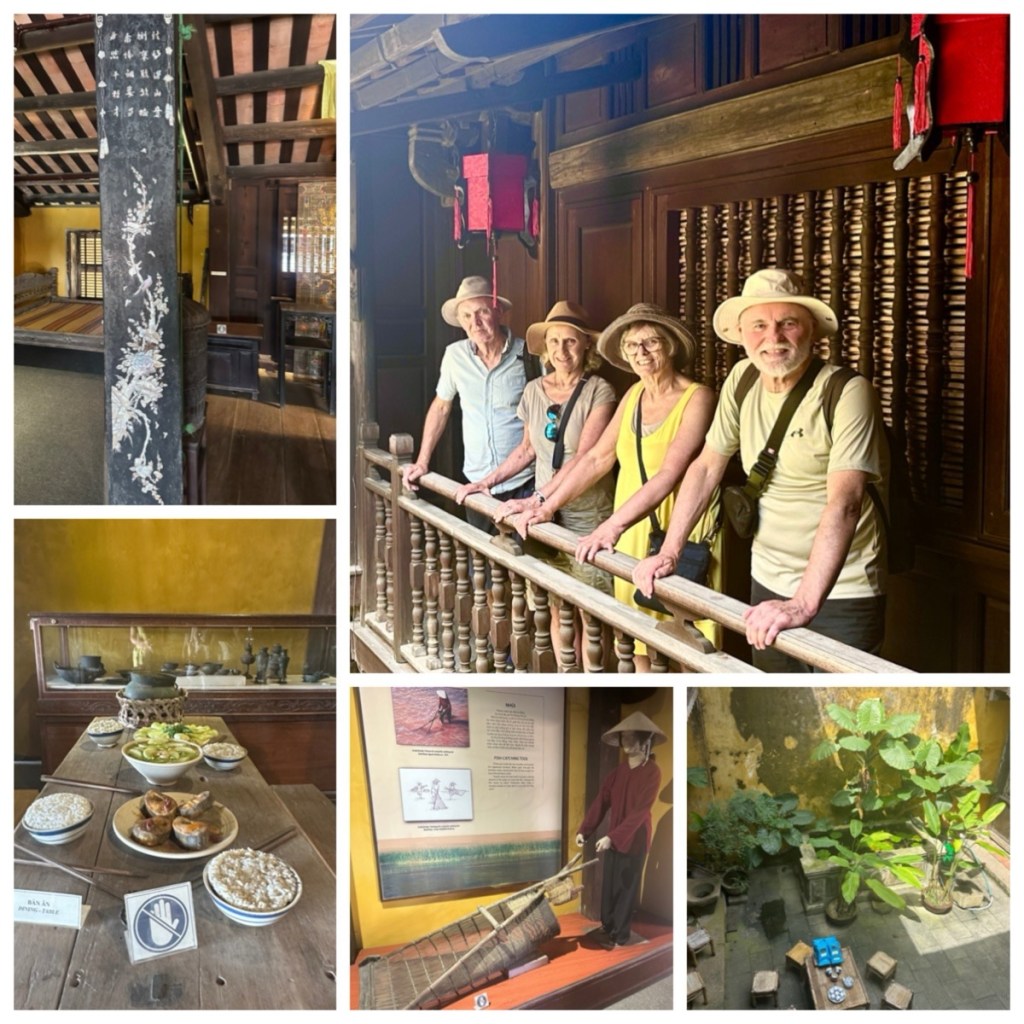
Stop #5: The Museum of Folklore is housed in a traditional two-storey house. It has a collection of more than 346 artifacts that relate to the Vietnamese and Chinese culture and lifestyles.
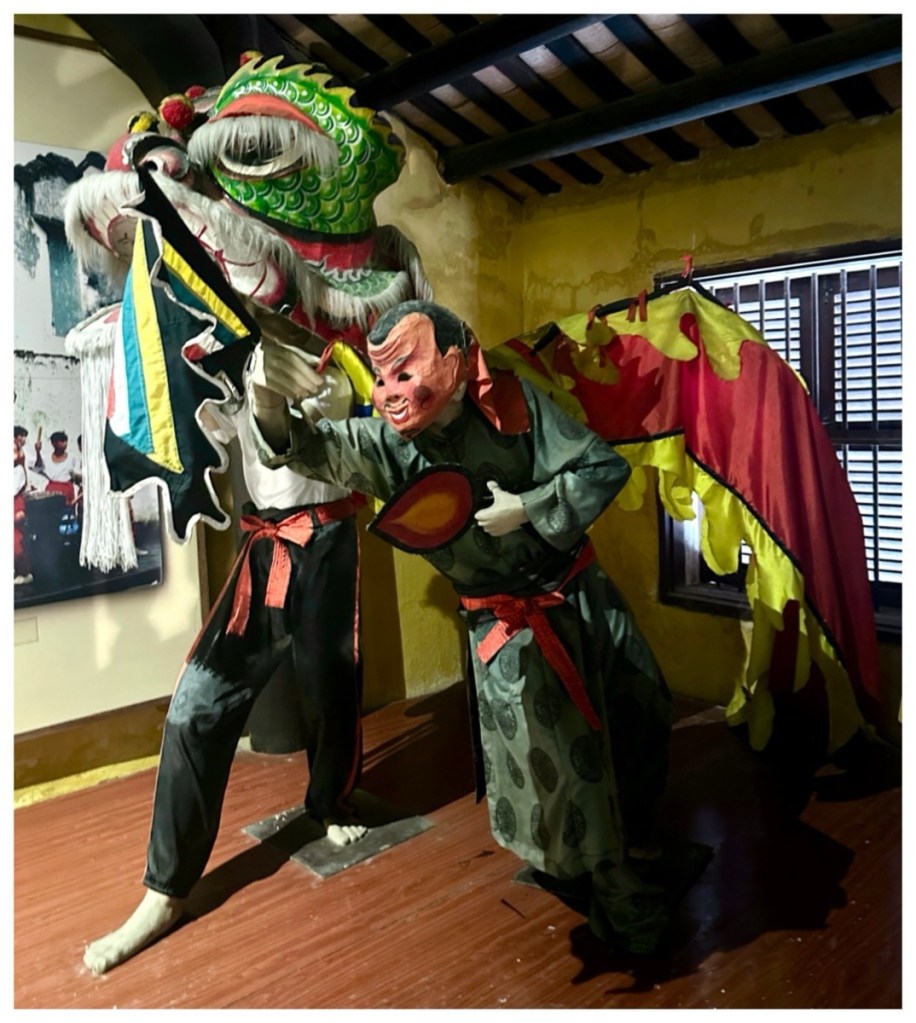
One display described the múa thiên cẩu or Heavenly Dog Dance (also known as the unicorn dance). This is a folk dance that is associated with blessing, praying for a good harvest and prosperous people.
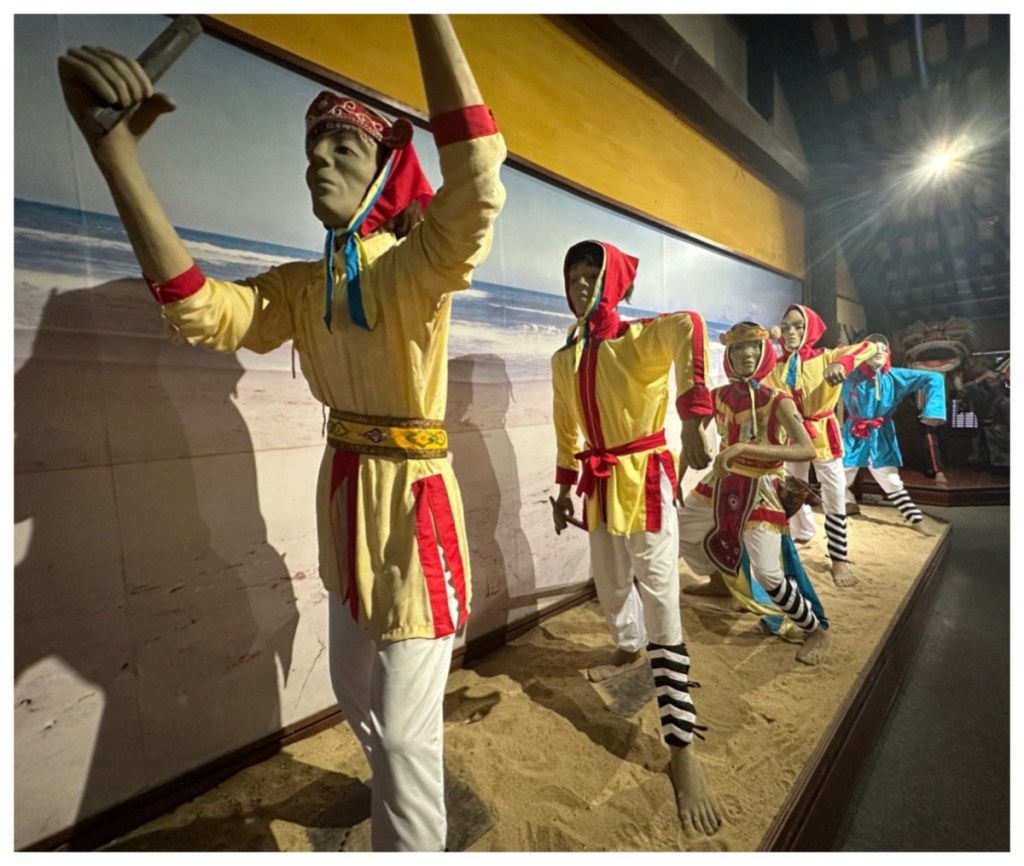
Another popular folk performance in Hoi An is the Singing Ba Dao. This singing style involves a line-up of 10 – 16 people with oars mimicking the movements of rowing. This dance is important in the spiritual life of Hoi An fishermen.
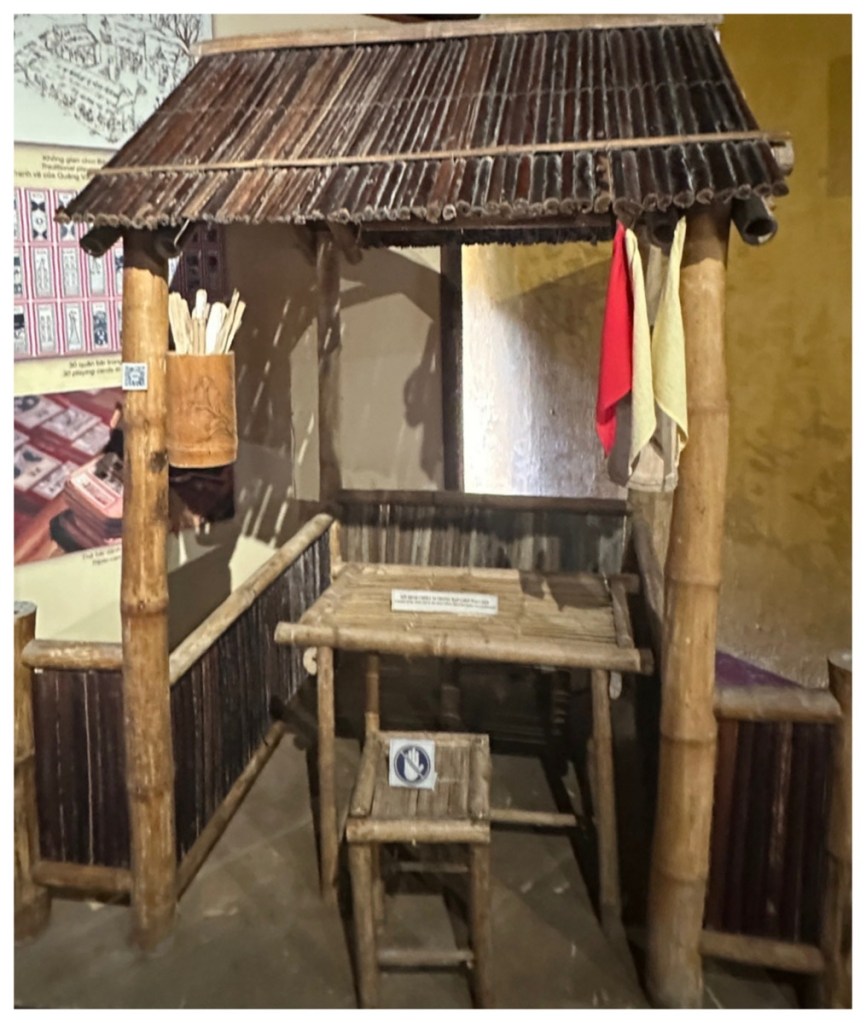
Bai Choi is a traditional card game that is usually played in large yards. It is played in bamboo huts which are arranged in a U-shape for players with a hut in the middle for the singer and organizers. The game has had a recent resurgence attracting players of all ages on a weekly basis. Bai Choi was recognized as a representative intangible cultural heritage of humanity by UNESCO on December 7, 2017, preserving the culture of indigenous people.
An example of one of the huts is presented in the museum.
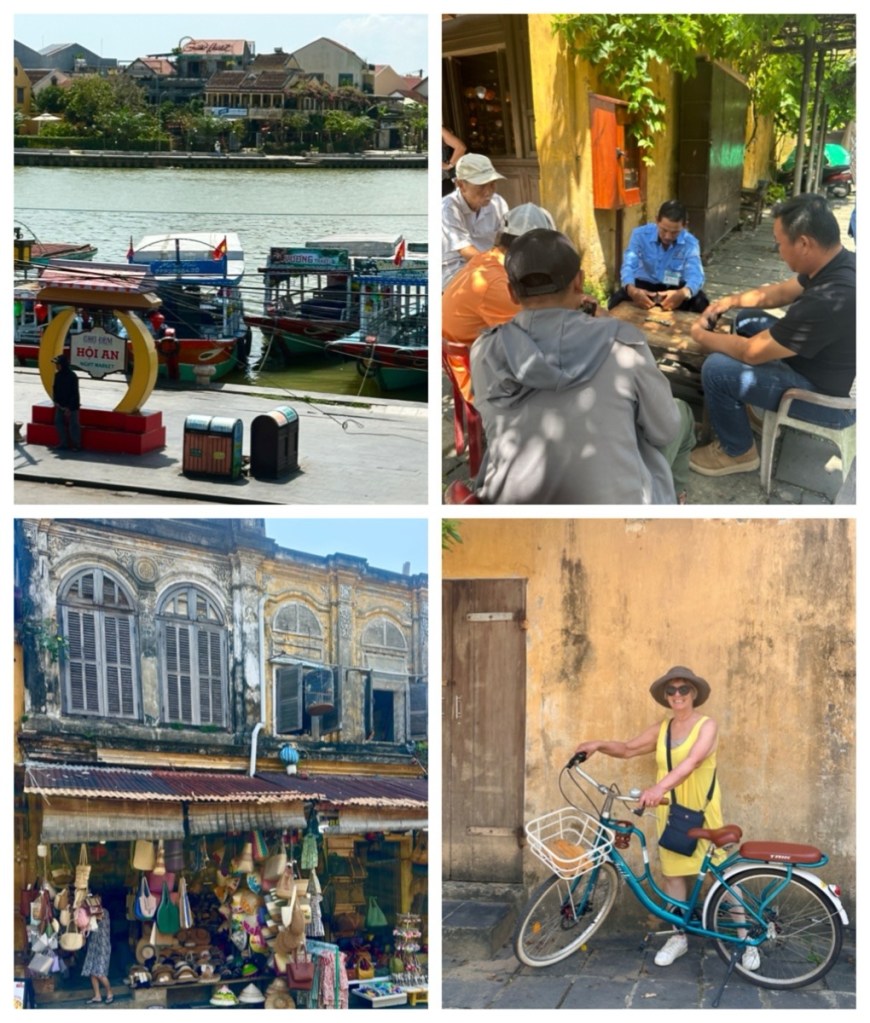
We continued to stroll the streets of the Old Town with Tam describing items of interest.
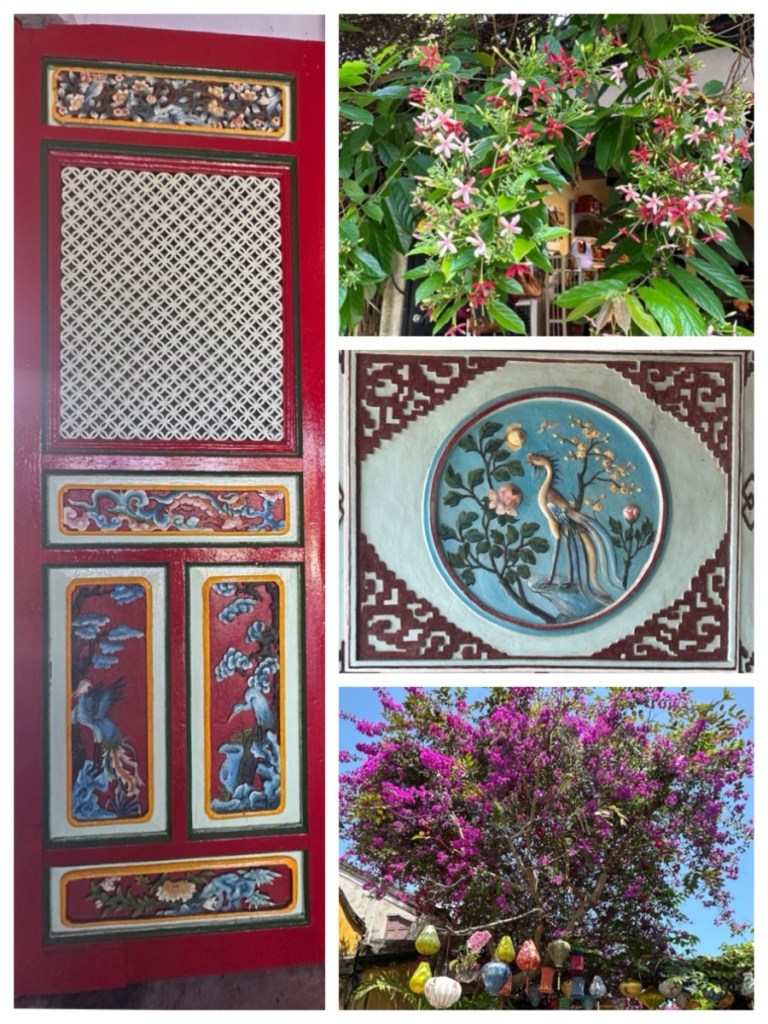
The Chinese presence in Hoi An dates back to the arrival of the first Chinese merchants in the late 16th century and the establishment of their own community. Hoi An was also a key destination for Chinese migration following the fall of the Ming dynasty, the Opium Wars, the Taiping Rebellion and the 1911 Revolution. The Chinese community continued to thrive during the 19th and 20th centuries and to contribute to the development of the town.
Today, the Chinese community in Hoi An is divided into five main groups: Cantonese, Fujian, Teochew, Hainan, and Hakka. Each group has its own assembly hall where they gather for worship and communal activities. Tam took us to two of these.
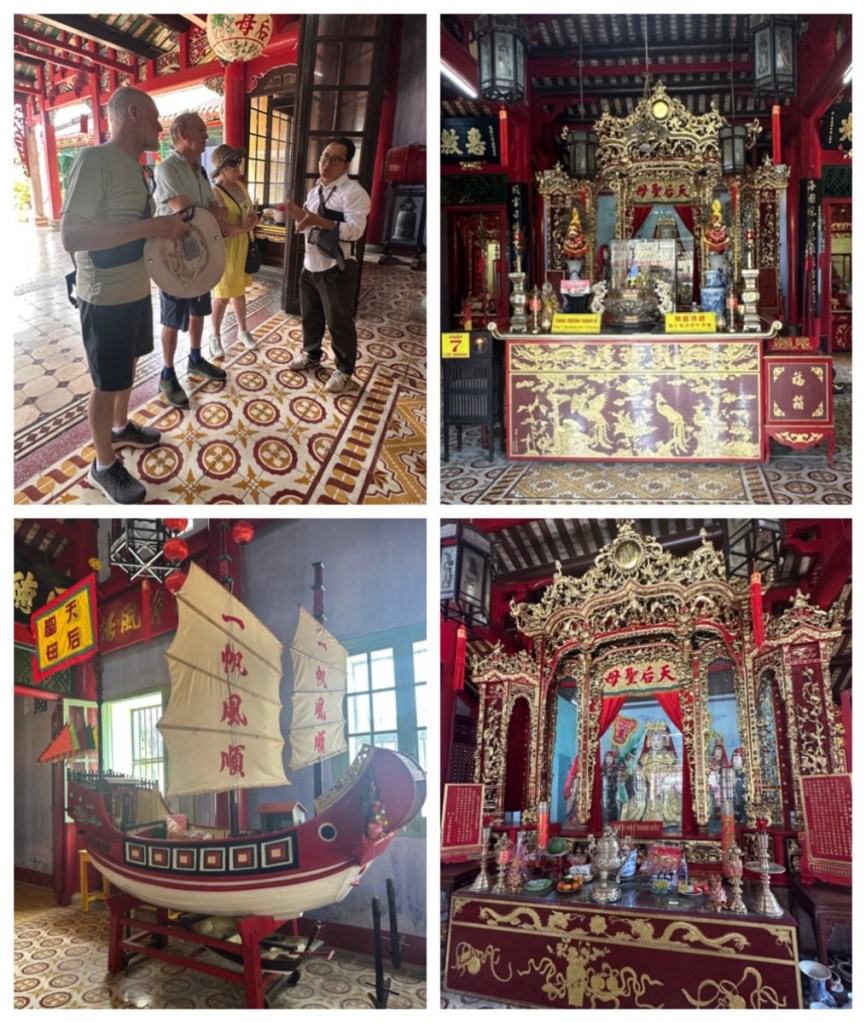
Stop #6: The Trung Hoa Assembly Hall, also known as Dương Thương Assembly Hall or Ba Pagoda, was built in 1741. This assembly hall is unique for being a shared space for five distinct Chinese communities and is a testament to the collaborative spirit of these groups.
The Assembly Hall is dedicated primarily to Thiên Hậu Thánh Mẫu (Mazu), the Goddess of the Sea and also honors two other deities, Thiên Lý Nhãn (Thousand-Mile Eyes) and Thuận Phong Nhĩ (Favorable-Wind Ears). Prayer to these three is said to ensure safe voyages for sailors and merchants.
Trung Hoa Assembly Hall is a blend of traditional Chinese design and local influences and combines a grand entrance gate, multiple courtyards, a pavilion and the main hall.
In addition to its religious functions, the Trung Hoa Assembly Hall promotes and preserves Chinese culture in Hoi An by serving as an educational center for Chinese children.
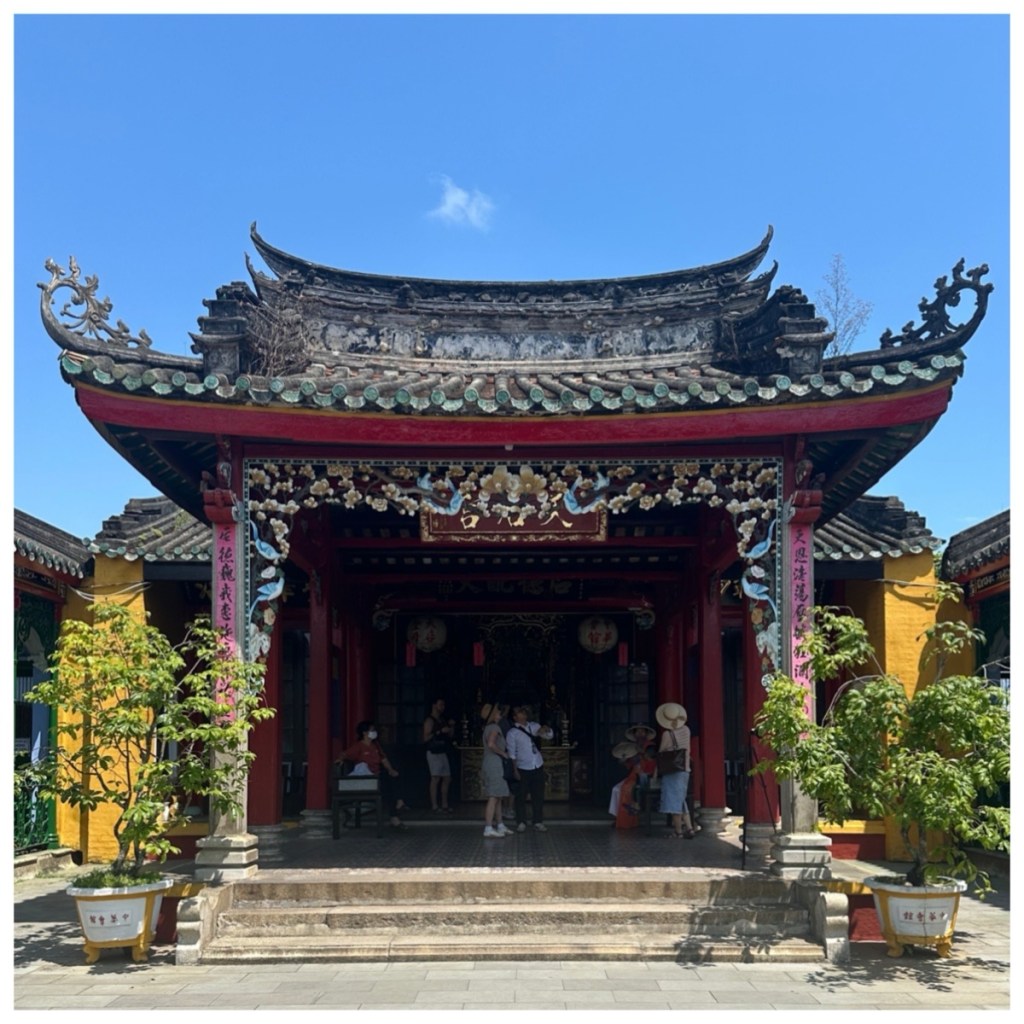
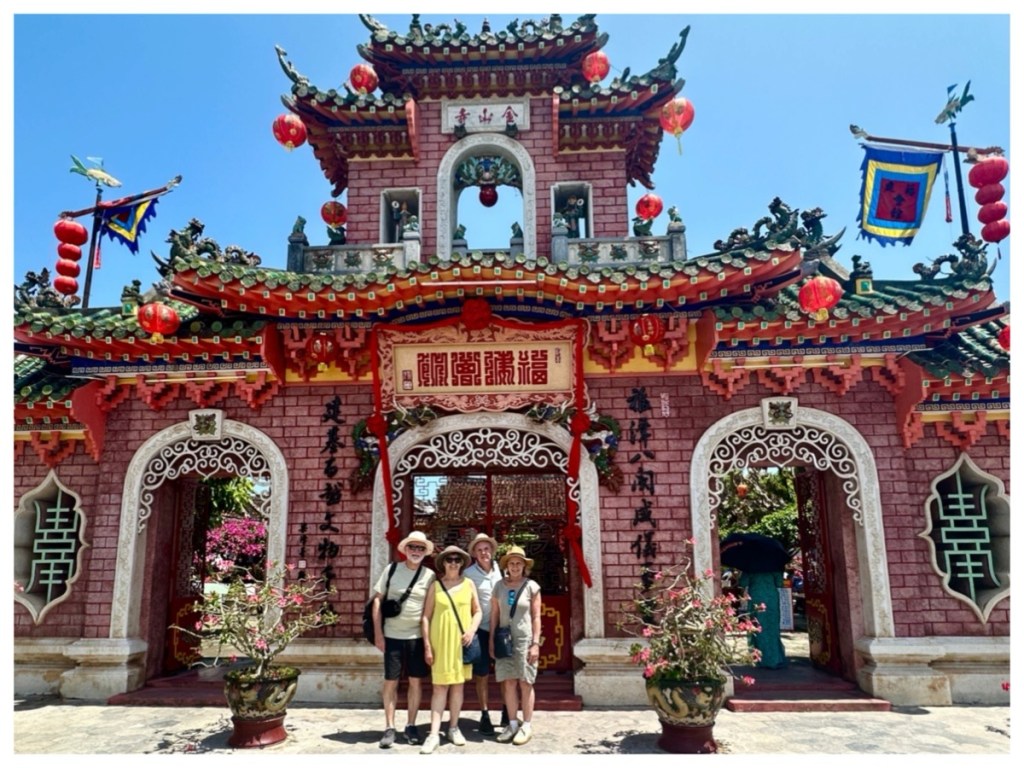
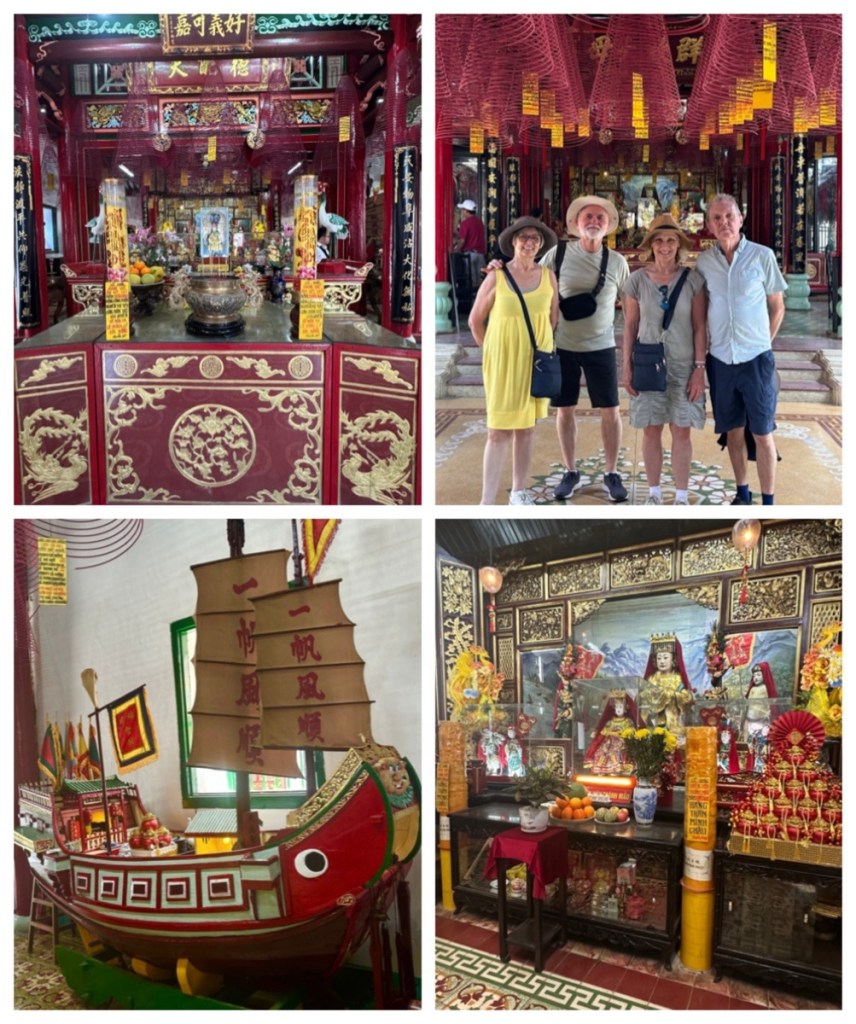
Stop #7: The Assembly Hall of the Fujian Chinese Congregation or Phuc Kien Assembly Hall was a total restoration of a Buddhist pagoda, Kim Son, which was constructed in the 1690s. The new Assembly Hall opened in 1759. The hall is devoted to worship of ancestors and a deity known as Thien Hau, a Chinese sea goddess who blesses fishers and sailors with safe ocean travel.
The hall is known for its traditional Chinese architecture with intricate designs, large incense coils and a vibrant altar.
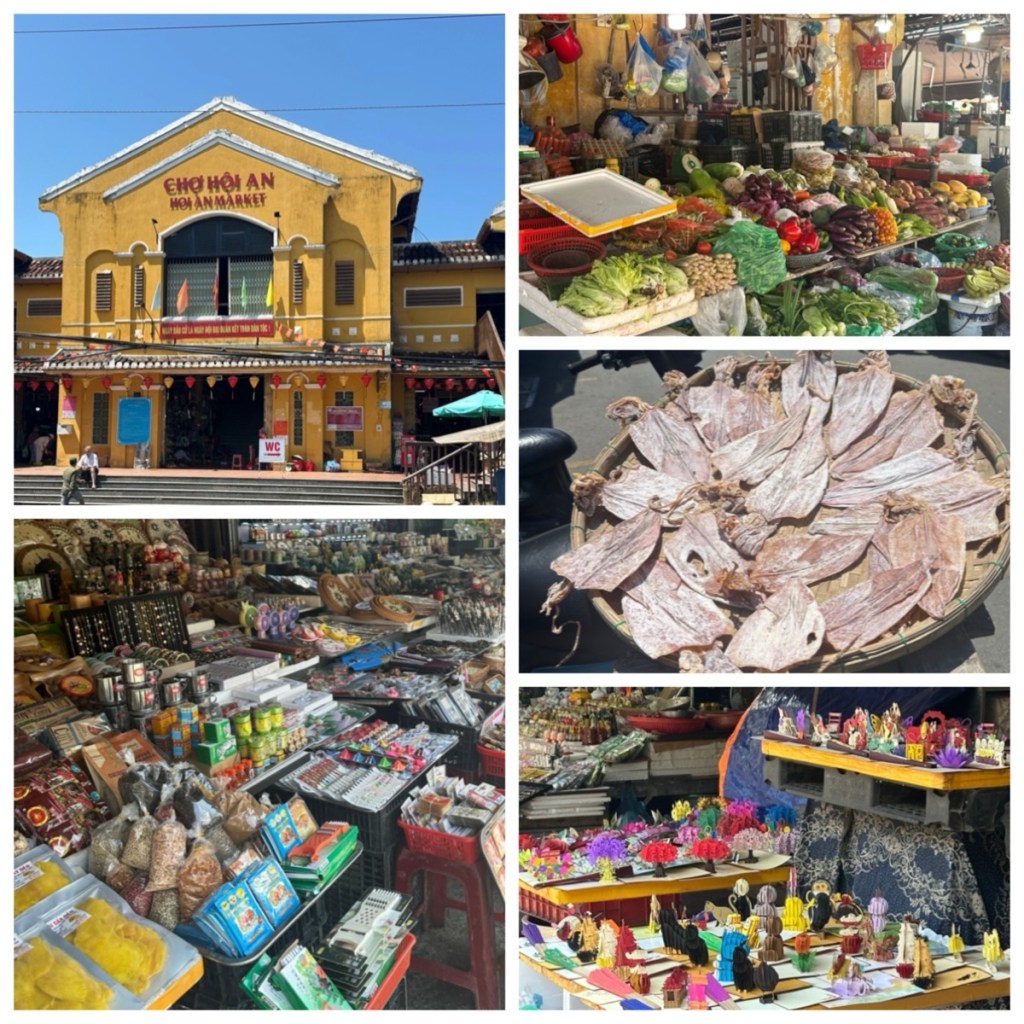
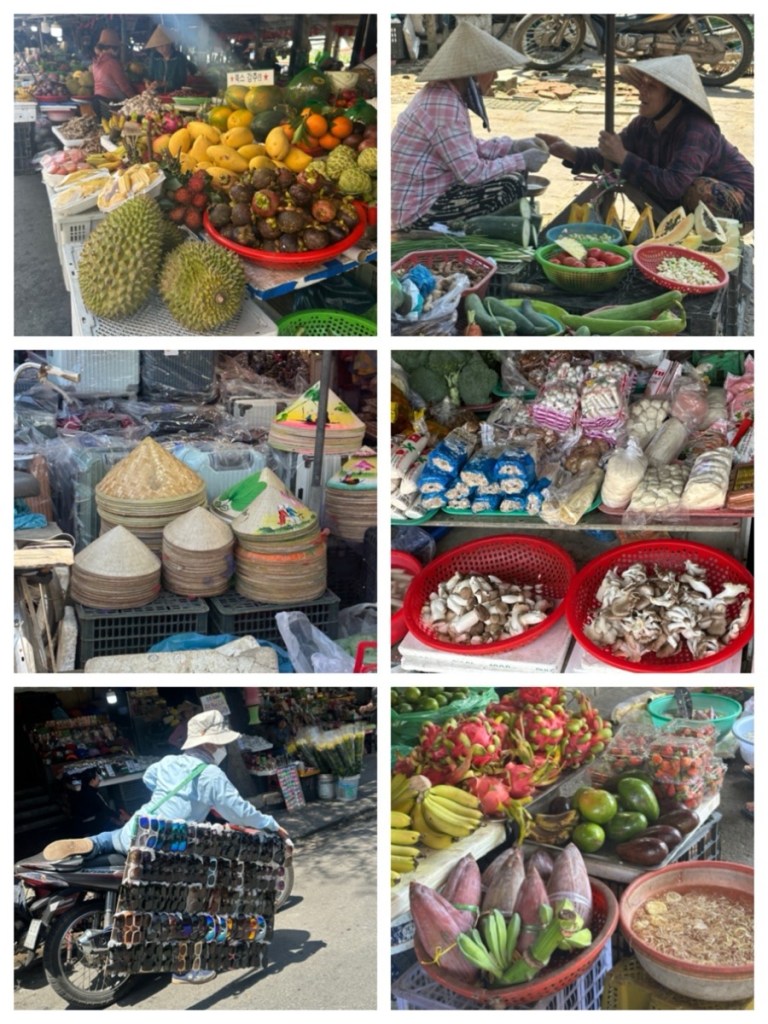
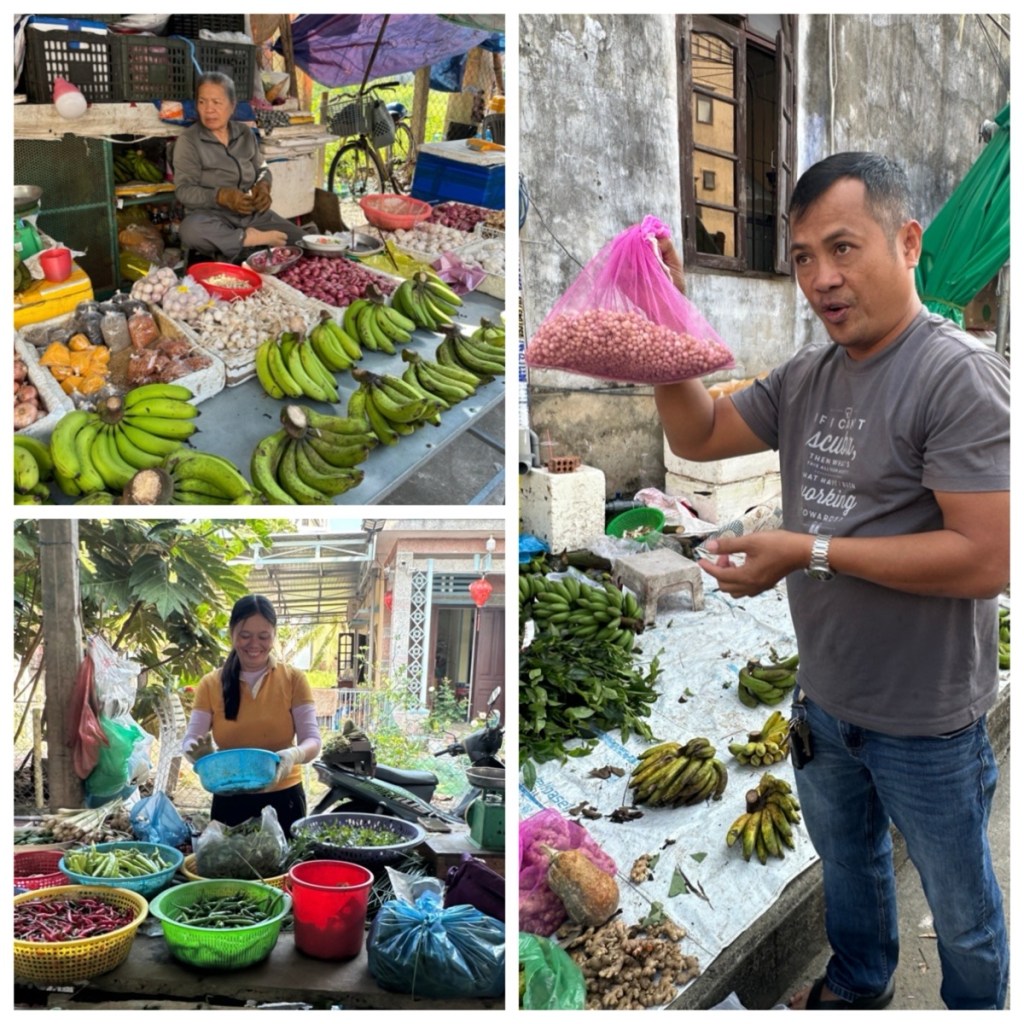
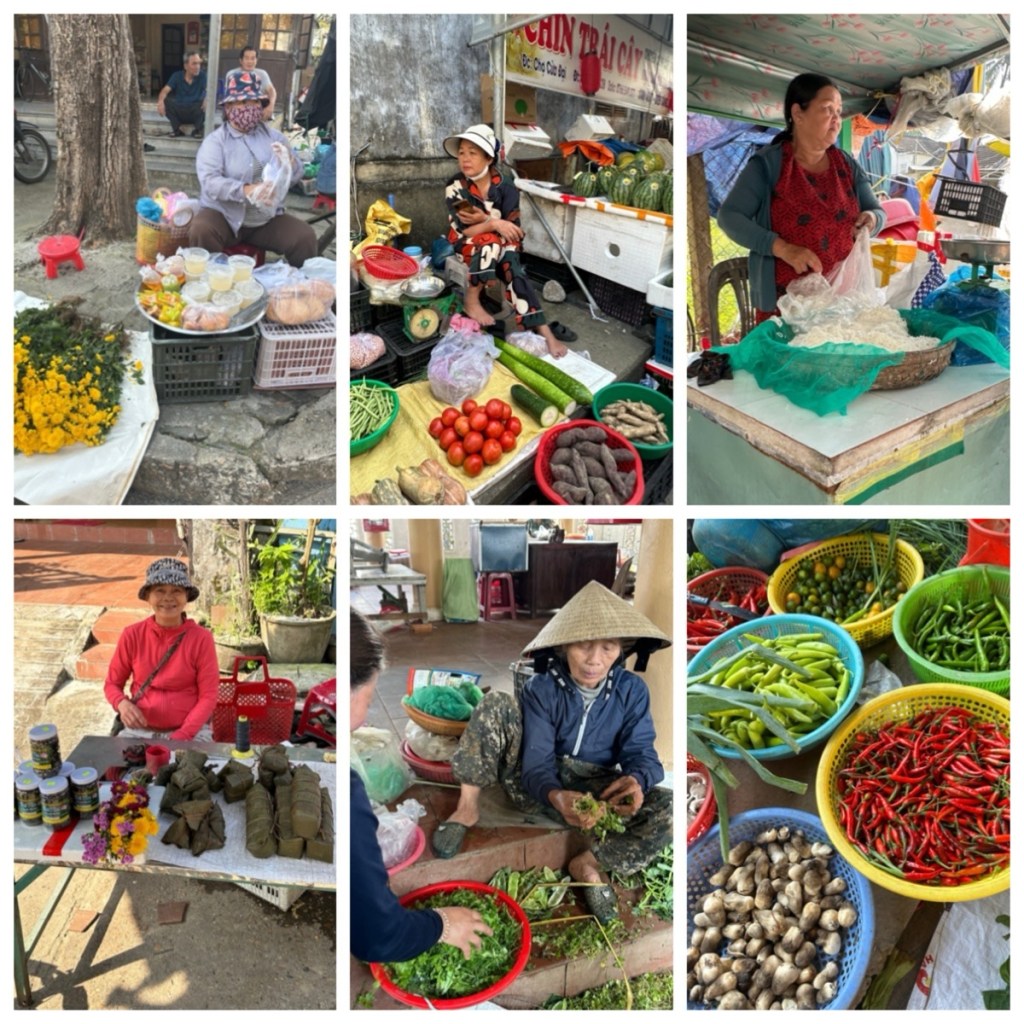
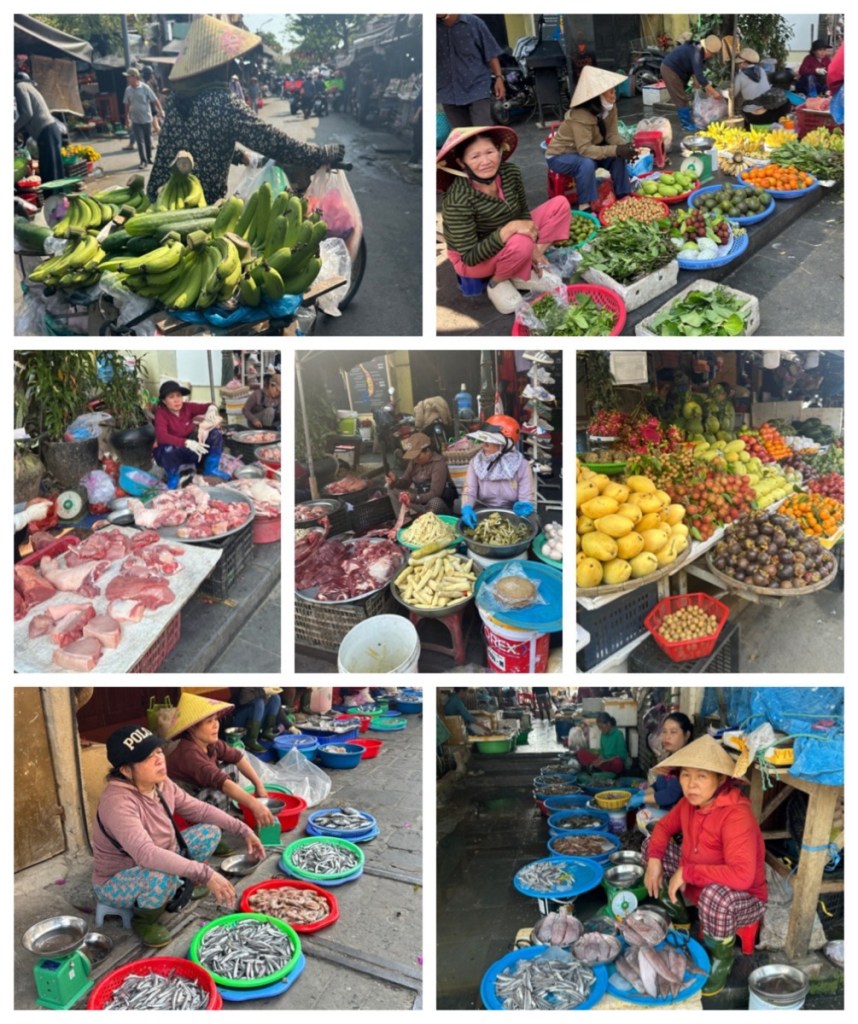
Stop #8: After visiting the Assembly Halls, we walked to the Central Market. The original market was established early in Hoi An’s days as a trading port. In 1848, it was moved to its current location. It has hundreds of stalls and vendors to meet your every need.
One of my favourite travelling activities is visiting local markets and I find it hard to stop snapping photos.
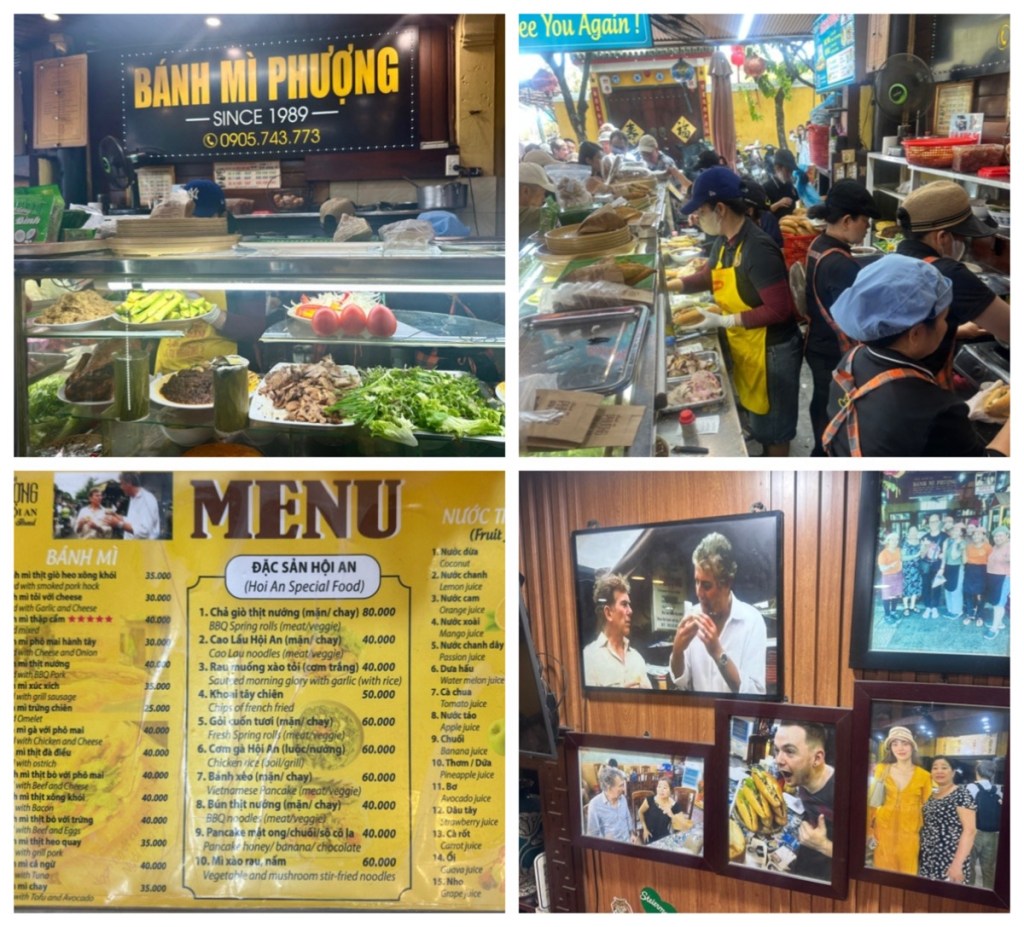
Stop #9: It was lunch time and Tam suggested that we visit a renowned sandwich stall. Bánh Mì Phượng became famous after Anthony Bourdain called it “a symphony in a sandwich”. There are now two locations and Tam slipped us past the line at one of them and to a table on an upper floor. Mì Phượng serves over 20 types of bánh mì, all made with a crisp-on-the-outside, soft-on-the-inside baguette. Fillings range from BBQ pork, pate, and grilled chicken to veggie-friendly options like tofu and avocado. Everything is layered with fresh herbs, house-made sauces, pickled veggies, and a signature chili jam that gives it that extra punch.
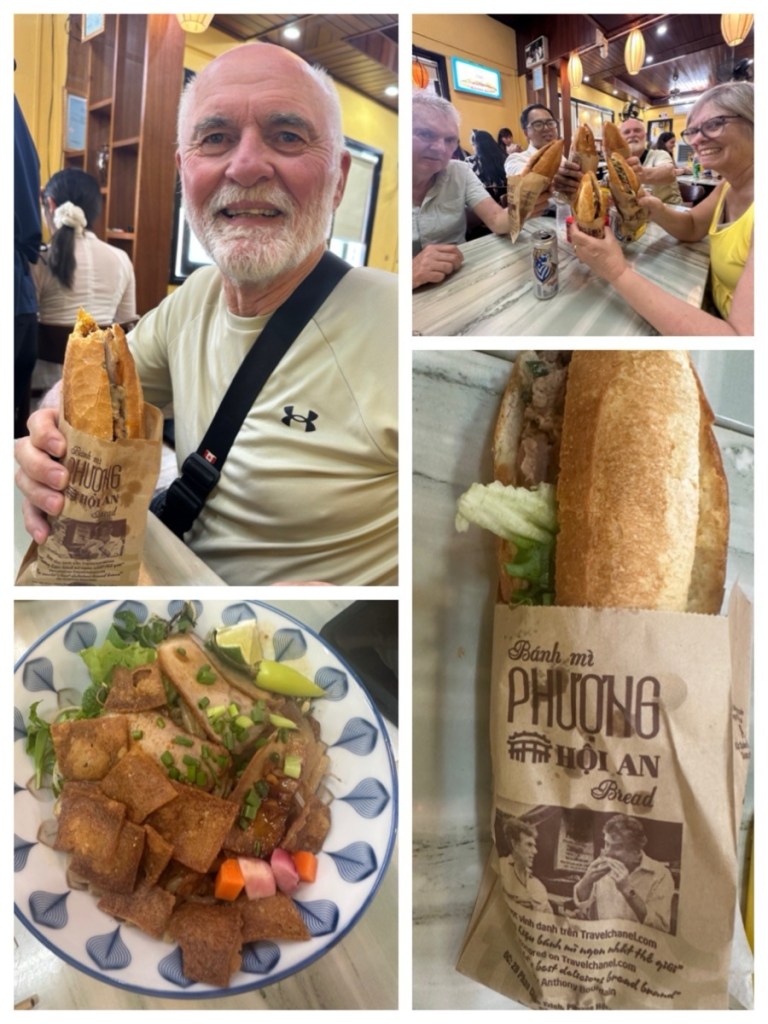
We attest to the great taste of the #3 – Bánh mì thập cẩm (mixed) and #14 – Bánh mì cá ngừ (tuna).
Tam also ordered Cao Lầu noodles, a dish that is a Hoi An speciality. Cao Lau noodles are bouncy in texture and chew and are slightly yellow in colour. To make the noodles, rice is boiled in ash-enriched water – originally the water and ash could only come from a specific source but his has been expanded to areas with similar properties. The rice is then pounded into a dough, steamed and make into medium-thick noodles. The dish is topped with flat square croutons from the same dough as the noodles and pork and multiple greens. It results in a very delicious dish!
Our time with Tam Le was excellent. We are sure that if we had more time with him, he would rise to the status of our other exalted guides (Sinet in Siem Reap, Posh in Tokyo, George in Bangkok, Chan in Luang Prabang)!
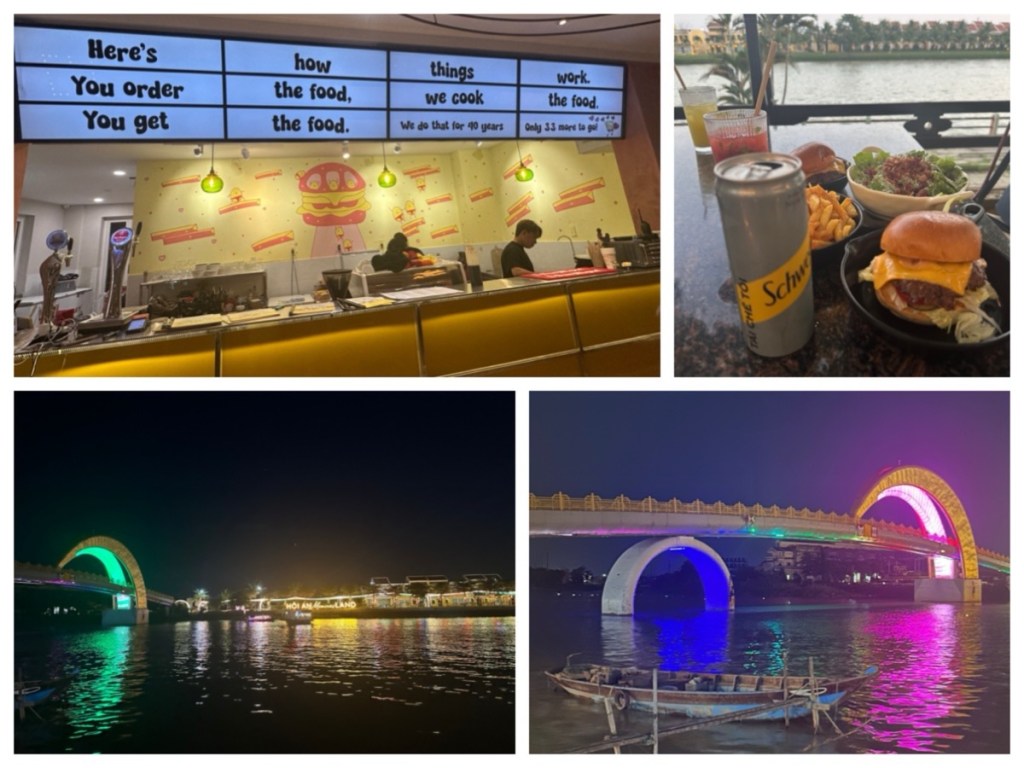
We had a relaxing afternoon and then walked across the street to a riverside restaurant – the Bikini Bottom Express – where we had a great burger and salad dinner while enjoying the river traffic and lights. I loved their motto!
The lighted bridge is the Impressions Bridge which connects to the island Hoi An Memories Land, a cultural theme park that we chose not to visit. You need to pay an entrance fee to step on to the bridge.
Day 2:
Our morning tour for the day was also booked with Hoi An Day Trips. Our guide Hau and his driver picked us up at the hotel and we were off to the countryside.
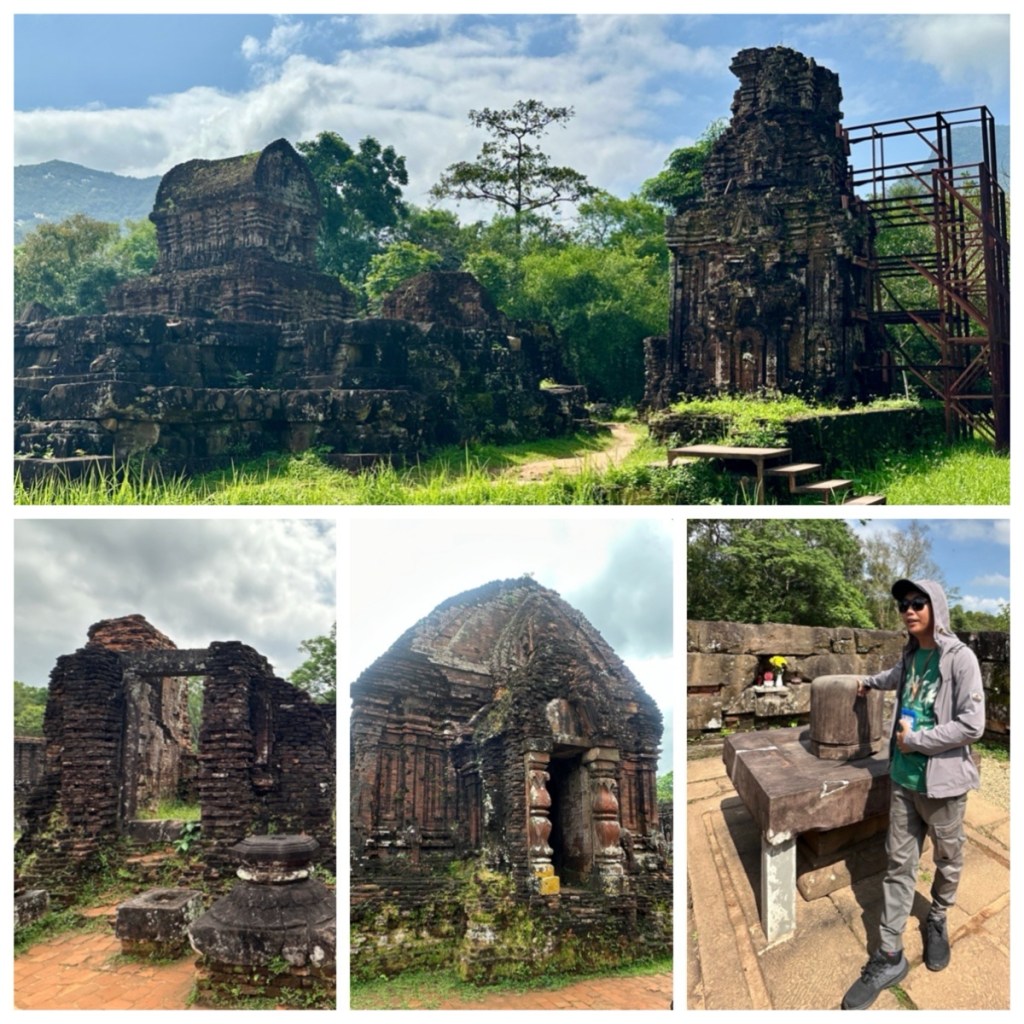
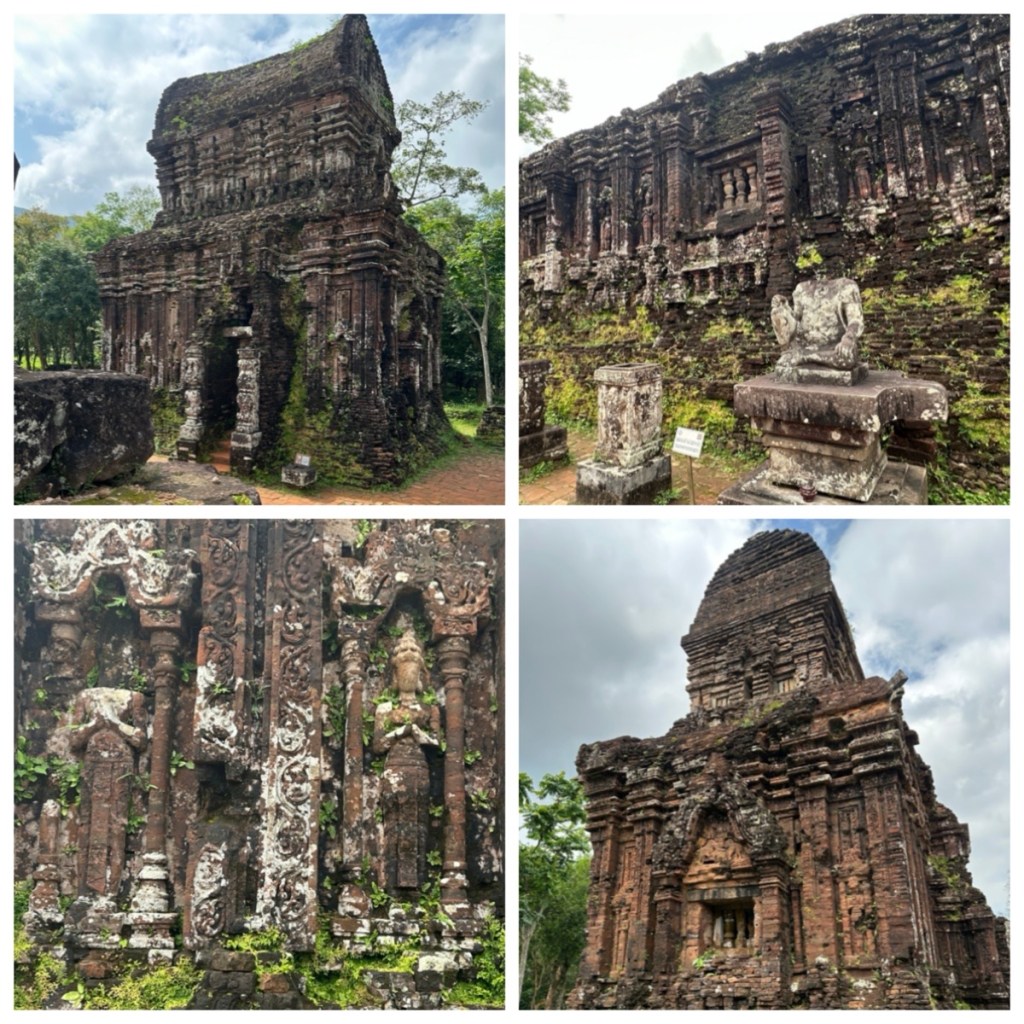
Stop #1: Our destination was the My Son Sanctuary, an architectural complex of the ancient Chăm people, The area of 32 temples and towers within a secluded valley surrounded by mountains was recognized as a UNESCO World Cultural Heritage Site in 1999.
The earliest records of people of the Kingdom of Cham date back to the 2nd century BCE when the Cham occupied the central Vietnamese provinces. It is believed that the Cham centre of power was moved to the My Son area in the 4th to 5th century.
The construction of My Son began in the 4th century under King Bhadravarman and was completed in the late 13th to early 14th century under King Jaya Simhavarman III. The construction technique was remarkable in that each brick was fired and cut into precise blocks without using any adhesive materials. Despite centuries of exposure to natural elements, these structures have remained intact. Hau pointed out the difference between this construction and that of restoration where cement was used.
The architectural remains at My Son evidence that the Cham kingdom was influenced by Hinduism, adopting Sanskrit as its language and Shaivism as its religion.
Hau was instrumental in providing us with detailed information about the complex and the Cham people.
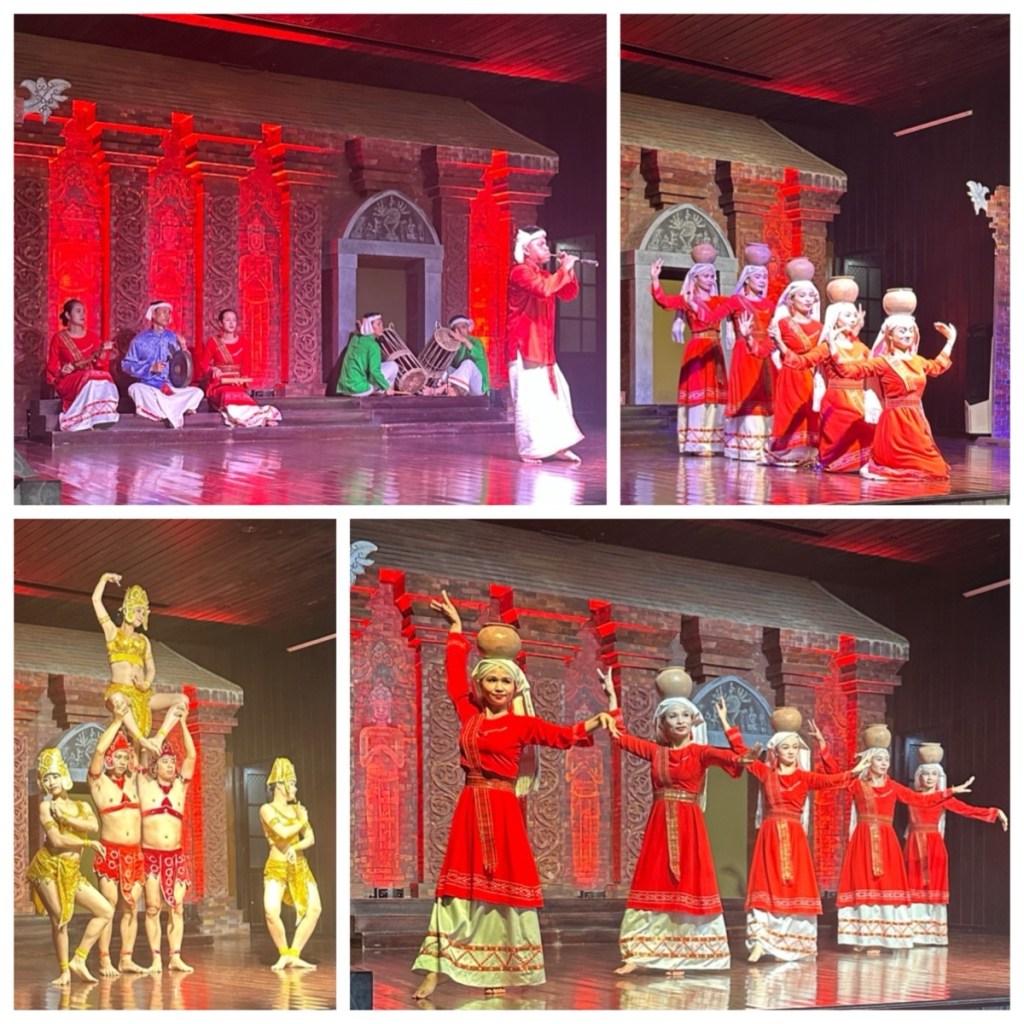
Several times during the day, the My Son Sanctuary Show is performed. The first performance is the “offering the holy water to the temple”. A group of Cham ladies perform an intricate dance enacting carrying a pot of holy freshwater to the temple. Although the balance of the pots on their heads was remarkable, we did note that the pots were empty.
The second act involves a Cham male artist blowing the Saranai flute, a tradition double-reed wind instrument. He is accompanied by additional artists playing the Ginang drum and other instruments. The man blowing the flute had incredible lung power!
The final performers danced the Apsara Statue Dance. The Cham Apsara dance is a classical performance art rooted in the ancient Champa civilization, heavily influenced by Hindu mythology and closely linked to the spiritual traditions of the Cham people in Vietnam
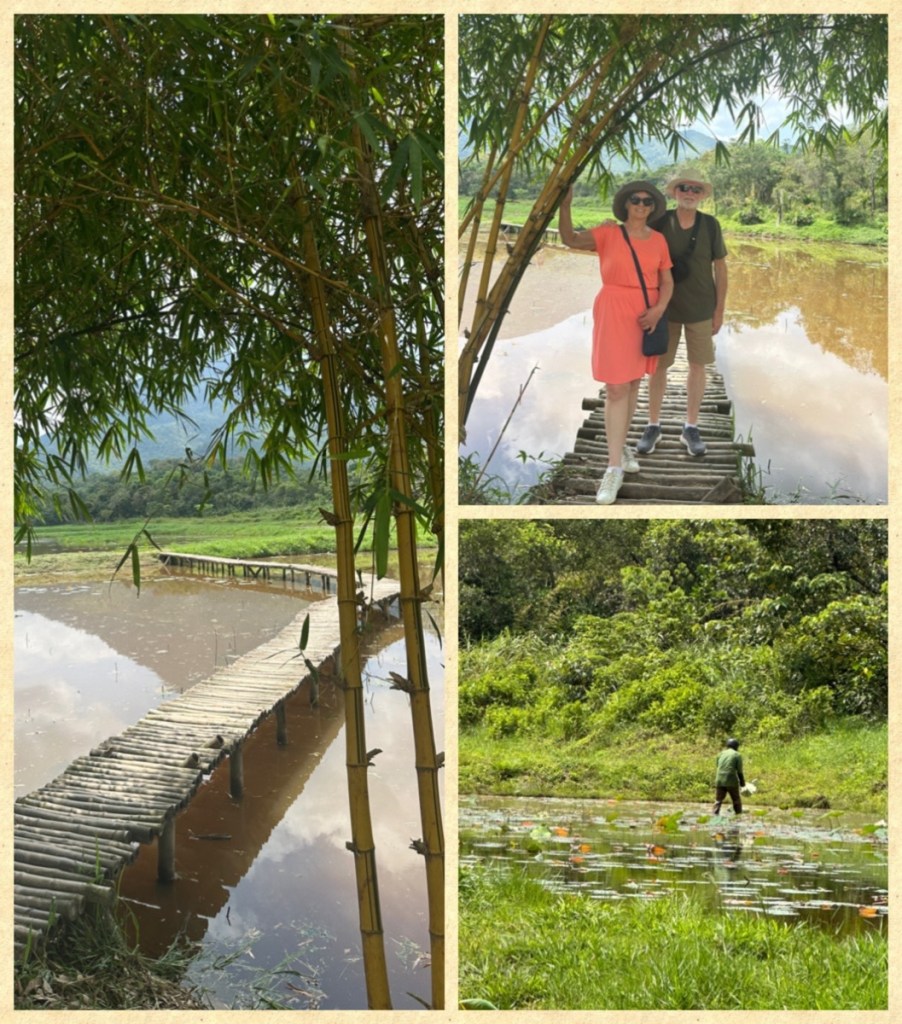
The grounds surrounding the My Son Sanctuary were lovely!
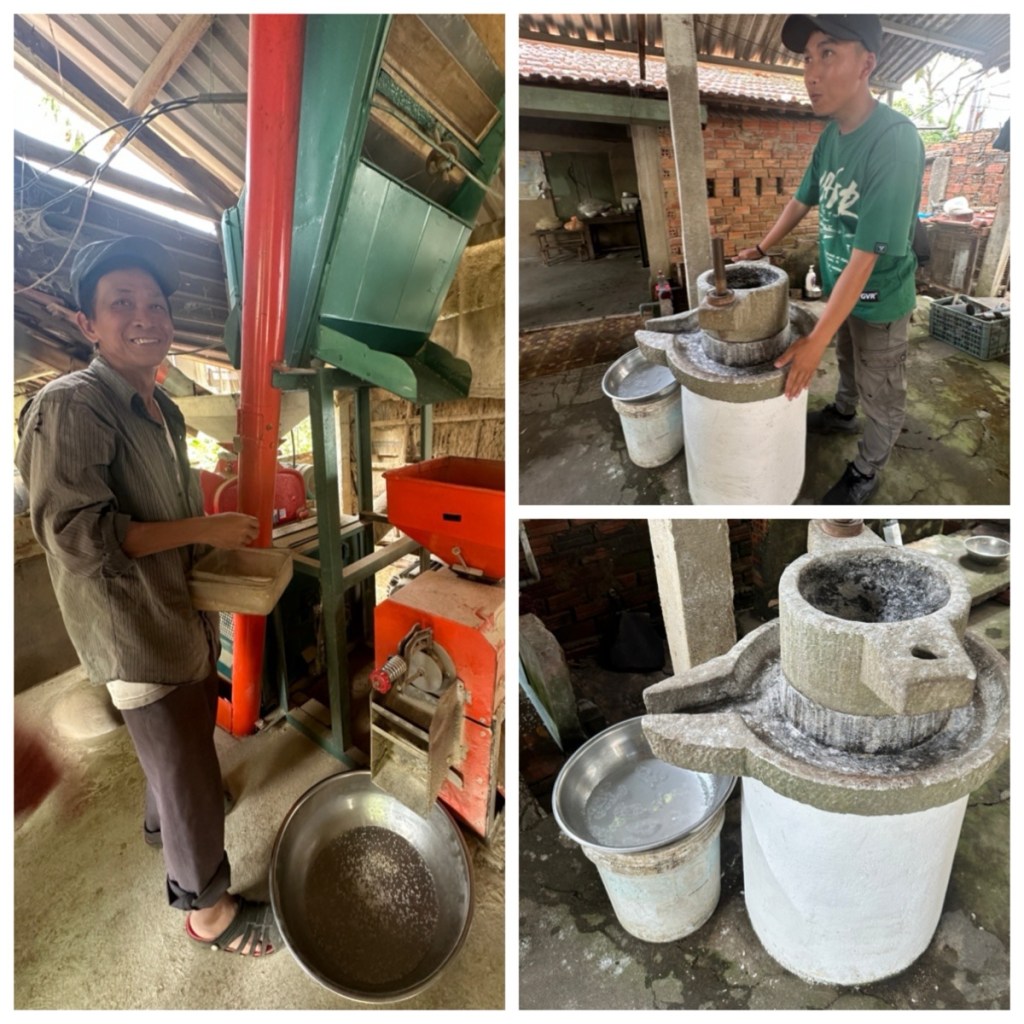
Stop #2: We were next driven to a local farm that specializes in the production of rice noodles and rice paper. Here, Hau and our gracious hosts showed us how the rice is prepared for the production of these items.
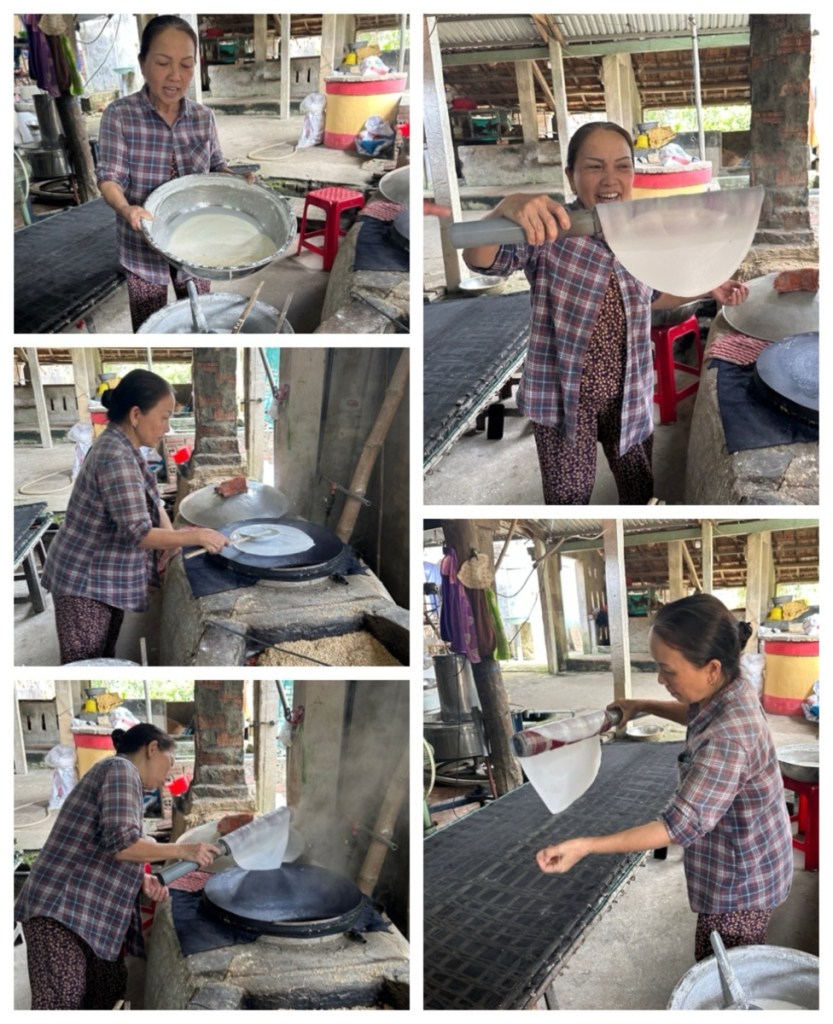
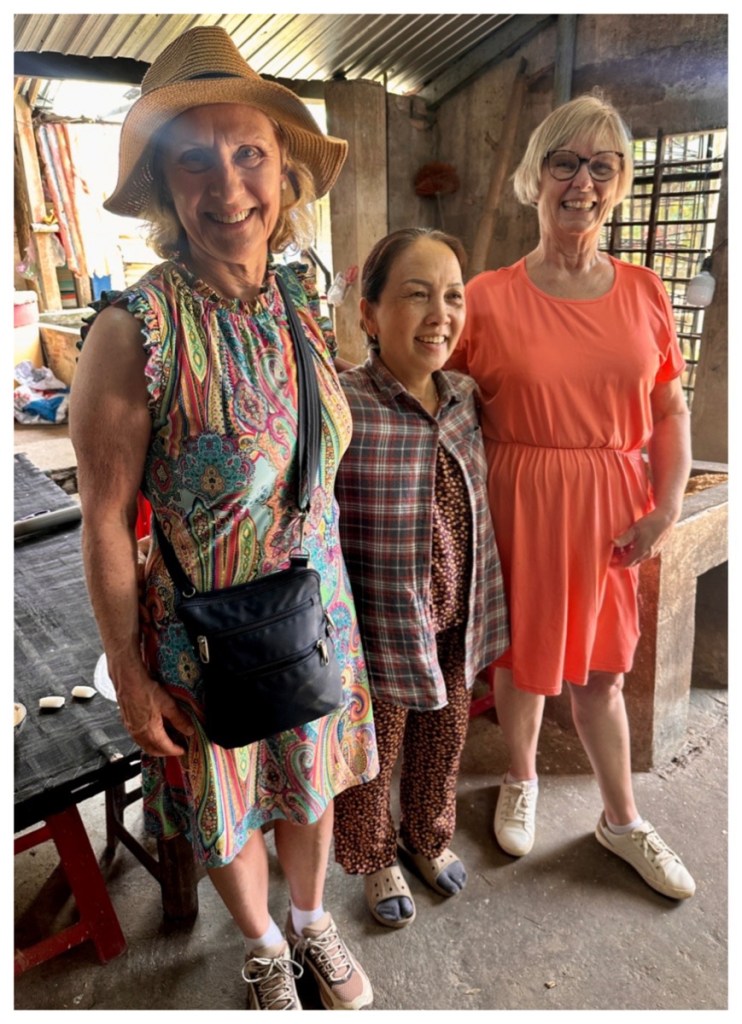
After a demonstration of how to make a rice paper suitable for rolling a spring roll, Debbie and I each took a turn – under the guiding hand of our smiling hostess!
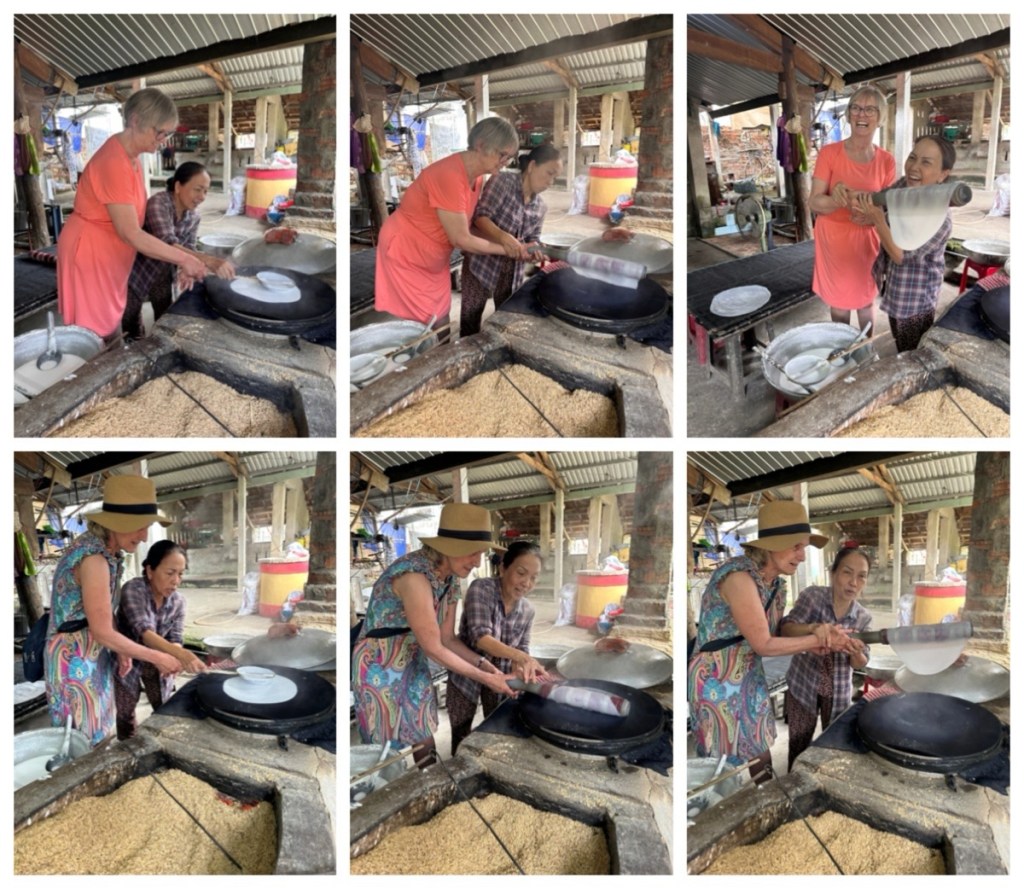
We then had a taste of the rice papers that we had made. We thought they were quite tasty!
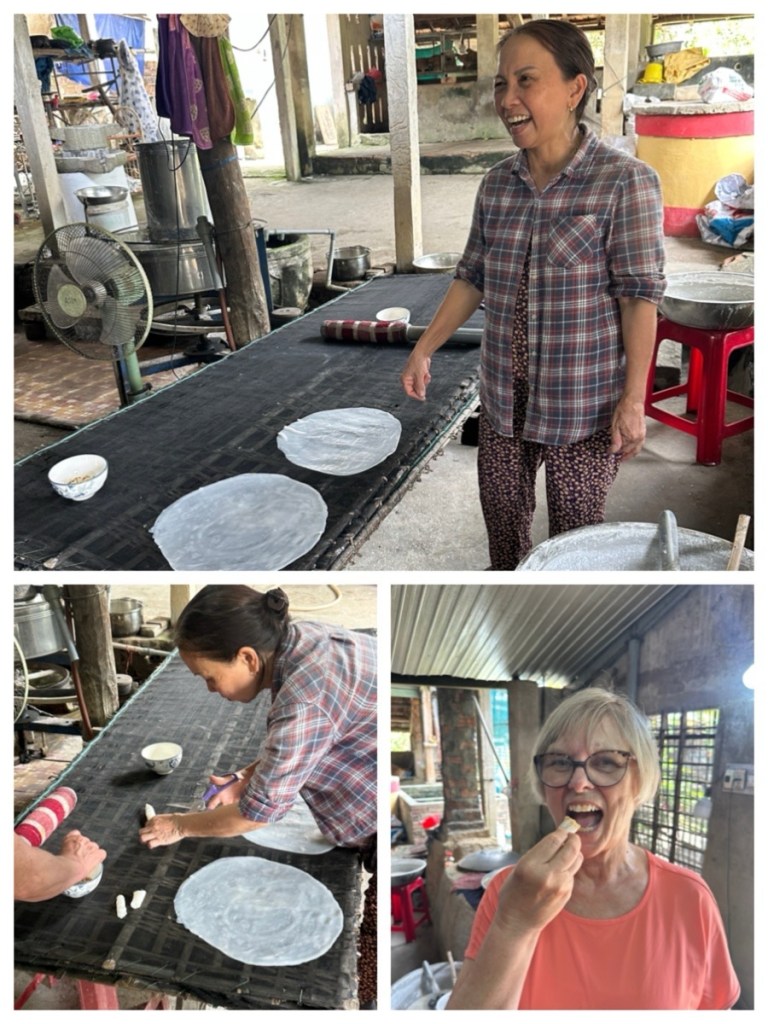
The people we visited prepare rice noodles early in the morning for delivery to local vendors and then prepare the rice papers. It seems to be an arduous procedure given the vast amounts that they make!
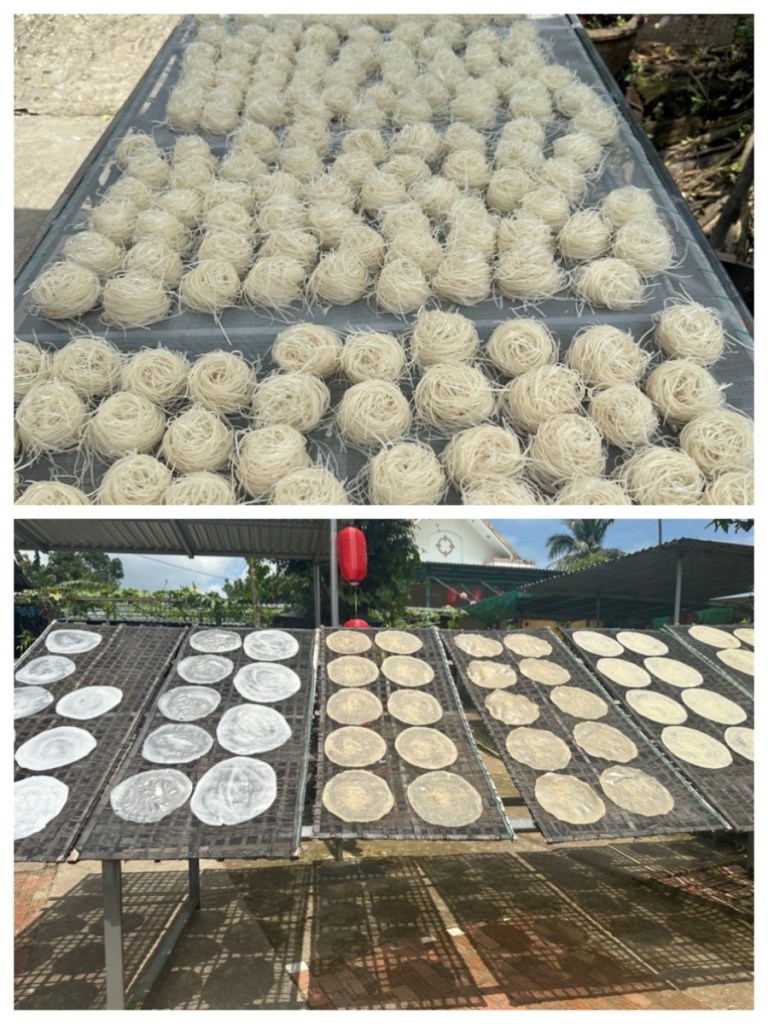
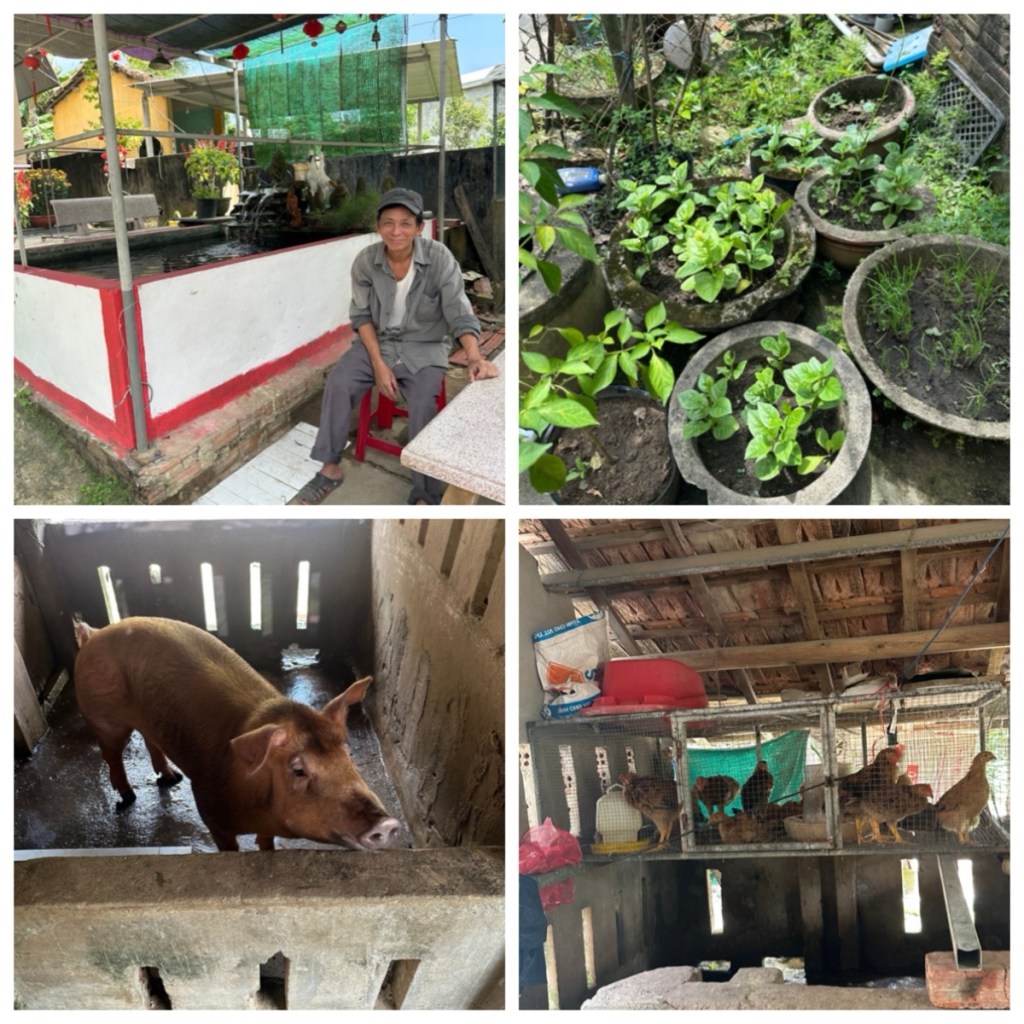
It was fun to look around the farm area.
The visit with this remarkable lady was the highlight of our day. She was gracious and so friendly and we were privileged to meet and spend time with her!
Stop #3: Once again, it was time to try a local specialty for lunch. Hau took us to a small local restaurant where he ordered Mi Quảng noodles for us. This dish is a popular staple in Da Nang province. It consists of rice noodles in a rich broth with chicken, pork, shrimp, or fish (we had a mixture) and garnishes of fresh vegetables, such as mustard greens, bean sprouts, water morning glory, scallion, lettuce, basil, fragrant knotweed, coriander, and sliced banana flower. It was quite delicious and again, such fun to try something that is iconic to the area.
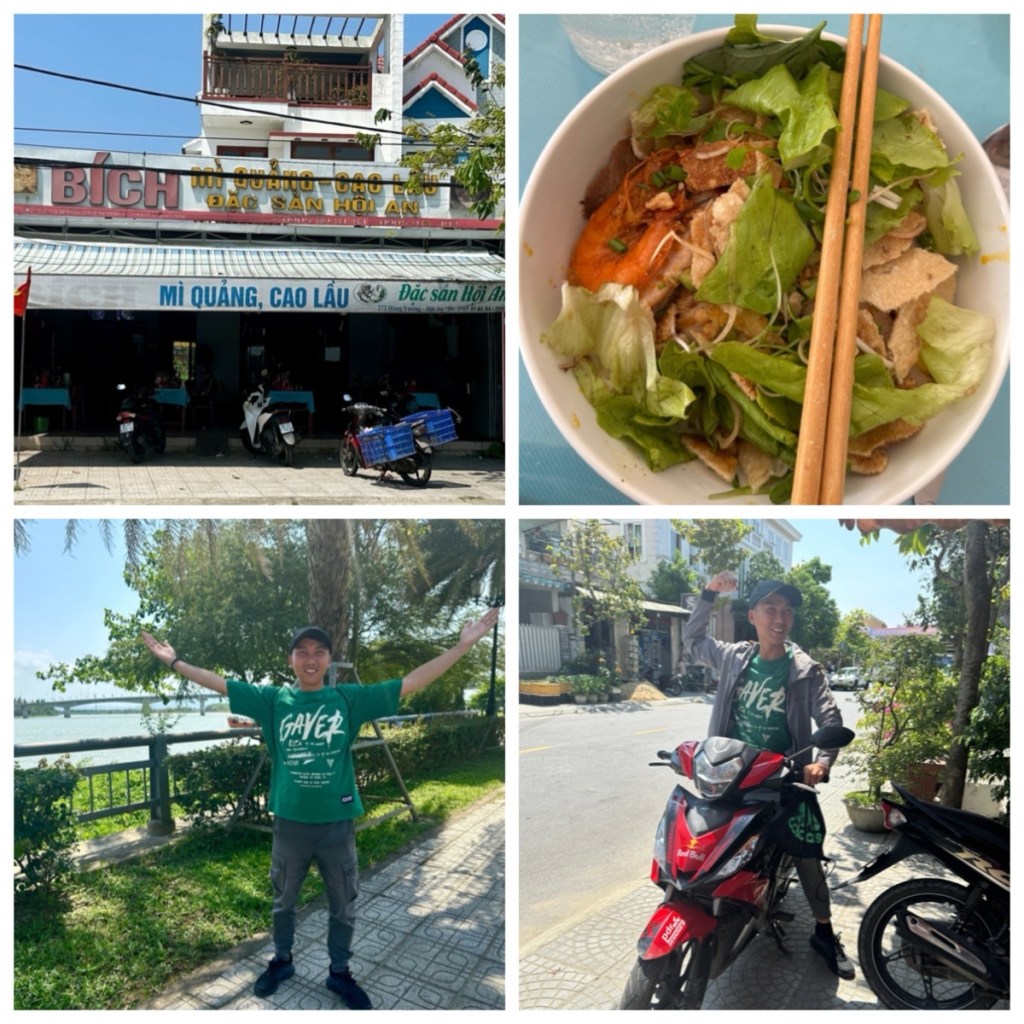
So ended our morning with Hau, a fun young man with great personality and knowledge.
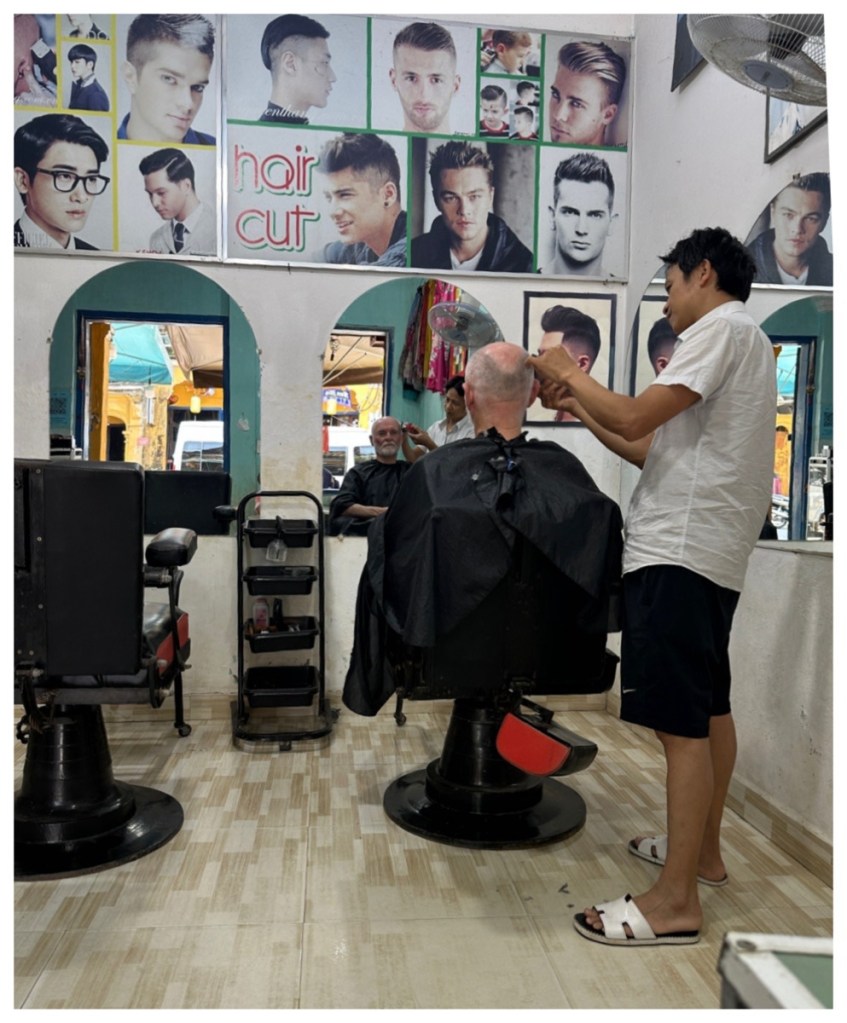
Stop #4: To start our afternoon, Harvey needed a haircut. Off we went to the local barber.
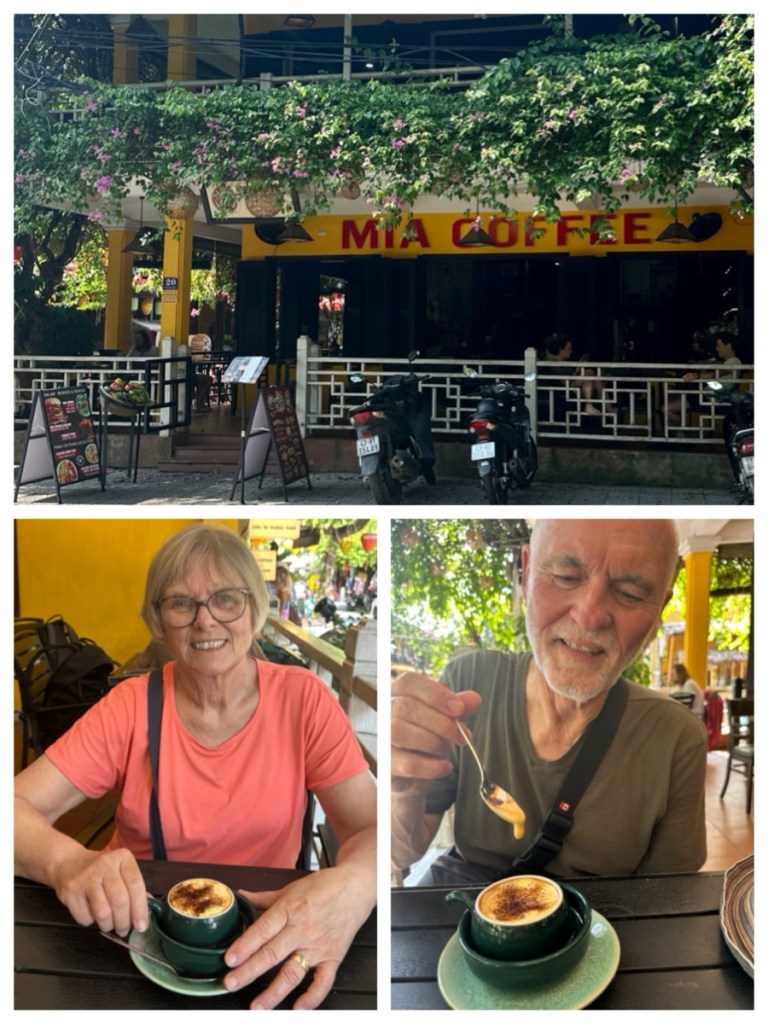
Stop #5: Haircut successfully completed, it was time for coffee. The egg coffees at Mia Coffee didn’t disappoint!
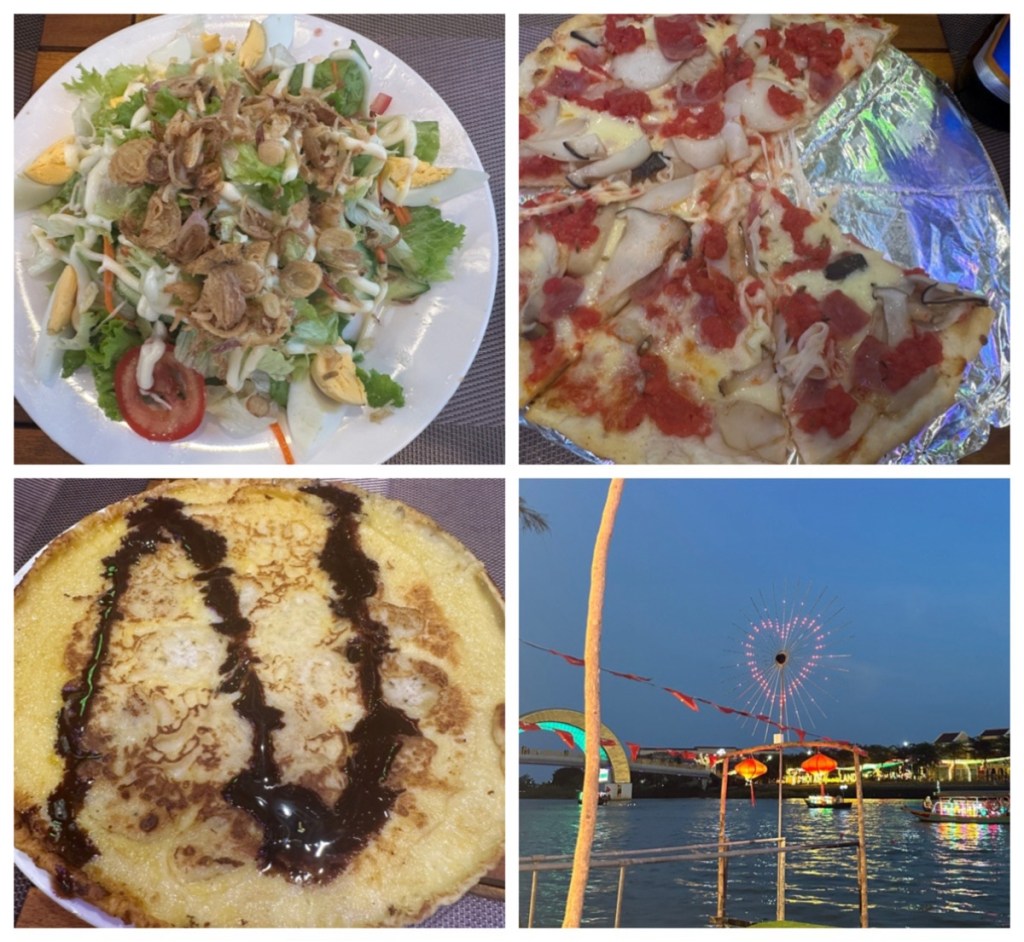
Stop #6: We had a bit of downtime in the afternoon and then it was time for dinner in the hotel restaurant and a walk along the river.
Day 3:
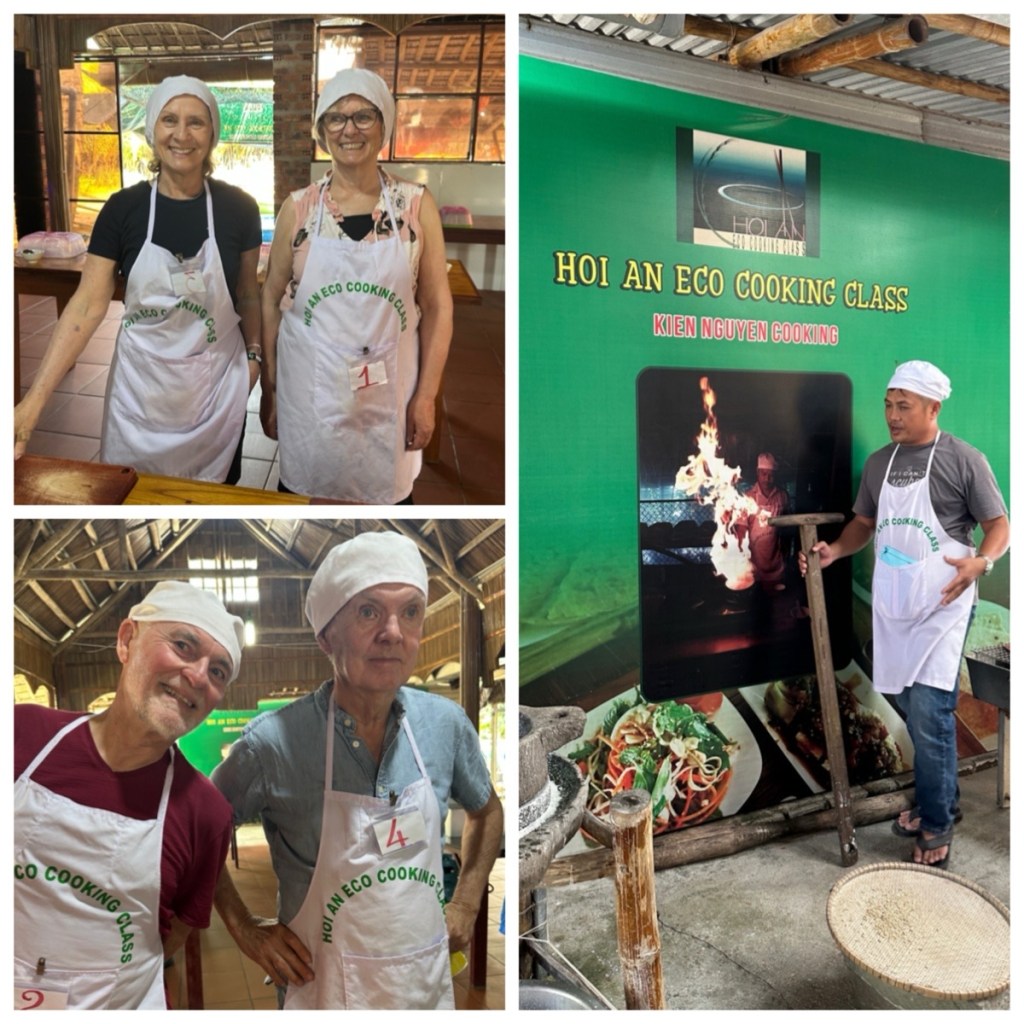
We had an interesting morning planned for Day 3. We were booked for the Hoi An Eco Cooking Class at Kien Nguyen Cooking. Kien and his driver picked us up at 8:15 a.m. and away we went!
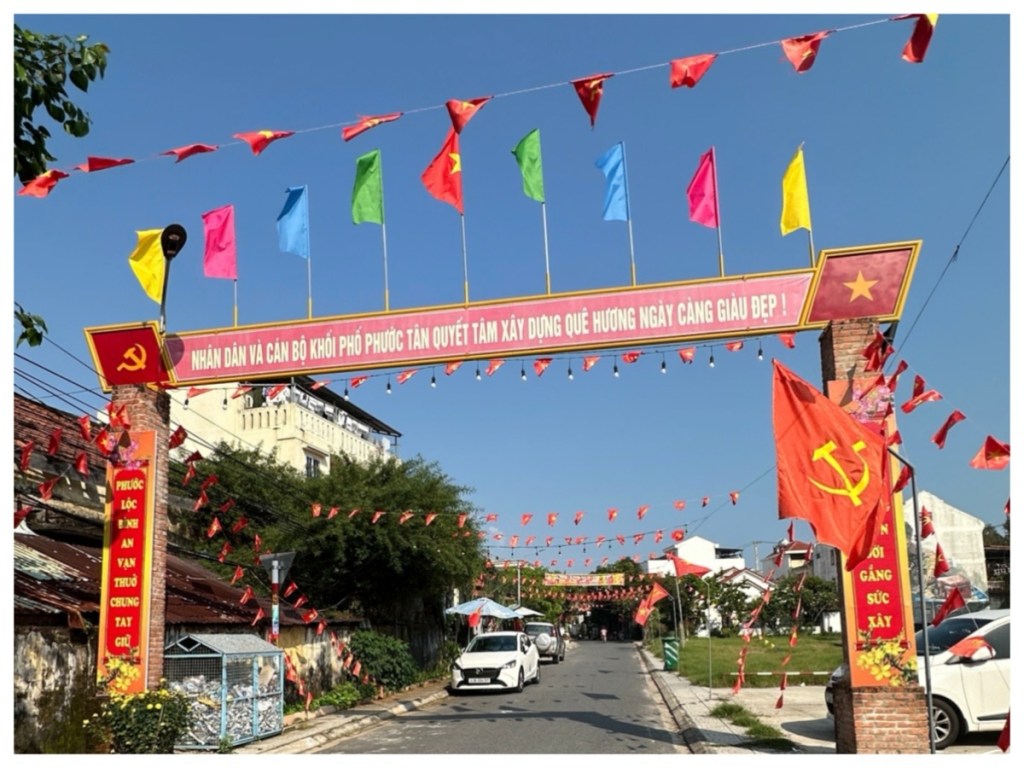
Stop #1: As we approached our destination, we passed under a gate. Google Translate tells me the banner on this sign reads:
“The People and Officials of Phuoc Tan Street Block Are Determined to Build a Richer and More Beautiful Homeland!“
That’s a very nice mission statement – one that should be emulated in many places!
Kien led us through a small market – one where the local people shop on a daily basis. He told us that it opens very early in the morning; by the time we visited (~9 a.m.), the fish area had already closed.
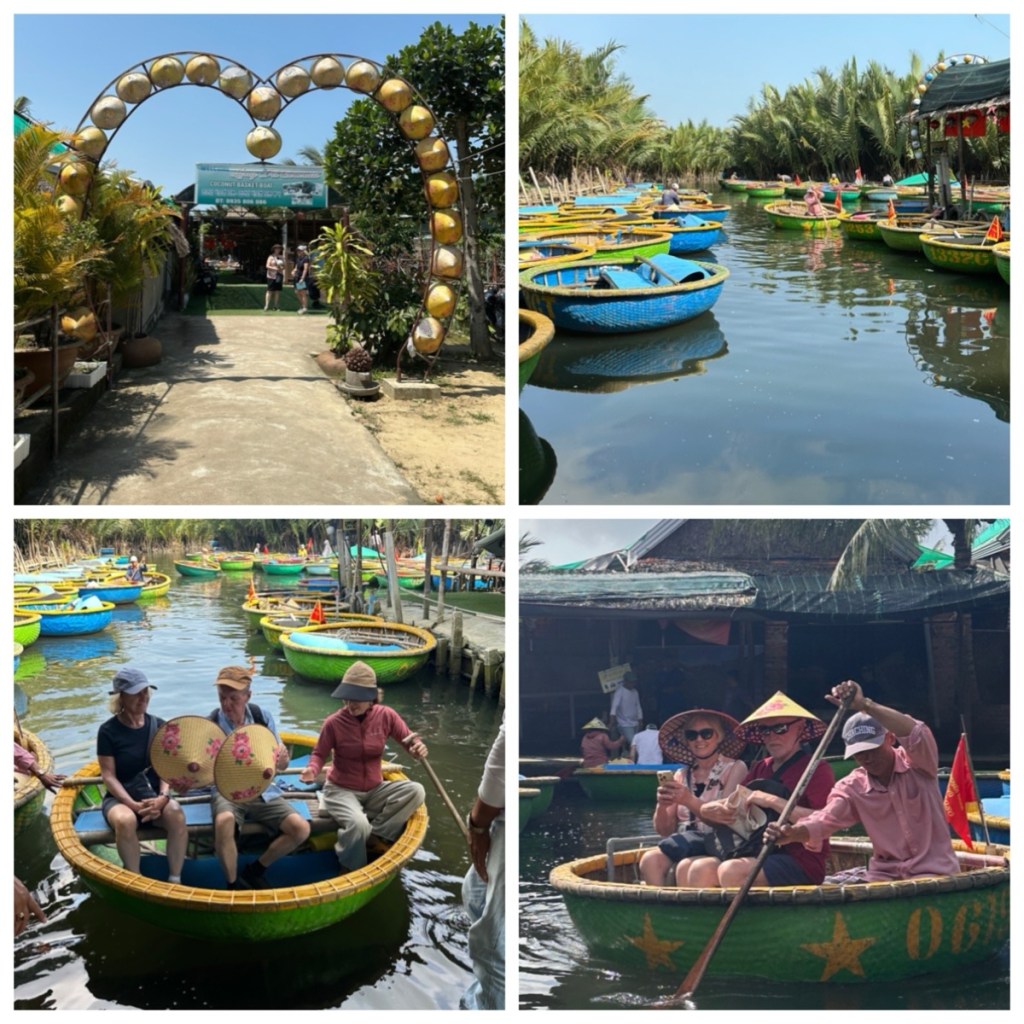
Stop #2: We next made our way to the Long Du Coconut where we boarded coconut basket boats.
The back story of the thung chai, or “basket boat” is interesting. In the French colonial era, the French began levying taxes on everything, including the ownership of boats. The poor Vietnamese fishermen could not afford the tax. To get around this, they invented a new boat – the thung chai – and argued that they were baskets, not boats. Their tactic worked!
The basket boats are constructed by hammering strips of bamboo in place and then coating them in waterproof resin from coconut oil, tar or of course more recently from fibreglass.
We were assigned a driver, given hats and off we went on the coconut forest waterways.
The goal of the activity was fishing for purple crabs. We really liked our boatman but he didn’t seem to be the best at finding the crabs. The other three boats in our group seemed to be having more luck. Finally, Harvey did manage to snag two, Bev had no luck! We did just toss the crabs back after photographing them.
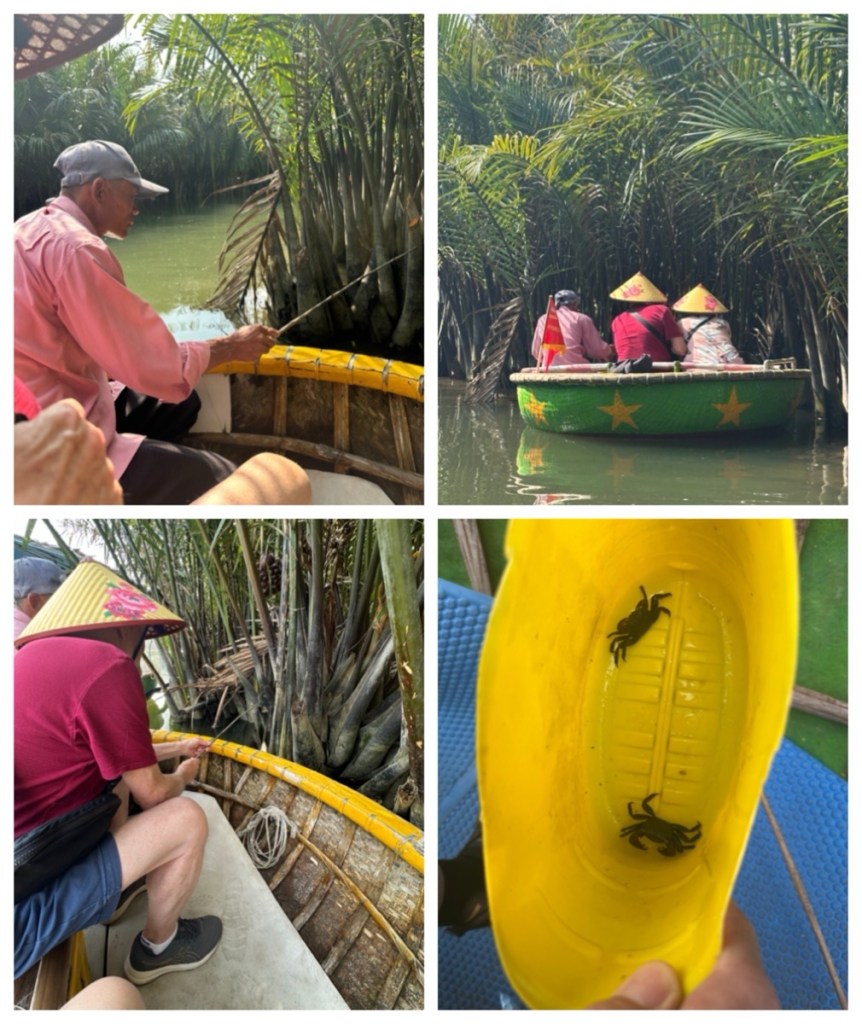
What our boatman lacked in fishing luck, he more than made up for with his showmanship! He took us on quite a ride and was great fun!!
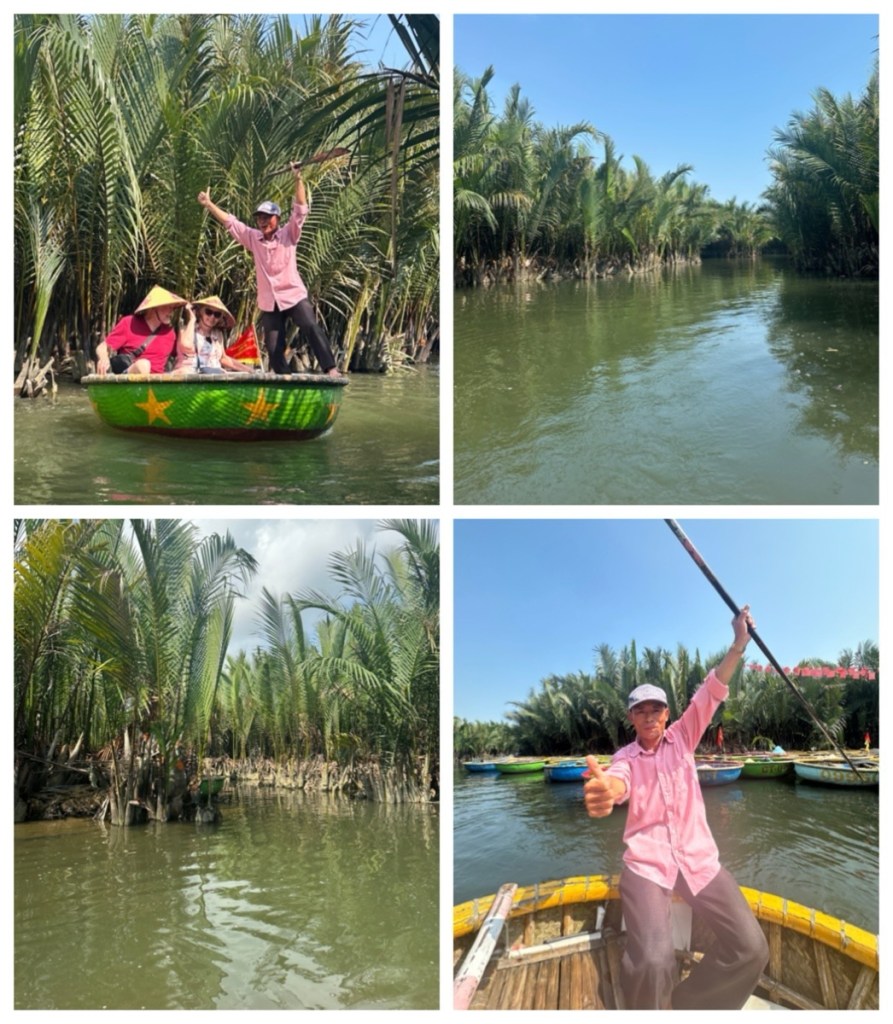
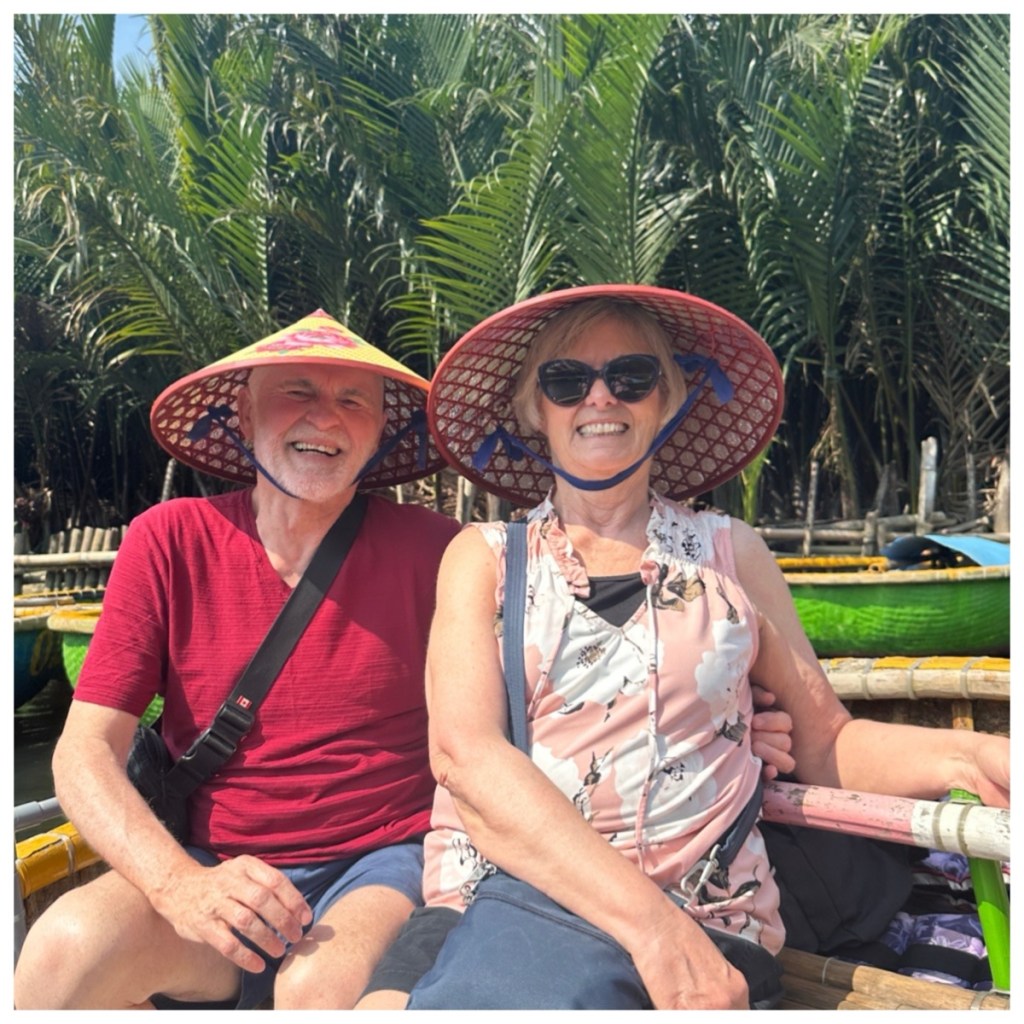
Stop #3: Shopping and fishing complete, it was time for the cooking class in a roomy pavilion next to the coconut waterways. We suited up and Kien and his team put us to work.
This was rice paper making. The technique varied a little from that of our friend at the farm but the end product was the same. We then filled the papers with the vegetables and tofu that we had chopped. They were very tasty!
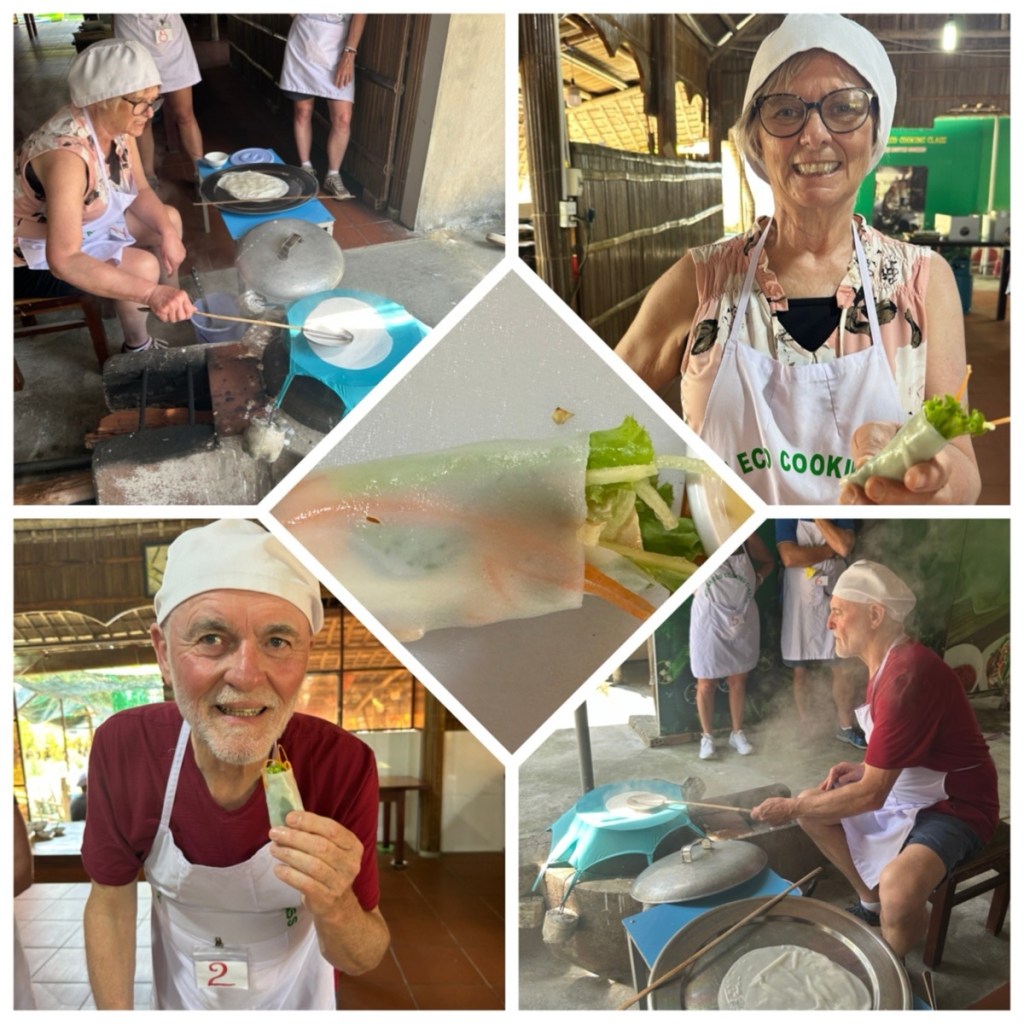
Under instruction to be sure to stand back, we seared pork and prawns and created a crispy rice pancake.
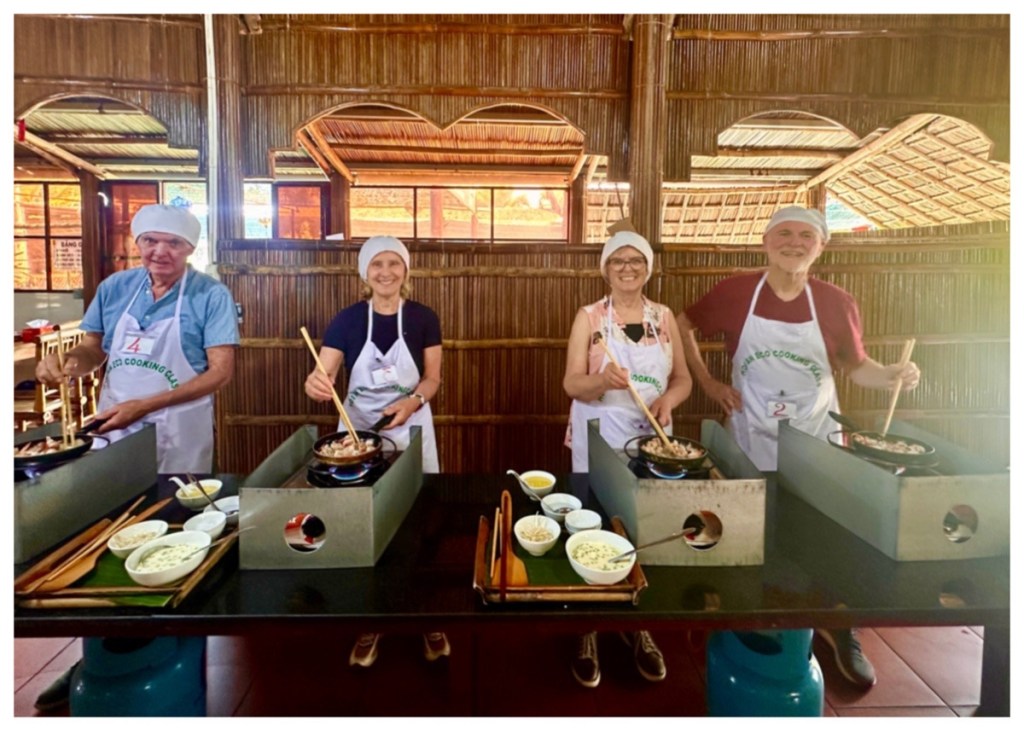
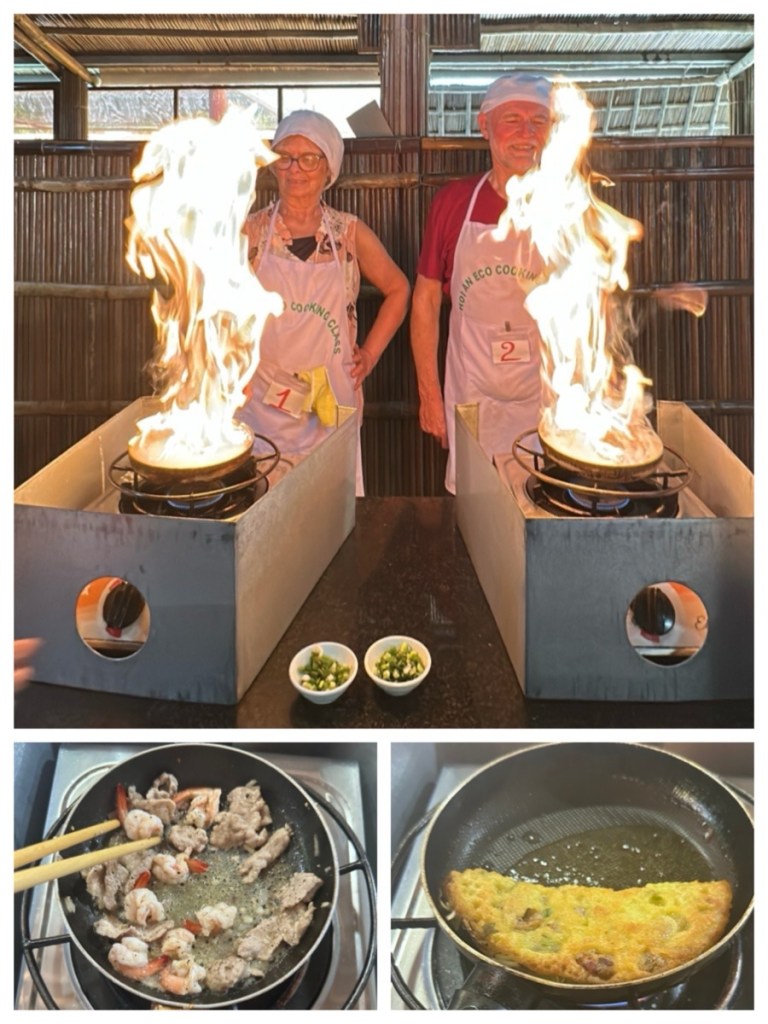
Our culinary creations were:
- Fresh spring rolls
- Sweet and sour fish sauce
- Banana flower salad with shrimp
- Pho Bo
- Crispy rice pancake
- Grilled aubergine with a tomato soy sauce
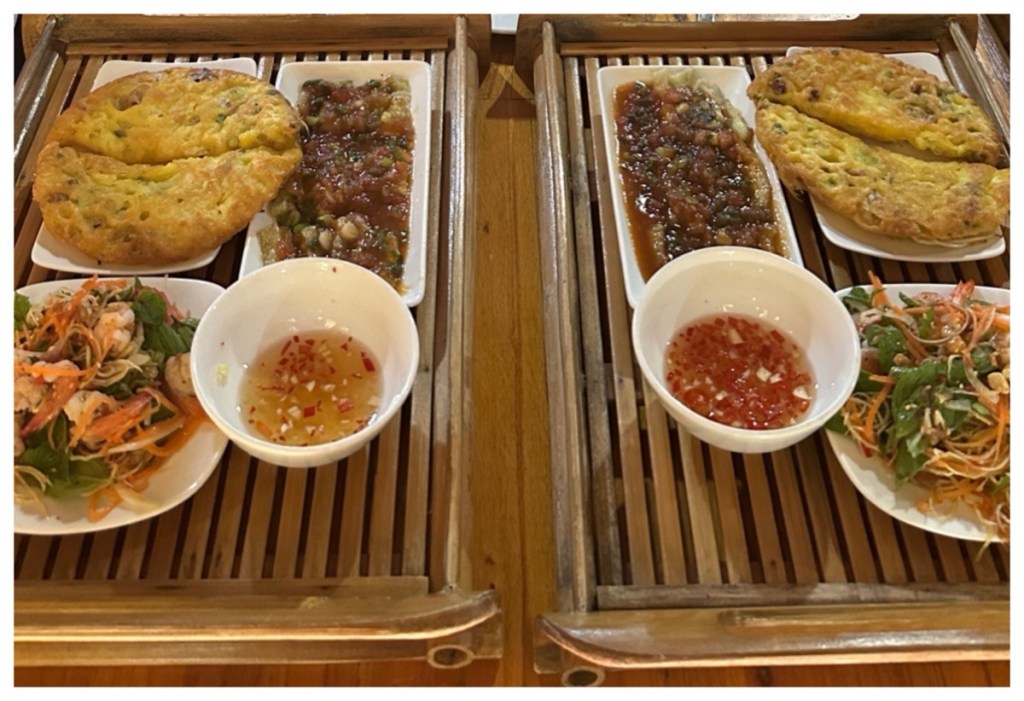
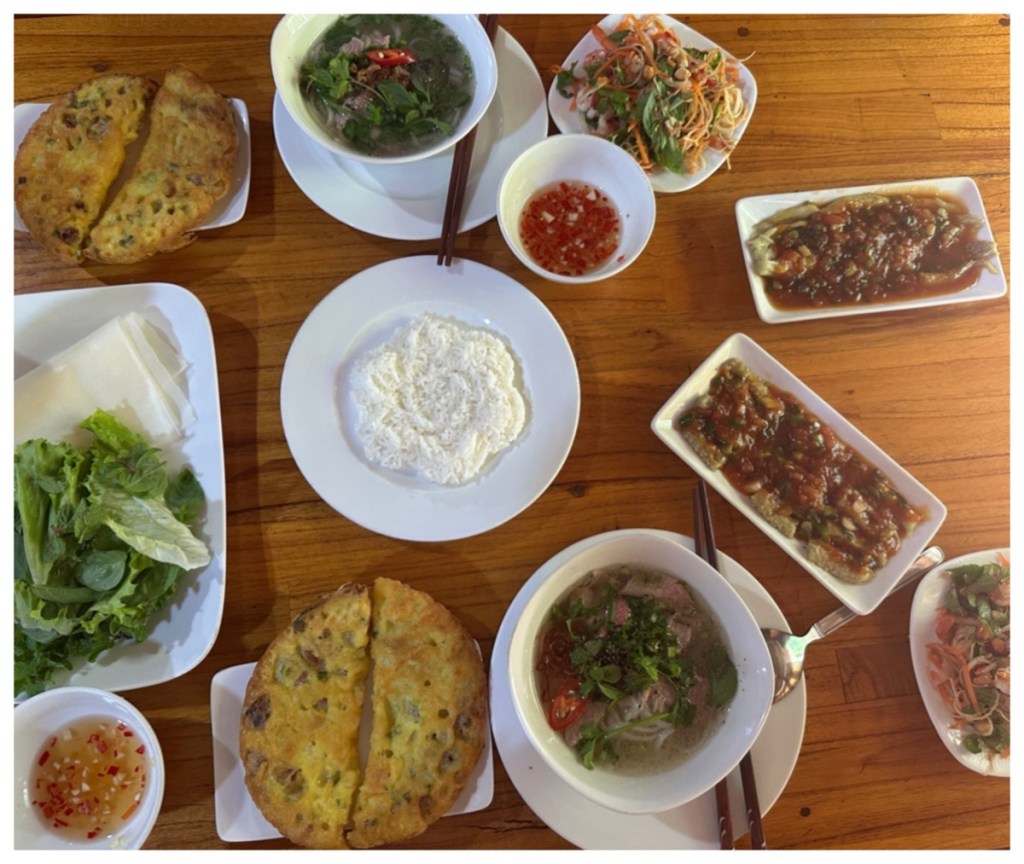
It was an amazing lunch and we were quite pleased with ourselves for cooking it, with special kudos to Harvey and Larry who aren’t usually known for their cooking skills.
We would definitely recommend Kien’s cooking class!
After returning to our hotel, we relaxed for the rest of the afternoon, only snacking for dinner after our great lunch!
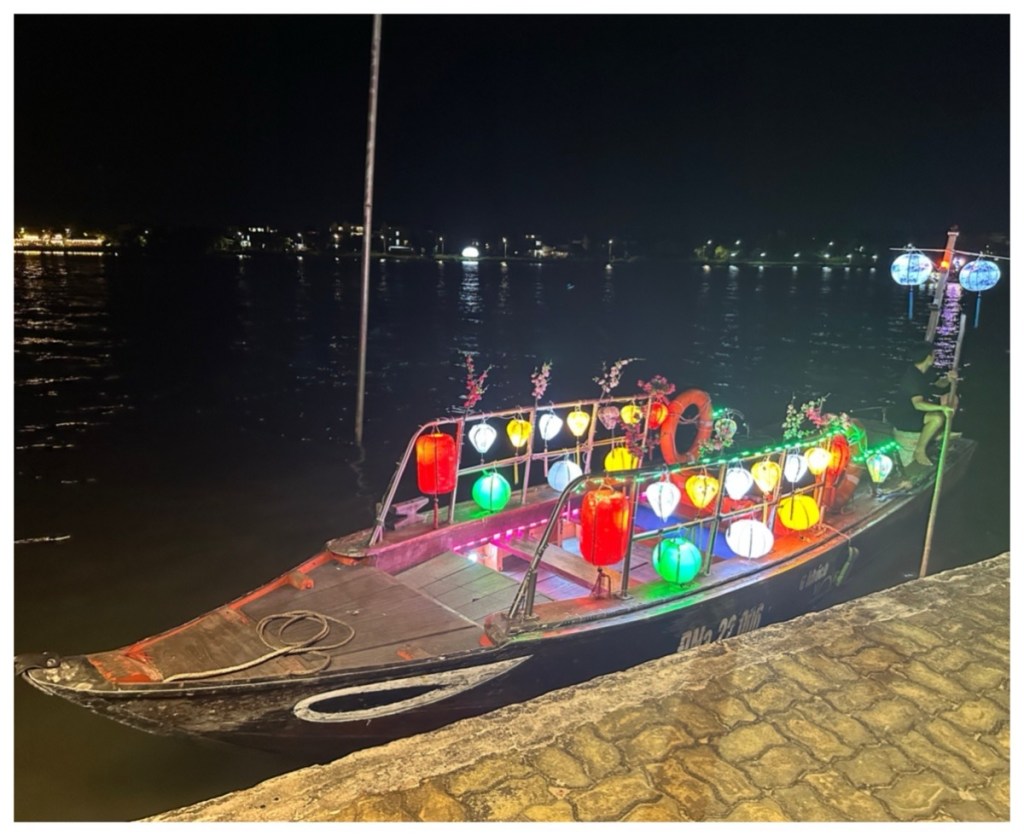
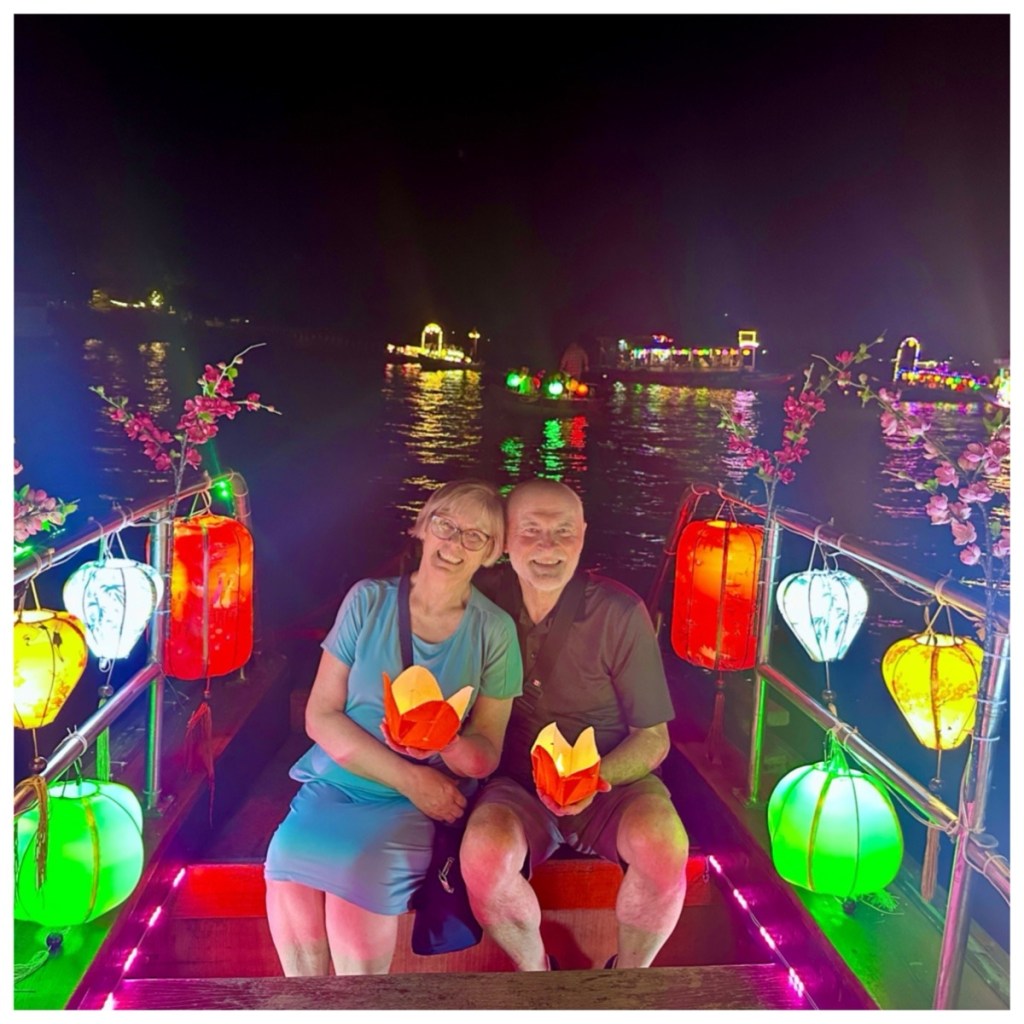
Stop #4: The Thu Bồn River has always played a major part in Hoi An’s economy and culture. Today, tourists enjoy a cruise along the Hoai River, a scenic, narrow branch of the Thu Bon River. Most popular is an evening cruise on one of the sampans that line the riverside.
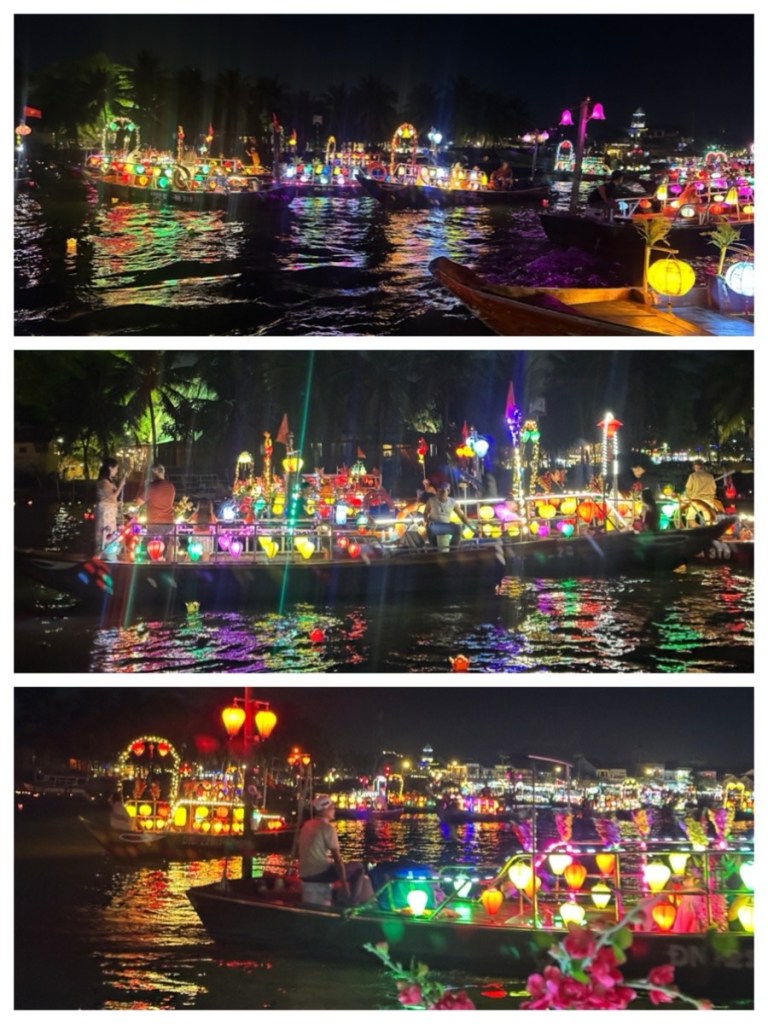
The hotel booked us a boat for a 20 minute cruise. We were shocked at the abundance of boats as we cruised further toward the old town from the location near our hotel. The lights of all the boats were quite amazing.
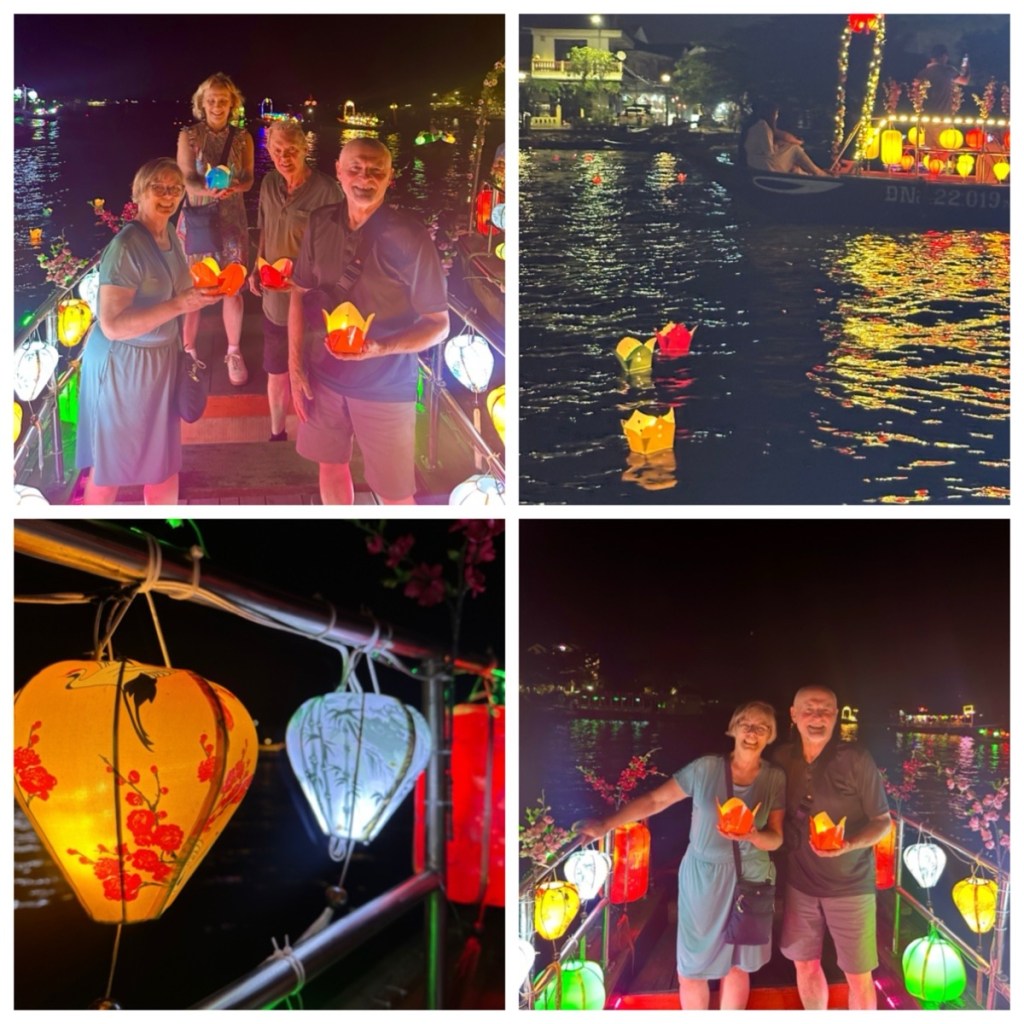
It is a tradition to drop a lighted lantern in the water and watch it float away as you make a wish for health and happiness.
I was a bit concerned about the litter in the river but was assured that paid sanitation workers pick up burnt lanterns and other trash every morning to keep the river clean.
Day 4:
This was our day to take a break before the last stretch of our trip. Debbie and Larry chose to use the hotel bicycles for a cruise around whereas Harvey and I went for a stroll around town.
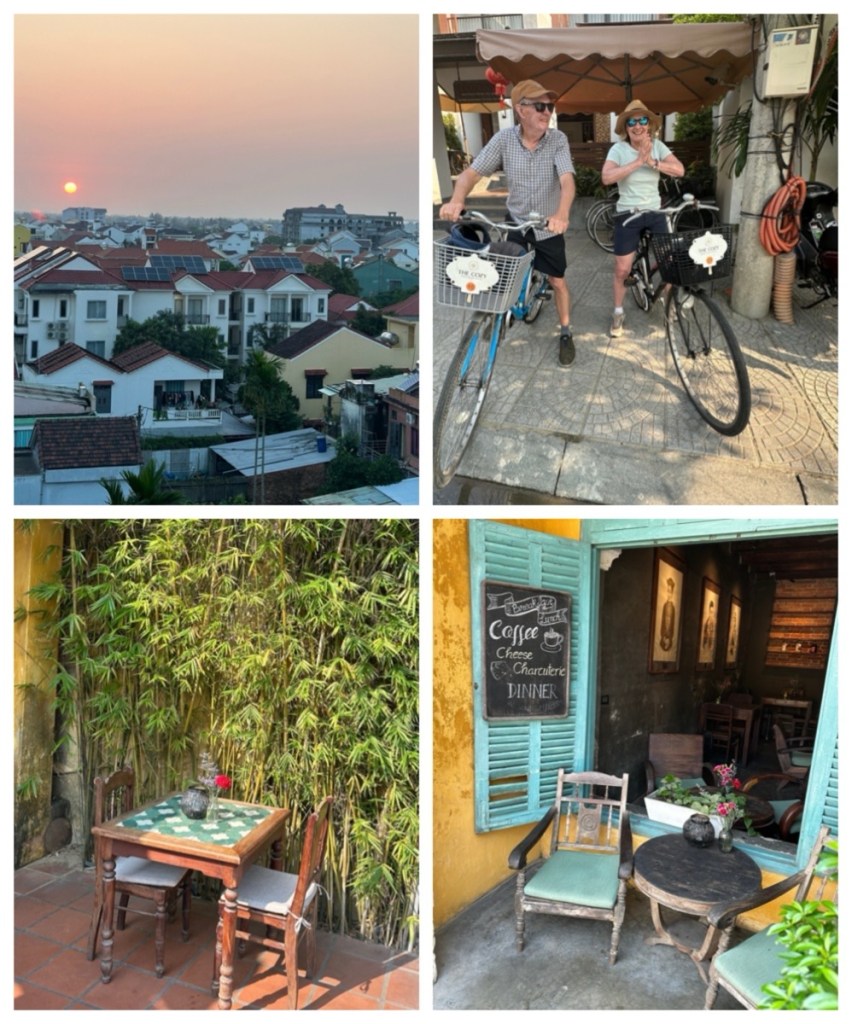
We had one last walk through the morning market. As always, the sights and colours were amazing and the smells for the most part are great – those fish displays are sometimes a bit much. 😉😄
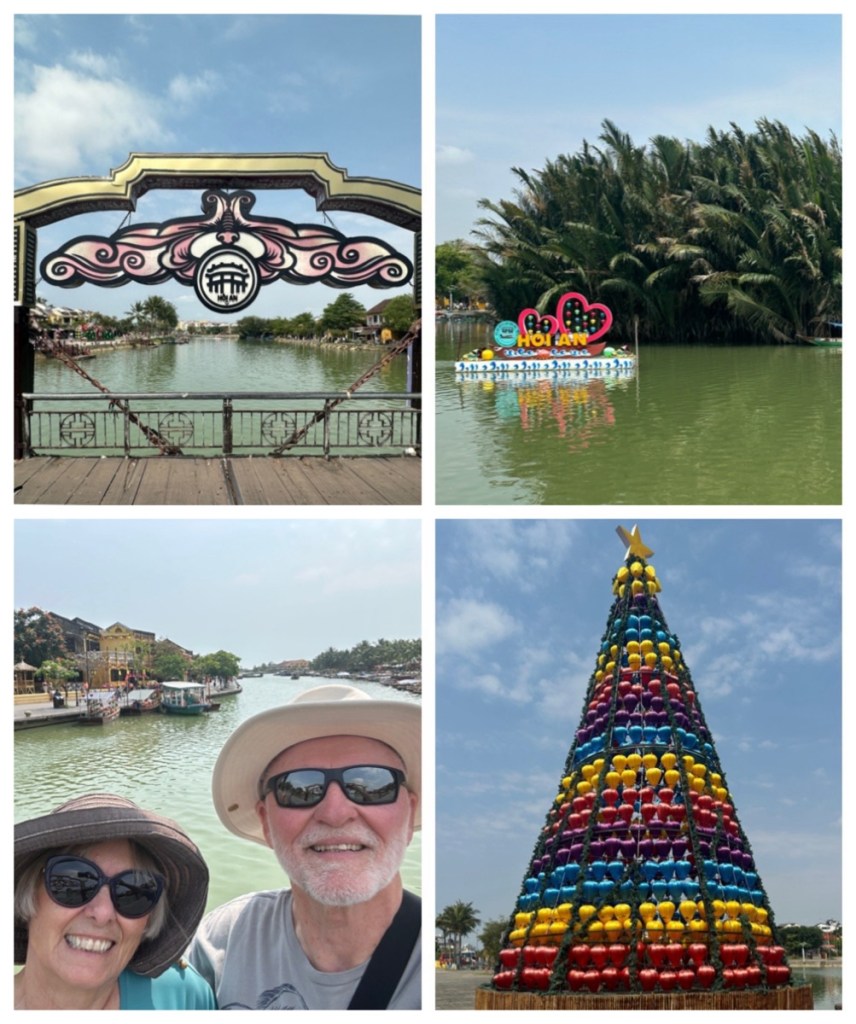
We crossed the Hoai River on the An Hoi Bridge, also known as the Bridge of Lights or Lantern Bridge. This leads from the Hoi An Ancient Town to An Hoi Island.
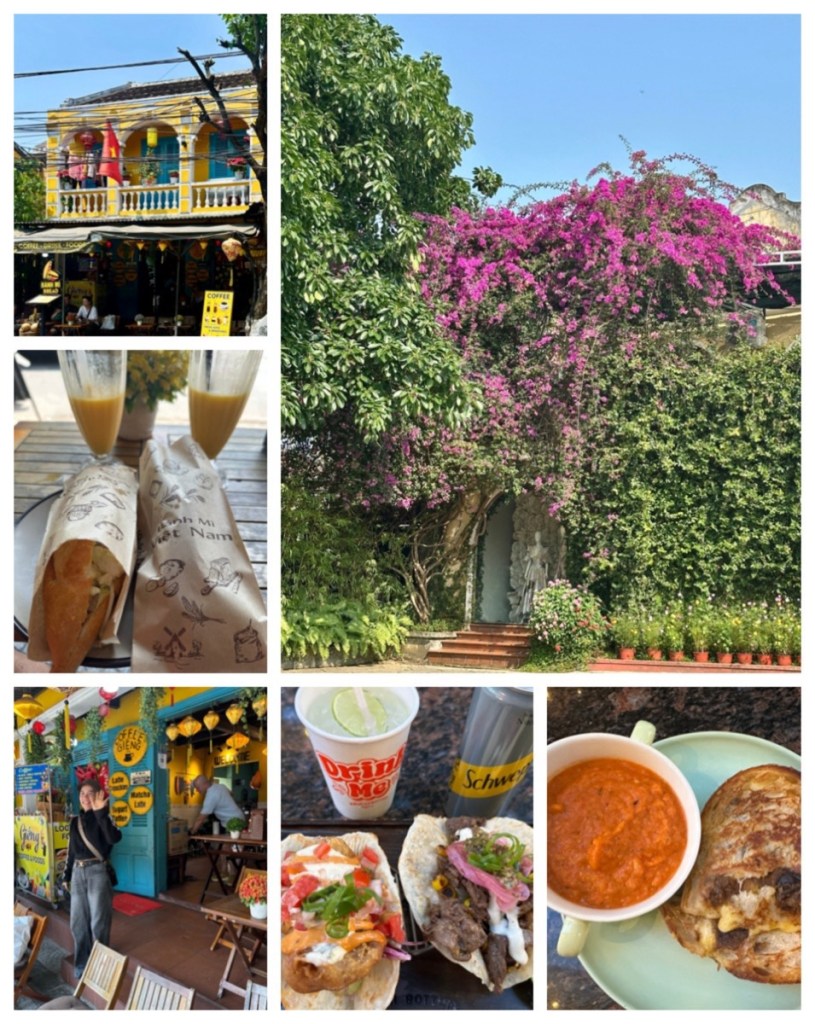
We had a great Bahn Mi lunch at a lovely street-side cafe and a bit more wandering in the town. For dinner we returned to the Bikini Bottom Express for a light dinner by the river.
Our time in Vietnam – Hanoi and Hoi An – was filled with new and wonderful experiences. We are so grateful that we had the opportunity to visit this amazing country!
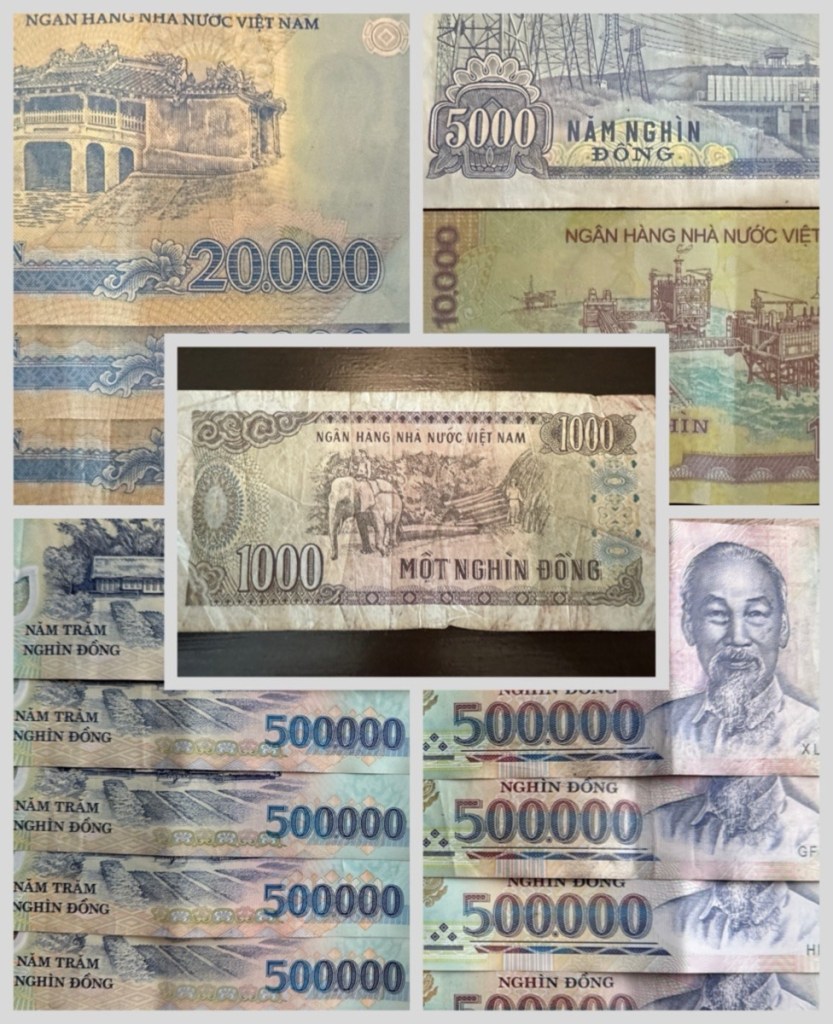
One last thing – the Vietnamese Dong. Just look at the zeroes on these bills. I usually have no problem with foreign currency but there were times that I was overwhelmed by these. The bill in the middle – a 1000 VND bill – is worth ~5 cents Canadian! So the one thing I am happy about is that I am DONE WITH DONGS!
We still have a bit more travel on this trip! More to come soon.
Thanks for reading!
Cheers,
Bev & Harvey
 A Long and Winding Journey