Lisbon Part 2: Odds & Ends & Eats

As I described in my two previous blogs, we enjoyed 10 days in Lisbon in November. I will finish off our series with some memories of a few fun other things we did and as always, some of the great food we ate.

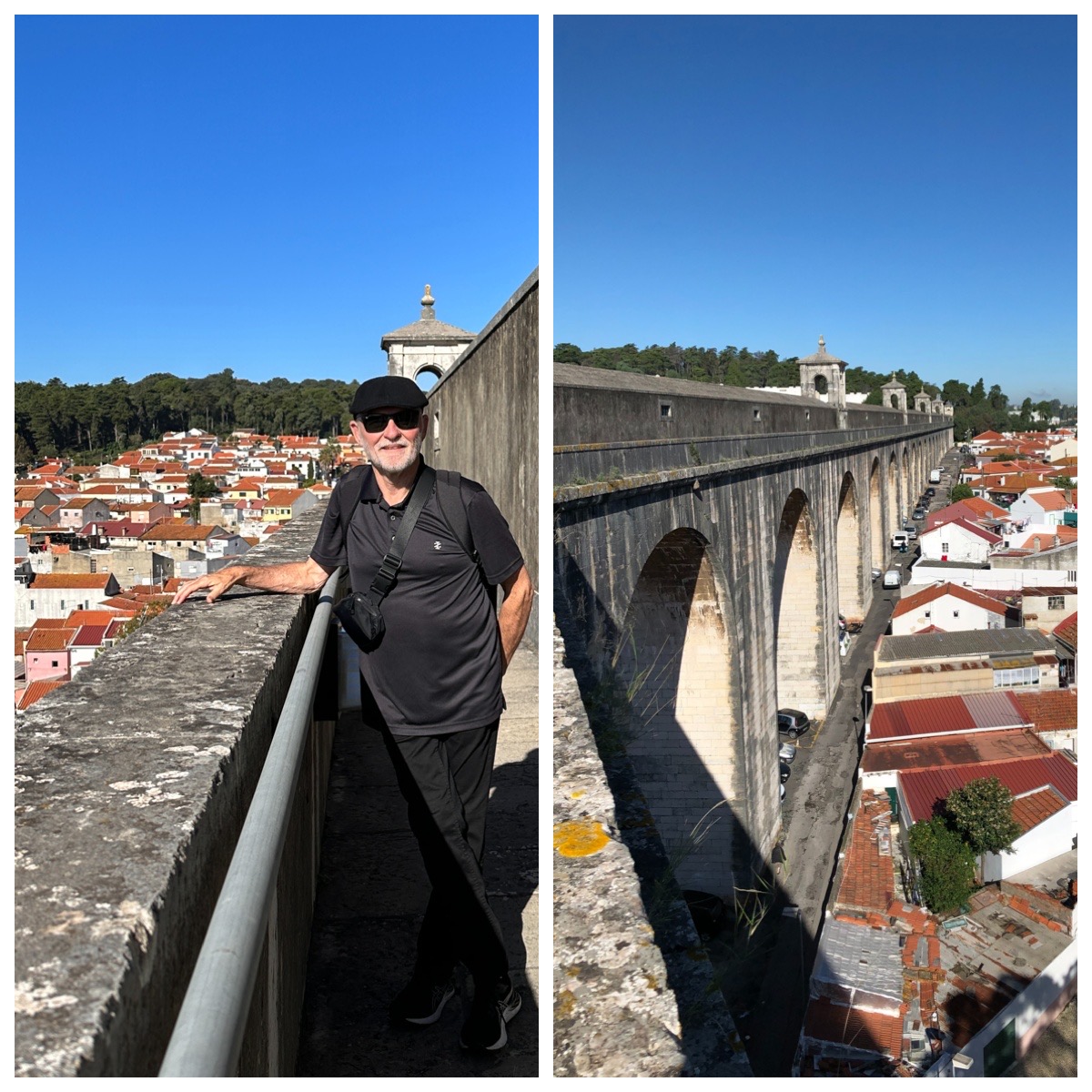
The Águas Livres (Free Waters) Aqueduct was built from 1731 to 1799 to provide clean drinking water to the city. It ran for 58 km and the 109 arches survived the Great Earthquake that destroyed practically everything else in the city. Today, you can walk over the 35 arches of the Alcântara valley, which cover a length of 941 metres. We had the aqueduct all to ourselves and enjoyed strolling the walkways on both sides.
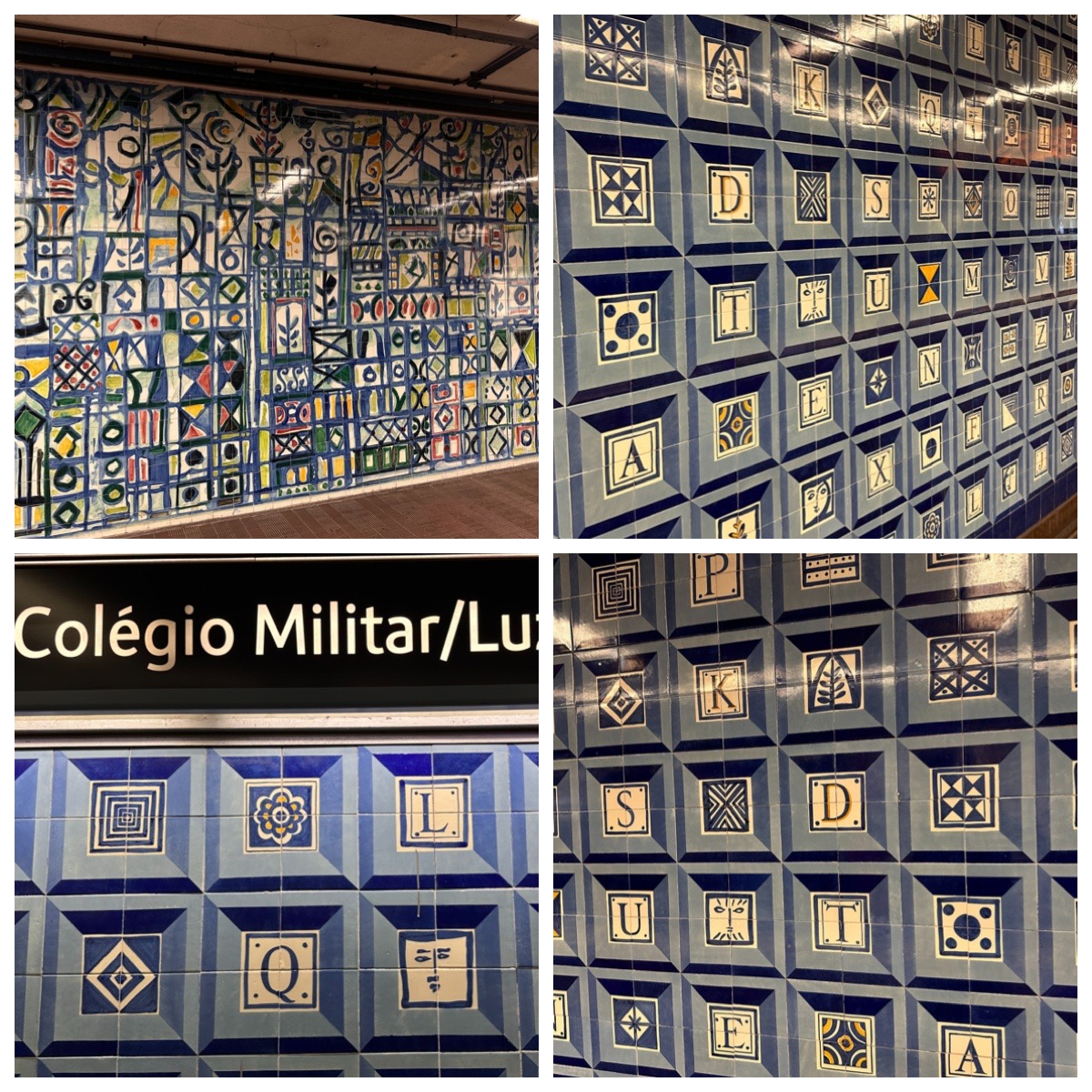
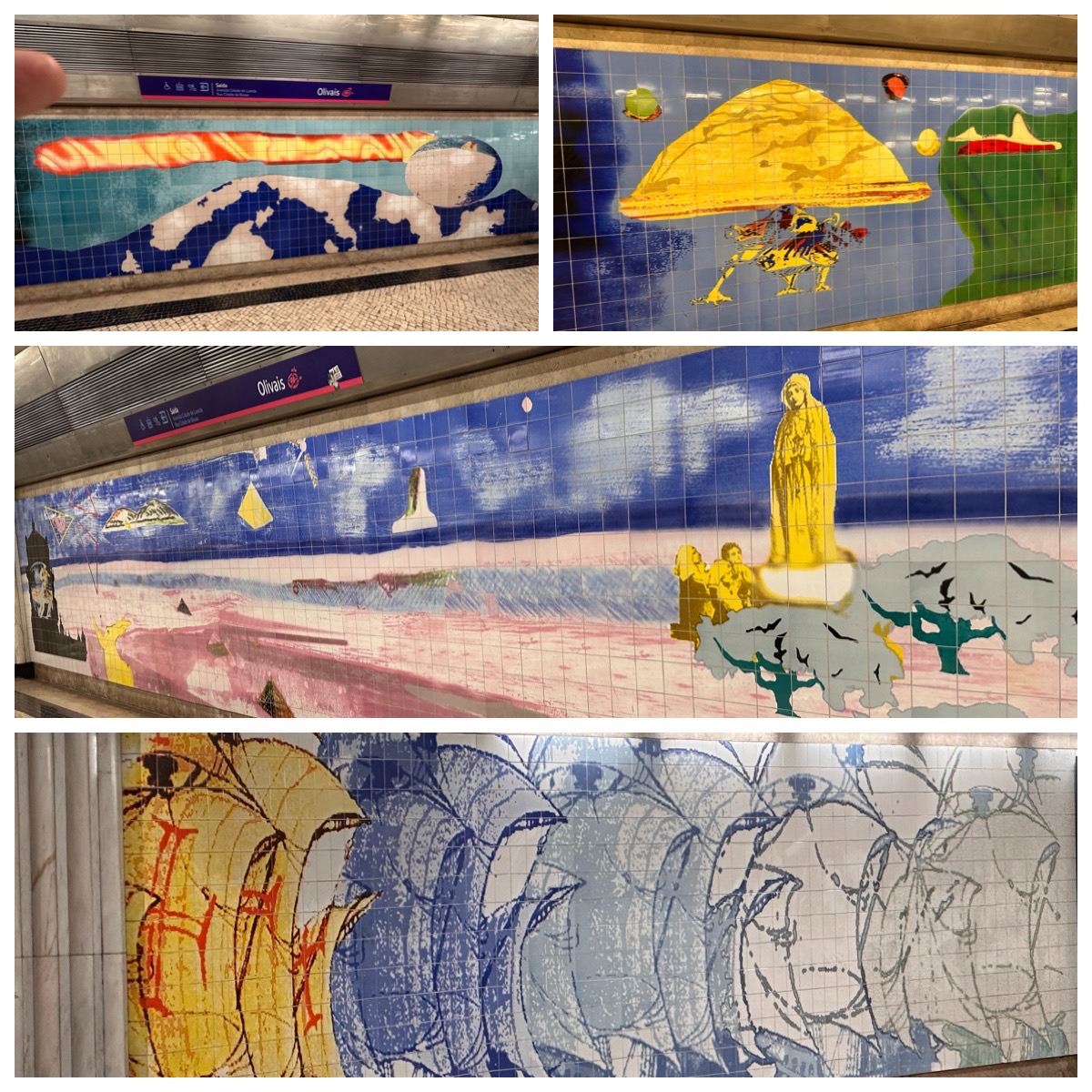
The Lisbon metro system provides a fast and easy way to travel. It consists of 4 colour-coded lines with over 50 clean and bright stations. Many of the stations are decorated with wonderful tiles and murals. We spent a rainy morning riding the metro and stopping at many of the stations to enjoy the art – a great sight-seeing excursions for the price of a couple of metro rides. Here are photos of a number of the stations.

Our ‘home’ station – Marquēs de Pombal
Parque
Jardim Zoológico
Olivais
Martin Moniz

And the absolutely amazing Olaias station.

Lisbon operates a number of vintage trolleys that not only are used for transport, but provide a fun way to do some sightseeing. The #28 winds its way through the narrow streets of the Alfama, Baixa, Estrela and Graca neighborhoods. As well as passing by some notable sights and providing a look at workaday Lisbon, you can marvel at how the tram narrowly misses walls, buildings and other vehicles. The #28 is very popular with tourists and can be extremely crowded. We recommend going earlier in the day and catching the trolley at the beginning or end of the line (Martim Moniz or Campo Ourique). We had to wait for a couple of trolleys to fill before our turn but we found the driver only allowed enough people to fill the seats at the Martim Moniz stop. If you chose to disembark along the way, you probably wouldn’t get a seat when you hop on again. There are other trolleys that provide a look at other areas of the city. We also took trolley #15E to Belém.

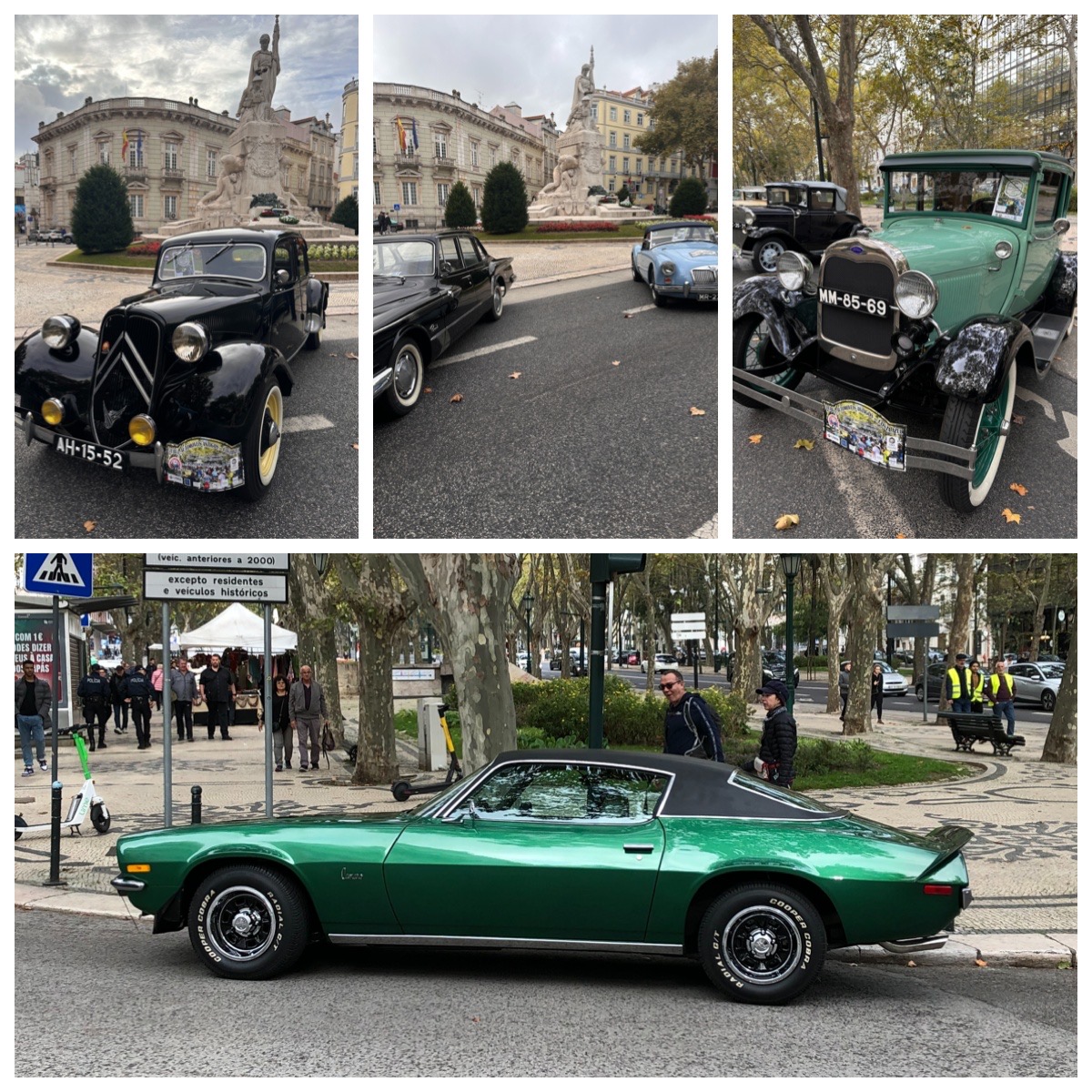
Nothing could delight Harvey more than a car show so it was very serendipitous that on a Sunday afternoon, we found the Parada de Automóveis Antigos. Over 150 vintage automobiles lined the Avenida da Liberdade – we were very impressed with the display, each car was in pristine condition.

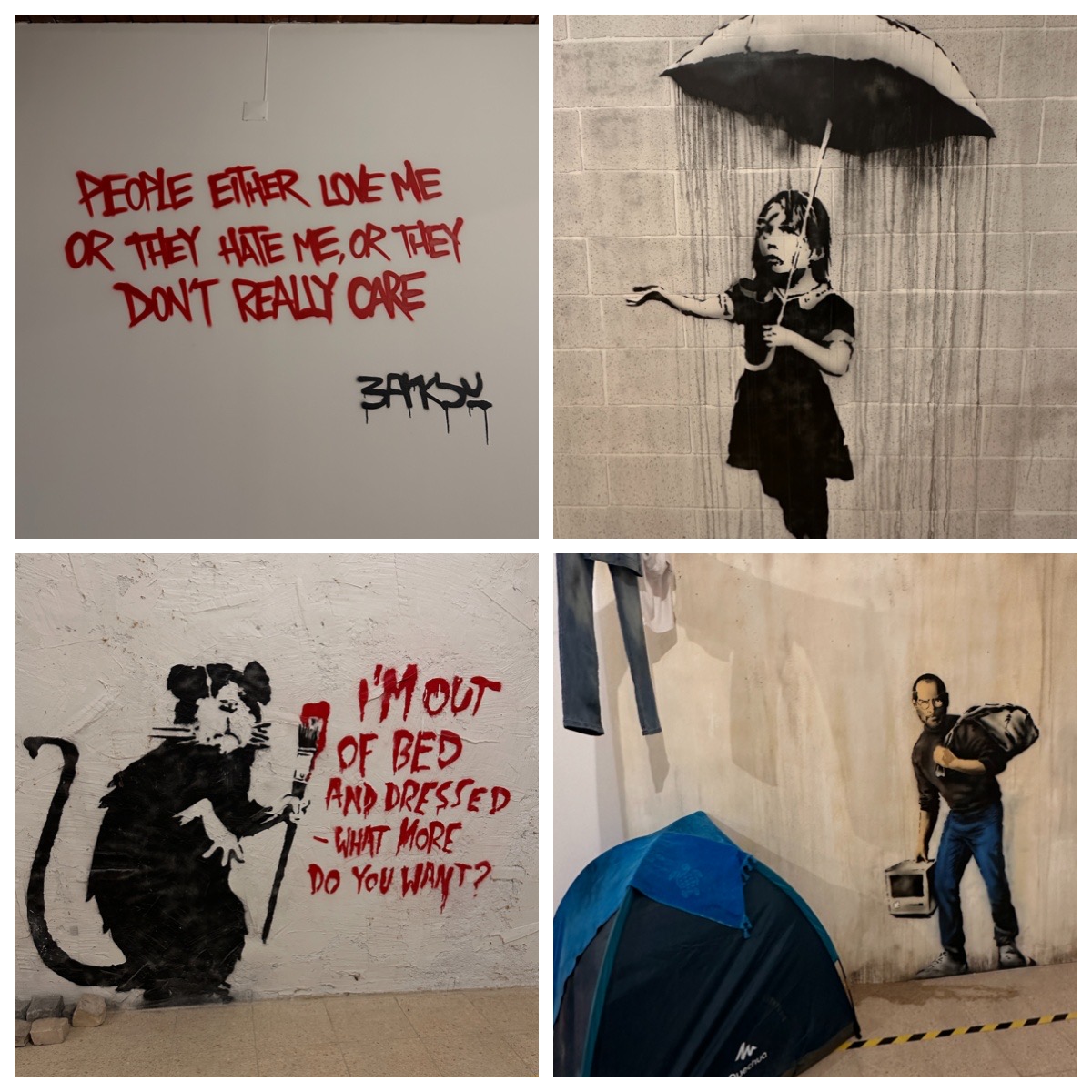
Our blog followers will know that we aren’t art aficionados and unlike many European travellers, we do not visit a lot of the great museums that abound on the continent. We did however come across an interesting exhibit that we thoroughly enjoyed. The World of Banksy presents recreations of over 100 artworks of the elusive street artist, with descriptive plaques that discuss the significance of each piece.

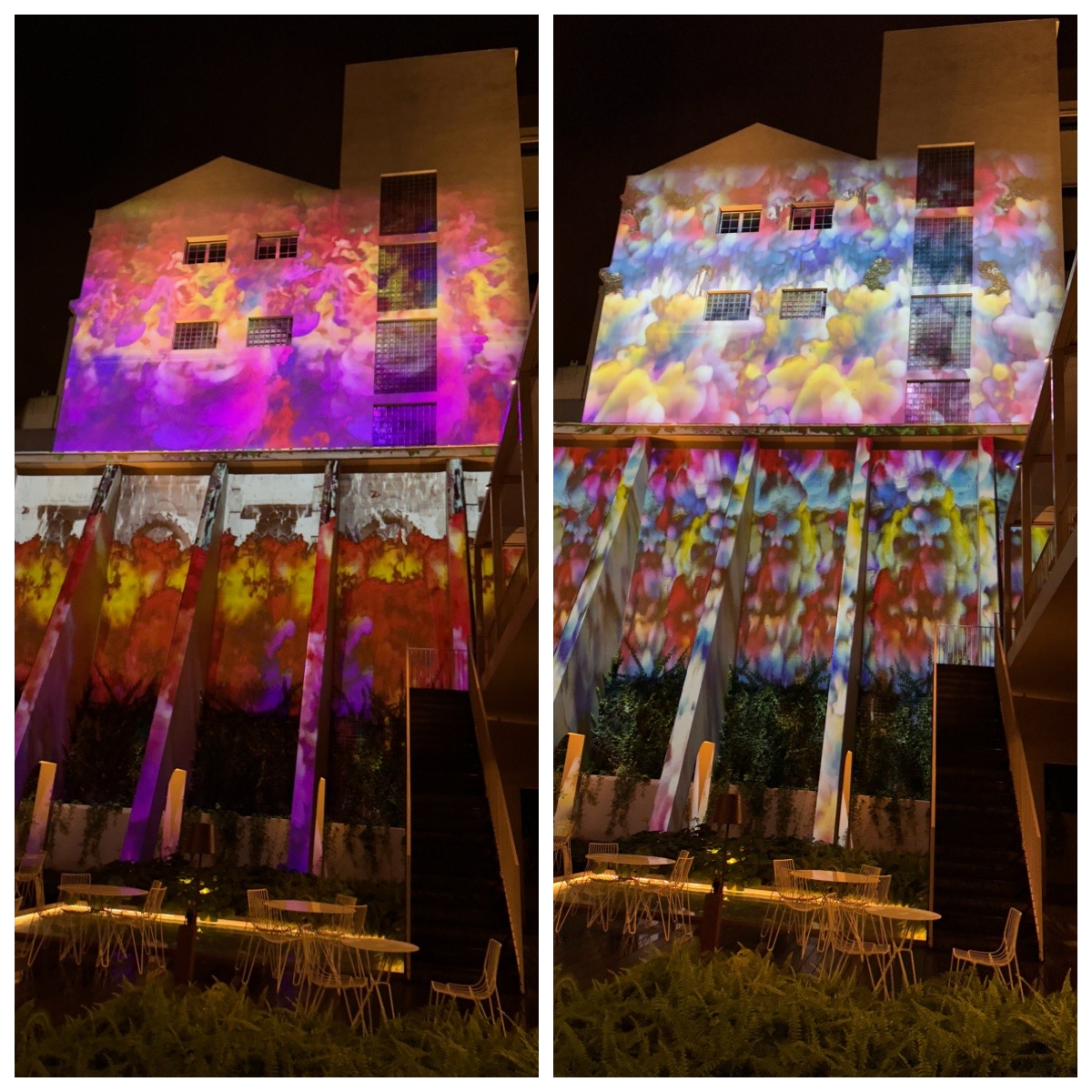
Each evening, our hotel – The Lumen Hotel – presents a display of light, colour and music in the interior courtyard. We managed to stay awake until 10 pm to enjoy it one evening.
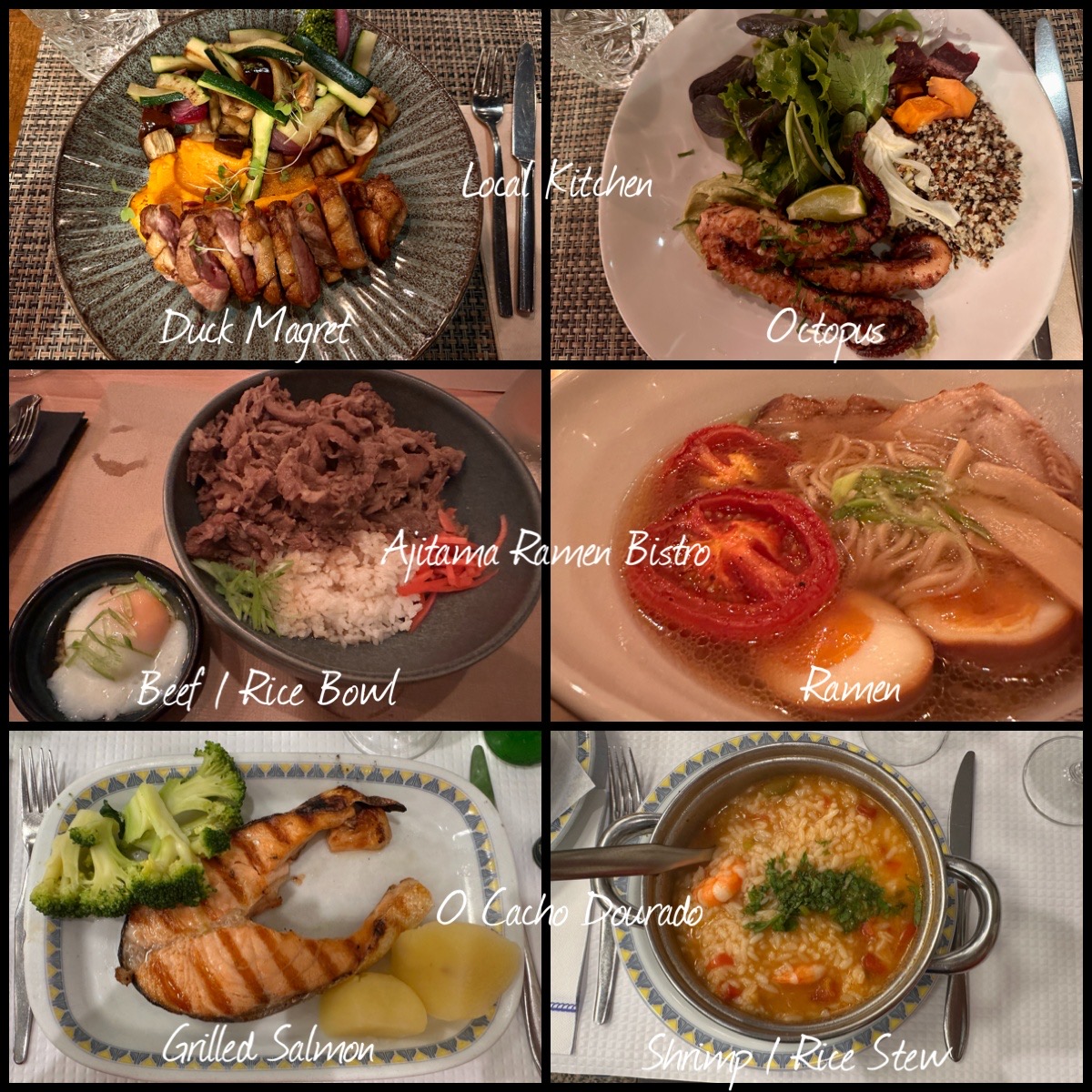
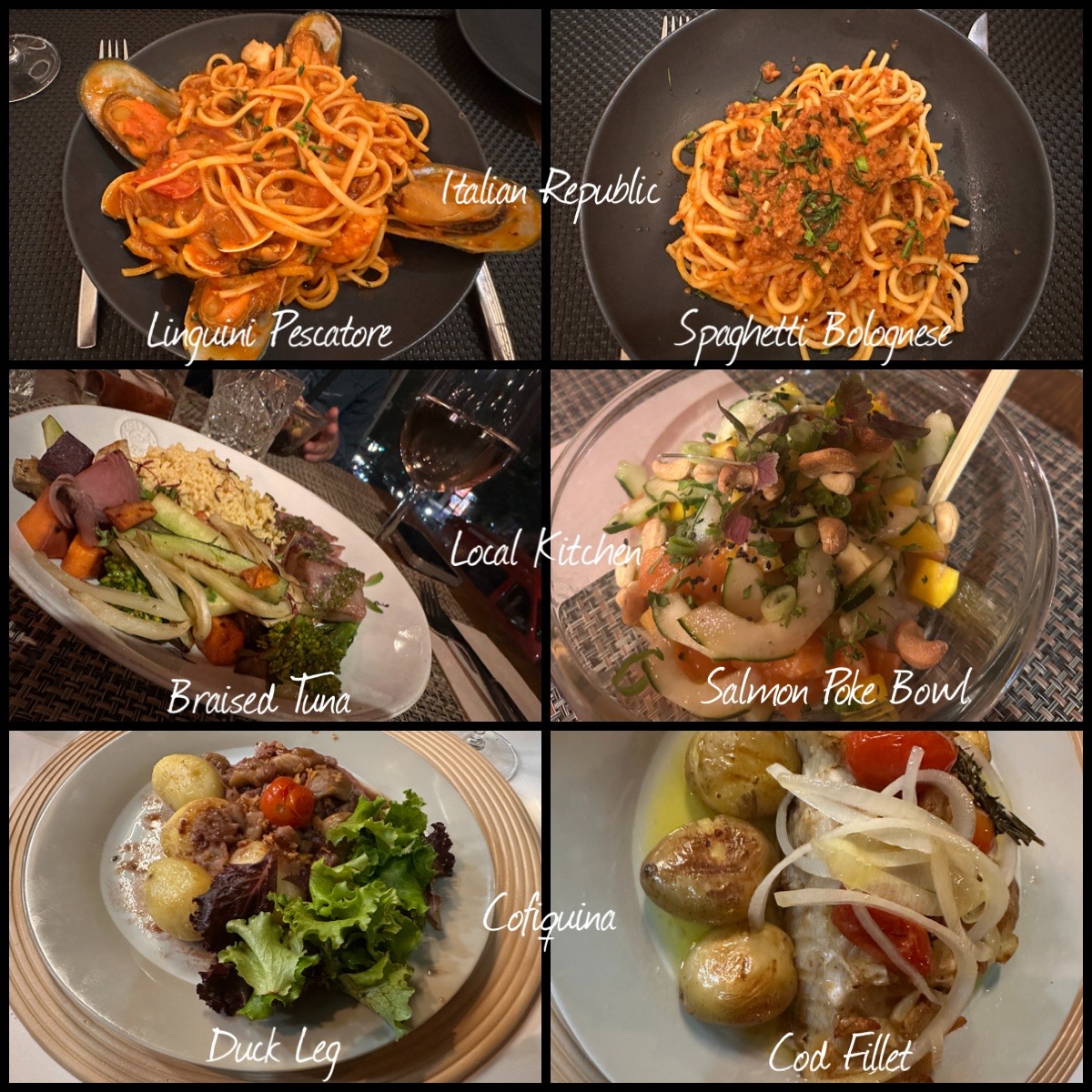
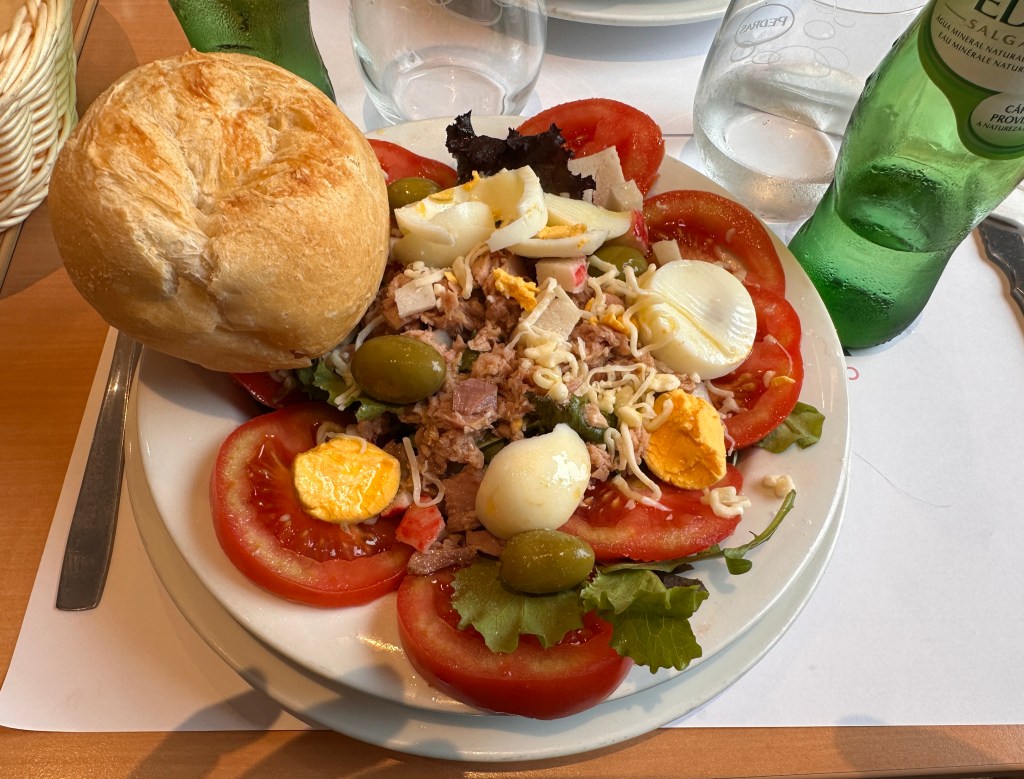
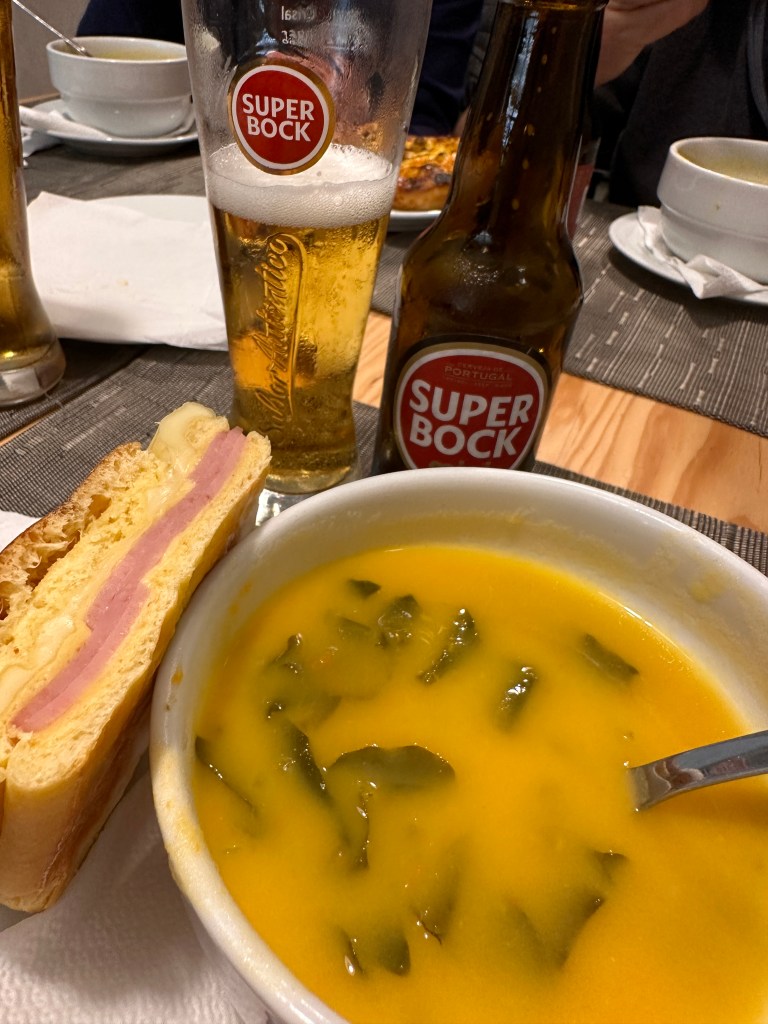
As always, we would like to give you a peek at some of the great food that we enjoyed while in Lisbon.

Among Portugal’s thousand recipes for codfish, the Pastéis de Bacalhau are a typical Portuguese dish made of potato puree, onion, parsley and steamed codfish amassed together in a ball and linked with eggs and milk, and then deep-fried. We enjoyed one for a snack on the street.

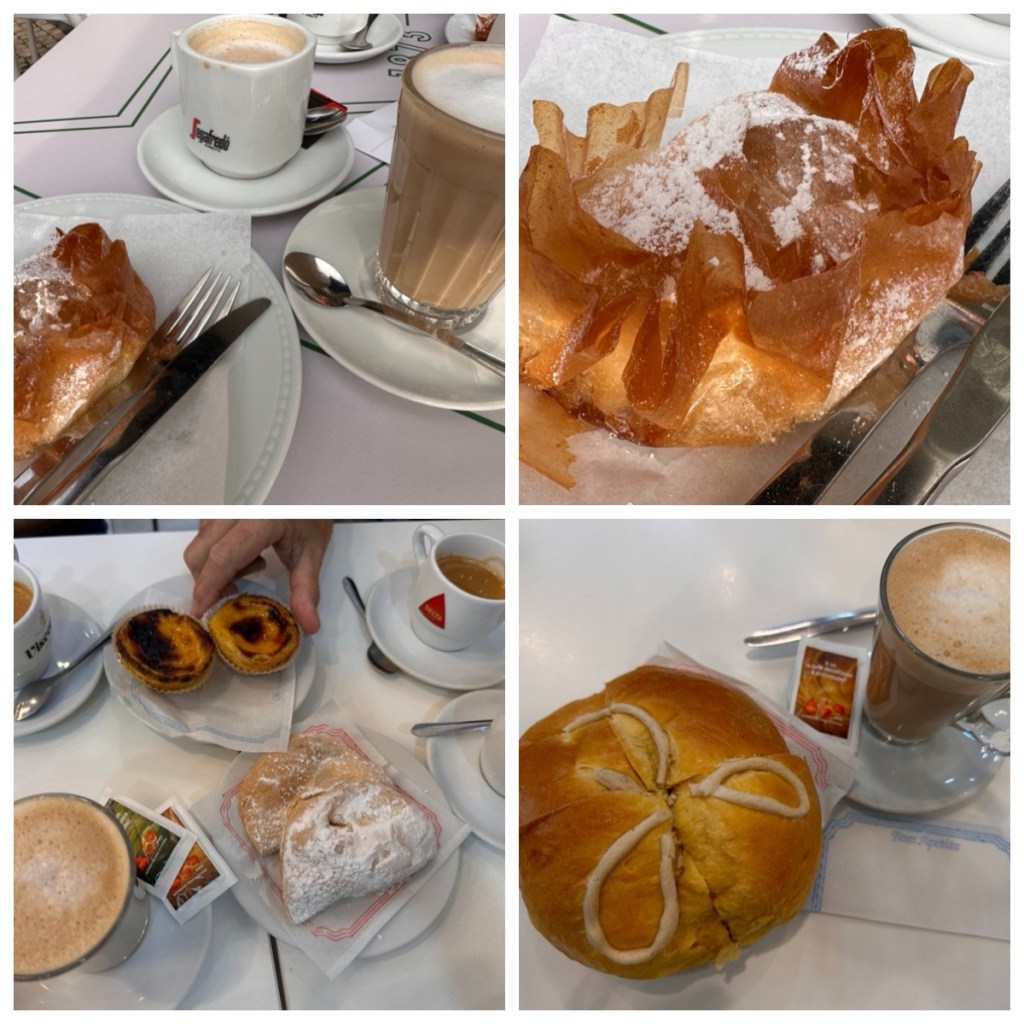
Never fear, we didn’t miss the pastries – here are just few!

And a beverage here and there!

That’s a wrap for our 2022 travels! Thanks for reading and we hope you enjoyed sharing in some of our memories. Stay tuned for more adventures in 2023!

Cheers,

Bev & Harvey (and our great travelling partners, Debbie & Larry)

Sintra Day Trips

In November, we spent 10 days in Lisbon. Before I talk about this grand city, I would like to highlight two day trips we took to Sintra.

Sintra is located just 15 miles outside of Lisbon and makes a great day trip. It’s very easy to get there – we took the metro to the last stop on the blue line – the Reboleira station. From there, we hopped on the train to Sintra – for a mere €2.30 on our Lisbon Viva Viagem card, we arrived in Sintra 30 minutes later. We went fairly early in the day as recommended to beat the crowds. When we exited the train arrival area, we were met by a wall of tour operators and tuk-tuk drivers wanting us to tour with them.

On our first trip to Sintra, our first plan was to visit the Palácio de Pena (Pena Palace). To get there, we bypassed all of those hawking their means of travel and went down the street to our right to the taxi line-up. There, we found a driver in his taxi who agreed to take the 4 of us to the main entrance for €10. At the main entrance, you purchase your ticket. You can also choose to purchase a ticket for the shuttle bus to take you up to the palace gate. We chose to take the 10 minute walk, which is uphill but not overly strenuous.

The tickets have a timed entry that you must adhere to. For us, as we waited for in line for our entry time, there was a medical emergency that resulted in an ambulance arrival and delayed our entry. It was interesting to see how they could maneuver the vehicle up the hill and through the crowds and we hope that the individual was not seriously ill.

The palace was commissioned by the flamboyant Ferdinand II and was completed in 1854. It is a colourful mix of Gothic towers, Renaissance domes, Moorish minarets and Manueline carvings. As you wander around the exterior and the courtyards, it’s a wonder to behold.

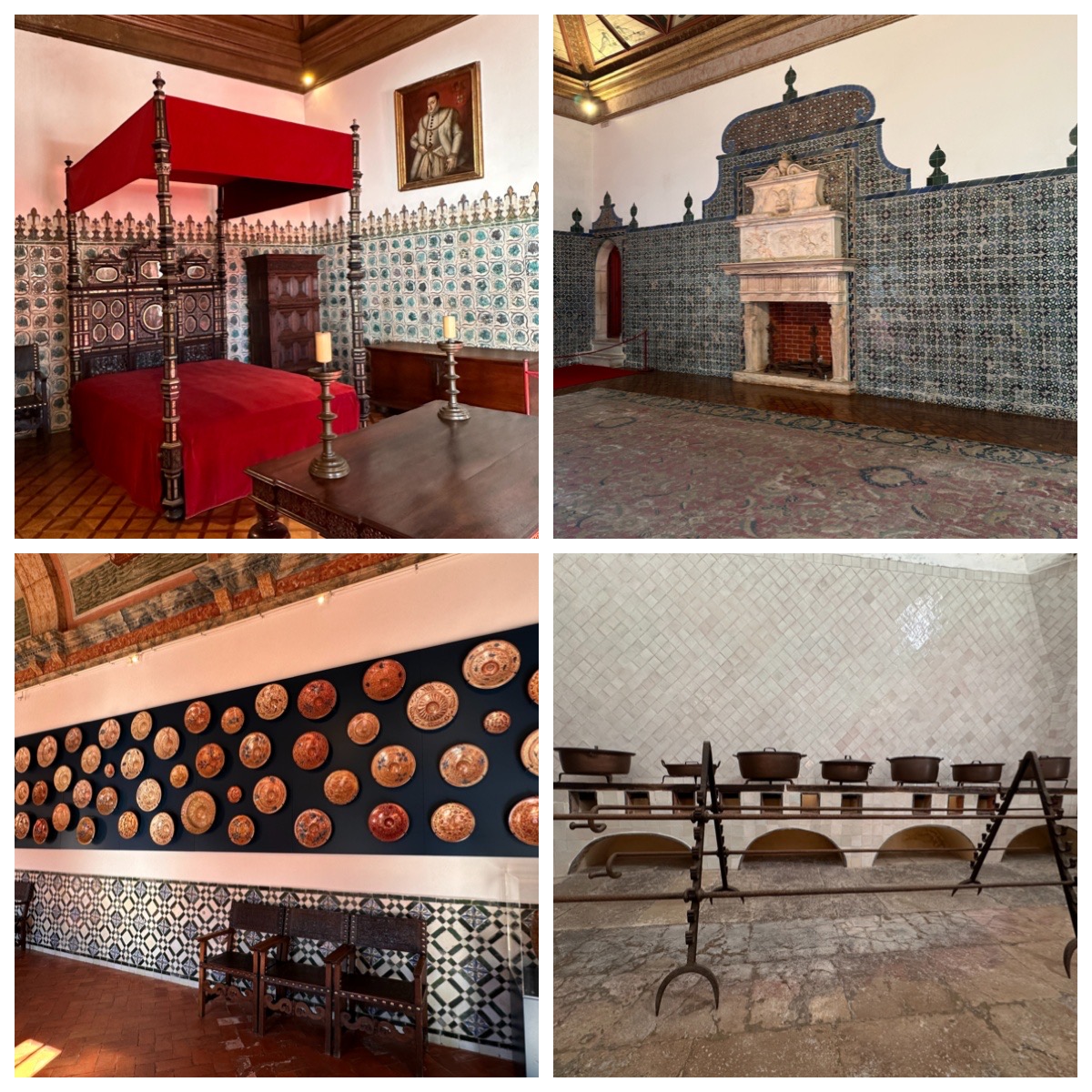
The interior of the palace contains many impressive and well-preserved staterooms as well as an amazing kitchen filled with polished brass vessels.

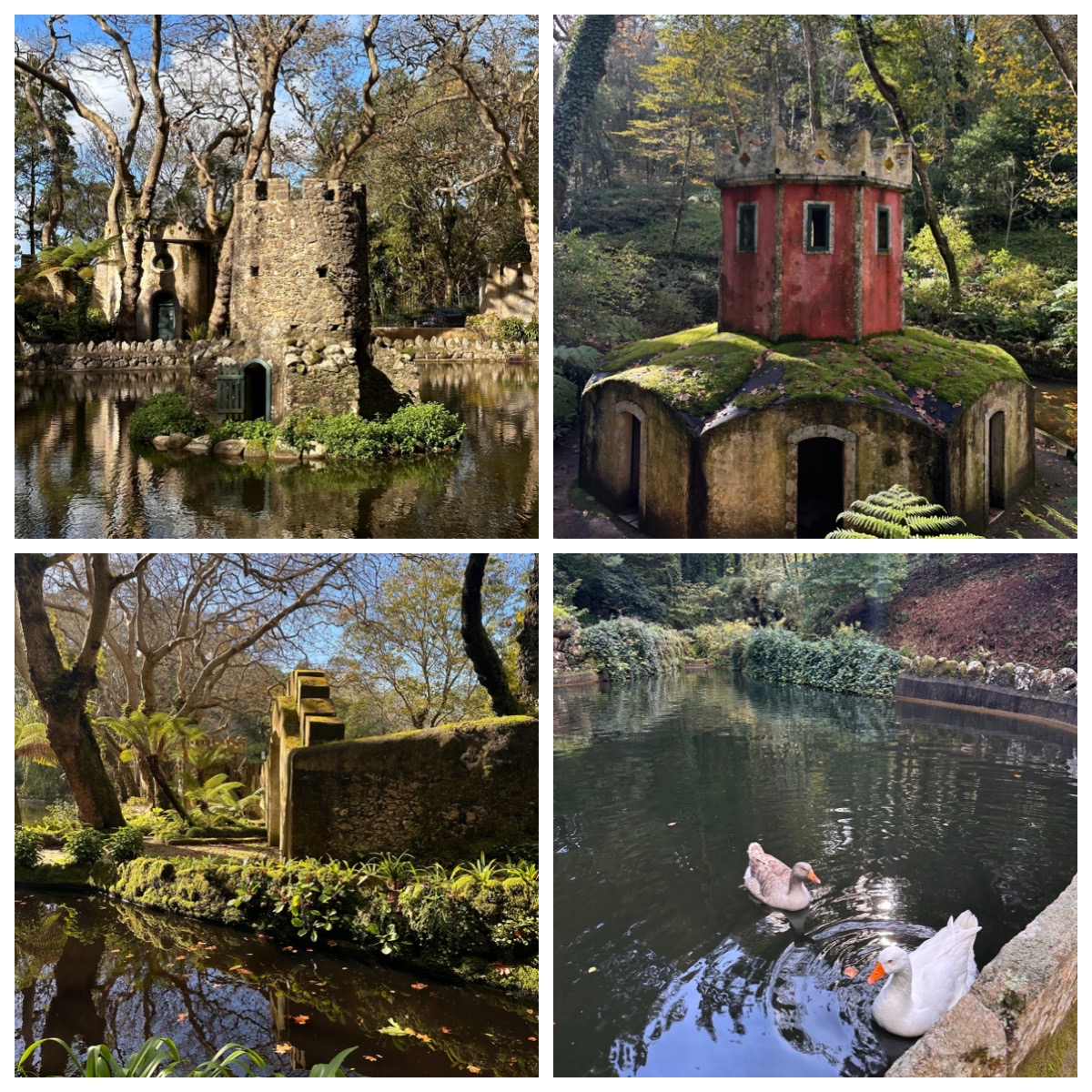
The park around the palace is lush and dotted with various structures. We strolled down from the castle to the lower park entrance, where you can wander by the five lakes connected by small waterfalls and arranged along a lush and gentle valley. Rising out of the water of the lakes there are two duck houses designed as shelters for waterfowl.

From this spot you can choose to take a taxi or tuk-tuk down to Sintra. We however read in our Rick Steves guidebook that there was an ‘appealing’ 45 minute trail down and thought that sounded delightful. It first passes below the thousand year-old ruins of a Moorish Castle – this is billed as a great place to visit but we chose to miss it on this trip. The path was becoming steeper with rough stairs as we descended. We were then to enter the grounds of the Vila Sassetti, where we could pass through the garden into Sintra. Alas, the gates were locked. I was not about to go back up the steep trail so we looked downhill. Another locked gate, but Debbie explored and found where a hole had been cut in the fence. We crawled through and continued down what was quite a challenge for me but I managed to remain upright!

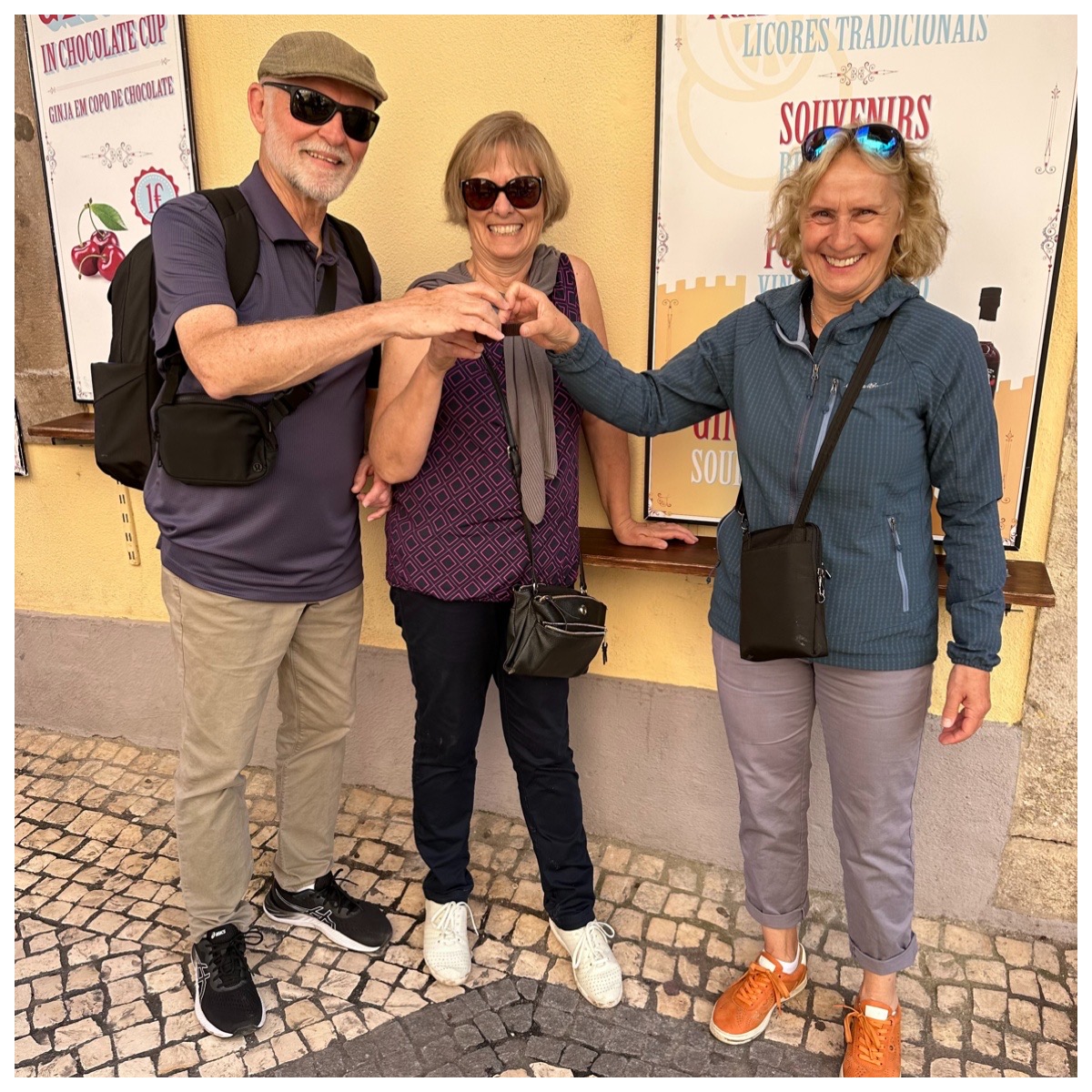
After this adventure, we were happy to see a small Ginja stand where we enjoyed a bit of sustenance!

Which was followed by a refreshing port tonic – this one with lemon rather than the orange we had encountered in Porto – equally delicious!

The Pena Palace visit took up most of the day so we decided to return to Lisbon and come back to Sintra on another day to see more of the sights.

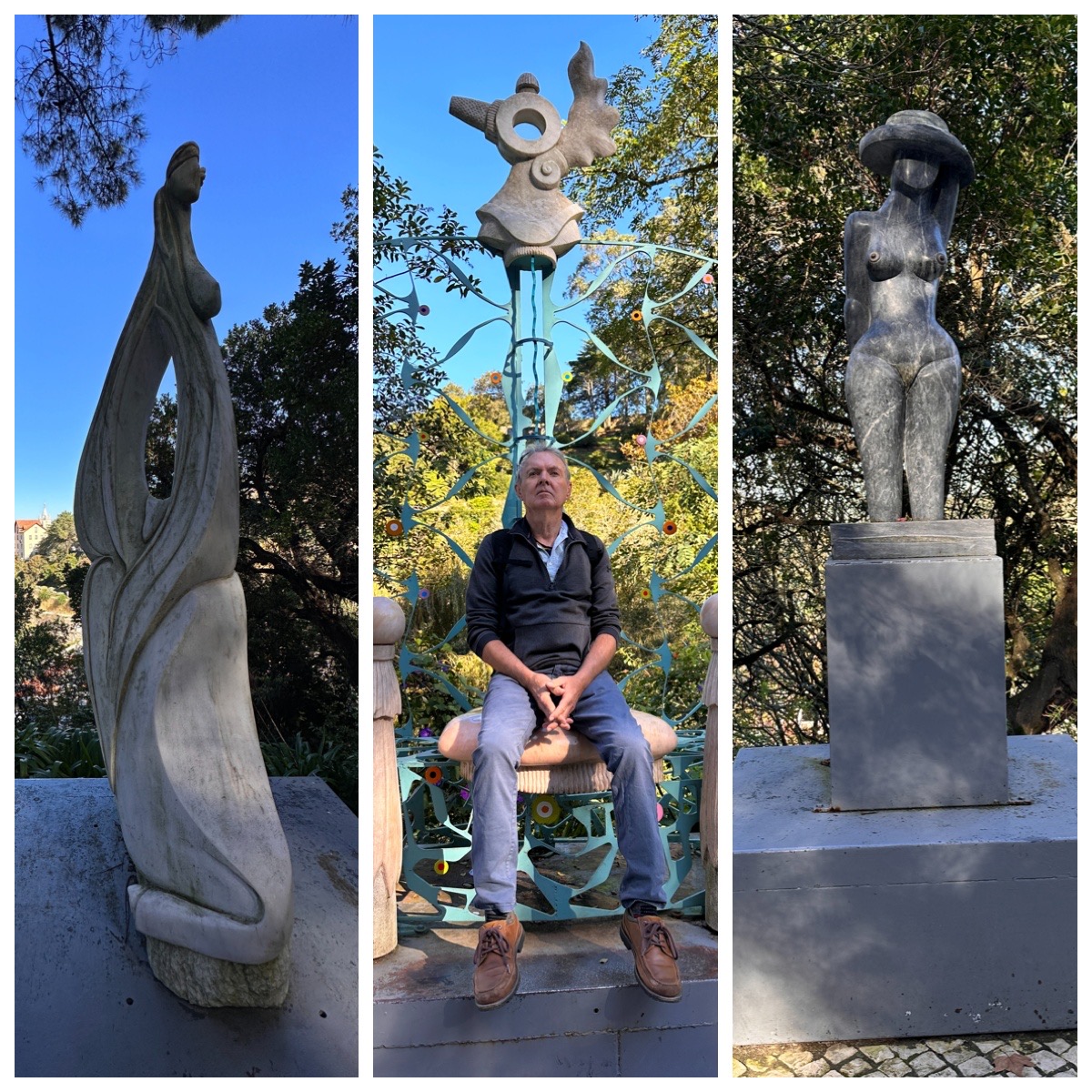
Sintra is small, sprawling at the foot of the hill where the Pena Palace and Moorish Castle dominate the top. The town is an easy 10 minute walk from the train station and you pass by some great sculptures as you stroll along.

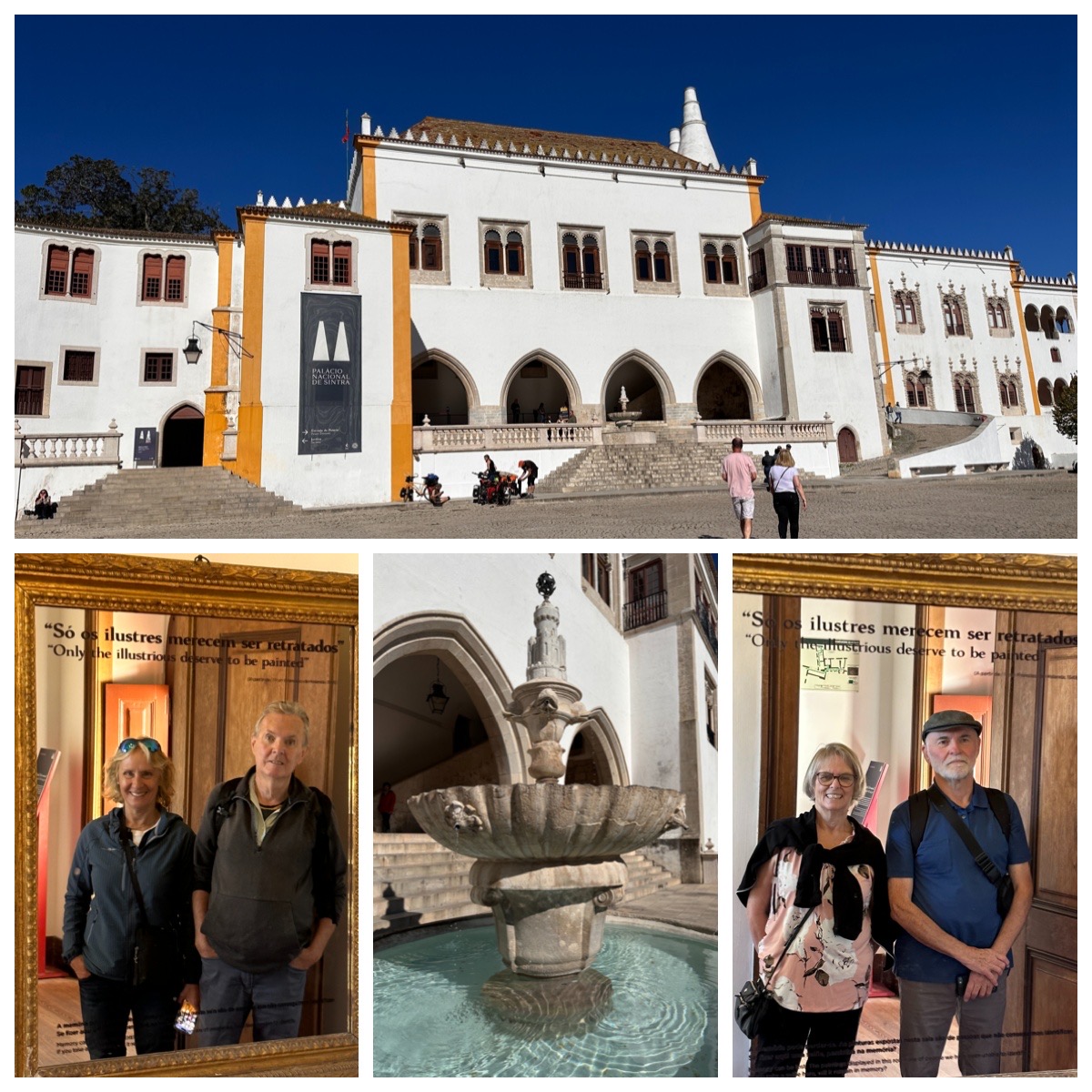
The Palácio Nacional (National Palace) dates to the 15th and 16th centuries, and housed royalty until 1910. It is the oldest surviving royal palace in Portugal and is still used for official receptions. The interior is sumptuous and a delight to visit.

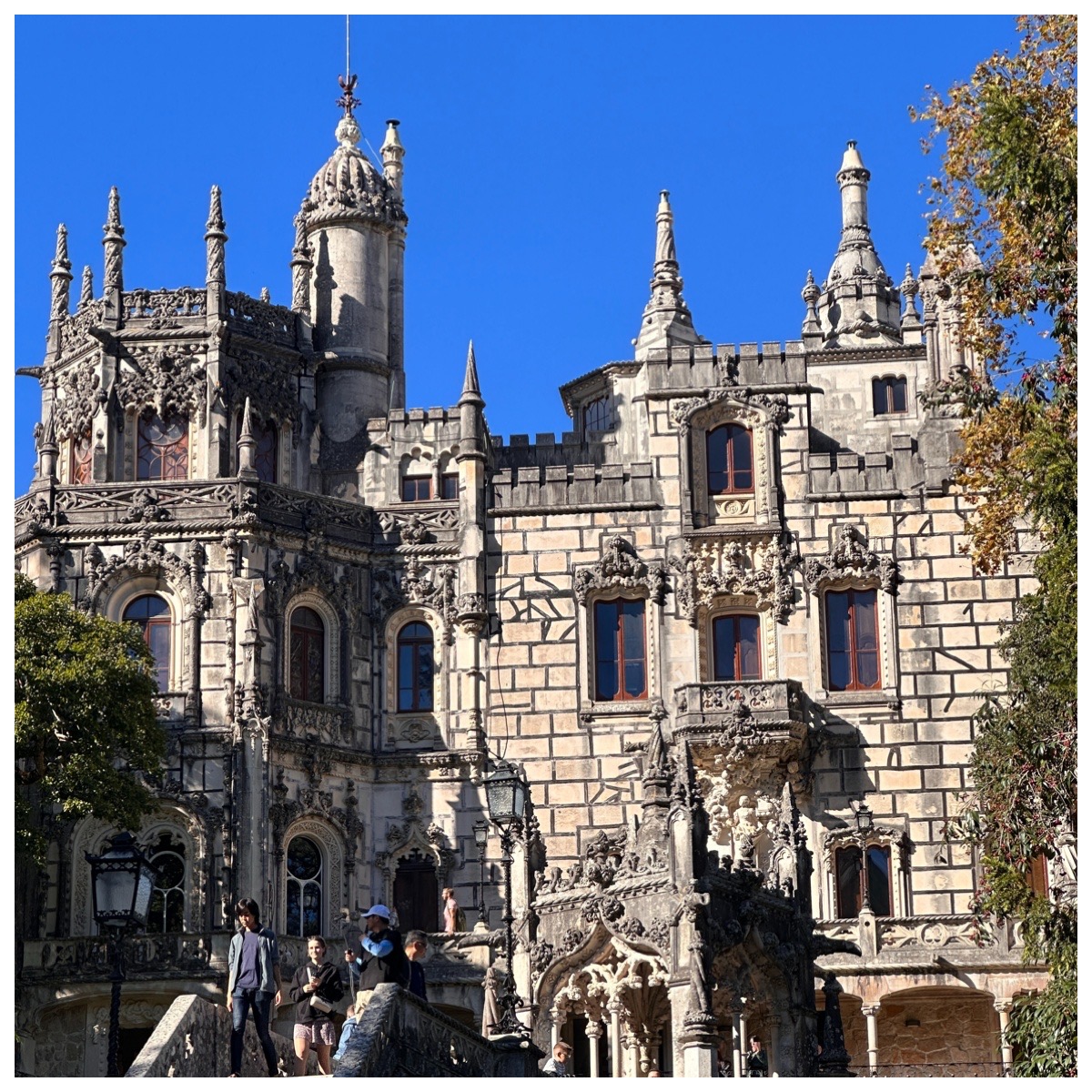
The Quinta da Regaleira mansion and grounds were commissioned by by a wealthy merchant, Carvalho Monteiro, as a place where he could collect symbols that reflected his interests and ideologies that allegedly related to alchemy, Masonry and the Knights Templar. It was completed in 1912.

Reviews told us that the interior of the mansion did not compare to the Pena and National Palaces, so we skipped touring the interior.

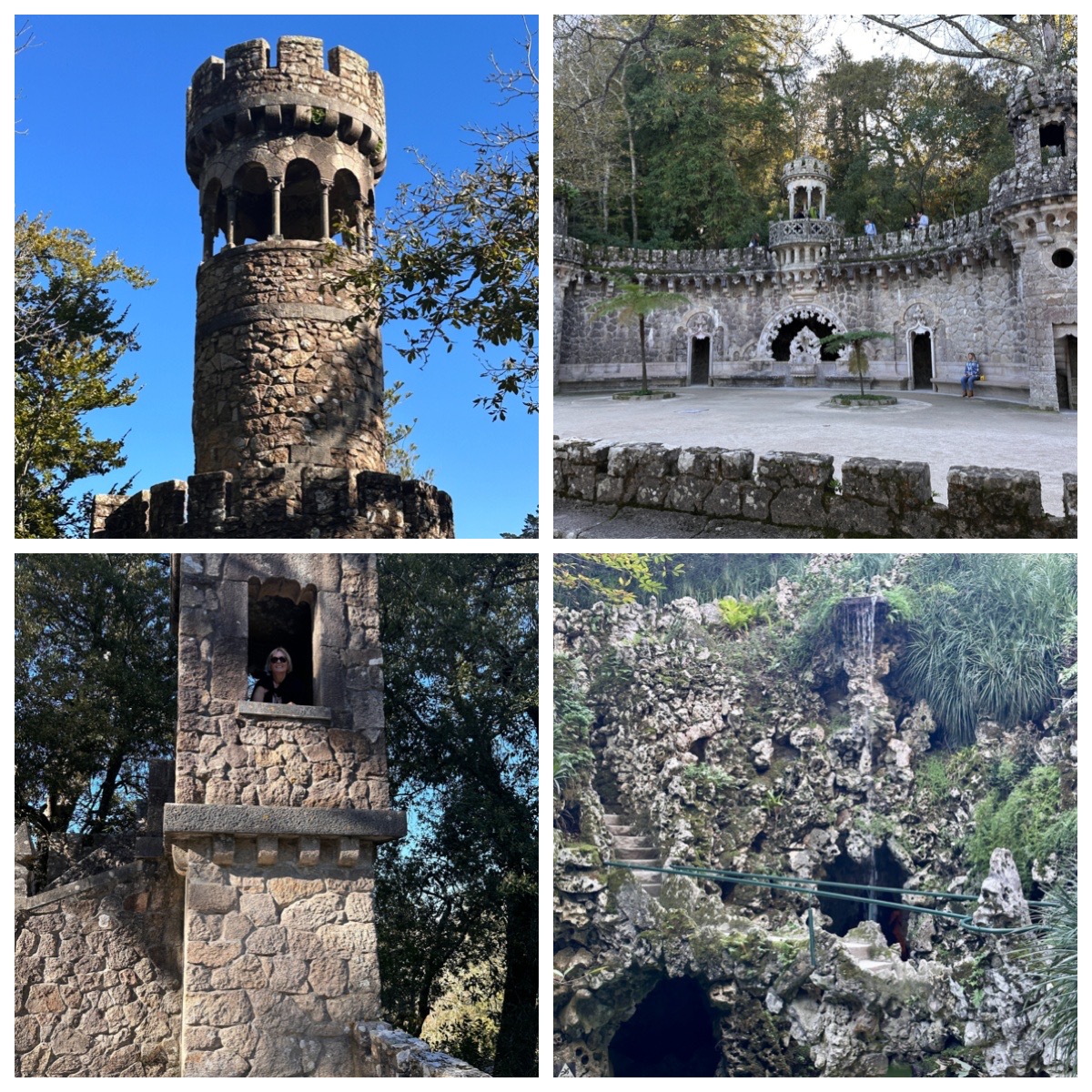
The grounds surrounding the mansion are a wonderful place to wander for an hour or two. There is a labyrinth of paths, left wild and disorganized reflecting Monteiro’s belief in primitivism. You encounter numerous decorative structures, waterfalls, tunnels and lush and diverse foliage.

The Initiation Wells are two wells that have never served as water wells and actually resemble underground towers lined with stairs. The larger well contains a 27 metre spiral staircase which you descend, arriving at some of the numerous underground tunnels. You can gaze out at the back of a waterfall. A tip – know how to turn on the flashlight on your phone – it gets dark in places.

We are very happy that we chose to visit Sintra and would highly recommend a visit if you have a spare day or two in Lisbon.

Stay tuned for a recap of our time in Lisbon!

Cheers,

Bev & Harvey

Coimbra – Relax and Explore

Leaving Porto, we hopped on the Alfa Pendular train for a comfortable journey of just over an hour to the city of Coimbra. The AP trains are great and an easy way to travel. The train arrives at the Coimbra-A station, where you can hop on another free train for the 5 minute ride to the Coimbra-B station.

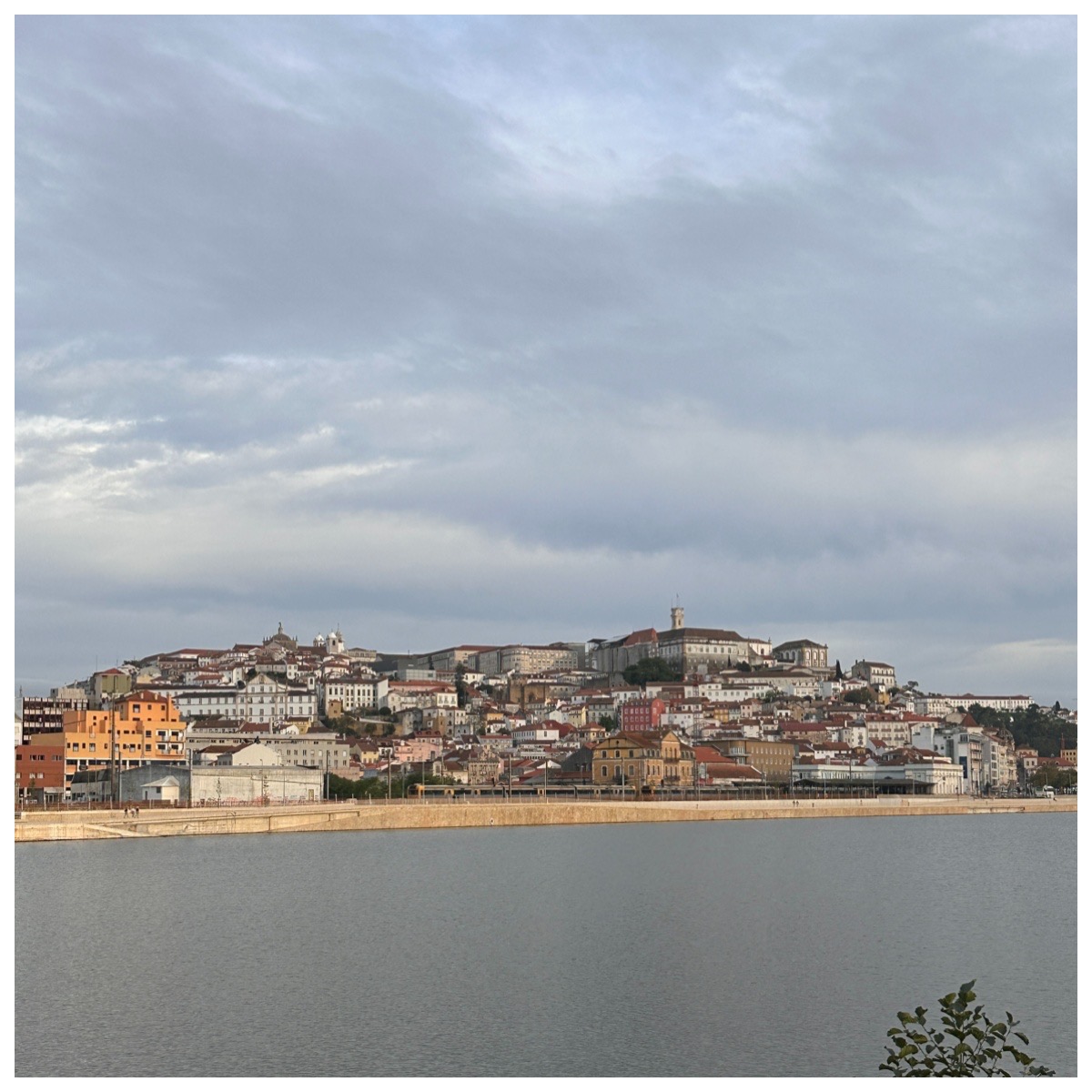
Coimbra is located on the route between Porto and Lisbon. It is about 50 km inland from the Atlantic and sits on the banks of the Rio Mondego. It has a population of ~140,000, but the historic centre has the feel of a small town.

Our hotel, Hotel Mondego , was located right across the street from the Coimbra-B train station. It was an excellent hotel – great location, lovely rooms (premium room), great breakfast and super-friendly and helpful staff.

We found Coimbra to be a great place to just wander, taking in the architecture, the grand pedestrian only avenues and the small, windy lanes.

The University of Coimbra was first established in 1290, moved a number of times and finally returned permanently to Coimbra in 1537. The university is among the oldest universities in continuous operation in the world and the oldest in Portugal. It was named a UNESCO World Heritage Site in 2013, citing its architecture, unique culture and traditions, and historical role.

The main attractions are situated around the Patio das Escolas, which is presided over by a statue of King João III.

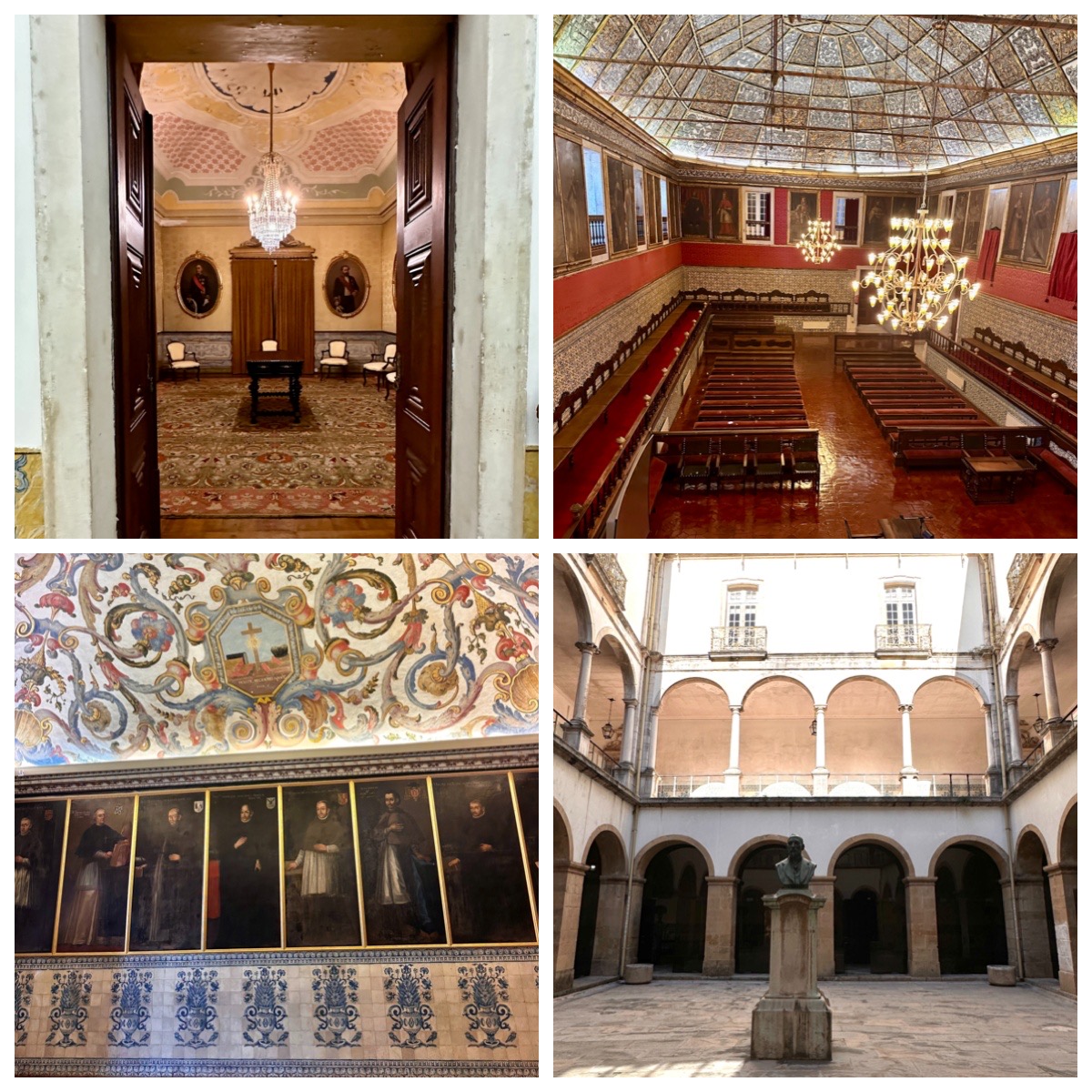
The most famous building is the Biblioteca Joanna, a baroque library named after after King João V. Constructed between 1717 and 1728, the remarkable central hall is decorated with elaborate ceiling frescoes and huge rosewood, ebony and jacaranda tables. The library holds more than 40,000 books, which can be borrowed under strict conditions. This room is strictly controlled – you must purchase a timed entry ticket and are allowed only 20 minutes in the room. No pictures are allowed – the pictures below are of the anterooms. Interestingly, the library has a colony of bats to protect the books – they eat potentially harmful insects.

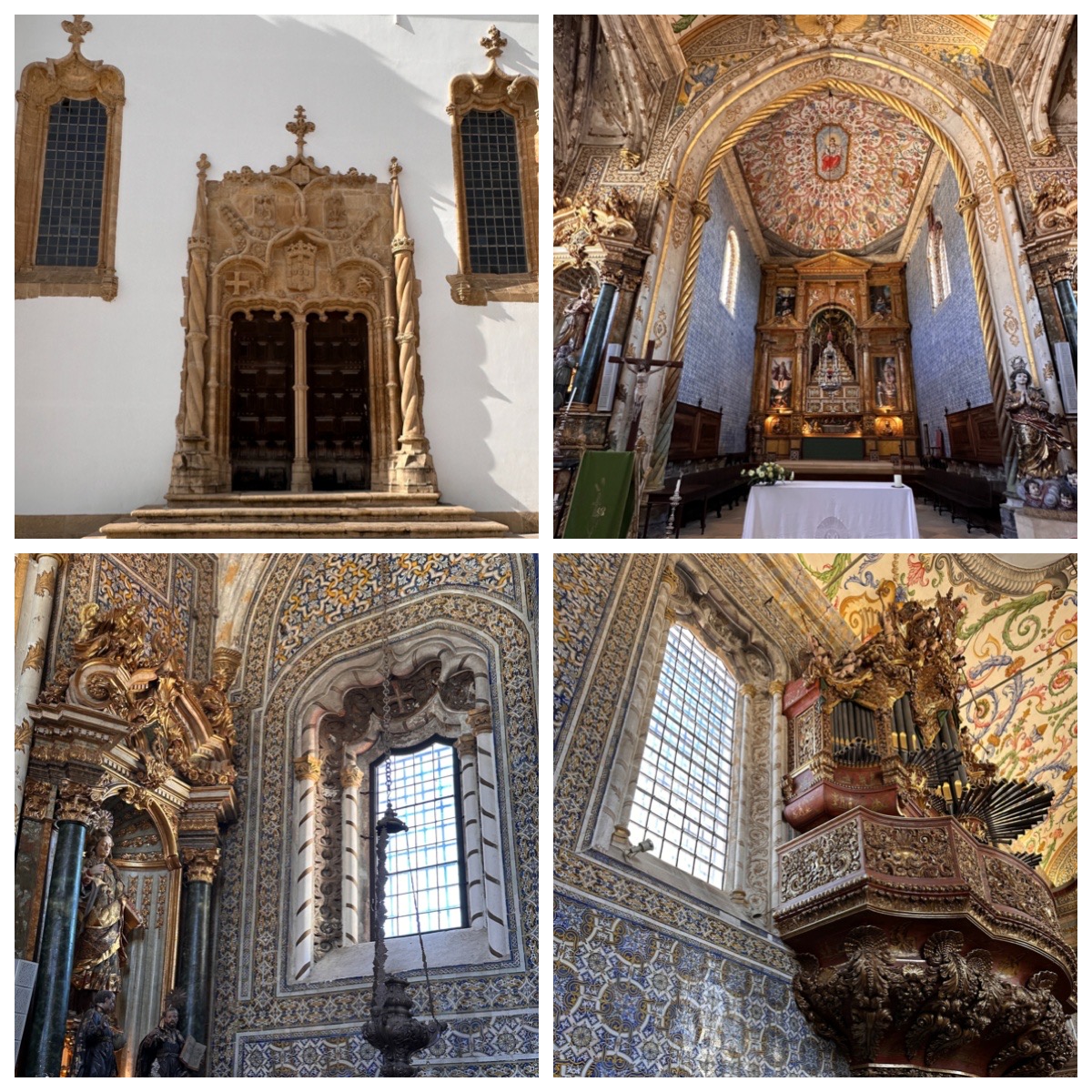
The Capelo de São Miguel (Saint Michael’s Chapel) was built in the 1500’s with small renovations and additions in the 17th and 18th centuries.

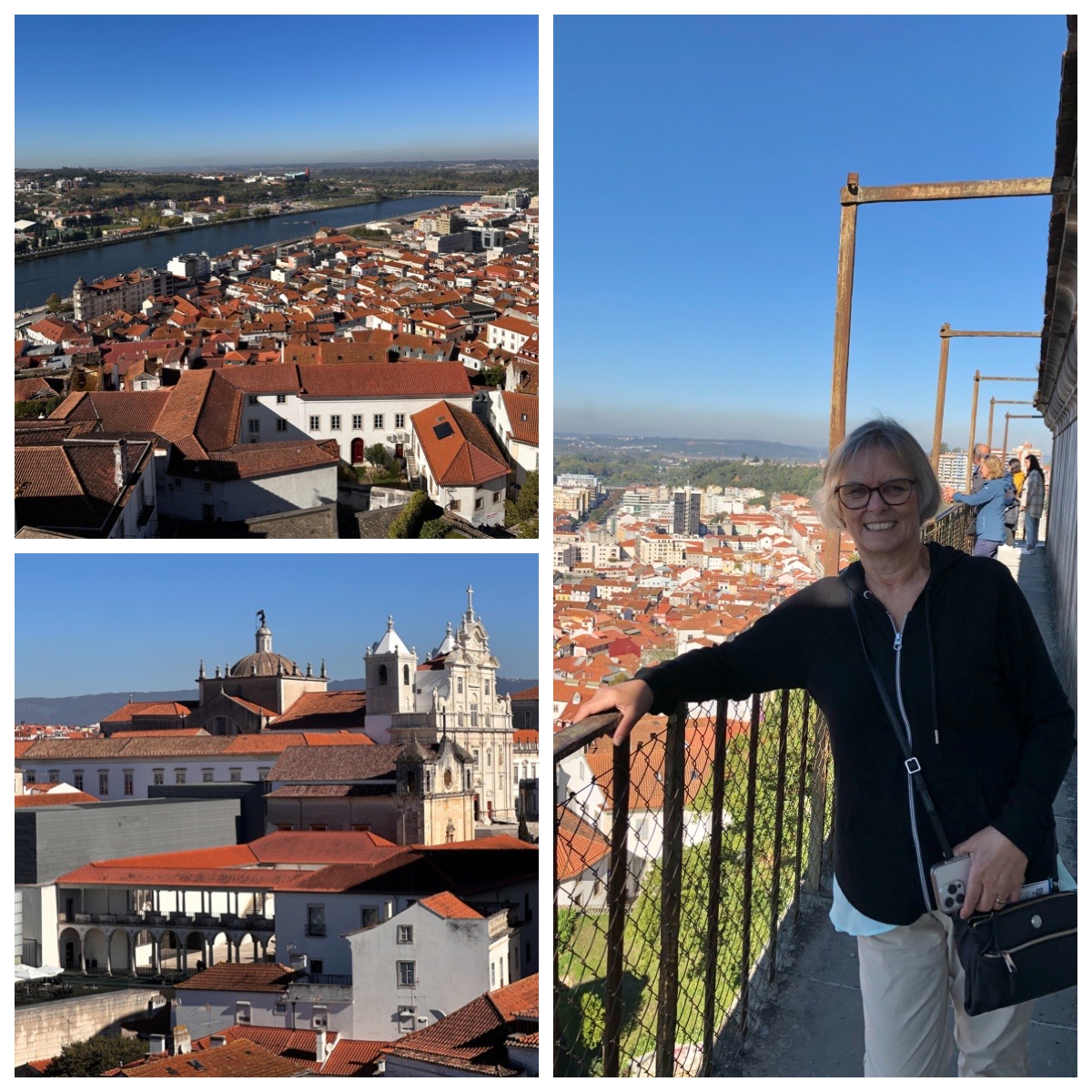
The Royal Palace sits below the crenelated clock tower which stands 112 feet high and is the most notable item in all Coimbra landscapes. The palace was built in the tenth century and for many years served as a royal residence.

The views from the Palace catwalk are wonderful!

On the hill in Coimbra are the old and new cathedrals. The old Cathedral dates from 1117 and is currently undergoing restoration work.

The new Cathedral was built slowly between 1598 and 1698 and took over the role of Coimbra’s main church from the old Cathedral in 1772.

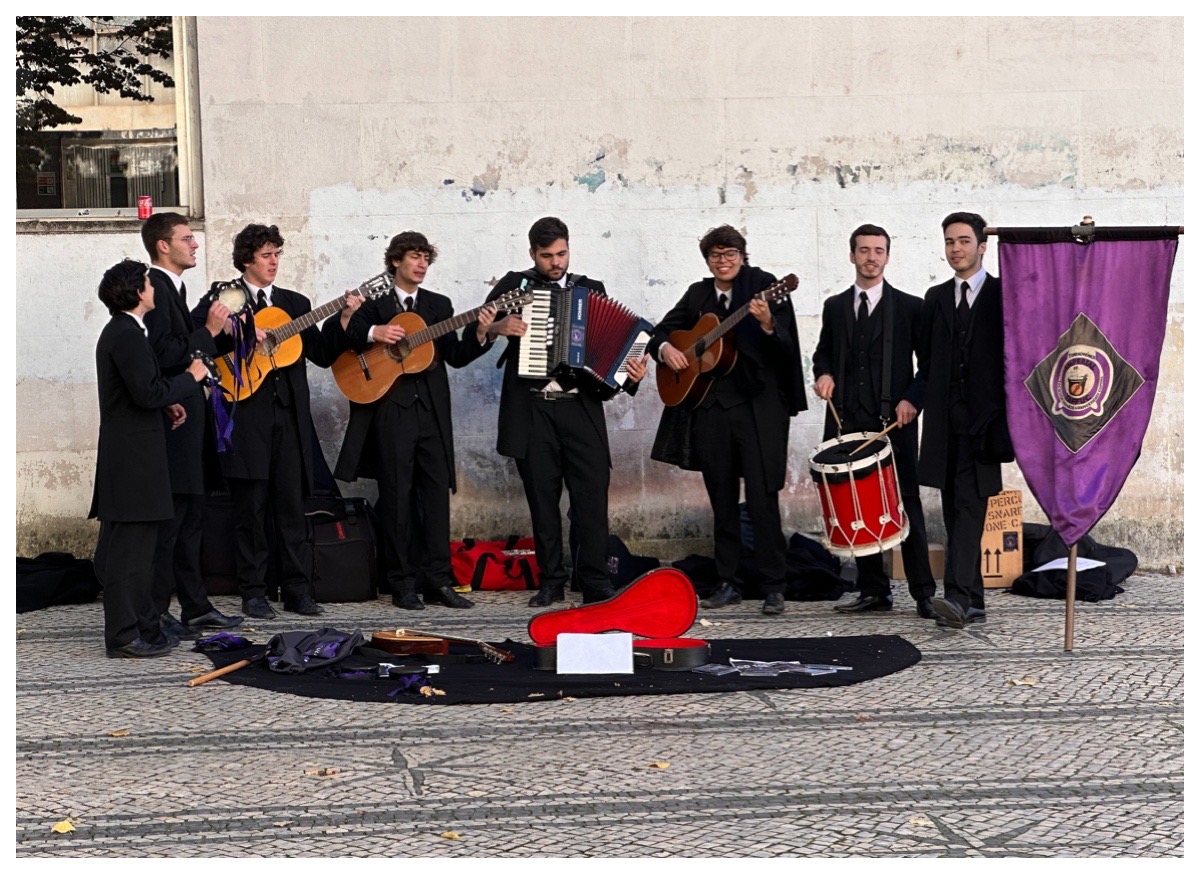
Fado is considered the song of the Portuguese soul, traditionally performed by women. In Coimbra, fado is closely connected with academic traditions. A major difference in Coimbra is that fado is performed by men.

Groups of university students sing fado on the streets, dressed in their traditional attire.

One evening, we took in an early evening fado presentation at the Cafe Santa Cruz. While we sipped a beverage, we listened to an entertaining half hour of music. The acoustics are great in this church turned cafe.

Coimbra is doing a good job of developing its river valley. There are great walking paths, a fun pedestrian bridge and an awesome evening lighted fountain display.

Once again, those wonderful Portuguese pastries!

Salt cod and sardines are Portuguese staples.

Salt cod at the market
The canned sardine store – quite elegant!
Grilled sardines on a boat and cheesy bruschetta for lunch

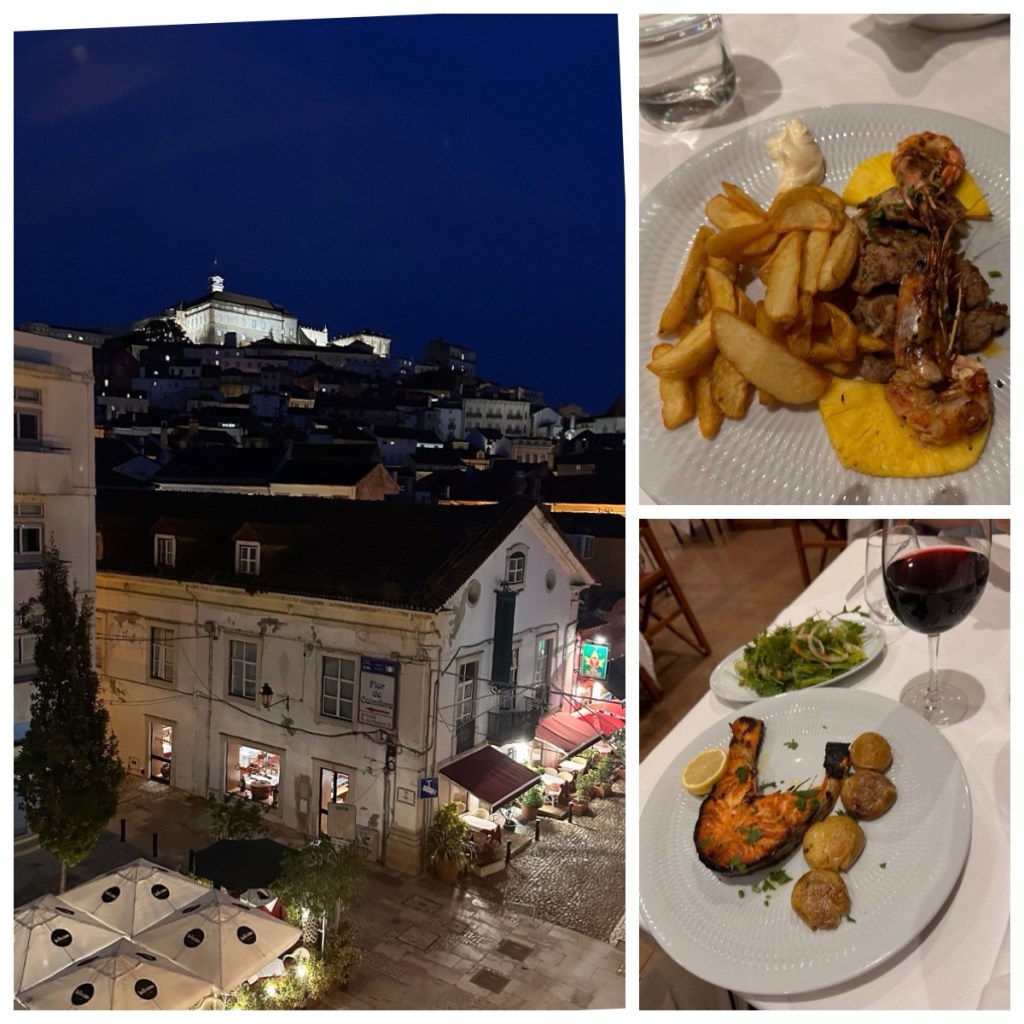
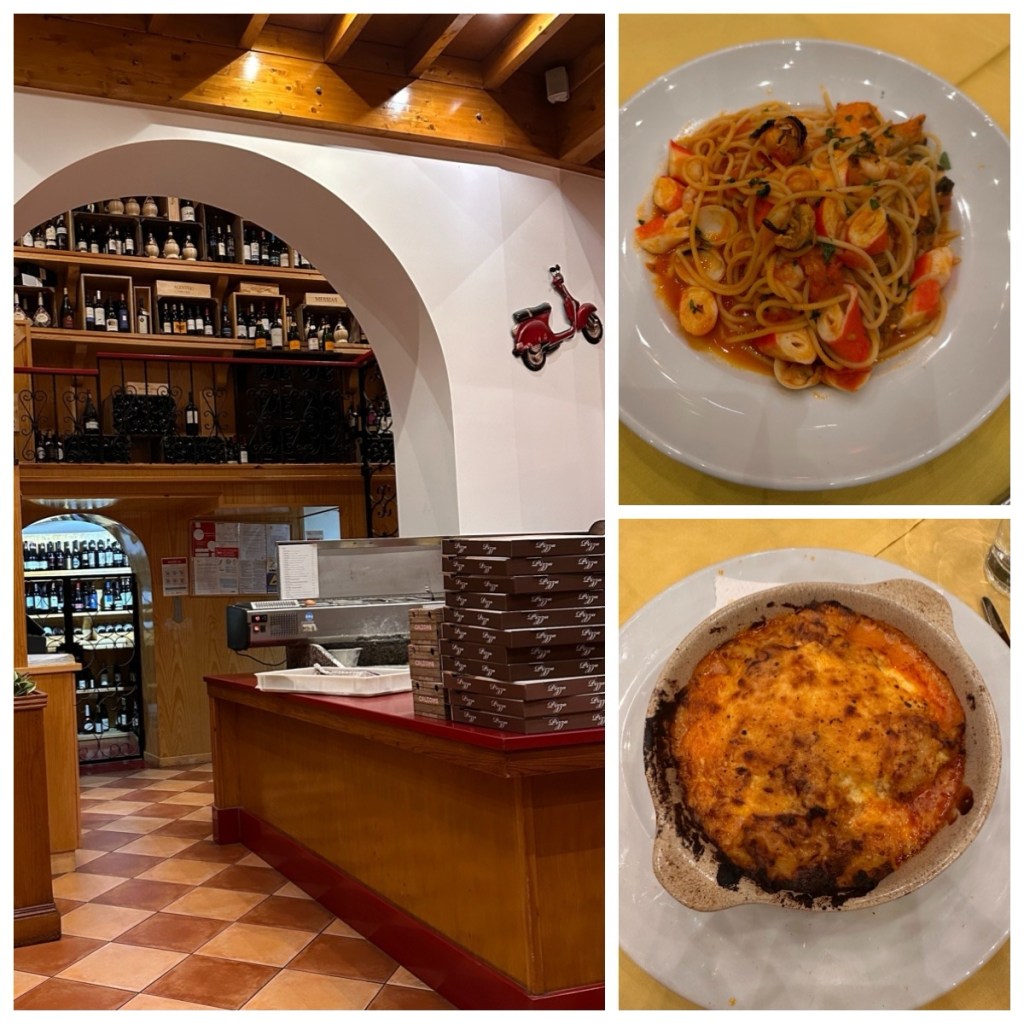
Some other great meals in Coimbra – definitely recommend these restaurants.

Il Tartufo – Pasta with seafood, Lasagna

Solar do Bacalhau – Pork tenderloin/prawns/pineapple, Salmon

Sete Restaurante – Lamb shank, Salmon

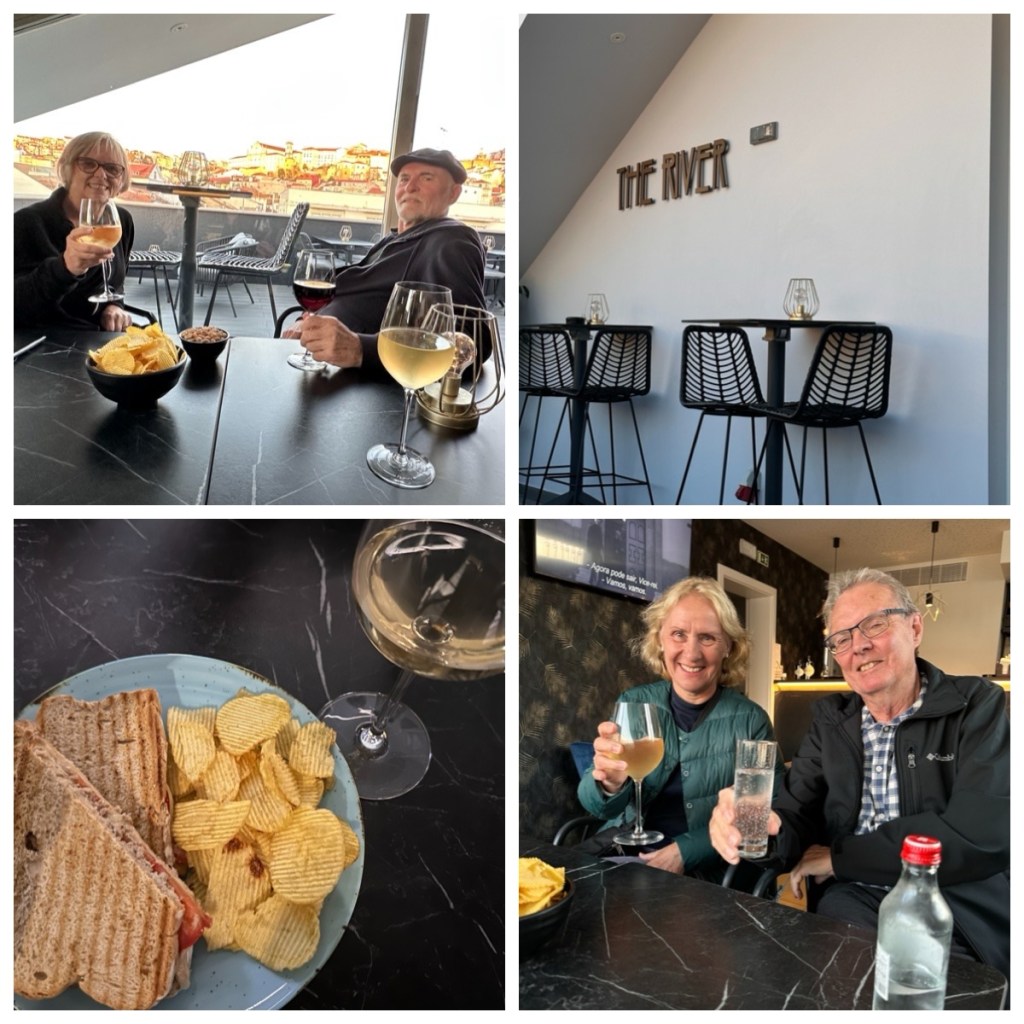
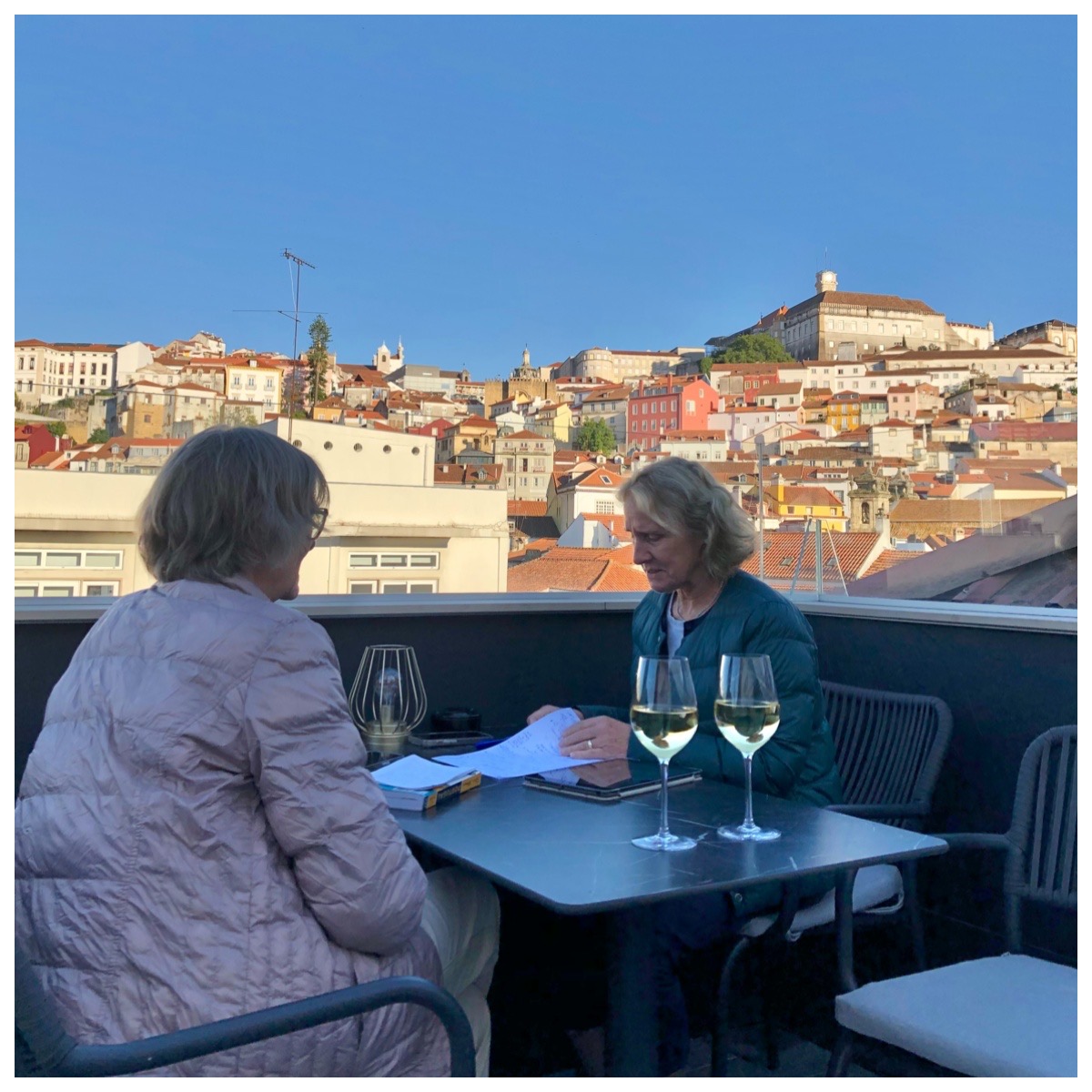
The River Bar, Hotel Mondego

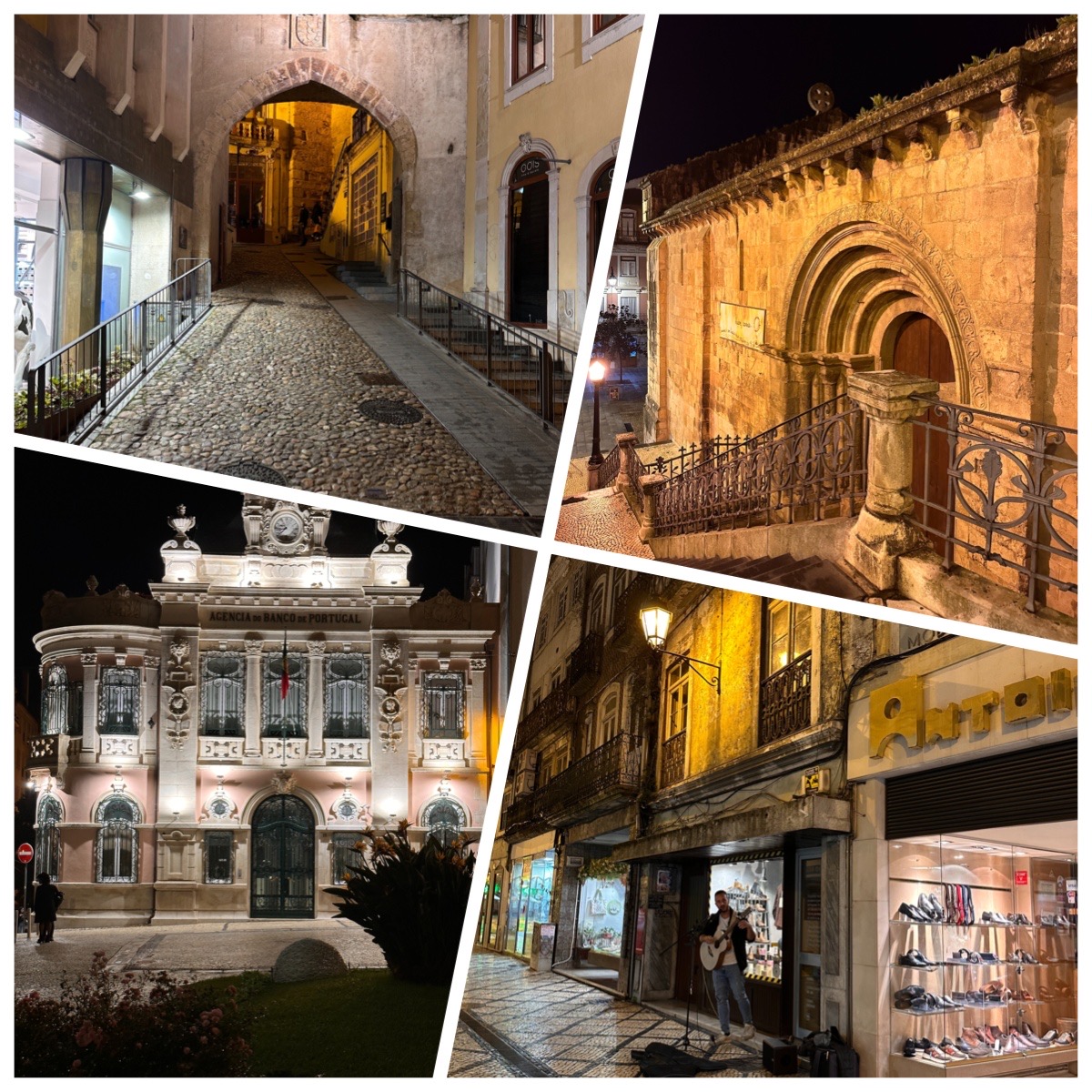
Coimbra was magical at night!

If you have some time, listen to Debbie’s Podcast that we recorded from the River Bar. Once there, you can access a number of podcasts about our trip and other interesting topics!

We hope you enjoyed our memories of Coimbra. If you travel to Portugal, Coimbra is an awesome place to visit and to recharge yourself between the busy cities.

Cheers,

Bev & Harvey

Porto – Pastries, Pork and Port

Join me as I remember fondly the great food and drink of Porto, Portugal.

We loved the pastries in Paris – but it’s just possible that the pastries in Portugal are even better…..

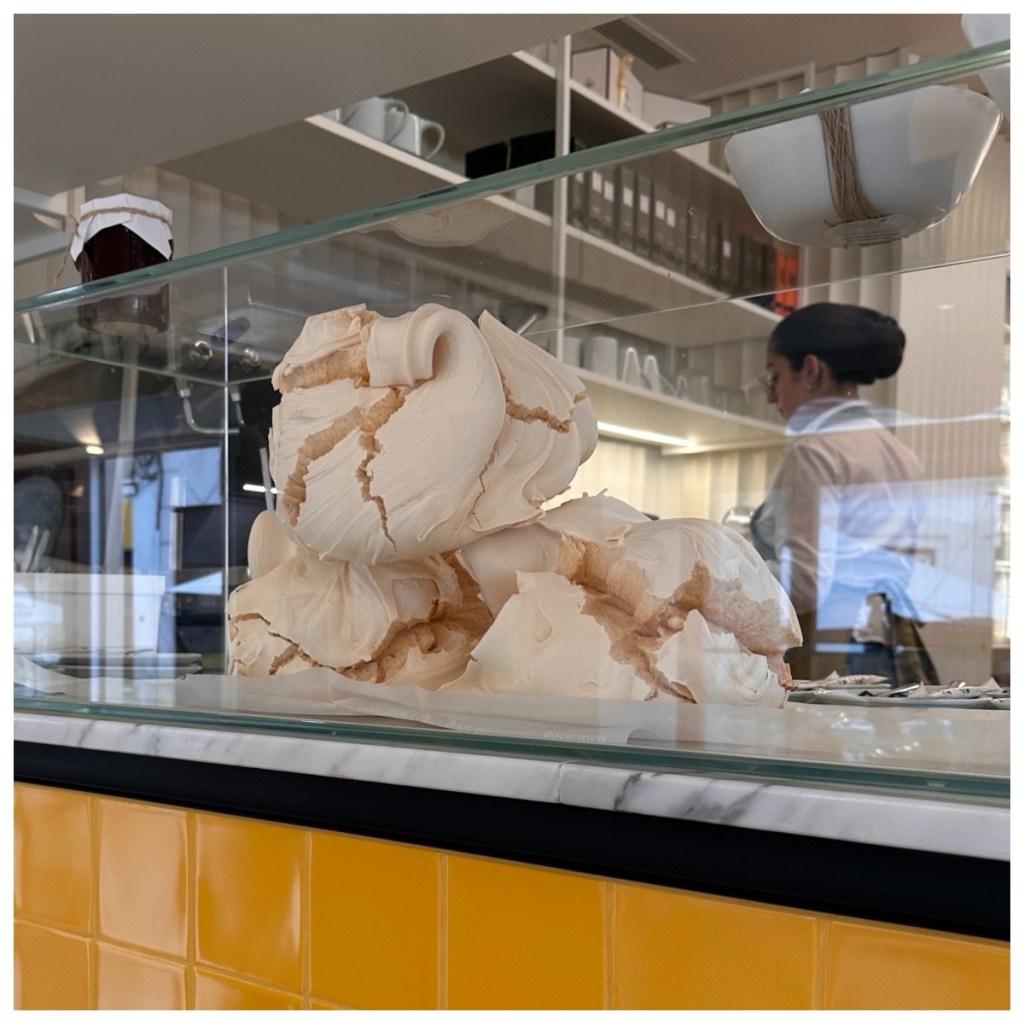
It seems that the majority of Portugal pastries are filled with egg cream custard. We wondered why and found out this interesting history. The sweet treat has religious roots. Catholic nuns and monks used egg whites to starch their clothes, as well as using them for making paste. This resulted in a lot of egg yolks to spare, which to avoid waste were used to make desserts. We wondered what they now do with the extra eggs whites that must be left from all the egg custards, as we assume they are no longer starching clothes and making paste with them. We didn’t get an answer to this, although we did see some very large meringues in a few bakeries!

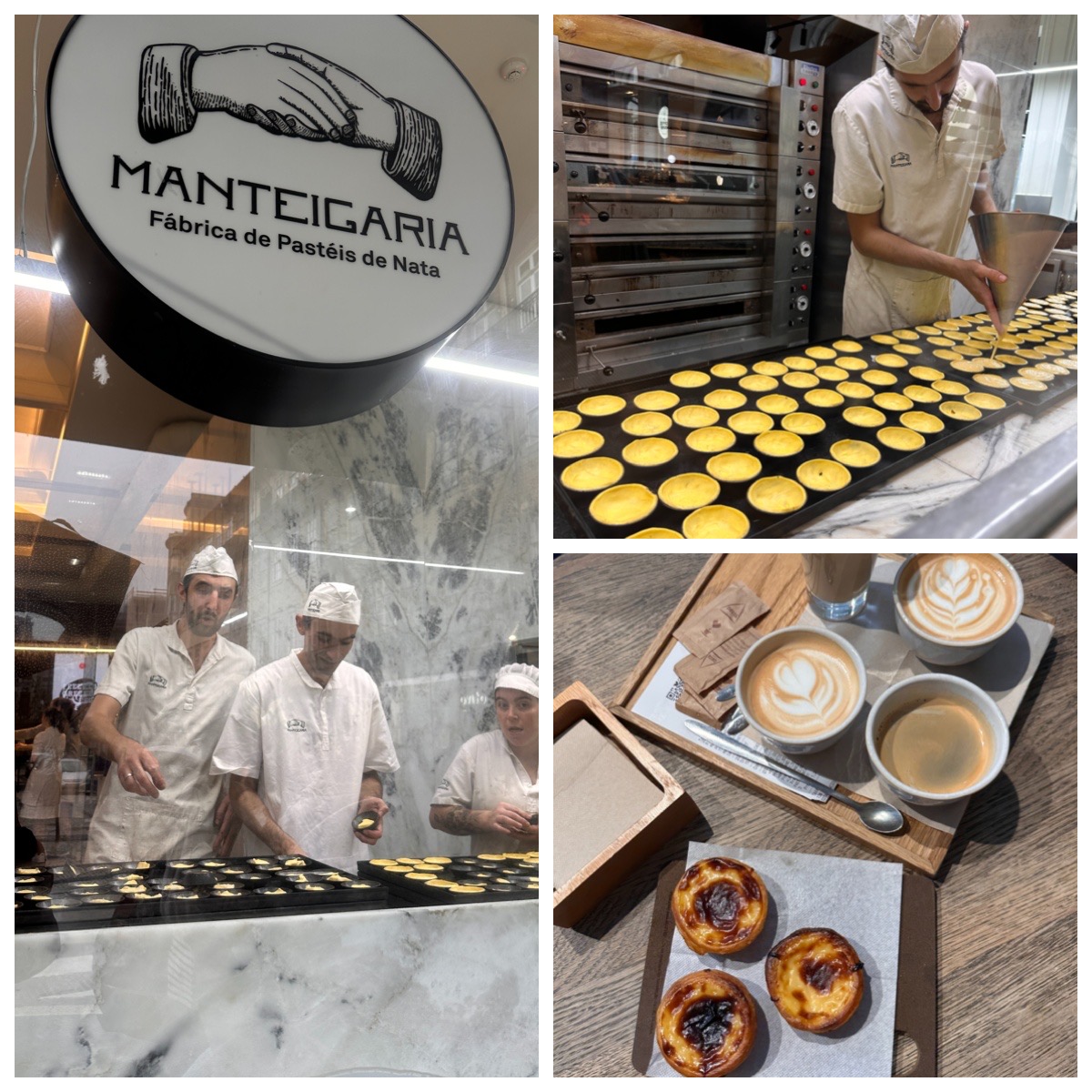
Pastéis de Nata are the original and most popular egg cream pastry. These originated in Belém, Lisbon but are prolific in all of Portugal. We tried many in Porto and give the award to the Manteigaria – Fábrica de Pastéis de Nata. Located in the Delta Coffee House, it was fun to watch the tart production as well as to enjoy their great coffee and of course the tarts!

We also indulged in a number of other great pastries, a few of which are pictured below.

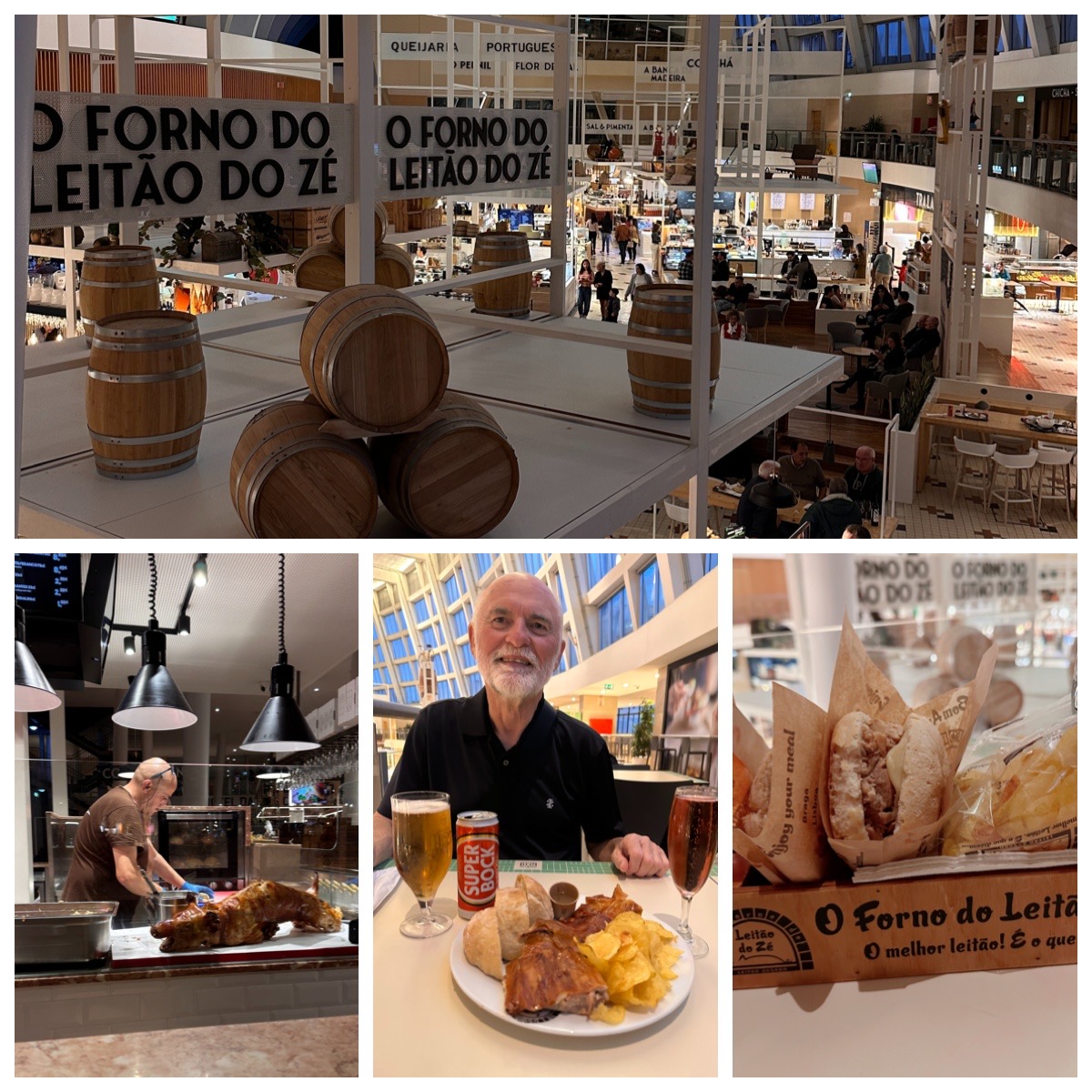
The Portuguese generally eat dinner after 8 pm and the restaurants in our area didn’t open until 7:30 pm at the earliest. This is quite a bit too late for our North American habits! Our guesthouse host suggested that we visit the Mercado Bom Sucesso . What a great find this was! This upscale market is a cultural experience where you explore the best flavors of Portuguese cuisine as well as international cuisines at the various shops scattered throughout the space.

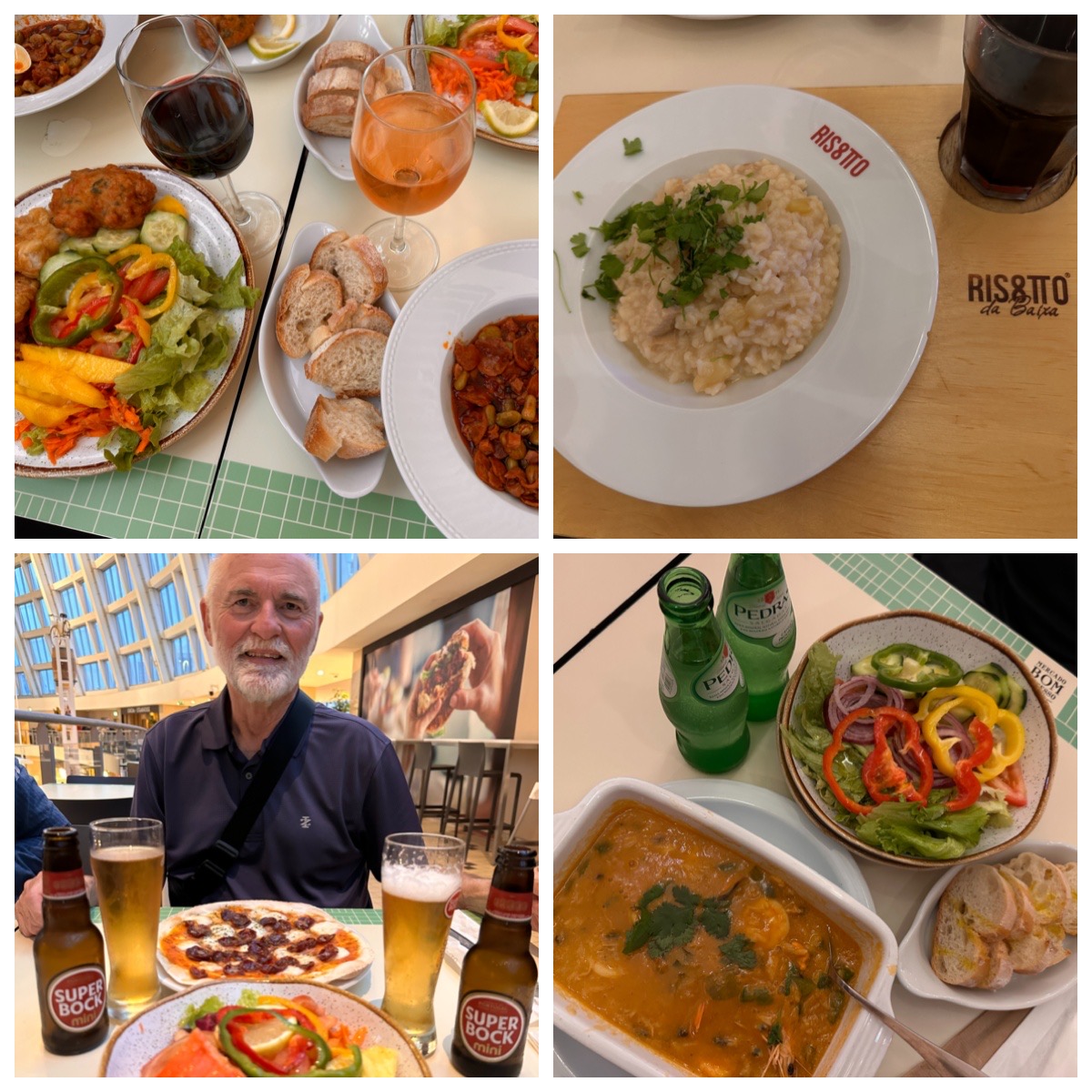
We ended up eating dinner at the market most every day after returning to our guesthouse for a late afternoon rest. We found that all of the vendors provided top notch food and we thoroughly enjoyed the great variety!

The Portuguese love pork. They even have a Museum of Pork (which we didn’t visit). Many of the common dishes are prepared from Leitão no forno or suckling pig. Before cooking, the meat is seasoned with garlic, pork fat, salt and pepper, and then put into the grill or oven for about two hours, first at high heat, then at a more gentle temperature. The pigs are usually cooked in wood-fired ovens with aromatic herbs.

The bifana is pork cut in very thin slices, eaten on a small wheat loaf called molete. The sauce is delicious – said to be seasoned with beer, whiskey, white wine, garlic, red paprika, Port wine, pepper, bay leaf, and olive oil.

Cod is also extremely popular. It is said the Portuguese have 365 ways to cook Bacalhau (dried cod!)!

Some of the other dishes we enjoyed at the Mercado.

Here a few of the delicious dishes we tried at restaurants in the city.

The Francesinha is found most everywhere in Portugal. It consists of meat (in our case, a pork cutlet), ham, sausage and cheese layered between thick slices of bread. The sandwich is then topped with more cheese, warmed in the oven to melt and and lastly, topped with a fried egg and a slightly spicy beer sauce.

We had to try one – to clarify, Harv & I split one. It was surprisingly delicious and as is traditional, was served with fries.

And finally, the drinks of Porto! Of course, Port reigns. Port is a fortified sweet wine. The grapes are grown and the wine produced in the Douro Valley outside of Porto. The port is then transported to the wine lodges of Vila Nova de Gaia across the River Douro from the old city center of Porto to age and be bottled.

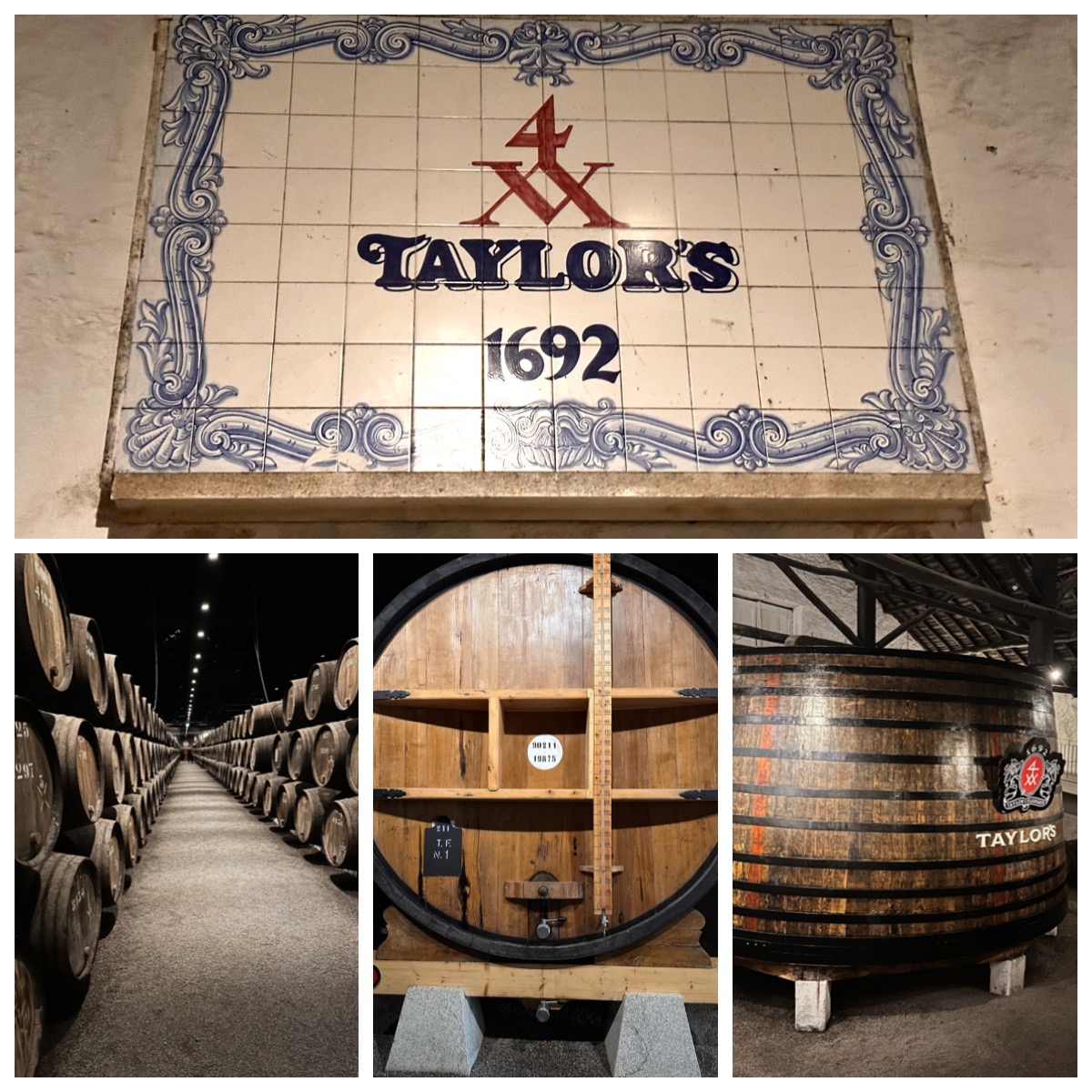
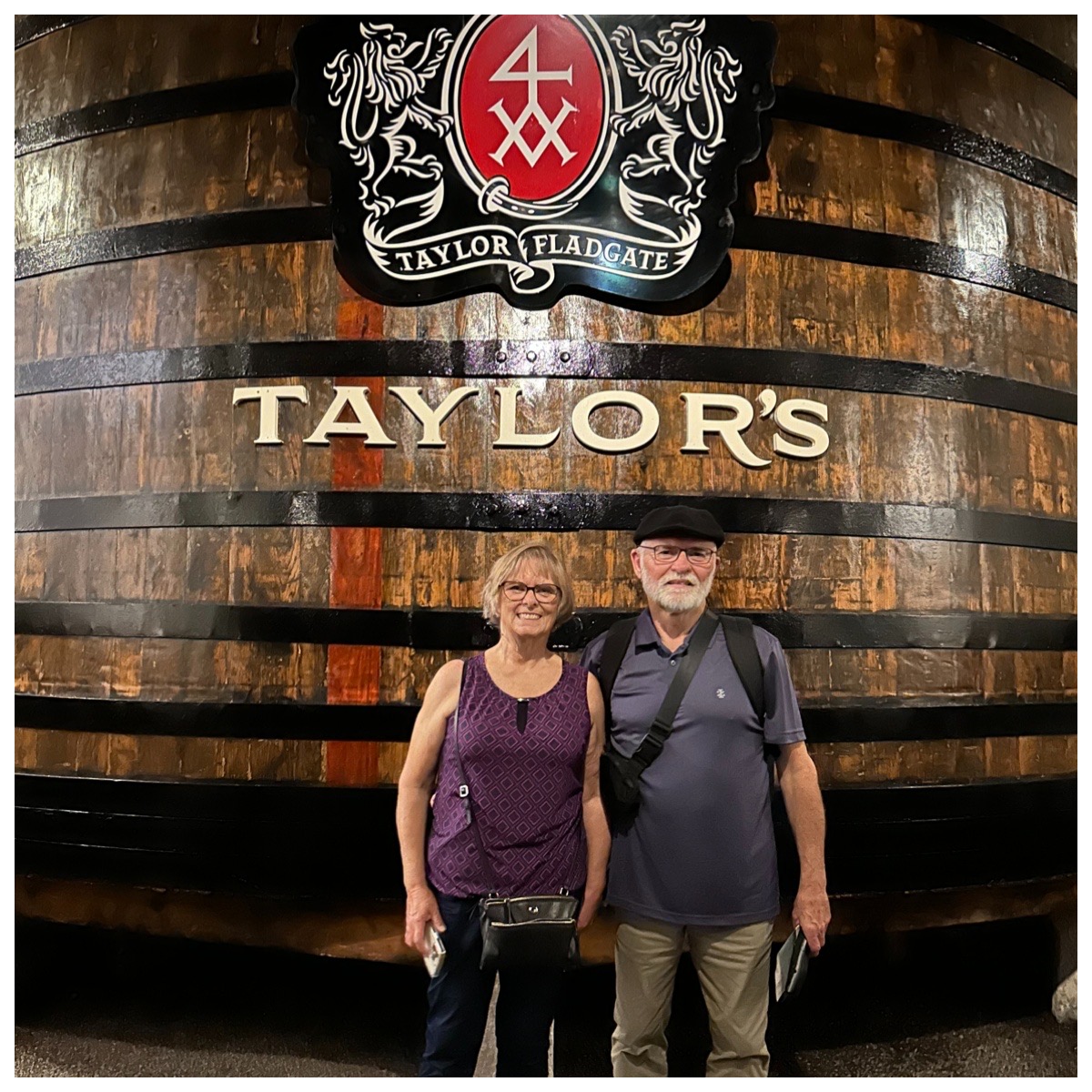
A number of the lodges/houses offer tours and tastings and you could spend a lot of time visiting them. We chose to visit Taylor Fladgate, one of the oldest of the founding port houses. Taylor’s offer a self-guided tour with an excellent audio guide. The tour takes well over an hour and provides detailed information about all aspects of port history and production.

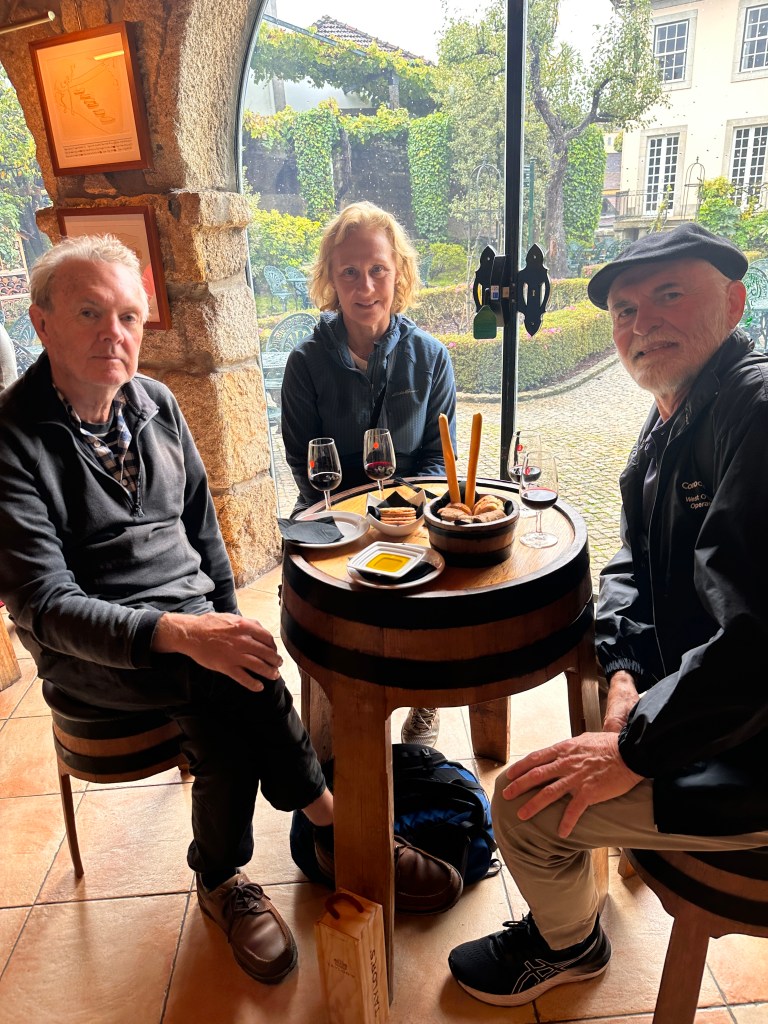
At the end of the tour, you are invited to taste two of Taylor’s popular ports – a late bottled vintage and the Chip Dry white port. We chose some snacks to go with these drinks and it was lovely.

We would highly recommend the Taylor Fladgate tour – a great introduction for newcomers to port as well as lots of information for those more into the world of port!

Another great twist to port – a port tonic! This refreshing cocktail is crafted with two parts of tonic to one part of white port. It generally comes with an orange wedge and a sprig of mint. This version that we enjoyed on a sunny afternoon along the waterfront seemed to have some additional orange flavouring added – perhaps Cointreau or Aperol. It was great!

Had to have some sangria while in Portugal. This one was at the Peninsular Cafe, a fun place near our guesthouse with an old time counter as well as table service. This sangria accompanied our Francesinha.

Lots of great coffee on the trip. On this occasion I forgot to ask for them long so we had fun little espressos with a dab of milk.

I hope you enjoyed this look at Porto’s food and drink! Next, on to the great city of Coimbra!

Cheers,

Bev& Harvey

Day Trip to Braga

Braga is a great day trip from Porto. It’s easy to get there – we took the train from the Campanha station to Braga. We chose to take the Urbano train, which takes about an hour, and the round trip fare was only €6.60. The Braga train station is just a short 5 minute walk from the historical centre of the city.

Although Braga is a sprawling city with a population of ~120,000, the focus of a tourist visit is the historical city centre and the Bom Jesus do Monte.

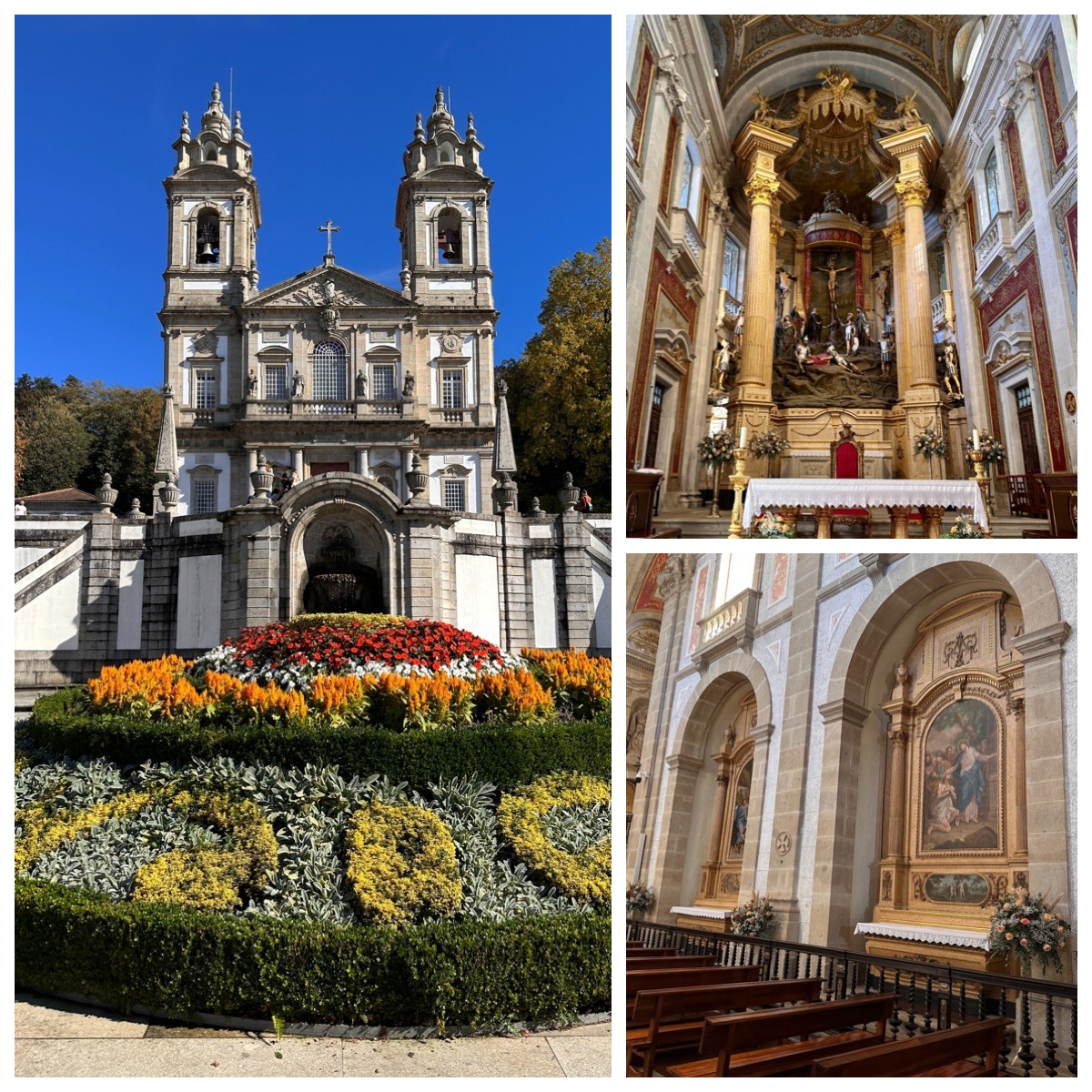
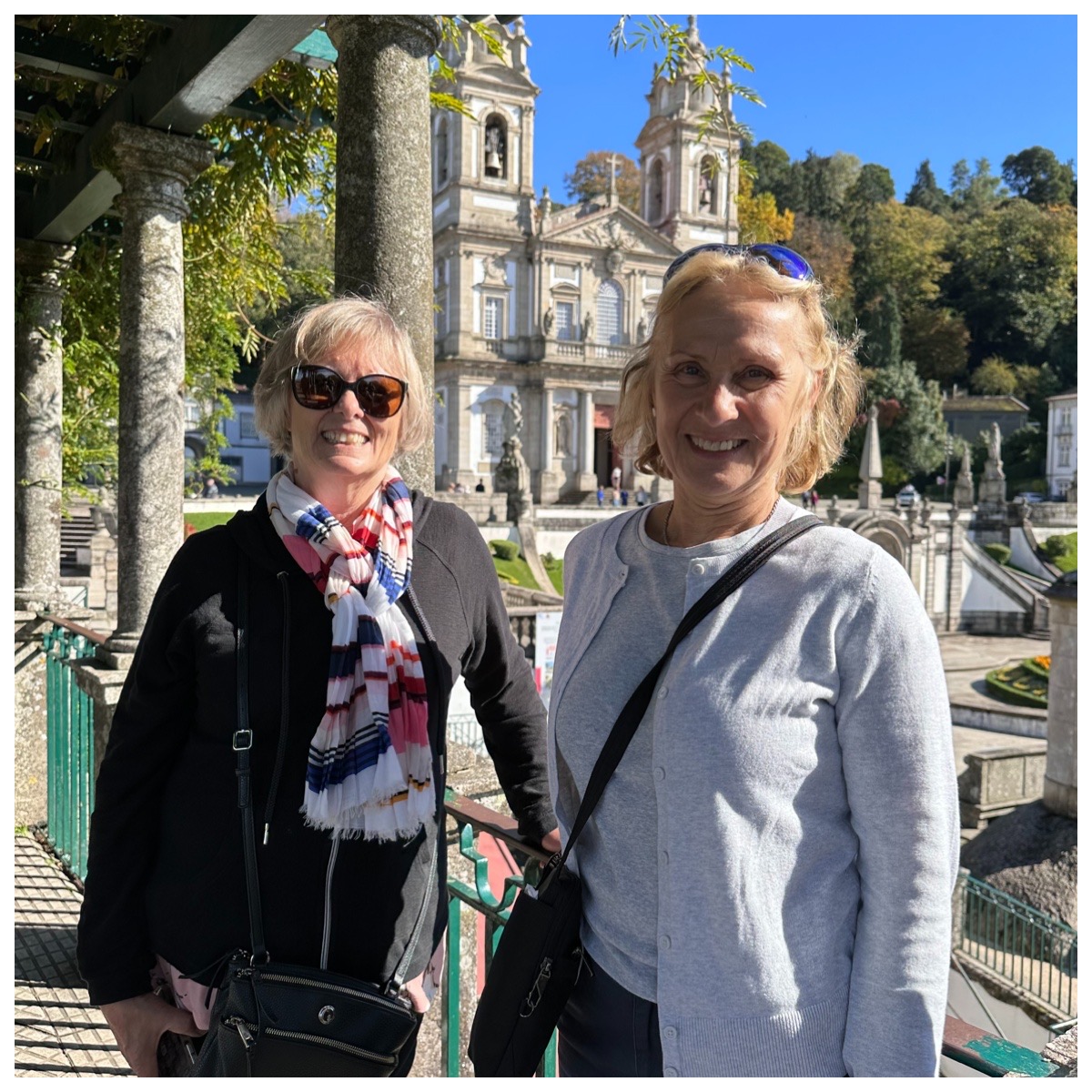
After a quick pastry stop 😉, we headed directly to the Bom Jesus do Monte. We caught the #2 bus from the Avenida da Liberdade. The bus stops at the bottom of the funicular that rises to the church. The funicular was built in 1882 and is the oldest water balance funicular in service in the world. You can catch the funicular as Harvey & I did or choose to take the path and climb the 573 steps of the sanctuary’s stairway. Our ambitious fellow travellers chose this option and thoroughly enjoyed it. Harvey & I did choose to take the funicular up and the stairs and path down!

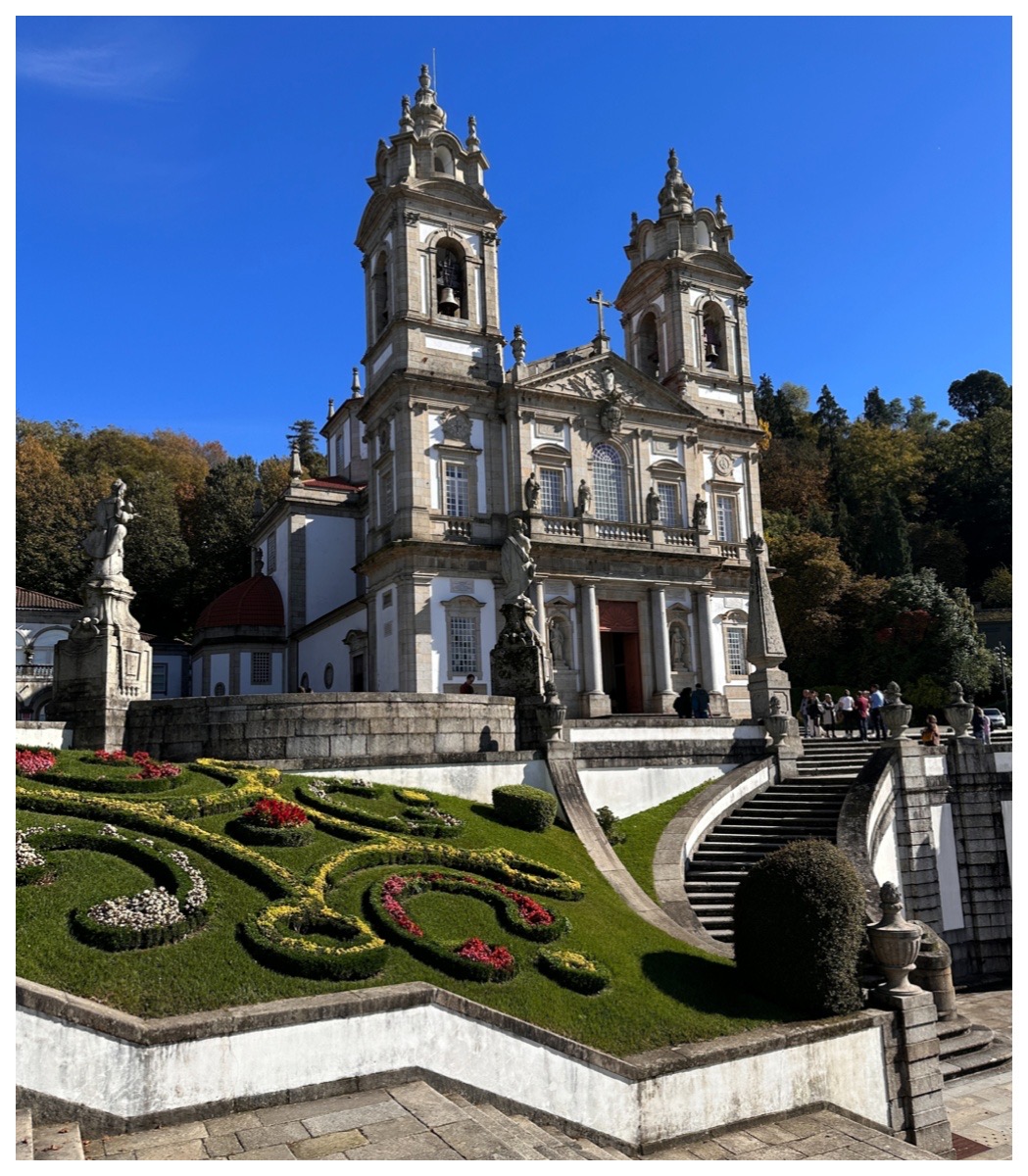
The Sanctuary of Bom Jesus do Monte was declared a UNESCO World Heritage Site in 2019. The first documentation of a chapel on this hill is from 1373. That chapel was rebuilt in the 15th and 16th centuries and a church dedicated to Bom Jesus (Good Jesus) was built in 1629. The current Sanctuary was built between 1784 and 1811 under the patronage of the Archbishop of Braga. The Sanctuary is considered a Christian pilgrimage site.

The grounds surrounding the church are beautifully manicured and were bright with flowers and greenery, even on our visit in late October.

As I mentioned, the stairway rising to the basilica consists of 573 steps in a zig-zag pattern. The stairway is flanked by chapels holding larger-than-life terra-cotta depictions of the Via Crucis (the Way of the Cross).

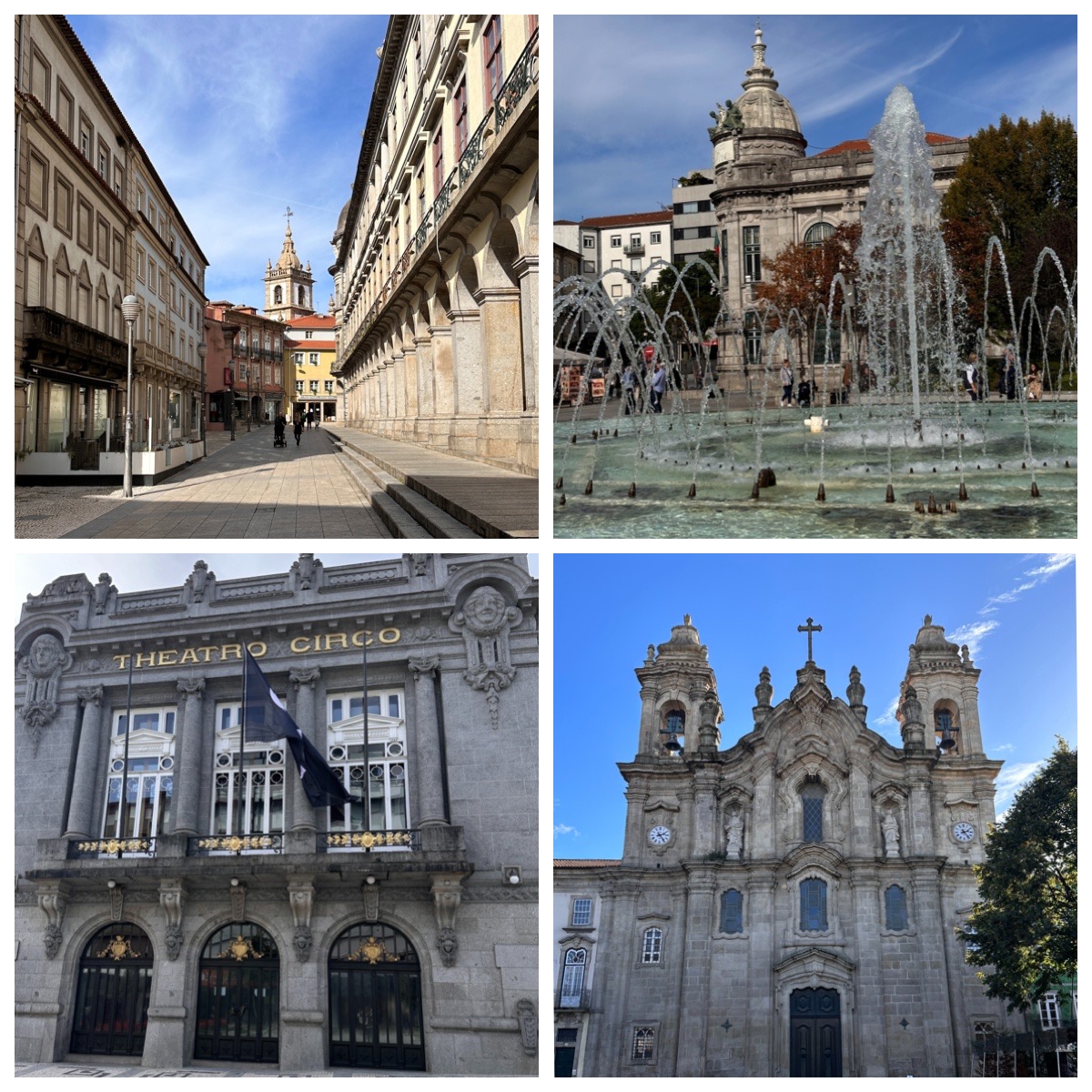
Back in the historical centre of Braga after descending the stairs and catching a bus down, we wandered the streets for a bit enjoying the great buildings, fountains and green spaces.

In Braga, we also tried out a Portuguese specialty – ginja or ginjinha in a chocolate cup. This sweet liquor is made from aguardente (brandy or fortified wine) that’s been infused with sour cherries, sugar and cinnamon. It’s dark red, super sweet and surprisingly strong, with an ABV of around 18-24%. The small amount served in a chocolate cup (which you then eat) is a perfect little treat!

We found the day trip to Braga to be very worthwhile and we would definitely recommend it if you have a day to spare when visiting Porto.

Coming soon to finish our Porto blog series – the food and Port of Porto!

Cheers,

Bev & Harvey

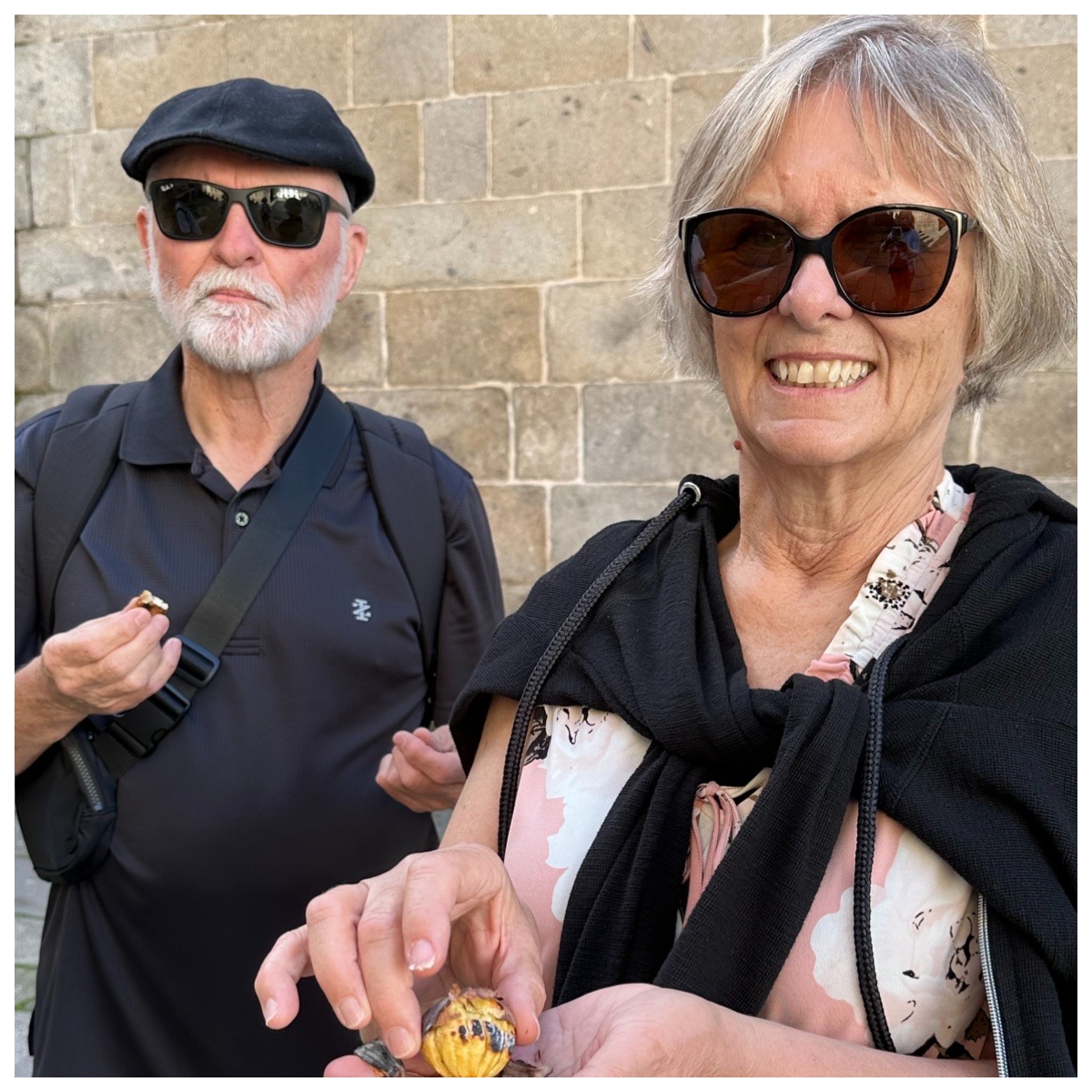
We also tried roasted chestnuts, which are sold everywhere on the streets in Portugal. We have to say that we weren’t fans.

Porto: Panoramic City

From Paris, we took a quick Vueling Air flight to Porto. A tip – we had a driver take us from our Paris Montmartre hotel to Orly Airport. For four people, this was an affordable and hassle-free choice and made the journey so much more pleasant. Arriving in Porto, it was a one train ride on their easy metro system and we were within a block of our hotel.

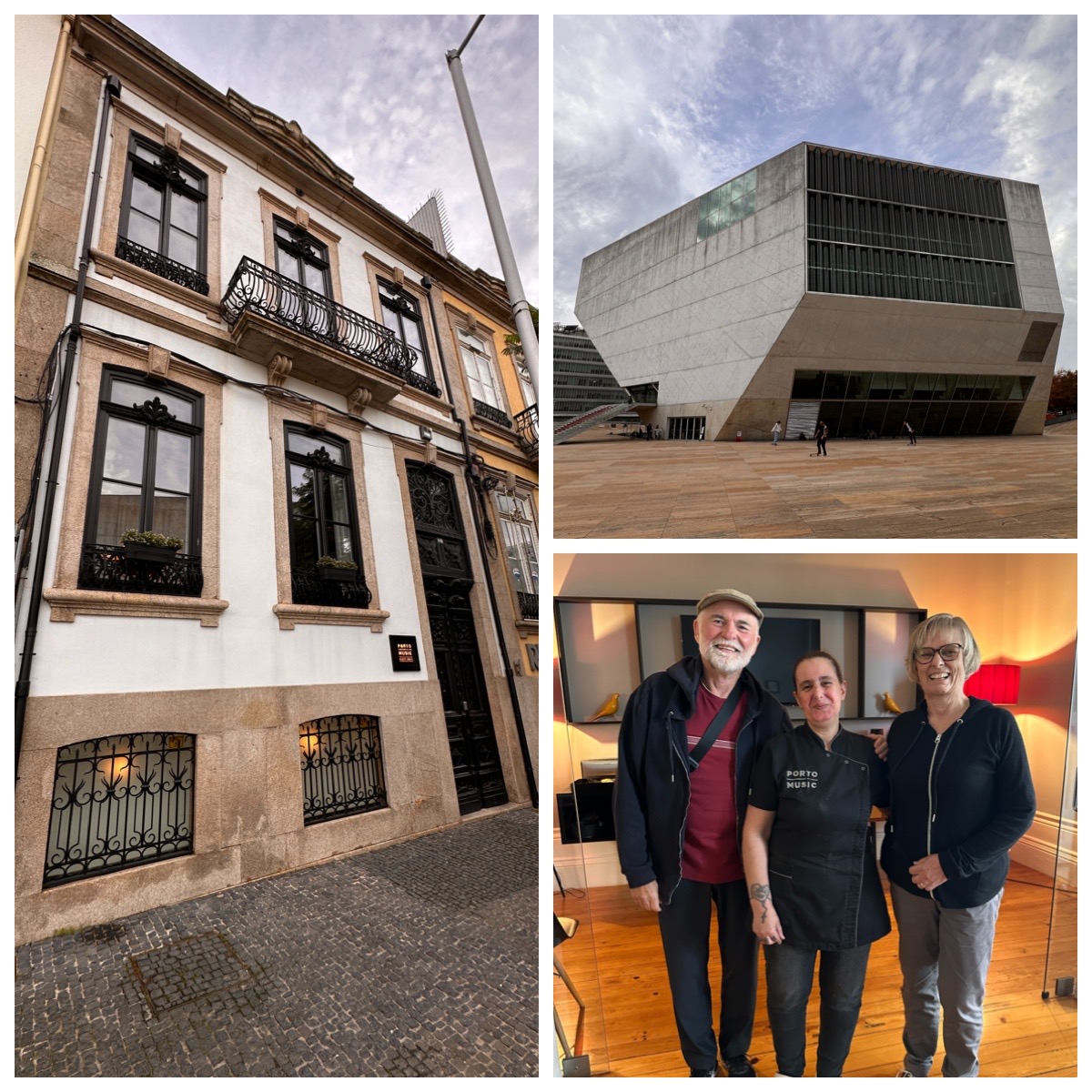
The Porto Music Guest House was a delight. With 7 rooms, the building was completely restored in 2017. It is well ran by Susanna and Antonio, and the heart of the house is Paula – always there for your every need, she is indeed a treasure! Our duplo deluxe room on the third floor was spacious, with high ceilings, spotlessly clean and well-equipped.

The guesthouse is directly across the street from the Casa da Mùsica.

Porto, like most European cities, has great squares and green spaces. We enjoyed quite a few of them!

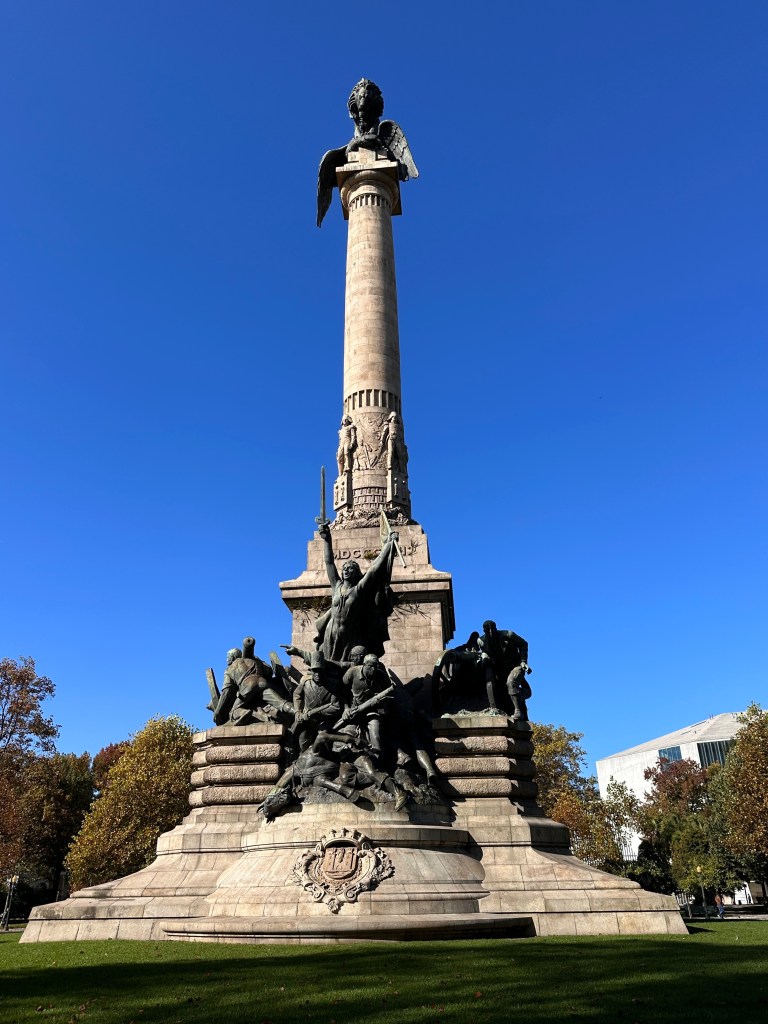
The Jardim da Rotunda da Boavista was next to our guesthouse. It is dominated by the obelisk in the centre, the Monument to the Heroes of the Peninsular War, which served as our beacon for returning to the guesthouse.

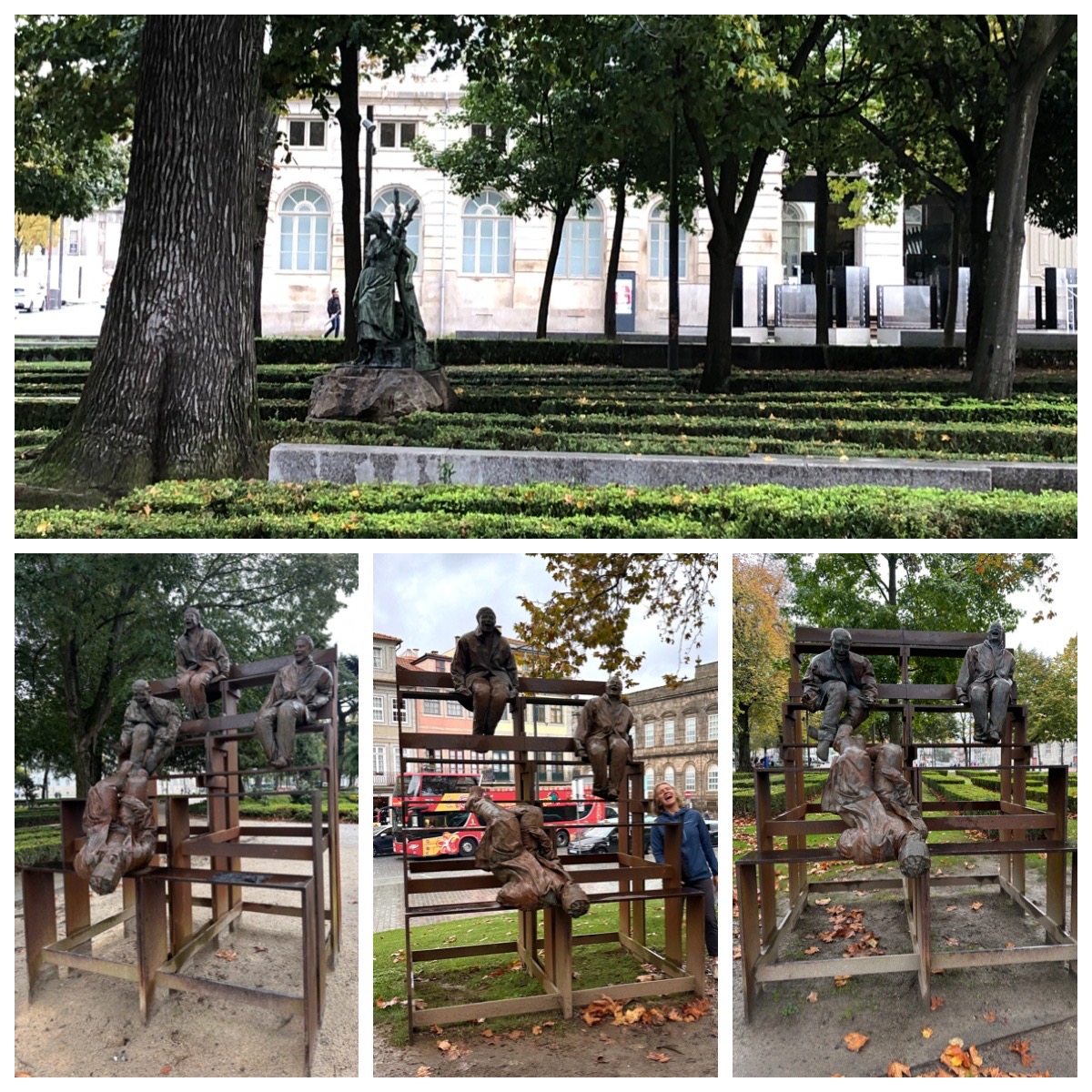
The well-manicured Jardim da Cordoraira contains the amusing ‘Thirteen Laughing Men’ statues.

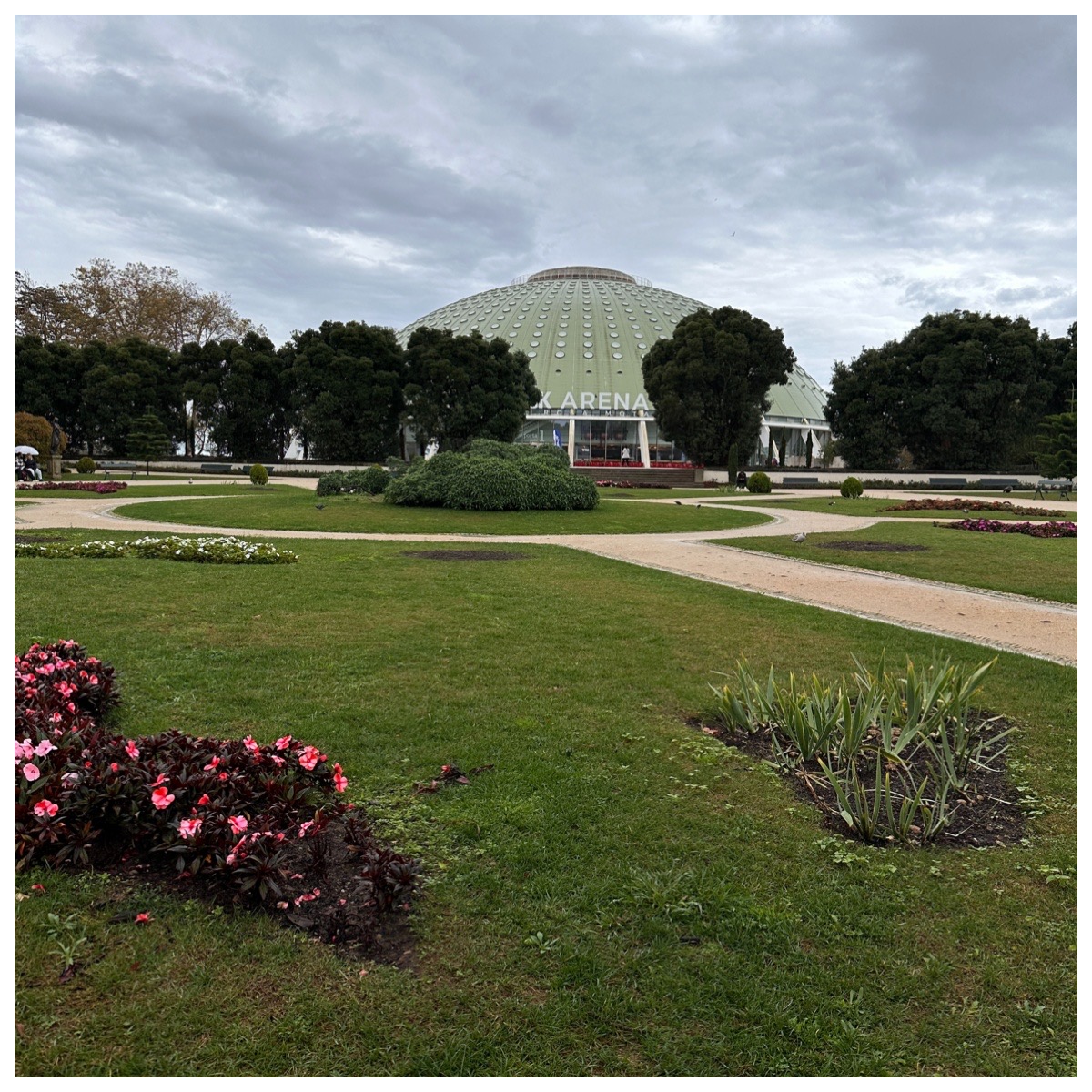
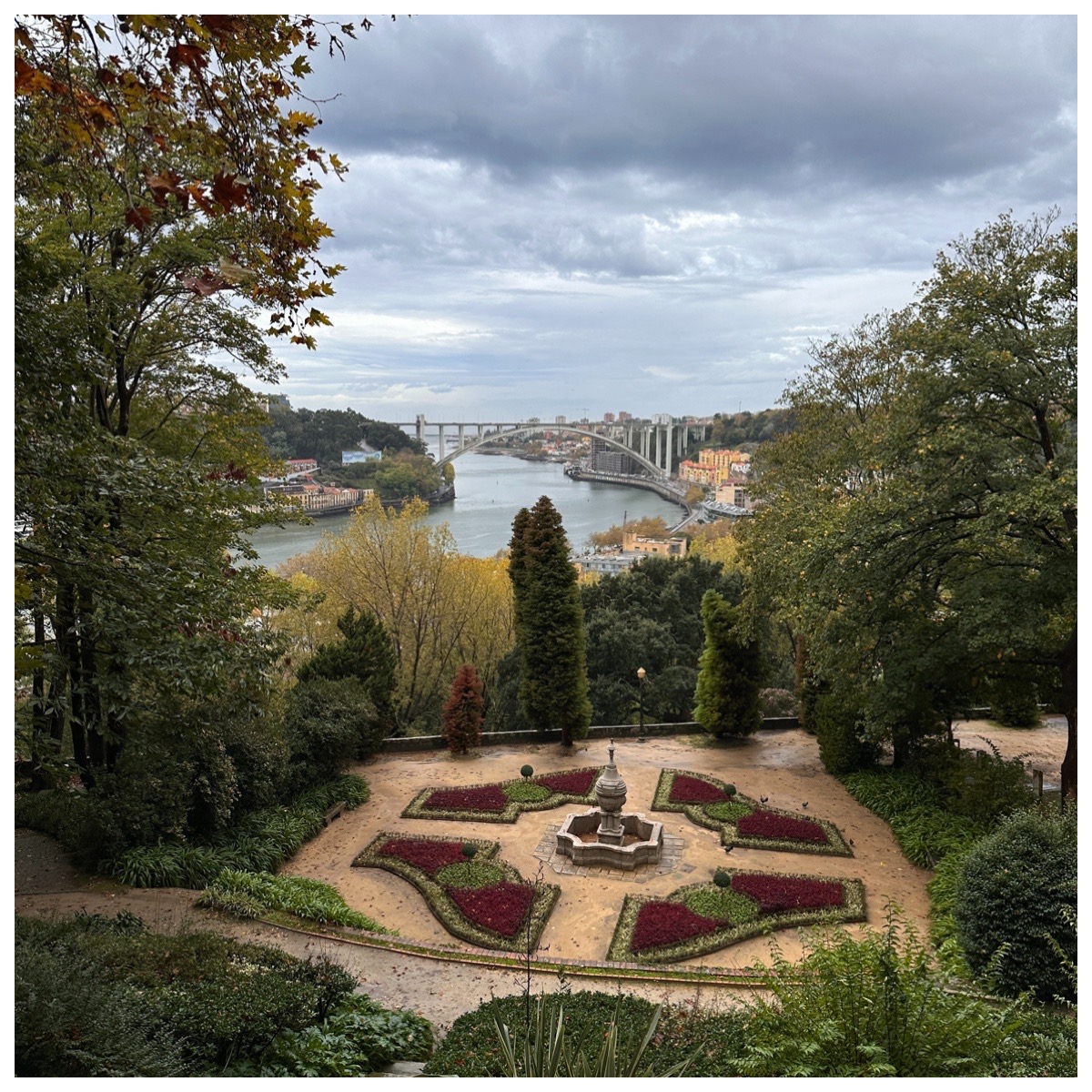
The Jardim do Palácio de Cristal is an 8 hectare garden created in the late 19th century and set on a hilltop overlooking the Douro River.

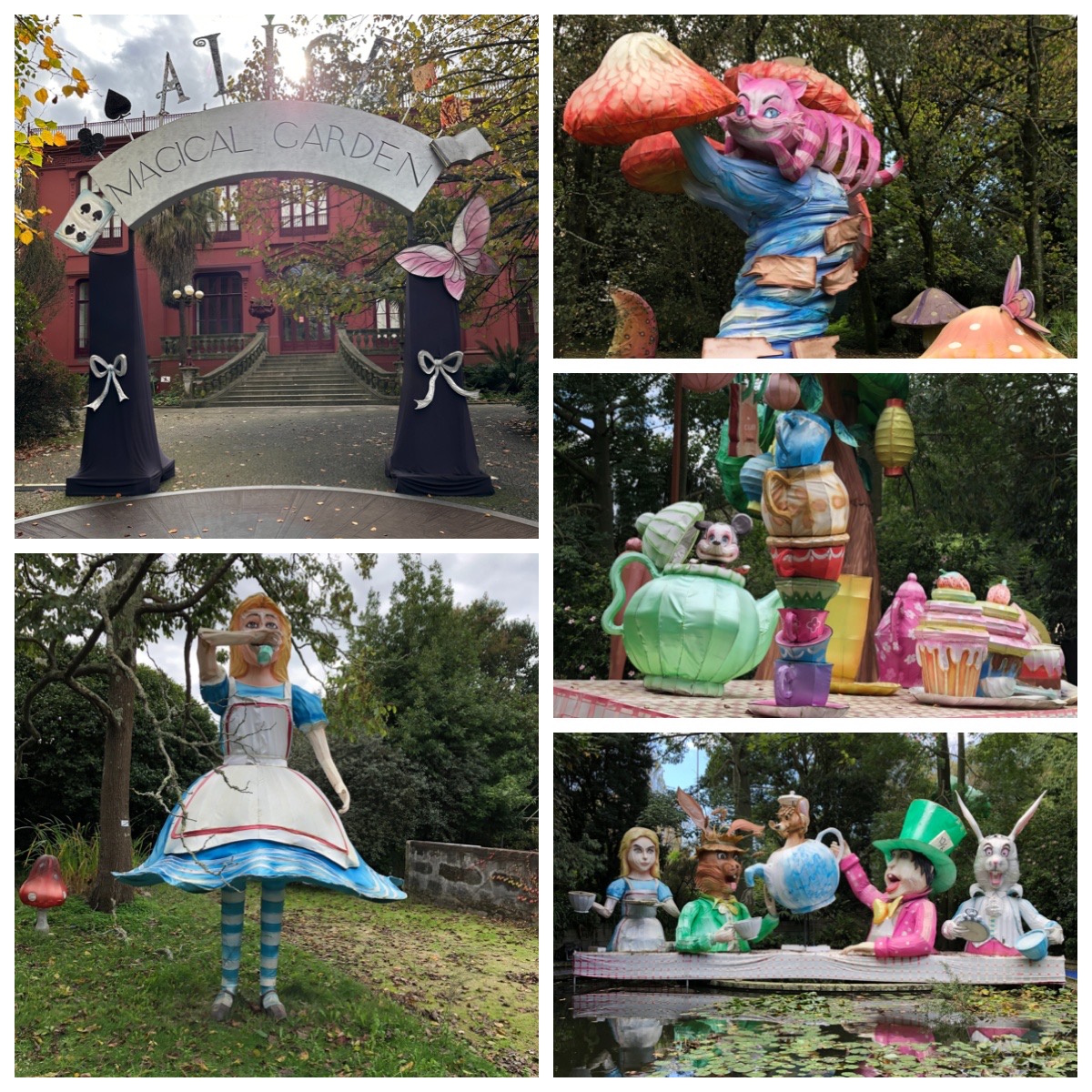
We visited the Jardim Botânico and discovered that an illuminated show had been created in the garden – the Alice Magical Garden. Although it was day and therefore not lit, it was still fun to tour the amazing display in this lovely garden.

The beautiful tiled sidewalks make every corner a wonder to view!

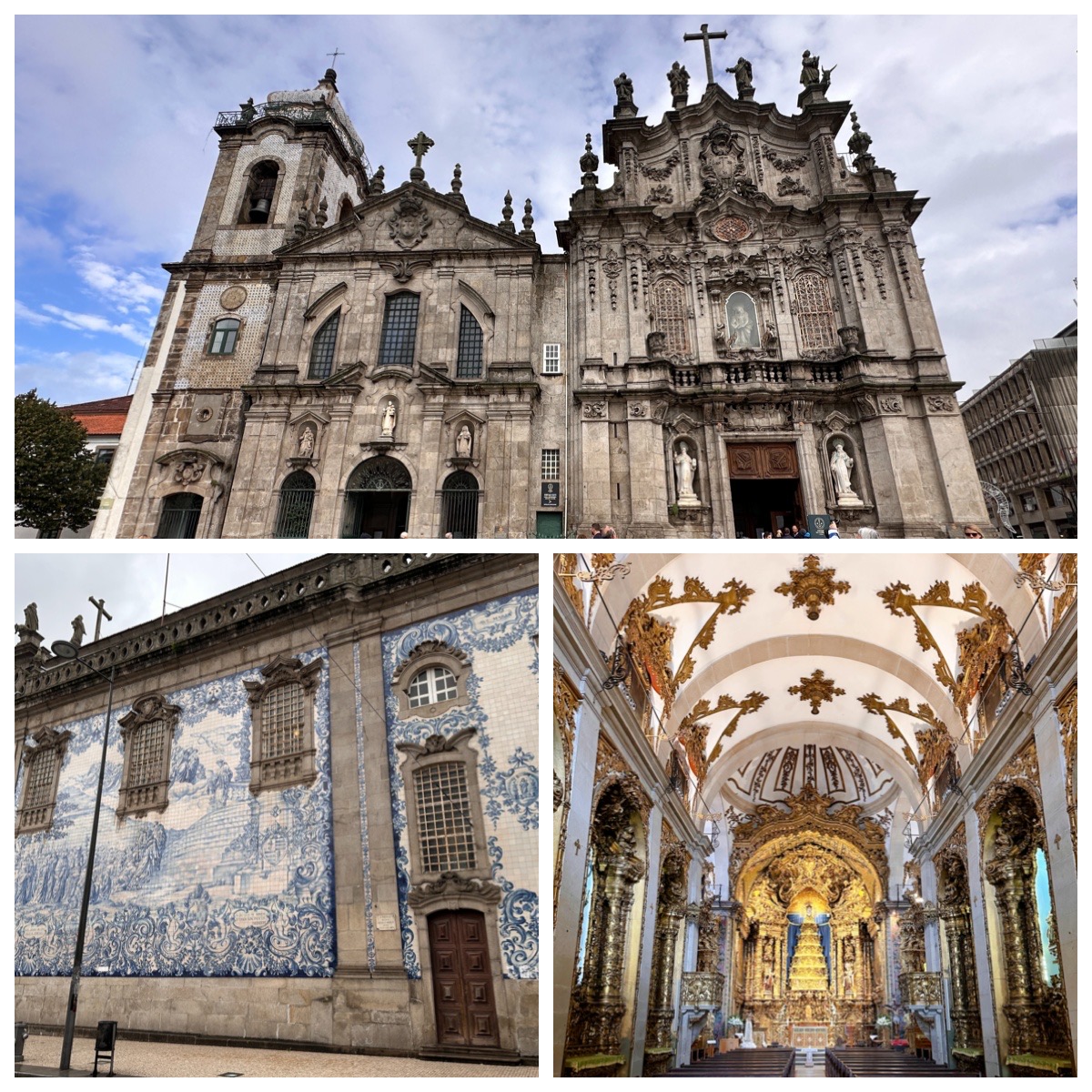
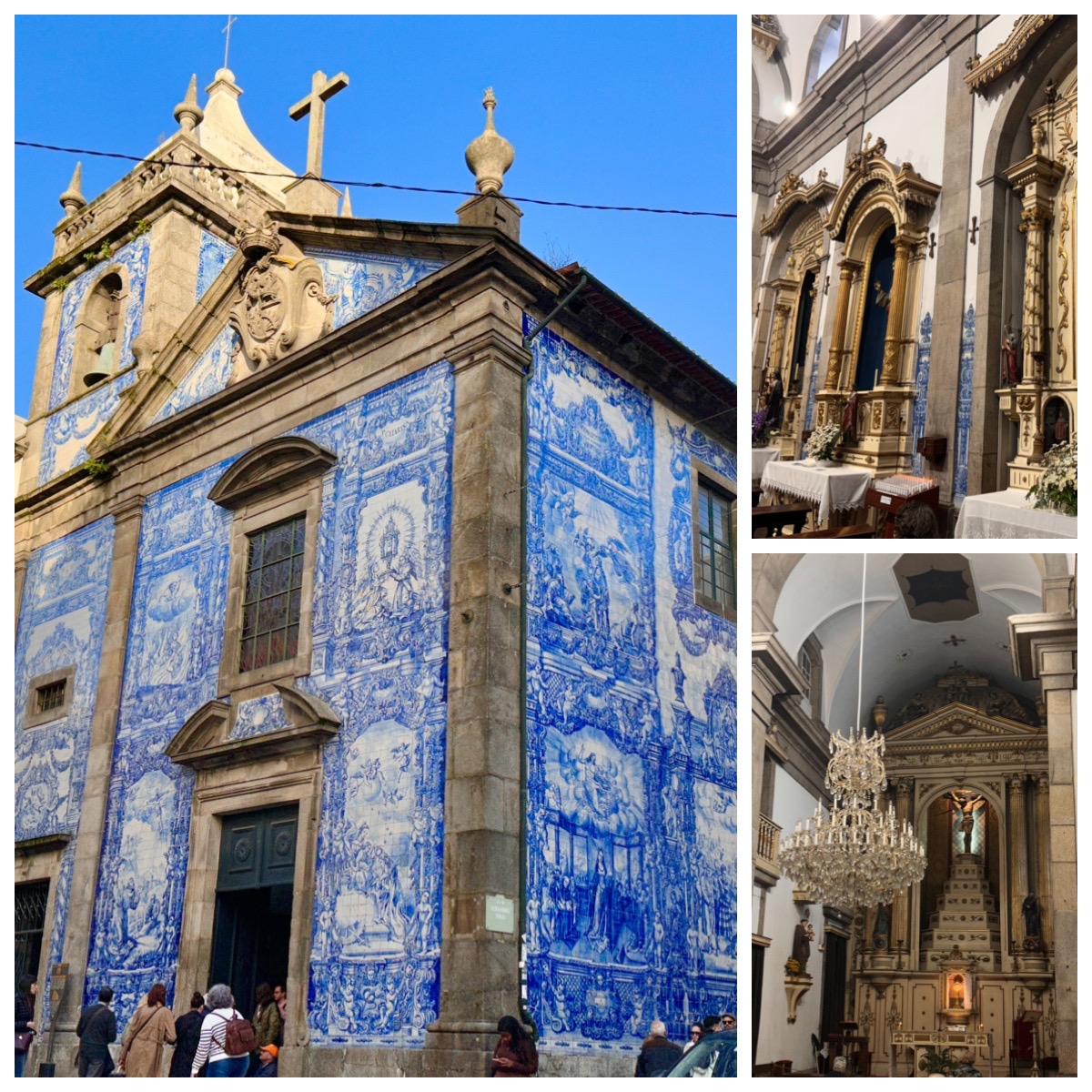
Our blog followers will know that I (Bev) am a big fan of European churches. The exteriors and interiors continue to amaze me. We found Portugal churches to be different from the Parisian churches that we visited. Whereas the French churches tended to be more spacious and airy with coloured textiles or paintings and amazing stained glass, the Portuguese churches are commonly more somber and serious, with intricate carvings and wonderful displays of gold and Portuguese tiles.

The two churches of Igreja dos Carmelitas Descalços and Igreja do Carmo sit side by side, separated by an easy to miss three foot wide house. The Carmelita church on the left was built in the 17th century for Carmelite nuns, and the Carmo Church on the right was built in the 18th century for Carmelite monks.

Legend says that the 3-storey house Casa Escondida (“Hidden House”) was built so that the two churches would not share a common wall and to prevent any relations between the nuns of Igreja dos Carmelitas and the monks of Igreja do Carmo. Or perhaps it was just constructed for purely aesthetic reasons to prevent an unsightly gap between the two churches.

The Clérigos Church and Tower were built in 1731 on a hilltop, making the tower the centre of the city’s panoramas.

The Igreja da Trindade was built in the 19th century and is one of the most imposing churches in Porto.

You can’t miss the beautifully tiled church of Santo Ildefonso.

We were in Porto on All Saint’s Day and our guest house was just around the corner from one of Porto’s largest cemeteries, Cemitério de Agramonte. Very interesting to view at any time, with its elaborate family mausoleums and numerous sculptures, the display of flowers on All Saint’s Day was awe-inspiring.

Tiles are everywhere in Porto. The São Bento Train Station with large panels of azulejo tile was completed in 1916 and it is fun to look at the many stories depicted in the tiles.

Porto is noted not only for the tiled buildings, but also for the beautiful ironwork on the balconies.

We rode one of Porto’s vintage trolleys to Foz do Douro. Foz sits where the Douro river meets the Atlantic Ocean.

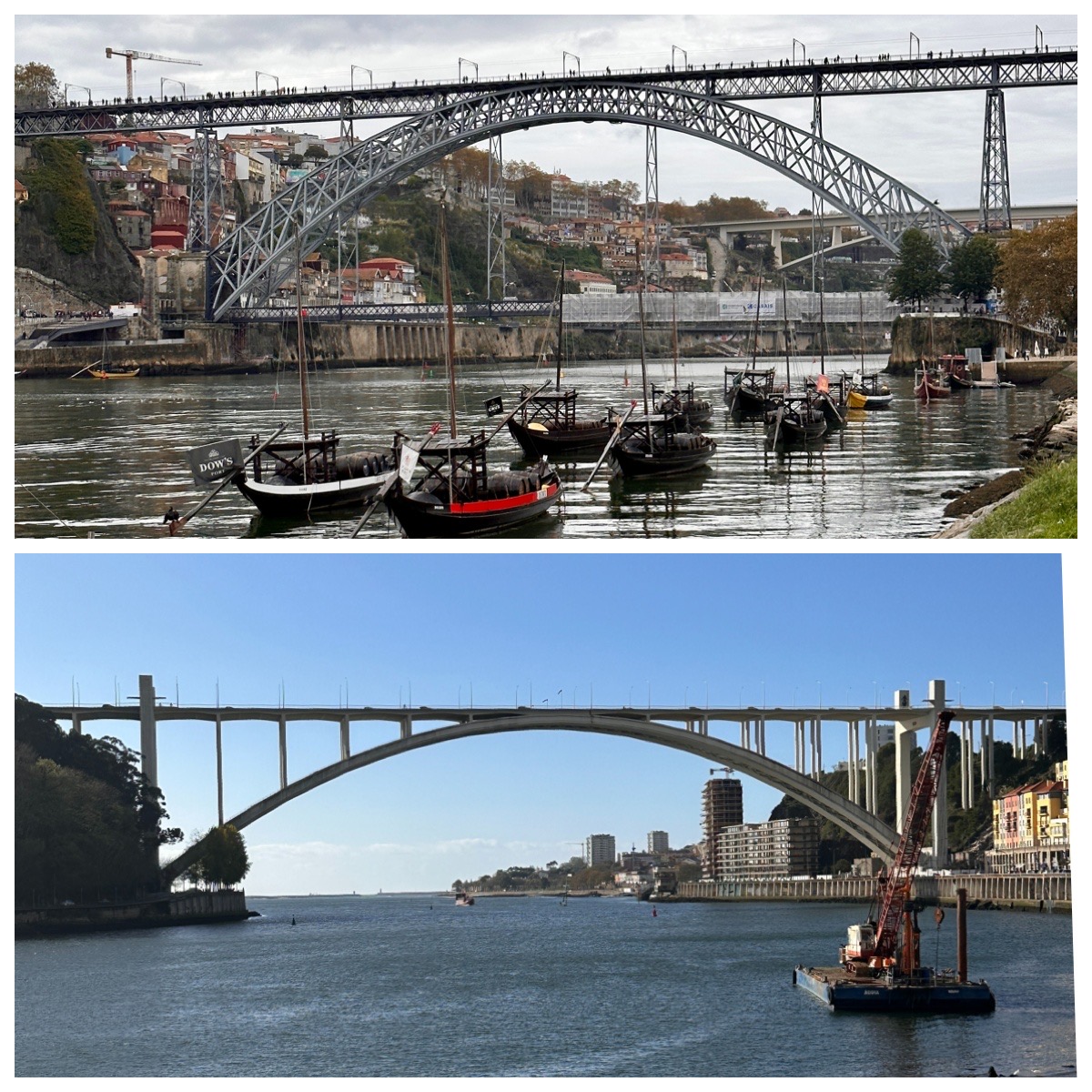
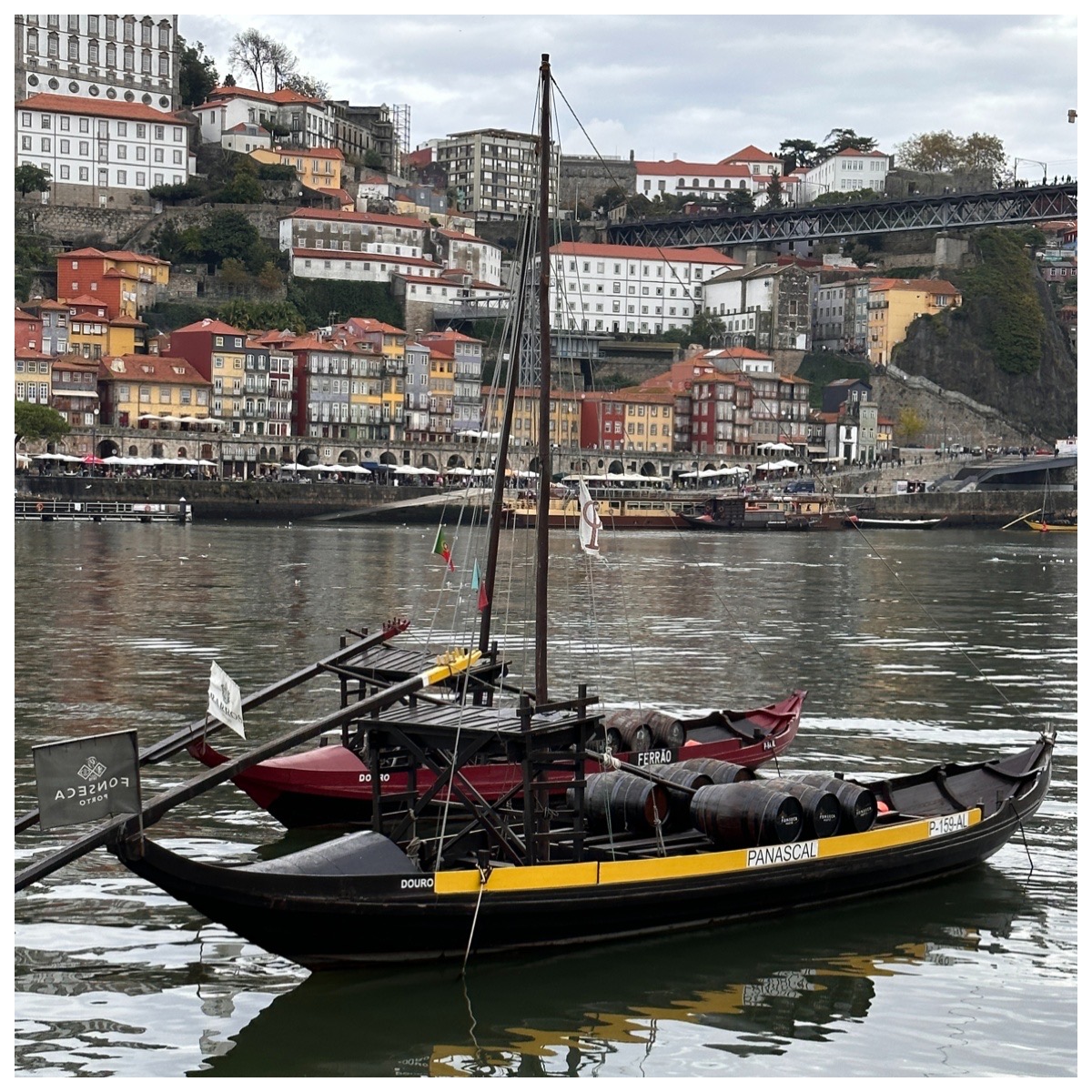
The panoramas of Porto are postcard pictures – or as our travelling companion Debbie said – these are the scenes we had on the jigsaw puzzles of our youth!

We spent 6 nights in Porto and would highly recommend a visit to this city – it will show you what Portugal is all about!

Stay tuned for blogs on a day trip we did to the historical city of Braga and a dip into the food – and port – of Porto!

Cheers,

Bev & Harvey