Leaving Delft (somewhat reluctantly), we took a 25 minute train trip to Leiden, the city that we chose for our second home base in the Netherlands. Leiden has approximately 120,000 residents, In Leiden, we stayed at the Steenhof Suites Boutique … Continue reading →
We are on our annual fall Europe trip. We spent a fun few days in London – but I will blog about that after we return there next week. From London, we took a quick British Air flight to Schipol … Continue reading →
We spent the last week of our trip to Eastern Europe in Athens, the capital city of Greece. It is believed that Athens has been inhabited for 5000 years. The ‘Golden Age’ of Athens between 480 – 400 BC was … Continue reading →
We had never heard of the city of Thessaloniki, Greece before planning this trip. We were looking for somewhere to relax for a few days between the business of Istanbul and Athens and Thessaloniki popped up. It was a great … Continue reading →
After our great time in Budapest, we journeyed to Istanbul, Turkey. To travel to Turkey, visitors must obtain a tourist visa. This is easily done on-line – be sure to go to the official Republic of Turkey website. It’s a … Continue reading →
About a week ago, we spent five days in Budapest, the capital of Hungary. This was our first time in the city and we were very impressed with it. Budapest has nearly two million people and is a sprawling metropolis, … Continue reading →
As I described in my two previous blogs, we enjoyed 10 days in Lisbon in November. I will finish off our series with some memories of a few fun other things we did and as always, some of the great food we ate.
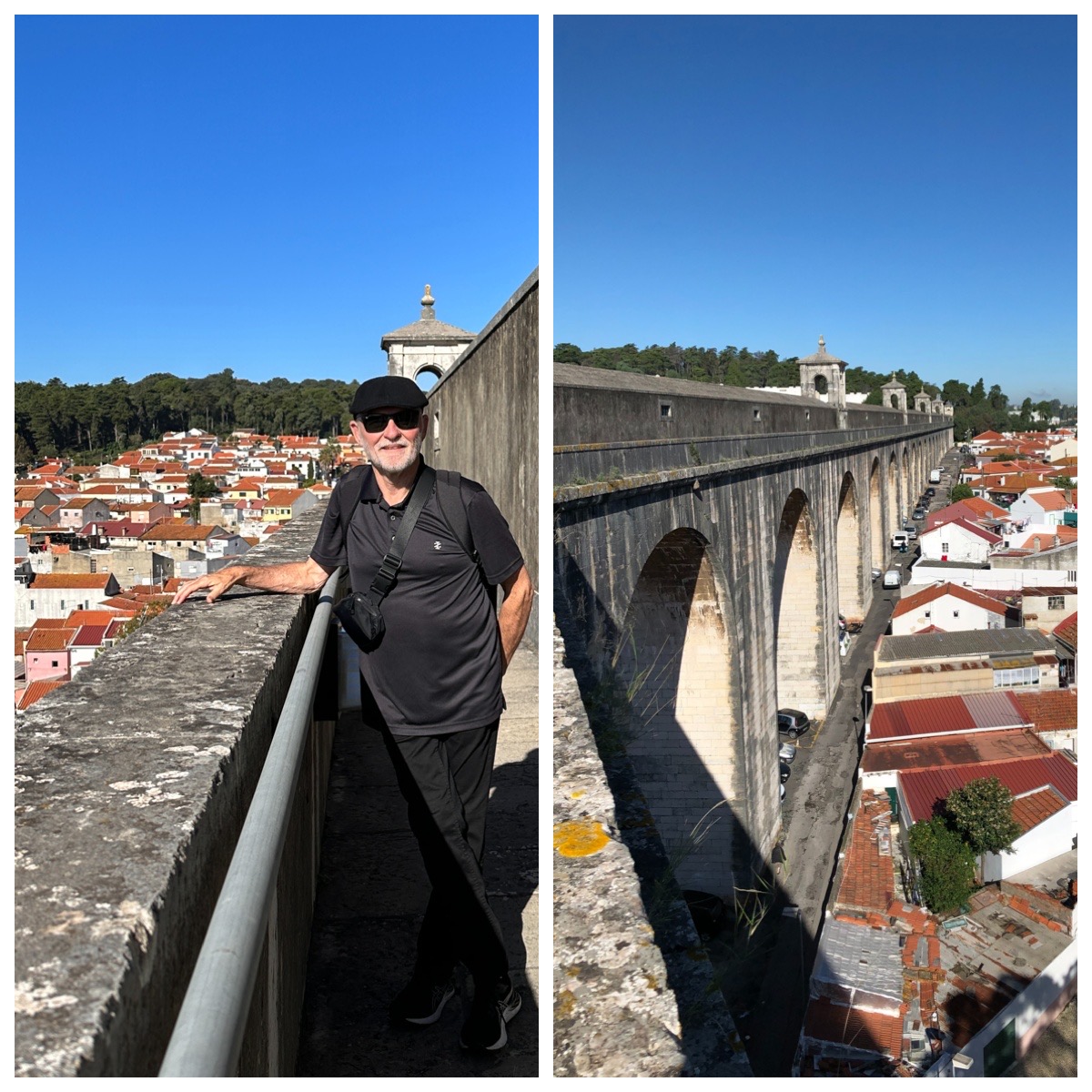
The Águas Livres (Free Waters) Aqueduct was built from 1731 to 1799 to provide clean drinking water to the city. It ran for 58 km and the 109 arches survived the Great Earthquake that destroyed practically everything else in the city. Today, you can walk over the 35 arches of the Alcântara valley, which cover a length of 941 metres. We had the aqueduct all to ourselves and enjoyed strolling the walkways on both sides.
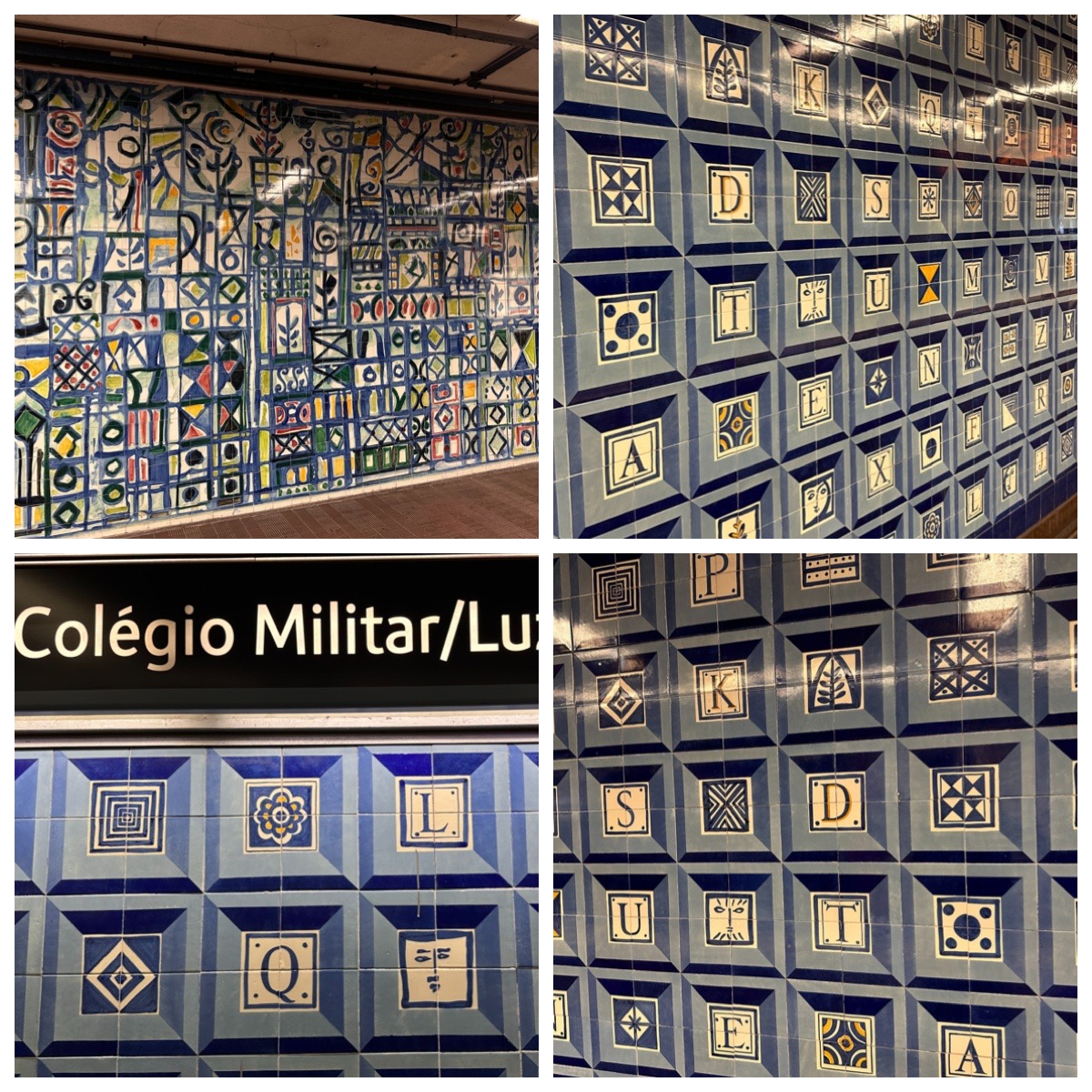
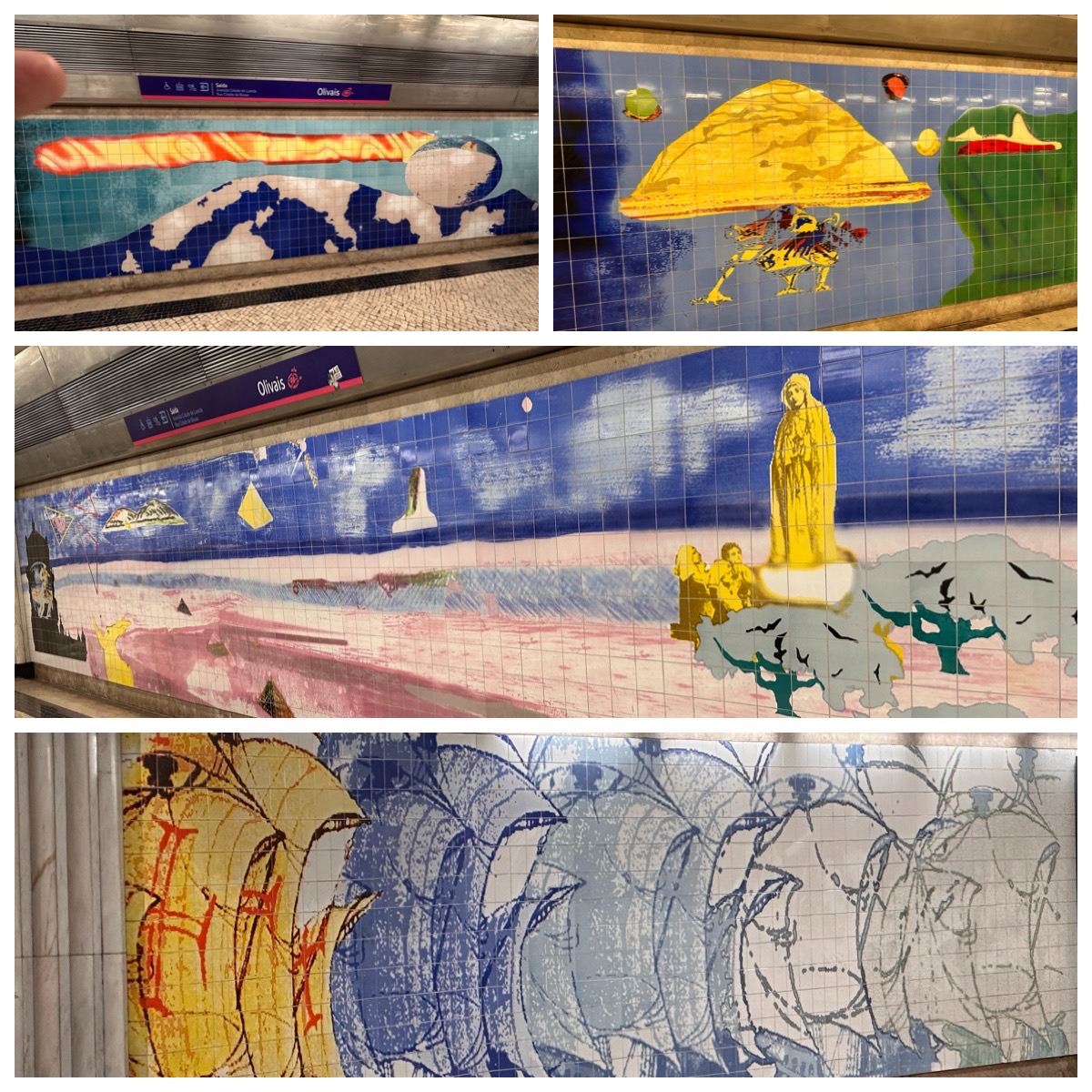
The Lisbon metro system provides a fast and easy way to travel. It consists of 4 colour-coded lines with over 50 clean and bright stations. Many of the stations are decorated with wonderful tiles and murals. We spent a rainy morning riding the metro and stopping at many of the stations to enjoy the art – a great sight-seeing excursions for the price of a couple of metro rides. Here are photos of a number of the stations.
Our ‘home’ station – Marquēs de Pombal
Parque
Jardim Zoológico
Colégio Militar / Luz
Olivais
Oriente
Martin Moniz
And the absolutely amazing Olaias station.
Lisbon operates a number of vintage trolleys that not only are used for transport, but provide a fun way to do some sightseeing. The #28 winds its way through the narrow streets of the Alfama, Baixa, Estrela and Graca neighborhoods. As well as passing by some notable sights and providing a look at workaday Lisbon, you can marvel at how the tram narrowly misses walls, buildings and other vehicles. The #28 is very popular with tourists and can be extremely crowded. We recommend going earlier in the day and catching the trolley at the beginning or end of the line (Martim Moniz or Campo Ourique). We had to wait for a couple of trolleys to fill before our turn but we found the driver only allowed enough people to fill the seats at the Martim Moniz stop. If you chose to disembark along the way, you probably wouldn’t get a seat when you hop on again. There are other trolleys that provide a look at other areas of the city. We also took trolley #15E to Belém.
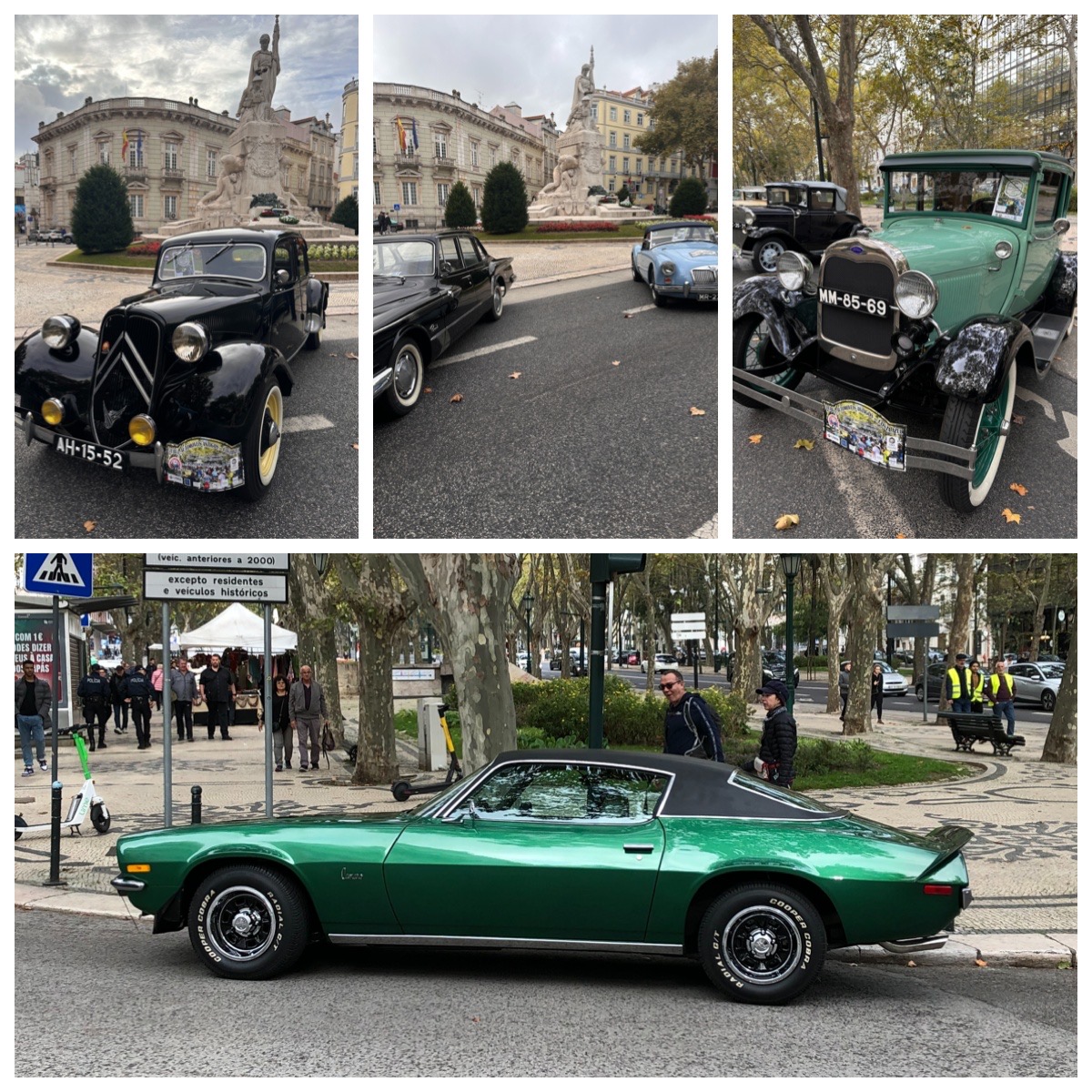
Nothing could delight Harvey more than a car show so it was very serendipitous that on a Sunday afternoon, we found the Parada de Automóveis Antigos. Over 150 vintage automobiles lined the Avenida da Liberdade – we were very impressed with the display, each car was in pristine condition.
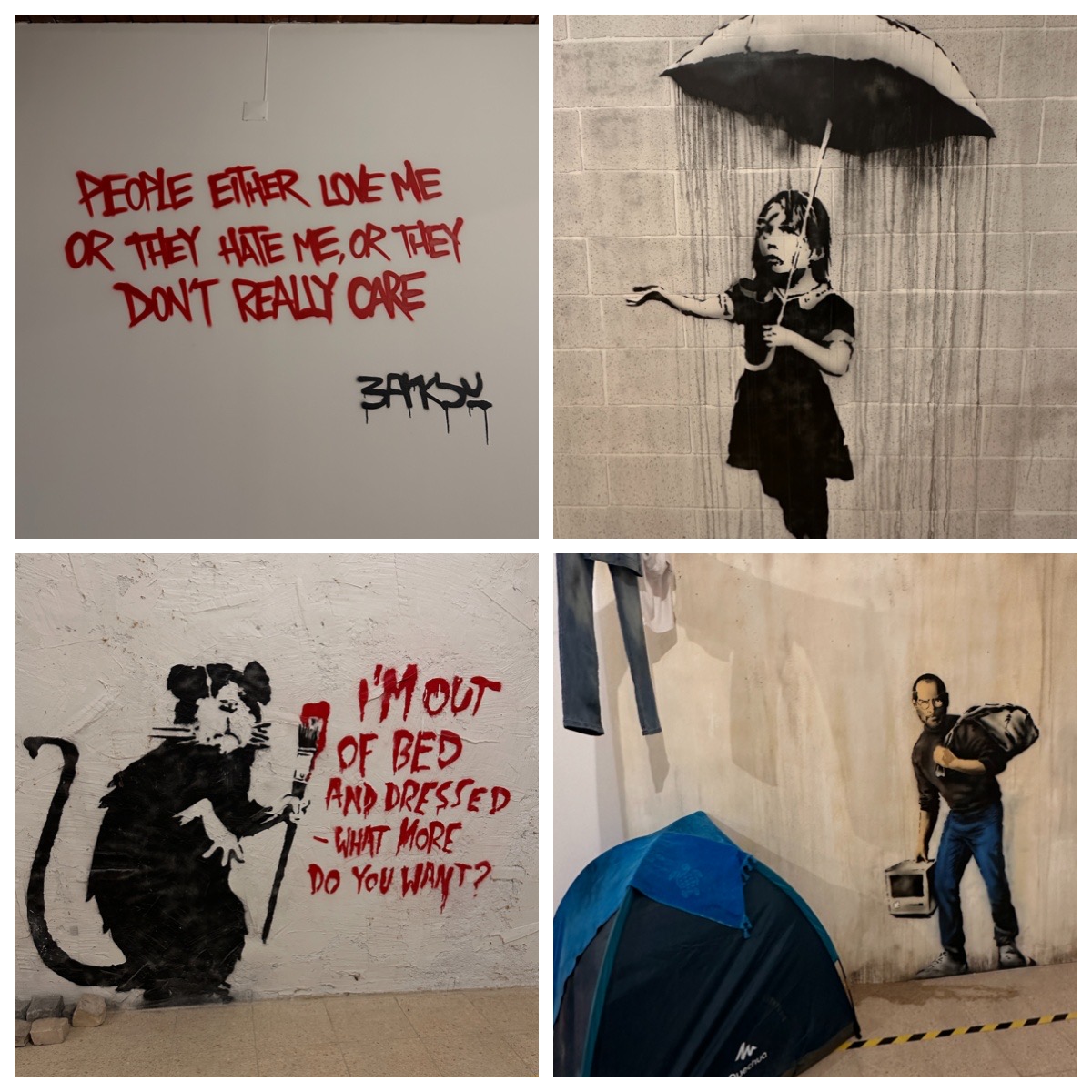
Our blog followers will know that we aren’t art aficionados and unlike many European travellers, we do not visit a lot of the great museums that abound on the continent. We did however come across an interesting exhibit that we thoroughly enjoyed. The World of Banksy presents recreations of over 100 artworks of the elusive street artist, with descriptive plaques that discuss the significance of each piece.
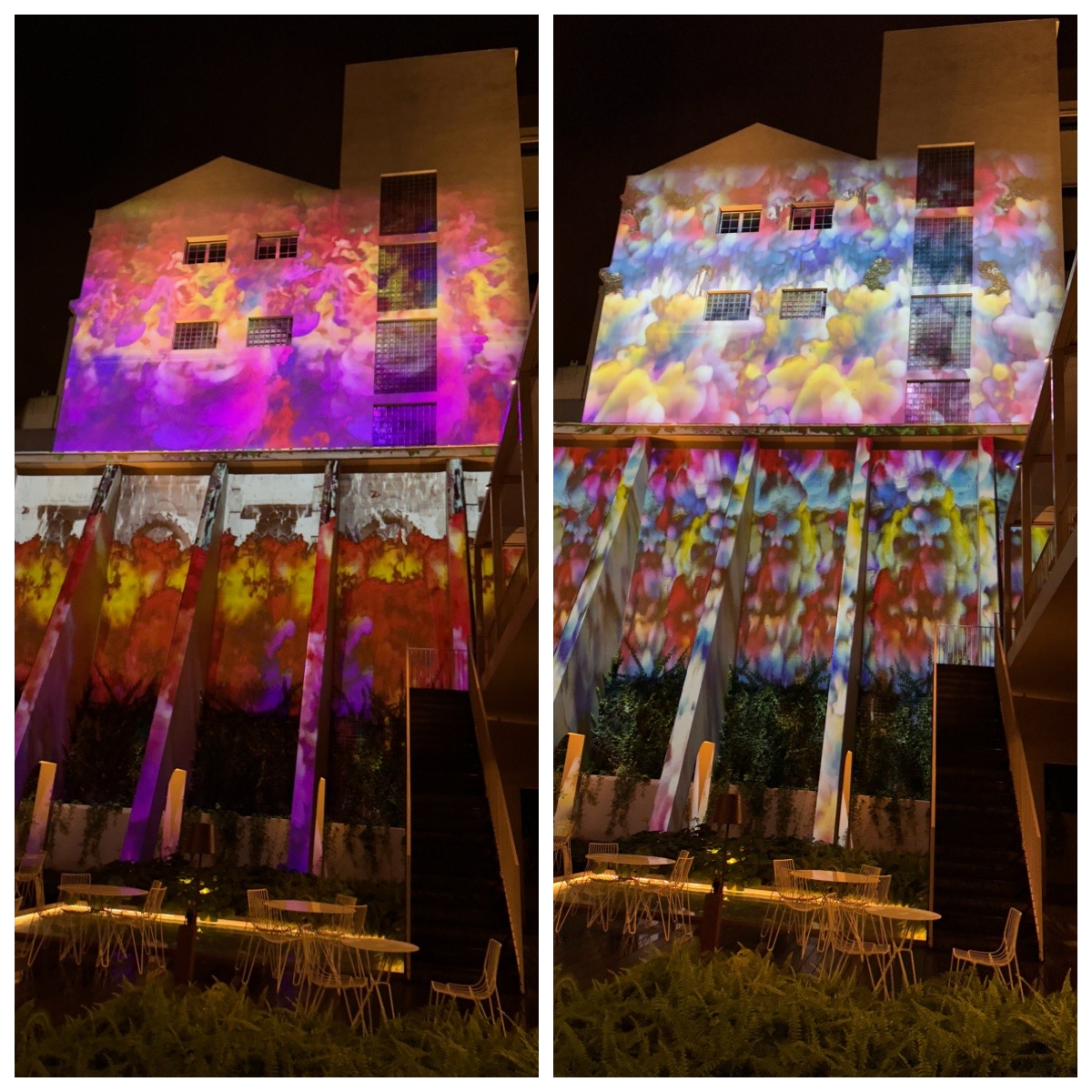
Each evening, our hotel – The Lumen Hotel – presents a display of light, colour and music in the interior courtyard. We managed to stay awake until 10 pm to enjoy it one evening.
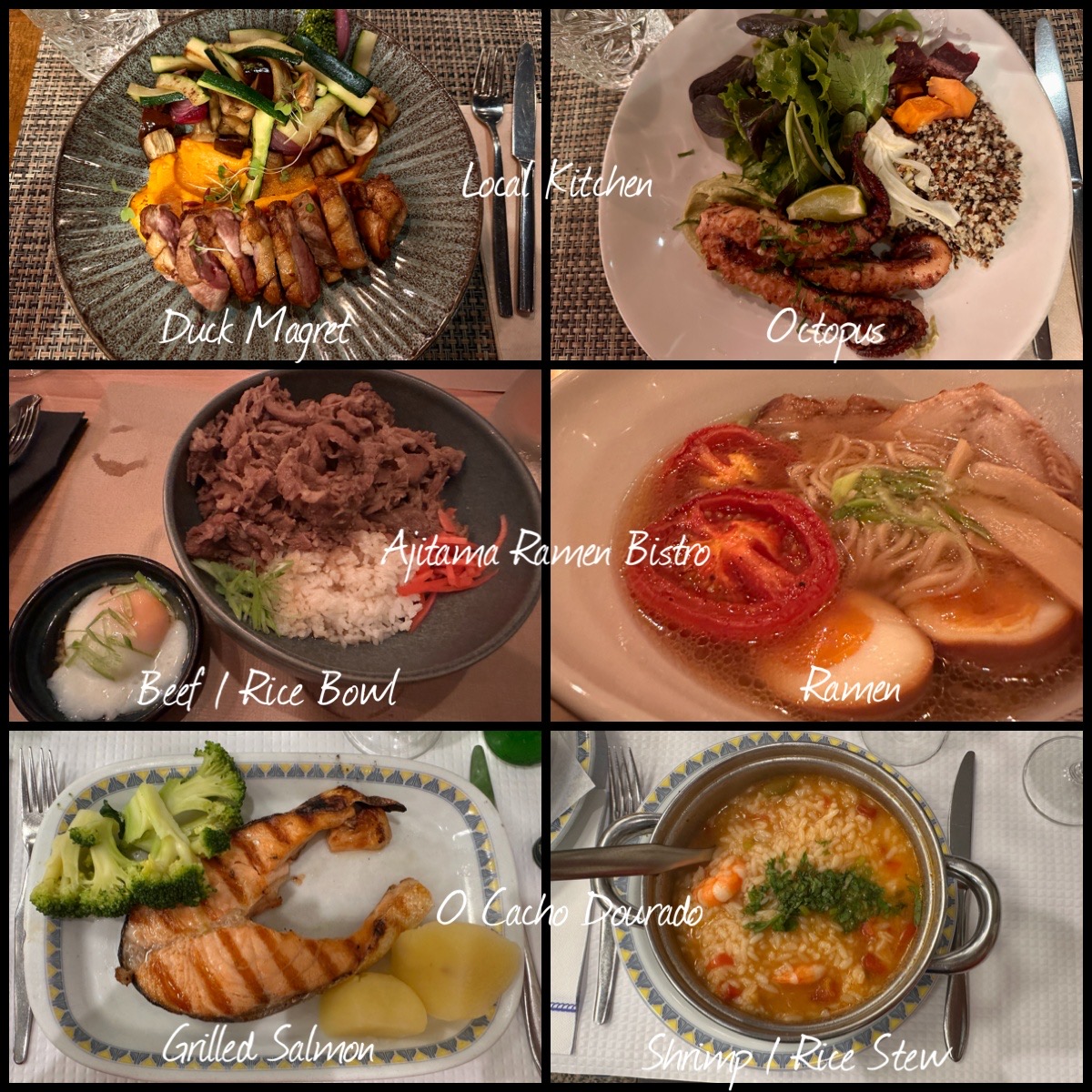
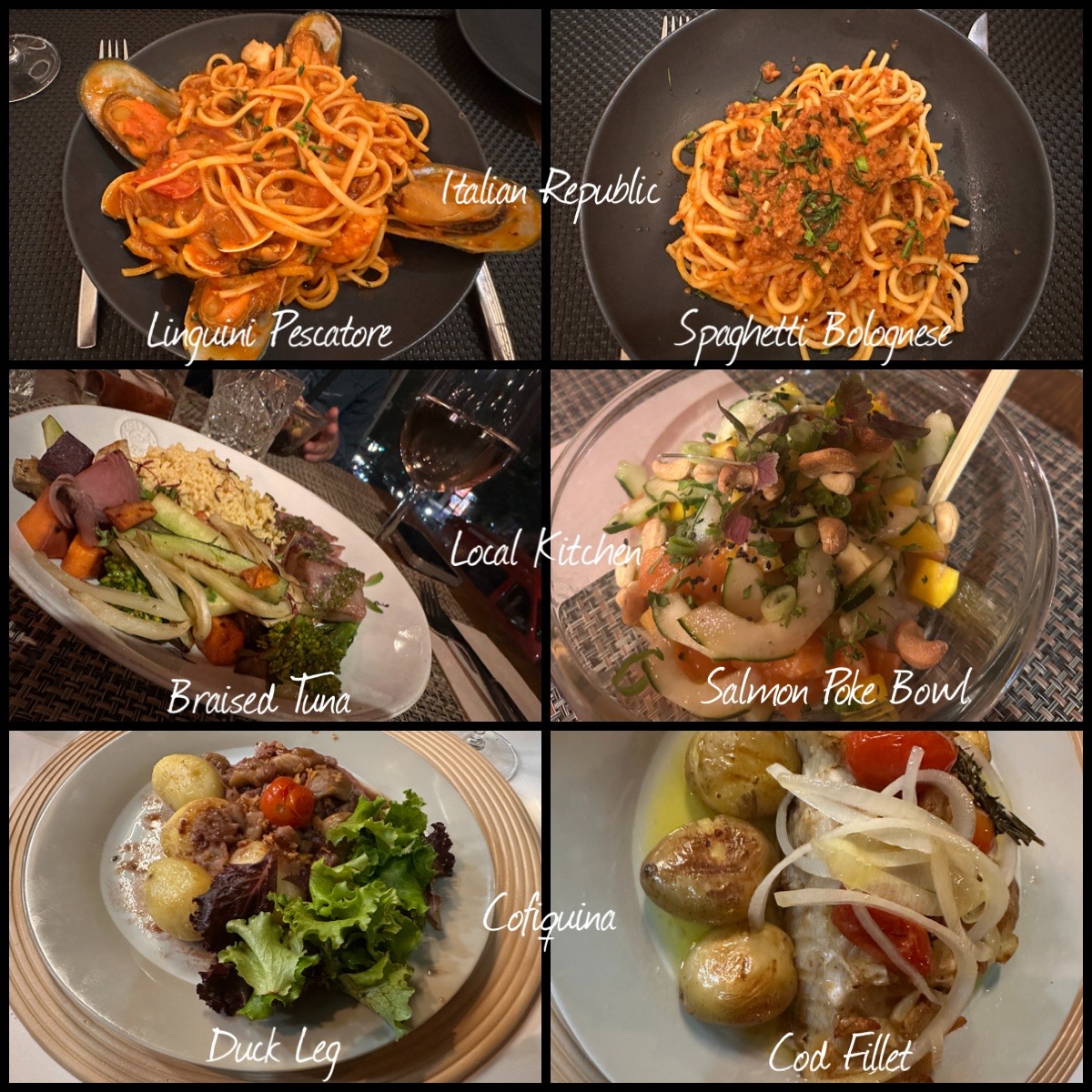
As always, we would like to give you a peek at some of the great food that we enjoyed while in Lisbon.
Among Portugal’s thousand recipes for codfish, the Pastéis de Bacalhau are a typical Portuguese dish made of potato puree, onion, parsley and steamed codfish amassed together in a ball and linked with eggs and milk, and then deep-fried. We enjoyed one for a snack on the street.
Never fear, we didn’t miss the pastries – here are just few!
And a beverage here and there!
That’s a wrap for our 2022 travels! Thanks for reading and we hope you enjoyed sharing in some of our memories. Stay tuned for more adventures in 2023!
In November, we finished our Portugal trip with ten great days in Lisbon. We travelled by train from Coimbra – and although the departure was 3 hours late, the rest of the journey to the Oriente train station went smoothly. … Continue reading →
In November, we spent 10 days in Lisbon. Before I talk about this grand city, I would like to highlight two day trips we took to Sintra.
Sintra is located just 15 miles outside of Lisbon and makes a great day trip. It’s very easy to get there – we took the metro to the last stop on the blue line – the Reboleira station. From there, we hopped on the train to Sintra – for a mere €2.30 on our Lisbon Viva Viagem card, we arrived in Sintra 30 minutes later. We went fairly early in the day as recommended to beat the crowds. When we exited the train arrival area, we were met by a wall of tour operators and tuk-tuk drivers wanting us to tour with them.
On our first trip to Sintra, our first plan was to visit the Palácio de Pena (Pena Palace). To get there, we bypassed all of those hawking their means of travel and went down the street to our right to the taxi line-up. There, we found a driver in his taxi who agreed to take the 4 of us to the main entrance for €10. At the main entrance, you purchase your ticket. You can also choose to purchase a ticket for the shuttle bus to take you up to the palace gate. We chose to take the 10 minute walk, which is uphill but not overly strenuous.
The tickets have a timed entry that you must adhere to. For us, as we waited for in line for our entry time, there was a medical emergency that resulted in an ambulance arrival and delayed our entry. It was interesting to see how they could maneuver the vehicle up the hill and through the crowds and we hope that the individual was not seriously ill.
The palace was commissioned by the flamboyant Ferdinand II and was completed in 1854. It is a colourful mix of Gothic towers, Renaissance domes, Moorish minarets and Manueline carvings. As you wander around the exterior and the courtyards, it’s a wonder to behold.
The interior of the palace contains many impressive and well-preserved staterooms as well as an amazing kitchen filled with polished brass vessels.
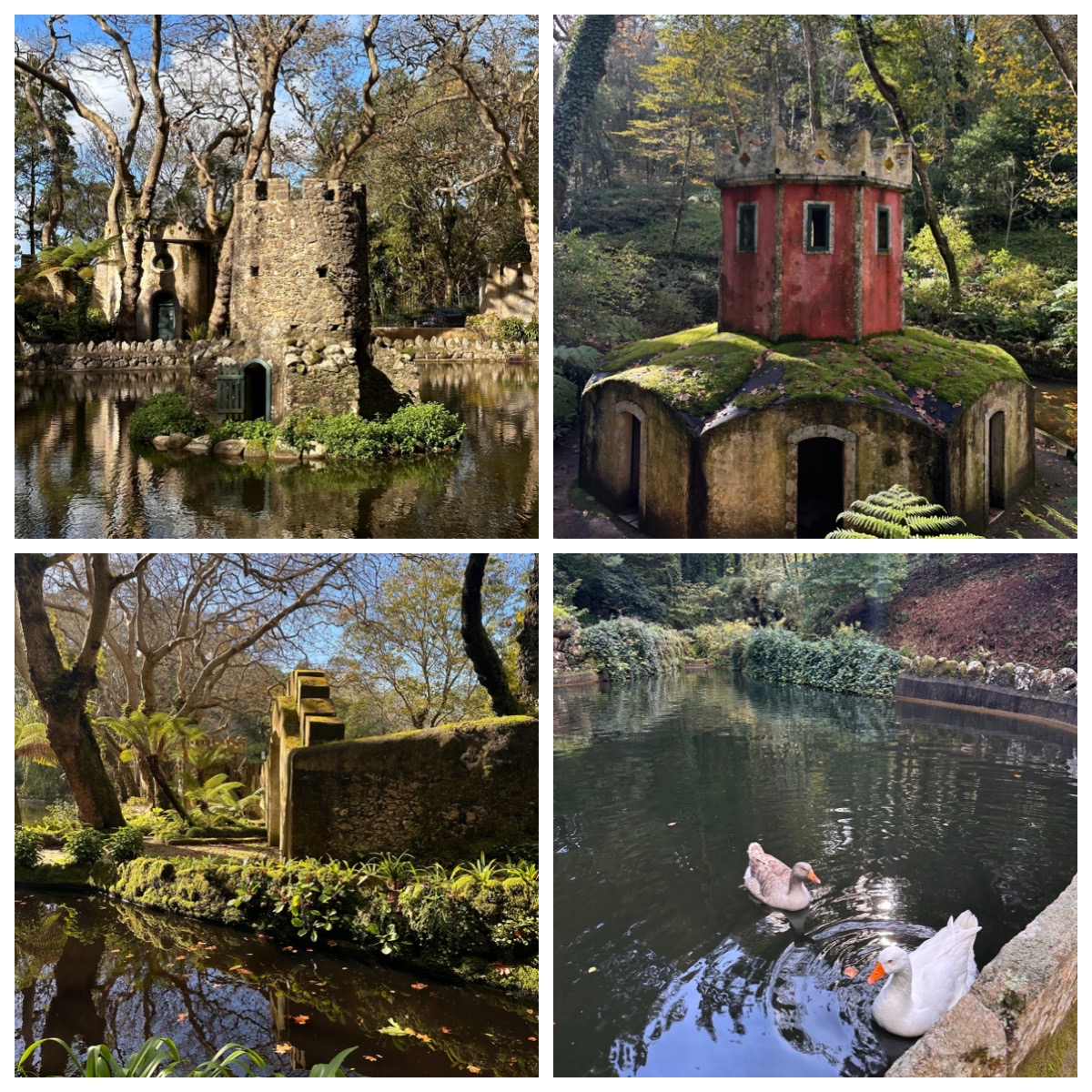
The park around the palace is lush and dotted with various structures. We strolled down from the castle to the lower park entrance, where you can wander by the five lakes connected by small waterfalls and arranged along a lush and gentle valley. Rising out of the water of the lakes there are two duck houses designed as shelters for waterfowl.
From this spot you can choose to take a taxi or tuk-tuk down to Sintra. We however read in our Rick Steves guidebook that there was an ‘appealing’ 45 minute trail down and thought that sounded delightful. It first passes below the thousand year-old ruins of a Moorish Castle – this is billed as a great place to visit but we chose to miss it on this trip. The path was becoming steeper with rough stairs as we descended. We were then to enter the grounds of the Vila Sassetti, where we could pass through the garden into Sintra. Alas, the gates were locked. I was not about to go back up the steep trail so we looked downhill. Another locked gate, but Debbie explored and found where a hole had been cut in the fence. We crawled through and continued down what was quite a challenge for me but I managed to remain upright!
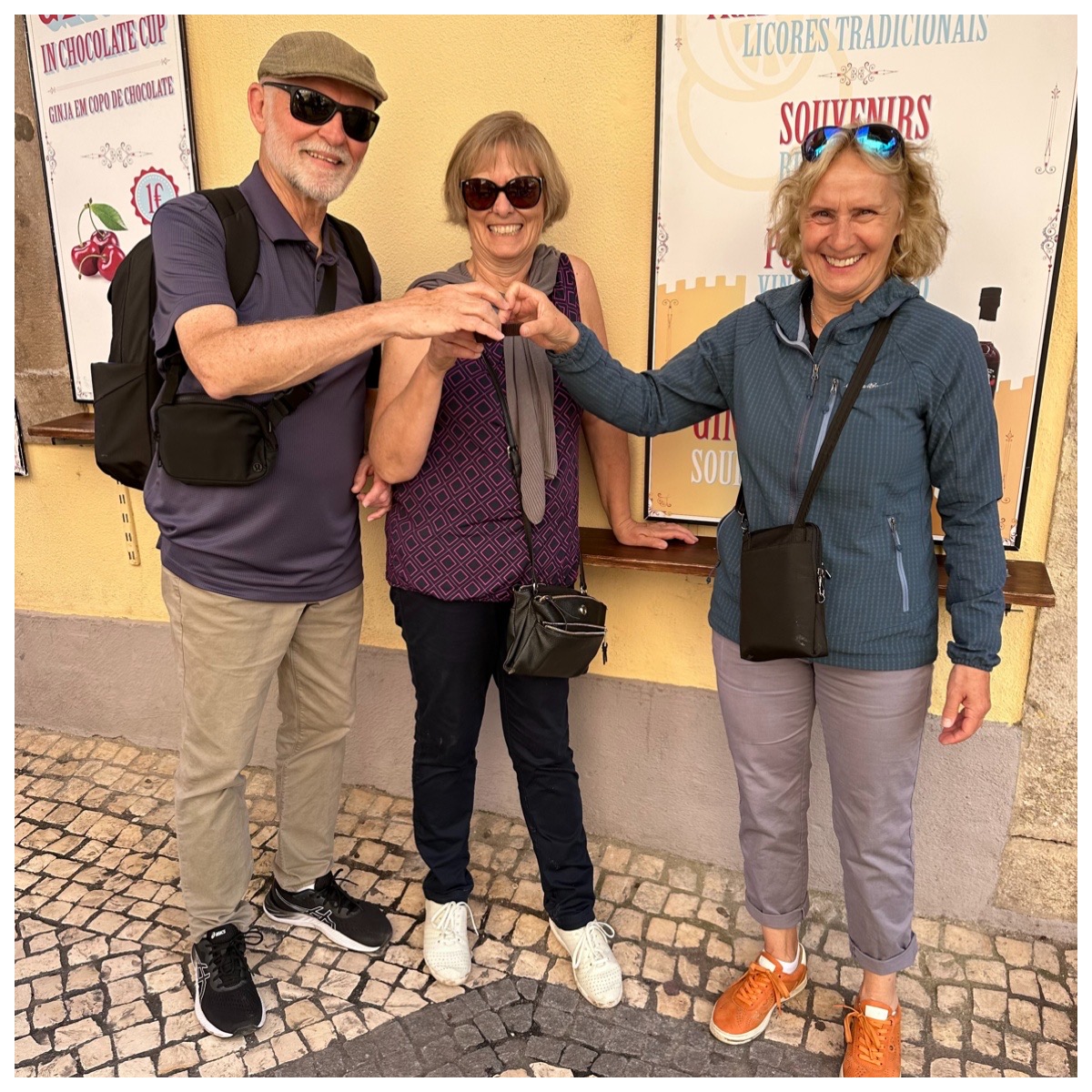
After this adventure, we were happy to see a small Ginja stand where we enjoyed a bit of sustenance!
Which was followed by a refreshing port tonic – this one with lemon rather than the orange we had encountered in Porto – equally delicious!
The Pena Palace visit took up most of the day so we decided to return to Lisbon and come back to Sintra on another day to see more of the sights.
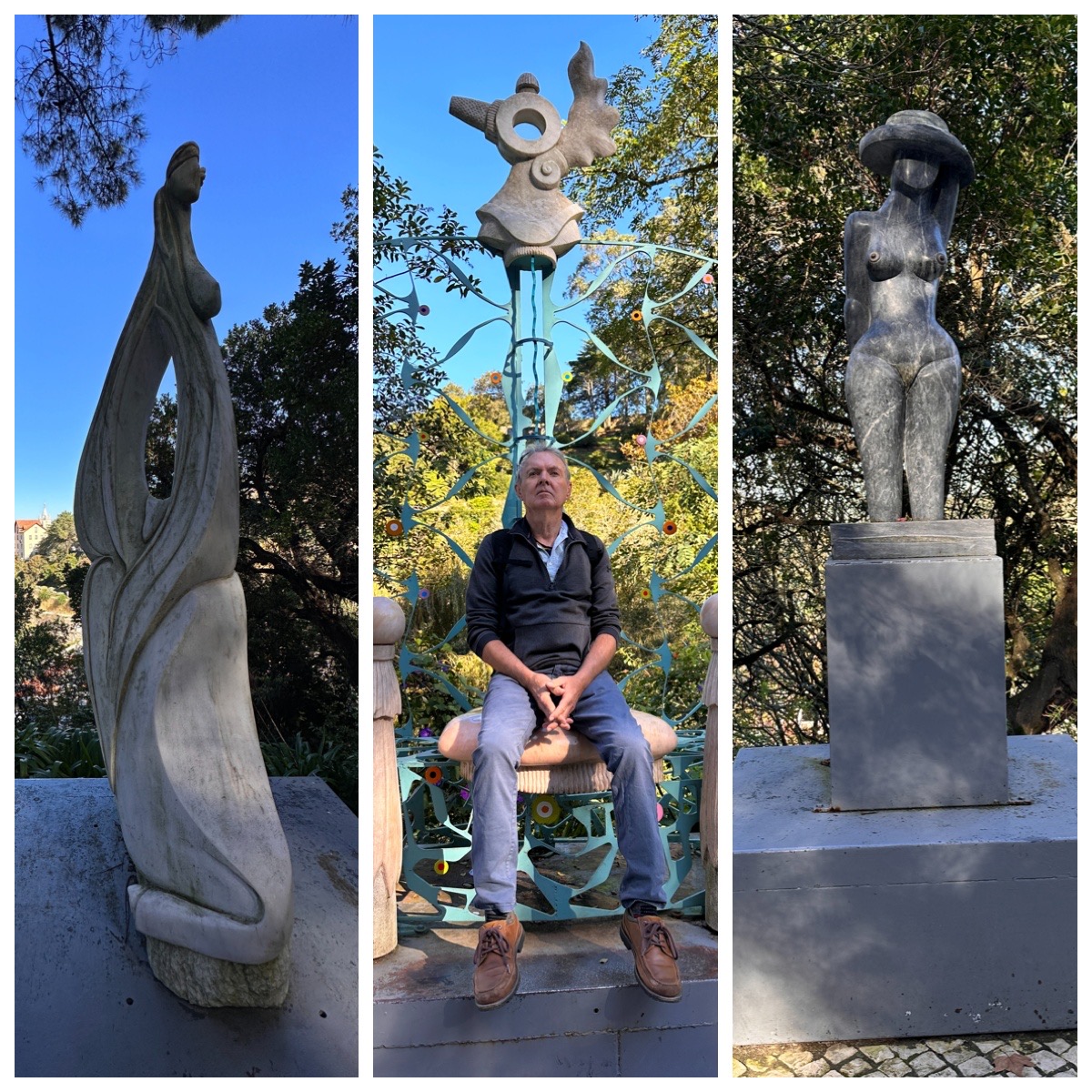
Sintra is small, sprawling at the foot of the hill where the Pena Palace and Moorish Castle dominate the top. The town is an easy 10 minute walk from the train station and you pass by some great sculptures as you stroll along.
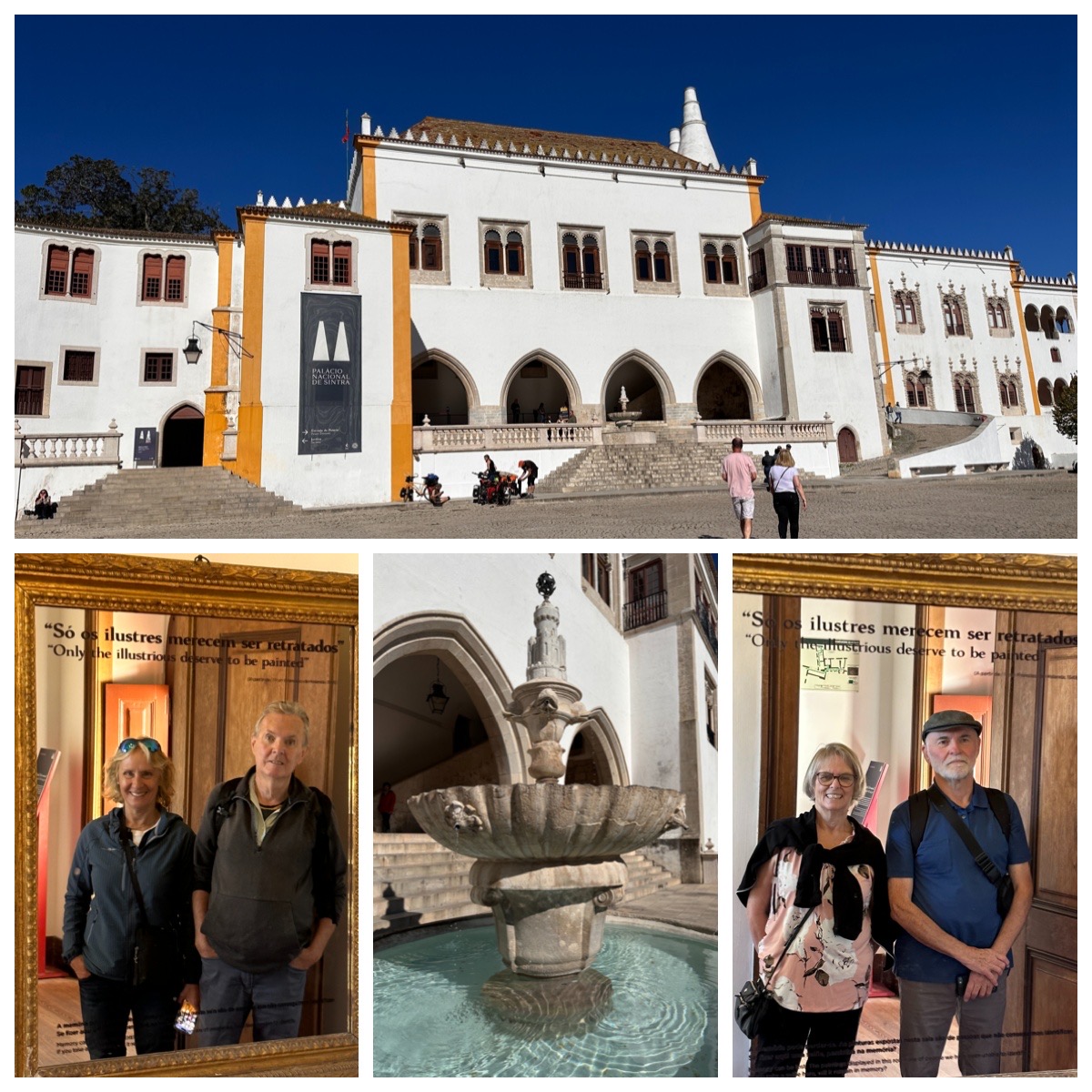
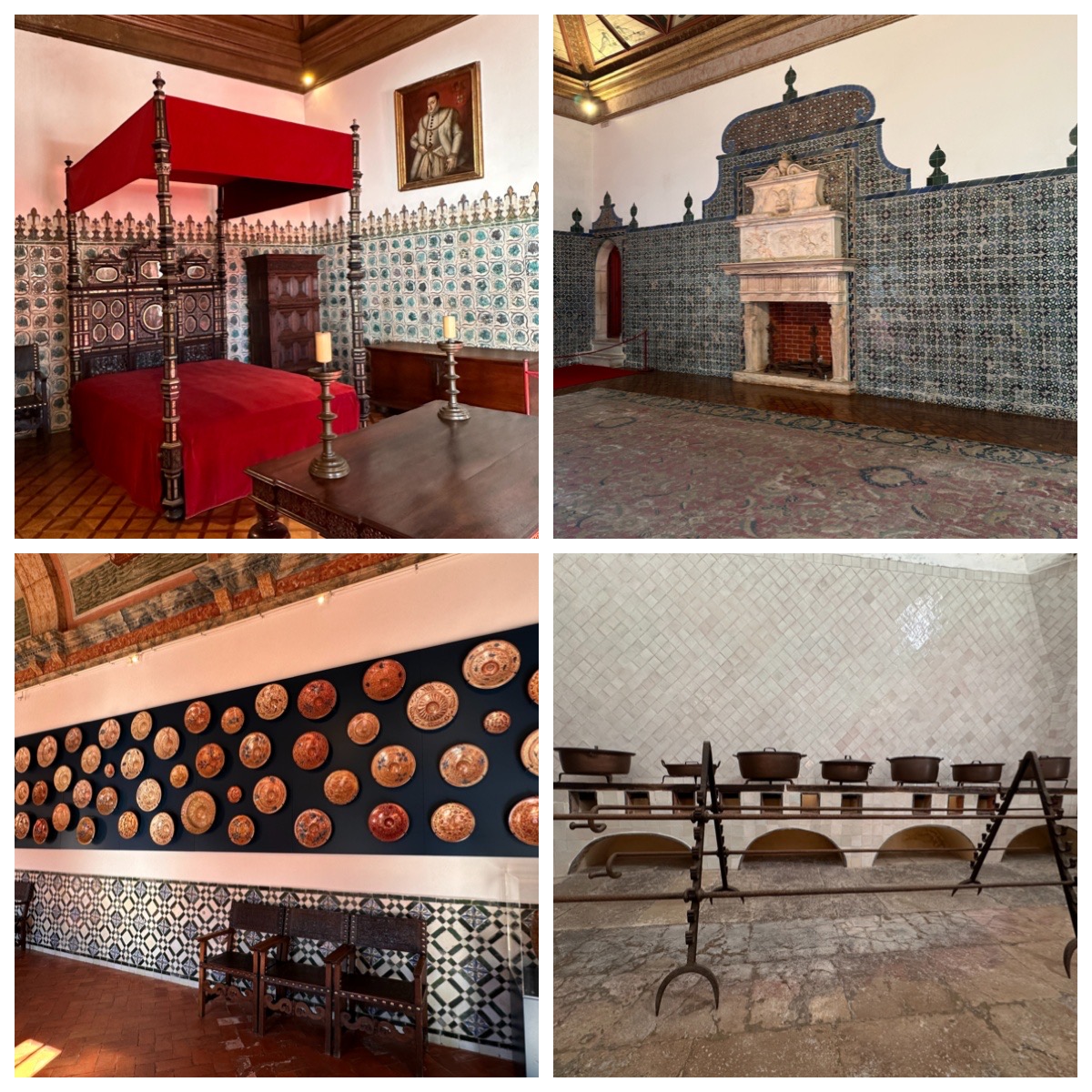
The Palácio Nacional (National Palace) dates to the 15th and 16th centuries, and housed royalty until 1910. It is the oldest surviving royal palace in Portugal and is still used for official receptions. The interior is sumptuous and a delight to visit.
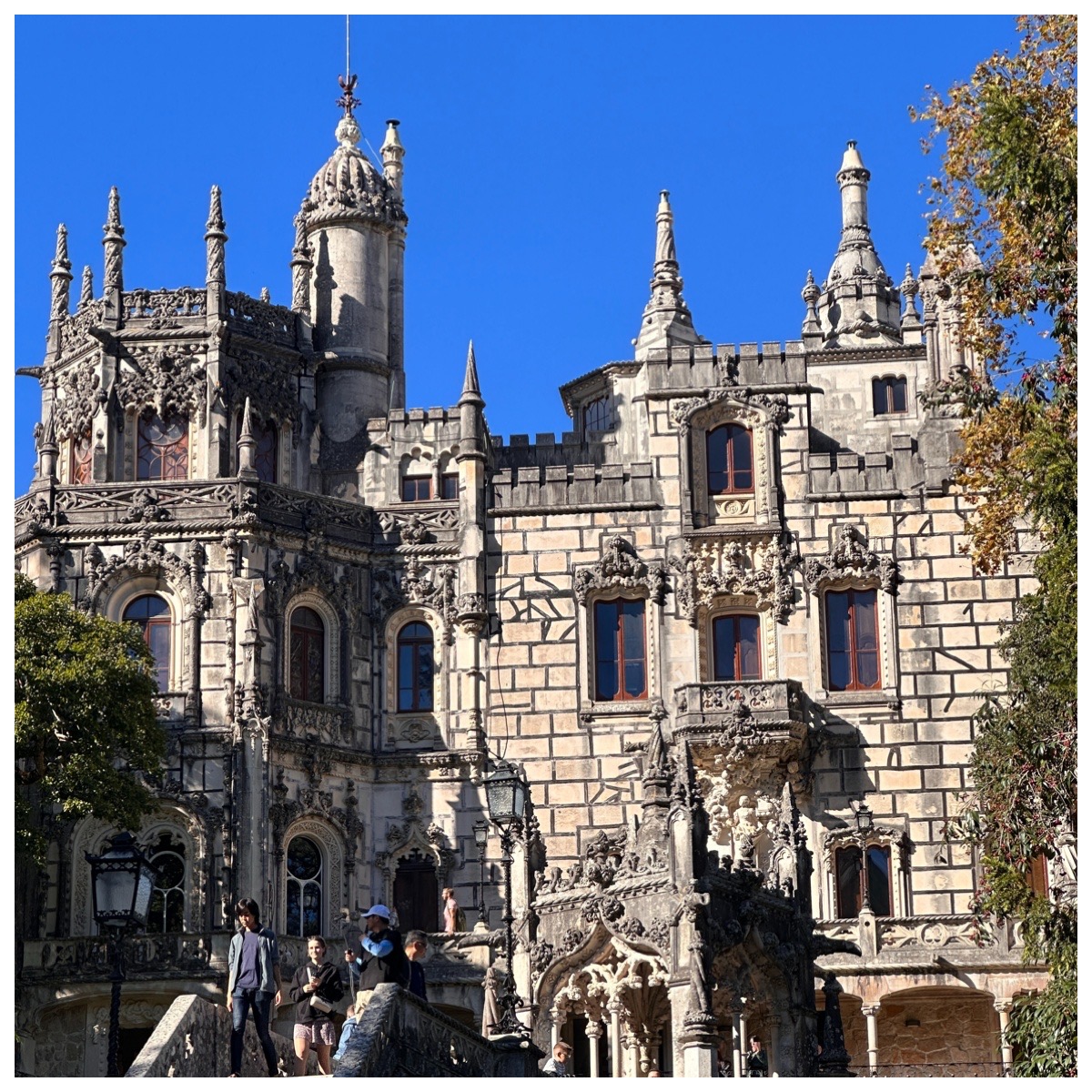
The Quinta da Regaleira mansion and grounds were commissioned by by a wealthy merchant, Carvalho Monteiro, as a place where he could collect symbols that reflected his interests and ideologies that allegedly related to alchemy, Masonry and the Knights Templar. It was completed in 1912.
Reviews told us that the interior of the mansion did not compare to the Pena and National Palaces, so we skipped touring the interior.
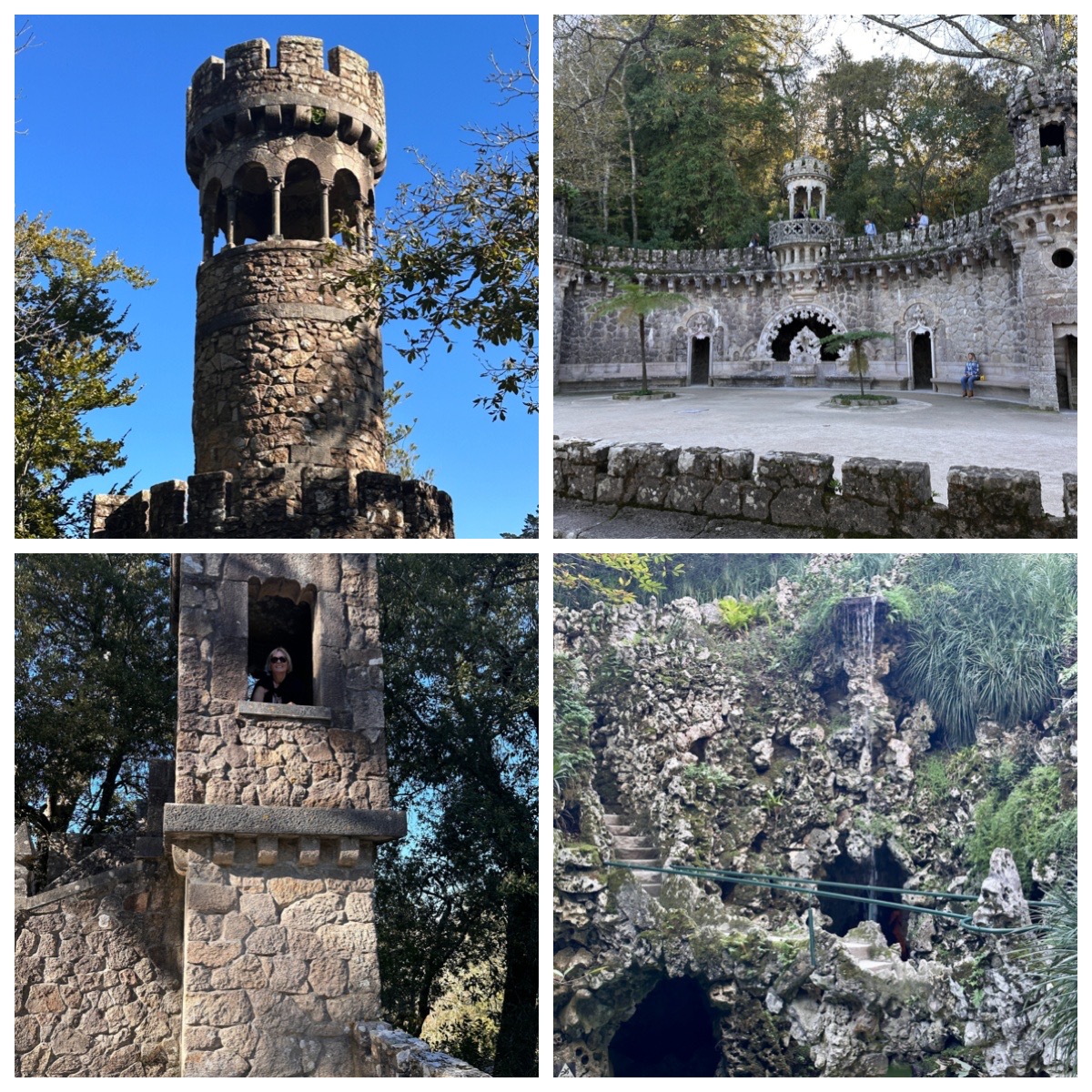
The grounds surrounding the mansion are a wonderful place to wander for an hour or two. There is a labyrinth of paths, left wild and disorganized reflecting Monteiro’s belief in primitivism. You encounter numerous decorative structures, waterfalls, tunnels and lush and diverse foliage.
The Initiation Wells are two wells that have never served as water wells and actually resemble underground towers lined with stairs. The larger well contains a 27 metre spiral staircase which you descend, arriving at some of the numerous underground tunnels. You can gaze out at the back of a waterfall. A tip – know how to turn on the flashlight on your phone – it gets dark in places.
We are very happy that we chose to visit Sintra and would highly recommend a visit if you have a spare day or two in Lisbon.
Leaving Porto, we hopped on the Alfa Pendular train for a comfortable journey of just over an hour to the city of Coimbra. The AP trains are great and an easy way to travel. The train arrives at the Coimbra-A station, where you can hop on another free train for the 5 minute ride to the Coimbra-B station.
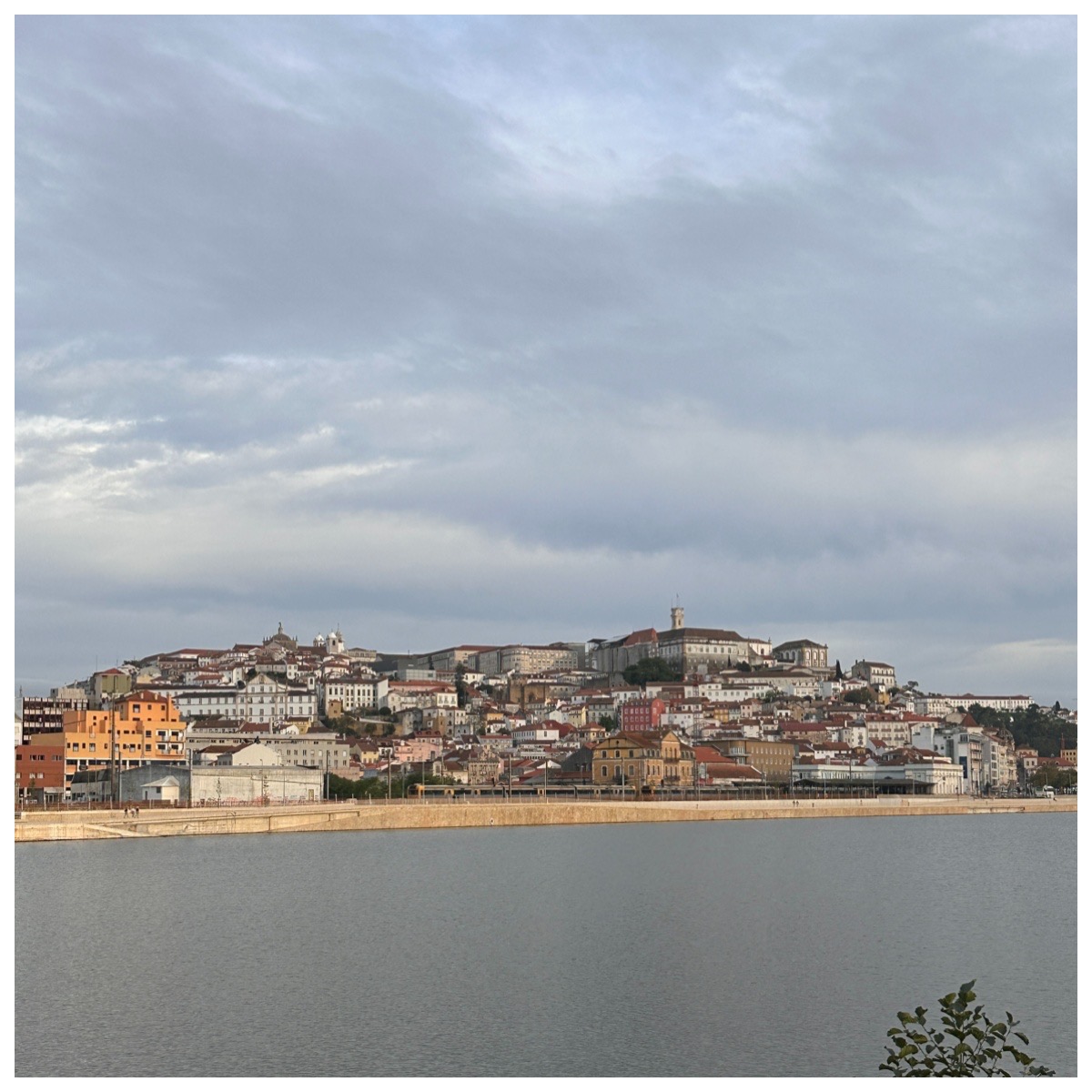
Coimbra is located on the route between Porto and Lisbon. It is about 50 km inland from the Atlantic and sits on the banks of the Rio Mondego. It has a population of ~140,000, but the historic centre has the feel of a small town.
Our hotel, Hotel Mondego , was located right across the street from the Coimbra-B train station. It was an excellent hotel – great location, lovely rooms (premium room), great breakfast and super-friendly and helpful staff.
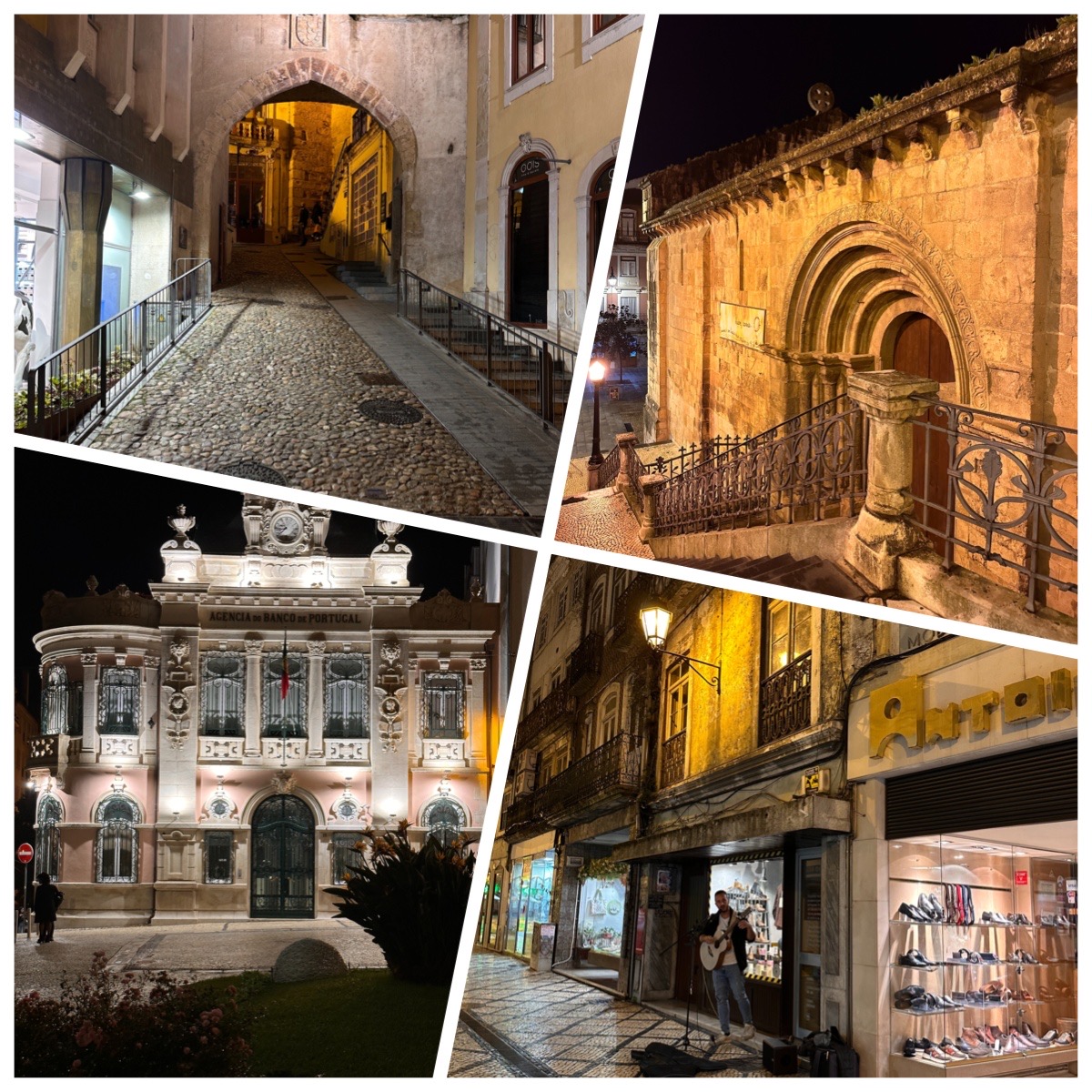
We found Coimbra to be a great place to just wander, taking in the architecture, the grand pedestrian only avenues and the small, windy lanes.
The University of Coimbra was first established in 1290, moved a number of times and finally returned permanently to Coimbra in 1537. The university is among the oldest universities in continuous operation in the world and the oldest in Portugal. It was named a UNESCO World Heritage Site in 2013, citing its architecture, unique culture and traditions, and historical role.
The main attractions are situated around the Patio das Escolas, which is presided over by a statue of King João III.
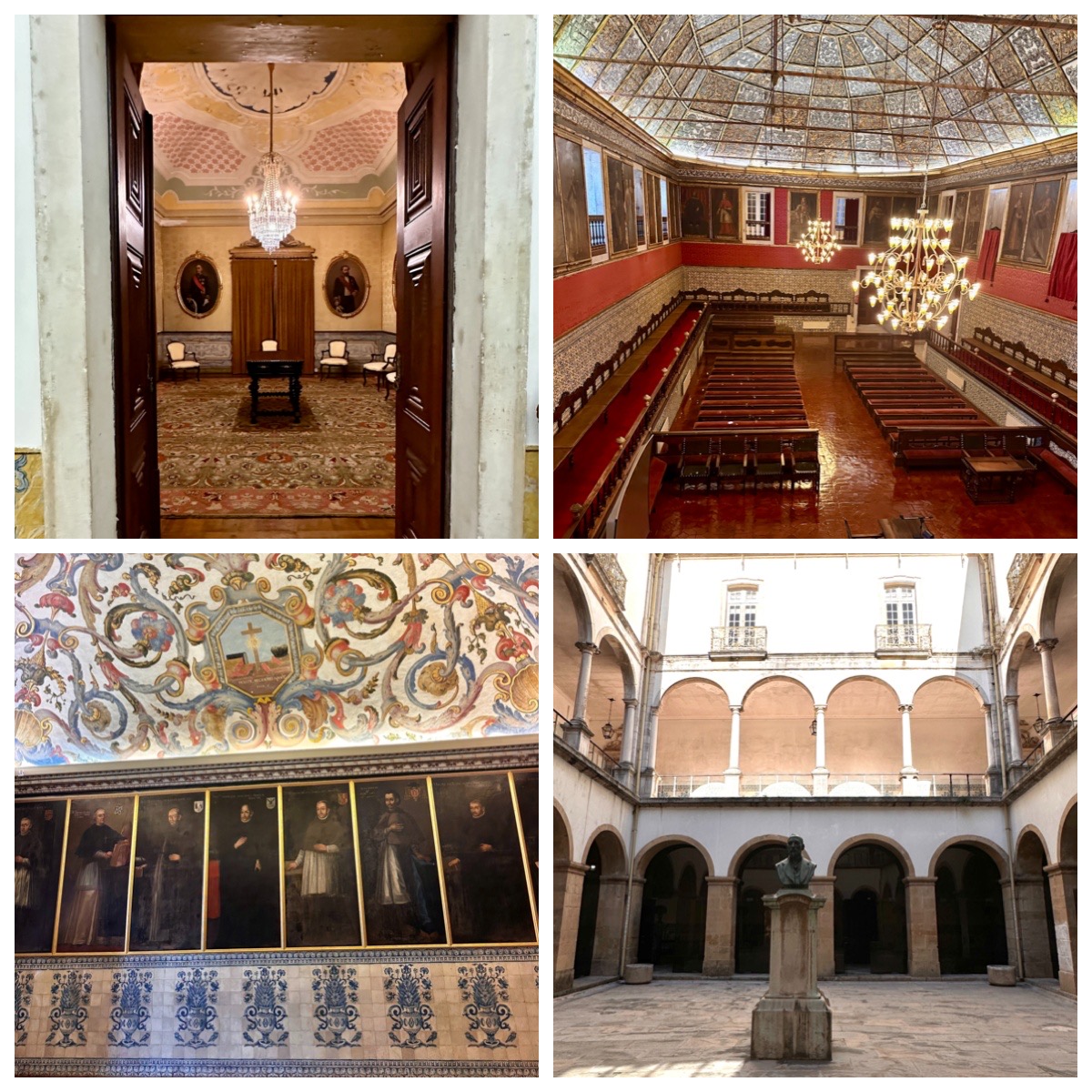
The most famous building is the Biblioteca Joanna, a baroque library named after after King João V. Constructed between 1717 and 1728, the remarkable central hall is decorated with elaborate ceiling frescoes and huge rosewood, ebony and jacaranda tables. The library holds more than 40,000 books, which can be borrowed under strict conditions. This room is strictly controlled – you must purchase a timed entry ticket and are allowed only 20 minutes in the room. No pictures are allowed – the pictures below are of the anterooms. Interestingly, the library has a colony of bats to protect the books – they eat potentially harmful insects.
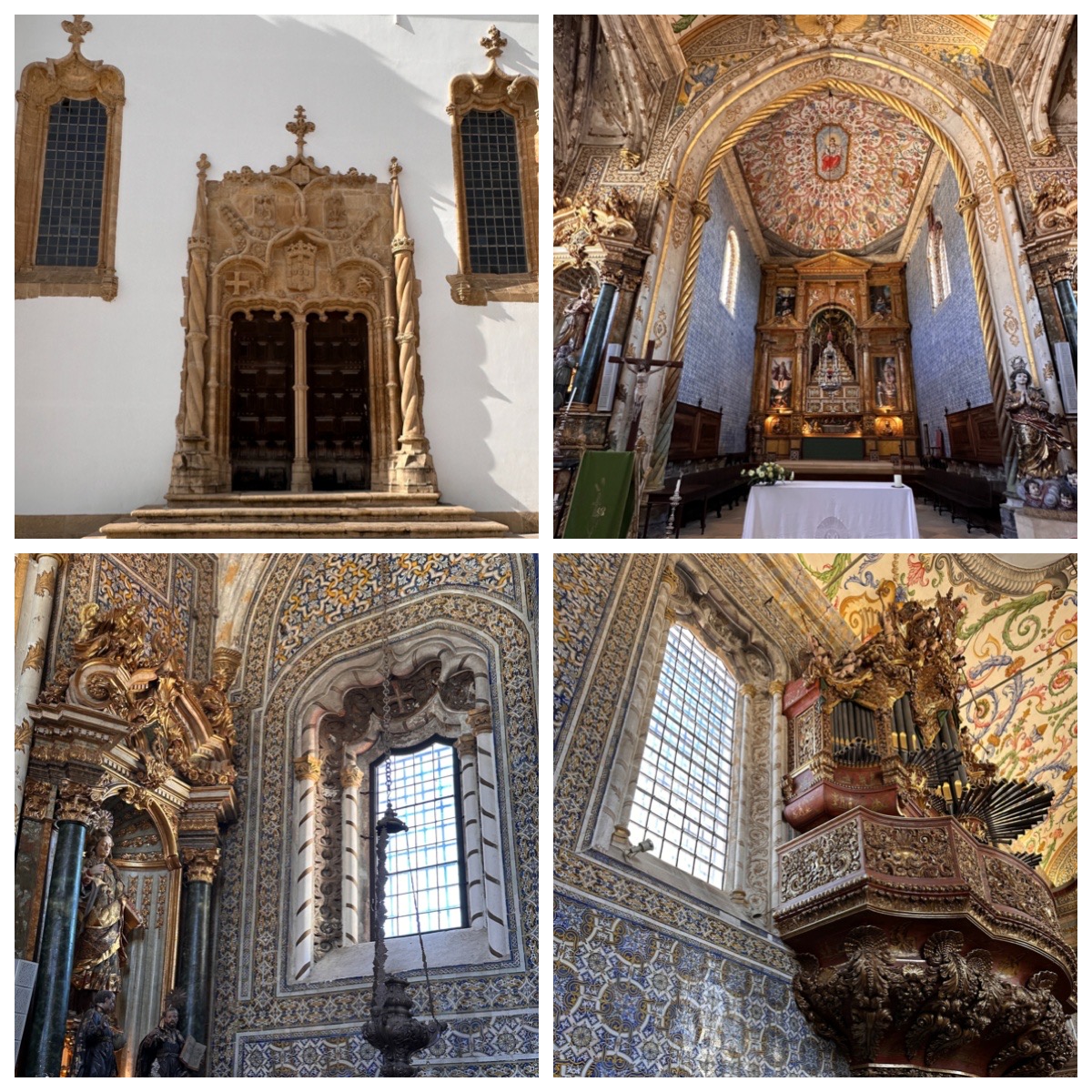
The Capelo de São Miguel (Saint Michael’s Chapel) was built in the 1500’s with small renovations and additions in the 17th and 18th centuries.
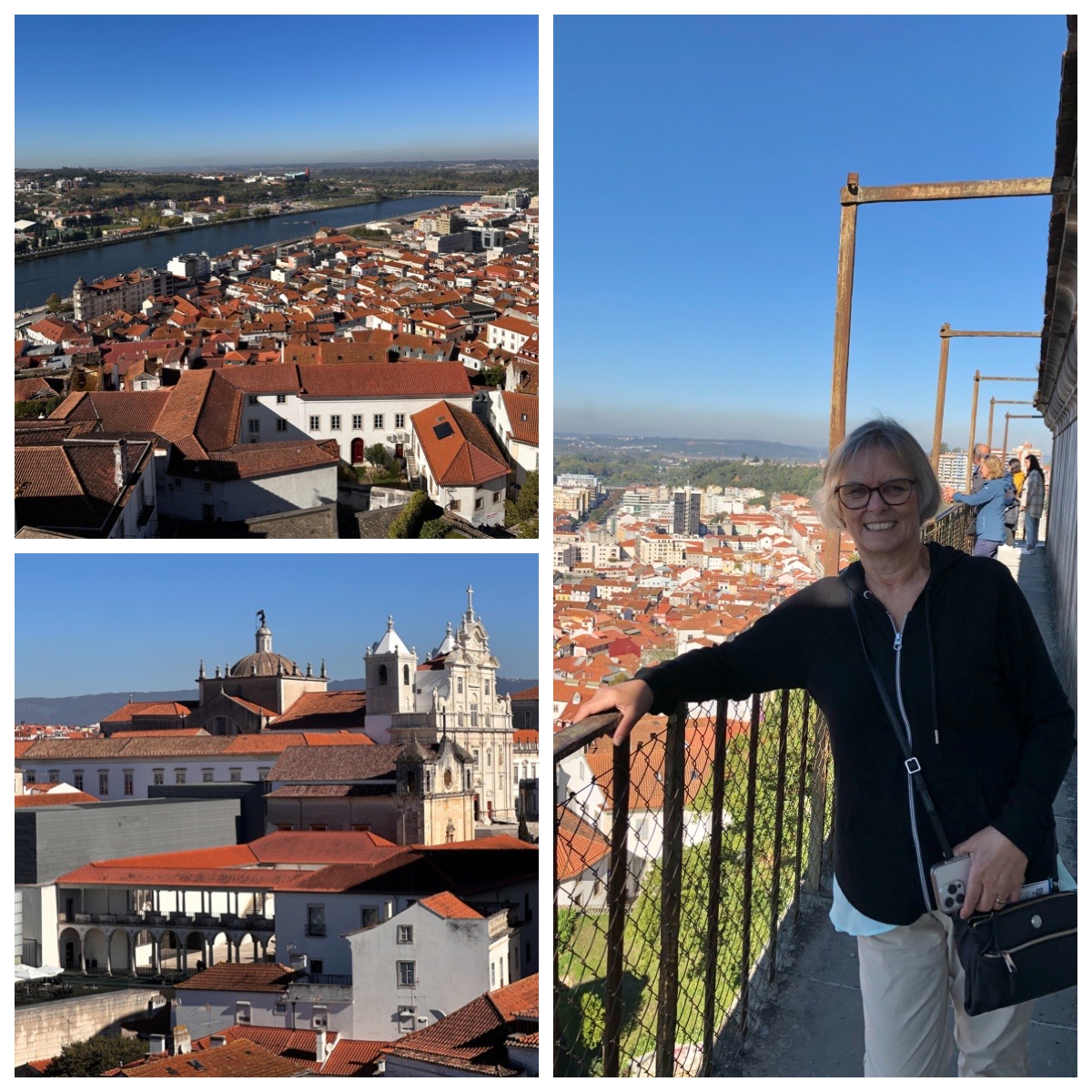
The Royal Palace sits below the crenelated clock tower which stands 112 feet high and is the most notable item in all Coimbra landscapes. The palace was built in the tenth century and for many years served as a royal residence.
The views from the Palace catwalk are wonderful!
On the hill in Coimbra are the old and new cathedrals. The old Cathedral dates from 1117 and is currently undergoing restoration work.
The new Cathedral was built slowly between 1598 and 1698 and took over the role of Coimbra’s main church from the old Cathedral in 1772.
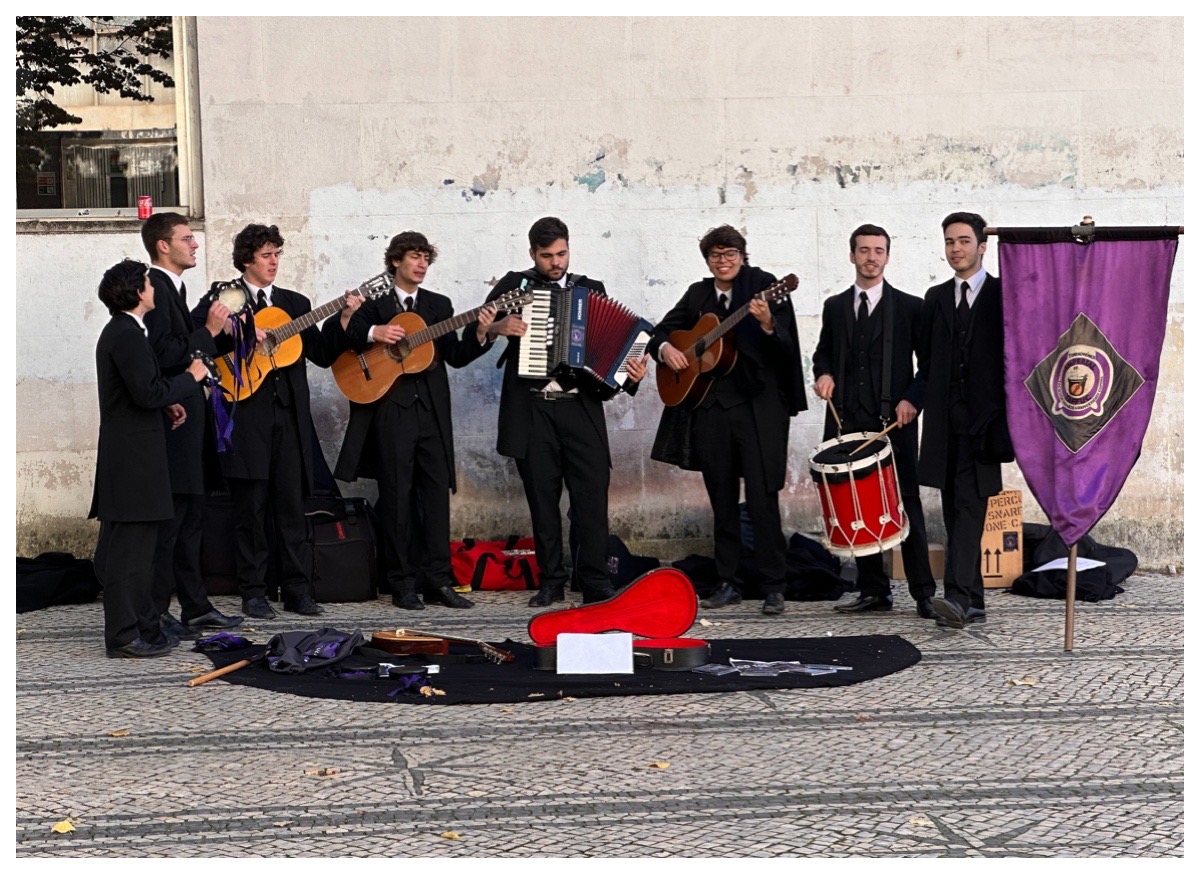
Fado is considered the song of the Portuguese soul, traditionally performed by women. In Coimbra, fado is closely connected with academic traditions. A major difference in Coimbra is that fado is performed by men.
Groups of university students sing fado on the streets, dressed in their traditional attire.
One evening, we took in an early evening fado presentation at the Cafe Santa Cruz. While we sipped a beverage, we listened to an entertaining half hour of music. The acoustics are great in this church turned cafe.
Coimbra is doing a good job of developing its river valley. There are great walking paths, a fun pedestrian bridge and an awesome evening lighted fountain display.
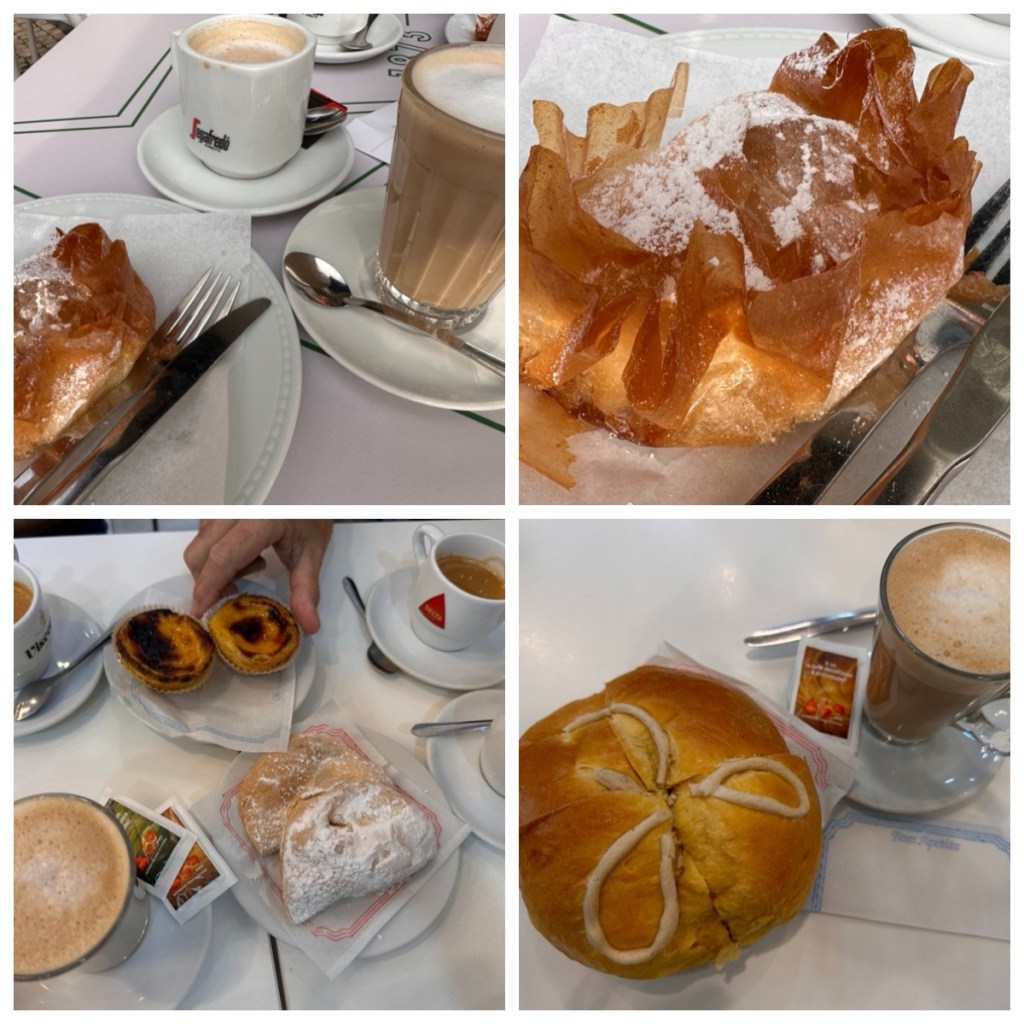
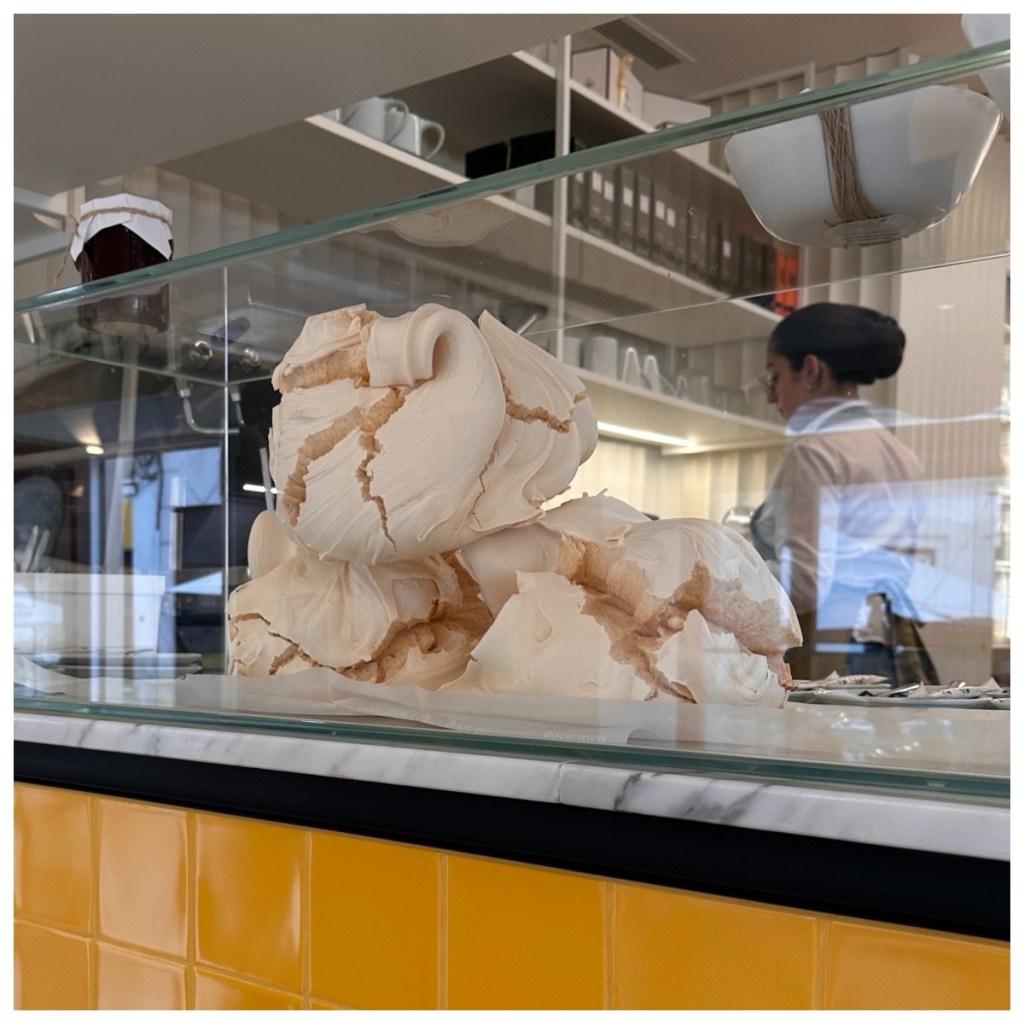
Once again, those wonderful Portuguese pastries!
Salt cod and sardines are Portuguese staples.
Salt cod at the marketThe canned sardine store – quite elegant!Grilled sardines on a boat and cheesy bruschetta for lunch
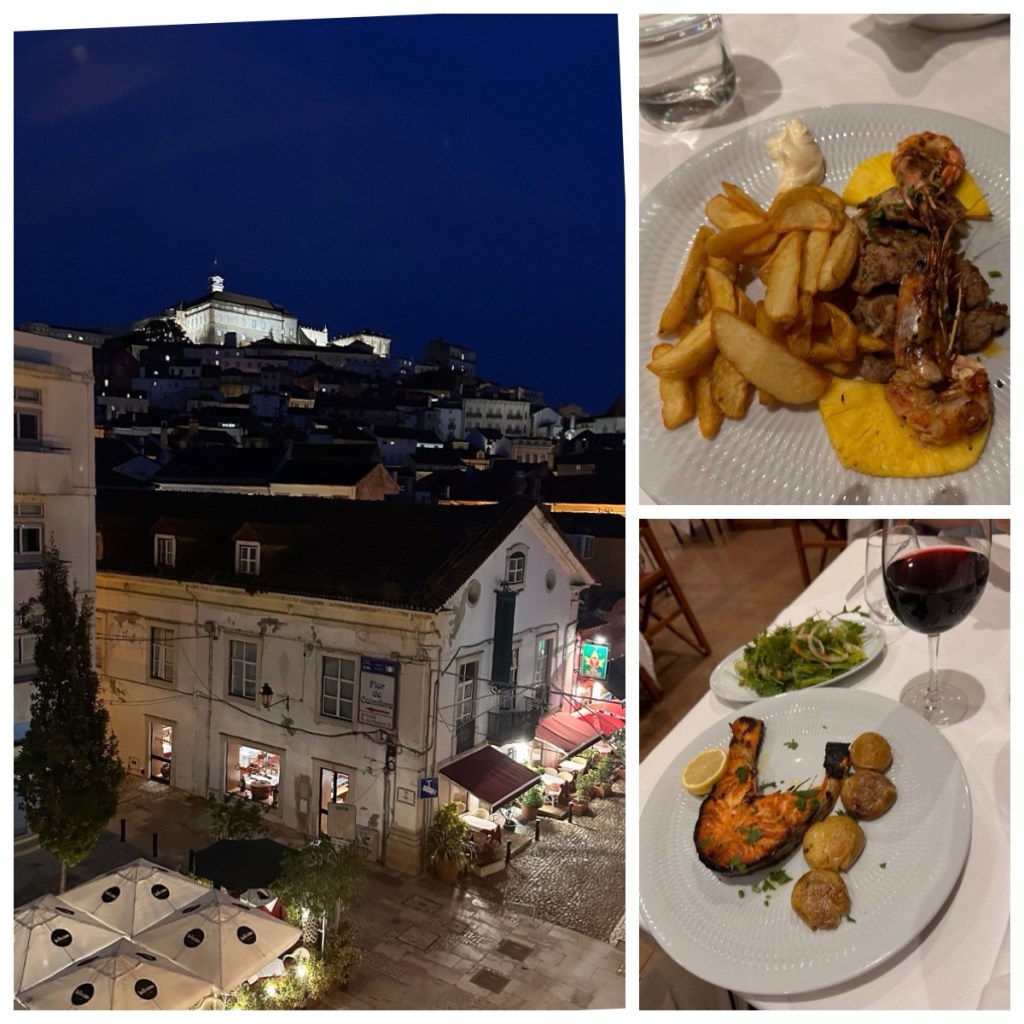
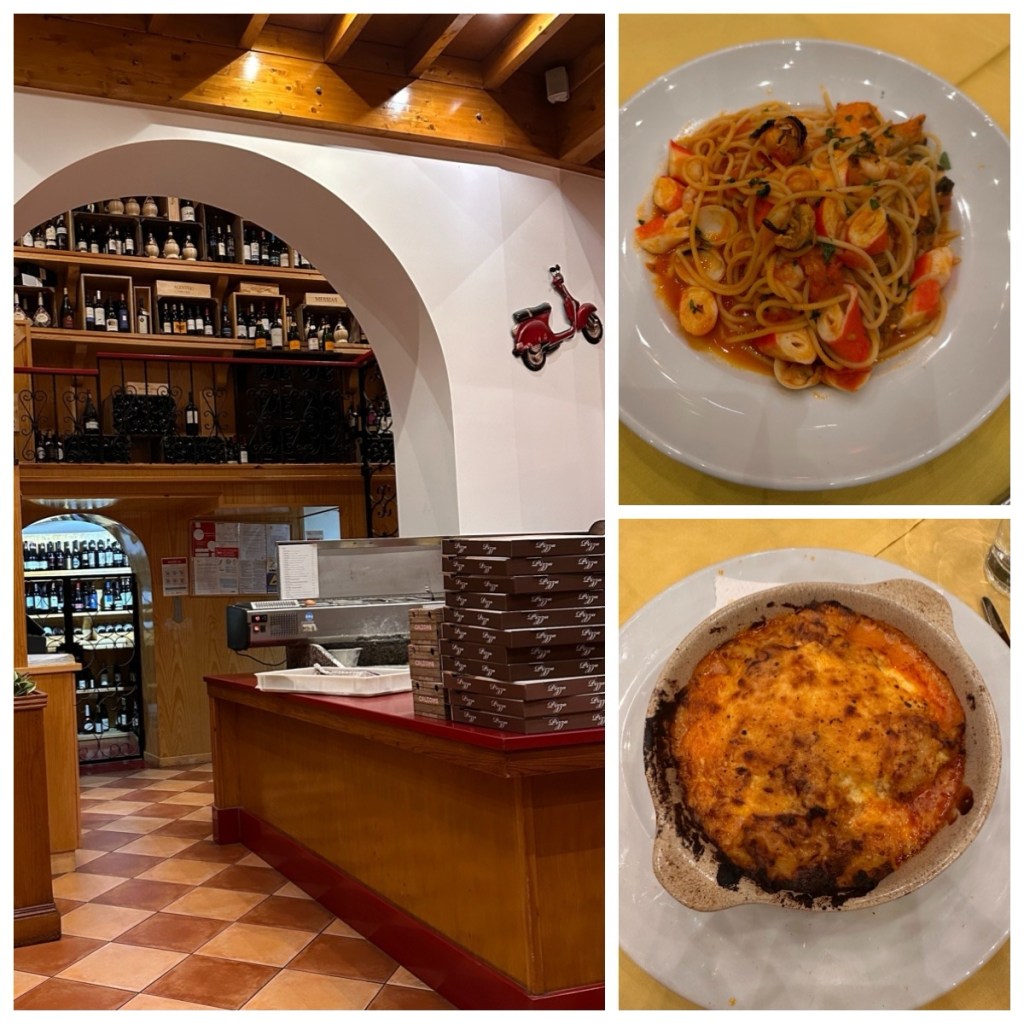
Some other great meals in Coimbra – definitely recommend these restaurants.
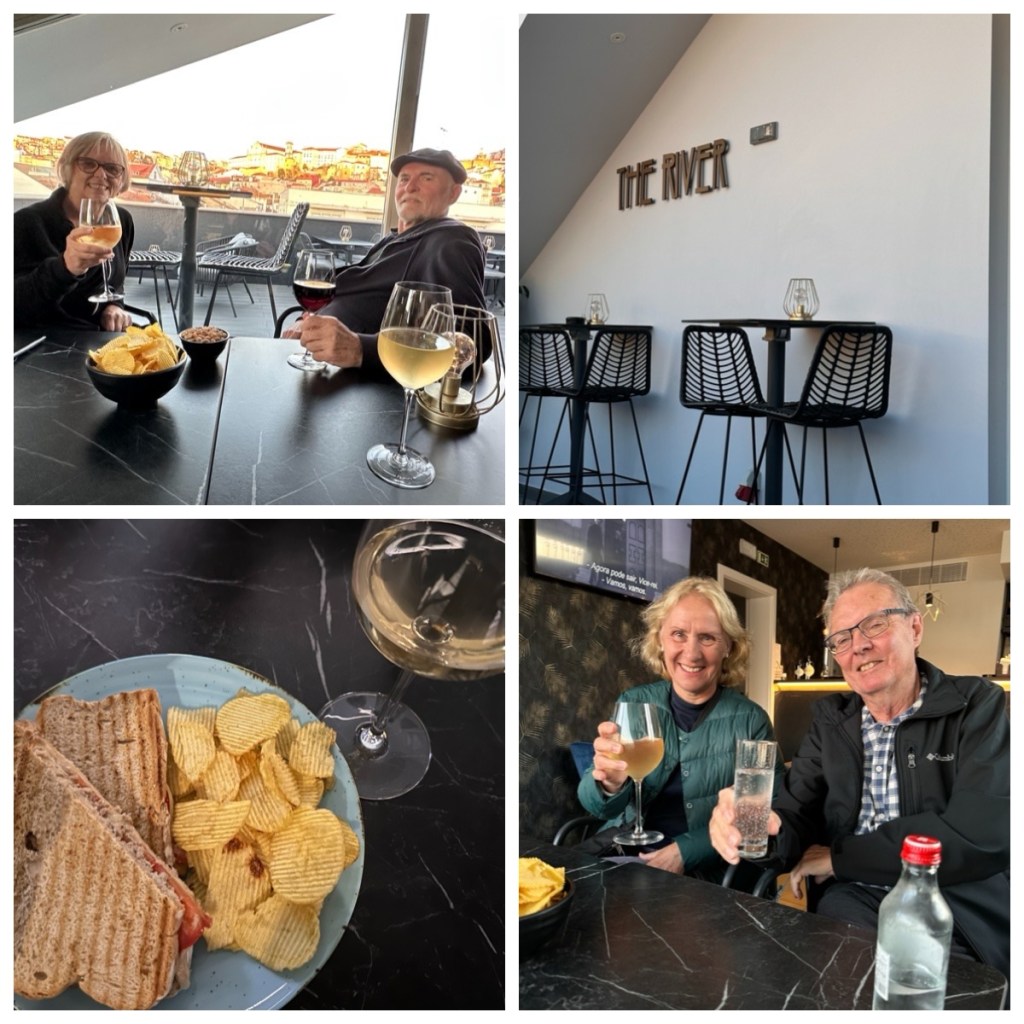
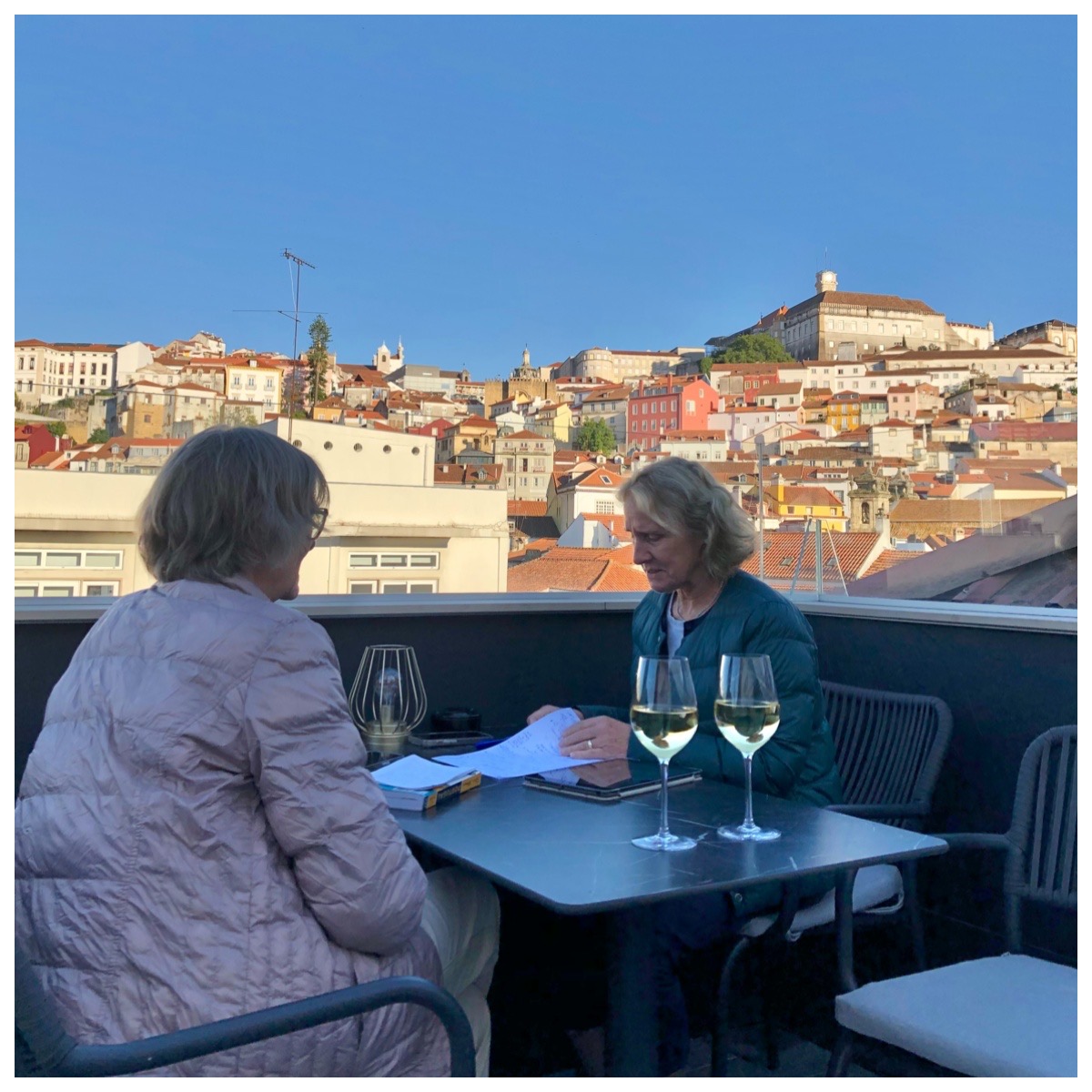
If you have some time, listen to Debbie’s Podcast that we recorded from the River Bar. Once there, you can access a number of podcasts about our trip and other interesting topics!
We hope you enjoyed our memories of Coimbra. If you travel to Portugal, Coimbra is an awesome place to visit and to recharge yourself between the busy cities.





























 A Long and Winding Journey