Porto – Pastries, Pork and Port

Join me as I remember fondly the great food and drink of Porto, Portugal.

We loved the pastries in Paris – but it’s just possible that the pastries in Portugal are even better…..

It seems that the majority of Portugal pastries are filled with egg cream custard. We wondered why and found out this interesting history. The sweet treat has religious roots. Catholic nuns and monks used egg whites to starch their clothes, as well as using them for making paste. This resulted in a lot of egg yolks to spare, which to avoid waste were used to make desserts. We wondered what they now do with the extra eggs whites that must be left from all the egg custards, as we assume they are no longer starching clothes and making paste with them. We didn’t get an answer to this, although we did see some very large meringues in a few bakeries!

Pastéis de Nata are the original and most popular egg cream pastry. These originated in Belém, Lisbon but are prolific in all of Portugal. We tried many in Porto and give the award to the Manteigaria – Fábrica de Pastéis de Nata. Located in the Delta Coffee House, it was fun to watch the tart production as well as to enjoy their great coffee and of course the tarts!
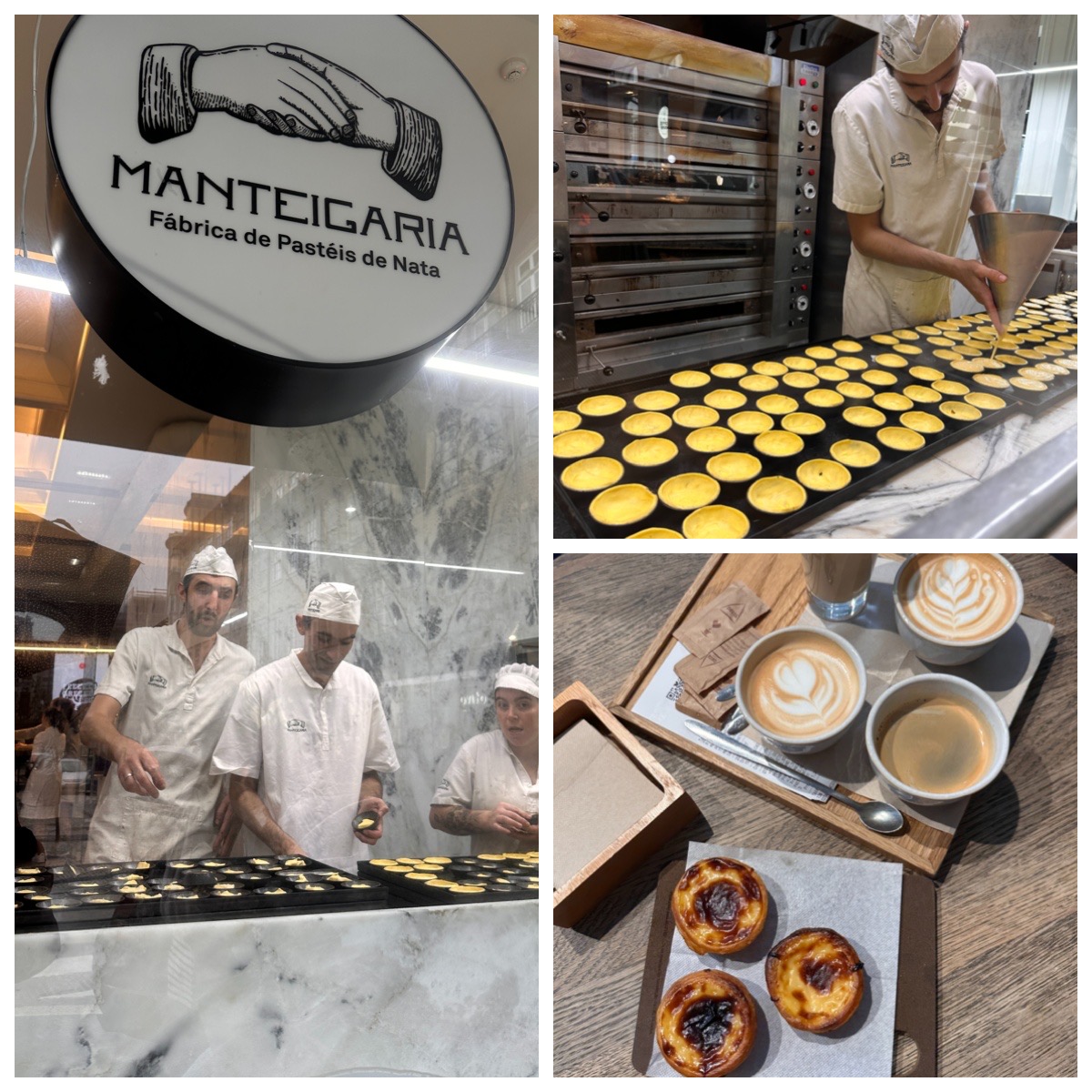
We also indulged in a number of other great pastries, a few of which are pictured below.

The Portuguese generally eat dinner after 8 pm and the restaurants in our area didn’t open until 7:30 pm at the earliest. This is quite a bit too late for our North American habits! Our guesthouse host suggested that we visit the Mercado Bom Sucesso . What a great find this was! This upscale market is a cultural experience where you explore the best flavors of Portuguese cuisine as well as international cuisines at the various shops scattered throughout the space.

We ended up eating dinner at the market most every day after returning to our guesthouse for a late afternoon rest. We found that all of the vendors provided top notch food and we thoroughly enjoyed the great variety!

The Portuguese love pork. They even have a Museum of Pork (which we didn’t visit). Many of the common dishes are prepared from Leitão no forno or suckling pig. Before cooking, the meat is seasoned with garlic, pork fat, salt and pepper, and then put into the grill or oven for about two hours, first at high heat, then at a more gentle temperature. The pigs are usually cooked in wood-fired ovens with aromatic herbs.

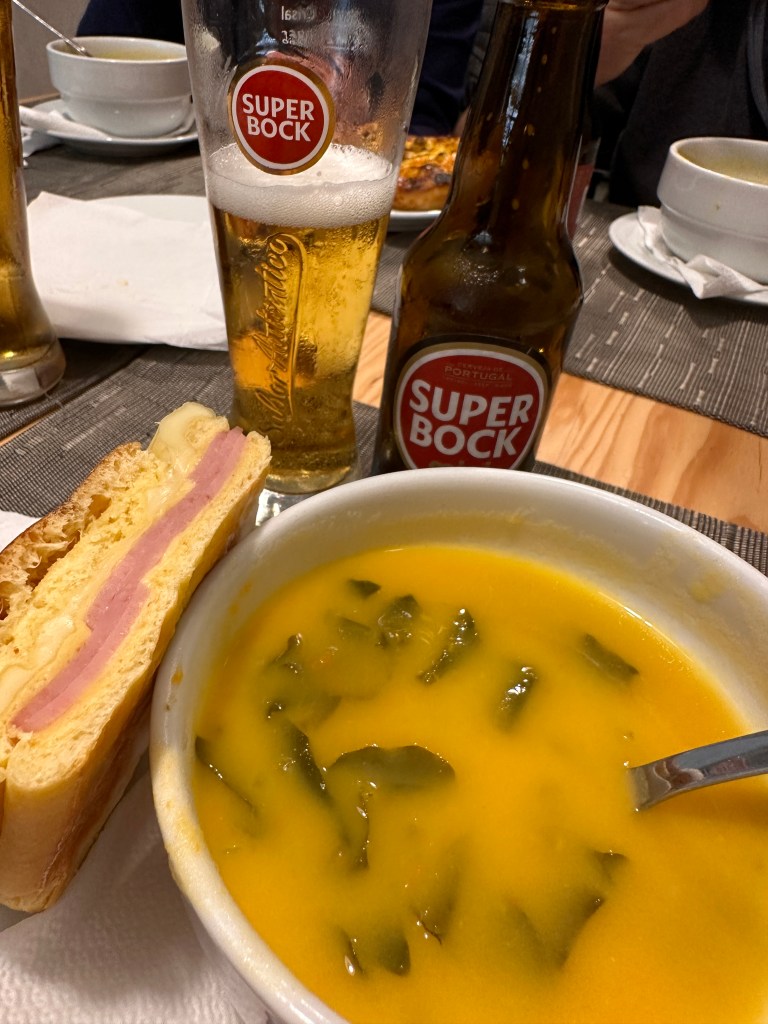
The bifana is pork cut in very thin slices, eaten on a small wheat loaf called molete. The sauce is delicious – said to be seasoned with beer, whiskey, white wine, garlic, red paprika, Port wine, pepper, bay leaf, and olive oil.
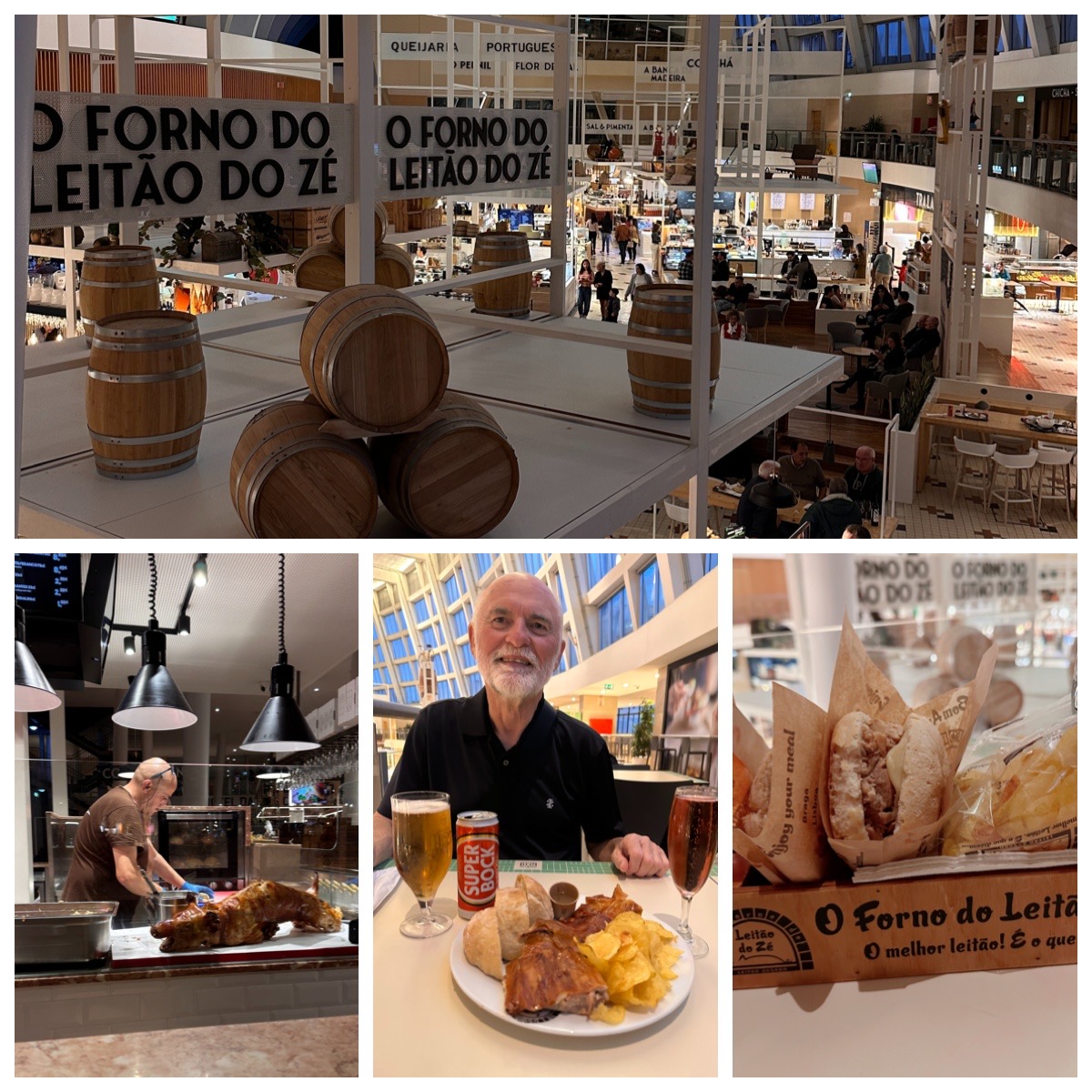
Cod is also extremely popular. It is said the Portuguese have 365 ways to cook Bacalhau (dried cod!)!

Some of the other dishes we enjoyed at the Mercado.
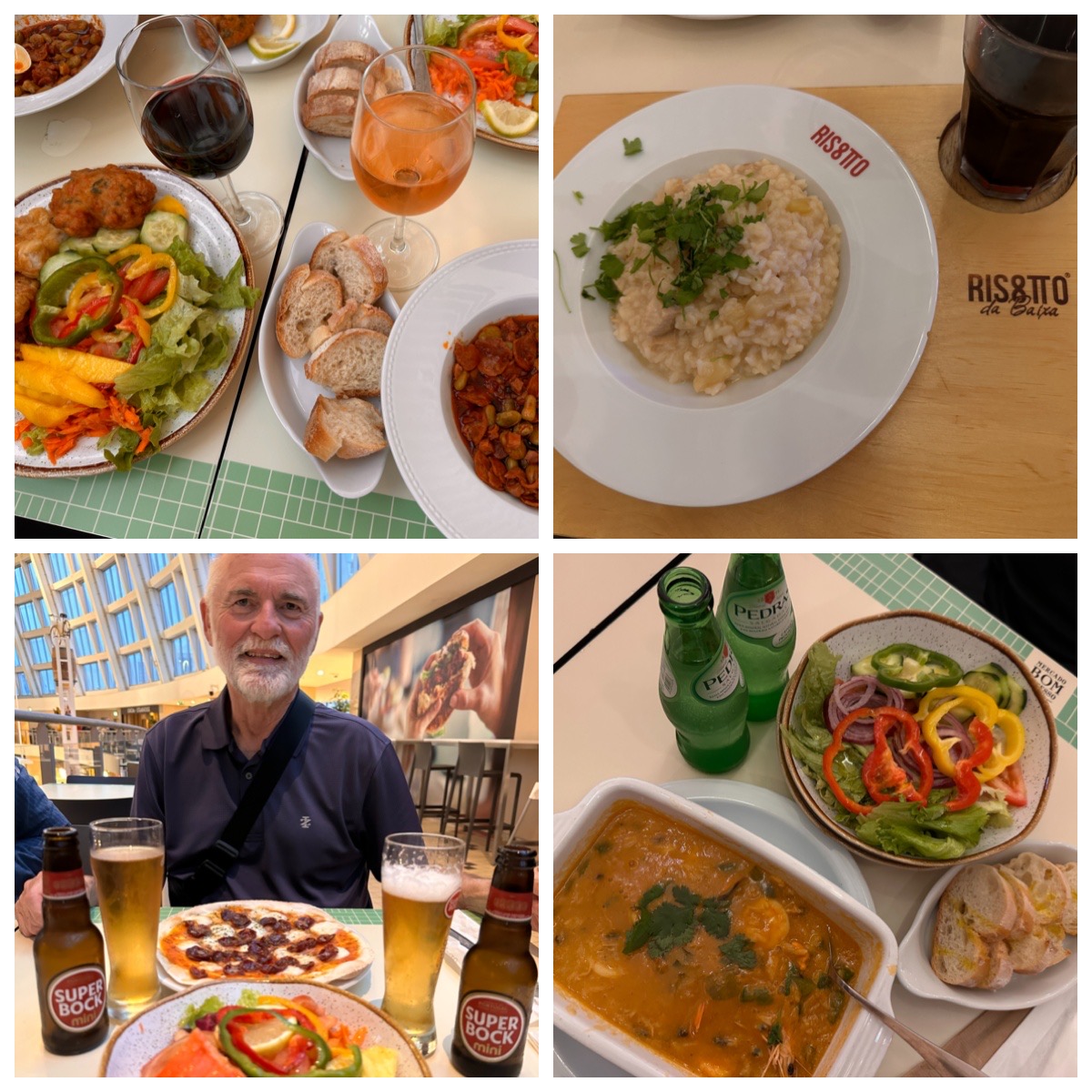
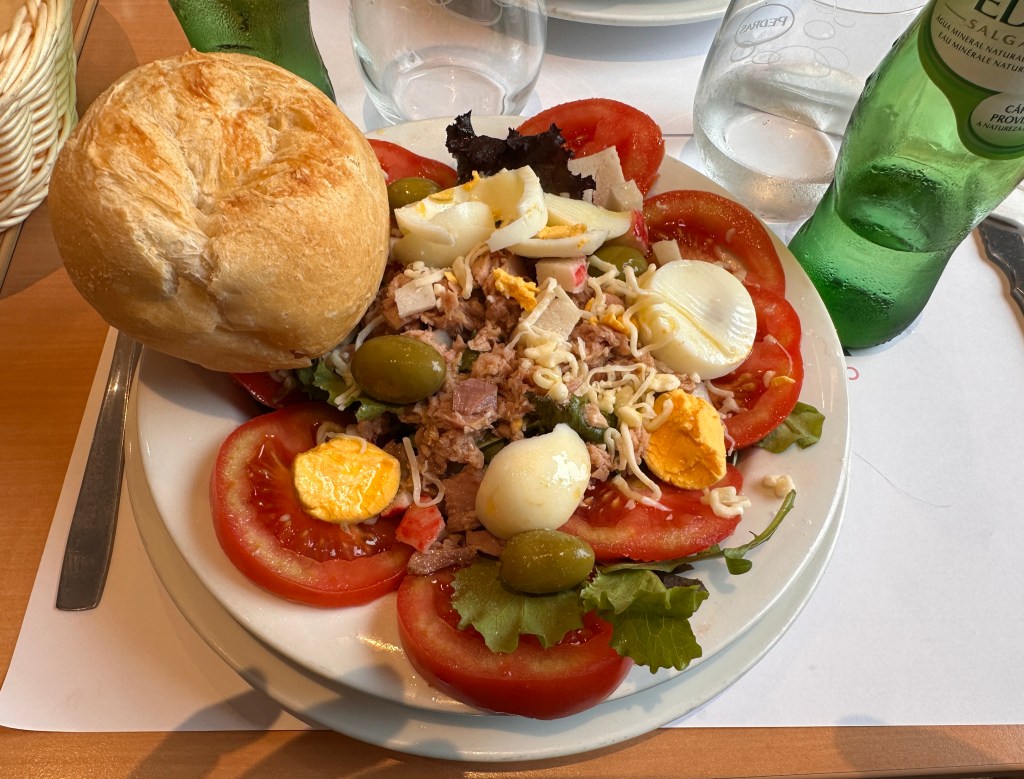
Here a few of the delicious dishes we tried at restaurants in the city.
The Francesinha is found most everywhere in Portugal. It consists of meat (in our case, a pork cutlet), ham, sausage and cheese layered between thick slices of bread. The sandwich is then topped with more cheese, warmed in the oven to melt and and lastly, topped with a fried egg and a slightly spicy beer sauce.

We had to try one – to clarify, Harv & I split one. It was surprisingly delicious and as is traditional, was served with fries.

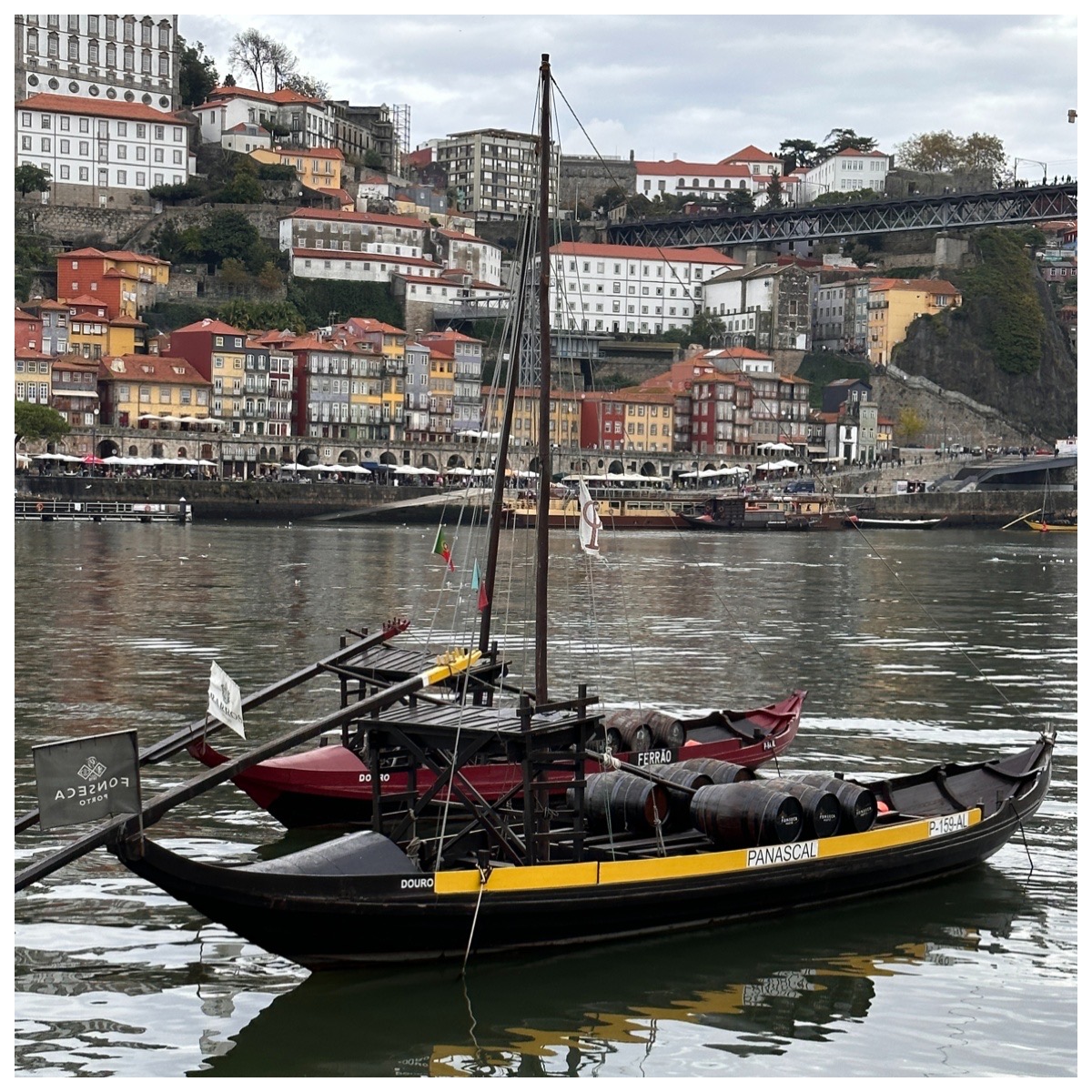
And finally, the drinks of Porto! Of course, Port reigns. Port is a fortified sweet wine. The grapes are grown and the wine produced in the Douro Valley outside of Porto. The port is then transported to the wine lodges of Vila Nova de Gaia across the River Douro from the old city center of Porto to age and be bottled.

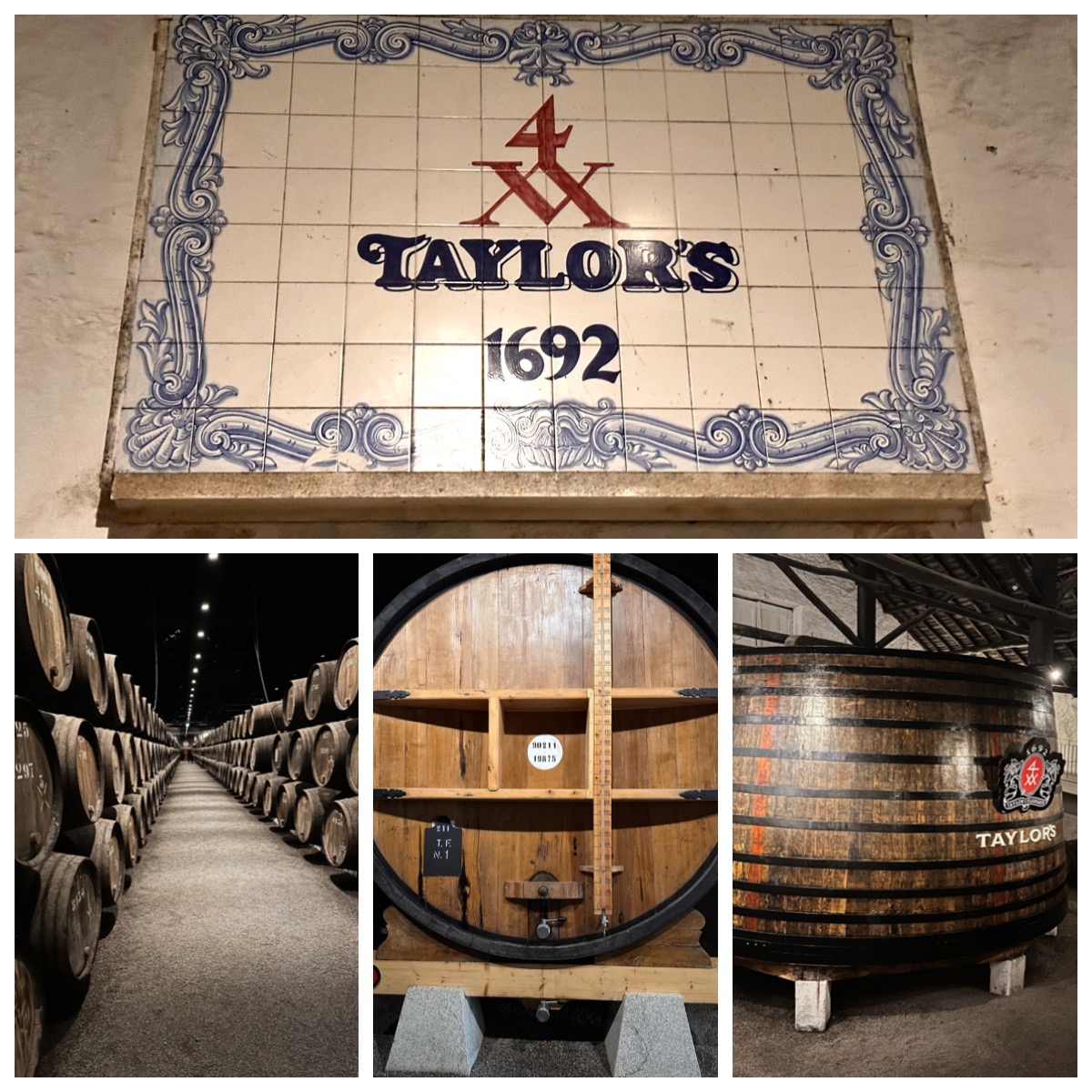
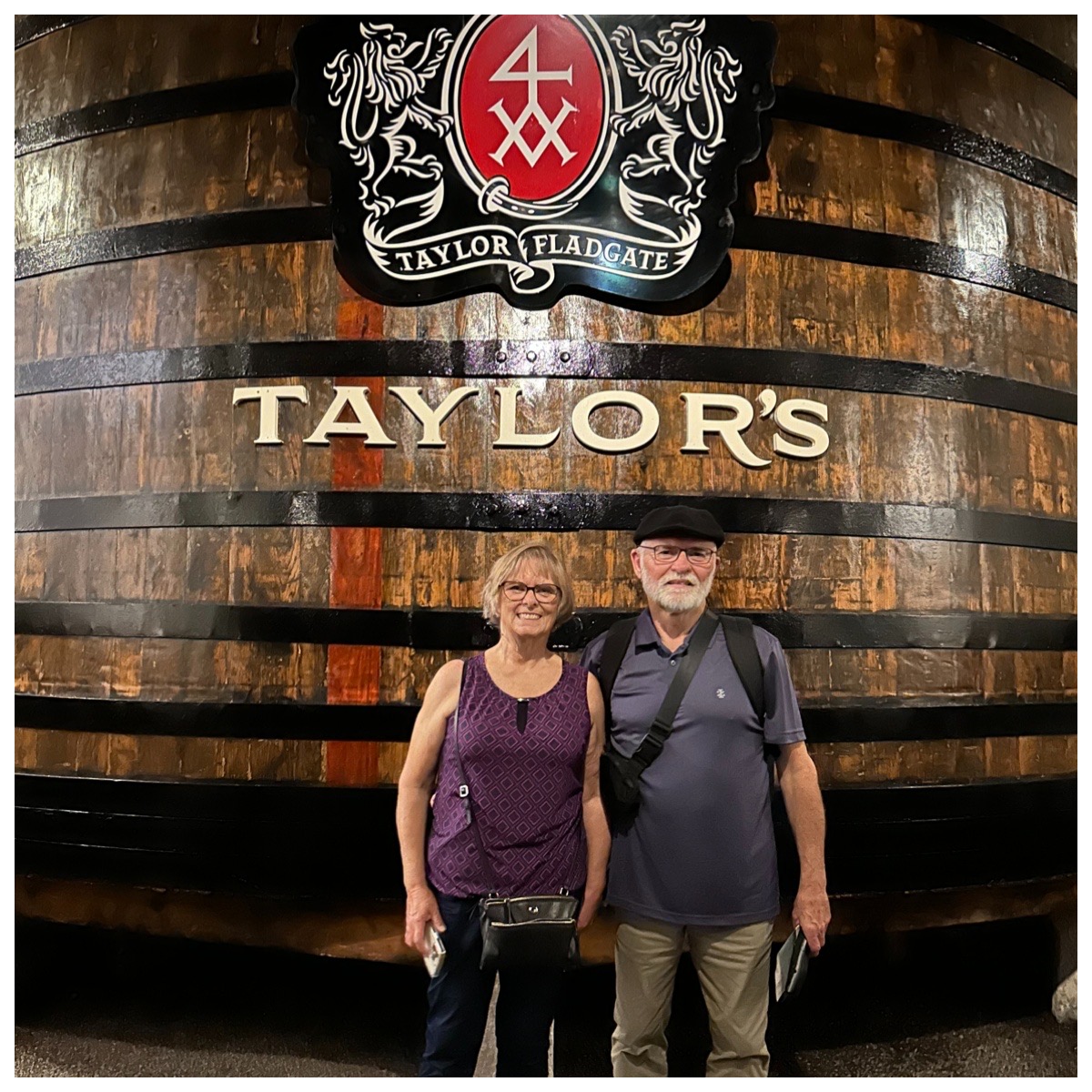
A number of the lodges/houses offer tours and tastings and you could spend a lot of time visiting them. We chose to visit Taylor Fladgate, one of the oldest of the founding port houses. Taylor’s offer a self-guided tour with an excellent audio guide. The tour takes well over an hour and provides detailed information about all aspects of port history and production.
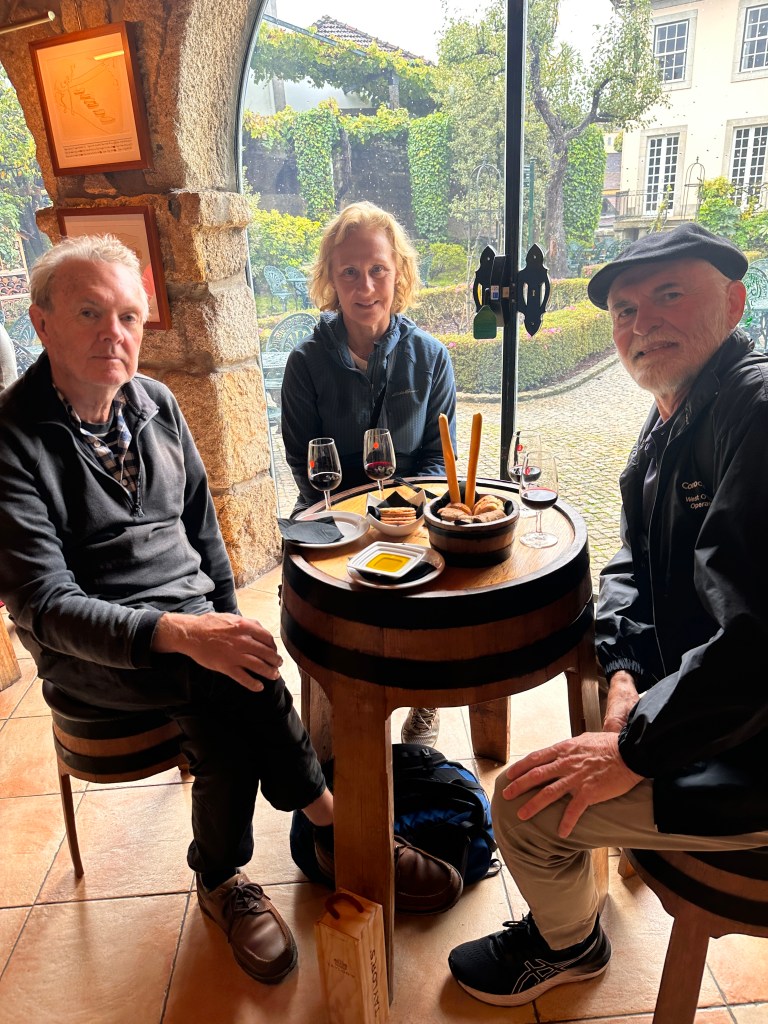
At the end of the tour, you are invited to taste two of Taylor’s popular ports – a late bottled vintage and the Chip Dry white port. We chose some snacks to go with these drinks and it was lovely.

We would highly recommend the Taylor Fladgate tour – a great introduction for newcomers to port as well as lots of information for those more into the world of port!

Another great twist to port – a port tonic! This refreshing cocktail is crafted with two parts of tonic to one part of white port. It generally comes with an orange wedge and a sprig of mint. This version that we enjoyed on a sunny afternoon along the waterfront seemed to have some additional orange flavouring added – perhaps Cointreau or Aperol. It was great!

Had to have some sangria while in Portugal. This one was at the Peninsular Cafe, a fun place near our guesthouse with an old time counter as well as table service. This sangria accompanied our Francesinha.

Lots of great coffee on the trip. On this occasion I forgot to ask for them long so we had fun little espressos with a dab of milk.

I hope you enjoyed this look at Porto’s food and drink! Next, on to the great city of Coimbra!

Cheers,

Bev& Harvey
Day Trip to Braga

Braga is a great day trip from Porto. It’s easy to get there – we took the train from the Campanha station to Braga. We chose to take the Urbano train, which takes about an hour, and the round trip fare was only €6.60. The Braga train station is just a short 5 minute walk from the historical centre of the city.

Although Braga is a sprawling city with a population of ~120,000, the focus of a tourist visit is the historical city centre and the Bom Jesus do Monte.

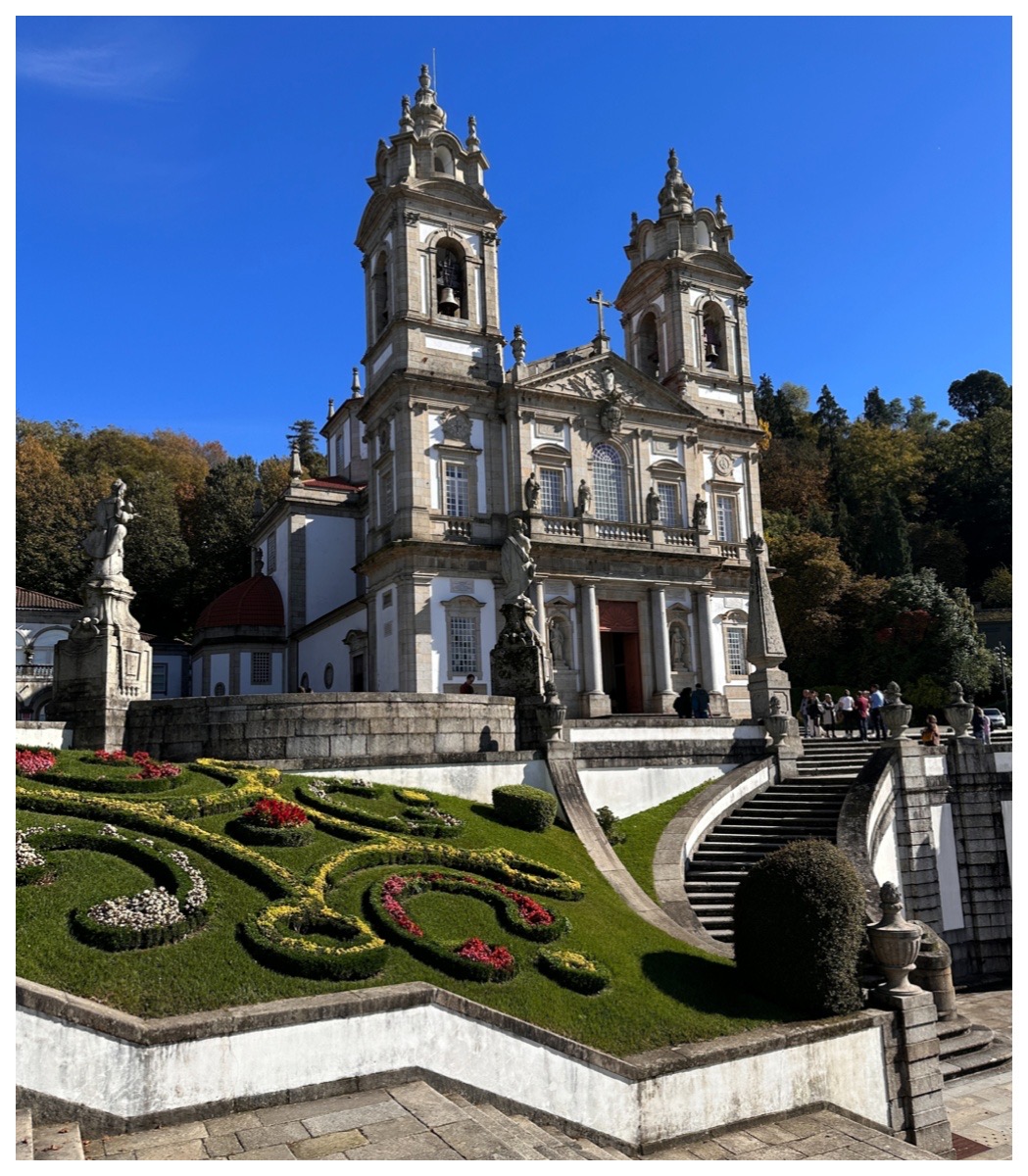
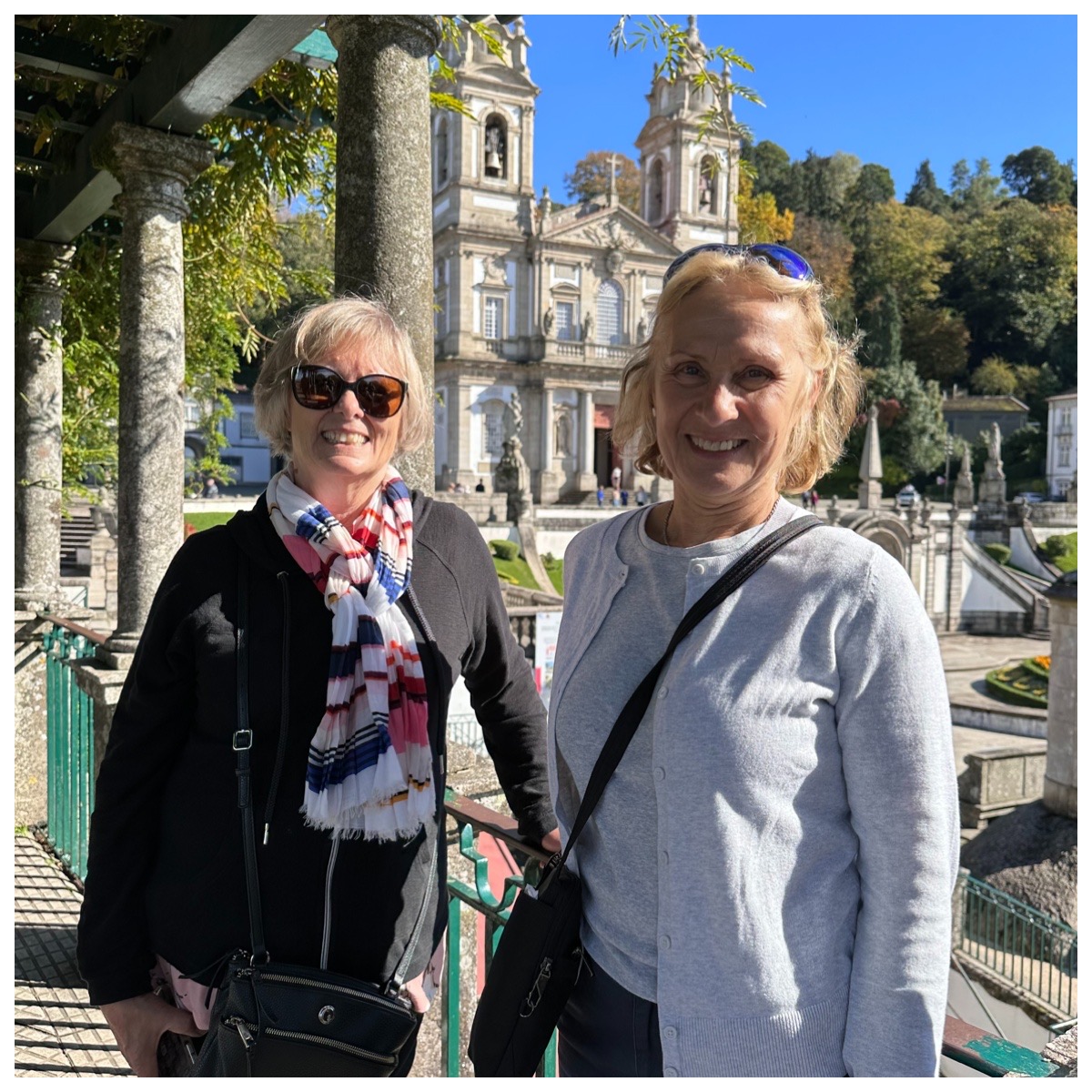
After a quick pastry stop 😉, we headed directly to the Bom Jesus do Monte. We caught the #2 bus from the Avenida da Liberdade. The bus stops at the bottom of the funicular that rises to the church. The funicular was built in 1882 and is the oldest water balance funicular in service in the world. You can catch the funicular as Harvey & I did or choose to take the path and climb the 573 steps of the sanctuary’s stairway. Our ambitious fellow travellers chose this option and thoroughly enjoyed it. Harvey & I did choose to take the funicular up and the stairs and path down!

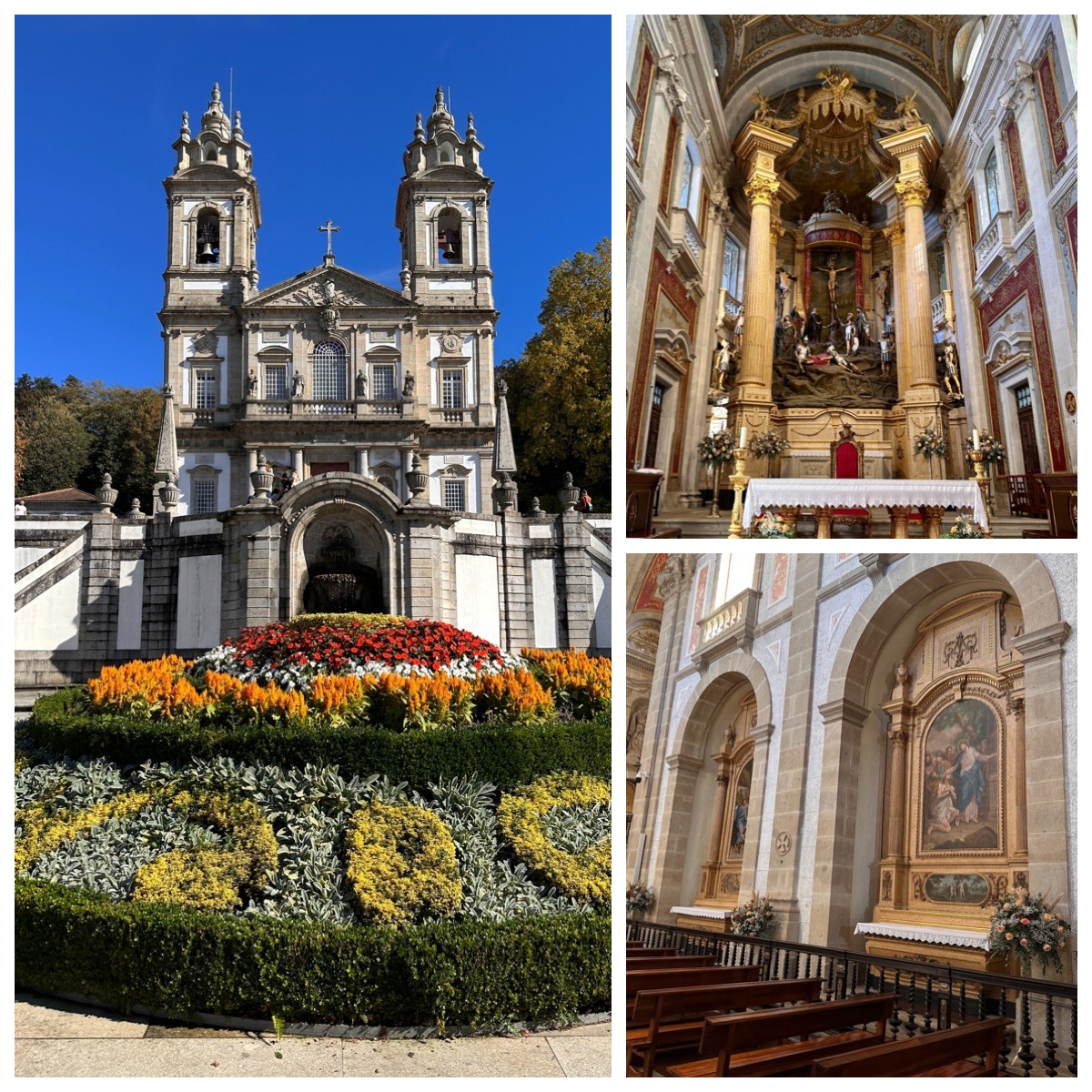
The Sanctuary of Bom Jesus do Monte was declared a UNESCO World Heritage Site in 2019. The first documentation of a chapel on this hill is from 1373. That chapel was rebuilt in the 15th and 16th centuries and a church dedicated to Bom Jesus (Good Jesus) was built in 1629. The current Sanctuary was built between 1784 and 1811 under the patronage of the Archbishop of Braga. The Sanctuary is considered a Christian pilgrimage site.

The grounds surrounding the church are beautifully manicured and were bright with flowers and greenery, even on our visit in late October.

As I mentioned, the stairway rising to the basilica consists of 573 steps in a zig-zag pattern. The stairway is flanked by chapels holding larger-than-life terra-cotta depictions of the Via Crucis (the Way of the Cross).

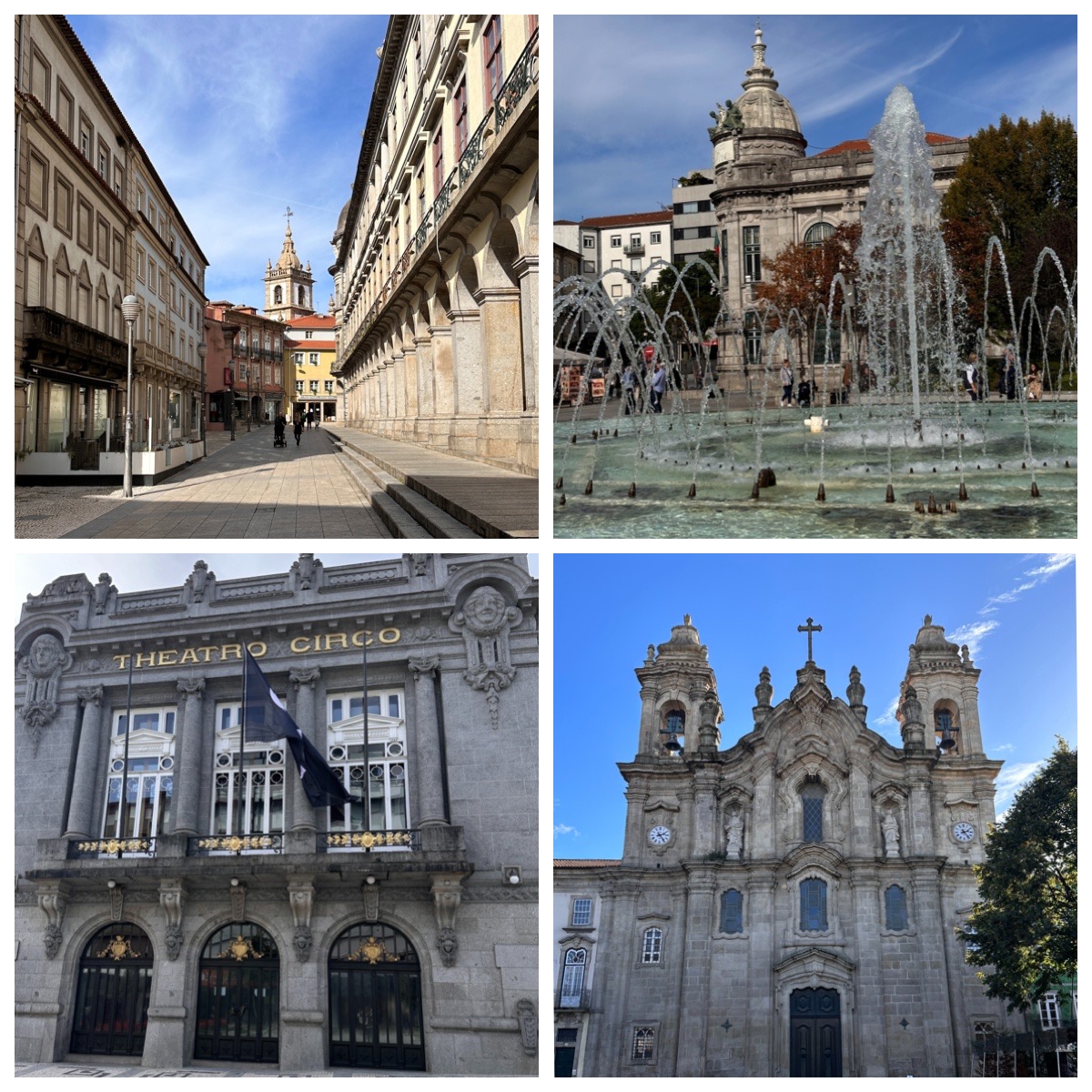
Back in the historical centre of Braga after descending the stairs and catching a bus down, we wandered the streets for a bit enjoying the great buildings, fountains and green spaces.

In Braga, we also tried out a Portuguese specialty – ginja or ginjinha in a chocolate cup. This sweet liquor is made from aguardente (brandy or fortified wine) that’s been infused with sour cherries, sugar and cinnamon. It’s dark red, super sweet and surprisingly strong, with an ABV of around 18-24%. The small amount served in a chocolate cup (which you then eat) is a perfect little treat!

We found the day trip to Braga to be very worthwhile and we would definitely recommend it if you have a day to spare when visiting Porto.

Coming soon to finish our Porto blog series – the food and Port of Porto!

Cheers,

Bev & Harvey

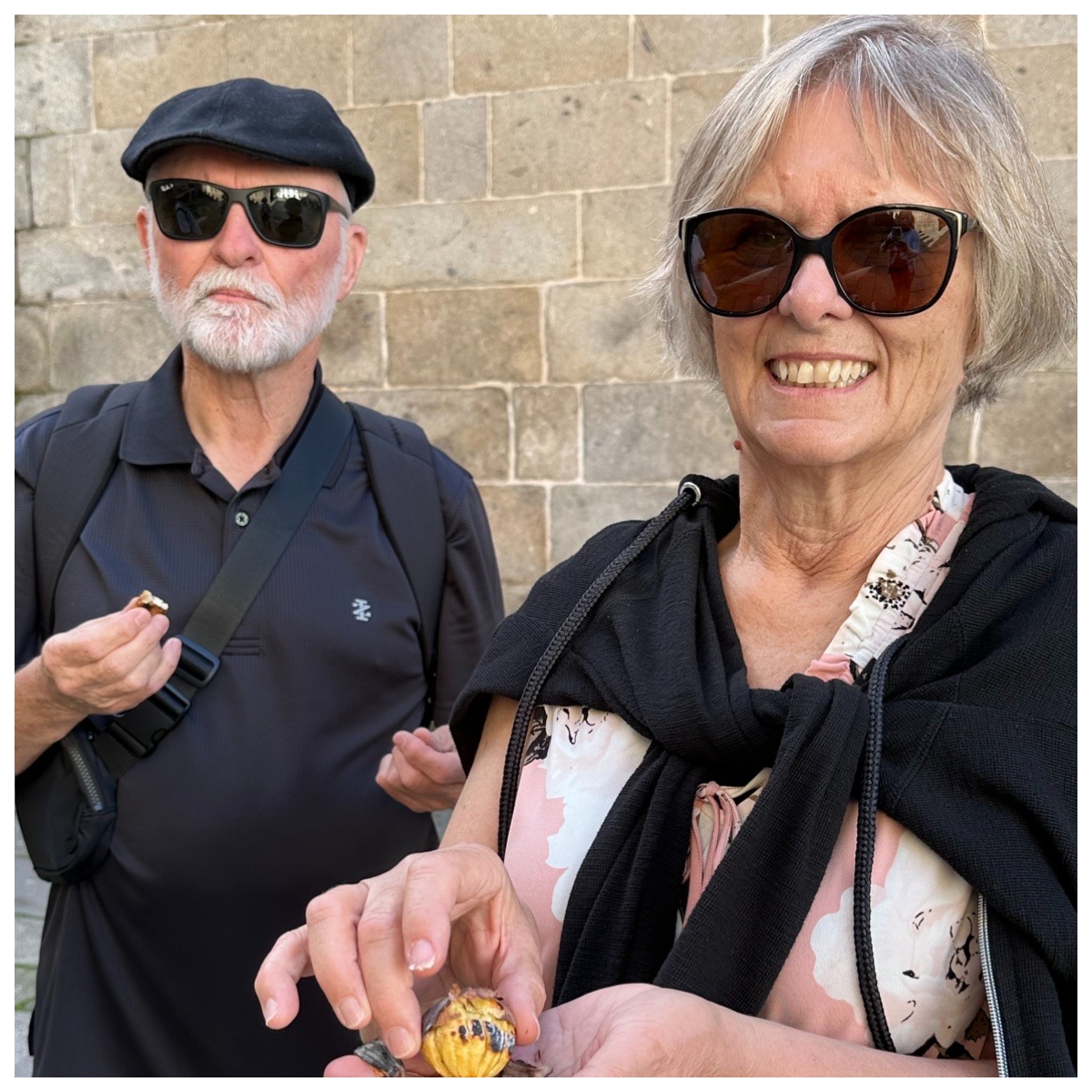
We also tried roasted chestnuts, which are sold everywhere on the streets in Portugal. We have to say that we weren’t fans.

Porto: Panoramic City

From Paris, we took a quick Vueling Air flight to Porto. A tip – we had a driver take us from our Paris Montmartre hotel to Orly Airport. For four people, this was an affordable and hassle-free choice and made the journey so much more pleasant. Arriving in Porto, it was a one train ride on their easy metro system and we were within a block of our hotel.

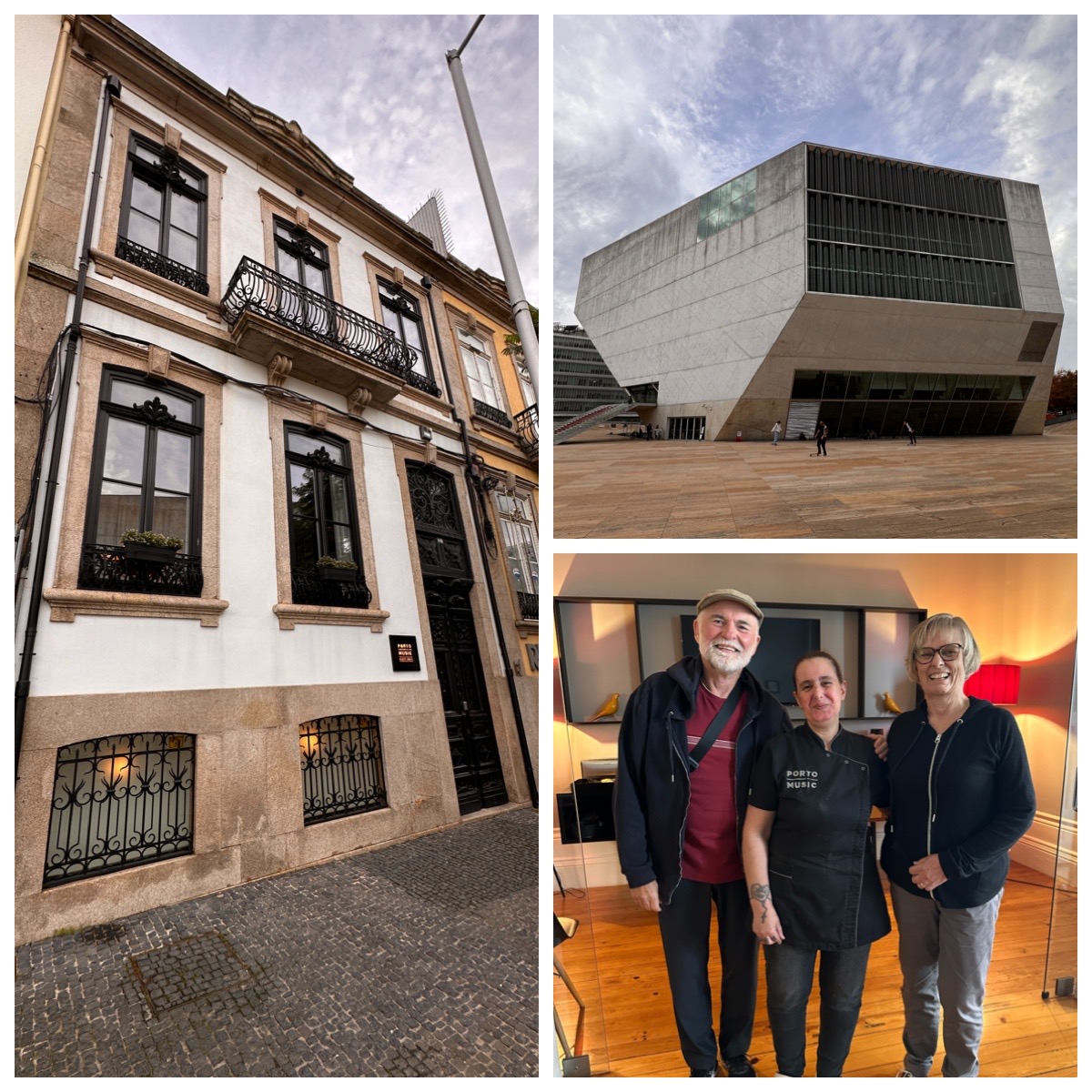
The Porto Music Guest House was a delight. With 7 rooms, the building was completely restored in 2017. It is well ran by Susanna and Antonio, and the heart of the house is Paula – always there for your every need, she is indeed a treasure! Our duplo deluxe room on the third floor was spacious, with high ceilings, spotlessly clean and well-equipped.

The guesthouse is directly across the street from the Casa da Mùsica.

Porto, like most European cities, has great squares and green spaces. We enjoyed quite a few of them!

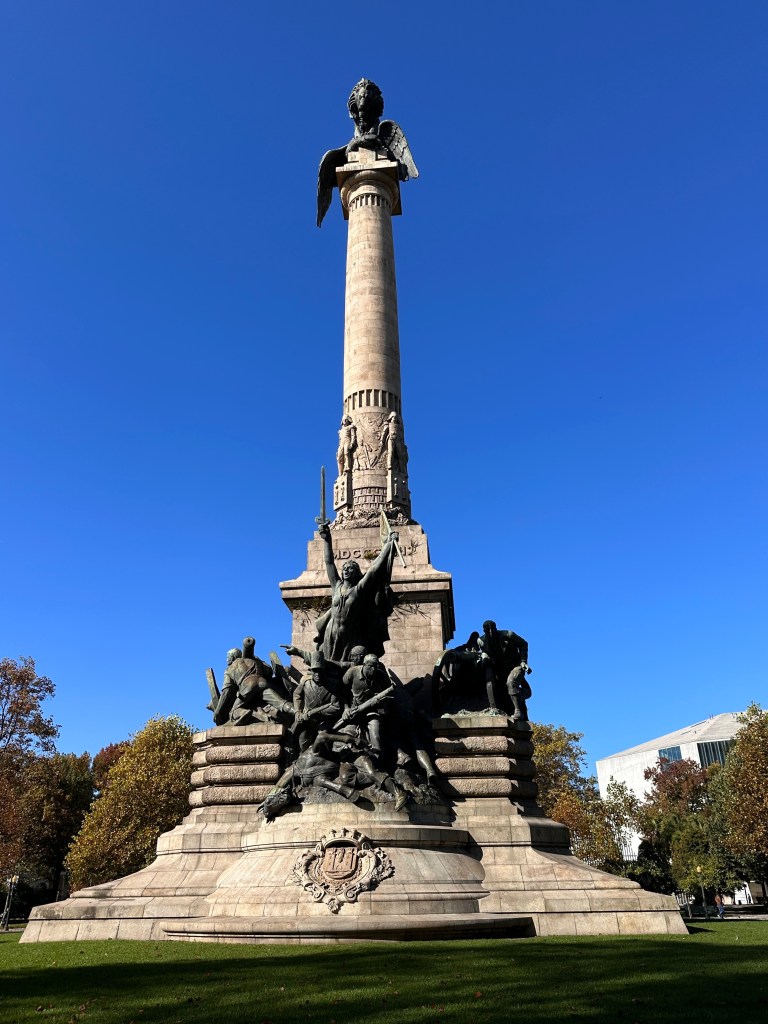
The Jardim da Rotunda da Boavista was next to our guesthouse. It is dominated by the obelisk in the centre, the Monument to the Heroes of the Peninsular War, which served as our beacon for returning to the guesthouse.

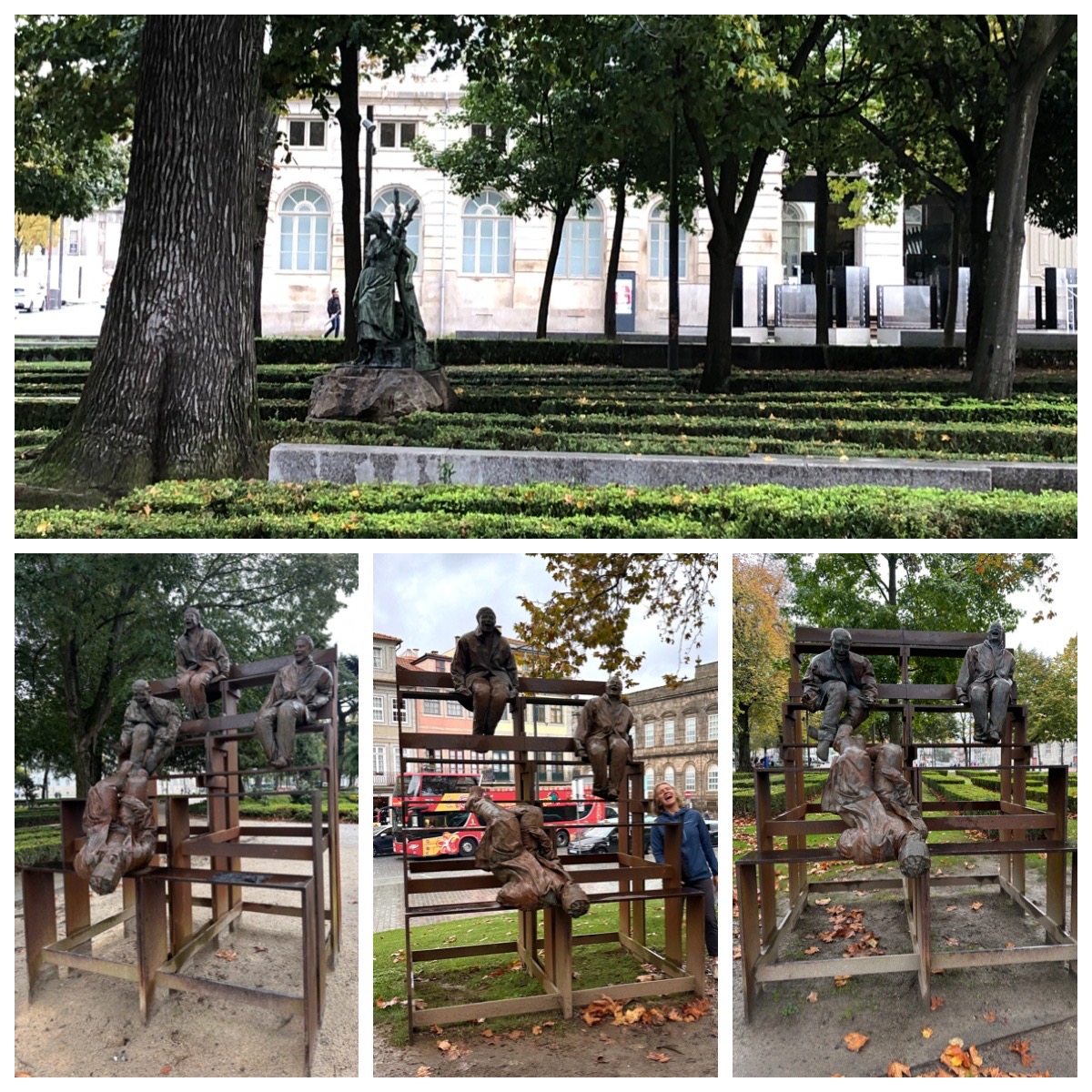
The well-manicured Jardim da Cordoraira contains the amusing ‘Thirteen Laughing Men’ statues.

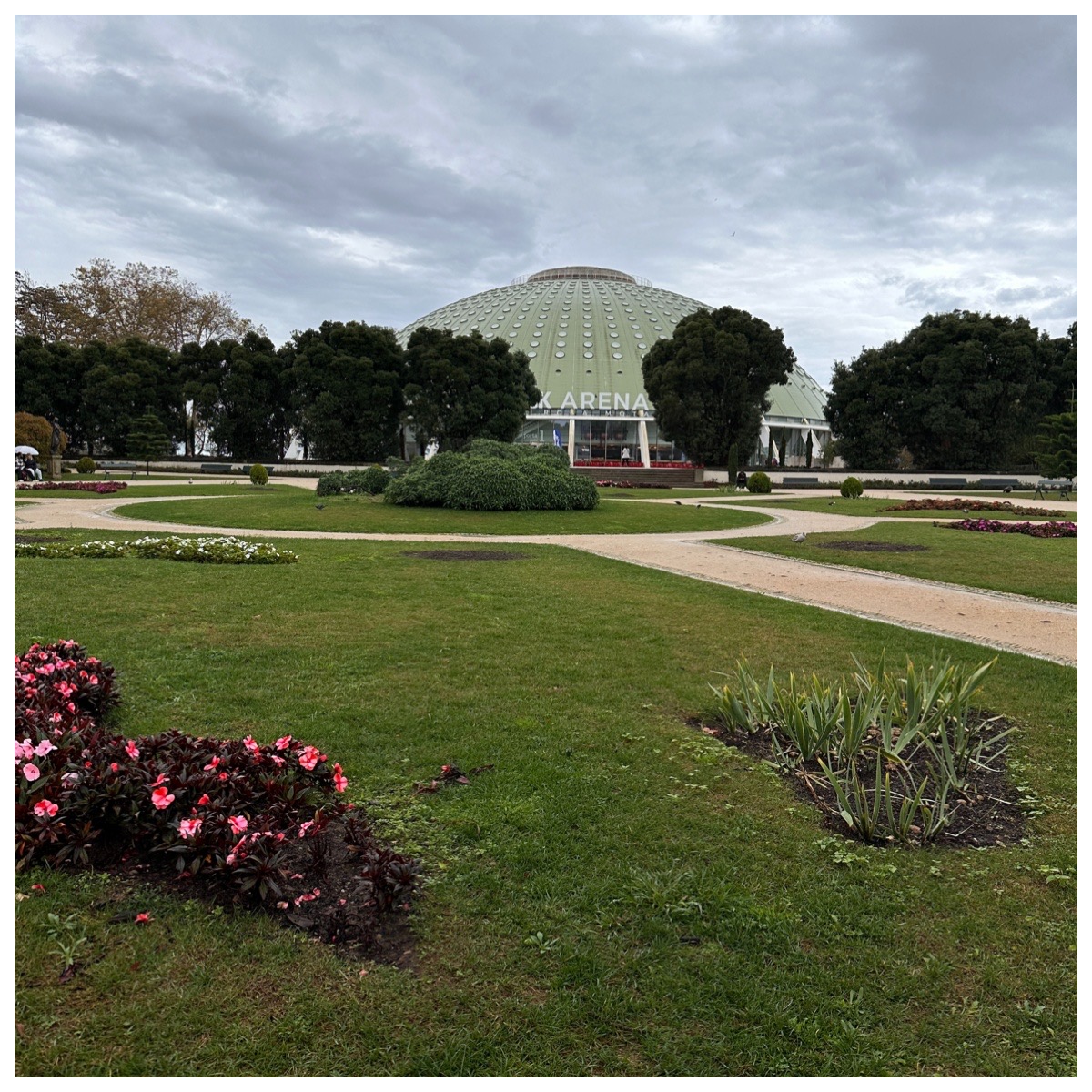
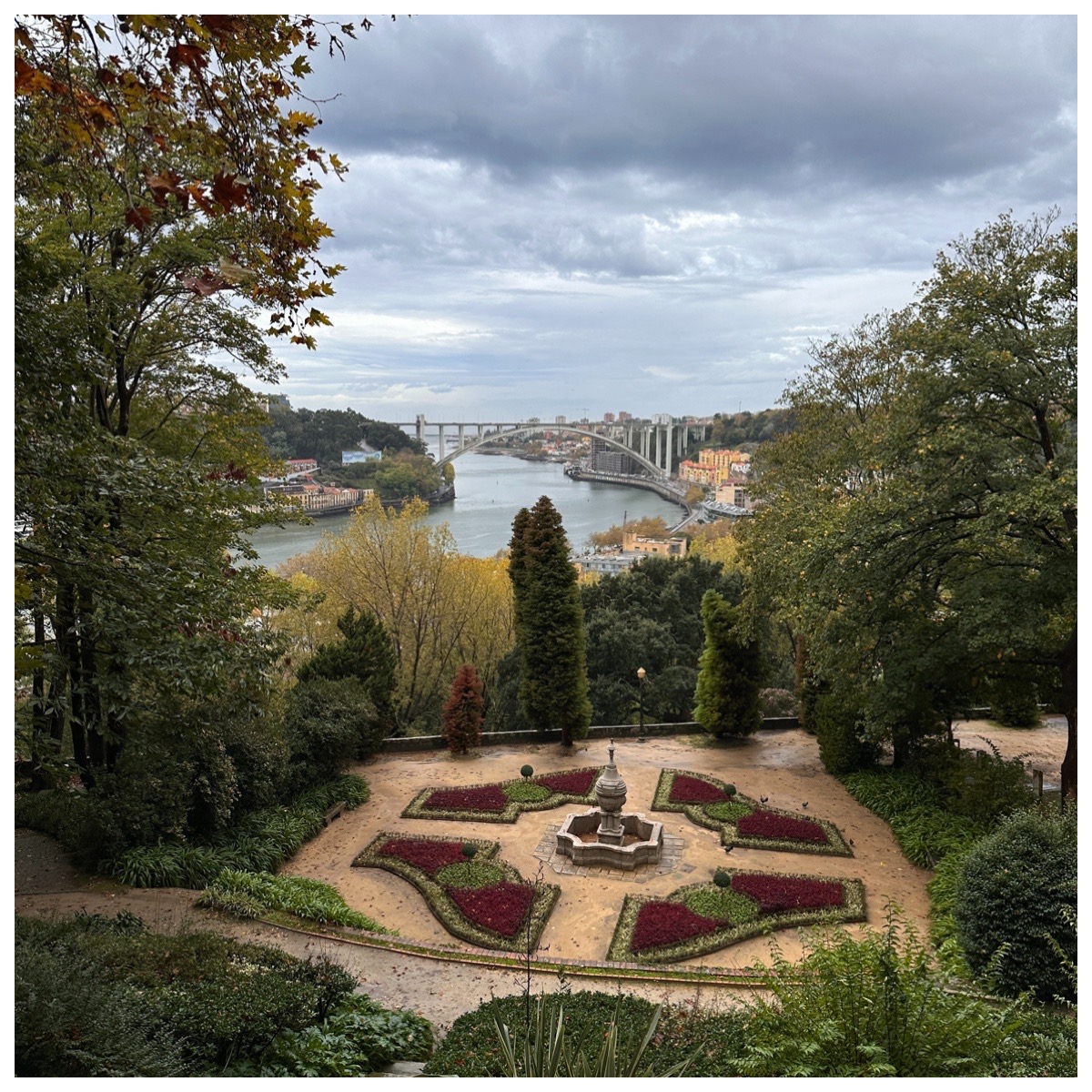
The Jardim do Palácio de Cristal is an 8 hectare garden created in the late 19th century and set on a hilltop overlooking the Douro River.

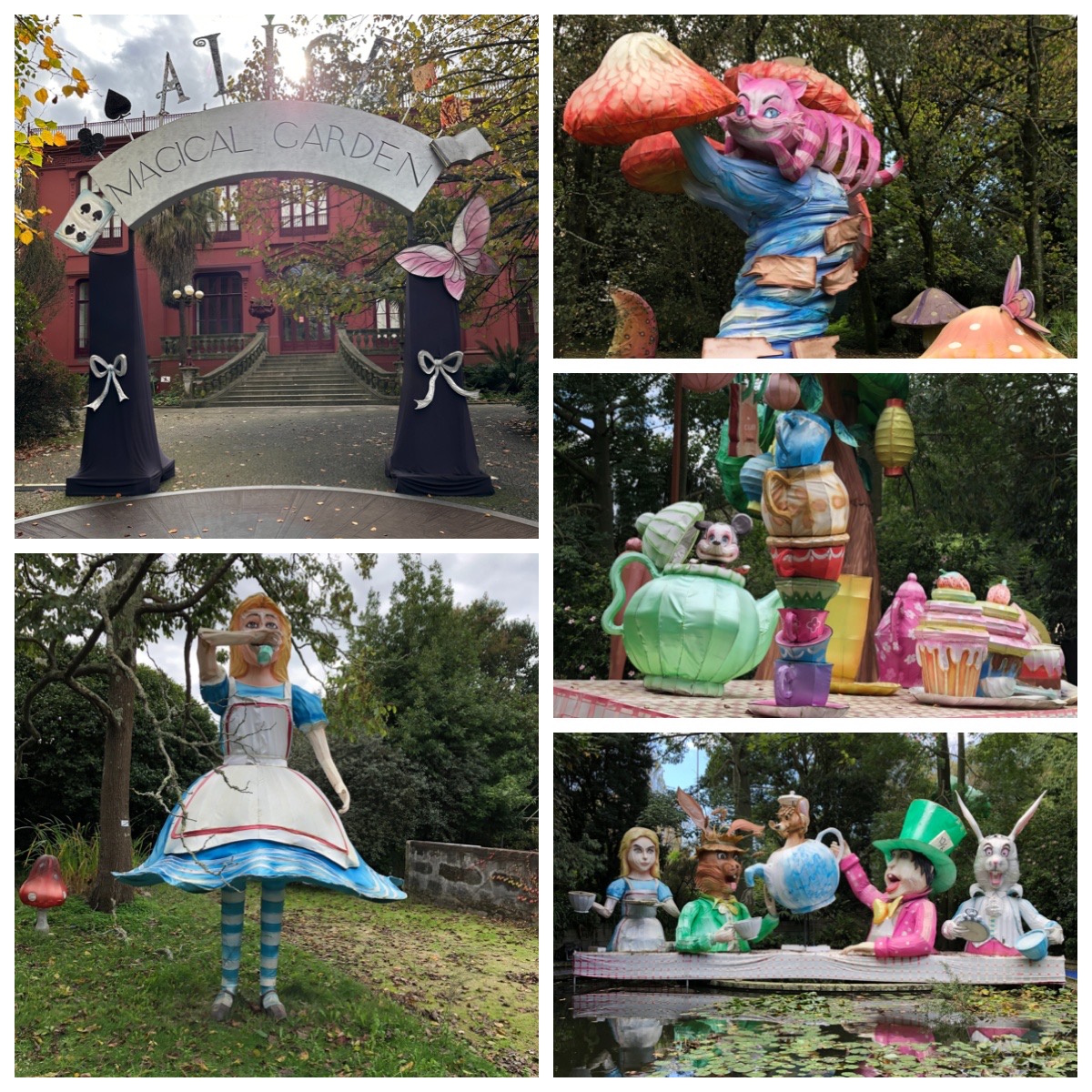
We visited the Jardim Botânico and discovered that an illuminated show had been created in the garden – the Alice Magical Garden. Although it was day and therefore not lit, it was still fun to tour the amazing display in this lovely garden.

The beautiful tiled sidewalks make every corner a wonder to view!

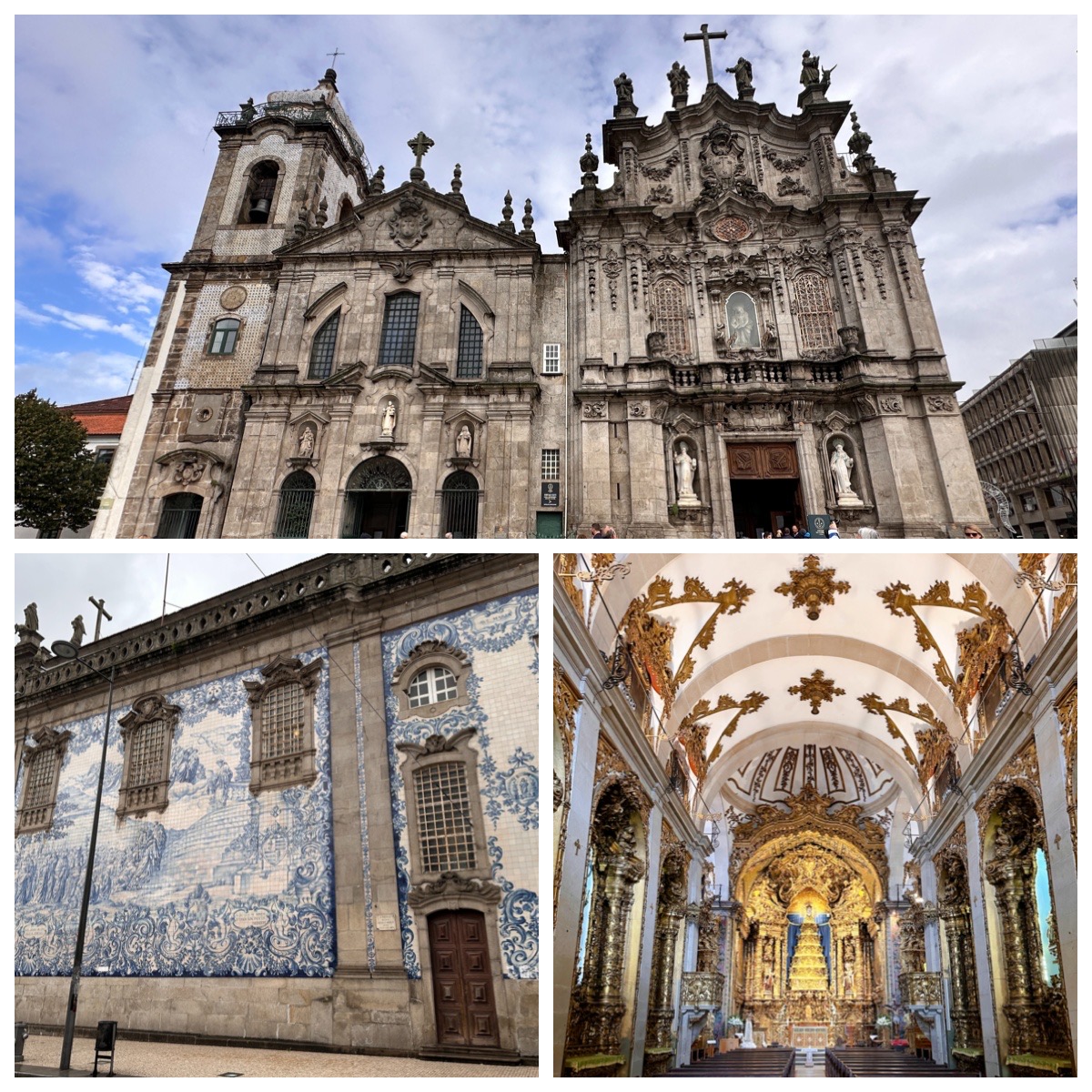
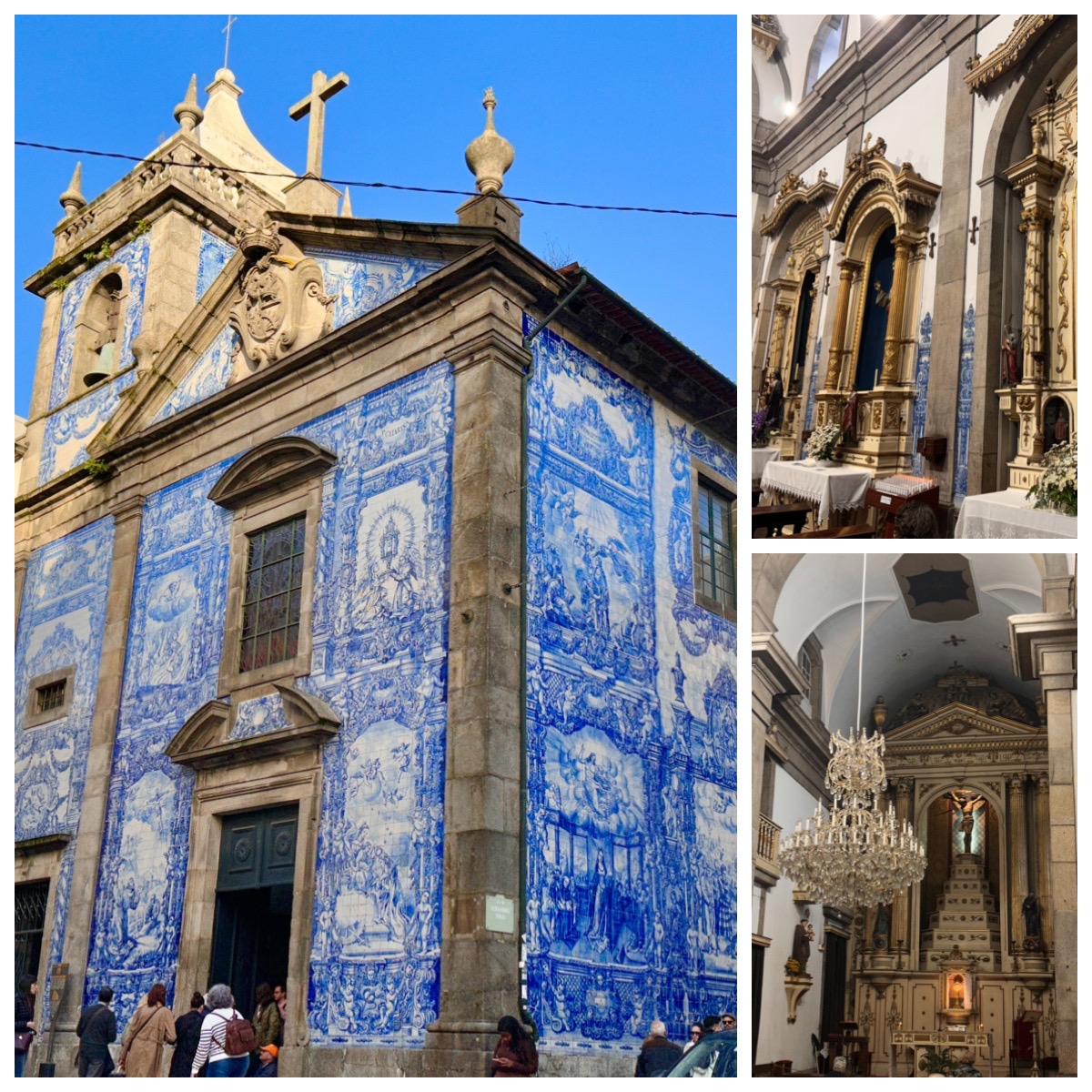
Our blog followers will know that I (Bev) am a big fan of European churches. The exteriors and interiors continue to amaze me. We found Portugal churches to be different from the Parisian churches that we visited. Whereas the French churches tended to be more spacious and airy with coloured textiles or paintings and amazing stained glass, the Portuguese churches are commonly more somber and serious, with intricate carvings and wonderful displays of gold and Portuguese tiles.

The two churches of Igreja dos Carmelitas Descalços and Igreja do Carmo sit side by side, separated by an easy to miss three foot wide house. The Carmelita church on the left was built in the 17th century for Carmelite nuns, and the Carmo Church on the right was built in the 18th century for Carmelite monks.

Legend says that the 3-storey house Casa Escondida (“Hidden House”) was built so that the two churches would not share a common wall and to prevent any relations between the nuns of Igreja dos Carmelitas and the monks of Igreja do Carmo. Or perhaps it was just constructed for purely aesthetic reasons to prevent an unsightly gap between the two churches.

The Clérigos Church and Tower were built in 1731 on a hilltop, making the tower the centre of the city’s panoramas.

The Igreja da Trindade was built in the 19th century and is one of the most imposing churches in Porto.

You can’t miss the beautifully tiled church of Santo Ildefonso.

We were in Porto on All Saint’s Day and our guest house was just around the corner from one of Porto’s largest cemeteries, Cemitério de Agramonte. Very interesting to view at any time, with its elaborate family mausoleums and numerous sculptures, the display of flowers on All Saint’s Day was awe-inspiring.

Tiles are everywhere in Porto. The São Bento Train Station with large panels of azulejo tile was completed in 1916 and it is fun to look at the many stories depicted in the tiles.

Porto is noted not only for the tiled buildings, but also for the beautiful ironwork on the balconies.

We rode one of Porto’s vintage trolleys to Foz do Douro. Foz sits where the Douro river meets the Atlantic Ocean.

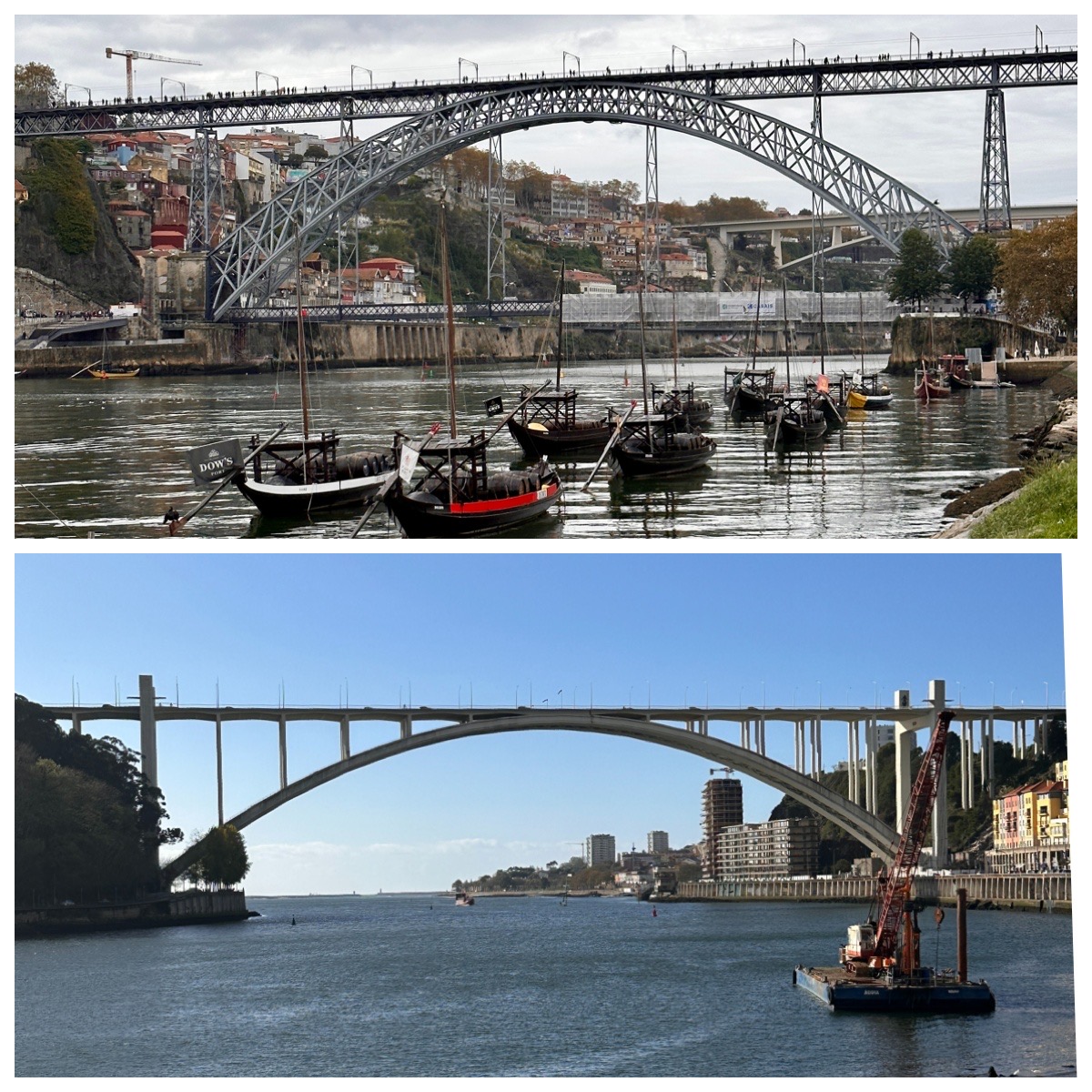
The panoramas of Porto are postcard pictures – or as our travelling companion Debbie said – these are the scenes we had on the jigsaw puzzles of our youth!

We spent 6 nights in Porto and would highly recommend a visit to this city – it will show you what Portugal is all about!

Stay tuned for blogs on a day trip we did to the historical city of Braga and a dip into the food – and port – of Porto!

Cheers,

Bev & Harvey