We spent the last week of our trip to Eastern Europe in Athens, the capital city of Greece. It is believed that Athens has been inhabited for 5000 years. The ‘Golden Age’ of Athens between 480 – 400 BC was founded upon the many advances of the earlier ancient civilizations. At that time, Athens was an artistic and intellectual hub and created the foundations of western civilization in democracy, philosophy, theatre and education.
We travelled from Thessaloniki to Athens International Airport on Aegean Airlines – a quick flight of less than an hour on another great airline. There is a metro line from the airport to the city centre, but for a small amount more cost, we once again chose to have a driver meet us at the airport and whisk us to our hotel.
The Bohemian Suites Athens is located in the Kolonaki neighbourhood. The building dates back to the 1850s when it operated first as the house of the Greek admiral Stamatis Kleanthis and later on as one of the most important journalism schools of the country. The structure lay neglected for years until two entrepreneurs transformed the property into a charming hotel. Architectural details like a sweeping wood staircase, high ceilings and very large well-decorated suites make this a lovely place to spend time in Athens. The staff were also superb.

Each morning, your made-to-order breakfast is served in the hotel courtyard – a beautiful setting and an excellent breakfast. One morning, it looked like rain was imminent so breakfast was brought to our room and we enjoyed it on our sheltered balcony!

Athens is a sprawling, metropolitan city with a population of over three million and the eighth largest urban area in the European Union. Many tourists visit without ever venturing beyond the old town and ancient zone but the city has many other great neighbourhoods. We visited a number of them, but certainly there are many more that could be explored if one were to return.
The Syntagma area bordered our neighbourhood of Kolonaki. It has been the city centre for the last two centuries. On its eastern borders are the Parliament Complex and the National Garden.
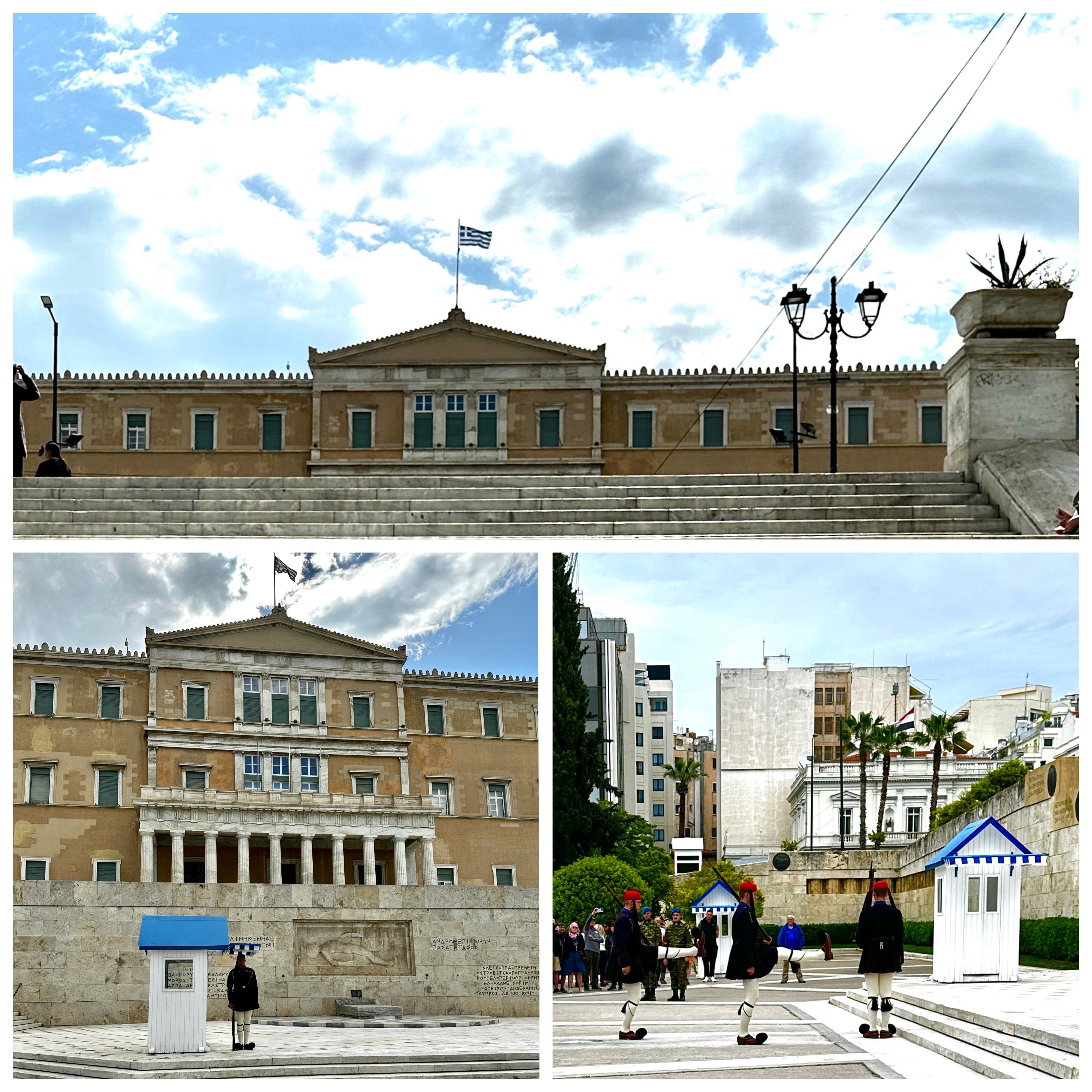
The Parliament Building is the former palace of King Otto. In front of the Neoclassical building is the Tomb of the Unknown Soldier – a simple marble slab with a cross, behind which an image of a fallen warrior is carved into the wall. The Tomb is guarded by the Evzone Guards. These guards are clad in traditional uniforms and at the top of each hour, a ceremonial changing of the guards is performed. Their slow-motion, high stepping gait is quite interesting (and amusing) to watch.
The 40-acre National Garden sits south of the Parliament Buildings. It was designed for Queen Amalia in 1839 and opened to the public in 1923. We enjoyed a lovely evening wandering its paths.

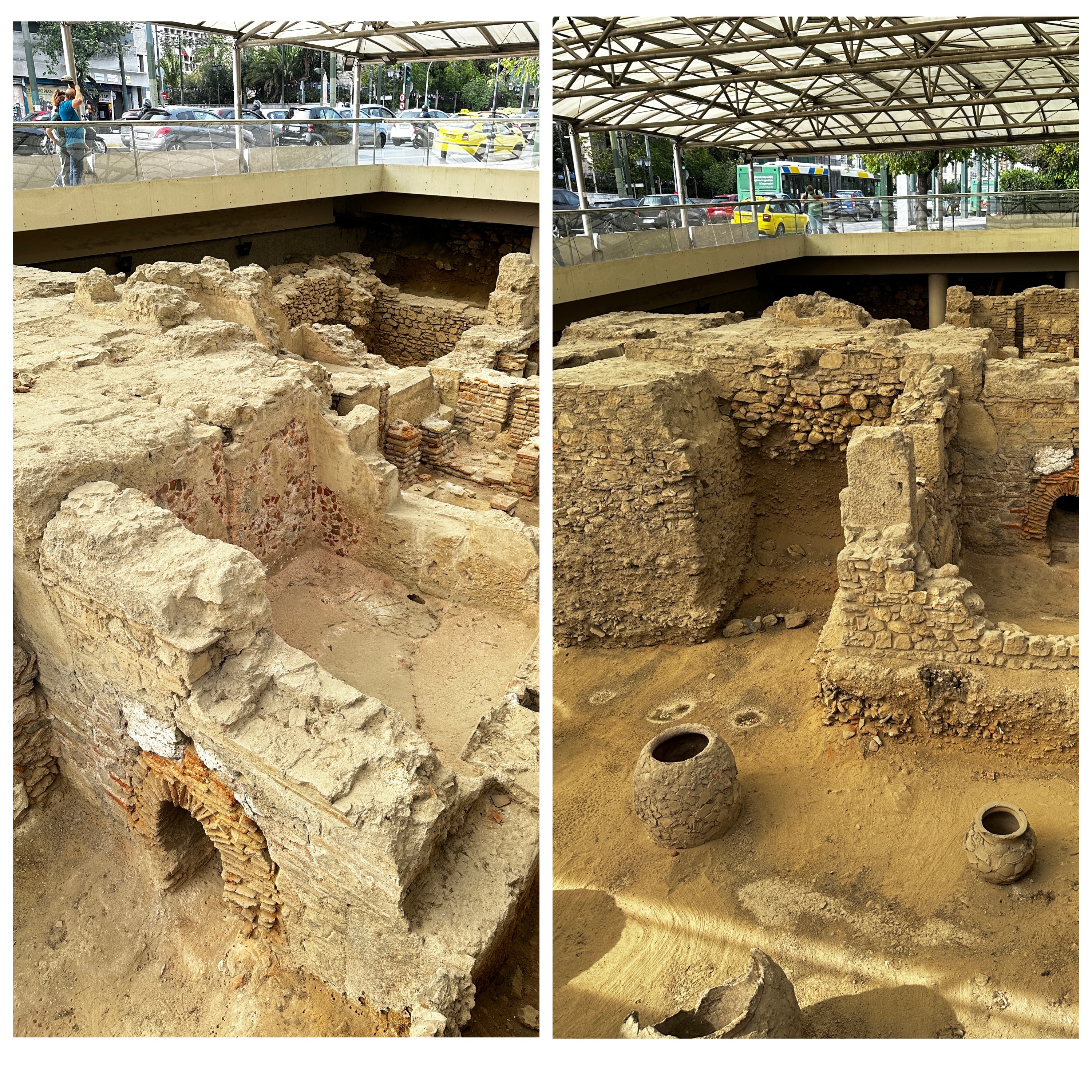
The archaeological site of the Roman Baths is located inside the National Gardens and along Amalias Avenue. The baths were built at the end of the third century AD, but recent excavations demonstrate that the area was first inhabited in prehistoric times as an important place of worship. The bathhouse was discovered during excavations for the construction of an airshaft for the Athens Metro. The airshaft was moved further south so that the finds could be preserved in their original location.
Syntagma Square is seen as the heart of the Greek nation. It contains a wide variety of trees and fountains and it feels like an oasis in the midst of the busy area. The square is where the Greek people gather to speak their minds – for national celebrations or any demonstrations. Each time we passed by, there were excellent entertainers busking in the square.

The pedestrianized Ermou Street stretches out from Syntagma Square. This street is lined by high-end shops, including a large number of shoe stores where Debbie and Bev could have spend many euros if there had been room in the luggage. There were also numerous buskers and street food vendors.
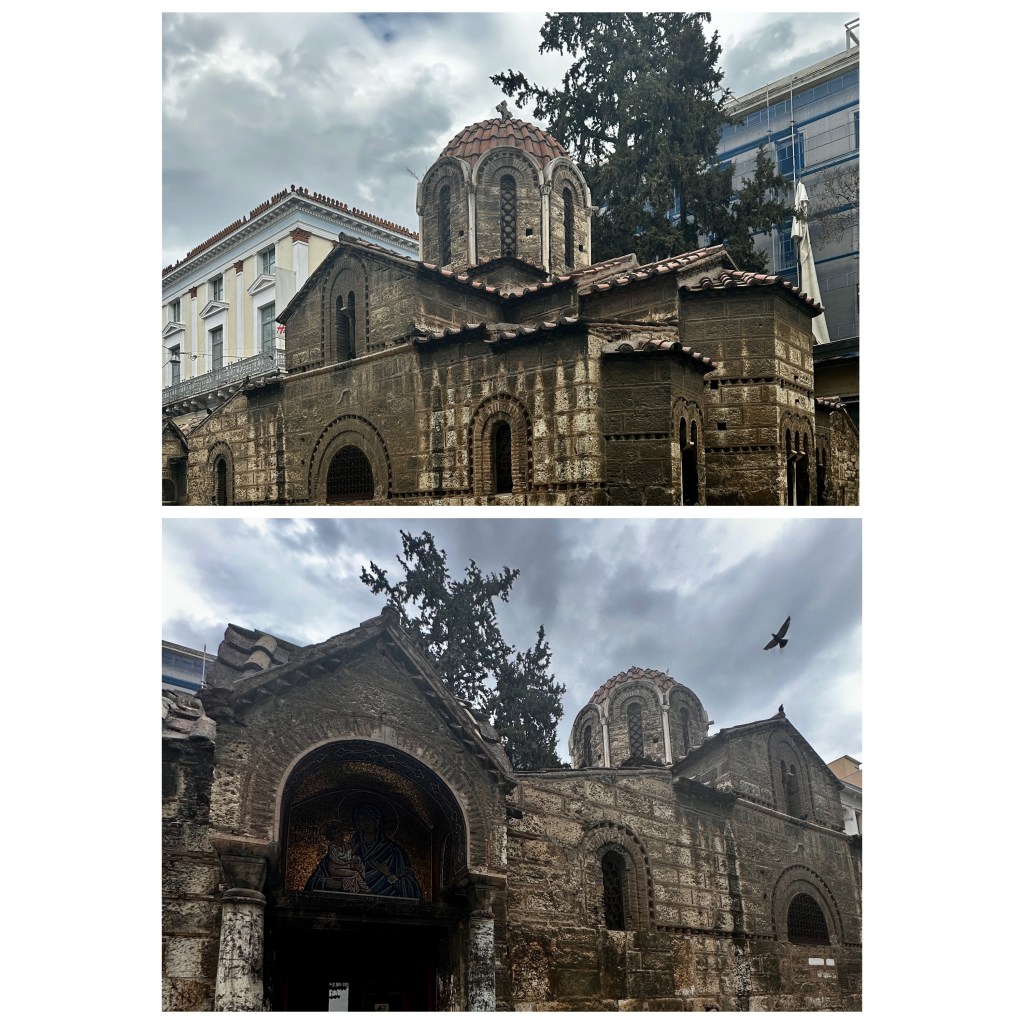
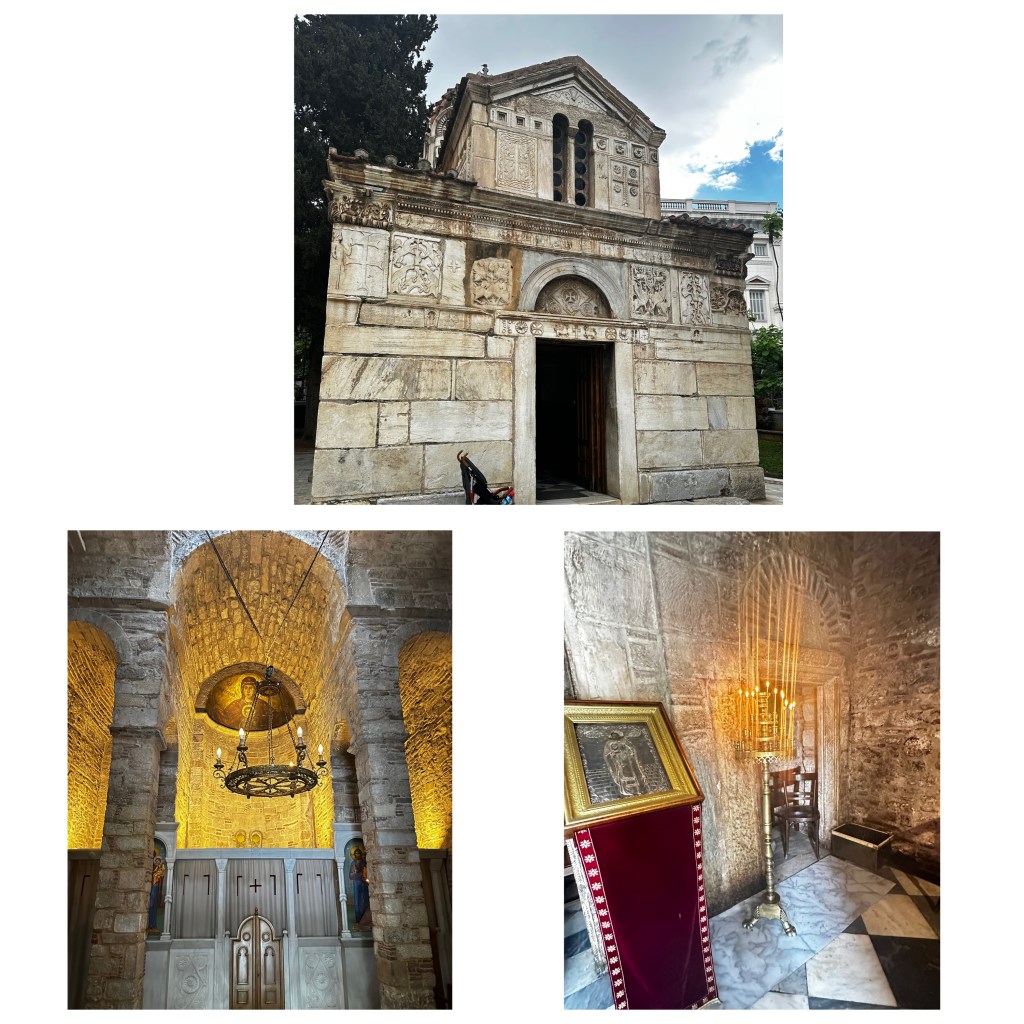
Walking down Ermou Street, you walk directly up to the Church of Panagia Kapnikarea – it sits in the middle of the road. This classic Orthodox Church is one of the oldest churches in Athens, built around 1000 AD.
The Metropolitan Cathedral of Athens (Metropolis) is the ‘official’ church of Athens and by extension, of Greece. It is the headquarters of the Archbishop of Greece. The church was built in 1842, although not completed until 1862, with materials from over 70 abandoned or ruined churches. Each time we passed by, there were massive line-ups of people waiting to enter.
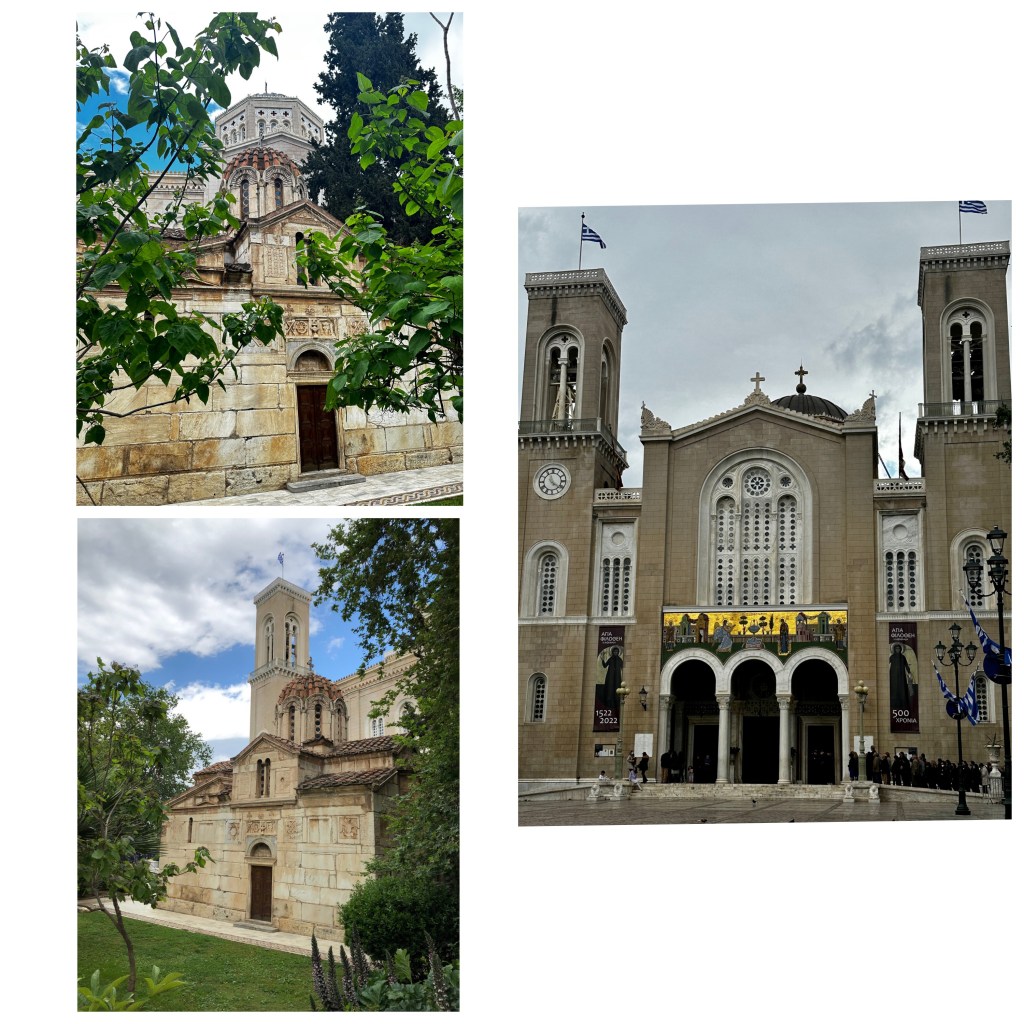
Nestled in the shadow of the Cathedral is the Church of Agios Eleftherios, often referred to as the “Little Cathedral” or the “Old Cathedral”. It was the home of the archbishop when the Ottomans converted the Parthenon to a mosque during their rule. There is some debate as to the date of construction of the church – varying between the 12th and 14th centuries.
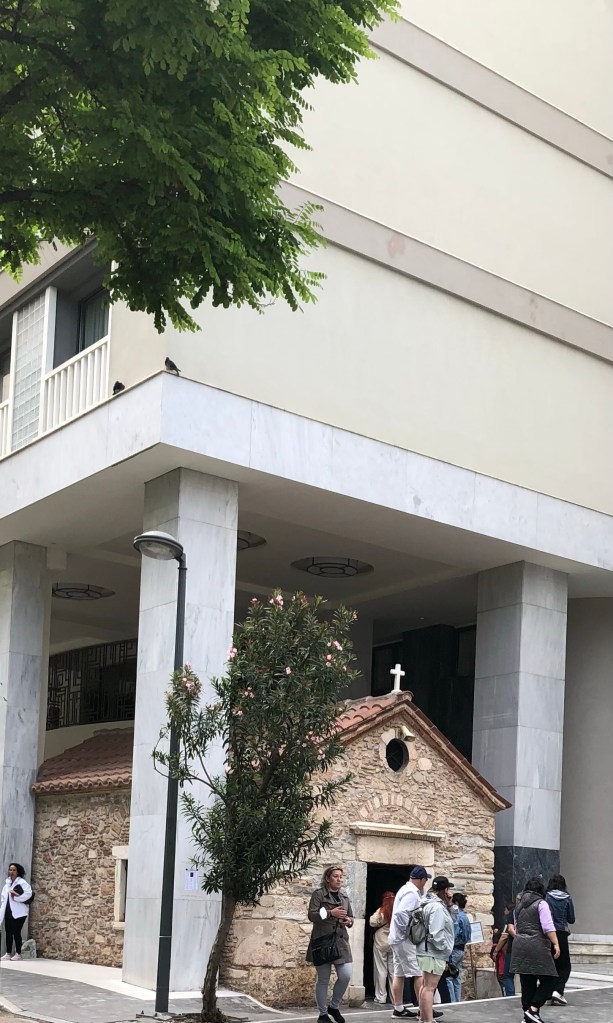
The tiny 16th century Agia Dynami honors the Virgin Mary and serves as a shrine for pregnant women to go and pray for a safe delivery. During redevelopment of the area in the 1950’s, the Greek Orthodox Church refused to surrender the property, so it was decided to build over it. The small single-aisle church found itself almost entirely ensconced in a modern municipal building. The surrounding building is now a hotel.
The Plaka neighbourhood sits at the foot of the Acropolis and is the tourism centre of Athens. It has some old-world ambience but is very touristic with streets lined with souvenir shops and tourist cafes and tavernas. Sandals are a hot item!

At the edge of the Placa sit the Arch of Hadrian and the Temple of Zeus. The Arch – a classical Roman triumphal arch – is 18 m high, 12.5 m wide and 2.3 m in depth. It was built in 131 AD as part of the wall separating the old and new cities of Athens. On the west side an inscription reads, “This is Athens, the ancient city of Theseus,” while on the east side, a similar inscription reads, “This is the city of Hadrian and not of Theseus.”

The Temple of Olympian Zeus in Athens, also known as the Olympieion, was built over several centuries starting in 174 BC and only finally completed by Roman emperor Hadrian in 131 AD. Its 104 11-meter-tall tall columns and sheer size (110 m by 44 m) made the temple one of the largest ever built in the ancient world. Only 15 columns remain standing. Currently, there is extensive structural reinforcement and conservation being performed on the temple.

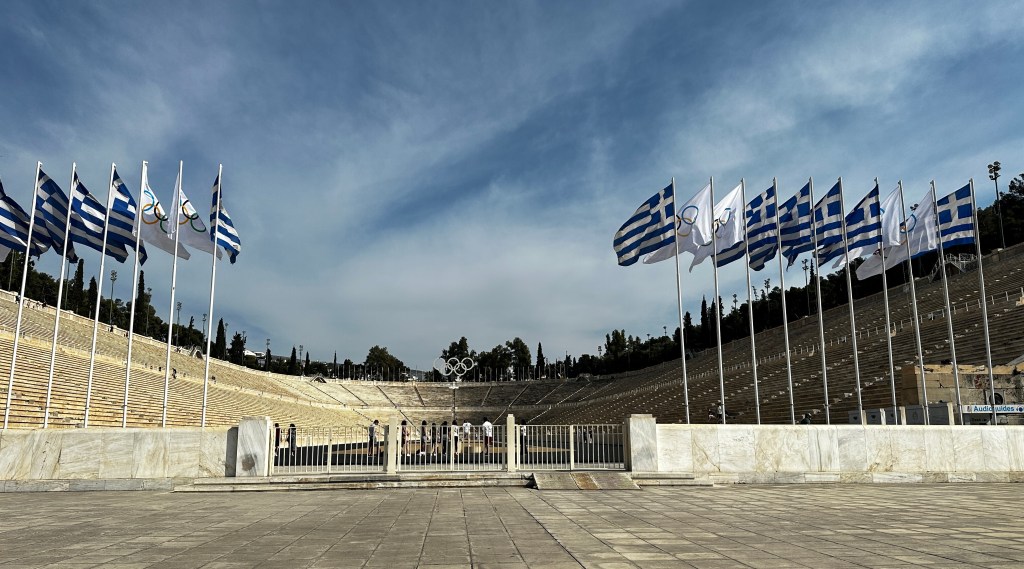
The Panathenaic Stadium is located on the site of an ancient stadium. It was built in 144 AD with a capacity of 50,000 seats. After the 4th century, it was largely abandoned. In 1869, it was excavated to host the Zappas Olympics of 1870 and 1875. It was then further refurbished to host the opening and closing ceremonies of the first modern Olympics in 1896 and was the venue for 4 of the 9 contested sports. It was used for various events in the 20th century and once again became an Olympic venue in 2004, when it served as the finishing point for the marathon. It is also the last venue in Greece from where the Olympic flame handover ceremony to the host nation takes place. It is the only stadium in the world built entirely of marble and currently seats about 45,000.
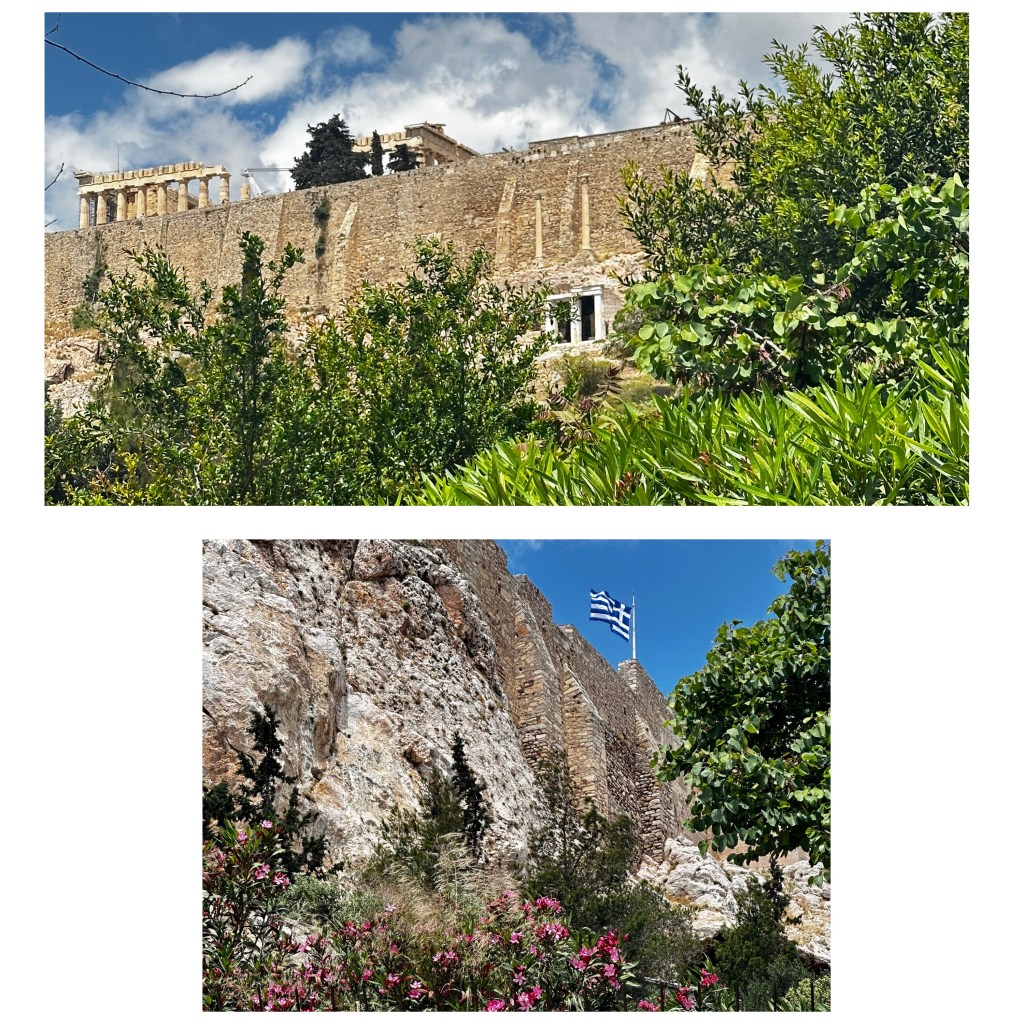
Anafiotika is a charming neighbourhood built beneath the walls of the Acropolis. Tiny homes and churches are built on narrow lanes clinging to the hillside. Flowers and trees abound in this peaceful area.
The Holy Church of Saint George of the Rock (Agios Georgios) was built in 1850 on the site of an older Byzantine church.
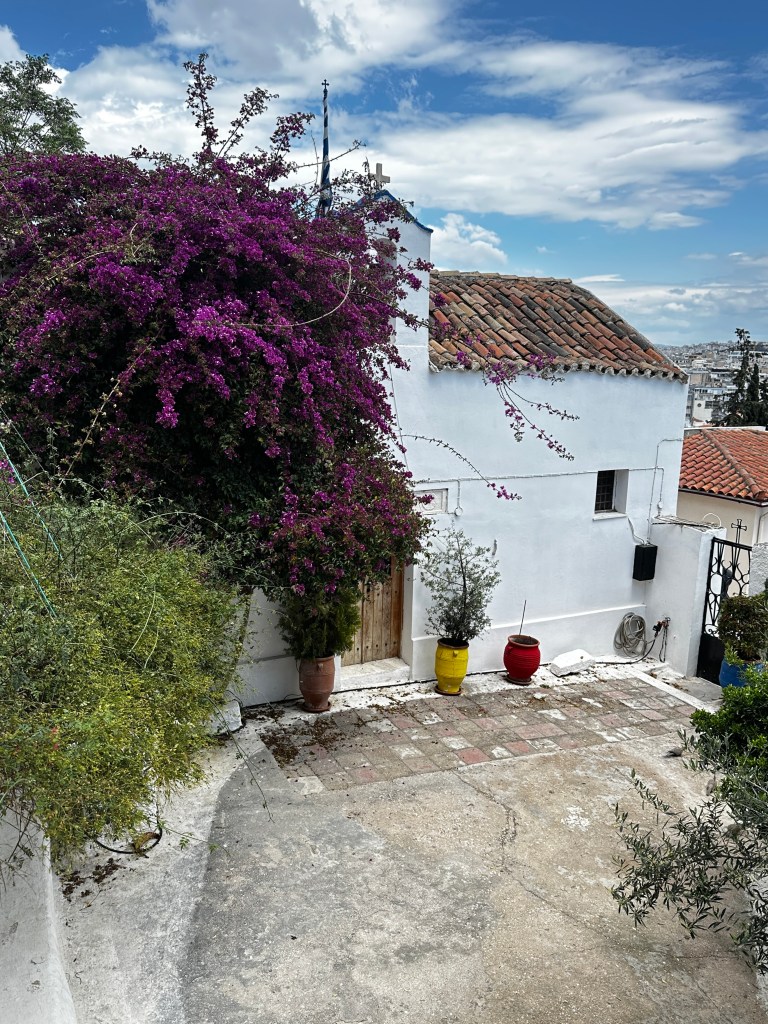
The views of Athens from Anafiotika and the flowers on the narrow lanes were wonderful!

The Monastiraki area borders the Plaka. In this area, a number of ancient archeological sites can be found.
The Roman Forum was constructed when the Romans conquered Athens in 86 BC and was the commercial centre of Roman Athens. Today, the excavations of the ruins can be viewed well from the hillside next to it, but if you want a closer look, tickets to enter are available – we chose to look from above.
The octagonal, 12-meter-tall Tower of the Winds, also called the Horologium, stands intact at the end of the Forum. Built in the first century, this tower was an ingenious combination of clock, weather station and guide to the planets. A weathervane and sundials indicated the prevailing winds as well as the time. Water flowing down from the Acropolis powered the hands of a clock showing not only the time but the day of the year and the month of the zodiac.

Agora Square is the touristy epicentre of the Placa and it was filled with tourists as we passed through. To the left of the square sit the remains of the Library of Hadrian, which was created by Roman Emperor Hadrian in 132 AD. The large rectangular cultural centre originally had 100 marble columns.

For 900 years (~600 BC – 300 AD), the Ancient Agora was where the people gathered – to shop, to pass laws, to worship the gods and to be entertained. This large area is now mostly a field of humble ruins and you are able to purchase tickets to wander about (you can probably guess that we did not). The largest structure was the Stoa of Attalos, which was originally built by Roman Emperor Hadrian in 132 AD. A faithful reconstruction was erected in the 1950’s. The ancient shopping mall had shops on the main floor and offices on the upper floor. The marble building was lined with 45 Doric columns and 22 Ionic columns. It now houses the Museum of the Ancient Agora.

North of Monastiraki is the quirky area of Psyrri, where locals still outnumber the tourists. Many of the area’s dilapidated buildings echo its recent history as a hotbed of poets, musicians, revolutionaries and troublemakers. Gentrified prior to the 2004 Olympic Games, it now is host to Athen’s trendiest bars, restaurants and nightlife.
The streets of Psyrri are filled with a plethora of vintage and second-hand stores,

There are some very eclectic restaurants in Psyrri, including the Alice in Wonderland themed Little Kook.
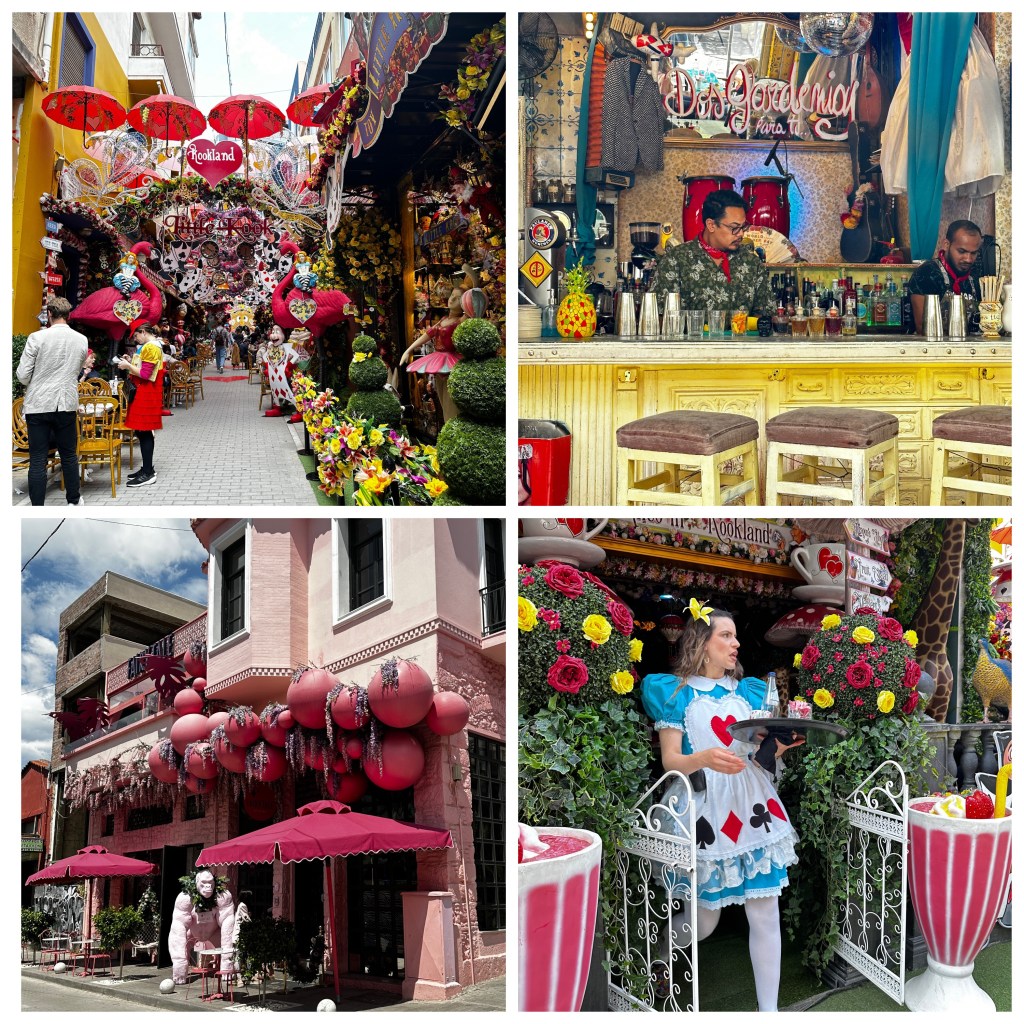
We however ventured a bit further and found a delightful spot for a coffee break!

Psyrri is known for its street art, both commissioned formal and random murals and graffiti. We saw much of it while we wandered, but if we were to return, it would be fun to take a tour or follow one of the on-line self-guided routes.

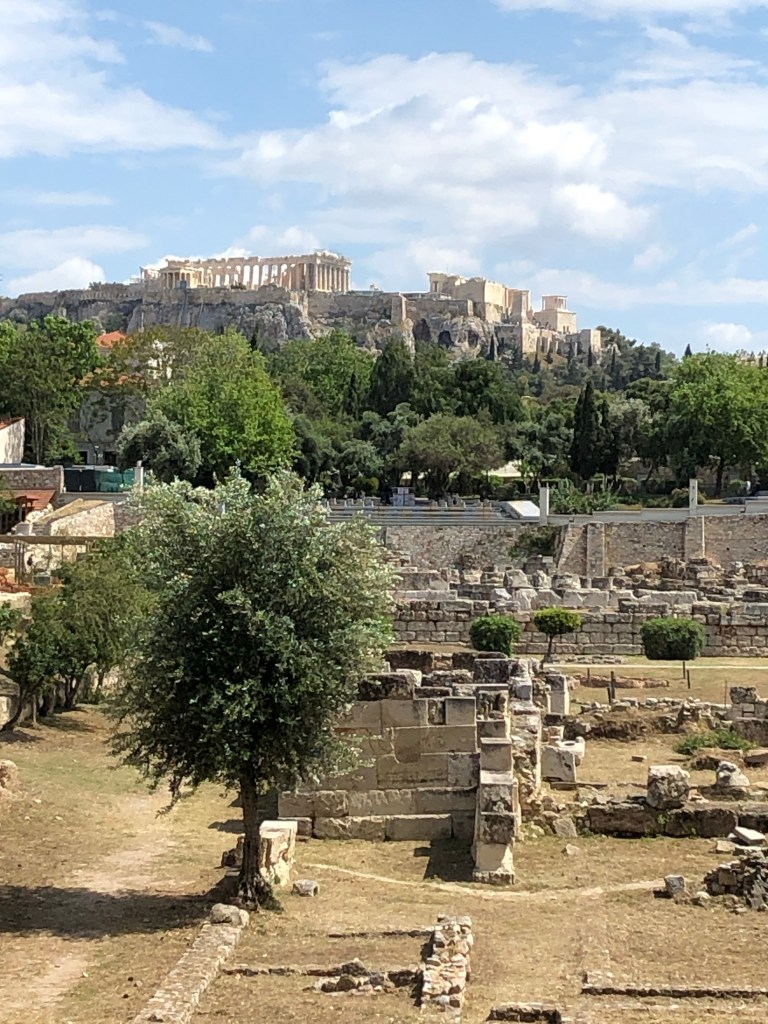
The Kerameikos Ancient Cemetery was the cemetery of ancient Athens and was continuously in use from the 9th century BC until the Roman times. Excavations began in 1870 and archaeologists have found columns of temples, marble statues, remain of public buildings, funeral offerings and thousands of tombs. During the construction of the adjacent Kerameikos Metro Station, 1,000 more tombs were found dating from the 5th and the 4th century BC.
The Central Market (Varvakios Agora) area is full of shops and stalls selling most anything one would want to purchase. Both the streets surrounding the actual covered market and the market itself overwhelm your senses with the colours, variety and smells. And yes, as in Thessaloniki, they don’t waste any part of the animal. We found the inclusion of the internal organs in the hanging carcasses interesting.

When you think of Athens, the Acropolis is top of mind. The importance of this ‘high city’ and the contributions to modern civilization are almost over-whelming. I didn’t think that I would find it so awe-inspiring until we were there – but standing amidst it really struck me as one of the experiences that I am most thankful for in our many travels.
Not surprisingly, the Acropolis is one of the busiest tourist attractions in the world. We read that as many as 6000 cruise passengers can visit the site in a single morning. So we scoured websites and guide books to come up with the best strategy to avoid as much of the chaos as possible. We entered through the south entrance – this one is apparently more often less crowded than the west entrance. We visited in the late afternoon, arriving at approximately 5:30 pm. The site was open until 8 pm so this afforded us plenty of time. This strategy worked and we were so pleased that there were no huge crowds to contend with. Also, later in the day, it isn’t as hot – in the mid-day, there really would be no place to hide from the sun.
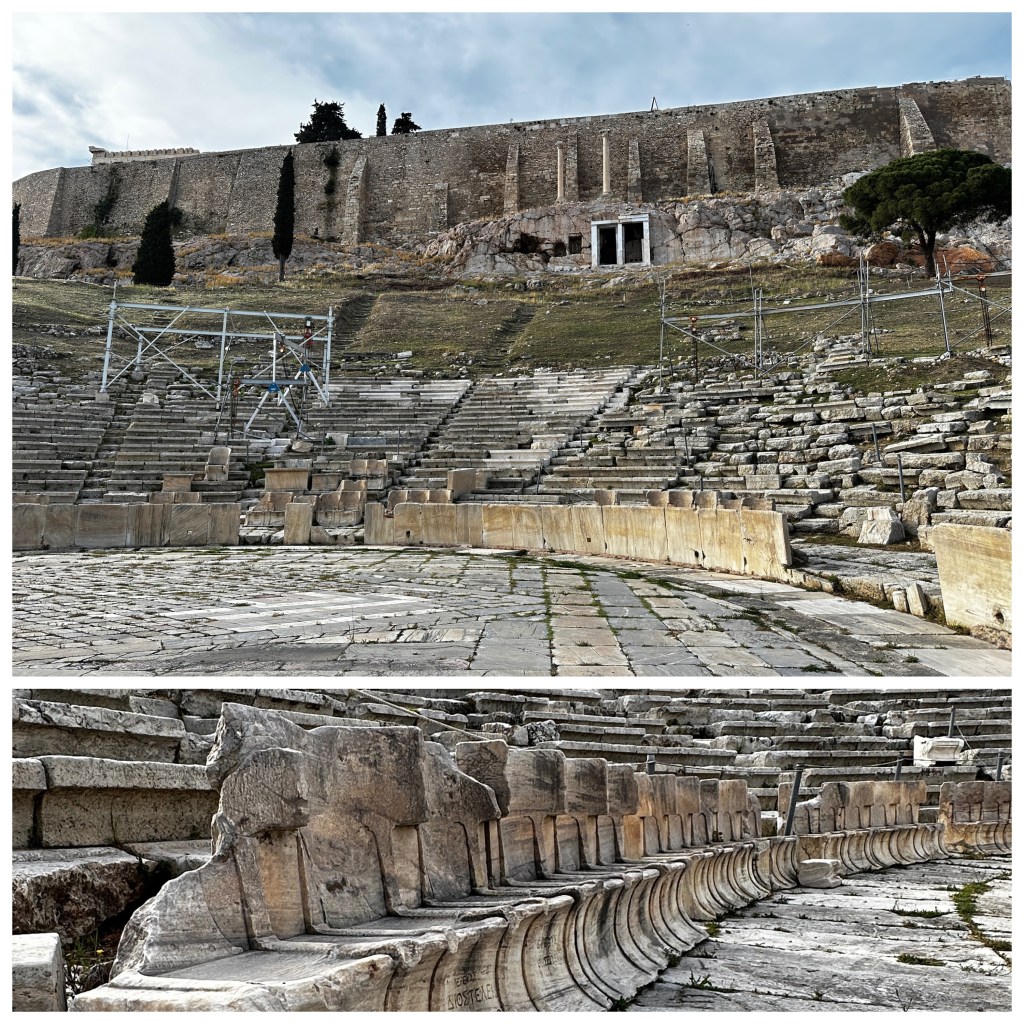
The Theatre of Dionysus sits on the south side of the Acropolis. It is credited with the being the prototype for Greek theatres and is where classical Greek plays were first presented. Tiers of stone seats capable of accommodating as many as 17,000 spectators were constructed in the mid-4th century BC. The theatre continued in use until approximately 500 AD when it fell into disuse and was eventually covered with earth fill. The theatre was first excavated in 1838, a process continued in the 1860s and the 1880s. Further excavation and some restoration of the theatre began in the 1980s and continues today.
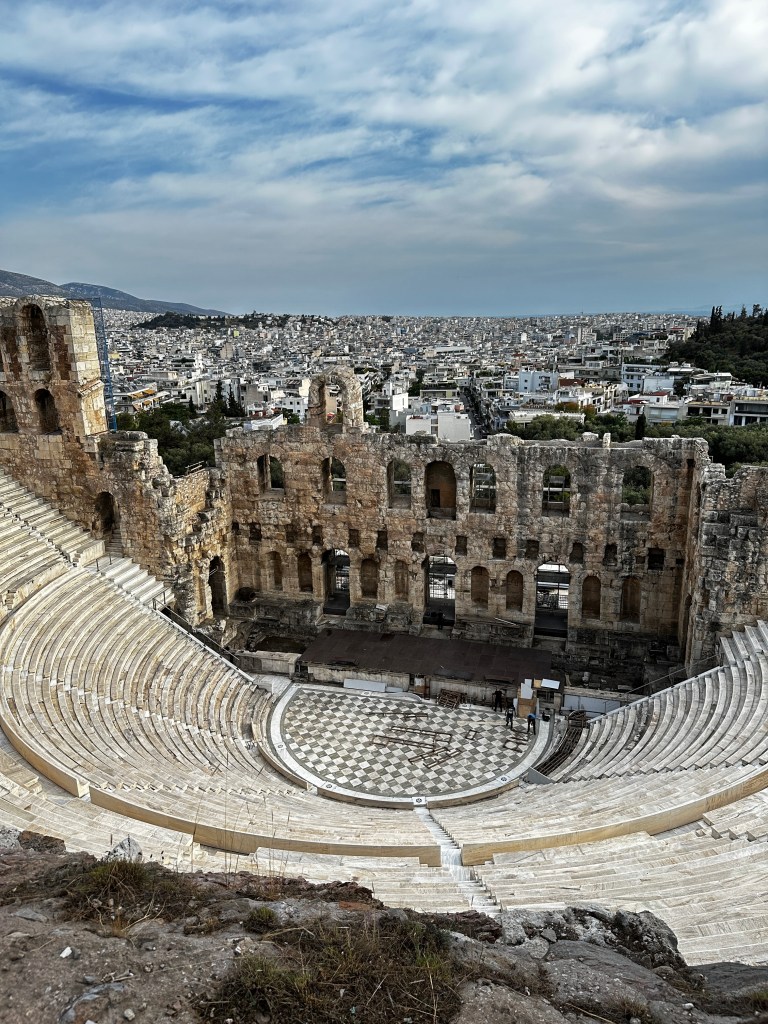
The Odeon of Herodes Atticus was a 5000 seat amphitheatre built between 160 – 174 AD by Herodes Atticus, a wealthy landowner, as an ode to his wife. The original structure was destroyed some 100 years after it was built and it became another ruin for a great deal of time. Some restoration and rebuilding took place in the late 1800s / early 1900s and it was fully reconstructed in the 1950s with its grand opening in 1955. Today, it hosts musical, dance and theatrical performances under the stars. It would be a magical experience to attend one of these!
The Propylaea is the grand entrance to the Acropolis, designed between 437–432 BC. It was a huge central building, divided into three parts by two rows of Ionic columns. Ancient visitors were welcomed to the Acropolis with this grand structure – as it continues to do today.

The Erechtheion is a two-story temple on the slope of the hill below the Parthenon. It was constructed around 410 BC in an elegant Ionic style to house the ancient wooden statue of Athena and to glorify the great city at the height of its power and influence.

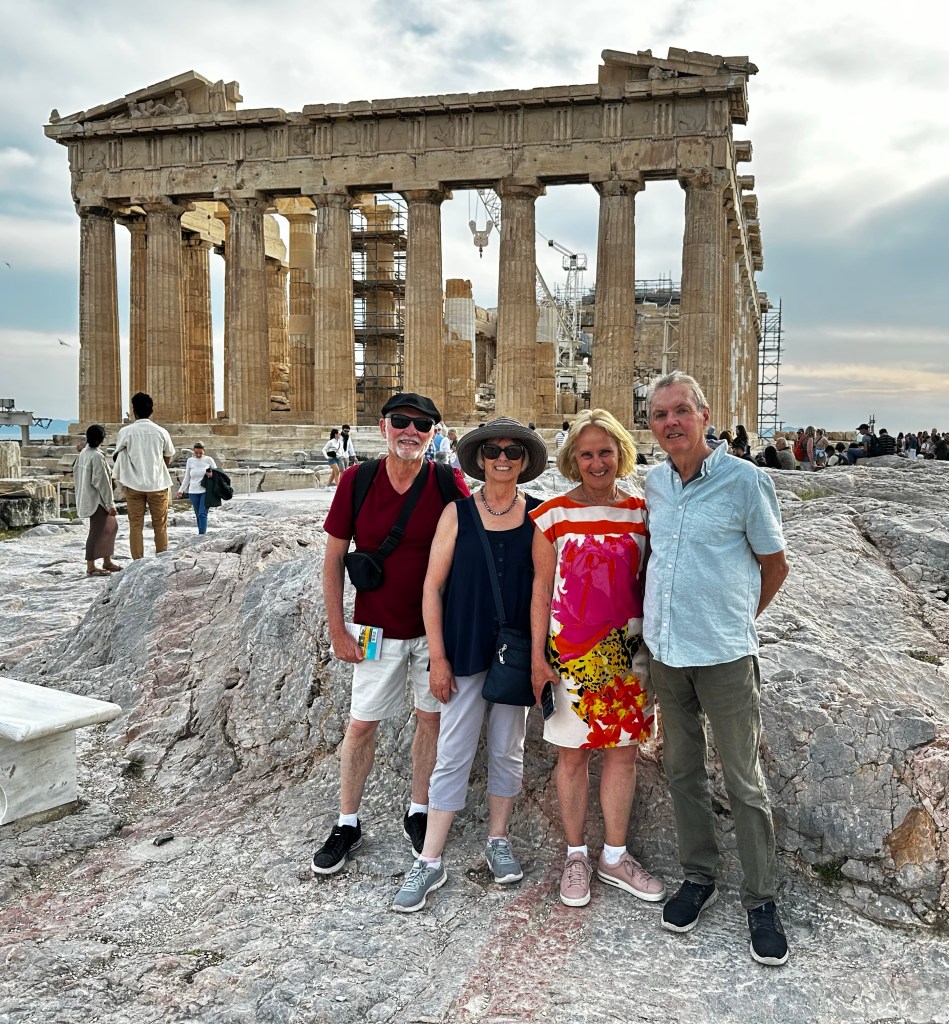
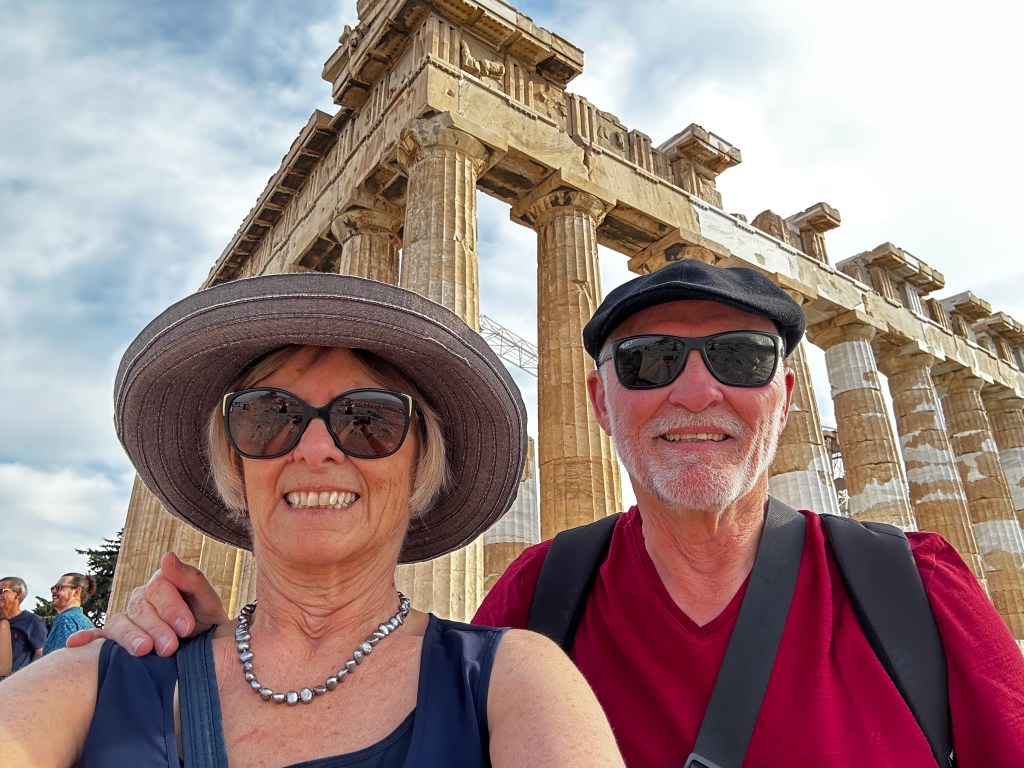
The Parthenon is the temple that dominates the hill of the Acropolis. It was built in the mid-5th century BC and completed in less than a decade. Dedicated to the Greek goddess Athena Parthenos, the temple covers more than 23,000 square feet. Although it has suffered damage over the centuries, including the loss of most of its sculpture, its basic structure has remained intact. The scaffolding, cranes and modern construction materials that are present today are part of an ongoing reconstruction project. This involves a massive process of cataloguing every single stone and putting it back together. Archaeologists are using original materials wherever possible. The goal isn’t to create a fully restored building, but to allow the ruin as we see it today to continue.

Exarchiea is a neighbourhood just beyond the upper class area of Kolonaki. Often referred to as the anarchist neighborhood of Athens, Exarcheia is a colourful area that is home to migrants, students, artists, and intellectuals. It has a reputation as a leftist stronghold and some guidebooks advise against a visit. We walked through the area on a number of occasions and found it to be quite interesting, with buildings coated in graffiti and street art. Perhaps, it would be best to avoid the area after dark but it felt very safe in the daylight.


North of Syntagma Square and the city centre, you encounter more of Athenians living their day-to-day lives, as well as some notable sights.
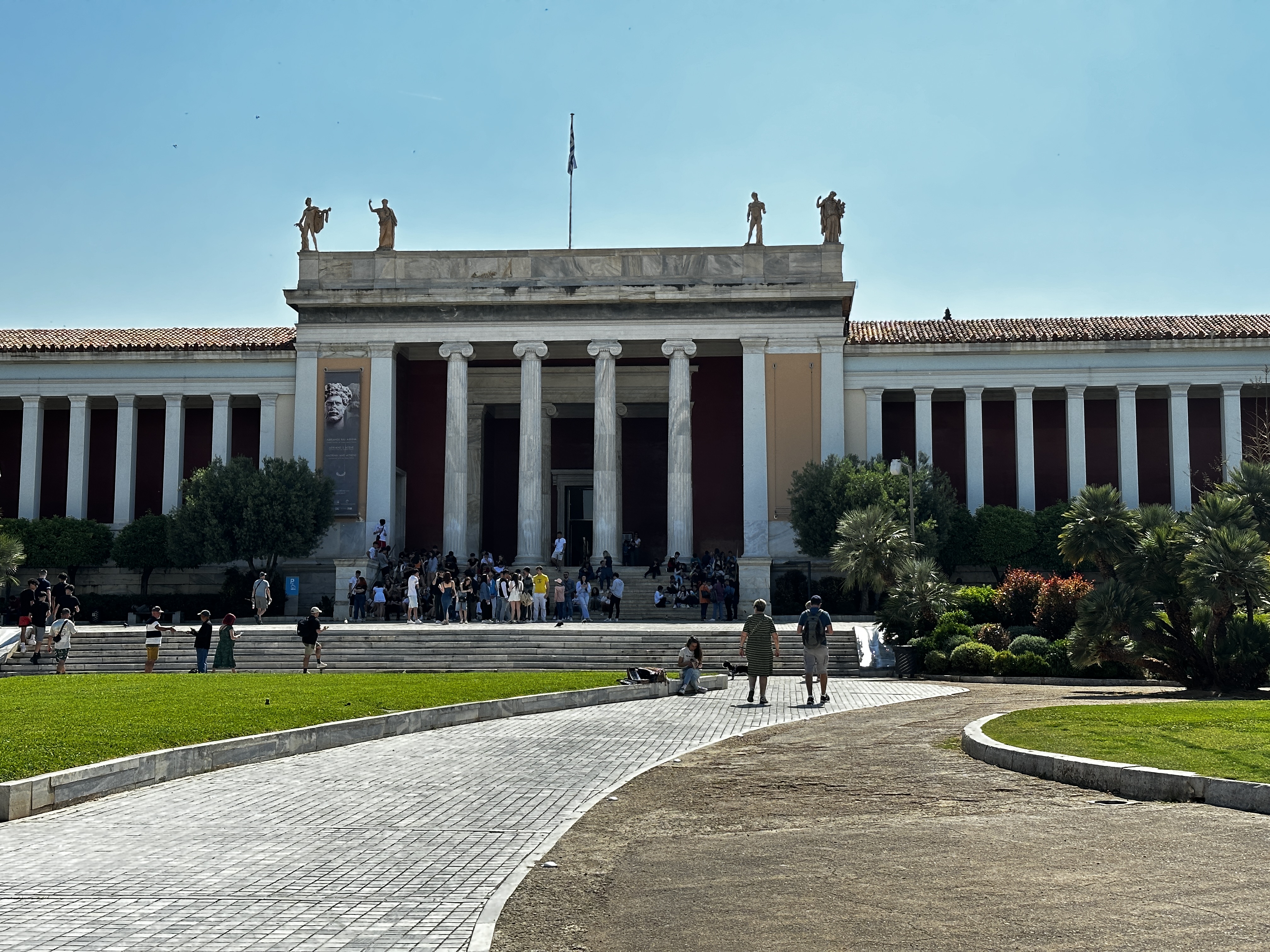
The National Archaeological Museum is said to be the best place to see Ancient Greek artifacts. Naturally, we didn’t visit – artifacts just aren’t our thing! But it’s a definite must for anyone with interest in this field!
The Pedion tou Areos is one of the largest public parks in Athens, covering an area of 27.7 hectares. The park was designed in 1934 and its purpose was to honour the heroes of the Greek Revolution of 1821, 21 of whom are depicted in marble busts standing in the park. There are also two churches, a playground and an open theatre.
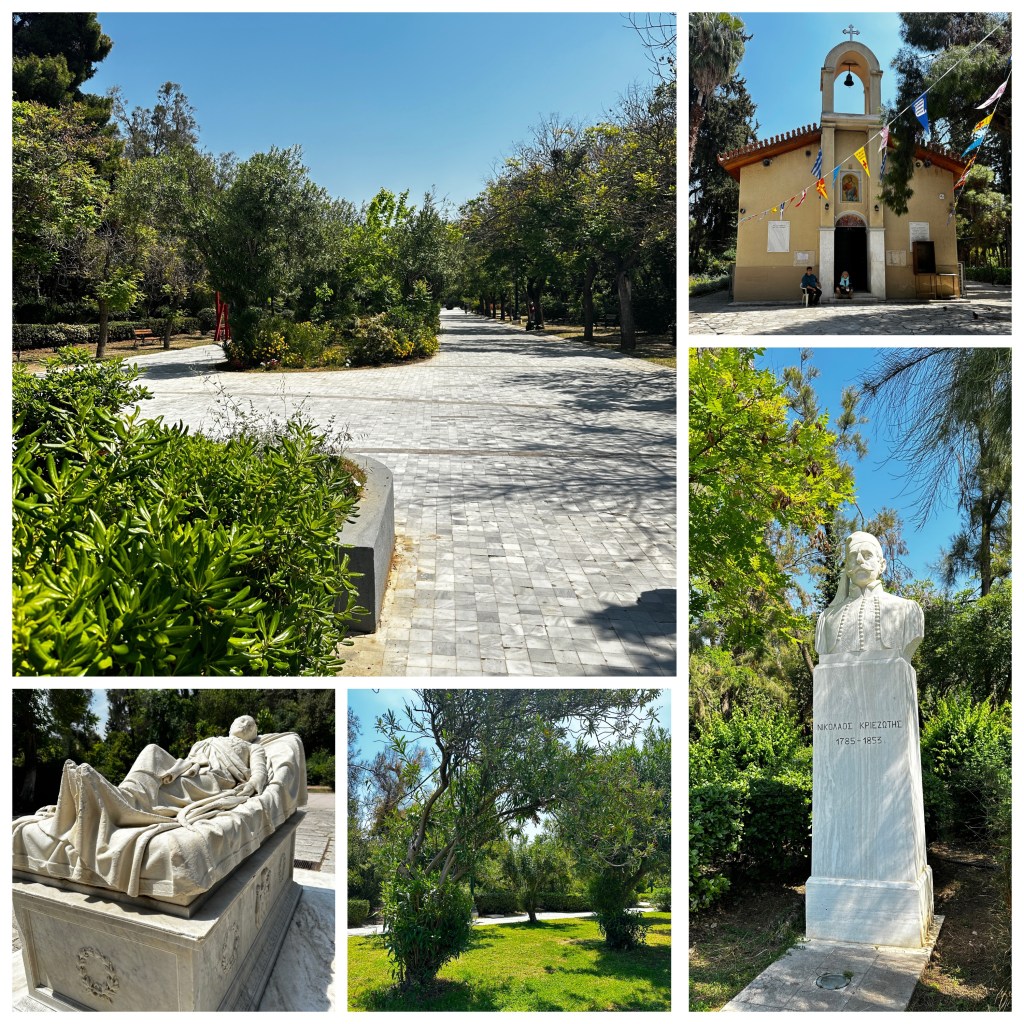
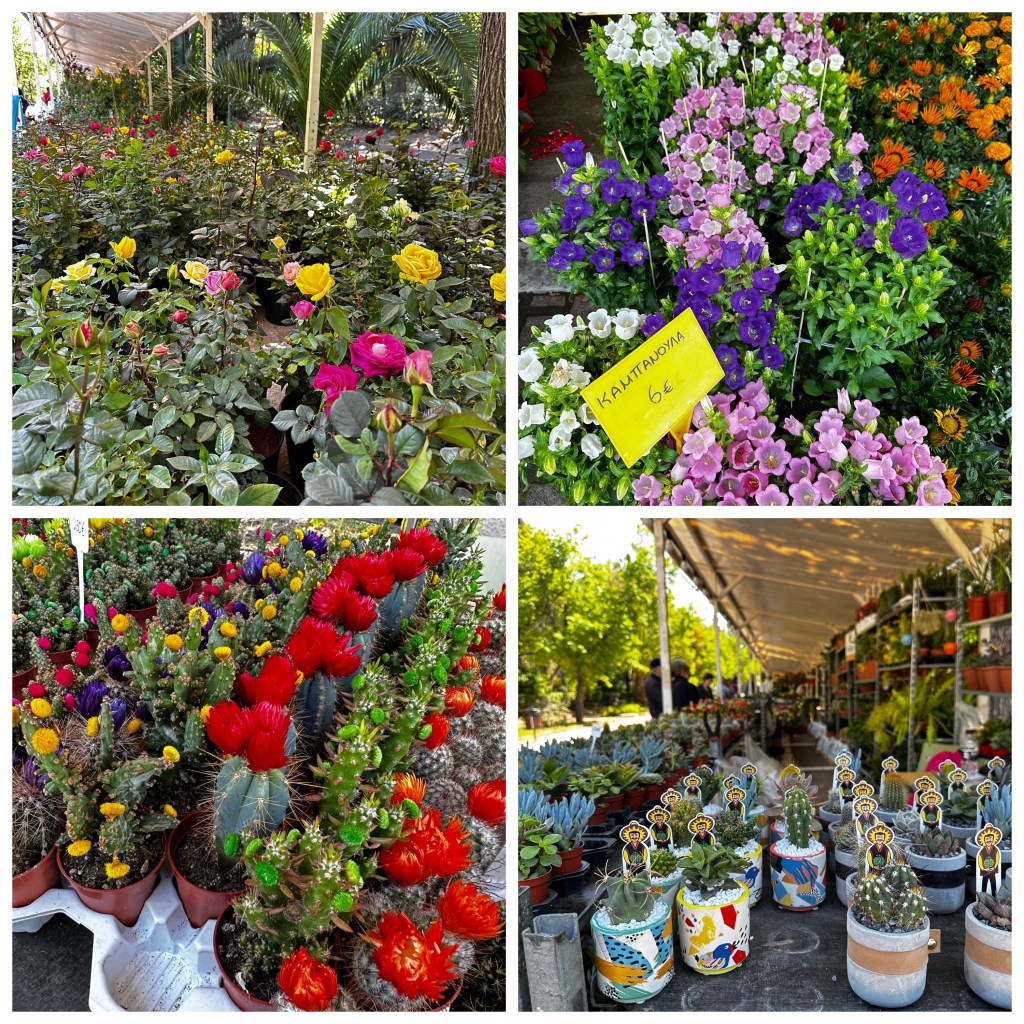
On the day we visited the park, the annual flower / plant sale was stretched along one of the paths. The colours and scents were wonderful!
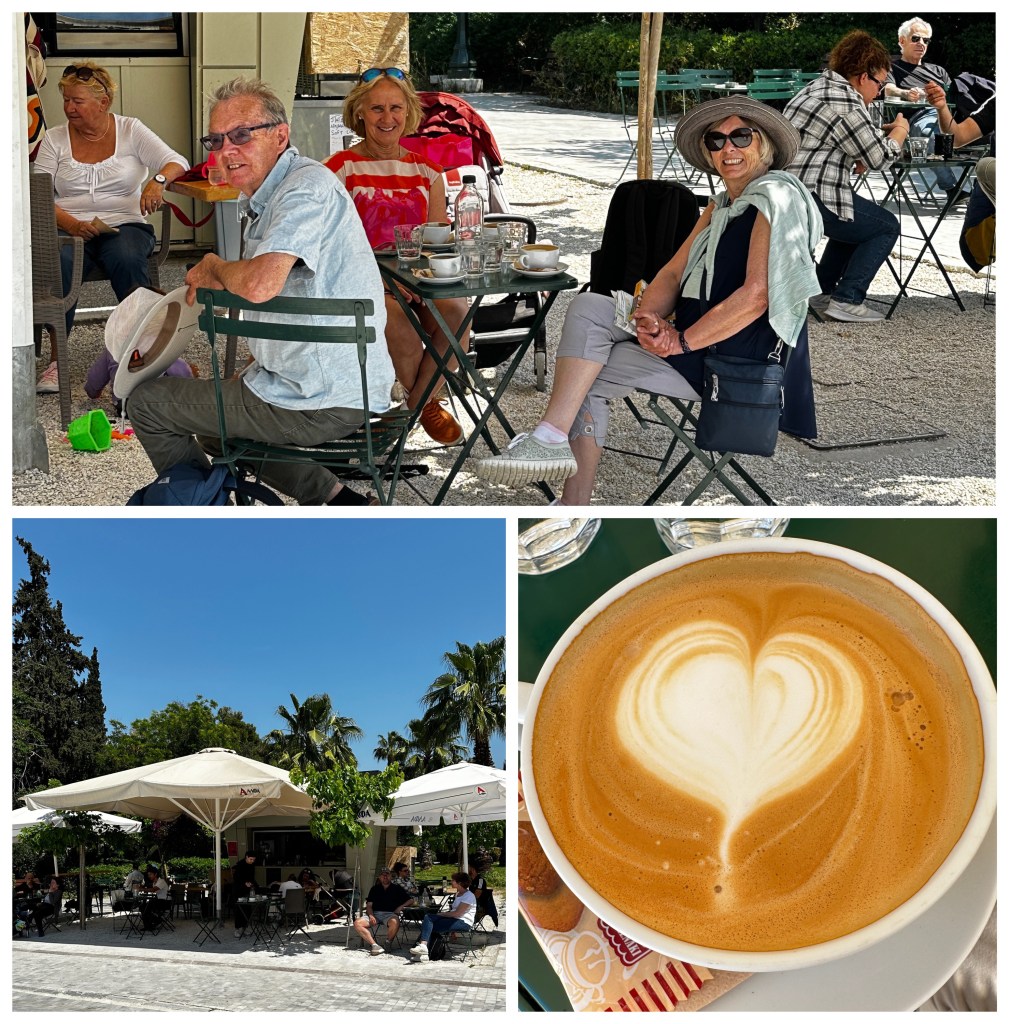
There is a great outdoor cafe in the centre of the park – perfect for a coffee break!
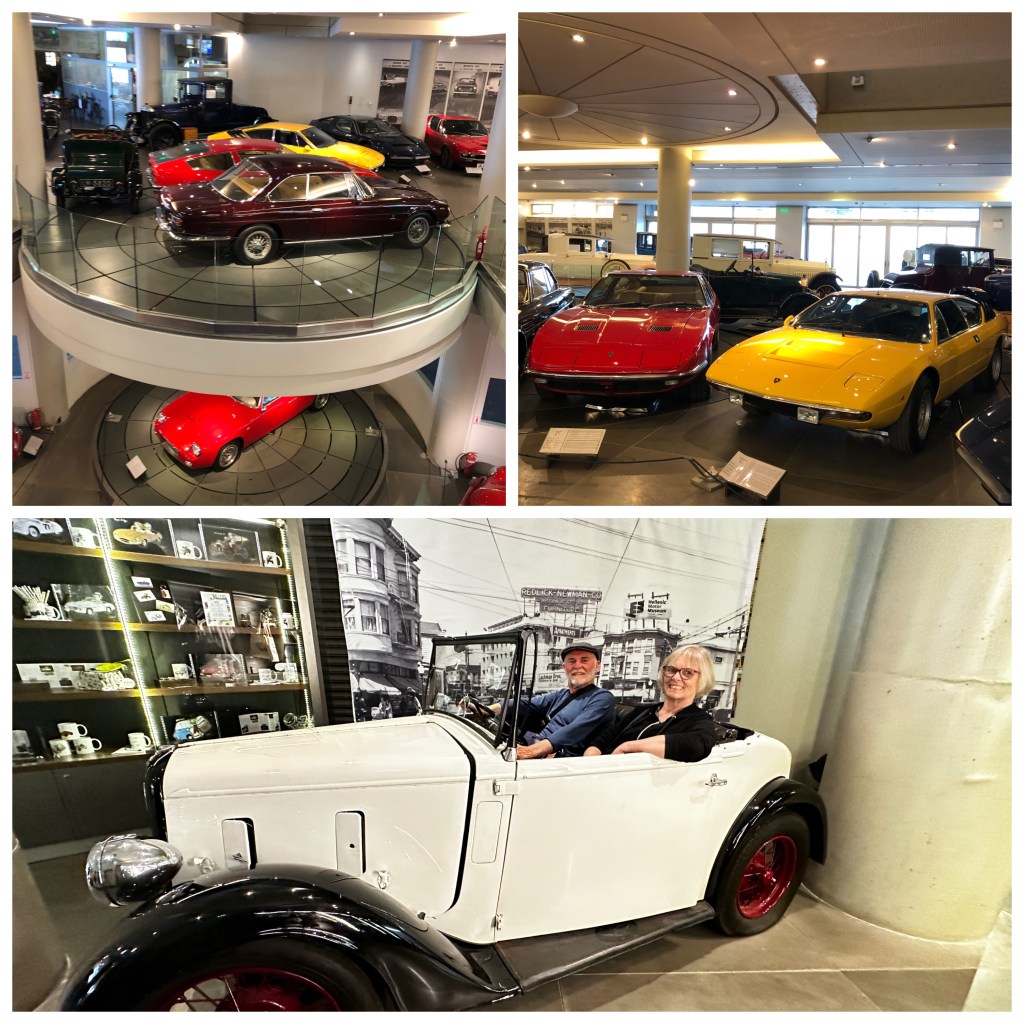
The Hellenic Motor Museum occupies 4000 sq.m. in a unique building in terms of architecture and design. Its exhibitions are dedicated to the evolution of the car and display more than 110 cars from the 19th and the 20th century. Harvey thoroughly enjoyed it – although has he ever been to an auto museum that he didn’t enjoy? Truly though, it was well work the visit.

Piraeus is a port city within the Athens urban area, in the Attica region of Greece. It is located eight kilometres southwest of Athens’ city centre, along the east coast of the Saronic Gulf in the Athens Riviera. It is Europe’s largest passenger port and one of the largest passenger and cargo ports in the world. We took the Athen’s metro for a day trip to the area.
The metro stop is adjacent to the Piraeus Harbour. This well protected harbour is the main centre for sea travel between Athens and the Greek islands. Consequently, there are many, many ferries!

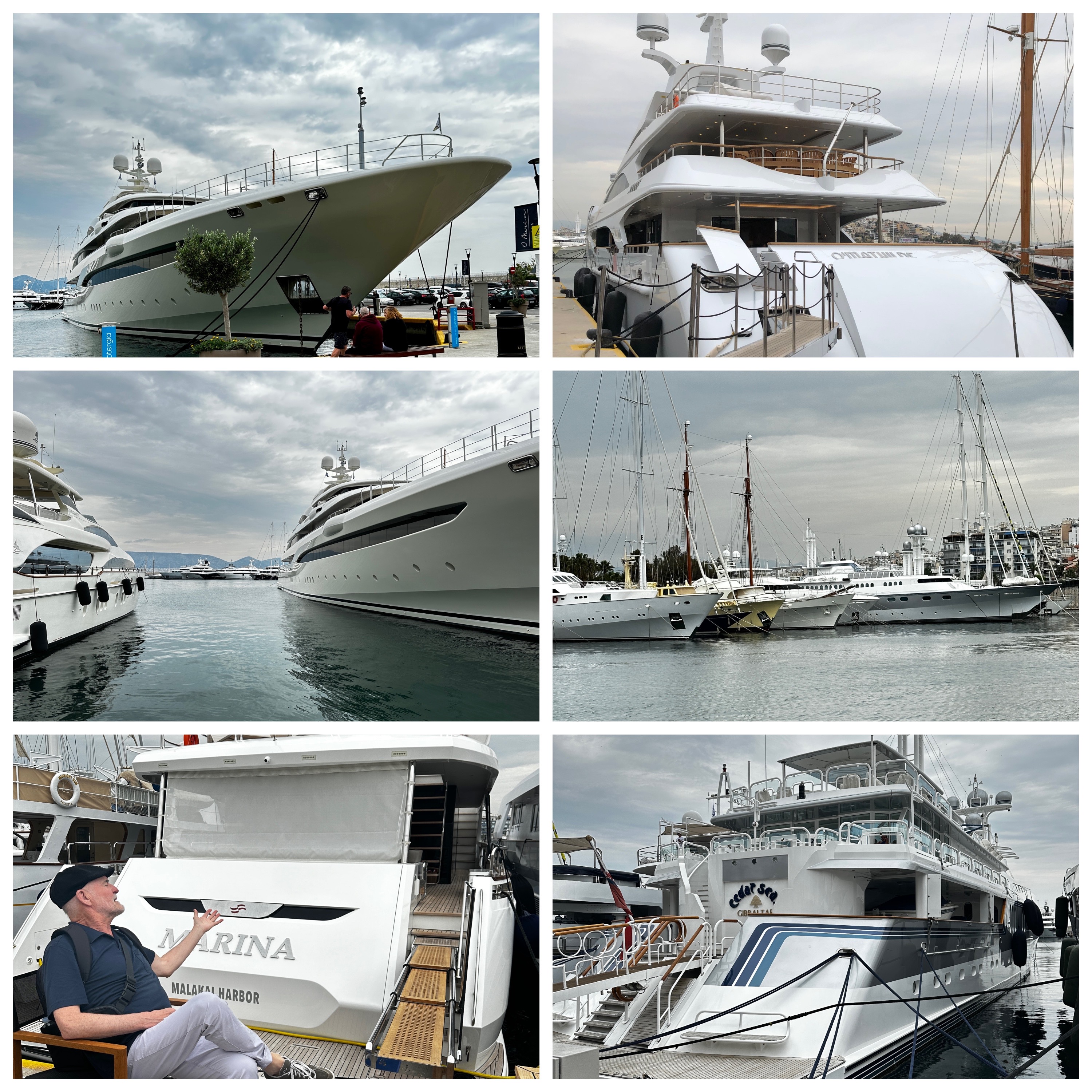
The Zea Marina is a circular cove and regarded as one the best points to access top luxury yachts. Both charter yachts and private vessels fill the harbour, ranging from smaller vessels to the 85 meter long Optasia which 12 close friends could charter for a mere 800,000 euros / week (+ expenses).
While wandering about in Piraeus, we came upon a street market – this may be the longest market we have encountered in our European travels. It was a delight to explore all of the wonderful fresh things for sale!

As always, we found some lovely churches to visit in Piraeus. The Chapel of the Neomartyrs Raphael, Nikolaos and Irene is located along the harbourfront. This tiny church was delightful!

The Church of Saint Nicholas of Piraeus is located directly across from the harbour. This Greek Orthodox Church was built in the mid-1800s and is dedicated to the patron saint of Greece, who is also the protector of sailors and seamen.
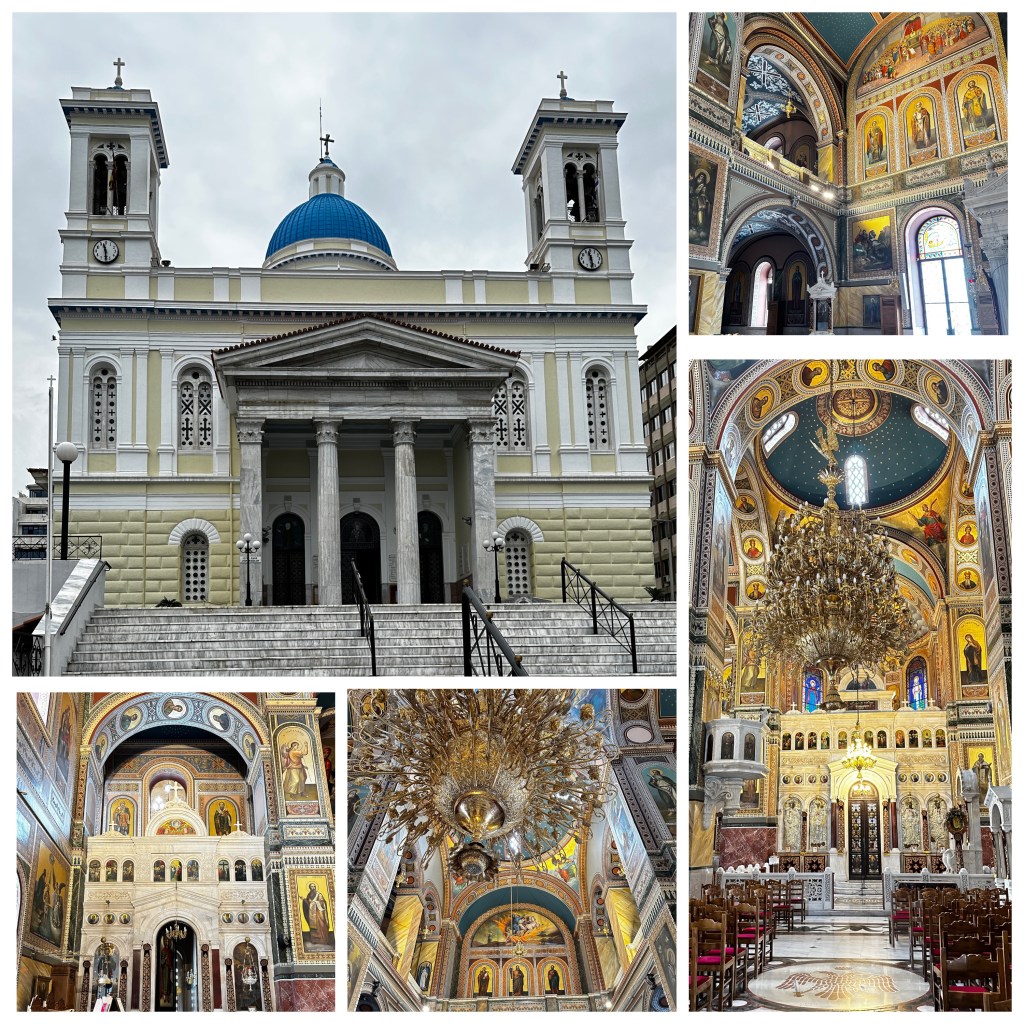
The Church of Ieros Naos Agia Triada (Holy Trinity Church) is the metropolis (central) church in Piraeus. As with the Church of Saint Nicholas, the interior was stunning.

For a late lunch in Piraeus, we found a delightful little restaurant, where we enjoyed greek salad, tuna salad and fried calamari / octopus.

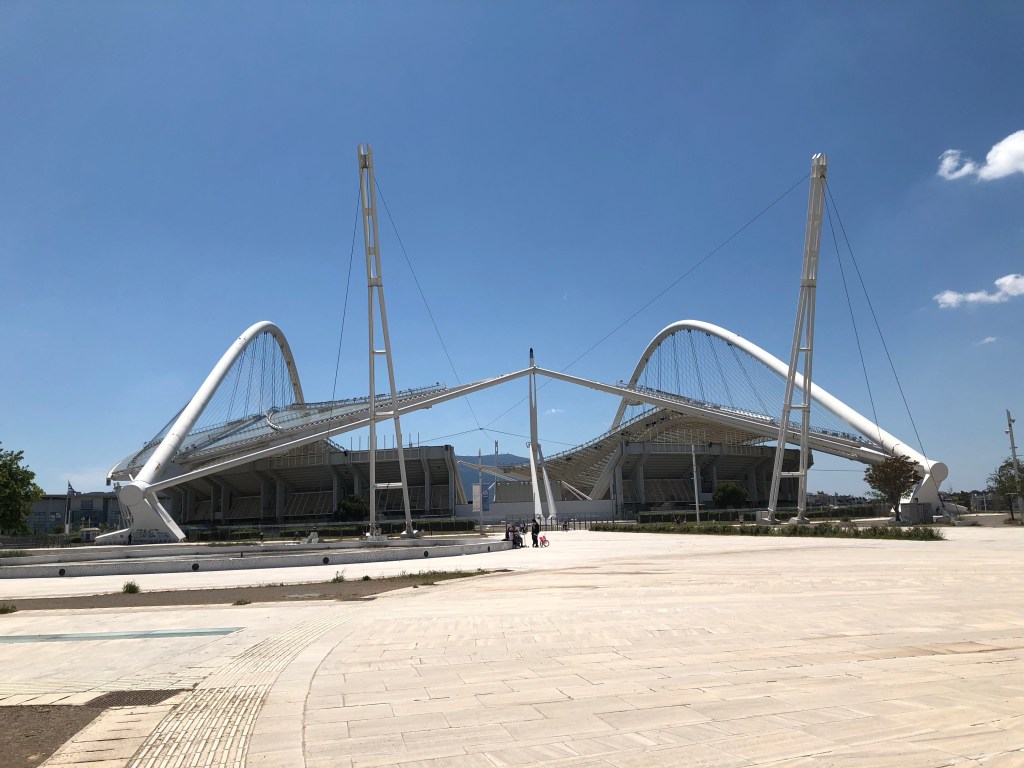
The Olympic Athletic Center of Athens, also known as OAKA, is one of the most complete European athletic complexes. The Olympic park is in the modern quarter of Marussi, 10 km north of the city centre, and you need only an easy metro ride to visit. The Center hosted the Mediterranean Games in 1991, the World Championship in Athletics in 1997 and most prominently, the Athens Olympic Games in 2004.
The Main Olympic Stadium was designed in 1979 and inaugurated in 1982 at the 13th European Athletics Championship. The famous roof, designed by the world-known architect Santiago Calatrava, was added for the Athens 2004 Olympic Games.
The Agora is a vaulted, modular structure of light steel, which runs in an arc along the northern edge of the park. Enclosing a pedestrian arcade of 18,600 sq m, many families were enjoying biking, skateboarding and just strolling on the sunny Sunday that we visited.
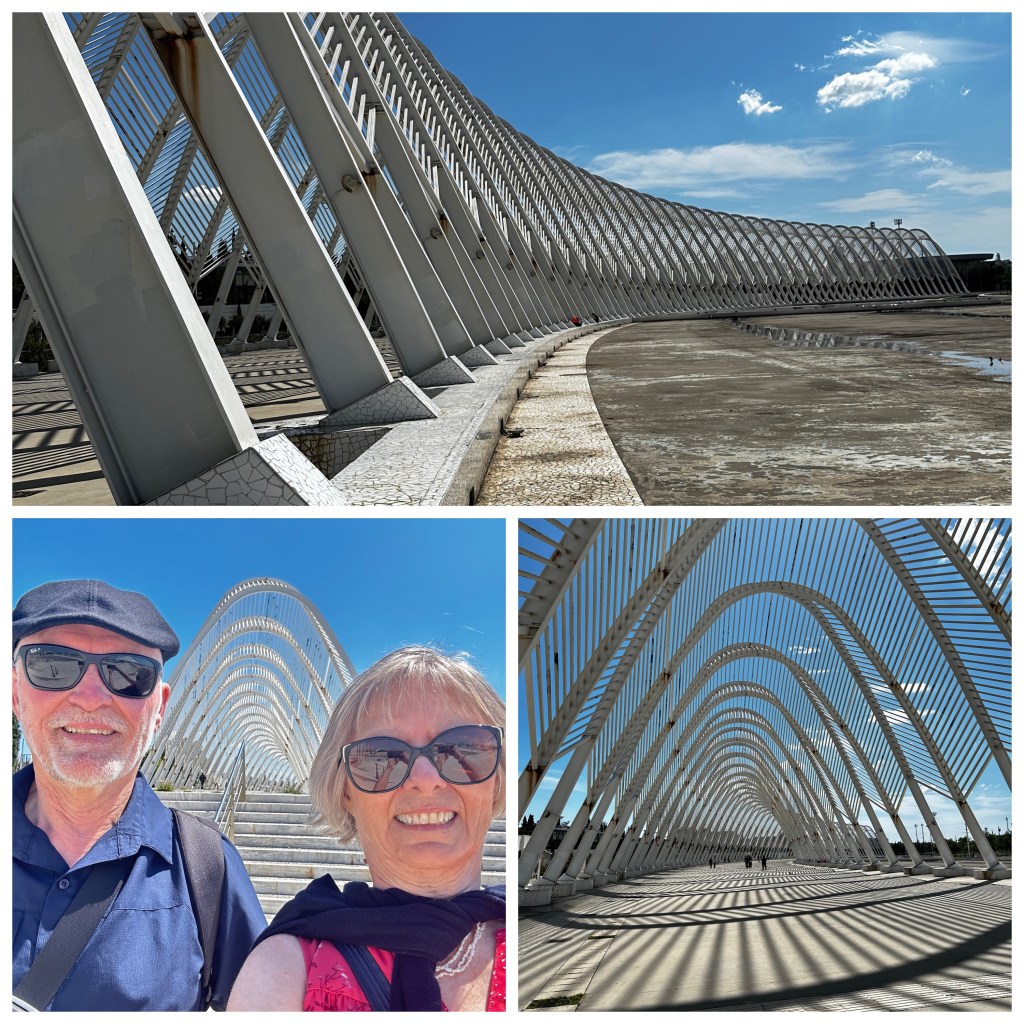
The Nations Wall is a sculpture made of tubular steel. Designed so that it can move mechanically in a wavelike motion, the sculpture is 250 m long by 20 m high. It also serves as a giant screen for projections.

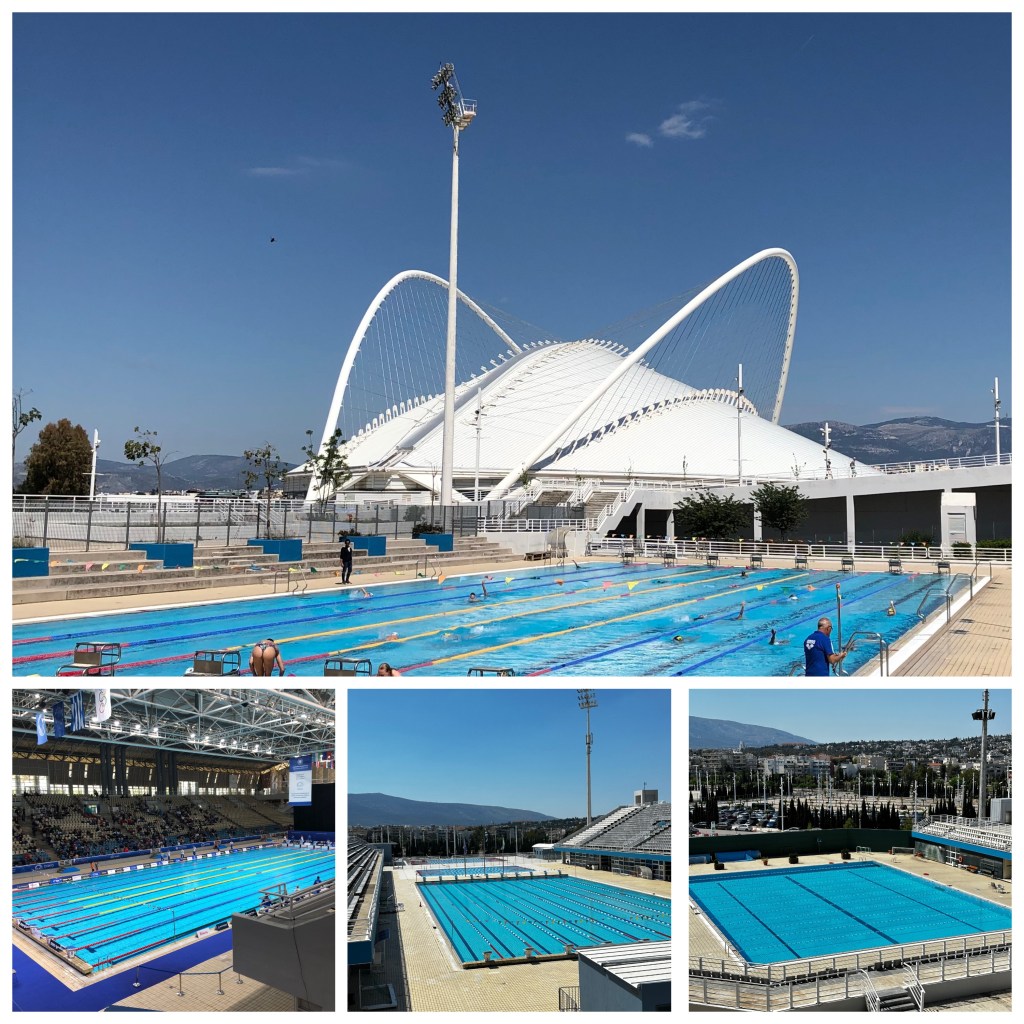
The Olympic Aquatic Center was completed in 1991. It consists of two aquatic complexes, one outdoor and one indoor, in an area of 70 acres. On the weekend we were there, the 35th Acropolis Swim Open was taking place. This event was a qualifying meet for the 2023 World Championships in Fukoka, Japan and the 2024 Olympic Games in Paris. We watched a number of the competitors training in the sunny outside pool.
We were very happy with the neighborhood where our hotel was located. Kolanaki is northeast of Syntagma Square and sits below Lykavittos Hill, which dominates the eastern skyline.

Kolanaki is home to a number of historic buildings, most notably the Athenian Trilogy. This wonderful 3-building complex on Panepistimiou Street encompasses the University of Athens, the Academy, and the National Library. The buildings were commissioned by King Otto and built in the late 1800s.
The Vallianos building is a neoclassical landmark, constructed with white marble and adorned with Doric columns and a Renaissance-style twin staircase. The building housed the National Library of Greece from 1902 until the collection was moved to an ultra-modern library in 2018.
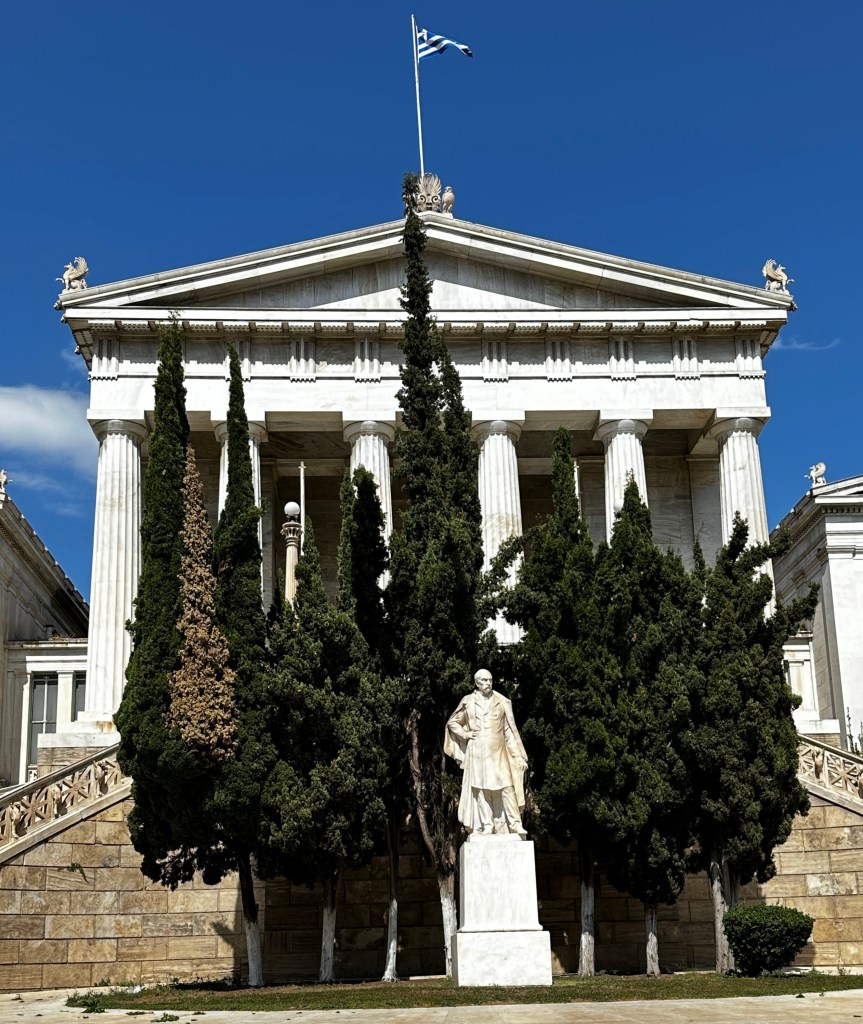
The Academy of Athens is Greece’s national academy, and the highest research establishment in the country. It was established in 1926, with its founding principles traced back to the historical Academy of Plato. The main building of the Academy is a neoclassical building designed in 1859.

The old University of Athens building was once the only university building. Today, the building is home to the institution’s administrative offices and also serves as a grandiose backdrop to the university’s ceremonies and official events.

The Church of Saint Dionysius the Areopagite is found on Skoufa street in Kolonaki. It is dedicated to the protector Saint of Athens, Saint Dionysius the Areopagite, who was converted to Christianity and became the city’s first bishop. The church was built between 1925 – 1931, on the location of a former smaller temple.

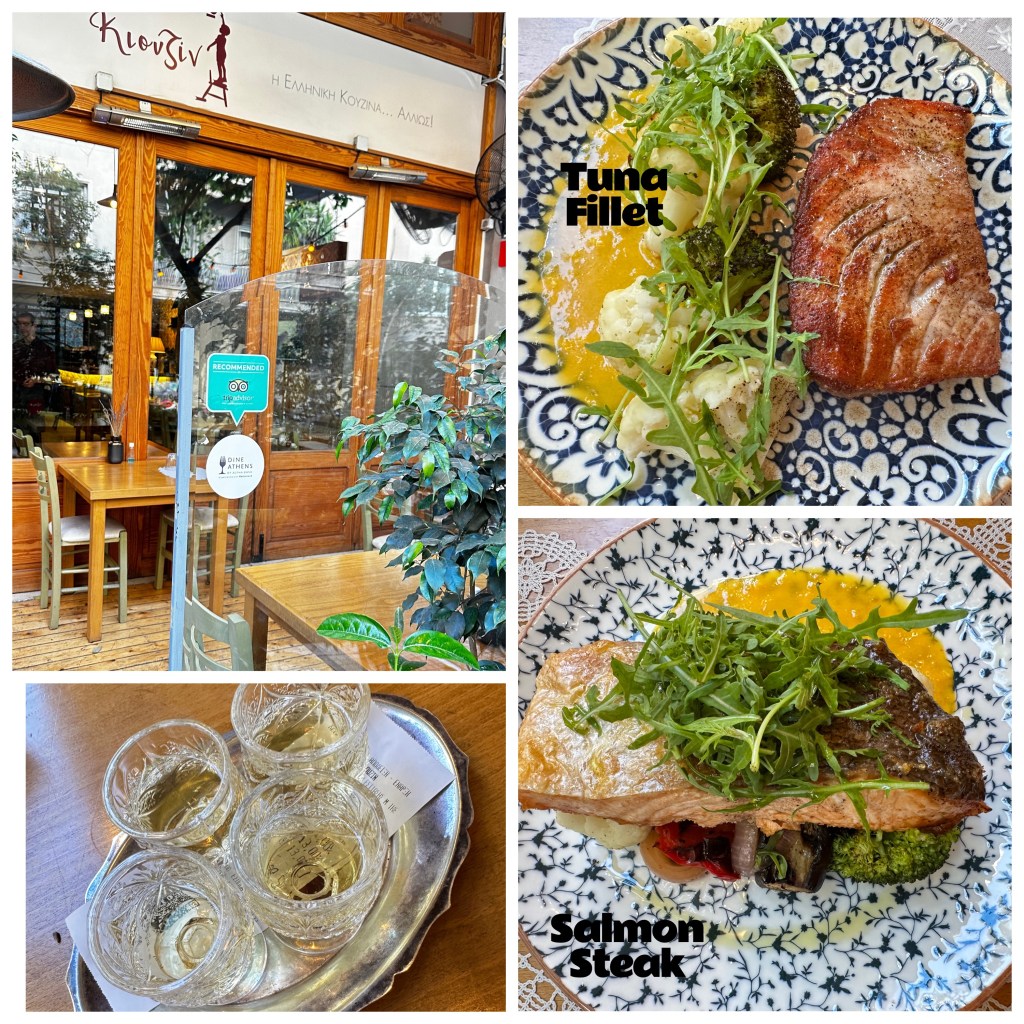
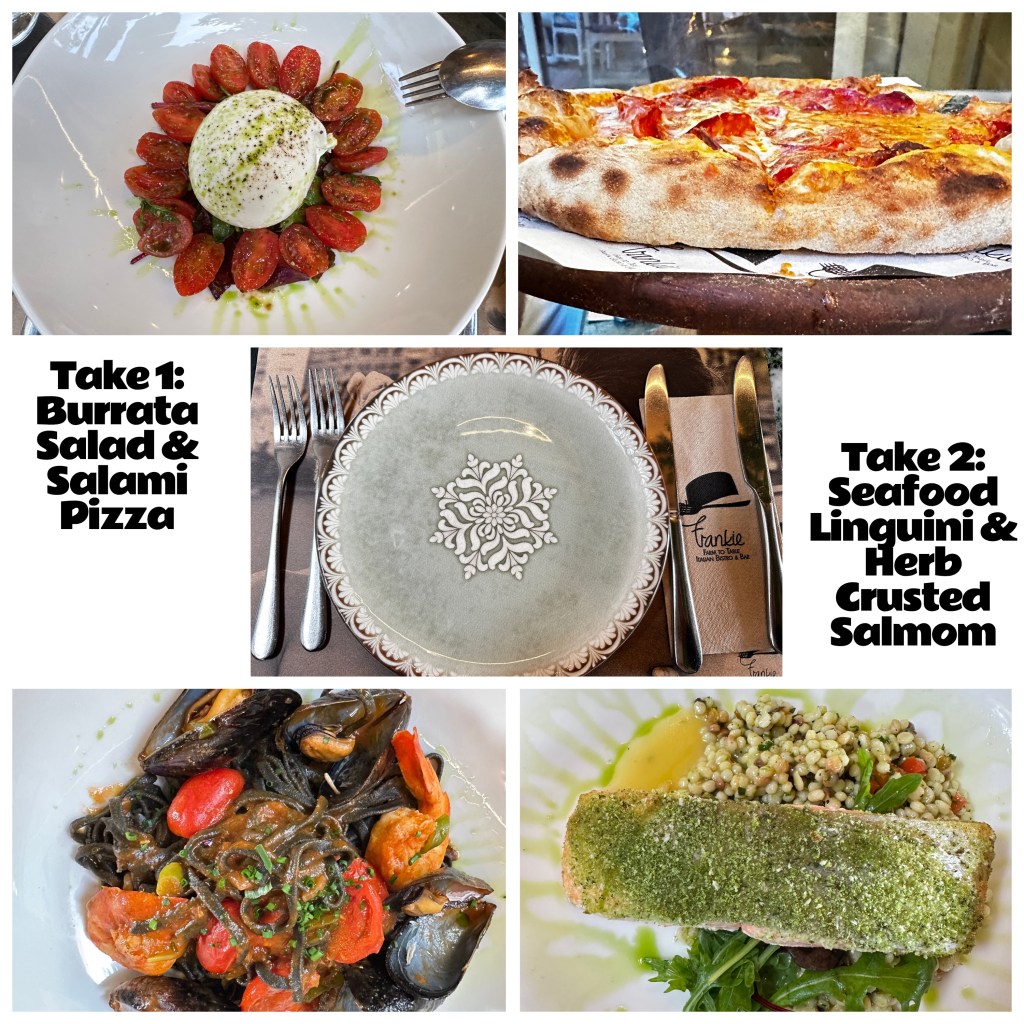
We found a number of great restaurants in the Kolonaki neighbourhood. Here are a few of them.

Athens was a very interesting city. If you are an archeological buff, this is your place to go! If you love modern cities with a variety of neighbourhoods, Athens would be a good fit for you. Or if you are like us and enjoy seeing new cities, learning about a variety of cultures, eating great food and experiencing how people live in different places, then we would definitely recommend a visit. We are very glad that we spent a week there!
Thanks for reading about this trip. We hope to back soon with more travels!
Cheers,
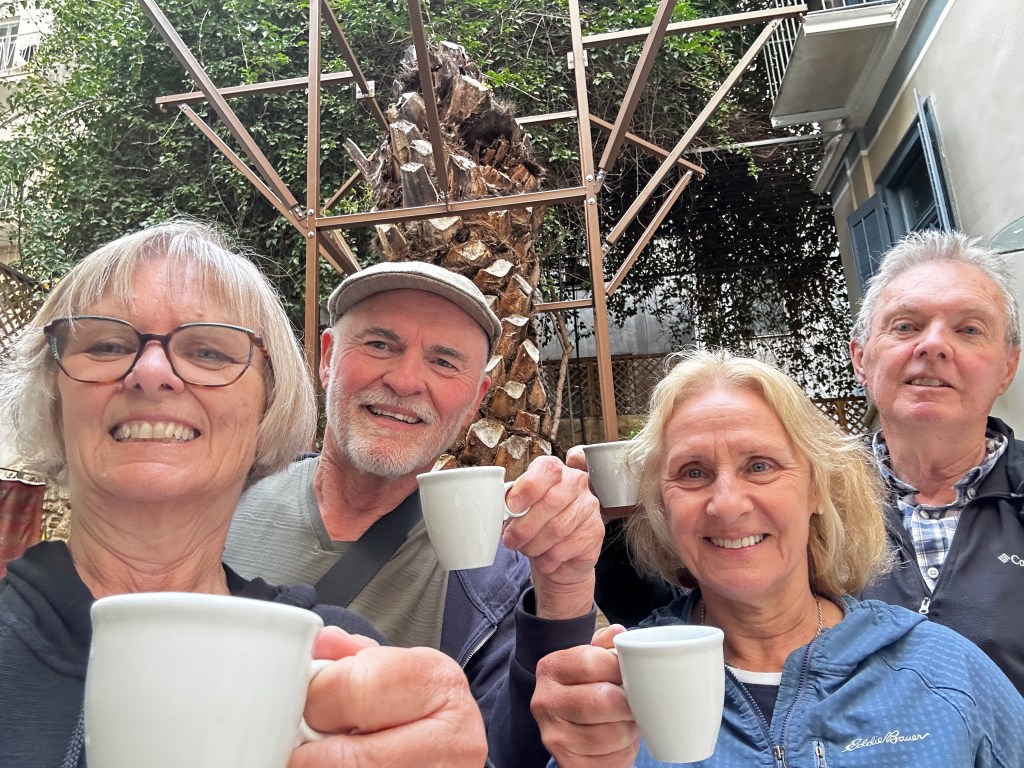
Bev & Harvey
 A Long and Winding Journey
Wow, lots of adventures in Greece! Pretty exciting to see all this history!
LikeLike
Thanks, Mary, for being such a loyal reader!
LikeLike
Another wonderful Blog, we have been in Athens too and it is nice to see all those pictures of some of the places that we visited also. You sure do a wonderful job !!
LikeLike
Thanks for reading, Lydia!
LikeLike