We arrived in Belfast after spending 2 1/2 weeks on a family vacation in England (perhaps later I’ll post a bit on some new things we did there). A quick British Airways flight took us from London Heathrow to the George Best Belfast City Airport. From the airport, we walked to the Sydenham Train Station – we had read this was a quick way to get to the area of the city we were staying in. I must caution you that it is a bit of a trek – especially in the rain – and you need to haul your luggage up a stairway to cross the freeway to the other side. However, once on the train, it did take us directly to the Botanic Station which was just minutes from our accommodation. Taking the airport bus would have been easier at the airport end but would have involved a transfer or a longer walk in the city.
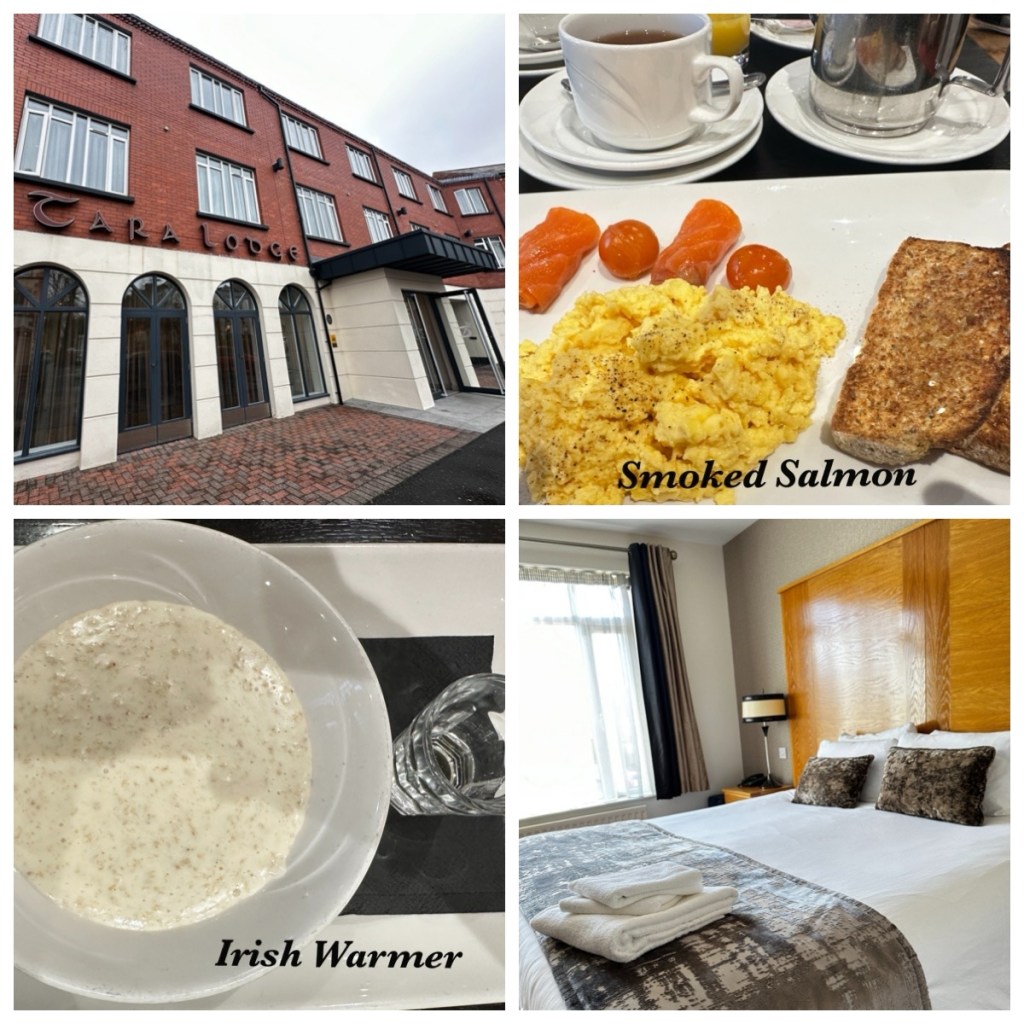
We stayed at the Tara Lodge. We would highly recommend this lovely guesthouse. The rooms were a good size, well-appointed and spotlessly clean. The included breakfast was excellent, with both buffet and made-to-order items. Staff were extremely friendly and helpful – a special shout-out to Ricky who started each day out so well for us!
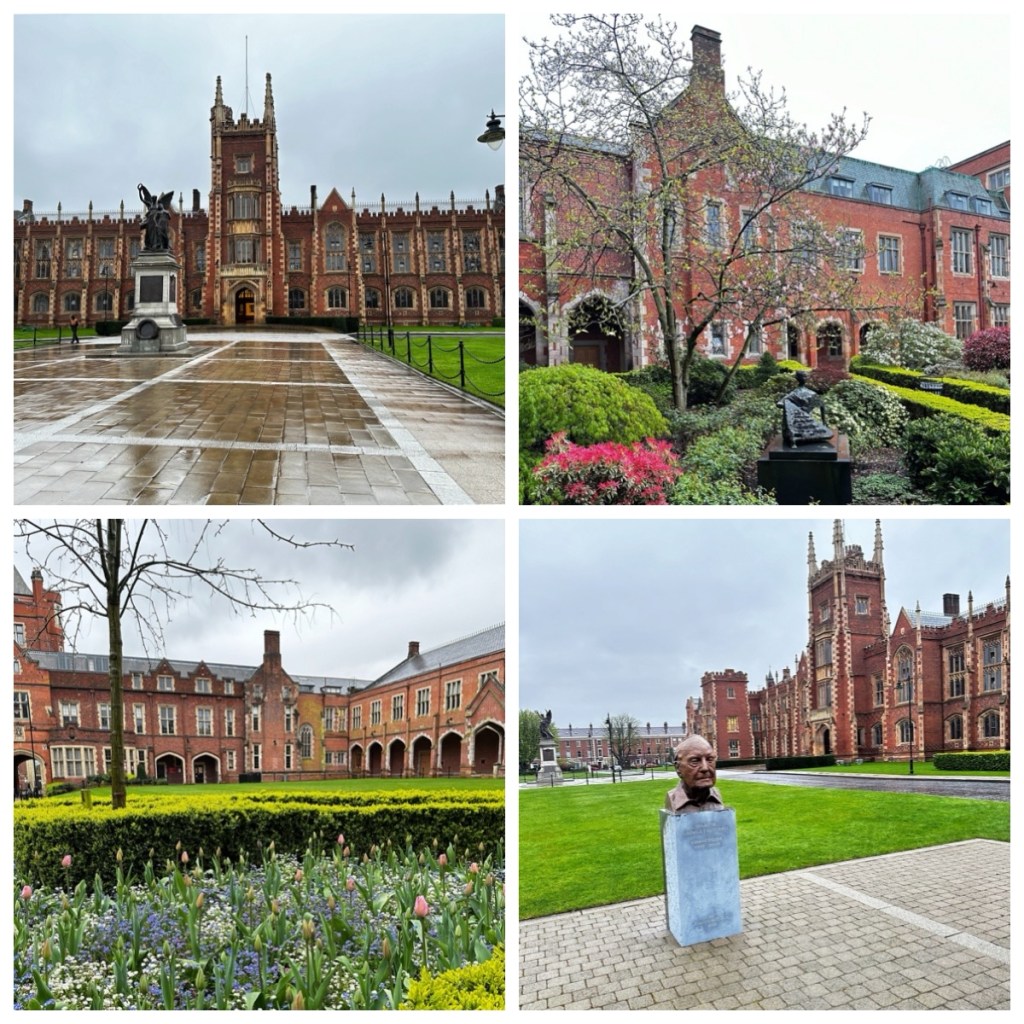
Just down the road from the Tara Lodge is Queen’s University. The centrepiece of the main campus is the Lanyon Building which was opened in 1849.
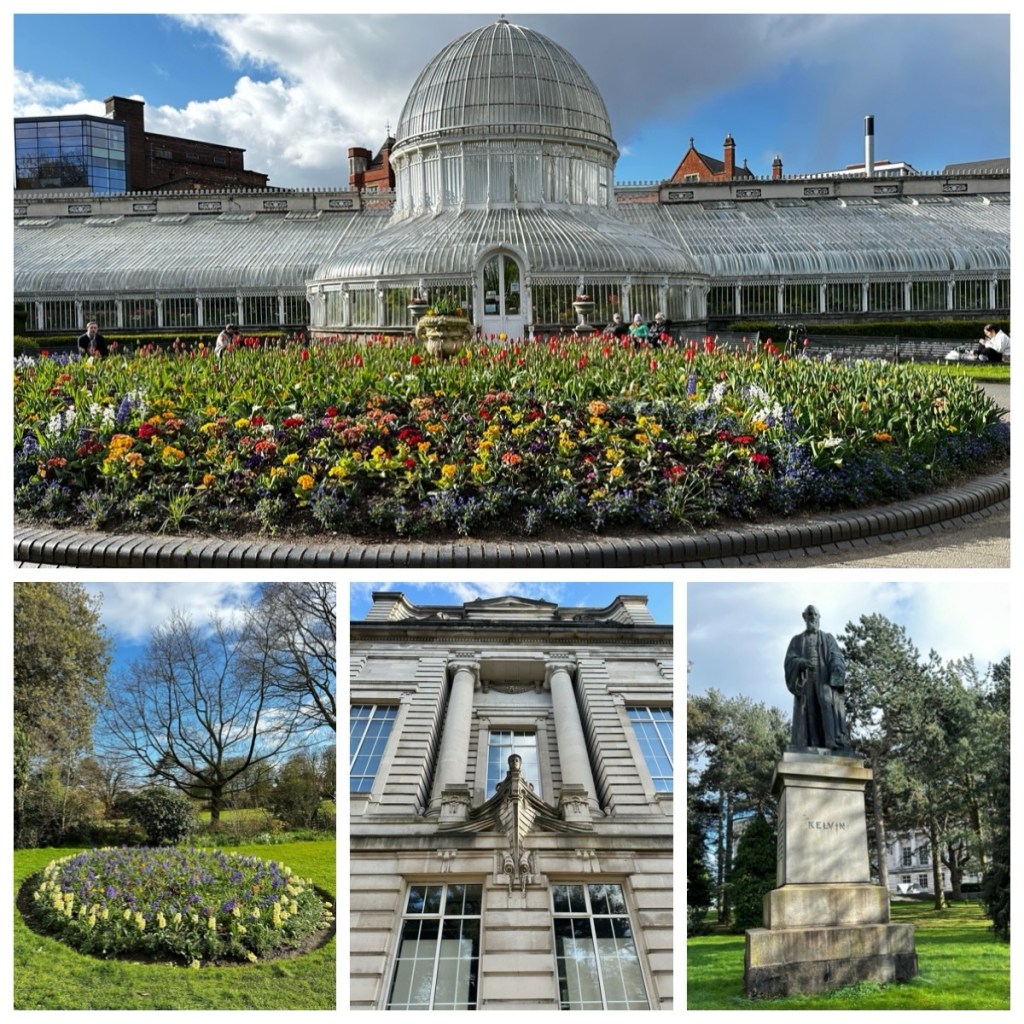
Adjacent to the university are the Botanic Gardens, which are just starting to blossom forth in early April. Unfortunately, the Palm House wasn’t open when we visited. The Ulster Museum is also on the garden’s grounds – we didn’t have time for a visit.
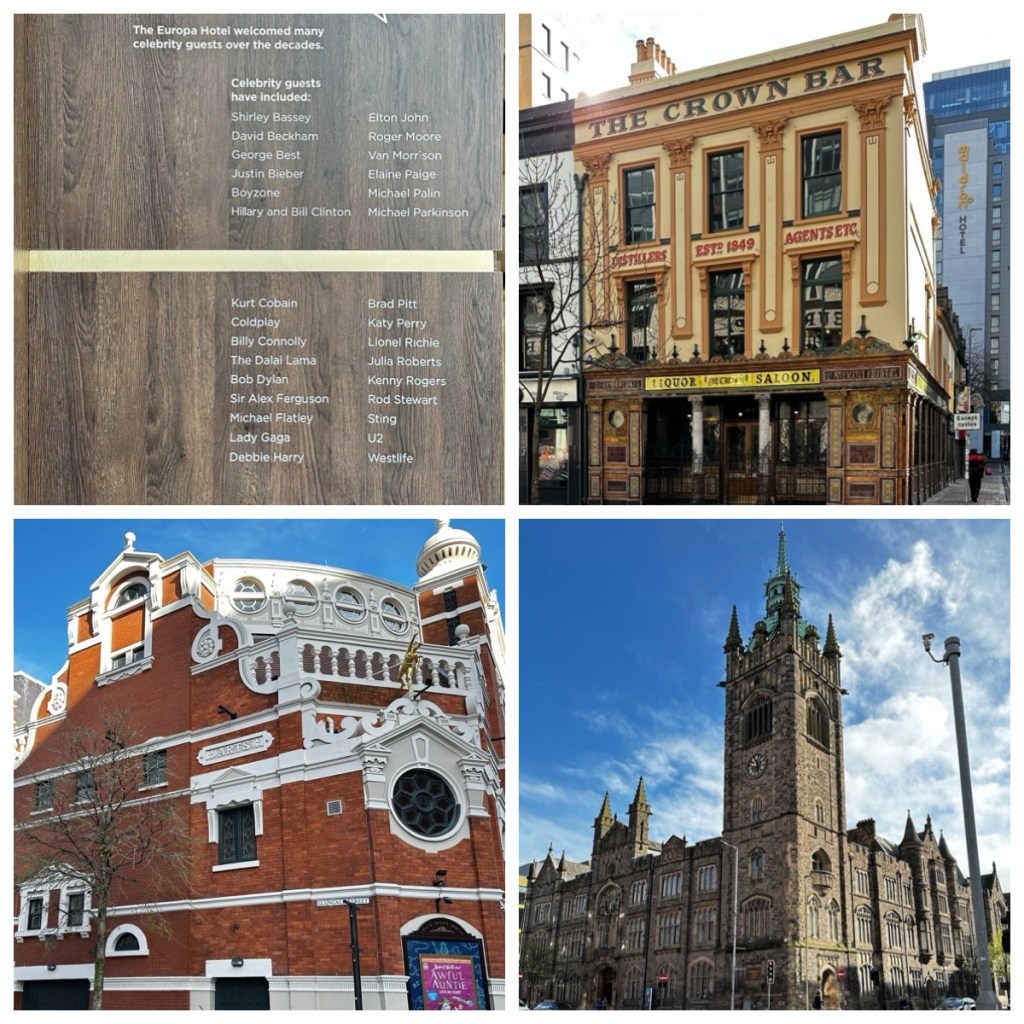
Stretching up from the Botanic area is Great Victoria Street. Sometimes called the Golden Mile, the street is working on living up to this title as it is rejuvenated and upgraded. There is some interesting street art, recalling the music heritage in the area.
As you stroll down the street you pass by the:
- Hotel Europa – Belfast’s landmark hotel, the lobby features a list of the who’s who of former guests
- Crown Liquor Saloon – Built in 1849, this is the only pub owned by the British National Trust. The interior is worth a look, but we heard from many that the food and drink are not anything special.
- Grand Opera House – Originally built in 1895, the Opera House has been twice rebuilt after being bombed in 1991 and 1993. Apparently the interior is extravagantly Victorian but it was not open as we passed by.
- Presbyterian Assembly Building – This classic building hosts a small visitor exhibit that outlines the history of the Presbyterian Church in Ireland, which suffered early discrimination similar to the Catholic Church in Ireland.
Belfast’s grand City Hall sits at the centre of Donegall Square in the centre of the city. The building with its 53 meter tall copper dome was built between 1898 and 1906. A statue of Queen Victoria sits at its entrance.


The interior of the building is equally as grand, with a sweeping staircase, rotunda and multiple stained glass panels depicting the history of the city.
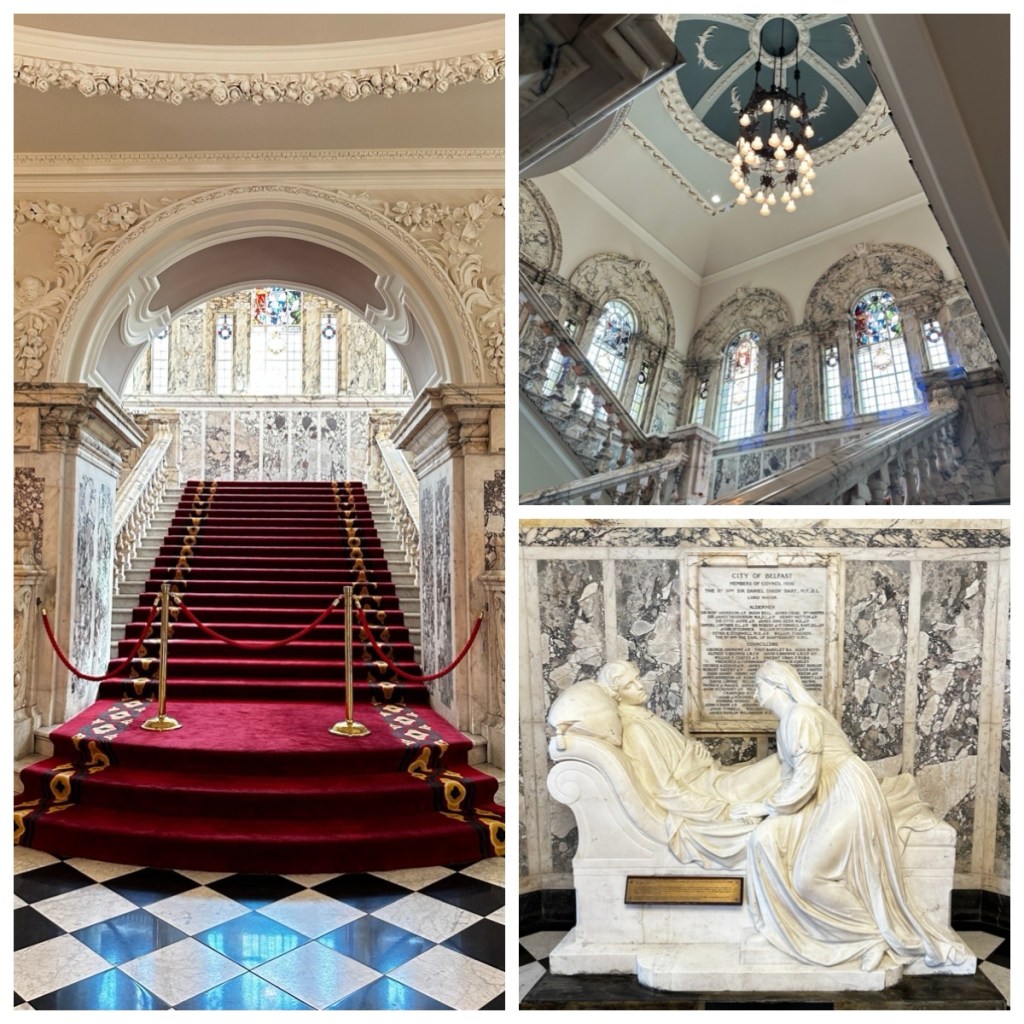

The east wing on the ground floor hosts a visitor exhibition that stretches over 16 separate rooms offering a journey from the city’s past to the present. This free exhibit is well worth a visit! We would also recommend taking time out for lunch or refreshments in The Bobbin coffee shop, a social enterprise café supporting persons with learning disabilities, autism and Asperger’s.
While walking in the central area, we came upon 2 Royal Avenue. This impressive building was designed by WJ Barre in 1864 and was originally the headquarters of the Provincial Bank of Ireland. The gothic structure survived some tough times in the neighborhood and more recently was even a Tesco grocery store. It is now owned by the Belfast City Council and serves as a community and cultural hub and a creative free space. A very friendly and knowledgeable guide, Paul, gave us an interesting and informative tour.

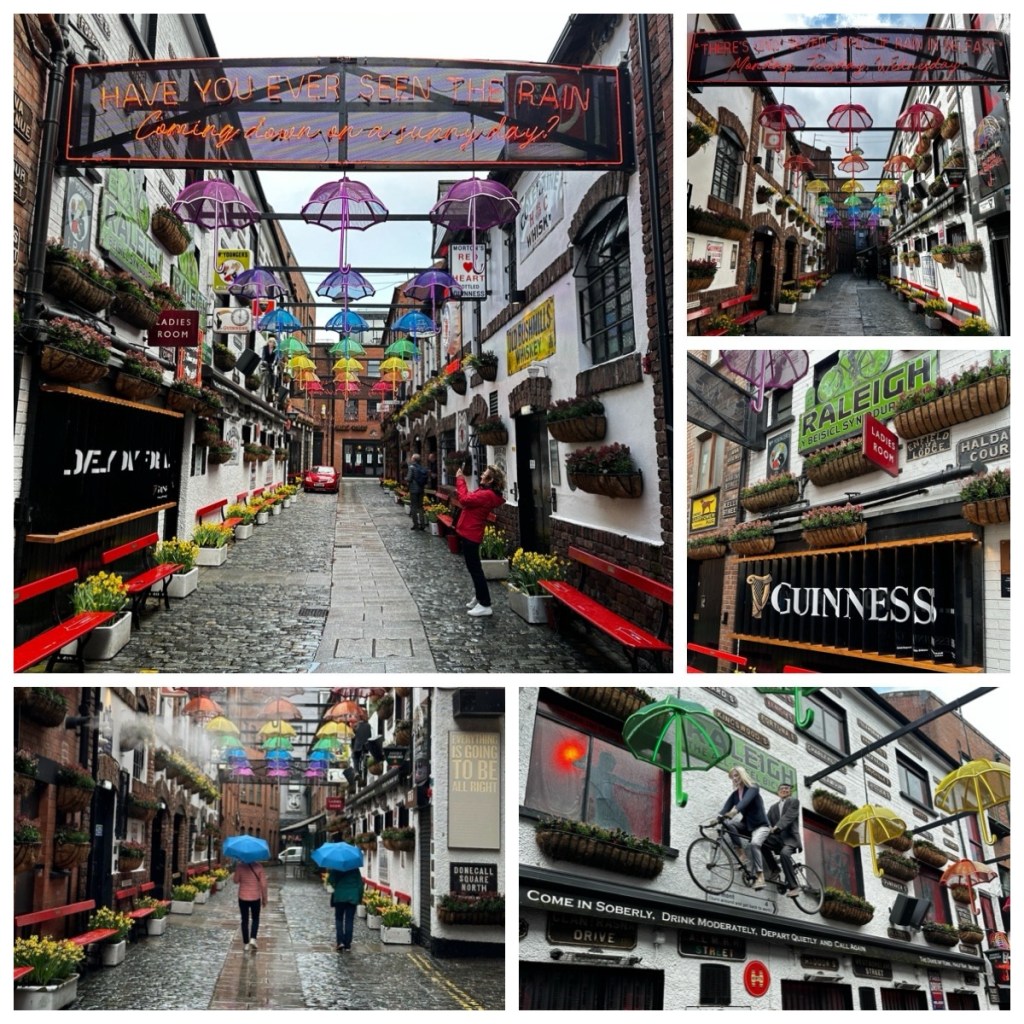
It seems that most every European city now has an ‘umbrella street’. Of all the ones we have encountered, Commerical Court takes first prize. It was so much fun to visit, even in the rain. As the signs say – “HAVE YOU EVER SEEN THE RAIN, coming down on a sunny day” and “THERE’S ONLY SEVEN TYPES OF RAIN IN BELFAST, Monday, Tuesday, Wednesday..”.
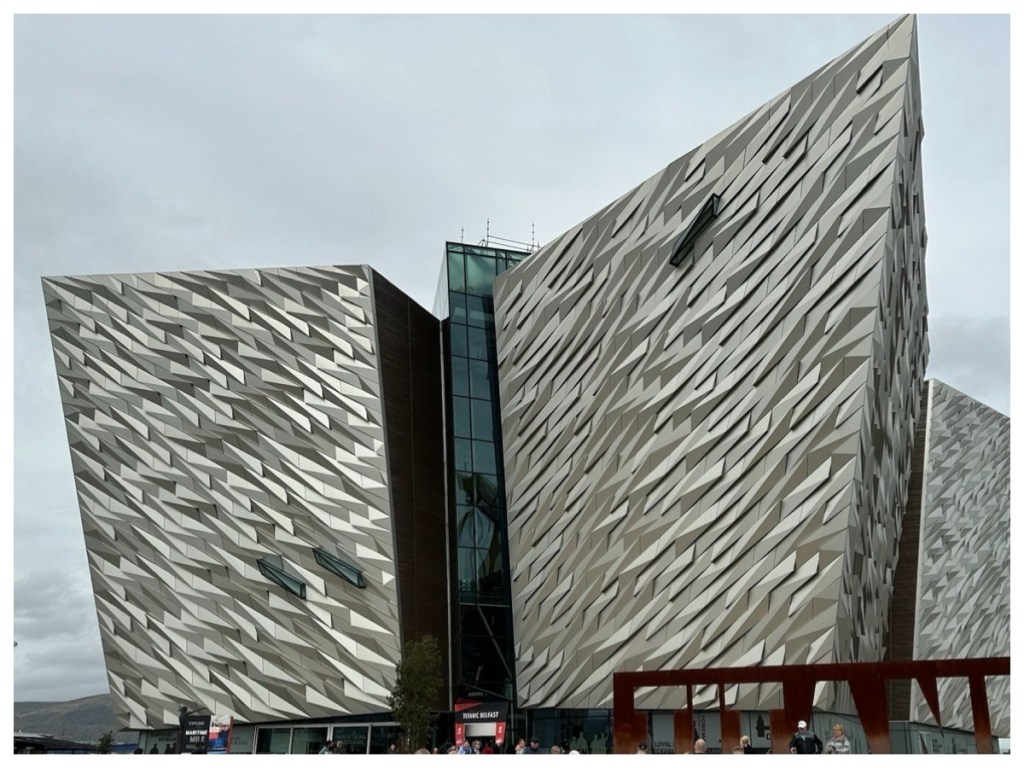
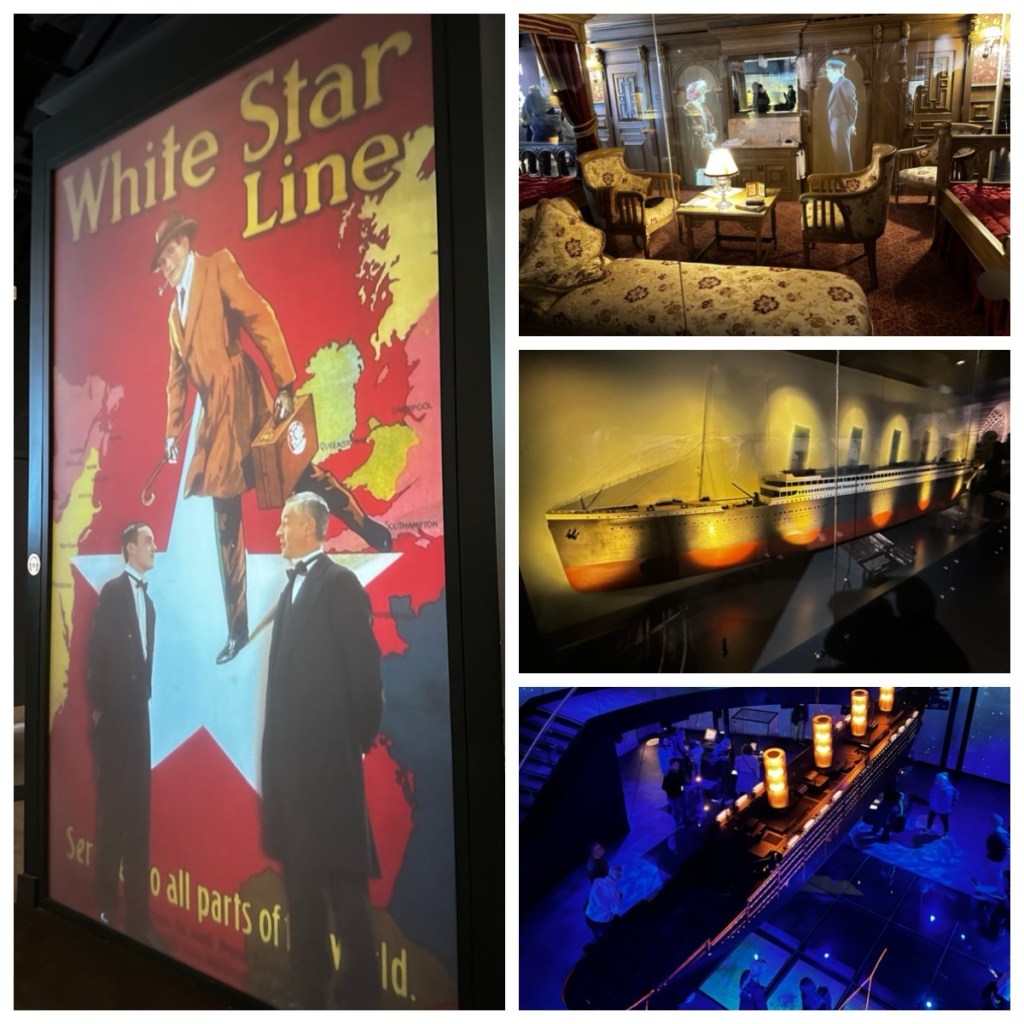
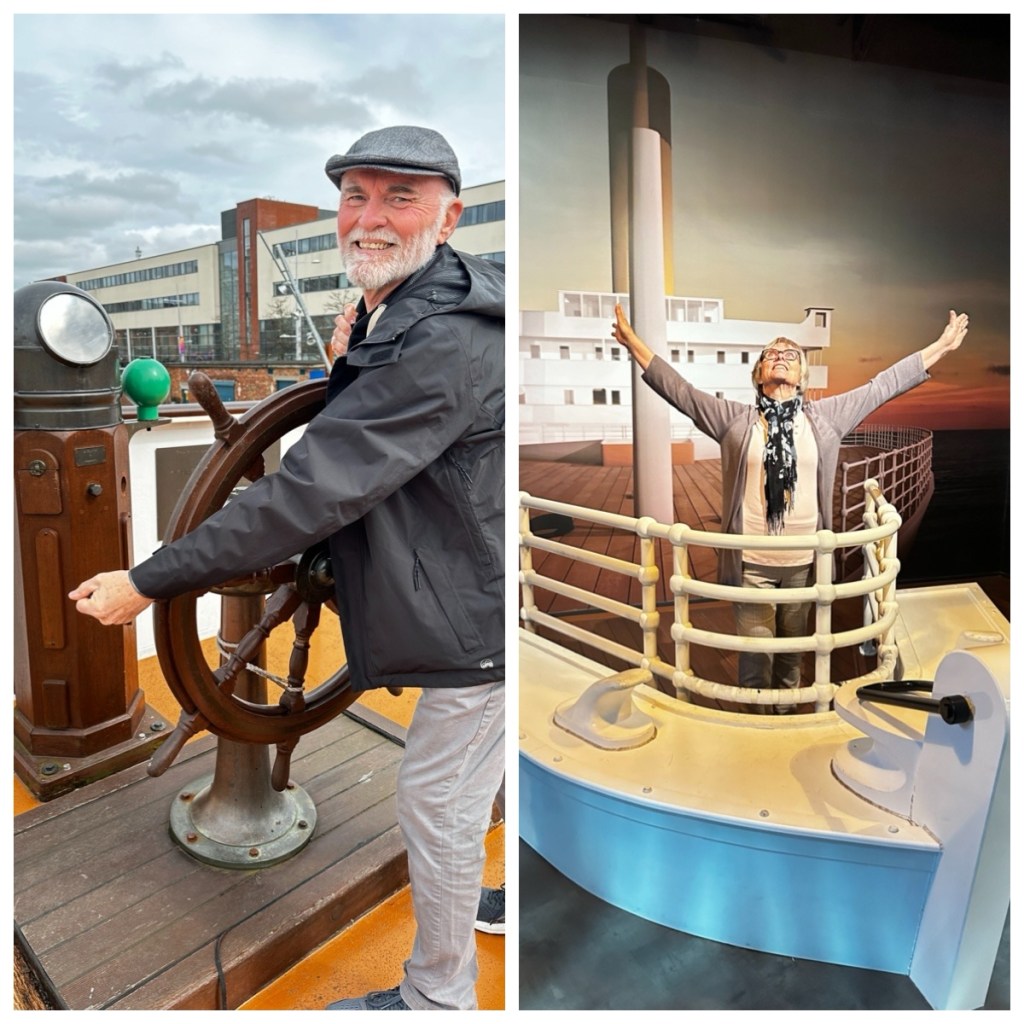
In North Belfast is the Titanic Quarter. The centrepiece of the area is the Titanic Belfast. This centre is an experience, rather than a museum. It contains no actual artifacts but the interactive and interesting displays tell the story of Titanic from her conception, through her construction and launch, to her maiden voyage and subsequent place in history. We thoroughly enjoyed our visit to this centre.
Stretching in both directions from the Titanic centre is the Maritime Mile walk along Lagan Weir. Here you will encounter fun and interesting sights including:
- The SS Nomadic – This ship transported passengers from France to the British Isles, including to the Titanic. It now sits in the dock where it was built and an interesting visit to the ship is included with your Titanic Belfast ticket.
- The Thompson Dry Dock – the massive dry dock where the Titanic last rested on dry land.
- The HMS Caroline – the sole surviving ship of the WWI Battle of Jutland

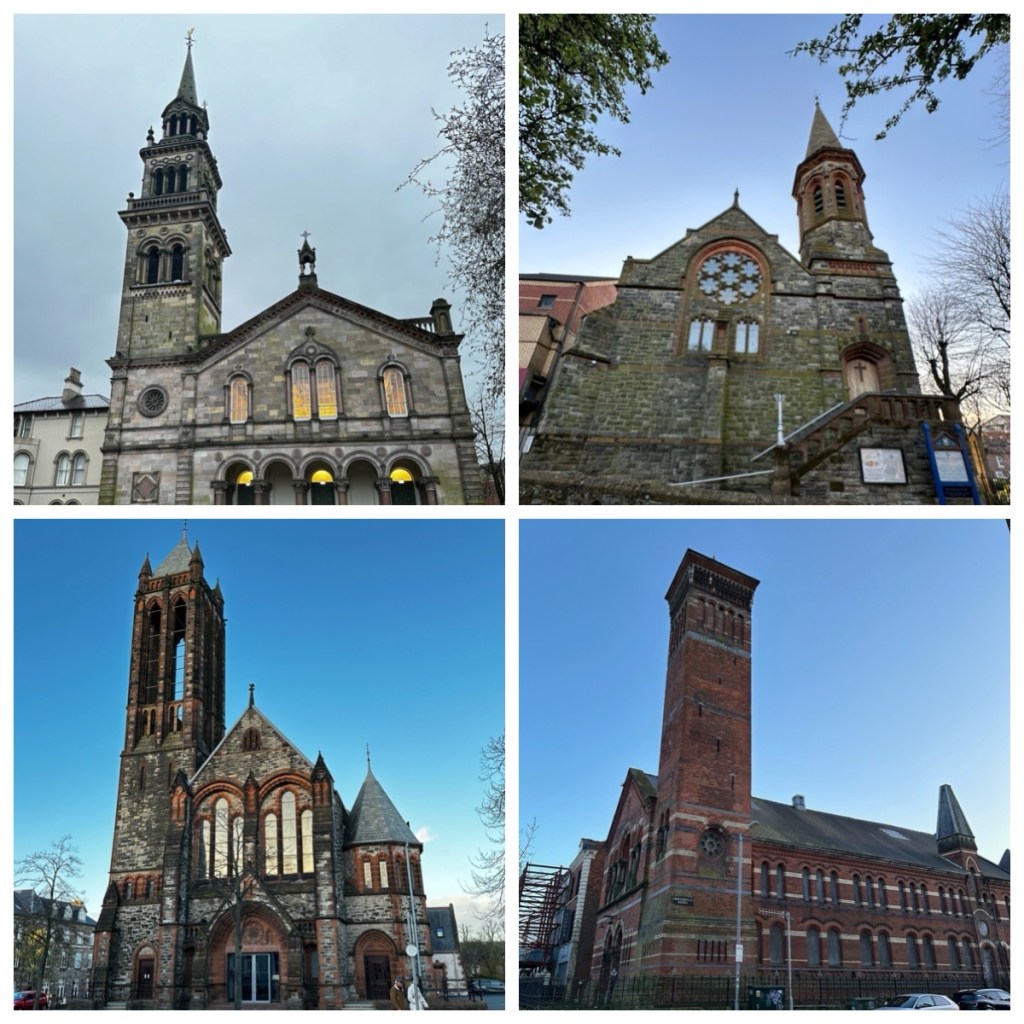
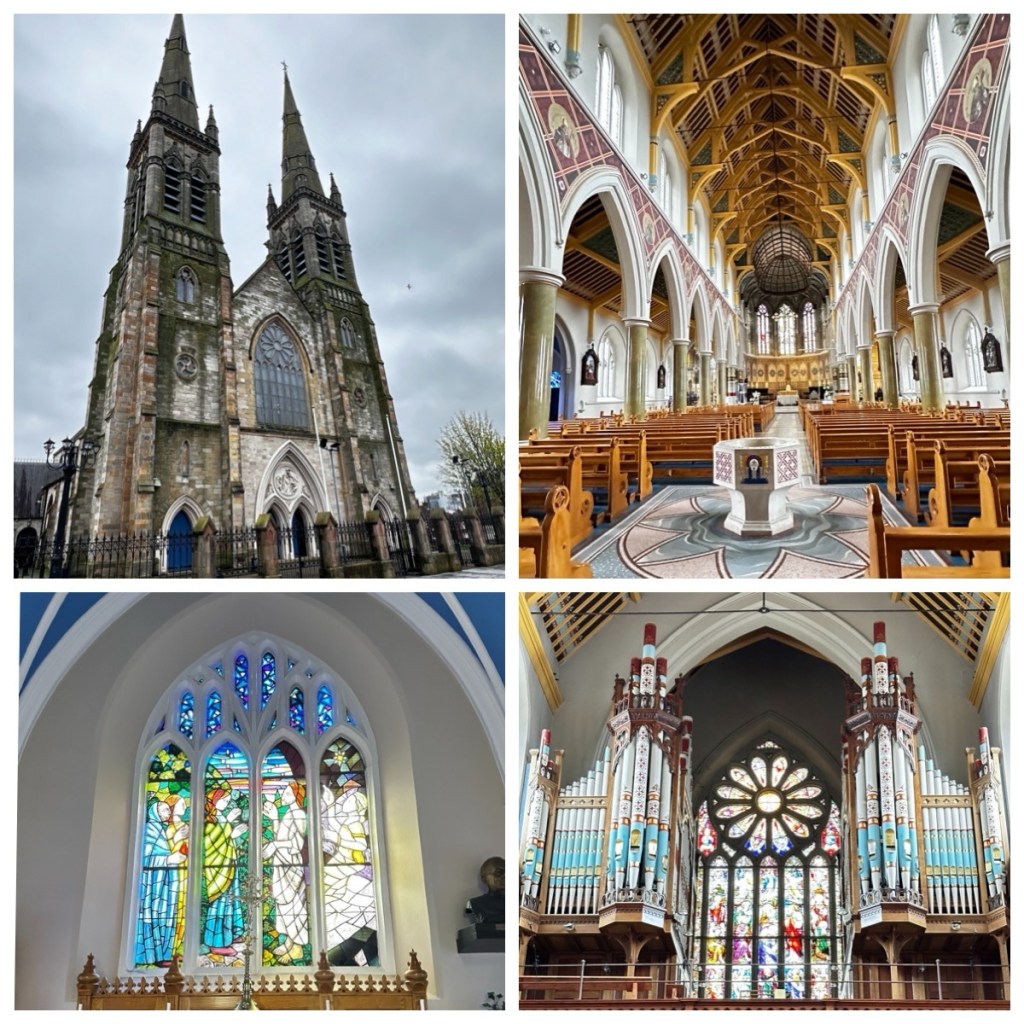
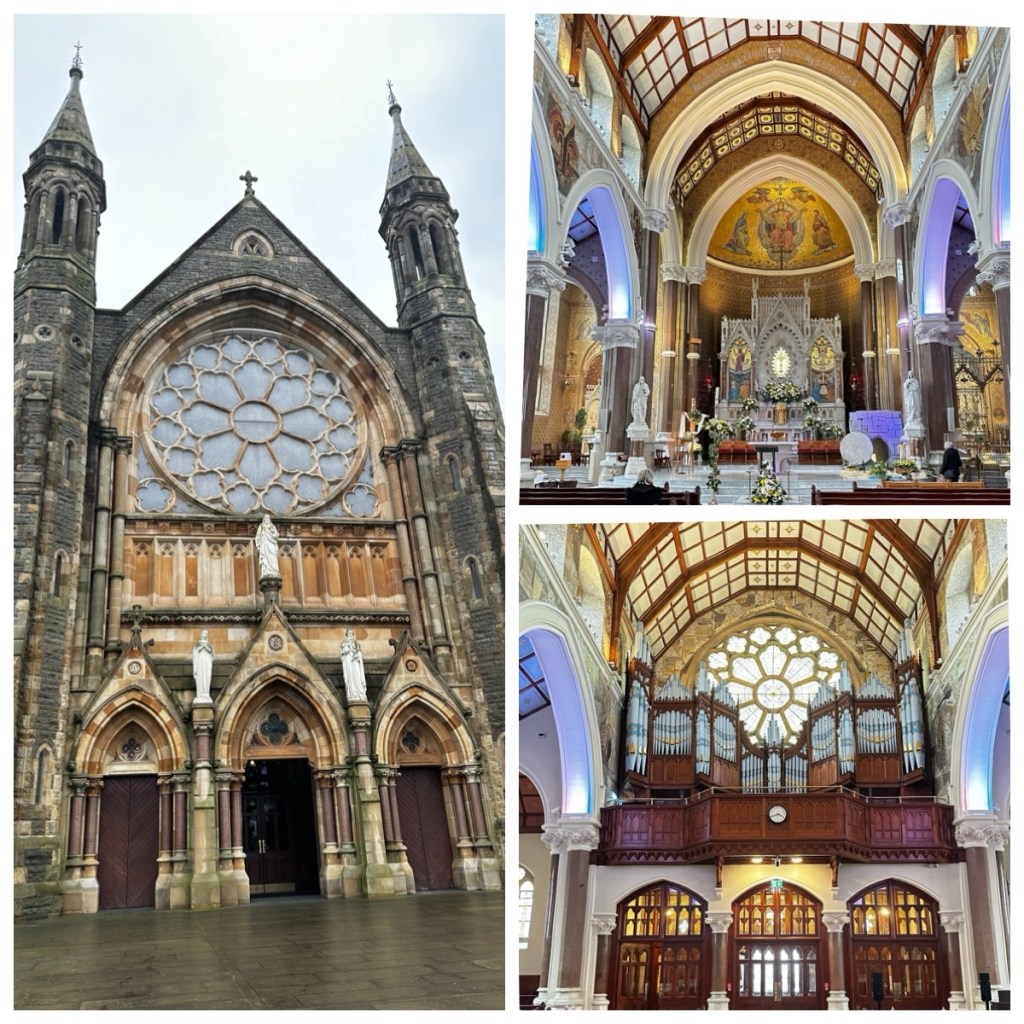
There are of course many beautiful churches in Belfast. We learned that often in Ireland you will find two similarly named churches – one being Church of England (or Ireland in the Republic) and one being the Roman Catholic Church. Here are photos of a few that we visited.
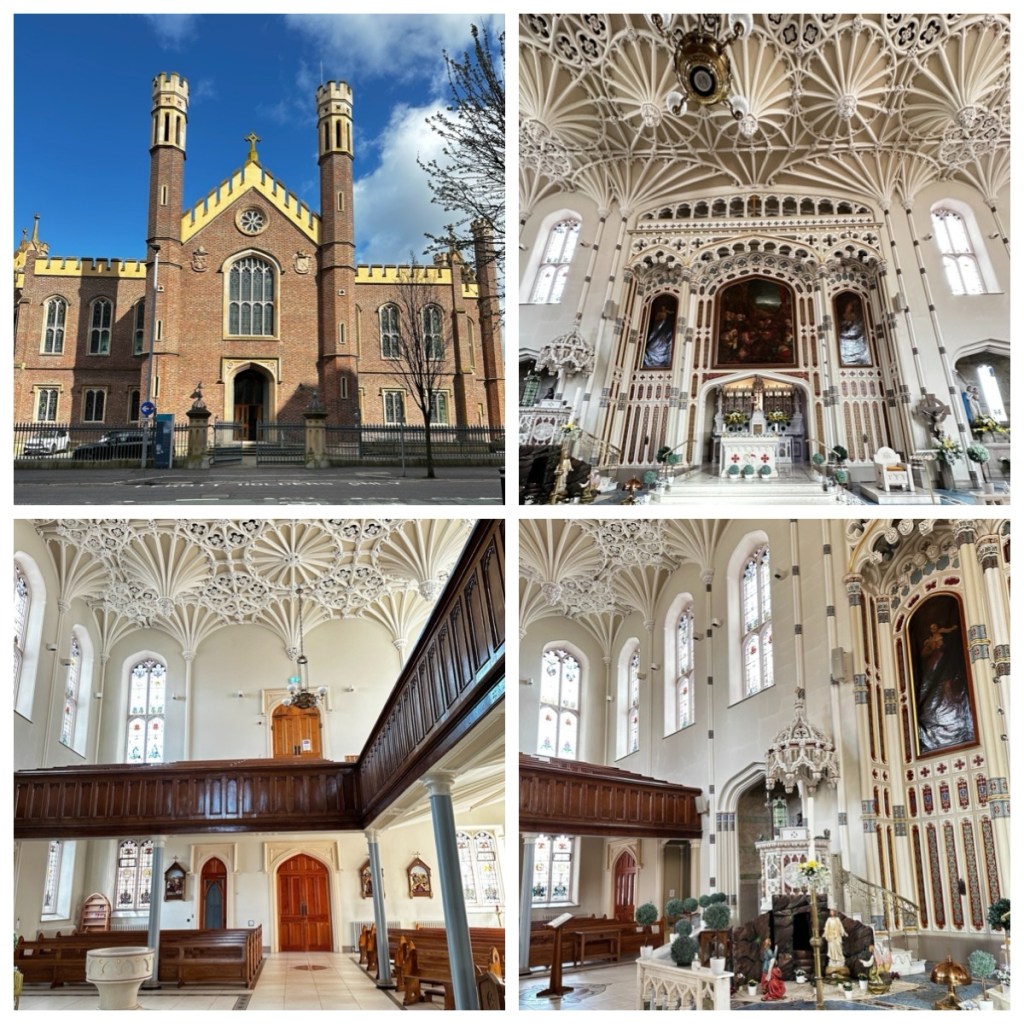
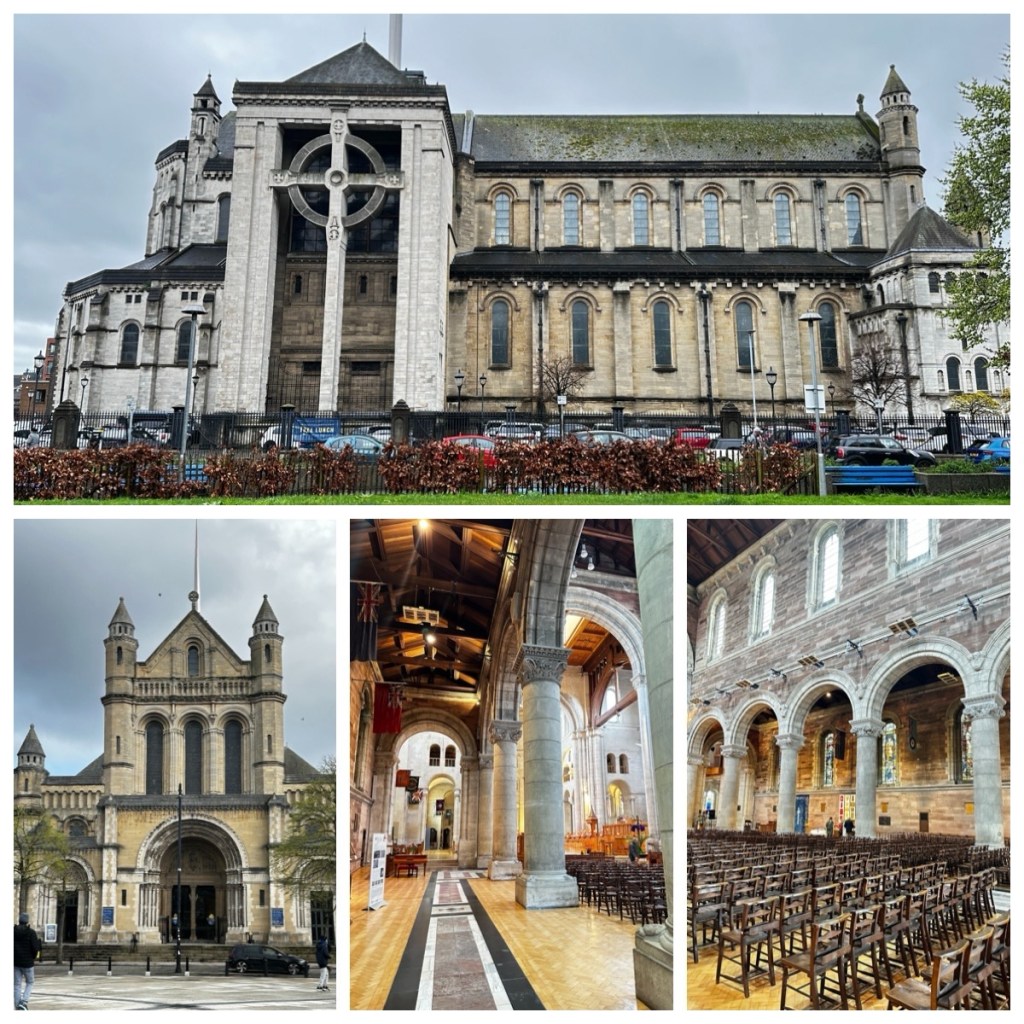
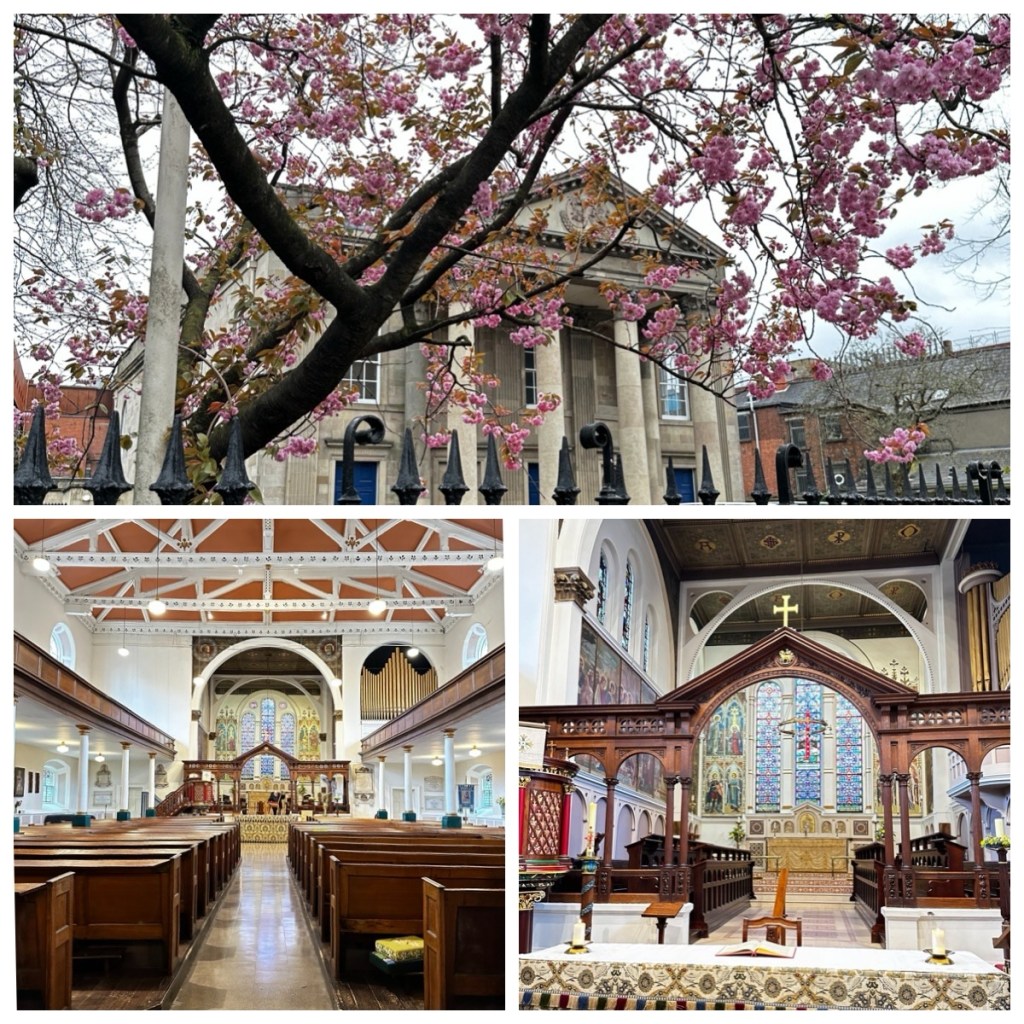
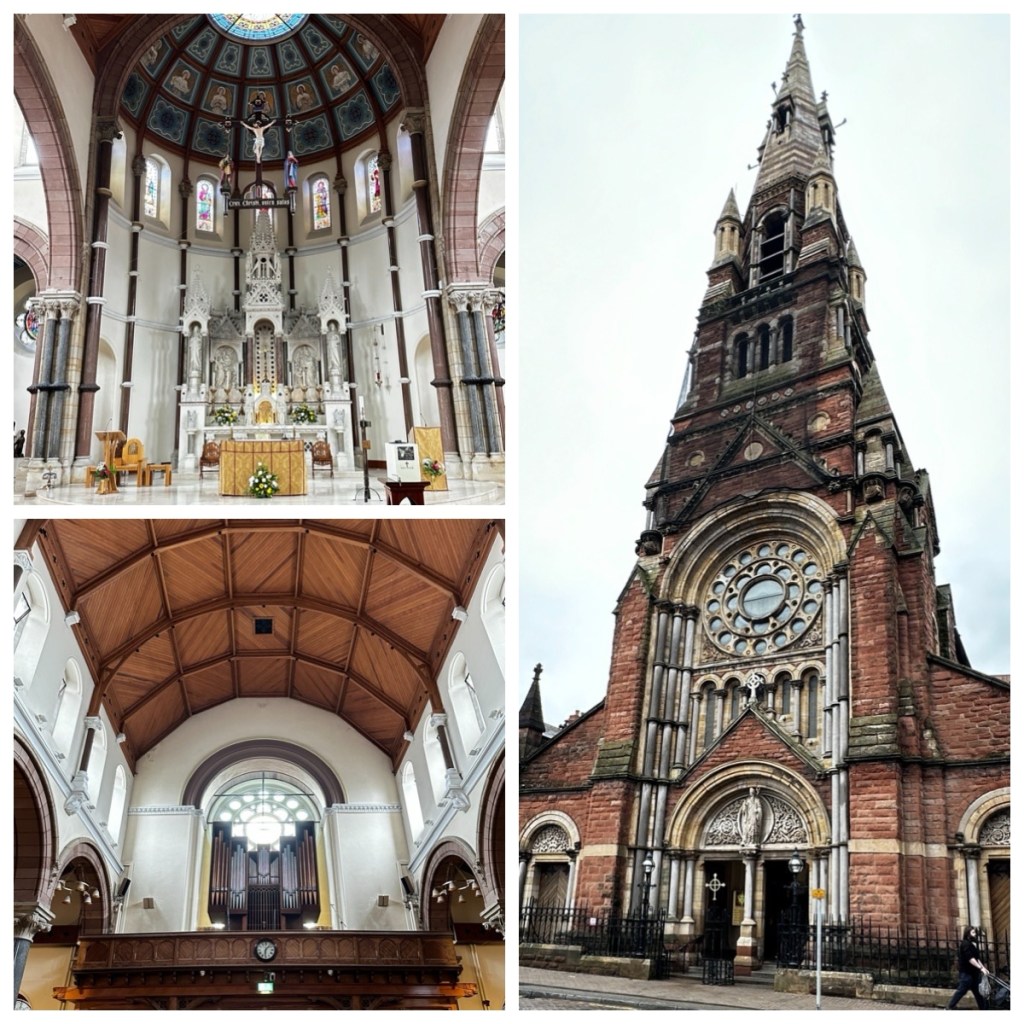
The two churches where I most enjoyed the interior architecture, design and decorative items were both in the West Belfast area.
As the world knows, from ~1967 to 1998, Northern Ireland suffered through what came to be known as “The Troubles”. Republicans (Nationalists, primarily Catholics) were represented by the Irish Republic Army (IRA) and battled to have Northern Ireland join the Republic of Ireland. They were met by the Ulster Unionist groups (Loyalists, primarily Protestants) who wanted to remain with the United Kingdom. This struggle, often violent and bloody, was finally somewhat resolved in 1998 with the Good Friday Accord (Belfast Agreement).
The Troubles in Belfast centred in the sectarian neighbourhoods of West Belfast. Today, there are a number of ways you can tour these areas – safely on your own, Black Cab taxi tours or a number of walking tours. We chose to take the 3 hour Conflicting Stories Political Tour.
This tour offers the opportunity to hear first-hand accounts from both sides of this conflicted region, shared by people who were intimately involved in this turbulent period of modern history.
Our tour began in the Falls Road area – the predominantly Catholic area. Our tour guide, Paul, told us that he joined the IRA at the age of 14 and was a political prisoner for 7 years. He described discrimination against the Catholic community and violent interactions between the IRA and the Ulster forces, bolstered by the British Armed Forces. The tour took us by a number of memorials to victims of the conflict.

A part of Belfast remains a divided city. 26 kilometers of a physical wall, up to ten meters high in some locations separates two communities living side by side. At several places in the wall are gates – the predominant one today being the Peace Gate.


At the Peace Gate, we passed into the Shankill Road area, the predominantly Protestant area, and we were passed on to tour guide Gary. Gary described his life as a member of the British Armed Forces. He led us past a number of murals and memorials to victims of IRA attacks.

We left the “Conflicting Stories” tour with conflicting thoughts and we think this was the point of the tour (as well as capitalizing on tourist interest in the area). Whereas Paul spoke of a healing between the two communities, Gary gave the impression that a great division still exists. We spoke to some Belfast residents later and came away with the impression that reality stands somewhere between these two accounts. In the end, we are pleased that we went on the tour and plan to do more reading on the situation.
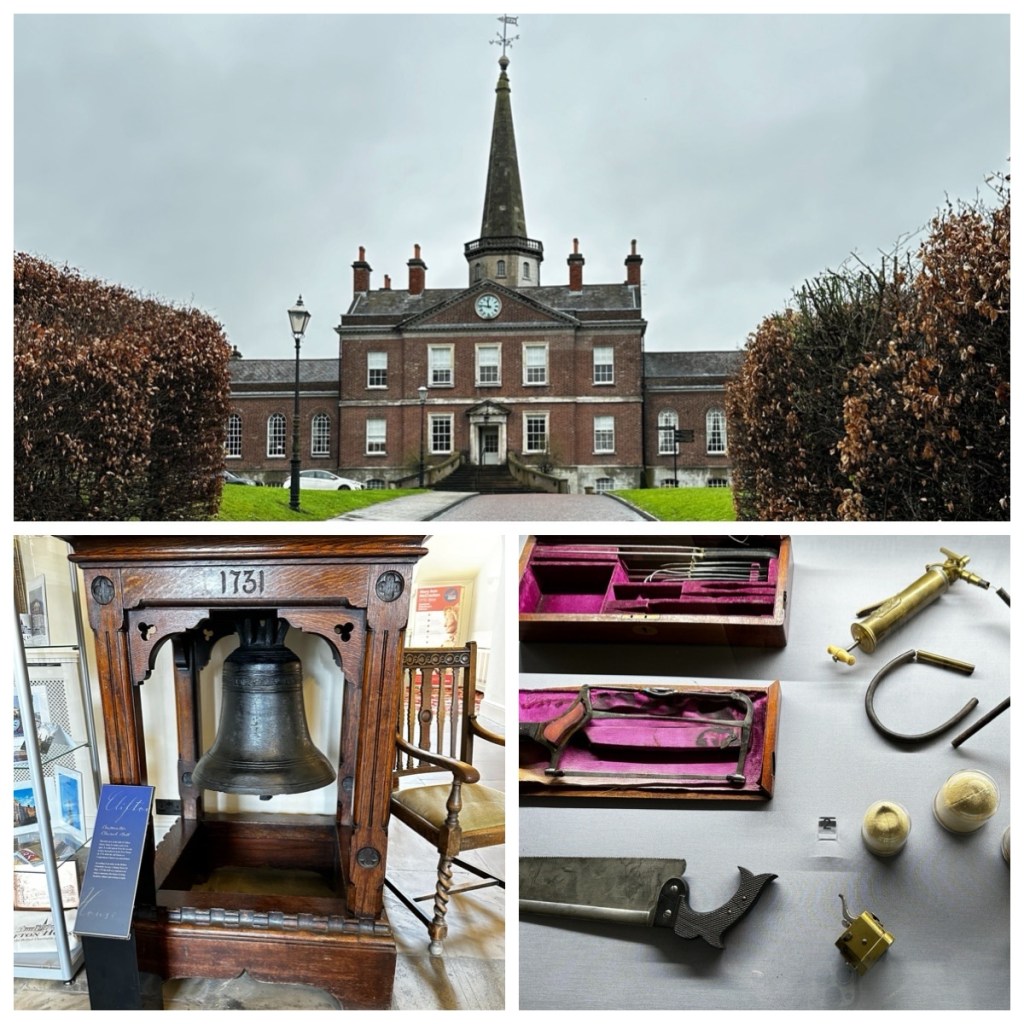
Some of the other interesting sites we saw in Belfast included:


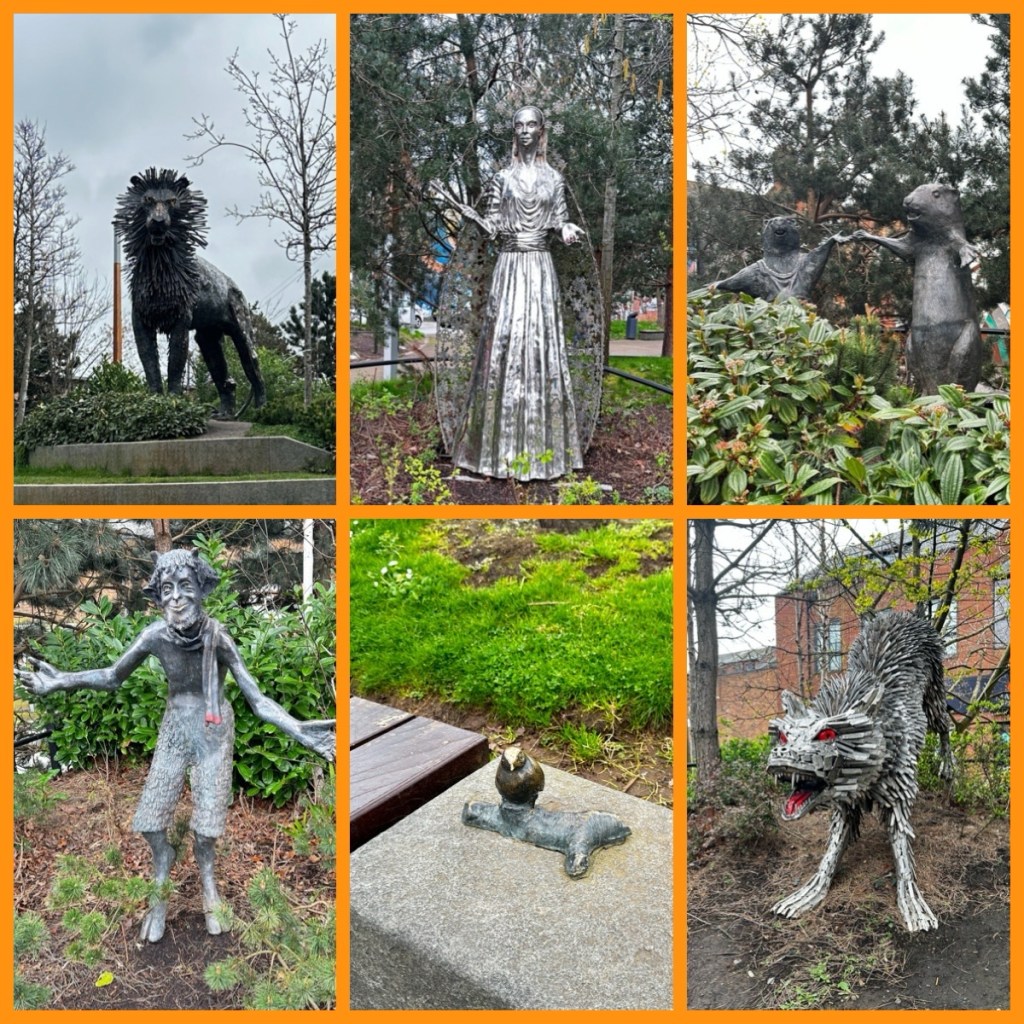
We must as always share some of the wonderful food and drink we encountered in Belfast.
Our neighborhood had some great spots. On our first afternoon, we stopped at the local laundromat – there, a young Irish girl exhibited the extreme friendliness and helpfulness that we encountered from so many in Belfast and offered to get our laundry started while we went out for coffee. We wandered down the street and saw a sign stating that the Cafe at Crescent in the Crescent Art Centre was now open. What a great find! Gary & Matthew, two more of the Belfast gems, had opened their café that day and served us delicious coffee and baking. We stopped back in to visit with them on subsequent days. We would definitely recommend a visit if you are in the area.
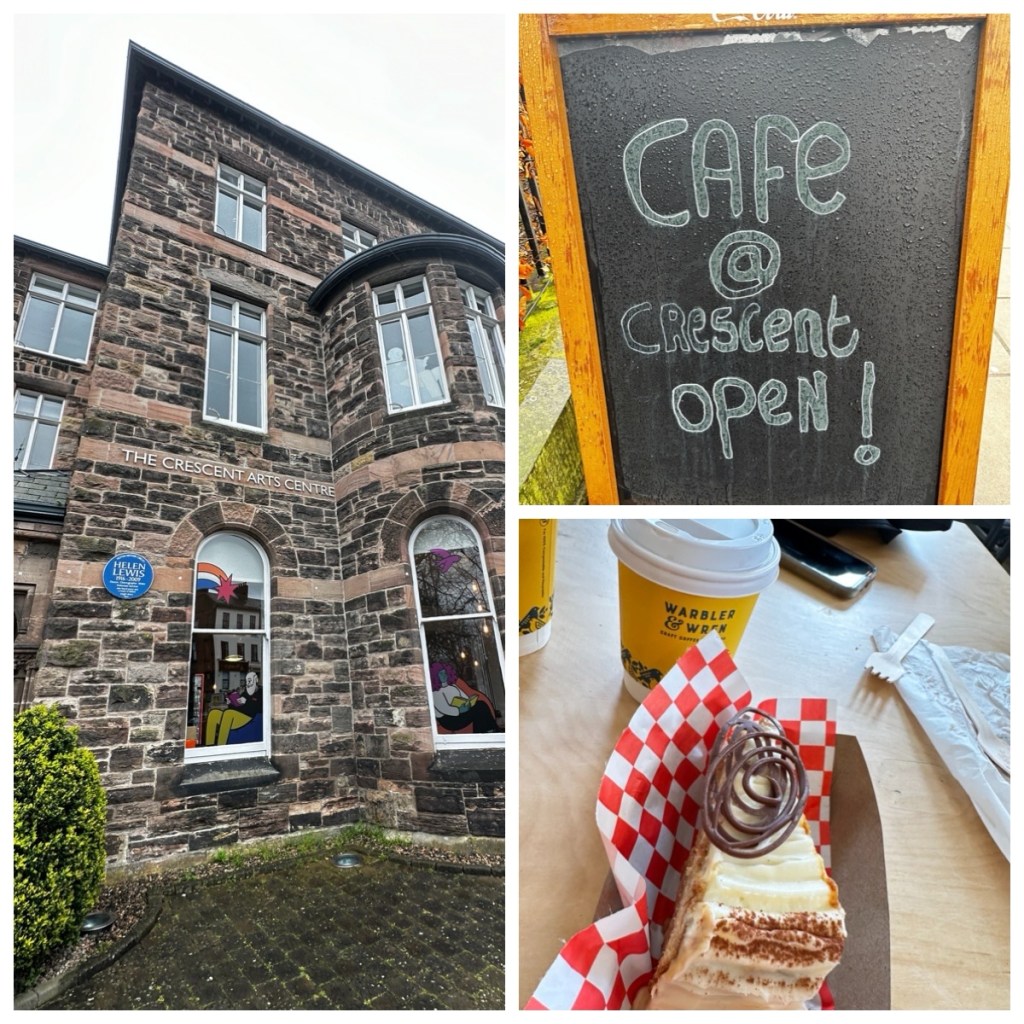
We had dinner each night at restaurants in the Botanic area and would recommend them all (forgot to take pictures of the delicious ciabatta sandwiches and sweet potato fries that we ate at Maggie May’s).


We enjoyed a great pub afternoon at the Deer’s Head in the city centre.

We fell in love with Belfast and its friendly people. If you are travelling to Ireland, be sure to include a few days for this great city.
Cheers,
Bev & Harvey


your pictures and accompanying commentary are so awesome Bev! I really enjoy hearing (and seeing) your adventures! 😊
LikeLiked by 1 person
I really enjoy travelling with you vicariously through your pictures and summaries.
Thank you
Ralph
LikeLike
Pingback: Belfast – A Second Visit | A Long and Winding Journey