We are spending a few weeks in Europe and hope you enjoy reading about our travels.
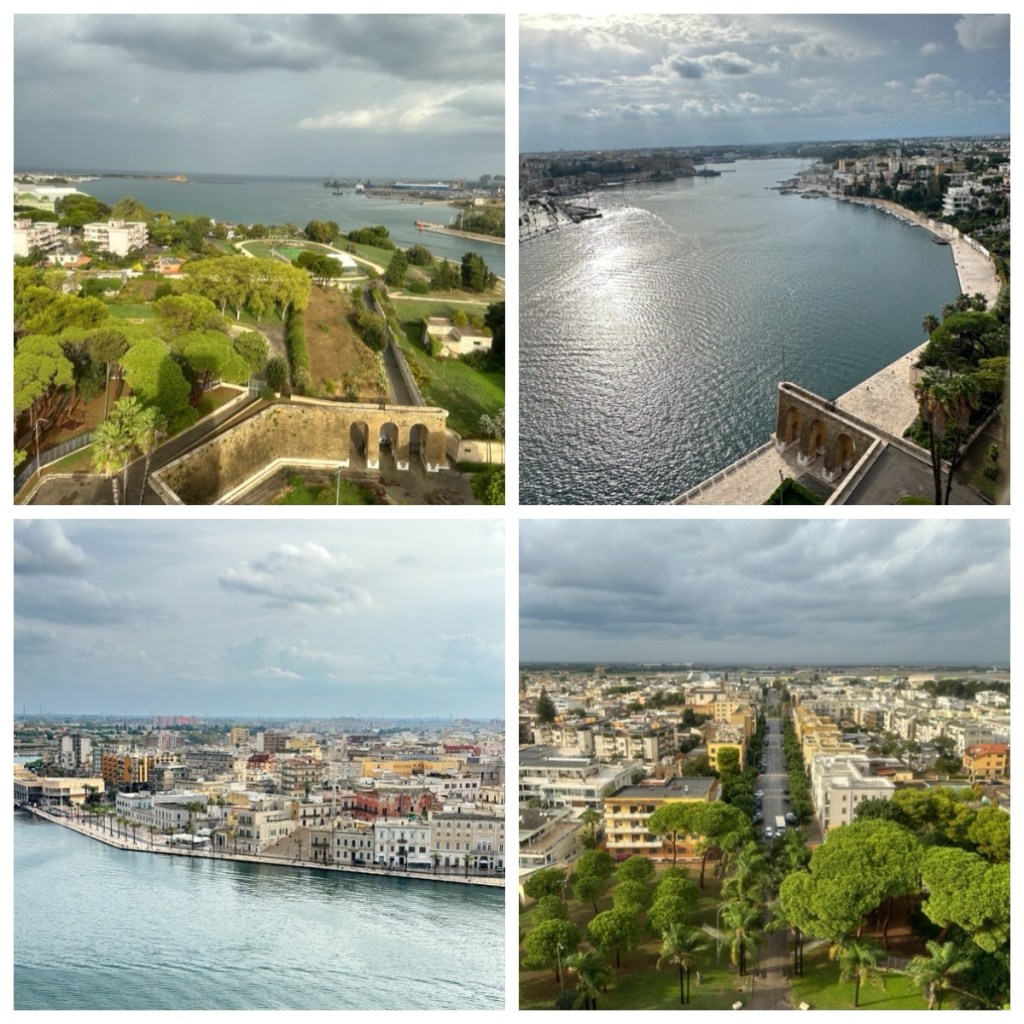
After a few days in London, we were off on British Airways to Italy. A pleasant flight and we landed in Brindisi. Brindisi is a port city on the Adriatic Sea in the area of Puglia, the heel of Italy.
Archaeological finds show that the area has been inhabited for at least 12,000 years. In the VIII century BC, Messapians named the city ‘Brenton’, meaning ‘head of deer’ due to the unique shape of its harbour. It has been safe port for seamen since the times of the Ancient Romans. Since 1870 the harbour had been a port of call along the Indian Mail Route, the British shipping company which connected London to Bombay

An easy airport bus ride took us to the train station where it was just a short 10 minute walk to the Hotel Orientale. We highly recommend this hotel – lovely modern rooms, friendly staff and a great breakfast each morning.

The hotel is located on Corso Garibaldi. This palm-lined avenue stretches from the train station to the port. It is alive with locals in the morning and quiet during the afternoon hours when most stores and businesses take a few hours off. In the evening, things open up again and the street buzzes with activity.

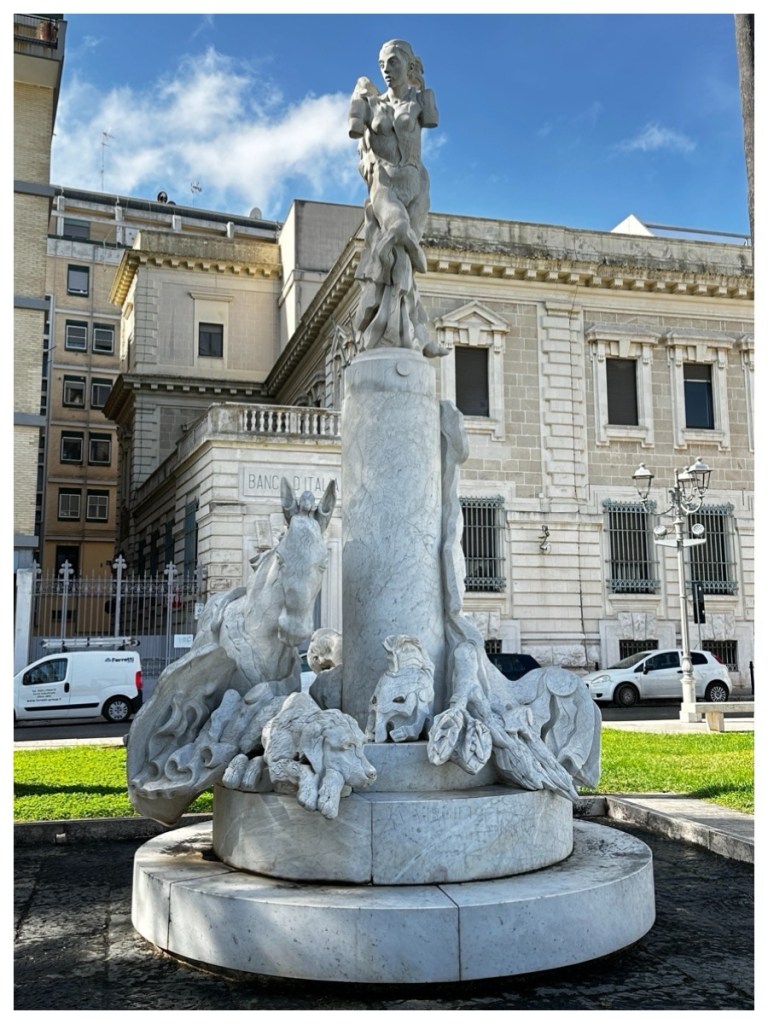
Corso Garibaldi ends at Piazza Vittoria Emanuele and the Monumento a Virgilio. The square is better known to the locals as “Giardinetti” (small gardens). Besides the olive trees (the symbolic tree of the territory), you find the statue of Virgil, the famous author who is said to have died in Brindisi in 19 BC. The marble sculpture represents the contrast between war and peace, good and evil, through the use of symbols such as Nike, the helmet, the olive tree, the horse and the lamb.
The harbour of Brindisi extends for almost 5 million square feet.
Along the seafront is the Virgil Staircase, leading up to the Colonne Romano (Roman Columns). The Colums were erected to celebrate the end of the Roman Appian Way, presumably in the 2nd or 3rd century AD. Only one of the two columns remains, with the other donated to Lecce in 1528 to honor Saint Orontius.
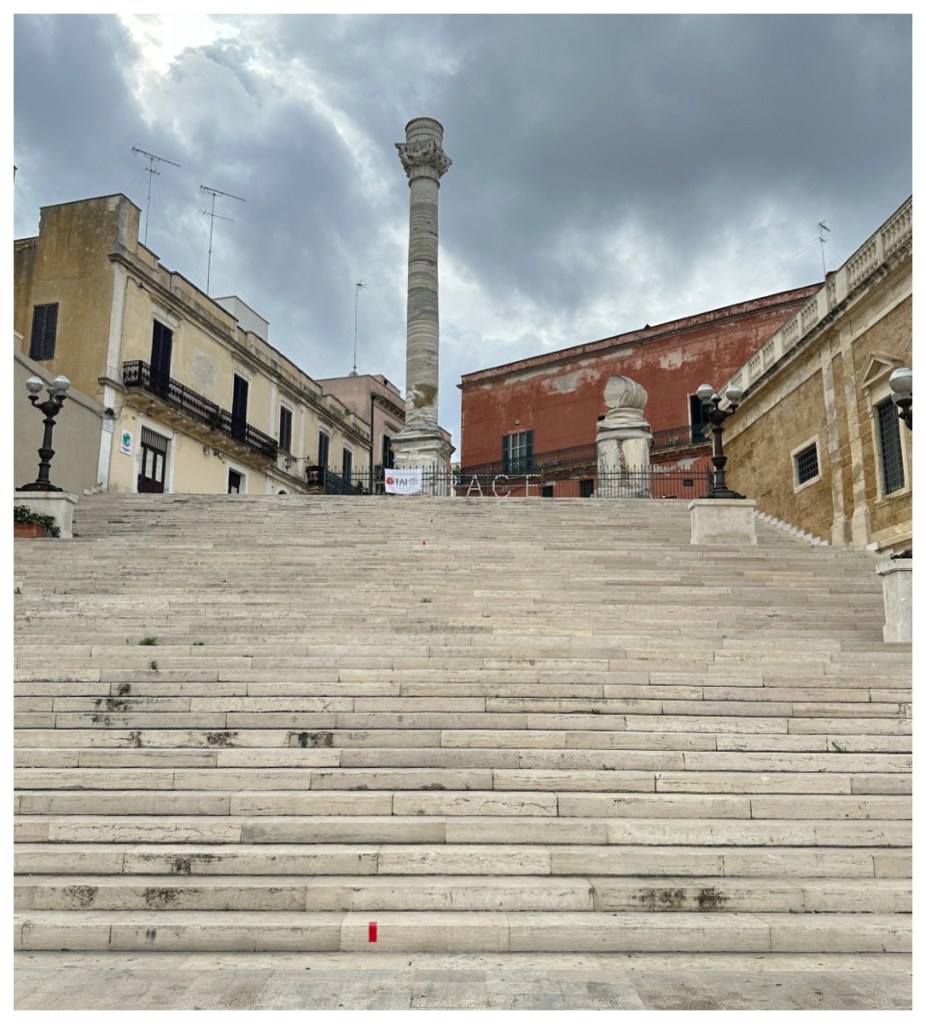

The Palazzina del Belvedere is next to the Virgil Staircase. It was erected in 1931 and houses a free exhibit of archaeological finds from the area. The terrace of the building also provides a beautiful view of the harbour and seafront.

From the harbour front, we caught a water taxi across he harbour.

The landing is near the old Fishing Village (Villaggio Pescatore). Along the quay is a staircase leading to a statue of the Ave Maris Stella.
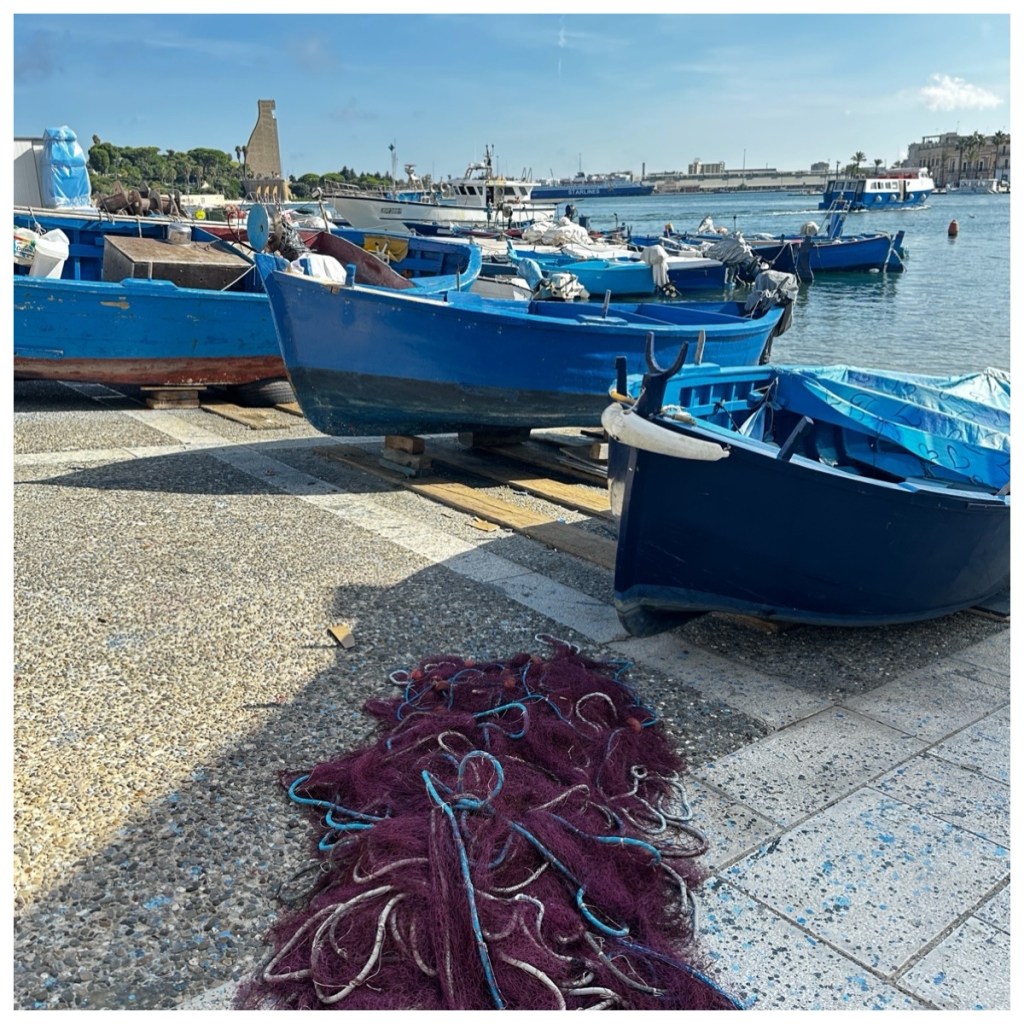

Further down the quay is the Monumento al Marinaio – the National Monument of the Italian Sailor. Inaugurated in 1933, the monument was built in honour of the fallen of WWI. The monument represents a great rudder with a bronze statue of Our Lady, Star of the Sea.

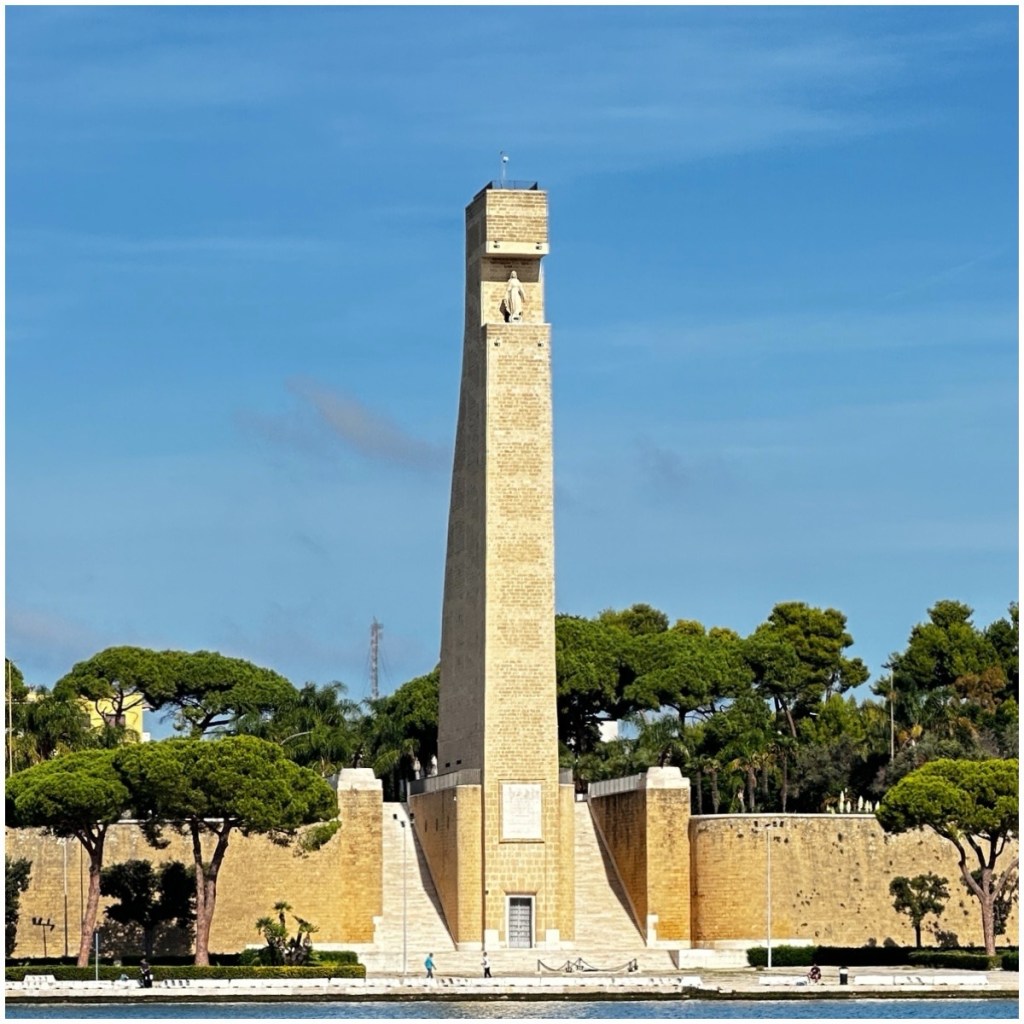
A memorial chapel is on the first floor.

A lift takes you to the 4th floor with steps up the remaining 3 floors to the top. From here, you enjoy a spectacular view of the city, harbour and surrounding countryside.
The Catterale – the Basilica of St. John the Baptist – sits in the Piazza Duomo. The Basilica was completed in 1143 and it has witnessed important historical events like Roger III’s coronation and Frederick II’s marriage to Isabella of Brienne. Inside is a wooden choir, a rich mosaic and the chapel of St. Theodore.
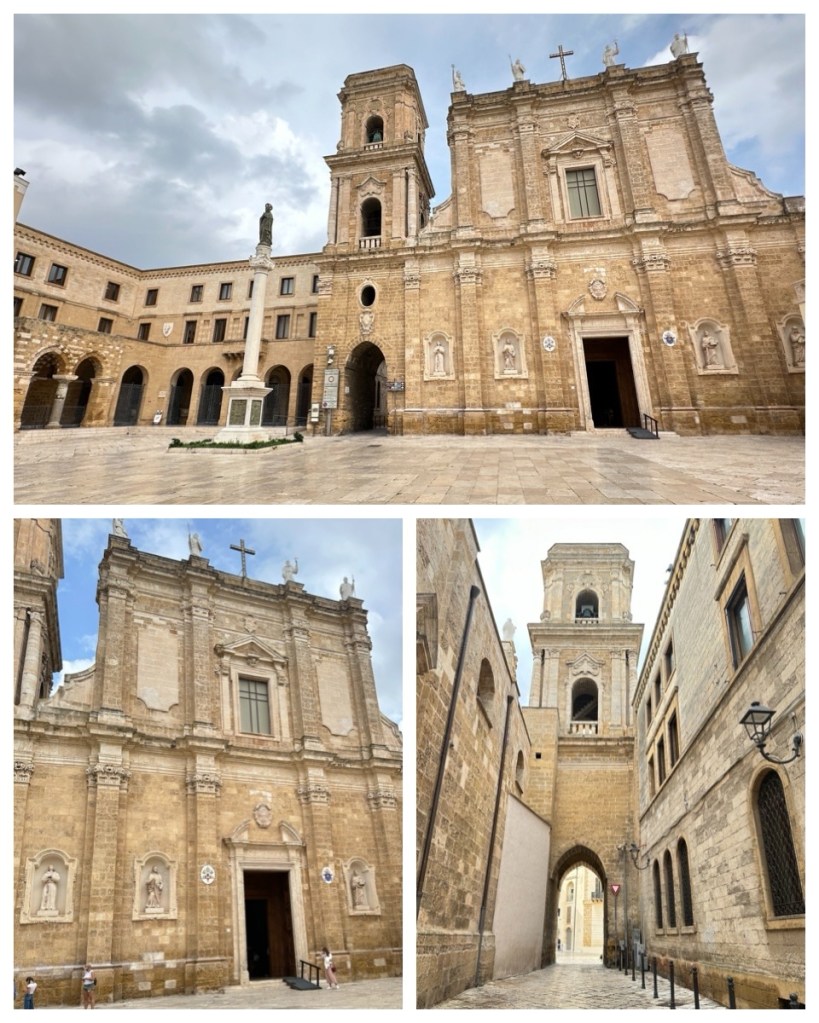

The Chiesa di Santa Theresa stands over the Piazza Santa Theresa. From the square are great views of the west cove, the Fishermen’s Village and the “Sciabiche” area. The church is a typical example of Baroque architecture, with precious paintings and a frescoed ceiling. The church is now home to the “Giovanni Tarantini” Diocesan Museum.

Wandering the streets of Brindisi, we came across many interesting statues and fountains.


Brindisi is quite magical in the evening and we enjoyed strolling the streets.

Of course, we enjoyed the culinary delights of Brindisi.
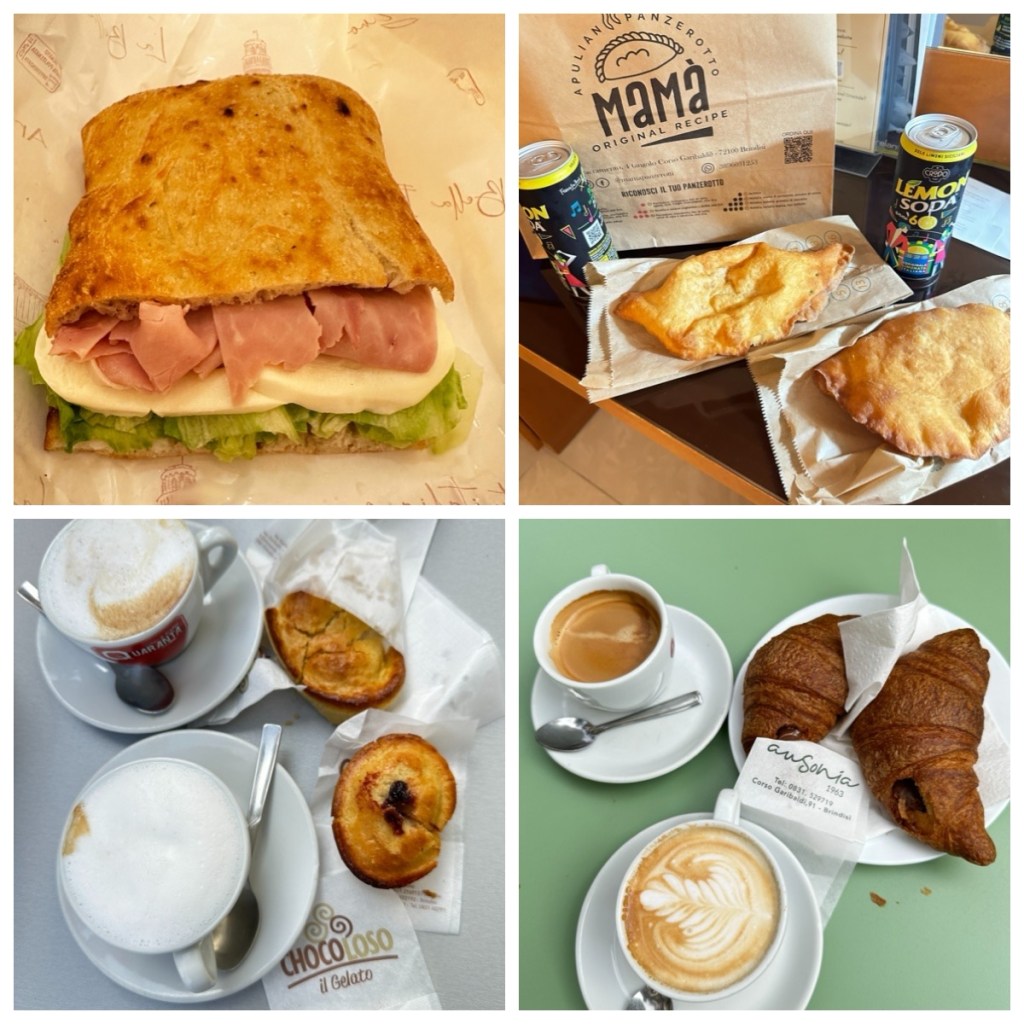
We had a fabulous dinner at the Rendez-Vous Bistrot.


Another great spot was the Restorante Windsurf, along the harbour.

Brindisi is often overlooked by tourists to Puglia, in favour of some of the more well-known historical towns. However, we found it to be quite delightful with a mix of historical sights and local people living their lives – and without throngs of tourists. We would recommend a few days if you are in the area!
Cheers,
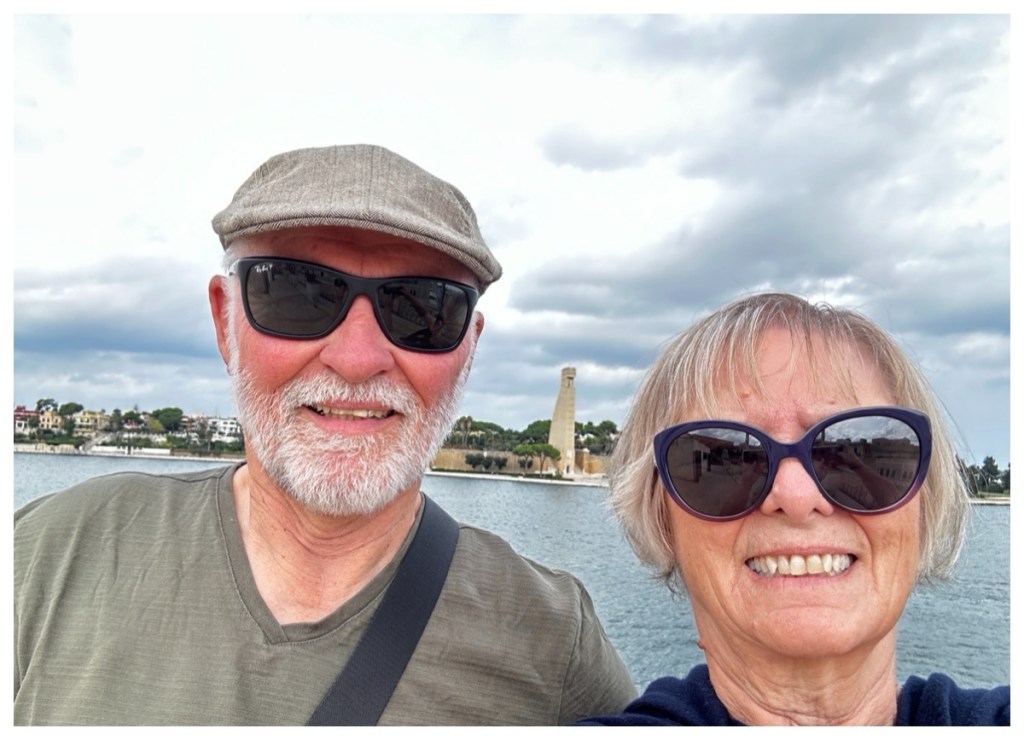
Bev & Harvey
 A Long and Winding Journey
Bev
Thank you for the tour and historical background of this part of Italy.
Ralph
LikeLiked by 1 person
So fun to read your blogs! Love seeing your travels and learning more about each city you visit!
LikeLiked by 1 person