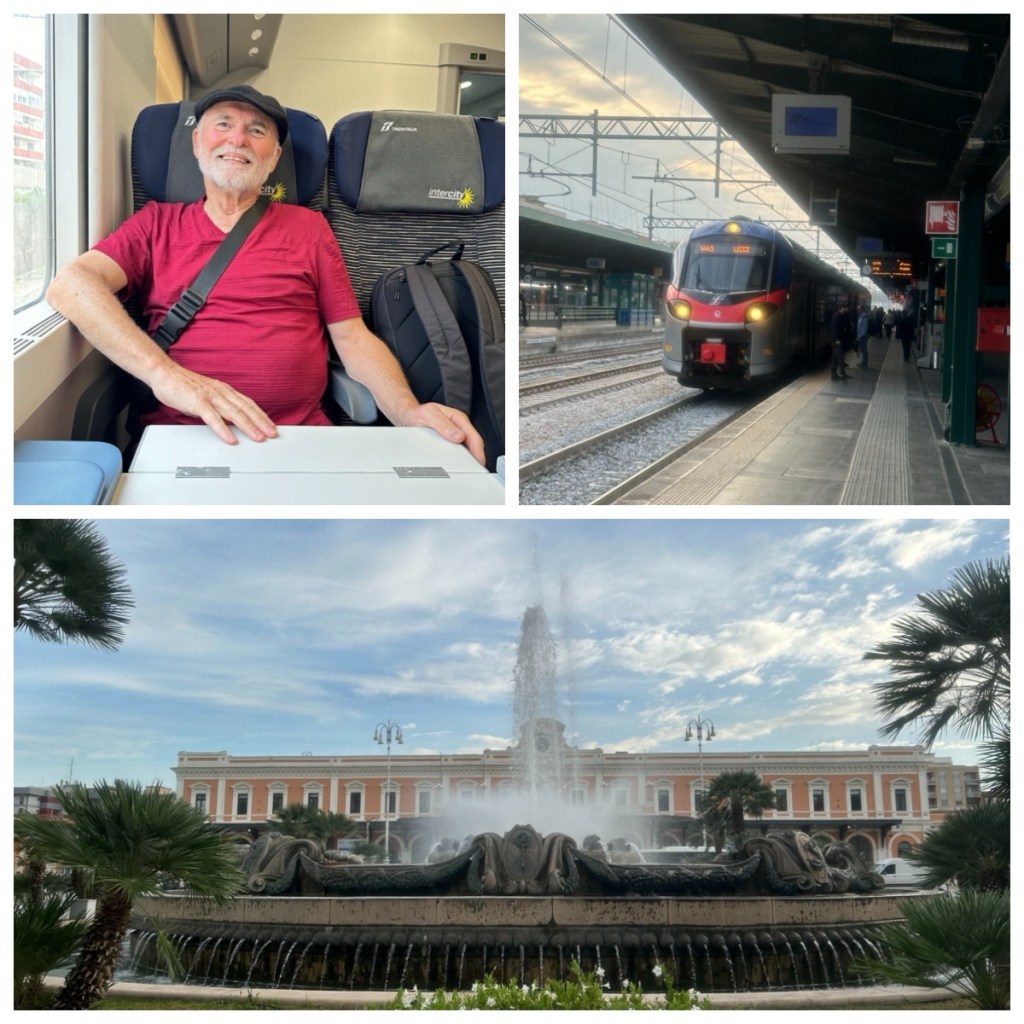
Our second home-base in Puglia was in the city of Bari. From Brindisi, it was a very comfortable 1.5 hour Trenitalia trip to the Bari Centrale station.
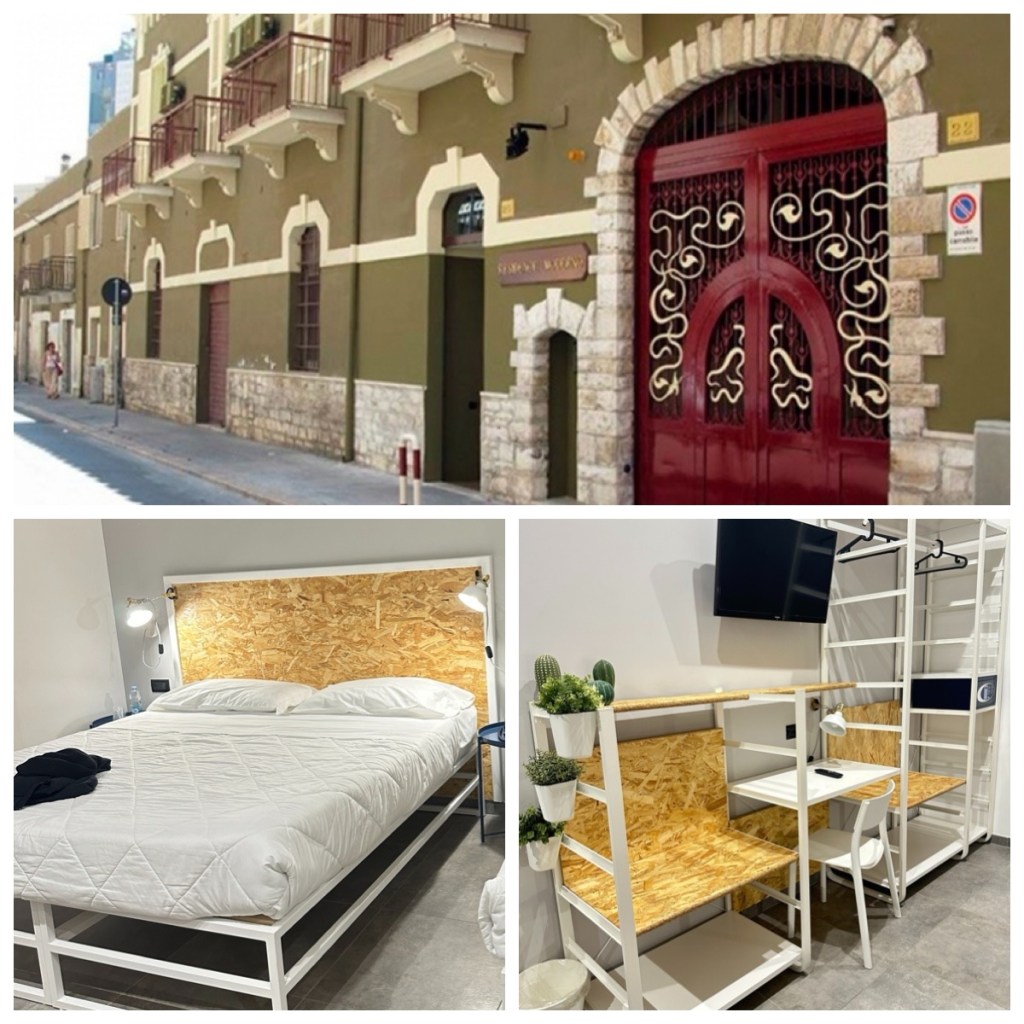
We then walked about 15 minutes to the Residence Hotel Moderno. This hotel in a historic factory building from the early 1900s, is now a modern hotel with large comfortable rooms. The furnishing are minimalistic and tasteful (imagine an IKEA vibe); the breakfast buffet was a bit like being in a cafeteria but nevertheless, tasty.
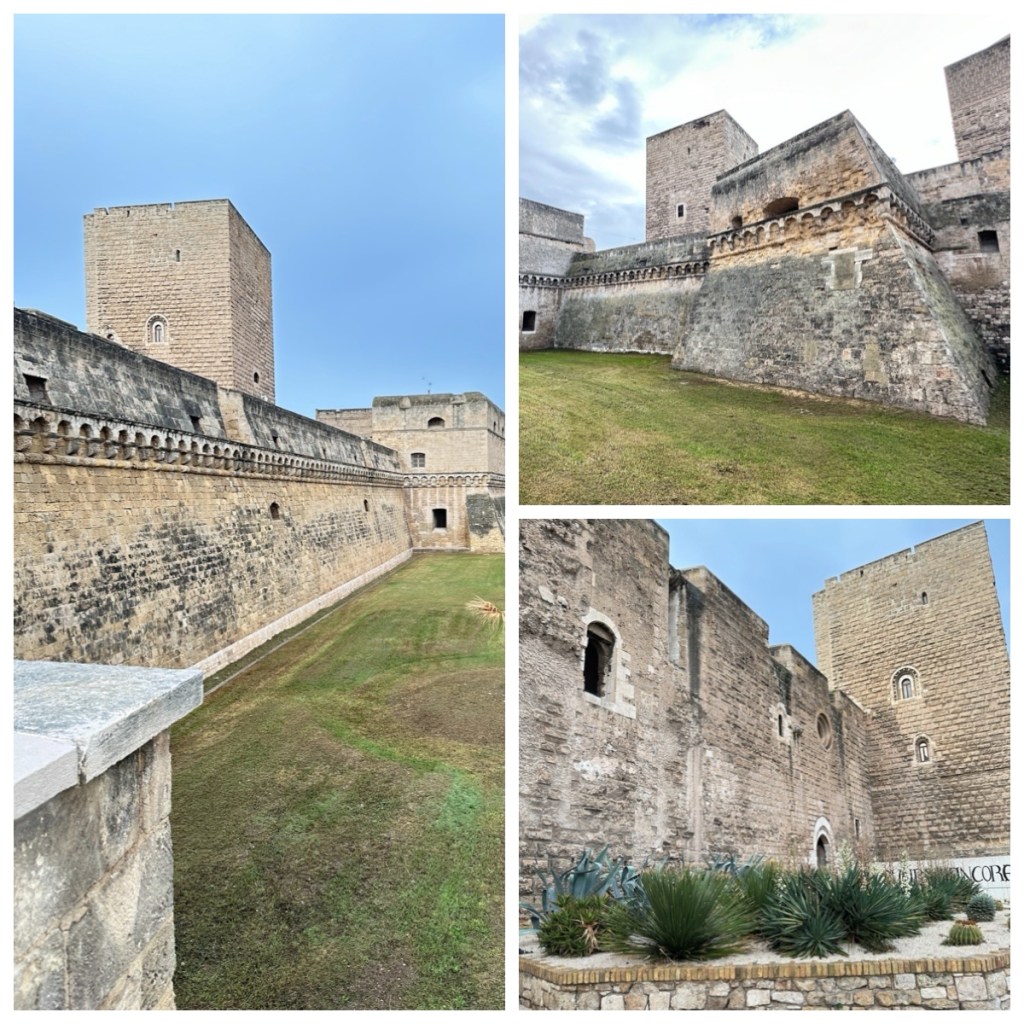
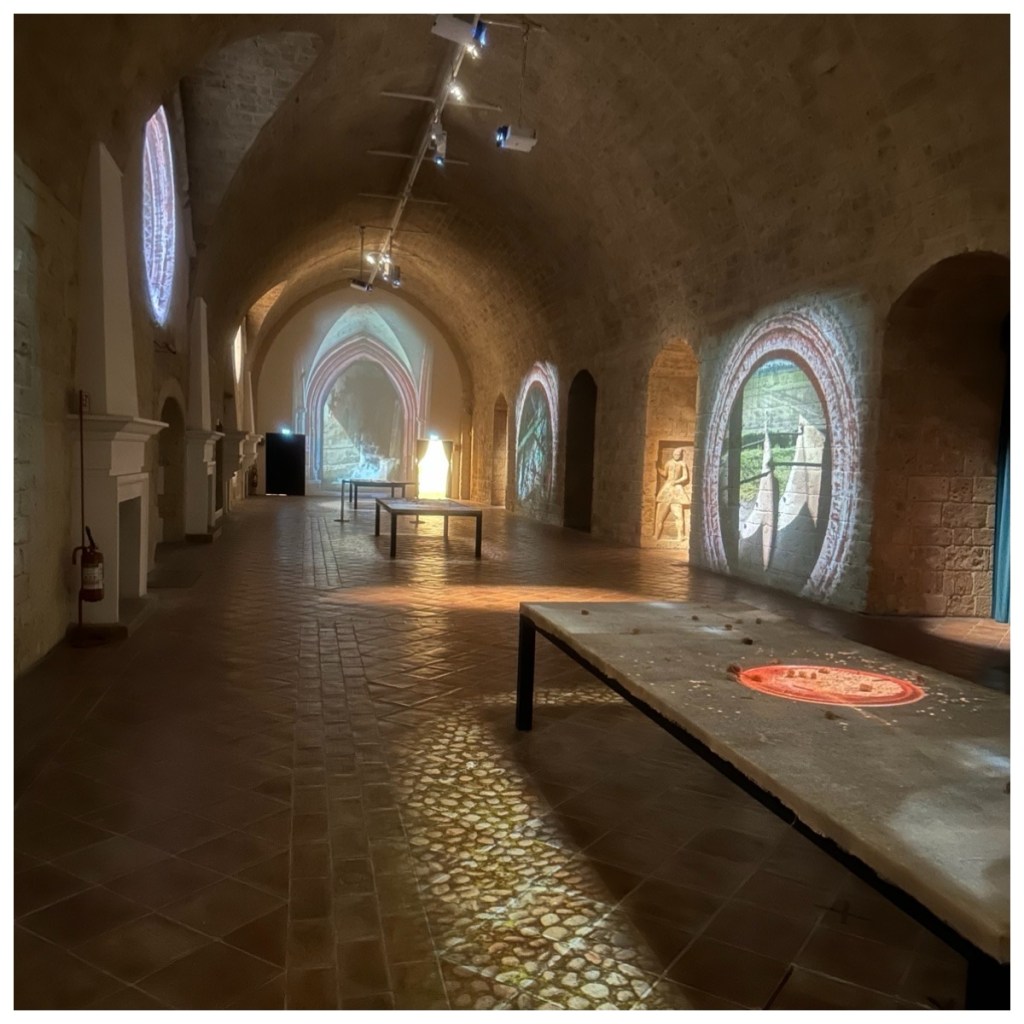
The Castello Normanno-Svevo (Swabian Fortress) also known as the Houenstaufen Castle, was built circa 1132 by the Norman King Roger II. The castle was destroyed in 1156 by King William I (“The Wicked”) of Sicily as he tore his way through Puglia. It was restored by Emperor Fredrick II in 1233. The castle is surrounded by a moat. Each corner of the castle walls has a tower bastion, that were used as a juvenile prison, a maritime aide, a shelter for Saint Francis and the fourth just as the tower of the wind. The centre of the castle features a Renaissance courtyard with an Aragonese staircase. We read a story that in 1221 Frederick II hosted Saint Francis of Assisi in the Swabian Castle. The Emperor sent a courtesan to seduce the saint. As she approached his bed, it was covered with fire. She fled in terror. Frederick (who had been spying on the saint) was very impressed. The courtesan could not be reached for comment.
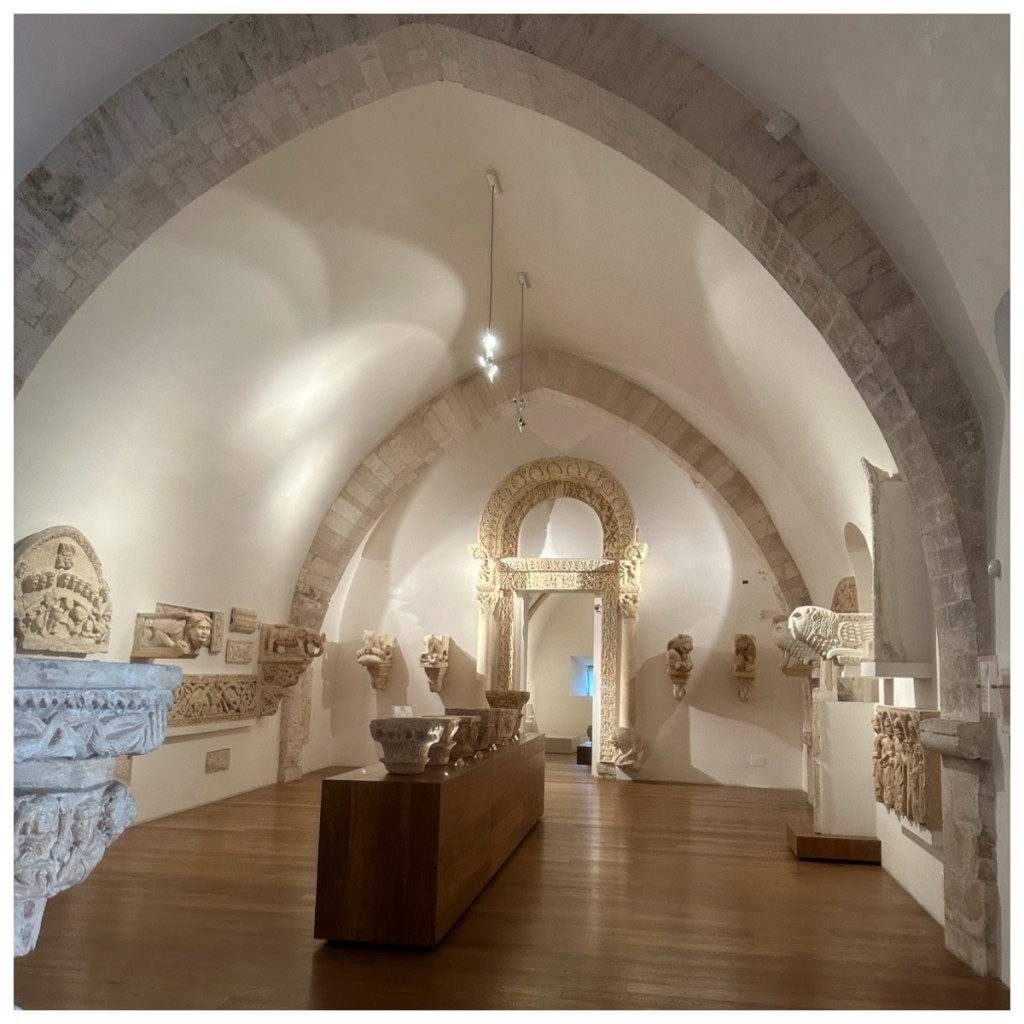
The exhibits in the castle were very well done. There were a number of areas featuring artifacts found in the excavation. Also, in a number of the rooms, interesting and informative movies were shown on the walls. We would highly recommend a visit to anyone in the area.
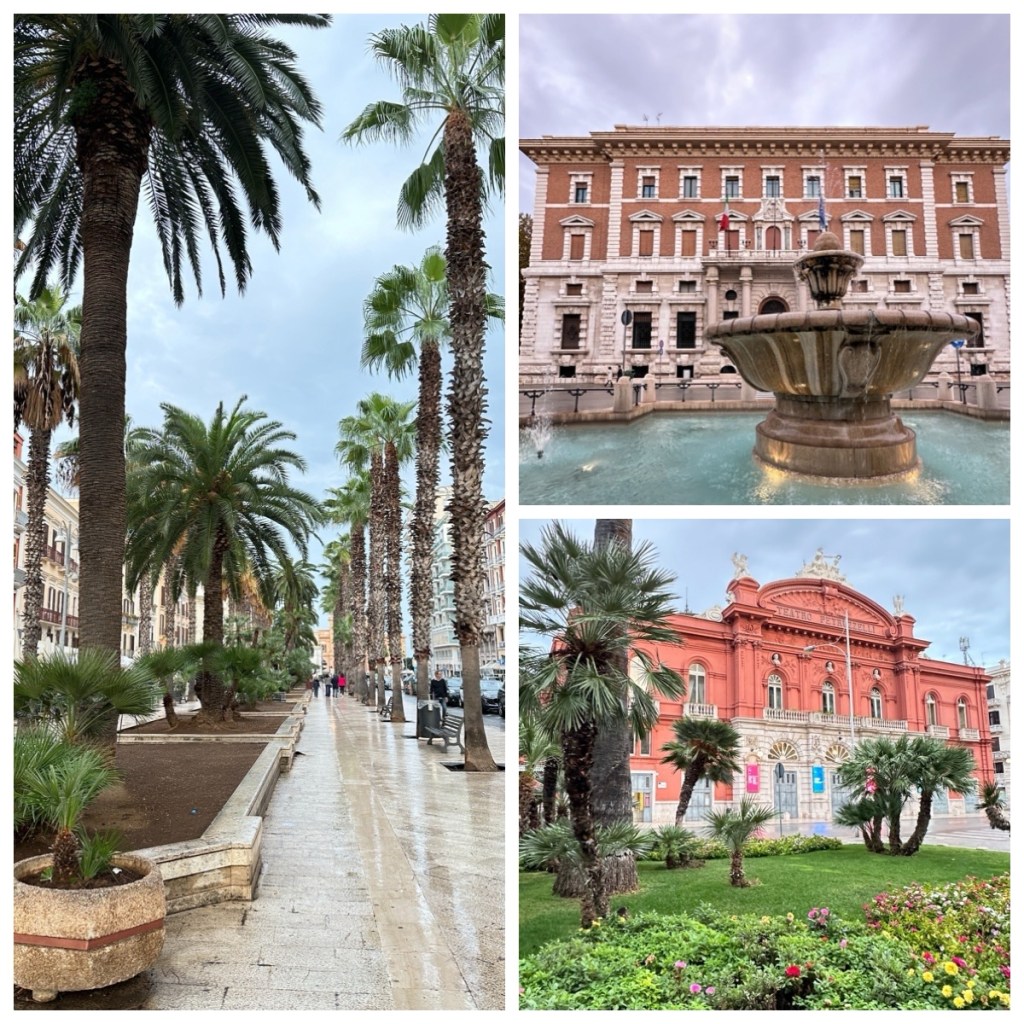
Teatro Margherita was built between 1912 – 1914 to replace a wooden theatre. The facade features Art Nouveau styling. At the time of our visit, it was hosting a photographic exhibit, but unfortunately, we didn’t have the time to check it out.

Corso Cavour is a tree-lined boulevard featuring shopping, restaurants and some beautiful buildings. The Corso Cavour fountain sits in front of the Banco Italia neo-classical building. Next to this is the Petruzzelli Theatre (Teatro Petruzzelli). The theatre was built by the Petruzzelli family and the city administration between 1898 and 1903. It is Bari’s largest theater and the fourth largest in Italy.
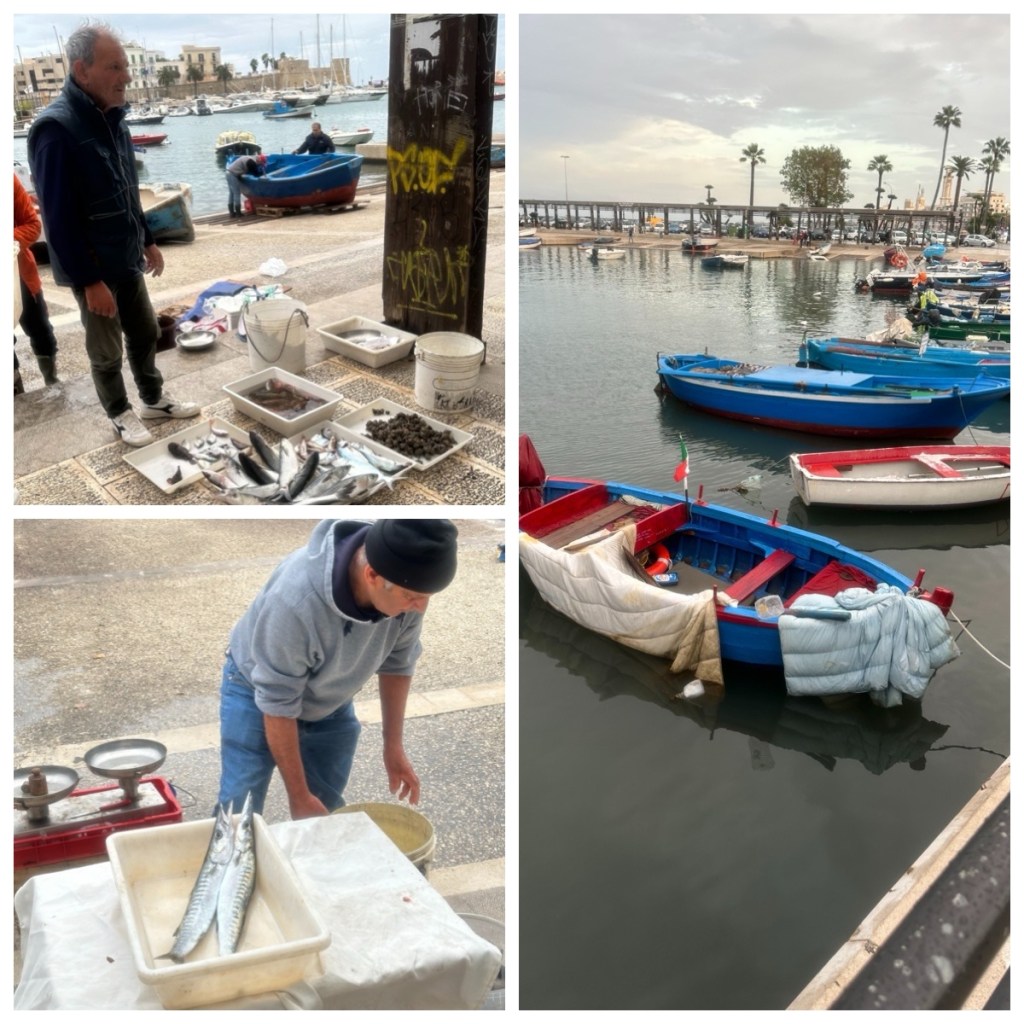
The Porto di Bari is traditionally considered Europe’s door to the Balkan Peninsula and the Middle East, and is a multipurpose port able to meet all operational requirements. Among the largest ports on the Adriatic, in 2012 the port of Bari handled about 2 million passengers, of which about 650,000 were cruise passengers. The Lungomare (Seafront) is a 15-kilometer-long waterfront promenade on the shore of the Adriatic Sea. It was fun on a Sunday morning to visit the Old Fish Market.
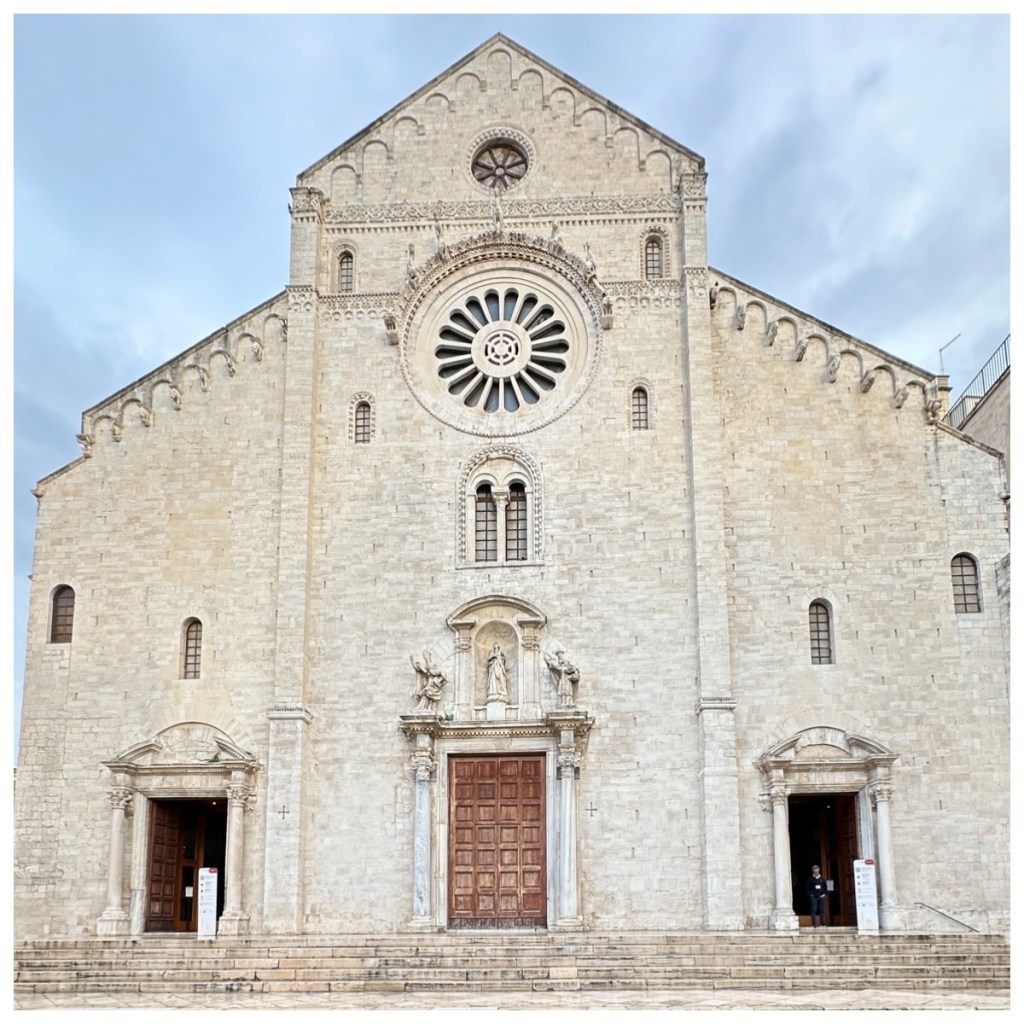
There had been a church on the site of the Cattedrale di San Sabino (Bari Cathedral) since the 6th century. The current Cathedral, consecrated in 1292, is an example of Apulia Romanesque, with a plain facade in three parts, set off by two pilasters. The main portal is in the center, below a large rose window.
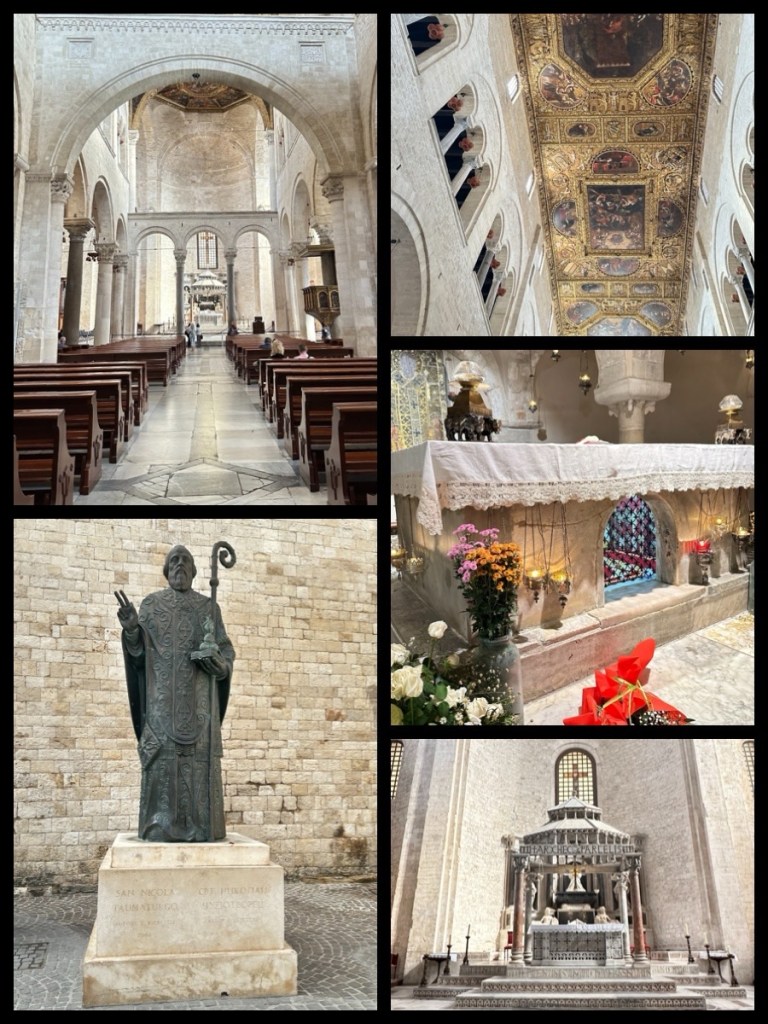
The Basilica of Saint Nicholas is considered a must-see in Bari. Nicholas of Bari, born in the 3rd century was, it is said, a prolific worker of miracles. He is the patron of sailors, merchants, archers, thieves, children, brewers, pawnbrokers, the unmarried, and students. A church was consecrated in 1197 to house his relics. The Basilica of Saint Nicholas, built in the Puglia-Romanesque style, is built of white blocks of limestone in a square plan, giving it the appearance of a castle. The interior has a nave, two aisles with granite columns and a presbytery divided by three arches held up by Byzantine columns. The relics of Saint Nicholas are kept in a vault filled with marble columns and brick cross-vaults.

One of the highlights of our wandering in Bari was to visit Arco Basso – Strada delle Orecchiette (“Ears” Pasta Street). There is a tunnel with a low arch that opens up to a hidden place among the twisting lanes of Old Bari (Bari Vecchia). Here you find women skillfully creating “Ears” (orecchiette) pasta in front of their homes. They sit behind wooden tables encroaching on the cobbled street, making a comforting, entertaining show for anyone passing by. You can buy a sack of freshly handmade orecchiette, troccoli (thick spaghetti), cavatelli (small pasta shells), or taralli (Italian snack).


After visiting Arco Basso, we had to try orecchiette. We had a delicious meal of orecchiette with beef ragu at Le Stagioni on Corso Vittorio Emanuele II.

We found the streets and lanes of Bari to be quite enchanting and would suggest a day or two visit!

Now off to Croatia!
Cheers,
Bev & Harvey

 A Long and Winding Journey
am always impressed with your blogs !! Very, very nicely done!!
Feel like I want to go there and check it al out and see everything you did… You have so much history of all the places you visit.
Awesome Blog !!
LikeLike