Like many European countries, Croatia has an interesting and complicated history. Over the centuries, the area has been ruled by Greeks and Romans, Hungarians, Venetians, Ottomans and the Austrian Hapsburgs. At the end of World War I, the Croats banded together with the Serbs, Slovenes and Bosnians to form the Kingdom of Yugoslavia, which after many manipulations became the Socialist Federal Republic of Yugoslavia under the control of Marshall Tito. In the early 1990s, Yugoslavia began to break-up and in 1991, Croatia declared independence. This led to a number of years of conflict and tense cease-fires which resulted in a nationalistic state. Today, the Republika Hrvatska – or as it is known in English, Croatia – is modern, independent state. This is a very simplified version of the history – you can definitely find more detailed and accurate information at many on-line sources.
Croatia is approximately the size of Nova Scotia and in 2024, has a population of approximately 3.9 million. Croatia joined the European Union (EU) on July 1, 2013 and adopted the Euro as its official currency in 2023.
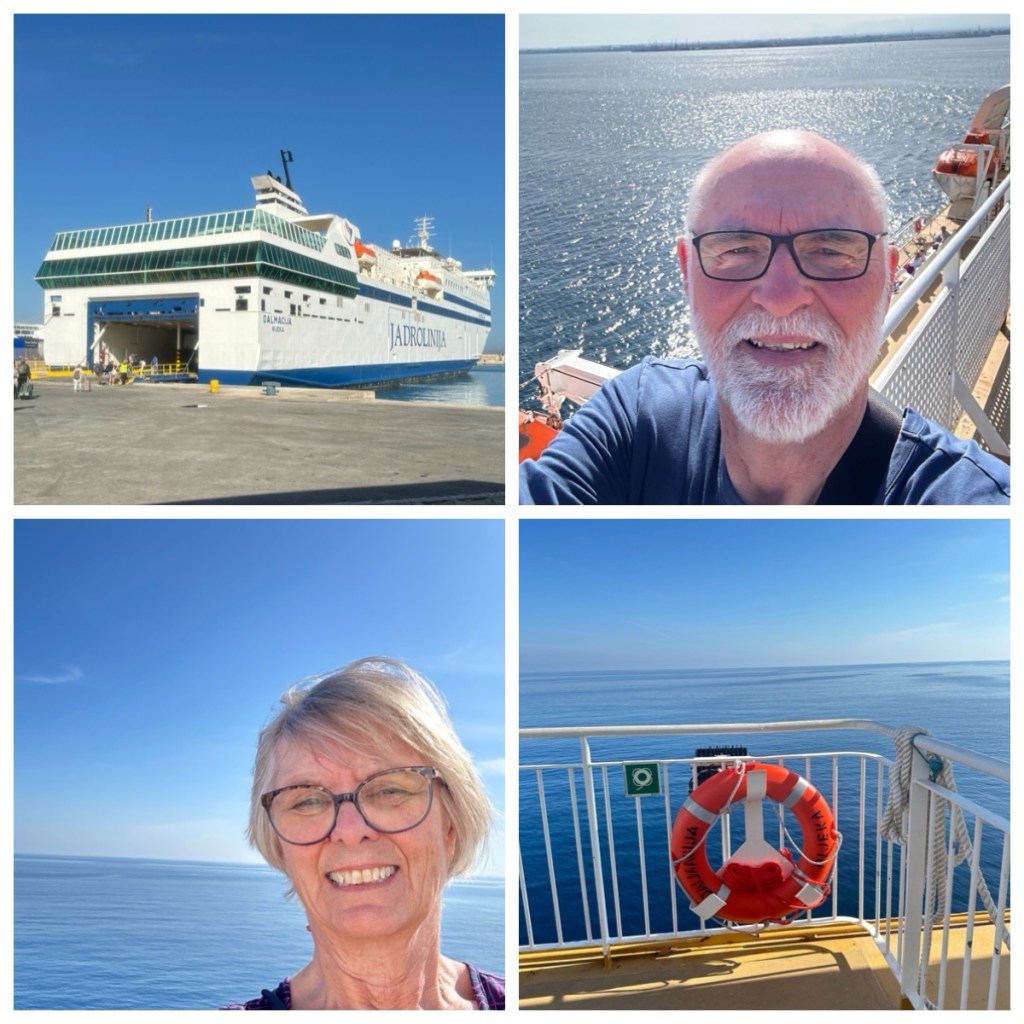
To travel from Italy to Croatia, we chose to cross the Adriatic Sea. A Jadrolinija Ferry took us from Bari to Dubrovnik. The ferry leaves from the Port of Bari – you need to arrive 1 -2 hours before departure to exchange your on-line reservation for boarding passes, but there is a comfortable building to wait in. Boarding begins approximately 45 minutes before departure. The ferry has numerous lounges to settle into and food and drink for purchase. The journey takes 8 hours and brings you to the ferry port in Gruz, Dubrovnik.
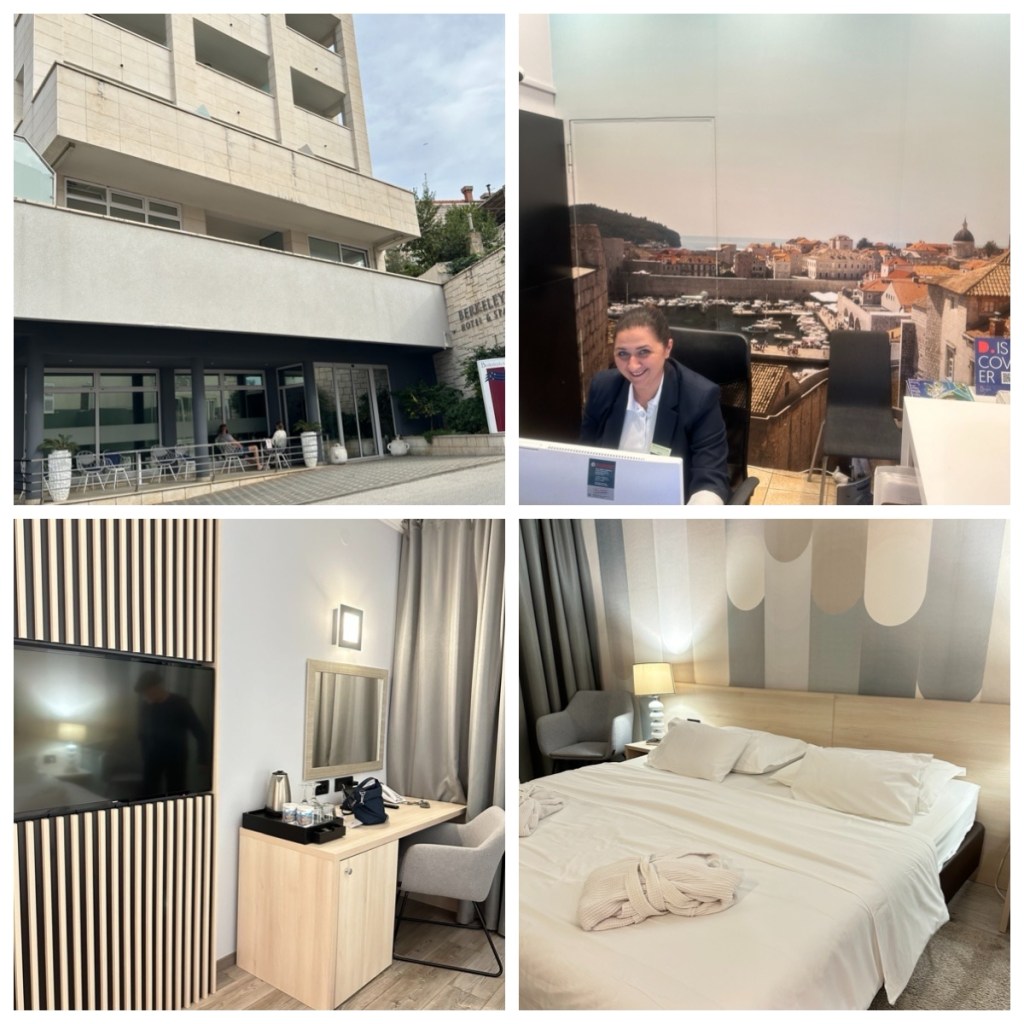
As we were arriving by ferry, we chose a hotel in the neighborhood. We were very pleased with this choice. It is away from the hordes of tourists that descend upon Dubrovnik and there are restaurants and other services in the area. We would definitely recommend the Berkeley Hotel – the room was great, the staff were very friendly and helpful and breakfast was tasty.
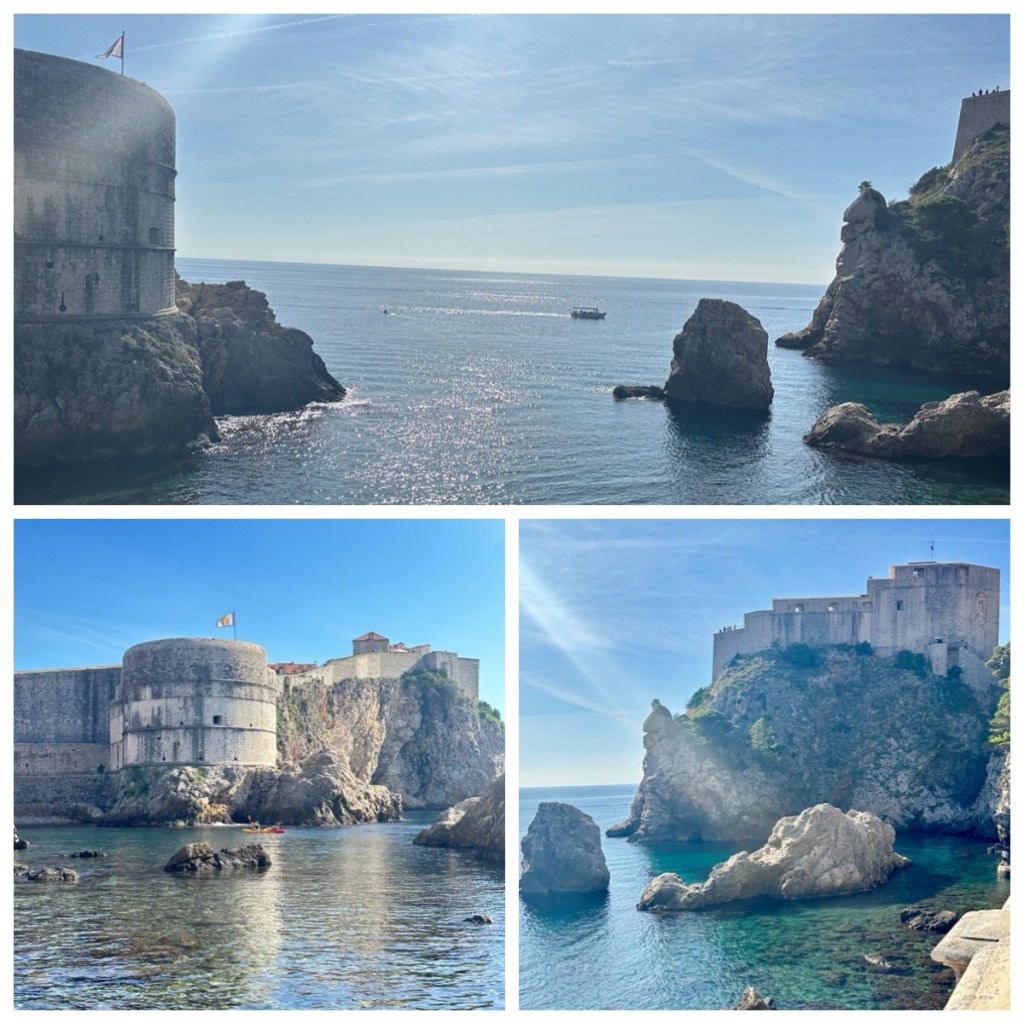
Dubrovnik is nicknamed the Pearl of the Adriatic, due to the charm and beauty of its location on the edge of the sea and the fairy-tale walled Old Town (Stari Grad). The population of the city is about 42,000. In 1979, the city of Dubrovnik was added to the UNESCO list of World Heritage Sites in recognition of its outstanding medieval architecture and fortified old town. Tourists flock to the Old Town. In recent years, the city has limited the number of cruise ships that are allowed each day – but there may be up to four, which can amount to 6000 people. We chose to visit in late October and visited the Old Town on days when there was only 1 ship in port.
The Port of Gruz is a walk of approximately 30 minutes from the Old Town. It is uphill for most of the way – but it is a gradual, non-strenuous walk. There are buses available but we chose to walk and enjoy seeing the neighbourhoods where the locals live and work.


The Pile Neighborhood sits just outside the main gate to the Old Town. Here you will see the tour buses arrive, tourists looking lost, and multiple tour guides hawking their tours and activities. Walking to the end of plaza, you have a lovely view of the walled town, the Fort of St Lawrence and the little harbour between the two.
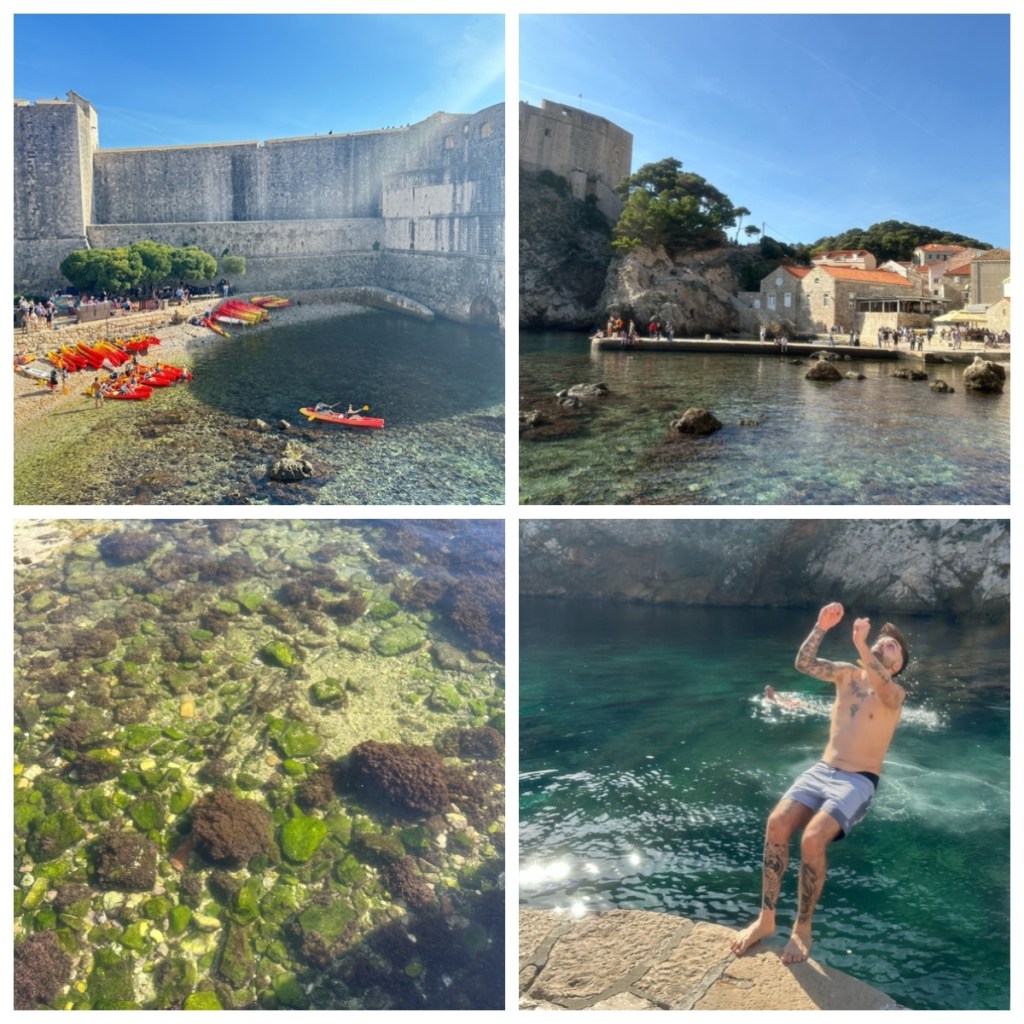
A little lane to the right leads you down to the small beach area where you can watch multiple kayak tours coming and going and locals and tourists enjoying the crystal-clear water.
The main gate to the Old Town is the Pile Gate. Crossing the drawbridge over what was once the moat, you see a statue of St. Blais atop the gate. St Blais is the protector of Dubrovnik and his statue always cradles the city in his arms.
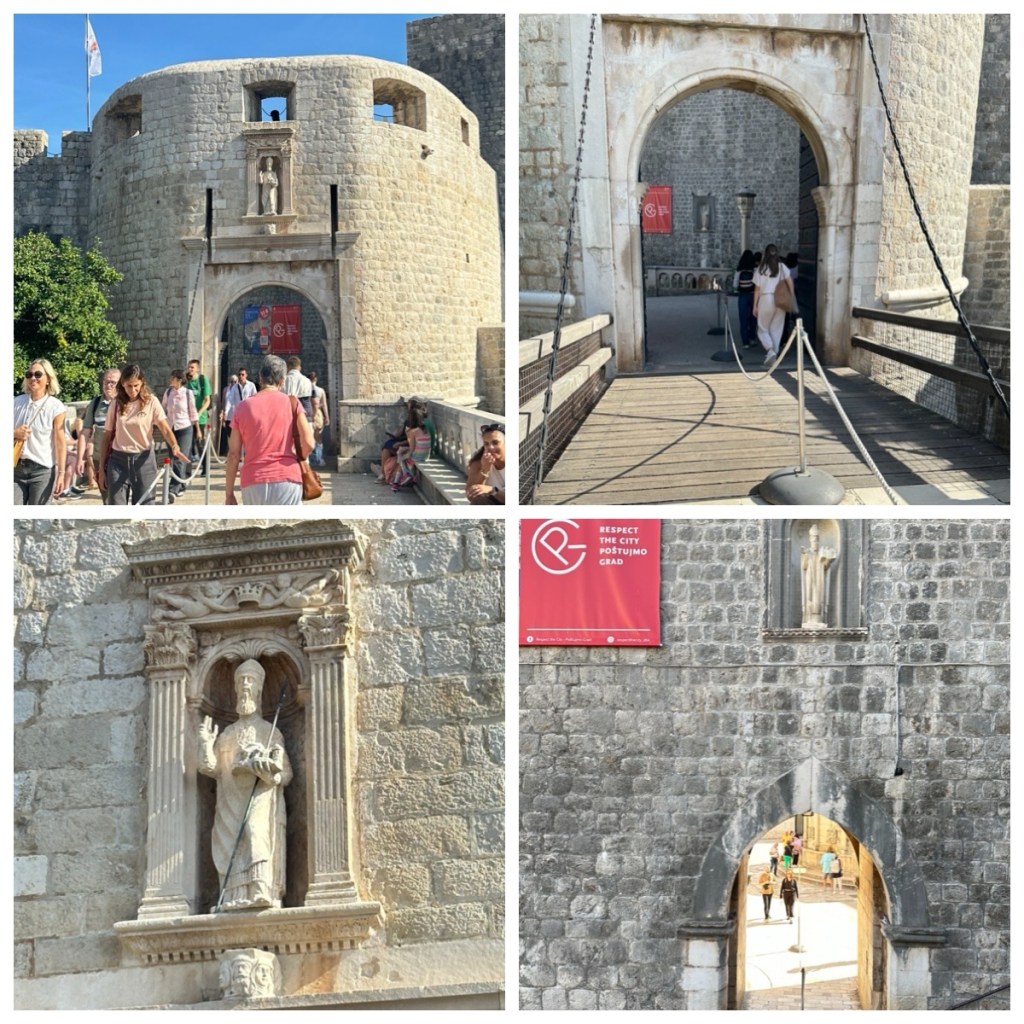
The gate opens into St. Saviour Square, centred by the Velika Onofrijea Fontana. In the Middle Ages, this fountain was the termination point for the extensive aqueduct system that brought water for seven miles from the mountains.

From the fountain, the Stradun stretches out as the Old Town’s main promenade. This wide street is lined by restaurants and souvenir shops.
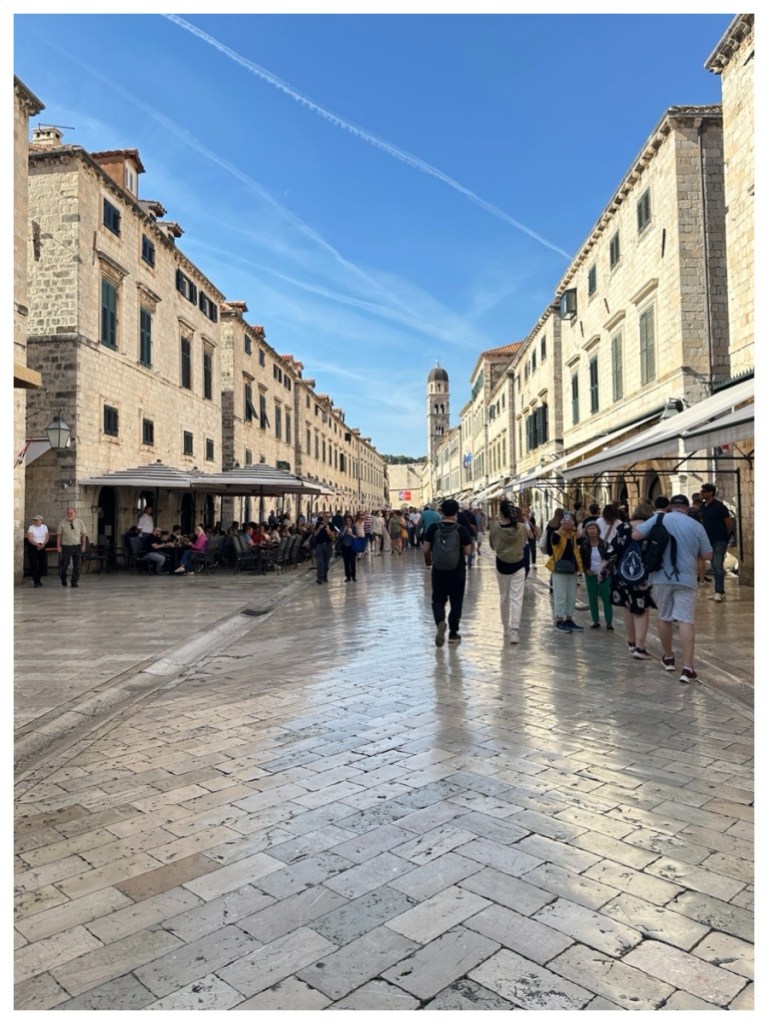
The Stradun leads to Orlando’s Column. Erected in 1417, it served as the site for the town crier to announce the news. The more important the declaration, the higher he would stand on the column. It was also used as a punishment pillory. It is currently undergoing an extensive restoration process, started in 2023 with no definite projected completion date.

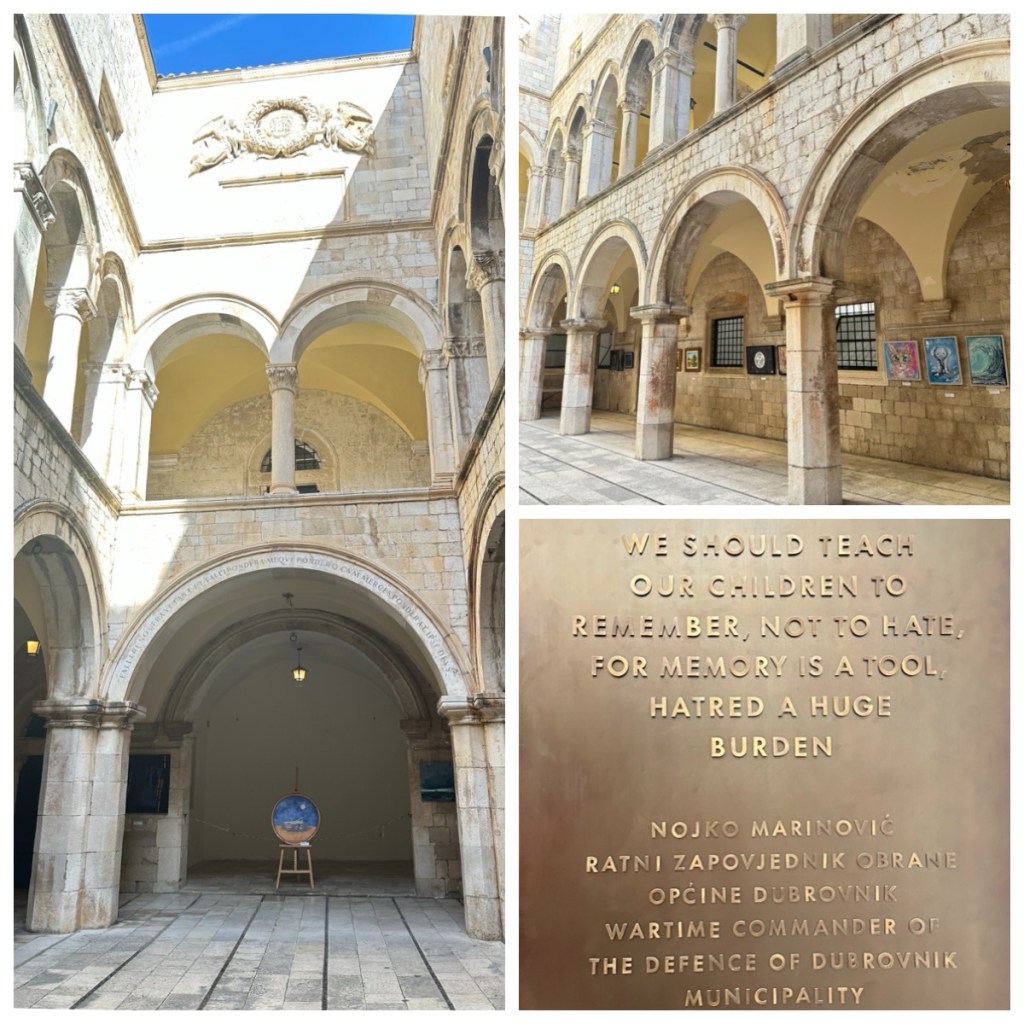
Orlando looks out at Sponza Palace. Built in 1522, the place is a combination of Renaissance and Venetian Gothic architecture. We could not admire the exterior as it is also under restoration.
We were able to visit the interior ground floor of the Palace and the poignant Memorial Room of Dubrovnik Defenders. This room honours dozens of Dubrovniks who were killed fighting Yugoslav forces in 1991. Upon Croatia’s declaration of independence from Yugoslavia, the war raged in the interior for a few months, but on October 1, the Yugoslav forces surrounded Dubrovnik. For eight months the people of Dubrovnik fought to protect their city until the Croatian army liberated the city.
The original town Bell Tower was erected in 1444, but after it began to lean in the 1920s, it was replaced. One hand of the octopus clock tells the time, the golden circle displays the phase of the moon, and a digital type read-out tells the time in Roman numerals. The bells rings out the time at the top of each hour, and again 3 minutes later just in case you missed it.

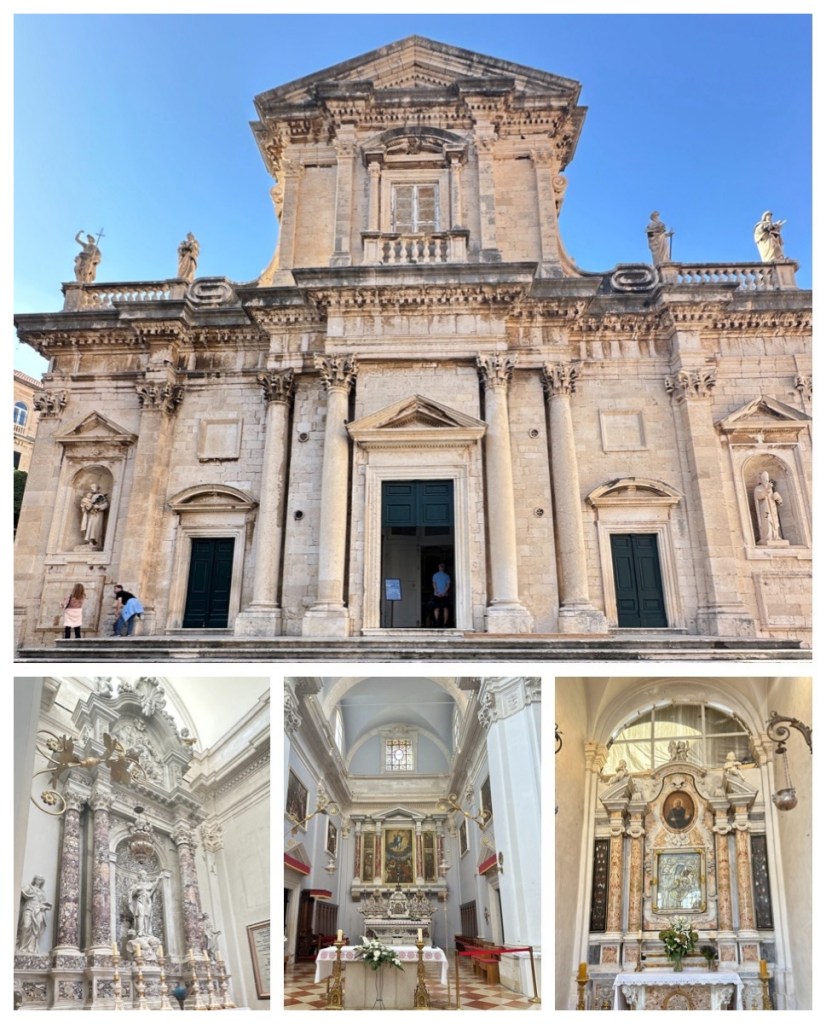
St. Blais Church (Crkva Sv. Vlaha) is dedicated to the ever-present patron saint of the city. The church was constructed in 1715 in Venetian Baroque style. It replaced a 14th century Romanesque church that was damaged by earthquake and then completely destroyed by fire in 1706. The silver statue of St Blaise was saved by some miracle and was placed atop the new church. The model of the city which the saint holds in his hand reveals the city architecture at the time.

The original Dubrovnik Cathedral was a Romanesque cathedral built in the 12-14th centuries that according to legend was funded primarily by the English King Richard the Lionheart in gratitude for surviving a shipwreck on nearby Lokrum Island. The basilica was destroyed in the great earthquake of 1667. Construction of the current Dubrovnik Cathedral of the Assumption of the Virgin Mary began in 1672, lasted for many years and was eventually completed in 1713.
The Port of Dubrovnik – Port Gruž – is a great neighbourhood for relaxation away from the crowds and we spent one of our Dubrovnik days taking in the area. We enjoyed walking around the harbour, viewing the variety of boats and ships.
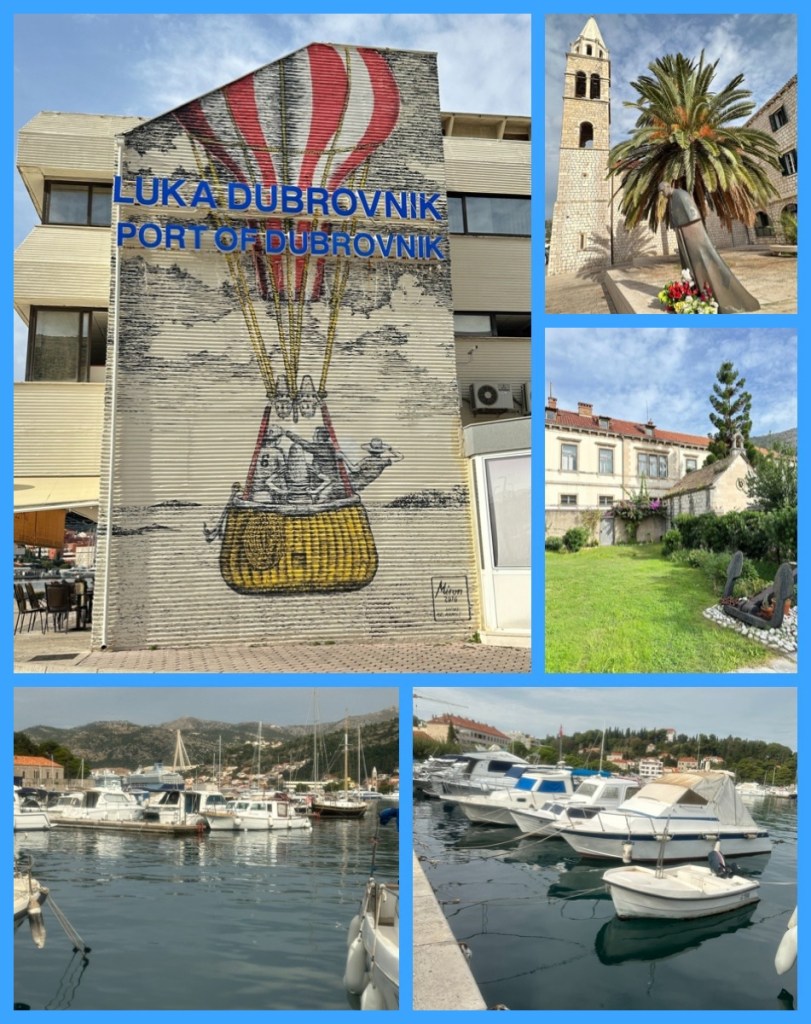
We wandered around the Gruž Market, a local farmer’s market with a great array of flowers and produce. We also enjoyed a relaxing cappuccino break at the outdoor terrace of Terasa Konoba Zrinski.

In the park next to the harbour, we encountered two startling reminders of the siege of Dubrovnik in the 1990s.

Mount Srd rises 412 meters above the Old Town. In 1810, Napoleon built a fortress atop the low mountain. The Dubrovnik Cable Car was built in 1969. When war broke out in the 1990’s, Mount Srd was the only highland the locals were able to hold; however, the cable car was destroyed and the fortress was badly damaged. For many years following the conflict, the area was a no-man’s land due to unexploded minefields. Since then, the mines have been removed and the cable car was rebuilt in 2010. The cable car is a fun ride up the hill – it has a limited capacity and apparently, there can be long line-ups on busy cruise ship days. We were able to just walk on without waiting. It is advised to arrive in the mid to late afternoon on busy days. There is also a walking path for those interested in hiking up.
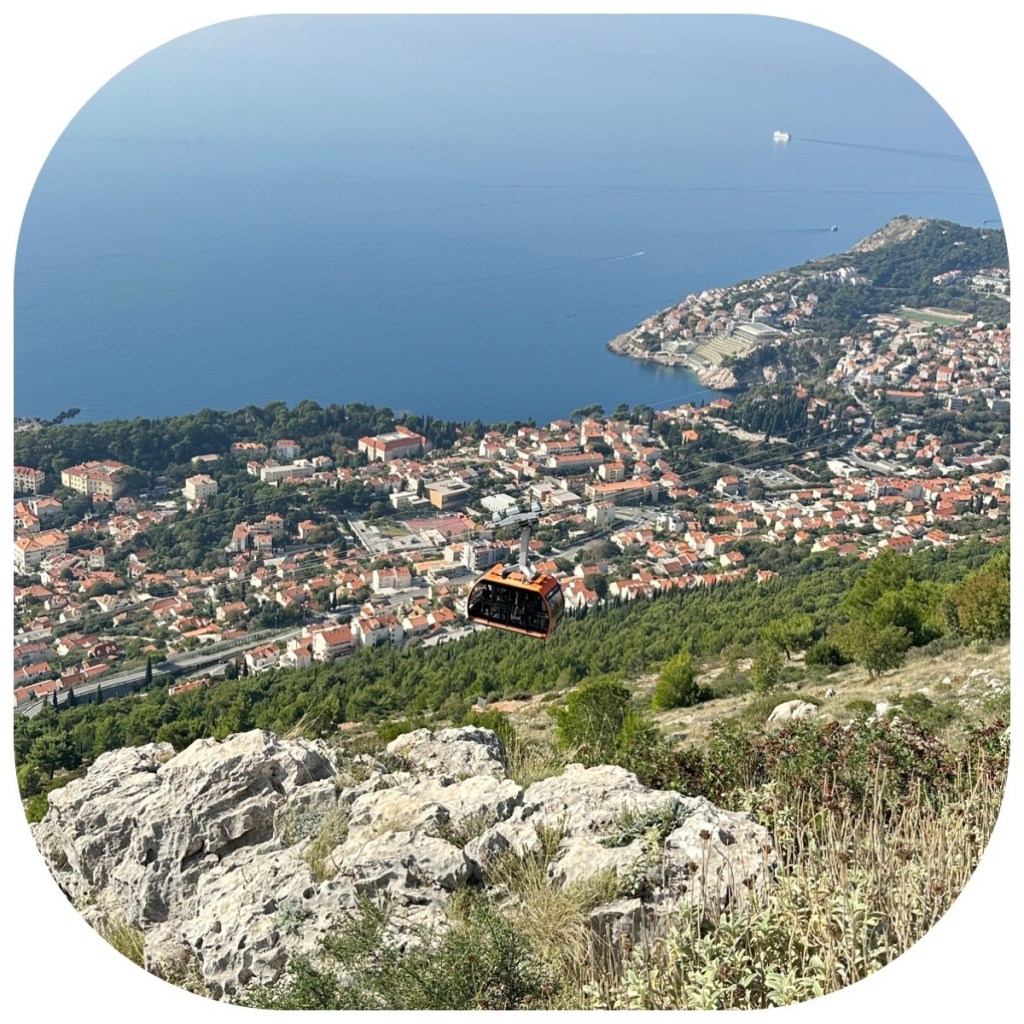
On a clear day, you can see up to 60 km from the viewpoints at the top of the cable car. You can view Dubrovnik – the Old Town, Port Gruz and the metro city – as well as the Dalmatian Islands and the mountains the define the border between Croatia and Bosnia.

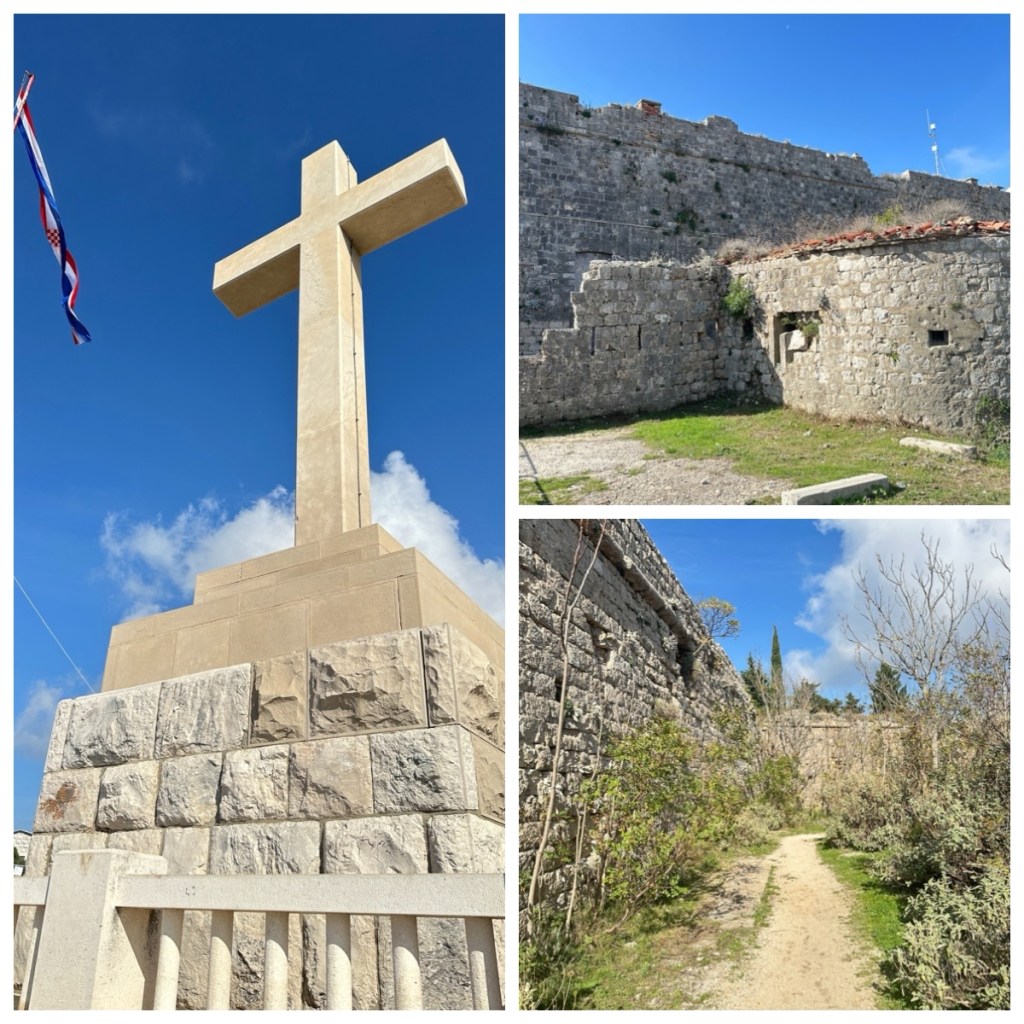
A large cross constructed with luminous white stone was erected in 1935 as a celebration of 2,000 years since the birth of Jesus. It was destroyed by mortars and shelling during the war in 1991. A wooden cross was erected in its place and this was ultimately replaced with the current cross.
The remains of Napoleon’s Fort Imperial house the Homeland War Museum. The museum is said to house an insightful look into the 1990’s conflict. We chose not to visit it on our trip up the mountain.
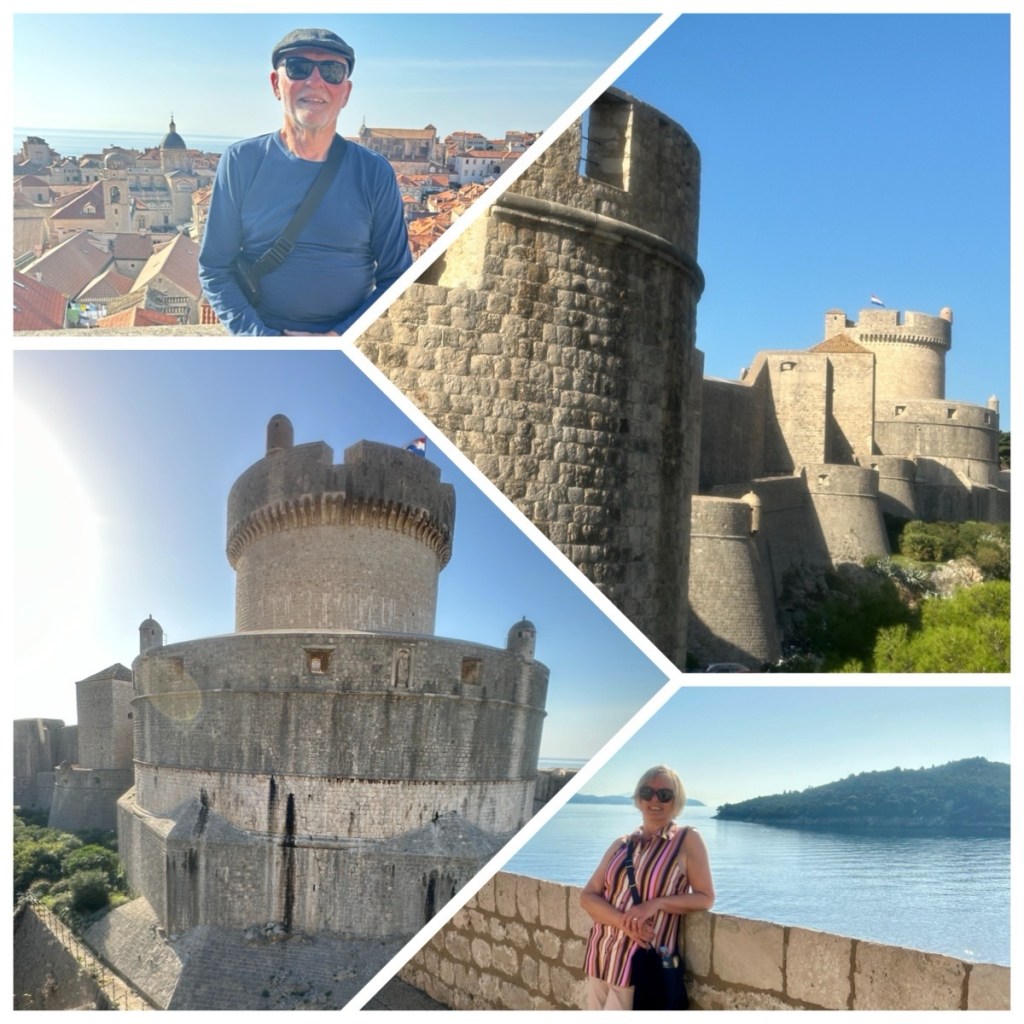
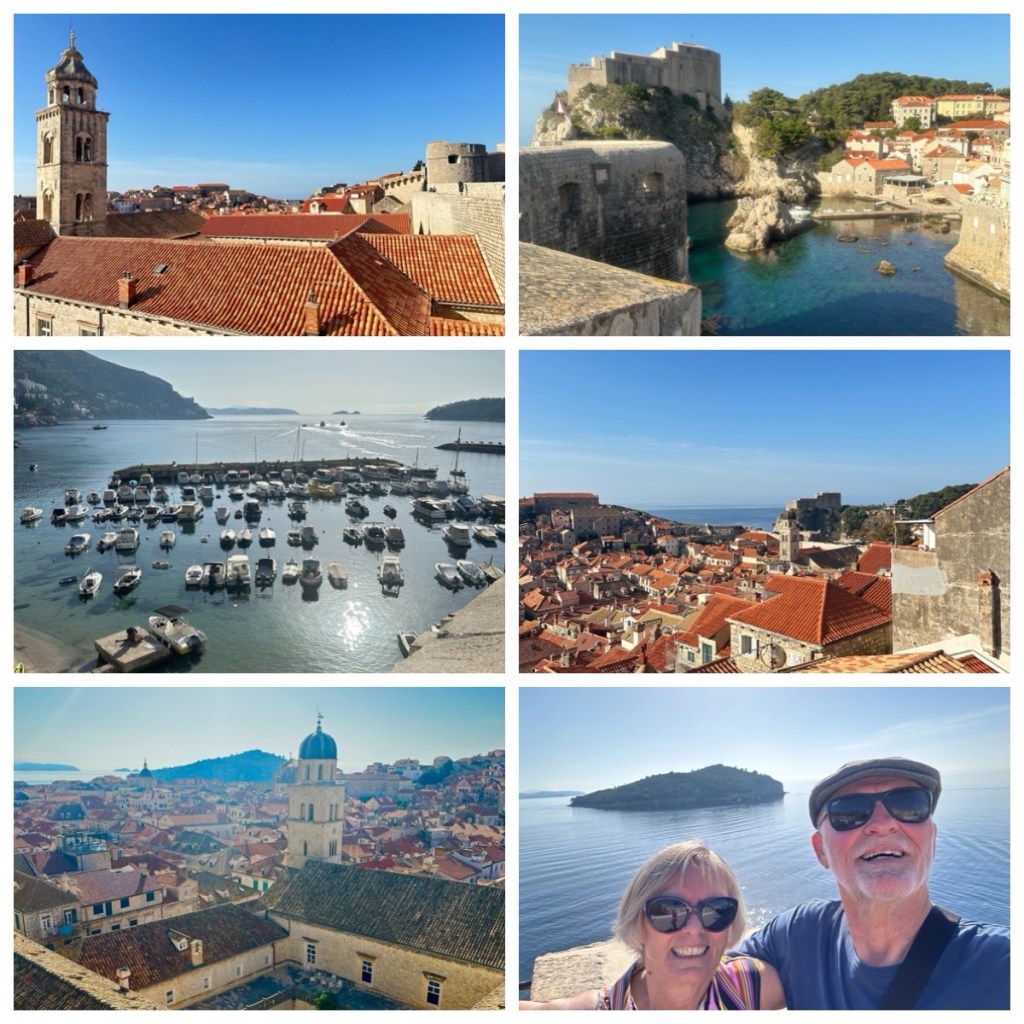
The premier attraction of the Old Town is to walk the City Walls. Consequently, it is advised to visit the walls early in the morning or later in the afternoon. Allow at least an hour to walk the entire circuit. We picked a day when there were no cruise ships in town and thus, our walk was pleasantly uncrowded. We were also lucky to find that in honour of the 45th anniversary of Dubrovnik’s inclusion on the UNESCO list of World Heritage Sites, the usual 35 euro entry fee was waived on the day we chose.
From the walls, there are great views of the town, the sea and the surrounding areas.
We had a lovely lunch at the Gradska Kavana Arsenal Restaurant. Established in 1895, the restaurant stretches from a terrace just off the main square through a large indoor restaurant to another terrace with a unique view of the Old City Port. This is where we enjoyed a sunny mid-afternoon meal!
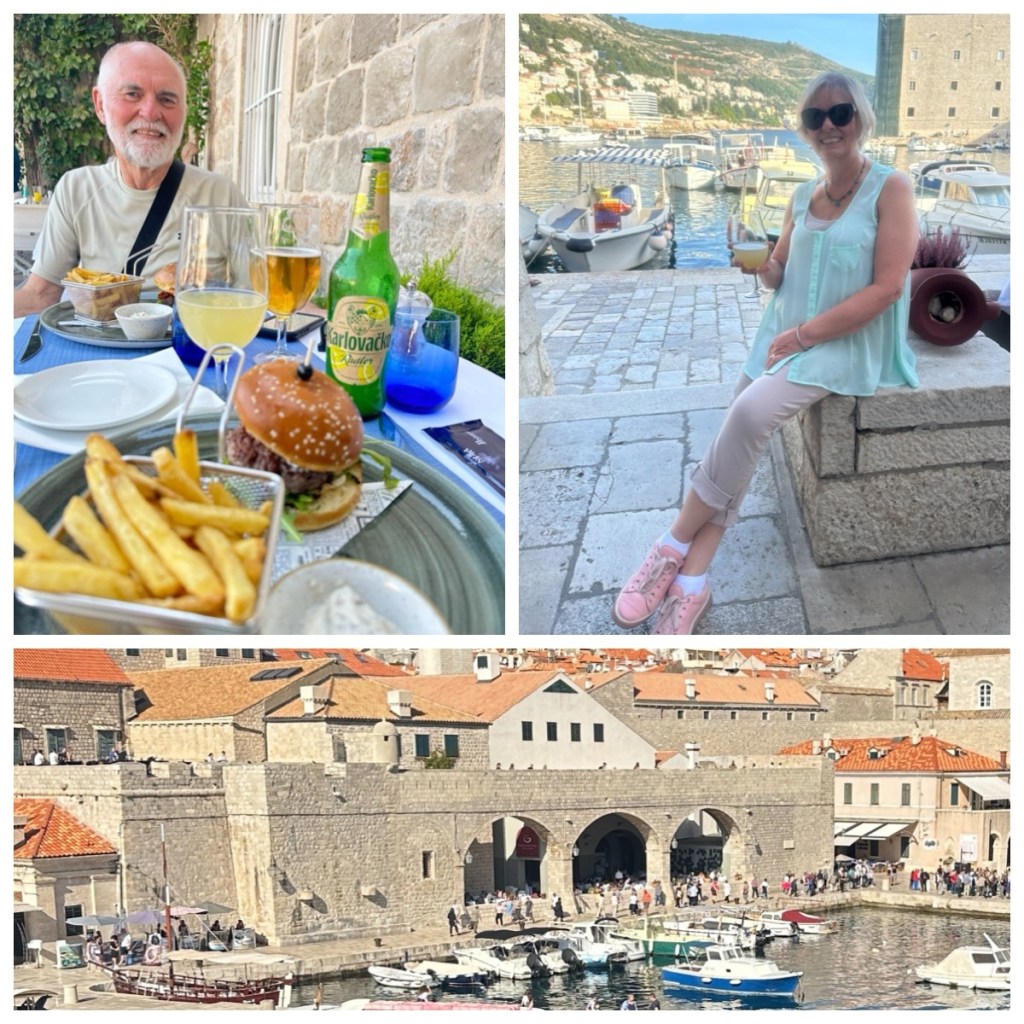
One evening, we chose to dine on the terrace at the Restaurant Provo Dubrovnik. Our shared ‘Crazy Pasta’ was quite amazing and resulted in a large pile of mussel shells!

Gelato and coffee stops always provide a good respite from the heat of the day!

Our original travel itinerary had us taking a bus from Dubrovnik to Mostar, Bosnia for two nights and then on to Sarajevo. However, a devastating rainfall in October resulted in landslides and the closure of these roads. Having to change our travel plans was inconsequential compared to the loss of life from this tragedy.
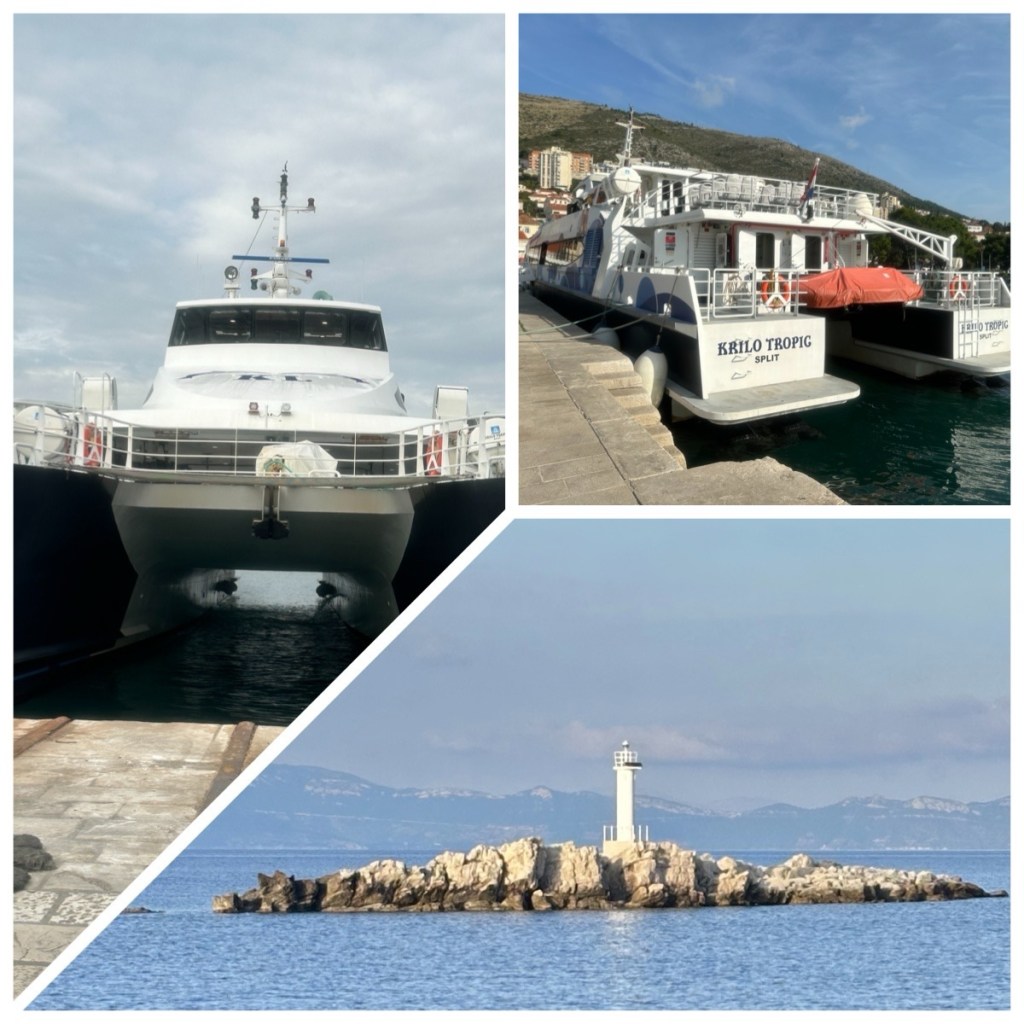
Therefore, from Dubrovnik, we travelled on a Kapetan Luka – Krilo Catamaran to Split. This trip took approximately 4.75 hours as we journeyed through many of the Adriatic islands, with stops at the ports of Mljet, Korčula, Hvar and Brač.
Our hotel in Split was the Radisson Blu Resort. The room and staff were great and the breakfast buffet was extensive – including omelet and tortilla stations and a lovely sea view from the terrace.

Split is Croatia’s second largest city, with a population of ~150,000. It is a vibrant urban centre; however, most tourists visit only the seaside beaches, ferries to the islands and the atmospheric Old Town. As we had only two nights in the city, we also only saw these areas.
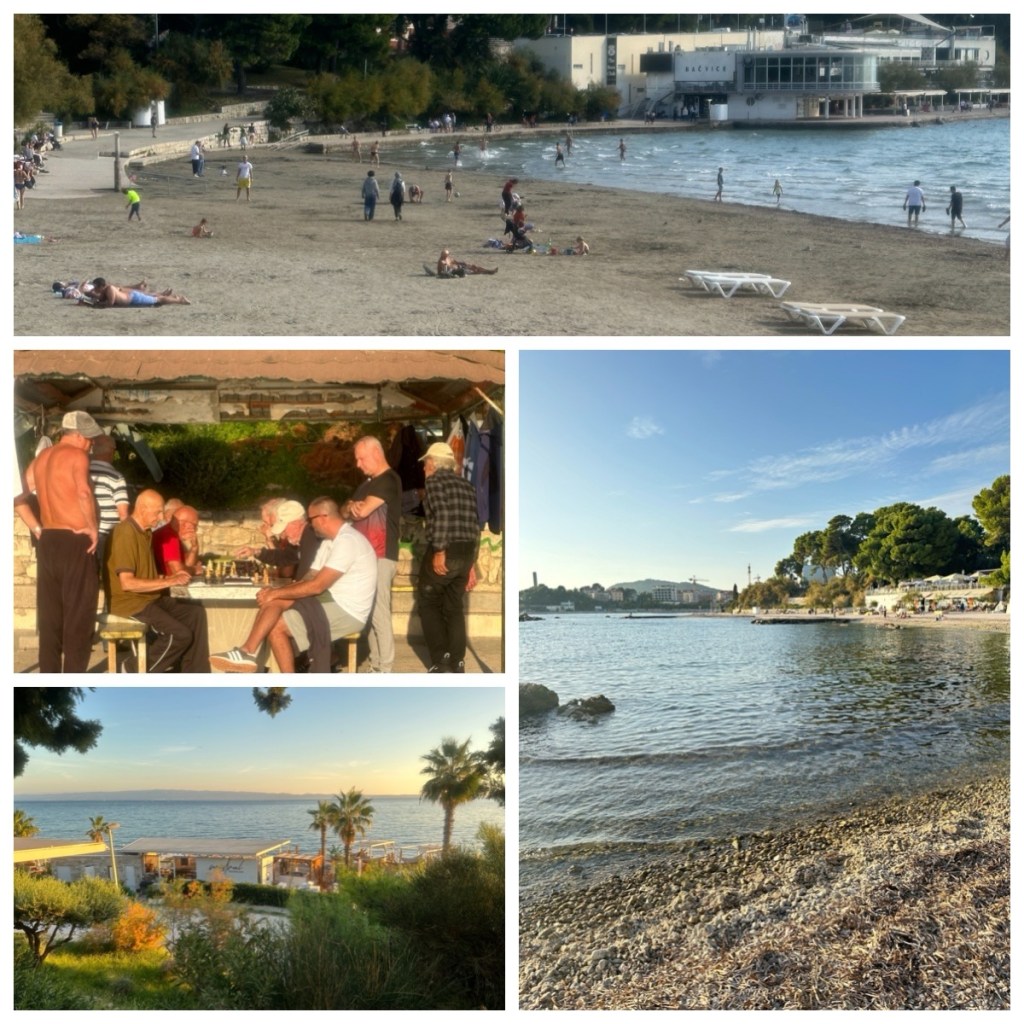
The walk from our hotel to the Old Town area was about 25 minutes along the seaside. It was Sunday and it was fun to watch many families enjoying the beaches along the way.
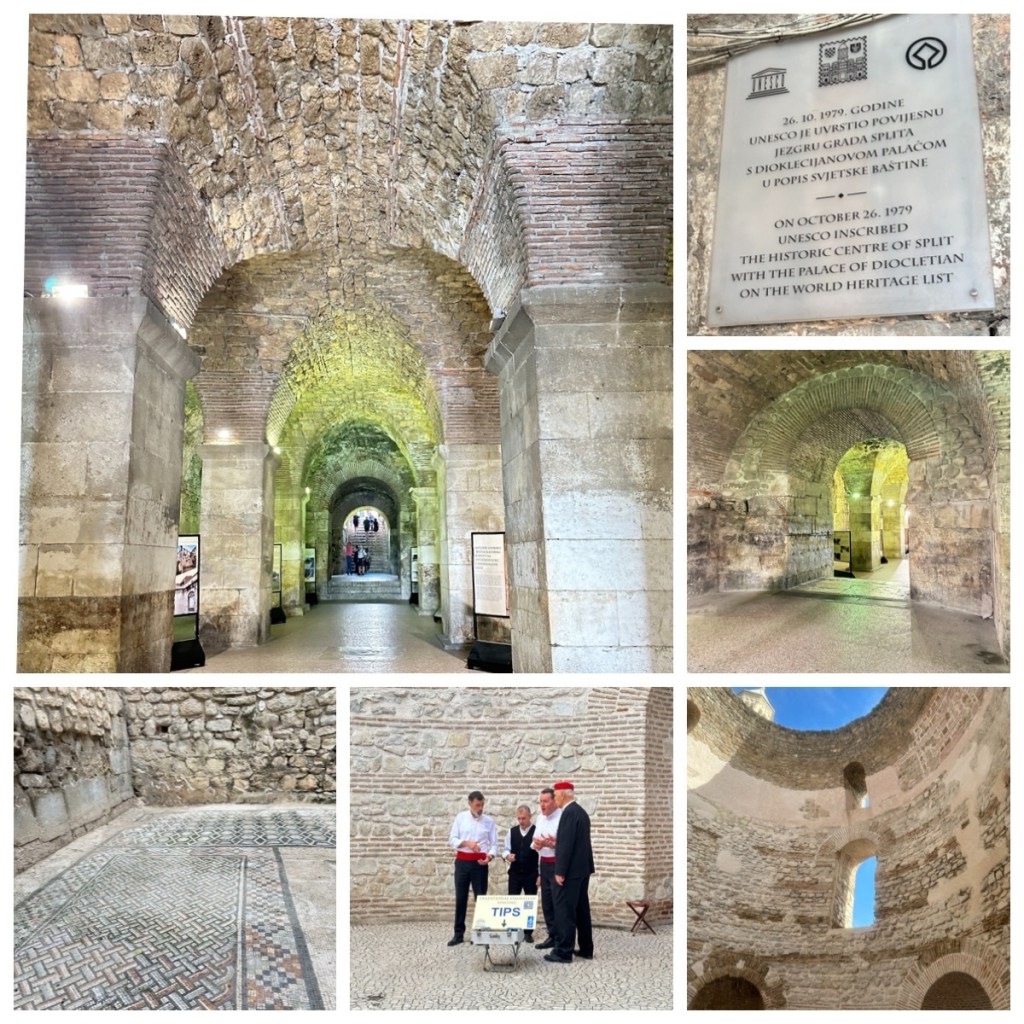
Split’s Old Town is centred around the Diocletian’s Palace. The Roman emperor, Diocletian, was raised in the town of Salina in Croatia. After serving as emperor for 20 years, he chose to leave due to declining health and to return to his homeland. Construction of his enormous palace took 11 years (295 – 305 AD) and the death of more than 2000 slaves. The “palace” was a massive structure and contained not only the palace itself but also buildings intended for housing the military garrison. The whole complex occupied around 30,000 square meters. Today the remains of the palace have become the old town of Split, with numerous shops, cafes, restaurants and also apartments located in the old buildings on narrow streets of the palace and fortress. In 1979, the Historic Centre of Split with the Palace of Diocletian was listed by UNESCO as a World Heritage Site.
The palace had four gates. Facing the harbour is the Bronze or Southern Gate. It is the smallest of the gates, and was originally a sea gate from which the Emperor entered the complex by boat. Today it is the main entry point from the harbour promenade.
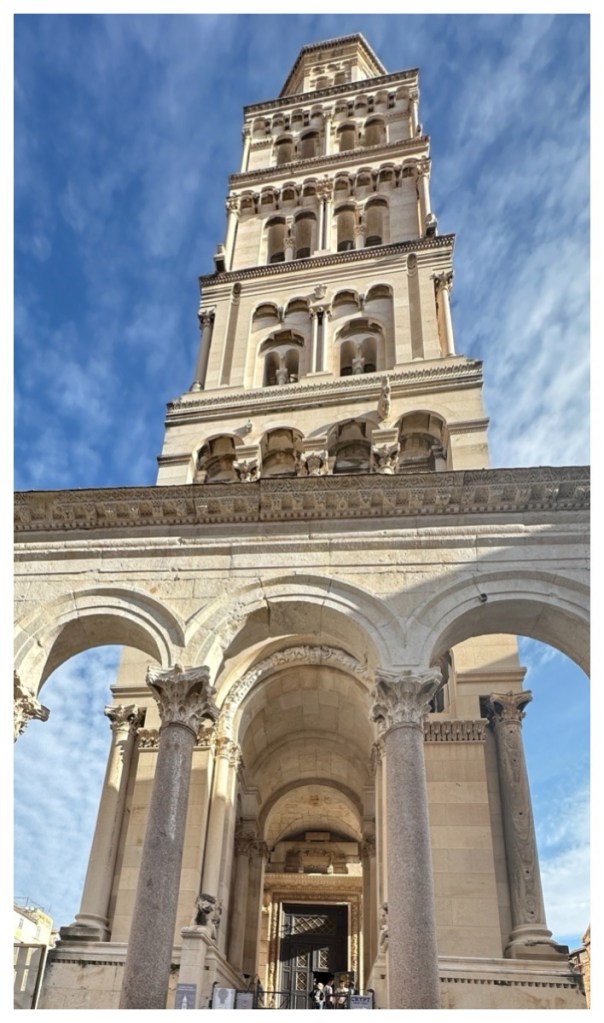
The Bronze Gate leads to the Peristyle, a rectangular open court that is home to the Cathedral of St. Domnius with its impressive Ventian-style bell tower as well as Jupiter’s Temple. On our visit, it was also home to numerous tour groups and a couple of Roman Gladiators inviting the tourists to have their picture taken with them.

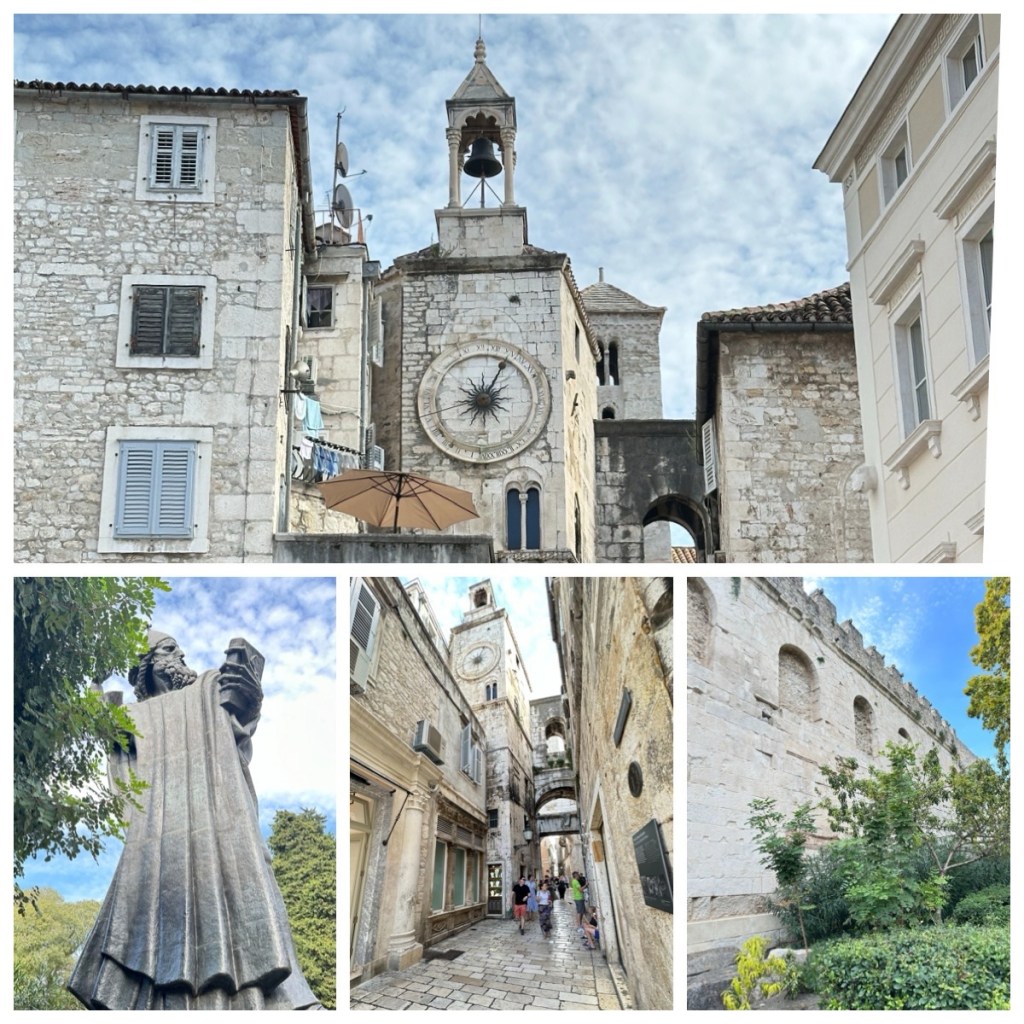
Once away from the main square, the streets were no longer overwhelmed with tourists and we enjoyed strolling around taking in the sites.
We enjoyed a great mid-afternoon meal at Portofino.

Our visit to Split was short but enjoyable. We know there is much more that could be explored in the area as well as on the near-by islands. The sunset from our hotel room window was spectacular!

We understand why Dubrovnik and Split are the ‘pearls of the Adriatic’ – the history, scenery and friendly locals make for a great area to visit.
Thanks for reading! Next stop is Sarajevo!
Cheers,
Bev & Harvey

 A Long and Winding Journey
Another great Blog !! I really enjoy reading all about the history of those
places. Very well done again !! Keep it up.
We really enjoyed Croatia too .
Looking forward to your next Blog !!
LikeLike
Pingback: Zagreb – A Croatian Gem | A Long and Winding Journey