Our day two Siem Reap tour started at 8 am with a 35 km drive to Tonie Sap Lake and the village of Kompong Phluk.
Tonie Sap Lake is the largest freshwater lake in Southeast Asia. It is home to a string of lakeside villages, both floating and on stilts. The majority of the lake’s inhabitants are fishermen who live in basic conditions. The livelihoods of these fishermen are being threatened by the awarding of large fishing concessions to wealthy businessmen resulting in the locals having to practice their trade illegally or to rent a a share. Tourism has provided an additional source of revenue although it may be eroding the traditional life of the villages.
The lakeside village of Kompong Phluk consists of buildings perched on high wooden stilts. During the rainy season, the water levels flood the ground below the buildings However, in the dry season, the waters recede from the village leaving the houses suspended 10 meters above the ground. Judging by the number of boats awaiting tourists, it must be quite a busy place during the high season; however, on the day of our visit, there were just a handful of tourists around.
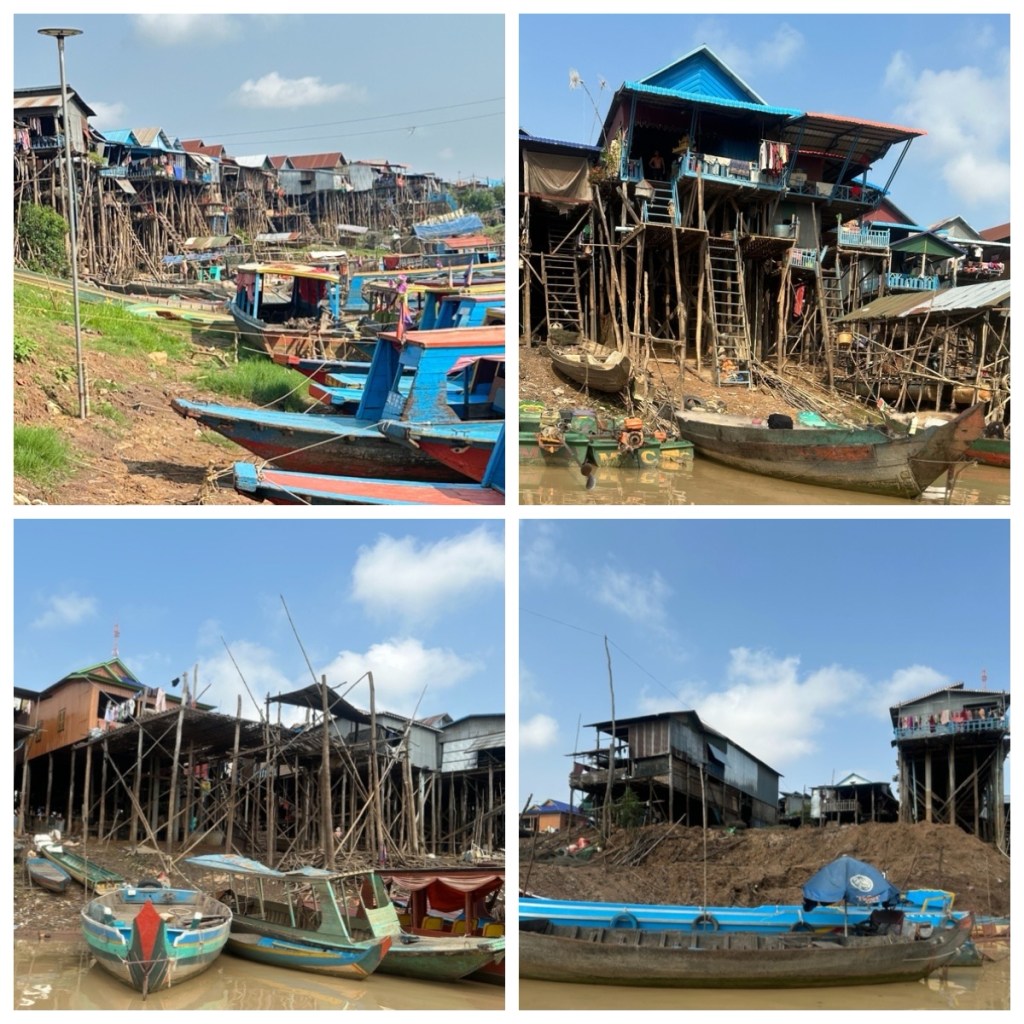
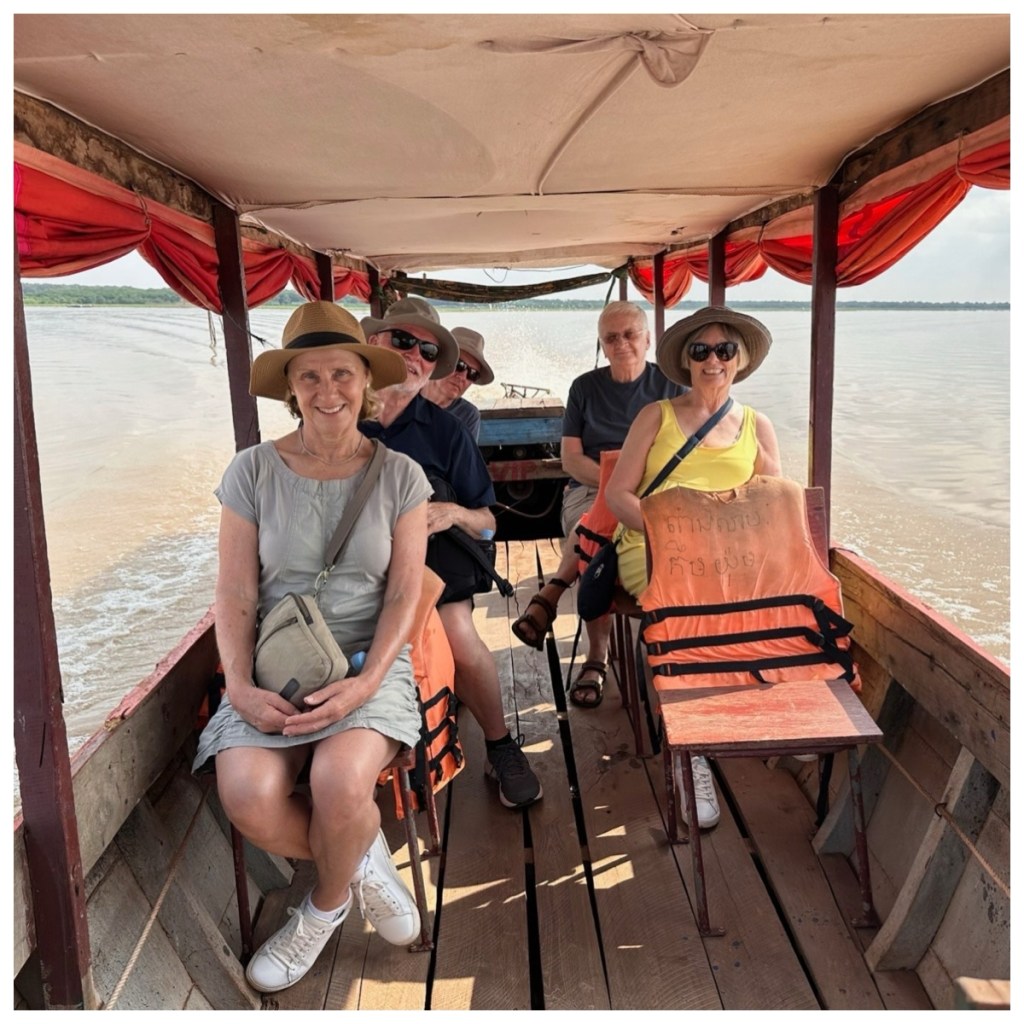
We travelled on a small boat out into the lake.
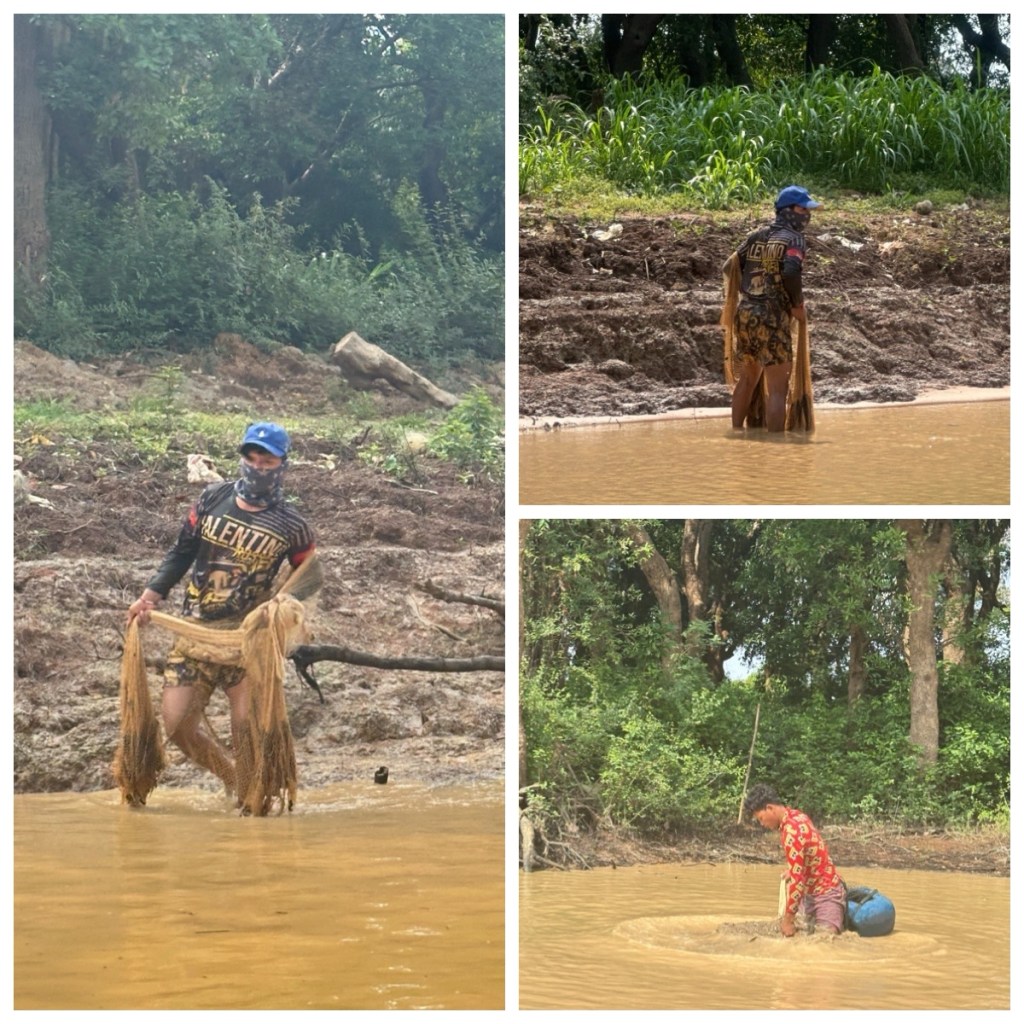
On the small inlet river, we passed a number of locals fishing using nets.
On the lake, you see a number of floating buildings – both restaurants and fishing platforms.

We stopped at a floating restaurant that also houses a small crocodile farm. The crocodile are raised for their leather and various items (purses, belts, etc.) were available for purchase. We had a refreshing cold drink before hopping back into our boat.


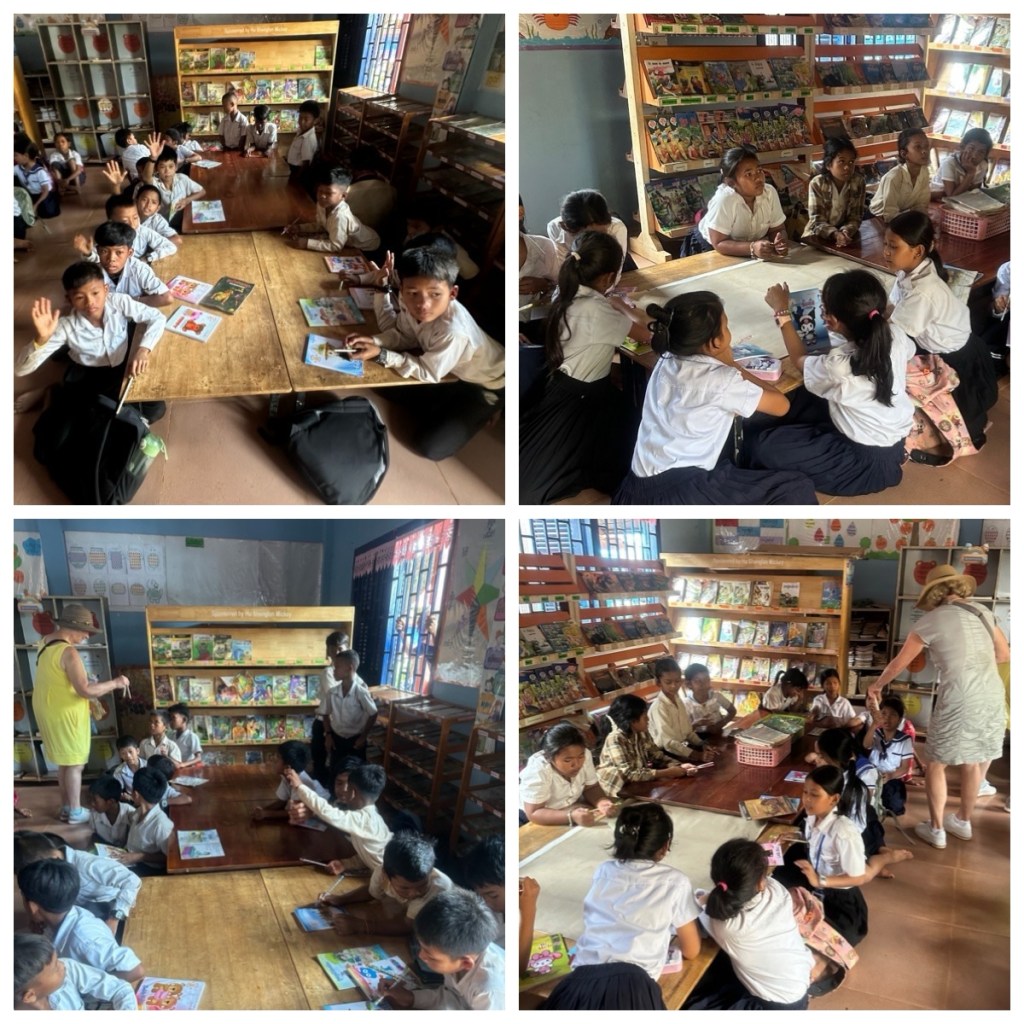
Returning to Kompong Phluk, we visited the school, perched on stilts at the entrance to the village. Sinet had suggested that we might want to purchase some supplies for the school children and we arrived with pencils and colourful lined notebooks. We were led to a fifth grade classroom where we distributed the items to a group of very polite, respectful and grateful children, all dressed in immaculate white shirts and black skirts or pants. Before we left, they all rose and sang a song of thanks to us. It was a wonderful experience!
We returned to the hotel around lunchtime. Our hotel rate included a lunch at their sister restaurant, Mealea. We chose from the Western Set Lunch Menu and the food and its presentation were top notch.
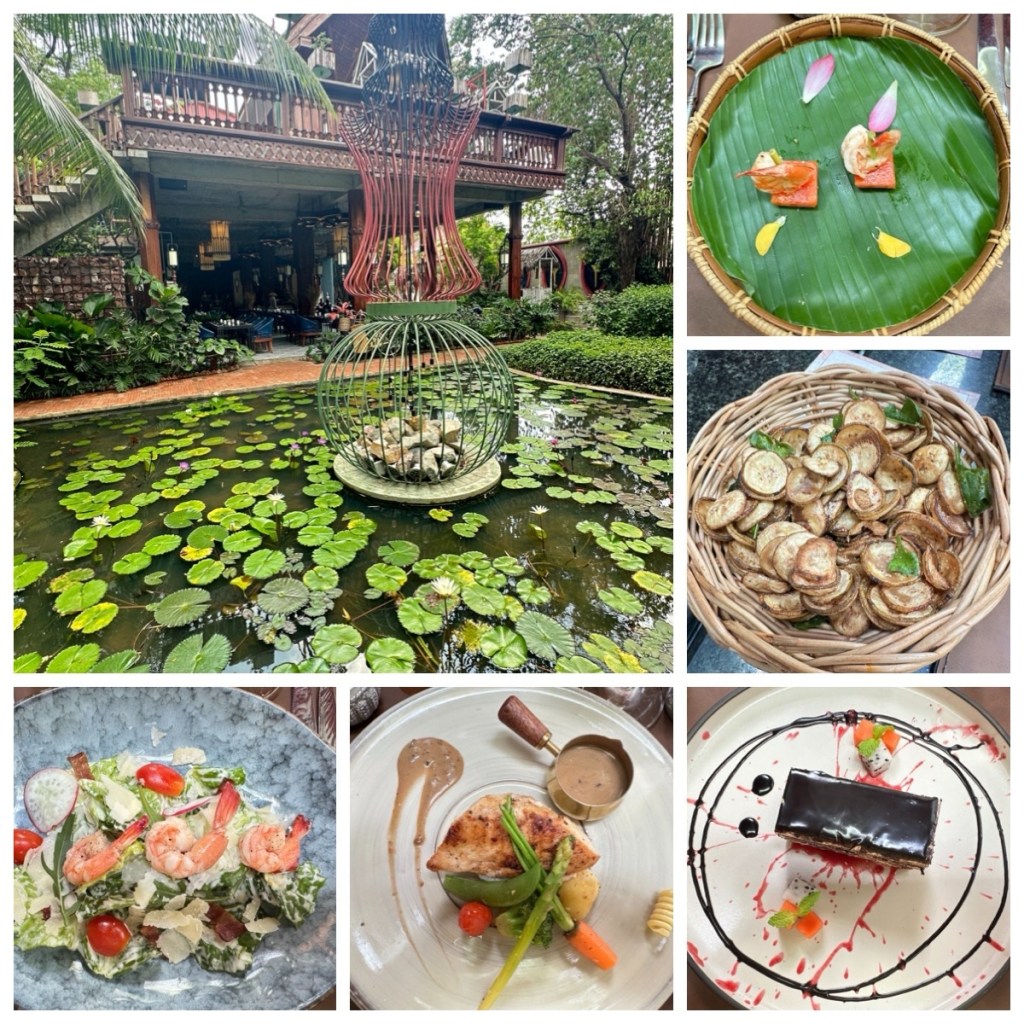
The hotel must have know that we would eat a lot as they had a TukTuk waiting to whisk us back to the hotel after lunch.
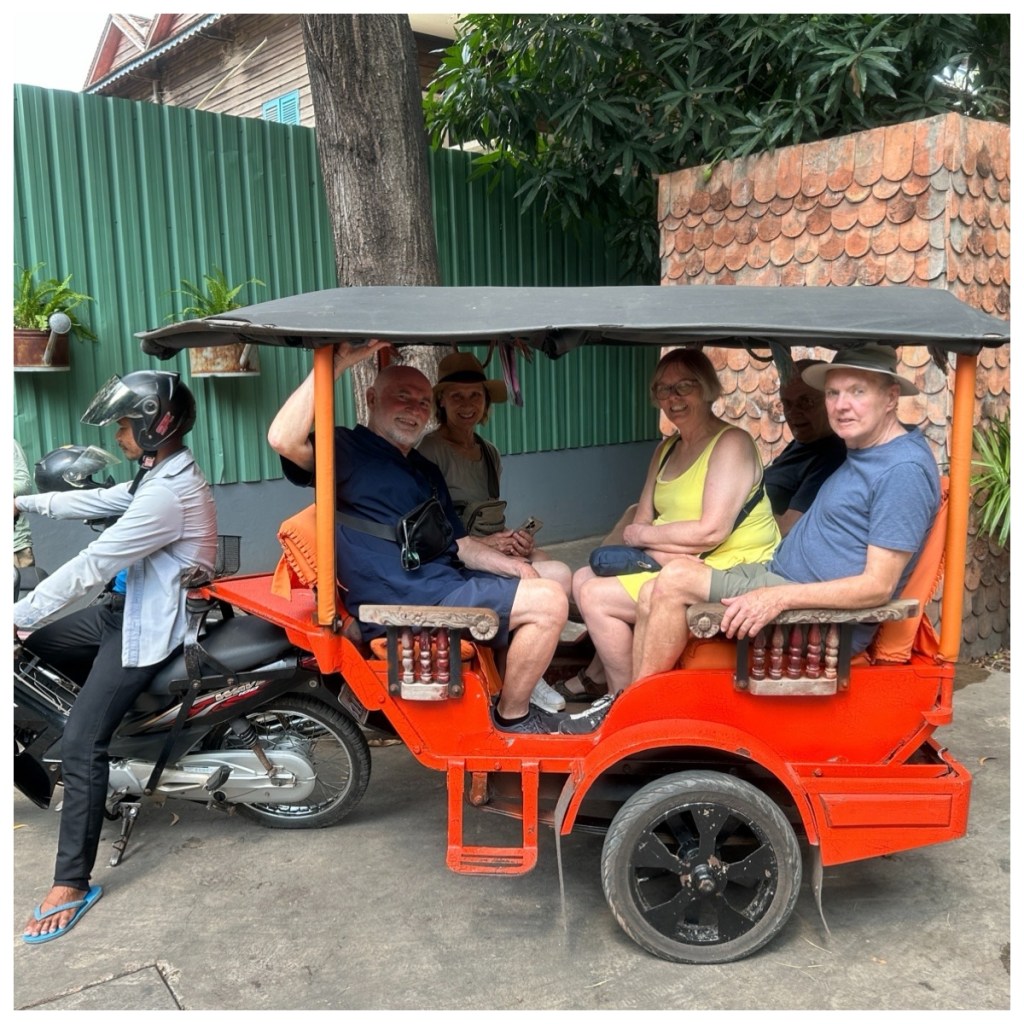
Around 4:45 pm, Sinet returned and away we went on TukTuks for an evening food tour.

The first stop was at a family run noodle restaurant. Here we were treated to Lort Cha – a noodle dish consisting of short, circular rice noodles stir-fired together with sweet soy sauce, bean sprouts and vegetables and served with chive cakes. Very tasty!

The second stop was for Banh Chao – Cambodian Yellow Pancakes. These very thin, lacy pancakes are coloured yellow with turmeric. They are served with a large plate of Cambodian lettuce and herbs. You first take a lettuce leaf, add a portion of the pancake and stuff it with a spoonful of minced pork filling. This was my favourite dish of the evening.
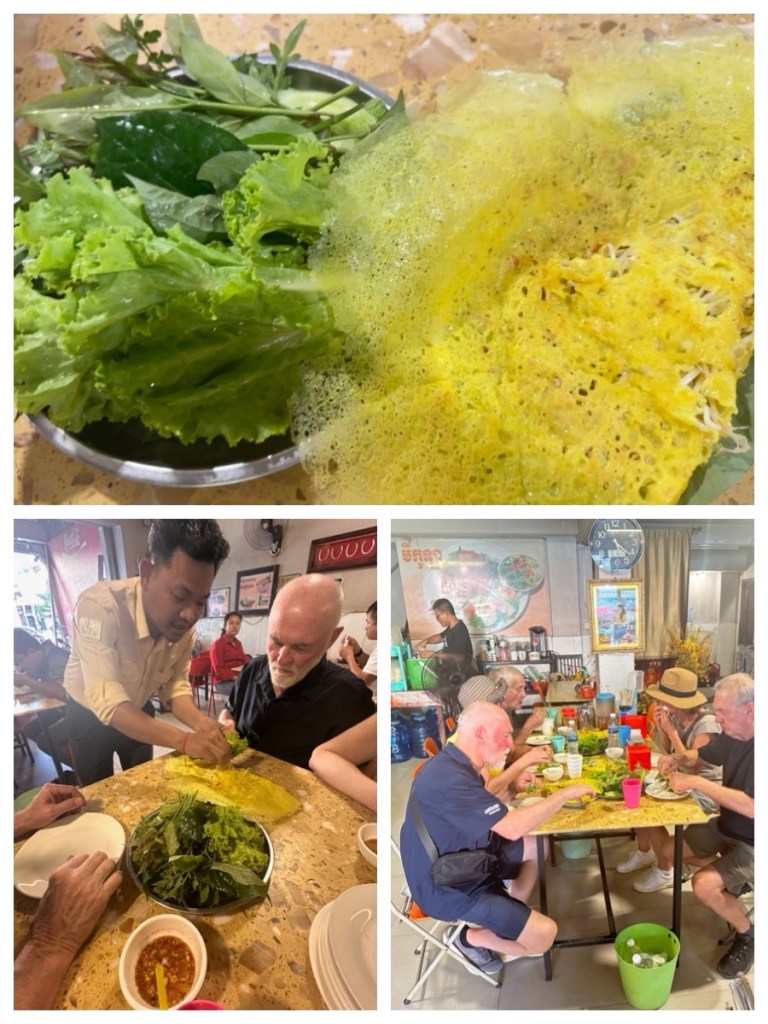
Back in the TukTuks and off to the next experience. Here we were served an amazing soup which we topped with vegetables and herbs. Again, it was delicious.

Feeling very well fed, Sinet and out drivers took us to a local night market to sample a local delicacy – insects! We were brave and between us all, tried fried crickets, grasshoppers, larva, water beetles, and even a tarantula. While perhaps not our first choice of cuisine, they were not too bad (the crickets were actually quite tasty) and it was an experience to remember.


What an interesting day!
Waiting for Sinet and “D” to arrive on Day 3, I noticed some of the hotel staff working with lotus flowers. Asking them for a picture, they encouraged Debbie & I to join in. This impromptu lotus flower folding lesson was great fun, although we are far from experts at it!

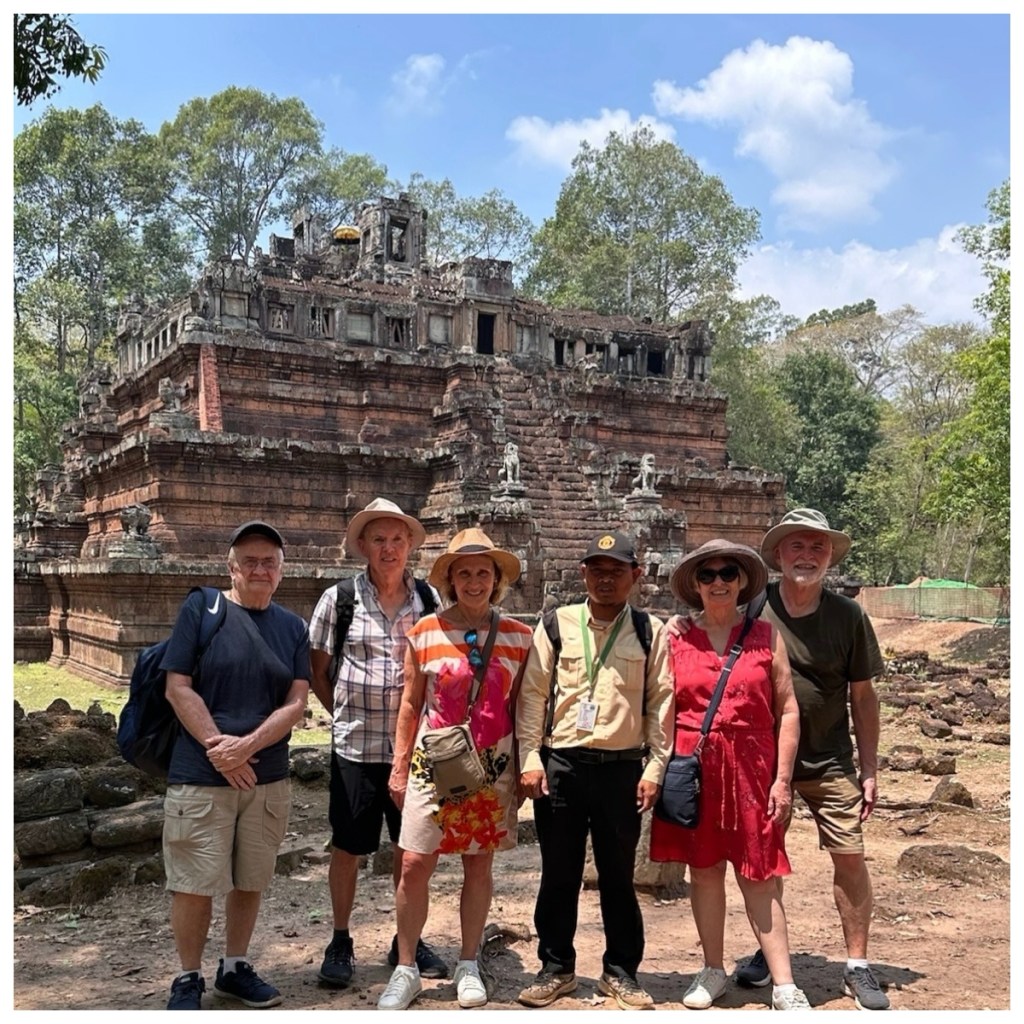
Then it was off for more temple exploration at Angkor Thom, Angkor’s great walled city. The wall of the city is close to five miles in circumference surrounded by a great moat.
Angkor Thom was founded in the late 12th century by King Jayavarman VII. Built on the site of an earlier capital, Angkor Thom represented the zenith of Khmer architectural and urban planning prowess. The city served as the heart of the empire for over a century, witnessing the reigns of several kings and the gradual transition from Hinduism to Buddhism as the state religion. It is recognized as the last capital of the Khmer Empire.

Entering Angkor Thom, you come first to the magical Bayon state-temple, topped with 37 towers carved with the half-smiling faces of Lokesvara, one of ancient Cambodia’s most iconic images.
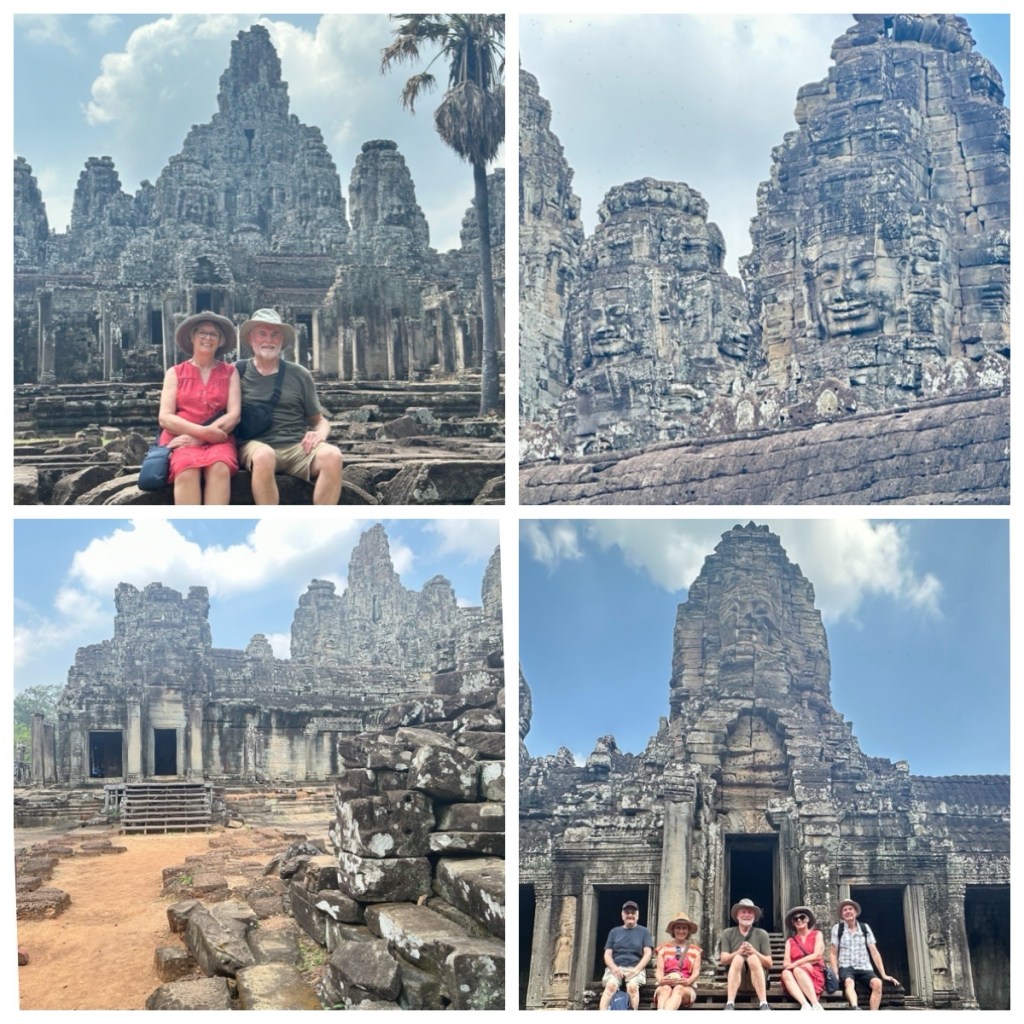
Baphoum is an eleventh century temple. It appears as a mountain of stone – five steep tiers now reached by steep wooden stairs.
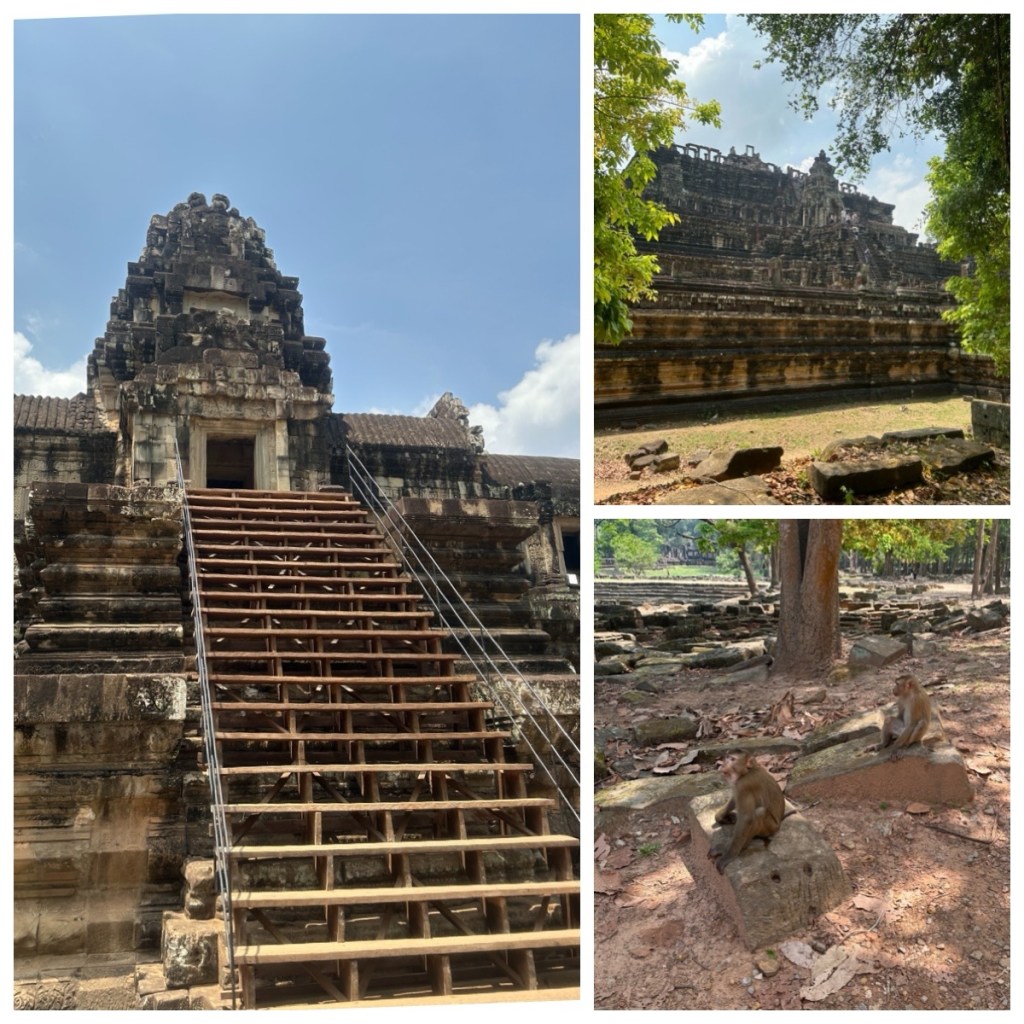
Phimeanakas is a small and relatively simple temple that stood in the grounds of the Royal Palace, surrounded by a small moat and with elephants standing at the corners and lions flanking the stairs.

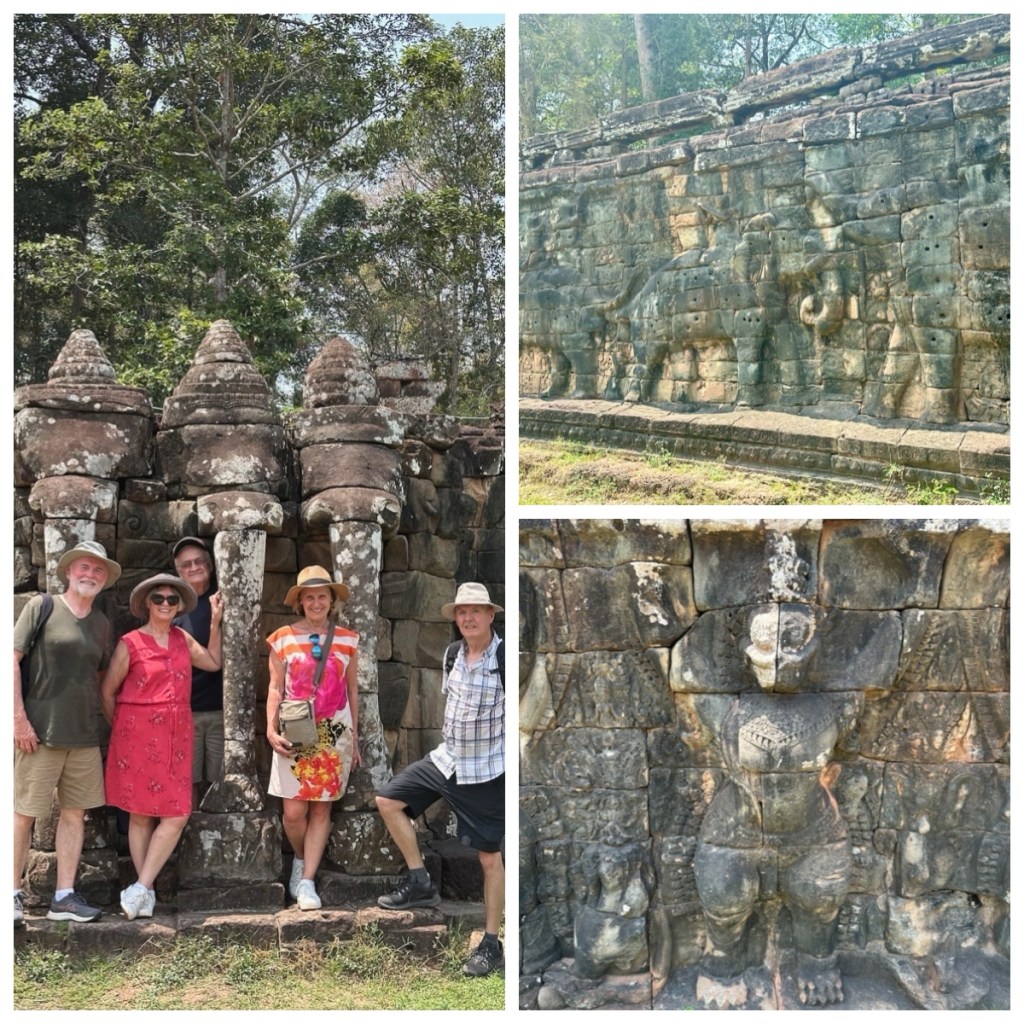
The Terrace of the Elephants originally served as the base for the royal reception hall and as a viewing platform for arriving dignitaries. The terrace features 3000 meters of bas-reliefs carvings of elephants.
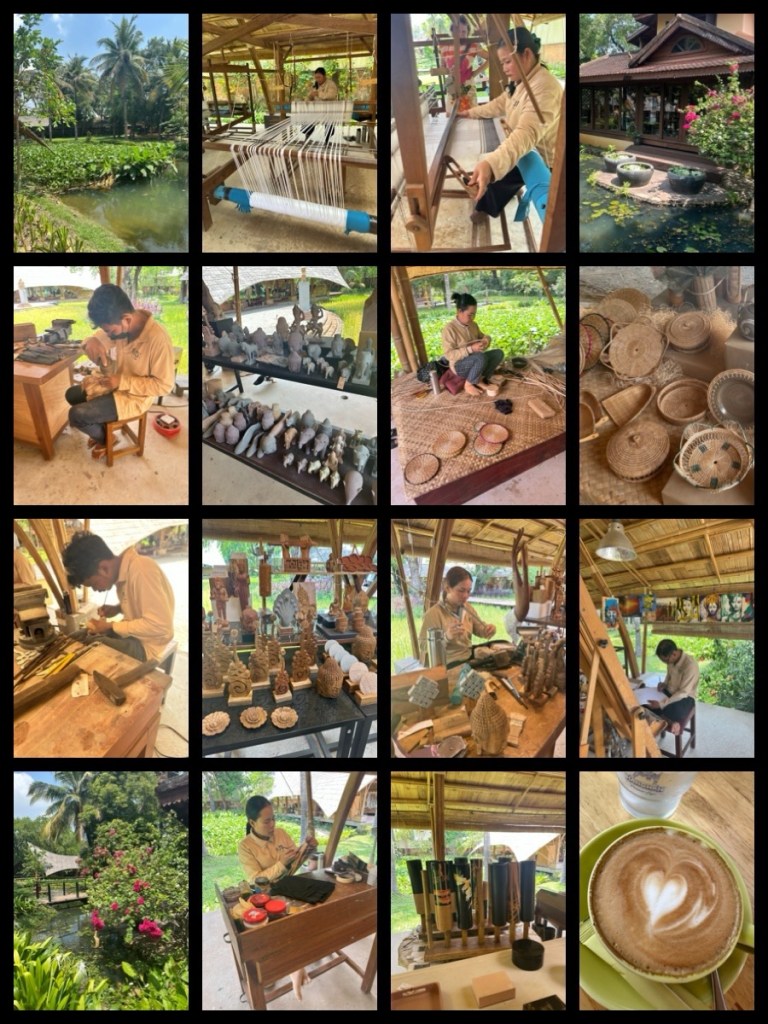
On our way back from Angkor Thom, we stopped at the Satcha Cambodian Handicraft Center. This organization has a mission to incubate local artisans, mixing traditional knowledge with contemporary design to showcase Cambodian talents and to transmit this know-how over time while having a sustainable social, economic, and environmental impact. We found it very interesting to watch the young crafts-people at work and we were pleased to purchase some of the handicrafts. As well, we had a very refreshing coffee break.
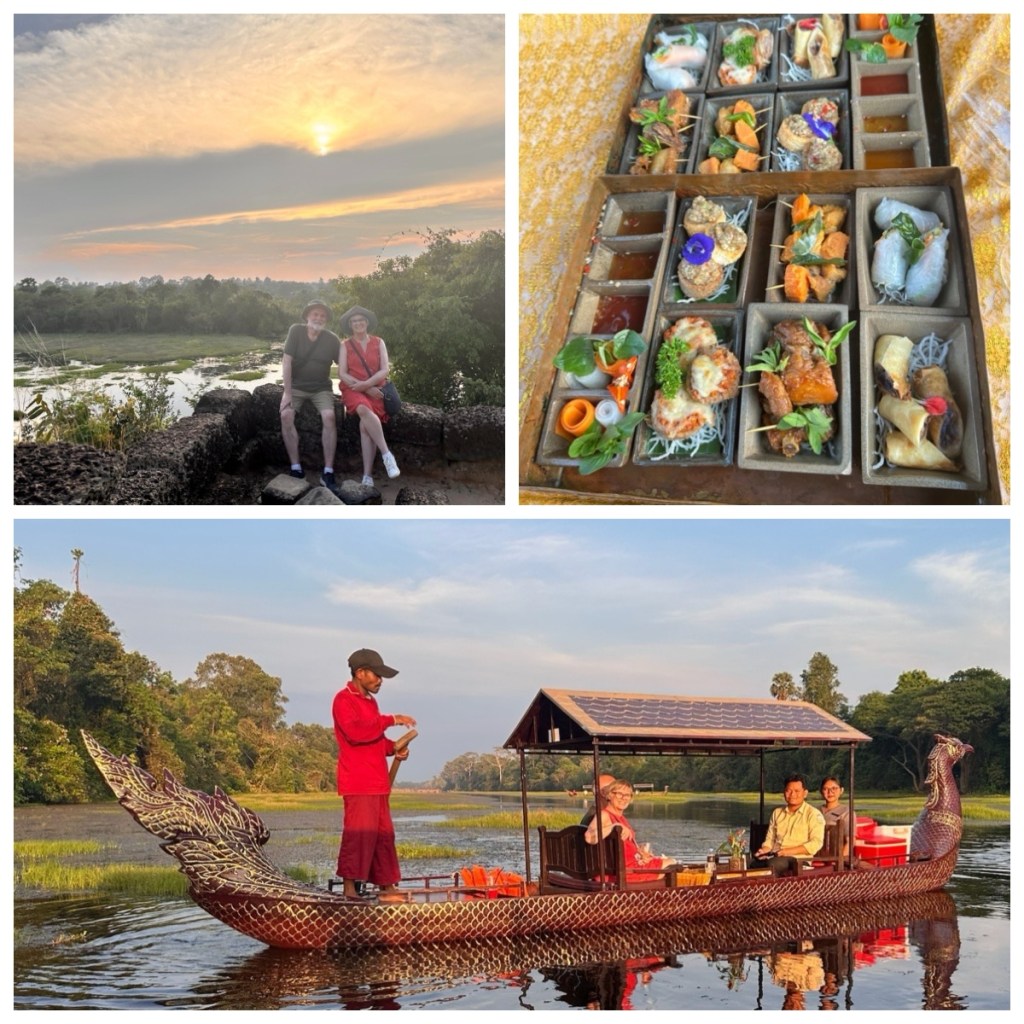
We finished our tour in a wonderful way with sunset cocktails in the Royal King boats through the Siem Reap – Angkor archaeological park. This was truly a magical experience as we enjoyed canapés and drinks and watched the sunset.

We arrived back at the hotel and had to bid goodbye to Sinet. WE cannot say enough good things about Sinet and “D” – they contributed so much to our wonderful Siem Reap experience.
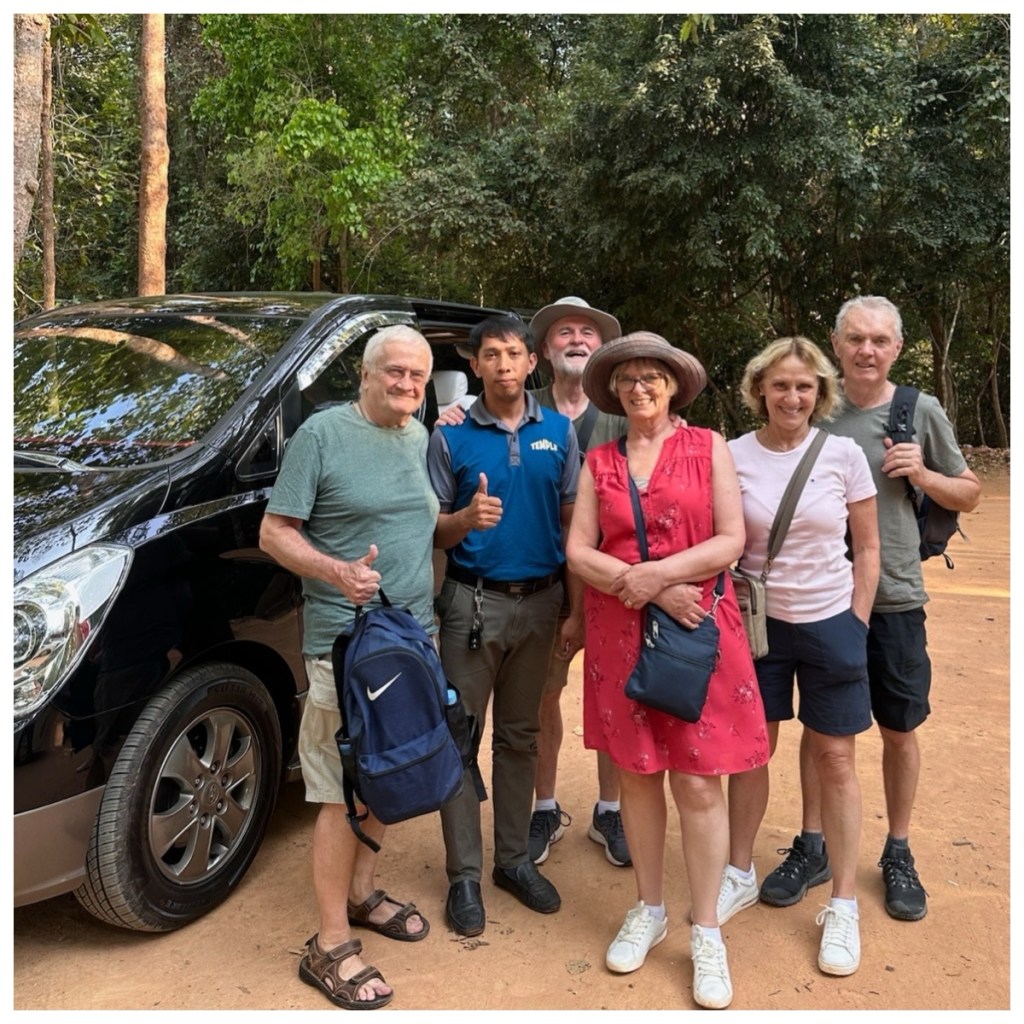
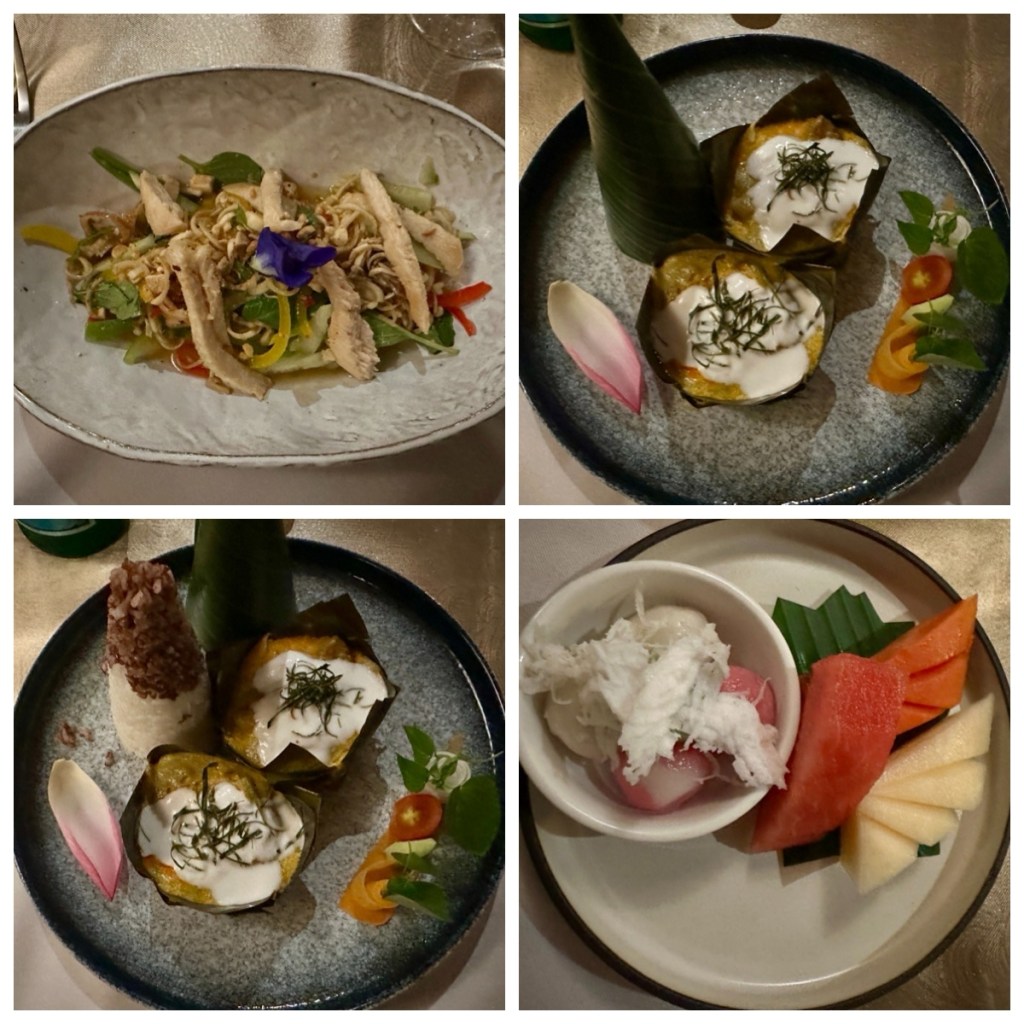
The Golden Temple felt we hadn’t eaten enough and ended our day with a wonderful dinner in their restaurant.
Our time in Siem Reap was amazing! The Golden Temple group and our personalized tour made it a stay to remember.

We next head south to Phnom Penh.
Cheers,
Bev & Harvey


Bev and Harvey
What a great adventure! I can almost smell the air and taste the food. Great job in capturing and sharing your experience through your pictures and in your writing.
Ralph
LikeLike
Your experiences are so wonderful there! The food, the peop
LikeLike