We spent a day taking in the sights of the city of Galway. The central streets branch out from Eyre Square and are pedestrian only which makes for pleasant strolling.

The Cathedral of Galway was dedicated on 15 August 1965 and as such is the youngest of Europe’s great stone cathedrals. It is dedicated to Our Lady Assumed into Heaven and Saint Nicholas and is the seat of the Bishop of the Roman Catholic Diocese of Galway, Kilmacduagh & Kilfenora.


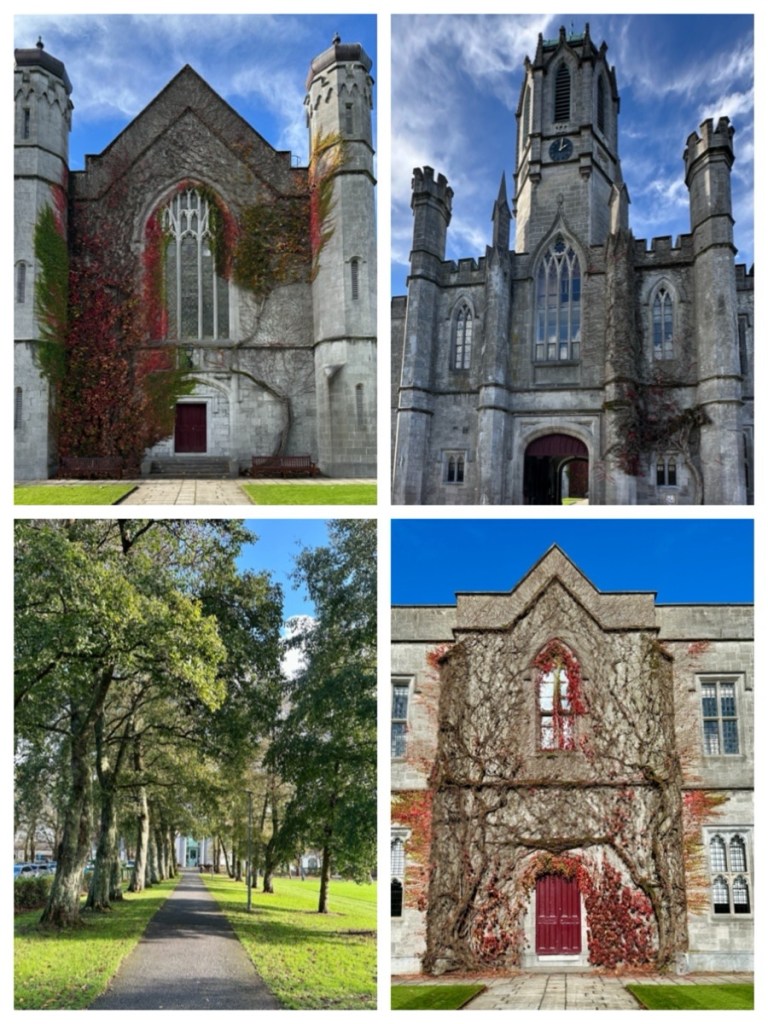
The University of Galway was established in 1845 as Queen’s College, Galway. The name has evolved over time and in 2024, it legally became the University of Galway. Located close to the city centre, the university campus stretches along the River Corrib. The oldest part of the university, the Quadrangle, was designed in a Tudor Gothic architectural style and constructed from local limestone; it is a replica of Christ Church, one of the colleges at the University of Oxford.
The Port of Galway is the most central port on the west coast of Ireland. It is in the sheltered, eastern corner of Galway Bay, situated on the River Corrib. Due to the current configuration and infrastructure, entry into the wet dock is restricted to a two-hour window around high tide. Redevelopment plans are currently underway.

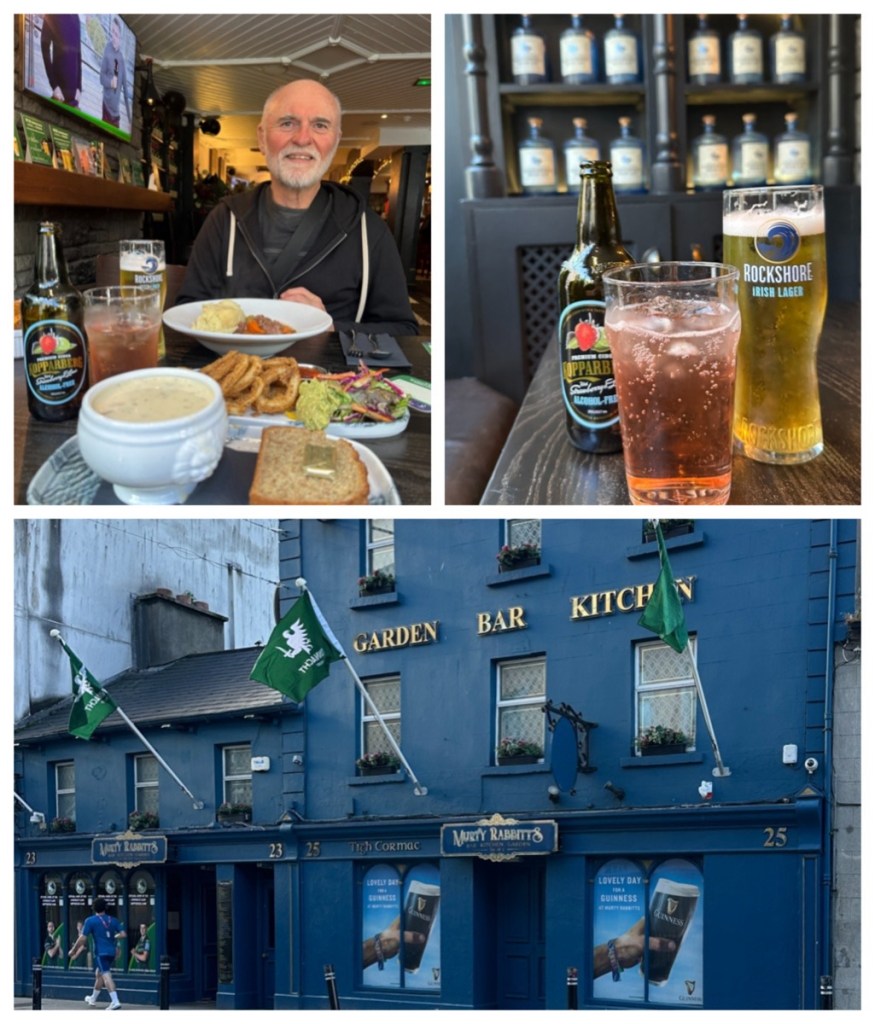
After our day of exploring, we enjoyed a great pub dinner at Murty Rabbitt’s, a family run pub established in 1872.
On our last day in Galway, we took another tour by the Galway Tour Company – Connemara, Cong & Kylemore Abbey. On this tour, our driver guide was Mike who provided us with excellent and entertaining commentary.
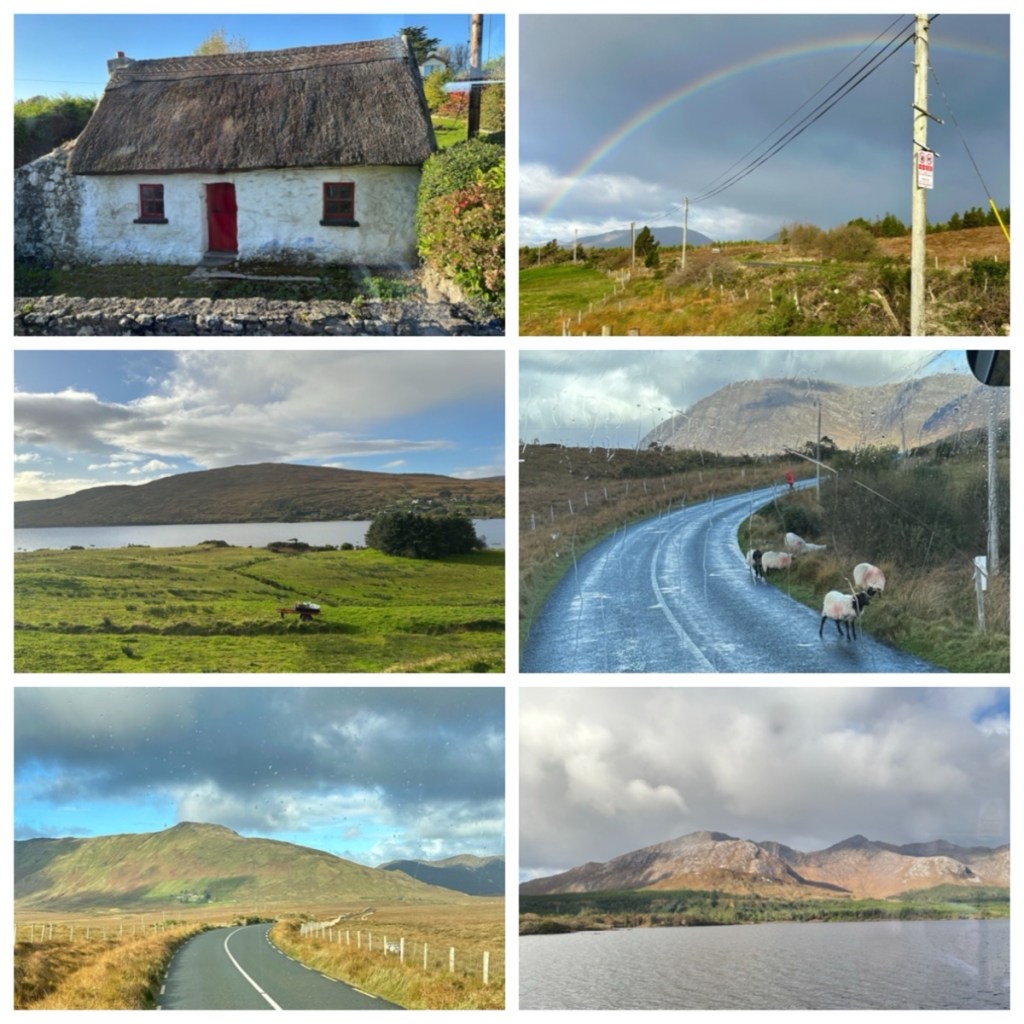
The Connemara is in a scenic corner of County Galway famous for its wild terrain and soft colours. Rust-coloured bogs are dotted with polished grey-blue lakes, old dry-stone walls are threaded over hills and sandy bays and little harbours are edged by an ever-changing ocean. Our tour traveled through Connemara National Park and around Lake Corrib.
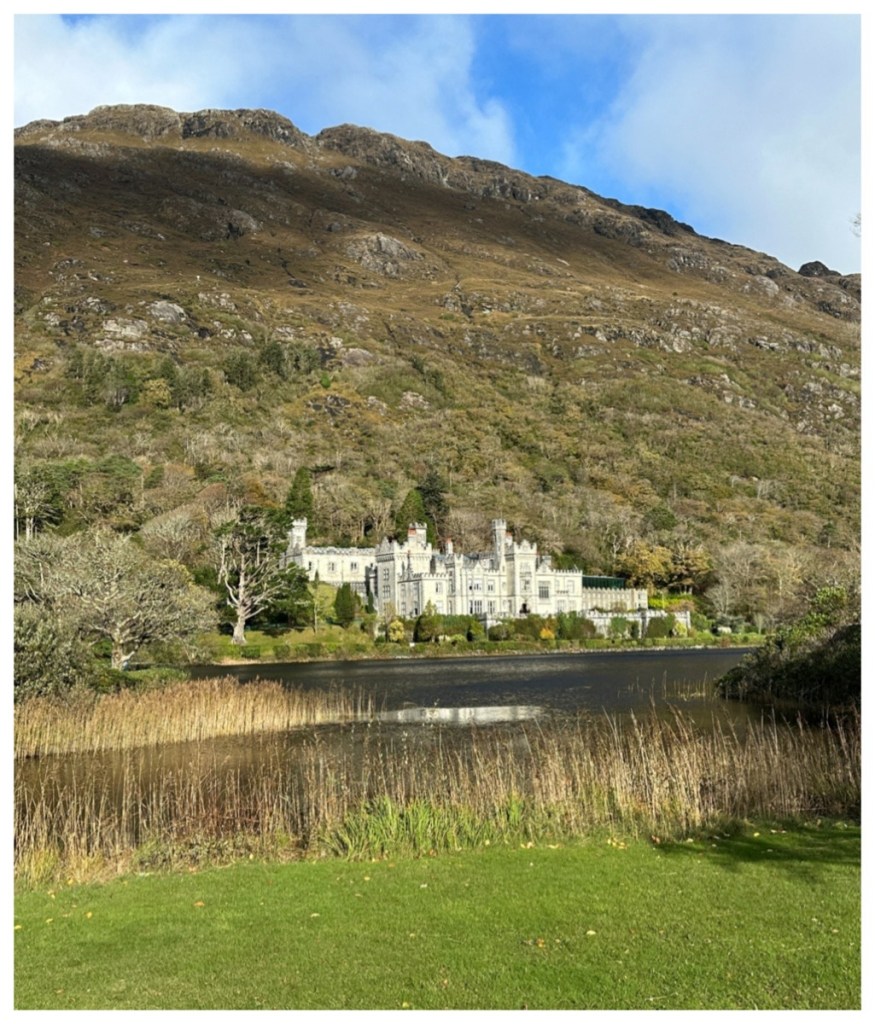
Kylemore Abbey is a highlight of the area. Originally called Kylemore Castle, it was built between 1863 and 1868 as a private home for the family of Mitchell Henry, a wealthy politician from Manchester, England. Construction and operation of the castle enabled Henry to bring change, employment, and economic growth to the Connemara region which was at the time stricken with hunger, disease, and desperation. After the untimely death of his wife, Margaret, Henry left Kylemore in 1902 and fell upon hard times, dying at 84 with just £700 to his name. The castle had been sold to the 9th Duke of Manchester who lived in the mansion for just 11 years.
In 1920, a Benedictine monastery was founded on the grounds by Benedictine Nuns who fled Belgium in World War I. At Kylemore, the nuns opened their international boarding school and established a day school for local girls which ran until 2010. In 2016, the University of Notre Dame Global Centre opened for students and faculty as a residential centre that combines the scholarly offerings of a university with the traditional spirituality of a Benedictine society. A section of the Abbey is retained strictly for the nuns’ use and is not open to the public.
At the Abbey, you can take a self-guided tour of the ground floor including Mitchell Henry’s Library and Study, the Drawing Room, the Dining Room, the Ante Room, and the Gallery Saloon as well as visual presentations of the Kylemore Story and the Benedictine history.

As a tribute to his late wife Margaret, Mitchel Henry commissioned a magnificent neo-gothic church in her memory. When Mitchell Henry built the Gothic Church, it was an Anglican Church but when the Benedictine Nuns arrived, they re-dedicated it as a Catholic Church in 1920. Today it is used for Masses, music recitals, choral performances and all sorts of other events.The church features an interior of light sandstone, angels in place of gargoyles, beautiful marble pillars and exquisite stone carvings.
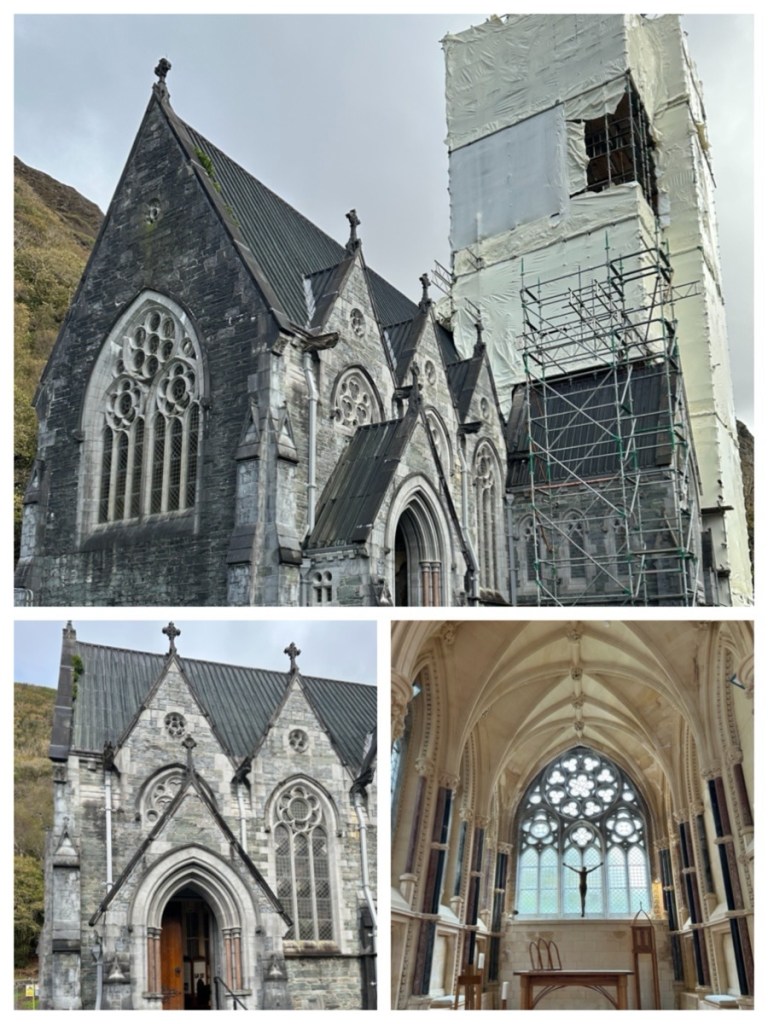
There is only one stained glass window. Located in the south transept, it depicts the five graces; Fortitude, Faith, Charity, Hope and Chastity.

The marble pillars come from the four provinces of Ireland; green from Connemara (Connaught), rose from Cork (Muster), black from Kilkenny (Leinster) and grey from Armagh (Ulster).

The grounds surrounding the Abbey are well-kept and provide for an enjoyable stroll.

Situated on the grounds is the Victorian Walled Garden. The Garden was established and developed around the same time as the castle between 1867 and 1871. Mitchell Henry poured an enormous amount of investment into the Garden, including the best Head Gardener that money could buy and a team of up to 40 gardeners and groundskeepers. The Garden featured 21 heated glasshouses.
After the Henry’s left, the Victorian Walled Garden began to fall into disrepair. Once the nuns arrived in 1920, the gardens were brought back into use but this time as a working garden where fruit and vegetables were grown to supply both needs of the nuns and the girls school. However as time went on, nature began to encroach further and further on the Garden and by the 1990’s most of the garden was hidden under a deep layer of shrubs and brambles. The glasshouses had disappeared, and most of the garden buildings had fallen in. It seemed that the once majestic oasis had been forgotten. In the 1990’s, a project was initiated to restore the garden back to its former glory. At an early stage it was decided that the garden would be a heritage garden where only plant varieties from pre-1901 could be used. On 13th October 2000, the garden was opened with great fanfare and in 2001, the garden restoration project won the prestigious Europa Nostra.
Comprised of roughly 6 acres, the Garden is divided in two by a beautiful mountain stream. The eastern half includes the formal flower garden, glasshouses, the head gardener’s house and the garden bothy. The western part of the garden includes the vegetable garden, herbaceous border, fruit trees, a rockery and herb garden. The Garden also contains a shaded fernery, an important feature of any Victorian Garden. The bedding is changed twice a year, for Spring and Summer and its colours change throughout the year.
We enjoyed wandering through the garden and had a lovely lunch in the teahouse.

On the borderlands between the O’Malley and O’Flaherty clans and once a smugglers’ haunt, Killary Harbour is the most famous of Ireland’s three fjords. Twenty thousand years ago you could walk on ice from here to Norway. Glaciers carved out a U-shaped valley and as the ice melted, sea levels rose and flooded it. Today, the harbour is lined with barrels supporting mussel farming. Blue-shell mussels also known as the common mussel are farmed on longlines submerged 8 meters under water. Killary is an ideal location for growing mussels thanks to the unique combination of fresh and sea water which gives the Killary mussel a distinctive sweet flavour.
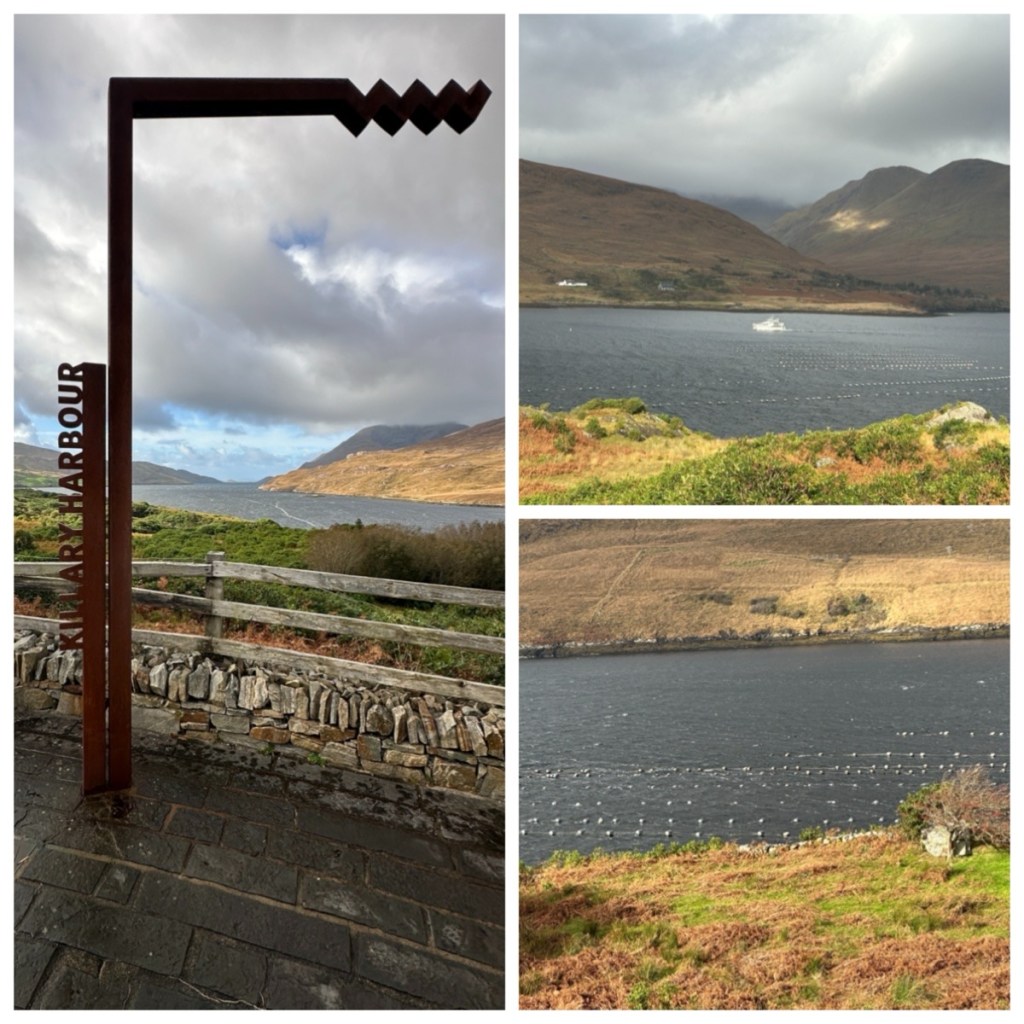
Our journey continued through the Connemara with beautiful rainbows and sheep strolling down the road.

The village of Cong lies between large lakes and is home to around 900 people. One of its claims to fame is that it was the location for the filming of the 1951 movie, The Quiet Man, which starred John Wayne and Maureen O’Hara.
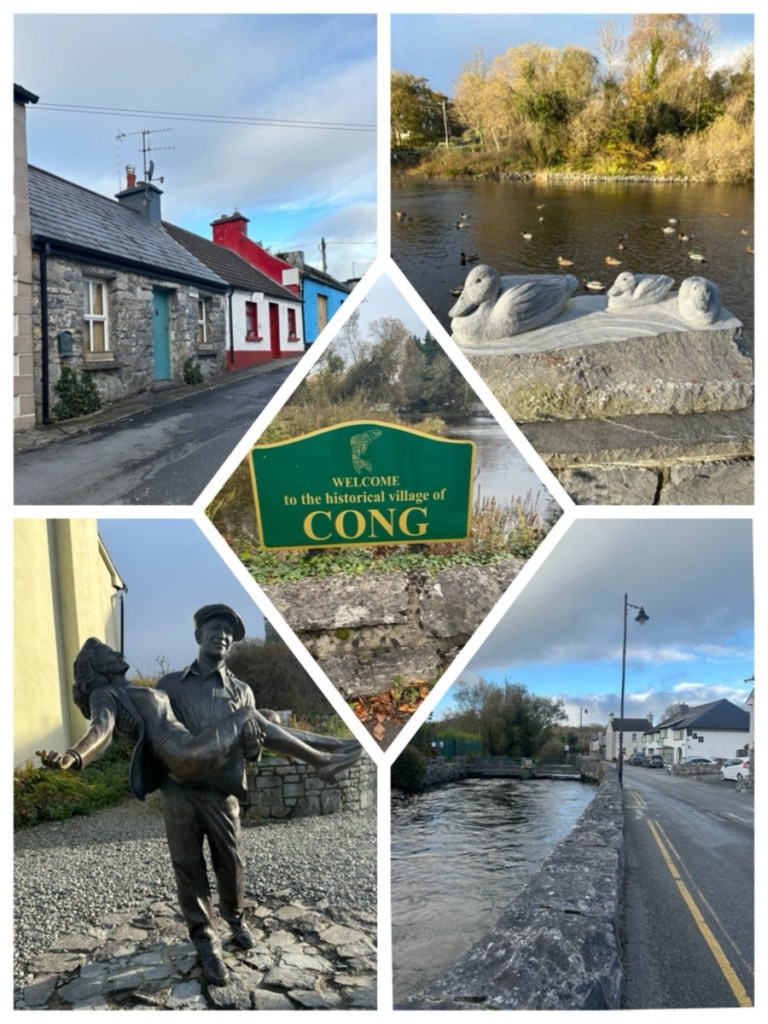
The Cong Abbey was constructed in the early 12th century, with various reconstructions over the years. Although very little remains of the original abbey, the ruins include parts of the church and cloister as well as the doorway and windows of the chapter house.

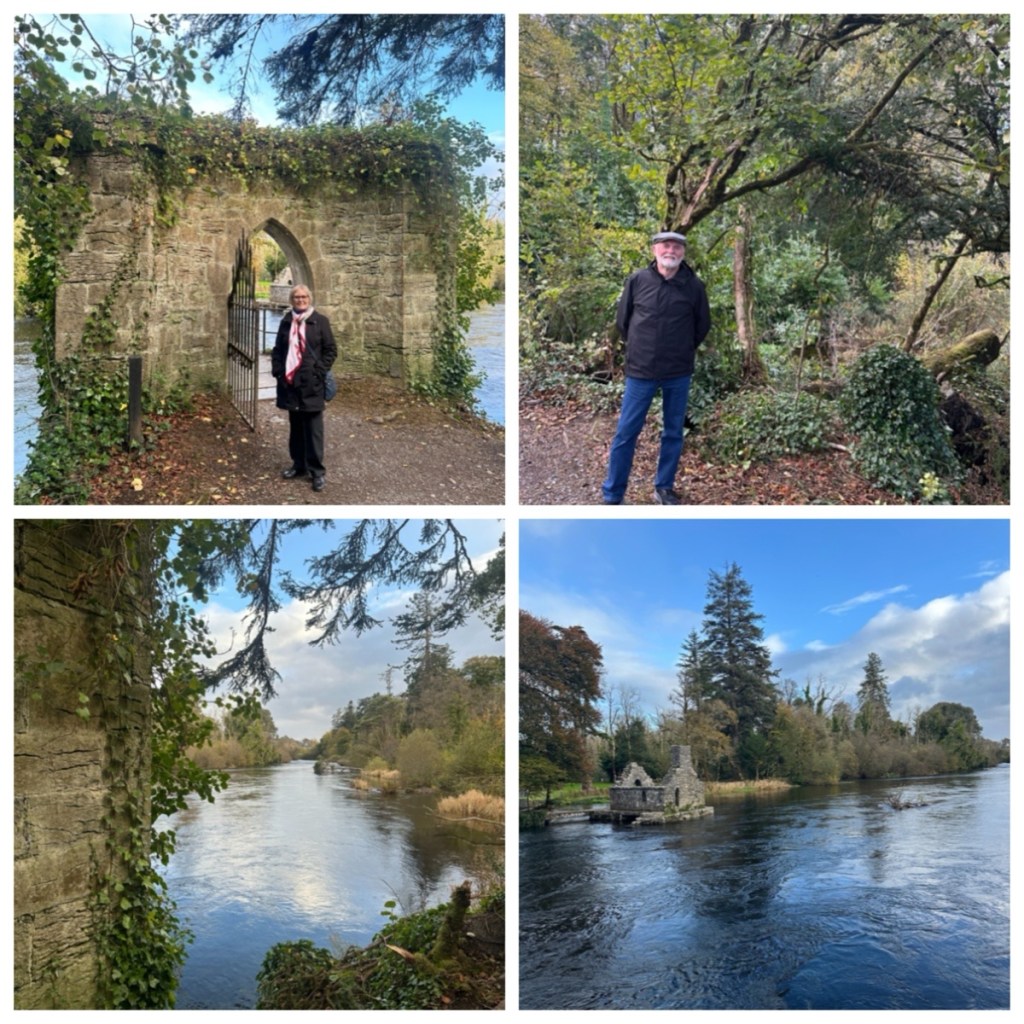
The Ashford Estate was originally owned by the Guiness Family. Today the massive stone palace is a hotel catering to the rich and famous whose privacy is strictly guarded. Hence, it is not open to the public. The Cong Wood is part of the old Ashford Estate and offers very scenic walking paths.
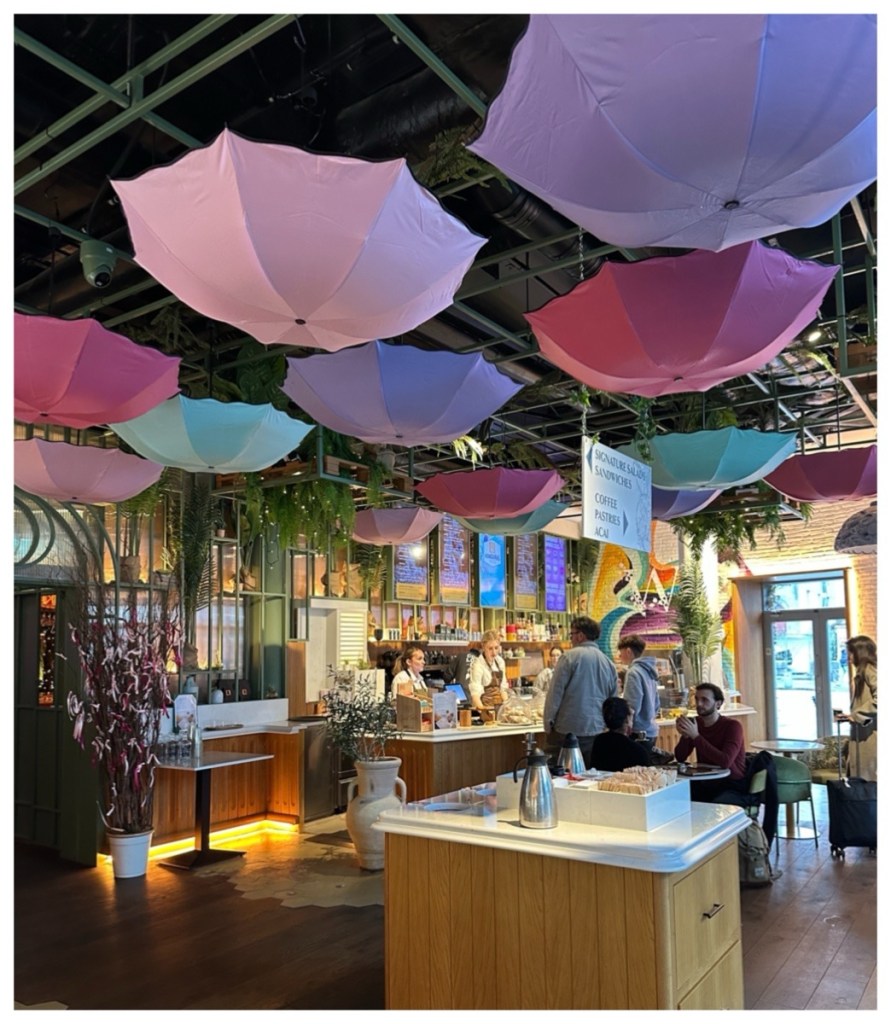
The Wylde Café is part of the Hyde Hotel where we stayed and offered us a great place for breakfasts prior to our adventures in Galway.
Our four night stop in Galway was a highlight of the trip. From the diverse topography of the surrounding area to the quintessential Irish vibe of the city, we so enjoyed this visit and would definitely recommend including Galway on any Ireland itinerary!
Sláinte,
Bev & Harvey

 A Long and Winding Journey
Thank you for sharing, loving the images, and history attached.
LikeLike