For Days 3 & 4 in Bangkok, we continued our excellent adventure with Mr CHOB Tours and our new friend, Mr George.
Day 3: Mr George and Kiti picked us up at 7 a.m. to head out of the city to the Maeklong Railway Market. The journey took about an hour and we passed through greater Bangkok and then the countryside.
Along the way, we noted sea salt ponds with baskets of salt sitting next to the ponds. In this area, salt is produced by a traditional method. Saltwater is pumped into shallow, partitioned fields and allowed to evaporate via sun and wind for roughly 10–15 days, leaving behind crystallized salt. The dry season, generally from November to mid-May is the main harvesting period.
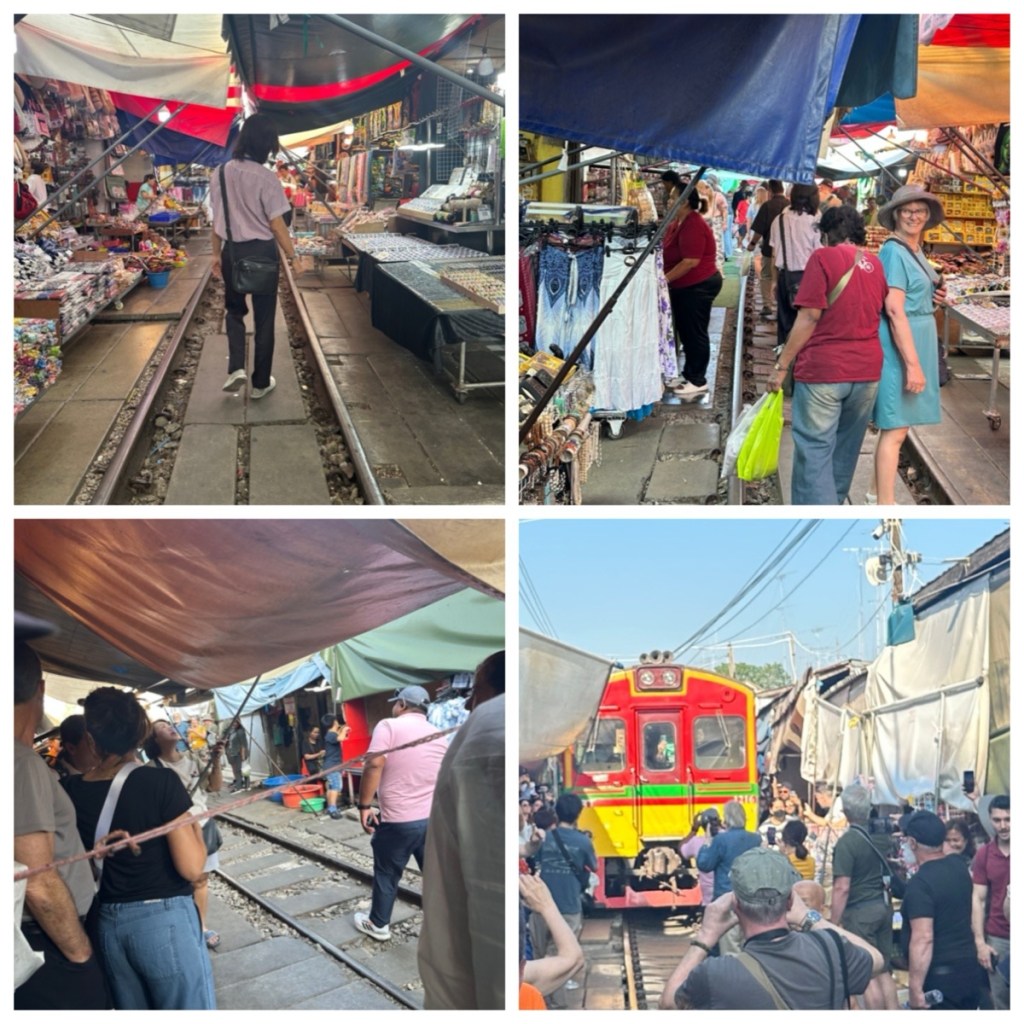
Stop #1: The Maeklong Railway Market in Samut Songkhram is a unique market that is held every day on the rail tracks. Market sellers display their wares right next to the tracks with awnings stretching out. Just before the train arrives in the town, the whistle blows and the market stallholders have to pull back their awnings and remove their produce from the tracks. This process is reversed after the train leaves. This usually happens four times each day.
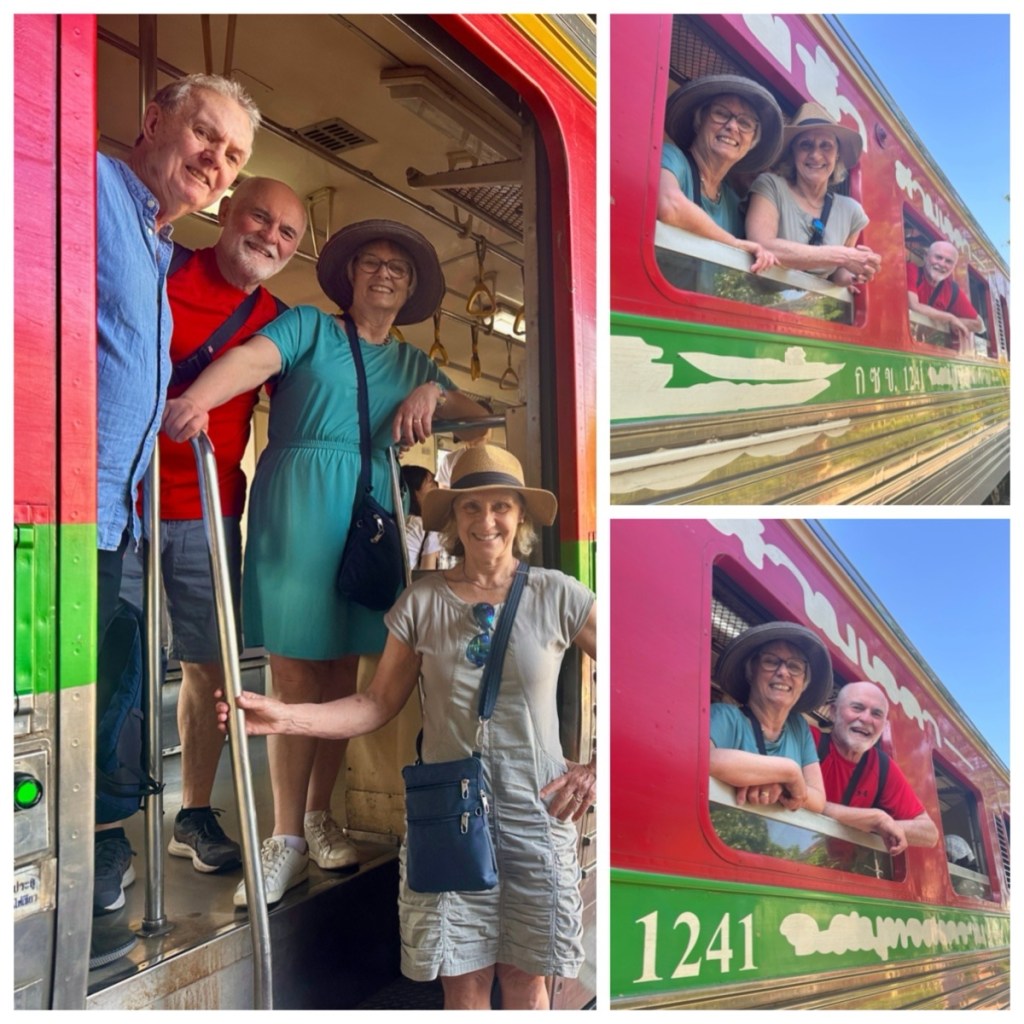
This is an actual train used by locals but we were able to hop on for a photo op during its stop at the station.
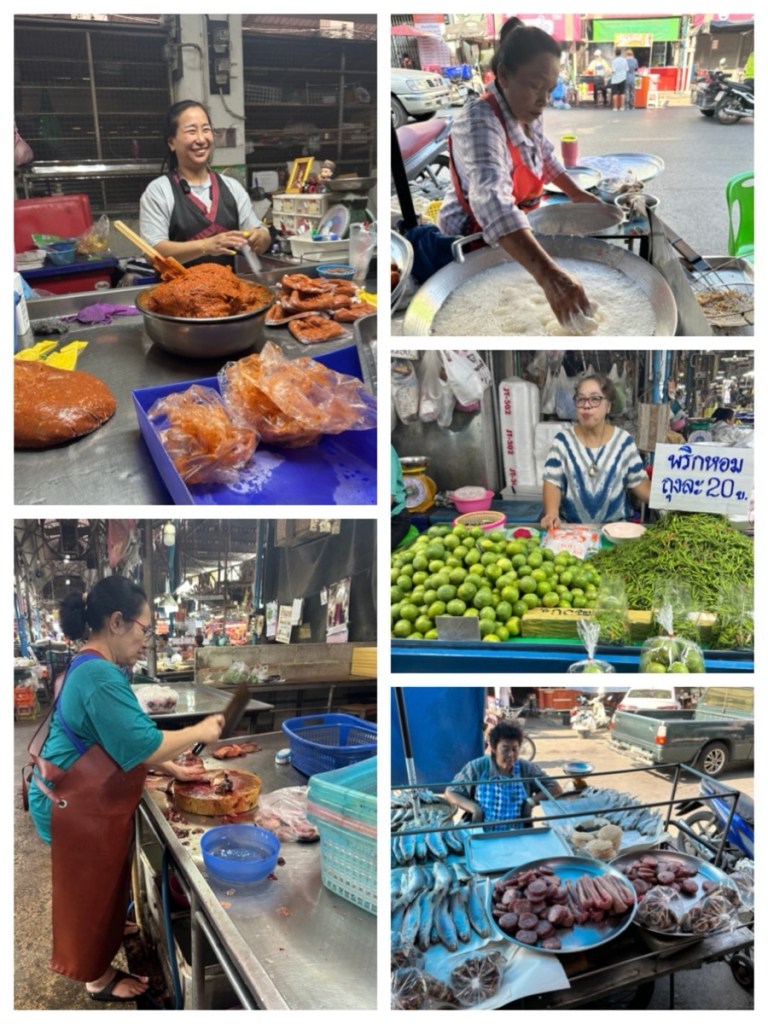
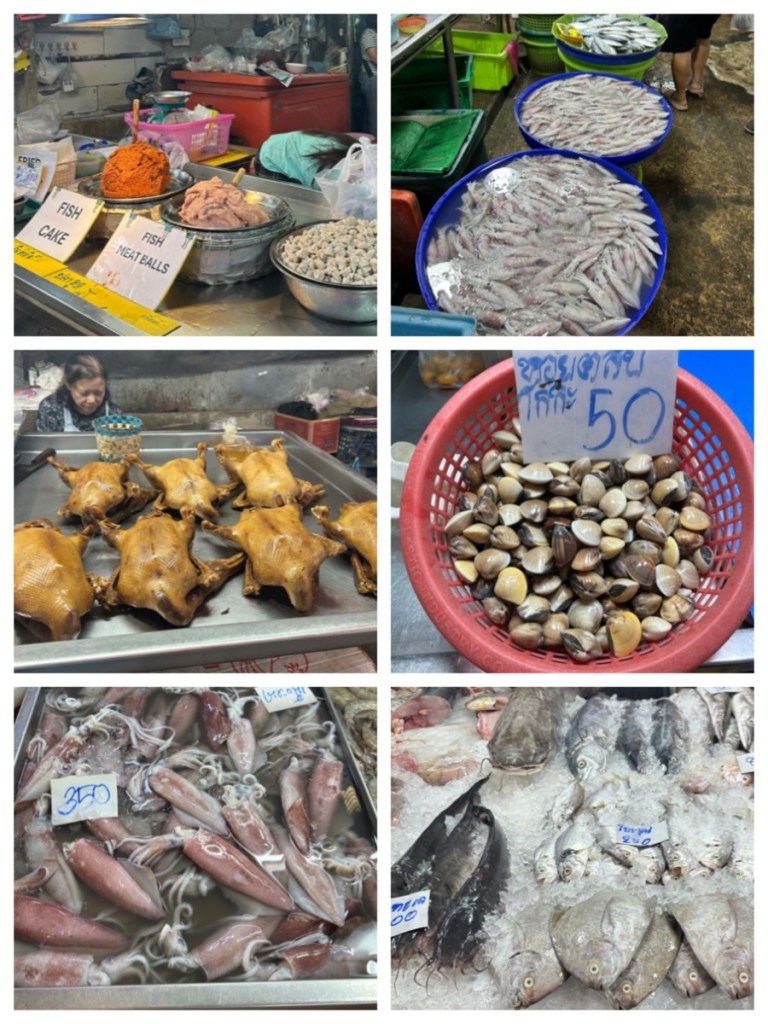
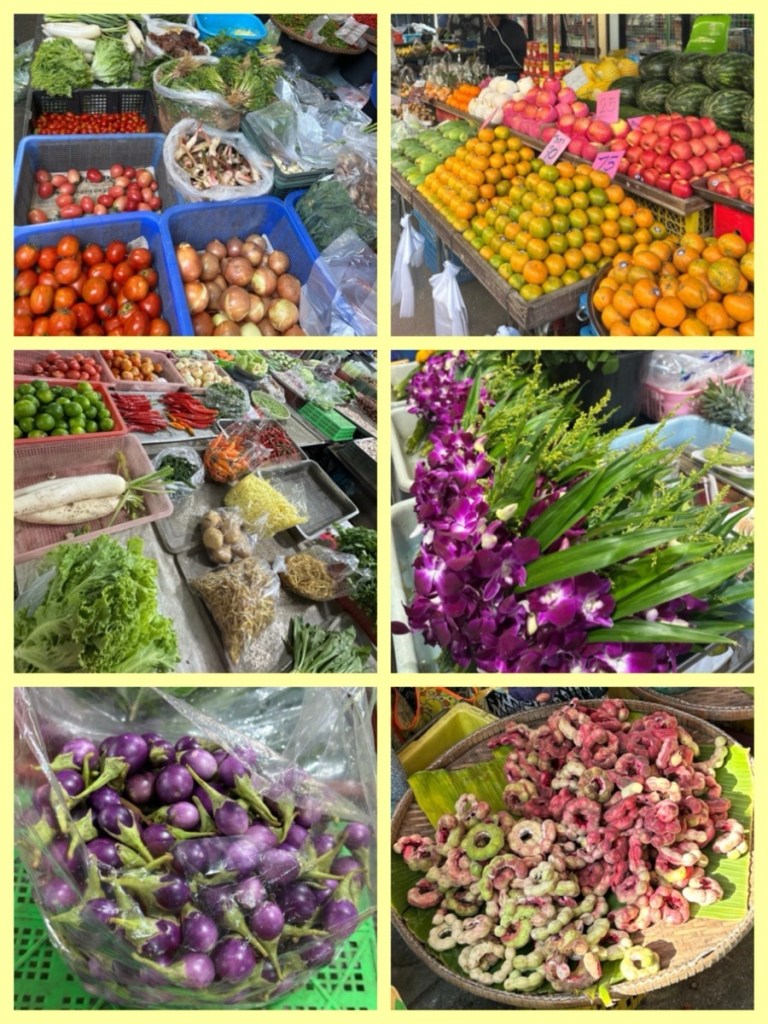
The Maeklong Market is a thriving local market located next to the train market. We enjoyed perusing the fish, meat, produce and flowers for sale, as well as interacting with the vendors.
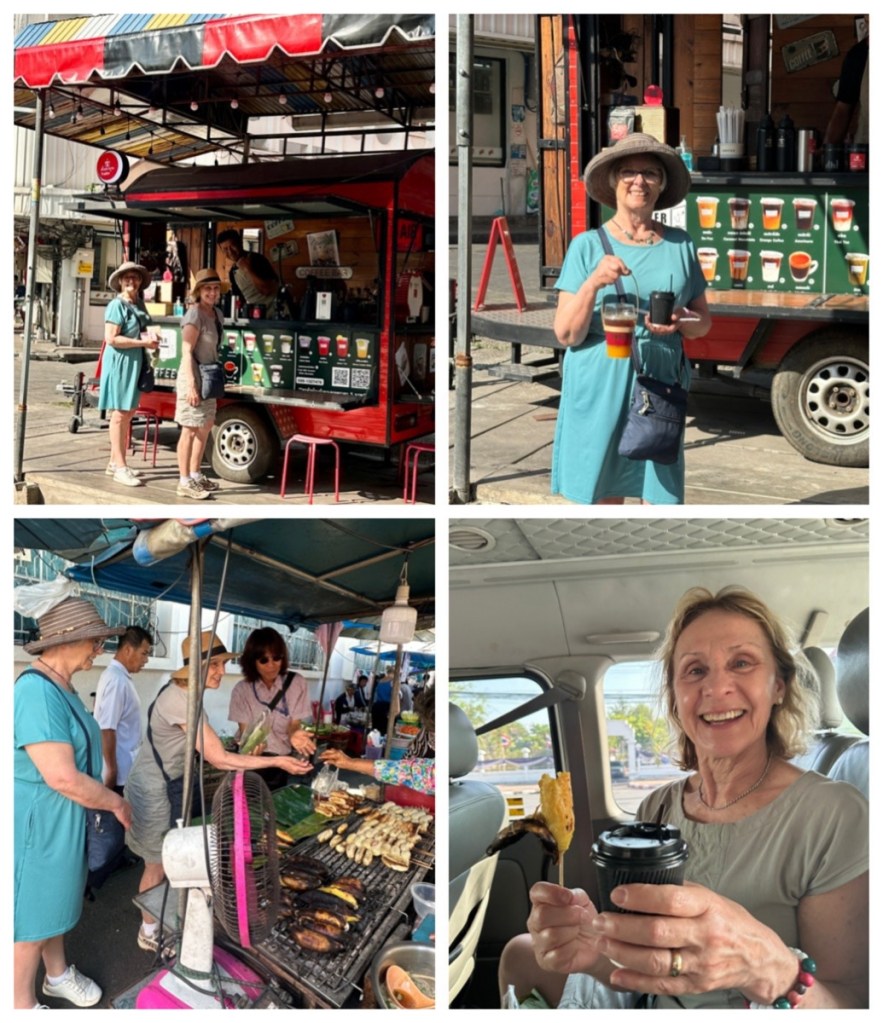
We spent a bit of time exploring the neighbourhood and picked up coffee and fried bananas for a delicious snack. I tried an iced orange coffee which was quite refreshing.
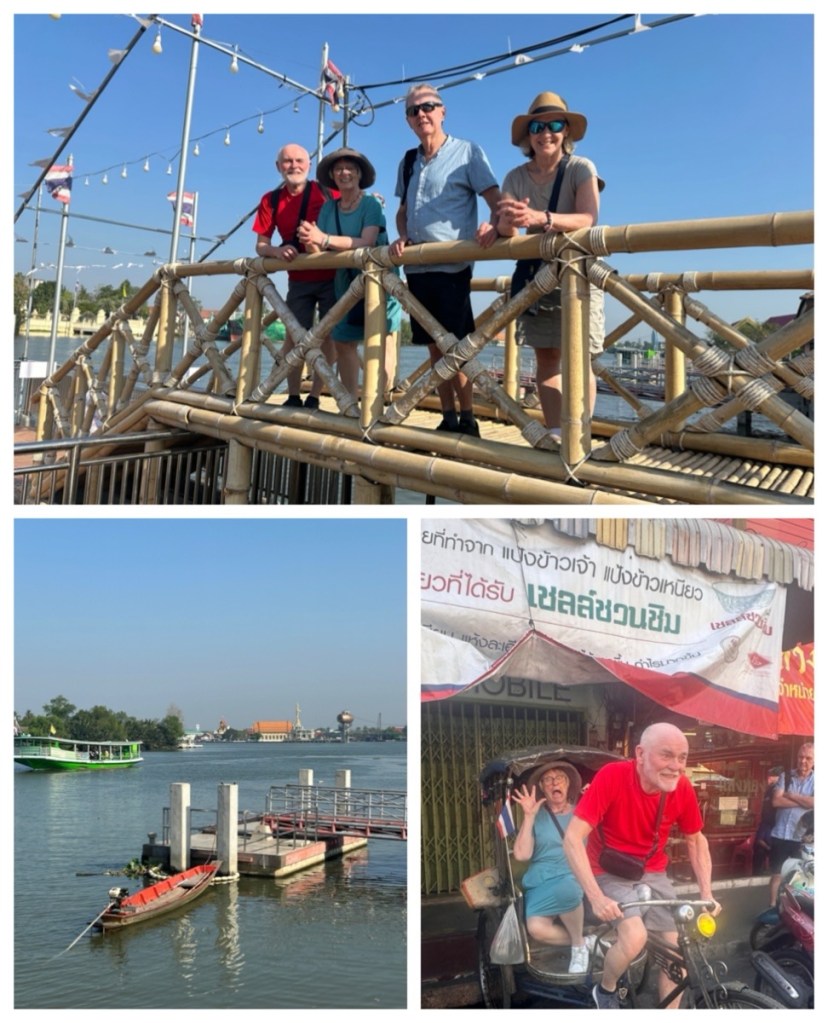
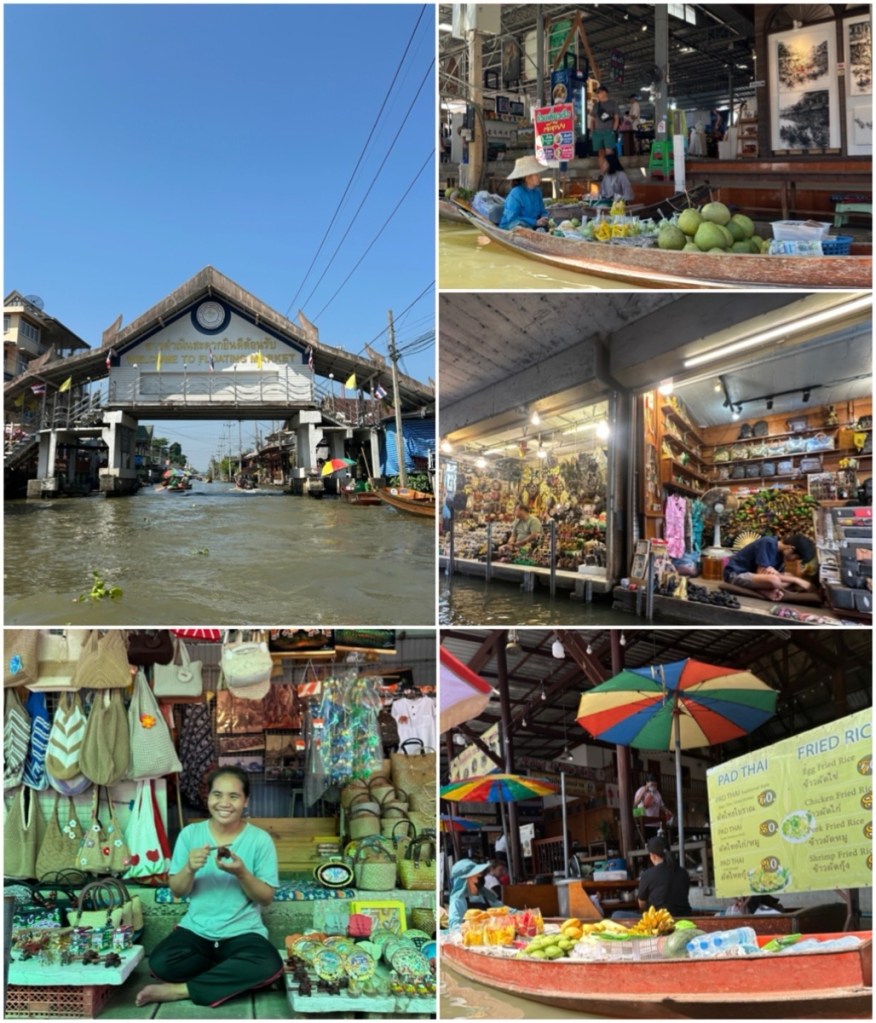
Stop #2: A quick 25 minute drive from the train market is the Damnoensaduak Canal. The canal was constructed on the order of King Rama IV to connect the Thachin and Maeklong Rivers in 1868. The longest and straightest canal in Thailand, it is 32 kilometres long, 12 metres wide and 3 metres deep and features over 200 connecting branches. As well as being the home of Floating Markets, the canal provides gardeners with adequate water for agricultural use.
The floating market teems with activity. Vendors sells their wares from small row boats as well as stands along the canal banks. It is estimated that an average of 1000 tourists visit the market daily. Consequently, there are some traffic jams in the busy areas!
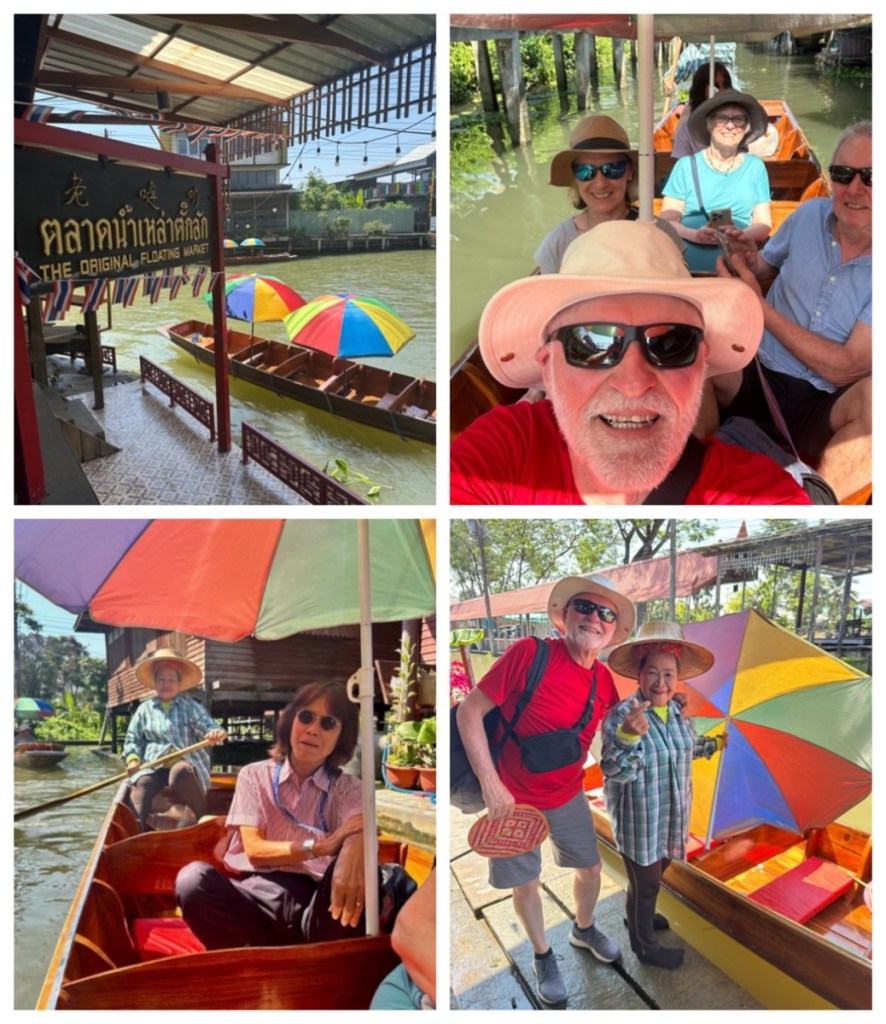
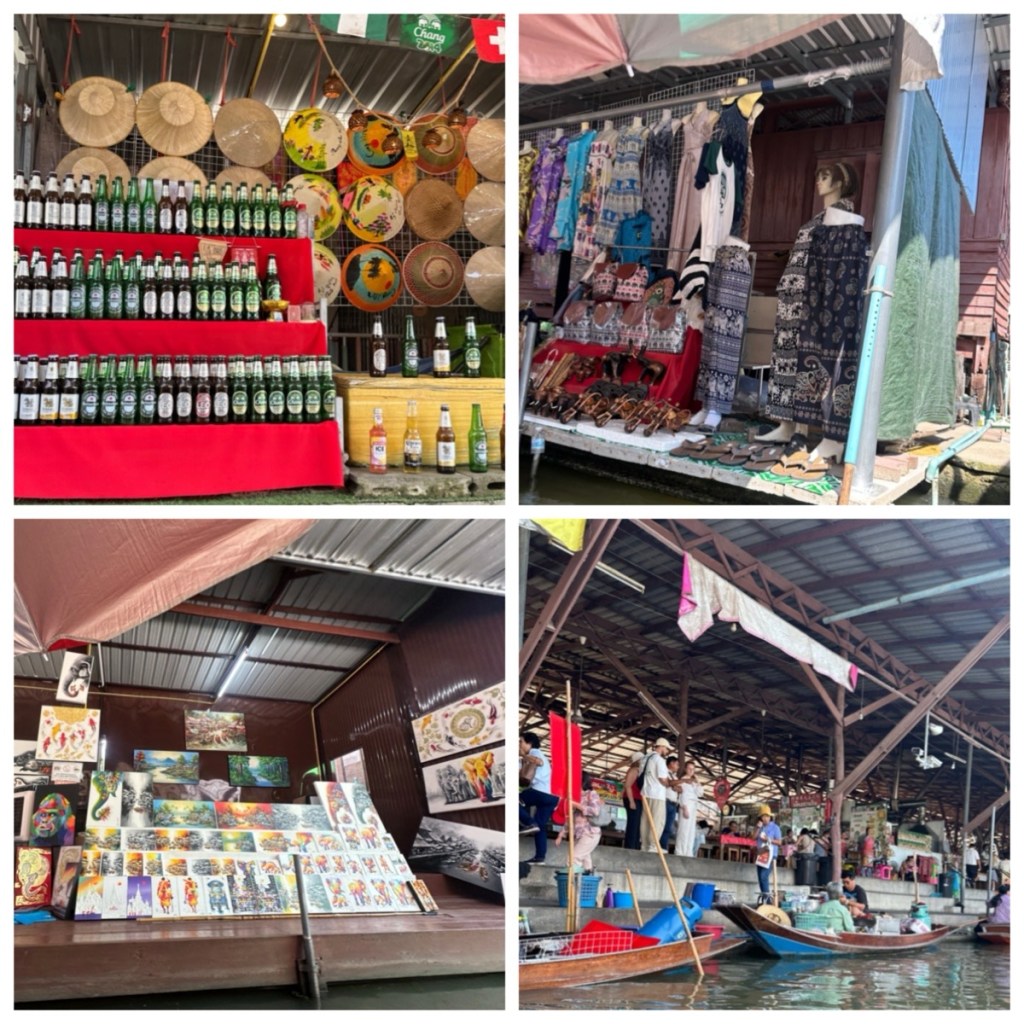
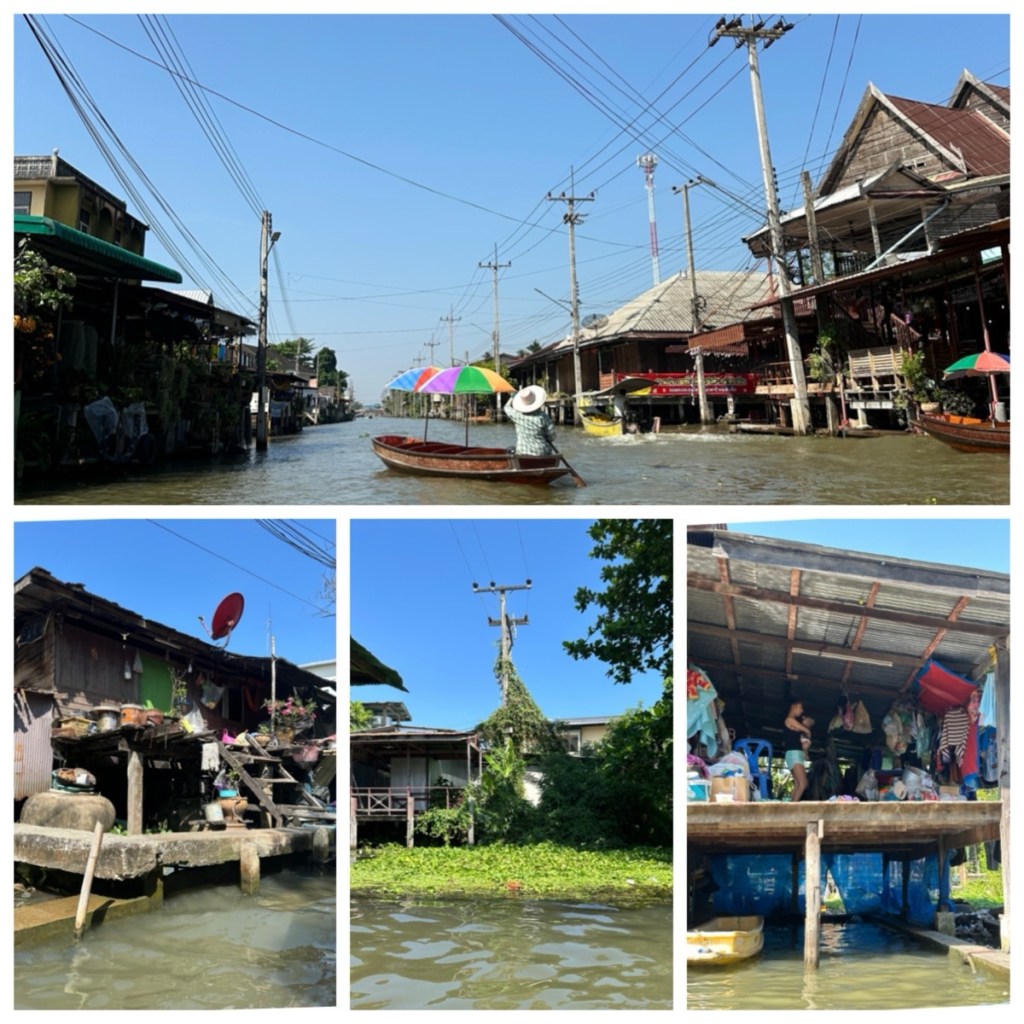
Our private row boat tour also took us through some areas of traditional canal life.
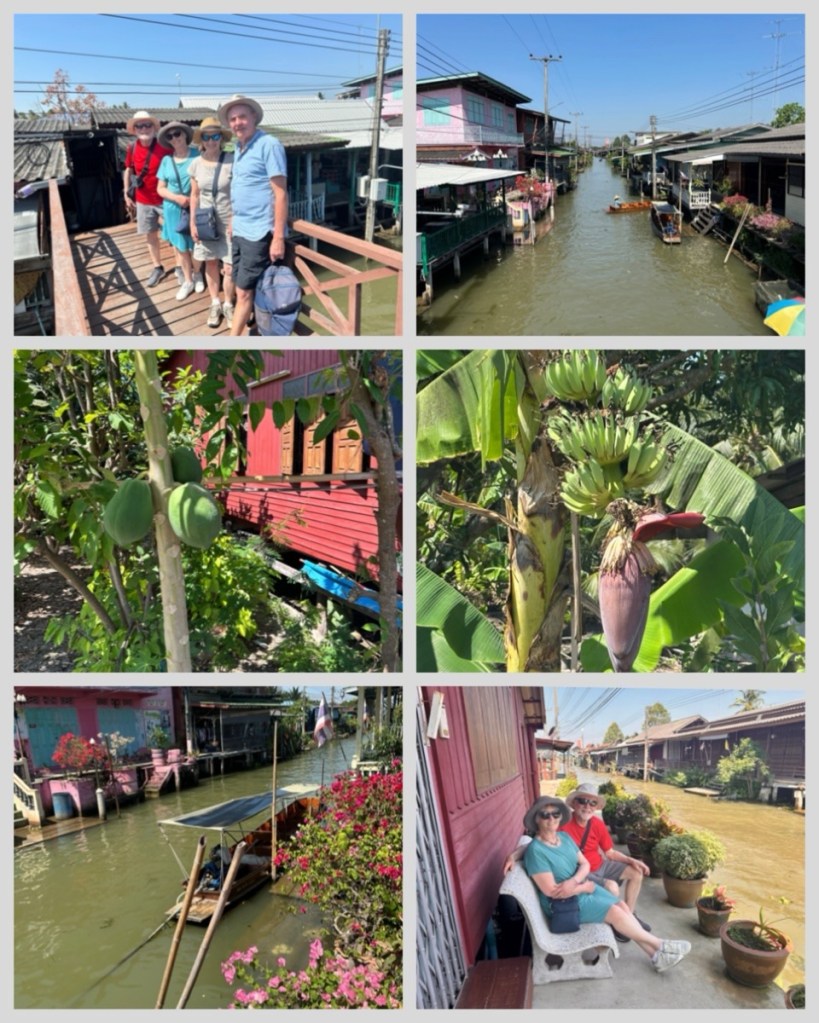
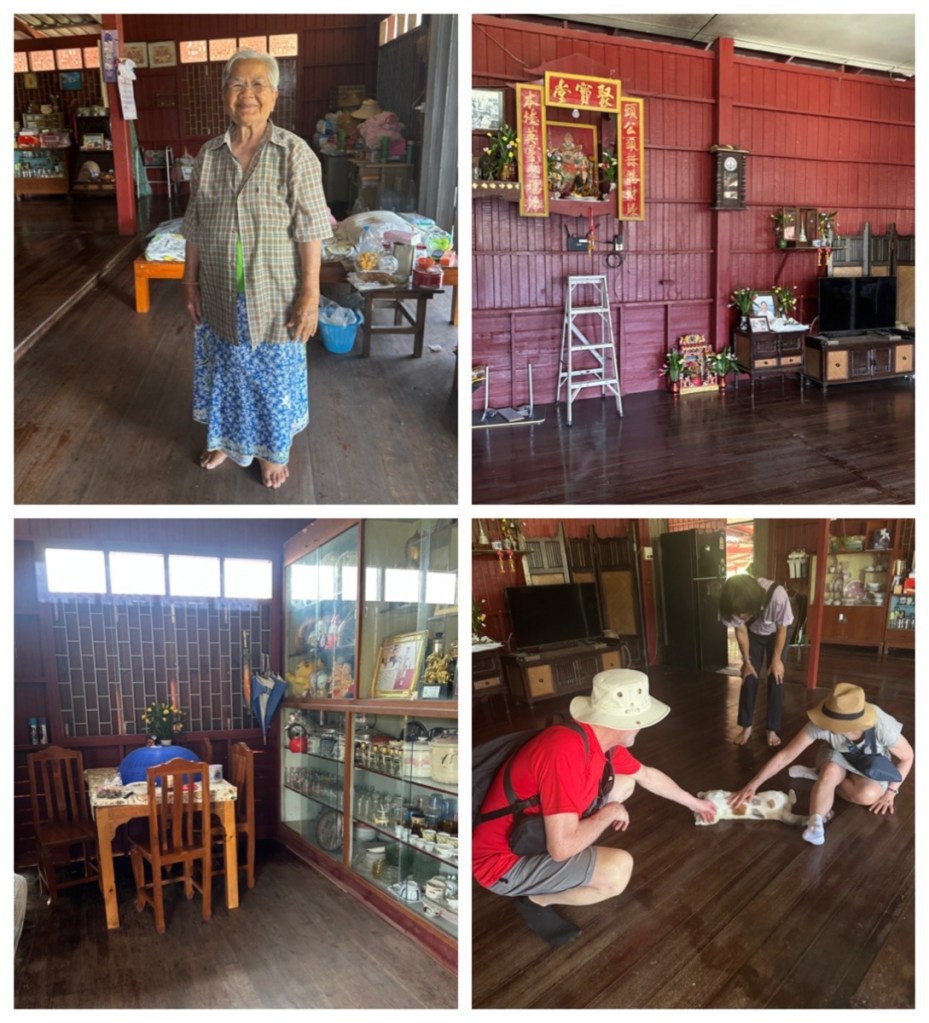
Stop #3: After the boat tour, Mr George took us on a walk through a quiet area along the canal banks where locals live. The residents were mostly off at work but a few of the elders were at home. One lovely lady invited us in to view the home she shares with her family and to meet her cat. It was a very special moment!
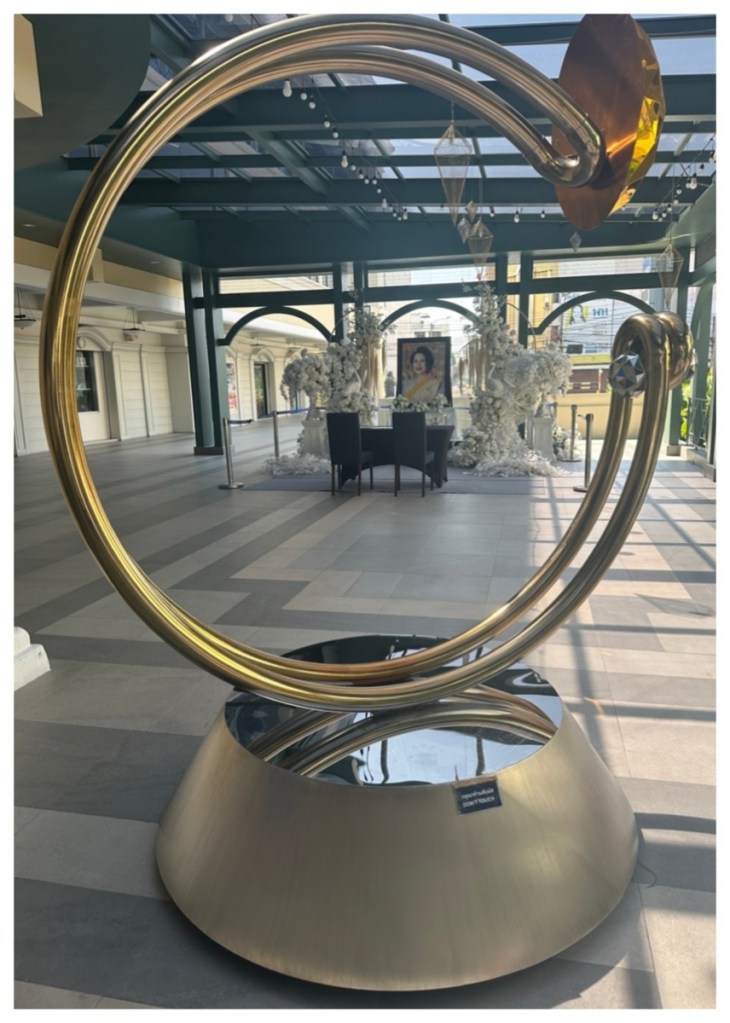
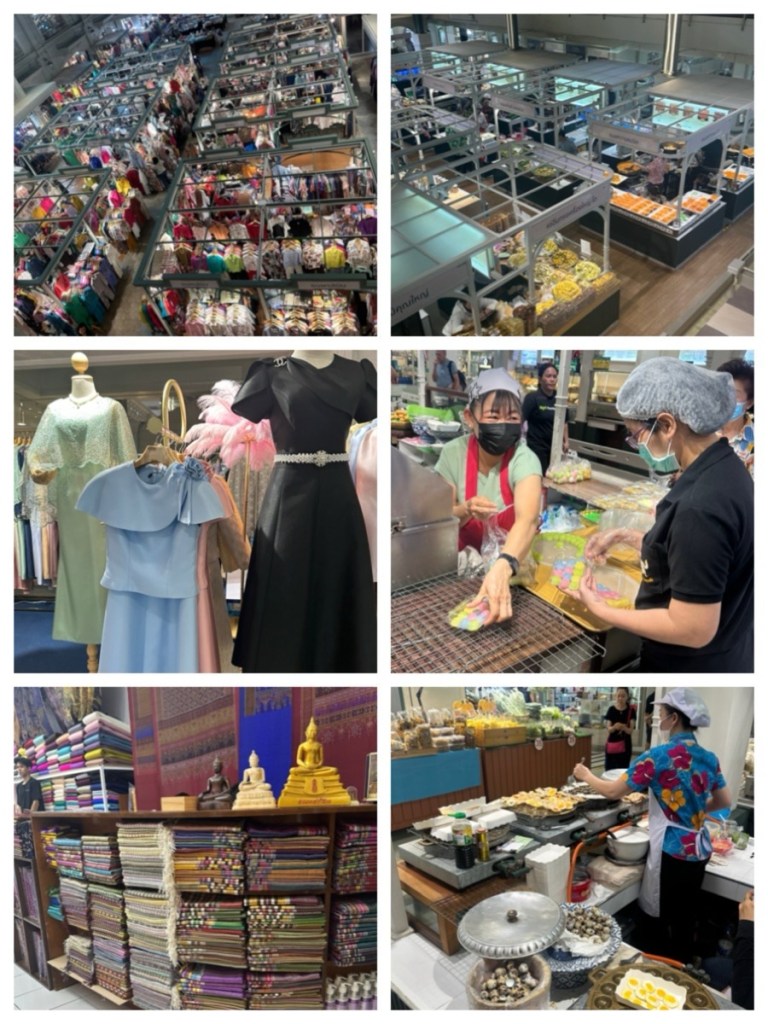
Stop #4: We journeyed back to Bangkok and stopped at the Old Siam Plaza, a shopping mall in Wang Burapha, a historic neighbourhood. Throughout Bangkok, displays to honour the recently deceased Queen Mother were evident. At the shopping centre, a book for offering tributes was present.
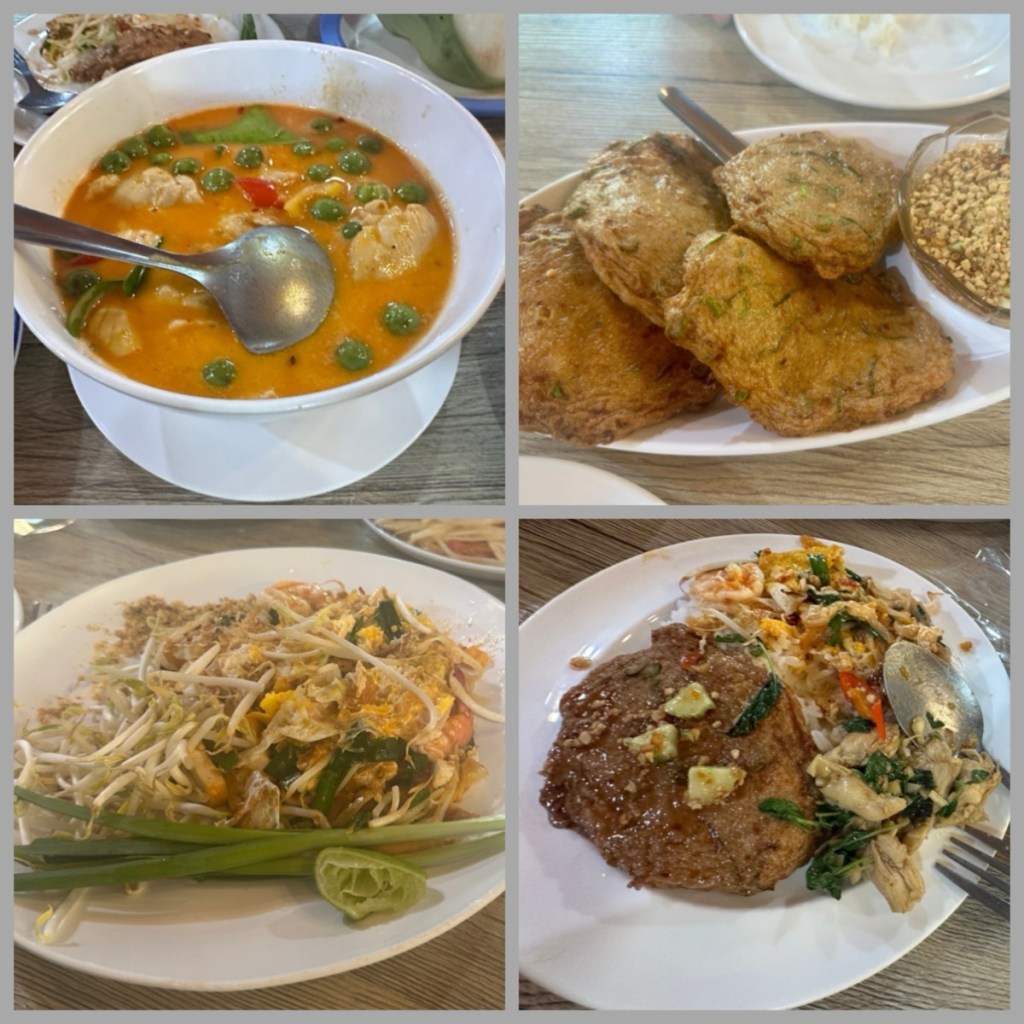
It was time for lunch and Mr George once again chose an excellent Thai restaurant in the mall and ordered a proliferation of delicious items.
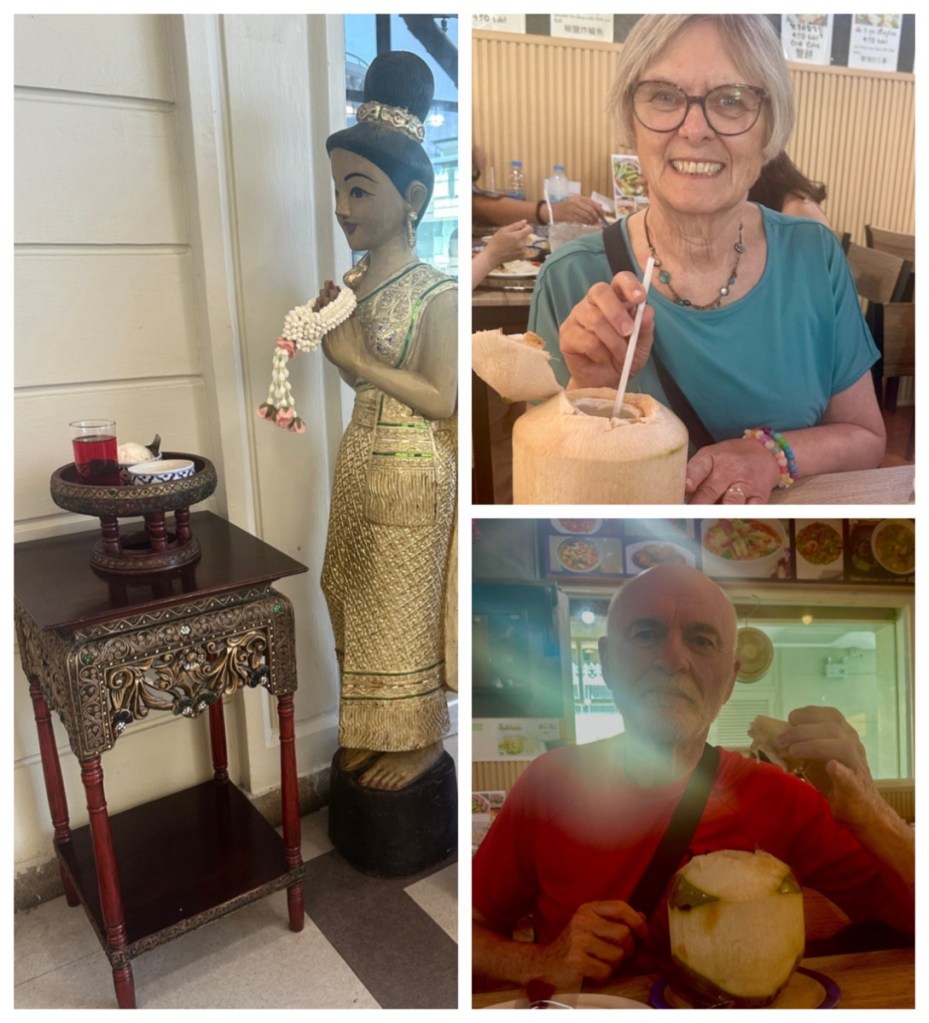
The shopping mall also features a complete floor for the Silk Market where you can purchase traditional Thai silk textiles and clothing. The lower floor is the Desserts Market – such an array of delectable treats!
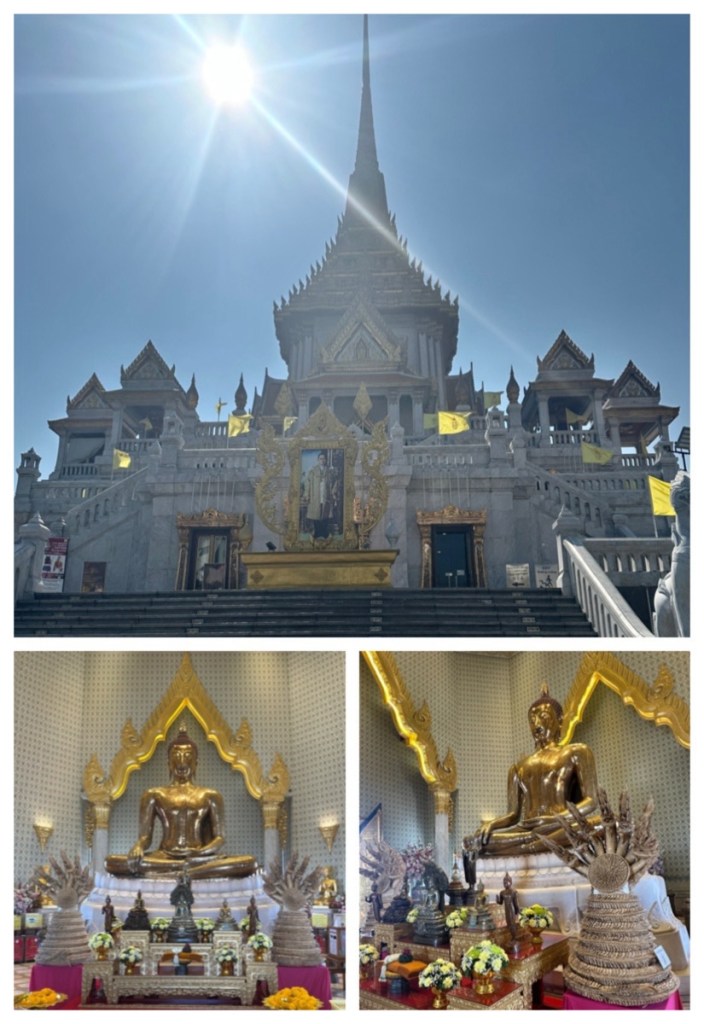
Stop #5: The Golden Buddha or Phra Sukhothai Traimit is a gold seated Buddha located in the temple of Wat Traimit. It is made of pure gold and weighs approximately 5.5 tons. The date of creation of the statue is uncertain but it is believed to be in the 13th to 14th century.
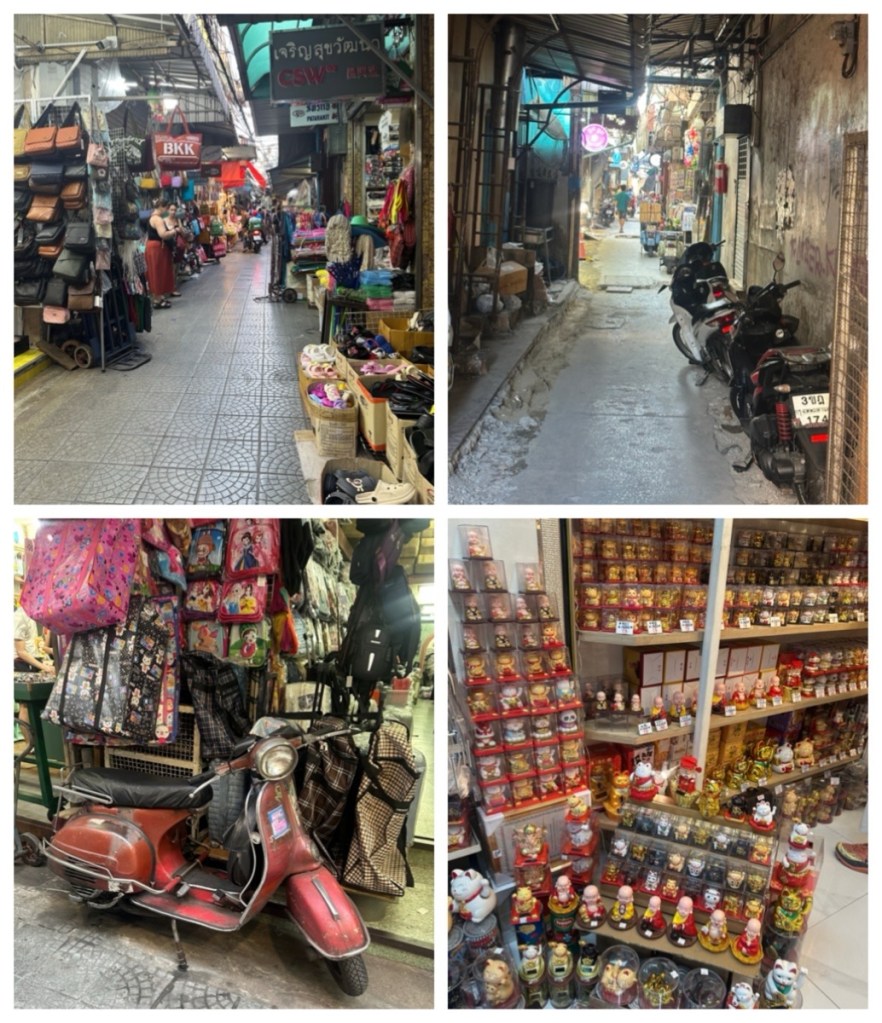
Stop #6: We took a walk through the side streets of Yaowarat Market or Chinatown. As with Chinatowns most everywhere, one could purchase all types of goods including souvenirs, “designer” clothes and handbags, household wares and Chinese foodstuffs.
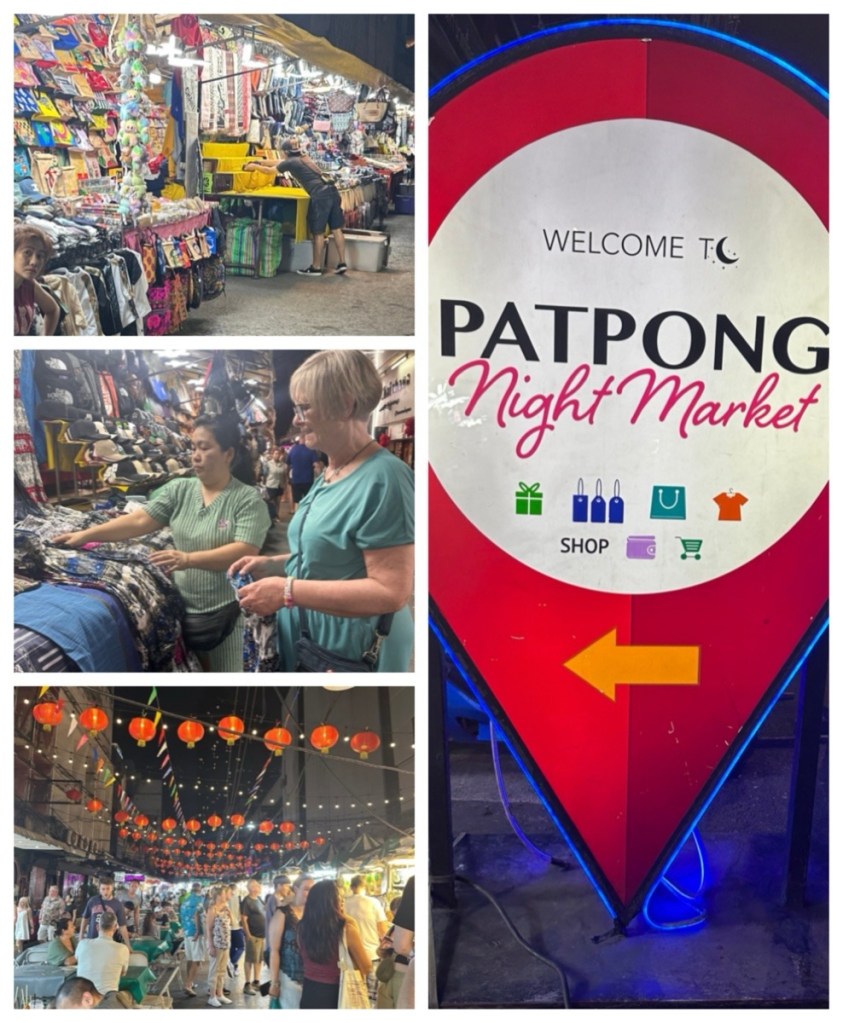
Stop #7: Although we should have been ‘marketed-out’, we did take an evening walk through the PATPONG Night Market located right across the street from our hotel.
Day 4: Our last day with George and Kiti. Again, we headed out of the city bound for the Historic City of Ayutthaya, a UNESCO World Heritage Site.
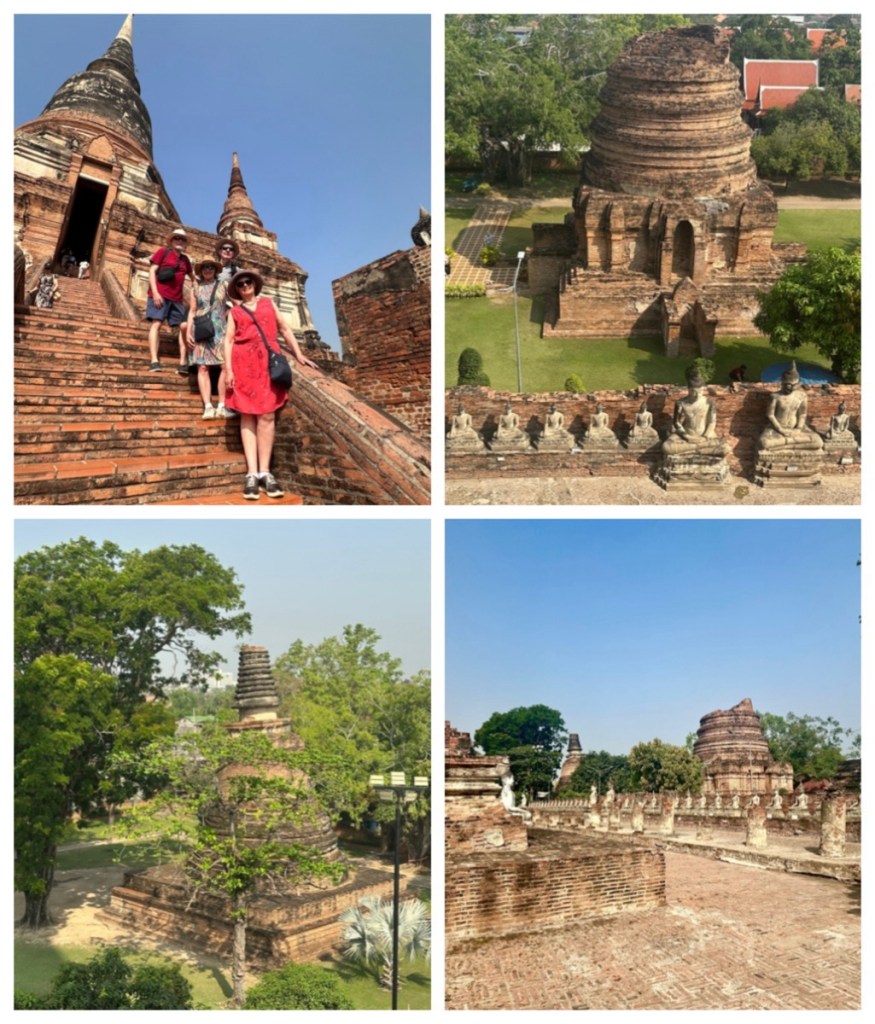
Stop #1: Wat Yai Chai Mongkhol was built in the 1357 in the reign of King U Thong, the first ruler of Ayutthaya on the site of an ancient monastery. Over its long history from 1350 to 1767, there were five Thai dynasties and a total of 33 kings. It is still an active temple where monks reside. Thai people visit Wat Yai Chai Mongkhon to not only pay respects to Buddha, but also to pay homage to one of the most respected kings in Thai history, King Naresuan the Great.
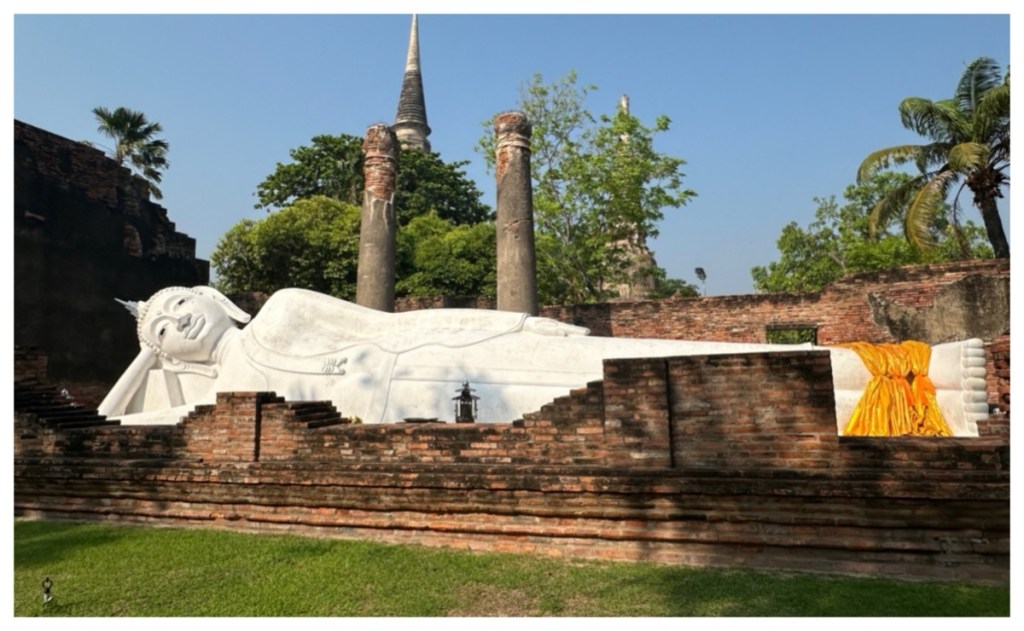
The temple features the Vihara of the Reclining Buddha. The original image was constructed during the reign of King Naresuan. However, this statue was destroyed by fortune hunters and a new image was remodeled in 1965.
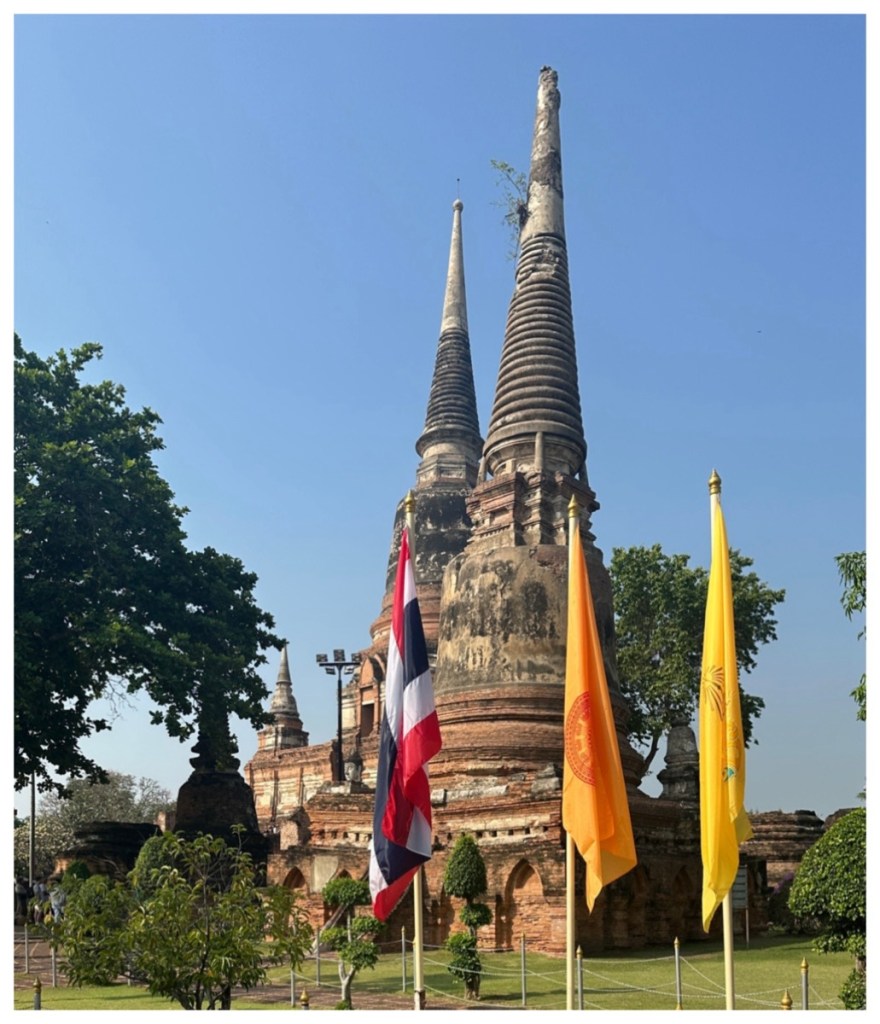
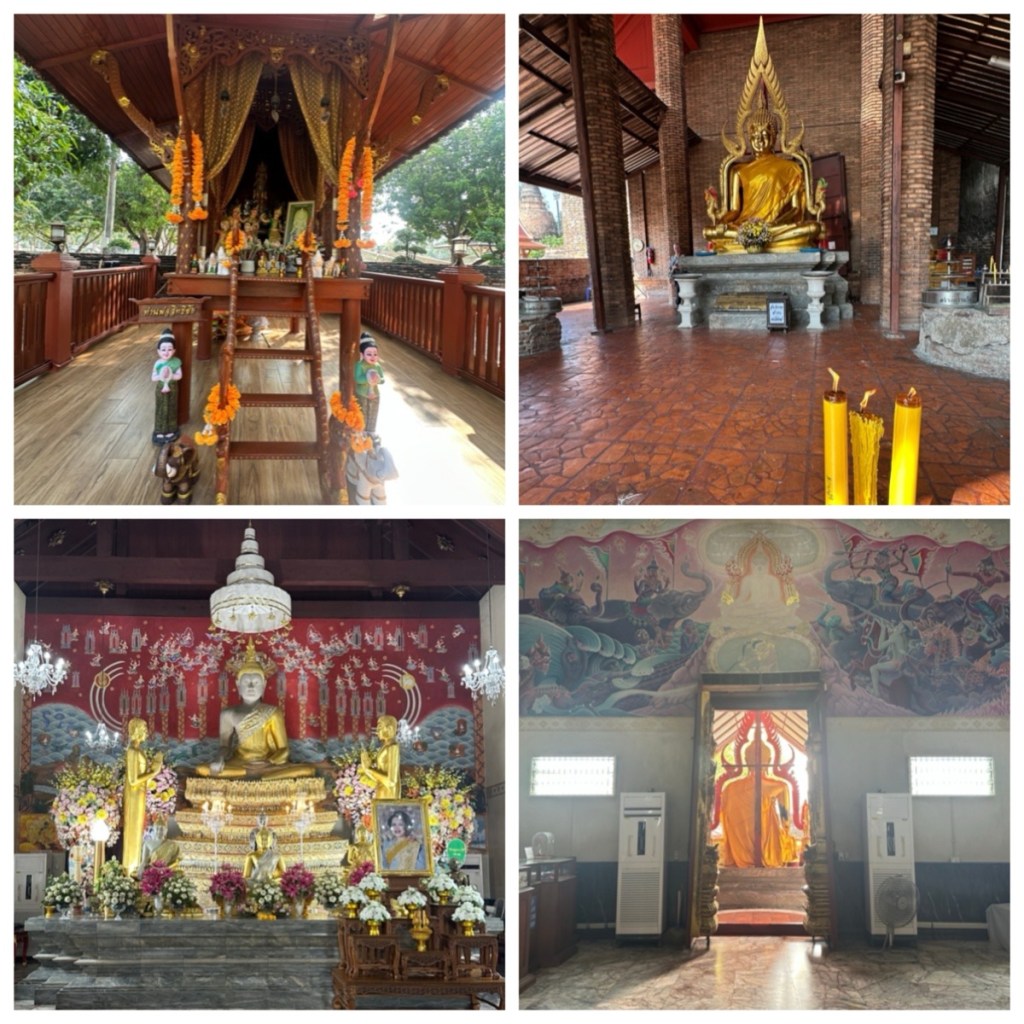
The Ordination Hall is home to the Phra Phuttha Chaiya Mongkhon statue, one of the most sacred Buddha images in Ayutthaya.
The bell-shaped Phra Chedi Chaimongkhon was built in 1592 to celebrate the victory of King Naresuan over the Burmese.
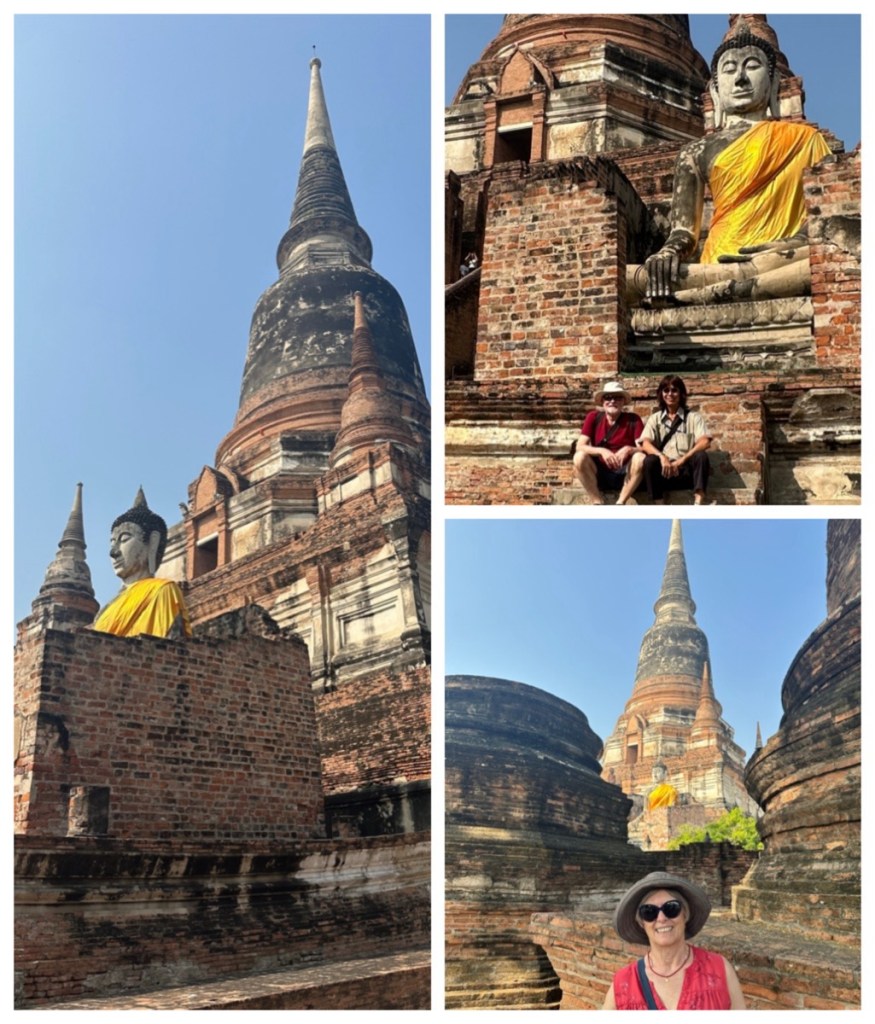
A rectangular gallery surrounds the chedi and is lined with dozens of stone Buddha images.
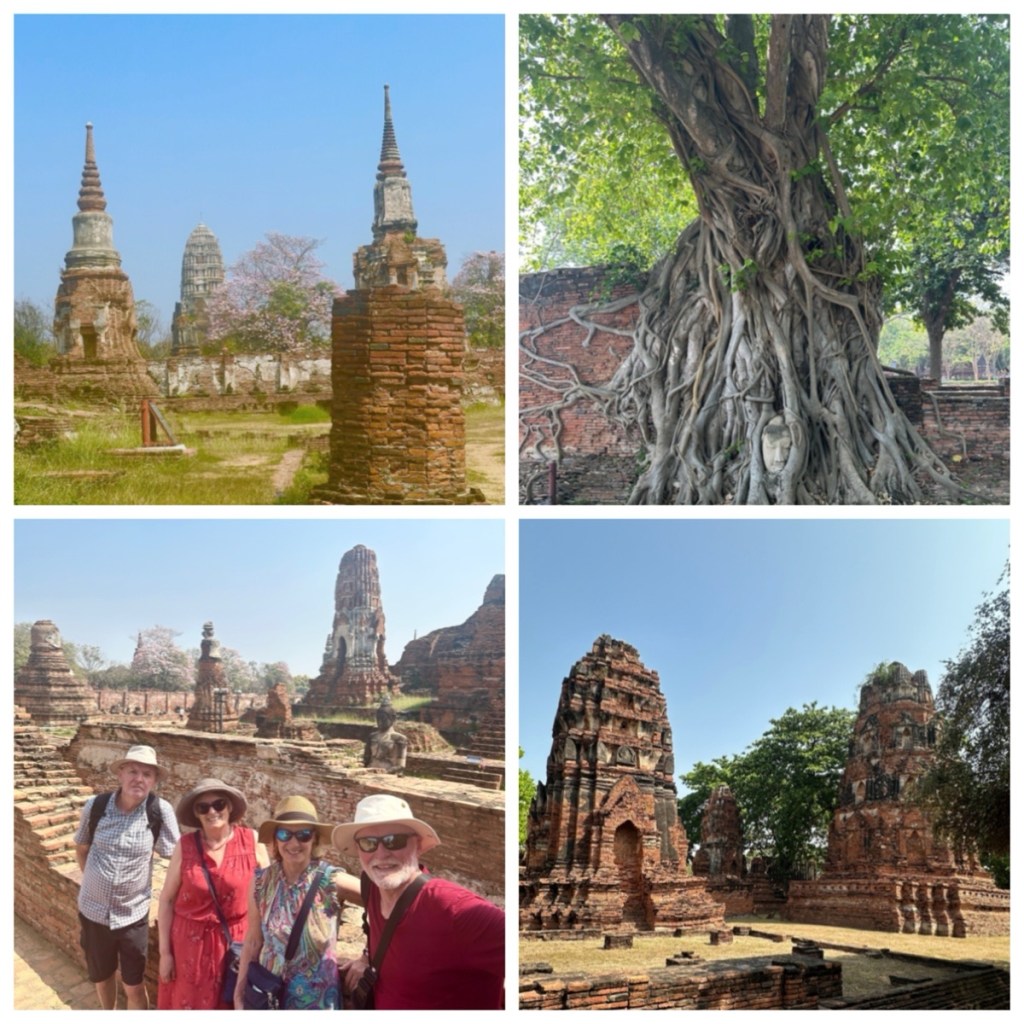
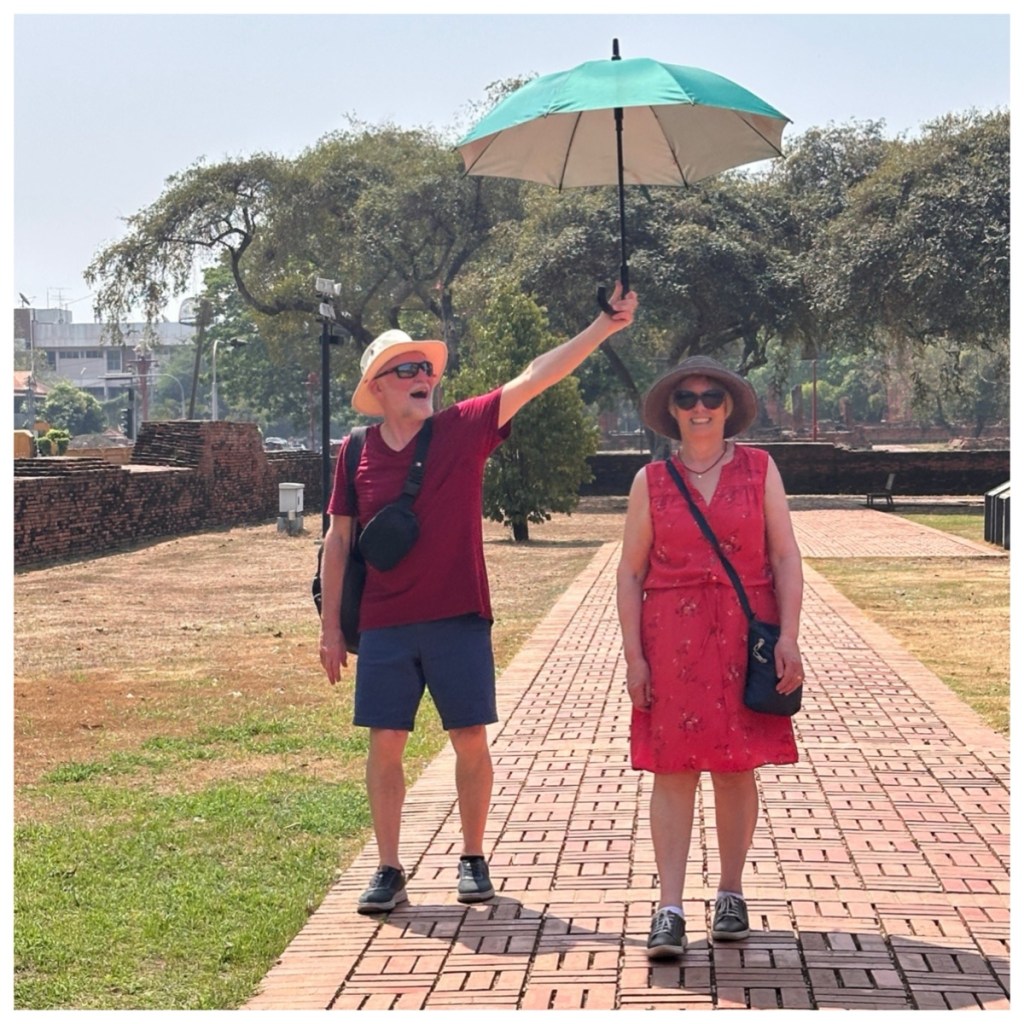
Stop #2: Wat Maha That (Temple of the Great Relics) is located almost right in the center of Ayutthaya City. It is typical of the Ayutthaya ruins, large crumbling Chedi or Stupa surrounded by low laterite walls and rows of Headless Buddha Images. One Buddha Image-head is in a tree trunk.
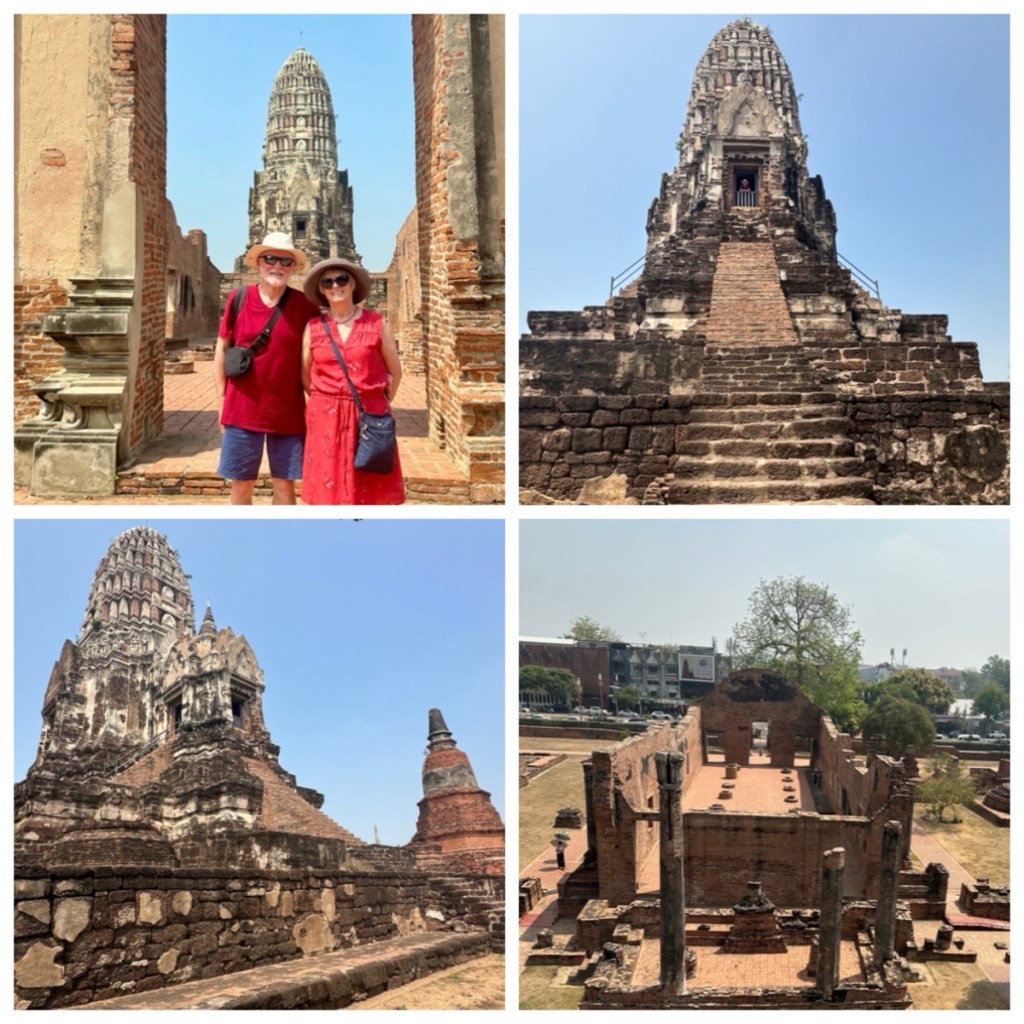
Stop #3: Wat Ratchaburana was built in 1424. The Ayutthaya Prang is still standing and demonstrates beautiful stucco work.
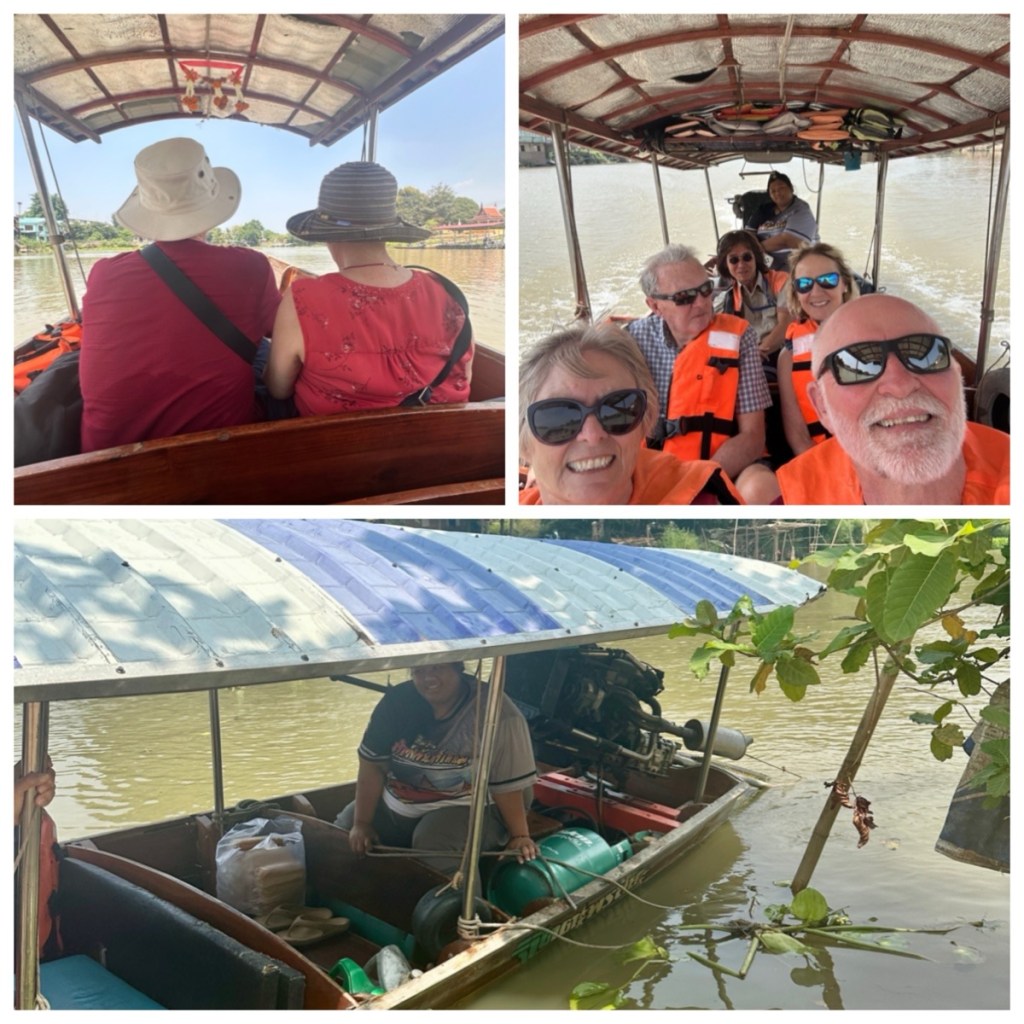
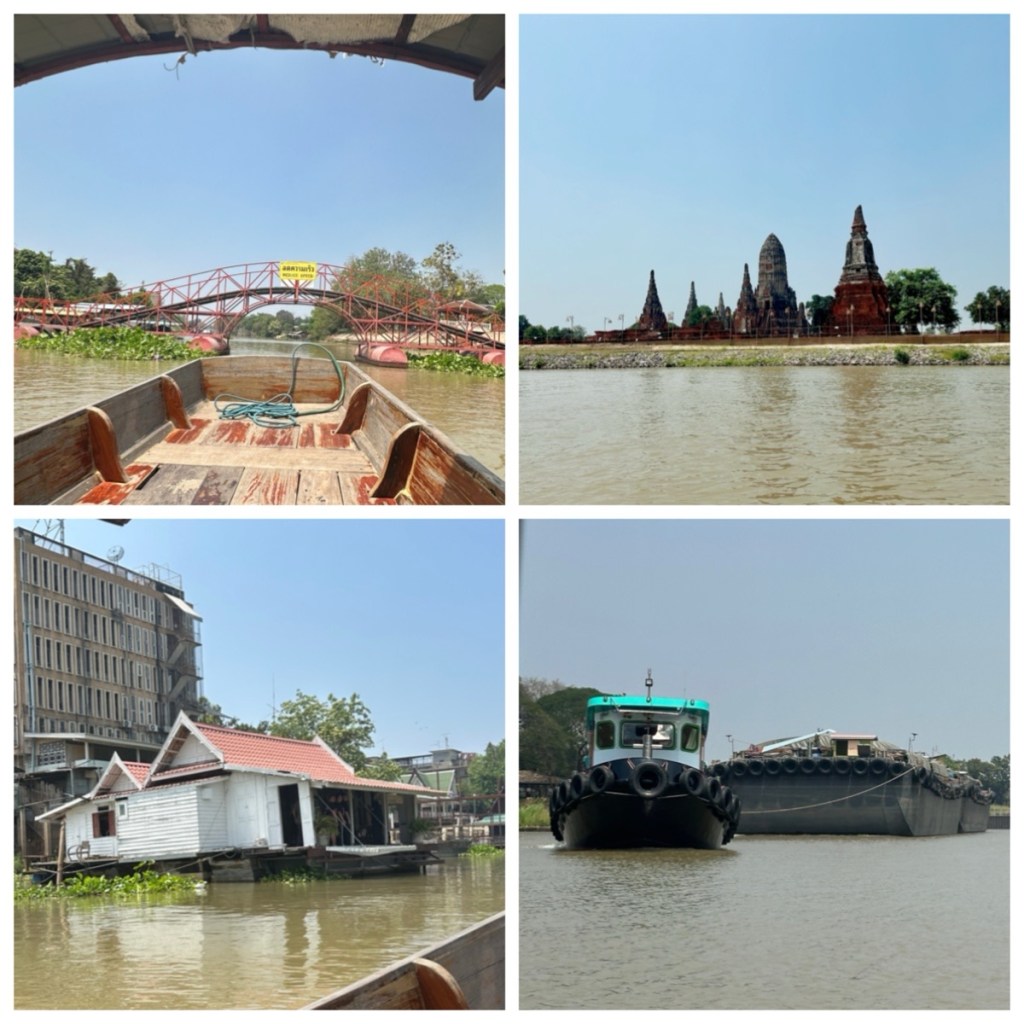
Stop #4: After our morning of exploring the ancient city, we were back on the water for a private long-tail boat trip around the island of Ayutthaya. It was a relaxing, cooling break and we were again able to see the highlights of river life.
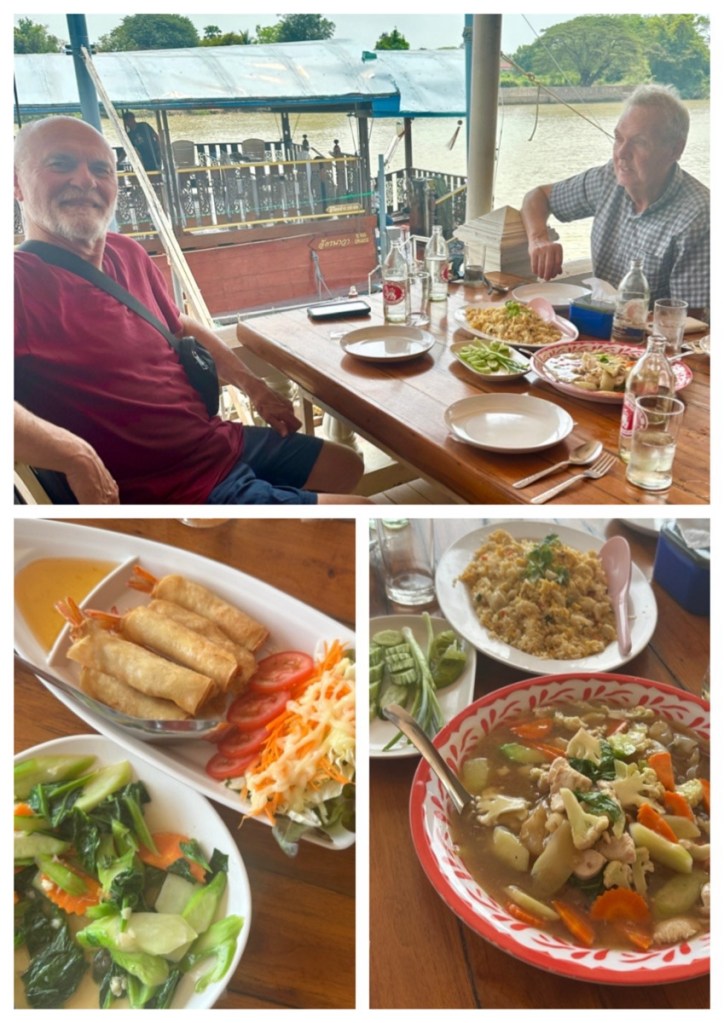
Stop #5: Mr George chose another excellent Thai restaurant for lunch. An open air riverside location complimented the once-again excellent choices for our culinary enjoyment!
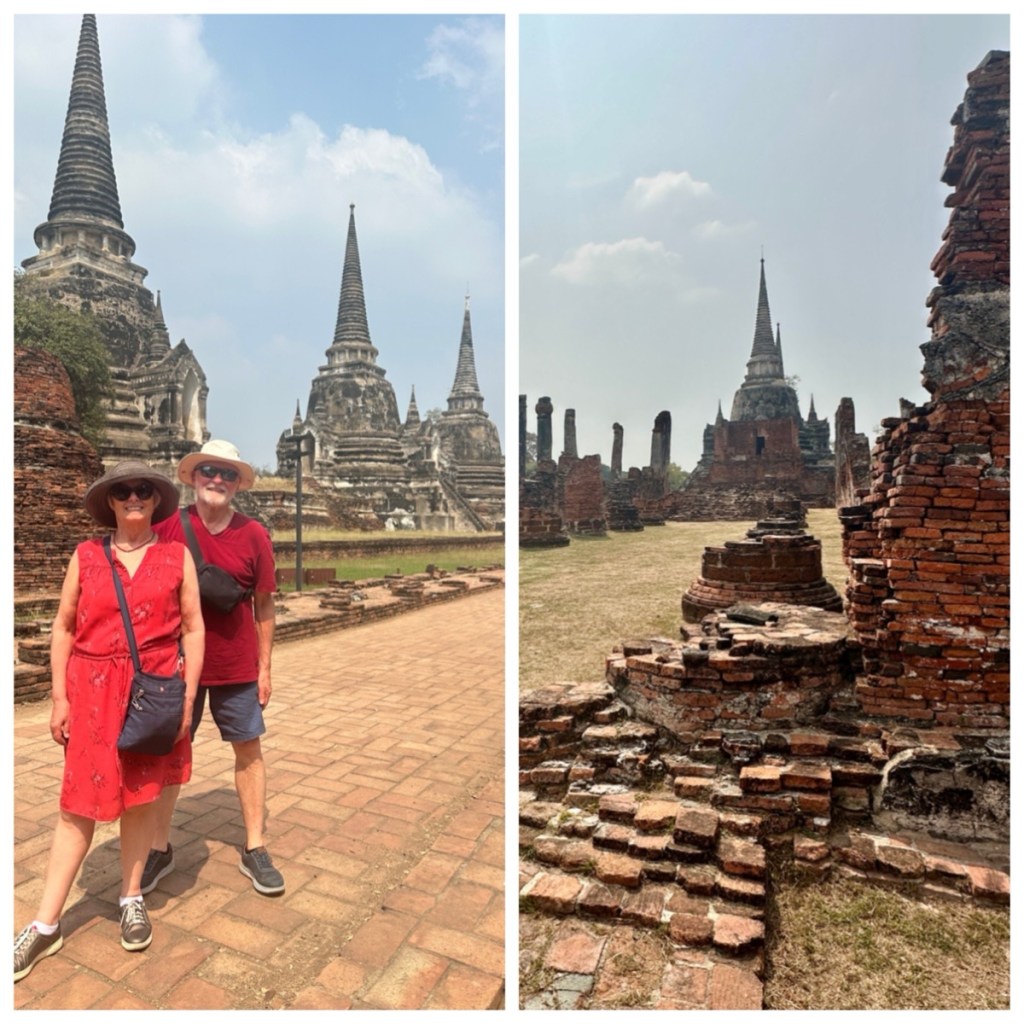
Stop #6: Wat Phra Si Sanphet was situated on the premises of the royal palace which had been established in the reign of king ramathibodi I. In 1448, King Boroma-Tri-Loka-Nat dedicated the site of the palace to the construction of the temple which was used for important royal ceremonies. The three main stupas contain the ashes of three kings.
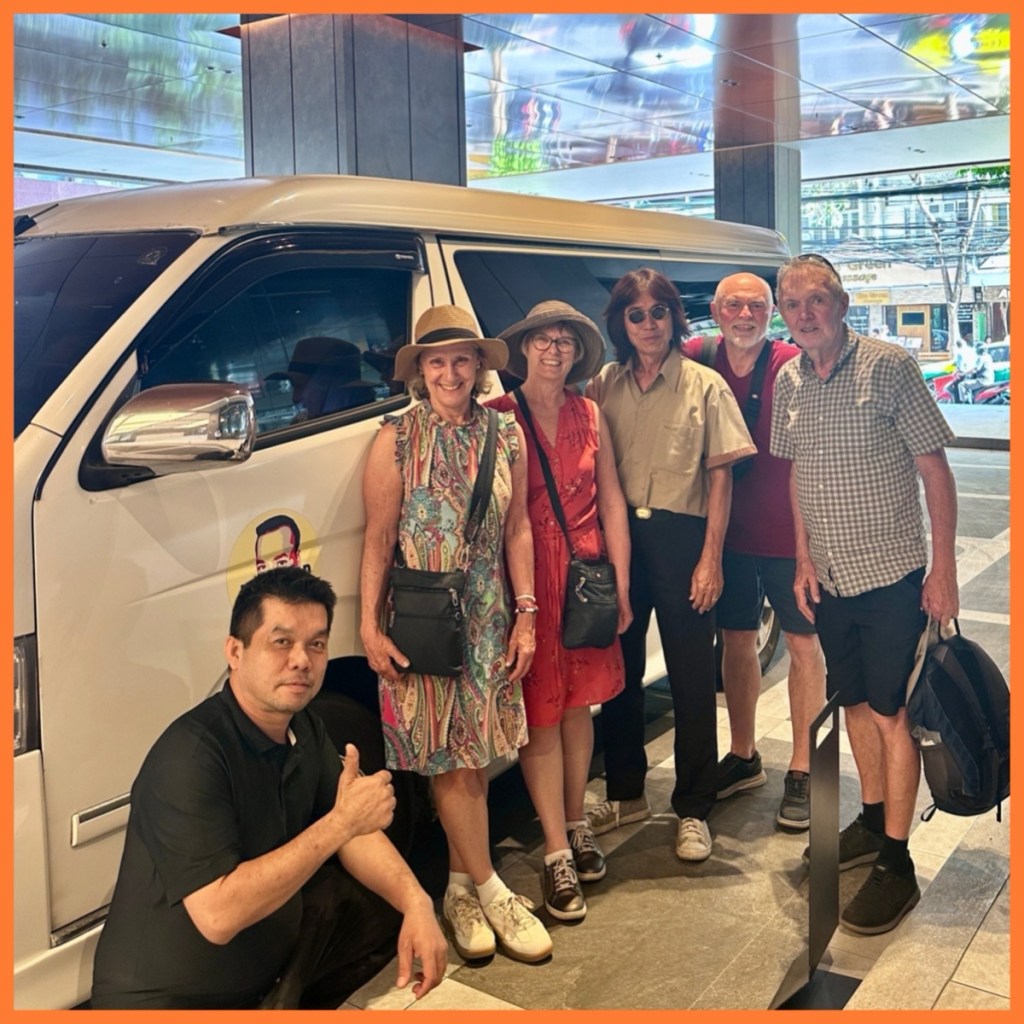
We were so happy with the Mr CHOB Thai Tour Guide company and most especially with our guide and driver, Mr George and Kiti! If you are travelling to Bangkok, check them out – this is the way to make the best of your visit!
One last shout-out to the voco Bangkok Surawong Hotel. The amazing breakfasts, delicious dinners, lovely well-appointed rooms and the friendly, helpful staff made this an excellent stay and we would highly recommend this hotel!
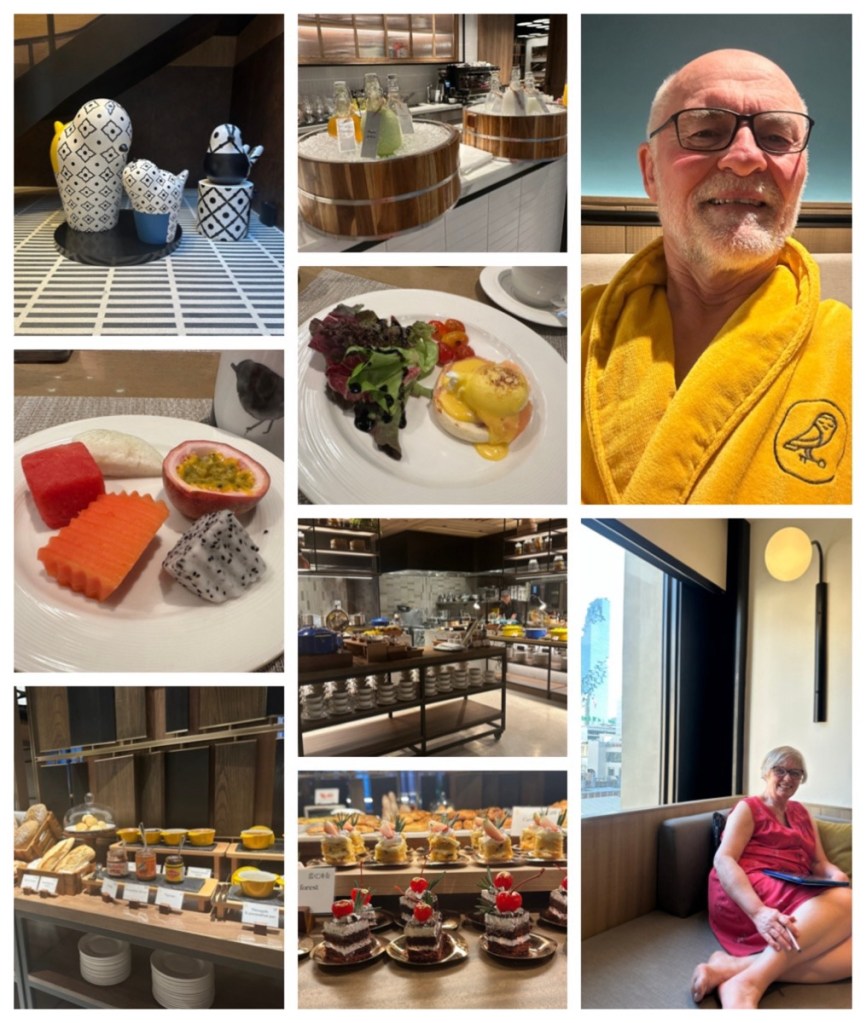
Our four days in Bangkok were so full of amazing grand sites, wonderful tastes & smells and glimpses into traditional Thai life. We are so grateful that we had the chance to visit this city!
And now, onto our next adventure! Check back in to see where we next land!
Cheers,
Bev & Harvey
 A Long and Winding Journey
Again Wow! Amazing markets!
LikeLike
From the unique Maeklong Railway Market to the beautiful temples in Ayutthaya, it seems like you packed in so much. Loved hearing about the local experiences like the canal tour and fried bananas. Mr. George and Kiti seem like the perfect guides to show you the best of the city! Can’t wait to see where you head next. 😊
LikeLike